Home Blog Page 43

Tinubu sacks Edun, Dangiwa, elevates Oyedele

0

PRESIDENT Bola Tinubu has approved a minor cabinet reshuffle, removing the Minister of Finance and Coordinating Minister of the Economy, Wale Edun, and the Minister of Housing and Urban Development, Ahmed Musa Dangiwa, from the Federal Executive Council (FEC).

The development was disclosed in a press statement on Tuesday, April 21, by the Office of the Secretary to the Government of the Federation (OSGF) and signed by the Special Adviser on Media and Publicity to the SGF, Yomi Odunuga.

According to the statement, Tinubu directed Edun to hand over to Taiwo Oyedele, who has now been elevated from Minister of State to substantive Minister of Finance and Coordinating Minister of the Economy.

Oyedele will now oversee the nation’s finance ministry and coordinate economic policies under the administration’s Renewed Hope Agenda.

In the Housing and Urban Development Ministry, Dangiwa was directed to hand over to the Minister of State pending the confirmation of Muttaqha Rabe Darma (PhD), who has been named ministerial nominee and minister-designate for the ministry.

The statement noted that all handing-over and taking-over processes must be completed on or before the close of business on Thursday, April 23, 2026.

It said the changes were aimed at strengthening cohesion and synergy in governance while improving service delivery, particularly in the economy.

Oyedele’s elevation came weeks after Tinubu appointed him as Minister of State for Finance, replacing Doris Uzoka-Anite.

The president had, on March 3, 2026, forwarded his nomination to the Senate for confirmation after redeploying Uzoka-Anite to the Ministry of Budget and National Planning as Minister of State.

His appointment followed the successful passage of the administration’s tax reform legislations, which he spearheaded as Chairman of the Presidential Committee on Fiscal Policy and Tax Reforms.

The reforms, considered among the most controversial policies of the Tinubu administration, included the Nigeria Tax Act, the Nigeria Tax Administration Act, the Nigeria Revenue Service (Establishment) Act, and the Joint Revenue Board (Establishment) Act.

Court adjourns El-Rufai’s bail application to June

0

A KADUNA State High Court has adjourned the hearing of the bail application filed by former Kaduna State governor Nasir El-Rufai to the first week of June 2026.

The presiding judge, Darius Khobo, fixed the new date on Tuesday, April 21, after proceedings in the criminal case in which the former governor is facing multiple charges bordering on alleged fraud, abuse of office, criminal breach of trust, conspiracy, and conferring undue advantage.

The case was instituted by the Independent Corrupt Practices and Other Related Offences Commission (ICPC).

Reacting to the judgement, counsel to the defendant, Ukpong Akpan, expressed dissatisfaction with the court’s position.

He described it as unjustified, arguing that the refusal to grant bail appeared to be anchored on the assumption that his client, by virtue of being a former governor, could tamper with investigations.

“The court, in its wisdom, decided that because Nasir El-Rufai is a former governor, he is going to interfere with the investigation, Therefore, he is not entitled to bail in an allegation of financial impropriety. We respectfully disagree,” he was quoted to have said.

The defence counsel stressed that the legal team would take appropriate actions after reviewing the latest development.

“The next step is to take the legal steps required to challenge it. We will respond through the proper legal process. That is what the law requires,” he added.

This is not the first time the case would be adjourned.

Earlier, the court had fixed April 21 for ruling on El-Rufai’s bail application after proceedings were delayed following the filing of an amended nine-count charge by the ICPC.

Backstory

The ICIR reports that El-Rufai was first arraigned before the Kaduna State High Court on fresh and expanded charges filed by the Federal Republic of Nigeria through the ICPC on March 31, 2026.

According to the charge sheet, the offences were allegedly committed between 2015 and 2025 during and after his tenure as governor of Kaduna State.

The prosecution alleged that in December 2016, the former governor induced the Kaduna State Government to approve an alleged N11 billion payment to Indokaduna MRTS JV Nigeria Limited for a light rail project that was never executed.

He was also accused of approving and receiving severance payments exceeding N289 million in 2020 and 2023 above his legal entitlements.

Another count alleged that between March and November 2022, he dishonestly disposed of $1,085,066.38 in World Bank loan funds, which prosecutors said violated the loan agreement.

Other allegations include unlawful contract awards for CCTV installations in Kaduna metropolis, abuse of procurement processes, land allocations to associates, and conspiracy to compromise federal investigators handling an ongoing probe involving Singularity Network Security Limited.

El-rufai secures Federal High Court bail

In a separate but related case before the Federal High Court in Kaduna, El-Rufai had on April 14, secured bail after spending nearly two months in detention.

The presiding judge, Rilwan Aikawa granted him bail after hearing arguments from both the defence and prosecution but ordered that he remain in ICPC custody pending the fulfilment of the bail conditions.

The court imposed stringent conditions, including a N200 million bond with two sureties in like sum.

The sureties were required to include a recognised traditional ruler and a federal civil servant not below Grade Level 15, alongside the submission of landed property documents and the deposit of his international passports with the court.

El-Rufai’s legal troubles began on February 16, 2026, following his arrest by the Economic and Financial Crimes Commission (EFCC). Although he was initially released by the commission, he was later re-arrested by the ICPC over separate allegations.

After spending nearly a month in ICPC’s custody, El-Rufai was arraigned by the commission on a 10-count criminal charge concerning allegations of diversion of public assets and money laundering offences.

The charges include claims that he unlawfully received about N579 million as severance allowance, far exceeding the approved entitlement, and multiple foreign currency transfers suspected to be proceeds of unlawful activities.

The anti-graft agency also alleged that the former governor received $320,800 through several transactions between 2017 and 2023, in addition to other sums in foreign currencies from individuals said to be at large. Prosecutors further accused him of conspiring to conceal the origin of funds in violation of the Money Laundering (Prevention and Prohibition) Act, 2022.

FG files 13-count treason charge against alleged coup plotters

The Federal Government has filed a 13-count charge at the Federal High Court, Abuja, against individuals accused of plotting to overthrow President Bola Tinubu.

Those named in the case include a retired major general, a retired naval captain, a serving police inspector, and three others. They were charged with alleged acts of waging war against the Nigerian state, alongside offences linked to treason and terrorism.

The case follows a series of developments dating back to October 1, 2025, when the government cancelled Nigeria’s 65th Independence Day parade, as speculations connected the decision to an attempt to evade a coup attempt, but the Defence Headquarters (DHQ) denied the claim.

Weeks later, reports indicated that 16 military officers were arrested that month over the alleged plot, with two others declared at large. By January 2026, the DHQ confirmed that investigations had uncovered involvement by certain personnel, stating that due process would be followed in prosecuting those implicated.

Report also linked several civilians, including top politicians, some of whom are currently at large, to the alleged plot.

The Armed Forces of Nigeria (AFN) later confirmed the plot.

A statement signed by the Director of Defence Information Samaila Uba, on Monday, January 26, stated that the officers would face formal trial before a military judicial panel following its investigation, which it said was conducted according to established military procedures. It also said the probe examined all circumstances surrounding the officers’ conduct.

“It would be recalled that the Defence Headquarters issued a press statement in October 2025 regarding the arrest of sixteen officers over acts of indiscipline and breaches of service regulations. The Armed Forces of Nigeria (AFN) wishes to inform the general public that investigations into the matter have been concluded, and the report forwarded to appropriate superior authority in line with extant regulations.

“The comprehensive investigation process, conducted in accordance with established military procedures, has carefully examined all circumstances surrounding the conduct of the affected personnel. The findings have identified a number of the officers with allegations of plotting to overthrow the government which is inconsistent with the ethics, values and professional standards required of members of the AFN,” the AFN said.

While some officers were found with cases to answer, others were cleared of wrongdoing.

Meanwhile, many Nigerians, especially legal experts, cautioned that since the nation operates a democracy, the accused must be tried in the court and not in military tribunal.

The official admittance came after months of public speculation and denials of the aborted putsch by the military. Sahara Reporters, an online news medium, had on Saturday, October 18, claimed that 16 officers arrested and detained by the Nigerian Armed Forces planned to topple Tinubu’s government.

Reports alleged that key government officials, including Tinubu, Vice President Kashim Shettima, Senate President Godswill Akpabio, and House Speaker Tajudeen Abbas, were targeted for assassination.

There has since been pressure from families of the detained officers and their civilian counterparts, calling for transparent proceedings in open court, while also seeking access to them.

APC unveils timetable, fixes nomination fees for 2027 elections

THE ALL Progressives Congress (APC) has released its timetable and schedule of activities ahead of the 2027 general elections, alongside the fees required for aspirants seeking to contest on its platform.

The document, signed by the party’s National Organising Secretary, Sulaiman Argungu, and announced in Abuja by the National Publicity Secretary, Felix Morka, was issued in line with the 1999 Constitution (as amended), the Electoral Act 2026, and the guidelines of the Independent National Electoral Commission (INEC).

Under the arrangement, presidential aspirants are to pay ₦100 million for both forms. This includes ₦30 million for the expression of interest and ₦70 million for nomination. Those seeking governorship tickets will pay ₦10 million and ₦40 million respectively, bringing the total to ₦50 million.

For senatorial contests, aspirants are required to pay ₦3 million for expression of interest and ₦17 million for nomination, amounting to ₦20 million. House of Representatives aspirants will pay ₦1 million for expression of interest and ₦9 million for nomination, making ₦10 million in total. Those contesting State House of Assembly seats are to pay ₦1 million and ₦5 million respectively, with a total cost of ₦6 million.

The party also announced concessions for certain categories of aspirants. Women, young people and persons living with disabilities are to pay only the expression of interest fee and half of the nomination fee for their respective positions.

Activities have already commenced, with the party notifying its state chapters of the election process from April 20, 2026. The sale of forms is scheduled to run from April 25 to May 2, while the deadline for submission of completed forms and relevant documents is May 4.

Screening of aspirants for State Houses of Assembly, House of Representatives, Senate and governorship positions will take place from May 6 to May 8, while presidential aspirants are to be screened on May 9. The results of the screening exercise are expected to be released on May 11, after which appeals will be received between May 12 and May 13.

Primary elections are scheduled to begin shortly after. The presidential primary will hold from May 15 to May 16, followed by the House of Representatives on May 18 and the Senate on May 20. State House of Assembly primaries are slated for May 21, while the governorship primary will take place on May 23.

Appeals arising from the primaries will be handled immediately after each exercise. Presidential primary appeals are fixed for May 18, House of Representatives appeals for May 20, Senate appeals for May 21, State Assembly appeals for May 23, and governorship appeals for May 25.

The APC said the release of the timetable demonstrated its commitment to conducting a transparent and credible primary election process.

“The APC reassures members, stakeholders, and Nigerians of its commitment to conducting a credible and transparent primary election that will further strengthen the Party’s internal democracy and consolidate its progressive ideals,” the party stated.


Retired police officers block Villa gate, demand signing of Exit Bill

0

RETIRED officers of the Nigeria Police Force on Monday, April 20, blocked the entrance of the Presidential Villa in Abuja, demanding that President Bola Tinubu assent to the Police Exit Bill passed by the National Assembly in December 2025.

According to Channels Television, the retirees, under the aegis of the Police Retired Officers Forum of Nigeria, said their protest was against the continued inclusion of the police in the Contributory Pension Scheme, which they described as illegal, fraudulent, inhumane and oppressive.

The Contributory Pension Scheme is a retirement savings system introduced by the Federal Government under the Pension Reform Act, where both employees and employers make monthly contributions into a Retirement Savings Account managed by Pension Fund Administrators.

The scheme was designed to ensure workers receive pensions after retirement, but many retired police officers have consistently complained of poor payouts, delays and hardship under the arrangement.

The ex-officers, led by their National Coordinator, Raphael Irowainu, retired chief superintendent of police, reportedly marched from the Three Arms Zone through the road in front of the Force Headquarters to the Presidential Villa.

They marched with placards, the Nigerian flag and the Nigeria Police Force flag, singing solidarity songs as they blocked Gate 8 leading into the Villa.

This was said to have caused disruption to vehicular movement as they insisted on seeing the President.

Security personnel at the Villa reportedly made efforts to persuade them to vacate the area, but the protesters stood their ground, insisting that they would not leave until their demands were addressed.

Addressing journalists, Irowainu said the protest was aimed at prevailing on Tinubu to sign the Police Exit Bill.

He said once signed into law, the bill would remove the Nigeria Police Force from what he described as a “slavery and untimely death-inducing pension scheme.”

“Our major aim here is to prevail on President Bola Ahmed Tinubu to sign our bill – the bill exiting the police from the Contributory Pension Scheme – passed by the National Assembly on 4th December 2025 and transmitted to him on 16th March, 2026, into law, and nothing more than that.

“The soldiers have been exited, the SSS has been exited, the Air Force has been exited, the Navy has been exited, the National Intelligence Agency (NIA) has been exited. The police, who are the father of them all, are trapped in this obnoxious Contributory Pension Scheme,” Irowainu was quoted to have said.

This is not the first time retired officers have protested over the pension scheme.

They had on Monday, April 13, trooped to the Force Headquarters in Abuja to protest the handling of their pension.

While calling for an immediate exit from the Contributory Pension Scheme, the protesters expressed dissatisfaction with it and said scheme failed to meet their financial needs since they left active service.

Earlier, in July 2025, they staged a similar demonstration at the National Assembly, where many elderly retirees stood in the rain with placards and chanted anti-government songs while demanding their removal from the CPS.

Efforts to address the issue have been made at the legislative level. On October 22, 2025, the House of Representatives passed a bill seeking to remove the police from the CPS. The Nigerian Senate subsequently adopted the bill, raising hopes among retirees.


US-Iran planned talks under threat

IRAN has vowed it would not engage in renewed diplomatic negotiations with the United States anytime soon, following recent developments that characterise the two-week truce brokered between both nations.

Confrontations have been escalating after US forces disabled and boarded an Iranian-flagged cargo vessel bound for Bandar Abbas on April 19.

Tehran described the operation as “armed piracy” and signaled potential retaliation, while noting that the presence of civilians on board limited its immediate response options.

The ICIR reported that shipping sources reported renewed Iranian military restrictions and fresh insecurity in the Strait of Hormuz, just a day after indications that limited shipping movement had resumed.

Shipping industry sources revealed that vessels transiting the corridor received direct radio messages from Iran’s Navy, declaring the Strait closed again to commercial traffic.

It noted that no ships were officially blocked, but maritime operators described the situation as highly unstable.

Washington had aimed to relaunch negotiations in Islamabad ahead of the ceasefire’s expiration, but Iranian Foreign Ministry spokesman Esmaeil Baghaei accused Washington of acting in bad faith, arguing its conduct undermined claims of commitment to diplomacy, and reiterating that Tehran would stand firm on its established demands and rejects any attempt to impose deadlines or ultimatums when core national interests are involved.

Iranian officials maintained that key issues, particularly its missile programme and broader defensive capabilities remained non-negotiable.

The continued US maritime blockade has been at the centre of the tension, which Tehran views as fundamentally incompatible with any meaningful diplomatic process, suggesting that the blockade has eroded trust and undermined prospects for de-escalation.

Pakistan, acting as a principal intermediary, has attempted to revive talks, as the military chief Asim Munir reportedly conveyed to US president Donald Trump that the blockade was a primary obstacle.

Trump indicated openness to reconsideration, but no policy shift has been confirmed.

US enforcement of port restrictions has prompted intermittent Iranian countermeasures in the Strait of Hormuz, a vital corridor carrying roughly 20 per cent of global energy supplies. The escalation has quickly reverberated through markets, driving oil prices higher and eroding investor confidence amid concerns of sustained disruption.

Trump has continued issuing explicit warnings, including threats against Iranian infrastructure, reinforcing a pattern of coercive signaling, but Tehran has countered with deterrent messaging, indicating potential retaliation against energy infrastructure in Gulf states hosting US assets.

Despite extensive security preparations in Islamabad, uncertainty clouds the planned diplomatic engagement, while US officials initially indicated that JD Vance would lead the delegation alongside Steve Witkoff and Jared Kushner.

However, conflicting statements from Trump have cast doubt on the delegation’s final composition and commitment level.

On the Iranian side, parliamentary speaker Mohammad Baqer Qalibaf acknowledged incremental progress in prior discussions but underscored persistent gaps, particularly on nuclear policy and maritime security.

European allies remain wary, expressing concern that Washington may be pursuing a rapid, politically expedient agreement that lacks technical depth and long-term viability.

Now entering its eighth week, the conflict has evolved into a systemic shock to global energy markets, largely driven by restricted access through the Strait of Hormuz. The broader regional conflict spanning Iran, Israel, and Lebanon continues to exact a high human and economic toll, while reinforcing the risk of further escalation.

Zenith Bank faces criticism after N1.24trn loan write-off linked to repayment failures

By Odinaka Anudu

ONE of Nigeria’s biggest lenders, Zenith Bank, wrote off loans totalling N1.24 trillion in 2025 after it became obvious that the debtors would not pay back. As a result, the bank was forced to declare the loans delinquent and subsequently classified them as lost, the 2025 audited financial statement of the bank revealed.

Financial experts have criticised the bank for the write-off of the humongous amount, faulting the increase in write-offs by nearly 13 times to N1.24 trillion in 2025 from N96.5 billion reported in 2024.

“This is a pretty huge amount of money to write off,” said a Lagos-based financial expert, Lizzy Aigbe. “This shows significant non-performing loans,and can also put pressure on the bank’s capital adequacy. It also questions the bank’s risk management measures. However, I think this is a cumulative impairment write-off, similar to what First Bank did.”

A screenshot from the report.

She, however, pointed out that the bank may be trying to clear bad loans and have a cleaner balance sheet going forward.

First Holdco, the parent company of First Bank, wrote off N748.125 billion loan for the whole of 2025 and N459.206 billion for the last quarter of 2025. Like the case of Zenith Bank, this means that loans had been granted to entities who did not repay them.

Zenith Bank said it writes off a loan balance when the group’s credit department determines that the loan is ‘uncollectable’ and has been declared delinquent and subsequently classified as lost. This determination is made after considering information such as the continuous deterioration in the customer’s financial position, such that the customer can no longer pay the obligation, or that proceeds from the collateral will not be sufficient to pay back the entire exposure.

It noted that board approval is required for such write-off. For insider-related loan (loans by the bank to its own officers and directors), the Central Bank of Nigeria (CBN) approval is required.

The lender added that loans and debt securities are written off (either partially or in full) when there is no realistic prospect of recovery. This, according to Zenith Bank, is generally the case when the group determines that the borrower does not have assets or sources of income that could generate sufficient cash flows to repay the amounts subject to the write-off.

However, financial assets that are written off could still be subject to enforcement activities in order to comply with the group’s procedures for recovery of amounts due, Zenith Bank said.

“It is unhealthy for a bank to have this kind of write-off or expected credit loss,” said a former banker, Livinus Odegbami. “This is a reflection of how loans have been granted over the years. On the other hand, it may be that the bank is too much exposed to the oil and gas sector, or that loans were granted without due diligence.”

Impairment charges

The impairment numbers show how much Zenith Bank set aside to cover loans and other assets it expected might not be fully recoverable. In 2025, impairment charges on financial instruments rose to N742.19 billion, up from N657.00 billion in 2024, indicating that the bank became more conservative or faced higher credit risk during the year. This rise suggests more borrowers were either defaulting, delaying repayment, or were reassessed as higher risk, financial analysts noted.

On non-financial instruments, impairment charges were relatively small at N578 million in 2025, compared to N1.80 billion in 2024, showing that most of the pressure came from loan-related (financial) assets rather than other balance sheet items.

Bank’s revenue, profit jump

However, Zenith Bank reported a 6 per cent increase in revenue to N4.192 trillion in 2025 from N3.971 trillion in 2024. The lender’s profit before tax stood at N1.263 trillion.

However, it paid an income tax of N222.824 billion, lower than N293.956 billion reported in 2024, leaving it with a profit after tax of N1.041 trillion. Profit attributable to the equity holders of the parent was N1.039 trillion.

A Zenith Bank spokesperson did not respond to requests for comment.

This report is republished from the Economy Post.

Bandits attack Kwara community, ‘kill soldiers’, residents flee

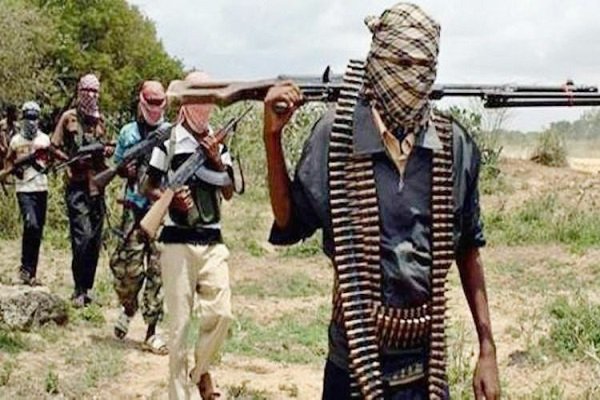
SUSPECTED bandits have reportedly attacked Kemanji community in Kaiama Local Government Area of Kwara State, leaving several people dead.

The attack was said to have occurred in the early hours of Monday, around 3:00 a.m., days after the community allegedly received a threat notice that heightened fear among residents.

Gunmen stormed the community, fired indiscriminately and forced villagers to flee.

Security operatives, including soldiers and local vigilantes, responded swiftly and engaged the attackers in a gun duel.

Punch reported that accounts from the scene showed that several soldiers were killed while repelling the attack, while a member of a local vigilante group was also shot.

“It’s very pathetic and disheartening. The entire community is in a state of panic, and many villagers have fled. No one can yet predict the number of victims involved,” Aliyu, a resident of Kaiama, said.

The attackers also reportedly made away with military patrol vehicles and motorcycles before fleeing.

“The terrorists came directly to the military camp and opened fire on soldiers,” a forest guard who fights alongside military operatives said”, adding, “They killed three soldiers and injured four others (three soldiers and a local vigilante).”

Another local vigilante source noted that some of the attackers were killed during the gun battle.

Although multiple armed groups operate in the area, the attack has been linked to Ansaru fighters, who have previously engaged security forces in the village in fierce gun battles.

The ICIR reports that Kwara State has faced a major security crisis for months.

In February, gunmen attacked villages in the Kaiama area, killing over 160 people in Woro and Nuku communities because the villagers refused to obey their orders.

There have been many kidnappings and raids in other parts of the state including Ifelodun LGA.

Attempts to get the reaction of the Kwara State Police Command to the incident failed as its spokesperson, Adetoun Ejire-Adeyemi, did not answer calls or reply to messages sent to him by The ICIR reporter.


Who governs the watchers? Nigeria’s independence problem is structural, not constitutional

0

By Odeh FRIDAY

THREE decades of constitutional amendments have rearranged the furniture of governance in Nigeria without unlocking the front door. The answer is simpler and more uncomfortable than another cycle of amendments. 

Nigeria boasts numerous ostensibly independent institutions. The Independent National Electoral Commission (INEC), the National Broadcasting Commission (NBC), the Economic and Financial Crimes Commission (EFCC), the Independent Corrupt Practices Commission (ICPC), public broadcasters such as the Nigerian Television Authority (NTA), and the Federal Radio Corporation of Nigeria (FRCN). Yet what is defined as independence in statute often amounts to independence at the executive’s pleasure. This is not a failure of law. It is a failure of design. 

The Nigerian President appoints the leadership and governing boards of most federal agencies, with the Senate confirming nominees through processes that rarely alter executive preference. The result is a system in which independence formally exists but operates within boundaries set by the appointing authority. Institutions are expected to act as checks while remaining structurally dependent on the very power they are meant to constrain, chaining the watchdog to the throne it guards. 

The NBC revoked licences of 52 television and radio stations weeks before the 2023 general election. None of its board members was chosen by a journalist, a civil society representative, or a citizen panel. When regulators are appointed through political channels, neutrality becomes difficult to demonstrate and even harder to sustain. 

The same structural tension defines electoral governance. The credibility of elections is fatally compromised when the President nominates the body that adjudicates whether the President’s party has won or lost. At that point, the issue is not competence. It is design. No amount of digital reform or administrative efficiency can fully resolve a system where the appointing authority and the subject of oversight are too closely aligned. 

Elsewhere, democracies have reached a different conclusion: independence cannot rely on restraint alone. It must be engineered. The Czech Republic offers a useful reference point, in which I had the opportunity to observe elements of this system firsthand as part of the 2025 Cool Czechia Programme, an initiative of the Czech Ministry of Foreign Affairs that convened young African leaders to engage with public institutions, media organisations, and governance actors. 

Visits to Czech Television and Czech Radio made one thing clear: independence is not a slogan; it is architecture. In the Czech model, candidates for public media councils are nominated not by the executive but by a broad range of civil society actors, including universities, cultural bodies, professional associations, labour unions, and civic organisations. Parliament then elects members from this pool. 

The state does not own the entry point to governance. Members serve fixed six-year terms, with one-third rotated every two years. Institutional memory survives political change. Council members are restricted from holding political office. Their mandate includes appointing leadership, approving budgets, and safeguarding editorial independence. 

The system does not remove politics. It disperses it, making it contestable rather than concentrated. Nigeria’s system does the opposite. 

The institutions that must be reformed

Media and broadcasting institutions are the clearest starting point. NTA, FRCN, Voice of Nigeria, and NBC cannot claim editorial or regulatory independence while their governing structures remain tied to executive appointment. Their boards should be constituted through nominations from journalism associations, civil society coalitions, academic institutions, and professional bodies, with transparent legislative confirmation. This should not be symbolic consultation but real selection power. 

Electoral governance sits at the centre of democratic legitimacy. INEC cannot continuously operate under an appointment pipeline controlled by the same political system it is meant to regulate. In 2022, late President Buhari nominated a member of his media team as a national commissioner of INEC. It is difficult to argue for neutrality. A multi-stakeholder nomination system is not an innovation; it is a correction. 

Anti-corruption institutions face the same design tension. The EFCC and the ICPC investigate politically exposed persons while remaining structurally dependent on political appointment systems. That does not invalidate their work, but it weakens public confidence in their independence. 

Even civic institutions such as the National Orientation Agency (NOA) reflect the same pattern: centralised appointment, decentralised accountability. The point is not that these institutions are non-functional. It is that their design assumes political neutrality will emerge from political control. That assumption no longer holds. 

Constitutional amendments keep missing the point

Nigeria’s constitutional amendment cycles have been frequent, resource-intensive, and politically heavy. Meanwhile, they rarely address the core issue: who controls institutional entry points. The House of Representatives of the 10th National Assembly has approved over 80 constitutional amendment bills while considering more than 200 proposals, as the Senate runs a parallel process through its Constitution Review Committee. Yet, the core structural flaw, the executive monopoly on appointments to nominally independent institutions, has not been the centrepiece of any major reform package. This omission is not incidental. It is the wound that all other amendments fail to close. 

Most reforms instead focus on administrative adjustments, eligibility rules, or procedural updates. Institutions may be renamed, timelines adjusted, or oversight rebalanced on paper, but the architecture of control remains intact. This is why reform in Nigeria often feels like motion without transformation. The system changes its language without changing its logic. 

In the 11th National Assembly, Nigeria does not need another amendment cycle. It needs legislation that takes board appointments out of the presidency’s gift and returns them to the public that funds these institutions. 

Many of the changes required do not need constitutional revision to begin. They can be implemented through enabling legislation that redefines nomination processes, strengthens tenure security, and introduces staggered leadership cycles for independent institutions. Constitutional change may eventually be necessary to entrench these reforms. But waiting for it has already become a familiar form of delay. 

The politics of reform: 2027 elections and institutional memory loss

As Nigeria approaches the 2027 Nigerian general elections, political parties will again present manifestos promising reform. The language will be familiar: restructuring, accountability, efficiency, renewal. The unresolved implementation of the Oronsaye Report by President Tinubu, especially its recommendations on merging and scrapping redundant agencies, is a reminder that it is easier to announce than to execute. It shows the lack of sustained political incentives to implement reform blueprints. 

Institutional reform often survives only until it begins to reduce control. At that point, it becomes negotiable. That is why the timing matters, not because reform is new, but because its target has become clearer. The question is no longer whether institutions should be independent. It is whether those who benefit from current appointment structures are willing to redesign them. 

The choice Nigeria keeps delaying

The question is straightforward: Should institutions that regulate speech, oversee elections, and investigate corruption be governed by the same authority they are meant to constrain, or by structures that distribute power beyond the executive? What is at stake is not the creation of more institutions or better laws, but a redesign of how power is appointed, insulated, and held to account in practice. 

Nigeria has answered that question for decades. The result is something more enduring: a permanent tension between formal independence and practical dependence. Changing this requires more than the language of reform. It requires a willingness to confront how power is currently distributed. 

Independence is often described as a principle. In practice, it is a design choice. And design choices, unlike political promises, tend to outlast the people who make them. 

 Odeh Friday is the Country Director, Accountability Lab Nigeria