A FIRE outbreak razed down part of the council chamber of the Katsina Government House in the early hours of Monday, September 2.
The chamber is attached to the governor’s office, where he meets with important dignitaries.
The cause of the fire remained unknown, while details were sketchy when filing this report.
The chief press secretary to the Governor, Ibrahim Mohammed, while speaking with The ICIR, noted the state governor, Dikko Umaru Radda, was not in the office when the incident happened.
He explained that the governor attended a zonal town hall meeting outside the Katsina town while the fire raged.
“First and foremost, the governor wasn’t in the office. We were having a public engagement on the 2025 budget where he wanted to get feedback from the citizens on what they expected to be in the budget. We just finished from Funtua and we are now in Daura.
”So just on our way to Daura, we heard about the unfortunate incident in the Government House. I don’t have full details of what happened because I am not in Katsina town.
“But I learnt that it’s only the council chamber that was burnt, which is just part of the governor’s office,” he told The ICIR.
Meanwhile, according to Punch, a source named Alhaji Bashir, whose house is near the Government House in Katsina, confirmed that the fire began around 6 a.m.
He said, “I saw a fire service truck rushing in. I was in my house as early as 6 am after prayers, a fire service truck rushed into the Government House, and I later learnt there was an inferno inside the red chamber where Governor Dikko used to host guests.”
THE Federal High Court in Abuja has adjourned the arraignment of 10 #EndBadGovernance protesters to September 11, 2024.
The court will also rule on their bail application on the same day.
The protesters, arrested during the recent demonstrations against the government’s alleged failures, appeared in court today, Monday, September 2, on different charges.
The ICIR reports that the Federal Government arraigned 10 leaders, organisers and members of the protest held from August 1 to 10 across Nigeria, in Abuja today.
The protesters are being tried for alleged treason, inciting mutiny and intent to destabilise Nigeria.
The protesters arraigned before Emeka Nwite, a judge, are Michael Adaramoye also known as Lenin, Adeyemi Abayomi, Suleiman Yakubu, Opaoluwa Simon and Angel Innocent.
Others are Buhari Lawal, Mosiu Sadiq, Bashir Bello, Nuradeen Khamis and Aabdulsalam Zubairu.
In the six counts filed by the Inspector-General of Police, Kayode Egbetokun, the Federal Government also named a British citizen, Andrew Wynne, aka Andrew Povich, as defendant.
The men among the protesters are detained at the Kuje Correctional Centre while the women are detained at the Suleja Correctional Centre.
The ICIR reports that the #EndBadGovernance movement, which gained significant traction in over 20 states, criticised widespread corruption, poor governance, and the deteriorating state of public services in Nigeria.
The protesters demanded accountability from government officials, better infrastructure, and an end to what they describe as unfriendly policies.
Charges levied on defendants
Meanwhile, in the charge sheet marked, FHC/ABJ/CR/454/2024, the defendants were accused of “treason, destabilising the country, intimidating the President and destroying the NCC in Kano,” among others.
Egbetokun specifically accused the protesters of acting together and conspiring with the intent to destabilise the country and commit a felony between July 1 and August 4, 2024.
The police boss said the offence was contrary to Section 95 and punishable under Section 97 of the Penal Code.
“Between 1 July 2024 and 4 August 2024, at Karshi Abuja FCT, within the jurisdiction of this court, while acting in concert and with intent to destabilise Nigeria, (defendants) conspired together to commit felony, to wit: inciting to mutiny and thereby committed an offence contrary to Section 96 and punishable under Section 97 of the Penal Code,” he said.
According to him, the protesters, between July 1, 2024, and August 10, 2024, in Abuja FCT, Kaduna, Kano and Gombe, in collaboration with Andrew Wynne (aka Andrew Povich) a British Citizen, with the intent to destabilise Nigeria, waged war against the state in order to intimidate the President by attacking and injuring police officers and burning police stations.
He also noted that the protesters attacked the High Court Complex, NCC Complex, Kano Printing Press, Government House Karo, Kadama Investment and Promotions Agency office, NURTW office and several other buildings.
Egbetokun noted that the offences were contrary to Section 410 of the Penal Code (Northern States) Federal Provisions Act CAP P3 LEN 204.
He stressed that the defendants were accused of conspiring with Wynne, a British citizen, to destabilise Nigeria by inciting public unrest and fostering discontent against the government.
The Inspector General stated that these actions constitute an offence under Section 416 of the Penal Code (Northern States) Federal Provisions Act CAP P3 LFN 2004.
THE Nigerian Association of Resident Doctors (NARD) has called off its seven-day warning strike, which commenced on August 26 over the continued detention of its abducted member, Ganiyat Popoola, by gunmen.
The suspension followed its extraordinary National Executive Council (NEC), held virtually on Sunday, 30.
According to the communique signed by the association’s president, Dele Abdullahi Olaitan, secretary-general, Anaduaka Christopher Obinna, and the public and social secretary, Egbe John Jonah, NARD noted that it resolved to suspend the strike while closely monitoring developments and engaging stakeholders to secure the immediate release of the doctor.
“The National Executive Council (NEC) has agreed that work will resume at all centres nationwide by 8:00 am on Monday, September 2, 2024,” the association said in the communique.
NARD said its NEC had also agreed to reconvene in three weeks to reappraise the situation.
The ICIR reported that NARD embarked on the strike to demand the release of Popoola, who was abducted in December 2023 and has since remained with her captors.
The NARD president, Abdullahi, on Sunday, August 25, said the strike would ensure that NARD members suspend all services in public hospitals, including emergency care.
Since the incident, according to NARD, the abductors have called severally and occasionally allowed some family members to speak to them.
Following the incident, doctors across the country have rallied for her release and called on the government to ensure her safety.
Meanwhile, suspending the strike, the association said it observed the increased awareness the media had brought to the case.
It also acknowledged the efforts of various government agencies to secure the safe return of the kidnapped doctor.
Government invokes ‘no work, no pay’
However, the Federal Ministry of Health and Social Welfare threatened to invoke a “no work, no pay” policy on the doctors for embarking on the warning strike.
The ministry said in a statement signed by its assistant director of information and public relations, Ado Bako, that the doctors’ strike was premature and counterproductive.
“Over the past months, the ministry, in collaboration with relevant security agencies, including the Office of the National Security Adviser, NSA, has been working tirelessly to ensure the immediate and safe rescue of Dr Ganiyat Popoola. High-level discussions and coordinated efforts are currently underway and we remain confident that these measures will lead to a positive outcome.
“The ministry finds the decision to proceed with this strike action, in the midst of these ongoing discussions, deeply regrettable. As we believe that continued dialogue is the best approach to resolving any outstanding issues,” the statement read in part.
It further stressed that in line with extant labour laws, the Federal Government would implement the “no work, no pay” policy, meaning that resident doctors would not be paid for the days they participate in the strike.
THE Single Interstate Road Tax Sticker (SIRTS) and Single Haulage Fee (SHF), initiated by the Joint Tax Board (JTB), was aimed to eliminate multiple taxes paid by transporters plying the Nigerian highways. However, investigation reveals that lack of implementation has not only fuelled illegal tax collection and extortion, but it has also failed to block revenue leakages for the government.
Joint tax board ticket
Michael Orere, the divisional head of logistics at ABC logistics, has his reservations about the initiative introduced by the Lagos State Joint Tax Board (JTB) to harmonise multiple taxes paid by motorists plying interstate roads.
“Some states still insist on issuing tickets other than the JTB stickers,” he said, noting that the initiative has remained unsuccessful because it has not been firmly implemented across the states.
“In some states, the taskforce will compel you to buy their tickets, else you will be delayed,” Orere said, adding that this ugly trend is common in Port Harcourt, Lokoja, Aba, Benin and some other parts of the south-south and south-east zone of the country.
“We are a logistics company; we rely on speed; we can’t afford to waste much time. So, when that happens, we are forced to buy,” he explained.
“It is not as if when you buy it covers you for a while, but every time you pass, you buy another ticket.”
This, according to him, is the situation that the company’s truck drivers face daily.
“At the end of the day, we buy multiple tickets. Sometimes, the tickets might come from the eastern states, Benin or Lagos.”
He said the company prefers to buy from the states in the east to cut costs, adding that it also likes buying tickets mostly from the areas where its drivers are stopped, delayed, and harassed.
Another staff of the ABC Logistics, Thomas Jacobs, said, “Even as of today, there are some states that may not even ask for it, but other states would demand the JTB sticker at the point of entering.”
Jacobs, the company’s administrative manager, observed how relaxed the Lagos State government takes the initiative compared to states like Ogun, noting that the moment a transporter approaches Ojodu Berger, a boundary between Lagos and Ogun, the hustling taskforce people would jump at the driver.
“When a transporter is stopped without having the sticker, the state taskforce bounces on the transporter and would demand an exorbitant amount for fine and for the sticker,” he said.
Even though the SIRTS is sold at the rate of N8,500, having increased from N5,000, drivers when caught have to pay much more.
In the same vein, Emannuel Ibekwe, the assistant manager at Okeyson Transport at the company’s terminal in Jibowu, decried the multiplicity of taxes that companies like his are forced to pay.
He noted that it leads to increased costs of transportation for travellers.
“We pay various taxes and it leads to an increase in prices of transport. People blame transporters, but these are what lead to increases in fares,” he said.
He recalled that the company previously charged N20,000 for day trips and N23,000 for night trips.
According to him, the company currently charges N25,000 for day trips and N23,000 for night trips on the luxury of their long buses from Lagos to Onitsha, Anambra State.
Initiative meant to eliminate extortion
Introduced by the Joint Tax Board (JTB), an apex body for tax authorities in Nigeria, in 2022, the initiative appears to have lacked firm implementation as it is not helping to eliminate illegal tax collection, extortion, and revenue leakages for Nigeria.
The country’s tax policy, fettered with multiple and duplication of taxes, creates burdens on businesses and hinders economic growth.
The JTB initiative, intended to streamline tax collection, eradicate illegal taxation, curb highway extortion, reduce incidents of double taxation, and create a business-friendly environment across the states in the country, has not helped.
In January 2023, Obomeghie Nana-Aisha, JTB’s executive secretary, at a sensitisation and engagement programme for stakeholders on the SIRTS and SHF, lamented that multiple taxation imposed on transporters plying the Nigerian highways were negatively affecting the final cost of goods to consumers.
She affirmed that the initiative was put in place to end illegal tax collection and extortion on the highways and block revenue leakages in the country.
She confirmed that a single sticker costs N3,500 and could be used across the 36 states and the federal capital territory without any form of harassment by the taskforce in any states.
Nana-Aisha explained that the N3,500 was to be shared among the state internal revenue services, vendors and consultants adding, however, that the cost of a single sticker has more than doubled in barely three years to N8,500.
In collaboration with state revenue services, the JTB initiated the implementation of the SIRTS and SHF and launched it in January, with the states launching the programme at various times.
Riding on lean powers
The Income Tax Management Act of 1961 created the JTB and charged it primarily with ensuring uniformity of standards and application of personal income tax in Nigeria.
Specifically, part IV. 2(a) of the Act only gives the JTB the power to design stickers but not to produce or issue stickers. In the same vein, section 2(b), part IV, empowers the states to set up institutional structures to collect haulage fees and not the JTB stickers.
The payment of the SIRTS applies to commercial buses, saloons, wagons, and other vehicles commuting about 18 passengers and below from one state to another.
Illegal stickers sales at local governments
At the Ikeja, Agege and Kosofe Local Government Areas (LGAs) in Lagos State and Ifo LGA in Ogun State, The ICIR gathered that JTB stickers are sold by the local governments. Lagos State shares a boundary with Ogun at the Ojodu Berger axis where Ifo LGA is situated.
It was also discovered that the sticker is included in the documents known as an emblem, issued to transporters plying interstate roads and sold at varying rates at the different LGAs visited.
At Agege and Ikeja, only the SIRTS is issued at a cost of N9,000 while the entire document, containing over 50 papers, is issued at the cost of N25,000.
Getting the SHF paper requires buying the whole document as it is not sold separately. At Ifo LGA, the emblem is negotiable at a cost of N35,000.
“Each state has their headquarters where they collect it. For southwest, Ogun is the headquarters,” a man who simply gave his name as Ahmed, and claims to be a staff at Agege LGA, told the reporter.
“If you have seen the document, you will see that it contains levies from different local governments,” he said, adding that the emblem collected in the south-west differs from that of the south-east and other geopolitical zones.
“In places like the Niger Delta, a transporter must have to collect another set of documents,” he added.
To establish that LGAs in Lagos indulge in the sale of JTB stickers to motorists, the reporter had to return to the Ikeja LGA to purchase the SIRTS, after having gone there some days before to enquiry.
At the Ikeja LGA, the reporter purchased the SIRTS at the rate of N9,000 and took video evidence. When he requested a receipt, the lady who attended to the reporter and gave her name simply as Rofiat, said, “We don’t issue receipts,” insisting that the paper that serves as a receipt is included if one buys the whole emblem.
“This particular one is the receipt where we write the name, amount and what the money paid is for.
“If you don’t want to be spending money on the road it is better you buy everything because that JTB alone is not enough. But if you feel that is just what you want to buy, there is no problem,” she said.
At the Ifo LGA, Abbey Olajide, a staff, corroborated that transporters plying Lagos to the eastern part of the country must add interstate road papers from the Niger Delta to avoid embarrassment and delay by the taskforce.
“You may pay five times what you paid collecting the papers here because those boys on the road don’t have offices and would delay you until you pay them.
“The JTB (sticker) only is N9,000. When someone is apprehended, they will fine you N35,000 and you can’t pay anything less than N30,000,” Olajide explained.
LGA chairmen feign ignorance
The chairman of Ikeja LGA, Mojeed Balogun, said the local government is not involved in the sale of JTB stickers to motorists.
When the reporter put it to him that the Ikeja local government is indulged in the sale of the sticker, he replied, “Let’s have the samples for confirmation at the finance department. Your chats, sent to the finance department for proper response.”
He has yet to forward the contact of the finance department which the reporter requested as of the time the report was filed.
A similar question was put across to the chairman of the Agege LGA, Egunjobi Ganiyu.
“No. Anyone caught doing that in the name of Agege council should be handed over to the police,” Ganiyu replied.
Meanwhile, the Kosofe LGA chairman, Moyosore Ogunlewe, did not pick up calls or respond to the text and WhatsApp messages sent to him.
It can’t be ruled out entirely that local governments are not indulging in the sale of the JTB stickers to motorists, Festus Ogunjobi, an International Budget Partnership partner in Ogun state, said.
He, however, pointed out that the initiative has failed to achieve the harmonisation intended — where it must be just a single collection across the states — stressing that interstate transport is still fraught with a multiplicity of road taxes. “It is illegal if any state is collecting it (JTB stickers),” Ogunjobi added.
Implementation needs legal backing — expert
For a state to carry out a tax administration, it must have the jurisdiction power, said a tax expert, Saidi Olalekan. “There must be an authority; otherwise, they won’t do that,” he said, noting that of all the states in Nigeria, Lagos pioneers itself as one that enforces tax rules.
With the federal government’s ongoing tax reform policy being handled by the Presidential Fiscal Policy and Tax Reforms Committee chaired by Taiwo Oyedele, certain agreements in principle are being reached for the state governments to knock off collection of some illegal taxes as the committee is proposing the reduction of all the multiplicity of taxes to about nine with line items.
Whatever is being agreed is likely to be implemented and requires legal backing and the efforts of the Federal Inland Revenue Service (FIRS) to be implemented, Olalekan believes.
The tax expert further said that the Lagos State Internal Revenue Service (LIRS) should be able to speak to the law backing the collection of JTB tax in the state.
“It may not be a federal government law but there must be a state law backing it up because they cannot collect anything from anybody in the state without a legal authority,” Olalekan maintained.
“If another state does that, I could say it is illegal, not for Lagos because of the tax administration system and law it has put in place.”
LIRS declines comment, shifts responsibility to transport ministry
Rather than clarify issues on the implementation of the JTB initiative in the state and the law backing it up, the state’s revenue agency, Lagos Inland Revenue Service (LIRS), declined to comment.
Its head of corporate communications, Monsurat Amasa-Oyelude, told the reporter to direct his inquiry to the state ministry of transport.
“The ministry of transport will be able to answer you. Contact the ministry to get an update on that,” she said and declined further comments.
When contacted, the permanent secretary of the ministry of transport, Maroof Olawale Musa, failed to address the questions sent to him.
“Firstly, I don’t know you and cannot ascertain where you are from or your intent. Secondly, do you think it’s polite to give deadlines for response?
“What if I’m ill or indisposed? I advise that we have official channels for information. Please exploit it,” Musa replied on a WhatsApp chat after repeated calls and messages.
However, findings by the reporter reveal that the JTB stickers are included in the list of taxes recognised by the Lagos State government.
On a web portal headlined, ‘Lagos State Government Electronic Banking System of Revenue Cycle Management,’ the Lagos government has a revenue code, 34114 /4020259 and 34115/4020258, for the collection of SIRTS and SHF, respectively.
According to the JTB specification, a single haulage fee (SHF) is paid by pick-up vans, luxurious buses, 12/14 and 18-tyre trailers and other heavy-duty vehicles at the point of loading and discharge of goods which the states are required to set institutional structure to collect.
Companies resort to night movement to avoid harassment
Some companies in the haulage business have resorted to transporting cargo mostly at night to avoid paying for multiple tickets on the interstate roads, it was gathered.
By then, the taskforce and other law enforcement agencies would have left the roads.
“Even though a transporter bought a complete pack of the tickets and emblems, the taskforce people usually find a way of claiming that a particular sticker has not been bought,” a staff of MSC Line, a shipping company, said, requesting anonymity.
“Even when they claim that they have the complete pack, they won’t sell it completely to you so that they can use that to hold you some other time.”
He added that the company buys the ones it considers more important and asks its drivers to manoeuvre their journey at night, amid the risks in the hands of armed robbers and bad roads that lead to fatal accidents at night.
About 10,617 incidents of various road traffic cases were recorded in 2023 that led to the death of over 5,000 people. In 2022, there were 13,656 incidents, according to records from the Federal Road Safety Corps (FRSC).
The agency’s advocacy has been that driving at night on Nigeria’s roads puts all drivers and passengers at risk and is linked to several dangerous driving habits, including poor visibility, over-speeding and exhaustion.
“We don’t move in the day, but at night; by then, the taskforce won’t be on the roads. But you could meet the area boys whether in the daytime or night. That is normal,” the MSC line staff said.
‘Implementation at port terminals needs stakeholders’ collaboration’
Adeyinka Aroyewun, the national president of the Council of Maritime Transport Unions and Association (COMTUA), believes that the SHF single is not implementable in Lagos State, stressing it will require the agreement of all stakeholders in the sector.
“The variation in fee is a result of the disconnect between truckers and importers, clearing agents, and transport agents.
“Many more middlemen shall be reduced when the regulatory agency, the Nigerian Shippers’ Council, can bring the importers or their truck owners together,” he pointed out.
Aroyewun also believes the SHF is necessary but not a sufficient condition to address issues of multiple or illegal tax collection, arguing that the multiple or illegal tax collection requires a genuine political will of the government and the law enforcement agencies to be alive to their responsibilities.
The chairman of the Nigerian Association of Road Transport Owners (NARTO) Metropolitan, Abdullahi Inuwa, lamented the weakness and limitations of the SHF.
He said the JTB policy had yet to harmonise multiple taxes and that the local governments keep harassing truck drivers.
“As you can see, besides the JTB, the local governments are still on the road extorting people. The JTB has not been feasible in Lagos,” Inuwa said, calling on the government to take action.
Truckers pay as high as N10,000 at the point of loading
Following the failure of the implementation of a SHF at the Lagos port terminals, truck and tanker drivers loading cargoes at the port terminals pay at the points of loading a haulage fee ranging from N6,000 to N10,000 for every loading, said Sunday Arole, one of the agents at Sifax terminal in Apapa.
“If you are loading in Sifax terminal, you pay N6,000; if loading in Grimaldi terminal, you pay N5,000, and when loading from Five Star terminal, you pay N10,000,” he said, noting that there are various points where truck drivers pay.
JTB initiative lacks awareness, giving room for extortion
Some of the challenges discovered in the implementation of the JTB initiatives have to do with the multiple taxes, especially where you have touts collecting them without any receipts or records, despite the JTB sticker that should be applicable in all states, said Olatunji Abdulrazaq, a commentator on tax issues and principal partner at AoA Professional Services.
He argued that the challenges are complex, especially where most transporters are not in tune with the initiative and where the JTB has not done enough public enlightenment.
“I think the JTB can engage the transporters, truck owners or associations to capture the informal sector within the haulage industry,” he said.
The money collected on the road as taxes does not get to be delivered to the government, Abdulrazaq laments. “It goes into people’s purses.”
He also observed that the JTB also needs to get the support of the National Union of Roads Transport Workers (NURTW) for the initiative to succeed.
“They are the ones collecting these taxes in the form of levies. To get results, it needs to engage all the stakeholders in the transportation and logistics industry,” he said.
This report was done with support The International Centre for Investigative Reporting (The ICIR).
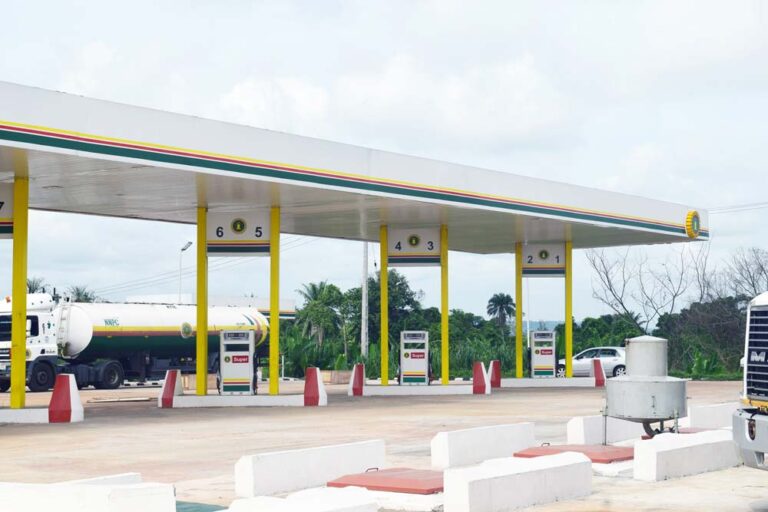
THE Nigerian National Petroleum Company Limited (NNPCL) is set to enforce a price hike of N1000 per litre of premium motor spirit (PMS) as directed by the Minister of State for Petroleum Resources, Heineken Lokpobiri, having admitted financial strain impacts on supply costs.
As a result of this development, the lingering fuel queues in major cities across the country could persist as most Nigerians make last-ditch efforts to make purchases at the NNPCL retail outlets, which sell at a lower rate when compared to others.
The NNPCL retail outlets sell at a subsidised rate of N617/litre in Nigeria’s capital Abuja with long queues, however, many private retail outlets sell above N700 per litre, with some selling almost N1,000.
The chief corporate communications officer at NNPCL, Olufemi Soneye, in a statement on Sunday, September 1, said the financial strain would affect the long-term gasoline supply across the country.
“NNPC Ltd has acknowledged recent reports in national newspapers regarding the company’s significant debt to petrol suppliers. This financial strain has placed considerable pressure on the Company and poses a threat to the sustainability of fuel supply.
“In line with the Petroleum Industry Act (PIA), NNPC Ltd remains dedicated to its role as the supplier of last resort, ensuring national energy security. We are actively collaborating with relevant government agencies and other stakeholders to maintain a consistent supply of petroleum products nationwide, “Soneye added.
The latest NNPCL financials as earlier reported by the ICIR revealed that contract liabilities for crude oil supply to foreign creditors currently rose to N3.89 trillion amid the struggles by domestic refineries to access feedstock.
The contract liabilities surged by 34.44 per cent compared to N2.89 trillion it was in December 2022.
Further analysis of the financial statements by The ICIR shows that the contract obligation arose from forward sale agreements, the sale of natural gas, and other contract liabilities.
The report indicated that forward sale agreements stood at N3.37 trillion, the sale of natural gas at N17.30 billion, and other contract liabilities at N498.32 billion.
It further reveals that N3.24 trillion represents non-current contract liabilities and N648.61 billion current contract liabilities.
So much of Nigeria’s resources have been wasted under elaborate turnaround maintenance for refineries that are still moribund with several shifting of the goal post for the Port Harcourt Refinery, which recently gulped $ 1.5 billion for its rehabilitation.
“Nigerian government needs to come out and speak more since the NNPC-the national oil company had admitted financial distress in fuel supply costs, which is technically telling us that the price will rise to about N1,000 or even N1,200. The NNPCL magic of selling below the landing cost of above N1,000 officially ends,” founder of Leadership by Data, Babajide Ogunsowo said.
BIG Brother Naija housemates, Fairme and Michky, known as the Radicals have been evicted from the reality TV show.
They were sent home from the show on Sunday, September 1.
The Radicals were nominated for eviction alongside Aces, DoubleKay and WanniXHandi after the first nomination for the season.
The ICIR reports that as the show continues, there would no longer be any custodian challenge, as housemates would start nominating each other for eviction as in previous seasons.
So far, 6 pairs of housemates including, NdiNne, Tami, Streeze, Flourish, Zinwe and Radicals have been evicted from the show leaving seven pairs in the game.
The seven dynamic duos still left to battle for the grand prize are Doublekay, Nelita, Aces, Mbadiwe Twins, Shatoria, Chekas, Beta and WannniXHandi.
This season, with the theme, “No Loose Guard” launched with a plot twist, welcoming housemates in pairs amongst many other exciting events and now with 16 housemates, setting the stage for intense competition as the show continues.
The ICIRreports that for this season, the contestants are paired into teams of two and are expected to compete together.
The eighth season of the show, with the theme “All Stars,” featured former housemates from past seasons with Ilebaye Precious Odiniya, popularly known as the Gen Z baddie, emerging as the winner.
KEBBI State Independent Electoral Commission (KESIEC) has declared the All Progressives Congress (APC) winner of local council polls held on Saturday, August 31, in the state.
The announcement was made on Sunday, September 1, by the chairman of the commission, Alhaji Aliyu Muhammad-Mera in Birnin Kebbi, the state capital.
He said the APC won all the 21 chairmanship and 225 councillorship seats.
He noted that 17 political parties participated in the polls, including the All Progressives Congress (APC), New Nigeria Peoples Party (NNPP), Labour Party (LP), African Action Congress (AAC), Boot party, Social Democratic Party (SDP), among others.
Announcing the result, he said the commission had approved and accepted the results of the councillorships and chairmanships for the LGAs, as declared by the returning officers of the various councils, as well as the results of the elections at the voting wards.
The chairman also commended the security agencies and all other stakeholders for their collaboration and expressed delight that the exercise went without hitch.
In July, The ICIR reported that the Supreme Court granted the 774 Local Governments Areas (LGAs) financial autonomy ruling that it was unconstitutional for the state government to hold on to or manage the LGAs’ funds.
Besides, the court barred the governors from sacking constitutionally-elected local government chairmen.
The ICIR reports that governors have been blamed for the underdevelopment of local governments in Nigeria.
They have been accused of squirrelling the funds meant for that tier of government and appointing their loyalists to manage them and help them to loot the local government finances.
NIGERIANS have taken to social media to lambast Edo State’s former governor, Adams Oshiomole, for calling the state’s incumbent governor and wife childless.
Oshiomhole, who led the state between 2008 and 2016, is currently a serving senator representing Edo North Senatorial District.
In an interview that has gone viral on social media, the federal lawmaker said his successor, Obaseki and his wife, Betsy, were childless and had refused to adopt children.
“I was shocked yesterday to see Mrs Obaseki, the First Lady, saying that our candidate had no wife. I am sorry she had to say that because here is a woman who has no child.
“Between him and Obaseki, they have no child. They are childless. They are even not ready to adopt. I don’t blame anybody who shouldn’t have a child. But people who have love for children go to motherless homes and adopt children. They have not adopted. They are both in their 60s.
“Their marriage, I don’t know whether it’s a contract or whatever it is but they have no child. Our candidate not only has children, he has invested in the education of those children.
He said among the children are a lawyer and a doctor.
Reacting to this, some Nigerians described his claims as distasteful and falling short of what was expected from a leader.
A senior journalist, Richard Akinola, wrote on Facebook, “Politics would come and go but it is utterly irresponsible for Adams Oshiomhole to mock the First Lady of Edo, Mrs Obaseki as being barren, as a riposte to Mrs Obaseki who said the APC governorship candidate has no wife.
“Not getting married or divorced is a matter of choice but not having a child in African context is beyond individual couples. That is in the hands of God. Oshiomhole even went ahead to state that apart from being barren, the Obasekis refused to adopt, meaning they don’t like children.
“How does he want the parent of Mrs Obaseki to feel? This is the height of irresponsibility by someone who is over 70, just because of politics. Does Oshiomhole know where the paths of his children would cross tomorrow where this statement would be made to confront them?
“We need to be careful about some statements we make at the twilight of our lives which would become crosses to be carried by children and grandchildren. Oshiomhole should apologise to the Obasekis for this faux pas.”
Similarly, one X user, @LawrenceokoroPG said “Adams Oshiomhole is successfully using his mouth to destroy the candidacy of his candidate just as he did with Ize-lyamu in 2020. Edo has decided to stand firm against Oshiomhole and his high desire for godfatherism”.
Another user, @sales_unwana wrote, “Oshiomhole’s remark is a stark reminder of how low politics can get. Instead of addressing the issues, we’re tearing each other down over personal matters that have nothing to do with governance. This kind of rhetoric only serves to divide and distract.”
@afia_visials also added, “Politics in Nigeria is a very mad game. When this guy was campaigning for Obaseki. He didn’t realise that he had no children. Today the is talking about it on national TV. This is a very silly thing to say about someone. This isn’t politics anymore.”
The statement by Oshiomhole followed the comment by the state’s First Lady during the governorship elections campaign of the People’s Democratic Party (PDP) candidate, Asue Ighodalo.
The ICIR reports that the Edo State gubernatorial elections will be held on September 21.
AN ex-beauty queen, Oluwadamilola Aderinoye, has surrendered to the National Drug Law Enforcement Agency (NDLEA), eight months after being declared wanted.
This was made known in a statement on Sunday, September 1, by the agency’s spokesperson, Femi Babafemi.
According to Babafemi, some items including, 606 grammes of Canadian Loud, a synthetic strain of cannabis, an electronic weighing scale, large quantities of drugs packing plastics, a black RAV 4 SUV marked Lagos KSF 872 GQ, and her picture frame, among others, were recovered from her apartment.
The ICIRreported in January that the NDLEA declared Aderinoye wanted after she fled her residence in Lagos during a raid.
The NDLEA operatives had raided her apartment at Oral Estate, Lekki, on Wednesday, January 24, following credible intelligence that she deals in illicit substances.
Babafemi in the statement said “Wanted ex-beauty queen, Ms. Aderinoye Queen Christmas, also known as Ms. Queen Oluwadamilola Aderinoye, has surrendered to the Lagos Command of the agency after about eight months in hiding.
“She was declared wanted by the agency in January after she escaped from her Lekki, Lagos residence when NDLEA operatives raided her apartment at the Oral Estate, Lekki, on Wednesday, January 24, following credible intelligence that she deals in illicit substances…
“The suspect, who claimed she had been hiding in Akure, Ondo State, since January when she escaped arrest in Lekki, Lagos, however, surrendered to the agency on Wednesday, August 28.”
The spokesperson added that the agency intercepted hard drugs worth over N17 billion naira in Port Harcourt and Lagos.
The drug comprises 31,124, 600 pills of tramadol 225mg and bottles of codeine-based syrup intercepted in street value at the Port Harcourt Port Complex, Onne, Rivers state and Tincan seaport in Lagos.
The agency also arrested a suspect, Friday Gabriel along Minna-Suleja road in Niger State while he was allegedly moving 1,900 capsules of tramadol, 300 bottles of codeine syrup and 600 packets of exol-5 tablets on August 26.
In Bauchi State, the operatives on Saturday, August 31, arrested two suspects – Garba Muhammed, 35, and Usman Yakubu Shehu, 31 – along Bauchi-Gombe Road while allegedly transporting 308 blocks of cannabis weighing 246.4kg, concealed in a false compartment of a J5 bus marked Edo state URM 38 ZY.
THE Federal Government has directed the Minister of State for Defence, Bello Matawalle, and other military chiefs to relocate to Sokoto State to intensify efforts to eliminate the menace of banditry, kidnapping, and terrorism in the North-West region.
This directive was disclosed in a statement by the director of information and public relations at the Ministry of Defence, Henshaw Ogubike.
The government emphasised that the move was part of its strategy to combat the ongoing security challenges in the North-West.
Reacting to the decision, Matawalle said they would oversee operations to dismantle the criminal network led by Bello Turji and his gang of bandits in the region.
“These criminal bandits have been circulating videos of a Nigerian military armoured vehicle that was stuck in a water-logged area.
“And late in the night, the officers were asked to withdraw to avoid being ambushed by bandits, later in the night the bandits went to the water-logged area, recording video of the armoured vehicle that was stuck and celebrating it.
“This incident happened in Kwashabawa, Zurmi Local Government Area in Zamfara. This is not acceptable as President Bola Tinubu has been giving great support to the Armed Forces of Nigeria. The Federal Government is deeply concerned about the persistent threat posed by banditry and terrorism in the North West particularly,” he stated.
He said his team was ready to deploy all necessary assets to ensure that these criminal elements are flushed out and peace is restored to the region.
He noted that there was an urgent need to move against the terrorists to enable people to move freely.
“The time is up for these bandits and terrorists as increased and consistent operations will weaken all their bases. I believe my presence in the North West will ginger our armed forces,” he added.
Matawalle further assured the people of the North-West region that the security forces would leave no stone unturned in flushing out the bandits.
“I will be on the ground in the North-West with the CDS (Chief of Defence Staff) and other military chiefs, leading our brave men and women in uniform.
“I also call on residents of these states to remain vigilant and cooperate with the security forces as the Federal Government has resolved to protect the lives and properties of all Nigerians. The security and well-being of the people remain the government’s top priority,” he said.
Terrorists have been on the prowl in Nigeria’s North-Western region. Since 2011, when the conflict, which began in the North-East, escalated, over 12,000 people have died and hundreds of thousands displaced across the North, especially in rural communities where security response is slow or absent.
Following his appointment in August 2023, The ICIRreported how Mattawalle’s previous role as governor was marked by heavy criticism due to insecurity issues that plagued Zamfara State under his administration.
Mattawalle, who served as the governor of Zamfara State between May 2019 to 2023, left the state as one of the worst hit by terrorist attacks in Nigeria. Attacks by a group of terrorists known as bandits went rampant under his watch leading to the killing of thousands of people in the state and across the North-West region of the country.
During Matawalle’s tenure, Agriculture which is the major source of income for the residents of the state suffered devastation as these terrorists imposed protection levies before being allowed to cultivate farmlands or harvest ripe crops.
Before Mattawalle left office, terrorist activities such as abductions, looting, and killings escalated throughout the state. In some parts of the state, the terrorists run parallel administrations, collecting taxes and levies and making laws.