Home Blog Page 53

Iran vows retaliation after top commander killed in US-Israeli strike

0

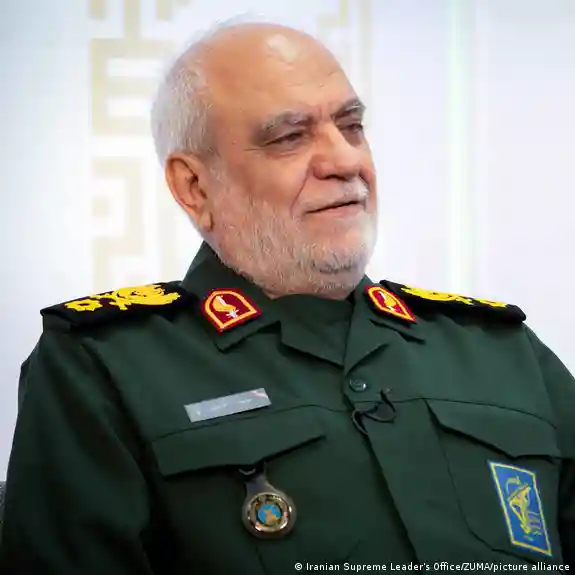
IRAN has threatened retaliation after a top commander of the Islamic Revolutionary Guard Corps (IRGC), Majid Khademi, was killed in a United States-Israeli strike.

State media, quoting the Guards, said Khademi, head of the IRGC intelligence arm, died in a dawn attack described as a “criminal terrorist” operation by the “American-Zionist enemy.”

Khademi, appointed in 2025, is the latest senior Iranian figure eliminated in a string of strikes. He previously led the Guards’ Intelligence Protection Organisation and spent decades in intelligence and counter-espionage roles.

His killing is seen as a major hit to Iran’s security architecture.

The IRGC intelligence unit plays a central role in surveillance, counterintelligence and internal security, reporting directly to the country’s leadership.

Also confirming his death, Israel Defense Forces, in a statement on Monday, April 6, said Khademi was a key operative involved in external operations and internal crackdowns.

“Khademi was one of the IRGC’s most senior commanders and had accumulated extensive experience over many years.

“Khademi worked to advance terrorist attacks worldwide, and was responsible for monitoring Iranian civilians as part of the regime’s suppression of internal protests,” the statement read.

Meanwhile, Tehran has warned of “more devastating” retaliation if further strikes hit its territory or civilian infrastructure.

“Major General Majid Khademi, the powerful and educated head of the Intelligence Organisation of the Islamic Revolutionary Guard Corps, was martyred in the criminal terrorist attack by the American-Zionist enemy… at dawn today,” said the Guards in a post on their Telegram channel.”

The strike came amid continued tensions across the region, with Iran, Israel and the United States exchanging threats and attacks.

Over the weekend, US President Donald Trump threatened to launch attacks on Iranian infrastructure, including power plants and bridges, if Tehran fails to reopen the Strait of Hormuz, a critical global oil route.

The warning followed Iran’s seizure of the waterway, through which about a fifth of the world’s oil supply typically passes, consequently disrupting global energy supply.

The price of whistleblowing: Mubarak Bello’s fight for justice

0

By Godwin Onyeacholem

“YOU have two options now: To live or to die.” That was the chilling message with which a senior police officer confronted Mubarak Bello, a 38-year-old whistleblower and father of four young children, whose revelation has left the Katsina State police command fiercely rattled since 2019.

Bello, a civilian staff in the finance unit of the state command had exposed three layers of massive fraud perpetrated by the command’s high-ranking but heavily corrupt police officers:

  1. a payroll inflated with thousands of phantom officers;
  2. illegal “tax” deductions ranging from N5,000 to N80,000 levied on officers’ monthly salaries;
  3. and a fraudulent loan scheme through fake companies in which loanees were fraudulently deducted long after repaying the loans.

Since Bello reported the grand-scale swindle to relevant authorities including the Independent Corrupt Practices and Other Related Offences Commission (ICPC) and the Economic and Financial Crimes Commission (EFCC), his universe has gone downhill. As this piece goes out, he is buffeted by a continuous stream of virulent retaliation launched, in a classic case of institutional betrayal, by his employers, the police, a critical organ of the state whose duty it is to preserve law and order and protect people who expose criminal conduct, but has now turned themselves into a tool of deliberate, mean-spirited oppression of a whistleblower.

And strangely enough even if unconsciously, the whistleblower’s punishment by the police is equally kept alive by no less similarly pivotal state organs, notably ICPC and EFCC, with their seeming acquiescence to an obvious illegality as shown by their failure to investigate the whistleblower’s disclosure and ensure his safety as global best practice recommends in such cases. These two institutions ought to know better, even if the police have chosen to go rogue.

In actual fact, both the ICPC and EFCC, and indeed other state-empowered institutions having anything to do with whistleblowing, need to be deeply schooled on the essentials of whistleblowing as a mechanism for achieving transparency and accountability in public and corporate governance. The consistent standard in whistleblowing management which has clearly eluded these institutions is that once a whistleblower submits a report to relevant agencies, the whistleblower is entitled to full protection from varied and non-exclusive forms of reprisals from any quarter, even as the accuracy of the disclosure is undergoing assessment.

So, in Bello’s case, ICPC, EFCC, SSS, and even the federal ministry of justice and the Police Service Commission (PSC) which received the whistleblower’s disclosure, it’s fair to say they all dropped the ball scandalously by failing to prevent the reprisals repeatedly launched at him. It’s even worse that Bello’s disclosure was found to be full of merit at a glance, yet nothing of substance came out of it. The wrongdoers in the police have not been brought to account, and the whistleblower is left to suffer all kinds of mistreatment.

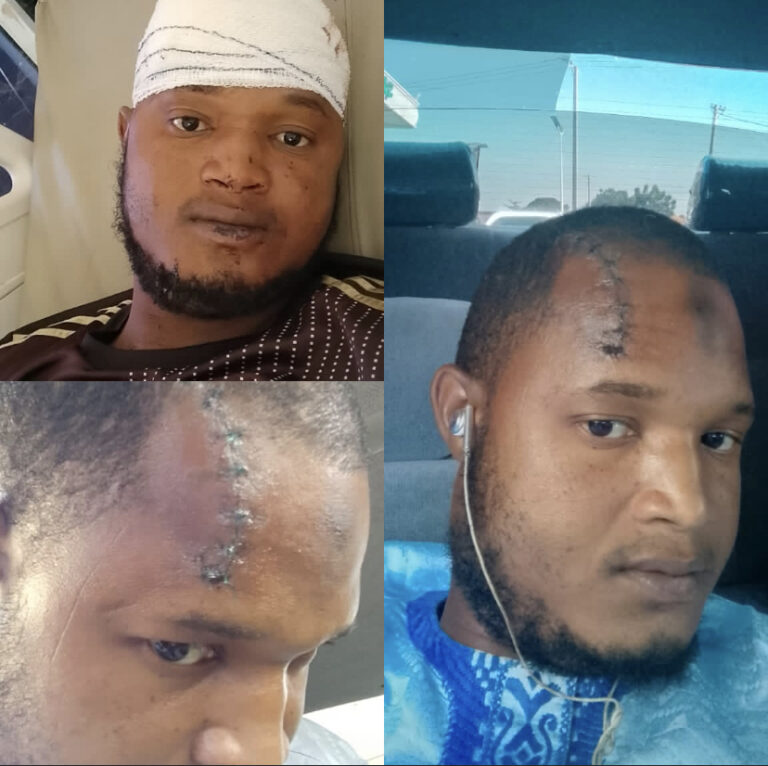
At one point Bello was arrested by the police, tortured and released after eight days without a formal charge, but his car was seized and is still with the police. His house was ransacked and valuable property removed by operatives from the State Intelligence Bureau (SIB). He had been physically attacked many times by a combination of policemen and hired ruffians and, in one instance, almost left for dead with a big gash on his forehead. The scar left by the stitched wound on his face is an enduring mark of state cruelty not only against the whistleblower, but also against truth-telling.

Not done yet, the police turned the screw by slamming him with two separate lawsuits alleging spurious charges intended to shut him up, the latest is an upcoming re-arraignment at the federal high court in Katsina initiated by the inspector general of police. As is well known, lawsuits are a slippery terrain for whistleblowers. They are often long and costly, and their outcome, decided by a judge, are always unpredictable. More than anything, Bello is traumatized by the retaliatory court cases before him, and occasionally he fights off the distress by showing frustrations and resentment toward his lawyers understandably.

When Katsina became increasingly unsafe due to constant harassments, he fled the town and relocated his wife and children to where he thought they would be safest inside the city. He was wrong. His persecutors traced the house, and constantly stormed it to ask his wife his whereabouts. One night, they broke into the house and violated the woman. As Bello narrated the hideous crime, he broke down and tears of anguish filled his eyes.

To be fair to ICPC, they once attempted to act by writing to the police to release the indicted officers for questioning. But the police, then headed by Kayode Egbetokun, ignored them and ICPC quietly retreated with their tails between their legs, and leaving the familiar impression that “our hands are tied,” an expression commonly trotted out in Nigeria by weak, ineffectual institutions and state officials lacking the will to act in accordance with the law.

Shockingly, the same incapability was demonstrated by President Muhammadu Buhari whose administration introduced the whistleblowing policy to fight corruption, and to whom the whistleblower had the privilege of narrating his story at the height of his persecution, was unable to save the whistleblower despite his well-advertised aversion to corrupt practices. After the whistleblower shared his concern with Buhari during a rare private meeting, the best the administration did for Bello was to send him to a safe house in Kaduna. Bello spent three months there and left on his own out of frustration. He wanted justice, not the luxury of a secluded sprawling safe haven.

If the whistleblower’s experience shows anything, it is evidence of a considerable amount of state failure as seen in the collapse or ineffectiveness of the moral clarity of Nigeria’s leadership in key institutions. For example, the police failing to maintain law and order, and the anti-corruption agencies not having the nerve to tackle corruption and protect citizens who report wrongdoing.

Because of the uncertainty and delays surrounding his court cases, Bello is expectedly afflicted with legal abuse syndrome (LAS), a kind of post-traumatic stress disorder related to a psychic injury often found in individuals assaulted by legal abuses and betrayals. This has left him nursing suicidal thoughts sometimes. Fortunately, he is already seeing a psychologist, thanks to the Coalition of Whistleblower Protection and Press Freedom (CWPPF) which had mounted a feisty advocacy for the safety of the whistleblower.

The coalition, among others, includes the African Centre for Media and Information Literacy (AFRICMIL), which is the lead organisation in the advocacy, Centre for Journalism Innovation and Development (CJID), International Centre for Investigative Reporting (ICIR) and Hope Behind Bars (HBB). In separate interventions, CWPPF and AFRICMIL had sent petitions to the Inspector General of Police and the Chair of ICPC highlighting the need to protect the whistleblower and guarantee his safety. Neither has responded to the petitions.

The police had been battling with extreme ferocity trying to persuade the whistleblower to disclaim his disclosure. The officer who accosted him offered money which Bello rejected, opting instead to stand by with the truth in the face of mortal danger. Seeing that the whistleblower won’t budge, the police journeyed with cash and plenty of gift items to Tsauri, a village in Kurfi Local Government Area of Katsina State, to meet with Bello’s father and persuade him to convince his son to shut up for good.

That is not the way to go. The police should be searching themselves and clearing the dregs that have put their reputation in a bad light. They should regenerate themselves as society’s pillar of rectitude, not a branch of corruption, dishonesty and wickedness.

To this end, the new Inspector General of Police, Olatunji Disu, should quickly terminate ongoing judicial retaliation deployed against the whistleblower by withdrawing the two frivolous suits and stopping all other forms of harassments against him and his family. Anything short of this will be grossly unfair and morally wrong, as well as an assault on public interest whistleblowing.

Above all, the Nigeria Police Force must guarantee the safety of Mubarak Bello and his family. The whole world is watching!

The Platform to Protect Whistleblower in Africa (PPLAAF) is deeply appreciated for its support in this campaign.

Godwin Onyeacholem is Program Manager at the African Centre for Media & Information Literacy.  

Iran war: what African countries can do to get through the crisis and emerge in a better place

0

By Danny Bradlow, University of Pretoria

BY Easter 2026 it was still not clear when – or how – the war initiated by Israel and the US against Iran would end. But what was already clear was that it would harm Africa in a number of ways.

Firstly, it would adversely affect the global supply and prices of oil and gas, fertilisers and food. Secondly, local currencies would be affected. More than a month after the war had started a number of African currencies had begun to lose value against the US dollar.

Thirdly, interest rates stopped falling and further rate increases were highly likely. Fourth, there will be a decline in access to affordable foreign financing.

How should Africa respond?

African countries cannot avoid being harmed by the current Gulf war. Nevertheless, based on my work in international economic law and global economic governance, I think there are two lessons that, if followed, can help the continent emerge from the crisis in a better place.

First, governments and societies need to be pragmatic. Their first priority must be to do whatever they can to mitigate the impact of the war, particularly on their most vulnerable citizens. This will require governments to make trade-offs.

They will have to reallocate budgets to at least maintain the level of imports necessary to meet the society’s basic needs. They will need to convince their creditors to help finance their necessary imports. They will also need to persuade them to be flexible enough that they leave governments with at least some policy space.

Second, states and societies need to identify opportunities within the crisis for actions that over the medium term can help them meet their financing, economic, environmental and social challenges. This requires collaboration between the state and its non-state stakeholders. Business, labour, religious groups, civil society organisations and international organisations all have something to contribute.

Action in the short run

The focus of Africa’s efforts in the short term must be on minimising the negative effects of the war and on managing the state’s external debts in the most sustainable and effective way.

This is easy to state, but hard to implement. This is particularly the case in the current international environment, in which it is not realistic to expect donor countries and other international sources of finance to be particularly generous.

African countries will need to convince their creditors to acknowledge that this crisis is beyond Africa’s control and that they should not compound the pain that’s being experienced. This will require, at a minimum, that the creditors agree to suspend debt payments for the next year.

Creditors have already accepted the principle that debt payments can be suspended when debt challenges arise from sources beyond the debtor’s control. Many of them have accepted clauses requiring such action under specific conditions in their most recent debt contracts. They also did this during COVID.

Second, African countries, which are already heavily indebted, should challenge their multilateral creditors to accept the consequences of being among the biggest creditors for the continent. This includes the World Bank, the International Monetary Fund and the African Development Bank. By custom these institutions are treated as preferred creditors. This means that they get paid before all other creditors. Instead of participating in any debt restructurings, they also make new loans to the debtor in crisis. This shifts the debt restructuring burden onto the debtor’s other creditors. It also increases the total amount owed to the multilaterals.

This cannot continue. These institutions need to be more creative in providing Africa to financing. This should include:

Third, governments should work with the Alliance of African Multilateral Financial Institutions to use these institutions more effectively to finance African development. For example:

  • They should require the institutions to only undertake transactions that are consistent with their development mandates. This means no more opaque transactions like the recent one that the African Finance Corporation concluded with Senegal.
  • African governments should take the necessary action to activate the African Financial Stability Mechanism that they agreed to establish last year. This would create a useful financial safety net for the continent.

Fourth, African governments must build on the efforts they began last year to become a more effective advocate for African development financing interests at the international level. Among these efforts was the initiative by African ministers of finance to develop common African positions on sovereign debt restructurings. Another was South Africa’s launch of the African Expert Panel that proposed a number of initiatives on African debt and development financing.

In the medium term

African countries should advocate for the IMF to review its governance arrangements so that it becomes more accountable and responsive to developing countries, including African states and societies.

They should also advocate for the IMF to more use its existing resources, including its gold reserves, more creatively to support Africa.

Second, Africa should call for a debate on the preferred creditor status of multilateral financial institutions. This has become particularly relevant because the members of the Alliance of African Multilateral Financial Institutions are claiming that, like all other multilateral financial institutions, they are entitled to this status.

It is not clear that there are good arguments for excluding these institutions from preferred creditor status while protecting the position of the legacy institutions. This suggests that there is a need for some general principles that help determine which institutions should be treated as preferred creditors. These should be acceptable to all multilateral financial institutions and other market participants.

Third, African societies must make every effort to demonstrate that they are taking control of their own development. They should demand that their governments and all other actors in African development finance behave responsibly in regard to the financial, economic, environmental and social aspects of these transactions.

Another medium term objective should be to limit the illicit financial flows that are so often associated with international trade and investment. This goal would be advanced by the successful conclusion of the current efforts to agree on a UN Framework Convention on International Tax Cooperation.The Conversation

Danny Bradlow, Professor/Senior Research Fellow, Centre for Advancement of Scholarship, University of Pretoria

This article is republished from The Conversation under a Creative Commons license. Read the original article.

Tinubu approves N3.3trillion to clear power sector debts

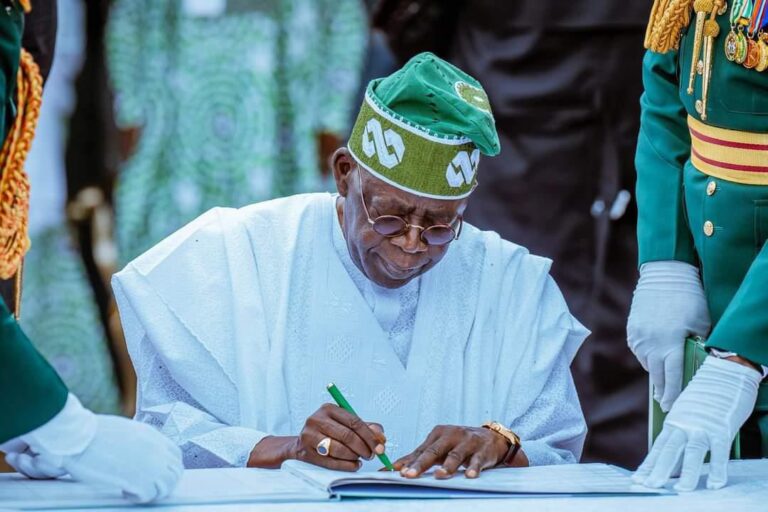
PRESIDENT Bola Ahmed Tinubu has approved a N3.3 trillion plan to settle long-standing debts in Nigeria’s power sector, in a move the Federal Government says is aimed at improving electricity supply and stabilising the industry.

The decision was announced in a statement issued on Sunday, April 5, and signed by Bayo Onanuga, Special Adviser to the President on Information and Strategy.

“President Bola Tinubu has approved the payment plan to finally settle the outstanding debts under the Presidential Power Sector Financial Reforms Programme”.

According to the statement, the approval followed a final review of debts recorded under the Presidential Power Sector Financial Reforms Programme.

“The debt repayment plan followed the final review of the legacy debts that have beset the power sector for more than a decade,” the statement said.

The presidency noted that the obligations accumulated over a period from February 2015 to March 2025, adding that, “After verification, the government agreed on N3.3 trillion as the total amount to be paid to clear the debts. Implementation has begun, with 15 power plants signing settlement agreements totalling N2.3 trillion.”

To fund the payments, the Federal Government has raised N501 billion so far. Of this amount, N223 billion has already been paid, with further payments ongoing, the statement said.

The presidency also said the plan was intended to support activities across the power sector. It noted that payments to companies involved in electricity generation and gas supply are expected to help improve how the system operates.

Special Adviser to the President on Energy, Olu Arowolo-Verheijen, said the programme was aimed at restoring confidence in the sector by ensuring that key players receive the funds owed to them.

She also stated that the effort is part of wider reforms, including improvements in electricity metering and changes to tariffs to better reflect the level of service provided.

“It is part of a broader set of reforms already underway — including better metering and service-based tariffs that link what you pay to the quality of electricity you receive”.

The statement added that the government is prioritising electricity supply for businesses, industries and small enterprises because of their role in supporting jobs and economic activity.

Tinubu also commended stakeholders involved in resolving the issues and confirmed that the next phase of the programme will begin later this quarter.

Nigeria’s power industry has faced persistent debt troubles that have weighed heavily on generation companies (GenCos) and the broader electricity value chain. Experts have previously described the debt build‑up as a major obstacle to stable electricity supply.

twitter X Bayo Onanuga
electrical power substation

In early 2026, the Federal Government raised N501 billion from the domestic bond market under the Presidential Power Sector Debt Reduction Programme to begin settling arrears owed to GenCos.  This bond issuance drew strong investor interest, with full subscription from pension funds, banks and asset managers, marking a key step in addressing legacy liabilities dating back over a decade.

The N501 billion bond was part of a wider effort to manage more than N6 trillion in accumulated liabilities across the electricity sector and to rebuild confidence among power producers and gas suppliers.

Recent ICIR reports also noted that the difficult financial position of generation and gas companies had contributed to the slow pace of improvements in electricity supply and complicated quick‑fix promises from officials.


Resident doctors declare indefinite strike

0

THE Nigerian Association of Resident Doctors (NARD) has announced an indefinite nationwide strike, set to commence at midnight on Tuesday, April 7, 2026.

The Association said its decision followed an “avoidable” dispute with the Federal Government.

The decision was reached during an extraordinary virtual meeting of the association’s National Executive Council (NEC) held on April 4, where members deliberated on recent policy changes affecting doctors’ welfare.

In a statement signed by its Secretary-General, Shuaibu Ibrahim on Monday, April 4, the association expressed concern over the Federal Government’s decision to remove the Professional Allowance Table (PAT), describing the move as “unfortunate” and a trigger for the looming industrial action.

The association outlined key demands, including the immediate reversal of the decision to halt the implementation of the PAT from April 2026.

It also called for the payment of promotion and salary arrears owed to doctors in some centres.

Other demands include the prompt conclusion of the process for the payment of the 2026 Medical Residency Training Fund (MRTF) and the settlement of outstanding 19 months’ arrears of the Professional Allowance.

Background

The current dispute is rooted in the implementation of a revised Professional Allowance Table negotiated between NARD and the Federal Government after a prolonged strike in 2025.

The agreement provided improved remuneration for resident doctors, including call duty allowances, shift allowances, rural posting incentives, and payments for non-clinical duties.

However, tensions resurfaced months later as the association accused the government of failing to honour key components of the agreement, particularly around payments and implementation timelines.

In January 2026, NARD had already signalled a hardening stance, insisting it would proceed with a planned strike despite an injunction by the National Industrial Court of Nigeria restraining the action.

The court, presided over by Justice Emmanuel Subilim, had ordered the association not to embark on its scheduled strike, following a motion filed by the Federal Government through the Attorney General of the Federation.

Despite the order, NARD maintained that the injunction did not address the underlying welfare issues confronting its members.

At the time, NARD President, Mohammad Suleman, said thousands of doctors remained unpaid, noting that more than 2,000 members were yet to receive arrears from the 25–35 per cent adjustment to the Consolidated Medical Salary Structure (CONMESS).

He also dismissed government claims that several of the association’s demands had been addressed, arguing that the reality on the ground contradicted official assurances.

Although the planned January strike was later suspended following fresh commitments from the government and interventions by key stakeholders, including the presidency and the National Assembly, The ICIR reported that the Association described the move as “strategic and conditional.”

Meanwhile, in its latest declaration, NARD said the strike would be “total and comprehensive,” with members directed to withdraw services across public health institutions nationwide.

Eyebrows as lecturer mandates OAU students to pay ₦16,100 for course material

1

CONCERNS have emerged at the Obafemi Awolowo University (OAU), Ile-Ife, after a class message surfaced directing  students  of a particular department to pay ₦16,100 for a compulsory course manual, ICIR has learnt.

In the message obtained by The ICIR, a class representative informed students of the commencement of payment for a CHM 102 manual, providing bank details and warning that failure to comply could affect record-keeping of payments.

“This is to officially inform all Exaltatus that payment for the CHM 102 Manual has commenced… Amount: ₦16,100,” the notice read, adding that students must upload proof of payment and submit receipts through designated channels.

Reacting to the development, a source who spoke to The ICIR described the situation as part of a broader pattern of exploitation targeting students in the institution.

“Students of the Obafemi Awolowo University have been under extreme extortion by the lecturers, especially the Year 1 (100 level) students,” the source said.

The source further questioned the scale of the charges, particularly given the size of affected classes.

“Imagine a class of more than 5,000, and sometimes 10,000 or more, buying soft copy handouts (ceremoniously called manuals) for N16,000,” the source added.

According to the source, the manuals are digital that cost significantly less to produce, raising concerns about the amount being generated from students.

“That’s whooping N10 million to N20 million for an item that costs less than N500 to develop and distribute in such volumes,” the source said.

The source also alleged that the fees have steadily increased over time, from about ₦5,000 to ₦10,000 in earlier semesters to the current amount, with students left with little choice but to comply.

“Sadly, the students and parents do not have ways out but give in,” the source stated.

Call and texts sent to the Public Relations Officer of the University, Abiodun Olanrewaju were not responded to as of the time of filing this report.

Recall that the the Academic Staff Union of Universities in Nigeria, ASUU, had expressed displeasure at the mandatory sale of handouts by some lecturers in tertiary institutions.

Biodun Ogunyemi, former President of the union, expressed this view in a previous interview with the News Agency of Nigeria, NAN.

“It is not wise for lecturers in our tertiary institutions to compel students to be buying handouts, though it is not a widespread practice; we have few people that are misbehaving.

“But the system has a way of handling them, so anywhere they see them they always put them on check.

It is not permitted in the system and there is a structure for tracking and dealing with that so ASUU as a union don’t condone it and we discourage it anywhere and everywhere we go,” he said.

However, many Nigerian students still suffer silently in some tertiary institutions where lecturers extort money from them in the name of selling of handouts.


Obi tackles Tinubu on power, cites Jos comment as confirmation of failed promise

FORMER presidential candidate of the Labour Party, Peter Obi, has criticised President Bola Tinubu over Nigeria’s electricity crisis, saying the president’s recent comment during a visit to Plateau State reflected a failure to meet earlier campaign promises.

In a statement on Saturday, April 4, Obi recalled Tinubu’s pledge during the 2023 presidential campaign that Nigerians should not vote for him for a second term if he failed to deliver constant electricity within four years.

Obi argued that the country’s power situation had worsened since 2023, noting that average electricity generation dropped below 4,000 megawatts, while tariffs have increased.

He also said Nigeria’s per capita electricity consumption remained among the lowest globally, placing it below 30 per cent of Africa’s average.

According to him, Africa’s average consumption stands at about 617 kilowatt-hours (kWh), compared to Nigeria’s 144 kWh.

“When he took office in 2023, Nigeria had a power supply of over 4,000 megawatts and lower tariffs. Today, the electricity power supply is less than 4,000 megawatts on the average, and Nigerians are paying higher tariffs. Nigeria currently has the lowest per capita electricity consumption in the world, with a rate below 30 per cent of the African average. Africa’s average is 617kwh, Nigeria’s is 144 kWh. This means that Nigerians consume least electricity than other Africans,” Obi said.

The former Anambra State governor referenced Tinubu’s remarks during a condolence visit to Jos on April 2, following recent attacks in the state.

During the visit, Tinubu acknowledged power challenges at the airport, saying, “You have no light at the airport, and I have to fly back within the next 10 minutes…”

He said this while addressing victims of the attacks who were brought to him at the airport from their communities across the state.

Reacting further, Obi described the president’s comment on electricity as a reflection of the country’s persistent power challenges and a contradiction of earlier assurances.

“At a time when Nigerians are enduring days without power, our leaders cannot even stay a few minutes without it,” Obi said.

He accused the administration of showing disregard for its promises and urged Nigerians to reject what he described as incompetent leadership, reiterating his position that “a new Nigeria is possible.”

The ICIR reports that ahead of the 2023 presidential election, Tinubu repeatedly emphasised power sector reform as a cornerstone of his campaign.

He promised to tackle Nigeria’s chronic electricity shortages and improve generation, transmission, and distribution.

At campaign events, he assured voters that stable electricity was achievable within a single term, stating that if he failed to provide constant power within four years, Nigerians should not re-elect him.

However, the state of Nigeria’s power sector under his watch has drawn increasing attention, with many Nigerians lamenting persistent blackouts and unstable electricity supply.

Media, CSOs condemn Wike, demand apology over threat to Okinbaloye

A COALITION of press freedom and civil society groups has faulted the comments by Minister of the Federal Capital Territory (FCT), Nyesom Wike, following his threat to broadcaster Seun Okinbaloye of Channels Television.

The ICIR reported that the minister said he could have shot the broadcaster while addressing journalists during a media chat in Abuja.

The journalist had raised concern that the 2027 general election could end up being dominated by a single political party. He referenced the internal crisis affecting the African Democratic Congress (ADC), warning that the situation was troubling.

Okinbaloye said Nigeria “is doomed democratically” if the ADC, which he described as the only credible opposition, fails to participate in the 2027 elections.

Wike, responding to the comments, said: “I was surprised yesterday, thoroughly surprised. If there was any way to break the screen, I would have shot him.”

In a statement on Saturday, April 4, signed by 14 organisations, comprising media and CSOs, the coalition criticised the minister’s language and called for immediate redress.

The group asked him to withdraw the remark, apologise to the journalist and the media community, and clearly show again that he supports peace and press freedom, as required by the constitution he swore to follow.

While noting that the minister later said he had no intention of harming Okinbaloye, the group insisted that his remark was unacceptable. According to them, “even such hypothetical expressions of violent intent constitute a conditional threat and cannot be dismissed as harmless.

The coalition warned that any form of threatening language, whether direct or implied, could endanger journalists and weaken confidence in democratic processes.

It urged public office holders to communicate responsibly and maintain civility in public discourse.

The group also highlighted Nigeria’s press freedom challenges, noting that the country ranked 122 out of 180 on the global index, an indication of the difficult conditions under which journalists operate.

“Media professionals are routinely monitored, attacked, and arbitrarily arrested, particularly during electoral campaigns. Incidents like this can further imperil journalists and highlight the urgent need for balanced and responsible political engagement, especially from public officials.”

The coalition further urged political leaders and institutions to reject hostile rhetoric against the media and instead encourage constructive engagement, even when opinions differ sharply.

It anchored its position on Sections 22 and 39 of the 1999 Constitution (as amended), which recognise the role of the press in holding leaders accountable and guarantee the right to freely express and share information.

Signatories to the statement include the International Press Institute, International Press Centre, Media Rights Agenda, Enough is Enough Nigeria, Centre for Journalism Innovation & Development, Centre for Media and Society, YIAGA Africa, International Centre for Investigative Reporting, Global Rights, Dataphyte Foundation, Accountability Lab Nigeria, TechHer, Kebekatche Women Development Resource Centre, and DigiCivic Initiative.


After ICIR report, UDUS names staff in fresh dismissal over NYSC scam

0

By Abdullahi Muritala

USMANU Danfodiyo University Sokoto (UDUS) has, for the first time in recent disciplinary actions, publicly identified a staff member dismissed for misconduct, a move that followed a scrutiny triggered by an earlier report by The ICIR highlighting double standards in the institution’s handling of sanctions.

The university recently announced the dismissal of a staff member, Garba Ahmed, over his alleged involvement in the illegal mobilisation of unqualified students for the National Youth Service Corps (NYSC). Unlike previous cases, UDUS disclosed the identity of the staff member in its official statement.

In the statement, the Director Information and Public Relations of the University, Ismaila Yauri, said the decision was taken at the university governing council’s 176th meeting held on April 1, 2026.

The staff member, before his dismissal, worked in the Registry Department and was found guilty of gross misconduct.

This marks a shift from the pattern established in The ICIR’s earlier report, which revealed that while the university routinely published names and details of expelled students, it withheld the identities of lecturers and staff dismissed for serious offences, including result manipulation and sexual harassment.

The ICIR report sparked conversations around transparency and accountability within the institution, with stakeholders questioning the fairness of exposing students while shielding staff involved in comparable or more severe misconduct.

The latest development points to a possible response to the criticism, with the university taking a more transparent step by identifying the dismissed staff member in a case of significant public interest.

Although UDUS has not explicitly linked the change to the earlier report, the decision to disclose the staff member’s identity represents a notable departure from its previous communication style and signals a possible shift toward greater accountability.


Onyejeocha resigns as minister amid wave of exits ahead of 2027 elections

0

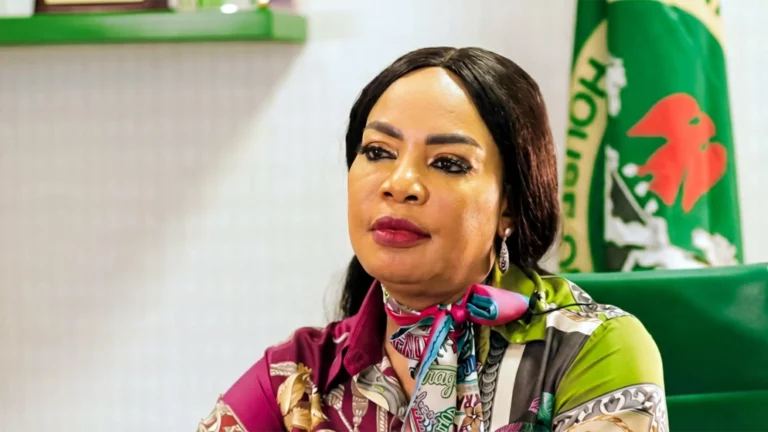
NKEIRUKA Onyejeocha has stepped down as Minister of State for Labour and Employment, joining other political appointees leaving office ahead of the 2027 elections.

In a statement on Friday, April 3, Onyejeocha described her exit as the end of a “significant chapter” in her public service, thanking the Nigeria President, Bola Tinubu, for the opportunity to serve.

She expressed appreciation for the president’s trust and leadership, noting that working under the administration’s Renewed Hope Agenda was both an honour and a privilege.

The former minister also commended the staff of the Federal Ministry of Labour and Employment for their dedication, saying their collective efforts helped advance policies that improved workers’ rights, workplace safety, and employment opportunities.

She extended gratitude to her constituents in Isuikwuato/Umunneochi Federal Constituency and Nigerians at large for their support during her tenure, adding that she remains committed to national development.

“This period marks the end of a significant chapter in my journey of service as I formally resign as Honourable Minister of State for Labour and Employment,” she wrote.

While it is unclear what prompted her resignation, it may not be unconnected with the directive by the president asking all appointees seeking elective positions to resign by March 31.

The directive, communicated through the Office of the Secretary to the Government of the Federation (OSGF), requires ministers, advisers, and heads of agencies intending to contest in party primaries, scheduled between April 23 and May 30, 2026, to resign to ensure compliance with electoral laws and promote a level playing field.

The ICIR reported that following the directive, several top officials have exited their positions.

Among them was Saidu Ahmed Alkali, Minister of Transportation, who is expected to contest the Gombe State governorship race, and Yusuf Maitama Tuggar, who has stepped down to pursue the Bauchi State governorship.

Similarly, Yusuf Tanko Sununu, Minister of State for Humanitarian Affairs and Poverty Reduction, has resigned and is reportedly preparing to contest a senatorial seat in Kebbi State.

Other appointees who have stepped down include Nasiru Gawuna of the Federal Mortgage Bank of Nigeria, Abdulrazak Namdas of the Niger Delta Development Commission board, and presidential aide Nasir Ja’oji, all of whom are said to be seeking elective positions.

Onyejeocha was also a former lawmaker, who represented Isuikwuato/Umunneochi federal constituency of Abia State in the House of Representatives from 2007 to 2023.