Home Blog Page 57

APC convention: Tinubu admits electricity woes, rejects one-party state claims

1

PRESIDENT Bola Tinubu has said his administration is tackling Nigeria’s persistent electricity crisis while dismissing claims that his party – the All Progressives Congress (APC) – is pushing the country towards a one-party state.

Speaking on Friday at the fourth Elective National Convention of the APC in Abuja, Tinubu acknowledged ongoing problems in the power sector, including debts and outdated infrastructure.

“We continue to face legacy issues such as electricity supply, debts to GENCOs and gas suppliers, and antiquated transmission infrastructure,” he said.

The president disclosed that the government had unveiled plans to improve electricity supply through structural reforms.

“Recently, we announced plans to address this by establishing the Grid Asset Management Company, which will inject approximately 1,600 megawatts into a new grid corridor,” Tinubu stated.

On concerns about Nigeria drifting into a one-party system, the president said the APC did not support such an arrangement, stressing the importance of opposition in a democracy.

“Let me reiterate, especially to those who often lament and misunderstand us: we do not seek a one-party state,” he said.

Tinubu’s claim came amid the fact that 32 of Nigeria’s 36 governors are his party members.

He added that democratic growth depends on active political competition and constructive criticism.

“Democracy thrives on vibrant and healthy competition. As a statesman and political leader, I believe in a credible opposition—one that can challenge, question and help refine policies. That is how statecraft improves, and good governance is achieved. That is how nations advance,” he said.

The president, however, criticised opposition parties over their stance on the Electoral Act 2026, describing their attacks as unhelpful.

“While we welcome criticism, the constant attacks by opposition groups on the Electoral Act 2026 are a disservice to the Nigerian people,” Tinubu said.

He maintained that the law followed due processes, including public hearings, and reflects efforts to strengthen Nigeria’s electoral system.

Tinubu said his administration remained committed to upholding the rule of law, ensuring credible elections, and building a “stronger, secure, and united nation.”

The ICIR reported that Tinubu had staked his re-election bid on constant electricity supply. The president is currently overwhelmed with myriad problems in the electricity sector, with electorates calling him out on the failed promise.

The president had said during the presidential campaign in 2023, “If I do not provide steady electricity in my first four years, do not vote for me in the second term…”

His promise has put him on the spot and has elicited reactions from Nigerians, including opposition party stalwarts especially as Nigerians continue to suffer erratic power supply.

Similarly, political developments in recent months have triggered debates over the strength of opposition parties, following defections of some opposition heavyweights, especially governors into the ruling APC.

The trend has raised concerns among critics about the possibility of weakening opposition voices, a key element in a functioning democracy.
Kano deputy governor resigns

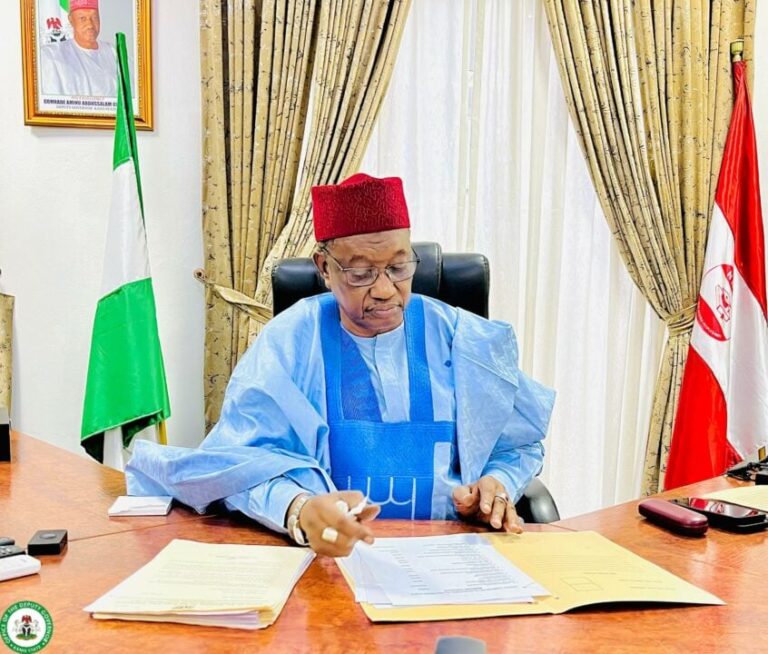
KANO State Deputy Governor, Aminu Gwarzo, has resigned.

His resignation followed ongoing impeachment proceedings initiated against him by the state House of Assembly.

His resignation was announced on Friday, March 27, in a statement issued by the spokesperson of the Kwankwasiyya Movement,  Habibu Mohammed.

“The Kwankwasiyya Movement wishes to formally inform the general public, the good people of Kano State, and the entire nation that the Deputy Governor of Kano State has tendered his resignation from office,” the statement said.

The ICIR reports that the development came weeks after the state House of Assembly began moves to impeach him, while a Federal High Court sitting in Kano declined his request to halt the process.

The Kwankwasiyya Movement said Gwarzo’s decision to step down was taken in the interest of stability and to allow governance in the state to function without disruption.

It added that prevailing circumstances had limited his ability to fully carry out the responsibilities of his office.

However, the statement stressed that the resignation did not amount to an admission of the allegations levelled against him, maintaining that he remained confident of his records in public service.

“For the avoidance of doubt, this resignation does not in any way constitute an admission of the allegations raised against him by the Kano State House of Assembly. The deputy governor maintains his innocence and firmly believes that his records in office and public service remain a testament to his integrity and commitment to the people,” the movement added.

According to the group, Gwarzo has also resolved to dedicate more time and energy to the Kwankwasiyya Movement, particularly in strengthening its structures, rebuilding strategies, and engaging in critical political realignments ahead of the 2027 general elections.

The impeachment process against Gwarzo was initiated earlier in March after he was accused of gross misconduct, abuse of office, and breach of public trust.

Lawmakers accused him of diverting funds during his tenure as Commissioner for Local Government, alleging that he received monthly payments from the state’s 44 local government councils between 2023 and 2024, amounting to hundreds of millions of naira.

Additional claims included the alleged collection of further funds under the guise of special assignments, as well as authorising payments running into hundreds of millions of naira to a pharmaceutical company, actions the assembly said violated procurement and fiscal regulations.

The impeachment notice, reportedly backed by a significant number of lawmakers, met the constitutional threshold required to commence the process.

The crisis followed heightened tensions in the state after Governor Abba Yusuf’s defection from the New Nigeria Peoples Party (NNPP), largely controlled by Kwankwasiyya’s leaders, to the All Progressives Congress (APC). The move, The ICIR reported, triggered divisions within the state’s leadership.

Wike allocates land, waives title fees for FCT traditional rulers

0

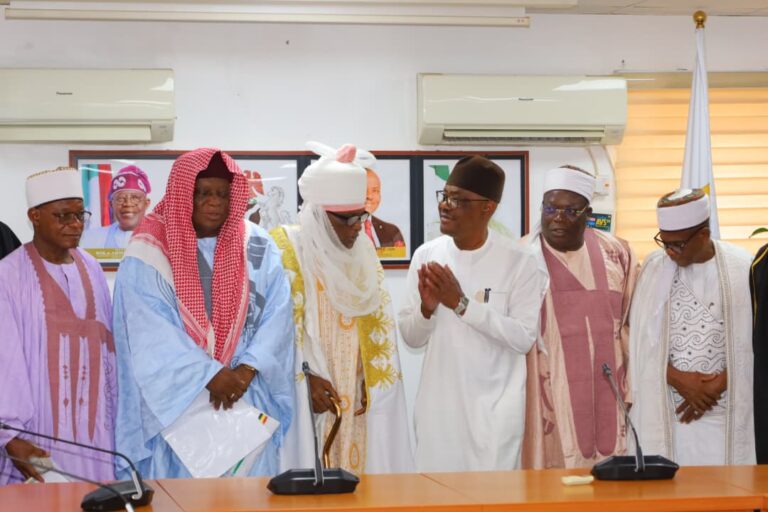
THE Minister of the Federal Capital Territory, Nyesom Wike, has approved land allocation to members of the FCT Council of Traditional Rulers.

He also granted a waiver on all statutory fees tied to the titles.

Speaking at a ceremony in Abuja on Friday, Wike said the decision followed directives from President Bola Ahmed Tinubu, stressing the need to recognise and honour indigenous communities in the nation’s capital.

“We cannot deny the fact that there are indigenous people who were here before the creation of the FCT. The President said we must extend a hand of fellowship to you. We must give honour to whom honour is due. If those who make peace cannot be appreciated with land, who should be?” Wike said.

He said it would be unjust to require traditional rulers to pay for land their communities have occupied for generations.

“The president has also said I should waive the payment of statutory fees. We cannot give you the task to go and look for money to pay,” the minister said.

He also pledged to provide utility vehicles to traditional rulers across the territory to enhance their effectiveness in community leadership, as part of efforts to support their functions.

He further highlighted ongoing infrastructure development in satellite towns, including the dualisation of the Airport–Kuje road, the Bwari–Zuba link road, and projects in Apo/Karshi and Gwagwalada, as well as the completion of the Arab Road network.

The FCTA under Wike has been tough with people who have allegedly breached laws relating to land use in the nation’s capital.

The ICIR reported that the FCTA recently released the names of 1,095 individuals and organisations whose properties’ titles were revoked over their failure to settle statutory land charges.

The FCTA said in a notice that enforcement actions would begin after the 14-day final grace period ended on November 25.

Most of the affected properties listed in the properties were mostly in highbrow neighborhoods such as Asokoro, Maitama, Garki, and Wuse area of the nation’s capital.

According to the administration, of the revoked titles, 835 properties defaulted on ground rent payments while 260 failed to pay violation and land use conversion fees.

Among those affected were former governor of Kano, Abdullahi Ganduje; former governor of Cross River, Donald Duke; wife of former President Goodluck Jonathan, Patience Jonathan; former Senate President, David Mark; and former deputy governor of Osun State, Iyiola Omisore.

The ICIR also reported in February that Wike approved the nullification of 485 land documents in the nation’s capital due to failed verification. 

He said the affected land titles had been removed from the regularisation database, after an extensive review conducted by the Department of Land Administration in collaboration with the Abuja Geographic Information Systems.

The cancelled documents cover various area councils and layouts, including Ushafa Village Expansion Scheme, Ushafa Extension, and Dawaki Extension 1 in Bwari Area Council; Kurudu-Jikwoyi Relocation, Kurudu Commercial, Karu Village Extension, Nyanya Phase IV Extension, Jikwoyi Residential, Sabon Lugbe, and Lugbe I Extension in Abuja Municipal Area Council; and Kuchiyako One layout in Kuje Area Council.

Less than 33% of students meet WAEC benchmark

THE West African Examinations Council (WAEC) has released the 2026 Computer-Based WASSCE First Series for Private Candidates, showing that just 32.72 per cent of candidates secured the minimum requirement of five credits, including English Language and Mathematics.

WAEC private candidates are individuals who register independently to take the WASSCE, commonly known as the General Certificate Examination (GCE) or WAEC designed for those who are not enrolled in regular secondary schools or who wish to retake the WASSCE.

The examination was conducted between October 25 and December 20, 2024. It introduced a new computer-based hybrid mode alongside the traditional paper and pen option.

WAEC announced a new initiative in January 2025, allowing students to resit their WASSCE papers quickly instead of waiting for nearly a year to resit for the examination.

Announcing the result, the council said out of 10,480 candidates who sat for the examination conducted between January 28 and February 14 nationwide, only 3,429 met the benchmark, highlighting persistent performance gaps despite marginal improvement.

“The performance improvement is the result of better preparation by candidates and our continued efforts to enhance the conduct of examinations. We remain committed to promoting academic excellence and maintaining the integrity of our processes,” WAEC said.

A breakdown of candidates who did well in the examination shows 1,847 males and 1,582 females, representing 53.86 per cent and 46.14 per cent, respectively.

Although WAEC described the outcome as encouraging, the data reflects a system still grappling with low success rates. It noted that the result marked a 5.76 percentage point increase from 26.96 per cent recorded in 2025, suggesting incremental progress rather than a significant turnaround.

WAEC attributed the improvement to better candidate preparation and reforms in examination conduct, reiterating its commitment to maintaining credibility and academic standards across the region.

“Our goal is to ensure that all candidates, whether private or school-based, are provided with fair and credible examinations that uphold regional standards. We congratulate the candidates who met the benchmark and encourage those who did not to continue striving for success,” the exam body added.

WAEC disclosed that it withheld the results of 75 candidates over alleged malpractice, noting that the cases were under investigation, with final decisions to be taken by the council’s relevant committee.

The examination body said affected candidates would be notified once due process is completed.

The ICIR reported that the council withheld the results of 2,577 in the 2024 Second Series results for private candidates over alleged examination malpractice.

Embattled former governor El-Rufai loses mother

0

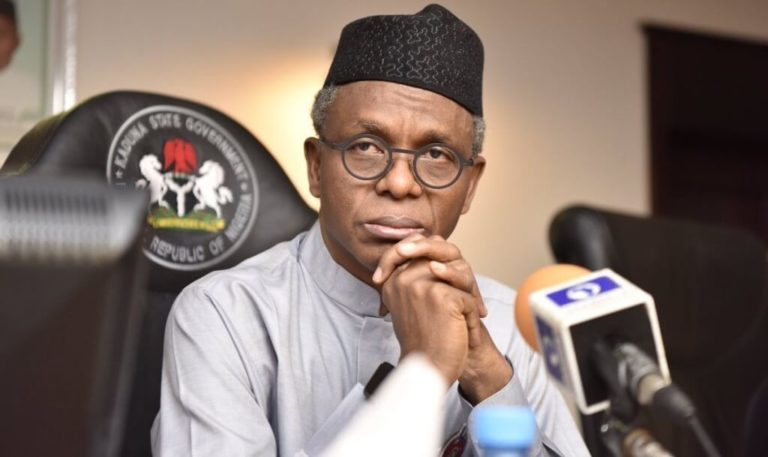
FORMER Kaduna State governor, Nasir El-Rufai, has lost his mother, Hajiya Umma El-Rufai.

The death was announced by his son, Mohammed Bello El-Rufai, who described the loss as a painful moment for the family.

In a statement on his X handle, the younger El-Rufai said the family was grateful for the life the deceased lived and prayed for Allah to grant her soul eternal rest.

“I would like to inform the public of the demise of my grandmother, Hajiya Umma El-Rufai, who passed away a few hours ago. She is the biological mother of our father, Mallam Nasir @elrufai.

“We are grateful for the life she lived and may Allah SWT bless her gentle soul. May He bless the soul of the parents we have lost. On behalf of our family, we seek your prayers,” he wrote.

The latest development came a week after El-Rufai’s sister-in-law, Safiya Ali Rufai, died after a brief illness on the day of the Sallah celebration.

Safiya, who was married to the former governor’s elder brother, the late Ali Rufai, a retired air vice marshal, was described by family members as a devoted and disciplined woman who played a significant role within the family.

Her death was earlier announced by Bello El-Rufai, who represents Kaduna North Federal Constituency in the House of Representatives.

The deaths came on the heel of the legal tussle between the former governor and the federal government.

The ICIR reports that the Federal High Court sitting in Kaduna had on March 24, adjourned the hearing of  the former governor’s bail application to March 31, 2026, following arguments from both defence and prosecution.

This mean that El-rufai is expected to be in custoddy of the Independent Corrupt Practices and Other Related Offences Commission (ICPC) at least until March 31.

The former governor is being prosecuted by the ICPC over allegations bordering on corruption, abuse of office, and money laundering.

According to court documents, prosecutors alleged that he unlawfully received about N579 million as severance allowance and additional foreign currency payments, which they claimed were proceeds of unlawful activities. The charges were said to contravene the Money Laundering (Prevention and Prohibition) Act, 2022.

The case also followed earlier scrutiny by the Economic and Financial Crimes Commission (EFCC) and an indictment by the Kaduna State House of Assembly over alleged diversion of public funds.

Abuja hosts thousands for APC national convention

THE All Progressives Congress (APC) national convention is set to begin in Abuja, bringing together governors, party leaders, and thousands of delegates from across Nigeria.

The convention, taking place at the Eagle Square from Friday, March 27 to Saturday, March 28, has 32 governors attending, alongside over 8,000 delegates from the 36 states and the Federal Capital Territory (FCT)

The APC national convention is one of the party’s most important statutory gatherings, allowing members to review leadership structures and make decisions that will guide the party’s direction as it prepares for the 2027 polls.

The ICIR reports that security was beefed up at the Eagle Square and its sorroundings since Thursday as all roads leading to the venue was cordoned off Friday morning for only accredited persons to access.

The Federal Government had on Thursday directed workers within the Federal Secretariat to work from home on Friday.

Several hotels in the nation’s capital have since become a beehive of activities as delegates and other party stalwarts converge on the city.

The APC, which has recently enjoyed a huge swell in its membership, will be strategising to confront opposition parties, including the African Democratic Congress (ADC) and Peoples’ Democratic Party (PDP) in the 2027 elections.

The ICIR reported that as of March 2026, nine sitting governors had defected from the PDP to the APC since the 2023 general elections. This wave of defections has increased number of APC-controlled states to 32 out of 36.

The governors officially switched allegiances, citing internal PDP crises and the need to align with the federal government. They are Zamfara State Governor Dauda Lawal, who defected in March 2026, and Adamawa State Governor Ahmadu Fintiri, who followed early this year.

In October 2025, Bayelsa State Governor Douye Diri and Enugu State Governor Peter Mbah joined the ruling party, while Akwa Ibom State Governor Umo Eno defected June 2025.

Similarly, Delta State Governor Sheriff Oborevwori dumped the PDP in April 2025. Later in 2025, Rivers State Governor Siminalayi Fubara jumped ship following a leadership rift, alongside Taraba State Governor Agbu Kefas, and Plateau State Governor Caleb Mutfwang.

2026 Kwame Karikari Factchecking, OSINT Fellowship opens for applications

 DUBAWA and Digital Technology, Artificial Intelligence and Information Disorder Analysis Centre (DAIDAC) are seeking applications for the Kwame Karikari Fact-checking and Open-Source Intelligence (OSINT) Fellowship 2026.

This is not just another fellowship; it is a chance to be at the forefront of the fight against information disorder in West Africa. The three-month intensive programme will equip fellows with cutting-edge fact-checking skills, hands-on practice with open-source intelligence tools, and mentorship, empowering fellows to become a beacon of truth in their communities.

Organisers say fellows will gain practical OSINT training, receive intensive, hands-on coaching in factchecking using open-source intelligence, with guidance and mentorship from the DUBAWA and DAIDAC teams. They will master current tools and verification techniques and get their reports published on their media platform and on DUBAWA channels.

Others include access support to establish a fact-checking desk in their newsroom and strengthen internal verification systems, joining a growing community of journalists committed to accuracy, and collaborate with peers across West Africa.

Fellows are also expected to lead fact-checking conversations across social media, radio and television, while promoting media literacy with their audience.

The fellowship is open to full-time journalists from Nigeria, Ghana, Sierra Leone, Liberia and The Gambia, fact-checkers or investigative journalists.

Female journalists and journalists with disabilities (PWDs) are strongly encouraged to apply for the 2026 Kwame Karikari Factchecking and OSINT fellowship.

Apply before April 4, 2026, and interested applicants can apply here.

Dangote Refinery reduces petrol price by N85/litre

0

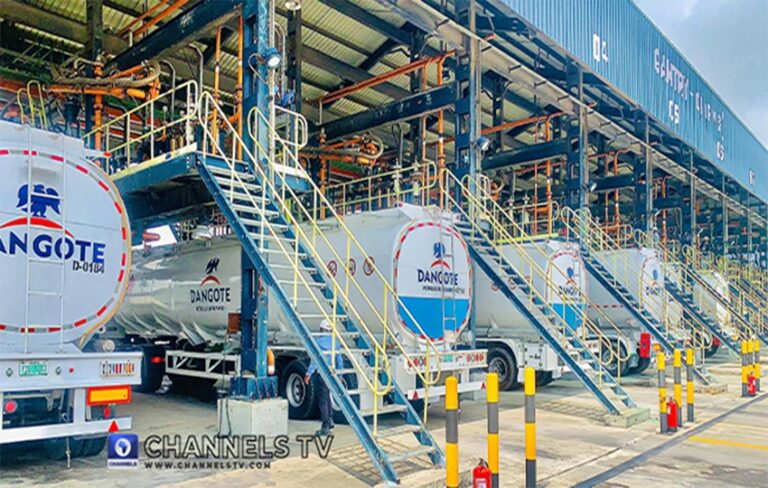
DANGOTE Petroleum Refinery and Petrochemicals has reduced its gantry price for petrol to N1,200 per litre and its coastal price to N1,153 per litre.

The company disclosed this in a statement by its spokesperson, Anthony Chijiena, on Thursday, March 26.

The 650,000 per day refinery dropped its petrol by N85 to N1,200 per litre from N1,285 per litre.

The latest fuel price drop comes after at least five petrol price hikes carried out by the refinery since the beginning of March amid ongoing tensions in the Middle East.

The ICIR reports that the adjustment marks a downward review in the refinery’s pricing structure and is expected to influence fuel supply costs across distribution channels, including depots and retail outlets.

The ICIR further reports that most filling station retail outlets across the Federal Capital Territory (FCT) are yet to adjust their prices and are still selling around N1,370 per litre as of Friday morning.

Analysts say petrol price volatility would continue, with the current US-Iran conflict disrupting global oil and gas supply chains, in addition to the petrol subsidy removal by the Federal Government.

“Nigeria is strongly connected to the global oil and gas market, and we shall continue to see these price adjustments till the end of the US-Iran war,” an economist, Kingsley Obiakor, said.

Poor electricity: Why local gas companies choose EU over Nigerians

0

DRIVEN by higher market gains, Nigeria’s gas generation companies are currently prioritising European markets over domestic markets amid the United States-Iran conflict, which is disrupting global supply.

Moreover, pricing disparity between domestic and exported gas pushes gas companies to target European markets.

The ICIR reports that the closure of the Strait of Hormuz, occasioned by the Middle East crisis, is significantly disrupting global gas supply markets, with gas-producing nations gaining massively from the crisis.

For instance, the strait’s closure has cut off roughly 30 per cent of India’s natural gas supplies and 54 per cent of its Liquefied Petroleum Gas (LPG) imports, forcing the government to prioritise household supplies over commercial and industrial consumers.

Nigeria ranks among the world’s top 8–11 countries with the highest gas reserves, boasting over 210 trillion cubic feet (TCF) of proven gas, making it Africa’s largest reserve holder.

Informed sources said part of the reasons for the export market priority was poor fulfilment of gas off-take obligations by the Nigerian government in the power sector, with growing debt which has surged to over N6 trillion.

Nigeria’s Minister of Power, Adebayo Adelabu, had also confirmed that the gas generation companies (GENCOs) were no longer willing to sell gas to the power sector as a result of the growing debts.

He confirmed in his last press conference on the state of the power sector, noting that they had shifted their market focus to Europe as a result of the Middle-East crisis.

A power sector governance expert, Kunle Kola Olubiyo, told The ICIR that domestic gas supply is sold far less than what is sold at the International market, despite growing debt obligations on the part of the government.

“You know that these gas companies are purely commercialised and don’t sell at concessionary or charitable rates. They sell at $3.65 cents to gas thermal plants and gas trubined fired generation companies. This is still far less than the price the $8 they sell to small and medium-scale enterprises,” he said.

He stressed that the growing demands from the EU market, willing to pay to pay $12 per litre, is affecting local supply.

On gas price volatility, the European and Asian gas benchmarks have risen sharply, outpacing crude oil price increases, signalling a longer recovery for gas.

This has given more opportunities for the Nigerian market despite not having gas infrastructure compared to gas nations like Qatar and Kuwait.

Already, supply chain industries like automobiles, chemicals, and personal care products face gas supply shortages and manufacturing challenges as a result of this.

A former Chairman of the Major Oil Marketers Association of Nigeria (MOMAN), Adetunji Oyebanji, told The ICIR that the government needed to intensify efforts on improving gas infrastructure to maximise more gains on global gas demands.

“If we said we are doing a decade of gas, we ought to have done more investments in the gas and removed possible business bottlenecks to attract more investors.

“We ought to have increased our LNG trains, which are production lines like Qatar, having up to 22 trains, which supplies almost 20 per cent of the market share of gas to Europe,” Adetunji added.

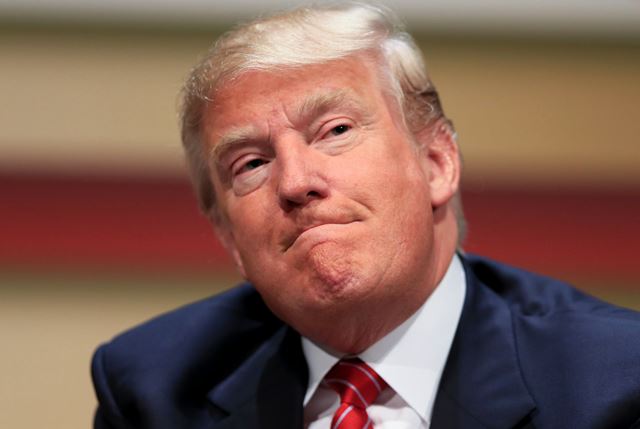
Trump sets April 6 deadline, delays Iran energy strike

UNITED States (US) President Donald Trump has set Monday April 6 deadline to strike Iran’s Energy Plant.

In a statement Thursday night, he said: “As per Iranian Government request, please let this statement serve to represent that I am pausing the period of Energy Plant destruction by 10 days to Monday, April 6, 2026, at 8 P.M., Eastern Time. Talks are ongoing and, despite erroneous statements to the contrary by the fake news media, and others, they are going very well.”

The ICIR reported earlier on Thursday that Trump insisted there were talks between the US and Iran, though Tehran had repeatedly denied his claim.

He said Iranian leaders were already negotiating behind the scenes and suggested they were eager for a deal but too fearful to admit it publicly. He warned they faced threats both internally and from the US.

An Iranian embassy official in Islamabad said talks in Islamabad were still on the table and Pakistan was the preferred destination for Tehran, although nothing had been finalised.

According to Reuters, the US proposed a 15-point for negotiation, reportedly delivered via Pakistan. The plan calls for Iran to reopen the Strait of Hormuz, dismantle its highly enriched uranium stockpiles, curb its missile programme, and cut support for regional allies.

Amid the conflict, in which Israel backs the US, Trump had declared a five-day ceasefire, alleging dialogue was ongoing. However, Iran launched multiple waves of missile strikes on Israel hours after the US leader took the decision.

The decision followed his earlier ultimatum to Iran. In a strongly worded social media post on Saturday, September 21, Trump said the US would ‘obliterate’ Iran’s energy infrastructure if the vital waterway critical to global oil and gas shipments is not reopened without threat. 

“If Iran doesn’t FULLY OPEN, WITHOUT THREAT, the Strait of Hormuz, within 48 HOURS from ‌this exact point in time, the United States of America will hit and obliterate their various POWER PLANTS, STARTING WITH THE BIGGEST ONE FIRST!” Trump said.

The ICIR reports that the Strait of Hormuz remains largely disrupted amid fears of Iranian attacks, choking a passage that handles roughly 20 per cent of global oil and liquefied natural gas flows. The near shutdown has already shaken global markets, with European gas prices surging significantly in recent days, raising concerns of a broader energy crisis.

The war has seen several Iran officials, including the country’s Supreme leader, Ali Khamenei, killed. Khamenei’s son, Mojtaba, who took over from his father, has reportedly been in a coma, and has yet to be seen in public.

Meanwhile, the US has lost some of its military officers and armaments. It has also seen a couple of its bases targeted and attacked in the Middle East.

In Israel, many locations have been hit by Iranian drones, with the conflict taking a huge toll on the entire Middle East economy and peace.

While Trump has repeatedly claimed the US military had decimated Iranian military, including dozens of the country’s ships, Iran has continued to fight both Israel and the US without any hope it would capitulate. 

The conflict which began on February 28, has claimed over 2,000 lives according to media reports. 

Trump’s decision to step back had earlier lifted equities and pushed oil prices sharply below $100 a barrel, reversing a market slump triggered by his weekend threats and Iran’s warnings of retaliation, but those gains came under pressure on Tuesday after Iran’s parliament speaker denied that any negotiations had taken place, casting doubt on the market’s earlier optimism.

On Tuesday, US Treasury yields climbed and the dollar recovered as markets continued to absorb the shock of energy supply risks tied to Iran’s threat to shipping in the strait.

Brent crude futures rose 4.2 per cent to $104.21 a barrel, rebounding from a roughly 10 per cent drop the previous day, while US crude gained 4.3 per cent to $91.93 per barrel.