Home Blog Page 581

Kano emirship: District heads pledge loyalty to Sanusi

0

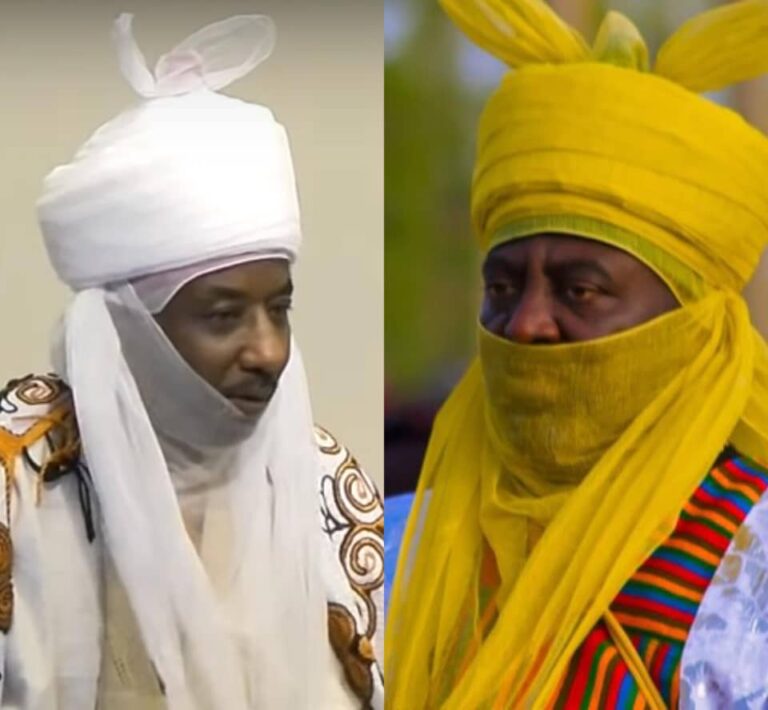
MORE district heads and members of the Islamic sect, Tijjaniyya Shura Council, have pledged their support to the recently reinstated emir of Kano Lamido Sanusi.

According to the News Agency of Nigeria (NAN)  prominent members in the state, including about 40 district heads endorsed the new emir.

Some prominent individuals in the state urged the deposed emir Ado Bayero to accept his fate as God’s will.

One of the prominent indigenes of the state Aishatu Danlami of the Brigade Quarters commended residents for resisting provocation to create chaos in the state.

She also lauded the state government for banning protests in light of the ongoing power tussle.

“Allah has spoken, and Sanusi is now in the palace, piloting the affairs of the Emirate. May Allah continue to guide him to bring about the progress we desire,” she said.

Sanusi’s reinstatement is being challenged in court by the deposed emir Bayero, who is currently sitting as emir at the Nasarawa mini palace in the state.

Bayero is one of five emirs dethroned by the state government on Thursday, May 23, 2024, after the Emirate Council Law was amended.

He refused to relinquish his position as emir and returned to the Kano on Saturday, May 25, in the company of security officials, while resuming operations at the Nasarawa mini palace.

While both deposed and reinstated emirs have continued to hold court in the state, various contradictory court orders have been issued by both state and federal high courts, leaving many people confused about the position of the law.

The State High Court restrained the deposed Aminu Bayero from parading himself as the Emir of Kano in a ruling delivered on Monday, May 27.

On Tuesday, May 28, a Federal High Court ordered the eviction of the reinstated Sanusi from the official palace.

However, a ruling by the State High Court restrained the police, the State Security Service (SSS) and the Nigerian Army from evicting Sanusi from the palace.

Earlier, the Federal High Court granted an ex-parte order stopping the state governor Abba Yusuf from reinstating Sanusi as Emir.

The order came shortly before Sanusi’s reinstatement but was ignored by the governor who presented the emir with an appointment letter.

NELFUND: Students of state varsities to access loan from June 25 – FG

THE Managing Director of the Nigerian Education Loan Fund (NELFUND), Akintunde Sawyerr, has disclosed that the student loan would be made available to students of state universities from June 25, 2024.

This was as the director confirmed that the website of the student loan fund had received over 60,000 applicants since its launch.

Sawyerr, stated this on Thursday, May 30,  while addressing journalists in Abuja, noting that out of the 60,000 applications,  30,000 students had completed the process to access the loan.

According to him, over 90 per cent of federal institutions have submitted their students’ list, and only two federal universities and two federal polytechnics are yet to do so.

He said, “We are pleased to report that over 90 per cent of federal institutions of higher learning have submitted their students’ data to NELFUND. However, we urge the remaining two federal universities and five federal polytechnics to expedite the process to ensure that all eligible students can access the funds’ financial support.”

While noting that the fund would commence accepting applications from students at state-owned tertiary institutions in the next few weeks, Sawyerr urged the state institutions to submit their students’ data immediately as requested.

He said this would help facilitate an easy and seamless application process.

Sawyerr further revealed that, in addition to providing financial aid, NELFUND was planning to equip youths with practical and market-relevant skills.

“Six months from today, we will launch a comprehensive skill acquisition programme, providing training in various vocational and technical fields,” he said.

He added that the programme would help the students with the skills needed to meet the demands of the modern job market and foster entrepreneurship and innovation among young people.

President Bola Tinubu signed the Student Loans (Access to Higher Education) Act (Repeal and Re-Enactment) Bill, 2024, into law on Wednesday, April 3 following approval by the Senate on Wednesday, March 20.

Although the Act is touted to ease access to tertiary education for Nigerian students, members of the Academic Staff Union of Universities (ASUU) described it as an attempt by the government to abandon funding education in public universities.

Misplaced priority: Nigerians react to approval of old national anthem

NIGERIANS have reacted to the approval by President Bola Tinubu to revert to the old national anthem, with many describing it as a misplaced priority.

Tinubu signed a bill seeking to revert to the old national anthem into law on Wednesday, May 29.

The new law triggered reactions from citizens, who have criticised the government for paying attention to unnecessary issues in light of more pressing national challenges.

Notable Nigerians including former Minister of Education Obiageli Ezekwesili took to social media to express displeasure over the development.

“With all the horrible indicators on the state of governance? So, it is a new National Anthem that is their priority? I frankly thought it was a joke and gave it no attention. What an egregious case of “majoring in the minor” this is!

“Again, no one is coming to save us, citizens of Nigeria. We’re all we have. We all must someday decide to collectively save ourselves and this country from these overpaid, unethical, incompetent and incapable ‘lawbreakers’ in the @nassnigeria and their similarly characterised collaborators in the executive and judicial branches of government across this land,” she posted via X.

Former spokesperson to former President Goodluck Jonathan, Reno Omokri, who in recent times has been an ardent defender of the current administration, also took to his Facebook page to criticise the new law, which he described as a backward step.

“One of the most unnecessary acts of governance in Nigeria in recent times is the law returning the old national anthem. First of all, there was nothing wrong with the existing anthem. Secondly, with all of the multifaceted issues we face, it seems like we have a lack of priorities when we major on such a settled issue as an anthem.

“To me, it looks like a step backwards to discard the ‘Arise, O Compatriots’ national anthem written by a collective of young Nigerians, including John A. Ilechukwu, Eme Etim Akpan, B. A. Ogunnaike, Sota Omoigui and P. O. Aderibigbe in 1978, for ‘Nigeria, We Hail Thee’, written by an English woman, Lillian Jean Williams,” he noted.

He also condemned returning to a national anthem composed by a foreigner and discarding the indigenous version.

“In my humble opinion, President Tinubu ought not to have assented to that bill. Instead, he should have written a strongly worded letter to communicate to the National Assembly the implications on our sovereignty and national psyche to revert to an anthem written by a foreigner, which would make us a free nation that willingly chose to return to the yoke of imperialism.

“Is it too late for the President to do what he ought to have done? No. He is our Head of State and has a duty to promote indigenous ideas over imperialistic ones,” Omokri noted.

Similarly, the former Senator representing Kaduna-Central, Shehu Sani, likened the new law to treating a bacterial infection with fragrance rather than medication.


READ ALSO:


“Nigeria is facing serious economic and security challenges but it’s prioritising changing its national anthem. We have bacterial infection, we opted for prada fragrance instead of penicillin,” Sani posted.

Earlier, lawmakers at the Nigerian Senate argued that the old anthem evoked more emotional connections with the Nigerians than the newly replaced one.

The old anthem was composed by Lillian Jean Williams and Frances Berda and used from 1960 to 1978. It was however replaced with “Arise, O Compatriots” in 1978 by the Olusegun Obasanjo military regime.

I’ll present 2024 supplementary budget soon, Tinubu tells NASS

0

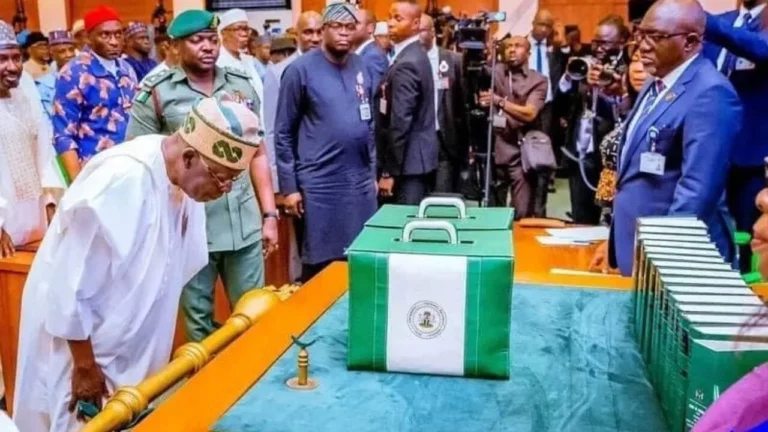
PRESIDENT Bola Tinubu has told the National Assembly (NASS) that he would soon present a 2024 supplementary budget.

Tinubu gave the hint when he addressed a joint sitting of the National Assembly on Wednesday, May 29 as the country commemorates 25 years of unbroken democracy.

He said when he submitted the 2024 budget, the Assembly expeditiously passed it.

“We are walking the talk. I will soon bring the year 2024 (supplementary) appropriation bill. That is just for your information.”

Tinubu had planned the joint session to commemorate his administration’s first anniversary.

The ICIR reports that the President had on January 1, 2024, assented to the country’s N28.7 trillion 2024 appropriation bill passed by the Senate.

The budget was N1.2 trillion higher than the N27.5 trillion Tinubu originally proposed to a joint NASS session on November 29, 2023.

A breakdown of the figure showed that N8.76 trillion was approved for recurrent expenditure, N9.99 trillion for capital expenditure, N8.27 trillion for debt servicing and N1.7 trillion for statutory transfers.

In a remark, the Senate President, Godswill Akpabio, thanked the President and said, “We will be expecting the supplementary appropriation bill of 2024 as soon as possible.”

The ICIR reports that Tinubu approved the country’s reverse to the old national anthem, ‘Nigeria, we hail thee’ which he signed into law.

He said, “You rang out the latest national anthem, ‘Nigeria, we hail thee’. This is our diversity, representing all characters and how we blend to be brothers and sisters.’

He urged the National Assembly to maintain its collaboration and work with his administration to pilot the country on the path of sustained progress and development.

“We have no other choice; it is our nation. No other institution or personality will help us unless we do it ourselves. No amount of aid from foreign countries or any other nation (will fix us), they take care of themselves first. Let us work together as we are doing to build our nation, not only for us but for generations unborn,” Tinubu added.

The reverse of the old national anthem has generated a lot of controversies, The ICIR reported.

A former Minister of Education, Mrs Obiageli Ezekwesili, reacted that she would not revert to the old national anthem, newly signed by President Bola Tinubu as the country’s new anthem.

She voiced out her opinion on her X handle on Wednesday, May 29, stating that she would stick to the former national anthem, ‘Arise, O compatriots, Nigeria’s call obey.’

“Let it be known to all and sundry that I, Obiageli “Oby” Ezekwesili shall whenever asked to sing the Nigerian National Anthem sing: (Arise, O compatriots, Nigeria’s call obey).

“This is my own National Anthem and let it be known that no one can suppress my right to dissent an obnoxious law that is repugnant to all that is of good conscience in Nigeria,” Ezekwesili said.

Tinubu extends free ride on Abuja Metro till December

0

PRESIDENT Bola Tinubu has appealed for an extension of free train rides on the Abuja Rail Mass Transit, also known as Metro Rail, for the next six months, continuing until the end of the year.

Tinubu requested the extension while addressing the audience at the inauguration of the Abuja Metro Rail operations on Wednesday, May 29.

The first phase of the rail connects the city to the Nnamdi Azikiwe International Airport, with the metro having stations in Idu, Stadium and the Nnamdi Azikiwe Airport areas of the FCT.

According to the President, the extension would offer hope to FCT residents and give them reasons to celebrate his administration.

“Our dear landlord and his team, I heard you saying two months free ride. I appeal to you to make it till the end of the year. Since today you’re not going to charge me, that will give the people hope and reasons to celebrate,” Tinubu said.

The ICIR reported that the FCT minister Nyesom Wike, had disclosed how the Abuja Light Rail would offer free rides for only two months after its commissioning.

Wike disclosed this on Thursday, May 24, during the ongoing ministerial update.

“If you are going to the airport, from here to the airport is 20 minutes. Seeing is believing. Go on Tuesday. We are going to allow free rides for two months,” Wike had said.

The ICIR reports that the former President Muhammadu Buhari commissioned the project in July 2018.

It was abandoned soon after, while residents continued to grapple with transportation crisis in the city.

However, Wike said on Thursday that the former President only commissioned the building, and not the entire project.

“For those who are saying that the rail system had already been commissioned, don’t make a mistake. What was earlier commissioned was the building. What we want to commission on Monday is commercial operations,” he said.

The ICIR reported that gaps in the FCT’s transport system put many residents of the nation’s capital at risk.

Residents are usually left at the mercy of private car owners who convey passengers to different destinations for somewhat exorbitant fees, especially during rush hours.

The light rail is expected to ease transport challenges for  Abuja residents, who sometimes fall prey to criminal gangs masquerading as transporters, due to the inadequate means of transportation for the fast-growing population of the city.

Imo 2024 budget: Uzodimma’s office to spend N6.9 million on refreshments daily

DESPITE attributing less than four per cent of its 2024 budget to health, Imo state allocated N2.3 billion to refreshments for its governor, Hope Uzodimma. A breakdown of this figure shows that Uzodimma is entitled to N6.9 million every day for refreshments if the budget is fully implemented. 

The budget which was passed by the Imo state government in December 2023 for the 2024 fiscal year amounted to N592 billion.

While it was being passed by members of the State House of Assembly, majority leader Kanayo Onyemaechi applauded the budget, saying it would aid a lot of development, as over 80 per cent of the sum was channelled towards capital projects.

Uzodimma also promised to be prudent with state funds, saying projects would be executed under scrutiny.

“Prudent and efficient management of public funds is the new norm that cannot be compromised,” the governor said.

But a closer look at the budget shows that the state allocated N2.3 billion to refreshments for the governor, Uzodimma throughout 2024.

This means that Uzodimma is entitled to about N192 million in a month and N48 million every week for refreshments.

A further breakdown shows that the budget provides Uzodimma with almost N6.9 million every day for refreshments.

While the governor is entitled to this much for his daily refreshments, the state’s health sector received just 3.9 per cent of the total budget which is N22.8 billion.

This amount is higher than the allocation for the sector by some other states in Nigeria, however, Imo ranks very low in terms of the percentage set aside for health compared to its total budget.

Funding of the health sector by states and the federal government has remained a critical issue in Nigeria, and medical workers consistently lament poor remuneration and working conditions.

This has contributed largely to brain drain in the health sector resulting from a mass emigration of medical workers to other countries for greener pastures, and only less than 45 per cent of registered doctors in Nigeria renewed their annual licenses in 2023.

In protest against working conditions in the country, Nigerian doctors practising in Nigeria have embarked on many strike actions, which mostly leave citizens suffering a lack of healthcare access.

Due to these challenges, the budget for healthcare in the country is often being used as a measure of value placed on the people’s welfare.

This perception is further reinforced by the Abuja declaration, which had leaders of countries under the African Union (AU) agree to allocate 15 per cent of their annual budget to health  —a target that Imo state is far from reaching.

Uzodimma’s refreshments: more than one-tenth of the state health budget

The amount to be spent on refreshments by the governor alone is nearly the entire sum budgeted for the same purpose during the entire year. It is also more than one-tenth of Imo’s health budget.

The state budgeted a total of N2.365 billion for refreshments in 2024.

While N2.3 billion was earmarked for the governor’s refreshments throughout the year, the remaining N65 million was split between the House of Assembly Service Commission and five other Ministries.

The Ministry of Humanitarian Affairs got N26 million for refreshments. N15 million was allocated to the Judicial Service Commission and N10 million to the House of Assembly Service Commission for the same purpose.

The Office of the Head of Service received N8 million, while the Ministry of Information and Strategy and the Ministry of Public Orientation and Religious Affairs each received N3 million for refreshments in 2024.

The amount set aside for Uzodimma’s refreshment is more than the sum budgeted for the purchase of health and medical equipment, to which the state government allotted less than N1.4 billion.

It is also nearly three times the N800 million budgeted for the rehabilitation and repair of hospitals and health centres in the state.

Tinubu signs bill for reverting to old national anthem into law

0

NIGERIA’s President Bola Tinubu signed the bill to revert to the old national anthem into law on Wednesday, May 29, in Abuja.

The assent was part of activities marking the President’s one year in office.

While addressing lawmakers at a joint session of the National Assembly marking the Silver Jubilee of Nigeria’s 4th Republic, the Senate President, Godswill Akpabio, said the President would sign the bill, which had earlier been passed by the two chambers of the National Assembly, into law.

Not long afterwards, Tinubu signed the bill into law and the new anthem, and “Nigeria we hail thee” was sung by the President and other government functionaries for the first time since it was suspended in 1978 after a military putsch.

As the old anthem has now replaced the new, “Arise O Compatriots”, the new anthem has now been suspended.

The ICIR reported that the Nigerian Senate passed the National Anthem Bill 2024 seeking to revert the new anthem with the lawmakers arguing that the old anthem evoked more emotional connections with the Nigerians.


Read also: 

Senate passes bill seeking revert to old national anthem

Why we want old National anthem back – Lawmakers

Buhari mourns National Anthem co-composer’s death at 65


The old anthem was composed by Lillian Jean Williams and Frances Berda, and used from 1960 to 1978. It was however replaced with “Arise, O Compatriots” in 1978 by the Olusegun Obasanjo military regime.

The Old National Anthem

“Nigeria, we hail thee,
Our own dear native land,
Though tribe and tongue may differ,
In brotherhood, we stand,
Nigerians all, and proud to serve
Our sovereign Motherland.

Our flag shall be a symbol
That truth and justice reign,
In peace or battle honour’d,
And this we count as gain,
To hand on to our children
A banner without stain.

O God of all creation,
Grant this our one request,
Help us to build a nation
Where no man is oppressed,
And so with peace and plenty
Nigeria may be blessed.”

The Current National Anthem
Arise, O Compatriots,
Nigeria’s call obey
To serve our Fatherland
With love and strength and faith.
The labour of our heroes past
Shall never be in vain,
To serve with heart and might
One nation bound in freedom, peace and unity.

O God of creation,
Direct our noble cause;
Guide our Leaders right:
Help our Youth the truth to know,
In love and honesty to grow,
And living just and true,
Great lofty heights attain,
To build a nation where peace and justice shall reign.

Emirship tussle: NBA condemns contradictory court orders, CJN summons judges

0

THE Nigerian Bar Association (NBA) has described the contradictory court orders delivered by two courts in Kano State over the ongoing emirship tussle in the state as shameful. 

This is even as the Chief Justice of Nigeria (CJN), Olukayode Ariwoola, has also summoned judges involved in the issue.

In a statement released on Wednesday, May 29, NBA president Yakubu Chonoko Maikyau noted that the conduct of the courts had caused severe damage to the legal profession.

“Conducts of counsel and the courts in the handling of the proceedings which culminated in the orders issued by the Federal High Court, the Kano State High Court and again the Federal High Court, in circus, have brought utter disgrace and shame to the profession and have exposed the entire legal profession in Nigeria to public ridicule.

“The damage is one that would take the legal profession a long time to recover from. It is unfortunate and was totally uncalled for,” he said.

The statement is in reaction to opposing judgements delivered by the federal and state high courts over who the rightful emir of Kano state is.

On Tuesday, May 28, a Federal High Court ordered the eviction of the reinstated Lamido Sanusi from the official palace.

The presiding judge, S.A. Amobeda, granted an ex parte motion filed by the applicant, Aminu Ado Bayero, who was dethroned before Sanusi was reinstated as emir.

However, a ruling by the State High Court restrained the police, the State Security Service (SSS) and the Nigerian Army from evicting Sanusi, from the palace.

Earlier, the State High Court restrained the deposed Aminu Bayero from parading himself as the Emir of Kano in a ruling delivered on Monday, May 27.

The conflicting orders have left many people confused, and in the statement by the NBA, Maikyau called for an urgent scrutinisation of the conduct of the judges involved.

He also disclosed that the NBA will probe the conduct of the counsel involved and take disciplinary actions against them if found to have compromised the ethics of the profession.

Following the uncertainty created by the judgments, Ariwoola summoned the Chief Judge of the Federal High Court, and the Chief Judge of Kano State High Court over conflicting interim injunctions regarding the Kano Emirate.

Courts at war over deposed, reinstated Kano emirs

0

In what masquerades like a battle for supremacy, state and federal high courts in Kano State have continued to issue conflicting judgements over the emirship tussle in the state.

A Federal High Court in the state, on Tuesday, May 28, ordered the eviction of the reinstated Muhammad Sanusi II from the official palace.

The presiding judge, S.A. Amobeda, granted an ex parte motion filed by the applicant, Aminu Ado Bayero, the dethroned emir.

Amobeda, in the suit marked FHC/KN//CS/190/2024, directed the inspector-general of police (IGP), Kayode Egbetokun, and Kano commissioner of police Hussain Gumel, to ensure that all rights and privileges of an emir are given to Ado Bayero.

He also ordered the state government to stop intimidating and harassing Bayero.

In a ruling by another court – the State High Court – a judge in the court, Amina Aliyu restrained the police, the Department of State Services and the Nigerian Army from evicting Sanusi II, from the palace.

The order by the Federal High Court came a few hours after the state High Court restrained Bayero from parading himself as the Emir of Kano.

However, the order by the state High Court has since been shunned by Ado Bayero and the police, with the security operatives beefing up security around the Nasarawa mini palace where he holds his court.

“An order restraining the 3rd, 4th, and 5th respondents and all other respondents from denying the applicant to use his official residence and palace at the Emir’s Palace, Kofar Kudu, as well as enjoyment of all rights and privileges accrued to him by virtue of being Emir of Kano State, and to evicting anybody residing within the palace illegally pending the hearing and the determination of the originating summons,” the temporary injunction reads.

The judge restrained the respondents and the security operatives from arresting Bayero pending the determination of the suit he filed, with the case being adjourned till June 4 for a hearing.

State High Court judgement

On Tuesday, May 29, the Kano State High Court issued an order restraining the police, the State Security Service (SSS) and the Nigerian military from evicting Sanusi.

The ICIR reported that Ado Bayero was dethroned as Emir of Kano along with four other emirs on Thursday, May 23.

Sanusi was, however, reinstated as the Kano emir on Friday, May 24.

Tuesday’s ruling was in a case filed by Sanusi, alongside four kingmakers of Kano: Madakin Kano Yusuf Nabahani, Makaman Kano Ibrahim Sarki Abdullahi, Sarkin Bai Mansur Adnan, and Sarkin Dawaki Maituta Bello Tuta.

“An order of interim injunction is hereby granted restraining the respondents either by themselves, their agents, privies, representative, and assigns from further harassing, intimidating, inviting, arresting and or invading the personal or official residence of the applicants (Gidan Rumfa), his servants and or any of the Kano Emirate kingmakers of doing such acts that would be capable of interfering with the applicants’ rights generally about this suit pending the hearing and determination of the motion on notice.

“That an order of interim injunction is hereby granted restraining the respondents from attempting to hijack, pick, commandeer, confiscate any of twin spear of authority, the Royal Hat of Dabo, the Ostrich-feathered shoes, the knife and sword of the Emir of Kano as well as symbols of authority pending the hearing and determination of the motion on notice.

“That an order of interim injunction is hereby made restraining the respondents from taking further steps in connection with the matter or maintaining status quo of staying all action pending the hearing and determination of the motion on notice.”

The judge also ordered the dethroned emirs from parading themselves pending the hearing and determination of the motion on notice dated May 28 2024.

On Monday, May 27, the same court also issued an order restraining Bayero from parading himself as the Emir of Kano pending the determination of the suit.

The ruling came in response to a suit filed by the Attorney-General of the state, the Speaker of the House of Assembly, and the Kano State House of Assembly.

Over 4,000 killed in mass atrocities under Tinubu – CSOs

0

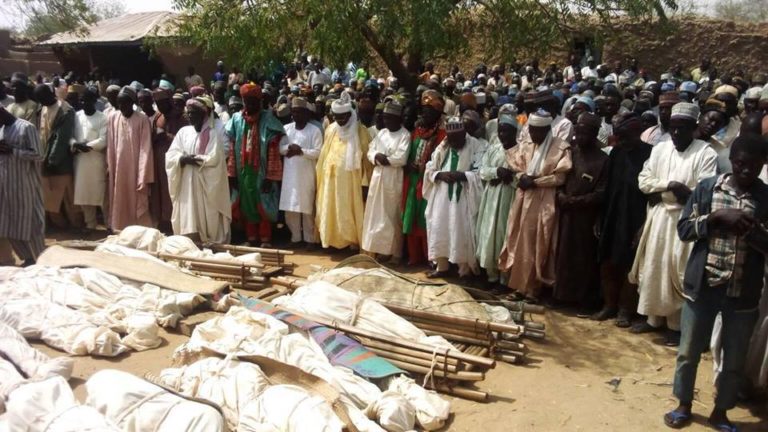
CIVIL Society Organisations (CSOs) in Nigeria have called on President Bola Tinubu to ensure justice for Nigerians who died or went missing as a result of mass atrocities in the country.

This was contained in a statement signed by 83 CSOs to commemorate the 2024 National Day of Mourning and Remembrance for Victims of Mass Atrocities and Violent Killings on Tuesday, May 28.

The CSOs decried the level of insecurity in Nigeria, which has placed the country among the most insecure nations in the world.

“Nigeria placed 144th out of 163 countries on the Global Peace Index in 2024, sandwiched between countries in active warfare, and 5th on the Global Conflict Index, ranking as being extremely vulnerable to conflict,” the statement read.

The statement noted that at least 4,416 people have been killed and 4,334 others abducted within one year of Tinubu’s presidency in incidents of mass atrocities across Nigeria.

“These incidents of violence have reduced the citizens’ right to life and dignity guaranteed under Sections 33 and 34 of the 1999 Constitution of Nigeria (as amended) to a mere inscription.

“The frequency of these atrocities has kept Nigerians in a state of perpetual fear and uncertainty and is impacting social cohesion, the economy, public health, and education across the country,” the statement noted.

The number of dead and missing people does not include those affected by regular crimes, including armed robbery and related offences.

A large percentage of people who died in incidents of mass atrocities are from the North Central region of Nigeria, amounting to 1,600, while the North-West followed closely with 1,136.

At least 904 people were killed in the Northeastern region, 344 in the South-East, 272 in the South-South and 160 in the South-Western part of the country.

These deaths resulted from terror attacks, banditry, cult clashes and similar incidents.

The CSOs, warned the President, security service chiefs and legislators to fulfil the duty of protection or a vote of no confidence would be passed on them.

“More specifically, we demand that the Nigerian government fulfil its constitutional obligations under Section 14(2)(b) of the Constitution of the Federal Republic of Nigeria as amended and ensure the security of Nigerians’ lives and property;

“Address the gaping socioeconomic inequities that are exacerbating violent crimes across the country. In particular, the government should prioritise providing quality education for all, infrastructure for unserved communities, and opportunity leverages for the indigent and marginalised,” the statement noted.

The Nigerian government was also required to act humanely towards internally displaced persons (IDPs) in various camps across the country and improve the welfare of security officials.

“Disincentivise the payment of ransoms by tracking the financial flow of ransoms and communal extortions to identify and bring to book terrorists and terror merchants currently pillaging Nigeria.

“Investigate, arrest, and prosecute all perpetrators of these violent crimes, including those perpetrated during the 2023 general elections,” the CSOs demanded.