Home Blog Page 602

Nigeria’s minimum wage has never protected workers from poverty: here’s why

By Stephen Onyeiwu, Allegheny College

WAGES have become the top issue for Nigeria’s organised labour movements in the past year. Reacting to recent increases in the cost of living, the labour movement has been calling for an upward review of the national minimum wage, currently N30,000 (US$24) a month. The Conversation’s Adejuwon Soyinka asks economics professor Stephen Onyeiwu if Nigeria’s minimum wage truly protects workers from poverty.


When did Nigeria get a minimum wage and why?

In 1974, the Nigerian government followed the recommendations of the Udoji Commission and increased workers’ wages. But public sector workers were the main beneficiaries. It was not until September 3 1981, that the first minimum wage law was introduced. The law covered all full-time workers except seasonal workers and those who worked in enterprises employing fewer than 50 workers.

Its introduction was prompted by a number of factors. The Nigerian Labour Congress (NLC), an umbrella organisation of trade unions then led by Hassan Sunmonu, was vociferous in its demand for improvements in workers’ welfare. It threatened to go on strike if its demand for a minimum wage was not met. As a new government at the time, the last thing the president Shehu Shagari administration wanted was a nationwide strike.

The first minimum wage in 1981 was N125 per month. At the exchange rate of US$1 = 0.61 naira in 1981, this amounted to about US$204. In 2024, that minimum wage would be equivalent to about 265,000 naira (US$204) per month, going by the current exchange rate of about US$1 = 1,300 naira. So the minimum wage in 1981 was at least eight times more than the current minimum wage.

The minimum wage in Nigeria has been revised a number of times but has not kept pace with the cost of living. It became N250 in 1991, N5,500 in 2000 and N18,900 in 2011. The current N30,000 took effect in 2019.

Who is affected by changes to the minimum wage?

The Nigerian labour market has two segments. Public-sector workers are the most affected by increases in the minimum wage. This is because the government cannot violate its own law, and nearly all public-sector workers are unionised.

Most Nigerians, however, are not affected by changes in the minimum wage. This is because 92.3 per cent  of the working age employed population work in the informal sector, mostly as farmers, traders or providers of services.

Only about 8 per cent of Nigerians (or 16 million), mainly in the public and “high-end” private sectors, would benefit from a minimum wage increase. This is in contrast to South Africa, where 60 per cent of workers are covered by the minimum wage.

In big corporations, skilled workers are often indifferent to the minimum wage, but sometimes their wages are adjusted upwards when a new minimum is introduced.

Many workers in small and medium-sized companies – part of the 16 million referred to above – are paid the minimum wage. Some of them, especially those in family-owned businesses, are paid less than the minimum wage.

Enforcement of minimum wage laws in Nigeria is at best weak. Consequently, many workers in the private sector, especially in services, hospitality, small private clinics and non-profit organisations, earn below the minimum wage. Most are not unionised and are unlikely to benefit.

Does the minimum wage protect workers from extreme poverty?

It depends on how one measures poverty.

A nation can establish a poverty line (or a minimum income level) below which someone would be considered poor. This minimum amount is deemed adequate to maintain an acceptable living standard, given the cost of living in a given country. The line is usually set very low.

In reality, however, Nigeria’s minimum wage traps workers in a cycle of poverty if a multidimensional measure of poverty is used – one that considers income and access to health, education and living standard indicators. These include sanitation, drinking water, electricity, and housing. As of 2021, when the latest data was compiled, 47.3 per cent of Nigerians were multidimensionally poor. That number may have gone up significantly, following the removal of fuel subsidies and a galloping inflation rate of 33 per cent. The subsequent steep increase in the cost of living, without wage adjustments, can only push more Nigerians into poverty.

It is, therefore, possible for someone earning the minimum wage to be regarded as non-poor under the income measure, but poor when the multidimensional measure is used. The current minimum wage of N30,000 (US$24) in Nigeria cannot extricate workers from multidimensional poverty.

The number of poor people in Nigeria has been rising for the past eight years, and will continue to do so until the minimum wage reflects the cost of living and recognises the salience of social services like health, education and housing.

Another reason the minimum wage does not protect Nigerian workers from poverty is that it is not indexed to inflation. Inflation has been rising faster than wage growth in Nigeria, thereby decreasing the real purchasing power of workers. Their income buys less and less. Inflation rose from about 11 per cent in 2008 to 25 per cent in 2023. The minimum wage has remained the same since then.

What impact has the minimum wage had on the economy?

The current minimum wage has had a negative impact on the Nigerian economy.

To make ends meet, many workers are now doing “side hustles”. Some public-sector workers are hardly available in their places of work.

The low wage has undermined morale and productivity, and created a sense of deprivation among workers.

What would be a better way to combat poverty?

One way is to help people acquire skills and capabilities that are needed in the new global economy. These are skills like information and communication technologies, artificial intelligence, data analytics, biotechnology, bio-informatics, industrial design, 3D printing, digital imaging, design and animation.

Nigerian workers have fallen behind in the acquisition of 21st century skills. In a survey of companies in Nigeria, 81 per cent said they had difficulty finding workers with the relevant skills.The Conversation

Stephen Onyeiwu, Professor of Economics & Business, Allegheny College

This article is republished from The Conversation under a Creative Commons license. Read the original article.

Atiku condemns arrest, detention of FIj reporter, calls for immediate release

FORMER vice president of Nigeria, Atiku Abubakar, has joined thousands of Nigerians in condemning the continued detention of Daniel Ojukwu, a journalist with the Foundation for Investigative Journalism (FIJ), for alleged violation of the 2015 Cybercrime Act by the Nigeria Police. 

In a post on X on Sunday, May 5, Abubakar said it is not only irresponsible to arrest journalists for exposing the ills that abound in Tinubu’s administration but also a breach of their constitutionally guaranteed Press Freedom.

The ICIR reported how Ojukwu was arrested and detained in Lagos over allegations of cybercrime.


Read Also: 


Ojukwu was abducted by the Intelligence Response Team (IRT) of the Inspector-General of Police on Wednesday, May 1, but his abduction became known on Friday, coinciding with World Press Freedom Day.

Reacting to this, Abubakar said “Two days ago, on the occasion of the World Press Freedom Day, a minister of this administration boasted that no journalist had been incarcerated by this administration. That was before the detention of Daniel Ojukwu of FIJ. The arrest of Ojukwu may not be unconnected with the groundbreaking investigative works of the independent Foundation for Investigative Journalism (FIJ) that has exposed alleged high profile smuggler with links to top officials of this administration.”

He also mentioned that the administration arrested and detained Segun Olatunji of FirstNews Newspaper and Chinonso Uba, aka Nonso Ukwa of Oziza FM Radio, for doing their jobs.

“I wish to also remind of the arrest and detention of Segun Olatunji of FirstNews Newspaper and Chinonso Uba aka Nonso Ukwa of Oziza FM Radio. It is not only irresponsible to arrest journalists for exposing the ills that abound in this government, it is also a breach of their constitutionally guaranteed #FreePress. That the arrest of Ojukwu came barely 48 hours after the observance of the World Press Freedom Day, speaks volumes of the character of the Tinubu administration to freedom of the press. The least that is expected of the relevant authorities is to Free Ojukwu,” he said.

Ojukwu moved from Lagos to Abuja 

After spending four days in Lagos police custody, the Nigeria Police Force (NPF)  moved Ojukwu to the Force Criminal Investigation Department (FCID) in Abuja.

Ojukwu was transferred by the Inspector General of Police’s Intelligence Response Team (IRT) to the Nigeria Police Force National Cybercrime Centre (NPF-NCCC) in Abuja in the early hours of Sunday.

Subsequently, he was moved to the FCID, which FIJ noted that it was “a better place than the cybercrime centre to break his resolve.”

According to FIJ, the police, for the first time, on Sunday, produced a petition showing that his abduction is in connection to FIJ’s story on how Adejoke Orelope-Adefulire, the then senior special assistant on sustainable development goals (SSAP-SDGs) to the president.

Adefulire was investigated for having paid N147.1 million to an account traced to Enseno Global Ventures (Enseno GV), an Abuja-based restaurant, for the construction of a classroom.

Meanwhile, the attacks have continued to generate widespread condemnation from journalists and concerned Nigerians, who deemed his detention as a significant setback in the ongoing battle against impunity and harassment of media professionals in Nigeria.

Only PhD students eligible to bring dependants – UK government

THE United Kingdom (UK) government has declared that only international students pursuing a Doctor of Philosophy (PhD) programme will be eligible to bring dependants into the country.

This was disclosed by the British High Commissioner to Nigeria, Richard Montgomery, during an interview with the News Agency of Nigeria (NAN) on Sunday, May 5, in Abuja.

He noted that earlier this year, there was a change in the educational system which  was aimed to reduce the influx of foreign students bringing dependants into the UK.


Read Also:


The envoy emphasised that the significant rise in dependents was placing strain on many universities, leading to the implementation of these changes.

“The decision to restrict dependants for students in higher education aims to address the unsustainable pressures placed on universities due to the surge in dependant numbers,” Montgomery explained.

He further highlighted the strains on accommodation, medical services provided by the National Health Service (NHS), and schooling for dependants as key concerns that prompted the change.

According to Montgomery, the policy specifically targets students pursuing short-term degrees, stating that it is a sensible change majorly because of the large higher education sector in the country.

“Those coming to the UK for an undergraduate degree or a short-term master’s degree will find the rules have changed.


READ ALSO:


“People need to understand why this change was brought in, and it is a sensible change because we have a large higher education sector and most of these universities are in towns across the country”, he said.

Also, he clarified that the policy does not affect all categories of international students, as PhD students were exempted and eligible to bring their dependants.

“Individuals pursuing long-term research degrees, like a PhD, can still bring their dependants. This change was necessary to maintain the sustainability of our large higher education sector, which spans many towns across the country,” he added.

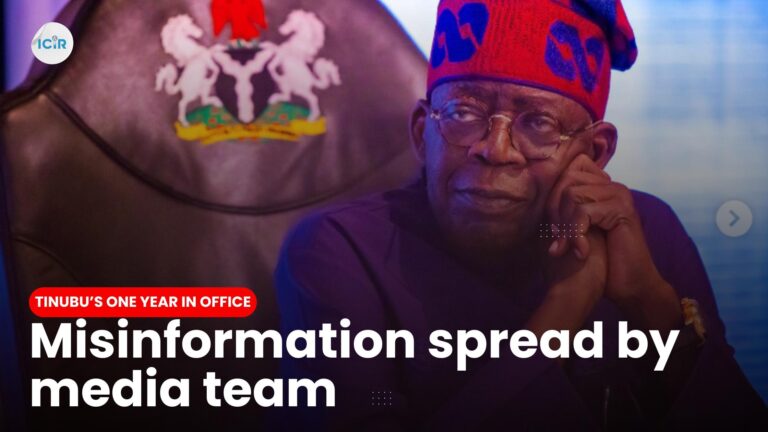
Tinubu’s one year: misinformation spread by his media team

AS Nigerian President Bola Ahmed Tinubu clocks one year in office, one of the major turn-offs of his administration is the repeated spread of misinformation by his media team led by Ajuri Ngelale.

Being the official mouthpiece of the Nigerian president, the media team is charged with the responsibility of disseminating vital information regarding the government’s policies, directives and other developments through press releases and media appearances.

Since Tinubu became the president on May 29, 2023, his media team has made various misleading claims, thus sparking public outrage and undermining the administration’s credibility.

In this analysis, we take a look at some of the misleading claims made by the president’s media aides in the last one year.

Misleading press releases

Shortly after Tinubu was inaugurated as Nigerian president, he appointed Ajuri as Special Adviser on media and publicity. Before he joined Tinubu’s government, he was a senior special assistant on public affairs to the former Nigerian president Muhammadu Buhari and he has a history of sharing misinformation.

One of his major responsibilities is managing press releases for the president. Press releases are a major source of information for newsrooms and citizens generally and as such, they are expected to go through rigorous examination and verification to ensure that their contents are factual and not misleading.

In early September 2023 after Tinubu met with the leaders of the UAE, Ngelale issued a press statement claiming that the UAE authorities approved the immediate lifting of the visa ban on Nigerians and the immediate resumption of Emirates and Etihad flights to Nigeria.

A visa ban was placed on Nigeria in October 2022, as the UAE banned nationals of about 20 African countries including Nigeria from entering its borders.

“President Bola Ahmed Tinubu and the President of the United Arab Emirates, Mohammed Bin Zayed Al Nahyan,” finalized a historic agreement on Monday in Abu Dhabi. The agreement has resulted in the immediate cessation of the visa ban placed on Nigerian travellers. As negotiated between the two Heads of State, this immediate restoration of flight activity, through these two airlines and between the two countries, does not involve any immediate payment by the Nigerian government’’, Ajuri said.

Many Nigerians were excited upon hearing the news having come directly from the Presidency. Many news platforms also reported it but it would later turn out to be false. The UAE government itself debunked the claim before the presidency also came out for clarification.

Nine days after the misinformation regarding UAE, President Tinubu rang the closing bell of the National Association of Securities Dealers Automatic Quotation System (NASDAQ) in the US.

After Tinubu rang the closing bell, Ngelale issued a press release on September 21, 2023 claiming that Tinubu was the first African leader to ring the closing bell of NASDAQ. This is not true.

An internet search showed that President Jakaya Kilwete of Tanzania had in September 2011 rung the NASDAQ closing bell – 12 years before Tinubu did it, thus showing lack of due diligence by the president’s official spokesman.

Announcing the appointment of the Director-General (DG) of the National Emergency Management Agency (NEMA), Ajuri issued a statement claiming that Zubaida Umar is the first woman to be appointed as the agency’s head. This was also false!

Findings showed that the first DG of NEMA, Oluremi Olowu is a woman. Olowu served from 1998 to 2002 after which she voluntarily retired to join politics.

Onanuga’s misleading video on Peter Obi

On February 29, 2024, Bayo Onanuga who is the president’s special adviser on information and strategy posted a video on X with a claim that the presidential candidate of the Labour Party in Nigeria’s 2023 general election, Peter Obi, was “making a case” for online fraudsters.

“Peter Obi makes case for Yahoo Yahoo boys. Incredible he could use one wrong to justify another. What a leader!” he posted.

In the 43-second clip, Obi is heard saying that the authorities were “chasing young boys with computers and say they are doing yahoo-yahoo when people are stealing billions, which we have as a government”.

But Onanuga’s claim is misleading because the video he shared had been cut in the middle to portray Obi as an advocate of online fraud.

In the full video published on YouTube by Channels Television on February 26, 2024, Obi was commenting on the government’s clampdown on bureau de change operators (BDCs), calling the move ill-advised.

“Today, we spend more time chasing young boys with computers saying they are doing Yahoo Yahoo when people are stealing the billions, which we have as a government,” Obi added.

He also clarified that he was not excusing any crime adding that the priority should be on public officials looting public funds.

“I am not encouraging anybody to steal, but we’ll deal with those stealing our common resources first,” he noted.

This is republished from the FactCheckHub.

Netanyahu’s cabinet votes to ban Al Jazeera’s news in Israel

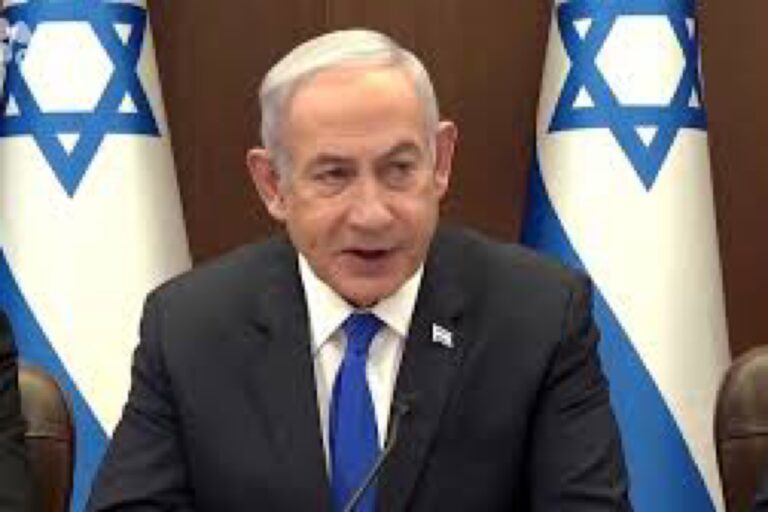
ISREAL’s Prime Minister, Benjamin Netanyahu said his cabinet has voted to ban the operation of Qatar-based news network, Al Jazeera in the country.

Netanyahu, on Sunday, May 5, announced in a post via X, stating that “The government headed by me unanimously decided: the incitement channel Al Jazeera will be closed in Israel.”

Also, the prime minister’s spokesperson to the Arab world, Ofir Gendelman, in another post, noted that the decision would be “implemented immediately”, adding that the network’s “broadcast equipment will be confiscated, the channel’s correspondents will be prevented from working, the channel will be removed from cable and satellite television companies, and Al Jazeera’s websites will be blocked on the Internet.”


Read Also:


He further quoted Netanyahu saying “Al Jazeera reporters harmed Israel’s security and incited IDF-soldiers. It is time to expel the mouthpiece of Hamas from our country.”

The move by the Israeli government comes a month after Netanyahu vowed to shut down the television channel in the country.

The country’s parliament had also approved the law to allow the government to temporarily shut down the Al Jazeera news network in Israel, adding that the foreign networks are perceived as posing a threat to national security.

This ban means that the Al Jazeera offices in Israel would be closed, broadcasting equipment confiscated, the station would be removed from the cable and satellite television channels and also its website blocked.

The Israeli government had accused Al Jazeera of biased reporting on the ongoing war against Hamas militants in the Gaza Strip.

Responding to the ban by the Israeli government, the news network, Al Jazeera, in a post on X, issued a statement condemning the move by Israel to ban them from operating in Israel over their coverage of the Gaza war.

“We condemn and denounce this criminal act by Israel that violates the human right to access information,” the statement read in parts.

Al-Jazeera, founded in 1996 with its headquarter in Doha is one of the most widely viewed sources of television news in the Arab world.

Police spokesperson Adejobi faces backlash for ‘cyberbullying’ Nigerian who commented on IGPs’ photo

0

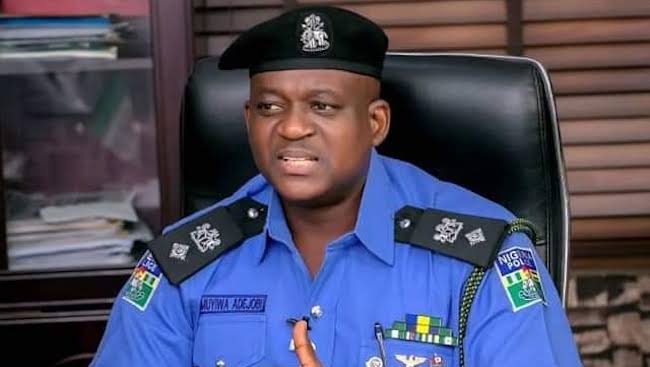
THE Nigeria Police Force Public Relations Officer (FPRO), Olumuyiwa Adejobi, is facing criticism over a prosecution threat issued at a Nigerian who expressed discontent with the level of corruption in the police institution.

The incident, which generated discussions about the trend of impunity and lack of accountability in the police, occurred when @HommiesDrey, the Nigerian’s social media handle on X, left a comment on a photo posted by the Adejobi on Saturday, May 4.

“Living and late Criminals from the most corrupt civil organisation in the entire multiverse,” @hommiesdrey wrote while reacting to the post made by the FPRO.

But Adejobi, who has refused to speak on the illegal and unjustly detention of a Nigerian journalist, Daniel Ojukwu, despite several calls from Nigerians and Civil society organisations (CSOs), resorted to what some lawyers tagged as ‘cyberbullying’.

He said, “You will repeat it with evidence soon. It’s a matter of time.”

He continued in another post, “He needs to prove that all the past IGPs are corrupt or criminals. It’s a simple thing. He should know that the only court that has jurisdiction over the Cybercrime Prohibition Act (offences) is the Federal High Court.”

However, many Nigerians expressed concerns about the growing trend of silencing dissenting voices and the stifling of free speech in the country.

Some of them also described Adejobi’s response as an act of cyberbullying, calling on him to devise means of tracking down bandits and terrorists instead of issuing a threat to a civilian.

While reacting to Adejobi’s a human rights lawyer, Inibehe Effiong on Sunday, May 5, accused him of using an amended section of the Cybercrimes Act to threaten a citizen over a social media post.

Inibehe, who described the police spokesperson’s comment as disgraceful and misleading, said the provisions of Section 24 of the Cybercrimes (Prevention and Prohibition) Act, 2015, that the police has been using to harass Nigerians have been repealed by the National Assembly and replaced with a radically different and new provision.

“The amended Act was assented to by President (Bola) Tinubu in February 2024. Under the new Act, posts which are injurious to a person’s reputation are no longer a crime. The new Act limits the offence of cyberstalking to messages sent using a computer which are: (a) pornographic; (b) a threat to the life of another; or (c) likely to lead to a breakdown of law and order.

He argued  that the post made in this specific case by this individual is neither pornographic, life threatening nor capable of leading to a breakdown of law and order.

“By virtue of Section 36(12) of the 1999 Constitution, an act or omission is only an offence if it so defined expressly in a written law. Nigerians should ignore the Force PRO.”

“Calling someone a criminal is not a crime under the new Section 24 of the Cybercrimes Act (as amended). Insult is not a crime under the Act,”he added.

He pointed out that the FPRO is constantly ruining the image of the police further with his lack of professionalism and disdain for the rights of citizens rather than focus on ways of salvaging the ‘bastardised image’

Also, another human rights lawyer, Ridwan Oke, wrote, “This is cyberbullying, and you should be arrested for this. You’re threatening a citizen, knowing fully well that even if he has evidence, you can still overpower him. @PoliceNG , please look into this.

This was not the first time Adejobi threatened Nigerians or made uncountable statements for someone who should be the police force’s image maker.

The ICIR has captured several instances in which police spokespersons at various levels made controversial statements that threaten to further widen the gap and breed resentment

Although the International Journal of Police Science and Management disclosed that public perception of police spokespersons reflects people’s impression of the Force as a whole, many Nigerians have different perceptions of police spokespersons as they have continued to stir reactions with their uncouth comments.

Is Nigerian Police Corrupt?

The Nigerian police force, including the IGPs, over the years, has faced several allegations of corruption bordering on embezzling of funds, bribery, and human rights violations, among others, with at least one being prosecuted.

The ICIR reports that an ex IGP Tafa Balogun, was convicted in 2005 on eight charges of corruption. 

According to reports, allegations of massive corruption scale were reported under Balogun, with the former IGP accused of pocketing public funds and taking bribes from politicians and criminals.

According to the charges filed by the EFCC, he was accused of misappropriating funds from the NPF between 2000 and 2005 and was arraigned alongside seven companies alleged to have helped him commit the crime.

In a recent investigation by The ICIR, some officers of Nigeria Police Mortgage Bank and Nigeria Police Force, including two former Inspector Generals of Police and a contractor, were reported to have been enmeshed in allegations of corruption involving forgery, bribery, and violation of Nigerian laws in an alleged illegal sale of Police landed property designated for the construction of barracks in Abuja.

In 2021, The United States (US) accused Nigerian security agencies, including the police, of corruption, human rights violations and impunity.

This accusation was made in the 2021 Country Reports on Human Rights Practices released by the US Department of State on Wednesday.

NYSC trust fund will create employment for graduates – Senate

0

CHAIRMAN of the Senate Committee on Youth and Community Engagement, Yemi Adaramodu, representing All Progressive Congress(APC) Ekiti South, said the recently approved National Youth Service Corps (NYSC) Trust Fund Bill will create employment opportunities for graduates.

Adaramodu made this revelation on Saturday, May 5, 2024, while leading a committee delegation on an official visit to the Oyo State NYSC Orientation Camp in Iseyin.

He stated that the bill had passed both first and second readings as well as other legislative test runs and would shortly be sent to the president for assent.


Read Also:


According to the lawmaker, the main goal of the bill’s provisions is to guarantee that corps members receive the training they need to succeed through the NYSC Skill Acquisition and Entrepreneurship Development (SAED) program.

He continued by saying that the Bill’s provisions also address corps members who may want to pursue a career in business after their year of service.

“The issue of unemployment and what next for corps members after the service year will be a thing of the past soon.

“The bill will ensure that the dreams of every Nigeria graduate become a reality,” he further said.

Adaramodu revealed that the Senate would shortly begin working on the upward revision of corps members’ allowances nationwide in coordination with relevant government ministries, agencies, and other stakeholders.

He disclosed that in addition to the youth development initiatives included in the NYSC trust fund bill, the Senate would take into account other initiatives in its legislative agenda.

Also speaking,  the Oyo State NYSC Coordinator, Mr. Abel Odoba, stated that the goal of the NYSC SAED program was to encourage corps members to think about starting their businesses or working for themselves.

According to Odoba, the NYSC trust fund bill will essentially end youth unemployment in Nigeria among Nigerian graduates.

He further said that Bill will provide a soft landing for corps members who have undergone the SAED programme in securing startup funds.

“Through the trust fund, skilled corps members will be given startup grants so that they will become employers of labour and contribute to development of the nation,” he added.

Reactions trail Kano senator’s donations of clay pots, burial materials to constituents

0

SOME Nigerians on social media have expressed their concern over a senator representing Kano Central Senatorial District, Rufai Hanga‘s choice of empowerment project.

Some described the donations as “out of touch” with the people’s needs, arguing that the senator should focus on addressing more pressing issues such as healthcare, education, and infrastructure development rather than distributing items of questionable practicality.

On Friday, May 3, one of the senator’s social media aides, Dawuud Auwal, announced that Hanga, whose district covers 15 local government areas, donated 500,000 clay pots and 500,000 plain white cloths to help his constituents bury their dead.


Read Also:


According to Auwal, the donation was in response to his constituents’ frequent demands for assistance with burial materials.

“The district head of Tarauni and head of the committee overseeing the graveyard in Kano, Ado Kurawa, has supervised the 500,000 clay pots and N500,000 white plain cloths (likkafani) donated by Senator Rufai Hanga for distribution to the graveyard in Kano Central District. After the supervision, he directed for the distribution,” Auwal said.

This development has continued to stir mixed reactions among Nigerians, as some Netizens slammed the senator for donating burial material instead of executing key projects.

Some also called for a more transparent and consultative approach to constituency projects, adding that elected officials must prioritise initiatives that directly impact the lives of the people they represent.

A user, Olamide, expressed his concern over the development, noting that there are more pressing issues the senator can solve.

“It’s disheartening to hear about such actions from a public official, especially when basic needs like access to clean water are lacking in the community. Leaders should prioritise initiatives that address fundamental issues and improve the quality of life for their constituents,” he wrote.

Another user, Faisal, said, “This should be his assistance to his community as an influential and wealthy person. But making this look like a performance index being a Senator is shameless and denigrates the people he represents. We can do better, Arewa.”

“What a shame. As a Senator representing Kano Central, some places need water, light, health care centers, and so on.  He can buy pot  white clothes for himself and also his family members, but community need services,” wrote Ibrahim Moh’d.

However, some sect of users, applauded the initiative.

An X user, Hamma, wrote: “A good gesture. Apparently you do not know how muslims  are buried. In Islam no matter how rich you are those white clothes are the only clothing you will take to the grave, the pots are to fortify the grave against erosion. Many well to do people donate this things to graveyards.”

Also, @Nasir1on1, said the initiative is normal as most Muslim cemeteries in the north solicit for wood and shrouds for burial.

“This is just politics. It is normal as most Muslim cemeteries in the north solicit pots, wood and shrouds for burial since, customarily, we do not pay for these things when needed. So I see no problem if a politician provides these items. But opposition could have ways to politicise the situation to their own advantage. We, the onlookers, will only say, ‘May Allah reward him’ And leave it at that .”

List of ex-governors under investigation for corruption in circulation is false – EFCC

0

THE Economic and Financial Crimes Commission (EFCC) has debunked a report on a list of ex-governors being investigated for corruption widely circulating in the media.

This was made known in a statement on Sunday, May 5, 2024, signed by the agency’s spokesperson, Dele Oyewale.

According to the statement, the commission neither approved nor entertained discussions about looking into former governors’ records with any media outlet, which stated that the report was inaccurate and deceptive.


Read Also:


On Saturday, several reports emerged in the media (not The ICIR) that 58 former governors were under the radar of the anti-graft agency. They were accused of misappropriating N2.187 trillion over 25 years.

According to reports, the 58 former governors – drawn from the six regions of the country – were being probed, while others have been investigated, and prosecuted.

However, in a clarification statement, the EFCC said: “The report headlined: “EFCC Releases Full List of 58 Ex-Governors that Embezzled N2.187 Trillion”, in one of the news outlets is false and mischievous as the Commission neither issued the said list nor entertained discussions on investigation of ex-governors with any news medium.


READ ALSO:


“This invariably means that the so-called list is a disingenuous fabrication designed to achieve motives known only to the authors.

It also stressed the necessity for the media to confirm facts related to matters with the commission to prevent deceiving the public with false and inaccurate information and concluded that the public should disregard the story because it is false and misleading.


FAAN, NSA to reduce security officials at Airports

0

THE Federal Airports Authority of Nigeria (FAAN) and the Office of the National Security Adviser (NSA) have reached an agreement to decrease the presence of military and para-military personnel inspecting passengers at Nigeria’s international airports.

Speaking with newsmen on Saturday, May 4, 2024, in Lagos, FAAN’s Managing Director, Olubunmi Kuku, emphasized that both organizations had decided to implement immediate and long-term solutions to solve security problems at the Airport.

She said there were also preparations in place to guarantee that security guards watch passenger bags using closed-circuit television, or video surveillance, in several coordination rooms located around the nation’s international airports.


READ ALSO:


“On the issue of checking baggage, it bothers me so much. That was the first thing about which I inquired when I assumed office. As far back as 2011 and 2012, when I was in the industry, it was something I worked on with the former minister.

“It goes beyond FAAN because a lot of those agencies including Nigeria Customs Service, National Drug Law Enforcement Agency, NDLEA, Nigeria Agricultural Quarantine Service-NAQS, the Economic and Financial Crimes Commission-EFCC, we have almost everybody at the airports. We had Executive Order 001 during the Buhari administration to move them out under the then Vice President’s office. Now, we have the National Single Window. I have personally sat with the NSA over the last five weeks to have conversations with him as to how we will streamline the facilitation.

Kuku noted that they had put in place both short-term interventions where the number of agencies at the airports would be reduced and the long-term intervention where the agencies would come to the joint coordination room and watch the cameras to make some findings.

“Those who care more about the luggage can proceed to the area where we load the bags. Instead of upsetting other passengers, they will have greater visibility in this way.”

On opening passengers’ baggage, she noted that it sprang up a couple of years ago when a lot of countries had issues with scanning devices that were coming from certain countries and, as such, required secondary screening.

Kuku added that the authority is trying to have dual-view cameras and put them and explosive devices a bit farther so that secondary checks can be conducted without opening people’s bags while pleading for individuals to be patient with the authorities.