Home Blog Page 680

BUA Cement more in debt than Dangote, Lafarge

BUA CEMENT Plc has more debt financing obligations than its main rivals in the cement industry, analysis by The ICIR on the companies’ debt-to-equity ratio has shown.

A debt-to-equity ratio, also known as a risk ratio, shows a company’s relative amount of debt and estimates how well it can service its long-term debts and other obligations.

It is widely considered as one of the most essential corporate valuation metrics, highlighting a company’s dependence on borrowed funds and ability to meet those financial obligations.

In the Nigerian cement industry, BUA Cement’s main rivals are Dangote Cement Plc and Lafarge Africa Plc.

Checks by The ICIR on the companies’ financial statements for the nine months ended September 2023 showed that BUA Cement had 1.59 debt-to-equity ratio compared to Dangote Cement, which had 1.45, and Lafarge Africa, 0.52, respectively.

It, therefore, means that BUA Cement had N1.59 of debt for every N1 of equity relative to N1.45 and 0.52 kobo; Dangote Cement and Lafarge Africa had for every N1 of equity.

According to the statements, BUA Cement had total liabilities of N624.55 billion and shareholders’ equity of N392.36 billion; Dangote Cement had N1.98 trillion liabilities and equity of N1.37 trillion, and Lafarge Africa had N220.41 billion liabilities and N423.19 billion equity, respectively.

The ICIR reports that a debt-to-equity ratio is calculated by dividing a company’s total financial liabilities by its total shareholders’ equity.

Though Dangote Cement recorded more liabilities on its balance sheet, a lower debt-to-equity ratio indicated less debt on its balance sheet than that of BUA Cement.

A debt-to-equity ratio below the weight of one is considered safe, whereas values of two or higher are risky, according to a research institution.

Over the last four years, Dangote Cement has carried the highest debt-to-equity ratio weight more than the two other cement companies, checks on the companies’ financial statements indicate.

In 2019, Dangote Cement had 0.94k debt for every N1 of equity, as its total liabilities stood at N844.51 billion and total equity at N897.94 billion.

Lafarge Africa followed with a 0.44k debt for every naira as liabilities were N152.24 billion and equity, N344.91 billion. At the same time, BUA Cement had 0.29k debt for every naira of equity, with N106.87 billion liabilities and N363.697 billion equity.

In 2020, Dangote Cement’s debt-to-equity ratio was N1.27, BUA Cement, N1.04 and Lafarge Africa, 0.41k for every N1 of equity.

In 2021 and 2022, Dangote Cement’s debt-to-equity ratio was N1.43 and N1.42 for every N1 of equity; BUA Cement had 0.83k and N1.13 while Lafarge Africa was 0.39k and 0.44k, respectively.

A steadily rising debt-to-equity ratio may make it harder for a company to obtain financing, as the growing reliance on debt could eventually lead to difficulties in servicing the debt obligations, and a high ratio may result in loan default.

The three cement giants collectively reported a 29 per cent increase in total borrowings to N868.76 billion in 2022 from N671.72 billion in 2021 to stay afloat.

Worrisome cost of borrowing, debt burden

Over the years, the Manufacturers Association of Nigeria (MAN) has been critical of the cost of funding for businesses. The benchmark interest rate, currently at the double-digit mark of 18.5 per cent, directly impacts the cost of production and the manufacturing sector’s competitiveness.

Higher interest makes lending expensive, affecting manufacturers as borrowing costs for production become more expensive, financial analysts have argued.

In a report by The ICIR, the Director General of MAN, Segun Ajayi-Kadir, said, “The increase in the MPR (monetary policy rate) portends worrisome negative consequences for the manufacturing sector.”

This discourages investment and leads to increased factor costs, which feed into high product prices, thus making the country’s manufacturing industry unproductive, he said.

A study, ‘Equity and Debt Financing on the Profitability of Cement Industry in Nigeria,’ shows that debt significantly affects the profitability of the cement industry in Nigeria.

In contrast, equity financing does not substantially impact Nigeria’s cement industry’s profitability.

“It is recommended that cement industry owners should diversify their sources of financing their businesses by focusing more on debts to save their costs and reduce their risk in the investment.

“Industry owners should look outside the box by employing other sources of financing their businesses like debentures, bonds and so on, other than absolute dependence on equity,” the study recommended.

The study added that when the cement industry performs well, it improves the country’s gross domestic product (GDP) and invariably solves the unemployment problem.

Court remands Fubara’s loyalists over Rivers Assembly’s inferno

0

A FEDERAL High Court (FHC) in Abuja on Thursday, January 25, remanded some loyalists of River State governor Siminalayi Fubara over the vandalisation of the State House of Assembly complex.    

Five supporters of the governor were charged before Bolaji Olajuwon of the FHC.

They were accused of being involved in the October 30, 2023, explosion that destroyed the Rivers State Assembly building.

The ICIR reported that Fubara claimed police and military officers shot at him on his way to the state House of Assembly in the early hours of Monday, October 30.

Fubara’s claim was made amid the suspension of the Majority Leader of the State House of Assembly, Edison Ehie, over allegations that he supervised the burning of the Assembly Complex.

Fire engulfed the complex on Sunday, October 29, around 10 p.m.

It was subsequently quenched by the Fire Service and security agents, who prevented it from consuming the entire building.

The crises follow reports of the House’s impending impeachment of the governor.

Those charged before the court are Chime Eguma Ezebalike, Prince Lukman Oladele, Kenneth Goodluck Kpasa, Osiga Donald and Ochueja Thankgod.

In the charges marked FHC/ABJ/CR/25/2024, the defendants were accused of committing terrorism offences by invading, vandalising and burning down Rivers State House of Assembly during the wake of the political crisis that rocked Port Harcourt in October last year.

They were also accused of killing a Superintendent of Police, Bako Agbashim, and five police informants in the Ahoada community of the state.

The police informants alleged to have been killed are Idaowuka Felix, Paul Victor Chibuogu, Saturday Edi, Charles Osu, and Ogbonna Eja.

They were also charged with wreaking havoc on the state’s citizens and their businesses using cult organisations such as Greenland, Degbam, Iceland, and the Supreme Viking Confraternity.

Each of them entered a not-guilty plea to the accusations.

They are expected to stay in jail until February 2, when the judge will decide on each of their bail applications.

Despite not being named in the seven counts of terrorism charges, the immediate past factional Speaker of the Assembly, Edison Ehie, was represented in court by Oluwole Aladedoyin because his name was prominently mentioned in the alleged offences.

He refuted the claims that he and other suspects were out of custody.

The judge, Olajuwon, did not, however, permit additional arguments on the grounds that he was not yet a defendant in the allegations. 

Olajuwon scheduled a hearing for February 2 to consider all bail applications after concurring with the prosecutor that the applications were not ready for a hearing.

The judge ruled that the five defendants would be detained at Kuje Prison and returned to court on the adjournment date, pending the hearing and resolution of the bail applications.

Low generation: TCN clarifies reduction in allocation to load centres

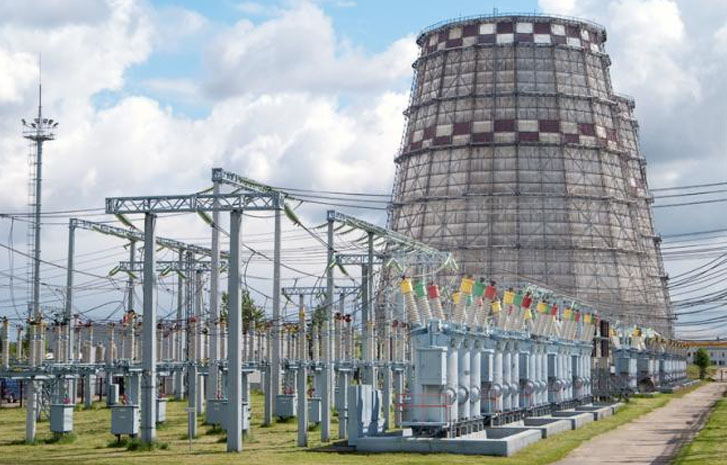
THE Transmission Company of Nigeria (TCN), on Thursday, January 25, announced a gradual decrease in available generation to the grid and distribution companies’ load centres.

In a statement issued by the general manager of the TCN’s public affairs, Ndidi Mbah, the organisation explained that the situation was due to gas constraints to the thermal generating companies, which has impacted the quantum of bulk power available on the transmission grid.

The TCN explained that it was working out measures with stakeholders in the sector to ensure that it keeps the grid intact despite the current low power generated into the system.

“Consequent upon the current load on the grid, load distributed to the distribution load centres have also reduced, as TCN can only transmit what is generated.

“TCN is committed to ensuring a gradual increase in electricity supply to load centres,” it added.

While calling for understanding, the organisation pledged it would continue to work with the stakeholders in the value chain to ensure that supply through distribution companies to electricity consumers nationwide improves.

Controversy trails Lagos ban on single-use plastics

0

Police arrest nine, repel attacks on Plateau communities

THE Plateau State Police Command said it had repelled attacks on villages in Mangu Local Government Area (LGA) of the state.

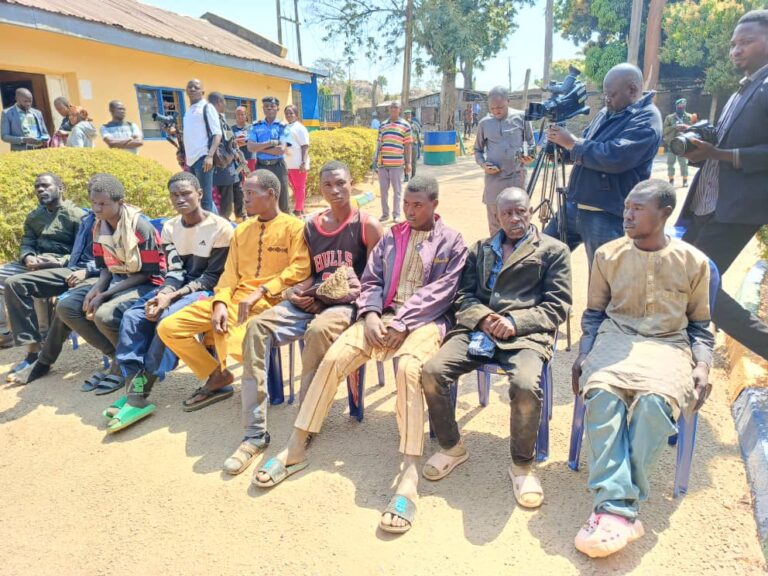
The Police Assistant Inspector-General (AIG), Zone 4, Ebong Eyibio, in a press briefing on Thursday, January 25, at the state command headquarters, also confirmed the arrest of nine suspects in connection with the recent attacks in the state. 

According to him, operatives repelled an attack targeted at the Ntam community and the ASTC Company in Mangu town. 

Eyibio also said that the police foiled an attempt by some arsonists in Panyam District to burn some worship centres.

The AIG added that he had ordered the deployment of additional special intervention personnel to Mangu LGA to restore normalcy.

Part of his address reads: “The command is grateful to inform you that the situation, as of today, is under control, and so far, nine suspects have been arrested. Exhibits recovered from them include dangerous weapons, such as machetes, kegs containing petrol, and other items. The area remains highly secured by security forces, and strict compliance with the curfew is being observed. 

“In another development, a delegation from the Plateau State Government led by the Security Adviser to the Governor, heads of other security agencies, and leaders from both the Christian and Muslim communities gathered at the Mangu Township Stadium and the Miskam Mwaghavul Palace in Mangu yesterday, the 24th day of January 2024 to deliberate and chart a way forward to put a stop to the menace.”

The police chief also stated that over ten corpses had been recovered from various locations, with two injured persons currently receiving treatment at the hospital, noting that a car and ten houses were burnt down in the area.

He called on religious leaders to caution their followers and ensure compliance with the government-imposed curfew. 

“I also wish to make it clear that the command under my leadership and supervision will bear zero tolerance to any act of criminality and will continue to intensify its efforts towards restoring peace, public confidence and normalcy within the state,” he said.

The ICIR reported how 15 people were killed in the aftermath of the clash between Muslim and Christian groups in Mangu LGA on Tuesday, January 23.

According to a local source who spoke with The ICIR, before the curfew was declared on Tuesday, January 22, a community believed to be harbouring Fulanis was attacked by Christians retaliating against alleged earlier attacks by the Fulanis.

The incident further escalated, leading to indigenous Muslims from Mangabu allegedly resorting to burning the homes of Christians residing in the community in retaliation for the earlier violence.

The source explained that as of the morning of Wednesday, January 24, over 15 people were discovered to have been burnt and killed in their homes in Kwaghalalek on Tuesday night by gunmen, adding that some houses in Kinat were also torched.

The source also accused the military personnel deployed to the area of killing an unarmed civilian in the process, noting that the troop was abetting some Fulanis to burn the houses of Christians despite a 24-hour curfew imposed on the LGA.

The military, however, denied killings of unarmed civilians and taking sides in the clashes.

Economists back CBN, say inflation will moderate to 21.4% in 2024

SOME economists have said that the Central Bank of Nigeria (CBN) 21.4 per cent inflation moderation projected for 2024 is achievable.

The economists, like the CBN, hinged their projection on the resumption of operations of the Dangote Refinery and the Nigerian state-owned Portharcourt Refinery.

The CBN Governor, Yemi Cardoso, who gave the apex bank’s stance at the 2024 macroeconomic outlook of the Nigerian Economic Summit Group (NESG) on Wednesday, January 24, in Lagos, said the public and private refineries becoming functional would help to moderate Nigeria’s inflation to 21.4 per cent this year.

“The anticipated moderation in pump prices of PMS is due to the expected operational status of the country’s government and private-owned refineries in 2024, which is a pivotal factor in the economic equation of moderating inflation.

According to the CBN governor, the economic stabilisation or reduction in fuel costs is poised to have far-reaching implications across various sectors, contributing significantly to overall economic efficiency and resilience.

“Inflationary pressures are expected to decline in 2024 due to the CBN’s inflation-targeting policy, which aims to rein in inflation to 21.4 per cent, “he said.

He added, “This will be aided by improved agricultural productivity and the easing of global supply chain pressures, benefiting businesses by boosting consumer confidence and purchasing power.”

He also informed that the apex bank would adopt an inflation-targeting framework for monetary policy instruments and collaborate with fiscal authorities to achieve price stability and positively influence consumer behaviour.

He assured that declining inflation would greatly impact businesses, provide a more predictable cost environment and potentially lead to lower policy rates, stimulating investment, growth, and creating job opportunities.

For the chief executive officer of Financial Derivatives Limited, Bismarck Rewane, the resumption of the Dangote refinery and the Port Harcourt refinery will guarantee supply and moderate energy prices, a key inflation trigger.

“Prices are made up of costs and the margin. One clear thing is guaranteed supply and price moderation. Because energy prices lead to inflationary pressures, the guaranteed supply would help to moderate inflation,” he said.

“This is a major milestone for Nigeria and the West African market. 650,000 barrels per day. This would address our concerns of energy security and satisfy our local consumption markets, “he added.

In a similar submission, an investment banker and an economist, Oyinkasola Aregbesola, gave reasons why the inflation would moderate below 24 per cent.

“There is going to be a rebound in the oil sector and an increase in oil production for the sector. The government’s efforts to curb oil theft would also help in moderating energy prices which is a main trigger for food inflation.

She noted that these developments would also help to moderate inflation, while projected growth in the non-oil sector would help to moderate inflation rise.

Ondo State Assembly confirms Adelami as deputy governor

THE Ondo State House of Assembly has confirmed former Deputy Clerk of the National Assembly, Olayide Adelami, as the state’s deputy governor.

Adelami was nominated by state governor, Lucky Aiyedatiwa, on Wednesday, January 24, and his name forwarded to the state Assembly for confirmation.

A letter from the governor on Adelami’s appointment was read by the House Clerk, Jaiyeola Benjamin, during plenary, presided over by the Speaker, Olamide Oladiji, on Thursday after he was screened.

His confirmation after the screening was followed by a report by the House Selection Committee and recommendation by the Deputy Speaker of the Assembly, Abayomi Akinruntan, affirming that Adelami had been properly screened.

Akinruntan said the deputy governor displayed an understanding of the office and qualified for it.

The new deputy governor hails from Owo, the same Local Government Area (LGA) as the immediate past governor, Rotimi Akeredolu.

He served as deputy clerk at the National Assembly until 2018, when he left the position.

Adelami contested the Ondo State governorship election on the All Progressives Congress (APC) platform in 2020 but withdrew from the race for Akeredolu.

Akeredolu died on Wednesday, December 27, after battling a prolonged prostate cancer.

Being Akeredolu’s deputy, Aiyedatiwa served in an acting capacity before his principal’s death and was sworn in as governor hours later.

Akeredolu’s long absence from Nigeria while attending to his health in Europe resulted in a feud between him and his deputy following the late governor’s insistence on retaining power despite being unable to function optimally.

Some Akeredolu’s aides tendered their resignation letters upon Aiyedatiwa’s assumption of office, with some citing loyalty to the late governor as the reason for their decision.

Before appointing his deputy on Wednesday, January 24, Aiyedatiwa had dissolved the state executive council and other aides appointed by Akeredolu.

Inflation will reduce to 21.4% in 2024 says CBN

NIGERIA’s inflation is expected to drop to 21.4 per cent in 2024, the Central Bank of Nigeria Governor, Olayemi Cardoso, has said.

The governor said this at the Launch of the Nigerian Economic Summit Group (NESG) 2024 Macroeconomic Outlook Report, according to a statement issued via the Bank’s handle on X on Wednesday, January 24.

The ICIR reported how the Nigerian inflation rate rose to 28.92 per cent as of December 2023, noting a consistent pattern of rise throughout the year.

According to the CBN governor, the forex market reform by the Bank aims to streamline and unify multiple exchange rates, foster transparency, and reduce arbitrage opportunities. 

The CBN boss emphasised that the apex bank was committed to improving liquidity in the foreign exchange market, reassuring investors and stakeholders of positive economic change.

“We are implementing a comprehensive strategy to improve liquidity in our FX (forex) markets in the short, medium, and long term. Our focus is on addressing fundamental issues that have hindered the effective operation of our markets over the years.

“Investors, both local and foreign, and other stakeholders can rest assured that the economy will transition to a new state of stability in the short-to-medium term as we recalibrate our policy toolkits and implement far-reaching measures.

“The NESG 2024 Report resonates with the recently launched CBN strategic plan for the next five years! Our commitment to ensuring stability, promoting inclusive growth, and fostering financial sector resilience remains unwavering,” he said.

Cardoso also noted that prioritizing transparency in the exchange rate system was crucial for stability and fair determination of rates.

For 2023, Nigeria’s inflation rate started at 21.82 per cent in January and consecutively rose to 28.92 per cent as of the last record in December 2023. 

The ICIR reported how policies by President Bola Tinubu since he assumed power in May 2023 have affected the inflation rate despite several palliative measures.

Supreme Court upholds Sokoto, Taraba governors’ elections

0

THE Supreme Court has affirmed the election of Agbu Kefas as the governor of Taraba State.

The court denied the appeal by Yahaya Sani of the New Nigerian Peoples Party (NNPP) in a unanimous ruling on Thursday, January 25, due to its lack of substance.

Sani, the NNPP’s candidate in the March 18, 2023 election, had petitioned the court to nullify Kefas’ victory.


Read Also:

He had claimed anomalies, other malpractices, and non-compliance with the Electoral Act.

He asked the court to pronounce him the election winner on the grounds of scoring the majority of the lawful votes cast.

The Court of Appeal had in November 2023 dismissed Sani’s appeal against the tribunal’s decision which upheld Kefas’s election.

Kefas contested and won the Taraba State governorship election on the Peoples Democratic Party (PDP) platform.

The Tribunal had decided that the NNPP’s appeal was without merit and dismissed it on September 30, 2023.

In the March 18, 2023, governorship election, Kefas won 257,926 votes to defeat Yahaya, who garnered 202,277 votes.

Similarly, The Supreme Court upheld the victory of Ahmed Aliyu of the All Progressives Congress (APC) as Sokoto state governor on Thursday.

In the lead judgment, Tijani Abubakar rejected the PDP’s and its governorship candidate Saidu Umar’s appeal, concurring with the lower courts’ decisions.

The Supreme Court earlier affirmed Siminalayi Fubara as the duly elected governor of Rivers State.

The apex court dismissed the appeal of Tonye Cole of the APC against Fubara’s election.

In a judgement on Thursday, January 25, the court maintained that Cole did not establish the allegations of non-compliance with the Electoral Act, among others.

The court held that the appeal was incompetent and dismissed it for lacking merit.


Military denies killing unarmed civilians, taking sides in Plateau crisis

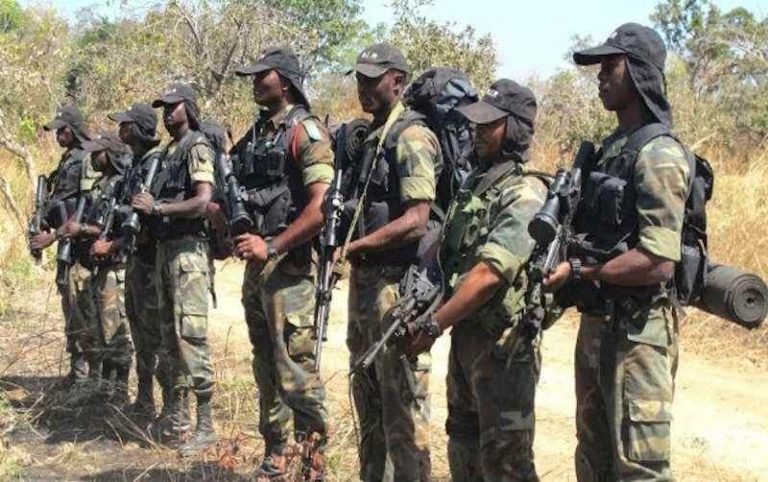
THE military, on Thursday, January 25, denied killing Christians and taking sides in the ongoing ethno-religious clashes in the Mangu Local Government Area of Plateau State.

The Defence Headquarters (DHQ), in a statement released by its acting director, Defence Information, Tukur Gusau, a brigadier general, stated that the video by the chairman of Christian Association of Nigeria (CAN) Mangu Chapter, Timothy Daluk, was aimed to malign military personnel deployed to address the security challenges in the area.

It further described the accusations made in the video as baseless and untrue and lacking any reasonable foundation.

The ICIR  reported how 15 people were killed in the clash between Muslim and Christian groups in Mangu LGA on Tuesday, January 23.

A source who spoke to The ICIR also accused the military personnel deployed to the area of killing an unarmed civilian in the process, noting that the troop was abetting some Fulanis to burn the houses of Christians despite a 24-hour curfew imposed on the LGA. 

As alleged by the source, the LGA CAN chairman, Daluk, in a video obtained by The ICIR, accused the Nigerian military of overseeing the killings of Christians and destruction of property in the Mangu area.

According to him, the military is suppressing the Christian group, sending them away from their houses for the Muslims to burn their houses.

“At this particular point in time, they have sent every Christian away from the new market, thereby leaving the Muslims to come and burn their houses. They set the curfew. The curfew is only restricted to only people within Mangu – within the Christian domain. Within the Muslim domain, they are free to move and do whatever they want to do.

“And not only that, the military has killed three of our young men of which I know. One is before my church. They killed one yesterday, and I reported to security (officer), and he said it was fake soldiers.

“At first, he said I was lying until I proved to him beyond a reasonable doubt. Then he finally said it was fake soldiers. I said no, it was not fake soldiers; it was a real soldier who killed him. Finally, they made a signal to the soldier, and he disappeared from the scene,” the CAN chairman alleged.

Meanwhile, reacting to the accusations, the DHQ stressed that the troops of Operation Safe Haven had carried out their duties professionally and by the rules of engagement. 

It also noted that the military had successfully arrested criminals involved in looting and burning of properties, as well as recovered weapons.

“It is deeply disturbing that a religious leader, who is expected to demonstrate high levels of moral judgement and truthfulness, has resorted to spreading falsehoods about the military and its personnel. We want to reiterate that the military remains neutral, focused, professional and committed to its constitutional role of protecting the lives and property of law-abiding citizens. We will deal with anybody found disobeying the law without bias or prejudice.

“We therefore call upon the public to support the ongoing military operations aimed at decimating non-state actors operating in these troubled areas of the state. We will not be distracted by baseless accusations and remain steadfast in our commitment to restoring peace and security. We strongly caution individuals involved in making malicious comments against the military to cease from such acts. Henceforth,  any person found spreading falsehoods will face constitutional redress, regardless of their status in society,” the DHQ added.

Soldiers shot unharmed civilians in Mangu – Local insists

Speaking to The ICIR on the statement released by the DHQ, which denied the killing of Christians, a source who resides in Amgwan Sarki, a community in the Mangu LGA, explained that he was an eye-witness to one of the killings and harassment by the Nigerian military.

“The issue we have in this country is very pathetic because, in everything, you want to be on the defensive side – to defend your own personnel. Yes, we agreed there are military personnel who are very professional in their dealings, but whenever the military doesn’t accept or acknowledge that they have bad eggs in them, we will never weed out bad egg soldiers in our system. That’s just the fact because if he had acknowledged that they were still investigating, that’s a different thing, but he categorically denied the killing.

“He is not in Mangu here, he doesn’t know what’s happening, it’s just information that either his junior sent to him, and he’s acting on that. I am a civilian, and I told you they shot people in my community, and they are military personnel,” the source said.