Home Blog Page 692

Why Nigeria won’t leave OPEC – minister

0

THE Minister of State for Petroleum Resources (Oil), Heineken Lokpobiri, has said that Nigeria would not leave the Organisation of the Petroleum Exporting Countries (OPEC) following Angola’s exit but would rather stay and challenge decisions that affect its membership.

Lokpobiri said this in an interview with Arise TV on the sidelines of the ongoing 54th Annual Meeting of the World Economic Forum in Davos, Switzerland, which started on Monday, January 15 and will end on Friday, January 19.

The forum brings together over 2800 leaders, including 60 heads of state and several chief executive officers, focusing on vital global issues like climate change, artificial intelligence, and geopolitical conflicts.

In December 2023, Angola announced its exit from the OPEC family, effective January 1, 2024, because the block no longer served its interests.

The Southern African country, which joined OPEC in 2007, produces about 1.1 million barrels per day (bpd), and its departure now leaves OPEC with 12 member countries.

Angola’s exit has raised questions about whether Nigeria, with a similar interest to Angola’s opposition to the reduction of its crude oil production quotas, will take the line and leave the block.

Lokpobiri said that although Nigeria had concerns similar to Angola’s, the country would address the issues in-house rather than leave the block.

“We will not leave, but we will continue to make our points. We are not satisfied with the quota given to us and are saying that we deserve more. We will continue to negotiate; we will continue to talk”, the minister said.

Noting that the last meeting where Angola objected and eventually left OPEC was a meeting of the OPEC+, a cartel headed by Russia, he said, “One way or the other, you must belong to OPEC or the other group (OPEC+).

“The other group has their concerns too. But everybody is more concerned with price stability, higher prices, not just the quantity that you produce. If you over-produce and the price goes down, you will not get adequate revenue,” he said.

Lokpobiri stressed that Nigeria would not allow itself to be short-changed but would play the polity within the OPEC family.

Hinting at Nigeria’s capacity to produce about two million bpd, the minister stated that the country was producing well above 1.4 million bpd of crude oil.

He said, “If you add the condensate of 350,000, we are already surpassing the figure budgeted in our budget (2024).”

He maintained that the country’s inability to produce two million bpd had nothing to do with capacity but the problems of insecurity and ageing infrastructure assets.

The ICIR reports Nigeria projected an oil production benchmark of 1.78 million bpd in its 2024 budget, above its cartel quota.

At a virtual meeting on November 30, 2023, OPEC+ reviewed Nigeria’s crude oil production quota up to 1.5 million bpd from 1.38 million bpd, subject to further consideration.

Despite the misgiving surrounding the OPEC+’s quota, Nigeria has not been meeting its daily crude production target, with the Federal Government and its regulator, Nigerian National Petroleum Company Limited (NNPCL), blaming it on pipeline vandalism, militancy and other insecurity problems.

An OPEC survey released on Wednesday, January 17, shows that Nigeria’s crude oil production rose to 1.41 million barrels per day in December from 1.31 million barrels per day in November 2023.

The survey also indicated that oil production from the remaining 12 members of OPEC averaged 26.70 million bpd in December 2023, higher by 73,000 bpd month-on-month.

However, an earlier report by The ICIR shows that crude oil revenue projected in the 2024 budget would suffer a setback as Nigeria will likely not meet its 1.78 million bpd oil benchmark.

Reps orders Trade, Health Ministries to refund N85bn Covid-19 fund

0

THE House of Representatives Public Accounts Committee has directed the Federal Ministry of Industry, Trade and Investments to refund N75 billion allocated to it as COVID-19 intervention funds.

The committee also mandated the Federal Ministry of Health to refund the unused N10 billion earmarked for COVID-19 vaccine production to the Federal Government.

The committee gave the directive on Thursday, January 18, following a motion moved by a Labour Party (LP) member, representing Cross River State, Bassey Akiba.

This latest development came after officials from the Trade Ministry failed to appear at the investigative hearing on Thursday.

The ICIR reports that the committee invited 83 ministries, departments, and agencies to appear before it in November to address the alleged mismanagement of funds designated for combating the global health pandemic.

The lawmakers asked each of the MDAs to be represented by their chief accounting officers, head of finance, head of procurement and any other relevant officer to defend the expenditure contained in their various submissions.”

The investigation stems from the House resolution in October 2023 to investigate the management of the funds following a motion sponsored by Rep. Zakaria Dauda Nyampa (PDP, Adamawa), titled “Investigation of Alleged Mismanagement of Covid-19 Intervention Funds from 2020 to 2022.”

Meanwhile, in a statement on Tuesday, January 16, 2024, the House spokesperson, Akin Rotimi Jr, stated that the investigation had commenced on Wednesday, January 7, 2024, and would end on Friday, January 26, 2024.

According to the statement, the MDAs, which are now 53, were grouped into eight.

However, at the commencement of the sitting on Thursday, Akiba moved the motion to compel the Trade Ministry to refund the monies appropriated to it.

The committee approved the motion, after it was seconded and ordered the ministry to return the funds to the Federal Government’s treasury.

In his earlier remark, the committee chairman, Bamidele Salam, expressed frustration over the ministry’s continuous absence despite several invitations extended to its officials.

 “The Federal Ministry of Trade, Industries and Investments got the sum of N75 billion as COVID-19 Intervention funds. The Public Account Committee has sent invitations to the Ministry of Trade Industries and Investments three times, and none of the invitations was honoured.

“The Federal Ministry of Trade was to make their appearance yesterday (Wednesday). That was the last opportunity given to them, and there was no such appearance. N75 billion naira was appropriated to them.

“Former Permanent Secretary and the current Permanent Secretary are affected by this motion to refund the sum of N75 billion back to the Federal Government as COVID-19 intervention funds which, as far as we are concerned, has not been expended,” he lamented.

The committee further directed the Federal Ministry of Health to return the unutilized N10 billion earmarked for COVID-19 vaccine production to the Federal Government.

The Health Ministry, which was represented by the Permanent Secretary, Daju Kachallom, informed the committee that the funds were domiciled with the Office of the Accountant General of the Federation.

The committee, nevertheless, instructed that the money be returned to the government’s coffers.

Alleged N4bn fraud: EFCC drags Ex-Niger governor Babangida Aliyu, one other to Appeal Court

0

THE Economic and Financial Crimes Commission (EFCC) has dragged a former governor of Niger state, Babangida Aliyu, to the Court of Appeal to set aside a no-case ruling granted him and a former chairman of the People’s Democratic Party (PDP), Niger State, Tanko Beji.

This was disclosed in a statement signed by the commission’s head of media and publicity, Dele Oyewale, on Thursday, January 18.

Aliyu and Beji were issued a no-case ruling by Abdullahi Mukailu of the Niger state High Court, Minna, on December 7, 2023, in an alleged N4 billion fraud.

The EFCC had filed a seven-count charge bordering on conspiracy, abetment and criminal breach of trust before Aliyu Mayaki, now a retired judge, against Aliyu, Beji and a former commissioner for environment and chief of staff to Babangida Aliyu, Umar Nasko.

The matter was later reassigned to another judge, Abdullahi Mukailu. The EFCC called 11 witnesses, tendered over 400 exhibits, and closed its case.

However, the three defendants made a no-case submission before the court. On December 7, 2023, the judge granted the prayers in favour of Aliyu and Beji and directed Nasko to open his defence.

Dissatisfied with the ruling on Aliyu and Beji’s no-case submission, the EFCC filed a notice of appeal dated January 10, 2024.

According to the EFCC, on January 15, 2024, when the commission’s counsel appeared in court to continue Nasko’s trial, the attorney-general (AG) of Niger state appeared in court with an application to take over the case from the EFCC.

“Not done yet, the AG made another appearance four hours later and entered a nolle prosequi, which his lordship acted on and discharged Nasko.

“For the EFCC, the road has not closed. The commission is proceeding in its appeal against Aliyu and Beji at the Court of Appeal with all its evidence against them,” the commission stated.

It added that it would continue to discharge its duties in line with its mandate of tackling all economic and financial crimes in Nigeria without fear or favour.

FCT residents abandon homes as bandits overrun communities

SOME residents of the Federal Capital Territory (FCT), especially those within the Bwari Area Council, are abandoning their homes to escape being kidnapped by bandits who seem to be taking over the city in a recent wave of abductions.

In 2019, an FCT resident, *Uzoma, was abducted by gunmen from his residence in the Lugbe Area of Abuja.

Read also: “We can’t sleep” FCT residents flee homes over bandit attacks, kidnappings

After his ordeal with his abductors, which included four days in captivity and a ransom payment to the tune of N4 million, she was released.

The ICIR reported that *Uzoma’s case was not an isolated one. As a result of frequent abductions, many residents of the area deserted their homes to avoid falling victim to kidnappers.

There have been several promises to address insecurity within the FCT by both past and present administrations. However, many years later, abductions have persisted, and more residents are leaving their homes to escape attacks by bandits.

In December 2023, the FCTA named three area councils, Kuje, Abaji, and Bwari, as places with the highest records of kidnapping in the FCT.

Several kidnap cases were recorded within these areas during the festive period, including the mass abduction of about 23 residents of Dei-dei, Bwari, and 12 others in Gbaupe, a rural community along Airport Road.

Speaking with The ICIR, a resident of Bwari, Somto Ekwerike, said those living within the developing areas of the area council were mostly targeted. She said they had vacated their homes out of fear.

“People are leaving the area, especially the rural areas or residential houses built in developing areas. You know that people in these developing areas mostly build their own houses, so they are seen as wealthy, making them targets.

“Most of them had to leave their homes for Bwari central. It is even beginning to affect the cost of rent here,” she told The ICIR.

Narrating his ordeal to The ICIR, a homeowner in the Barangoni area of Bwari, Ijaodola Wasiu, said he was forced to relocate with his family to other parts of the FCT. This move cost him nearly N1.4 million despite owning a four-bedroom flat.

He took the decision after separate abductions were successfully carried out for three consecutive days within his community and neighbouring areas.

“After the first, second, and third day, my family said they were not safe anymore. Everybody started moving. That is how my family left the house. Other families, too, are going. Many people have gone,” he said.

Wasiu also disclosed that the sudden relocation was taking its toll on his finances and children’s education. The urgency of the move did not afford him enough time to search for less expensive alternatives.

“My children are to return to nursery and primary school. Nowhere for them to go to school,” he said.

In his New Year message, Minister of the FCT Nyesom Wike said the FCT Administration (FCTA) remained committed to ensuring the safety of residents.

“I wish to reaffirm the administration’s unwavering commitment to ensuring the security and well-being of all residents. Security remains a top priority, and we will continue to support the efforts of the security agencies in keeping the FCT safe,” he noted in his message.

Despite the minister’s assurance, abductions have persisted in many parts of the FCT.

At least 42 FCT residents were kidnapped in 2024

Barely two weeks into 2024, the FCT seems to have witnessed a surge in kidnappings, particularly within the Bwari Area Council, where abductions have affected at least 42 people.

On January 2, a father and his six daughters were abducted in the Zuma 1 Area of Bwari. The abductors also proceeded to shoot at two Police officials and a family member who had made attempts to rescue the family.

The family member died from the shooting, while the two security operatives sustained gunshot injuries.

The kidnappers demanded N60 million as ransom, and the father was released to source for the sums.

After about 12 days in captivity, one of the sisters was killed, leading to outrage by the public and efforts to raise funds to pay for the remaining girls’ release have not fully materialised as of the time of filing this report.

On January 7, three days after the girls were kidnapped, ten residents of Sangwari Estate, Dutse, in Bwari, were also abducted.

The most recent case of kidnap in Bwari occurred on January 10 in Kawu. This community shares boundaries with Niger and Kaduna states. About 23 residents were whisked away by abductors from the community.

The abductors had arrived through the Kuyeri forest in Kaduna, according to the councillor representing the area, Abdulmumini Zakari.

The kidnappers also invaded the residence of the village head, Gambo Pawa, and abducted him along with his two wives and some children.

With terrorists inching further into Nigeria’s capital, there is heightened anxiety and tension among FCT residents, who have expressed their dissatisfaction with the situation.

*The name with asterisk changed to protect source’s identity.

Super Eagles pip 2023 AFCON’s host, Cote d’Ivoire, 1-0

0

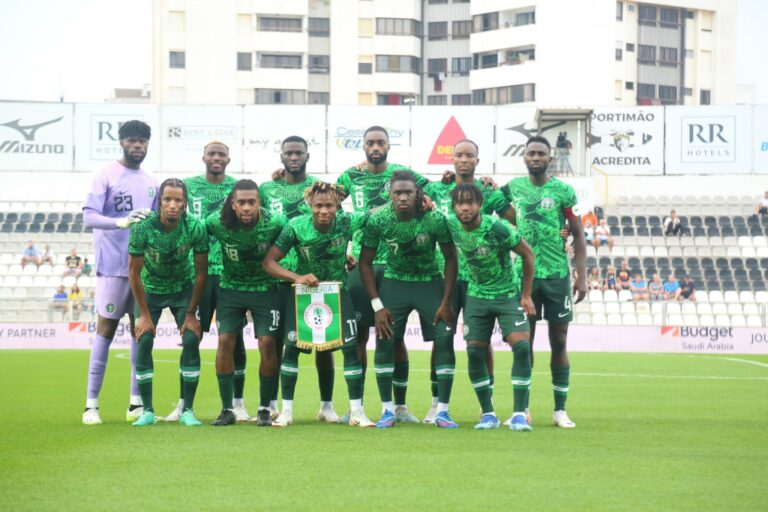
NIGERIA’s senior men’s football team, Super Eagles’ beat the 2023 Africa Cup of Nations (AFCON) host, Cote d’Ivoire, 1:0 on Thursday, January 18,  in the second-round group match.

The match was played at the Ebimpe Olympics stadium.

The match, which ignited a long-time rivalry between the two countries, was crucial to both nations qualifying from the group stage due to a 4-2 victory by Equatorial Guinea against Guinea-Bissau earlier in the day.

The match lived up to expectations as both countries displayed a high contest to get the maximum victory.

But the Super Eagles’s lone goal via penalty kick by captain Williams Troost-Ekong in the 55 minutes decided the victory for Jose Peseiro-led team which held a 1-1 draw against Equatorial Guinea in their opening match.

Peseiro adopted a tactical change by deploying a 5-4-1 formation against Cote d’Ivoire, which was a tweak from the 4-4-3 formation he used in the first match.

The 5-4-1 formation saw the introduction of central defender Calvin Bassey pairing Williams Troost-Ekong. Also in the midfield, Frank Onyeka replaced Alhassan Yusuf, who sustained injuries during the first match against Equatorial Guinea.

The 5-4-1 formation against Cote d’Ivoire saw the Super Eagles struggle to have more attack at their opponents’ home, as Victor Oshimen was left bare.

But 10 minutes into the match, Nigeria had an opportunity to take the lead, but Osimhen’s effort went wide.

A few minutes later, the host nation Cote d’Ivoire responded with attacks, but their attempts met the firm resilience of the Super Eagles defence.

After a series of football skills by both teams, the Super Eagles midfielders lacked composure, allowing their opponents to gain possessions.

The first half ended without clinical chances by either team.

But the resumption of the second half saw the Super Eagles increase the match’s tempo in search of goal.

The intense pressure bore as the centre referee awarded Nigeria a penalty after a review of the video assistant referees (VAR) of an attack on Oshimen, who was kicked on his leg by Cote D’Ivoire defender Evan Didomande.

William Troost-Ekong stepped up to take the penalty, giving the Super Eagles the lone goal, that earned the team the maximum three points.

In the 71 minutes, the Super Eagles coach brought in Moses Simon and Kenneth Omeruo to replace Samuel Chukwueze and Ademola Lookman to strengthen the defence.

Also, Paul Onuachu replaced Victor Osimhen.


READ ALSO:


Ten minutes before the end of the full-time, the Super Eagles had a couple of opportunities but lacked the technical ability to convert the chances.

The match ended 1-0 in favour of the Super Eagles, gaining a maximum of three points to stay in second position with four points in Group A.

Nigeria will play its third-round group-stage match against Guinea-Bissau on Monday, January 22, 2024.


CBN forex management questioned as naira plunges further

THE Central Bank of Nigeria’s (CBN) approach to foreign exchange management has been questioned as the naira continues on a downward trajectory.

The downward trajectory of the naira has been a recurring incidence since the enforcement of the single exchange rate window introduced by President Bola Tinubu’s administration.

Tinubu has made the unification of exchange rates a key policy of his administration in currency management.

Conversely, the unification has failed to solve Nigeria’s currency problems, as economy watchers want the Central Bank of Nigeria (CBN) apex bank to be clear in its policy directive and address structural defects in the policy.

“Lots of issues need to be addressed and there are structural defects with the way the market is structured. There is also a shortage of supply and the poor signals from the market fuel speculation,” said the chief executive officer of Financial Derivative, Bismarck Rewane, in reaction to CBN’s foreign exchange management.

According to Rewane, the naira has continued to plunge as a result of the unclear policy direction by the CBN, most especially, with the management floating the naira.

“The value of the naira to the dollar at the parallel market is about N1,300. It was trading about N1,216 about a week ago,” he queried.

Rewane noted, that the foreign exchange market doesn’t like uncertainties and confusion, adding that it dampens investors’ confidence.

According to him, excess liquidity is a stoking factor for rising inflation, currently at 28.92 per and a trigger for currency weakness.

The ICIR reports that the monetary policy committee meeting of the CBN, an independent body that looks at Nigeria’s monetary issues last met in July 2023.

“We are now almost going into February, and we don’t even know when the board is to be constituted, said Rewane.

He added that there was evidence that when the monetary policy committee of any country’s  Central Bank is independent, the economy performs better and is not subservient to political interference.

Data from the Financial Market Infrastructure showed that the exchange rate for the Nigerian autonomous foreign exchange market  (NAFEM) rose to N931.23 per dollar on Wednesday, January 17, from N878.57 per dollar on Tuesday, indicating N52.66 depreciation for the naira.

Consequently, the gap between the official and parallel market exchange rates widened to N418.77 per dollar on Wednesday from N416.43 on Tuesday.

The naira, on Wednesday, fell to N1,350 per dollar in the parallel market from N1,295 per dollar on Tuesday.

The ICIR reported the position of the President of the Association of Bureaux de Change Operators of Nigeria (ABCON), Aminu Gwadabe, who suggested to the apex bank to sustain US dollar inflow to the economy through increased supply.

He suggested that the dollar supply inflow to the economy would ward off speculators and stabilise the exchange rate market.

The chief executive officer of Cowry Assets Management PLC, Johnson Chukwu, told The ICIR that the CBN must ‘urgently’ improve the supply of dollars into the economy to lessen demand pressure.

“If you look at the gap between the official rate and the parallel market rate, you would see that the Central Bank needs to improve supply to ward off speculators,” he noted.

Ibadan explosion: Death toll rises to five

0

DEATH toll from an explosion that rocked Ibadan, the Oyo state capital, on Tuesday, January 16, has risen to five.

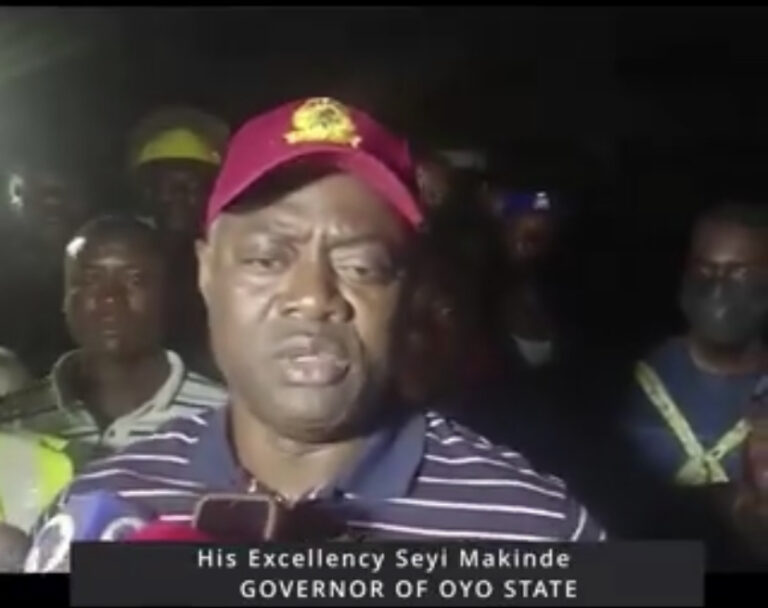
Fatai Owoseni, special adviser on security matters to the state Governor Seyi Makinde, disclosed this on Thursday, January 18, saying two more bodies were recovered from the explosion scene.

“Rescue operation is still ongoing. As of yesterday, we had three casualties but this morning, just about 30 minutes ago, I got information from the security operatives supporting the medical team that two more dead bodies were recovered this morning,” he said.

As of Wednesday, January 17, three people were declared dead from the explosion, while about 77 others were injured.

The blast occurred at about 7.30 p.m. on Tuesday.

Earlier, the National Emergency Management Agency (NEMA) said more than 20 houses were destroyed due to the explosion, but the figure has now risen 58.

Makinde had disclosed via his official X handle that preliminary investigations by the security agencies traced the cause of the explosion to explosive devices stored by illegal miners in one of the buildings within the area.

The governor also said that the injured persons had been taken to public and private hospitals for medical treatment.

He added that the government would cover their bills.

Meanwhile, the Federal Executive Council (FEC) set up a panel to review existing laws on explosives in Nigeria following the incident in Ibadan.

Minister of Defence Mohammed Badaru told journalists on Wednesday that punitive measures would be applied if investigations reveal that extant laws on explosives in the country were violated.

“The issues of environmental protection as well as mining, areas protection and forest protection were discussed, and a committee was set up by Mr. President.

“That includes all the security agencies, the Minister of Environment, Ministry of Solid Minerals to look into all these issues and see how we can provide lasting solutions to stop the issues that centre around environmental degradation both in our forests and the mining sites,” he said.

Supreme Court dismisses appeal against Gombe governor

0

THE Supreme Court has dismissed the appeal filed by the Action Democratic Congress (ADC) and its candidate, Nafiu Bala, against the victory of Gombe state Governor Muhammadu Yahaya at the 2023 general elections.

In a judgment passed on Thursday, January 18, by a five-member panel of the court’s justices led by Kudirat Kekere-Ekun, the court described the appeal as frivolous.

“You can’t come to court with frivolous appeal. I think you should not waste our time,” the court ruled.

The appeal was, therefore, withdrawn by lawyers representing the ADC and the case was dismissed.

The court also disclosed that the ruling for the suit by the People’s Democratic Party (PDP) against the governor would be delivered on Friday, January 19.

Candidate of the PDP in the Gombe governorship election, Jibrin Barde, claimed that the Independent National Electoral Commission (INEC) did not comply with the Electoral Act (2022) in declaring Yahaya the poll winner.

He insisted that Yahaya was not re-elected by a majority of valid votes cast in the election and challenged the results at the State Governorship Election Petition Tribunal.

The tribunal dismissed Barde’s petition and struck it out for lack of merit.

Barde, however, challenged the ruling at the Appeal Court.

He alleged that there were cases of ballot box stuffing and thumb-printing of election materials in nine local government areas in the state, but the court again upheld Yahaya’s victory.

“All the issues are resolved in favour of the respondent and against the appellant. No order as to cost. The judgment of the lower tribunal is hereby affirmed,” the Appeal Court, led by Y.N. Orji-Agbadua, had ruled.

Court grants Emefiele’s request to travel out of FCT

0

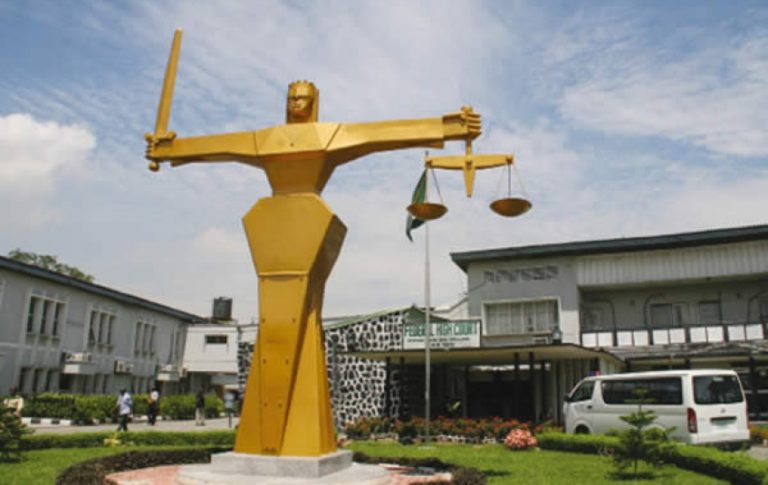
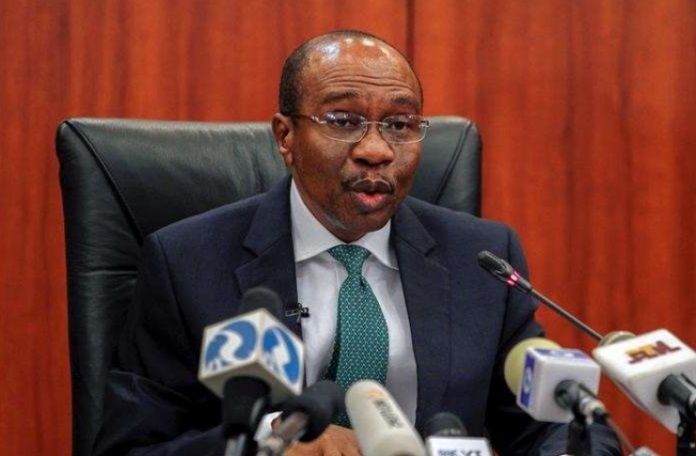
A FEDERAL Capital Territory (FCT) High Court, Abuja, has granted former Governor of the Central Bank, Godwin Emefiele’s request to travel out of the FCT.

However, the court said he must not travel out of Nigeria.

The former apex bank chief had been restricted to the FCT by his bail conditions.

He is being tried by the Economic and Financial Crimes Commission (EFCC) for crimes he allegedly committed in office before President Bola Tinubu suspended him in June, 2023.

He had been kept in the custody of the State Security Services (DSS), the EFCC and the Kuje Correctional before he regained his freedom through a bail in December, 2023.

Emefiele had asked for a change in the terms of his bail condition through his attorney, Mathew Bukka.

The EFCC counsel, Rotimi Oyedepo, a senior advocate, did not raise any objection to the request.

He urged the judge to ensure Emefiele sign a document committing him to stay in the country if his plea was accepted.

The accusation against the former CBN governor was also changed from six to twenty.

The new allegations against Emefiele now include conspiracy to commit procurement fraud, forgery, criminal breach of trust, and conspiracy to commit crime.

On Wednesday, November 22, a Federal Capital Territory High Court, Abuja, granted Emefiele N300 million bail and two sureties in the like sum.

According to the judge, Hamza Muazu, the titles and certificates of occupancy for the properties held by the sureties must be from within the Maitama District.

Emefiele must stay inside the Abuja Municipal Area Council and deposit his travel documents with the court registrar.

This came four months after the Federal High Court in Lagos granted him N20 million bail in a different case involving the unlawful possession of weapons.

The ICIR reported on Friday, November 17, that Emefiele was sent to Kuje Correctional Centre over an alleged N1.6 billion procurement fraud.

The former CBN governor was arraigned on a six-count charge at a FCT High Court, Abuja.

The Federal Government said in its charge sheet that Emefiele unlawfully purchased 43 vehicles for N1.2 billion between 2018 and 2020.

He was also charged with giving corrupt benefits in violation of Section 19 of the Corrupt Practices and Other Related Offenses Act 2000 when he granted N73 million for the supply of a Toyota Landcruiser in 2019.

The ICIR reported that an FCT High Court granted the former CBN chief bail on November 8.

The judge, Olukayode Adeniyiordered that he be released immediately to his lawyers, who must bring him into court for arraignment the following week or any other day.

On January 8, 2024, a Federal Capital Territory (FCT) High Court fined the Nigerian Government one hundred million naira for infringing on Emefiele’s rights.

The court ruled that Emefiele’s detention without charge or trial violated his constitutional rights.

The court joined the EFCC in the N100 million fine.

It also prohibited the Federal Government or its representatives from arresting or detaining the former CBN chief without a court order.

The ruling was made in a fundamental human rights lawsuit by Emefiele after spending weeks in the SSS custody.


2023 AFCON first round group matches produce 27 goals

0

THE 2023 Africa Cup of Nations (AFCON) first-round group matches produced 27 goals, translating to a 145 per cent increase from the 11 goals recorded in the 2021 edition held in Cameroon, The ICIR checks reveal.

The twenty-five goals were produced from the 12 group stage matches among the 24 participating teams.

A breakdown of the results in the first round of the group stage matches showed that Group A, comprising four countries: Cote d’Ivoire, Equatorial Guinea, Nigeria and Guinea recorded four goals.

Group B which has Egypt, Mozambique, Ghana and Cape Verde produced the highest goals – seven – in the first round.

Group C, consisting of the winners of the 2021 edition – Senegal, The Gambia, Cameroon and Guinea logged five goals, while in Group D, Alegria, Angola, Burkina Faso, and Mauritania produced three goals.

In Group E, Tunisia, Namibia, Mali and South Africa got three goals, and in the last Group F having Morocco, Tanzania, Zambia, and Congo DR netted five goals.

Upset in first round group stage matches of AFCON 2023

The 2023 AFCON’s first-round group stage matches witnessed upsets, affirming the increasing competitiveness of the continental soccer showpiece.

The ICIR reports that the increasing competitiveness of the ongoing tournament has most likely contributed to the 27 goals recorded in the first-round group matches.

It also lends credence to the of low-ranked countries in both CAF and FIFA ranking to the challenge and raising shoulders against the high ranked countries.

Some of the upsets were seen in Group C as Cape Verde pipped Ghana 2-1 and Egypt struggled to force a draw against Mozambique,1-1.

In group E, Namibia shockingly edged Tunisia 1-0.round of the group stage encounters begins on Thursday, January 18.

It provides participating nations another opportunity to determine their fate in the tournament, either to qualify for the next round or prepare for an exit.