THE Nigerian Communications Commission (NCC) has suspended its planned disconnection of Globam (Glo) subscribers from calling MTN lines.
According to NCC, the suspension is temporary and will last 21 days.
The NCC disclosed this in a statement signed by its director of public affairs, Reuben Mouka, and made available to journalists on Thursday, January 18.
Muoka said the commission expected MTN and Glo to resolve all outstanding issues within 21 days.
“The commission is pleased to announce that the parties have now agreed to resolve all outstanding issues between them. For this reason, and in exercising its regulatory powers in that regard, the commission has put the phased disconnection on hold for 21 days from today, January 17, 2024.
“Whilst the commission expects MTN and Glo to resolve all outstanding issues within the 21 days, the commission insists that interconnect debts must be settled by all operating companies as a necessary component towards compliance with regulatory obligations of all licensees,” the NCC stated.
The ICIR reported on January 8 that the NCC approved MTN’s request to partially disconnect Glo from its network over unpaid interconnect charges.
The partial disconnection means that Globacom’s subscribers cannot place calls to any MTN number but can receive calls from MTN users.
A memo titled ‘Pre-Disconnection Notice,’ and signed by the NCC spokesperson, Muoka, on Monday, January 8, stated that development followed Glo’s failure to settle its outstanding debts despite repeated attempts at resolution.
After reviewing the application and the circumstances relating to the indebtedness, the commission said that Globacom lacked significant or justifiable reasons for failing to pay the interconnect charges.
Part of the statement reads, “All subscribers are, therefore, requested to take notice that the commission has approved the partial disconnection of Globacom to MTN by Section 100 of the Nigerian Communications Act (2003) and Paragraph Nine of the Guidelines on Procedure for Granting Approval to Disconnect Telecommunications Operators (2012).
“At the expiration of 10 days from January 8, 2024, subscribers of Globacom will no longer be able to make calls to MTN but will be able to receive calls.”
*LADIDI Ado’s journey into motherhood took shape amidst the challenges of a semi-functional primary healthcare centre in her village, Agalawa, of Madobi Local Government Area (LGA) within the Northwestern state of Kano. This chapter began as she ventured into bringing her third child into the world.
Unlike her previous two births, which unfolded in the familiarity of her home, guided by the hands of makeshift midwives (unguwarzoma), Ladidi’s hesitation towards hospital visits wasn’t born out of reluctance but rather out of despair over the health disparities that make it difficult for people like her to access good and affordable health care services in rural areas.
The primary healthcare facility in her village, Agalawa Health Post, was intended to be accessible to vulnerable people in the remote village and to bridge the gap in the health disparities that are being suffered by the people in rural areas.
But the health post echoes sounds of neglect and struggle to the level that even those it intended to serve are leaving it for an alternative.
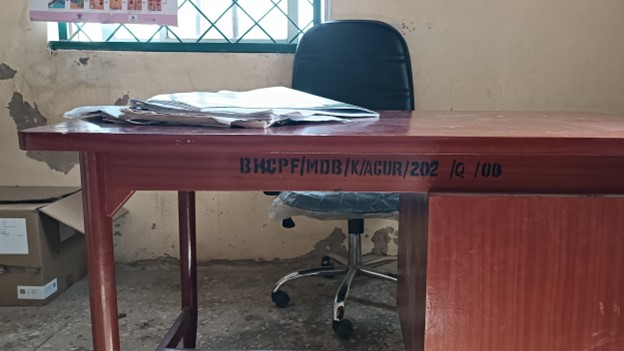
With broken ceilings sagging under the weight of time and shattered windows, the building wore the scars of abandonment.
To add insult to injury, only two staff members work in the health facility, which is intended to look after hundreds of women and their children.
Photo: Signs of neglect at the Agalawa Health Post
“This is the problem,” she said. “If you rely on this health post, you may miss it all. So, women in this village find alternatives. They look for a local midwife and use traditional means to deliver their babies,” she said.
Locals have said that staff work mostly two days a week and close in the afternoon before the official hours assigned to them.
At the time this reporter was at the health post, which was around 2:00 pm, the facility was already closed, and the only staff who worked that day had gone.
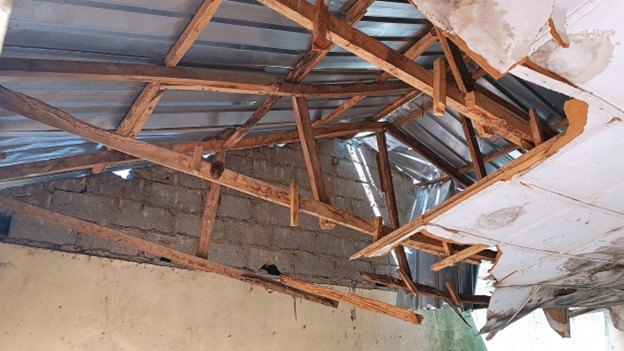
Photo: The damaged roofing of the Agalawa Health Post.
For Ladidi, this time, her pregnancy brought forth unforeseen complications. Two weeks past her expected delivery time, she found herself waking up each day to the endless nightmares of troubled times.
“It was a new chapter for me, unlike my previous pregnancies,” she recalled.
Amidst the highs and lows of Ladidi’s prolonged labour, the local midwife acknowledged the gravity of Ladidi’s situation, admitting that her expertise was no match for the challenges at hand. The only viable option left was seeking aid at the same health post they initially abhorred.
Transportation, however, was a rickety motorcycle owned by her husband. Ladidi embraced her growing discomfort in the backseat, clinging to hope as the motorcycle danced ups and downs through the uneven roads. The journey became a dual trial, testing both her physical endurance and emotional resilience.
Approaching the health post, Ladidi’s contractions surged. The motorcycle accelerated, racing against time. But to their greatest disappointment, the health post was already closed. The only two staff members working, all coming from distant locations, have already left.
“By the time we reached there, I had already forgotten what was going on. I was semi-conscious,” she said.
Ladidi’s husband decided that he had to take her from Agalawa to Kafin Agur, where another and bigger healthcare centre is located. It was a tortuous journey, and before the hospital’s embrace could be reached, Ladidi gave birth to her newborn on the road.
“It was an unforgettable memory. I still feel like we should have stayed at home instead of giving birth on the road or, to be more precise, in the hut by the road,” she said.
Burji Health Centre: Neglected, in ruins
The experience of Ladidi and her husband was somewhat similar to that of Jummai Abdullahi and her daughter Amina, who entered the intense final stage of her labour, and a sense of urgency gripped them. The nearest hope for medical attention lay many kilometres away from their house at the Burji Health Centre, a once-vital healthcare institution now plagued by dilapidation and neglect.
As they embarked on the journey to the hospital, the struggles of the primary healthcare centre mirrored the larger crisis facing not only Madobi but Kano state in general.
Dilapidated infrastructure, understaffing, a lack of essential medical equipment, and budget constraints have crippled this vital community health facility, leaving residents without access to crucial medical services.
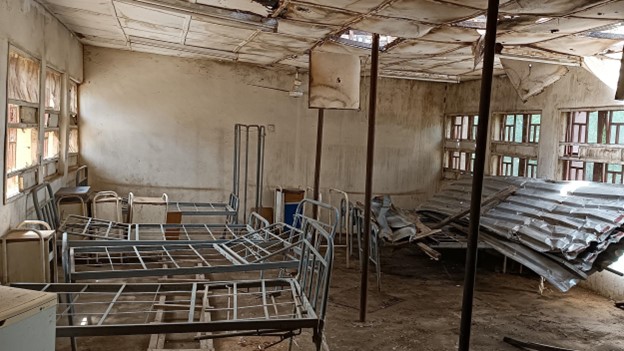
Photo: damaged patient room at the Burji Health Center. Credit: Aliyu/HumAngle
Upon reaching Burji, Jummai and Amina found a closed hospital deserted in the dark hours of the night. With a heavy heart, Jummai and Amina returned home, facing the agony of the night intensifying and a pregnant woman.
After returning home, in the poorly lit confines of their home, Amina gave birth with makeshift midwives, including her mother and neighbours. In the aftermath, Jummai reflected on the terrifying experiences of many women in her village.
It wasn’t only about operational hours due to the lack of staff; it was also about how the hospital patients’ rooms have become dilapidated with no beds and other necessary medical equipment that could be used to attend to patients.
Patients who seek medical attention in this facility are often subjected to substandard conditions, with leaky roofs and inadequate sanitation facilities. These deplorable surroundings not only compromise the dignity of patients but also pose serious health risks.
Rain has damaged more than half of the roofing in the hospital patient room at Burji Health Center. The ceiling, long bereft of any maintenance, sagged in resignation, weighed down by the heavy burden of neglect and raindrops. Sunlight streamed through the countless gaps, casting erratic patterns of light and shadow on the abandoned hospital beds with no sofas.
Free, but abandoned
In May 2023, the Kano State Assembly passed the long-awaited Free Maternal and Child Healthcare (FMNCH) Bill into law. This made the state the first in Nigeria to enact the law, and it was welcomed across the state in a celebratory mood.
There are a total of 1183 health facilities across the 44 LGAs of Kano state. Of this number, 1142 are primary healthcare centres, amounting to 97 per cent of the total health facilities in the state. Most of them are struggling to provide basic healthcare to people, especially in rural areas.
Madobi LGA has a total of 20 of them, most of whom are struggling to provide the basic services required of them. None of the 10 buildings visited during this investigation even met the minimum requirement for providing healthcare services. None of them has a good and functional patient room, and most of them have no water source or hygienic toilets.
The National (NPHCDA) specifies that all functional PHCs should be built on 4,200 square meters and with at least 13 rooms, with good roofing, netted windows, functional toilets, clean water supply from a motorized borehole, a disposal site, contain staff accommodation, and be painted a green color.
However, none of the PHCs has all of the above. In Birji, for example, the roofing has been damaged by rain, and there is no water source, and the staff working in the facility have lamented that the distance and lack of accommodation are affecting their productivity.
On the Federal Ministry of Health website, Burji Health Center offers antenatal and eight other medical services for in- and out-patients. But the reality, according to a staff in the hospital who requested anonymity, is that none of the services mentioned get fully done. “It’s just on paper,” he said.
“In ANC (antenatal care), for example, there’s only one staff working, and sometimes the number of patients is so large that she can’t respond to them all,” he explained, adding that even if there’s a will from the few staff they have, they can’t handle the services promised to be given.
The hospital sees an average of 20 patients a day, he said, most of them receiving antenatal care, while a few come for immunization. However, it has no proper maintenance to receive patients in very critical conditions.
Amidst this desolation, only seven staff bear the weight of their roles with a sense of resignation. All of them hailed from distant places.
The problem is not limited to Madobi. In 2020, Connected Development (CODE), a non-governmental organisation in Nigeria, conducted an assessment of 49 health centres across Kano’s 44 LGA and found that “all the PHCs assessed seem to lack some component of the basic requirements as outlined by the NPHCDA minimum standards for PHCs.”
Photo: An abandoned toilet at the Birji Health Center in Madobi.
While the website of the Kano State Primary Healthcare Management Board has listed Burji and Kafin Agur Health Centers as operational for 12 hours a day, this investigation has found that the claim is false.
At Kafin Agur, this reporter found that the health center was closed before 2 p.m., and at Birji, the staff confirmed that they operate for less than 8 hours a day.
BHCPF intervention not enough
In 2019, an attempt by the federal government to save the ailing primary healthcare centres in Nigeria was introduced through the Basic Healthcare Provision Fund (BHCPF).
READ investigations on BHCPF and the state of primary health centres HERE
The BHCPF is a health intervention scheme established under the National Health Act (2014) to provide basic healthcare services to the poor and vulnerable. The intervention was touted as the savior of ailing primary healthcare centres. However, the grand vision collided with a stark reality, leaving the ambitious project gasping for breath.
With N948 million at the start of the project, Kano state was at the top of the list of beneficiaries, with 381 PHCs receiving funds under the programme and later expanded to 484 PHCs across the entire 44 LGAs in the state.
However, research has shown that in Kano state, despite getting the lion’s share, the project has faced many challenges in the four years since its implementation started.
Challenges to the implementation, such as insufficiently skilled health professionals, a lack of data management capacity, low community participation and awareness, delays in releasing funds, poor infrastructure, and a weak financial management and accountability system, have become stumbling blocks to the success of the project in Kano State.
In Madobi LGA, one PHC was selected from each of its ten wards. They are PHCs in Kafin Agur, Daburau, Burji, Maraya, Dan Murna, Gora, Yakum, Chinkoso, Rikadawa, and Cikawa.
However, this investigation has found that all the health facilities are facing one or more of the challenges mentioned above, making it difficult for the successful implementation of the BHCPF in the local government area.
In Kafin Agur, for example, there are three major components that are being supported by the project, all within a meagre amount of 300,000 Naira per quarter and expected to be shared across 10 priority areas.
“First of all, this health centre has only six staff, including two casual workers,” A staff at the healthcare centre said.
“The first thing we do with the funds is pay the allowances of the two casual staff working on the project,” he explained.
“We are also expected to renovate some rooms and buy drugs for the hundreds of beneficiaries under the project,” he added.
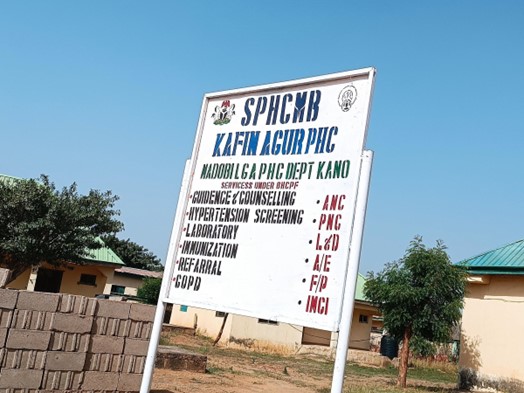
Photo: Sign post at Kafin Agur PHC renovated using BHCPF.
According to him, the meagre amount that’s given to the hospital per quarter can’t cater to the needs of the hospital, especially as prices have already gone up.
“Inflation has affected everything, including the drugs that are being given to the BHCPF beneficiaries in this ward. What used to be 100 naira has now tripled or even quadrupled its price,” he lamented.
There are 343 beneficiaries from Akilu Memorial Health Centre and over 270 from Kafin Agur PHC.
According to him, most of the time, the drugs get finished before the end of the three months, even before most of the project beneficiaries finish visiting the hospital.
Mallam Bashir Sunusi, the Director Planning, Monitoring and Evaluation at the Kano State Primary Healthcare Management Board (KSPHMB), admitted that not only in Madobi, most of the PHCs in Kano are struggling to survive even under the BHCPF.
“Let’s be realistic,” he said. “The BHCPF hasn’t come to alleviate all the problems that the PHCs are facing.” He explained that the money is insufficient but it serves as a catalyst to help the PHCs work.
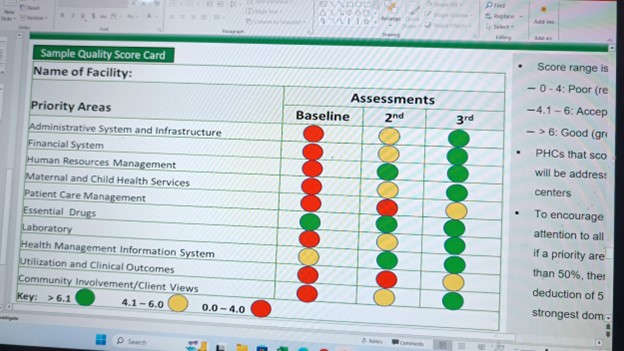
“Every month, the PHCs are expected to spend 100,000 across 10 priority areas and that’s 10,000 for each in this inflation,” he said. But, according to him, there’s a form of flexibility in spending the money. The PHC can take the money where it’s less critical and put it where the PHC needs critical attention.
Photo: List of the priority areas under the BHCPF program.
But there’s a good side. The intervention, despite the meager amount, has helped repair damaged ceilings and renovate the patient’s room. “We also buy the medicine, although in a small quantity, to give to the beneficiaries,” he said.
Photo: A table showing the BHCPF intervention in Kafin Agur.
But this is not the major problem. The selection of the beneficiaries who receive the drugs was, from the beginning, the biggest controversy.
Some residents have accused local politicians and traditional rulers of hijacking the project for themselves. Habibu Lawal, for example, has claimed that some of the people put on the list of beneficiaries at Akilu Primary Health Center in Madobi don’t deserve it.
“The project’s aim was to target the weak and vulnerable, but it has been hijacked,” he claimed. “People who are in obvious poverty are not benefiting, while people who have known some people are at the top of the list,” he said.
Amidst these allegations, some of the people selected have not been attending the healthcare facility. “That’s the irony,” said the staff at the health facility.
“While others are lamenting that their names haven’t been on the beneficiary list, others are not coming to benefit despite having their names on the list,” he added.
This reporter has tried reaching out to the authorities at the local government level to comment on the overall report findings or allegations, but they said they were not authorized to speak without permission from the Kano.
But recently, the BHCPF management in the state conducted a reassessment of the beneficiaries and found some of them missing. “We are waiting for replacements,” the staff at the Kafin Agur PHC said.
On the dilapidated state of the PHCs, Mallam Sunusi said the state government is aware of their conditions and activities have already started to see them working again.
“There’s a plan to take one PHC from each ward across the 44 LGA and renovate it to a standard and the plan has already been approved by the state government,” he said.
Mallam Bashir Sunusi explaining how the BHCPF project is going in Kano State.
On the BHCPF project in Kano, Sunsi said it’s not entirely in the state’s hands because even the money that’s being sent is coming directly from the CBN to the PHCs through the Direct Facility Financing (DFF) program.
“We have minimum control over it. Ours is to monitor and evaluate, and I’m telling you that the money being sent isn’t sufficient even though BHCPF hasn’t come to solve all the problems but to catalyze the solutions,” he explained.
*Names with asterisks have been changed to protect identities.
This Investigation is supported by the John D. and Cathrine T. MacArthur Foundation and the International Centre for Investigative Reporting
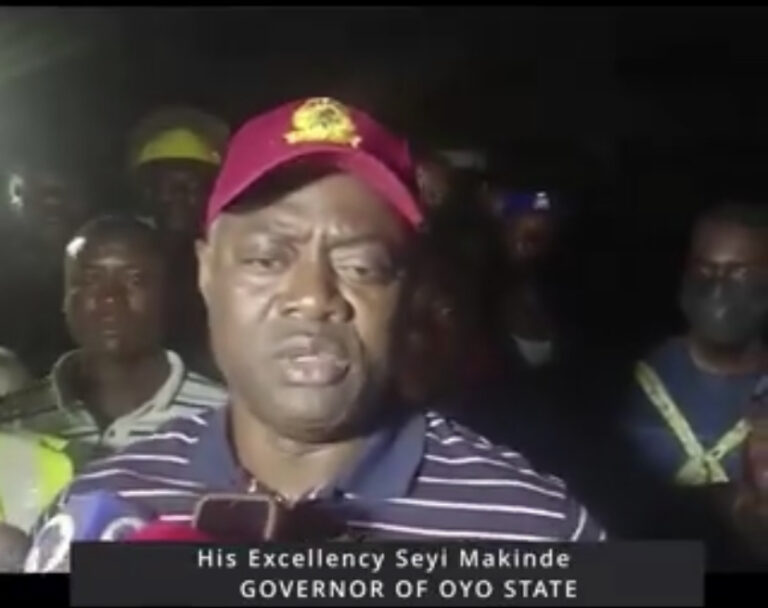
The governor said this when he featured on Channels Television’s “Politics Today” programme.
“We recovered one individual alive today (Wednesday) under the rubble. 60 of the 77 people hospitalised have been discharged,” the governor said.
Makinde also revealed that a mining company’s Corporate Affairs Commission (CAC) certificate indicted for the explosion in the Bodija area of the state capital showed some foreign names as owners.
“We are trying to uncover the identities of the people. We’ve done a few fact-findings on the company involved, and yes, there are indeed some foreign names on the company’s CAC documents. But these are still early days. We don’t have anything to cover,” he said.
According to Makinde, security agencies should invite a person of interest the state has identified for interrogation.
“It is not anything that has to do with banditry and insurgency but illegal miners that stored explosives in a residential area,” the governor stated.
He pleaded that the state’s residents should have faith in his administration and that there was no justification for a cover-up.
Makinde announced that he would sign an executive order in the next few days for miners to store explosives with the military and that he would seek presidential clearance for this to happen.
According to the governor, people whose homes were destroyed have been temporarily accommodated in hotels.
Tragedy hit Ibadan when a blast blared in the ancient city on Tuesday.
The state government, in a statement via its X handle, confirmed the explosion, which killed two and injured 77 as of Tuesday.
It urged the state residents to remain calm, adding that security agencies were investigating the incident to determine its cause.
Some sources disclosed to The ICIR that the blast affected some houses and buildings in Old Bodija, Agbowu University of Ibadan, and other parts of the state.
There were also videos online that smoke billowing, with many residents scampering for safety.
TWO Nigeria’s senior men football team- Super Eagles opponents; Ivory Coast and Equatorial Guinea in the 2023 African Cup of Nations, AFCON have recorded more wins than the Super Eagles in their last five matches, The ICIR checks reveal.
The three countries including Guinea-Bissau are currently in Group A of 2023 AFCON which started on Saturday, January 13, 2024.
Before the kickoff of the tournament, The ICIR analysed the last five matches of the four countries; Nigeria, Ivory Coast, Equatorial Guinea and Guinea-Bissau, in an attempt to gain insights into the strength of the teams.
Among the four countries, the host country- Ivory Coast has the record of three wins and two draws in the last five matches.
In their last five matches, they recorded 18 goals and conceded 3 goals, a vivid picture of the strength of their attacks and firm resilience in the defense line.
A breakdown of their last five matches includes a 5-0 victory against Sierra Leone, a 2-0 win against The Gambia, and defeating Seychelles 9-0.
It was against South Africa and Morocco, they recorded 1-1 respectively.
In addition to their opening match against Equatorial Guinea, the country won by 2-0.
Also Equatorial Guinea, a team from Central Africa. They pose a threat to other countries in Group A as they recorded two wins and three draws in the last five matches before starting their 2023 AFCON campaign.
Unlike Ivory Coast’s basket of goals, they recorded 2 goals and conceded two in a match which ended goalless in their last five matches.
The results of their last five matches were a 1-1 draw against Djibouti and Libya and while 1-0 victory against Liberia and Namibia. It was the fixture against Burkina Faso, they played a goalless draw.
Their low goals and conceding less but securing the maximum three points reflect the country’s solid defense but low goal-scoring ability.
Their opening match in ongoing 2023 AFCON was against Nigeria which ended 1-1.
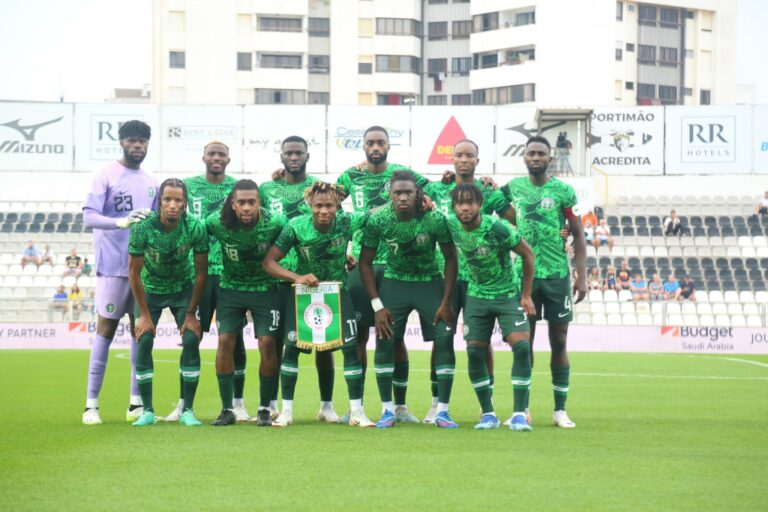
Nigeria’s Super Eagles’ last five matches before the 2023 AFCON were topsy-turvy as they lost 0-2 against Guinea during the Pre-AFCON game. They played a 1-1 draw against Lesotho and Zimbabwe during the 2026 World Cup qualifying series.
However, they mustered strength to edge Mozambique 3-2 in a friendly and recorded a 2-2 draw against Saudi Arabia.
The results of their last five matches show they recorded seven goals and conceded eight goals, translating to a deficit of a goal and a reflection of the flurry of attack and porous defense line.
They began their 2023 AFCON with a 1-1 draw against Equatorial Guinea.
Guinea-Bissau’s last five matches before the 2023 AFCON were not a stroll in the park as they lost 2-6 to Mali and 0-1 to Guinea.
However, they recorded two wins; 1-0 against Djibouti and a 2-1 victory against Sierra Leone but played a 1-1 draw against Burkina Faso.
Results of their matches show that they recorded seven goals and nine goals, revealing a two-goal deficit and a vivid picture of weak defense and average attacking strength.
They lost their opening AFCON match to the host Cote d’Ivoire, 0-2.
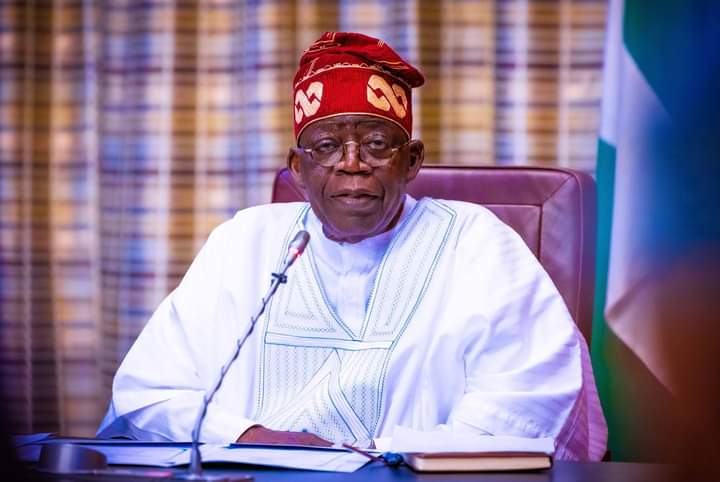
PRESIDENT Bola Ahmed Tinubu has commiserated with victims of an explosion that occurred in Ibadan, Oyo state, on Tuesday, January 16.
He conveyed his condolences in a statement released on Wednesday, January 17, via his official X handle, saying those behind the explosion should be apprehended and punished.
“It is worrisome that the cause of the blast is being attributed to the activities of illegal miners. Those behind the inexcusable and reckless behaviour that has created the conditions for this sad incident to occur must be fished out and punished.
“I commiserate with the government and people of Oyo state and call on all concerned agencies of government to unravel the circumstances that led to this tragedy with alacrity. I have directed the National Emergency Management Agency (NEMA) to work with the Oyo state Government to offer immediate and comprehensive relief to the victims,” he noted.
The Ibadan explosion occurred at about 7.30 p.m. on Tuesday, killing at least two persons and leaving about 80 others injured.
According to NEMA, more than 20 houses were destroyed due to the explosion.
Oyo state Governor Seyi Makinde disclosed via his official X handle that preliminary investigations by the security agencies traced the cause of the explosion to explosive devices stored by illegal miners in one of the buildings within the area.
Makinde also said that the injured persons had been taken to public and private hospitals for medical treatment and added that the government would cover their bills.
THE Nigerian Electricity Regulatory Commission (NERC) has approved new electricity tariffs for the 11 distribution companies (DisCos) in the country, with effect from January 2024.
The NERC chairman, Sanusi Garba, who disclosed this on Wednesday, January 17, assured that customers would continue to pay the current tariffs as the Federal Government would subsidise the new tariffs to the tune of N1.6 trillion throughout the year.
Garba said the Federal Government would continue to subsidise electricity to ease the financial burden on Nigerians due to economic challenges the nation faces.
The ICIRreported that the Minister of Power, Adebayo Adelabu, gave the Federal Government’s position on electricity subsidy of N1.6 trillion in 2024.
He said, “The government will continue to subsidise power supply to vulnerable Nigerians.”
The NERC also approved a monthly tariff review of the DisCos, arising from changes in the inflation rates, Naira/US dollar exchange rates, and gas-to-power prices.
Before now, the Multi-Year Tariff Order (MYTO) allowed for bi-annual minor tariff reviews while major tariff reviews were planned every five years.
According to Garba, the government has decided to continue subsidising electricity for now, following the rising cost of living.
“In the new tariff order just published by the commission, you will discover that the tariff is not going up but will see what the Electricity Distribution Companies (DisCos) should be charging.
“You will also see in the tariff order the amount of subsidy the government will be providing to cover the gap between what they will charge and what they are allowed to charge,” he said.
There were no tariff adjustments in 2023, as the government sustained subsidy payments in the power sector amid a face-off with the Nigeria Labour Congress NLC on the already removed petroleum subsidy.
According to him, the new tariff contains what the DisCos are allowed to charge based on government policy if they are to remain in service.
He said that in the tariff, NERC included some provision that would ensure that the DisCos pay what they are obligated to pay.
A breakdown of the approved tariffs indicates that the cost-reflective tariff for Abuja Electricity Distribution Company is N120.88 per kilowatt hour (kwh). However, a tariff of N63.24/kWh is allowed by NERC, indicating a shortfall of N58.12/kWh, which the Federal Government subsidises.
The commission said that in line with the direction of the Federal Government policy on electricity subsidy, the allowed tariffs are frozen for all customers at the rates payable since December 2022.
With this policy, the estimated subsidy benefit for customers under the Abuja Electricity Distribution Companies (AEDC) franchise in 2024 is approximately N233.26 billion, which translates to N19.44 billion monthly.
“The allowed tariff is with effect from January 2024 and shall remain in force, subject to further policy direction of the FGN,” the commission stated.
For Ikeja Electric, the cost-reflective tariff is N128.18 while the approved tariff is N56.6, leaving a shortfall of N53.5/kWh-(Kilowatts means a measure of thousand watts of electrical power)
With this policy, the estimated subsidy benefit for customers under the Ikeja Electric franchise in 2024 is approximately N238.201 billion (N19.85 billion monthly), effective from January 2024.
The estimated subsidy benefit for customers under the Ibadan DisCo franchise in 2024 is approximately N199.841 billion (that is, N16.65 billion monthly).
Garba emphasised that the Electricity Act signed by President Bola Tinubu in 2023 presented an opportunity for states to make laws and take charge of providing electricity in their franchise areas.
He said the commission remained committed to working with the states so that the existing public utilities would be nurtured to provide services to Nigerians and utilised for what they intended.
On metering, the chairman said that the commission had identified that the electricity distribution companies had financial challenges in metering their customers.
He said the metering rate had been adversely impacted by DisCos’s inability to raise the required capital from the banks.
“To reduce the rate of estimated billing, the commission created a framework under which the distribution companies can raise some amount of money to meter customers.
“So we decided that from the market revenues, we set aside a fixed amount that is dedicated for the provision of metering.”
AFTER the successful attempt by Hilda Bassey professionally known as Hilda Baci to break the record for the longest cooking marathon by an individual, many Nigerians have indicated interest in breaking a Guinness World Record (GWR).
In May, Hilda Baci broke the record for the longest cooking marathon (individual), cooking tirelessly for a total of 93 hours and 11 minutes.
Her feat was acknowledged by Guinness World Record, and in June 2023, she was confirmed as the record holder.
There has been a growing inclination among Nigerians to pursue record-breaking endeavours similar to Hilda Baci’s accomplishment. While some engage in such ventures for entertainment purposes, others undertake them as a means to break a record and enhance or enhance their personal brands.
Prior to this recent surge, Nigerians over the years have accomplished remarkable feats in their respective domains, earning them rightful recognition as Guinness World record holders, likes of Fela Kuti, Mfon Udoh, Bayo Omoboriowo, Gbenga Ezekiel, Victor Richard Kipo, Vincent Okezie among others.
In this report, The ICIR compiled a list of some successful and unsuccessful GWR attempts by Nigerians in 2023.
Tonye Solomon
Tonye Solomon set the record for most steps climbed on a ladder while balancing a football on the head. He achieved this feat in August and was confirmed by Guinness World Record in September. He climbed 150 steps to the top of a 250-foot (76-metre) tall radio mast while expertly controlling the ball atop his head in Yenagoa, Bayelsa State.
Philip Solomon
17- 17-year-old Philip Solomon of Oyemekun Grammar School Akure, Ondo State, was declared the Guinness World Record holder for most skips on one foot in 30 seconds.On January 24, he broke the record with 153 skips on one foot in 30 seconds surpassing the previous record holder, Rasel Islam of Bangladesh whose record was 145. His record was officially confirmed by the Guinness World Record in May.
Helen Williams
In November, GWR confirmed the record set by a professional wig maker, Helen Williams, for the longest handmade wig. According to GWR, the wig stretches 351.28 metres (1,152 ft 5 in).
Blaqk Stereo Music Group (BSMG)
The founder of Blaqk Stereo Music Group (BSMG), Hawwal Ogungbadero, alongside 29 other artistes, set the record for the longest recording marathon, which lasted 40 hours and 19 minutes. Ogungbadero claimed the attempt was to create a platform to help young artistes explore their creativities.
Chef Dammy
Ekiti-based chef, Damilola Adeparusi, best known as Chef Dammy, attempted to break Hilda Baci’s record of the longest cooking marathon by an individual. Although she was not confirmed by GWR, Adeparusi claimed she sought to push her own culinary boundaries and not desperate for a world record.
Lola Mewu
Oyinlola Odemewu attempted to break a world record for 48 hours for the longest painting marathon. In October, the artist painted for 72 hours, surpassing Ronald Palmeart, who painted for 60 hours in 2013. However, her feat is yet to be acknowledged and confirmed by GWR.
John Obot
In September, an Akwa Ibom man, John Obot, read for 145 hours to beat the 124-hour mark set by the Indian, Rysbai Isakov, for the longest marathon reading aloud. During his attempt, Obot enjoyed support from dignitaries in the state including the Deputy Governor of Akwa Ibom State, Akon Eyakenyi, Secretary to the State Government (SSG), Enobong Uwah, Commissioner of Education Idongesit Etiebiet, among others. He is yet to be confirmed by GWR.
A FEDERAL High Court in Abuja has voided the powers of the National Broadcasting Commission (NBC) to impose fines on broadcast stations.
In a statement by Media Rights Agenda (MRA) on Wednesday, January 17, a suit was instituted against NBC following the commission’s imposition of fines of N5 million each on a television station and three pay-TV platforms in 2022 for allegedly undermining Nigeria’s national security by broadcasting documentaries on banditry.
Justice Rita Ofili-Ajumogobia, who delivered the judgment, ruled that NBC, which is not a court of law, exceeded its authority by imposing such sanctions.
“The judge commended MRA for its legal challenge of the NBC’s action and issued an order of perpetual injunction restraining the commission or anyone acting on its behalf from further imposing any fine on any media platform or broadcast station in Nigeria for any alleged offence committed under the Nigeria Broadcasting Code.
“Justice Ofili-Ajumogobia set aside the fines imposed by the NBC on August 3, 2022, on Multichoice Nigeria Limited, owners of DSTV; TelCom Satellite Limited (TSTV); Trust-TV Network Limited; and NTA Startimes Limited for broadcasting a documentary about the state of banditry and security in Zamfara state, saying the regulator’s action was wrong and unjustifiable in a democratic society”, the statement read in part.
According to MRA, the commission’s action would deter the platforms and stations from reporting the true state of affairs regarding the security situation in Nigeria.
An Abuja-based human rights lawyer, Uche Amulu, filed the suit on behalf of MRA and asked the court to, among others, nullify NBC’s action of imposing a fine on each of the media platforms for broadcasting a documentary about the state of banditry and security in Zamfara state.
“MRA contended that it would deter the platforms and station from reporting the true state of affairs regarding the security situation in Nigeria, and therefore constitutes a violation of the rights of MRA, its members, and other citizens of Nigeria to freedom of expression, particularly their rights to receive ideas and information without interference, as guaranteed by the Constitution and the African Charter on Human and People’s Rights,” the statement noted.
This is not the court’s first ruling against NBC regarding the issue.
In May 2023, The ICIRreported that the court gave a perpetual injunction restraining NBC from imposing fines on stations.
In November 2023, this organisation also reported that the commission failed to secure a court order to vacate the ruling stopping it from imposing fines on broadcast stations.
THE Court of Appeal, Abuja, has sacked the member representing Ikono/Ini Federal Constituency of Akwa Ibom state in the House of Representatives, Emmanuel Ukpong-Udo, from the National Assembly.
In his judgement on Wednesday, January 17, the lead judge, Abba Mohammed, declared that the declaration of Ukpong-Udo as the election winner by the Independent National Electoral Commission (INEC) violated the Electoral Act 2022 and Manual for Election Officials 2023.
The appellate court affirmed the judgement of the Akwa Ibom Election Petition Tribunal, which had earlier sacked Ukpong-Udo.
The tribunal had ordered a re-run in the polling units where the election was not held when the National Assembly election was conducted on February 25, 2023.
According to the court, the re-run was to be held in 33 polling units in the constituency to determine the winner.
Ukpong-Udo was first elected to the National Assembly in 2019 under the Peoples Democratic Party (PDP) platform. However, he later defected to the Young Progressive Party (YPP).
Declaring him the winner of the 2023 election, the returning officer, Patrick Aderorho, said he secured 19,926 votes to defeat the PDP candidate, Glory Edet, who scored 15,765.
The INEC, however, backtracked in its decision and declared the election inconclusive. It called for a run-off in a few polling units following violence that marred the election.
The election umpire said violence during an election was against the Electoral Act.
The supplementary election was met with more violence, which prompted INEC to cancel the election.
However, INEC declared the YPP candidate the winner about a month later.
Dissatisfied with the announcement, the PDP candidate approached the tribunal to request that Ukpong-Udo’s victory be declared null and void.
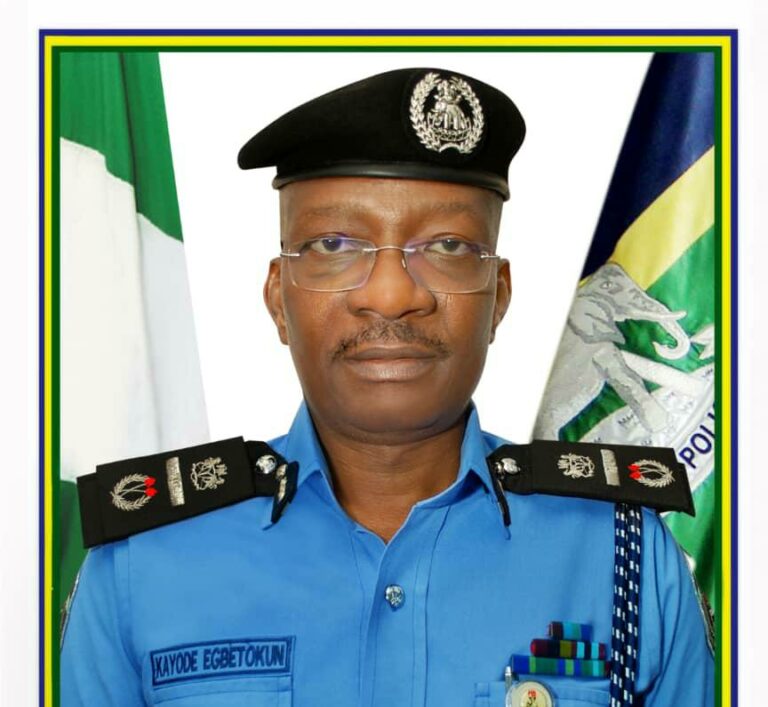
INSPECTOR-GENERAL of Police (IGP) Kayode Egbetokun has launched a Special Intervention Squad (SIS) in Nigeria’s Federal Capital Territory (FCT) following spiralling cases of abductions in the territory’s sprawling communities.
Egbetokun launched the squad at the Force Headquarters in Abuja on Wednesday, January 17.
The SIS is a standby team of officers specially trained to provide rapid response to significant crises and violent attacks in border communities within the FCT.
In October 2023, The ICIRreported that the NPF would launch the SIS in 10 pilot states and the FCT, after which it would be launched in the remaining 26 states.
Egbetokun said the first ten states were selected based on the assessment of recent violent crimes carried out across the country.
“The squad will be deployed in each command to deal with the state’s salient security challenges,” Egbetokun had said.
The ICIR reports that FCT has recently witnessed a surge in kidnappings, particularly within the Bwari Area Council and other border communities.
Separate successful kidnappings have been carried out in recent weeks, with many abductees dying at the hands of their captors.
Residents of Bwari, especially those who live in the developing parts of the area council, have vacated their homes out of fear.
The most recent case of kidnap in the area council occurred on January 10 in Kawu. This community shares boundaries with Niger and Kaduna states, and about 23 residents were whisked away by the abductors.
Apart from Bwari, many other parts of the FCT have also become targets for kidnappers.
In December 2023, the Federal Capital Territory Administration (FCTA) named three Area Councils, Kuje, Abaji and Bwari, as places with the highest records of kidnapping in the FCT.
Several kidnap cases were recorded within these areas in the past weeks, including the mass abduction of about 23 residents of Dei-dei, Bwari, and 12 others in Gbaupe, a rural community along Airport Road, Abuja.