THE Harold W. McGraw, Jr. Centre for Business Journalism is inviting business journalists to its fellowship.
The McGraw Fellowship will provide editorial and financial support to journalists who need the time and resources to produce a significant investigative or enterprise story that provides fresh insight into an important business, financial or economic topic.
It accepts applications for in-depth text, audio and short-form video pieces and will not support long-form documentaries. The fellowship is not a residency. All McGraw Fellows work from their own offices.
The programme is open to anyone with at least five years of professional experience in journalism and will support work by freelance journalists, as well as by reporters and editors currently working at a news organisation or a journalism non-profit. In the latter case, reporters and editors can apply directly in the name of their organisation.
The fellowship provides a grant of up to $15,000 for each project. The exact amount will depend on the time it takes to complete the project and the expenses needed.
Freelance journalists may use some of the funding as a stipend for living expenses during the fellowship. We look for applicants with a proven ability to report and execute a complex project in their proposed medium; ideally, candidates will also have a strong background or reporting expertise on the subject of their project.
The McGraw Centre provides editorial supervision during the fellowship. We work with the fellows to develop their projects during the reporting phase and frequently edit the completed stories. We also assist with placing the articles in established print, audio or digital outlets. The stories run on the McGraw Centre website as well. You’ll find them on the fellowship stories page.
The deadline to apply for the Spring 2026 Fellowships is April 13, 2026. Interested applicants can apply here.
THE Lagos State Internal Revenue Service (LIRS) has informed all taxpayers in the state to file their annual tax returns for the 2026 year of assessment on or before March 31, 2026.
The statutory filing requirement applies to all taxable persons, including self-employed individuals, business owners, professionals, persons in the informal sector, and employees under the Pay-As-You-Earn (PAYE) scheme.
In a statement issued on Wednesday, February 25, the Executive Chairman of LIRS, Ayodele Subair, said timely filing remained a constitutional and statutory obligation as well as a civic responsibility.
He said, “Filing of annual tax returns is not optional. It is a legal requirement under the Nigeria Tax Administration Act 2025. We encourage all Lagos residents earning taxable income to file early and accurately. Early and accurate filing not only ensures full adherence with statutory requirements but supports effective monitoring and forecasting, which are critical to Lagos State’s fiscal planning and long-term sustainability.”
He further noted that failure to file returns by the statutory deadline would attract penalties, interest, and other enforcement measures as prescribed by law.
“To enhance convenience and efficiency, all individual tax returns must be submitted electronically via the LIRS eTax portal at https://etax.lirs.net.The platform enables taxpayers to register, file returns, upload supporting documents, and manage their tax profiles securely from anywhere,” the statement added.
In line with global best practices, Subair reiterated that LIRS continued to prioritise digital tax administration and taxpayer support services, affirming that the LIRS eTax platform was secure and accessible worldwide.
The ICIR reports that in accordance with Section 24(f) of the 1999 Constitution of the Federal Republic of Nigeria, Sections 13 &14(3) of the Nigeria Tax Administration Act 2025 (NTAA), every individual with taxable income is required to submit a correct return of total income from all sources for the preceding year (January 1 to December 31, 2025) within 90 days of the commencement of a new assessment year.
Not just only Lagos State, this is applicable to all states in the country and the Federal Capital Territory (FCT).
Chairman of the Presidential Committee on Fiscal Policy and Tax Reforms, Taiwo Oyedele, had issued a directive that individuals in Nigeria are required to submit their annual tax returns by March 31 each year, regardless of whether their taxes have already been deducted at source through employment or not.
This directive stems from recent amendments under Nigeria’s tax administration laws, aiming to ensure accurate revenue tracking and reduce evasion.
Oyedele emphasised that tax compliance was mandatory for both employers and individual taxpayers, and individuals have a responsibility to submit their self-assessment returns.
He stressed that employers must also submit their annual returns by January 31, covering employees’ emoluments and tax deductions.
The new tax laws, effective January 1, 2026, provide exemptions and reliefs for low-income earners, average taxpayers, and small businesses. For instance, individuals earning below ₦800,000 annually are exempted from personal income tax.
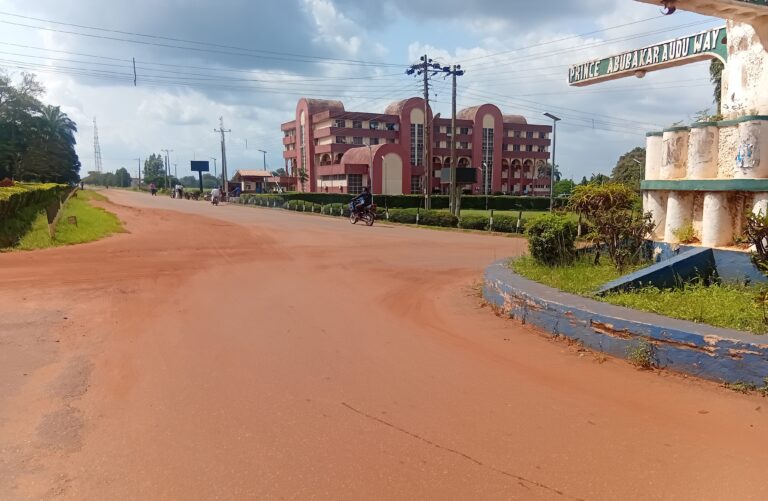
AT the Prince Abubakar Audu University (PAAU), formerly Kogi State University, the death of a lecturer in a hotel room where he had lodged with his 200-level female student sparked outrage. The ICIR findings reveal that this has added to enduring cases of sexual abuse, harassment and exploitation in the institution.
Olabode Abimbola Ibikunle, a senior lecturer of the Faculty of Education at PAAU, Anyigba, reportedly collapsed in a hotel room while having sex with a 200-level student on July 16, 2025.
The ICIRreported that the Kogi State Police Public Relations Officer, William Ovye Aya, confirming the incident said Ibikunle requested a private meeting with the student on July 16 at an undisclosed hotel in Anyigba. According to him, the management said the lecturer arrived at the hotel looking enthusiastic and reportedly took two bottles of energy drink.
Ibikunle reportedly slumped on the bed with the student in the heat of the moment and became unresponsive. The police said the student raised an alarm, prompting hotel staff and management to rush into the room.
Aya said police officers from Ayingba were called immediately, and Ibikunle was taken to the nearest hospital where he was pronounced dead. The student was arrested, while the case was later transferred to the state Criminal Investigation Department (CID) for further investigation.
Sexual misconduct behind closed doors
A reliable source at the Kogi State Police command told The ICIR that the family of Ibikunle and school authority charged the Police to withdraw the case even before investigations could commence, insisting they were not interested in the matter.
He was a strict, most feared don – Students
During a visit to the university campus, students of Ibikunle’s faculty described him as one of the strictest and most feared lecturers of the department.
“He was an easy-going person to some of us. He didn’t talk much but was very strict inside the exam hall,” a students who pleaded anonymity said.
Students going about their business in the PAAU university campus, Ayingba, Kogi State. PC: Nanji Nandang/ICIR
The Police source said their findings revealed that Ibikunle’s affair with the student was consensual. However, a staff at the Human Resource unit who pleaded anonymity, told The ICIR that romantic and sexual relationship between a lecturer and student is a violation of the school code of conduct.
“A lecturer was sacked from one of the departments because he was in a romantic relationship with a student in another faculty. Students don’t even understand that for a lecturer to ask you out is punishable. Some lecturers have resigned, and some have been sacked for having such relationships with their students,” the source said.
The staff explained that even though the school doesn’t have a sexual harassment policy, it is stipulated in the staff code of conduct that sexual harassment, and sexual relationship between students and lecturers are punishable.
“There is a code of conduct that clearly guides the staff. So as a staff member, you are not expected to have a romantic relationship with a student. It is ground for dismissal,” the staff added.
The ICIR could not access the staff code of conduct to review.
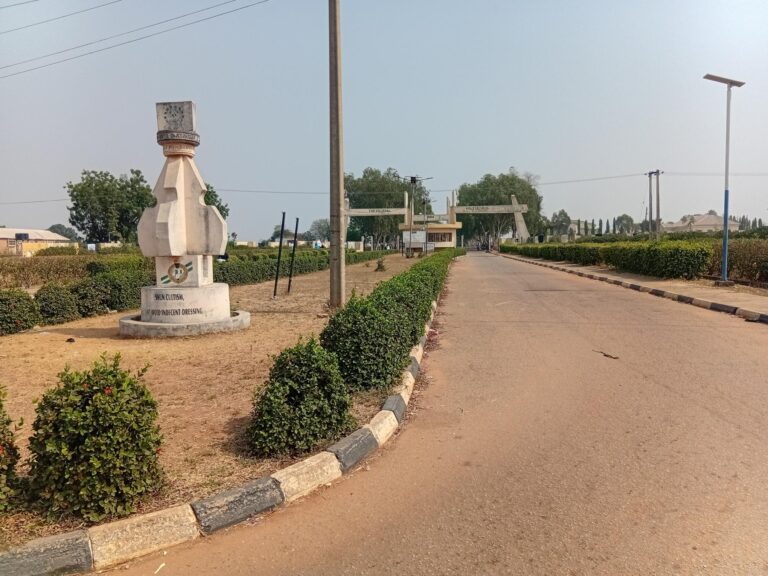
Sanction for offences related to non-academic matters page of the student’s handbook. PC: Nanji Nandang/ICIR.
Allegations of harrassment
Some female students of PAAU who spoke with The ICIR narrated their encounters with some lecturers.
“We had just finished the exams and Ocheme walked up to me and asked how I was doing. He called my name and matric number, and was like, ‘you really did well in the last exam you wrote’,” *Nanchal (real Name withheld ) alleged.
Nanchal said she was offered admission into the department of Sociology in 2022 and Ocheme Sunday Joseph, popularly called “Mr. Ocheme” by the students in the department, was her level coordinator.
“He said he had gone through and marked my script. Out of fear, I wondered what was happening. He said I should come to his office, and when I got there, he started acting funny, saying things like, ‘you are a fine girl’,” she narrated.
“He started going beyond the normal touching and when I made to stand up, he requested me to sit back, asking if I was not mature to understand what he wanted.
Sociology Department building. PC: Nanji Nandang/ICIR
Like Nanchal, some teenagers enrol into Nigeria tertiary institutions between 14 and 16 years, which has been a burning issue until the government pegged the university admission age at 16. Announced in July 2025, the policy aims to ensure students have the necessary cognitive maturity and academic preparedness for higher education. with this, any admission outside the official Central Admissions Processing System is seemed illegal. This change was partly driven by concerns that students were entering university too young, which could lead to challenges with maturity and a greater risk of manipulation.
Sexual harassment defined
The Violence Against Persons Prohibition Law, defines sexual harassment as an unwanted conduct of a sexual nature with the purpose or effect of either violating the other person’s dignity or creating an intimidating, hostile, degrading, humiliating or offensive environment for them. It identifies both the harasser and survivor to be of any gender, noting that the unwanted sexual conduct can happen in person, on the phone, by text or email, or online.
It specifically states that, “sexual harassment includes sexual comments, gestures, leering, staring, jokes, innuendos, unwanted sexual advances or flirting, requests or favours, emails or texts with sexual content, intrusive questions, unwanted physical contact like brushing up against someone or hugging, kissing, massaging, and stalking.”
More female students speak
Another student, (name withheld) recalled resuming school, as a 16-year-old in January 2023. She said her first encounter with Ocheme was a few days after resumption.
“I went to sign my course form because he was our level advisor. I noticed, he told people to come in, then he closed the door and asked the others to wait. He told me to remove the pin on my form. I got injured trying to remove the pin. He helped me clean my wound and he started to touch me. I felt uncomfortable,” she alleged.
Another student said she only went to Ocheme’s office to sign her course form, but he locked the door and started asking her questions.
“I couldn’t answer the questions he was asking me, so he stood up and pushed me to the wall and started trying to unzip my trouser. I kept struggling with him until someone knocked on the door. He told me to compose myself and threatened to fail me if I uttered a word,” she alleged.
Similarly, another student alleged that Ocheme touched her in his office when she was in 100-level.
“I went to his office to sign my course form, he asked everyone to leave his office, then shot the door, and asked me to seat on his lap. When I refused, he dragged me by force and started pressing my breast,” the student said.
Sociology relaxation centre. PC: Nanji Nandang/ICIR
The student, who wouldn’t want her identity disclosed, said she was able to escape when a student knocked on the door, so she ran out and came back with a friend to pick up her form.
These and more than ten female students in the same department shared allegations of their sexual harassment encounters with Ocheme, relationship request messages by other lecturers.
“He has tried to touch, literally almost every girl out of 10 girls, because he was our course advisor from 100 level. We could not write an exam or do anything without him. Most of us were his victims,” one of the students said.
Trouble for Ocheme
The ICIR gathered that Ocheme was reported to the Head of Department, Timothy Abayomi Atoyebi, in July after a 16-year-old 100-level student spoke up about how he touched her in his office, and other female students started to speak out on an anonymous platform.
A lecturer in the school confirmed that after a long meeting on the matter, the HOD decided to remove Ocheme from a level coordinator role to supervising only male students. He was also suspended from the lecturing role for two years.
“In July, a 100-level student reported that when she went to submit her course form, he tried to put his hands in her skirt. She informed her mother immediately after running out of his office and she told her to report to any female lecturer.
“The issue escalated and it was forwarded to the HOD. The lecturer in question was relieved from administrative duties that would bring him in contact with students as a punishment,” the lecturers who pleaded anonymity said.
In an internal memo signed by Atoyebi, The ICIR saw that Ocheme was asked to hand-over all files, screening materials and other documents including money from his role as the 100-level adviser to a female colleague with immediate effect.
Another lecturer confirmed that the case didn’t go beyond the HOD’s office, noting that the school management was not aware of the case, adding that they have heard at least four sexual harassment stories by lecturers against female students, but it was the male classmates that shared the stories because the female students were afraid.
Sociology HOD speaks
The ICIR contacted the HOD, Sociology, Atoyebi Timothy, and he admitted that Ocheme was reported to him, but not by the affected student directly.
“As a matter of fact, the case was not officially reported to me by the concerned student,” the HOD said, adding that he would decline further comments on the matter until authorisation from his superior.
The ICIR requested that the HOD sort authorisation from the relevant authorities and communicate a convenient date for aN interview and also followed up with multiple messages afterwards but has not received any response as at press time.
A student said that even after Ocheme was removed from the position, his attitude never changed, and students became more afraid to speak up.
“We are more scared now because since the issue came up last semester, and they demoted Ocheme, nothing else has been done. So, everybody is keeping quiet and living their lives. We had an all-female congress in July after the case was reported to the HOD who encouraged us to report if anything went wrong,” the students explained.
Ocheme denies allegations
Ocheme denied any involvement in sexual misconduct with his students, when contacted. Asked about the case that was reported against him in July, the lecturer declined to speak further, explaining that he would contact this reporter once he got the authorisation from the department to speak.
“I don’t know if you will permit me to have the consent of my HOD since it’s a matter regarding the department. Ordinarily, I don’t have any cases reported as such with the HOD, but you know it’s a public place where all of us work. Of course, a lot of female students come in and go out of the office because the school is both male and female.
“The issue of touching one student in July uncomfortably may be with the person. To me, there was nothing as such. It might be masterminded in a way. I don’t know how you got it,” he said.
When asked about the demotion, suspension for two years, and supervising female students, because of the case, Ocheme said the claim was not true.
“I wasn’t demoted. No promotion has bypassed me one day. I’ve not even gotten any warning letter from anywhere since the inception of my work here. Even this semester, I have four courses lecturing. And I have a project student under my supervision.
On the level coordinator role, he said, “Level coordinator is not permanent. So, there are changes from one to the other. Presently, there are some 100 to 400 like that across levels. So, most people do it for just one year. Then another set comes. People run it like that,” he explained, noting that “I have handled three levels, three sections or two.”
Sex for grades
More than five students also confirmedthat some female students end up giving in to the demand of becoming the girlfriends of their lecturers because of the pressure from the lectures.
“In my department, most of the female students are dating the lecturers,” a student of Mass Communication, who pleaded anonymity said.
Similarly, students of the Geography and Planning department, alleged that one of their lecturers who is a former HOD Social Science, is well known for sexually harassing female students.
“He is one of the most feared and well known in social sciences for harassing,” a student who wished to remain anonymous said.
This reporter contacted the ex-HOD, Adesola on December 12 through calls and messages for response but none of the calls were returned or messages responded to as of press time.
A student of Sociology also alleged that, “Haruna Abdulkarim asked me to be his and Muhammed’s girlfriend, so that they could take turns in having an affair with me.”
The ICIR also contacted Abdulkarim, who responded with a legal threat, saying: I give you less than two hours to publish your report. We shall meet in the court.”
The lecturer went on to say: “I lecture them as I’m supposed to and give them all the necessary attention. But one thing is clear. You can’t cheat in a class I’m invigilating no matter how smart you think you are. But even at that, I have compassion for them while marking. The reason behind not allowing them to cheat is simply because I want them to be reliant on what they have upstairs rather than whatever material they may have with them.”
FOI request ignored
The ICIR submitted a Freedom of Information (FoI) letter on November 5, to the office of the Registrar of the PAAU requesting clarification and access to information and documents regarding sexual harassment allegations involving lecturers and students between January 2022 to November 5, 2025.
The records of all reported cases of sexual harassment or assault involving and lecturers’ students in PAAU from January 2022 to date, including names and department of alleged perpetrators only, dates and others.
Even though Section 4 subsection 7 of the Act stipulates that all FoI requests must be responded to within seven working days from when the said request was sent or inform the applicant the basis for withholding information and explain why it applies, The ICIR has not received any of the response from the institution.
This reporter contacted the school registrar, Yahaya Segun Alilu, on December 1, 2025, to follow up. He said that the school will respond the next week and asked the reporter to call back. When called back, Alilu said he was in a meeting. He has not responded to his WhatsApp message and calls.
Lack of reporting and fear of retaliation
The Kogi State government in 2024 announced the introduction of a model anti-sexual harassment policy across tertiary institutions, an initiative it claimed came under discussion at a meeting between the Ministry of Education and heads of various institutions to address the heightened concern of sexual harassment against students in higher education.
The Senior Special Assistant to the Governor on Students Affairs, Isah Ojodunwen, claimed that the policy’s enforcement had already resulted in the dismissal of several lecturers at Kogi State Polytechnic, Lokoja, who were accused of harassing students.
However, some of the students in the state university insisted they could not report cases of sexual harassment because they did not know the right channel to go about it.
A student asked, “Do you think those female lecturers will want their male lecturers to be punished or sent away? Do you think we can defend ourselves enough to not stand the consequences of being subjected and tagged as false accusers? Do you think the male lecturers don’t know what to do in case they are reported?”
The ICIR observed that PAAU has no public record of disciplinary action against any lecturer or student for sexual misconduct in recent time, unlike other universities that have continued to name and publicise cases of dismissal and rustication for sexual misconduct.
Recently the Lagos State University (LASU)dismissed two lectures over allegations of sexual harassment, financial misconduct, and inhumane treatment of students, in line with the NUC recommendation.
The National Universities Commission recommended a media publicity of sexual harassment cases to Vice Chancellors stating that the public should be aware when any disciplinary action taken against a lecturer or student for sexually harassing a student.
National systemic issue
A 2024 survey by Alliances for Africa (AFA) and the Committee of Gender Directors in Nigerian Universities (CGDNU)reported that 63 per cent of female students across 12 universities in Nigeria had experienced sexual harassment, a crisis thriving unchecked and eroding trust in Nigeria’s educational institutions.
The Nigerian Senate in 2019, proposed legislation aimed at preventing, prohibiting, and redressing sexual harassment of students in tertiary educational institutions, after a BBC investigation on sexual harassment across universities in Nigeria and Ghana exposed series of sexual harassment cases.
The proposed bill prescribes 14 years imprisonment for any academic found guilty of sexual misconduct against students. However, more than four years after the senate passed the bill, it still awaits presidential assent to make it law.
Former president Muhammadu Buhari failed to sign the bill during his term, and incumbent President Bola Tinubu has yet to do so too, two years after his aide assured Nigerians of the president’s support for the bill.
Data infographics of tertiary institutions in Nigeria conversant with the sexual harassment policy.
The Assistant Director, Legal and coordinator SHART, at the Independent Corrupt Practices and Other Related Offences Commission (ICPC), Olubunmi Olugasa, confirmed that the commission is aware of sexual harassment in PAAU because it has received a sexual harassment petition.
“We have received cases of sexual harassment, but I can’t tell you the facts. From this particular institution, I’m aware of just one case that we received, and we started work on it immediately,” Olugasa said.
ICPC explained that it has introduced the sexual harassment policy to PAAU and other tertiary institutions across the country for adoption and domestication.
“We have involved all the institutions in the 36 states. The commission in partnership with Gender Mobile Initiative is currently supporting 354 higher education institutions to domesticate this policy to reflect their own realities,” she said.
PONZI schemes continue to resurface in Nigeria, often presenting themselves as legitimate investment opportunities that promise fast and effortless profits. Over the years, platforms such as MMM and CBEX attracted thousands of participants with assurances of high returns, only to collapse and leave investors counting heavy losses.
What makes these schemes particularly dangerous is how quickly people can commit funds. Within minutes of seeing an advert on social media or receiving a referral link from a friend, an individual can register, transfer money and become part of a system that may soon disappear.
Financial experts and regulators have repeatedly warned that most Ponzi schemes share common characteristics. The good news is that verifying whether an investment platform is legitimate does not require specialised knowledge or hours of investigation. These few simple steps can help you to verify whether the investment is genuine before you put your money.
Verify through regulatory agencies’ databases
The first and most important step is to confirm whether the investment company is registered with Nigeria’s Securities and Exchange Commission (SEC). The SEC maintains an online portal where members of the public can verify licensed capital market operators, fund managers, brokers, and investment platforms.
If a company does not appear on this database, it is not legally authorised to collect investments in Nigeria, regardless of how professional its website or adverts appear. Many platforms involved in recent Ponzi collapses, including those marketed as AI-powered trading systems, were never registered with the SEC.
Do not depend solely on certificates or documents presented by the investment company. Always use official regulatory portals to independently confirm the firm’s name, licence status and registration details. If a company claims to be authorised, verify the claim yourself. Failure to find its details in any recognised database is a serious warning sign.
Examine the profit promises carefully
Legitimate investments never guarantee fixed or extremely high returns within short periods. Platforms that promise to double money within weeks, pay daily profits, or offer “risk-free” earnings are displaying classic Ponzi characteristics.
Real financial markets fluctuate. Profits depend on market performance, economic conditions and risk exposure. When a platform presents profits as automatic and certain, often using phrases like “AI never loses”, it is usually a warning sign of fraud. If the returns sound too good to be true, they almost always are.
Investigate the Company’s online presence and history
A quick look at how long a platform has existed can reveal a lot. Many scam investment websites are newly created and registered for short periods, often with ownership details hidden.
Fraudulent platforms typically appear suddenly, run aggressive promotions for a few months, then disappear after collecting large sums. A legitimate investment company usually has years of verifiable history, transparent ownership information, physical office addresses, and consistent operations. Short lifespan and hidden ownership are common red flags.
Look for clear business operations and transparency
A trustworthy investment platform explains plainly how it makes money. It provides details about trading strategies, assets involved, risks, fees, and performance history.
Ponzi schemes often hide behind buzzwords like artificial intelligence, crypto automation or secret algorithms without explaining real business processes. The more vague and technical the explanation sounds, the more likely it is designed to confuse rather than inform.
Watch out for referral-driven income structures
When a platform strongly encourages recruiting new members with bonuses or commissions, it is usually relying on fresh deposits to pay earlier participants.
This recruitment-based structure is the backbone of Ponzi schemes. While some legitimate businesses use referral marketing, investment profits should never depend mainly on bringing in new investors.
If income grows more through recruitment than through actual investment performance, you need to be careful.
Search for regulatory warnings and user complaints
A quick online search of the platform’s name alongside words like “scam,” “warning,” or “SEC” can reveal important information. Many fraudulent platforms are already flagged by regulators in Nigeria or other countries before they collapse locally.
Victims often share experiences on social media, forums and review websites. Repeated complaints about blocked withdrawals, vanished accounts, or pressure to reinvest are strong indicators of fraud.
Examine how payments are collected
Legitimate investment firms usually use regulated banking channels, corporate accounts and clear transaction records. Ponzi schemes often request funds through personal bank accounts, digital wallets, or informal payment methods that are difficult to trace.
When a platform avoids transparent payment systems, it is often to make fund recovery impossible after collapse.
Secure financial systems are a hallmark of lawful operations.
Seek independent professional advice
Most importantly, before committing your money to any investment platform, it is wise to consult qualified professionals who can provide an objective assessment of the opportunity and its associated risks, especially if the investment requires a large amount of money.
A licensed financial adviser can help you determine whether the promised returns align with market realities and your personal risk tolerance. They can also explain technical terms, identify unrealistic projections, and compare the offer with regulated alternatives available in the market.
For larger investments or platforms using complex structures, engaging a legal practitioner is especially important. Contracts and terms of service may contain clauses that limit your rights, waive liabilities, or make fund recovery difficult. Legal experts can review agreements to identify hidden conditions, withdrawal restrictions, dispute resolution clauses, or jurisdictional loopholes that may expose you to loss.
In addition, accountants or tax professionals can clarify the tax implications of an investment, assess whether reported returns are sustainable, and determine whether the company’s financial claims appear credible.
Try to take time to consult experts even when an offer appears straightforward, but it can prevent costly mistakes and provide clarity before funds are transferred.
This story was supported by the Pulitzer Centre
You can read the earlier investigation on AI-assisted Ponzi schemeshere.
A RECENT revelation within the Nigeria Police Force has sparked outrage in Nigeria, as reports emerged that the Anambra State Government ‘mistakenly’ transferred N100 million from its security vote account to Victor Adewale Egbetokun, son of former Inspector-General of Police (IGP), Kayode Egbetokun.
According to the Force Public Relations Officer, Benjamin Hundeyin, the transfer was an error, and the money was subsequently reversed to the state government’s account.
“The son of the IGP explained that he received N100 million in his account, and I instructed our accounts officer to reverse the money immediately, which was done,” Hundeyin said.
The incident has drawn sharp criticism on social media, with journalist Fisayo Soyombo and other Nigerians reacting to it. Soyombo wrote on Facebook on Wednesday February 25, a day after Egbetokun quit his position as the IGP: “There are 237.5 million Nigerians. The Anambra State Government was going to make an erroneous N100 million transfer, but it did not land in the account of you reading this or me or the possible 237.5million others.
“Instead, the Anambra State government transferred funds from the security vote to the son of Nigeria’s number one internal security official”.
The transfers, reportedly made in September 2025, were done in four tranches of N25 million each, and were described as “In-Branch NIP” payments, according to Sahara Reporters.
However, investigations revealed that the funds were later withdrawn in cash and redeposited into Victor Egbetokun’s account.
The incident has raised questions about the handling of security funds, especially as Anambra State was dealing with serious security challenges at the time. Victor Egbetokun, who is not a serving police officer or civil servant, has been accused of financial impropriety.
Former IGP Egbetokun had reportedly objected to the payment and ordered the return of the money, citing potential legal implications. He was said to have referenced the 2005 Tafa Balogun scandal, warning his son about the risks involved.
It remains unclear if the development was one of the reasons Tinubu sacked the former IGP and appointed his successor, Tunji Disu.
Nigerians who reacted to the payment on social media include Eze Kingsley. He wrote, “Corruption has no tribe or religion An Igbo state in South-East, transferring money to a Yoruba man; you see how they collaborate to loot? No religion, no tribe”.
Tony Ephraim questioned the circumstances surrounding the payment. “Great error. It means the boy has his account number domiciled with the police accounting department for such error to occur,” he opined.
Richard Henry expressed skepticism over the payment, saying “Please what kind of statement is this? Accepting that the money was even transferred to his account is enough evidence,,,, Why was the money transferred? What was the money meant for? Who transferred the money? I think those should be what Police Force should have been interested in.”
Anjorin Robert Olawale also shared his thoughts. “The only issue here is, they think Nigerians are fools because in the real sense, a whole lot of Nigerians are actually fools. First because, they will actually believe that story of it being an erroneous transfer. Second, even if it wasn’t an erroneous transfer, it was a ‘smart’ move, just that they got caught.
IN 2025, the Federal Ministry of Education approved the recruitment of 270 staff to fill critical vacancies at Federal Polytechnic Bida. But findings show the exercise was manipulated and distorted by officials.
When a publication on the job vacancies available at Federal Polytechnic Bida, Niger State was sent to Mariam (Not real name) in October 2025, she quickly sent her application for the role of a technologist under the School of Applied Arts and Sciences, hoping to work in her alumnus.
Federal Polytechnic Bida vacancy advert in Daily Trust
“I graduated and served here. Since then, I’ve been applying. I think it’s my fourth time applying hoping that we would be considered first as alumni of the school. I applied in 2012; also in 2019. I applied in 2023, and this one they did is the fourth one,” Mariam explained.
The mother of five who graduated with a 2.1 said that on December 14, 2025, she received a text invitation from the Registrar for an interview on December 16 and 17 at the Council Chamber of the institution.
Screenshot of Interview message sent to Mariam and other applicants.
However, Mariam contends that what she attended was not exactly an interview.
“What they actually did was ask us to enter, just ask you your name, your department and that’s all. They then asked you to submit and go. So, when I saw those things happening, I concluded that I might not get the job. In the previous interviews of 2023, we did aptitude tests. Like a CBT test with a computer batch by batch. They will call you. If your name was on the list, you go in and sit for one hour, then write maths, English, and general study,” she added.
The inconsistency
Mariam decried that her name and those of more than 2,000 applicants invited for interviews were not on the final list of successful candidates. She alleged the list had names of people who didn’t step foot on campus during the recruitment process.
Mariam said she currently works in a private primary school where she is paid N25,000 monthly, below the minimum wage of N70,000, and was hoping that the job will change her situation.
A staff of the school, who pleaded to remain anonymous confirmed to The ICIR that slots were sold, noting that though it had been the usual practice at the institution, the recent employment exercise was alarming as the final list of successful candidates bears little resemblance to those who attended the exercise.
The ICIR obtained the list of applicants for interview which has a total of 2,610 names and the final list of 151 successful candidates that was released after the interview and a comparison of both documents reveals verifiable inconsistencies.
An analysis conducted by this reporter shows that none of the names on the publicised list of successful candidates appeared on the interview list, confirming that none of the candidates that were interviewed made it to the successful candidates list published.
Other applicants who attended the interview confirmed Mariam’s claim, as Suleiman (Not real name) said that he applied for the role of an assistant lecturer in the School of Environmental Studies but was only asked to submit his documents.
“They were calling us according to departments and schools, like School of Technology, School of Information and whatever. So, when it reached my own (turn) we were staying outside they didn’t call us at all. When they called the mask on Office management, they did not call our department. It was later in the evening that we went up there when people were getting scanty,” he said.
Anthony (Not real name) said he travelled from Kaduna State a day before the interview to attend the exercise but didn’t make the successful list.
“I spent my savings to come for the interview. I met other people here and we slept under the mango tree that night. I believed it was an opportunity to get a stable job and support my family,” he said.
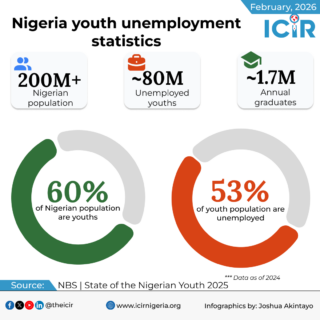
Nigerians like Maryam are part of largest youth population in the country, which ironically has one of the highest unemployment rates. What she described as jobs being sold is not an isolated grievance. According to the State of the Nigeria Youth report for 2025, nearly 80 million youths, which represents 53 per cent of the youth population aged 15-34 years are unemployed.
Data on Nigeria Youth employment for 2025. PC: Joshua Akintayo/ICIR
Across Nigeria’s public sector, from federal agencies to tertiary institutions, there is increasing evidence that recruitments into federal government jobs, meant to be merit-based and transparent, are routinely commercialised, parcelled out through political favour, or exchanged for cash or influence.
An investigation in 2020 revealed that about 1,000 applicants were reportedly offered jobs at the Federal College of Education, Yola, after paying at least N800,000 and N1,000,000 per slot, yet two years later they had no confirmed employment status.
A report commissioned by the National Bureau of Statistics with the United Nations Office on Drugs and Crime found that only about 40 per cent of public sector workers were recruited through proper processes between 2020 and 2023, noting that the rest secured employment through nepotism, bribery, or both.
Data like this confirms and mirrors what many Nigerians term the systemic crisis of recruitment integrity in Nigeria’s public service, as scandals over paid recruitment have surfaced in several federal institutions.
The Senate in March 2025 noted abuses of the Federal Character Principle, a constitutional mandate requiring equitable distribution of public posts and initiated probes into how agencies, corporations and MDAs recruit and promote staff.
The ICIR contacted the Registrar of the institution, Hussaini Enagi, via calls and WhatsApp messages on January 5, for answer on the contradictory list of successful candidates and applicants invited for interview. Enagi did not respond as a of press time.
Similarly, the Director of Press at the Federal Ministry of Education, Boriowo Folasade, was contacted on January 5 via calls, text and WhatsApp for a response. However, as of the time of this publication, none of the messages were responded to.
The ICIR sent a Freedom of Information Request to the office of the registrar on February 4 for clarity on all the allegations but have not received a response as at the time of filing this report.
School assets diversion
Similarly, there is a growing allegation that the Rector of the institution, Baba Aliyu, sold out several properties belonging to the polytechnic under opaque circumstances.
“The last administration claims they got the permission of the federal government to do auctions. But this administration claims they are doing the leftover auctioning of the past administration, so they sold about three items that I am aware of,” a source familiar with the issue who pleaded to remain unnamed said.
Explaining that the auction was not publicised for public participation, the source alleged that the 2023 Toyota land cruiser Prado which was the official car of the Governing Council chairman, Ismail Muazu Hassan, was auctioned and ended up in his possession.
“I am aware of two Hilux, and they auctioned the 2023 Toyota land cruiser Prado to the current council chairman. The car was his official car. They bought the properties using a third-party identity,” the source explained.
The ICIR contacted Hassan on February 5, for response on this but the WhatsApp and direct message were never responded to.
A source alleged that the former administration headed by the former rector, Abdul Abubakar Dzukogi, auctioned at least fifteen properties of the school to himself, the former Deputy Rector, former Registrar and other management staff.
“The former administration auctioned two Costa buses. Two big PTDF buses, three or four hummer buses. Venses, Siana and other cars, including Peugeot 454. And these items were all sold within the management. A 508 Peugeot was auctioned to the former rector. It was one of his official cars. He had two official cars; the 508 and a Jeep, 2019 model. He auctioned Peugeot 508 to himself and left with the Jeep,” the source added.
The ICIR gathered that the governing council of the school gave Dzukogi, a 10-day ultimatum to appear before it in October 2024 to clarify some grey areas on his eight years stewardship in the polytechnic.
The council said that the former rector had been invited by the council for an exit interview, but did not honour the invitation, citing health challenges and short notice. The council said that in a bid to ensure fair hearing, members of the governing council had granted the request for an extension of date to clear contending issues.
Dzukogi was appointed rector of the institution on May 22, 2015, for a term of 4 years but became very controversial when he extended his stay in office.
His appointment expired on May 21, 2019 after the Federal Polytechnics (Amendment) Act, 2019 had been passed into law by the National Assembly. Section 8(6) of the Act stipulates that he is not entitled to serve an additional tenure as the Rector, but he can only get an additional 1 year to make up 5 years single term. But his second tenure lasted until February 15, 2021 when he attained the mandatory retirement age of 65 years.
The ICIR contacted Dzukogi on 29 January through calls which were not responded to or returned. This reporter called again on February 2 and sent WhatsApp messages, but none was responded to as of press time.
Meanwhile the source alleged that a 2009 Toyota Avensis was auctioned to the former Deputy Rector, Sani Yahaya, who is now the Rector of Ede Polytechnic.
When The ICIR contacted Yahaya for response, he said that he had nothing to do with any auction exercise, noting that he was just an academic staff.
“I learned about the auction as an administrator. As far as I’m concerned, we don’t buy property as a government official. Auctions are sold to the outsiders,” he said.
The former deputy Rector directed this reporter to get the information from the Service and Works while insisting that there was a committee in charge.
“If you want a concrete information, they will give you the list of the committee members, they will give you the list of those who bought items and why they bought. I have nothing to do with that exercise. If anybody told you that I bought any item, that person is telling lies,” he added.
Similarly, the former Registrar, Mohammed Baba Ndana was contacted, and he threatened this reporter with the cyber security law when he called at 9.pm on WhatsApp, insisting that The ICIR should seek clarification concerning the auction from the school directly.
This reporter contacted the school director of Service and Works, Ahmed Abdulrahman, who responded with “Good morning please,” on February 4 on WhatsApp, but thereafter ignore all the messages this reporter sent afterwards.
Meanwhile, a source privy to the auction, alleged that the former executive officials did not buy the school properties in their names.
The ICIR sent a Freedom of Information Request to the office of the Rector on February 4 demanding for the records of the auctioned properties during the previous and current administration. However, as of the time this report was filed, the institution was yet to respond.
Section 4 subsection 7 of the Act stipulates that all FoI requests must be responded to within seven working days from when the said request was sent or inform the applicant the basis for withholding information and explain why it applies.
Alleged diversion of N1.1 billion personnel funds
The ICIR also found out that the polytechnic’s management had allegedly planned to divert N1.1 billion in personnel funds including promotion arrears for 2017, 2024, and 2025, omitted salary payments, and outstanding 25 per cent and 35 per cent increment arrears to settle questionable supplier claims linked to a previous administration.
“I heard that the Rector said the intention was to see how they can remove the money from the personal accounts to another account so that they will be able to pay suppliers and contractors that the school is owing. Some staff kickback and said it would be criminal for him to use personal funds for contractors when personnel were suffering and they are also owing them,” another source privy to the issue told The ICIR.
In November 2025, the Federal Government released N2.311 billion through the Office of the Accountant-General to clear salary and promotion arrears for academic and non-academic staff of federal tertiary institutions.
This funding was part of a broader effort to resolve inherited pay backlogs, and the government also stated it will integrate the Earned Academic Allowance (EAA) into staff salaries in 2026 to improve payment timeliness.
One of the staff who spoke to the ICIR in confidence, said that some schools like Obafemi Awolowo University have paid 12 months and 25 and 35 percent increments that were made during former President Muhammadu Buhari’s term, clearing the backlog for their entire staff, but Federal Polytechnic Bida is yet to pay its staff.
“There are rumours that the rector will get 20 per cent if he pays the debts that they are owing the contractors”, the source said, noting that the management had said that the so-called debts is not realistic because they couldn’t justify how it accumulated.
“We don’t know who the contractors are and which work they did other than the claim that they supplied paper stationery and we don’t know how long or how many years they have been supplying but the debt has accumulated to over 1 billion,” the source added.
Another source who pleaded to be anonymous explained that after news report was published in December about the issue, the Rector retraced his steps but refused to pay the staff.
In January 2026, the Federal Government disbursed another N3.7 billion to about 2,000 staff nationwide under the Tertiary Institutions Staff Support Fund (TISSF), aimed at strengthening staff welfare across federal tertiary institutions. But if the personnel funds released in November did not get to the staff, the staff are wondering if this one will get to them either.
Federal tertiary institutions are funded by taxpayer money and are meant to operate under rigorous public service and procurement standards.
Where evidence of opaque recruitment, unexplained personnel fund movements, or informal asset disposal exists, it undermines public trust and student welfare and merits official oversight.
On January 29, February 2 and 5, this reporter called the Rector, Baba Aliyu but did not get a response. The ICIR went further to send him messages on WhatsApp on February 5 for response, but Aliyu has not responded as at the time of filing this report.
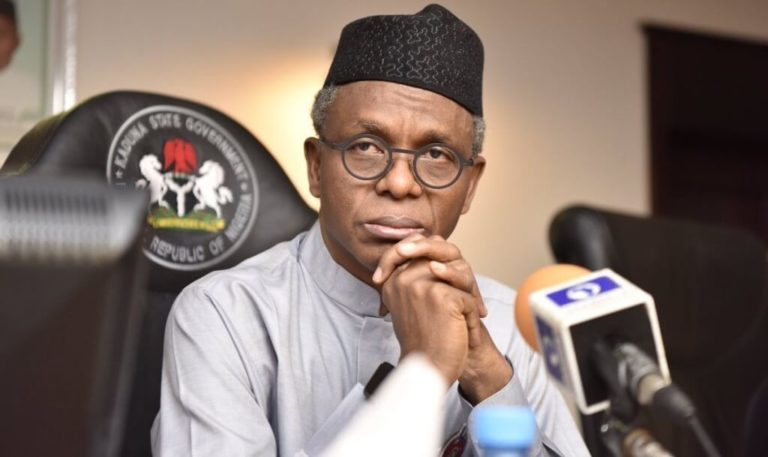
A FEDERAL High Court in Abuja on Wednesday, February 25, declined to entertain a bail application filed by counsel to former Kaduna State governor, Nasir El-Rufai, ruling that the application was premature.
The presiding judge, Joyce Obehi Abdulmalik, held that the bail request was ‘immature’, insisting that the defendant must first be properly arraigned before the court could consider such an application.
She subsequently adjourned the matter to April 23, 2026, for arraignment.
The court was adjourned after the prosecution of the State Security Service (SSS) could not produce El-rufai in the court as he is currently in the custody of the Independent Corrupt Practices and Other Related Offences Commission (ICPC)
His lawyer urged the court to grant him freedom while awaiting the next proceedings.
However, the prosecution counsel claimed that the former governor was not detained by the SSS, arguing that the court should not uphold the bail application as the accused was not properly arraigned.
The judge consequently declined to allow the counsel to move the application.
Former Minister of Youth and Sports Development, Bolaji Abdullahi, was present in court in solidarity with El-Rufai.
The hearing followed criminal charges filed against the former governor by the Federal Government over alleged unlawful interception of the phone communications of the National Security Adviser, Nuhu Ribadu.
In a three-count charge instituted at the Federal High Court, Abuja, prosecutors accused El-Rufai of admitting during a February 13 appearance on Arise TV’s Prime Time programme that he and unnamed associates unlawfully intercepted Ribadu’s communications.
The offence is said to be punishable under Section 12(1) of the Cybercrimes (Prohibition, Prevention, etc.) Amendment Act, 2024.
The prosecution further alleged that the accused failed to report individuals responsible for the interception to security agencies and that he and others still at large deployed technical systems that compromised public safety and national security, contrary to provisions of the Nigerian Communications Act, 2003.
Counsel from the SSS are listed as prosecutors in the matter.
The charges stemmed from El-Rufai’s public claim that he became aware of an alleged move to arrest him through information obtained from the tapping of Ribadu’s phone. During the television interview, he alleged that the NSA ordered his detention upon arrival in Nigeria, describing the move as an abduction attempt.
The ICIR reports that the former governor is also challenging the competence of the charge filed against him by the SSS.
In a motion on notice dated February 17, 2026, El-Rufai asked the Federal High Court to quash the three-count charge marked FHC/ABJ/CR/99/2026 and discharge him on the grounds that it discloses no offence known to law and establishes no prima facie case.
He also asked the court to award N2 billion in damages against the SSS for what he described as an abuse and misuse of court process.
THE United Nations seek entries to its 2026 Reham Al-Farra Memorial Journalism Fellowship.
The fellowship is a unique opportunity for young working journalists between the ages of 22 and 35 from developing countries and countries with economies in transition to cover the UN.
During the programme, fellows have the opportunity to attend special briefings, interview senior UN officials and exchange ideas with colleagues from around the world.
Full-time working journalists can apply for the programme. Freelance journalists can apply too but are encouraged to attach documentation of their press accreditation (e.g., membership in a press syndicate, union, or similar association).
The application for the fellowship is now open until April 3, 2026. Organisers request interested applicants to submit their applications here.
THE National Coordinator of the Obidient Movement, Yunusa Tanko, on Tuesday, February 24, raised the alarm over an alleged attack on former presidential candidate, Peter Obi and his Obidient members in Benin, Edo State.
Tanko disclosed that armed thugs had shot at Obi and members of the movement during the formal defection of a former governorship candidate Olumide Akpata to the African Democratic Congress ((ADC), in the state capital.
In a statement he signed and titled: “Breaking: Red Alert in Benin, Edo State.” Tanko said: “PO and the leadership of the ADC are under siege and attack in Benin, Edo State.
“At the formal declaration of Olumide Akpata into the African Democratic Congress, armed individuals followed us from the ADC Secretariat to the residence of Chief John Odigie-Oyegun.
“They shot at the gate and destroyed several vehicles in what appears to be a successful assassination attempt on our lives. Democracy is in danger,” the statement added.
As of the time of filing this report, there was no official confirmation from security agencies regarding the incident.
The ICIR reports that Governor Monday Okpebholo had warned Obi that he must get security clearance before coming to the state.
Obi had earlier visited Benin, the state capital, on July 7 and donated N15m million to St. Philomena Hospital School of Nursing Sciences for the completion of projects in the school.
“That man who says he has no ‘shishi’ came and dropped ₦15 million. Where did he get it from? After he left, three people were killed. For this reason, Obi must not come to Edo without security clearance,” the governor said.
The ICIR could not immediately report if Obi got a clearance before visiting the state.
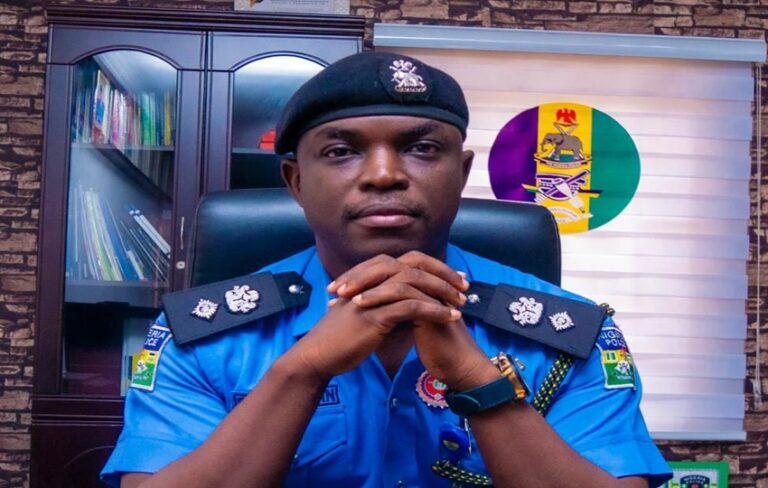
PRESIDENT Bola Tinubu appointed Assistant Inspector-General of Police Tunji Disu as Acting Inspector-General of Police on Tuesday, February 24.
His appointment followed the resignation of the immediate past IGP, Kayode Egbetokun.
In a statement shortly after the news of Egbetokun’s exit from the Force broke, presidential spokesperson, Bayo Onanuga said Tinubu expressed “profound appreciation” for his decades of service, dedication and commitment to strengthening Nigeria’s internal security architecture.
Onanuga said in view of prevailing security challenges, Tinubu approved Disu’s appointment in acting capacity, citing his “experience, operational depth, and demonstrated leadership capacity” as critical for steady direction of the Nigeria Police Force.
It also noted that the president would convene a meeting of the Nigeria Police Council in accordance with the Police Act to formally consider Disu’s appointment as substantive IGP, after which his name would be forwarded to the Senate for confirmation.
Who is Tunji Disu?
Disu is a career police officer with over three decades of service. Before his elevation, he served as Assistant Inspector-General of Police in charge of the Force Criminal Investigation Department (FCID) Annex, Lagos.
He previously held key operational and command roles, including Commissioner of Police in Rivers State and the Federal Capital Territory (FCT), Commander of the Rapid Response Squad (RRS) in Lagos, and head of the Police Intelligence Response Team (IRT).
His tenure in Lagos RRS drew attention for operational reforms in urban policing and crime response. Many Nigerians are already throwing their support behind him, hoping for a better policing.
Disu, a graduate of English Education from Lagos State University, holds master’s degrees in Public Administration and Criminology, Security and Legal Psychology, and he is a member of the International Association of Chiefs of Police.
Current state of the Nigeria Police Force
The new Acting IGP inherits a police force shaped by the contentious tenure of Egbetokun.
Prominent issues under the former IGP were many human rights abuses, attacks on citizens and journalists, and harassment of protesters.
As Acting IGP, Disu faces immediate challenges as Nigeria continues to grapple with persistent security threats, including banditry, kidnapping and organised crime.
Beyond frontline security concerns, Nigerians are expecting a change in leadership that strengthens internal discipline within the Force and reinforces respect for human rights.
There is also heightened public concern around how the police manage protests and civil dissent, with expectations that operations will reflect restraint, respect for constitutional rights and adherence to the rule of law.
Many will further expect a balance between enforcement of cybercrime regulations and the protection of press freedom.
With the 2027 general elections drawing closer, preparations for credible and impartial election security will form another major test of the new police leadership.