Home Blog Page 758

Key issues Tinubu should consider in rebasing Nigeria’s economy – Economist

NIGERIA should have got it right the last time it rebased its economy but failed to follow some preconditions, a development economist, Kazeem Bello, said.

Bello shared his thoughts with The ICIR on the backdrop of President Bola Tinubu’s declaration that Nigeria would rebate its economy to $1 trillion by 2026 and possibly grow it further to $3 trillion by the end of 2033.

Tunibu said this on Monday, October 23, at the opening ceremony of the 29th Nigerian Economic Summit (NES 29) in Abuja.

“A $1 trillion economy is possible by the year 2026 and a $3 trillion economy is possible within this decade. We can do it.”

“We’ve done double-digit inclusive and sustainable competitive growth. This is our agenda and I’d like to charge you – the captains of industry here present, to commit yourselves to and redouble your effort to our vision of a renewed hope,” Tinubu said.

Sharing his thoughts, Bello, the chief executive officer/principal partner with Afrique Capital and Equity Funds Limited, said the current administration could get it right if it captured a significant part of the informal sectors; otherwise, it would repeat the ‘mistake’ of the Goodluck Jonathan’s administration.

He said that the country hurriedly rebased its economy under Jonathan despite the International Monetary Fund and World Bank’s advice on the prerequisites for such an important economic exercise.  

The Nigerian economy grew to $550 billion in gross domestic product (GDP) from about $360 billion immediately after the rebasement, putting the country’s economy ahead of South Africa in becoming Africa’s largest economy.

“But what did the country gain in actual economic performance since then,” Bello queried.

The GDP numbers slid down over the years and now gross at about $440 billion, he said. “That obviously connotes a lot of implications and clearly shows that the rebasement may have been wrongly carried out.” 

Over time, the poverty level has increased with multi-dimensional poverty numbers grossing to over half of the population, unemployment rising, inflation becoming stubborn to tame, the wage system stagnant, and the price level rising to the roof.

Bello hoped the Tinubu government would avoid making the mistake again; “otherwise, rebasing the economy would end up with a declining GDP by 2033.”

Data mining

There is a need to work on a solid data mining and retention system that will assist in capturing a significant part of the informal sectors currently with no data information, Bello said, suggesting that the government should figure out how to acquire the necessary technology to capture a significant number of the informal group.

“This was a major reason why the economy moved from a rebasement of $550 billion in 2013 to a reduction of $440 billion as of today,” he asserted.

Effective tax system

Bello suggested that the government must work on installing effective tax capturing and incentive mechanisms that would assist in increasing the records of tax payments and encourage the informal sectors.

Aside from the value-added tax, the informal sectors are not seen to contribute to the tax system because of the lack of tax administration, noting that one of the barometers for estimating GDP remains the tax revenue system.

“A situation where almost 70 per cent of the production ecosystem does not get taxed appropriately is a window for losing so much in the GDP numbers,” he stressed.

Foreign exchange reform

According to Bello, Central Bank must carry out tailored reforms of the foreign exchange market that will see some stability in the market for a sustainable long period.

He asserted that the falling value of the naira was one of the primary reasons the last rebasement exercise was defective.

“When the rebasement was carried out in 2013, the Naira exchanged for N165 to one dollar. Today, the parallel market rate is floating around N1,150.

“Assuming the economy is rebased today at $1.0 trillion and in the next two years the naira sees continuous depreciation and settles at N1,800, it means that the present value of the GDP of $1.0 trillion in two years shall be decimated to $555 billion,” he explained.

Investment in infrastructure

Bello continued that the government should invest in infrastructures to support informal sector growth, which is why the sector must be taxed appropriately.

Other suggestions include the government’s ability to reduce agriculture production waste that sees Nigeria losing over $50 billion annually due to poor infrastructure, lack of storage facilities and processing capacity.

Bello submitted that Nigeria could attempt another rebasement exercise to harness the economic opportunities required to generate real increases in the GDP numbers, considering many of these steps.

31 states survived on federal allocation, generated low IGR in 2022

THIRTY-ONE states in Nigeria relied more on the Federal Government’s allocation for survival than the revenue they generated in 2022, analysis by The ICIR Data evaluating the Federal Government’s allocations and the internally generated revenue (IGR), by the 36 states and the Federal Capital Territory (FCT) showed.

The ICIR checks showed that the total amount disbursed by the Federal Account Allocation Committee (FAAC) to the states is N3.24 trillion, while the IGR generated by the states, according to the National Bureau of Statistics (NBS), is N1.93 trillion.

This puts the total revenue received at N5.17 trillion in 2022.

The ICIR reported how three states pulled nearly half of the total IGR generated that year. 

According to data from NBS, in 2022, Lagos State, Rivers State and the FCT generated the highest revenue with N651.15 billion, N172.82 billion and N124.37 billion, respectively, while, the lowest three performing states during the year were Kebbi, Taraba and Yobe with values of N9.15 billion, N10.24 billion and N10.46 billion respectively.

However, a closer check of the FAAC data showed that only six states relied on their internal revenue and the Federal Government allocations.

The states are Kaduna, Kwara, Lagos, Ogun, Oyo and the FCT.

To analyse this, The ICIR filtered the reliance on the government allocation by 60 per cent and IGR by 40 per cent. 

StatesIGR ratio (%)FAAC ratio(%)
Kaduna4555
Kwara4555
Lagos8020
Ogun7426
Oyo4654
FCT (Abuja)6040

Economists, who spoke to The ICIR expressed concern that more states are becoming mere consumption centres and relying on federation allocation for survival.

“One of the major weaknesses in our current democracy is the poor economic performance of states and local governments. The states in Nigeria, excluding three or four, are mere consumption centres. They don’t create wealth and add value. They just go to Abuja, collect the allocation,” a development economist, Chuka Mbonu, told The ICIR in an interview.

He said “The IGR comes from payroll taxes from companies working in states. This means, states should have economic activities that bring in such funds. Low IGR means most states don’t have appreciable economic activities. If states don’t have investments, how would they improve their IGR and solve issues like maternal and infant mortality?”

In a similar submission, the chief executive officer, Economic Associates, Ayo Teriba, said that states needed to do more to attract investments and create wealth opportunities for citizens.

“States must have investment portal and work closely with the Private Sector for wealth creation.”

Meanwhile, of the six states, only Lagos, Ogun, and the FCT depended more on their revenue than the Federal Government allocation. This means that the amount generated as revenue was higher than what was received from the government. 

On the other hand, of the 31 states that relied more on the federal government allocation, nine states had a revenue ratio below 20 per cent while the federal government shouldered 80 per cent. 

The least was Bayelsa state, followed by Akwa Ibom and Kebbi states.

StatesIGR ratio(%)FAAC ratio(%)
Adamawa1882
Akwa Ibom1189
Bayelsa694
Ebonyi1981
Kebbi1387
Taraba1783
Yobe1684

P&ID judgment would have cost Nigeria $15bn – Buhari

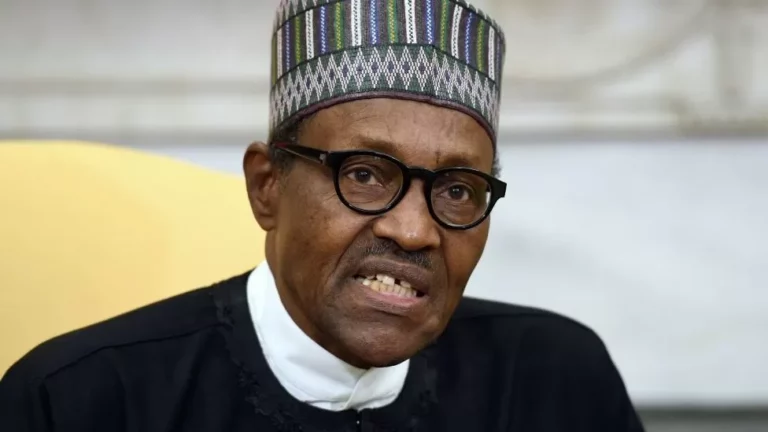
FORMER President Muhammadu Buhari said it would have cost Nigeria $15 billion had the country lost its case against Process & Industrial Development Limited (P&ID).

The immediate past president stated this in a statement shared on his official X handle on Sunday, October 29.

“If Nigeria had lost its arbitration dispute with Process & Industrial Development in a London court on October 23, it would have cost our people close to USD15 billion.

“We won, and all decent people can sleep easier as a result,” Buhari said in the statement titled ‘A Matter of Principle.’

A London Court presided over by Robin Knowles had on Monday, October 23, awarded the case in favour of the Nigerian government after quashing P&ID’s $11 billion claim, The ICIR reported.

P&ID dragged the Nigerian government to court for violating the terms of its agreement in failing to provide gas for the power plant the company wanted to build for the country.

The case, which lasted for about five years, was, however, ruled in favour of the Nigerian government.

Commenting on the judgment, Buhari said Nigeria would have been the victim of a monstrous fraud.

“I end the case acutely conscious of how readily the outcome could have been different, and of the enormous resources ultimately required from Nigeria as the successful party to make good its challenge,” the former President quoted the judge.

Buhari also said that if the case had gone against the country, it would have further impoverished the citizens.

“Had Nigeria lost, it would have required schools not to be built, nurses not to be trained and roads not to repaired, on an epic scale, to pay a handful of contractors, lawyers and their allies – for a project that never broke ground,” Buhari said.

Stressing that the P&ID case leaves a lesson for the country’s future, the former President recalled the “P&ID Affair” was already firmly set by the time he came into office in 2015.

“A company registered in the British Virgin Islands that no one had heard of, with hardly any staff or assets, had won a contract to build a gas processing plant in Cross Rivers.

“The company was owned by Irish intermediaries who knew Nigeria well and had done business in everything from healthcare to fixing tanks. The previous government could not supply the gas. The plant was never built. Construction was not started. P&ID did not even buy the land for the facility. But the contract, incredibly, was clear,” he lamented.

Praising the role his government played, Buhari said the judge agreed that P&ID had paid bribes.

“He agreed that one of P&ID’s founders had committed perjury. And he agreed that P&ID had somehow found in its possession a steady supply of Nigeria’s privileged internal legal documents, outlining our plans, strategies and problems,” he said.

The P&ID case points to how important it is to follow the legal process in resolving a dispute, Buhari said, noting that the struggle was worth it as the attempt was to steal from Nigeria’s treasury, a third of its foreign reserves.

“We need better contracts in the public and private sectors. And we need greater transparency,” Buhari urged, adding that sterner sanctions awaited Nigerian public officials who had been proven to conspire with foreign criminals to defraud the country.

Security forces rescue four kidnap victims in Katsina

Security forces, comprising the Police and Army, have rescued four kidnap victims in Dandume Local Government of Katsina State.

This was revealed in a statement by the Police Public Relations Officer in the state, Abubakar Aliyu, on Sunday October 29, 2023.

Aliyu said the victims regained freedom on Saturday, October 28, following a joint operation by the Police operatives and the Nigerian Army during a routine patrol.

He explained that the victims had since been reunited with their families after undergoing medical examinations.

Alyu explained that the state Police commissioner, Abubakar Musa, commended the professionalism displayed by the team during the rescue operation, stressing that the fight against all forms of criminality in the state continued with unwavering determination and vigilance.

The ICIR reported several kidnapping cases of kidnapping incidents in Katsina state. Earlier this month, this organisation reported that gunmen suspected to be bandits abducted five female Federal University, Dutsin-ma (FUDMA) students in the state.

The abduction came a few weeks after The ICIR reported that over 20 female students of Federal University Gusau, Zamfara State, a state neighbouring Katsina, were abducted by bandits.

The bandits invaded the students’ private hostels in the Sabon-Gida community, Bungudu Local Government Area of the state, in the early hours of Friday, September 22. Sabon-Gida is a few meters away from the university.

LP faction mocks Obi, lauds Tinubu over Supreme Court’s judgment

THE Lamidi Apapa-led faction of the Labour Party (LP) on Saturday congratulated President Bola Tinubu after the Supreme Court upheld his victory.

The faction also mocked the party’s presidential candidate in the February 25 election, Peter Obi.

According to a statement on Saturday, October 28, by the faction’s spokesperson, Abayomi Arabambi, Apapa said Obi’s petition was dismissed “in less than 120 seconds” because it was “frivolous and bland.”

On Thursday, October 26, the Supreme Court dismissed the appeal filed by the presidential candidate of the Peoples’ Democratic Party (PDP), Atiku Abubakar, and Obi against Tinubu in the February 25 election.

Congratulating Tinubu, the LP faction said his victory was well-deserved having proven his case beyond reasonable doubt.

Part of the statement reads, “The victory has now settled all the controversies that arose from the February 25th presidential and National Assembly Election. It is our hope that the President will be magnanimous in victory by inviting the Labour Party’s leadership as a partner in progress to his all-inclusive government of national unity.”


READ ALSO:


Obi and Abubakar had dragged Tinubu to the Supreme Court over the presidential election result.

Dissatisfied by the verdict of the Presidential Election Petition Tribunal (PEPT) in September, the petitioners approached the Supreme Court, seeking the nullification of Tinubu’s election on the grounds of double nomination, alleged certificate forgery, non-transmission of results electronically, 25 per cent votes in the Federal Capital Territory (FCT), amongst others.

However, on Thursday, October 26, the Justice John Okoro-led panel of the apex court threw out all the appeals for lacking merit and upheld Tinubu’s victory.

South Africa pip New Zealand 12-11 to retain Rugby World Cup

0

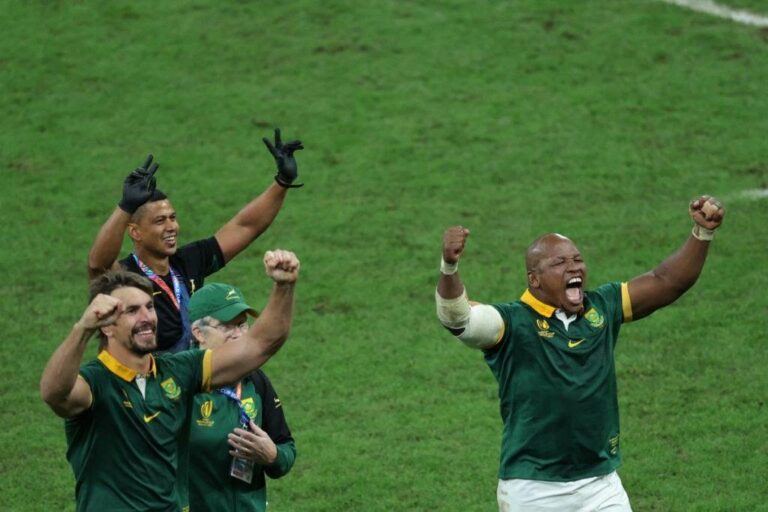
SOUTH Africa on Saturday night edged 14-man New Zealand 12-11 to clinch the Rugby World Cup for the fourth time.

The final lived up to expectations at rain-soaked Stade de France as both teams engaged in a nail-biting match.

The opening quarter was breathtaking as each side delivered a succession of superb hits. South Africa’s Pieter-Steph du Toit became a torn of the flesh on the attackers as he led the defense to cage New Zealand in their own territory.


Read Also:

After a series of runs, a late New Zealand’s player Faf de Klerk hit on Mark Tele’a saw Jordie Barrett kick for the corner and from a series of drives, the Boks infringed and Richie Mo’unga got the All Blacks on the scoreboard with an easy penalty.

Pollard hit straight back after Ardie Savea flopped over a ruck, connecting perfectly to convert a monster 49-metre effort.

New Zealand’s tempo in the match reduced when one of their players Cane received a yellow card in the 29th minute for a high tackle on Jesse Kriel but was later upgraded to red for a high degree of danger after a review by the match officials.

The high point of the final was South Africa’s Handre Pollard who kicked four penalties to help his country to retain the cup.

Again, Nigeria urges truce in Israel-Hamas conflict as death toll nears 9,000

0

NIGERIAN government has again called on the Israeli and Hamas governments to reach a sustainable humanitarian truce in the Gaza Strip as the death toll from the conflict has left nearly 9,000 people dead.

The call was contained in a statement issued by the Foreign Affairs Minister, Yusuf Tuggar, on Saturday, October 28.

According to Tuggar, the situation in Gaza is dire and requires immediate attention as a result of the recent rise in violence.

“Women, children, and other vulnerable groups are among innocent civilians that have suffered greatly as a result of the indiscriminate violence and are currently bearing the consequences.

“Parties in the conflict must uphold the fundamental values of human rights and international humanitarian law, which places premium on ensuring civilians’ safety and well-being even in times of conflict,” he said.

Nigeria also called on the Israeli government to grant humanitarian access to the millions of people who have been displaced since the crisis broke out.

He noted lack of water, food, medical supplies, and fuel shortages had compounded the humanitarian disaster in the Gaza region as the Nigerian government also urged both parties to exercise restraint and prioritise the safety and well-being of civilians.

“Indiscriminate attacks that result in civilian casualties must be avoided at all costs.

“The prayer of the Nigerian nation is with those who have lost their lives in the conflict and families that have suffered human and material losses, and also those that are currently recuperating from injuries,” Tuggar said.

Nigeria called for a return to the negotiating table and continued search for peaceful resolutions and implementation of the two-state solution as a permanent settlement of the ‘inter-generational’ cycle of violence, Tuggar added.

Nigeria had on October 7 called for a ceasefire between Israeli and Hamas militants in the latest conflict, which has been described as becoming the deadliest and most destructive of the five wars fought between the sides since Hamas seized control of the Gaza Strip in 2007 from the Palestinian Authority.

The fighting erupted on October 7 when Hamas carried out a bloody attack in southern Israel.

Since then, Israel has pounded the Gaza Strip with airstrikes that have wrought unprecedented destruction, flattening entire neighbourhoods.

Numbers from the Associated Press (AP) as of October 27 showed that about 1,400 Israelis and 7,326 Palestinians have died in the conflict.

The AP statistics revealed further that 5,431 Israelis and 18,967 Palestinians have been injured, with about 250,000 Israelis and 1.4 million Palestinians displaced.

While about 229 soldiers and civilians are held hostage, 27,781 residential units have been destroyed in the Gaza Strip.

On Friday, October 27, Nigeria and 119 member states of the United Nations voted in favour of a resolution, calling for an “immediate durable and sustained humanitarian truce” between Israeli forces and Hamas militants in Gaza.

The resolution also demands continuous, sufficient and unhindered” provision of lifesaving supplies and services for civilians trapped inside the enclave, as news reports suggest Israel has expanded ground operations and intensified its bombing campaign.

Besides the economic consequences of the war impacting Nigeria’s oil revenues and disrupting its trade relations, among escalating regional tensions, the federal government had warned Nigerians at this time against taking pilgrimage to the holy land of Israel even as the Lagos State authorities suspended the planned airlifting of pilgrims in the state.

Otudeko’s name missing from FBN Holdings’ structure despite 13.3% stake

OBA Otudeko’s name has yet to be added to the shareholding structure of FBN Holding Plc (FBNH) despite his recent acquisition of 4.77 billion unit shares that put his stake to 13.3 per cent.

The FBNH’s unaudited consolidated financial statements for September 30, 2023, released to the investing public on Friday, October 27, showed that Femi Otedola holds the single largest shareholder with a total substantial shareholding of 1.9 billion units or 5.57 per cent of the bank’s 35.8 billion issued share capital, followed by Tunde Hassan-Odukale with 1.58 billion or 4.40 per cent of stake.

Otudeko had, in a transaction in July, snapped over four billion units of shares in a N87.8 billion deal to stage a comeback in FBNH’s shareholding structure.

The acquisition made his stake leap to about 13.3 per cent against other shareholders.

His company, Honeywell Group Limited, through its affiliate, Barbican Capital Limited, facilitated the acquisition.

In a notification dated July 7, signed by its acting company secretary, Adewale Arogundade, FBNH confirmed the acquisition to the investing public.

The bank stated, “This is to inform the public and our shareholders that the company received a notification dated July 7, 2023, from Honeywell Group Limited that its affiliate, Barbican Capital Limited, has acquired an aggregate of 4,770,269,843 (4.7 billion) units of shares from the company’s issued share capital of 35,895,292,791, (35.89 billion) as at the above-referenced date.

“Based on the foregoing, the equity stake of Barbican Capital Limited in the company is 13.3%.”

The acquisition, however, elicited mixed reactions from stakeholders in the capital market to the point that some stakeholders told The ICIR that even though Otudeko did not commit any market infraction in the transaction, the Central Bank of Nigeria (CBN) and the Securities and Exchange Commission (SEC), should have investigated the matter closely.

At the time, some majority shareholders had expressed displeasure with Otudeko’s supposed move to reclaim control of the bank holding company.

CBN had, in April 2021, removed Otudeko as FBNH’s non-executive director/chairman and sacked the board under him over noncompliance with regulatory control.

Before his dismissal, Otudeko’s Honeywell Nigeria was hugely indebted to First Bank through insider borrowing, which affected the bank’s non-performing loan until the CBN placed the bank under a regulatory forbearance for some years.

Following this mistrust, most shareholders were reported to be concerned about the consequences of having Otudeko back in control of the bank in any capacity.

An enquiry by The ICIR to FBNH was not responded to on why Otudeko’s stake was not mentioned in the bank’s shareholding structure in the third quarter result.

The bank’s head of Corporation Communications, Folake Ani-Mumuney, when contacted, did not pick up calls put across to her phone line, nor did she respond to the WhatsApp message sent to her.

Analysts who spoke with The ICIR said it is evident that the regulators have yet to approve Otudeko’s recent “backdoor” acquisition, the reason his stake was not mentioned in the FBNH shareholding structure in the Q3 financial statement.

If the central bank had approved the transaction, Otudeko would have been mentioned and automatically become the chairman of the bank’s board, the experts said.

Twist to Otudeko’s FBNH acquisition

Following Otudeko’s acquisition, Ecobank Nigeria had demanded FBNH to reject the approval of the shares as proceeding with such consent would have assisted in diverting funds meant for the payment of the debt Otudeko, and his company owed the bank.

Ecobank had in a letter through its lawyer, ‘Kunle Ogunba & Associate, dated July 7, 2023, and addressed to the Managing Director of FBNH [Nnamdi Okonkwo], stated that the Honeywell Group and Otudeko were indebted to the bank to the tune of N13.5 billion, ThisDay reported.

The loans were personally guaranteed by Otudeko, the Ecobank’s head of corporate communications, Austen Osokpor, told The ICIR.

Ecobank’s judgment debt

The executive vice-chairman of Highcap Securities Limited, David Adonri, told The ICIR that he did not see how the judgment debt to Ecobank should affect the shares transaction if the company Otudeko used in buying his controlling ownership of FBNH was not the judgment debtor.

“However, CBN needs to investigate this objection by Ecobank and other alleged breaches of trust by Oba Otudeko when he was Chairman of FBNH to approve or disapprove the transaction,” he said.

Adonri said if there was any regulatory sanction against Otudeko, he might not qualify as a director in FBNHolding even if he had controlling power by his percentage of shares acquisition.

“So, his company, now the majority shareholder, might have to nominate another person instead of him. However, I am unaware of any sanction that prohibits him from being a bank director,” he pointed out.

An investment and portfolio analyst, Abel Ezekiel, however, questioned the transaction that gave Otudeko the FBNH new shares.

For Ezekiel, no matter how the regulatory bodies looked at the dealing matters, what is apparent is that Otudeko registered a company, Barbican Capital Limited, in March, through which he purchased the shares.

“The deal is unclear; it is an infraction,” Ezekiel asserted, noting that Otudeko is the founder and chairman of the Honeywell Group.

The national chairman of the Progressive Shareholders Association of Nigeria (PSAN), Boniface Okezie, saw Otudeko’s acquisition of fresh shares in FBNH as a welcome development for the growth of the entity and its subsidiary companies.

“What the average investor wants is good dividends, not tips, and also capital appreciation. That is what we look for, and the legacy of the very institution is very crucial.

“I believe Oba Otudeko has paid his dues in developing the Nigerian capital market and is still paying. I welcome him and wish him well in this second coming, if there is anything like that because he never went away from the market or the industry,” he said.

The chief executive officer of Dairy Hills Limited, Kelvin Emmanuel, said the cross-deal was controversial and could be traced to what happened years back when the Central Bank had to fire the board of FBNH under Otudeko as chairman.

There is already a renewed tussle over who controls the bank board, Emmanuel said on Wednesday, July 12, on Channels Television.

This could give one an understanding of the issue surrounding Ecobank’s claim of N13.5 billion on Otudeko and Honeywell Group, he added.

Otudeko’s claim

Otudeko, the chairman of Honeywell Group, faulted Ecobank’s claim of owing the bank N13.5 billion, asking FBNH to disregard the letter not to approve his 4.7 billion shares acquisition.

Responding to the bank’s claim, Wole Olanipekun, counsel to Otudeko and Honeywell Group, said the N13.5 billion debt stated in Ecobank’s letter was not contained in the Supreme Court’s decision or any extant court decision in Nigeria or elsewhere. TheCable reported.

It said Honeywell’s reply was contained in a letter dated July 10 and addressed to the managing director of FBNH.

Olanipekun said in the letter that no court order awarded the amount or any judgment sum (as debt owed) in Ecobank’s favour.

“We write at the instance of Dr Oba Otudeko, CFR and Honeywell Group Ltd. (our Clients), whose attention have been drawn to a letter dated 7th July, 2023 (written on the instruction of Ecobank Nig. Ltd.) with the above subject,” the Honeywell letter read.

However, Otudeko’s stake in FBNH has remained in limbo as many stakeholders are wondering why the regulatory authorities have yet to decide on the matter.

Omowunmi Dada bags 2023 artist in residence at University of Michigan

0

NIGERIAN- born award winning Nollywood actress, Omowunmi Dada has been honoured as the 2023 Global Artist in Residence at the African Studies Center (ASC) and the Department of Afroamerican and African Studies (DAAS) of the University of Michigan.

Taking to her Instagram on Friday, October 27, the actress announced her latest achievement stating that she would be working with other language instructors to teach African languages.

“I am absolutely honoured to be named the 2023 Global Artist in Residence at the African Studies Center (ASC) and the Department of Afroamerican and African Studies (DAAS) of the University of Michigan, USA!

“I will be working with DAAS language instructors to develop audio-visual materials for teaching African languages, while also engaging with the U-M campus community and local schools. Can’t wait to share the beauty of the rich African culture and the incredible journey of Nollywood with everyone!” she stated.

The actress will be engaging with faculty, staff, and students at the University of Michigan to share  the rich tapestry of African culture and the journey of the Nigerian movie industry. 

She also hopes to promote the culture of collaboration of the United States and the continent of Africa through Africa’s diverse cultures to foster a deeper understanding and appreciation of Africa and Africans.

Dada started her acting career at the University of Lagos where she played minor roles in theatre productions after which she made her stage debut in the play Moremi Ajasoro and her film debut in 2013 with a part in the movie, Oya

As an actress, Dada has been in the Nigerian film industry for almost 10 years and in recent years has featured in television series and films including Jemeji, Òlòtūré, Elesin Oba, Ayinla, among others.

The ASC Director, Omolade Adunbi commended Dada as the year’s Global Artist in Residence, stating that she is a “phenomenal actor whose presence in the movie industry in Nigeria and Africa has helped introduce a new flair to how we understand Nollywood and filmmaking on the continent”. 

He added that by having her attend classrooms and impart her vast knowledge to the students, they would raise awareness of Africa, its rich cultural heritage, and Nigeria’s emerging film industry on campus.

Tribunal dismisses Binani’s petition, upholds Fintiri’s victory

THE Adamawa State Governorship Election Petitions Tribunal sitting in Yola has dismissed the petition by Senator Aishatu Binani of the All Progressives Congress (APC) against the re-election of Ahmadu Fintiri of the Peoples Democratic Party (PDP).

Binani, in her petition which had the Independent National Electoral Commission (INEC), Fintiri and the PDP as the first, second and third respondents respectively, alleged that the election was not in substantial compliance with the Electoral Act.

Binani and APC jointly filed the petition on the 6th of May, 2023, alleging that the election conducted first on March 18, 2023, and the rerun on 15th April, were marred by thuggery, ballot papers and BVA snatching, and harassment of electoral officers.

However, delivering the judgement on Saturday, the tribunal chairman, T. O. Uloho dismissed the petition and affirmed  Fintiri’s victory.

Uloho said the petitioners failed to establish their allegations of non-compliance with the Electoral Act.

She said all documents tendered by the petitioners were dumped on the tribunal and that their star witness did not link any of the documents with any of their material allegations.

The tribunal held that the petitioners failed to prove their case beyond reasonable doubt.

The panel equally held that the declaration of Binani as winner of the poll by the suspended Resident Electoral Commissioner (REC) Hudu Ari-Yunusa was null and void.

On April 18, 2023, INEC declared Fintiri winner of the  governorship election after a supplementary election was held to conclude the process which was initially declared inconclusive.