Home Blog Page 759

AIU bans Nwokocha for 3 years over doping violation

0

THE Athletics Integrity Unit (AIU) has found Nigerian sprinter Grace Nwokocha guilty of doping violation.

Consequently, the body has slammed her three-year ban from sporting activities and stripped her of all prizes she won since August 2022.

AIU on Friday announced that Nwokocha who was a cynosure of eyes at the 2022 Commonwealth Games after winning gold in the 4x100m relay tested positive for ostarine and ligandrol, two anabolic agents in a sample collected on  August 3, 2022.

The AIU said that Nwokocha  admitted to the doping violation and had accepted the sanction of a three-year ban with a forfeiture of any medals, points and prize money/prizes from August 3, 2022 to September 2, 2022.

 “The AIU, the Athlete and the World Anti-Doping Agency (the Parties) subsequently entered into a Case Resolution Agreement in accordance with Rule 10.8.2 ADR pursuant to which the athlete acknowledged that she had been found to have committed ADRVs under Rule 2.1 and Rule 2.2 of the CGF ADR (and the ADR) by virtue of the CGF decision, which is final and binding upon her;

“Therefore, the period of Ineligibility shall be in effect until, and including, August 2, 2025; and in accordance with Rule 10.10 of the ADR (and to the extent that any results are not already disqualified by operation of the CGF decision), the athlete’s competitive results from August 3, 2022 until the date of the provisional suspension imposed by the AIU viz. 2 September 2022 are disqualified with all resulting consequences, including forfeiture of any medals, points and prize money/prizes,” AIU statement partly reads.

Nwokocha’s ban brings to fore the ugly incidents of doping scandals involving Nigerian athletes. 


READ ALSO:


The athlete’s ban brings to two the number of Nigeria sprinters banned this month.

Divine Oduduru was slammed with a six-year ban for doping violations earlier this month.

In 2021, Blessing Okagbare, who won gold in the 100m and 200m at the Commonwealth Games, was also banned for 10 years after testing positive for multiple performance-enhancing drugs.

Boat mishap kills two in Lagos

0

TWO females, Misturat Okunbanjo and Azeezat Amoo, have been confirmed dead in a boat mishap that occurred on Thursday, in the Ikorodu area of Lagos State.

This was disclosed in a statement on Friday, October 28 by the agency’s Deputy Director, Public Affairs , Ololade Agboola.

Agboola said the passengers were on their way to Isawo from Olorunsogo area of the community when the boat capsized.

The search and rescue operation was conducted by men of the Fire Service with the assistance of locals which led to the recovery of the bodies.

The statement read, “The Lagos State Fire and Rescue Service conducted overnight operations and successfully rescued four female adults while recovering two others in the Isawo community of the Ikorodu area of Lagos.

“The accident was reported at 8:16 pm on Thursday, prompting the deployment of the search and rescue crew from the agency. The crew collaborated with locals who were familiar with the terrain. 

He explained that the crew resumed their efforts in the early hours of Friday to continue the search when they recovered the bodies of two females, identified as Misturat Okunbanjo, 18, and Azeezat Amoo, 16. The recovery operation ended at approximately 10:10 pm, he stated.

Nigeria has witnessed a troubling trend in boat accidents. The ICIR reported that 1,204 people lost between January 2018 and October 2023 over the past six years.

The ICIR data shows that 17 people die monthly from boat mishaps when 1,204 is divided by the 70 months within the review period.

Emergency services attributed these accidents to factors like overcrowding, inadequate boat maintenance, reliance on ageing vessels, and neglecting safety gear.

Nigeria secures additional $1bn for agro-processing in 24 states

0

NIGERIA has secured an additional $1 billion to deliver projects on the special agro-industrial processing zones (SAPZs) initiative in 24 States.

The African Development Bank (AfDB), Islamic Development Bank (IsDB) and the International Fund for Agricultural Development (IFAD) voted for the funds to deliver the SAPZ projects in the states.

“The second phase of the programme aims to mobilise an additional $1 billion to deliver special agro-industrial processing zones in 24 states of Nigeria,” AfDB president, Akinwumi Adesina, said.

He disclosed this at the World Food Prize 2023 in Iowa, United States, according to a statement from the office of the Vice President issued by Stanley Nkwocha.

The AfDB and its partners had, in October 2022, voted an initial $520 million for the development of SAPZs in eight states in the country.

According to Adesina, the decision to pool the funds into Nigeria’s agribusiness was part of the resolve to develop SAPZs in 13 countries.

“We are investing heavily in the development of SAPZs to support the development of agricultural value chains. Food processing and value addition, enabling infrastructure and logistics to promote local, regional, and international trade in food.

“The African Development Bank Group is investing $853 million in the development of the Special Agro-Industrial Processing Zones. The bank has mobilised additional co-financing of 661 million dollars, for a total commitment of $1.5 billion,” Adesina said in his speech, ‘From Dakar to Des Moines’.

He lamented that about 283 million people suffered from hunger in Africa despite much progress made in the African agriculture sector.

He asserted that the World Food Prize 2023 dialogue was a journey and narrative combining the power of science, technology, policies and politics to ensure that Africa fully unlocks its agricultural potential and feeds itself with pride.

On October 24, 2022, Nigeria began the journey to end hunger and achieve food security, launching the SAPZ initiated.

At the launch ceremony in Abuja, eight states, including Cross River, Imo, Kaduna, Kano, Kwara, Ogun, Oyo, and the Federal Capital Territory, Abuja, kick-started the implementation phase.

Of the initial $520 million, the AfDB is providing $210 million, IsDB and IFAD jointly providing $310 million, while the Nigerian government is contributing $18.05 million.

“The Special Agro-industrial Processing Zones are new economic zones, located in rural areas, to be fully supported by infrastructure (power, water, roads, digital infrastructure, and logistics) that will allow food and agribusiness companies to locate within such zones. This will put them close to farmers in production catchment areas, provide market offtakes for farmers, support processing and value addition, reduce food losses, and allow the emergence of highly competitive food and agricultural value chains,” Adesina had said.

While delivering a keynote address at the international dialogue, Vice-President Kashim Shettima raised hope that the new administration of President Bola Tinubu would provide an enabling environment for investors in the zones.

He also assured that the Federal government would drive a process that would support farmers with agricultural extension services fertiliser and increase the irrigation areas to one million hectares in the next cropping cycle.

“We need to produce about 2.4 million tonnes of wheat grains in Nigeria. We are going to reach out to our farmers through small irrigation schemes and digitalisation.

“All the actors in the value chain will be sufficiently taken care of through innovative finance, partial credit guarantees and crop insurance. Our target is to achieve self-sufficiency in rice latest by 2027,” Shettima said.

Izikhothane: South African subculture where people compete for who is wealthier

0
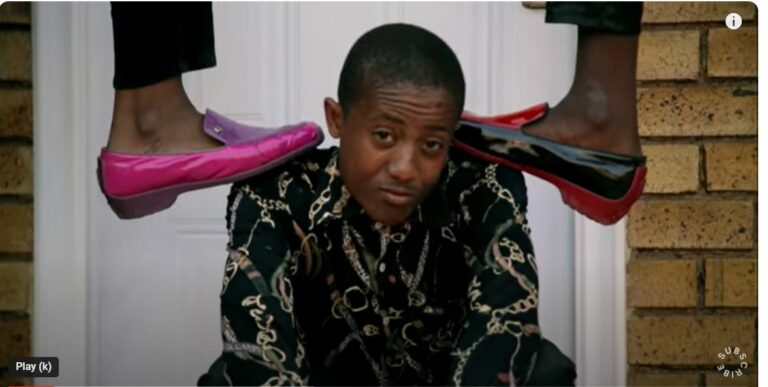
Izikhothane: a deeper history of a South African youth subculture where luxury items are trashed
By Mthobeli Ngcongo, University of the Free State and Sifiso Mnisi, University of Johannesburg

In South Africa, a skhothane is a young, fashionably dressed black urban resident who engages in destructive conspicuous consumption. This involves regular get-togethers on weekends in which groups of izikhothane – most likely male teenagers – gather to compete in mock battles where luxury items are often destroyed. The name is derived from a word in the Zulu language, ukukhotha, meaning “to lick”, but in urban slang it means to boast.

There’s no consensus about when exactly this “youth craze” emerged. But there’s reason to believe the ukukhothana subculture can be traced as far back as 2005, first in the townships of the East Rand of Gauteng province before spreading to other provinces. In South Africa, townships are human settlements established outside towns and cities by the white minority apartheid government as areas for people categorised as black to live in.

At ukukhothana events, izikhothane show up wearing expensive designer labels such as Rossimoda shoes, DMD shirts and Versace jackets and suits. They also bring what, in the township context, is considered expensive junk food, such as KFC and Debonair’s Pizza. Alcohol such as Bisquit, Hennessy and Jameson, traditionally associated with affluent people, accompanies the food.

What makes the events interesting is what happens to these costly items once there’s an audience and loud music. The expensive clothes are at times torn, burnt or trampled on. The food is thrown on the ground and at each other in a playful and boastful manner. The alcohol is both consumed and used to wash hands and even poured on the ground. All this is done in order to show off wealth, style and swag, and ultimately to outdo each other in attracting cheers from the audience, attention from female spectators and respect from rival crews.

As one would expect, a subculture like this in a developing economy like South Africa has not been well received. It’s often criticised as wasteful and reckless by society and in the media. Prominent investigative journalist Debora Patta, for example, labelled izikhothane as “bling gone obscenely mad” on national TV. The question is asked: why do izikhothane embrace conspicuous consumption despite their limited means?

As communications scholars we have each studied this subculture for several years. In a recent research paper we explore the link between consumption and the idea of rehumanisation – or restoring dignity to marginalised lives. We investigate how this subculture is a form of fashion consciousness with a long history – leading on from the “diamondfield dandies” of the 1800s and the “oswenka” of the 1900s. We argue that ukukhothana is a form of expression that has the potential to reclaim a sense of selfhood and pride in the remnants of oppression in post-apartheid South Africa.

Consumption and identity

UK anthropologist Mary Douglas and UK economist Baron Isherwood suggested in 1979 that consumption is a purposeful act. It’s often aimed at conveying identity, cultural values and social circumstances. The goods people consume serve as markers of social identity and carry deeper meanings. US sociologist Thorstein Veblen’s concept of “conspicuous consumption” aptly captures this phenomenon. It refers to the act of displaying wealth and status through ostentatious spending.

Izikhothane’s behaviour can be understood within this framework. It’s an effort to signal their defiance against adversity and assert their presence in a society that has historically marginalised those who look like them. This historical marginalisation involved the treatment of black people as less than human through the system of apartheid. Black people were dehumanised during this period.

Dehumanisation involves viewing others as fundamentally different and inferior, perpetuating stereotypes and hindering empathy. Interestingly, this practice affects both the dehumanised and the dehumaniser. By devaluing others’ humanity, individuals strip themselves of their own humanising qualities. This underscores the complex psychological toll of perpetuating stereotypes.

Reversing the process of dehumanisation and reclaiming humanity is a nuanced effort that happens through a process of rehumanisation. Sartorial expression, which involves using clothing to convey identity, can play a pivotal role in rehumanisation.

Material possessions hold a significant influence over how we view other people’s identities. People use belongings not only to express who they are but to construct their “best” selves.

Diamondfield dandies and oswenka

Izikhothane are not the first and will not be the last to do this. Various sartorial subcultures appear to have arisen under conditions of dehumanisation in South Africa. These include the diamondfields dandies of the 1880s in Kimberley and the oswenka in Jeppestown in Johannesburg in the 1950s. These fashion subcultures found themselves in dehumanising conditions of migrant labour exploitation. They used expensive clothing and competitions of display to carve out a sense of their own humanity.

The diamondfield dandies sought to challenge racially inscribed stereotypes by parading in expensive clothing. They rebelled against the silence of black people in a bigoted white culture and created an identity outside work.

Years later a different kind of dandy emerged through the oswenka (swankers), who performed menial labour for work. The oswenka subculture went beyond simply parading in expensive apparel in the form of suits; it involved competitive performance battles against other dandies.

In a similar way, izikhothane’s extravagant displays of consumption serve as a means of fulfilling psychological needs.

Why this matters

Izikhothane’s seemingly frivolous consumption rituals defy the constraints of their socioeconomic backgrounds. Their fashion choices assert their existence and protest against the enduring effects of apartheid. Their actions challenge conventional notions of rebellion and provide a poignant commentary on the complexities of identity, inequality and resistance.

The izikhothane of post-apartheid South Africa show us the power of consumption to challenge social norms and resist structural injustices. Their conspicuous consumption, while seemingly destructive, can be interpreted as a way of asserting identity and demanding recognition in a society that has historically treated those who look like them as invisible and less than human.The Conversation

Mthobeli Ngcongo, Lecturer in Communication Science, University of the Free State and Sifiso Mnisi, Senior Lecturer in Communications and Media, University of Johannesburg

This article is republished from The Conversation under a Creative Commons license. Read the original article.

Nigeria’s overreliance on oil increases economic risk, shrinking investments – Report

THE Nigerian economy is currently exposed to higher economic risks as
foreign investors’ interest in the country’s oil and gas is dropping, data from the National Bureau of Statistics (NBS), has shown.

The oil and gas sector remains the lifeblood of Nigeria’s economy. It has been the major supplier of dollars to the country’s foreign reserve, which serves as a buffer to Nigeria’s currency market.

The weak dollar supply to the currency market has been exploited by market speculators, who influence the naira-dollar exchange rate pricing at the expense of the Nigerian economy.

The second-quarter 2023 oil and gas data from the NBS revealed that the industry was sidelined by foreign investors in the same quarter for the first time on record, as the once lucrative sector attracted no capital inflow in the period.

Also, Nigeria recorded a total of $1.03 billion as capital importation in the second quarter of 2023, slightly lower than the $1.13 billion recorded in the previous quarter, which is also 32.9 per cent lower than the $1.54 billion recorded in the corresponding period of 2022.

It is also worth noting that the second-quarter 2023 figure is the lowest since the second quarter of 2021.

A further breakdown of the data from the NBS showed that most of the foreign inflows during the period came into the country as loans, accounting for 74.9 per cent of the total capital import.

Meanwhile, foreign direct investment (FDI), which was $86.03 million, accounted for 8.4 per cent, while foreign portfolio investment of $106.85 million accounted for 10.4 per cent of the total.

For some economic experts, this development is worrisome to the Nigerian economy, as the nation needs to attract more investments into the oil sector.

“We have the oil given to us by God freely, but we have failed to maximise it to the benefit of our populace. We need to set the economy on the path of growth for wealth creation and jobs for our people,” a development economist, Chuka Mbonu, told The ICIR.

Already, Nigeria is facing serious problems with some of its traditional funders looking for a cleaner energy source amid climate change concerns.

Similarly, an oil and gas sector analyst and director of governance and sustainability, Sahara Group, Ejiro Gray told The ICIR that the government needed to de-risk the sector to attract cleaner energy funds into Nigeria’s gas sector.

“We must de-risk the sector to attract sustainable investment into the sector. Investors have to be assured they will get their returns back without being exposed to political and security risks”.

Zamfara government shuts major market after bandits killed 4 in fresh attack

ZAMFARA State government has shut Maru Market, a major market in the state, after bandits killed four people in Nasarawa community of Maru Local Government Area of the state, on Friday, October 27.

The ICIR gathered that the terrorists, in large numbers, stormed the community around 2:30 a.m.

The bandits were subsequently engaged in gunfights by the Nigerian Army for several hours, according to sources.

A resident of the community, who pleaded anonymity, stated that the terrorists killed four residents, injured many, and damaged houses.

According to the source, some injured residents were rushed to a medical facility in Gusau, the state capital, for treatment.

The source also disclosed that the deceased were buried at Maru Cemetery hours after they were killed.

“If not because of the quick response of the military, the casualties could have been more.

“The exchange of fire between the military and the bandits was so high. The gun sounds were everywhere until around 5:30 a.m.,” the source narrated.

The ICIR’s efforts to obtain the details of the attack from the state Police Public Relations Officer (PPRO) Yazid Abubakar proved abortive, as he did not answer phone calls put across to his line. He did not also reply to texts and WhatsApp messages sent to his line.

Reacting to the attack, the Zamfara state government, through the commissioner of the Ministry of Information and Culture, Munnir Kaura, announced the immediate closure of Maru Market.

“Due to the frequent bandits attacks in Maru town, the Zamfara state government has shut down the Maru Market instantly till further notice when the security situation is improved”, the announcement (in Hausa) said.

The attack occurred a few days after an attempted attack by bandits on the palace of Emir of Maru, Abubakar Maigari, on Tuesday, October 26.

Although residents disclosed that the Police thwarted the attack, the terrorists killed one Ukashatu, a physically challenged (crippled) living beside the palace.

The terrorists were also said to have abducted an IT officer of the emirate, Hassan Marafa.

The ICIR reported that bandits attacked Maru town and killed a Divisional Police Officer (DPO), Kazeem Raheem, one police sergeant, Rabiu Bagobiri; one vigilante member Shehu Chika and abducted several people from the town, on March 4, 2023.

Zamfara has faced attacks from terrorists, lost hundreds of residents to insecurity, and had thousands of others displaced.

The incessant attacks have led to many people deserting the community, with houses, schools, mosques, and shops spared by the bandits’ inferno shut by owners.

Expressing their displeasure over the protracted cases of insecurity, some youths in the state on Tuesday, October 17, blocked the Gusau-Kaura Namoda highway at the Sakajiki community over recurring bandit attacks, killings, abductions and other insecurity issues in the state.

The community youth trooped to the highway at dawn, preventing motorists and other road users from moving for several hours. They barricaded the road with timber logs and stones.

On Thursday, October 26, The ICIR reported how gunmen killed a senior Police officer, Musa Sakajiki, accused of working with bandits to attack innocent people in his village and other parts of Zamfara State.

Rest and Resilience Fellowship seeks entries

Reporters Without Borders Germany (RSF) in partnership with the taz Panter Foundation, invites application for the annual Rest & Resilience Fellowship. 

These media professionals can escape their arduous daily duties, allowing them to recover from stressful work environments and widen their personal and professional perspectives.

The fellowship is for two journalists from countries with limited press and information freedom to spend six months in Berlin. 


READ ALSO:


The fellowship programme provides a variety of programmes aimed at additional training and networking, with an emphasis on active involvement.

The programme covers the following costs:

  • Visa and travel costs.
  • A furnished apartment in Berlin.
  • Travel health insurance for the entire six-month duration.
  • A 1000€ monthly grant.

Fellows will also receive psychological support, various workshops (such as digital safety training and stress management), and professional journalistic and personal training opportunities.

The deadline for the submission of the application is November 19, 2023. Interested journalists can apply here

Violence may mar Kogi, Imo, Bayelsa governorship election – Study

0

THE November 11 governorship election in Imo, Bayelsa and Kogi states are likely to witness violence, a study by Kimpact Development Initiative (KDI) has shown.

Findings of pre-election environment risk assessment carried out by KDI in the three states showed that the states saw violence in previous governorship polls, and the factors that triggered such crises remained.

Elections in Kogi and Imo are more susceptible to violence than in Bayelsa, according to the findings. 

In Imo, the activities of secessionists – The Indigenous People of Biafra (IPOB), the Eastern Security Network – and other armed non-state actors are a threat to the poll.

In Kogi, political thugs and other armed criminals capable of re-enacting the attack at Ochadamu ward, where the Women Leader of Wada Aro Campaign Council, Acheju Abuh, was burnt alive in her home by suspected thugs in 2019, are still on the ground.

There are many roads linking Kogi state. Kogi borders ten states, and there are issues of herders-farmers crisis. It will be easy for people to come into the state to perpetrate crime during the election, said KDI’s Team Lead, Bukola Idowu, while presenting the findings in Abuja on Friday, October 27.

Similarly, in Bayelsa, political thugs with good knowledge of the state waterways could unleash mayhem.

 However, the organisation noted that despite its findings, there were opportunities to explore to ensure the peaceful conduct of the election. 

It suggested that if all stakeholders carried out strategic violence prevention interventions, there was a high chance that the election would be peaceful.

“Recognising the wide-ranging implications of election security in Nigeria, this study explores the impact of the actions and activities of various state and non-state political actors on the electoral landscape in Bayelsa, Imo and Kogi States,” the report summary stated.

It explained that while Imo State had not experienced much electoral and non-electoral violence for most of 2023, Kogi and Bayelsa had seen a surge in electoral violence in the last two months preceding the election. 

KDI also predicted a keenly-contested poll because of the many political parties fielding candidates. 

“While the dominant political parties across the three states vary, we have seen how the emergence of a third force, such as the Labour Party and Social Democratic Party in Imo and Kogi States, has changed the consistent dominance of the All Progressives Congress (APC) and Peoples Democratic Party (PDP) across the three states.

“The actions of their party supporters have significantly led to the tension and violence experienced in the states. The exception is in Imo, where the violence witnessed is a function of multi-dimensional crises in the state. 

“Based on the findings of this study, it is expected that the elections will be keenly contested in all three states. This projection follows the observation of the trend and pattern of the violence witnessed in this pre-election phase and the pattern of candidate selection by political parties in the three states designed along senatorial or ethnic divides to give the parties a political edge.”

Possible hot spots for crisis during election

There are no major hot spots for the political crisis in Bayelsa, except for Nembe, where the organisation said the media had been restricted from covering major political conflicts.

But in Imo and Kogi, several LGAs were listed as potential areas where crises could break out.

Five LGAs named in Kogi are Ijumu, Dekina, Ofu, Igalamela Odolu, and Ankpa. 

In Imo, 11 LGAs are prone to political violence. They are Oru West, Oru East, Orlu, Okigwe, Nwangele, Isiala Mbano, Ikeduru, Ngor Okpala, Ahiazu Mbaise, Obowo and Orsu.

Key data on the election

According to KDI, there are 5,409,438 million registered voters in the three states. 

In Bayelsa, INEC registered 1,056,862. Imo has 2,419,922, while 1,932,654 eligible voters are in Kogi state.

The three states have 10,510 polling units with 45,084 regular and ad hoc staff on the ground for deployment by INEC, KDI stated.

In Bayelsa, 16 candidates are vying for the governorship seat. Imo has 17, and Kogi has 18.

There is no female candidate in any of the three states., and only Imo State has a person with disability (PWD) contesting for governor.

The front runners in the election are:

  • Bayelsa: Timipreye Sylva (APC), Duoye Diri (PDP), and Udengs Eradiri (LP).
  • Imo: Hope Uzodinma (APC), Sam Anyanwu (PDP), Anthony Nnaji (LP).
  • Kogi: Usman Ododo (APC), Dino Melaye (PDP), Murtala Ajaka (SDP).

KDI is an independent non-governmental organisation that advances good governance, democratic rights, public policy, and public engagement. 

ICIR invites applications for its Tax Equity and Justice Project

THE International Centre for Investigative Reporting (ICIR) welcomes applications from suitable and qualified business journalists for its ‘Tax Equity and Justice Project’. 

This project aims at enlightening Nigerians and stimulating discussions around tax issues using investigative and data-driven journalism as a tool in a manner that would promote tax equity and justice.  

The ICIR is an independent, non–profit media organisation that aims to promote good governance in Nigeria through robust investigative, data-driven reporting. Our goal is to instil a culture of watchdog reporting in Nigerian media.  

In the last five years, the Centre has worked to build the capacity for journalists to undertake investigative, data-driven reporting, thus strengthening accountability and engendering effective service delivery for the welfare of the citizens, particularly at the sub-regional level. 

The International Budget Partnership supports this Tax Equity and Justice Project. For this project, The ICIR will select 12 journalists from Lagos, Kano, Taraba, and Cross Rivers State across print, electronic and digital media. 

The deadline for the application is Monday, November 6, 2023.

The project will build capacity and provide financial support for selected journalists to undertake critical business investigative and data-driven reports on tax equity and multiplicity of taxation in the informal sector in Nigeria.  

Candidates with at least two years of experience practising as business and financial reporters in print, electronic and online media can apply.

Selected participants would be expected to report on tax equity and multiplicity of taxation in the informal sector issues in their respective states. 

Freelancers with a track record of business and financial reporting can apply.  

Applicants must provide proof of prior critical reporting in the last 12 months. Being a gender-inclusive organisation, the Centre strongly encourages qualified female journalists to apply. 

Candidates can apply for this project here

Mohbad: Reps summon Naira Marley over royalties

0

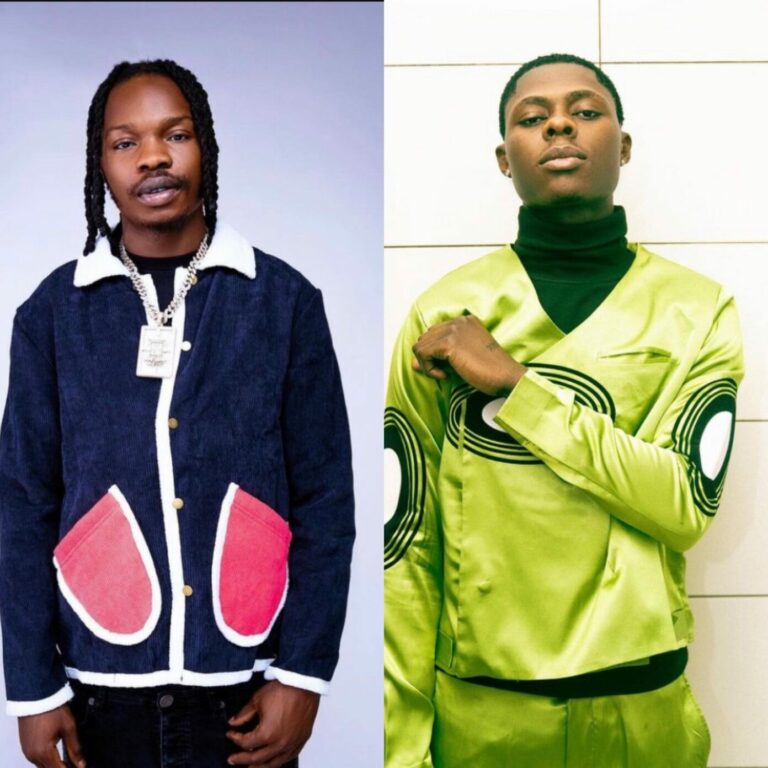
THE House of Representatives has summoned Azeez Fashola, known as Naira Marley, over the royalties of the late singer, Ilerioluwa Aloba, popularly known as Mohbad. 

In a letter of invitation dated October 26, signed by a clerk, Yusuf Ibrahim, a joint committee of the Green Chamber comprising committees on Youth, Justice and Legislative Compliance asked Naira Marley and the legal team of the late singer to appear before it on October 31.

This came after several appeals by Nigerians over the past few weeks for Naira Marley to pay Mohbad’s royalties. 

The legislators said the purpose of their invitation was to ensure the late singer’s family members receive the compensation that is rightfully theirs.

“The House Committees on Justice, Youth and Legislative Compliance invite you and the legal team of Mohbad for an interactive meeting session as regards a referral received being a resolution of the House of Representatives during their plenary session on Tuesday 26th September 2023 with respect to the circumstances surrounding the royalties and other benefits of Mohbad and to ascertain the level of your interaction with other relevant copyright organisations. Such information will guide the committee on further legislative action.   

“In view of the above, you are kindly invited for an interactive session with the chairman, Committee on Justice, Youth and Legislative Compliance,” part of the letter reads.

On Tuesday, September 12, the late singer, who had previously been signed to Naira Marley’s Marlian record label, died under mysterious circumstances.

Following his passing, Naira Marley, charged with accusing and harassing the deceased singer, was arrested by the Lagos State Police Command and taken into custody.

Apart from Naira Marley, the Command arrested a music promoter, Balogun Eletu, known as Sam Larry, who many accused of having a rift with the deceased.

However, Naira Marley and Sam Larry have sternly denied having a hand in Mohbad’s death.

On Wednesday, October 4, a magistrate court in Lagos ordered Naira Marley and Sam Larry to remain in Police detention.

They were asked to be held without bail for 30 days, pending the conclusion of the investigation.