Home Blog Page 760

NDLEA to deploy officers in 774 LGAs to tackle drug abuse

0

THE National Drug Law Enforcement Agency (NDLEA) said it would deploy its officers in all 774 local government areas of the country in 2024 to strengthen the war against drug abuse.

The agency said the action was to combat substance abuse and illicit drug trafficking, especially in local communities.

According to the NDLEA’s Director of Media and advocacy, Femi Babafemi, the agency’s chairman, Mohammed Marwa, stated this while responding to a request by the Kastina State Governor Dikko Radda for the deployment of more NDLEA officers to the state.

Rada requested for more NDLEA personnel to tame the problem of drug abuse and insecurity in his state. 

Marwa said with the agency’s staff strength expected to rise to 15,000 by the end of this year, the subsequent development would be to deploy them to the 774 LGAs. 

“We would need more support to succeed. I appreciate the work of the Katsina governor as the challenges are numerous in governing the state. But if insecurity is a problem and is fueled by drugs, I believe we have to collectively take it out of the security equation,” Marwa stated.

He added, “The drug menace is a huge issue and has destroyed the lives of our youths and communities. It is the public enemy number one, and especially the criminal aspect of it. 99 per cent of the criminals must first have access to drugs and be under the influence to perpetrate some of their acts.”

He noted that NDLEA seized over 6,668 tons of illicit substances in two years and assured that he would continue to clean the nation of drugs.

He said the other lap of the fight was drug demand reduction, which focuses on the prevention, treatment and aftercare of drug-dependent persons. 

Speaking earlier, Radda said he was at the agency as part of his government’s efforts to solve the problem of insecurity facing his state. 

“It is no longer news that the problem of insecurity has been ongoing for years, and insecurity is one of the major issues confronting Katsina state. 

“We decided to reach out to the NDLEA under the leadership of the chairman/chief executive to combine our efforts and synergise to mitigate the effect of insecurity in the state. We must get to the root of the problem, and the root of the problem is drug abuse by the teeming youths in the state,” the governor stated.

The ICIR reported that NDLEA arrested 8,561 drug traffickers between January and August 2023.

The anti-drug trafficking agency also seized 888,743 drugs and secured 2,224 convictions.

These figures were contained in data exclusively obtained by The ICIR from the agency’s spokesperson.

According to the data, 1,985 males and 239 females were convicted.

Military foils N1.2bn crude theft, arrests suspects

0

THE Defence Headquarters says troops of the Nigerian Army have uncovered and deactivated 63 illegal refining sites, recovered stolen products and apprehended 182 suspected oil thieves in two weeks.

The Director, Defence Media Operations, Edward Buba, a major general, disclosed this while briefing journalists on the operations of the Armed Forces of Nigeria across the country on Thursday, October 26, in Abuja.

Baba noted that the troops killed 73 terrorists, arrested 182, and rescued 68 hostages.

According to him, the troops identified and destroyed 63 illegal refining sites containing 15 dugout pits, 45 boats, 87 storage tanks, 128 cooking ovens, one pumping machine, four outboard engines and arrested 14 suspected oil thieves.

He added that the troops recovered 962,500 litres of stolen crude oil, 35,420 litres of illegally refined AGO, 38,450 litres of DPK, and 45,000 litres of PMS with an estimated value of N1, 212,046,140.

Other arms recovered were 119 assorted weapons and 1,537 assorted ammunitions.

Buba reassured Nigerians of the military’s sustained efforts to subdue terrorists’ activities.

He said, “The ongoing counter-terrorism and counter-insurgency operations have prevented these evil elements from accomplishing their strategic objectives. The military will continue to degrade their ability to carry out small-scale attacks intended to create panic in localities.”

Over the years, Nigeria has grappled with oil theft, resulting in the loss of lives, including security personnel, and the siphoning of multi-billion naira due to the menace.

Oil theft in Nigeria involves illegal bunkering, pipeline vandalism, and unauthorized siphoning of crude oil from production sites and pipelines. Criminal syndicates and local communities are often involved in these activities.

The ICIR on June 16, reported how Asari Dokubo accused the Nigerian military of massive oil theft in the Niger Delta.

The former Niger Delta militant leader stressed that ordinary Niger Deltan, often held accountable for such actions, lacked the resources and would to carry out such activities.

According to him, some powerful groups operating from Abuja were involved in the unprecedented oil theft over the past eight years, adding that they had met their match and would be sent to prison.

On August 18, 2023, the Nigeria Extractive Industries Transparency Initiative (NEITI) said Nigeria lost over 619.7 million barrels of crude oil valued at $46.16 billion or N16.25 trillion from 2009 to 2020.

This loss is from theft and sabotage, amounting to losing over 140,000 barrels of crude valued at $10.7 million daily.

According to the agency, the total revenue earnings to the government of $741.48 billion came from the oil and gas sector and N635.3 billion from the solid minerals sector between 1999-2020 and 2006-2020, respectively.

To curb the menace, the Federal House of Representatives, on October 19, resolved to introduce legislative instruments to halt crude oil theft it said had led to the loss of over one billion dollars in revenue.

Deputy Speaker of the Federal House of Representative Benjamin Kalu made this submission on October 19, 2023, during the presentation of the report of an ad-hoc committee investigating crude oil theft and loss of revenue from oil and gas at the end of the week’s legislative activities.

The deputy speaker further explained that oil theft accounted for the loss of over $1 billion, which represents a huge percentage of the national budget.

He stressed that the scourge of oil theft impeded the government’s ability to executive critical projects for Nigeria’s prosperity. 

[EXCLUSIVE]: Gunmen kill Police ASP accused of aiding crimes in Zamfara 

0

GUNMEN have killed a senior Police officer, Musa Sakajiki, accused of working with bandits to attack innocent people in his village and other parts of Zamfara State.

Sakajiki, a superintendent of Police (ASP), was transferred from Birnin Magaji to Kasuwar Daji community in the state a few years ago for the same allegation.

“He was forced to leave Kasuwar Daji after the horrific kidnap of the district head of the community, Muhammad Sarki Fada,” an impeccable source from the state told The ICIR Thursday morning.

Sakajiki was fingered as bandits’ informant after the district head was kidnapped.

He was not the only officer accused of working with criminals in the state.

Earlier, a Police inspector, Kabir Musa, was killed by a suspected outlawed ‘Yansakai’ (CJTF) group.

Musa was killed for alleged abbeting banditry in Kasuwar Daji and neighbouring villages in the state. 

He was a close friend of Musa Sakajiki, The ICIR gathered.

He worked at the Police outpost station in Nasarawar Mai-layi as a sergeant. 

Because of frequent allegations of abetting crime levelled against him, he was transferred to Birni Majagi before he was again transferred to Kasuwar Daji where he served for over five years.

After serving in Kasuwar Daji, he was redeployed to Kwara State.

Following his promotion to ASP II rank, he was transferred back to Zamfara State, where he served at Kuryar Madaro’s station in Kaura Namoda Local Government Area.

The ICIR reached out to spokesperson of the State Police Command, Yezid Abubakar, on Thursday to seek his reaction to the allegations.

Abubakar did not pick the calls put across his lines. He also did not respond to WhatsApp and text messages sent to him on the matter by our reporter.

On October 18, The ICIR reported youth defying the Army and Police while blocking the Gusau-Kaura Namoda highway at the Sakajiki community on Tuesday, October 17, over recurring bandit attacks, killings, abductions and other insecurity issues in the state.

The action stemmed from incessant bandit attacks and worsening insecurity in the state.

Days after the protest, and after the state residents had accused him of abandoning the state insecurity challenges to attend a political campaign rally in Imo State, the state Governor Dauda Lawal appointed sole administrators for the state’s Local Government Areas, as part of measures to restore peace to the state.

The state’s immediate past governor, Bello Matalle, lost re-election in March after battling unsuccessfully throughout his four years in office to secure his state.

In August, The ICIR reported how President Tinubu appointed him a Minister of State for Defence despite failure to protect his people.

Zamfara has faced attacks from terrorists, lost hundreds of residents to insecurity, and had thousands of others displaced.

In October 2022, this organisation reported how 30 schools remained shut after one year because of insecurity.

Buhari, PDP, others react to Supreme Court’s ruling affirming Tinubu’s presidency

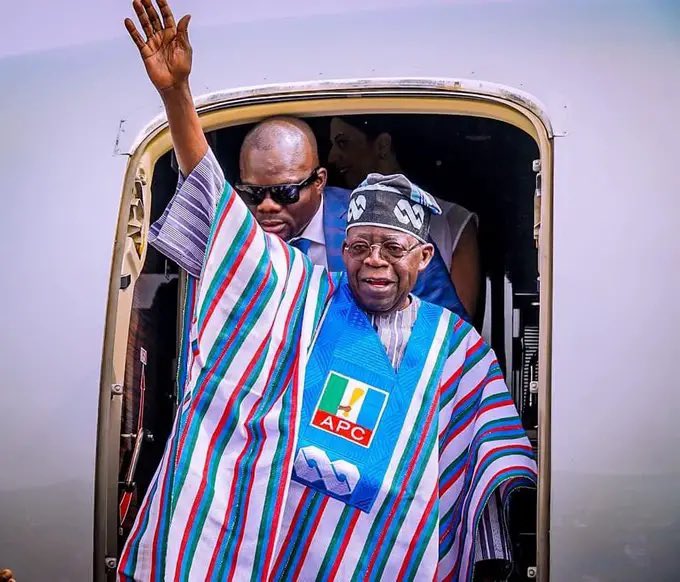
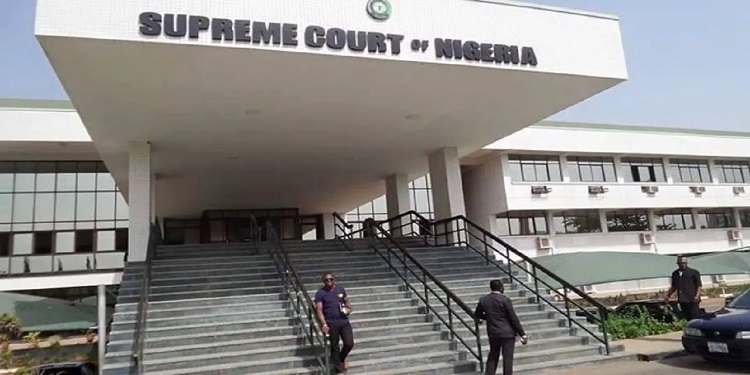
TODAY’S Supreme Court ruling affirming President Bola Tinubu’s victory has sparked a range of reactions among Nigeria’s political class and other citizens. 

The ruling followed months of legal battle challenging the legitimacy of Tinubu’s victory in the last presidential election, held on February 25, 2023.

While some political stakeholders and other Nigerians hailed the apex court’s decision, others argued that the judgment was flawed and expressed further loss of hope in the judiciary.

Ruling in a suit filed by the People’s Democratic Party’s (PDP) presidential candidate, Atiku Abubakar, and the Labour Party’s (LP) Peter Obi, the court, headed by a justice, Inyang Okoro, concluded that the election’s outcome was unaffected by the failure of the Independent National Electoral Commission (INEC) to transmit the results electronically. 

The Supreme Court ruled that Atiku Abubakar failed to provide alternative presidential election results to challenge Bola Tinubu’s victory and also denied Abubakar’s request to submit new evidence. It stated that the deadline for presenting evidence had passed and could not be extended.

The court also said the issue raised in Obi’s appeal, regarding Kashim Shettima’s nominations, had already been addressed and could not be revisited.

Reacting to the court judgment, former President Muhammadu Buhari welcomed the court’s decision to dismiss the appeal of the two opposition parties, stating that the ruling was a ‘reaffirmation of the will of the majority of the people against the determined will of a hard-fighting minority.

“Now that we have arrived at the last bus stop, after a tortuous eight-months of expensive legal journey, the nation deserves a break. The opposition has fought a good fight. Having now exhausted their rights as constitutionally allowed, they should take the hand of fellowship extended by the Tinubu/Shettima @OfficialAPCNg government. Let them allow the Government to run their administration and the people to enjoy the full benefits of the promises the All Progressives Congress (APC) made.”

Other members of the ruling party who have expressed satisfaction with the court’s judgment include the Chief of Staff, Femi Gbajabiamila; the party chairman, Abdullahi Ganduje; the Governor of Lagos state, Babajide Sanwo-Olu, and Abdullahi Sule of Nasarawa State.

The Minister of the Federal Capital Territory, Nyesom Wike, Tinubu’s cabinet member from the opposition PDP, also expressed delight, noting that the judgment paved the way for Tinubu to focus on governance.

Meanwhile, the PDP, in a statement by its spokesman Debo Ologunagba, described the ruling as disappointing.

According to the statement, the majority of Nigerians are alarmed, disappointed, and gravely concerned with the reasoning of the Supreme Court.

“The PDP asserts that it is indeed a sad commentary for our democracy that the Supreme Court failed to uphold the provisions of the law. Instead, it trashed the expectation of the majority of Nigerians who looked up to it as a temple of impartiality to deliver substantial justice in the matter having regard to the laws and facts of the case.”

The opposition party also accused the Supreme Court of condoning “serious issues of forgery, falsehood and perjury on the altar of technicalities.

It added that the judgment by the apex court has ‘evidently shaken’ the confidence of Nigerians in the judiciary, especially the Supreme Court, as the last hope of the common man.

In the same vein, Obi’s counsel, Kenneth Okonkwo, said although the decision was binding, he disagreed with the court ruling as the case of ‘forfeiture’ was not explained in detail.

He also noted that the Supreme Court agreed that the election was not credible.

Okonkwo, however, revealed that the case had been laid to rest as the court has the power to interpret the Constitution.

Nigerians react 

Some Nigerians have also taken to social media, particularly on X, to express mixed feelings over the court judgment.

A user, @MissPearls, said “Why do we waste time, energy, money and other valuable resources on elections? I really feel we should save all we spend on elections and allow the Supreme Court pick our leaders. It doesn’t make sense anymore!”

Also, a social media influencer, @PoojaMedia, said since the court has upheld Tinubu’s victory, it’s “time to focus on the real deal in the country and put this administration on their toes for the betterment of all.”

He noted that it’s time to ask questions, ask for accountability and put them under pressure.

“Call them out on economy, education, infrastructure, health and security issues,” he added.

Tinubu hails court ruling, seeks support of Nigerians

Tinubu, in a statement he signed, welcomed the court’s verdict.

He said the verdict had reinforced his commitment to serving all Nigerians, regardless of their political beliefs, tribes, and faiths. 

He also sought the support of Nigerians in advancing the country towards prosperity. 

“There is no doubt, with the profound judgment of today, that our electoral jurisprudence and constitutional democracy are further consolidated and embedded more indelibly in our national identity because of the diligence and undaunted professionalism of the honourable justices who presided over the matter.

“While the verdict of today has laid to rest the agitating discourse over who truly won the 2023 presidential election and met the constitutional requirements as laid out by law, I want to reiterate that my faith in our nation’s judiciary has never been shaken, not even for a moment, because I know that our hallowed courts of law will not fail to administer justice to all Nigerians in all matters and at all times,” the president said.

Police foil attack on emir’s palace in Zamfara

THE Police in Zamfara State thwarted a bandits’ attack on the Palace of Emir of Maru, Abubakar Maigari, in Maru local government area of the state on Tuesday, October 24,

The terrorists attacked the palace around 8:50 pm, shortly after the Emir returned from a trip.

Although the bandits killed one Mallam Ukashatu, a physically challenged (cripple) living beside the palace, some residents alleged that the Police officer stationed at the palace confronted the terrorists in a gun duel and managed to disperse them before the arrival of more officers.


Read Also:

The terrorists were also said to have abducted an IT officer of the emirate, Hassan Sani Marafa.

The ICIR’s efforts to obtain the details of the attack from the state Police Public Relations Officer (PPRO) Yazid Abubakar proved abortive, as he did not answer phone calls put across to his line.

He did not also respond to text messages sent to him.

Meanwhile, the Police PRO reportedly confirmed the incident to the state-based Smarts News.

He said the Police patrol team who swiftly responded to the distress call for reinforcement restored normalcy at the emirate and the Maru town.

The ICIR reports that bandits attacked Maru town and killed a Divisional Police Officer (DPO), Kazeem Raheem, one police sergeant, Rabiu Bagobiri; one vigilante member Shehu Chika and abducted several people from the town, on March 4, 2023.

Zamfara has faced attacks from terrorists, lost hundreds of residents to insecurity, and had thousands of others displaced.

The ICIR reports that nine students of Federal University Gusau, alongside other construction workers, are still in captivity after over 30 days of abduction from their hostels at Sabon Gida village.

Zamfara youths protest over insecurity, block highway 

In an attempt to show their displeasure over the protracted cases of insecurity, some youths in Zamfara on Tuesday, October 17, blocked the Gusau-Kaura Namoda highway at the Sakajiki community over recurring bandit attacks, killings, abductions and other insecurity issues in the state.

The ICIR gathered that bandits abducted women from the village after killing several others and setting many houses on fire. They also allegedly used a Police patrol vehicle (Hilux) they snatched to loot foodstuffs from the community.

Reacting to this, the community youth trooped to the highway at dawn, preventing motorists and other road users from moving for several hours. They barricaded the road with timber logs and stones.

The incessant attacks have led to many people deserting the community, with houses, schools, mosques, and shops spared by the bandits’ inferno shut by owners.

The ICIR also reported that the state, over the years, has battled incessant attacks from bandits and other terrorist groups.

The terrorists often target communities, raiding villages and abducting people for ransom. These activities have led to a huge loss of lives and property, displacing numerous families and causing widespread fear and instability in the state.

Zamfara had the second-highest number of deaths caused by non-state actors in the first quarter of 2022, with 327 cases.

The state’s immediate past governor, Bello Matalle, lost re-election in March after battling unsuccessfully throughout his four years in office to secure his state.

Despite this, The ICIR reported how President Bola Tinubu appointed him a Minister of State for Defence in August 2023 despite his failure to protect his people.

Supreme Court dismisses Atiku, Obi’s appeal, affirms Tinubu’s victory

0

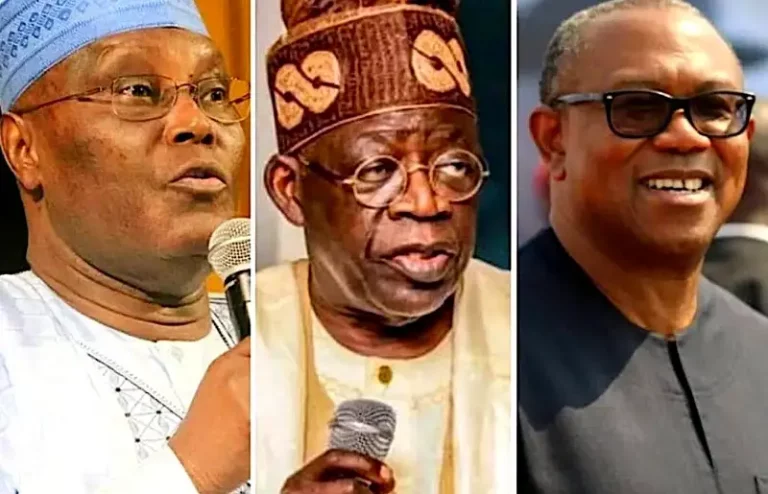
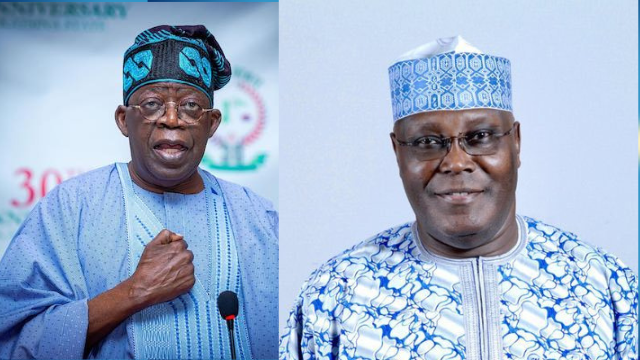
THE Supreme Court has dismissed the appeal filed by the Presidential candidate of the Peoples Democratic Party (PDP), Atiku Abubakar, and Peter Obi of the Labour Party (LP) against the victory of President Bola Tinubu in the February 25 election.

In a unanimous ruling, the court described both petitions as incompetent and lacking in merit.

Abubakar and Obi had sought the nullification of the Tinubu’s victory over alleged irregularities and the presentation of forged academic certificates by the President.

While addressing the first issue in Atiku’s appeal. the Supreme Court panel headed by Justice Inyang Okoro concluded that the election’s outcome was unaffected by the failure of the Independent National Electoral.Commission (INEC) to transmit the results electronically. Thus, the presidential election could not be declared void.

The apex court further concluded that Abubakar failed to present any alternative presidential election results that would have proved he had a majority of votes – more than what INEC announced for Tinubu.

On a motion filed by Abubakar seeking to file fresh evidence, specifically the Chicago State University (CSU) records of President Tinubu, the court said the time fixed for tendering of evidence had passed and couldn’t be extended.

“The 180 days imposed for hearing of election petitions is immutable and cannot be extended.

“The application, my lord, is hereby refused and dismissed”, Okoro stated.

The apex court said the motion could not be granted.

The Supreme Court further upheld the ruling of the Presidential Election Petition Court (PEPC) that a candidate does not need to get at least 25 per cent of votes in the Federal Capital Territory (FCT) to be declared as the country’s president.

Therefore, finding that all the appeals lacked substance, the Supreme Court decided the seven concerns that were reduced to a single point in Tinubu’s favour.

The court also dismissed the appeal filed by Obi challenging Tinubu’s victory.

In a decision read by Okoro, the panel summarily dismissed the appeal, stating that it raised many of the same arguments as Abubakar’s prior appeal, which the court had rejected.

The court declared in a unanimous decision that it had already addressed the only distinct issue in Obi’s appeal—the claim that Kashim Shettima was nominated for vice president and senator in the February election—and could not be reopened.

The Supreme Court had fixed Thursday, October 26, to deliver its final verdict on the petition filed by Abubakar and Obi, on Wednesday, October 25, after the Allied Peoples Movement (APM) petition was struck out.

The two petitions were challenging President Tinubu’s declaration as the winner of the last presidential election.

The ICIR reported that the Supreme Court reserved judgment in the petition by Abubakar, seeking to void Tinubu’s declaration as the winner of the February 25, 2023 presidential election.

A seven-man panel of the Supreme Court led by Okoro on Monday, October 23, disclosed the reservation of the judgment after taking arguments from lawyers in the matter.

Through his lawyers, led by Chris Uche, Abubakar argued at the court that Tinubu should be sacked from the 2023 presidential race.

According to Abubakar, Tinubu was not eligible to run for office at the time specified by the Constitution.

Uche requested that the Supreme Court apply the Constitution’s provisions to nullify Tinubu’s election results.

He claimed that Tinubu had forged certificates and lied under oath..

Atiku pleaded with the court to request a rerun between him and Tinubu if the President was not disqualified.

The former Vice President had accused Tinubu of forging certificates and lying on oath. However, Tinubu, through his lawyer, Wole Olanipekun, requested that the court dismiss the accusations.

Supreme Court also deferred ruling on Obi’s appeal after dismissing the APM appeal.

While adopting his written briefs, the lawyer to Obi and LP, Livy Uzoukwu, prayed to the court to allow the appeal and grant the reliefs sought.

THE Presidential Election Petition Court (PEPC) on Wednesday, September 6, affirmed President Tinubu’s victory as the February 25 presidential election winner.

Tinubu, who contested under the All Progressives Congress (APC), defeated his main contestants, Abubakar and Obi, to emerge victorious.

Obi, Atiku and APM disagreed with the result declared by INEC and challenged Tinubu’s victory in court.

PEPC Judgement

After months of rigorous hearing, the court on Wednesday, September 6, affirmed Tinubu as the duly elected President of Nigeria.

Delivering judgment on the matter, the court said Obi’s case lacked merit.

The court ruled that INEC could not be obliged to send election results to its IREV electronically after rejecting Obi and the LP’s claims of significant non-compliance with Electoral Act requirements.

The court determined that the LP and Obi’s claims of numerous anomalies, voter suppression, and corrupt practices lacked adequate evidence and were unpersuasive.

The judges threw away ten witnesses’ statements presented by LP and described them as inadmissible.

Regarding Obi’s case concerning Tinubu’s forfeiture of $460,000 to the United States government, the tribunal said it was a civil matter, not a criminal one.

The court also pointed out that the LP had not shown proof of Tinubu’s arrest, trial, penalties, or punishment for any crimes.

According to the PEPC, the allegations are not enough to invalidate the entire result of the poll.

On the controversial issue of 25 per cent in FCT, the court declared that no candidate needed to secure 25 per cent in FCT to be declared winner.

Additionally, it determined that President Tinubu was intellectually qualified to run for president, noting that deciding to disqualify him based only on his academic credentials was insufficient.

In Abubakar’s case, the court determined that he had not sufficiently shown that he received the majority of valid votes in his case.

The panel stated in the lead ruling, read by Moses Ugo, that PDP had neglected to specify the affected polling units, the locations where the ballot boxes were allegedly stolen, and the methods used to manipulate the BVAS machines.

The panel’s chair, Tsammani, also stated that the PDP’s claims of violence and vote box snatching lacked supporting videos and documentation, adding that these claims were criminal and required proof beyond a reasonable doubt.

In the APM case, bothering the double nomination against Shettima, the PEPC struck it out and described it as incompetent.

However, dissatisfied with the Tribunal judgement, Abubakar, Obi, and the APM headed to the Supreme Court.

Supreme Court upholds PEPC ruling on 25% votes in FCT

0

The Supreme Court has upheld the ruling of the Presidential Election Petition Court (PEPC) that a candidate does not need to get at least 25 per cent of votes in the Federal Capital Territory (FCT) to be Nigeria’s president.

The court made this known while delivering judgement on Thursday, October 26, 2023, in the case of the Peoples Democratic Party (PDP) and its candidate, Atiku Abubakar, against the All Progressives Congress (APC) and its candidate, Bola Tinubu.

The court’s panel led by Inyang Okoro said the appeal lacked merit.

Okoro affirmed the PEPC ruling, saying the FCT has no special status.

The court agreed with the appellate court that Abubakar’s 25 per cent claim lacked merit.

Abubakar and Labour Party’s (LP) flagbearer, Peter Obi, are challenging Tinubu’s victory in the February 2023 election.

They want the election results nullified on the ground that Tinubu did not secure 25 per cent of votes in the FCT.

The Appeal Court had ruled that the petition was immaterial.

Dissatisfied with the PEPC judgment, they took the matter to the apex court, seeking to topple Tinubu’s victory.

Supreme Court dismisses Atiku’s suit on evidence against Tinubu’s CSU certificate

0

THE Supreme Court has ruled on a motion filed by Atiku Abubakar seeking to file fresh evidence, specifically the Chicago State University (CSU) records of President Bola Tinubu.

A seven-man panel of the Supreme Court led by John Okoro said it would first determine the merit of the motion by Abubakar and the PDP to supply fresh evidence in the form of documents obtained from CSU on President Tinubu’s academic records.

The judge said that in determining the merit of the motion, the court will ascertain whether the nation’s law allows the court to accept fresh evidence at this stage.

Delivering judgement, Okoro said Okoro said the time fixed for tendering of evidence has passed and cannot be extended.

“The 180 days imposed for hearing of election petitions is immutable and cannot be extended.

“The application, my lord is hereby refused and dismissed”, Okoro stated.

The apex said the motion could not be granted.

On Monday, Abubakar lead counsel Chris Uche, urged the court to embrace the application and grant their request to tender new evidence from CSU against Tinubu.

He voiced that the matter involving Tinubu’s certificate is constitutional and weighty and urged the court to admit it.

He was, however, opposed by INEC lawyer Abubakar Mahmoud and the lead counsel to President Tinubu, Wole Olanipeku.

They both urged the court to dismiss Abubakar’s application.

The Independent National Electoral Commission (INEC) declared Bola Tinubu, who contested under the All Progressives Congress (APC), as the winner of the February 25 exercise. However, his opponents challenged his victory in court.

The Labour Party, its presidential candidate, Peter Obi, and the Peoples Democratic Party (PDP) and its flagbearer, Atiku Abubakar, are challenging Tinubu’s win.

Obi and Abubakar took their cases to the apex court after the Presidential Election Petition Tribunal (PEPT) upheld Tinubu’s victory.

Months after filing their appeals, all parties are gathered in the apex court for the final judgement.

The apex court is currently hearing other parts of the petition.

SSS releases former EFCC chair, Bawa after 4 months in detention

0

THE State Security Service (SSS) has released the former chairman of the Economic and Financial Crimes Commission (EFCC), Abdulrasheed Bawa, four months after detaining him.

The SSS confirmed Bawa’s release in a statement signed by Director Public Relations and Strategic Communications Peter Afunanya on its X account late Wednesday, October 25.

Recall that Bawa was arrested and detained by the SSS soon after he was suspended as the EFCC chairman by President Bola Tinubu.

The ICIR, in a report, spoke to some lawyers who criticised his continued detention without charges, describing it as illegal and a violation of his fundamental human rights.

The SSS, in June, invited Bawa over weighty allegations against him shortly after Tinubu suspended him.

The organisation kept him in custody until his release on Friday. He spent 134 days with the SSS.

Bawa was denied access to lawyers and family members for over a month after his detention by the secret Service.

A source close to him told our reporter that Bawa was not told the specific offence he committed, but there were speculations that the primary reason why he was removed and detained was due to the role he played in the attempt to scuttle the emergence of Tinubu as the candidate of the All Progressives Congress (APC) in the February 25 presidential poll.

Former President Muhammadu Buhari appointed Bawa in February 2021, making him the fifth substantive chairman of the Commission.

On October 12, Tinubu appointed Ola Olukoyede as the Bawa’s successor.

He is the first head of the EFCC from Nigeria’s South since its creation 20 years ago.

The ICIR reports that none of the previous five substantive Chairmen of the Commission finished his or her tenure. They were all sacked.

The Commission’s pioneer Chairman is the incumbent National Security Adviser, Nuhu Ribadu.

Stakeholders advocate higher taxation of sugar-sweetened beverages

0

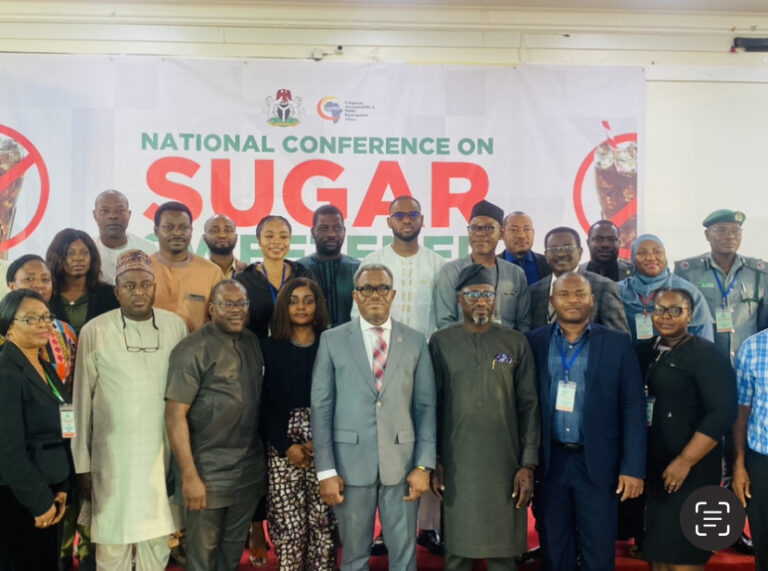
SOME stakeholders have urged the Federal Government to fully implement and increase taxation on sugar-sweetened beverages (SSBs) in line with the World Health Organisation’s (WHO) recommendations.

The stakeholders made the appeal at the National Conference on Sugar-Sweetened Beverages (SSBs), organised by the Corporate Accountability and Public Participation Africa (CAPPA) in collaboration with the Federal Ministry of Health, on Wednesday, October 25, in Abuja.

They also highlighted the effects of fully implementing the taxation of SSB.

SSB contains various forms of sugars, such as brown sugar, corn syrup, fructose, glucose, honey and include carbonated drinks, energy drinks, milk-based drinks, pre-sweetened teas, coffees and juice drinks. 

Speaking at the event, which was themed ‘Towards Sustainable Pathway for Pro-health Tax in Nigeria,’ the National Coordinator, of Non-Communicable Diseases Division of the Health Ministry, Deborah Bako Odoh noted that the implementation of the SSB was a strategic move to reduce various health risks.

The coordinator, who was represented by Amadi Dorathy, stressed that the Federal Government through her department was committed to providing leadership for the proper implementation of the SSB tax in the country.

Also, the keynote speaker, Gafar Alawode, explained that the lack of funding to tackle the health consequences of illnesses linked to the consumption of sugar-sweetened beverages (SSB) and other unhealthy lifestyle choices in Nigeria, should fuel the increase in the SSB tax. 

According to him, financing is one of the major challenges of Nigeria’s health system, which consequently results in a weakened healthcare system in the country.

“As long as we are having issues with financing, it will be extremely difficult to achieve standard healthcare,” the public financing expert said.


He, however, suggested raising and effectively enforcing the SSB tax. He also emphasised that the revenue generated from such taxation could enhance funding for the healthcare sector.

We are committed to attaining global best practice on NCDs tax – Minister

The Coordinating minister of Health and Social Welfare, Muhammad Ali Pate, while giving his remark, assured Nigerians that the administration of the President Bola Tinubu was committed to attaining the global best practice as recommended by the WHO. 

The Health Minister, who was also represented by the Director Public Health Department, Chukwuma Anyaike, noted that the commitment aligned with other government efforts in improving the public health of the Nigerian populace.

“NCDs remain the leading cause of death in Sub Saharan Africa. The World Health Organisation has endorsed a package of 16 evidence based interventions focusing on addressing NCD Risk Factors (SSB, harmful use of alcohol, physical inactivity, unhealthy diet).

“One of the interventions is the use of taxes on products that have a negative public health impact with the explicit goal of reducing consumption of such products. These taxes are considered to have the potential to reduce NCDs while advancing health equity.”

According to Pate, the introduction and sustenance of SSB tax in Nigeria will reduce excess consumption of SSBs and thus reduce the burden of NCDs. He noted that taxation on SSB had shown effective reduction on its consumption in countries where it was in force.

“Numerous studies have linked high consumption of SSB to an increased risk of tooth decay and cavities, weight gain, obesity, type 2 diabetes, cardiovascular diseases, chronic obstructive pulmonary disease, cancer and other NCDs,” he said.

The Minister also revealed that Nigeria was amongst the countries that contribute 77 per cent of the global 41 million deaths caused by NCDs.

Earlier in the event, the Executive Director of Corporate Accountability and Public Participation Africa (CAPPA), Akinbode Oluwafemi, said the mortality rate of NCDs were alarming as over 30 per cent of all deaths in Nigeria are linked to the diseases. 

According to him, Nigeria is burdened by avoidable health issues linked to urbanisation of diets and increasing normalization and overconsumption of sugar-sweetened beverages.

He also said the SSBs had gained much prominence as a public health concern that the Federal Government, through the 2021 Finance Act, introduced a N10/lite Excise Duty on SSBs. 

“The tax on SSBs is an evidence-based approach used globally to combat overconsumption of these products. Beyond its proven success rate in reducing the overconsumption of free sugar, the tax helps to reduce the burden on a nation’s health infrastructure, relieve overworked health personnel, and leaves room for innovative health practices towards overall improvement of a country’s health outcomes.”

The CAPPA boss further called on policymakers to immediately put together a policy framework that considers Nigeria’s priorities in rejuvenating and strengthening the nation’s health system. 

“The Federal Government, through all necessary mechanisms, must retain the SSB tax in the next fiscal policy and increase it to at least N50 while working with all stakeholders to find the most effective minimum tax rate that will help the government in achieving its goal,” he added.

In a report in April, The ICIR revealed how weakened regulation by the National Agency for Food, Drugs Administration and Control (NAFDAC) posed threats to Nigerians consuming sugar-sweetened beverages.