Home Blog Page 763

2024: N26trn budget estimates to rely more on borrowing, less on earnings

AMID dwindling revenue resources, the Federal Government’s N26 trillion proposed budget estimate for 2024 would largely be funded by borrowing,The ICIR findings have shown.

In the last five years, the government has been unable to meet up with 30 per cent cash backing for its budget, leading to several abandoned capital projects across the country.

Nigeria currently struggles to meet the Organisation of Petroleum Producing Countries (OPEC) 1.742 million barrels per day quota in oil production, with further concerns over its foreign exchange crisis, which makes the N26 trillion budget estimates an overtly ambitious one.

On October 16, Atiku Bagudu, the Minister of Planning and Budget, announced the N26 trillion budget proposal at the end of the Federal Executive Council (FEC) meeting in Abuja.

He also disclosed that the Council approved the 2024-2025 Medium-Term Expenditure Framework (MTEF) and Fiscal Strategy Papers (FSP), adding that the Executive was required by the Fiscal Responsibility Act to present to the National Assembly ahead of a budget presentation, a document which would provide the medium-term economic outlook for the economy.

Key assumptions of the budget

Bagudu said FEC made assumptions about the reference price for crude oil, which is $73.96 per barrel and an exchange rate of N700. Oil production was projected at an estimate of 1.78 million barrels/per day. The gross domestic growth rate was projected at 3.76 per cent.

He said the proposal was presented on the backdrop of the measures taken since June to restore macroeconomic stability, particularly the deregulation of petroleum prices, largely predicated on subsidy removal and the regulation of the foreign exchange market.

“The Council members acknowledged the Medium-Term Expenditure Framework, and it was agreed that we can go ahead to the next step of consultation and presentation to the National Assembly.”

Major concerns about the projected N26 trillion budget

According to the budget estimates, the Federal Government plans to spend 61.63 per cent on personnel and debt service costs.

The personnel and pension costs of N7.78 trillion and the debt service cost of N8.25 trillion make up N16.03 trillion out of the N26.01 trillion 2024 budget.

The government would spend more on debt servicing than it would spend on paying the salaries and pensions of its workers.

Also, the amount budgeted for personnel and pension costs is expected to increase from N5.87 trillion in 2023 to N7.78 trillion in the 2024 budget.

This shows an increase of N1.91 trillion or 32.54 per cent amid concerns for a reduction in the cost of governance.

.An analysis of the budget estimates showed a 30.74 per cent increase in debt service cost from N6.31 trillion in 2023 to N8.2 5 trillion in 2024.

Economists express worry

Economists have raised concerns over the ballooning debt owed by the country and how it worsens Nigeria’s health economically.

For a professor of financial economics at the University of Lagos, Ndubisi Nwokoma, the N700/$ benchmark is neither here nor there because of Nigeria’s overwhelming currency problems.

“We’re not meeting up with our OPEC (oil) quota, and that is largely where our funding is benchmarked. The GDP projections of 3.7 per cent is overtly ambitious. What we are doing now is about 2.5 per cent. Where are we going to have the projected growth from, with how poorly we’re doing economically?

The Lead Partner, Centre for Social Justice (CSJ), Eze Onyekpere, an experienced budget analyst, expressed concerns over the budget estimates.

“N26 trillion is overtly ambitious because we have not been able to implement fully our budget size up to 30 to 40 per cent in the last five years.

He added, “We must tie our expenditure to what we can afford. We must tie our budget to what we learn, and not what we can borrow and keep raising the country’s debt profile.”

Another analyst, Chuka Mbonu, also expressed worry over huge personnel costs and debt servicing in the budget.

“Personnel costs and debt servicing are taking almost 63 per cent of the budget. These are consumptions; a paltry sum is left for infrastructure and economic stimulation. Our politicians must adopt austerity measures and not buy up jeeps from outside the country and export jobs.
Drop in number of Supreme Court Justices raises concerns over election cases

0

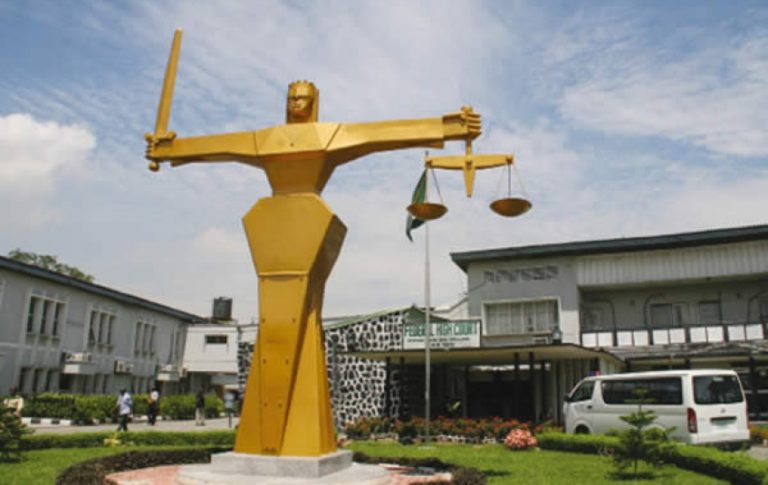
WITH the final verdicts on election petition cases expected soon, there are concerns over drop in number of Nigerian Supreme justices, coming short of the court’s full complement of 21 justices as stipulated in Nigeria’s Constitution.

The number had gone down to 11 after the retirement of a justice, Amina Augie, on September 22, 2023, and the death of Justice Chima Nweze on July 31, 2023.

The number will, however, further drop to 10, all-time low, by October 27, when another justice of the court, Musa Dattijo Muhammad, retires.

A statement by the Supreme Court’s Director of Press and Information, Festus Akande, on Sunday, October 22, said that Muhammad will clock the mandatory retirement age of 70 on October 27, adding that a valedictory court session to mark Muhammad’s exit from the bench would be held on Friday, 27 October.

The statement outlined the upcoming event, slated for 10 a.m. on Friday at the Supreme Court. Chief Justice Olukayode Ariwoola will be at the helm, and the customary tribute to Musa Dattijo, as well as the participation of other significant figures in the nation’s justice sector, is expected, as per the announcement.

Akande, while announcing the retirement, noted that Muhammad began his legal career in 1977 when he was called to the Nigerian Bar after obtaining a law degree from Ahmadu Bello University, Zaria, Kaduna State.

“Justice Musa Dattijo, who hails from Chanchaga Local Government Area of Niger State, was born on Tuesday, 27th October, 1953 in Minna. He attended Native Primary School, Minna, from 1960 to 1966 for his First School Leaving Certificate.

“Between 1967 and 1971, he was at Sheikh Sabbah College (now Sardauna Memorial Secondary School), Kaduna, from where he proceeded to Abdullahi Bayero College, Kano for a Pre-Degree programme which aided his immediate admission into the Faculty of Law at the Ahmadu Bello University, Zaria where he bagged a degree in Law in 1977.

According to him, Muhammad, who was called to the Nigerian Bar on July 2, 1977, sought admission at Warwick University in 1982 for an LLM Degree, which he obtained in 1983 after he had initially secured his first Degree in Law in Nigeria.

Muhammad took the oath of office as Justice of the Supreme Court on Tuesday, July 10, 2012. 

“His ascension to the Court of Appeal was more of a reward for hard work, inherent passion for his chosen profession, dedication to duty, and above all, a resolute application of the law in its true letters and words to all cases that came to him.

“He earned a well-deserved elevation to the Court of Appeal on 21st November 1998 from the Niger State Judiciary and served meritoriously at different Divisions,” the statement read.

The CJN had in June disclosed plans for 10 appointments aimed at reaching the complete roster of 21 justices for the court.

Similarly, on Thursday, October 19, the House of Representatives called on the Federal Government to appoint new judges for the Supreme Court to ensure effective justice delivery in the country.

The resolution of the House followed a motion of urgent public importance moved by Patrick Umoh, the lawmaker representing Ikot Ekpene Federal Constituency, Akwa Ibom State.

With Muhammad’s departure, the Supreme Court bench will be left with Olukayode Ariwoola (CJN), Kudirat Kekere-Ekun, Inyang Okoro, Uwani Abba-Aji, and Lawal Garba, Helen Ogunwumiju, Ibrahim Saulawa, Adamu Jauro, Tijjani Abubakar, and Emmanuel Agim.

FG’s pro-poor register questioned as 15m households set to access N1.25trn

THE Bola Tinubu administration’s initiative to commence a conditional cash transfer scheme as part of its pro-poor policy has come under severe criticism as prominent economists criticise the social safety register.

The Tinubu government had, on October 17, announced a conditional cash transfer scheme targeted at 15 million households who are to be paid N25,000 each for three months.

The expected fund to be disbursed under the scheme is N1.25trillion.

According to the World Bank, cash transfers are a popular strategy for reducing poverty and improving health and education outcomes in poor communities.

The idea is simple – money is provided to households either without stipulations, known as an unconditional cash transfer, or under specific behavioural conditions, known as a conditional cash transfer.

At the official ceremony to kick-start the scheme on October 17 in Abuja, Nigeria’s finance minister, Wale Edun, said the government was aware of Nigerians’ concerns about transparency in the scheme. He assured that a biometric audit was enforced for the cash payment.

“There is a concern when payments like this are made, and the audit trail is there. The mechanism that is to be used is the biometrics and to track every single person that has received such funds. Nigerians can be rest assured that this is an efficient and accountable way of providing succour to poor Nigerians,” Edun said.

Similarly, Minister of Humanitarian Affairs and Welfare Beta Edu, who spoke further on the project, confirmed that the first phase of the payment process had commenced.

“The verification process for the past three weeks has been ongoing, and the first phase of verified persons would receive their money.

“For Nigerians who don’t have an account or the National Identification Number, we are actually working to open accounts and money wallets for these persons so that they could have their monies sent equally to them,” she said.

At the event, the World Bank Country Director for Nigeria, Shubham Chaudhuri, assured its support.

“We are here to ensure that the systems are strong and that there is accountability,” he said.

Major concerns

On July 20, the Tinubu government questioned the previous social safety register of former President Mumammadu Buhari’s administration.

According to media reports, the National Economic Council (NEC) said the National Social Register compiled by the Muhammadu Buhari administration lacked integrity and had been discarded.

“We need to face the fact that we don’t have a credible national register,” Governor Charles Chukwuma Soludos, who briefed the media after the meeting, said.

FG confirms probing former social register

THE ICIR, in an earlier report, noted that the Federal Government confirmed it would open an investigation into the operations of the social intervention initiatives of past administrators.

Tinubu’s government confirmed this development on October 8 in a statement by the Humanitarian Ministry. It explained that the action was to give room for a detailed investigation into the programme’s operations in the last twelve months.

“It is imperative to inform Nigerians, particularly beneficiaries of the N-Power programme across the country, of the temporary suspension of the programme.

“This action has become necessary to give room for a detailed investigation into the operations of the N-Power in the last twelve months. The total number of persons enrolled on N-Power since inception to date is 960,000 people. Most of them have exited from NPower 1.0 and NPower 2.0 batch A and B.”

Experts criticising Tinubu’s initiative said it was confusing how the government had not come out with its findings on the previous probe and had flagged off a new scheme without explaining how the current register emerged.

“The government queried the register used by the past government but failed to tell us which register it’s currently working with and how it came about,” development economics Celestine Okeke said.

For a former Director-General of the National Agency for Poverty Eradication Programme, Magnus Kpakol, the government must have a way of measuring the results of the new scheme since money was borrowed to fund it.

“This kind of conditional cash transfer should be tied to a productivity programme that sustains and gives people a lifeline. It cannot be a short therapy; there must be a way of graduating people off the programme.

He suggested that the programme would not eradicate poverty unless the government is intentional about human capital development.

Another development economist, Chuka Mbonu, questioned the government’s social register.

“There is always a transparency concern. However, the programme is a good means of transferring wealth to the poor, but it must be done in a targeted way to achieve a long-lasting purpose. We can learn from countries such as South Africa, Brazil and some parts of Eastern Europe how it has become a pathway to proper poverty eradication.

Rema, Burna, Davido, top winners at first ever Trace awards (+full list)

0

NIGERIAN artistes, Divine Ikubor, professionally known as Rema, and David Adeleke known as Davido, have both won big at the 2023 Trace Awards.

The awards ceremony, held at the BK Arena in Kigali, Rwanda on Saturday, October 21, marked the inaugural celebration, celebrating African and Afro-inspired music and artistes while recognising their creativity and influence.

Hosted by Nigerian artiste Daniel Oyebanjo popularly known as Dbanj, and Angolan supermodel Maria Borges, the awards featured performances from African artistes, including Davido, Temi Alade, Mr Eazi, Diamond Platinumz, Black Sheriff, Kizz Daniel, among others.

Rema won the awards for ‘Best Global African Artiste’ and ‘Song of the Year’ for his hit record ‘Calm Down’ while Davido clinched the awards for ‘Best Male’ and ‘Best Collaboration’ for his song ‘Unavailable’ featuring Musa Keys off his recent album, ‘Timeless’.

Similarly, Burna Boy bagged the Album of the Year award for his ‘Love Damini’ project. Yemi Alade won the Best Music Video award, and Mr Eazi won the Change Maker award.

Full list of winners

Album of the Year

DNK – Aya Nakamura (France)

WINNER: Love Damini – Burna Boy (Nigeria)

Maverick – Kizz Daniel (Nigeria)

More Love, Less Ego – Wizkid (Nigeria)

Timeless – Davido (Nigeria)

Work of Art – Asake (Nigeria)

Song of the Year

“BKBN” – Soraia Ramos (Cape Verde)

“People” – Libianca (Cameroon)

“Suavemente” – Soolking (France)

“Encre” – Emma’a (Gabon)

“Sugarcane” – Camidoh (Ghana)

“Last Last” – Burna Boy (Nigeria)

“Rush” – Ayra Starr (Nigeria)

WINNER: “Calm Down” – Rema (Nigeria)

“Peru” – Fireboy DML (Nigeria) with Ed Sheeran (U.K.)

“Sete” – K.O. (South Africa)

“Cough” – Kizz Daniel (Nigeria)

“MORTEL 06” – Innoss’B (DRC)

Best Music Video

“2 Sugar” – Wizkid (Nigeria) feat. Ayra Starr (Nigeria)

WINNER: “Baddie” – Yemi Alade (Nigeria)

“Kpaflotage” – Suspect 95 (Ivory Coast)

“Loaded” – Tiwa Savage(Nigeria) & Asake (Nigeria)

“Ronda” – Blxckie (South Africa)

“Tombolo” – Kalash (Martinique)

Yatapita” – Diamond Platnumz (Tanzania)

Best Male

Asake (Nigeria)

Burna Boy (Nigeria)

WINNER: Davido (Nigeria)

Diamond Platnumz (Tanzania)

Didi B (Ivory Coast)

K.O. (South Africa)

Rema (Nigeria)

Best Female

Ayra Starr (Nigeria)

Josey (Ivory Coast)

Nadia Mukami (Kenya)

Soraia Ramos (Cape Verde)

Tiwa Savage (Nigeria)

WINNER: Viviane Chidid (Senegal)

Best Collaboration

“Many Ways” – BNXN (Nigeria) with Wizkid (Nigeria)

“Mine” – Show Dem Camp (Nigeria) with Oxlade (Nigeria)

“Peru” – Fireboy DML (Nigeria) with Ed Sheeran (U.K.)

“Second Sermon” – Black Sherif (Ghana) with Burna Boy (Nigeria)

“Sete” – K.O. (South Africa) with Young Stunna (South Africa), Blxckie (South Africa)

“Stamina” – Tiwa Savage with Ayra Starr (Nigeria) & Young Jonn (Nigeria)

“Trumpet” – Olamide (Nigeria) with Ckay (Nigeria)

WINNER: “Unavailable” – Davido (Nigeria) with Musa Keys (South Africa)

Best Newcomer

Azawi (Uganda)

Krys M (Cameroon)

Libianca (Cameroon)

Nissi (Nigeria)

Odumodublvck (Nigeria)

Pabi Cooper (South Africa)

WINNER: Roseline Layo (Ivory Coast)

Best D.J.

Danni Gato (Cape Verde)

DJ BDK (Ivory Coast)

DJ Illans (France)

DJ Spinall (Nigeria)

WINNER: Michael Brun (Haiti)

Uncle Waffles (Swaziland)

Best Producer

DJ Maphorisa (South Africa)

Juls (Ghana)

Kabza de Small (South Africa)

Kel-P (Nigeria)

WINNER: Tam Sir (Ivory Coast)

Best Gospel Artist

Benjamin Dube (South Africa)

Janet Otieno (Kenya)

WINNER: KS Bloom (Ivory Coast)

Levixone (Uganda)

Moses Bliss (Nigeria)

Best Live

Burna Boy (Nigeria)

WINNER: Fally Ipupa (DRC)

Musa Keys (South Africa)

The Compozers (Ghana)

Wizkid (Nigeria)

Yemi Alade (Nigeria)

Best Dancer

WINNER: Robot Boii (South Africa)

Tayc (France)

Uganda Ghetto Kids (Uganda)

Yemi Alade (Nigeria)

Zuchu (Tanzania)

Best Artist Africa – Anglophone

WINNER: Asake (Nigeria)

Ayra Starr (Nigeria)

Black Sherif (Ghana)

Davido (Nigeria)

Diamond Platnumz (Tanzania)

Fireboy DML (Nigeria)

Best Artist Africa – Francophone

WINNER: Didi B (Ivory Coast)

Emma’a (Gabon)

Fally Ipupa (DRC)

KO-C (Cameroon)

Locko (Cameroon)

Serge Beynaud (Ivory Coast)

Viviane Chidid (Senegal)

Best Artist Africa – Lusophone

Gerilson Insrael (Angola)

WINNER: Lisandro Cuxi (Cape Verde)

Perola (Angola)

Plutonio (Mozambique)

Soraia Ramos (Cape Verde)

Best Artist – Rwanda

Ariel Wayz (Rwanda)

WINNER: Bruce Melodie (Rwanda)

Bwiza (Rwanda)

Chriss Eazy (Rwanda)

Kenny Sol (Rwanda)

Best Artist – East Africa

Bruce Melodie (Rwanda)

WINNER: Diamond Platnumz (Tanzania)

Zuchu (Tanzania)

Khaligraph (Kenya)

Nadia Mukani (Kenya)

Azawi (Uganda)

Best Artist – France & Belgium

Aya Nakamura (France)

Booba (France)

Nihno (France)

Ronisia (France)

Soolking (France)

WINNER: Tayc (France)

Best Artist – UK

WINNER: Central Cee (U.K.)

Headie One (U.K.)

Ms Banks (U.K.)

Raye (U.K.)

Stormzy (U.K.)

Best Artist – The Caribbean

Admiral T (Guadeloupe)

Bamby (French Guiana)

Kalash (Martinique)

Maureen (Martinique)

Popcaan (Jamaica)

Princess Lover (Martinique)

WINNER: Rutshelle Guillaume (Haiti)

Shenseea (Jamaica)

Best Artist – Indian Ocean

Donovan BTS (Mauritius)

GaEi (Madagascar)

WINNER: Goulam (Comoros)

Mik’l (Reunion)

Sega el (Reunion)

Terrell Elymoor (Mayotte)

Best Artist – Brazil

Djonga (Brazil)

Iza (Brazil)

Leo Santana (Brazil)

WINNER: Ludmilla (Brazil)

Luedji Luna (Brazil)

Best Artist – North Africa

Amira Zouhair (Morocco)

Artmasta (Tunisia)

WINNER: Dystinct (Morocco)

El Grande Toto (Morocco)

Kader Japonais (Algeria)

Raja Meziane (Algeria)

Change Maker

WINNER: Mr Eazi

Zamfara governor appoints sole administrators, secretaries for 14 LGAs

0

ZAMFARA State Governor Dauda Lawal, has approved the appointment of Sole Administrators for each of the 14 Local Government Areas (LGAs).

The Sole Administrators were appointed alongside Secretaries and Supervisory Councillors across the 14 LGAs of the state.

A statement by the Governor’s spokesperson, Sulaiman Bala Idris, on Friday, October 20 2023, stated that the appointed Sole Administrators were selected based on their past achievements and track records.

He said: “The appointments are Bashar Musa Anka, sole administrator for the Anka local government area; Sa’idu Danbala, sole administrator for Bakura local government; Isiyaka Ibrahim (Majasirdin Birnin Magaji), sole administrator for Birnin Magaji local government; Nasiru Muhammad, sole administrator for Bukkuyum local government; Nura Umar Bungudu, sole administrator for Bungudu local government; Aminu Nuhu, sole administrator for Gummi local government area; Yahaya Garba, sole administrator for Gusau local government.”

Others are Kasimu Sani Kaura, sole administrator for Kauran Namoda local government; Yahaya Giwa Maradun, sole administrator for Maradun local government area; Yusuf Sani Bindi, sole administrator for Maru local government; Lukman Jafar, sole administrator for Talatan Mafara local government; Aliyu Adamu Barmo, sole administrator for Tsafe local government; Junaidu Muhammad Barade, sole administrator for Shinkafi local government area; and Aminu Atiku Zurmi, sole administrator for Zurmi local government area.

The appointments, according to the statement, have an initial duration of six months and are contingent on confirmation by the Zamfara State House of Assembly.

“However, the Secretaries of the local government areas and Supervisory Councillors need not be confirmed by the State House of Assembly,” the statement added.

Unilever stops sale of home care products, posts N1.09bn loss in Q3

0

UNILEVER Nigeria Plc has stopped production and sales of its home care brands in Nigeria.

The company disclosed this in its unaudited interim financial statements released on Friday, October 20, for the nine months that ended September 30, 2023,

The decision followed the company’s announcement on March 17, 2023, to exit the home care and skin cleansing category – OMO, Sunlight and Lux brands – in Nigeria.

“The production for home care category ceased in June 2023, and sales ceased in September 2023. The financial reporting is still being assessed and will be fully accounted for by year-end reporting.

“The production and sale for skin cleansing category has been extended to December 2023,” Unilever said.

In April, The ICIR reported that the company was “exiting the home care and skin cleansing categories to concentrate on higher growth opportunities.”

A fast-growing consumer goods (FMCG) firm, Unilever reported N1.09 billion profit after tax (PAT) loss in the third quarter (Q3) from N2.25 billion loss reported in Q3 2023.

The negative performance resulted from the company’s borrowing cost, which widened to N1.03 billion in Q3 2023 from N328.89 million in Q3 2022 on the heels of the Central Bank of Nigeria (CBN) exchange rate unification.

The impact of the naira devaluation showed Unilever records a significant jump in revaluation loss of N6.297 billion in the quarter under review from N406.69 million in Q3 2022 and also posted a considerable restructuring cost of N3.27 billion compared to N519.69 million in Q3 2022.

According to Unilever, the revaluation loss arose from foreign currencies-denominated balances regarding trade loans. At the same time, the restructuring cost was raw and packaging materials written off due to the stoppage of production in the home care category and associated redundancy cost.

A further look at the nine-month interim report showed that the company reported a N389.30 million profit before tax (PBT); however, a corporate income tax obligation of N1.48 billion dragged the company’s bottom-line performance into the negative territory.

Inflation, foreign exchange and other macroeconomic challenges are taking a toll on business operating profit and performance.

The director of the Centre for the Promotion of Private Enterprise (CPPE), Muda Yusuf, said, “Nigeria’s exchange rate policy settings are stifling business activities, investment and growth, and amplifying macroeconomic risks.”

Obi of Onitsha resigns as Unilever’s chairman

The company also disclosed on Friday that it had considered and approved the resignation of the Obi of Onitsha, Nnaemeka Achebe, as a non-executive Director and Chairman of the Board, effective December 31, 2023.

Unilever said, “The Board of Directors wishes His Royal Majesty all the very best in his retirement and would like to express their sincere gratitude to him for his leadership and many valuable contributions he brought to the Board over the past two decades since his appointment in March 2003.

“His Royal Majesty’s replacement on the Board of Directors of Unilever Nigeria will be announced in due course.”

Again, INEC warns against fake news ahead of Kogi, Imo, Bayelsa elections

0

AHEAD of the governorship elections in Imo, Bayelsa, and Kogi on November 11, the Independent National Electoral Commission (INEC), has issued a warning to political parties telling them to stop circulating fake news.

This warning was contained in a statement issued by Rotimi Oyekanmi, the Chief Press Secretary to the INEC chairman.

Oyekanmi, also informed that the statement was in response to the Social Democratic Party’s (SDP) claim that INEC was manipulating the state governorship election by setting up Bimodal Voter Accreditation System (BVAS) devices at the Government House, Lokoja.

‘The attention of INEC has been drawn to a statement signed by ID Ijele, the Director of New Media of the Social Democratic Party (SDP) of the governorship campaign team.

‘The statement alleged that three staff of INEC are right now maliciously reconfiguring the BVAS machines in the Government House, Lokoja, with the intention of manipulating the November 11 governorship election in a part of the state in favour of a candidate’. Part of the statement read.

Oyekanmi stated that it was false narrative as the three individuals in question are not currently in the aforementioned state and are not connected to the BVAS machine configuration.

‘Nicholas Ocholi is on his duty post in our Ondo State office in Akure. Ibrahim Egbunu is attending to a very close family member hospitalised in Abuja, Mohammed Adara retired last year and is no longer a staff of the commission.’ Oyekanmi said.

In further clarification, Onyekanmi said teams sent from the national headquarters in Abuja configured the BVAS concurrently and solely at the INEC offices in Bayelsa, Imo, and Kogi.

While advising the public to disregard the story as fake news, he stated that the commission urged that political parties refrain from spreading false information of this sort forthwith.

Senate moves to mandate electronic transmission of result, diaspora voting, others

0

THE Nigerian Senate said plans are underway to amend the 2022 Electoral Act to make electronic transmission of results mandatory, allow uploading of polling unit-level results, and incorporate result sheets used at different levels of result collation.

The amendment, according to the Senate, will allow for diaspora voting, at least for the presidential elections.

In a communiqué issued at the end of its retreat in Ikot Ikpene, Akwa-Ibom state on Saturday, October 22, the Senate resolved to amend the electoral act ahead of the 2027 General election.

The Senate emphasized the need to unbundle the Independent National Electoral Commission (INEC) to enhance its efficiency and effectiveness in planning and conducting subsequent elections.

The communiqué read in part: “Relating to the use of technology in elections, remove the ambiguity evident in Section 64 of the EA22. Also, make electronic transmission of results mandatory from the next general elections in 2027, including the uploading of polling unit-level results and result sheets used at different levels of result collation.

“Introduce diaspora voting, at least for presidential elections, to enable citizens to vote, especially those on essential service abroad, such as military, paramilitary, and other security personnel abroad, Embassy staff, and other citizens.

“Relating to political parties; stipulate sanctions for failure to submit the register of party members not later than 30 days before the date of party primaries, congresses, or conventions in relation to Section 77(3) EA22, which the political parties have observed in the breach in the 2023 elections without penalty.”

The Senate also stressed that it was time to develop and enact a comprehensive national security strategy that outlines the nation’s security objectives, threats, and policy priorities.

It further added that the strategy will help in addressing the root causes of terrorism/banditry, which is often driven by poverty, inequality, and a lack of opportunity.

The Senate also moved to promote community policing and engagement to identify and prevent terrorist attacks, noting that the government should work with civil society organisations and local/traditional communities to identify and address security concerns.”

9 Nollywood movies made 54.4 million box office sales in 7 days

BETWEEN October 13 and 19, 2023, nine Nollywood movies, which made the top 20 Nigeria box office list, pulled a total of N54.4 million in box office sales.

According to the Cinema Association of Nigeria, this amount is 43.7 per cent of the total N96.6 million generated in box office sales by the top 20 movies on the list. 

Also, the total amount pulled by the 20 movies on the weekend alone is N62.3 million of which the Nollywood movies had N34 million.

The most watched movie within one week was Nigerian Comedian, Ayodeji Maku’s, popularly called AY movie-‘Merry Men 3’, which pulled a total of N33.4 million in box sales.

Nollywood Movies Amount generated in Naira Position
Merry Men 3 33,414,483 1
Something Like Gold 11,543,025 4
Weekend To Forget 6,204,225 5
Bag of Trouble 948,098 9
The Scar 854,950 10
Kesari 743,000 12
Charlie and The Boys 367,400 15
Orisa 223,000 17
Kanaani 97,900 19
Total 54,396,081  
List of Nigerian movies that made the top 20 in one week-Dat from Cinema Association of Nigeria

It was followed by ‘The Expendables 4’ and ‘The Creator’ pulling N14.6 million and N13.4 million within seven days respectively.

About the movies 

Merry Men 3

Directed by Moses Inwang and produced by Darlington Abuda, ‘Merry Men 3’ finally hit the cinemas on October 13, 2023. The film stars Nigerian actors and actresses including Ramsey Nouah, William Uchemba, Chidi Mokeme, Sam Dede, Francis Onwochei, Ufoma McDermott, Nadia Buari, Iyabo Ojo Caroline Hutchings, among others. 

Merry Men 3

The movie tells a story how seeking vengeance against his friends for abandoning him in Russia, Dafe (Chidi Mokeme) returns to Nigeria and exacts revenge by taking the lives of the gang members on Ayo’s (Ramsey Nuoah) wedding day. Also, upon learning of his mother’s death, he resolves to expose corrupt politicians. In his relentless pursuit of justice, he orchestrates a scheme to frame Ayo and the gang for his crimes.

Something Like Gold

Released on September 29, 2023, the film features casts including Segun Arinze, Teniola Aladese, Timini Egbuson, Mercy Johnson, Sandra Okunzuwa, Kunke Remi, and Brother (Borda) Shaggi, among others.

In the week it was released, it was the most-watched Nollywood film in cinemas. Something Like Gold tells the story of a young lady, Tamara (Sandra Okunzuwa) whose life got shattered after her father’s wealth was seized and her fiancé left her at the altar. She had to start afresh but with the help of her maid, Mayowa (played by Mercy Johnson). The film was directed by Kayode Kasum.

A Weekend to Forget

Another Nollywood film topping the Box office chart is, ‘A Weekend to Forget’ . The film was directed by Damola Ademola, staring Stan Nze, Daniel Etim-Effiong, Uche Montana, Ini Dima-Okojie, Akin Lewis, former Big Brother Naija housemates, Elozonam Ogbolu, Erica Nlewedim and Neo Akpofure as casts.

A weekend to forget image

The film which premiered on September 22, 2023, narrates the tale of seven friends embarking on a weekend getaway. The joyous reunion takes a dark turn when one of them is tragically murdered, leaving the group on a mission to uncover the killer’s identity and clear their names.


READ ALSO:


Other movies that topped the Box office chart in 2023 include, Bag of Trouble, a comedy movie directed and written by Micheal Chimex Onwunali and released on September 1, The Scar, released on October, 6 and directed by Robert Peters, an action fantasy film, Kesari, the king, directed by Tope Adebayo and Ibrahim Yekini and released on August 25.

Also, Charlie and the Boys, released on September 29; Orisa, released on July 21 and Kanaani, released on September 15, made the box office top charts in 2023.

Tinubu grants waiver of ‘No Work No Pay’ for resident doctors

0

PRESIDENT Bola Tinubu has approved the waiver of the “No Work, No Pay” order instituted against striking members of the National Association of Resident Doctors (NARD).

The order was imposed on NARD on August 1, 2023, following the commencement of their industrial action, which began on July 26, 2023

A statement signed on Friday, October 20, by the President’s Special Adviser on Media and Publicity, Ajuri Ngelale, revealed that the waiver “will allow for the members of the NARD to receive the salaries which were previously withheld during the 17-day strike action.”

The statement, which was titled ‘President Tinubu approves waiver of the no work, no pay order on resident doctors,’ stated that the development was “in view of the faithful implementation of terms which were agreed upon during the fruitful deliberations between the Resident Doctors and the Federal Government of Nigeria.”

The ICIR reported that the resident doctors had, on Wednesday, July 26, embarked on strike to air their grievances over the Federal Government’s failure to meet their demands. The strike followed the expiration of a two-week ultimatum they issued the government earlier.

After several engagements with the Federal Government, NARD directed its members to resume work after it had suspended the two-week-old strike.

Meanwhile, the Office of the Accountant General of the Federation was, as a result of the policy, directed to withhold all salaries accrued by striking NARD members during the 17-day action, according to a letter dated August 1.

The letter, which was signed by the permanent secretary of the Accountant General office, Olufunso Adebiyi and titled: “Re: Incessant strike action by Nigerian Association of Resident Doctors (NARD): Implementation of no work, no pay, policy of the federal government” was sent to the federal ministry of health to implement the policy.

“I am directed to bring to your notice the provisions of circular No.58598/S.1/1/182 dated June 22, 2016, on no work, no pay and request for the implementation of the circular to serve as a deterrent to other health workers,” the letter reads.

“I am further directed to request your good office to stop the salaries of all striking resident doctors with effect from July 26, 2023,” the letter read.

However, Tinubu, invoking the Principle of the Presidential Prerogative of Mercy on Friday, directed the grant of the waiver with a mandatory requirement that the Federal Ministry of Health and Social Welfare and the Federal Ministry of Labour and Employment must secure a ‘Document of Understanding’ establishing that this exceptional waiver granted by the President will be the last one to be granted to the National Association of Resident Doctors and all other Health Sector Unions.