Home Blog Page 766

Nigeria’s headline inflation defies FG’s palliatives, hits 18-year high at 26.72%

NIGERIA’s headline inflation rose to 26.72 per cent in September 2023 from 25.80 per cent in August, despite the palliatives provided by the Federal Government to cushion the effects of economic hardship on the citizens.

The National Bureau of Statistics (NBS) disclosed the figure in its latest report on ‘Consumer Price Index (CPI) and Inflation Report September’ released on Monday, October 16.

The September headline inflation is the second-highest rate recorded since the country reported 28.2 per cent in July 2005, checks by The ICIR showed.

The September inflation rate represents a 0.92 per cent increase compared to the 25.80 per cent reported in August.

Compared to the 20.77 per cent rate the statistical office reported in September 2022, inflationary pressure increased by 5.94 per cent.

The upward movement reflects the food inflation rate, which rose by 30.64 per cent in the review month compared to 23.34 per cent in September 2022.

The rise in food inflation was caused by increased prices of oil and fat, bread and cereals, potatoes, yam, tubers, fish, fruit, meat and others, NBS stated.

A critical economic indicator, CPI, measures the average change over time in the prices of goods and services consumed by people for day-to-day living.

Surging inflation defies FG’s palliative

Inflation has continued to surge in record times despite the palliatives to cushion the economic hardship of the masses, worsened by fuel subsidy removal and exchange rate unification by the new administration of President Bola Tinubu.

The palliatives include the conditional cash transfer of N25,000 to households, N35,000 wage increment for workers, N75 billion to strengthen the manufacturing sector, and N125 billion to empower the micro, small and medium enterprises.

There is also N5 billion approved by the government for each state and the federal capital territory (FCT) to address the lingering hardship of the masses, among other palliatives.

However, the continued rise in inflation directs the argument that the various palliatives have yet to impact households, businesses and the broader economy.

Also, the September inflation rate mirrors the slowdown in business activity due to rising input costs and other skyrocketing economic goods consumers paid for.

Businesses to go under

Some economists who spoke to The ICIR expressed concerns over the impact of the rise on businesses and the cost of money.

“Many businesses will go under as a result of this development. Lending would shrink, and businesses will pay higher costs to access facilities from banks. Manufacturers would also face more difficulties in accessing funds for the raw material inputs for production because of the higher cost of funds,” a development economist, Celestine Okeke, said.

Another development economist, Kalu Aja, said the major driver of the rising inflation is food inflation and high insecurity in the food belt states.

“We need to get down food inflation seriously and address insecurity in the food belt states across the country. This would help inflation to go down. The CBN rates are not enough for now; the real cause must be addressed.

In reacting to the development, the Chief Executive Officer of the Financial Derivatives, Bismarck Rewane, said the government needed to address core inflation triggers, which comprise logistics costs and the high cost of diesel in transporting goods and services.

“We’ve reached the level of intensifying concession of the roads and even the airports to lessen logistics costs of transporting goods and services. The food inflation, which is the main trigger, is high and largely caused by logistics and high energy costs,” Rewane said.

Intense cost pressures business activity

According to the Stanbic IBTC Bank in its September Purchasing Managers’ Index (PMI), businesses operating in the Nigerian private sector have remained under pressure in September.

Although the PMI posted at 51.1 points in September, up from 50.2 in August, Stanbic IBTC said it was still only just above the 50.0 ‘no-change mark,’ which is the point business activity is said to have contracted.

Commenting on business activity in September, the head of Equity Research West Africa at Stanbic IBTC, Muyiwa Oni, said, “Nigerian private sector business activity expanded slightly in September, a reversal from the contraction in August, reflecting a slight improvement business activity but still showing price pressure strain on businesses.

“The headline PMI increased to 51.1 in September, from 50.2 in August, which was the lowest point over the past five months.”

Before the September print, the PMI had declined consecutively over the past three months as prices remained elevated, with input and purchase prices remaining at period highs.

“Input prices increased materially across the major sectors covered, with inflationary pressures most pronounced in wholesale and retail and manufacturing,” Oni added.

Friendly: Nigeria end 15-match winless streak, defeats Mozambique 3-2

0

THE Nigerian men’s senior football team, Super Eagles, ended their 15 consecutive international friendly matches winless streak after defeating 10-man Mozambique, 3-2, at the Estadio Municipal De Portimão in Portugal, Monday evening.

The Super Eagles, who played out a 2-2 draw against Saudi Arabia last Friday, began their encounter against Mozambique with a sloppy start, which gave their opponent the early lead after Geny Catamo tapped in the ball past Nigeria’s goalkeeper Francis Uzoho into the net.

Mozambique’s early lead in the seventh minute evoked more determination in the Black Mambas as they mounted pressure in search of another goal to double the lead with a series of exchanged strings of passes to dominate possessions in the half of the Super Eagles.

But their lead was short-lived after Nigeria’s Terem Moff restored parity in the 19 minutes to ignite his team’s hope of tasting a first win after losing nine and picking six draws since claiming a 1-0 victory over Egypt in March 2019 in their past international friendly matches.

Eleven minutes later, Nigeria doubled the lead after Frank Onyeka slotted the ball into the net through a classic link with Dele-Bashiru.

In the 39 minutes, Mozambique’s Edmilson Dove was given a straight red after a rough foul on Eagles’ midfielder Joe Aribo.

Nigeria leveraged their opponent’s numerical disadvantage after Moses Simon extended the goal to three shortly before the first half.

Ten minutes into the resumption of the second half, Mozambique re-ignited their search for a goal despite being one man down as Faisal Abdul Bengal reduced the deficit after Geny Catamo assisted him.

The second goal conceded by Nigeria’s goalkeeper Francis Uzoho further raised concerns about his capacity as a capable goalie for the Eagles.

The International friendly matches are part of preparations for the 2023 African Cup of Nations, AFCON billed to be hosted by Cote d’Ivoire in January 2023.

Abbo accuses Akpabio of plotting his sack from Senate

0

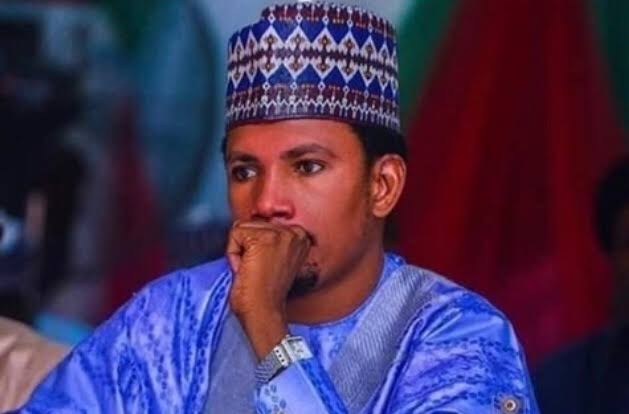
THE sacked Adamawa Senator Ishaku Abbo, has accused Senate President Godswill Akpabio of orchestrating his removal from the 10th Senate.

Abbo, a member of the Progressives Congress (APC), made this allegation on Monday, October 16, while speaking with journalists shortly after his removal by the Court of Appeal.

In what he described as a targeted move against him and four colleagues, Abbo stated that his removal was retaliation for opposing Akpabio’s Senate Presidency aspiration.

The ICIR reported that the Court of Appeal in Abuja sacked Abbo, who represented Adamawa North Senatorial District. In its ruling on Monday, October 16, the Court declared Amos Yohannah of the People’s Democratic Party (PDP) as the winner of the senatorial election.

INEC initially declared Abbo as senator-elect in February 2023, but Yohanna challenged the decision at the Election Petition Tribunal. 

Despite dismissing Yohanna’s plea, Abbo, represented by his lawyer Johnson Usman, appealed the tribunal’s ruling through appeal number CA/YL/EP/AD/SEN/06/2023 at the Appeal Court.

Reacting to the Appeal Court’s ruling, Abbo said four other senators, including Orji Uzor Kalu, representing Abia North, were the next targets for removal from the Senate.

He said: “I have it from a reliable source that myself and four other senators within the fold of the ruling All Progressives Congress (APC) will be removed from the Senate through rulings from the courts, all because of working against the emergence of Akpabio as President of the 10th Senate.

“I won’t mention the names of all the four other ones targeted, but the next in line is Senator Orji Uzor Kalu.”

He expressed disbelief that the Appeal Court overturned his result despite securing a victory with a substantial margin of over 11,000 votes against Yohanna in the election.

“The court judgment is strange, and the judiciary needs to please remain the last hope of the common man,” Abbo added.

Appeal Court sacks Ishaku Abbo as senator

0

THE Court of Appeal in Abuja has sacked Elisha Ishaku Abbo of the All Progressives Congress (APC) as the Senator representing Adamawa North Senatorial District.

In its ruling on Monday, October 15, the Court declared Amos Yohannah of the People’s Democratic Party (PDP) as the winner of the senatorial election.

The three-member panel presided over by Justice C.E. Nwosu-Iheme ordered the Independent National Electoral Commission (INEC) to withdraw the Certificate of Return issued to Abbo and give it to Yohanna Kumai. 

INEC declared Abbo as senator-elect in February 2023, while Yohanna came second, but Yohanna challenged the outcome in court.

The election petition tribunal had thrown out Yohanna’s plea, claiming it lacked merit.

Through his lawyer, Johnson Usman (SAN), the PDP candidate appealed the tribunal’s verdict at the Appeal Court under appeal number CA/YL/EP/AD/SEN/06/2023.

The Court of Appeal concurred with Usman that, in light of Section 137 of the Electoral Act of 2022, the results showed that the Electoral Act was not followed.

The Court, therefore, took the illegitimate votes away from the candidates and ruled that Yohanna and the PDP had received the majority of valid votes to win the election.

In May 2019, Abbo was caught in viral video assaulting a nursing mother in the presence of a policeman in an adult shop in Abuja.

Following a public outcry, he was later arraigned before a Magistrate Court in Zuba, Abuja, on a one-count charge of assault.

Abdullahi Ilelah, the Magistrate, upheld a no-case submission filed by the lawmaker and dismissed the case despite video evidence.

However, Osimibibra Warmate, the lady she assaulted, instituted a separate civil suit at the FCT High Court. On September 28, Samira Bature, the presiding judge, convicted Abbo and ordered him to pay N50 million as compensation to the woman.

Abbo was again caught in a viral video assaulting a young man in 2020.

The video, seen by The ICIR on Twitter, was posted by Debo Adebayo, a Nigerian comedian known as Mr. Marcaroni.

In the video, he slapped a young man repeatedly and shouted at the top of his voice, “You are very stupid.”

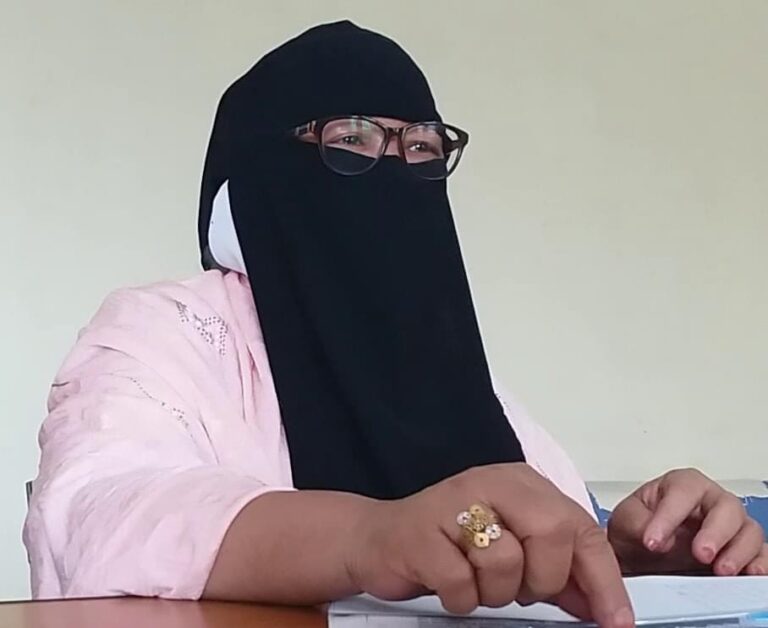
EFCC arraigns ‘Mama Boko Haram’, 2 others over  N150m fraud

1

THE Economic and Financial Crimes Commission (EFCC), has arraigned Aisha Alkali Wakil, also known as Mama Boko Haram, alongside Tahiru Saidu Daura and Prince Lawal Shoyode before the Borno State High Court in Maiduguri.

They were arraigned before Justice Umaru Fadawu on a two-count charge bordering on conspiracy and cheating to the tune of N150 million.

This was disclosed in a statement published on the agency’s social media platforms on Monday, October 16. 


Read Also:

Wakil, Daura and Shoyode were Chief Executive Officer, Programme Manager and Country Director, respectively, of Complete Care and Aid Foundation (a Non-Governmental Organisation) when they allegedly committed the crime with another suspect at large, Saidu Mukhtar, in August 2018 in Maiduguri, Borno State.

They collectively induced Bulama Bakki, the CEO of Bakki Commodity Investment Company Limited, to engage in a contract, the EFCC said. 

The contract was for procuring 5,000 bags of high-quality white beans weighing 50kg for N23,000 per bag. Additionally, the contract involved the supply of seven mobile ultra-scanning machines powered by solar energy of the 2018 brand, each priced at N5,000,000. In total, the contract amounted to N150,000,000. 

However, the accused failed to fulfil their obligations, which constituted an offence as contained in Section 320(a) of the Borno State Penal Code Law Cap 102 and punishable under Section 322 of the same law.

“The defendants pleaded ‘not guilty’ to the charges when they were read to them. Counsels for the prosecution, A.I Arogha and S.O Saka, appealed to the court for a trial date. Justice Fadawu adjourned the matter and ordered the remand of the defendants at a correctional centre,” the statement read. 

The ICIR reports that Wakil is facing a third sentence by the court in a year while others await a second sentence.

In December 2022, Wakil was sentenced to 10 years imprisonment when convicted alongside Daura and Shoyode for conspiracy, cheating, and obtaining N120.5 million by pretence.

In August 2022, the Maiduguri Zonal Command of EFCC secured the conviction and sentencing of Wakil, Daura and Shoyede on a three-count charge of conspiracy and stealing to the tune of N66 million.

The following month, they were sentenced to seven years imprisonment over N15 million fraud.

Meanwhile, in June, a high court in the state sentenced Wakil to five years imprisonment over her involvement in N71.4 million fraud.

Guber polls: INEC raises alarm over fake news 

0

THE Independent National Electoral Commission (INEC) has raised the alarm over rising fake news and misinformation ahead of the forthcoming off-cycle governorship elections in Bayelsa, Kogi, and Imo states.

According to the Commission, fake news might severely affect how the country manages its elections if not stopped early.

National Commissioner and the Commission’s Information and Voter Education Committee member, Kunle Ajayi, said this on Monday while addressing a two-day capacity-building training for INEC Press Corps members in Akwanga, Nasarawa State.

The training, sponsored by Development Alternatives Incorporated (DAI), has the theme, “Ethical, Safety Practices, and Critical Issues Relating to the Kogi, Imo, and Bayelsa Governorship Elections.”

Ajayi described fake news, hate speech, and misinformation during the general elections in 2023 as repulsive.

“The Commission’s distasteful experience with fake news in the 2023 general elections has shown that if not nipped in the bud, fake news can become the bane of election management in Nigeria. 

“The alarming prevalence of misinformation, fake news, hate speech, and the weaponization of disinformation has become very worrisome to the Commission,” Ajayi stated.

The National Commissioner explained that disinformation related to elections had grown to be a significant tactic used by nefarious individuals and groups in the political sphere to manipulate the populace to their advantage.

“Election-related disinformation has become a major strategy used by nefarious individuals and groups in the political space to manipulate the general public to their advantage, regardless of the consequential effect such propaganda may have on the peace and stability of the electoral process and the country at large,” Ajayi added.

In his address, the Team Leader for DAI, Rudolf Elbling, said the media was an essential part of any democracy, adding that a democratic election without the press was impossible as they act as a crucial watchdog to democratic elections, safeguarding the transparency of the process.

Elbling stated, “Election without the media is not complete. The reportage of the media must be correct and factual. Free media is the oxygen for democracy. Journalists must maintain a high level of professionalism.”

He noted that the livewire of democracy is uncensored media, and a high level of professionalism is required of the press.

In less than a month (on November 11), Kogi, Bayelsa and Imo state residents will elect a new governor as INEC conducts the states’ off-cycle governorship poll.

The states are three of six states in Nigeria with off-season governorship polls. Others are Ondo, Edo and Osun.

While the current governor of Imo State’s term expires on January 14, 2024, Okoye said the governors of Kogi and Bayelsa States had respective terms that expire on January 26, 2024, and February 13 of the same year.

The ICIR, in this report, presented the top candidates in the three states and their chances.

Appointments: EFCC, ICPC heads can’t come from same zone – Falana

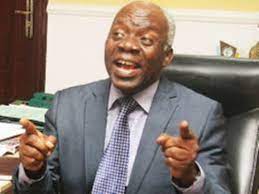
HUMAN rights lawyer Femi Falana has said heads of the Economic and Financial Crimes Commission (EFCC) and the Independent Corrupt Practices and Other Related Offences Commission (ICPC) should not come from the same geopolitical zone.

The Senior Advocate of Nigeria (SAN) stated this while featuring on Channels Television’s Sunrise Daily on Monday, October 16.

He argued that appointing the two leaders from the same zone was against the federal character principle.

Falana spoke on the backdrop of President Tinubu’s appointment of Ola Olukoyede from the country’s South-West as EFCC chairman on October 12.

The ICIR reports that Bolaji Owasanoye, a professor also from the South-West, is the chairman of ICPC, one of Nigeria’s two anti-corruption institutions.

“If you are going to have the EFCC and the ICPC, the heads cannot come from the same zone. If there are two positions in the public service, one must go to the North, and one must go to the South. If there are four, two must go to the South; two must go to the North. If there are six, one must go to each geopolitical zone. That is the law in Nigeria today.

“So, I am not comfortable with the fact that the heads of the EFCC and the ICPC are from the same zone. Apart from that, Mr Ola Olukoyede is eminently qualified to head the EFCC. My colleagues who have criticised the appointment have not looked at the relevant provisions of the EFCC, which is Section Two,” Falana stated.

Falanai said Olukoyede had 22 years of relevant experience, served as the chairman of the commission’s chief of staff, and served as the commission’s secretary. 

“There is no issue; the only issue that has been raised has to be considered by the government, which is that we have in this country the Federal Character Commission Act, and also by virtue of Section 14 of the constitution, appointments must reflect Federal character,” Falana said.

On October 12, The ICIR reported that President Bola Tinubu appointed Olukoyede as the new EFCC boss for a renewable term of four years in the first instance, pending Senate confirmation.

Olukoyede’s appointment came after the contentious resignation of Abdulrasheed Bawa, the embattled former head of the EFCC, who was held by the State Security Service (SSS) on June 14, 2023, following an allegation of abuse of office made against him.

Olukoyede’s appointment has drawn criticism, with many contending that he is unqualified to serve as the chairman of the EFCC.

The ICIR, in this report, highlighted the opinion of some lawyers who faulted the appointment of the new EFCC boss.

Witchcraft: Help should come before accusations begin

0

By Matthew Mabefam, The University of Melbourne

WITCHCRAFT is generally understood to refer to a supernatural power possessed by an individual. In Ghana, particularly in the northern parts of the country, the subject continues to spark fierce debates.

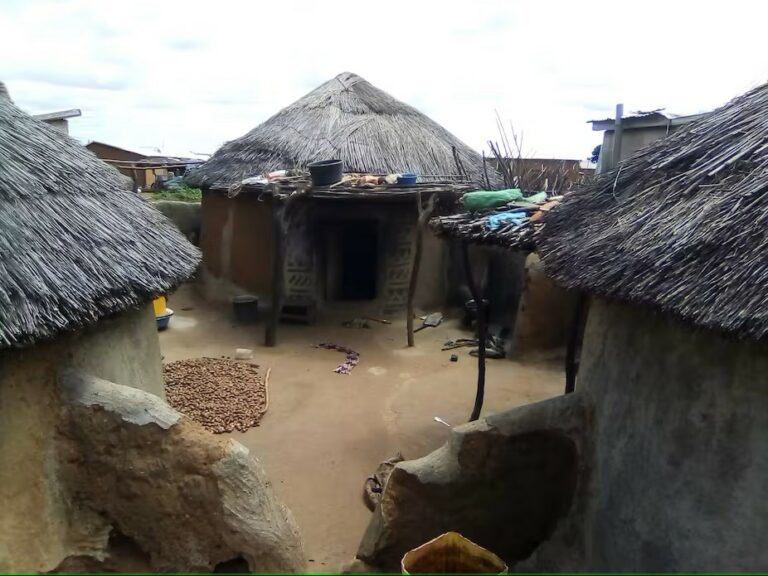
In regions such as Northern, Savanna and North East, people accused of witchcraft are banished from their communities. In response, other communities have provided refuge for displaced people. These places of refuge have themselves sparked controversy. Critics contend that they have become centres of “abuse” and have called for their closure.

I am a lecturer in anthropology and development studies. I set out to understand the controversy around what are often called “witch camps” and whether they should be abolished. I conducted a year long ethnographic study in the Gnani-Tindang community in northern Ghana. Gnani-Tindang provides refuge for people accused of witchcraft who have been banished from their communities.

I conclude from my findings that government and NGOs aren’t proving capable of managing the problem, because they are starting at the wrong place. The focus is on witchcraft accusations, by which time people have already been stripped of their “social citizenship” and been forced to relocate.

Engaging with the experiences of people accused of witchcraft and their communities shows that intervening at an earlier point matters more.

The background

Victims of witchcraft accusations face alienation or exclusion from their communities. Exclusions can be social, physical, economic or psychological.

Some villages in northern Ghana have become known as places that provide refuge to people banished from their communities. These villages were not created for this purpose. Rather, they are already existing communities that have chosen to provide such refuge.

Banishment happens when someone accused of witchcraft is no longer welcomed in their community. They are asked to leave and never return. Not heeding such advice comes with consequences including violence, abuse, social exclusion and murder.

Sometimes people relocate to a village that’s offering them safety after they’ve been forced to leave their homes following direct threats. In some instances people move when they hear rumours that they risk being accused of witchcraft.

What people who had been banished told me

The purpose of my research inquiry was to gain insights into how individuals accused of witchcraft speak about themselves and their circumstances.

The experiences of those accused varied. As one told me:

They finally threatened that they were going to do their juju, and if I had any knowledge about the child’s sickness, I was going to die within four days. I told them they should go ahead; I was willing to die if I were the one responsible for the child’s sickness. After the ritual, I didn’t die. However, they said I could no longer stay with them in the community.

Another gave this account:

After the death of my husband, the relatives accused me of witchcraft. My in-laws said I killed my husband, but I don’t know anything about it. He fell sick and died afterwards. How can I kill my husband? I was lucky I wasn’t killed. There were lots of chaos, and some of the people suggested that I should be killed. Others disagreed and suggested that I should be brought to Gnani-Tindang … It’s my husband’s people who brought me here.

We also observed that elderly people with little strength to fend for themselves were often targeted. One person, who was 80 years old, said:

Look at me; I’m old and weak now. I can’t do much for myself. But I must fetch water, firewood and beg for food to eat. It is lonely here.

What next

Ghana’s parliament has recently passed an anti-witchcraft bill. It seeks to criminalise the practice of declaring, accusing, naming, or labelling people as witches. Making such an accusation would lead to a prison sentence.

But, in my view, the bill alone isn’t the solution. This is because declaring certain behaviour illegal – and therefore punishable in a court of law – doesn’t address the issue of prejudice and discrimination which often relates to people’s age, gender and economic status. In other words, the law won’t deal with the tensions that emerge when culture intersects with the reality of people who become victims of witchcraft accusations.

Additional steps need to be taken.

Firstly, attention needs to be given to the underlying social issues driving accusations of witchcraft. For example, extreme inequalities among men and women, old and young, rich and poor. Creating avenues that provide a balance in society will have an effect on witchcraft accusation and banishment.

Early gender-tailored education needs to be introduced by the government and development actors on the value of both boys and girls. This is particularly important in the patriarchal societies of northern Ghana. This could help address gender inequalities that lead to witchcraft accusations. Witchcraft accusation is gendered: more women than men are accused, confronted and banished.


READ ALSO:


There is a need to engage widely with the Ghanaian society about the dangers of witchcraft accusation and to put in mechanisms to protect those who are abused and violated as a result of such accusations.

Finally, there is a need to listen to the voices and experiences of those who are victims of witchcraft accusations. This will ensure that interventions aren’t detached from their reality.The Conversation

Matthew Mabefam, Lecturer, Development Studies, The University of Melbourne

This article is republished from The Conversation under a Creative Commons license. Read the original article.

Wole Soyinka Centre invites entries for Investigative Reporting award

The Wole Soyinka Centre for Investigative Journalism (WSCIJ) is inviting entries for its 18th edition of the Wole Soyinka Award for Investigative Reporting (WSAIR). 

The Award recognises works that positively impact society and demonstrate ethical journalistic courage and individual creativity.

The 2023 prize will reward reports on corporate and Public wrongdoing, breaches of human rights, or the shortcomings of regulatory institutions.


Read Also:

Teams of professional and independent journalists may submit applications.

Print, radio, TV, photography, editorial cartoons, and web are some examples of the categories. Aside from other gifts, winners also get monetary awards.

Stories should have been published or transmitted in Nigerian media between October 4, 2022, and October 3, 2023.

The deadline for the submission of the application is October 24, 2023. Interested Journalist can apply here

Why Buhari’s social intervention programmes failed to alleviate poverty – Experts

DESPITE over N3.5 trillion spent by the former President Muhammadu Buhari administration, most of the Federal Government’s social intervention schemes failed to make the needed impact by lifting many Nigerians out of poverty, industry experts say.

Industry experts said the failure occurred due to poor planning and lack of direction.

Some of the National Social Intervention Programmes (NSIP) include Home Grown School Feeding Programmes (GSFP), Government Enterprise and Empowerment Programme (GEEP), N-Power, National Social Safety Net Programme (NASSCO), and the National Cash Transfer Programme (N-CTP) otherwise called ‘Trader Moni’.

Industry analysts who spoke with The ICIR observed that the lack of coherence in the scheme didn’t give room for proper accountability and evaluation.

Last week, the Minister of Humanitarian Affairs and Poverty Alleviation, Beta Edu, said the government was probing intervention schemes by the previous administration in her ministry, citing corruption concerns in their implementation.

Minister of Humanitarian Affairs and Poverty Alleviation, Beta Edu.

The Humanitarian Affairs and Poverty Alleviation Ministry does not carry the corruption badge alone; the intervention schemes executed by the Central Bank of Nigeria (CBN), with N1.27 trillion reportedly spent on them, are currently being probed.

Acting CBN governor Yemi Cardoso
Acting CBN governor Yemi Cardoso.

Accordingly, the CBN Governor, Oluyemi Michael Cardoso, said plans were underway to stop intervention programmes of the apex bank and shift the responsibility to other development banking institutions in the country as the bank undergoes a probe of its interventions.

For the Professor of Law at the Baze University and a Public Affairs analyst, Sam Amadi, huge social intervention policies of the government running into billions of naira require strategic thinking and approach to deliver impact.

Sam Amadi, Associate Professor and Director Abuja School of Social and Political Thoughts

“Strategic thinking is about how to design the policies to respond to the complexities of your problems. The failure of the interventions is a result of not asking the right questions, analysing the right context and designing intervention schemes to solve the real issues,” he said.

“Lack of central coherence and lack of drilling down of big projects is our problems. Big projects don’t execute themselves; they require lots of thinking. It’s all about strategies of execution and tactics and how you deliver,” he further said.

Amadi questioned the exit plan of most of the intervention policies, which he said gave room for undue interference by political interests.

“The exit should be factored into the project design and carefully thought out. It will enable proper accountability of the projects. This has a lot to do with project accountability.

“When projects have no proper exit plans, they’re likely to run endlessly, and interests creep in to exploit the programmes and policies.

A similar concern was raised by a development economist, Celestine Okeke, who said the government’s knee-jerk approach to its intervention policies keeps dragging its impact.

Celestine Okeke believes the “knee-jerk approach” drags intervention programmes

“Most often, the projects are hurriedly done in a knee-jerk approach to satisfy political interests and not to solve real problems. We need to have proper thinking on the schemes to achieve its aim.

There have been concerns about the social safety register for Nigeria’s intervention programmes, with many eyebrows raised on how the registration is conducted across different geopolitical zones.

On assumption of office in 2015, Buhari established the National Social Investment Programme (NSIP) to address the immediate and long-term socio-economic imbalance, alleviate poverty and act as a stimulant to further economic growth.

He promised in June 2019 to lift 100 million Nigerians out of poverty in 10 years.

He said his administration would offer leadership with a sense of purpose by vehemently fighting poverty. “With leadership and a sense of purpose, we can lift 100 million Nigerians out of poverty in 10 years,” the President declared. However, the administration left 133 million people in various categories of poverty, indicating that his policies and intervention schemes failed to work.