PROTESTING youth blocked the Gusau-Kaura Namoda highway at the Sakajiki community on Tuesday, October 17, over recurring bandit attacks, killings, abductions and other insecurity issues in the state.
The ICIR gathered that bandits abducted women from the village after killing several others and setting many houses on fire. They also allegedly used a Police patrol vehicle (Hilux) they snatched to loot foodstuffs from the community.
The ICIR further reports that the community has since been deserted by its people, with houses, schools, mosques, and shops spared by the bandits’ inferno shut by owners.
Residents said bandits had attacked the village on Monday night (October 16) and allegedly killed one Mobile Police officer. They snatched a Police patrol vehicle, among other atrocities they committed, before returning two days later (on Monday).
The community youth trooped to the highway at dawn on Tuesday, preventing motorists and other road users from moving for several hours. They barricaded the road with timber logs and stones.
Some of the stranded passengers as youth blocked the Gusau-Kaura Namoda highway at the Sakajiki community on Tuesday, October 17, over insecurity.
The youth were unmoved by the arrival of Police and military officers. They shunned the security officers’ pleas to vacate the road, including repeated promises to take more drastic measures to restore peace to the state.
As the tension lingered, the state Commissioner of Police (CP), Muhammad Shehu Dalijan, arrived at the scene, accompanied by the Emir of Kaura Namoda, Sanusi Muhammad Asha, whose arrival caught the protesters’ attention.
The Emir introduced the Police Commissioner to the people of Sakajiki and urged them to shield their swords.
He said security forces were taking drastic measures to end the persistent insecurity in the village and the state.
Addressing the people, the Police Commissioner said he was at the village at the instance of the state Governor Dauda Lawal.
Youth blocked the Gusau-Kaura Namoda highway at the Sakajiki community on Tuesday, October 17, over insecurity
He explained that the governor assigned him to visit the village for assessment and restrategize to secure the area.
The CP assured them the government would deploy more security operatives and weapons to the deserted village.
The ICIR reports that Zamfara is one of the North-West states facing protracted insecurity.
The state’s immediate past governor, Bello Matalle, lost re-election in March after battling unsuccessfully throughout his four years in office to secure his state.
In August, The ICIRreported how President Tinubu appointed him a Minister of State for Defence despite failure to protect his people.
Some of the items used by the youth of the Sakajiki community as they blocked the Gusau-Kaura Namoda highway on Tuesday, October 17, over insecurity.
Zamfara has faced attacks from terrorists, lost hundreds of residents to insecurity, and had thousands of others displaced.
In October 2022, this organisation reported how 30 schools remained shut after one year because of insecurity.
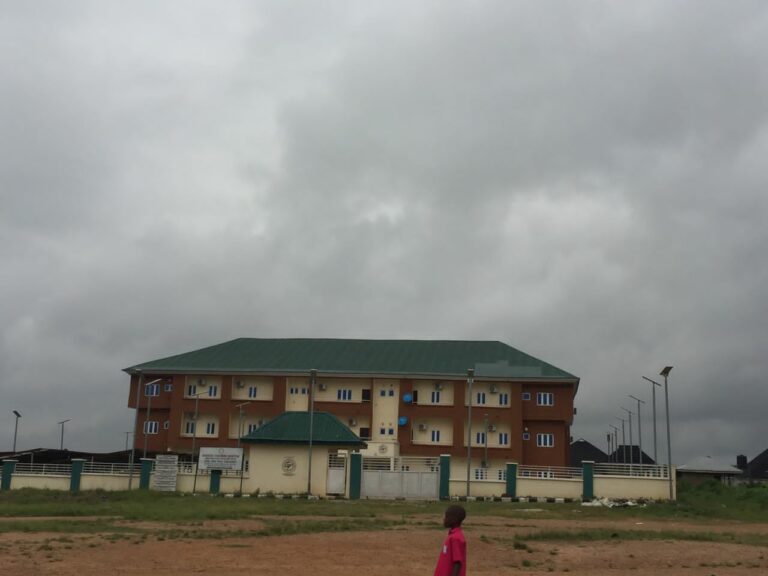
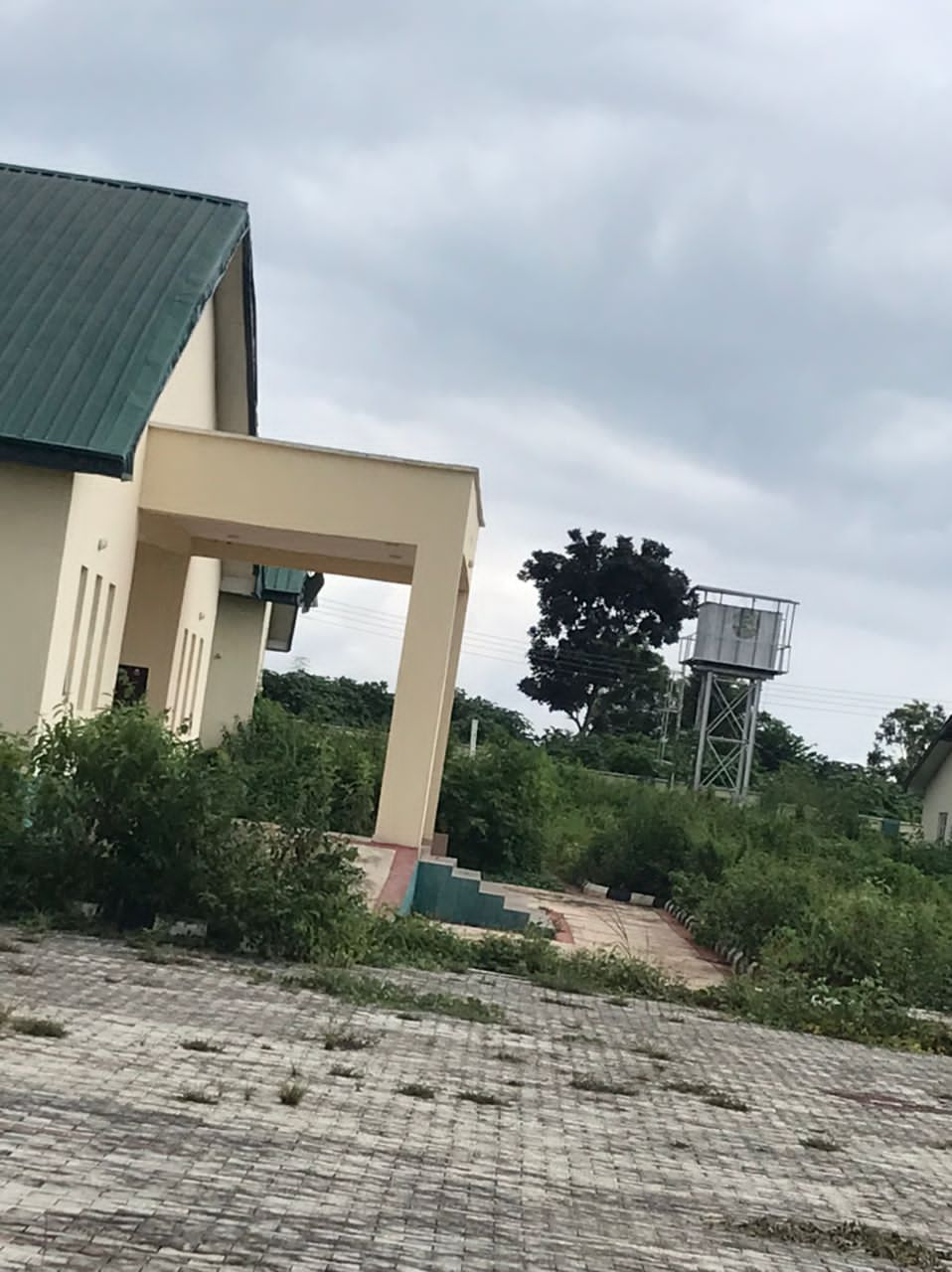
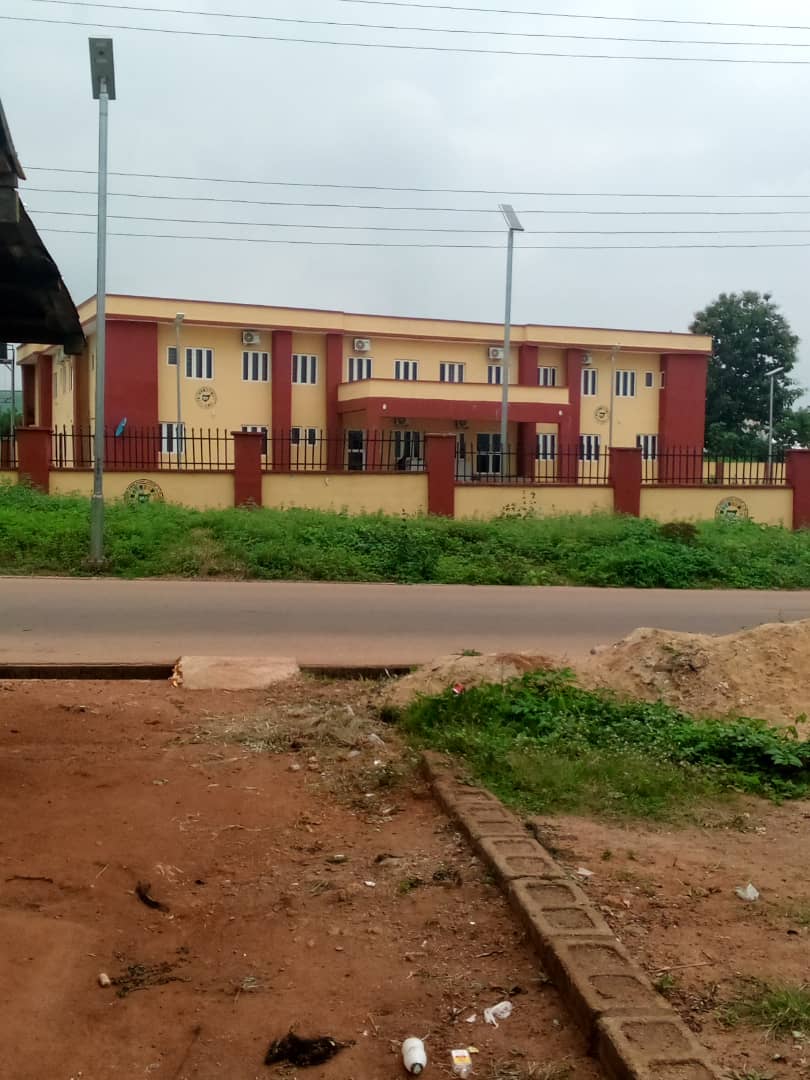
IN a bid to achieve the Sustainable Development Goals (SDGs), the Nigerian government, through the Office of the Senior Special Assistant to the President on SDGs (OSSAP-SDGs), awarded contracts for several projects in Osun State, including building a 100-bed hospital in Osogbo, a transit home for abused women and an 80-bed hospital, both located in Iragbiji. Though completed and commissioned over a year ago, the multibillion-naira projects are wasting away despite the huge fortune spent to construct them.
LAWAL Sofiyyat Bolanle, who visited the project sites in July 2023, reports that they are under lock and key, overtaken by bushes. There were also several issues observed regarding the award and execution of the contracts.
On a Thursday morning, Adebimpe Daniel, a trader whose kiosk is located adjacent to the deserted hospital building in Osogbo, Osun state, bemoaned that the project has not served the host community since it was completed and commissioned over a year ago.
“Since the hospital was commissioned last year, they have not started working there, though it seems it has been equipped. There is a maternity home at Olude, a neighbouring community, which is a bit far. There is a private hospital in this area, but it is costly.” Adebimpe stated.
Adebimpe is referring to the 100-bed capacity hospital in Osogbo, the state capital. This project is one of the projects awarded in Osun state by the Office of the Senior Special Assistant to the President on Sustainable Development Goals (OSSAP-SDGS) in 2021 under the leadership of Adejoke Orelope-Adefulire, who was recently reappointed to the same role by President Bola Tinubu.
In 2015, the United Nations adopted the 17 Sustainable Development Goals (SDGs) aimed at tackling global challenges to create a sustainable and habitable environment for people worldwide. The third of the 17 SDGs aims to ensure healthy lives and promote well-being for all. It has a number of targets, and topping the list is the reduction of the rate at which pregnant women and new mothers die after childbirth to 70 per 100,000 live births by 2030 but currently, the maternal mortality ratio in Nigeria is 1,047 per 100,000 live births.
Between 2000 and 2015, when the SDGs transformed into the Millennium Development Goals (MDGs), the Nigerian mortality rate reduced by 30.4 per cent from 1,174 deaths to 814 deaths per 100,000 live births. Even with this notable reduction, the country was unable to meet the MDGs target. According to the World Health Organization (WHO), the maternal death rate, which revolves around post-abortions, childbirths, postnatal and prenatal care, is 1 in 22 in Nigeria, unlike developed countries with 1 in 4900. Globally, Nigeria is among the countries with the highest maternal death rate of nearly 20 per cent.
In a bid to achieve the SDG in Osun state, the federal government, through the OSSAP-SDGs, awarded contracts for the provision of:
a 100-bed mother and child hospital in Osogbo,
an 80-bed hospital located in Iragbiji,
and a Transit Home for abused women.
The Transit Home, which has an admin block, a skill acquisition centre and a 100-seater canteen, is located beside the 80-bed hospital in Iragbiji. The projects have been completed but are, curiously, currently locked up and left to rot away.
According to information on Govspend, a website that provides data on Federal Government expenditures, the sum of N2.53 billion was released for the projects between 2021 and 2022. The projects were commissioned on June 29, 2022, and have since been handed over to the Osun state government.
Ineffective multimillion-naira hospitals: 100-bed hospital at Oke Oni-tea
Visits to the sites of the projects in July revealed the ineffective state of some of the facilities, as they had not been put to use over a year after they were commissioned.
During a visit to the 100-bed hospital at Oke Oni-tea, residents and shop owners in the area lamented the ineffectiveness of the hospital a year after it had been commissioned for use. Adebimpe mentioned earlier, a trader in the area, believes the hospital is affiliated to University of Osun Teaching Hospital (UTH), which “is meant to refer their patients here in case of insufficient space at their main hospital.”
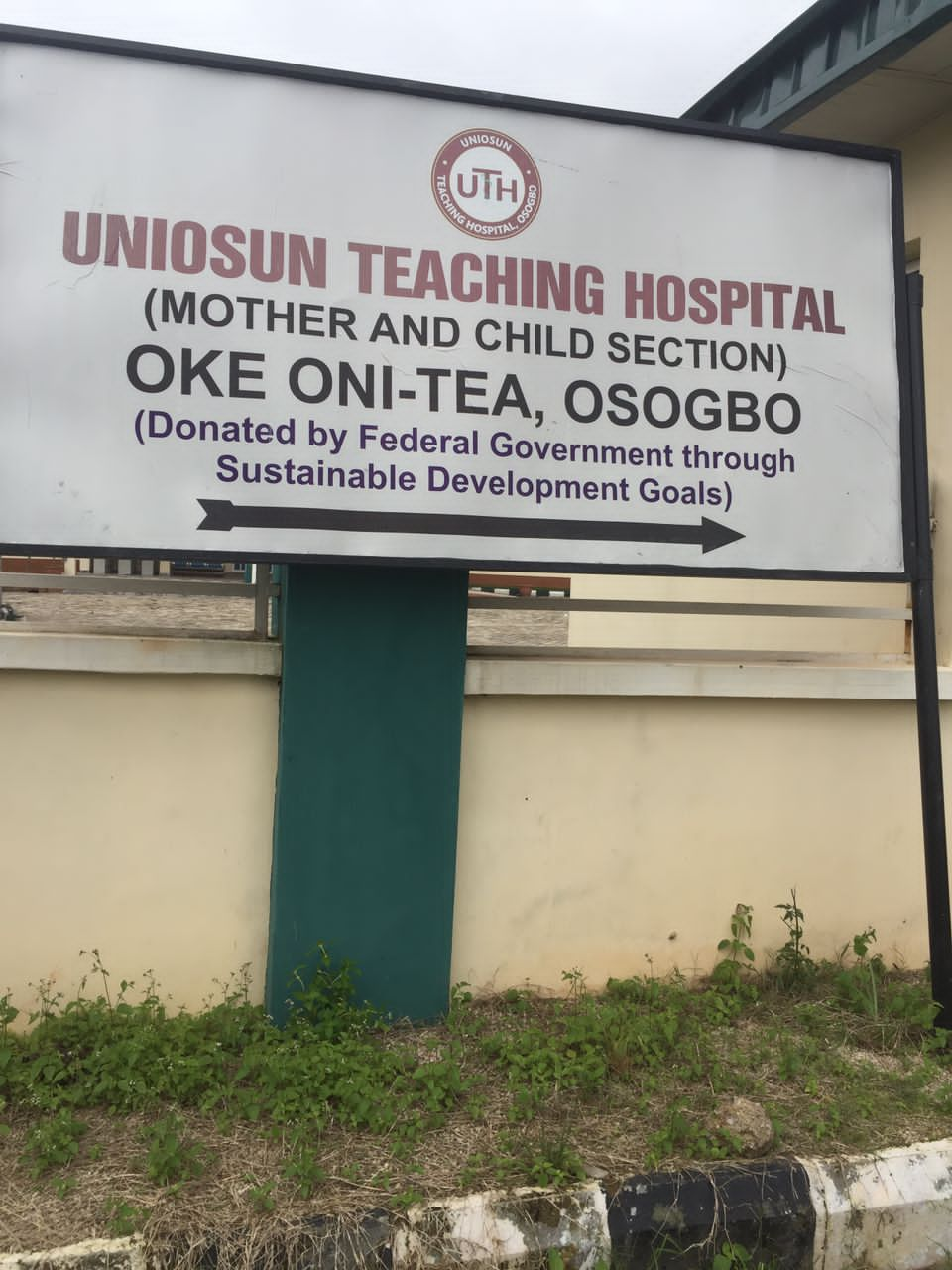
The hospital signboard has UniOsun Teaching Hospital – mother and child section, written on it.
A signage indicating that the 100-bed is under UTH management. Credit: LAWAL Sofiyyat Bolanle, PEN PRESS
Two security officers guarding the project site, who refused to identify themselves, refused the reporter access to the building. They said that they do not open the gate to anybody unless there is a directive from their boss. They also refused to disclose their identity or give out their boss’ phone number when asked by the reporter.
“We have been here for the past four months, and we do not grant anybody entrance, not even the management of UTH, unless we get a call from our boss. It is not within my power to grant you access and it would have been a different case if the hospital is functional. You would have been free to enter,” one of them said.
The securities also declined the request of the reporter to share their boss’ contact.
Ineffective multimillion-naira hospitals: 80-bed hospital located at Oke-Iragbiji
While the contract for the construction of an 80-bed hospital located at Oke-Iragbiji in Iragbiji was similarly awarded by OSSAP-SDGs at the same time as the Osogbo hospital, to Wallbridge Global Impact Limited at the cost of N161.69 million, the construction of the 100-bed Mother and Child Hospital located beside Islahudeen Grammar School at Oke-Onitea in Osogbo was awarded to Mularabs Investment Limited at the cost of N205.63 million.
According to the CAC site, Mularabs Investment Limited, was registered on May 2, 2014 and is located at No 7, Enjema Road Ankpa, Kogi State, with one Aminu Isa Yahaya as the director of the company.
Checks on the website of the Corporate Affairs Commission (CAC) shows that Wallbridge Global Impact Limited, which executed the Iragbiji hospital project, was registered March 28, 2019 for general contract and merchandise and is currently inactive. The signage at the project site showed Ibukun’s House, No 637, Floor 1, Adetokunbo Ademola Street, Victoria Island, Lagos State, as the address of the company. Checks at the location, however, revealed that no company with the name exists there.
An Okada rider, Sesan Akinyemi, who identified himself as an indigene of Iragbiji lamented the non–use of the projects executed in the town. “I do not understand why the government chose to waste money. Why will they execute projects when they know they would not bring in people to work there?” he queried.
‘Previous administration did not properly hand over Transit Home to us‘
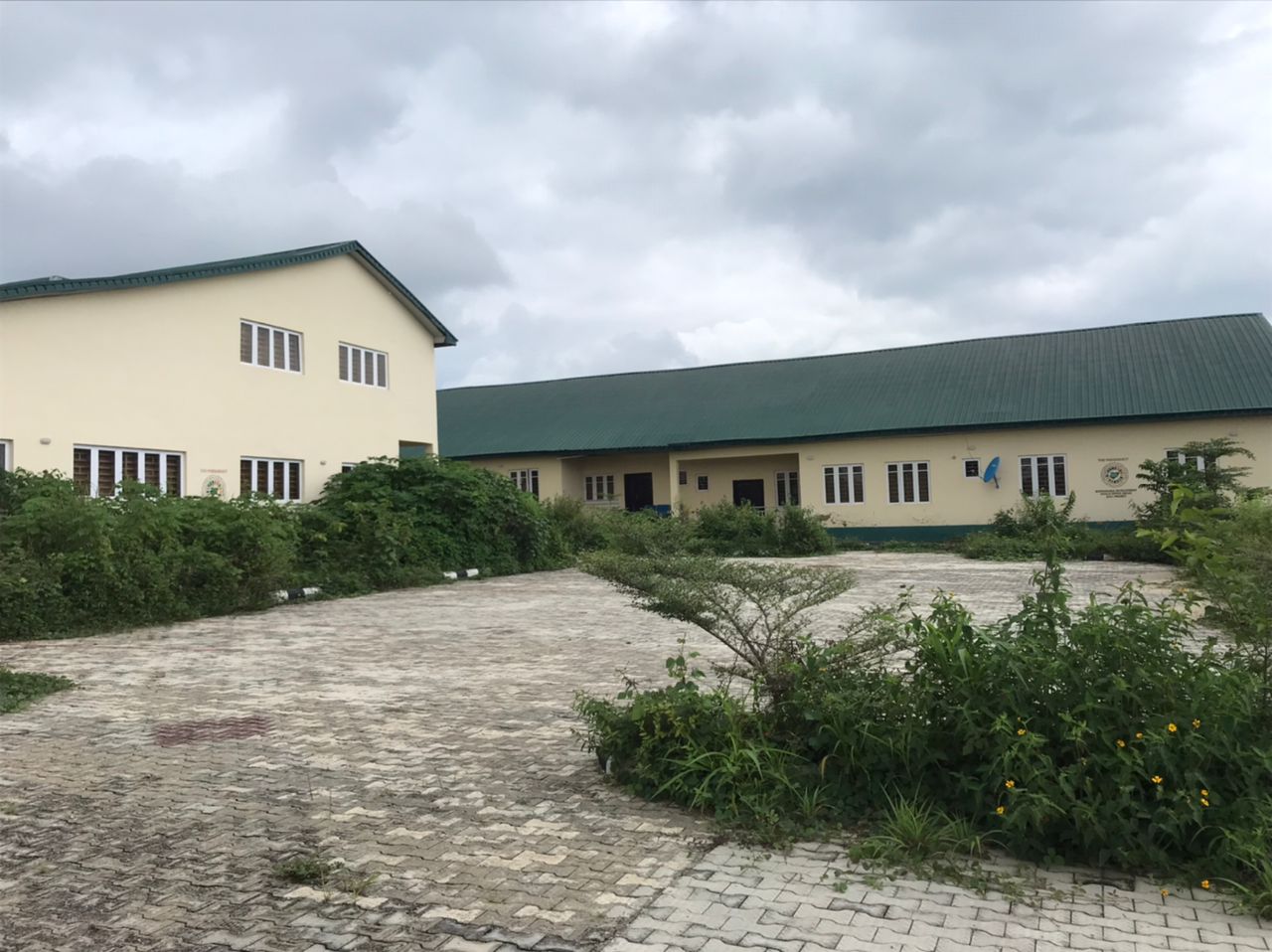
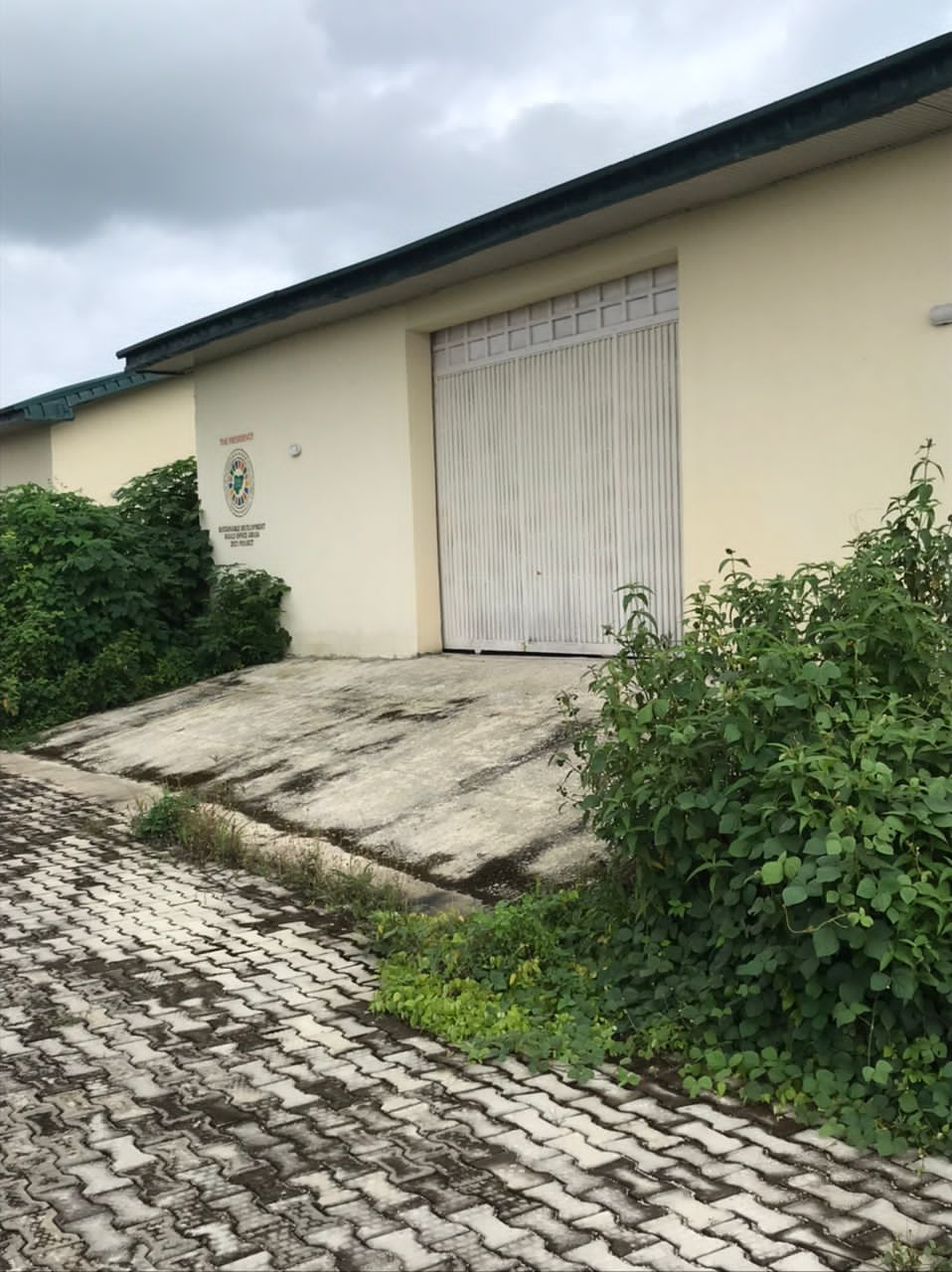
Another project of the OSSAP-SDGs in Iragbiji is a Transit Home for Abused Women, which shares a fence with the 80-bed hospital. Despite the whooping sum of 699.4 million paid to contractors for the construction and equipping of the transit home, the home’s compound was seen to have been outgrown with bush. One could spot budding weeds sprouting out from the interlocking floor.
The transit home for abused women. Credit: LAWAL Sofiyyat Bolanle, PEN PRESS
Located at the extreme of the Transit Home is a solar-powered borehole. An administrative block is adjacent to the security post. Besides the skill acquisition centre, a 250KVA Generator was sighted on the left side from the gate.
The spokesperson of Osun State Governor, Olawale Rasheed, said the past administration failed to do proper handing-over of the Transit Home to the new government.
“The previous administration did not properly hand over the Transit Home to us. Our team only took possession last month. Inspection was conducted by three commissioners and the Special Adviser on SDGs. Though it is still ongoing, the team is taking inventory of equipment at the complex, and it was noticed that the skill acquisition centre is well equipped. The equipment are not in bad shape, though they have been locked up for a long time,” he said.
Bushes competing with the Skill Acquisition Centre. Credit: LAWAL Sofiyyat Bolanle, PEN PRESS
When asked when work will start at the Transit Home, he told PEN PRESS that the place will be ready for use in no time. “There are beds, computer sets among other equipment at the place and the centre is being prepared for usage.” He concluded.
Flaws in the procurement process
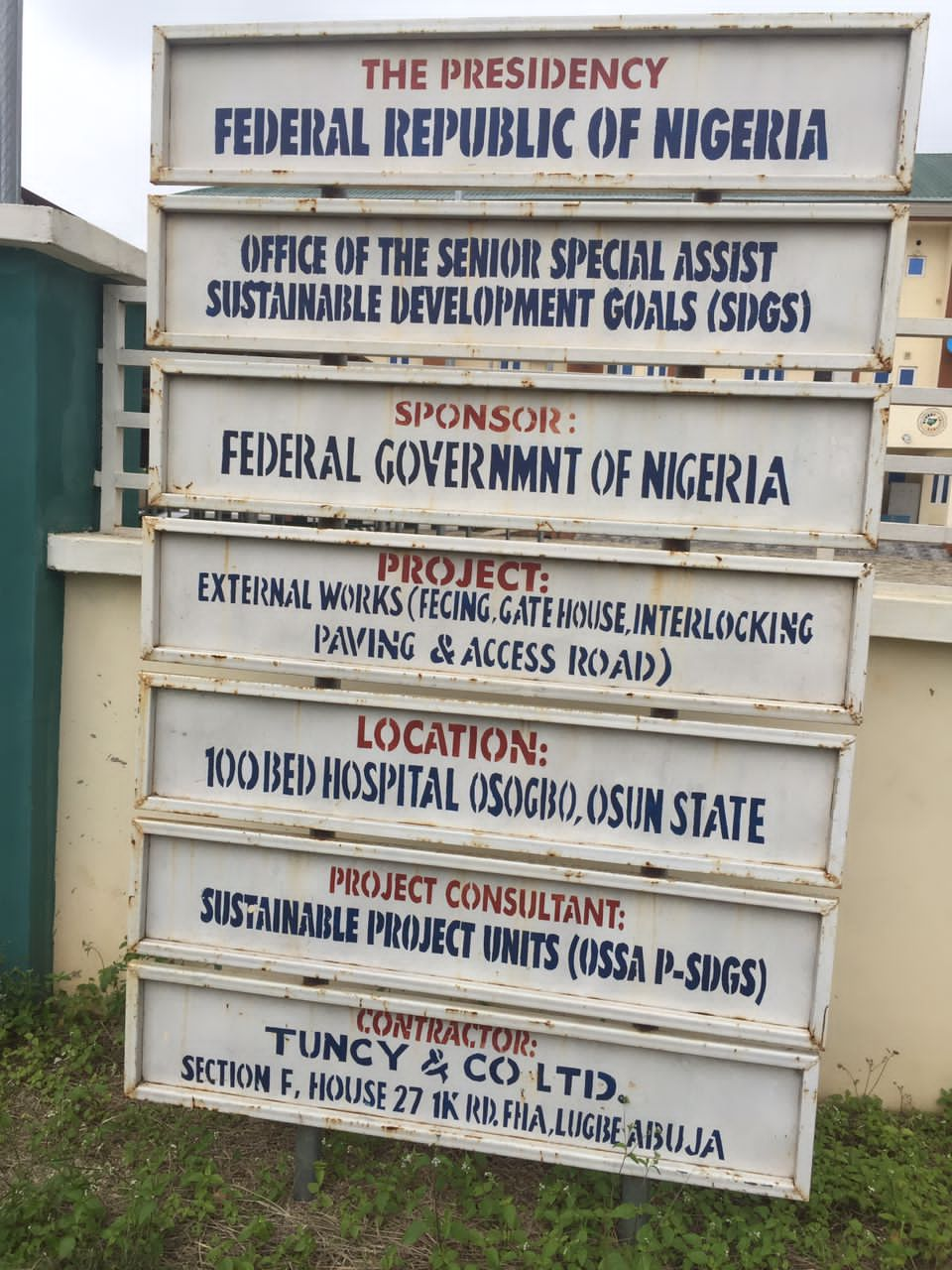
Contract for fencing, interlocking, gate and access road to the 100-bed hospital were awarded to Tuncy & Co Limited at the cost of N160.35 million. The company was registered on October 8, 2020 for general contracts and merchandise. It got its first interim payment of N115,928,508 March 13, 2022, which is a year and seven months after the registration date, and hereby could not have tendered a tax clearance certificate which is obtainable three years after the assessment of a company according to section 85(1) of the Personal Income Tax (PIT) Act.
Tuncy & Co signage at the 100-bed hospital. Credit: LAWAL Sofiyyat Bolanle, PEN PRESS
According to the CAC portal, Tuncy & Co Limited is located at Section F, House 27, 1k Road, Federal Housing Estate, Lugbe, Abuja. However, findings show that the address is either a home or a church.
Attempt to speak with the inhabitants was futile as the repeated knocks on the gate were left unanswered during a visit to the location. Prior to the visitation, an email sent to the company’s email address provided on the CAC portal was not replied to.
It was observed that the access road that links the main road to the hospital had not been constructed despite paying the contractor for it.
Furthermore, the contract for the 200-capacity transit home was awarded to Bay-mage Consults Limited at N214,639,865. Bay-mage Consults Limited was registered on August 24, 2020, specifically for computer programming, consultancy and related activities. The company got the first interim payment on December 18, 2021, just a year and four months after its registration, and, thus, would have violated the same section of the PIT Act as Tuncy & Co Limited. Unfortunately, the address on the CAC portal was under renovation when visited, and the residents of the area could not identify the owners or where they relocated to.
The sum of N21.23 million was paid to Kaffog Industrial Company Limited to construct two solar-powered boreholes at the Transit Home and the 100-bed hospital. The firm was registered on October 5, 2020, purposely for general contracts and merchandise. However, the boreholes have been dug but have not been put to use.
These companies might have violated section 16(6d) of the Public Procurement Law (2007), which states that: “All bidders, in addition to the requirements contained in the solicitation documents, shall fulfil all its obligation to pay taxes, pensions and social security contributions.
Unregistered entity awarded contract
Arhos Nigeria Limited, a non-registered company under CAC, was found to have been paid a sum of N46.52 million for the supply of furniture to the 100-bed hospital. Checks on the CAC portal, Ng-Check and B2BHint showed other companies with very similar names including Arho Nigeria Limited and Arhos and Sons International Nigeria Limited, but nothing on Arhos Nigeria Limited.
The construction and installation of 100 solar street lights, 50 each to the 100-bed hospital and 80-bed hospital was awarded to CWM Contracting at the sum of N101.50 million.
Though the street lights could be sighted at the project’s sites, CWM is a registered and inactive company under CAC. Mails have been sent to the persons in control, Mr Anjorin Adebayo and Afolabi Samson Olatunji, which are yet to be replied.
Jls Brothers Limited, an Abuja-based company was contracted and paid to do the fencing, interlocking pavement and walkway at the Transit Home for a sum of N51,086,539. However, the place is partly interlocked and the home was seen to have been outgrown with bushes. The same company was also awarded the construction of a 100-seater canteen in the home at the cost of N60.33 million.
The admin block of the transit home. Credit: LAWAL Sofiyyat Bolanle, PEN PRESS
According to the CAC website, Jls Brothers Limited was registered on October 24, 2017, specifically for general contracts and is located at Plot 333, Airport Road. A search to trace the company is futile as it is not located at the said address.
Other contracts awarded as part of the project include Huzaimas Nigeria Limited, registered on August 20, 2017, which was paid N46.35 million to supply furniture. According to the information on the CAC portal, the company is inactive, and the persons in control of the company, Aminu Abdullahi and Ibrahim Muhammad, failed to provide their email addresses.
The construction and installation of 140KVA hybrid Solar inverter at a 100-bed hospital was awarded to 25th Investment Ltd. The company, registered on April 30, 2019 is inactive. Also, 80KVA hybrid solar inverter construction and installation contract for the Iragbiji facility was awarded to Bmo-tech Services Limited at N117.61 million, a company registered on October 8, 2020, and contracted for this project February 2, 2022.
Tru3 Nigeria Limited and Mba & Company Limited were paid the sum of N166.27 million each to supply and install theatre equipment to the 80-bed and 100-bed hospitals, respectively. Also, Tappago Engineering Limited was paid a sum of N36.35 million to supply 208 laminated 4 by 4 boarded beds with mattresses, pillows and lockers to the Transit Home for Abused Women.
Equipping of the acquisition centre with fashion designing, salon, refrigeration and building trade was done by Olu-omo Integrated Services Limited at a sum of 52.35 million. The company, which is controlled by Idris Balogun and Funke Balogun, was registered on the 15th of October, 2008 and is currently inactive under CAC.
In all, the total sum for the construction and equipping of the 80-bed hospital was evaluated to be about 748.45 million, while 1.059 billion was released for the construction and equipping of the 100-bed hospital.
Desmond Utomwen, an aide to Senior Special Assistant to the President on Sustainable Development Goals Orelope-Adefulire, while responding to the findings, said the companies were duly registered. “You may want to reach out to them. I can assure you that there is no cause for alarm. From all the available records in the office, the companies were duly registered.”
He however declined to answer further enquiry on the status of the companies that were awarded contracts by the OSSAP-SDGs and the bidding process.
Budget splitting and inflation
A sum of N31.43 million was paid to Corredor Business Network Limited for the provision and installation of 15 incubating equipment – 10 to the 100-bed hospital in Osogbo and 5 to the 80-bed hospital in Iragbiji. Investigations show that only ten of these were supplied. However, a similar contract for the provision and installation of 15 incubating equipment with the same sharing formula was awarded to Telefonica Blizzard Company Limited at the cost of N11.98 million. The company is located at No 2, Ikeja Close, off OYO Street, Garki Area 2. Aretta Anah and Debate Egbede are listed as directors of the company which is currently inactive on the CAC portal.
The wide difference in both contract amounts (Corredor Business Network Limited got the same Contract for almost thrice the same amount as Telefonica Blizzard Company Limited) also points to possible inflation to the contract awarded to Corredor Business Network Limited. Both contractors were paid on August 31, 2022, according to information on Govspend.
In another case of contract splitting, three different companies were awarded the same contract to supply the hospitals in Osogbo and Iragbiji with automated beds. The contract for the supply of 50 specialized automated beds – with a distribution ratio of 40:10 between a 100-bed hospital and an 80-bed hospital – was awarded to Tafskad All Round Service Limited at N43.25 million.
Another contract for the supply of 50 complete sets of specialised hospital beds with mattresses, pillows and bedside lockers to the 80-bed hospital at Oke-iragbiji was awarded to Sukeem Nigeria Limited at the same N43.25 million.
A third contract for the provision of 50 complete specialized automated hospital beds with mattresses, pillows and lockers to the 100-bed hospital was awarded to Covenant Plus Engineering Limited at N43.25 million. The contract splitting of these project is obvious as the three companies were paid the same amount, with two of them getting paid on the same date while the third company got its payment a day after.
This obvious contract splitting is contrary to the provisions of the Public Procurement Act (2007). Section 58(4d) of the Public Procurement states that: “The following shall also constitute offenses under this Act; splitting of tenders to enable the evasion of monetary thresholds set.”
Possible inflation of contract?
Bmo-tech Services Limited was paid to supply and install two 250KVA sound-proof generators at the cost of N107.20 million, in which one is meant to be supplied to the 100-bed hospital. Similarly, another company, Grand Performer Limited, was awarded a contract to provide and install three 250 KVA sound-proof generators at N160.53 million, from which a generator is meant to be at the 80-bed hospital in Iragbiji.
When asked about the designated location of the second generator, the director of the Bmo-tech Services Limited, Olojotuyi Bamidele Segun, declined to answer and directed the reporter to OSSAP-SDGS.
“OSSAP-SDG awarded these contracts, provided the locations/end users and supervised the execution. Concerning our eligibility to be awarded a contract, I will suggest you visit the procurement unit of OSSAP-SDGS to obtain our tender documents, which I know will put a rest to your questions and enquire,” he stated.
No information could be obtained from Grand Performer Limited Directors on the generators it supplies as the company failed to respond to an email sent to its listed email address.
Aside from that the locations of the other three generators are unknown. Checks showed that the market value of a 250KVA sound-proof generator (Perkins model) is N15.5 million, according to Jumia. This shows an inflation in the amount these projects were contracted.
What is the use of an open, visionless eye?
The Baale of Oke Iragbiji, Gbadebo Abolarinwa, noted that work on the 80–bed hospital and abused women’s home was completed almost two years ago and that they had been equipped with state-of-the-art facilities before the projects were commissioned last year. He lamented the unproductive state of the hospital that could have been useful for the residents.
“I was there when they were commissioned. They were well equipped with good facilities and equipment, which included sewing machines, hospital beds and many more. There are many hospitals in town, though the SDGs projects would have been of great benefit to the residents of Iragbiji if they were functioning, but it is currently useless. What is the use of an open visionless eye?” The local chief asked rhetorically.
He stated that a new private health facility in the area has been tending to the health needs of residents of the town. He urged the Government to bring in professionals so the facilities could be useful to his community and save the equipment in the facilities from wasting away.
“As it is now, the hospital is not useful and it would be better if medical practitioners were mobilized to the hospitals. There is no way residents will not patronize even if they are meant to pay a token. I hope the equipment are still in good condition,” he concluded.
Hospitals inefficient due to bad structures
Utomwen, the media aide to Orelope-Adefulire, said the projects have since been completed and handed over to the state government.
“The projects in question have since been completed, commissioned and handed over to the state for use in the interest of the people in Osun.” Utomwen stated in a chat with PEN PRESS.
The UNIOSUN Teaching Hospital does not dispute that two of the facilities have been handed to it. Its position is that the facilities do not have what it takes to make them function.
The Chief Medical Director of UNIOSUN Teaching Hospital, a professor, Peter Olaitan, confirmed that the two hospitals have been handed over to UTH since August 2022. He, however, added that the transit home for abused women project was not handed over to UTH.
While responding to enquiries on what has been holding UTH back from working in the hospitals, he attributed it to the bad structure of the building and the lack of electricity in the new facilities.
“Two hospitals were actually handed over to us, that is, the 80-bed hospital in Iragbiji and the 100-bed hospital in Osogbo. There are quite a number of things that will make a hospital work. For example, there was no link to the electricity source. The only thing we have there are generators and solar inverters. Also, the laboratory at the Oke Oni-tea in Osogbo is too small to accommodate pathologists, microbiologists and even blood bank. There is no laundry room, no kitchen and no ambulance.” Professor Olaitan said during the interview.
He added that there was a time when the roof of the 100-bed hospital was blown off and that the hospital had to use its own money to fix it after the contractor failed to respond to their calls.
“The thing was getting worse and worse, and the equipment was getting spoilt, so we decided to fix it.” He added.
“Due to the non-functional state of the hospital, the solar batteries and panels were destroyed. The solar batteries were bad, and they were quite heavy batteries that needed a lot of money. And solar panels too, a lot of them were already removed by a rainstorm. As for the hospital in Iragbiji, the roof was terribly leaking, so we couldn’t use it until last week when it was fixed.” Olaitan stated.
In order to make the hospitals efficient and effective, Professor Olaitan said UTH reached out to the state government about the challenges faced at the new facilities. “Though it’s not enough, we got some funds from the government. We have gotten an ambulance and some laboratory equipment. We also look forward to providing a waiting room for patients and their relatives, as well as a kitchen and laundry room.” He concluded.
“To get the hospitals working, a sum of ₦ 400 million will be needed.” He said when asked to estimate the amount it would cost to get the hospitals functioning.
Health Expert Reacts
Dr Solomon Ilori, a Chief Registrar at the Department of Obstetrics and Gynecology at UNIOSUN Teaching Hospital, likened the state of the projects to a good-for-nothing car. He added that the management of UNIOSUN Teaching Hospital is working effortlessly to achieve the purpose of the hospital.
While speaking on the slow response of the management, Dr Ilori told PEN PRESS that the management is challenged with insufficient personnel and the structure of the building, which they are still trying to adapt to, since it was not suitable enough.
“I am aware of the projects at Oke Oni-tea and Iragbiji. I followed the management as the Chief Registrar of the Department to check the infrastructures that are there. Good buildings but no health care professionals. A car is as good as nothing when it has no driver,” Ilori said.
He added that the effects of the redundant facilities are borne by the citizens.
“The buildings cannot serve the immediate environment so it is useless. Imagine someone from Iragbiji has an Obstetrics & Gynecology emergency, like a case of bleeding after childbirth or heavy menstrual bleeding, instead of the facilities to serve such patients, they would have to be rushed down to Osogbo. There have been times when people with such conditions are brought in dead,” he added.
While commenting on the way forward in the Nigerian health sector, he charged the Federal Government to implement sustainable healthcare policies. “The abandoned structures are not the issue but the commitment of the government towards healthcare. The healthcare policies are summarily unbearable.” The gynaecologist stated.
CSOs React
Olarenwaju Suraju, the Chairman of HEDA Resource Centre, an organization with the mandate on anti-corruption, good governance, accountability, environmental justice and human rights, said a company should only be awarded contracts based on its diligent records.
“Any company with the evidence of payment of taxes as and when due, with proven competence and capacity to execute a contract should get it if they meet the requirements,” Mr Suraju stated in an interview with PEN PRESS.
He, however, faulted the CAC agents that registered a company without a traceable address.
“Many companies get registered presenting fake proof of address and the registering authorities are compromised or lack capacity to verify documents.”
He concluded by enjoining the enforcement of the law and prosecution of the perpetrators. “The Corporate Affairs Commission needs to do background checks on the registered companies from time to time.” He stated and concluded by suggesting that the punishment for lawbreakers should be enforced.
*This investigation republished from Pen Press is supported by the John D. and Catherine T. MacArthur Foundation and the International Centre for Investigative Reporting.
NIGERIAN afrobeat star Tiwatope Savage, widely known as Tiwa Savage,has postponed all shows, including her first-ever headline Arena concert in London, due to an illness.
On Tuesday, October 17, the artiste took to her official Instagram page to announce that she had been battling a virus and had been placed strictly on medical rest, thereby leading to the postponement of all her shows.
“To my dear Savage Soldiers, I’ve been fighting off a virus for the past few weeks and was today firmly instructed to be on strict vocal rest for the next few months.
“I will unfortunately have to postpone all performances, including my first-ever headline Arena show in London.
I’m heartbroken and devastated, but I have to do this to save what’s left of my voice.
I’m so sorry. I love you all and promise to be back performing once I’m fully healed”, the statement read.
The singer was set to host her first-ever headline concert at Wembley Arena, London, on November 26. The performance will make her the first female Afrobeat artiste to headline an event at the 12,500-capacity arena.
In May 2023, Tiwa Savage performed at the coronation concert of British King Charles III, making her the first and only Nigerian to perform at a foreign royal coronation/event.
The Wembley Arena, formerly Empire Pool, is the 9th largest indoor arena in the United Kingdom (UK) and the second largest in London after the O2 Arena.
In 2019, Burna Boy made history as the first Afrobeat artiste to sell out at the Wembley Arena. His achievement earned him a well-deserved plaque, presented by the venue’s management in recognition of his feat.
Other Nigerian artistes that have headlined the Wembley Arena are Fireboy, Nathaniel Bassey alongside Victoria Orenze and Dunsin Oyekan, amongst others.
A FEDERAL Capital Territory High Court in Abuja has told Peter Nwachukwu, the husband of the late gospel singer Osinachi Nwachukwu, that he had a case to answer regarding her death.
In a ruling on Tuesday, October 17, the court dismissed the no-case submission filed by Nwachukwu.
The judge, Nwosu-Iheme, declared in her ruling that the prosecution had proven its case against the defendant.
Nwachukwu is standing trial on a 23-count charge over his spouse’s death.
The defendant entered a not-guilty plea, and the court ordered that he be held at the Kuje detention facility pending further proceedings.
Throughout the trial, which started on June 20, 2022, and finished on March 10, 2023, the prosecution summoned 17 witnesses.
The court remanded Nwachukwu in the Kuje correctional facility pending the determination of the case filed against him.
The case was filed at the High Court of the Federal Capital Territory, Abuja, on May 20, 2022, by the Head of Sexual and Gender-Based Violence, Department of Public Prosecutions of the Federation, Federal Ministry of Justice, Yewande Gbola-Awopetun.
Nwachukwu was detained at the Lugbe Divisional Police Headquarters, Abuja, following his arrest in April 2022, shortly after his wife’s death.
He was arrested over allegations that he repeatedly assaulted his wife until she died from injuries she sustained.
Osinachi died after spending days at an undisclosed hospital in Abuja.
The gospel artist’s death sparked anger after her family alleged that Nwachukwu subjected her to domestic violence.
Following an autopsy, the National Hospital in Abuja reported that the deceased bore no signs of violence.
Osinachi’s death was attributed to a variety of factors, according to the report, including “generalised organ pallor; bilateral leg swelling; fluid in the sac containing the heart; tumour deposits in and on the heart, lungs, and kidneys; a massively enlarged heart; and fluid around the lungs that restricted breathing.”
After the report, Nwachukwu’s lawyer, I.A. Aliyu, filed a no-case filing, ostensibly claiming that Nwachukwu had no case to answer.
According to Aliyu, the medical professionals’ testimony cleared Nwachukwu of the charges of culpable homicide and domestic violence.
According to him, the autopsy report showed that Osinachi’s death was caused by tumours that had grown outside her body, which led to cardiac tamponade, the primary cause of death, and abnormal tissue growth (cancer), the secondary cause of death.
He requested that the court clear his client of all charges.
The court rejected the no-case submission, and the defendant was then told to present his case.
The judge adjourned the matter until November 22 and 23 for defence.
THE Central Bank of Nigeria (CBN) has expressed worry over the increasing rejection of banks’ cheques, threatening sanctions on deposit money banks (DMBs) from November 1, 2023.
The apex bank stated this in a circular issued on Tuesday by its director of the Banking Services Department, Sam Okojere.
It said, “It has come to our notice that MICR rejects have been on the increase and in furtherance of the Bank’s effort to reduce the number, Deposit Money Bank (DMBs) are hereby directed to contact their personalisers and reiterate the need to revalidate the MICR code-line details for correctness in accordance with the NCS and NICPAS version 2.0.
“Please note that the Bank [CBN] will monitor compliance with the provision of this circular, and any bank with MICR reject starting from 1st November 2023 would be penalised in accordance with the Sanction Grid.”
Simply put, MICR (magnetic ink character recognition) is a character recognition technology used mainly by the banking industry to streamline the processing and clearance of cheques, and it is the coded numbers that appear at the bottom left of the cheque.
Concerned about the MICR rejection, CBN stated that the presenting and receiving banks should thoroughly examine their in-house cheque processing equipment to ensure that they are appropriately calibrated and supervised to eliminate distortion of image and data being transmitted during the cheque truncation process.
The apex bank had, in a circular issued on September 18, 2018, to DMBs, Accredited Cheque Printers/ Personalisers, and the Nigeria Inter-Bank Settlement System (NIBSS), approved the revised Nigerian Cheque Standard (NCS) and Nigerian Cheque Printers Accreditation Scheme (NICPAS) to commence February 1, 2019.
In January 2021, the CBN announced that NICPAS version 2.0 would commence on April 1, 2021, and the NCS/NICPAS 2.0 sanction grid would be operational on the same date.
The new date was an extension from the earlier deadline of January 1, 2021, which was due to the outbreak of the COVID-19 pandemic and the impact it had on the NCS and NICPAS version 2.0 project.
In August 2023, CBN updated the list of its accredited cheque printers and personalisers for efficient payment and settlement.
The accredited six printers are Superflux International Limited, Triple Gee and Company Plc, Yaliam Press Limited, Marvelous Mike Press Limited, Kas Arts Services Limited and Papi Printing Company Limited.
Similarly, institutions accredited as personalisers are Zenith Bank Plc, Eco Bank Plc, Stanbic IBTC Bank, First Bank Nigeria, Keystone Bank Limited, Wema Bank Plc and Providus Bank Limited.
This was disclosed in a statement by the Special Adviser to the President on Media and Publicity, Ajuri Ngelale, on Tuesday, October 17.
According to the statement, the President exercised the powers conferred on him as established in Section 3(6) of the Corrupt Practices and Other Related Offences Act of 2000.
“The new Chairman of the ICPC is nominated for confirmation by the Nigerian Senate, following the President’s approval of the outgoing Chairman’s request to proceed on pre-end of tenure leave beginning on November 4, 2023, ahead of the expiration of his tenure on February 3, 2024,” the statement read.
“The position of Secretary to the Commission does not require Senate confirmation and, therefore, by the directive of the President, the appointment of Mr. Clifford Okwudiri Oparaodu as Secretary of the Commission takes immediate effect.”
The presidency said Aliyu had embarked upon many far-reaching reforms as the Attorney General of Jigawa State since September 2019 and held Bachelor, Masters and Doctorate degrees in Law.
It added that Oparaodu is a lawyer with over 30 years of experience and had served meritoriously in the public service as a member of the Rivers State Judicial Service Commission and Chairman of the Caretaker Committee of Port Harcourt City Local Government Council.
The President urged the new ICPC leaders to always act honestly and impartially as they discharge their responsibilities.
On October 12, The ICIR reported President Tinubu appointed Ola Olukoyede the Economic and Financial Crimes Commission (EFCC) chairman.
He is the first head of the EFCC from Nigeria’s south since its creation 20 years ago.
The ICIR also reported that human rights lawyer Femi Falana said the heads of the EFCC and ICPC should not come from the same geopolitical zone.
He argued that appointing the two leaders from the same zone was against the federal character principle.
Falana spoke on the backdrop of President Tinubu’s appointment of Olukoyede from the country’s southwest as EFCC chairman, while the outgoing ICPC chairman, Bolaji Owasanoye, also from the South-West, was still in office.
Lack of potable water and poor personal and environmental hygiene have been identified as two of the major causes of waterborne diseases, such as Cholera. While there have also been several reported cases of the disease, some communities still depend on rivers as a source of drinkable water yet practise open defecation.
Shishipe, a community in Katampe, the Federal Capital Territory community, has faced the harsh reality of obtaining drinking water from a small stream. This is alongside the community practising open defecation, as there are no proper WASH facilities available. This community, along with three suburbs -Eke Bassa, Dagiri and Patenka- in Nigeria’s capital city, risk an outbreak of cholera disease, The ICIR’s Mustapha Usman reports.
Shishipe
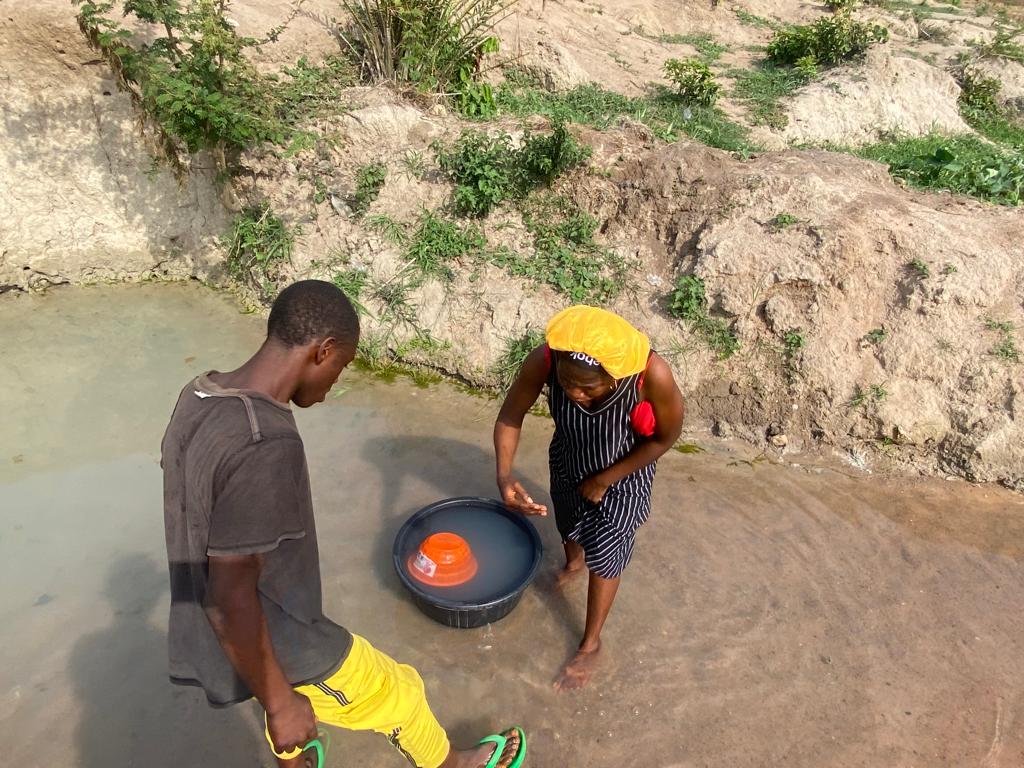
THIRTY-FIVE-YEAR-OLD Moses Joy takes the same route daily to access water from the nearby stream. It has been a daily ritual. All her life, she has been used to the same water source as the river, which remains the only available water for domestic use by residents of the Shishipe community.
Shishipe, a local neighbourhood in Katampe area of the Federal Capital Territory (FCT), struggles for potable water like several other smaller communities in the territory.
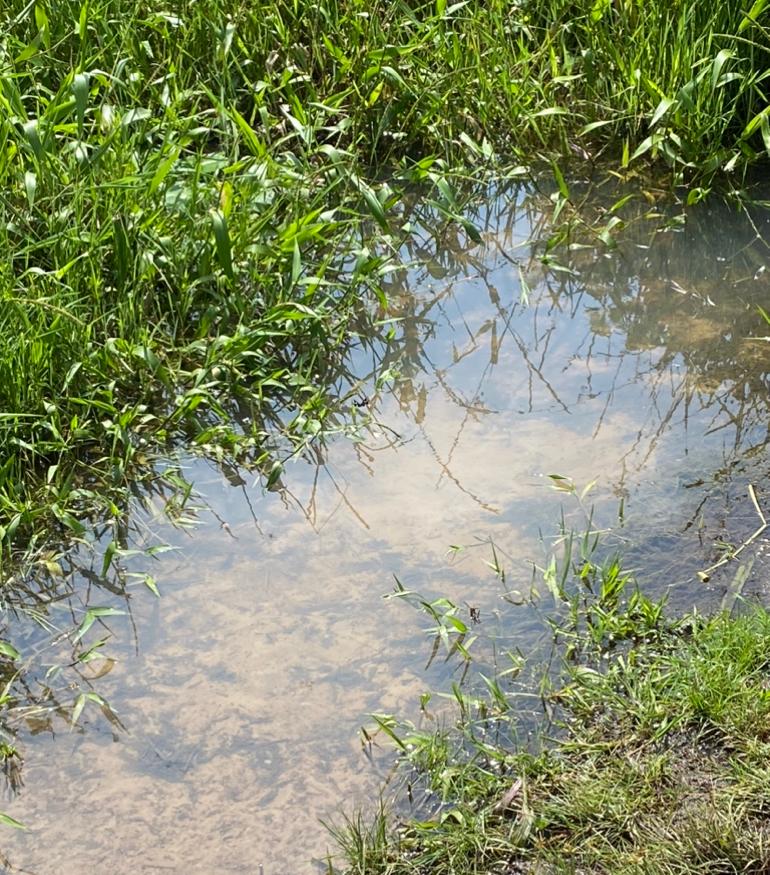
Joy, 35, fetching water from a stream on the outskirt of the village. Joy says she knows the consequence of feeding on such water as her children have been diagnosed with water-borne diseases but has no alternative. Picture: TheICIR/2023
Multiple sources in the community told The ICIR that despite the impurity level of the river, over 500 residents rely on it. Due to the river’s location on the outskirts of the village, residents would usually do a long trek to get some scoops while also serving as a water source for herds.
The situation is much worse during high demands when the stream becomes muddy and dirty. Besides, not only are the residents of Shishipe community confronted with no access to clean water, but they are also vulnerable to water-borne diseases due to unhealthy practices of open defecation.
Cholera, an endemic disease, is still one of the major diseases that affect Nigerians, particularly in the rural region of the country. The disease, according to the World Health Organisation (WHO), isan acute diarrheal infection characterised, in its severe form, by extreme watery diarrhoea and potentially fatal dehydration.
In 2020, the Nigeria Centre for Disease Control (NCDC), a body leading the national response to outbreak of cholera and other epidemic diseases across states in Nigeria, attributed the surge in cholera cases in the country to poor access to clean water, open defecation, poor sanitation, and hygiene.
“This is the only water we rely on; we drink, wash and bathe with the same water. Although we would have preferred a working borehole, we are still happy that we can still feed on this.
“The government came to construct a motorised borehole for us many years back, but it didn’t last long before it got damaged. And ever since then, we are back to our usual hustle for water,” Joy narrated.
But there was more to Joy’s predicament. She almost lost her two children. On several occasions, she was advised by health workers to stop feeding her daughter with water from the stream.
Sometime in 2022, a medical centre in Katampe diagnosed her two children with Cholera. They were admitted for two weeks before being discharged. “I was told it’s the water they drank, and needed to stop them from further taking the water, but that was just a mere talk as we have no other way to get water in the village.”
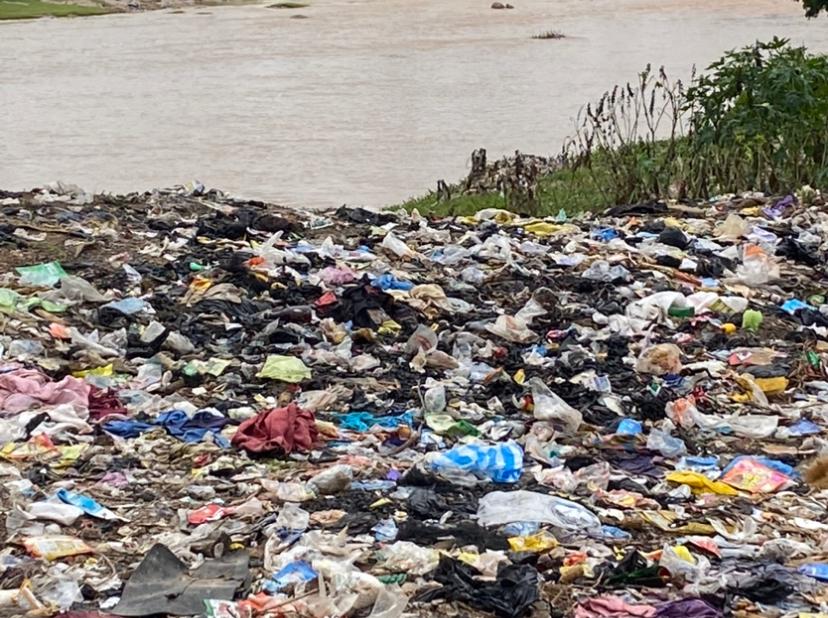
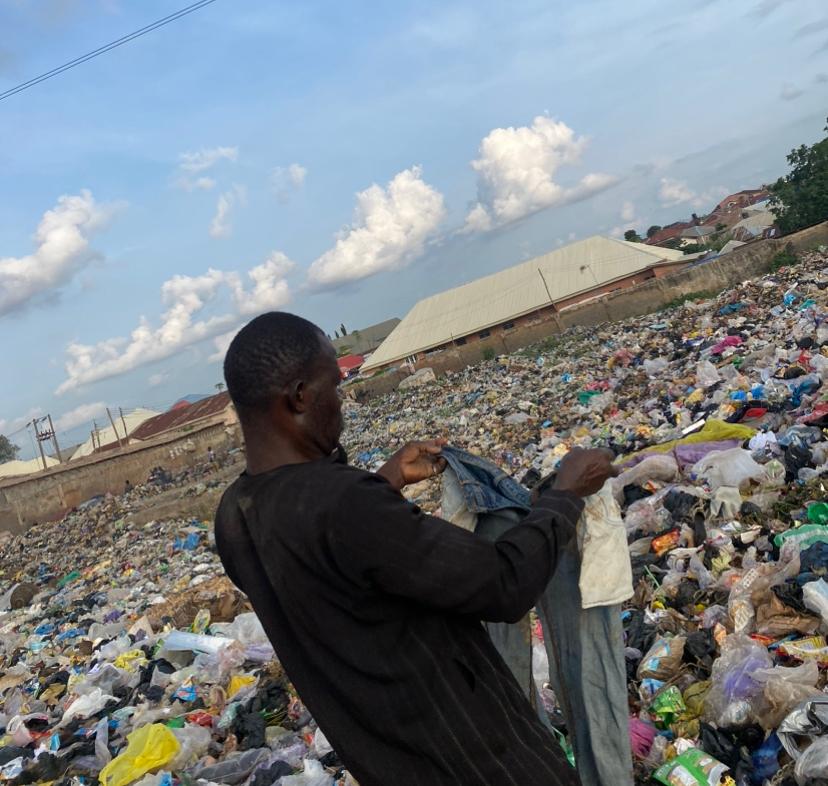
A section of the river in Dagiri, Gwagwalada Area Council, turns into an open toilet and dumping site. Picture: The ICIR/2023
Dagiri
This is the situation of some other communities visited by The ICIR. For instance, in Dagiri, a neighbourhood in Gwagwalada Area Council, a section of the river that runs through the area has been transformed into an open toilet and a dumpsite.
A resident who identified himself as Sheidu said many individuals who lack toilets in their homes resort to using the side of the erosion gully as a place to defecate.
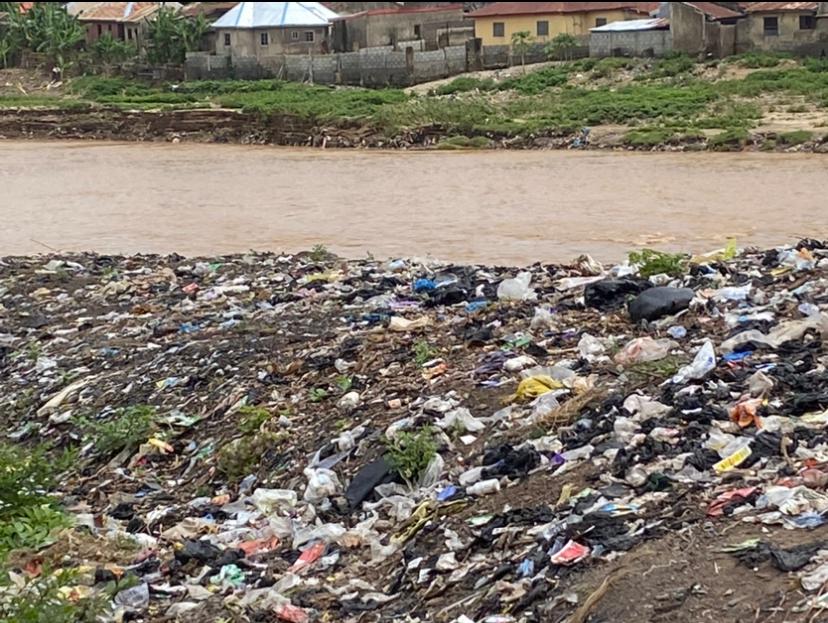
Another view of the riverside turns into an open toilet, dumpsite. Pc: TheICIR/2023
Sheidu further explained to The ICIR thatthe riverside has been turned into a dumpsite by most residents living nearby.
The FCT, in June 2021, recorded 91 suspected cases of cholera and seven deaths in the Abuja Municipal Area Council (AMAC) due to the same problem.
Former Acting Secretary of FCT Health and Human Services Secretariat (HHSS), a medical doctor, Mohammed Kawu, while speaking to newsmen in Abuja, listed Bwari and Gwagwalada among the two other affected areas. About a month later, the Federal Capital Territory Administration revealed 514 suspected cases, of which eight laboratory investigations were confirmed to be cholera.
Outbreak since 2021
Nigeria is one of the 13 African Countries battling Cholera over time. The current outbreak has been ongoing since 2021, when the country reported 111,062 suspected cases, which include 3,604 deaths, according to data from NCDC.
The cases were reported largely among children of the 5-14 age group across 33 states and the FCT.
The data reveals that both genders affected share the same percentage. Four states among the 33 affected states plus FCT, which are Bauchi, Jigawa, Kano and Zamfara account for 53 per cent of all cumulative cases.
Bauchi, which topped the total number of cases reported, had 19,558 cases, translating to 18 per cent of the actual cases, while, Jigawa (15,141), Kano (12,116) and Zamfara (11,931) represented 14, 11 and 11 per cent.
Meanwhile, the NCDC recorded 1,286 suspected cases in the FCT, while 77 deaths were confirmed. There are projections that the figure might have been high if all residents had visited the public health centre or hospital to complain about the waterborne disease.
Comparing the cases recorded to 2022 data, the country, between January 1, 2022, to December 30, reported a cumulative number of 23,763 suspected cases of Cholera with 592 deaths across 32 states plus FCT. Although there were concerns over the number of cases reported, the data shows a significant decline to 2021.
The 2022 reported cases were on a high between July and November before a sign of decline in December.
In September 2022, the country recorded 7,322 suspected cases with 171 suspected deaths, making it the highest within that period. Likewise, in December, Nigeria recorded its lowest number of cases as it reported 219 suspected cases with nine suspected deaths.
Data further shows that 5-14 year-old children were mostly affected, while 49 per cent of the reported suspected cases were male, and 51 per cent were females. Borno, having 12,465 cases, led the way as the state with the highest number of cholera cases. Yobe (1,888 cases) and Katsina (1,639 cases) joined the state in the three top most plagued states.
These three states, together with Gombe (1,407 cases), Taraba (1,153 cases) and Kano (1,131 cases) account for 83 per cent of the total reported suspected cases.
Mapping out Cholera cases across the country so far in 2023
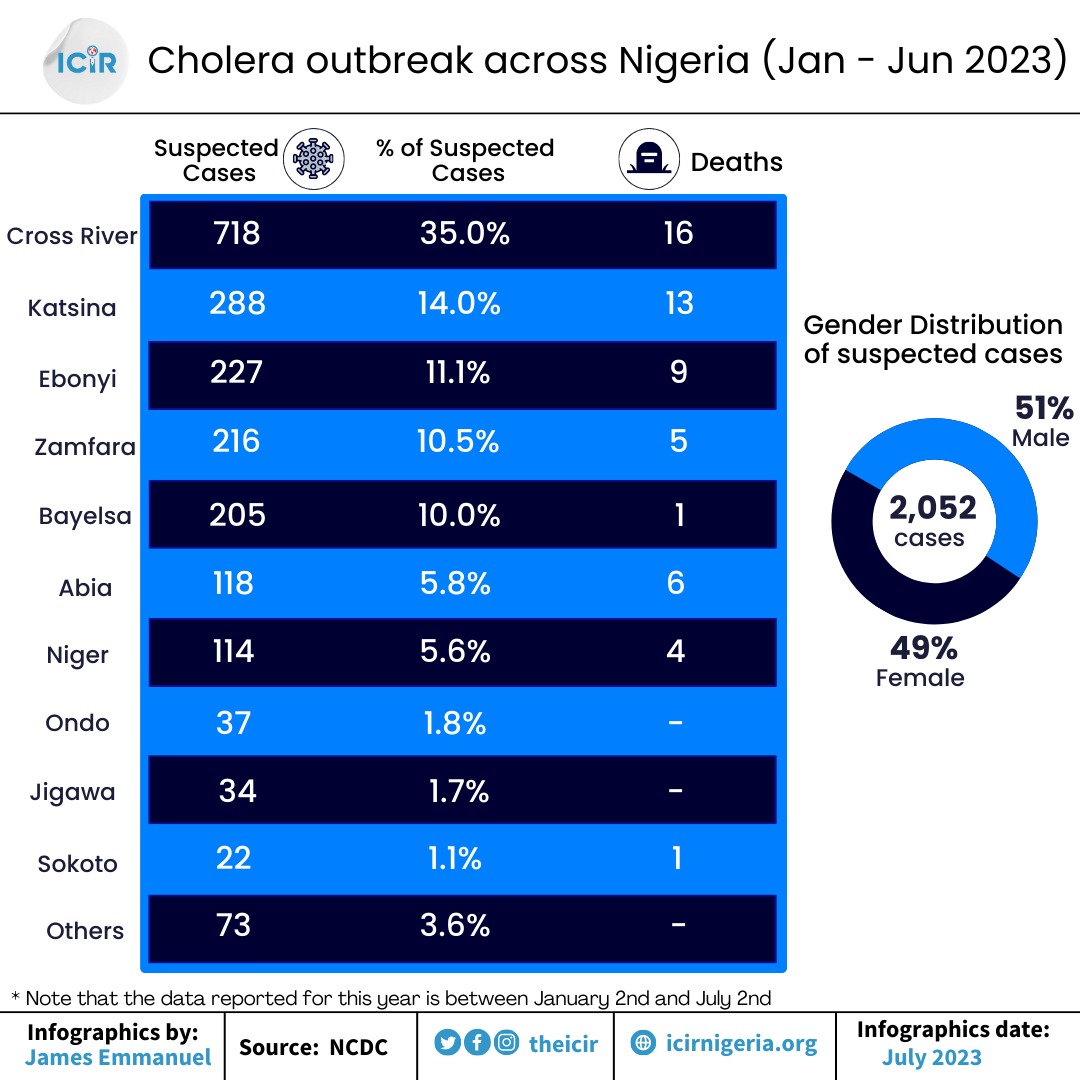
Suspected cholera cases across the country from Jan-June, 2023. Infographics by James Emmanuel.
Already in 2023, the country has recorded several suspected cases of Cholera across 24 states. As of July 2, a total of 2,052 suspected cases, including 55 deaths, have been recorded. And the common story here is that children under age were mostly affected by the outbreak.
Out of the 22 states, Cross River, with 718 cases accounts for 25 per cent of all the suspected cases thus far. According to the data, Obubra Local Area of the state reported the highest number of suspected cases of 515 cases, translating to 25 per cent of all the suspected cases.
However, early this year, on January 21, The ICIRreported how a cholera outbreak in Obubra LGA was said to have claimed over 60 lives. Just like The ICIR investigations reveal that residents of some FCT communities depend on a river as the only source to get water, inhabitants of Obubra also live on a river as the only water source.
About three months after the crisis, the LGA led other affected LGAs as the most vulnerable areas. Katsina, Ebonyi and Zamfara had 288, 227 and 216 cases, respectively.
Other communities with similar woes
Issa Rose, a twenty-six-year-old resident of Bassa, alongside her younger sister, fetching water from their only water source. Pc: TheICIR/2023
Ikeh Bassa
About a year after The ICIR first published a story detailing how Ikeh Bassa faced several hurdles in accessing potable water, this reporter visited the town and discovered that the community still shares water with the herd.
Issa Rose, a twenty-six-year-old resident of Bassa, has been touring the bush to fetch water from the river since she was four years old. When she eventually gets the water, she and her family use it for sustenance.
Even after getting married, Rose maintains this routine and supplies water from the muddy source to her two children. This persists despite doctors instructing her against the actions.
“I have been to the hospital on several occasions to treat my children anytime they complain of stomach ache or other symptoms. I have been told it’s cholera; sometimes, the Doctor will say it’s diarrhoea, fever or malaria.
“This happens almost every time, and I would have to spend my hard-earned money from farming to treat them. Some of us that are adults are used to it, and we hardly fall sick, but our kids fall sick almost every time.”
A UNICEFreport stated that although about 70 per cent of Nigerians are reported to have access to basic water services, more than half of these water sources are contaminated, meaning that over 60million Nigerians drink contaminated water, which has generally been linked to several deadly diseases, including cholera.
Ikeh Bassa water source
Ikeh Bassa Youth leader Musa Ibrahim described the community as a hunter’s dog who, despite all his efforts to make the hunter achieve his goal, doesn’t benefit from it.
He said, “Not that we are not casting votes, we are casting votes and participating in elections, but at the end of the day, they will leave us as the hunter’s dog that we go to the farm and catch, after catching even to eat the bone, they won’t allow it to eat it.”
He explained that the residents have tried their best to seek the government’s assistance to construct a borehole so as to stop drinking stream water but didn’t yield a positive result.
The community has also written to the Kwali Area Council, stating their plights, but the government has turned deaf ears.
A letter addressed to Kwali Area Council requesting potable water, others. PC: TrackaNg/Twitter.
In a letter addressed to the council and received on March 9, 2022, the community spelt out their needs, including water, hospital and road.
The ICIR reports that N50 million naira was budgeted in 2021 for the construction of motorised boreholes in Kwali and Kuje Areas Councils. However, Ikeh Bassi hasn’t benefited from the supposed allocation.
In Patenka area of Berger junction, Lugbe, the issue of open defecation and waste dumping continues unabated. Pc: The ICIR/2023
Lugbe and the challenge of waste management
Aside from poor access to potable water, waste management is a great challenge in the Patenka area of Lugbe, as humans find themselves in a constant struggle for space with waste and filth. This dire situation affects traders who sell at the entrance of the market and passersby who pass through the road to Lugbe Zone 9.
Sadly, the community has reached a point where the traders have reluctantly accepted their fate, as ‘Baban Bola’ – young men working as independent waste collectors – and local cleaners take charge of the location.
WASH Burden
An infographic showing the percentage number of people with access to WASH services between 2018-2021.
While reports have shown that Nigeria has recorded some improvement around the issues related to Water Sanitation and Hygiene (WASH), there are growing concerns with regard to Nigeria achieving the Social Developmental Goal (SDG) by 2030.
According to a report published in 2022 by the Ministry of Water Resources, with data from the WASHNORM 2021 survey sampling over 24,600 households across the country, only 10 per cent of Nigeria’s population had access to integrated basic WASH services, which has serious negative health and security implications on the populace as well as in the attainment of the Sustainable Development Goals (SDGs 6) by the federal government.
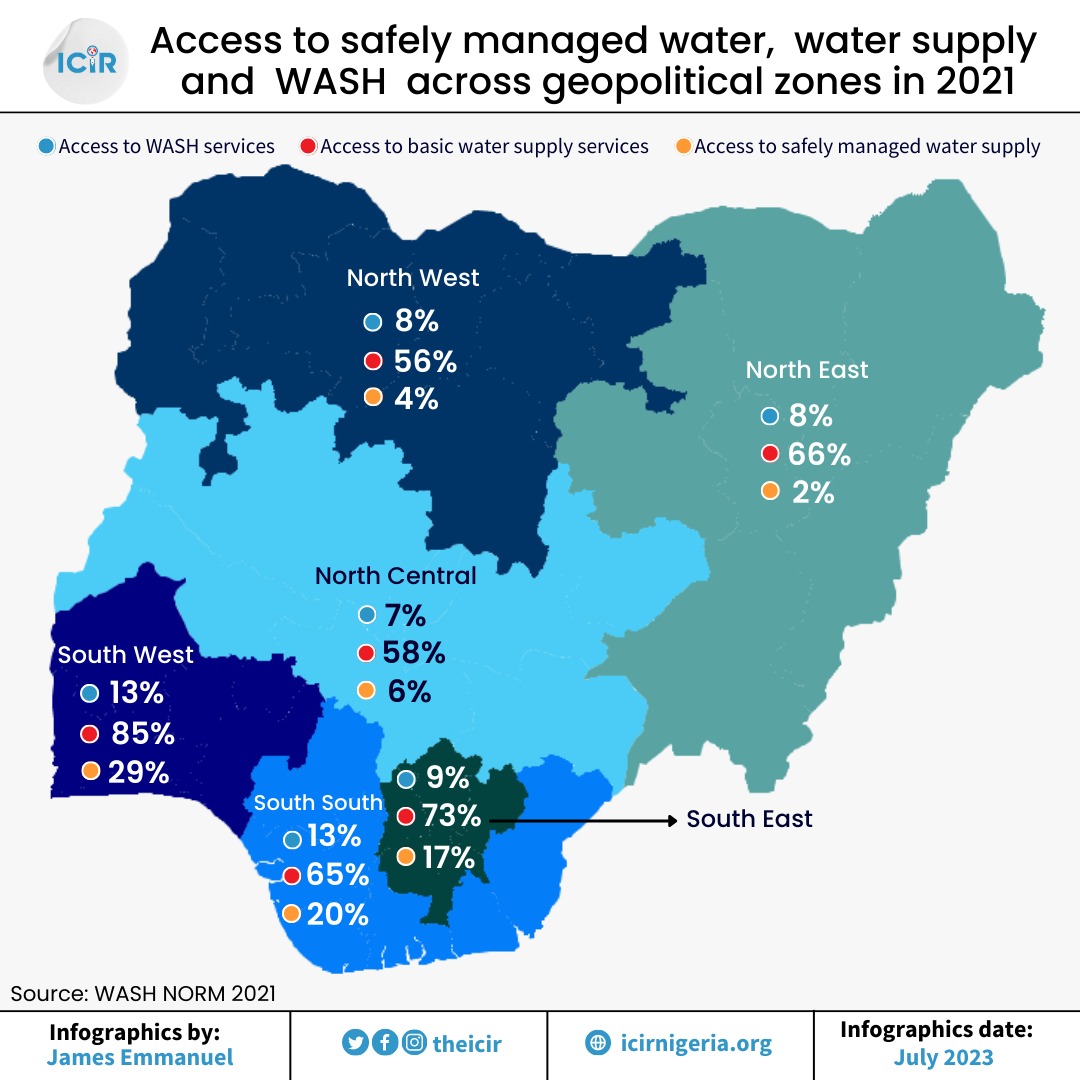
An infographic showing access to safely managed water, water supply and WASH across geopolitical zones in 2021.
Approximately 179 million Nigerians, which accounts for up to 87 per cent of the population, lack access to safely managed drinking water services. The situation is particularly dire in the North, where access remains insufficient, with the Northeast having the lowest access rate at just 2 per cent. In contrast, the Southwest region has the highest access rate at 29 per cent.
However, access to basic water supply services stood at 67 per cent of the population. The predominant sources of drinking water were boreholes/tubewells, utilised by approximately 37 per cent of the households while 11 per cent of the population use pipe-borne water and just 4 p use water from a source that is piped into their premise. Likewise, about a quarter of the population (25 per cent) still depend on unimproved and surface water supply for their daily water needs.
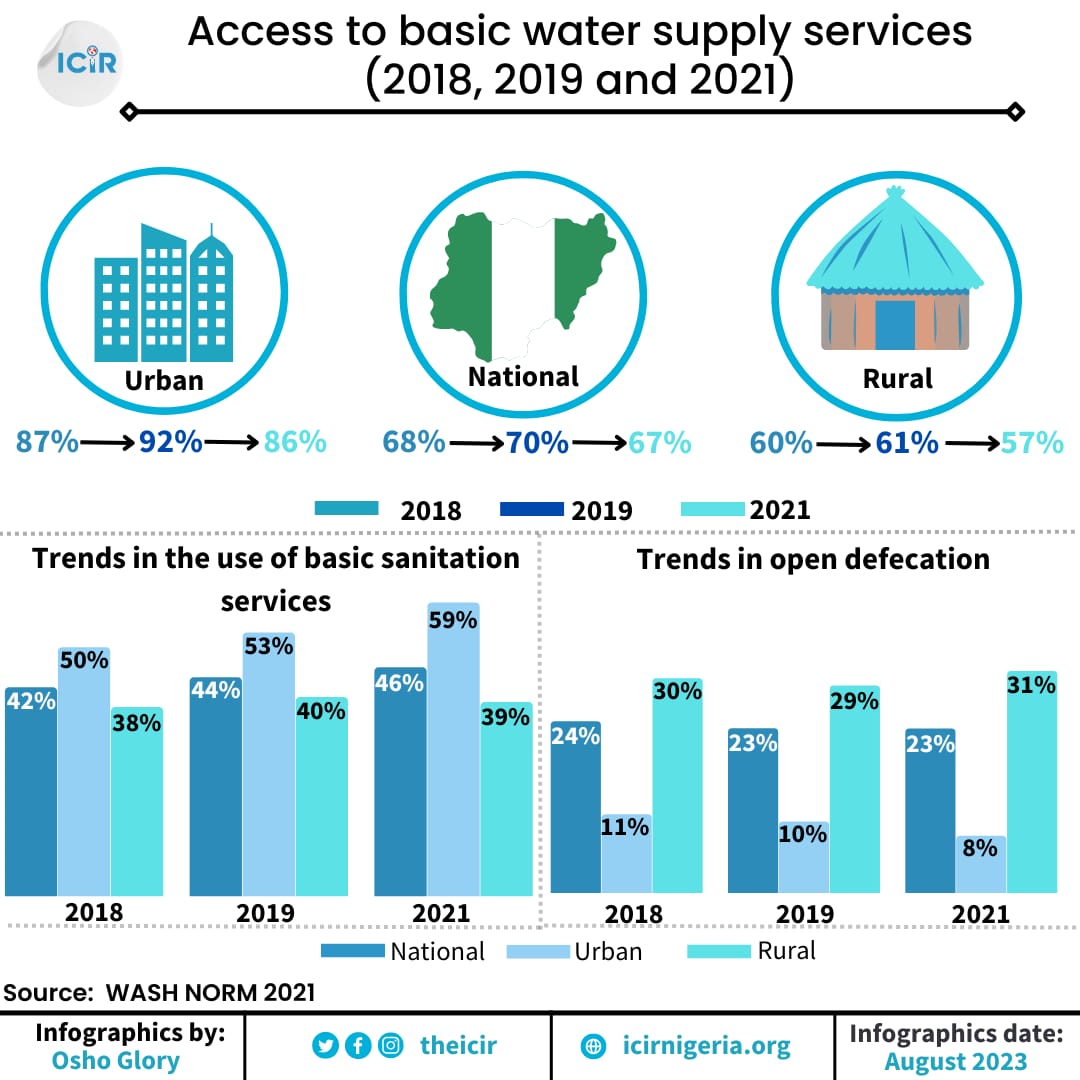
An infographic showing the percentage access to basic water supply and services, trends in the use of basic sanitation and rate of open defecation in Nigeria between 2018, 2019 and 2021.
Comparing this data with WASHNORM 2019 report, there is a 3 per cent decline as 70 per cent of people had access to basic water supply services in 2019. In 2018, 68 per cent of the population had access to basic water.
Similarly, open defecation remains a challenge in the country, showing that as many as 48 million Nigerians across the country still practise open defecation. This data represents 23 per cent of the population.
WASHNORM survey showed that 46 per cent of the population was found to have access to basic sanitation services in 2021 compared to 44 per cent in 2019, representing a 2 per cent (6.9 million people) increase in the number of persons accessing basic sanitation services.
Despite the increase in the number of people with access to basic sanitation services, the proportion of people practising open defecation in the country has barely changed since 2019, with the number increasing from 46 million in 2019 to 48 million in 2021.
In FCT, 30 per cent of people sampled practice open defecation, while 52 per cent of the population have access to basic sanitation services. Ebonyi tops the list of states with the highest practice of open defecation, as 73 per cent defecate openly and only 14 per cent of the population have access to basic sanitation services in the state.
Meanwhile, Zamfara state, only recorded 1 per cent of the sampled people practising open defecation. This was despite the fact that the percentage of people having access to basic sanitation in the state stood at 43 per cent.
Just like Shishipe’s neighbourhood, where water facilities constructed by the government didn’t last a year, 38 per cent of all water supply facilities across the country were not functional at the time of the survey.
WASHNORM estimated the number of water points across the country to be 2.3 million water, with about 60 % located in rural areas and 40% in urban areas. 31 per cent of these facilities were motorised boreholes and about 1 in 10 (11 per cent) of the motorised boreholes were solar-powered. Handpump boreholes, including force-lift hand pump boreholes, make up only 13 per cent of water points in Nigeria.
The rapidly growing population and impact of Covid-19 were factors mentioned to be dwarfing the efforts made by the government so far.
The report warned that without addressing the WASH needs, cholera and other WASH-related infections and the associated childhood morbidity and mortality rates will remain high above the regional and global average.
Looming outbreak; expert warns
Cholera can be dangerous in children, particularly in areas where access to clean water, sanitation, and healthcare services is limited, according to a Public Health Physician, Dr Adewumi Babatunde.
Children are more vulnerable to severe complications and have a higher risk of mortality due to several factors, as highlighted by the Physician.
“Nigeria faces significant challenges in the implementation of WASH initiatives, particularly in underserved regions and among marginalized populations. Access to clean water remains limited, especially in rural areas, due to inadequate infrastructure and poor water treatment facilities.
Sanitation coverage is low, with open defecation practices persisting and insufficient proper toilet facilities. Hygiene practices, including handwashing, need improvement. Insufficient funding and investment hinder progress in WASH infrastructure and programs.
According to him, strengthening institutional capacity for policy development, coordination, regulation, and monitoring are a few of the crucial steps to be taken to improve health.
Speaking on possible solutions, Babatunde advised that Government at all levels should conduct public awareness campaigns to educate the population about cholera prevention and control measures is essential.
He added that strengthening of healthcare systems and improving vaccination coverage would help in putting a stop to the outbreak.
“Consideration can be given to vaccination campaigns targeting high-risk areas or vulnerable populations. Oral cholera vaccines are effective in preventing cholera outbreaks and can be administered to individuals or used as part of a mass vaccination strategy.
Babatunde further explained that Citizens can ensure they have access to safe drinking water by treating water through boiling, filtration, or adding chlorine.
“Proper sanitation practices, such as using toilets or latrines, help prevent the contamination of water sources and the spread of cholera. People should support efforts to improve sanitation infrastructure and discourage open defecation.
He also noted that by reporting early to hospitals, cases and spread of Cholera can be mitigated, adding that citizens who lack access to safe water should get vaccinated against Cholera as a way of preventing themselves from possible outbreaks.
THE Nigeria Artificial Intelligence Research Scheme (NAIRS), launched by the Federal Ministry of Communications, Innovation, and Digital Economy, invites researchers and startups working in AI.
It aims to finance 45 teams of businesses and researchers so that they can pursue additional chances to develop their work and build a sustainable AI ecosystem in Nigeria.
These research areas include agriculture, finance, healthcare, sustainability, utility, education and workforce with up to N5 million grant.
The initiative aims to foster a vibrant and sustainable AI ecosystem in Nigeria by providing financial support to facilitate knowledge sharing and collaboration among individuals and organisations in the AI industry.
The consortium should include a startup or technology company, a Nigerian academic researcher or a foreign researcher.
Also, research must have a proposal that aligns with the Federal Ministry’s AI priority areas.
The applicant must have a detailed proposal outlining the project and its potential impact on the Nigerian economy.
The deadline for the submission of the application is November 15, 2023. Interested researchers can apply here
THE recruitment of repentant criminals as constabularies by the Kano state government has sparked outrage among Nigerians on social media.
Several Nigerians, particularly on X, expressed dismay over recruiting individuals with a criminal record and or shady pasts to police communities.
On Monday, October 16, The ICIR saw pictures of Nasiru Abdullahi, popularly known as Chile Maidoki, donning a Kano State constabulary uniform alongside the State Police Command Public Relations Officer, Abdullahi Kiyawa.
Sometime this year, Abdullahi and two other notorious criminals were declared wanted by the Kano State Police Command with a bounty of N100,000 each.
A subsequent statement by the command confirmed that he surrendered himself to the command upon hearing the bounty placed on his head.
L-F: Nasiru Abdullahi and the commissioner of Kano Police Command, Usaini Gumei. PC; Kano Police/X
Also confirming the recruitment, a report shared by the Nigeria Police Force spokesperson Ademuyiwa Adejobi via his X handle revealed that 50 repentant thugs were selected from the 222 thugs that decided to embrace peace offered by the state command’s commissioner of police, Muhammad Usaini Gumel.
According to the report, Gumei, while addressing the selected repentant thugs during the passing out parade on Monday, October 16, said the initiative resulted from the repentant thugs’ commitment to ensuring peace in the state.
However, the Force spokesperson claimed that the constabularies weren’t Police officers but a community-based initiative by the state government.
“They are not policemen. I was told, and it’s been in the news, that they are repentant individuals who have been mobilised into the constabulary scheme of Kano state. The constabulary scheme is not Police but a community-based initiative.”.
Reacting to this development, an X user, Akpan Emmanuel, expressed hope that Kano residents would be safe from the hands of Police brutality and harassment.
“I hope Kano residents will be safe… I hope they won’t increase the quota for Police brutality. I just hope. So help us God,” he wrote.
Another X user, Olorumfemi Taiwo, said: “There are patriotic young, educated and sound citizens, but Nigeria always rewards criminals generously.”
Adekunle expressed his concern over the recruitment of thugs as constabularies, noting that the thugs will use the uniform to terrorise citizens.
He wrote, “Recruiting repentant thugs is a serious security concern to the nation. Most of these boys will use the uniform to settle scores and terrorise the citizens. I hope we can get better.”
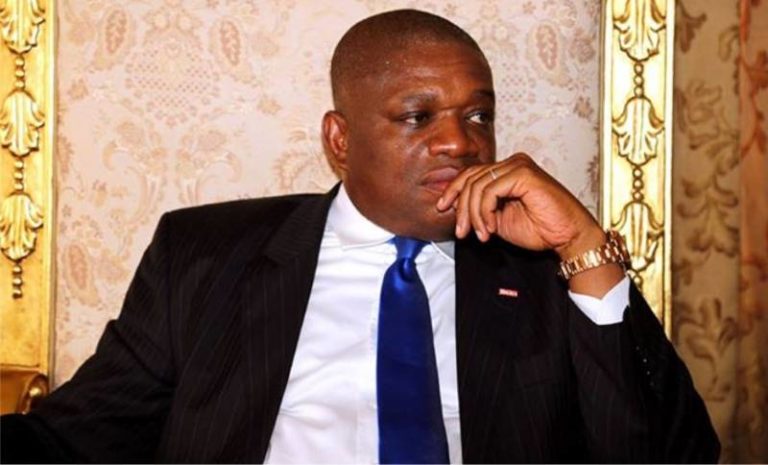
THE Labour Party (LP) senatorial candidate for Abia North in the 2023 election, Nnamdi Iro Orji, has asked the Appeal Court to nullify Orji Uzor Kalu’s election as senator representing the district at the National Assembly.
The LP candidate alleged the election did not adhere to the Electoral Act 2022.
In the appeal filed by his lawyer, Bert C. Iqwilo, Orji claimed that the election was not held in some polling units in addition to other violations of the Electoral Act.
“Without the record of accreditation by BVAS and the voters register, there is no election. These are basic provisions of the Electoral Act, 2022 and the regulations made by INEC,” he stated.
He pleaded with the appellate Court to resolve the issue in his favour.
Kalu was declared the election winner by the Independent National Electoral Commission (INEC), with 30,805 votes, while Nnamdi Iroh received 27,540 votes in the February 25 election.
The ICIR reportsthat sacked Adamawa Senator Ishaku Abbo had accused Senate President Godswill Akpabio of orchestrating his removal from the 10th Senate.
In what he described as a targeted move against him and four colleagues, Abbo stated that his removal was retaliation for opposing Akpabio’s Senate Presidency aspiration.
He alleged the four targeted senators include Orji Uzor Kalu.
He said, “I have it from a reliable source that myself and four other senators within the fold of the ruling All Progressives Congress (APC) will be removed from the Senate through rulings from the courts, all because of working against the emergence of Akpabio as President of the 10th Senate.
“I won’t mention the names of all the four other ones targeted, but the next in line is Senator Orji Uzor Kalu.”
Abbo, a member of the Progressives Congress (APC), made this allegation on Monday, October 16, while speaking with journalists shortly after his sack by the Court of Appeal.
Meanwhile, Akpabio denied the claim. Speaking through his spokesperson, Eseme Eyiboh, the Senate President said the outcome of any court proceeding is a function of the evaluation of facts and evidence within the province of the rule of law.
“It is uncharitable for Senator Abbo to pour his frustrations on Senator Akpabio or anyone else and his action betrays the bile he has for Senator Akpabio.
“Senator Akpabio, for emphasis, has no ill will towards any of his distinguished colleagues, and as he has said in the past, the embers of the leadership election have been buried and replaced by the fraternal bond of nation-building he shares with the overwhelming majority of senators,” he said.
The ICIRreported that the Court of Appeal in Abuja sacked Abbo, who represented Adamawa North Senatorial District. In its ruling on Monday, October 16, the Court declared Amos Yohannah of the People’s Democratic Party (PDP) as the winner of the senatorial election.
INEC initially declared Abbo as senator-elect in February 2023, but Yohanna challenged the decision at the Election Petition Tribunal.
Despite dismissing Yohanna’s plea, Abbo, represented by his lawyer, Johnson Usman, appealed the tribunal’s ruling through appeal number CA/YL/EP/AD/SEN/06/2023 at the Appeal Court.
The Court of Appeal concurred with Usman that, in light of Section 137 of the Electoral Act of 2022, the results showed that the Electoral Act was not followed.
The Court, therefore, took the illegitimate votes away from the candidates and ruled that Yohanna and the PDP had received the majority of valid votes to win the election.