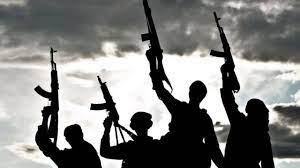
THE Nigerian Army has rescued four students of the Federal University Gusau, Zamfara State, who were reportedly kidnapped late Saturday, October 14.
This was disclosed in a statement on Sunday, October 15, by Yahaya Ibrahim on behalf of the Force Information Officer, Operation Hadarin Daji.
Around 9 p.m. on Saturday, some students were reportedly kidnapped from an off-campus dormitory in Gusau’s Sabon Garin Damba neighbourhood, a few kilometres from the university’s main campus.
Ibrahim claimed that the Nigerian Police and the Army joined forces to create a blocking position near a potential retreat path leading to a gunfight with the militants.
“In their timely and swift response to distress calls, the combined troops of operation Hadarin Daji in conjunction with Nigerian police in Zamfara state has again rescued four kidnapped students of the Federal University Gusau who were abducted by terrorists at the dark hours on Saturday, October 14 2023, from their off-campus residence at Sabon Gida under Damba area of Gusau LGA in Zamfara state.
“This was achieved as the troops responded swiftly to distress calls on the kidnapped students by terrorists. Troops immediately mobilised and formed a blocking position at a possible withdrawal route, leading to a heavy gun duel with the terrorists,” the Army stated.
The statement added that the superiority of the troops forced the terrorists to abandon the victims and flee.
It added that during the encounter with the terrorists around 12 a.m., two students could escape while the troops safely rescued the other two students, a male and a female.
The ICIR reported how bandits abducted several Federal University of Gusau students.
The bandits invaded the private hostels of the students in the Sabon-Gida community of the Bungudu Local Government Area of the state in the early hours of Friday, September 22. Sabon-Gida is a few meters away from the university.
Sources in the school disclosed to The ICIR that the bandits went away with no fewer than 25 students (predominantly female students).
Although the number of students abducted by the bandits was believed to be higher, it wasn’t the first time terrorists would kidnap students from the university.
Shortly after they were kidnapped, security forces rescued six of the abductees (all females).
The ICIRreported that the security forces – Joint Task Force of Operation Hadarin Daji – rescued seven more students from their captors, according to Zagazola Makama, a publication specialising in counter-insurgency in the Lake Chad region.
On Friday, June 16, bandits kidnapped five students from the institution. The incident led to student protests, resulting in a road blockade and leaving many motorists stranded for several hours.
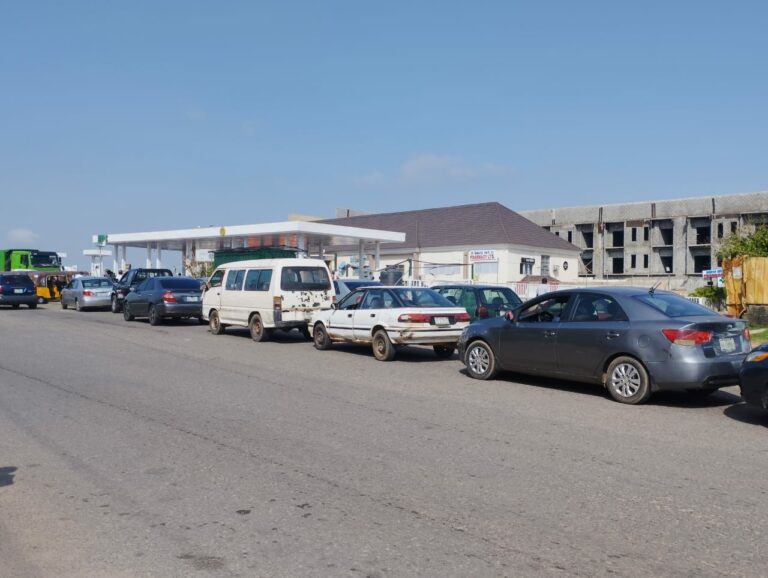
THE price ceiling regime enforced by the Nigerian National Petroleum Company Limited (NNPC) in a deregulated market is pushing more marketers out of business, with queues lingering in some filling stations nationwide.
The ICIRreported how theNNPC said it had no plans to enforce price increases despite rising global oil prices ($87.25 per barrel as of Thursday, October 12), which should affect petroleum prices in a deregulated market.
The development raised concerns about the fate of marketers who compete with NNPC- many of whom struggle to access the dollar at the official exchange rate.
The national oil company, in a statement, said, “We at NNPC Retail value your patronage, and we do not have the intention to increase our PMS pump prices as widely speculated. Please buy the best quality products at the most affordable prices at our NNPC Retail Stations nationwide.”
Currently, the Federal Government is using the NNPC to manage market shocks and maintain a monopoly of the downstream segment of the oil and gas industry.
THE ICIR findings have also shown that the NNPC, as a national oil company, has access to dollars at the official rate through direct sales and direct purchase agreements. Conversely, most marketers don’t have similar access to dollars despite competing with the NNPC.
The National President of the Petroleum Retail Outlet Owners Association of Nigeria (PETROAN), Billy Gills-Harry, told The ICIR that there was a gap in the fuel cost, and the gap was being bridged by the state official.
“We have 19,000 marketers under our union. As of yesterday, only 3,000 were able to sell. They don’t have access to dollars, and the price is out of their reach currently. Many of our members who were given licence to import cannot because they don’t have access to dollars. Another key factor is that the landing cost is higher than projected. We’re resorting to a stage where NNPC becomes the major importer, and marketers will be out of business.”
AFDIN Petroleum Services Limited selling along Kubwa Expressway of the Federal Capital Territory under lock and key during the week.
President Bola Tinubu had announced the removal of fuel subsidy in his inaugural speech on 29 May.
However, government intervention in price-fixing products in a deregulated market is not a welcome development for most marketers.
The Executive Secretary of the Major Oil Marketers Association of Nigeria (MOMAN) told The ICIR that the government intervention could have come in providing incentives to alternative Compressed Natural Gas (CNG) and not pricing, which puts other marketers’ businesses at risk.
On October 6, 2023, the National President of the Petroleum and Natural Gas Senior Staff Association of Nigeria (PENGASSAN), Festus Osifo, said the Nigerian government had restored the subsidy on petrol despite the official government policy of ending the subsidy regime.
What data has revealed
Despite not being publicly displayed by the government, marketers who spoke to our correspondent said the landing cost is N720. The margin between N720 and the official price by the national oil company – N617 – is being paid by someone. The addition of freight costs, lingering costs, distribution margin, and ancillary costs by the Nigerian Midstream Downstream Regulatory Authority (NMDPRA), Nigeria Port Authority (NPA) and Nigerian Maritime Administration and Safety Agency (NIMASA), as well as marketers’ margins, stands as about N90 to N105, as provided by many marketers. When these charges are added, the price will exceed the landing costs.
The Ammasco filling Stations in Kubwa selling at N617 per litreduring the week.
Fuel queue yet to surface in Lagos
Fuel queues are yet to surface in Lagos State, although other states like Abuja have seen queues.
The ICIR visited filling stations along the Lagos-Ibadan Expressway, from Ojodu Berger bus terminal to Estate Bus Stop and can report that queues are yet to surface in the filling stations.
Commuters and other petrol users can quickly buy the product without struggle.
Our correspondent observed that the filling stations use more than one pump to dispense fuel to motorists.
AP filling Station selling at N578 per litre along Lagos-Ibadan Expressway during the week.
Some motorists even drove off from filling stations where a few vehicles drove in to buy fuel, lending credence to fuel availability in the state and most probably its neighbour, Ogun.
In all the filling stations visited, the pump price of fuel sold is between N570 and N580, meaning no hike in pump price yet.
A fuel attendant, who gave his name as Kehinde, in one of the filling stations visited, told TheICIR that the station had enough stock.
However, he said, “If we received instruction from our boss that we should stop selling for now because of the queues in other states, we would stop selling.”
The ICIR can also report that transportation fares have not been hiked.
Rainoil, Opposite Mountain Top University, Besides Mountain of Fire and Miracles (MFN), Lagos-Ibadan Expressway
Expertsexpressconcerns
For many experts, subsidy payment has returned amid the government’s denial.
“Yes, we’re paying subsidy, and it’s between N135 and N140 per litre,” an oil sector governance expert, Henry Ademola Adigun, told The ICIR.
A Public Affairs Analysts and a former Presidential aide to former President Goodluck Jonathan, Reuben Abati, said in his article titled:” Tinubunomics: Matters Arising’ that the removal of fuel subsidy has moved the pump price of petrol (PMS) from N186 in May to over N500 and as high as N617 in July.
“What is quoted is the fact that there is no provision in the 2023 Appropriation Act for subsidy beyond 1 June, and the fact that the Petroleum Industry Act (PIA) states that petroleum prices must be determined by market forces.
Fuel queue at the NNPC filling station at the Central Business District, around Church Gate Abuja on Wednesday, October 11
“Our neo-liberal economists praised these forces to high heavens. By August, the landing cost of PMS had risen to about N720 per litre. The same government saying that fuel subsidy had gone has since been forced to provide subsidy. Please, what happened to the market forces?”
Lead Director of the Centre for Social Justice (CSJ), Eze Onyekpere, told The ICIR that the price of crude had increased in the global market, stressing that the ‘Group Managing Director of the NNPCL was not telling Nigerians the truth.
Eze said, “We’re returning to an era where opaqueness of the National Oil Company could be the order of the day with the NNPCL being the sole importer.”
Speaking on the subsidy concerns, an economist and the Chief Executive Officer of CFG Advisory, Tilewa Adebajo, said, “Of course, there is subsidy. I get information from the world markets as all prices go up, the subsidies will erode, and you have to increase that. But the other side, which we never consider, is that when the oil prices drop, the fuel price will also drop. So we need to understand the dynamics, and that’s not what we’ve been able to deal with.
NIGERIA will face a higher percentage of debt to gross domestic product (GDP) burden in the coming year, according to the International Monetary Fund (IMF).
IMF gave the projection in its October 2023 report on ‘Africa: Special Issue: In Pursuit of Stronger Growth and Resilience.’
It indicated that Nigeria’s government debt would rise by 4.3 per cent of its GDP in 2024 from 38.8 per cent in 2023.
Nigeria’s government debt to GDP has risen consistently from 21.9 per cent in 2019 to 34.5 per cent in the Covid year, to 36.5 per cent in 2021 and 39.6 per cent in 2022.
Still emerging from the COVID-19 pandemic, a sluggish global economy, worldwide inflation, high borrowing costs, and a cost-of-living crisis have hit Nigeria and other countries in sub-Saharan Africa.
Inflation is still too high, borrowing costs are still elevated, and exchange-rate pressures persist, even as political instability remains an ongoing concern.
The IMF report also projected that Nigeria’s real GDP would slightly grow from 2.9 per cent this year to 3.1 per cent in 2024.
Nigeria’s real GDP, an inflation-adjusted measure that reflects the value of all goods and services produced by an economy in a given year, is expected to reach $489.80 billion by the end of 2023 and to peak around $504.99 billion in 2024.
Arising from the debt burden Nigeria and other low-income countries are carrying, the G-24, a group made up of 38 members plus China, had said not only were there high and increasing public debt levels with many developing countries but also that the countries carried unsustainable debt burdens, The ICIRreported.
The group, however, urged the Bretton Woods Institutions (BWI) to provide a durable debt resolution and a variety of steps to increase financing availability to developing countries.
In its latest ‘Nigeria’s Total Public Debt Portfolio’ report, the Debt Management Office (DMO) stated that Nigeria’s debt stock had risen to N87.38 trillion at the end of the second quarter of this year, which represents a total external debt of N33.25 trillion, and N54.13 trillion total internal debt.
The country’s inflation has also worsened to 25.80 per cent as business activity continues to experience a slowdown due to rising input costs, food prices and transport fares.
Economy to rebound despite debt and inflation challenges
There is hope the economy will rebound despite the growing debt and inflationary spike, according to the IMF.
The institution had projected growth in Nigeria’s real GDP to 3.1 per cent in 2024 and four per cent in sub-Saharan Africa; however, urging the region to take some precautionary measures.
“To ensure that the coming rebound is more than just a transitory glimpse of sunshine, it is important for authorities to guard against a premature relaxation of stabilisation policies while also focusing on reforms to both claw back lost ground from the four-year crisis and also to create new space to address the region’s pressing development needs,” IMF said.
Also, at a press briefing at the launch of the department’s latest Regional Economic Outlook, the IMF’s African Department director, Abebe Aemro Selassie, said the growth is expected to be broad-based, indicating that outcomes are encouraging given strong external headwinds.
Selassie held the press briefing on the sideline of the ongoing IMF’s annual meeting, which started Monday, October 9, and will run through Sunday, October 15, in Marrakech, Morocco.
He urged African governments to focus on four policy priorities: addressing inflation, reducing debt vulnerabilities, allowing exchange rates to depreciate where needed, and investing in priority areas like health, education and infrastructure.
“Our region is home to a fast-growing and highly creative population. We must invest in them now to allow them to reach their full potential and make this 21st century the African century,” Selassie said.
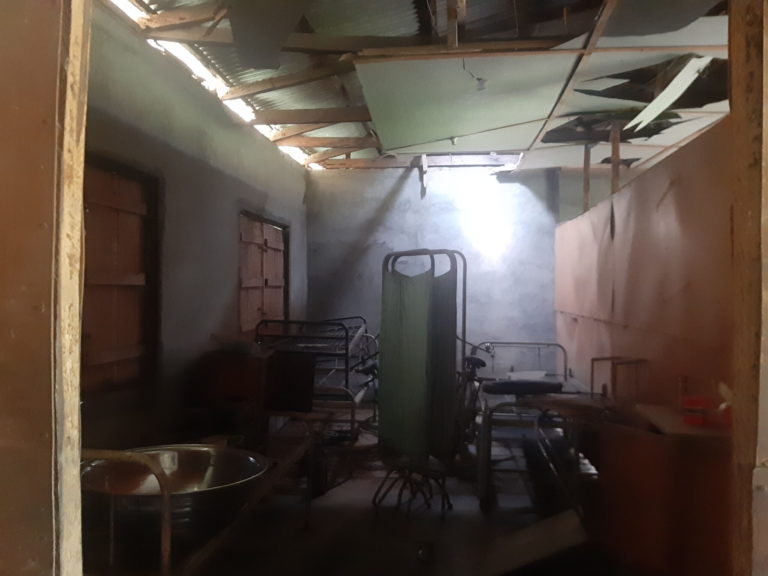
THE House of Representatives has asked the Federal Government to declare a state of emergency in the health sector, claiming that only 20 per cent of Primary Health Centers (PHCs) in the country are functional.
The lawmakers also requested the government to allocate an adequate budget to the health sector in 2024.
According to a member representing Mushin Federal Constituency II of Lagos State, Fayinka Oluwatoyin, Nigeria has about 39,983 hospitals and clinics as of 2020, with the primary healthcare centres accounting for about 34,000, which is 86 per cent.
He noted that only 20 per cent of these PHCs functioned, and those in rural areas lacked adequate facilities and staffing.
The ICIRreported how 72 per cent of the budgets allocated to the health sector were spent on salaries and running offices in 11 years. Another report by The ICIR (here and here) analysed Nigeria’s health sectors in the last eight years and the expectations this year.
In 2022, this organisation investigated and reported the state of PHCs in 12 states across Nigeria’s geo-political zones.
Reports from the states, including this and this, showed much worse situations than what the lawmaker said about the nation’s PHCs.
The motion moved by the Chamber was titled, “Need for the National Primary Healthcare Development Agency to collaborate with relevant health agencies in States and Local Governments to ensure the functionality of Primary Healthcare Centres.”
Oluwatoyin said the lack of medical equipment, drugs, qualified personnel, power supply, beds, and road networks had increased the death toll in healthcare centres.
He added that federal and state health ministries’ inaccurate representation of primary healthcare centres hindered proper budgeting and access to quality healthcare in rural areas, leading to premature death.
In its resolutions, the House urged the Ministry of Health to encourage states to initiate and revive primary healthcare programmes capable of making the PHCs more functional, provide quality and affordable drugs for the masses and encourage stakeholders in all government tiers to establish a task force to tackle all forms of malpractices at the PHCs.
The ICIRreported how, in July, President Bola Tinubu promised to increase the annual budgetary allocation to the health sector to 10 per cent of the nation’s total budget.
THE chairman of the Independent National Electoral Commission (INEC), Mahmood Yakubu, has assured voters in Kogi that voting in the November 11 governorship election in the state will commence at 8. 30am.
Yakubu said this when he visited the commission’s office in Kogi Local Government (LGA) in Kotonkarfe to monitor a mock accreditation exercise in Lokoja on Saturday, October 14.
“We are giving our words to Nigerians that we must open polling units at 8.30 a.m. on the dot. Therefore, you must activate the RACs. If you don’t activate the RACs, we can’t actualise the commencement of the votes at 8:30 a.m.
“You must activate the RACs with security, and I am happy that you are working in partnership with them,” Yakubu stated.
He advised the Electoral Officers (EOs) in the state to follow the standard template for logistics deployment at Registration Area Centres (RACs) and work with security agencies for the election to commence in Polling Units (Pus) as scheduled.
“My advice to you is that you have to use the standard template for this election. I am glad to hear that all the non-sensitive materials have been received by your local government. And I’m sure it’s the same story in other local governments.
“But it’s not only the receipt of the material that is important. You have to batch them so that they go into the box per polling unit. So, on election day, as you move to the super RACs or the RAC centres, you will then move to the polling units,” he said.
The INEC chairman also mentioned security as a primary concern in the state’s conduct of the November 11 Kogi governorship election.
Yakubu said that the commission was working with the security agencies to deliver a secure atmosphere for peaceful and credible exercise.
“So, we are everywhere working together. And I’m happy we are working together as we prepare for the elections, “he stated.
He commended all the INEC staff and security agencies in the state.
According to the Electoral Officer for the Kotonkarfe Local Government Area (LGA) office, Hassan Musa, the election preparations have advanced.
Musa said INEC in the local government had received all the non-sensitive election materials and was working with security agencies to ensure a smooth poll.
He stated that the commission would visit the RAC facilities in the LG in the coming weeks to check on the preparations.
“We have received virtually all the non-sensitive materials for the election, and we have successfully dispatched them to the PUs level, and we are good to go. We don’t have any shortfall for now.
“What we are waiting for is sensitive materials. As you know, sensitive materials come a few days before the election. We have received virtually all the non-sensitive materials and successfully dispatched them to PU levels. And we are good to go, sir. We don’t have any shortfall for now,” Musa said.
In less than a month (on November 11), Kogi, Bayelsa and Imo state residents will elect a new governor as INEC conducts the states’ off-cycle governorship poll.
The states are three of six states in Nigeria with off-season governorship polls. Others are Ondo, Edo and Osun.
While the current governor of Imo State’s term expires on January 14, 2024, Okoye said the governors of Kogi and Bayelsa States had respective terms that expire on January 26, 2024, and February 13 of the same year.
The ICIR, in this report, presented the top candidates in the three states and their chances.
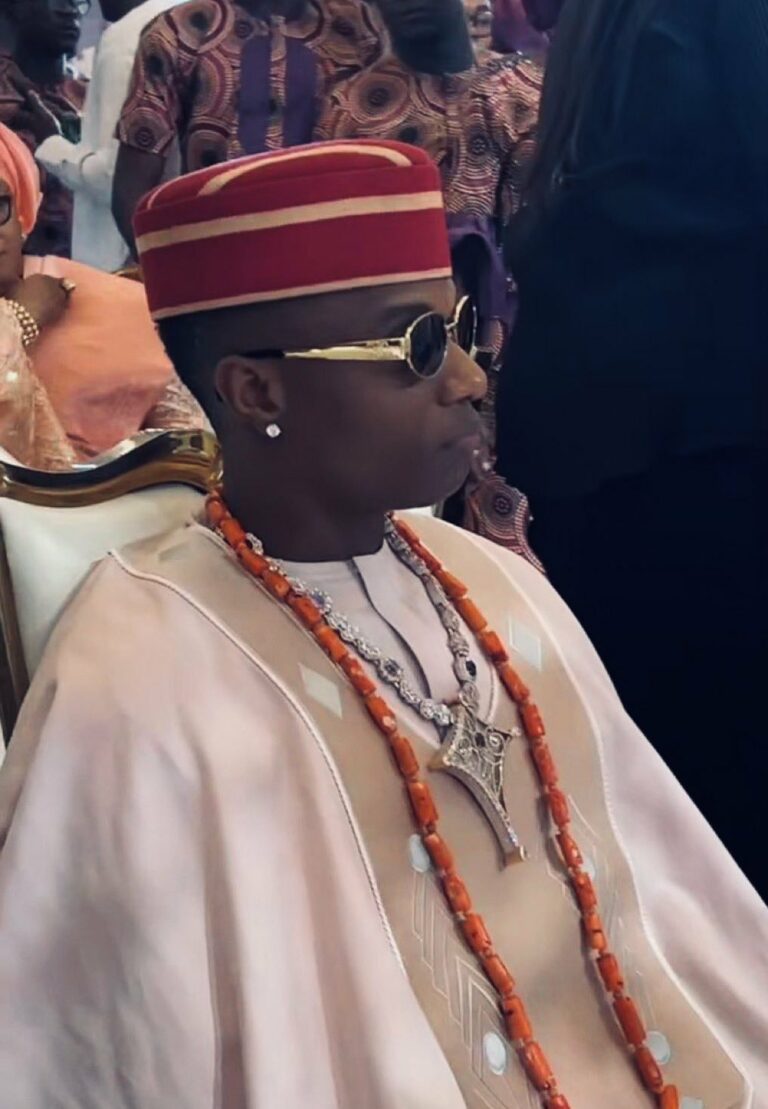
NIGERIAN afrobeat star, Ayodeji Balogun, widely known as Wizkid, has broken his silence over his mum’s death.
He described his mum’s passing as the deepest pain he ever felt.
Wizkid’s mum, Juliana Morayo Balogun, passed away on August 18 in London and was laid to rest on Friday, October 13, after a church service at the Redeemed Christian Church of God (City of David), Victoria Island.
During the wake and tribute service on Thursday, October 12, at the Balmoral Hall of the Federal Palace Hotel and Casino, Victoria Island, Lagos, Wizkid expressed his sadness, saying it was the deepest pain he ever felt.
“I have no words to describe the pain that I feel, and I know every one of my family members shares this pain with me.
I know that it is impossible for the pain to go away, so I’m not going to say, ‘take away the pain’, but I know God, in his infinite mercy, is going to comfort us to be able to go on with life. The pain is profound; it hurts deeply. It is the deepest pain I have ever felt in my life. I am lost, but I pray, and I know God will comfort every one of us”, he said.
The artiste’s first appearance after the passing of his mum was at the candlelight procession of his late mum on Wednesday, October 11.
Celebrities including Osas Ighodaro, Banky W, D’banj among others, joined Wizkid at the funeral to bid his mum a farewell.
THE Minister of the Federal Capital Territory (FCT), Nyesom Wike, has set up a joint task force to tackle the menace of ‘one-chance’ robbers in the nation’s capital.
The task force will comprise all security agencies in the territory.
The Commissioner of Police, FCT Command, Haruna Garba, disclosed this on Friday, October 13, 2023, after a Security Council meeting with the FCT minister.
Garba said the FCT Security Council meeting, chaired by the Minister of FCT, Nyesom Wike, discussed ways to eradicate criminal elements in the FCT, stop cross-border crimes and curb the menace of one chance.
“Consequently, it was resolved to set up a joint taskforce of all security agencies on the menace of one-chance. “Also, a joint task force on cross-border crimes to tackle the issue of armed robbers, kidnappers and all forms of crimes in the FCT will be set up.
“These two security operations have commenced in earnest. We wish to assure residents of our resolve to curb all forms of criminalities in the territory”, Garba stated.
The police chief, who was joined by Olusola Odumosu, the FCT Commandant of the Nigeria Security and Civil Defence Corps (NSCDC), as well as senior defence and intelligence officers, said that security agents frequently raided mechanic shops in the city based on intelligence.
“What we are doing is to raid and remove the chaff from the grains so that residents can sleep with their two eyes closed”, he added.
The ICIR reported on Friday, October 13, that the FCT Police Command arrested 2,272 suspected criminals in the past two months to rid the nation’s capital of crimes.
The command also apprehended 207 scavengers and charged 196 of them to court.
Similarly, the command received 62 cases of human genital disappearances, nabbed and charged 51 persons to court for giving false information and inciting public disturbance.
Accordingly, the one-chance menace has been rampant in the city, with the latest famous victim being Greatness Olorunfemi, a young lady who was reportedly denied treatment by the Maitama General Hospital because the sympathisers who brought her could not produce a police report.
On October 1, The ICIRdetailed the law’s position, getting a police report to treat a person needing emergency care.
A ‘one-chance’ is a robbery in which unwary passengers are persuaded to board commercial vehicles driven by thieves.
They dispossess passengers of their belongings, including laptops, money, phones and other valuables. Many of them conduct their illicit business, using Point of Sale machines to empty victims’ bank accounts, using force.
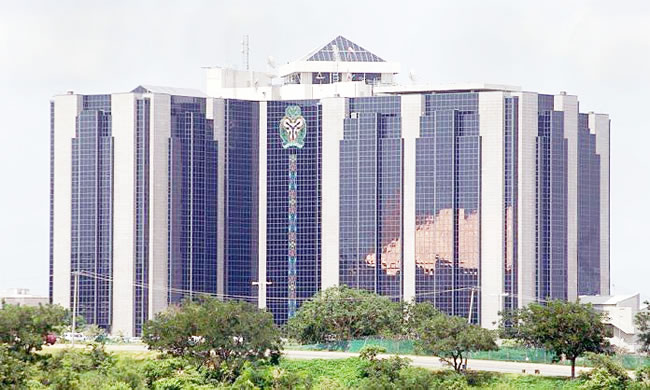
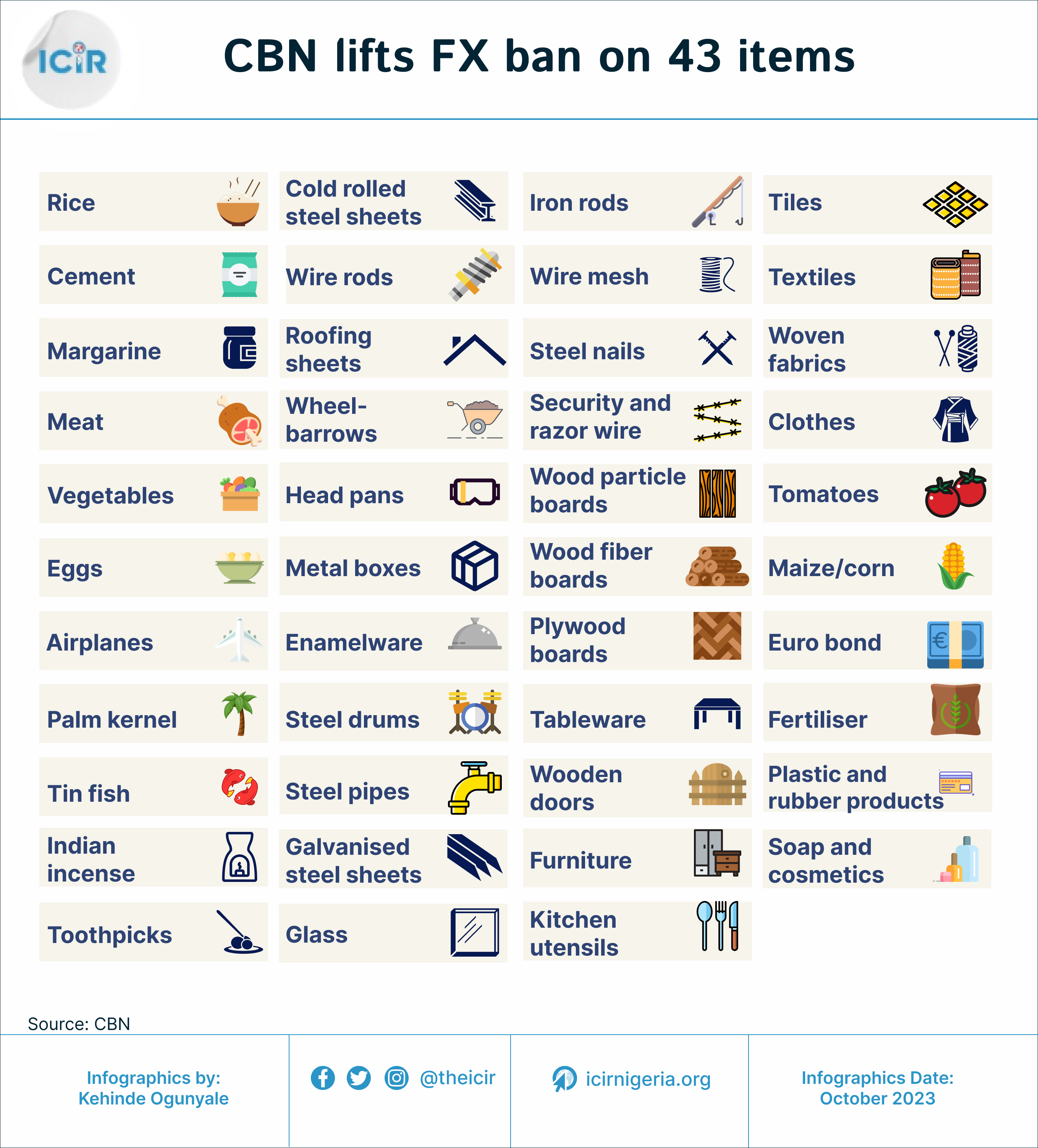
The Central Bank of Nigeria (CBN) has said it lifted the ban on 43 products from accessing foreign exchange (forex) because the restriction pushed importers into the parallel market and increased the surplus demand for forex.
According to the apex bank, this weakened the parallel-market exchange rate and pushed up prices.
CBN had recently unbanned the restrictions placed on some items in 2015 from accessing forex. The restriction was placed to reduce foreign exchange demand for products that could be locally produced.
However, with the recent unbanning, the CBN says it wants to unify the market for forex with flexible and transparent pricing.
According to a circular released by its Corporate Communications Department, “The CBN wants to promote orderliness and professional conduct by all Nigerian foreign exchange market participants to ensure market forces determine exchange rates on a willing buyer – willing seller principle.
“The CBN wants to ensure price stability and is seeking to boost liquidity in the Nigerian foreign exchange market. As liquidity improves, we expect the distortions to moderate.”
The apex bank also said the implication of the removal would make monetary policies effective, reduce the inflation rate and eliminate the need for importers of these products to go to the parallel market.
Also, the bank said, “Local production will benefit from cheaper imported inputs, and consumers will benefit from cheaper retail products. It is expected that employment generation will be boosted as closed factories re-open. Price stability will benefit the economy and the standard of living in general.”
IMF, World Bank applaud CBN’s action
The International Monetary Fund (IMF) and the World Bank have commended the CBN’s decision to remove restrictions, saying Nigeria’s economy is sophisticated enough to restrict items from accessing FX.
The Director of the African Department, IMF, Abebe Aemro Selassie, during a media briefing on the Regional Economic Outlook for Sub-Saharan Africa, said, “The best way to manage a modern economy is to have fiscal policy lever and monetary policy lever to use to affect the kind of policy outcome you want, rather than saying I don’t like these goods and so I don’t want it to come in, etc, that tends to create an unhelpful distortion.
“Of course, there are tax policies you can also use if you really want to be against certain types of imports. In general, I think the direction the CBN has moved is a helpful one.”
Also, the World Bank President, Ajay Banga, noted that entrepreneurs in Nigeria are willing to contribute to the growth of the country’s economy, provided the market is favourable.
THE Federal Government said it had partnered with some select pharmaceutical firms to improve local manufacturing of drugs in Nigeria.
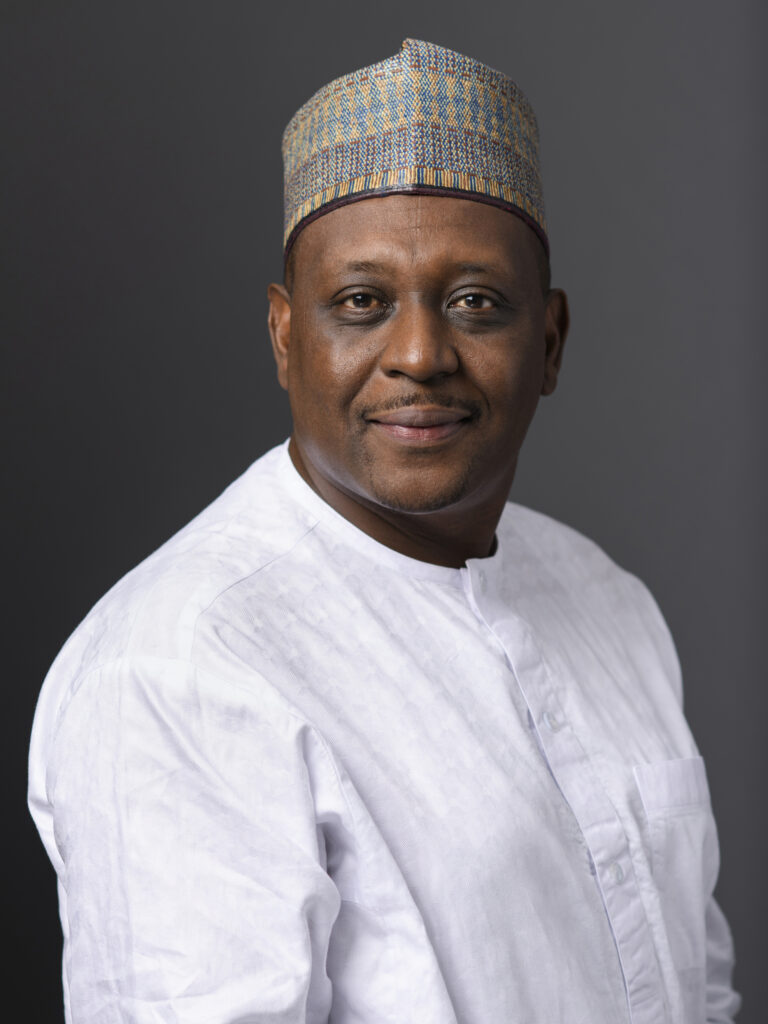
The Minister of Health and the Coordinating Minister for Social Welfare, Mohammed Ali Pate stated this on October 11, 2023, while featuring on Channels Television’s morning magazine programme, “Sunrise Daily.”
Despite not disclosing the pharmaceutical firms involved, the Minister said drugs manufactured under this partnership would have a branded National Health Insurance Authority (NHIA) logo to guarantee quality and affordability.
“We have entered into medical partnerships with some pharmaceutical companies to explore options in some key medicines branded with the NHIS logo to guarantee qualities and cost reduction,” he said.
He stressed that the initiative would lower costs for those covered in health insurance for some high-cost medications.
“This would help to lower out-of-pocket expenditures and pharmaceuticals, which pushes most people into poverty,” Pate said.
He explained that the NHIA Director-General and his counterpart in the Nigeria Agency for Food and Drug Administration and Control (NAFDAC) were working with the firms to improve affordability and quality.
Pate also decried 70 per cent of the importation of medications into the country, which he said created proper monitoring risks for such drugs. “Nigeria doesn’t have full control over such medications and imported,” he said.
He said the Federal Government was working with states to ensure they domesticate health insurance in their respective states and enrol more Nigerians into the insurance pool for universal coverage.
Nigerians, many of whom are not captured in the NHIA and paying out-of-pocket, are being hard hit by Nigeria’s current exchange rate problems.
The rising cost of drugs has been largely attributed to cost-push inflation since Nigeria largely imports most of its medicines, which are not exempted from exchange rate volatility.
In August, The ICIRreported how GlaxoSmithKline(GSK), notable for prescribable medicine like Augmentin and Amoxil, disclosed its strategic intent to stop the commercialisation of its prescription medicine and vaccines in Nigeria and transition to a third-party distribution model for its pharmaceutical products, citing foreign exchange concerns.
Pate said Nigeria would be addressing rising medicine costs by tapping into global vaccine production supported by the Global Alliance for Vaccine Initiatives (GAVI) to intensify local production of medicines and improve universal health coverage.
THE candidate of the Peoples Democratic Party (PDP) in the March 18 governorship election in Lagos State, AbdulAzeez Adeniran, aka Jandor, has appealed the judgment of the election petitions tribunal, which affirmed Babajide Sanwo-Olu of the All Progressives Congress (APC) as the duly elected governor of the state.
This was disclosed in a statement on Friday, October 13, by the Head of Media and Communications for Jandor4Governor Campaign Organisation, Gbenga Ogunleye.
According to Ogunleye, Jandor expressed dissatisfaction with the tribunal’s ruling in a 34-ground notice of appeal.
His appeal seeks to upturn the “miscarriage of laws that characterised the tribunal judgment.”
He stated, among others, that the tribunal erred in law and its conclusion, which dismissed his petition to challenge the qualifications of Sanwo-Olu and his running mate, Obafemi Hamzat, as winners of the March 18 governorship election in the state.
On September 25, The ICIRreported the Lagos State Governorship Election Petition Tribunal affirming Sanwo-Olu’s victory and dismissing Jandor’s petition.
In a unanimous judgement read by Mikail Abdullahi on behalf of the three-person panel, the tribunal held that the PDP’s petition and its governorship candidate lacked merit.
Ruling on another issue bothering whether Sanwo-Olu and Hamzat had received legitimate nominations to run in the elections from their party, the APC, the tribunal said the matter was a pre-election matter unrelated to the conduct of the disputed polls.
On the matter of the allegedly forged certificate presented by Sanwo-Olu, the tribunal noted, among other things, that the petitioner, who testified in his petition that Sanwo-Olu did not attend the Community Grammar School, Ijebu-Ife, where the certificate originated from, and claimed the school’s principal was still alive, failed to bring the school’s principal or any other staff members to testify about the certificate.