Home Blog Page 779

Access Bank lost N5.46bn to fraudsters in six months

0

FRAUD and forgery incidents incurred by Access Holdings Plc stood at N5.46 billion, the company’s interim consolidated and separate financial statements for June 30, 2023, have shown.

Findings by The ICIR revealed that the bank’s loss to fraudsters rose by 354.22 per cent, relative to N1.20 billion loss in the corresponding period of last year.

Analysis of the report showed that an N5.459 billion loss resulted from fraudulent transfers/withdrawals/reactivation of customers’ accounts compared to an N4.53 million loss from cash theft/suppression/pilferage/dry posting.


Read Also:

A summation of attempted fraud and forgeries was worth N6.44 billion in incidents as the bank narrowly foiled N975.89 million in unsuccessful attempts. 

At the same time, the frequency of the cracks and successful losses resulted in about 3,061 times. 

Access Holdings, one of the tier-one banks with the biggest asset of N20.85 trillion as of June 2023, stated, “This report represents the fraud and forgery incidents that occurred during the period. It is a summation of attempted and successful fraud incidents.

“The actual loss that was incurred by the bank for the period is N5.46 billion (June 2022: N1.2 billion). The rest of the loss amount represents the losses incurred by other third parties.”

Compared to the first half of 2022, Access Holdings lost N1.20 billion and recorded fraud cases worth N10.199 billion, of which 7,104 were successful while 3,602 were unsuccessful attempts.

The ICIR reports that the safety of customers’ funds in the banks is becoming a concern as the Central Bank craves financial inclusion and a cashless policy.

The Financial Institutions Training Centre (FITC), an innovation-led and technology-driven organisation, in its latest data, ‘Reports on Frauds and Forgeries in Nigerian Banks,’ revealed a significant increase in the total amount involved in fraud cases during the second quarter (Q2) of this year compared to the previous quarter.

The data indicated that the total amount involved in fraud cases rose from N2.59 billion in Q1 2023 to N9.75 billion in Q2, representing a 276.98 per cent increase.

While there was a 6.40 per cent decrease in outsider involvement in fraud cases to 11,561 cases, banks’ staff involvement in fraud increased by 22.22 per cent, rising from 72 cases in Q1 to 88 cases in Q2.

Considering the rise in the total amount involved in fraud cases and the amount lost, FITC recommended that Nigerian banks strengthen their security protocols and systems to prevent unauthorised access to customers’ accounts and sensitive information.

“This may involve incorporating measures such as multi-factor authentication, implementing strong encryption techniques, and ensuring regular security updates are in place.

“Also ensuring that there is stability in the cybersecurity units while also equipping the unit members with relevant cybersecurity trainings that helps to mitigate, control and reduce fraud cases,” it advised.

FactCheckHub calls for applications from mobile apps developers

THE FactCheckHub – the International Centre for Investigative Reporting (ICIR) verification platform calls for applications from suitable and highly creative software developers and web designers. 

The opportunity requires them to design, develop and deploy a modern, user-friendly interactive website in addition to a Google Play store and Apple Store-ready mobile app. 

This is a consultancy role, not a full-time job offer.

The website and mobile app aim to provide a platform for fact-checking articles, geo-location verification, forum discussions, claim submissions, a learning management system, etc.  

Also, the FactCheckHub Website and Mobile application will cater to registered and non-registered users, offering different functionalities. 

The deadline for the submission of application is October 12, 2023. Interested individuals can apply here

Napoli: Sports minister wades into Osimhen’s crisis

0

THE Sports Minister, John Enoh, is intervening in the crisis involving Nigerian International striker Victor Oshimen who plays for Italian Serie A champions Napoli.

Apart from the player, the minister also promised to look into the challenges of other Nigerian athletes plying their trades locally and internationally.

The minister made this known via his ‘X’ account against the backdrop of the trials faced by Osimhen and Tobi Amusan.

Oshimen has been in the eye of the storm at his club after expressing displeasure at being taken off by coach Rudy Garcia in the 0-0 draw with Bologna last weekend.

After the match, a video mocking the striker for missing a penalty in that game was published on the club’s TikTok account, which sparked outrage on social media.

On Tuesday, the striker’s agent threatened Napoli with legal action for publishing such a video. But despite the controversy, Oshimen scored his fourth goal of the season during their last match on Wednesday.

Before the Wednesday match, the striker had deleted all pictures linking him with the club on his Instagram page.

The Sports Minister said on his X account in a statement titled: A Rally for Victor Osimhen and All Nigerian Athletes, assured to wield power through his office to avoid injustice to the player and others.

“Over the past weekend, the news coming out of Napoli concerning Super Eagles player -Victor Osimhen saddened me greatly. The travails of Tobi Amusan have been no less so—the reason I made efforts to reach her directly last week.

“My office is trying to reach Victor Osimhen directly as well to understand first-hand the issues. We are committed to establishing the facts of the matter. Under the present administration of President Bola Ahmed Tinubu, we are committed to ensuring our sportsmen and women are accorded the respect they deserve and are not exposed to any injustice,” he tweeted.

Meanwhile, the club in a statement, had earlier noted that the now-deleted TikTok post was not meant to make fun of Osimhen.

Napoli reacts to the video

The statement reads, “To avoid any potential exploitation of the matter, SSC Napoli would like to explicitly state that the club never intended to offend or make fun of Victor Osimhen, who is an asset to the club.

“Over the course of the summer, Napoli rejected all offers to sign the striker – firm proof of the club’s appreciation of him.

“On social media and TikTok particularly, expressive language is used in a light-hearted and playful manner. In this case, involving Victor. There was no intention of mockery or derision.”

ABCON seeks friendly policies as FG wants BDCs trimmed to 200

0

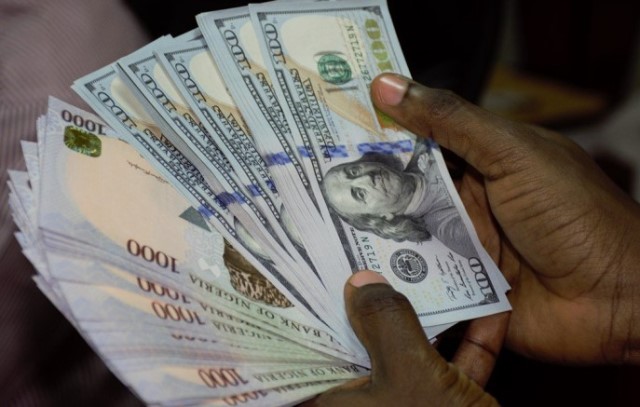
THE Association of Bureaux de Change Operators of Nigeria (ABCON) is seeking friendly policies to guarantee its members’ operation in the foreign exchange market, as the Federal government wants Bureaux de Change (BDC) trimmed to 200.

The request followed the call on the Central Bank of Nigeria (CBN) to trim down the number of BDC operators in the country from over 5,000 to about 200, thereby reducing their number by 96 per cent.

“As a self-regulatory organisation, we urge the regulators to use friendly policies that will ensure the inclusion of our operators in the sector.

“The present operators over time have acquired the necessary skills and knowledge on the operations of bureau de change and therefore have an effective pass through effect of the apex bank foreign exchange policies in the economy,” Gwadabe told The ICIR on Thursday, September 28.

At an economic policy event organised by the Abuja Chamber of Commerce and Industry on Tuesday, September 26, the special adviser to President Bola Tinubu on Economic Affairs, Tope Fasua, urged the CBN to consider reducing the number of BDC operators.

Fasua asserted that the high number of BDC operators made it difficult for the CBN to supervise the operators, leading to irregularities in the foreign exchange market.

He stressed that the BDCs needed to be structurally reformed to strengthen the sector, noting that it was not normal for the regulators to manage over 5,000 BDCs selling money on the streets.

“We cannot manage 5,000 BDCs. Maybe we should be looking at 100 or 200. In the United Kingdom, as a tourism destination, they had 145 BDCs the last time I checked. In the UAE, they have 130.

“So what are we doing with 5,000 BDCs? You will never be able to supervise them. How many staff would you need to look at their returns and check them? Therefore, you need large and well-established BDCs, as well as banks, to be able to fulfil the needs of the people. And then the government can be able to incentivise that market,” Fasua said.

He maintained that the foreign exchange market should be defined to achieve stability in the official market.

The naira has been depreciating sharply against the United States dollar in recent months, creating arbitrage as the gap between the official and black (parallel) market widens.

For instance, the exchange rate, which was about N462 to $1 in June, has risen to N775.31/$1 and N1,000/$1 at the official and black market rates, respectively, as of Thursday, September 28.

In a statement on September 10, the ABCON president said there was no doubt the exchange rate volatility had continued to underpin the slow economic growth of Nigeria in the past years.

He had requested the apex bank to grant BDC operators autonomy to be digitalised in line with CBN’s recent reforms.

In a later statement on Thursday, September 14, Gwadabe sought the merger of several BDC operators rather than recapitalisation of the industry.

He asserted that the recommendation was to effectively help its corporate governance and rules of engagement with the apex bank.

He pointed out that the merger option was adopted for class ‘A’ BDCs in 2007/2008, which entitled the operators to a $1 million weekly allocation with a N500 million capital base.

Gwadabe further called for a similar business model through mergers and consolidation rather than an outright review of the capital base of each operator.

He noted that each of the CBN-licensed BDCs was capitalised to the tune of N35 million and should be allowed to consolidate willingly, maintaining that the group never asked for upward review of the mandatory regulatory capital base, but a merger of at least 10 BDCs to form new capital of N350m.

Gwadabe referenced the merger of commercial banks in the 2004 consolidation exercise as an example the apex bank could adopt for the BDCs to streamline their numbers and present easily manageable operators for maximum impact in the foreign exchange market.

“ABCON rejects reports calling for BDCs recapitalisation by a section of the media. The media quoted us out of context, and we are working to put a proper narrative,” he stated.

Meanwhile, the newly confirmed CBN governor, Olayemi Cardoso and his-led team of deputy governors have promised to immediately prioritise clearing the about $10 billion foreign exchange backlog CBN CBN-owned banks.

“We need to promptly find a way to take care of that. It would be naive for us to expect that we’ll be making too much progress if we’re not able to handle that side of the foreign exchange market.

“Right now, we have a situation where we are aware that there are unsettled obligations by the CBN. Whether it is $4 billion, $5 billion or $7 billion, I don’t know, but definitely, the immediate priority will be to verify the authenticity and extent of what is owed,” he said on Tuesday, September 26, during the screening session of the governors by the Senate.

Police arrest Sam Larry over Mohbad’s death 

0

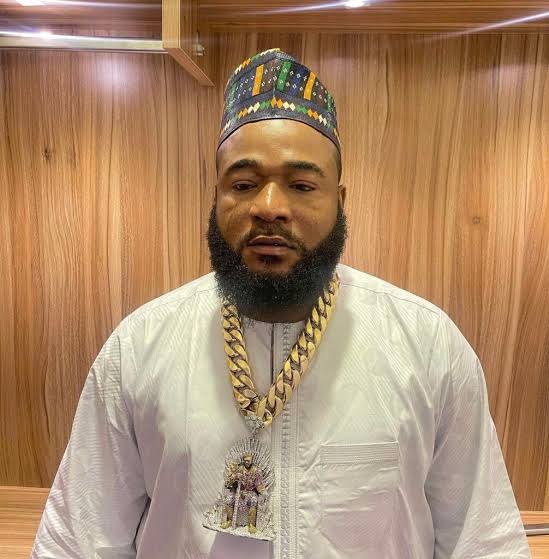
THE Lagos State Police Command has arrested a music promoter, Balogun Olamilekan Eletu known as Sam Larry, over the death of Nigerian singer Ilerioluwa Aloba (Mohbad).

This was disclosed by the State Command Police public relations officer Benjamin Hundeyin on his X (formerly Twitter) page.

“Balogun Olamilekan Eletu aka Sam Larry is now in our custody. He is currently assisting with the ongoing investigation,” he wrote.

According to reports, Sam Larry was immediately arrested after he arrived in Nigeria from Nairobi, Kenya at about 10 p.m. Nigerian time.

He was picked up at the Murtala Muhammad Airport by some officers at the command headquarters. 

Sam Larry arrived at the headquarters around 10:30 p.m. and was subsequently taken to meet the commissioner of Police. After being questioned, he was handed over to DC Panti.

The arrest by the police came a few days after the Police had invited him and his ally, Azeez Fashola, popularly known as Naira Marley.

The late Mohbad was formerly affiliated with Naira Marley’s record label, Marlian Music, from which he departed in October 2022.

The death of MohBad has sparked public outrage, with many Nigerians pointing hands at Naira Marley and Sam Larry. Beyond that, there were several videos where the late singer was assaulted by people allegedly associated with Marley’s record label. 

In another viral video, the deceased also claimed that Naira Marley should be held accountable should he die. 

Naira Marley has consistently denied this. In a video posted on Reno Omokri’s Instagram page, Naira Marley converses with the late Mohbad in the Yoruba language.

“You said you are not feeling so anymore, but one hour ago, you felt like killing yourself, and you still surround yourself with the things stressing you. The last time you made a video saying if anything happens to you, Naira Marley and the Marlian team should be held responsible, but now you want to kill yourself,” Naira Marley said in the video.

Replying to his former boss, Mohbad was heard saying: “I don’t feel like that again. I don’t even know how to explain to you right now.”

Naira Marley continued, “But one hour ago, you said you felt like killing yourself. If you kill yourself, what do you think people will say after you’ve made such videos, saying they should hold me responsible for your death?” 

Mohbad concluded with, “Please don’t be angry.”

Also, the embattled singer, in an interview with Reno Omokri, reiterated that he played no part in Mohnad’s death, adding that the deceased had been dealing with some issues for a long time.

He also explained that he provided professional assistance to Mohbad after being aware of his mental condition and paid for his scans.

He said: “I have been abroad since August, and I’m willing to return to Nigeria if only the government can guarantee my safety, as a lot of Nigerians are currently furious at me.”

AFRICMIL urges EFCC, ICPC to probe Adebayo’s petition against Ogun governor 

0

THE African Centre for Media and Information Literacy (AFRICMIL) has urged the Nigerian anti-graft agencies to thoroughly investigate the allegations by the impeached chairman of Ijebu East Local Government Area, Adewale Adebayo against Ogun State Governor Dapo Abiodun.

The Centre also asked the governor to stop ‘persecuting’ the embattled former chairman. 

In a statement signed by its project manager, Godwin Onyeacholem, on Wednesday, September 27, AFRICMIL urged the Economic and Financial Crimes Commission (EFCC) and the Independent Corrupt Practices and Other Related Offences Commission (ICPC) to investigate Adebayo’s allegations.

Adedayo was impeached on September 15 by his council councillors over allegations of financial misappropriation and diversion of council funds, among others levelled against him.

Announcing his impeachment, the LGA’s legislative council leader, Fasheyi Akindele, said the “suspended chairman owned up before the full House of 11 councillors that he diverted federal allocations sent to the council by the state government and used them for purposes other than what the state government approved.

“Adedayo also agreed that he spent the council funds till August 2023, even when the budget was yet to be approved, whereas the law only allows him to spend till March 2023.”

He also listed a few other infractions against the embattled chairman.

The councillors had first suspended the chairman for three months, citing alleged maladministration and financial malpractices. The suspension followed the chairman’s letter to a former governor, accusing the current governor of misappropriating N10.8 billion for local development and lodging a petition with anti-graft agencies.

Meanwhile, the embattled council chair has since been arraigned before an Ogun State Magistrates’ Court in Isabo, Abeokuta.

He was arraigned on two counts bordering on false allegations and willful intent to damage Abiodun’s reputation.

Although he had pleaded not guilty, the police told the court that Adedayo acted in violation of sections 59(1) and 375 of the Criminal Code Laws of Ogun State, 2006.

AFRICMIL’s coordinator, Chido Onumah, said it was inappropriate for the governor to punish Adedayo merely for demanding transparency and accountability in local government funds.

Onumah emphasized that the sacked council chairman should not face current penalties, arguing further that he committed no offence other than exercising his freedom of expression.

“AFRICMIL, which is in the forefront of promoting whistleblowing as a vital tool for addressing corrupt practices and other forms of wrongdoing, described Adedayo’s action as legitimate whistleblowing which Nigeria sorely needs at this time. The organization observed that it was ‘immoral and unlawful’ for the governor to deploy a strategy of intimidation to stop the whistleblower from speaking out against wrongdoing at the top level of governance.

“Following the furore that trailed the whistleblower’s allegations, he was first suspended for three months as chairman of Ijebu East Local Government Area and then impeached even when the suspension had barely kicked off. Days after vowing that Adedayo would pay for ‘making false allegations’ against him, the governor made good his threat by getting the police to arraign the whistleblower. “We are not unmindful of the fact that all of this is part of the intimidation to completely silence the whistleblower,” the statement added.


READ ALSO:


The organisation, however, urged the governor to stop any additional ‘retaliation’ against the whistleblower promptly.

It also called for his immediate reinstatement as the LGA chairman and the withdrawal of the court case filed against him.

The organisation reiterated its commitment to demand justice for all whistleblowers facing adverse actions for exposing wrongdoing in the country, adding that “whistleblowing is freedom of expression that must be protected.”   

AEDC urges customers to upgrade meters by November 2024

4

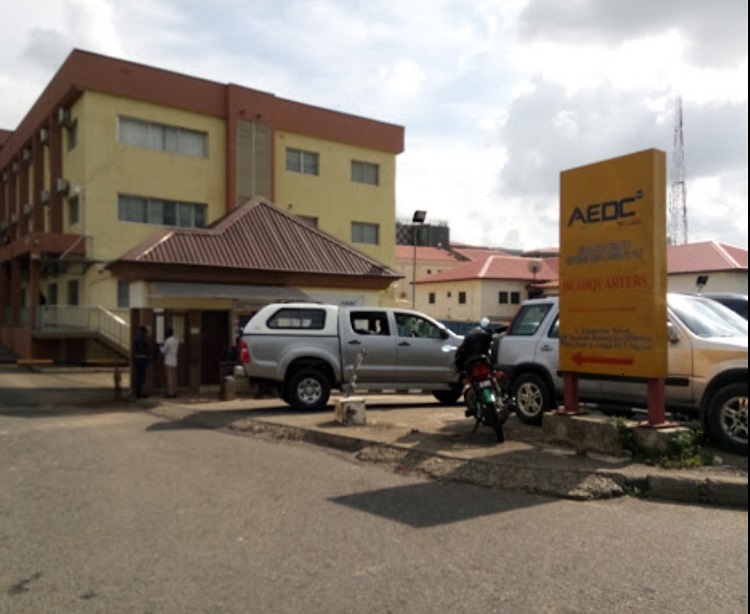
THE Abuja Electricity Distribution Company (AEDC) has urged customers across its franchise areas to upgrade prepaid meters by November 24, 2024.

This was disclosed via a statement by the organisation posted on its official X handle on Thursday, September 28.

“In line with global metering standards and in compliance with NERC’s directive, Abuja Electricity Distribution Plc. (AEDC) has commenced the process of updating prepaid meters across our franchise area.

“Effective 24th November 2024, prepaid meters that are not updated will no longer accept energy tokens. In other words, any prepaid meter that is not updated will be unable to support power supply,”

AEDC noted that the upgrade would not affect tariff bands and would be free of charge. The statement also disclosed that neither units available on the meter nor other functionalities would be affected during the process.

“In the upcoming days, we will provide detailed information regarding the update process and your role in ensuring its success. We urge you to stay informed through www.abujaelectricty.com or by reaching out to us via our digital channels listed below,” the statement further read.

In August, the Nigerian Electricity Regulatory Commission (NERC) urged consumers to upgrade their meter before November 2024, stating that there would be issues with recharging units if the upgrade is not carried out.

The directive is not limited to Nigerians alone but also affects all users of the Standard Transfer Specification (STS) software globally, which the meter operates on.

According to the Standard Transfer Specification Association (STSA) in charge of the STS, the upgrade is required to enable meters to install a Token Identification (TID).

The Managing Director (MD), Nigerian Electricity Management Services Agency (NEMSA) Aliyu Tukur Tahir, the TID determines if a token has been previously used in a prepaid meter.

Conflicting narratives trail tribunal ruling on Kaduna’s governorship election 

0

DIFFERENT narratives have trailed the ruling of the Election Petition Tribunal on the Kaduna state 2023 governorship election.

According to a report by Channels Television, the tribunal sitting in Kaduna dismissed the suit filed by Isah Ashiru and his party, Peoples Democratic Party (PDP), challenging the victory of Governor Uba Sani of the All Progressives Congress (APC) in the March 18 governorship election.

In its judgment on Thursday, September 28, the tribunal dismissed the suits against Sani, stating that the pre-hearing notice was filed out of time and, therefore, deemed to lack merit.

The court, however, acknowledged that if the petition hadn’t been dismissed due to lack of merit, it would have instructed a supplementary election in 22 polling units within 90 days as part of the final judgment.

On March 20, 2023, the Returning Officer for the state governorship poll, Lawal Suleiman Bilbis, declared Uba Sani as the election winner.

Sani, according to the INEC official, polled 730,002 votes to defeat his closest rival, Isa Ashiru of the PDP, who scored 719,196 votes.

The Labour Party (LP) candidate, Jonathan Asake, came a distant third after polling 58,283 votes, while the New Nigeria Peoples Party (NNPP) candidate, Suleiman Hunkuyi scored 21,405 votes.

PDP and Ashiru claimed that INEC was involved in substantial irregularities and resulted in manipulation favouring Sani in specific local government areas.

The PDP stressed that Sani did not score the highest number of valid votes cast in the election and ought not to have been returned winner by the INEC, which subsequently made the party file a petition at the election petition tribunal to challenge the Sani’s election.

On September 3, PDP revealed to the tribunal that two conflicting election results emerged from the Independent National Electoral Commission (INEC) during the election.

Following submitting his final written addresses to the three-man panel led by Victor Oviawie at the tribunal, the PDP candidate, represented by his lead counsel Oluwole Iyamu, pointed to INEC as the party responsible for manipulating the election results.

In his conclusive written submissions, Ashiru accused INEC of over-voting and misusing electoral processes. He emphasized the need for the tribunal to reverse INEC’s declaration, which declared Sani as Kaduna state governor.

However, Sani’s counsel, Duro Adeyele (SAN), argued that the written addresses of Ashiru and PDP were incompetent, adding that it was a violation of the law.

“My submission is that filling three separate addresses is an abuse of the court process. The only alternative left for the petitioners is to pick one out of the three,” Adeyele said.

Ashiru reacts, says court nullifies election 

Reacting to the tribunal ruling, Ashiru, in a statement released via his X handle, stated that the tribunal nullified the election and subsequently called for a re-run.

He wrote: “On the preliminary objection, the tribunal,  based on the majority of 2:1 judges, upheld the preliminary objection of the respondent to the effect that the application for pre-hearing was done prematurely, i.e. before the service of the last set of petitioners’ reply to the 2nd respondent’s reply to the petition was served. 

“However, the law enjoins the tribunal, as a trial court, to proceed to pronounce on the merit of the substantive suit so that in the event the court of appeal finds that the trial tribunal was wrong in its decision on the preliminary objection, it would have the benefit of pronouncing on the decision of the tribunal in the substantive matter. 

“Accordingly, the trial tribunal finds merit in the aspect of the petitioner’s case relative to the margin of win between the two leading candidates. The tribunal, by a split decision of 2:1 accordingly, nullified the election of the governor of Kaduna state, ordered that the Certificate of Return  be retrieved, and fresh elections be conducted in some polling units in four LGAs, and the outcome thereof be reckoned with before the declaration of the winner of the governorship election in Kaduna state.”

Sani lauds tribunal, urges opposition to work with him

Also, speaking on the judgment via his X handle, Sani expressed delight over the judgement and commended the tribunal for what he described as ‘thoroughness and lucidity.’

While also commending the efforts of the PDP candidate, he said his approach towards the tribunal demonstrated his belief in the principles of democracy and the imperative of civility in the conduct of political actors.

“I call on Hon. Isah Ashiru and members of the opposition parties in Kaduna State to join hands with us as we strive to move our dear state to a higher level. We are all stakeholders in Project Kaduna. It is not about personal glory.

“Our people want all hands to be on deck to address the myriad challenges confronting the state. If political actors are united, a clear signal will be sent to our people that the quest for peace, security, progress and development of our state are the driving forces of our participation in politics,” he added.

Explainer: what you should know about autopsy

0

THE controversial death of young music artiste Ilerioluwa Oladimeji Aloba, better known by his stage name ‘Mohbad’, has sparked public outrage as several videos emerged as possible evidence for the cause of the 27-year-old.

His death has led to the Police launching an investigation as millions of Nigerians continue to mourn his passing.

According to the Police, the probe became imperative following a growing public demand to know what killed the singer.

The ICIR reported that the deceased body was exhumed on Thursday, September 21, for an autopsy as part of the inquiry process.

An average Nigerian is familiar with an autopsy, but many do not understand its procedures.

What is an autopsy?

An autopsy involves a series of examinations to ascertain the cause of death, evaluate the effects of a disease, establish the evolution and mechanisms of disease processes, and occasionally satisfy legal obligations after death. A dead body’s organs and structures are dissected and examined. The process is sometimes called a post-mortem examination and is typically carried out by a pathologist.

 The word autopsy is derived from the Greek autopsia, meaning “the act of seeing for oneself.”

The interest in the cause of a person’s death stretches back to the Greek physicians of three thousand years ago, who called the post-mortem study an “autopsy.”  During the Renaissance, this became crucial to medical education in nations like Paris, Padua, and Parma.

Although in other places, autopsies have helped find solutions to puzzles that are impossible to solve. Some nations, like Nigeria, still do not adopt it broadly. While some people feel the dead should be left in peace, others blame religion and esoterism for their ideas.

According to the National Institutes of Health, there are mainly two types of autopsy: forensic and clinical.

Forensic autopsy, also known as medicolegal autopsy, is done at the request of the police, prosecutor, or court by a forensic pathologist habitually in unusual (violent) deaths, otherwise in sudden, unexpected deaths. The goal of forensic autopsies is to determine whether or not death was due to natural causes.

Clinical autopsy, also known as “pathological autopsy,” is done to diagnose the disease that has caused the death of an individual in natural circumstances. It also may be done if the disease is known before death to advance scientific knowledge of the condition further. 

The procedure

Autopsy is mainly carried out like a surgical procedure. Usually, it is carried out with the deceased’s family’s permission. A pathologist does it with a technician’s help. The place where the autopsy is performed is comparable to an operating room in a hospital.

The body is well-positioned on an examining table while pictures and X-rays are taken. The pathologist examines the body and notes how it appears.

To inspect the chest and abdominal organs, the expert cuts the body from the collarbone to the lower belly. Each organ is given microscopic tissue samples, which may also be submitted for chemical analysis or microbiological culture.

The brain is typically examined as well. Cutting through the skull and scalp is necessary. As the brain is a highly delicate body organ, it could take up to three weeks to examine it carefully and appropriately.

For the pathology section to do additional testing, some organs may need to be held for up to six weeks. After the autopsy, the skin is sutured again, and the organs are restored. In general, the post-mortem surgery takes two to four hours.

The family’s funeral home can pick up the body after the autopsy is concluded. If the family wants the body to be complete before being buried or cremated, the funeral may be postponed for a few days or weeks if some organs are kept for additional testing. The funeral director can make arrangements to embalm the body in this situation.

The full results of the autopsy are typically not accessible until around six to twelve weeks after the autopsy. However, a preliminary report is usually ready within the first few days of the procedure.

In Mohbad’s case, the police have announced that the autopsy is completed and results are being awaited.

Erisco Foods threatens Chioma Egodi with N5bn suit

1

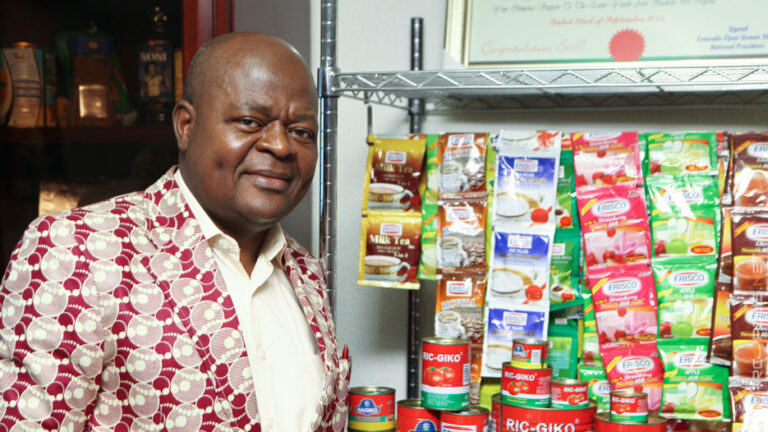
PRESIDENT and Chief Executive Officer (CEO) of Erisco Foods, Eric Umeofia, has threatened to sue its estranged customer, Chioma Egodi, for N5 billion after she posted a negative review of one of the company’s product, Nagiko Tomato Mix, via her Facebook handle.

Umeofia disclosed this during an interview with Arise TV on Thursday, Sept. 28, saying Egodi’s comments adversely affected his business.

He also said that though Egodi tendered an apology letter to his organisation, she had yet to make it public as directed by the Nigerian Police Force (NPF).

He further stated that failure to retract her comment by posting the letter publicly, as agreed, would attract the N5 billion lawsuit.

“I have a credit line of $15 million from two customers, which is now suspended from China! Because they said I am not likely to pay them the credit if they give me. She did not post it as agreed. If she doesn’t post it there, we are going for N5 billion.

“Even that is small money for me to ask of her. $30 million, do you know how much it is? For the past five years, I have never gotten any credit in Nigeria. No loan. For the past three years, I have never gotten $1 foreign exchange,” he said.

On September 17, Egodi posted via her Facebook handle that she purchased a tin of Nagiko Tomato paste and discovered that the product contained “too much’’ sugar.

Replying to a comment on Facebook, she insinuated that the product was killing consumers due to its amount of sugar.

Erisco Foods released a statement describing her allegations as untrue, and she was subsequently arrested, a move condemned by Nigerians, who described it as intimidation.

The Federal Competition and Consumer Protection Commission (FCCPC) had also waded into the case and summoned Erisco following the arrest.

Stating that her comments had been malicious, Umeofia said that sugar was declared as one of the ingredients of the tomato mix, which he said was different from tomato paste.

“It is tomato mix, not tomato paste. So this, you can put water and use it to eat bread like butter. On customer demand, we did this, and we have NAFDAC for it. It is thick; you can put water and use it like jam. If you don’t put water, you can use it to cook,” he said.

“If it is a product review, as you people assumed, she would have posted it and allowed people to review. But where she said by herself that our product is killing people…we now began to suspect what is this nonsense? We will not allow our efforts of 40 years to now be destroyed by a syndicate of importers that have been fighting our products since the beginning.

He also added that harsh business conditions in Nigeria could force him to move his business out of the country.

“I have over 3000 people in my factory. We have over N20,000 people we are paying; how can I allow this kind of syndicate to come and destroy me? Is she more than arrest? If I commit an offence, the government should arrest me.

“Mind you, I am here to produce, not because of the money. I am losing money in Nigeria; the money I brought to this country 12 years ago, I don’t have it in dollars again. After this, I may consider leaving this country because I’m losing money,” he said.

Erisco Foods is an indigenous company manufacturing tomato paste, seasoning, rice and other items.