Home Blog Page 780

AWIM to host 7th annual conference on GBV in media

0

THE African Women in Media (AWIM) is set to hold its 7th annual conference with the themeMedia and Gender Violence.’

The AWIM 23 event will host participants from different parts of Africa.

It is scheduled for November 30 and December 1 in Kigali, Rwanda, to address media and Gender-Based Violence (GBV) challenges.

Co-Founder and Chief Executive Officer (CEO) AWIM, Yemisi Akinbobola, stated this during a virtual press briefing held via X on Tuesday, Sept. 27.

“Africa has a unique role to play in shaping this global conversation on media and gender violence, and our conference serves as that beacon for the continent’s leadership in this critical area,” she said.

The event is being organised in partnership with Fojo Media Institute, Luminate, Rwanda Media Programme, Rwanda Broadcasting Agency, MacArthur Foundation, and Wole Soyinka Centre for Investigative Journalism (WSCIJ).

Akinbobola said a document would be drafted during the conference, which will guide eradicating GBV in media.

“One of the most exciting aspects of this conference is the African Women in Media Declaration on Media and Gender Violence, which will be co-designed by everybody that attends the conference; whether you are an attendee or a speaker, we’ll work together to draft and develop this very important document.

“This declaration will provide a clear and actionable roadmap for addressing gender violence in and through media,” Akinbobola said.

She encouraged attendees and stakeholders to engage in discussions and workshops during the event to drive lasting change in the issue of gender equality and the media.

Also speaking during the event, the African Regional Manager of Fojo Media Institute, Anki Wood, stated that GBV has been a huge societal problem that the media must address, adding that the issues should be reported ethically and non-stereotypically.

“I see this conference as a very important event to cover, to spread awareness and light on the issue, and also an opportunity for the media sector itself and you as individuals to build capacity on the subject,” Wood said.

She added that research carried out in 2021 by the Foye Media Institute in collaboration with AWIM showed that GBV, especially sexual harassment in the industry, was forcing female journalists out of the profession and called for an end to sexual violence in workplaces.

Wood also stated that while women are often more victims of harassment, men also fall victim to GBV, which she described as unacceptable.

Independence Day: FG declares Monday public holiday

0

THE Federal Government (FG) has declared Monday, October 2, 2023, a public holiday to commemorate Nigeria’s 63rd Independence Day anniversary.

This was disclosed by the Minister of Interior, Olubunmi Tunji-Ojo, through a statement released on his behalf by the ministry’s Permanent Secretary, Oluwatoyin Akinlade, on Thursday, September 28.

Tunji-Ojo said the government, led by President Bola Tinubu, would continue working hard to address the nation’s challenges.


Read Also:

The minister averred that the country’s socio-economic and security crises were widespread and promised the government would do its best to overcome them.

“The Government is daily making efforts to confront these varied and numerous challenges with all the might available until respite comes our way.

“Our warm, welcoming spirit and love, as well as our unbounded human capital and the richness of our land, make Nigeria unarguably the leading black nation in the world, being Africa’s pride and beacon of hope for the ‘Renewed Hope’ of President Bola Ahmed Tinubu,” the minister stated.

While wishing the Nigerians a memorable Independence Day celebration, the minister recalled that the country’s founders, despite their differences in faith, tribe and tongues, fought for Nigeria’s freedom.

He assured that Tinubu’s administration would ensure a better Nigeria for all.

According to Tunji-Ojo, greatness was within reach if everyone in the country worked together.

I couldn’t get Nigerian flag after winning gold in Atlanta ’96 – Ajunwa

0

NIGERIA’S Olympic gold medallist, Chioma Ajunma, has revealed how she could not get a Nigerian flag after winning the gold medal in a field event at the 1996 Olympics in Atlanta, USA.

Ajunma, who just recently retired from the Nigeria Police Force as a Deputy Commissioner of Police after 35 years of service, felt nostalgia about her heyday in sports while speaking on a sports radio programme in Lagos.

She described her feat at the 1996 Olympics when she made a jump length of 7.12 meters (on her first attempt) during the final to pick the gold medal as divine, saying that nobody ever believed in her to win a medal.

“Eventually, when I won the gold, there was no flag for me to take to the victory lap. Nigerians should have seen that when I won the gold, there was no flag for me. Somebody from another country gave me that small flag I used that day.

“It was a season that no man, not even our minister, Jim Nwobodo, expected anything good from me.”

She added: “I felt so humiliated, but I thank God He came for me. Nobody expected anything good, but God is alive. He is very interested in me, and I have been trying my best since then.”

She thanked Nigerian ex-international Chief Segun Odegbami for his intervention to shed light on the alleged doping test she failed at the 1992 Olympics in Spain, saying that his intervention absolved her of the allegation.

“They said we failed the dope test. Yes, we failed the dope test. Eventually, Chief Segun Odegbami called the people that this was the first time Nigerians were doing a dope test here. Come and check what they did was right.

“Fortunately, they came; they saw everything, but when I came back, I showed everyone that God is bigger than man. I want to thank God that even today, as I retired from the Nigeria Police Force, I am still active and in good health. I am very grateful to God,” she said.

NIMET warns of 48-hour rainfall in FCT, 24 states

0

THE Nigeria Meteorological Agency (NiMet) has predicted heavy rainfall in the Federal Capital Territory (FCT) and 24 states between Thursday, Sept. 28 and Friday, Sept. 29.

This was contained in the weekly heavy rainfall bulletin released by the Agency on Wednesday, Sept. 27.

The bulletin reads: “Moderate to heavy rainfall is expected within the forecast period (Thursday 28th and Friday 29th September 2023) over parts of Katsina, Kano, Jigawa, Bauchi, Gombe, Plateau, Borno, Adamawa, Taraba, Kaduna, Niger, Nasarawa, Kogi, Enugu, Edo, Delta, and Bayelsa,” it read.

Abia, Anambra, Akwa Ibom, Cross River, Ebonyi, Kwara and Benue state are other states likely to be affected.

NiMet also predicted that there would be moderate to heavy rainfall in some other parts of the country and advised that residents avoid surface runoff waters due to possible strong undercurrents.

“The expected moderate to heavy rainfall is expected to cause some flash flooding over their areas of occurrence. Strong winds should accompany the rains, with the strongest winds expected over parts of Adamawa, Borno, Gombe, Bauchi, Yobe, Jigawa, Kano, Katsina, Zamfara, Sokoto, and Kebbi State,” the bulletin read.

Heavy rainfall, which sometimes results in flooding, is a part of climate change concerns in Nigeria. Many states likely to experience the 48-hour rainfall, according to NiMet predictions, are flood-prone areas and were badly affected in 2022.

NiMet and the Nigeria Hydrological Services Agency (NIHSA) predicted that at least 32 states would be affected by another flooding incident in 2023, likely more disastrous than in 2022.

Based on the predictions, the National Emergency Management Agency (NEMA) introduced the 2023 Climate-Related Disaster Preparedness and Mitigation Strategies, an early warning document with recommendations to minimise flooding in affected states.

However, The ICIR reported that many states, including Kogi, Benue, Jigawa, Niger, Rivers, and Bayelsa, are largely unprepared for the impending disaster.

Abducted Nasarawa Poly student regains freedom

0

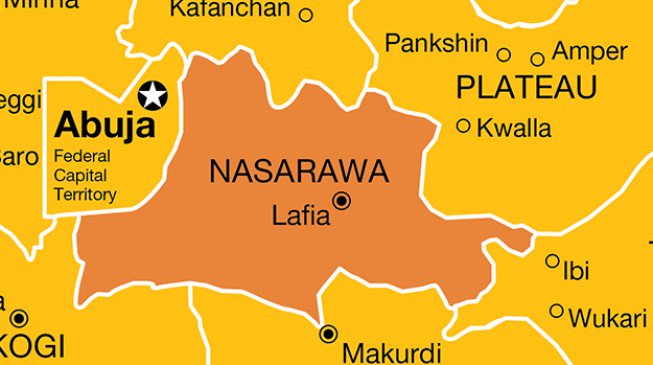
A KIDNAPPED student of the Mustapha Isa Agwai Polytechnic in Nasarawa state, Taye Ajoke, has regained her freedom days after her abduction.

The student was abducted from her off-campus hostel on Monday night.

Reports say she was released after her parents paid her abductors N300,000 ransom.

The abducted student was released in Lafia on Thursday, September 28.

The President of the Students Union Government of the Polytechnic Ekom Peter Ayaka told PUNCH Newspaper that Ajoke’s kidnappers initially sought a N50 million ransom but lowered it to N500,000 once they realised her family and well-wishers could not afford it.

According to Ayaka, after the parents of Ajoke had made numerous requests to her abductors, the kidnappers lowered the ransom to N300,000.

The ICIR reported on Wednesday, September 27, that the Nasarawa State Police Command launched a search for  Ajoke’s abductors.

The Command said the investigation into the abduction of the female student, identified as Jumoke, would be detailed.

On Monday night, armed men attacked Ombi One, a student housing complex about two kilometres from the school, and whisked the student away to an unidentified location.

The kidnappers reportedly abducted the student after shooting others during an hour-long gun rampage.

 In addition to the abducted student, two other students and an admission seeker were hurt in the incident.

In a chat with The ICIR on Wednesday, September 27, the Nasarawa Police Public Relations Officer (PPRO) Ramhan Nansel said upon receipt of the report, police officers were immediately drafted to the scene and on arrival, it was discovered that three people were injured.

He added that the Police were on the kidnappers’ trail.

 However, attempts to confirm the release of the student from the Nasarawa Police Public Relations Officer (PPRO) Ramhan Nansel were unsuccessful as he did not answer his call or respond to messages sent to his phone.

ICIR announces fellows for its countering misinformation, promoting media literacy project

0

THE International Centre for Investigative Reporting (ICIR) has announced selected fellows for its “Countering Misinformation and Promoting Media Literacy Project”.

This programme seeks to combat the dissemination and impact of misinformation in Nigeria by promoting media literacy and responsible information sharing among citizens, an initiative supported by the Federal Republic of Germany Embassy.

The ICIR is an independent, non–profit media organization that aims to promote good governance in Nigeria through robust, investigative journalism that holds power to account.

In the past half-decade, The ICIR has equipped hundreds with investigative, data-driven reporting skills, bolstering transparency and public welfare, especially at the sub-regional levels.

The ICIR pioneered the FactCheckHub amidst the infodemic that came with COVID-19 in 2020. It has become one of Nigeria’s most credible verification platforms, working to increase its capacity, visibility and impact in Nigeria.

The training aims to hone beneficiaries’ fact-checking proficiencies and provide financial backing for them to generate pivotal fact-checking content. The overarching goal is to enhance quality information in Nigeria through responsible journalism.

Following the training, the journalists are tasked with imparting the knowledge acquired to their peers within their media houses and ensuring the continued spread of this essential knowledge.

For the current endeavour, 30 select journalists from diverse Nigerian media organisations will undergo a 3-day training in Abuja in October 2023. The list of successful candidates and their respective organizations are as follows:

S/NNAMEORGANIZATION
 1.Omokungbe, Daisi MatthewDaily Agent & Daily Agent Check
 2.Daniel AdajiNature News
 3.Adisa-Jaji AzeezThe informant 247
 4.Babatunde OmonikeDiamond 88.7FM
 5.El-ameen IbrahimPunch Newspapers Nigeria
 6.Ndukwe ChidiebereTrend 100.9fm, Asaba
 7.Saleh AminuProgress Radio, Gombe state
 8.Ojukwu DanielFoundation for Investigative Journalism (FIJ)
 9.Ijioma CalebRoundcheck
 10.Okereke Jennifer IjeomaCool Fm/Wazobia Fm / Nigeria Info
 11.Ozumi AbdulPRNIGERIA
 12.Daranijo Habeeb Opeyemi    Korrectnews Media
 13.Ogi-Olu Mosunmola DamilolaArise News
 14.Ezinne Glory AlozieDarling 107.3 FM, Owerri, Imo State
 15.Ahmad ShereefdeenThe Liberalist
 16.Shuaibu Faruk UmarDaily Trust
 17.Raji Abdulazeez OlatunjiCentre for Democracy and Development
 18.Alo OlaronkeBBC
 19.Muhammad Saminu Muhammad      Yobe Broadcasting Corporation
 20.Mudathir Hayatullahi FolorunshoPEN PRESS
 21.Salako EmmanuelThe News Digest
 22.Ogbewe Famous AmadinKAFTAN TV
 23.Funmilola AfolabiCrest FM, Akure.
 24.Nwimo, Lawrence ChukwudikeIkenga Online
 25.Adedokun Theophilus OluwapelumiFreelancer
 26.Adesanya Michael AdesegunCity Voice Newspaper
 27.Ojo-Ehinmodu Mercy AdeolaNational Broadcasting Commission
 28.Ogunsanya Oluwaseye OluwafemiFact Check Africa
 29.Ibrahim Ukashatu WakiliVision FM Sokoto
 30.Aliyu DomaVoice of the people 96.1 FM, Abuja

Wike sacks heads of 21 agencies

0

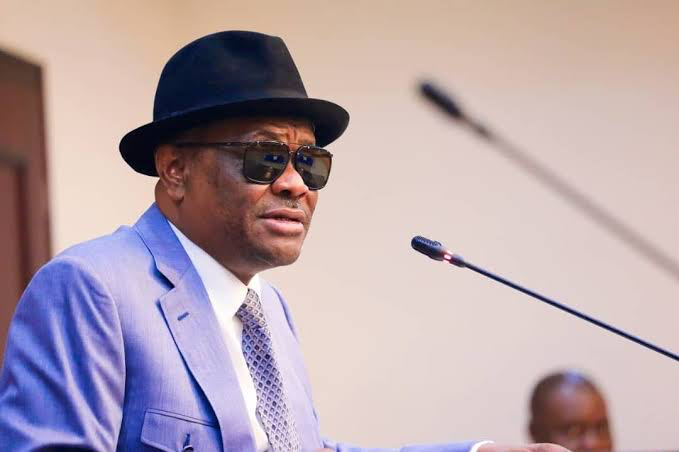
MINISTER of the Federal Capital Territory (FCT) Nyesom Wike has sacked heads of 21 agencies, parastatals and companies.

This was contained in a statement by Director of Press, Office of the FCT Minister Anthony Ogunleye on Wednesday, Sept. 27.

According to the statement, the directive takes effect immediately.

Those affected are Group Managing Director (MD)/Chief Executive Officer (CEO), Abuja Investment Company Ltd; CEO/MD, Abuja Markets Management Ltd; MD/CEO, Abuja Urban Mass Transport Company; CEO/MD, Abuja Property Development Company; CEO/MD Abuja Technology Village Free Trade Zone Company; CEO/MD Abuja Film Village International.

Others are CEO/MD Powernoth AICL Equipment Leasing Company Ltd; MD Abuja Broadcasting Corporation; MD, Abuja Enterprise Agency; General Manager (GM), FCT Water Board, Director-General (DG), FCT Emergency Management Agency; Executive Secretary, FCT Primary Healthcare Board.

The list includes the DG Hospital Management Board, Director, Abuja Environmental Protection Board; Director, FCT Scholarship Board, and Director, FCT Christian Pilgrims Welfare Board.

Director, Muslim Pilgrims Welfare Board; Coordinator, Abuja Infrastructure Investment Center; Director, FCT Health Insurance Scheme; Coordinator, Satellite Towns Development Department; Coordinator, Abuja Metropolitan Management Council were also affected by the sack.

“They are to hand over the affairs of their offices to the most senior officers in rank. Appointments into the offices will be made in due course,” the statement read.

In August, Wike had warned directors of agencies in the FCT to work hard, adding that he would mount pressure until results are seen.

“You can’t be directors for nothing. It is an opportunity for us to tell Nigerians and Mr. President that we can’t disappoint. If you are in charge of sanitation, buy your drugs, carry it all the time because I will disturb you all the time to ensure Abuja is clean,” Wike said.

Why Muslims celebrate Eid-il-Mawlid – Scholars

0

EID-IL-MAWLID, often called Mawlid Nabiy, commemorates the Prophet Muhammad’s birth date (PBUH) a revered prophet of Islam.

According to the Qur’an, The Prophet was born on the 12th day of the Islamic calendar’s third month, Rabi’ al-Awwal, in the year of the elephant, 570 AD, a major day for Muslims worldwide.

The date of Mawlid varies yearly because the Islamic (Hijrah) calendar, which is based on the lunar cycle, is ten to eleven days shorter than the Gregorian calendar.

Muslims view the Prophet Muhammad (PBUH) as an ethical and spiritual role model, and celebrating his life is considered one more method to preserve his memory in the Muslim community.

Given the prophet’s significant role in Islam and the absence of a religiously prescribed holiday to commemorate his life, Muslims now observe the Mawlid as a means to honour the prophet.

Therefore, Muslims spend Mawlid learning more about the prophet and looking for ways to develop personally through studying his teachings.

Worshippers assemble at mosques and community centres for many of the rites, which take place in a communal setting.

Muslims are not mandated to celebrate the prophet’s birthday. Since the event is neither required nor explicitly mentioned in Islamic beliefs, some Muslims decide not to observe it. Additionally, some people think it is unnecessary and that it is not proper to celebrate it.

Speaking with THE ICIR, Fuad Adeyemi, the chief imam and founder of the Al Habibiyyah Islamic society, stated that Prophet Muhammad was born during the period of ignorance, which was referred to as the ‘Jahiliyyah period’ by Arabs, and his birth gave the entire world cause for hope.

“His coming brought a ray of hope to the entire world. His coming also changed the fate of the world generally because the way things are been done was never the same after he came. He was one man that was everywhere. No man in history can match or equal his success as concerning what we have in the world today,” he stated.

While advising leaders to emulate the prophet’s attributes as a humble leader and to designate positions without regard to ethnicity or background, he emphasized that following the prophet’s instructions about Zakat (taxation) would be advantageous to the nation as a whole.

“It was the coming of the prophet that Zakat became an institution. Supposing everybody follows the injunction of the prophet today, people might not be rich, but there would be no poor person, especially in our country.

“When he put people in authority, he did not put people there because of his relation with him, but he put someone with competency and fear of God. He never cared whose ox is gored. He suppressed personal aggrandisement. If you met the prophet among his followers, you would never differentiate him from his followers. That is what is lacking among us today, ” he added.


READ ALSO:


Also speaking with The ICIR, Musa Olaofe, a doctorate holder, the chief imam of the Ansar-ud-deen Society of Nigeria stated that Prophet Muhammad left behind a legacy that is very important to the entire Muslim community since he had many admirable traits.

“He did all he could as a Muslim who believed in the oneness of Allah. He settled many disputes, encouraged education, and emphasized unity, governance, and many other things we are doing in Nigeria today. He never encouraged begging, which we see almost everywhere because he wanted people to be industrious, productive and agile,’ he stated.

Both scholars enjoined citizens and government officials to emulate the qualities of the prophet in the discharge of their duties and daily activities.

Coalition demands apology from FRSC for assaulting ICIR journalist

0

THE Coalition for Whistleblowers Protection and Press Freedom (CWPPF) has condemned the attack on a reporter with the International Centre for Investigative Reporting (ICIR), Mustapha Usman, by officers of the Federal Road Safety Commission (FRSC).

The ICIR reported how Mustapha was beaten up and had his identification card confiscated on the 18th of September near the Corps’ Zone 7 office in Abuja while doing his job.

The reporter was documenting an incident involving the FRSC officers at the Wuye Junction in the nation’s capital, where the officers stopped a motorist for allegedly violating traffic laws.

Mustapha attempted to record how the officer pounced on the female motorist, struggled to collect the steering from her and moved on to deflate her tyre after failing to take over the steering.

CWPPF, a group of media and civil society organisations committed to upholding good governance and democracy by protecting the ethos of whistleblowing, freedom of expression and press freedom, condemned the officers’ action in a statement.

“Journalists have an obligation of reporting on matters of public interest and ensuring transparency and accountability and must be allowed to perform this duty without fear of harassment, intimidation, or physical harm,” part of the statement read.

The group called for a comprehensive and unbiased investigation into the incident.

It said those responsible for assaulting him must be identified and held accountable for their actions, stressing that FRSC and relevant stakeholders must ensure justice prevails.

The coalition also demands public apology to Usman and a commitment from the FRSC to respect and uphold the rights and safety of journalists in the future.

“The right to report freely and independently is a stronghold of any democracy, and our collective responsibility is to protect and uphold this fundamental right.”

Speaking with the coalition, the Editor of The ICIR, Victoria Bamas, expressed her displeasure over the incident. 

“It is disheartening that journalists discharging their responsibilities and working within the law are attacked by public officials,” she said.

What Nigeria, others can do to escape debt crisis – IMF

0

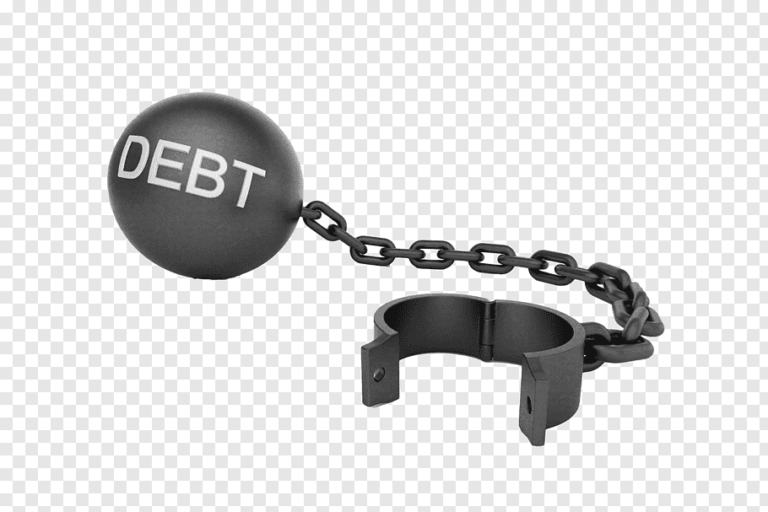
The International Monetary Fund (IMF) has suggested measures for sub-Saharan Africa to avoid a debt crisis.

The advice coincides with an appeal by the African Network for Environment and Economic Justice (ANEEJ) to creditor nations and institutions to cancel Nigeria’s huge debt burden.

In a report released on Tuesday, September 26, the IMF said the average debt ratio in sub-Saharan Africa had almost doubled in just a decade, rising from 30 per cent of gross domestic product (GDP) at the end of 2013 to nearly 60 per cent of GDP by the end of 2022.

Not only has the debt risen, but repaying this debt has also become much costlier, the Britton Wood financial institution said.

It noted that the problem had been that the region’s ratio of interest payments to revenue, a key metric to assess debt servicing capacity and predict the risk of a fiscal crisis, had more than doubled since the early 2010s and was close to four times the ratio in advanced economies at the time it released the report.

“As of 2022, more than half of the low-income countries in sub-Saharan Africa were assessed by the IMF to be at high risk or already in debt distress.

“These trends have sparked concerns of a looming debt crisis in the region,” IMF stressed.

In proffering solutions, the IMF identified five policy actions African nations would adopt to preserve public finances’ sustainability while achieving the region’s development goals.

The policies include setting a course to re-anchor their fiscal policy through a credible medium-term strategy.

According to the IMF, this will help sub-Saharan Africa focus their fiscal policy away from excessive short-term goals and be guided by a medium-term strategy.

“A more strategic approach to fiscal policy would be preferable by setting explicit debt targets that integrate key policy trade-offs between debt sustainability and development objectives, rather than focusing narrowly on short-term fiscal deficits,” it explained.

The IMF also suggested that the region undertake fiscal adjustment to bring debt back to a safer level.

It means most countries in Sub-Saharan Africa must reduce their fiscal deficits to about two to three per cent of their GDP in the coming years, suggested the organisation.

A third approach is mobilising more domestic revenue, as most sub-Saharan African countries rely excessively on expenditure cuts to reduce their fiscal deficits.

While acknowledging that this might be required in some circumstances, the IMF said revenue measures, like eliminating tax exemptions or digitalising filing and payment systems, should play a more significant role.

“Mobilising domestic revenue is less detrimental to growth in countries where initial tax levels are low, whereas the cost associated with reducing expenditures is particularly high given Africa’s large development needs,” it explained.

The IMF further suggested that the sub-Saharan countries strengthen their budget institutions to improve the implementation of fiscal plans.

“Policy changes are more likely to yield tangible results if fiscal institutions are strong and efficient. On the expenditure side, well-designed plans too often yield disappointing results due to budgetary slippages or an unforeseen materialisation of fiscal risks.

“Adopting a medium-term fiscal framework, putting in place tools to better assess and manage fiscal risks, and enhancing controls over government expenditure during the budget implementation phase is key to avoiding such pitfalls,” it explained.

The IMF stressed the imperative of considering the implications of policies on the population.

“The sustainability of a new fiscal strategy also depends on the government’s ability to secure public support by linking the policy measures to longer-term benefits. Public acceptance should be a central consideration in policy design—for instance, by sequencing reforms carefully and introducing compensatory measures,” it said.

Meanwhile, the Executive Director of ANEEJ, David Ugolor, had on Tuesday, September 26, urged the World Bank, IMF, China and the African Development Bank (AfDB) to cancel Nigeria and other African countries’ debt obligations.

Ugolor made the plea at a two-day National Conference on ‘Debt and Development’ organised by ANEEJ in conjunction with the African Forum and Network on Debt and Development, AFRODAD, Bill & Melinda Gates Foundation, Open Society Initiative for West Africa, OSIWA, with the theme ‘Repositioning Nigeria For A Debt-Free Africa,’ Vanguard reported.

The ICIR reports that former President Muhammadu Buhari, at the 77th session of the United Nations General Assembly (UNGA) in September 2022, expressed worries that developing countries were facing numerous challenges, including being able to service external debts.

At the event, he beckoned on the global leaders to address what he described as the “burden of unsustainable external debts” and called for “outright cancellation for countries facing the most severe challenges.”

The increasing debt burden remains one of the significant challenges facing Nigeria and weakening its economy.

In its recent disclosure, the Debt Management Office (DMO) put Nigeria’s total public debt at N87.38 trillion at the end of the second quarter of this year, representing a 75.29 per cent rise compared to N49.85 trillion disclosed at the end of March this year.