Home Blog Page 781

Police launch manhunt for Nasarawa Poly student abductors

0

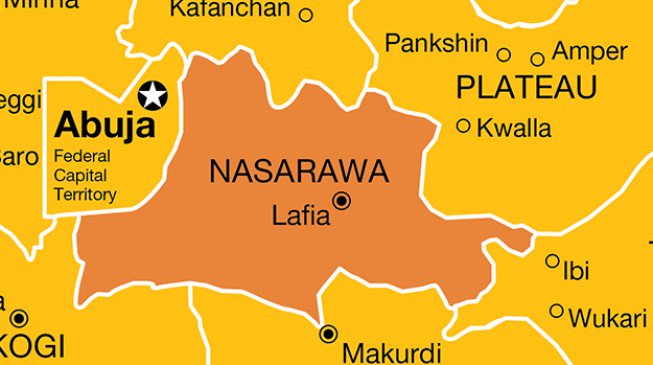
THE Nasarawa State Police Command has launched a search for abductors of the Isa Mustapha Agwai Polytechnic student in the state capital, Lafia.

The Command said the investigation into the abduction of the female student, identified as Jumoke, would be detailed.

On Monday night, armed men attacked Ombi One, a student housing complex about two kilometres from the school, and whisked the student away to an unidentified location.

The kidnappers reportedly abducted the student after shooting others during an hour-long gun rampage.

 In addition to the abducted student, two other students and an admission seeker were hurt in the incident.

In a chat with The ICIR on Wednesday, September 27, the Nasarawa Police Public Relations Officer (PPRO) Ramhan Nansel said upon receipt of the report, police officers were immediately drafted to the scene and on arrival, it was discovered that three people were injured.

“On arrival, it was discovered that three people were injured. The victims were rushed by the Police to the Dalhatu Araf Specialist Hospital, Lafia, for treatment.

“Upon their (officers) return to the scene of the incident, it was discovered that one person was missing named Jumoke, surname unknown. The command has launched an investigation into the case,” Nansel stated.

He added that the Police were on the kidnappers’ trail.

On April 7, The ICIR reported that unidentified gunmen abducted a former deputy governor of the state, Onje Gye-Wado.

The Police said Gye-Wado, a professor, was whisked away in the morning when gunmen broke into his residence in Gwagi village, Wamba Local Government.

Nansel (The state Police Public Relations Officer), in a press release, confirmed the abduction.

According to the statement, the gunmen stormed into Gye-Wado’s residence and took him away.

The abductors later released him.

Nansel confirmed Gye-Wado’s release in a chat with The ICIR on Monday, April 10.

Nursing mum speaks on coping with journalism and motherhood

0

“In my experience, there have been instances where I had to miss out on opportunities because of the challenges of being a nursing mother”, says Aisha Ahmad, a journalist practising in Kano state.

Ahmad, while speaking on the sidelines of the just concluded Promoting Democratic Governance Project (PDGP) training organised by the International Centre for Investigative Reporting (ICIR) with support from the United States Embassy, Abuja, noted that motherhood has a noticeable impact on the career move for women journalists.


Ahmad, who was a participant in the training aimed at strengthening the capacity of investigative journalists to promote transparency, accountability, and good governance in Nigeria, explaining the impact said: “There was a project I was supposed to attend that required me to travel to a location outside of Kano.

“However, due to the logistics and the fact that the provisions at the destination didn’t allow me to take my baby along, I had to make the difficult decision not to go. There have also been times when I hesitated to even apply for certain opportunities because I knew that the circumstances might not allow me to participate. So I wouldn’t even know if I could have secured the slot or not.”

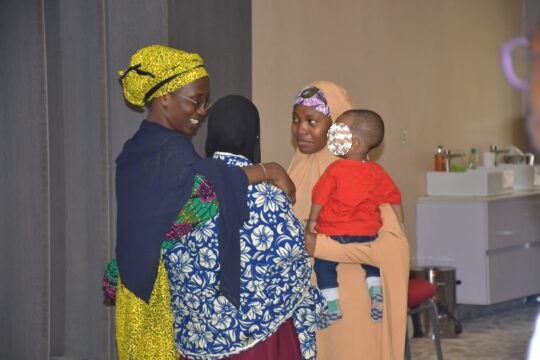
The nursing mother, who is a journalist with AllNews Nigeria media organisation, said she hesitated before applying for the ICIR Promoting Democratic Governance Project but eventually did when the centre assured her it was all-inclusive. She could come along with her baby.

Nursing mum speaks on coping with journalism and motherhood.

“Earlier, I was going to take him (my child) to my mum, but something came up that she wouldn’t be available. I called one of the organisers – programme officer – and told her I had a baby. She said I could come with the baby. I was very happy when The ICIR agreed that I come with the child.”

In its call for applications for the programme, The ICIR strongly encouraged qualified female journalists to apply. Ahmad commended The ICIR for the inclusivity, adding that the venue was also conducive for women with children.

“Everything was fine because the room was spacious and beautiful. I was able to look after the baby there. The venue was also okay. If I didn’t want to go to the room, I could stay with the baby close by.

“I thank The ICIR; this is very comfortable,” she said.

Female journalists worldwide face challenges when it comes to balancing their careers with motherhood. According to a report titled “Where Are the Mothers? in which approximately 20 working mothers in newsrooms shared their diverse experiences, many nursing mothers have had to stop breastfeeding earlier than planned due to the pressures of managing both work and breastfeeding.

The report published by Nieman reports opened with, “If news organisations want to attract and retain millennial journalists, newsrooms must better meet the needs of parents with young children—and create better work-life balance for everyone.”

While some newsrooms provide support for nursing mothers, women who find themselves in such supportive environments also need to invest additional effort to achieve their breastfeeding goals.

Because of women’s aspirations to balance work and family responsibilities, a 2015 University of Kansas study revealed that female journalists were at a higher risk of experiencing burnout and were more likely to plan to leave the industry compared to their male counterparts.

The programme officer of the Centre, Ayisat Abiona, said The ICIR pays serious attention to Gender Equality and Social Inclusion (GESI) without bias in all our projects. Our approach to Gender Equality and Social Inclusion (GESI) addresses unequal power relations between different social groups. It focuses on the need for action to ensure equal rights, opportunities, and respect for all individuals regardless of their identity as a Media organisation.

“Gender balance is also considered in the final selection process of all participants, including CSO representatives, journalists, and resource persons involved in our projects. During our previous initiatives, we ensured that participants were qualified people of diverse races and identities, with priority given to female journalists in our programmes to overturn the professional gender barrier and foster inclusiveness”, she added.

The PDGP training was held in Kano state between Tuesday, September 12 and Thursday, September 14, and was organised specifically for journalists in the North-Western.

At least 20 journalists were trained by facilitators on investigative journalism, using the Freedom of Information Act, reporting in hostile or unsafe environments, and sensitising journalists on safety and security, among other topics.

A flyer with the participants.

Hinrich foundation award for trade invites applications

THE Hinrich Foundation Award for Distinguished Reporting on Trade now accepts applications through the National Press Foundation (NPF). 

The award recognises exceptional reporting that advances and informs the public’s understanding of international trade and business.

Entries can be submitted by journalists whose work upholds the highest standards of journalism and published by an established news source.

Journalists from all media platforms—print, television, and digital—can compete for a US$10,000 reward.

Works published or broadcast from September 30, 2022, to September 30, 2023, are eligible for submission.

The deadline is October 2, 2023. Interested individuals can apply here

“I have no hand in Mohbad’s death”- Naira Marley

0

NIGERIAN Singer, Azeez Fashola popularly known as Naira Marley has said he has no hands in the death of the late singer, Ilerioluwa Promise known as Mohbad.

In a statement shared by Naira Marley on Tuesday, September 26, through his official Instagram account, Naira Marley said individuals have accused him of being responsible for Mohbad’s demise. However, like everyone else, he, too, has been shocked by the tragedy.

“In the last few days, there has been a lot of onslaught on my person and reputation globally over the death of my former signee. All manner of stories have been woven against me in respect of his untimely death. 

“I have not only been in shock over the death of the deceased, whom I considered to be my brother and member of our music family, but over the various lies spread and threats against me.

“Before I progress further, let me say that as it is traumatic for a lot of people to bear the reality of lleri’s death, so it is to me. May his gentle soul continue to rest in peace, and may God grant his family the fortitude to bear the irreparable loss”, he stated. 

He also emphasized that while they had their disagreements, it never escalated to the point of harbouring ill wishes towards anyone, and they were actively pursuing a legal resolution to their disputes.

“Permit me to categorically state that I have no hand in the death of llerioluwa, either directly or indirectly. It is not unusual in the industry, just like in several other industries, to have family friction, even amongst blood relatives.

“Truly, we had our own share of misunderstandings whilst working together, but the disagreement between us was never to the extent being painted by some hirelings. 

“It never degenerated to the extent of wishing each other death. Even at that, we were resolving our business disputes legally before he had passed”, he added.

Naira Marley noted that he had been outside the country since August 31 and had not yet returned, indicating that he was not present when Mohbad passed away.

In the statement, Naira Marley expressed his intention to return to the country in response to the invitation by the Police. He pledged to fully cooperate and provide assistance during the investigation to uncover the truth.

“In light of the police invitation, I am making arrangements to return to the country to assist in the investigation and give my version of the events. I am fully cooperating with the Police team, and I certainly have no reason to be a fugitive when I have no hand in his death”, he stated.

The late Mohbad was formerly affiliated with Naira Marley’s record label, Marlian Music, from which he departed in October 2022.

Following Mohbad’s passing on September 12, Naira Marley experienced a drop in his Instagram followers, losing thousands. Additionally, some Nigerians have initiated a petition to advocate for the banning of Marlian Music.

Naira Marley's statement
Naira Marley’s statement
Part of the statement released by Naira Marley.

Senate confirms Olayemi Cardoso as new CBN governor

0

THE Senate has confirmed the nomination of Olayemi Cardoso as the Governor of the Central Bank of Nigeria (CBN).

The Senate also confirmed four others as the Bank’s Deputy Governor.

They are Emem Usoro, Muhammad Dattijo, Philip Ikeazor and Bala Bello.

Cardoso and his deputies were confirmed in Abuja on Tuesday, September 26.

The confirmation marks the beginning of a new era at the apex bank after President Bola Tinubu suspended the Bank’s immediate past governor, Godwin Emefiele, who is facing a 20-count charge filed against him by the Federal government at the Federal High Court, Abuja.

Tinubu had on September 15 approved Cardoso’s nomination for five years at the first instance and the four deputy governors.

Cardoso and his team had formally assumed duty on Friday, September 22, in an acting capacity.

The team took over from Folashodun Shonubi, the Bank’s acting governor, and his team – Aishah Ahmad, Edward Lametek Adamu, and Kingsley Obiora, all deputy governors.

According to economic experts, the new board came when Nigeria faced several economic problems, from losing confidence in the foreign exchange market to defects in the entire financial system.

“There is a serious confidence crisis in the foreign exchange market fueling an unprecedented speculative onslaught on the naira,” a renowned economist, Muda Yusuf, said in a statement titled, ‘Ten Point Agenda for the CBN Governor.’

Yusuf, the chief executive officer of the Centre for the Promotion Of Private Enterprise (CPPE), pointed out that Nigeria’s economy grappled with severe adverse effects of depreciating exchange rates, soaring energy costs, ravaging inflationary pressures, a massive backlog of foreign exchange obligations that needed to be cleared and debt service obligations that needed to be redeemed.

“This is evidently an economic management quandary that the new economic team would have to manage, and urgently too. And the CBN has a key role to play in this,” he maintained.

Another leading Nigerian economist and chief executive of Economic Associates, Ayo Teriba, had told the Guardian that there was a challenging way out of the foreign exchange crisis and that it was partially the job of the CBN to stabilise the market.

The ICIR reports that the apex bank did not publish its financial statements for about seven years but had to do so in August 2023 because of an ongoing investigation into its financial management by Tinubu’s presidency.

Cardoso pledges to embrace a culture of compliance

An economic and development policy advisor, financial sector leader, former chairman of Citi Nigeria and Commissioner for Economic Planning and Budget in Lagos, Cardoso has over three decades of managerial experience on board. 

He is an alumnus of Aston University, Birmingham, United Kingdom, where he studied managerial and administrative studies. 

He also holds a Master’s in Public Administration from the Harvard Kennedy School, United States of America.

However, the new Central Bank’s chief and his committee of governors will have to face the seemingly tough job and daunting challenges, ranging from runway inflation, volatile exchange rate, contentious ways and means (W&M) advances, ambiguous external reserves, falling bank adequacy ratio, unaffordable cost of borrowing, touchy development financing and sundry other issues.

At their screening at the Senate chamber on Tuesday, the CBN chiefs highlighted a few of the priority issues. 

These include returning the apex bank to its core mandate set up in the CBN Act, depoliticising the CBN, transparently ensuring effective communication and feedback, working with evidence-based data to stimulate the economy, and strengthening collaboration between the fiscal and monetary authorities.

However, they noted that the job before them would be challenging but that they were determined to work with the National Assembly.

Cardoso stressed that his team would work and not run afoul of the extant laws guiding their operations and pledged to embrace a “culture of compliance” at the CBN.

The Senate, however, charged its committee on banking, insurance and other financial institutions to rise to the occasion to monitor the activities of the CBN.

Federal government reviews investigator’s interim report

Meanwhile, the Secretary to the Government of the Federation, George Akume, on Monday, September 25, disclosed that the Federal government would soon unveil the audit report of the CBN probe.

President Tinubu had, on July 28, 2023, appointed a former chief executive officer of the Financial Reporting Council (FRN) of Nigeria, Jim Obazee, as the special investigator for the apex bank.

The special investigator was to probe the CBN and key government business entities and report directly to the President’s office.

Akume, who fielded questions from pressmen in Abuja on the 63rd Independence anniversary of Nigeria, however, said the Bank’s probe report, when made public, would reveal how poor governance brought the country to its present predicaments.

He said the report would let Nigerians know what went wrong and how the country got to its present mess.

Obazee had submitted the interim report to the President’s office over a week ago for necessary action to be taken by the President, the Punch reported.

The preliminary report will give the President an idea of the rot discovered so far as the investigation continues. 

More young people use drugs than previous generations – Marwa

0

MORE young people are using drugs than previous generations, Chairman of the National Drug Law Enforcement Agency (NDLEA), Mohammed Buba Marwa, has said.

Marwa stated this at the 31st meeting of Heads of National Drug Law Enforcement Agencies, Africa (HONLAF) in Abuja, on Tuesday, September 26.

The NDLEA boss charged his counterparts across the continent to strengthen operational networks and raise the bar in the drug war.

“Young people are using more drugs than previous generations, and the majority of people being treated for drug use disorders in Africa are under the age of 35.

“What is worse, the availability of treatment and other services has not kept pace with these developments, and women in particular are suffering from treatment gaps,” Marwa stated.

He said the world drug problem affects everybody, and no country could tackle the problem alone.

“The meeting is very important, as it enables its parent body, the UN Commission on Narcotic Drugs, to learn about current regional drug trends, threats, and emerging challenges from practitioners and law enforcement experts from all parts of the continent.

“The 31st meeting will indeed provide an opportunity for us to raise the bar and break new ground in different areas of our operations and collaborative efforts,” he added.

He said he was delighted to listen to others and share experiences that would positively shape operations and redefine cooperation among African countries in tackling illicit drug abuse.

Chairman of NDLEA, Mohammed Buba Marwa, speaking at the HONLAF event in Abuja.

While declaring the meeting open, President Bola Ahmed Tinubu, represented by Vice President Kashim Shettima, expressed his administration’s commitment to the country’s fight against substance abuse and illicit drug trafficking.

Tinubu said efforts were on to curtail the global drug problem. He assured that he would continue to provide the necessary support and tools for the NDLEA to fulfil its mandate.

“We understand the connection between the success of the fight against substance abuse and illicit drug trafficking and the attainment of a number of goals on our socio-economic and security agenda.”

“For us, the commitment to the fight against drug trafficking and substance abuse is not just a matter of policy; it is a moral imperative,” Tinubu said.

The President noted that he recognised that a population at war with drugs was not a dividend but a liability.

He added that the future of the youths, the strength of institutions, and the well-being of communities depended on the nation’s ability to eradicate this threat.

“Our strength has always been our proactive actions to prevent any individual or group from turning our countries into a minefield of drug trafficking. So, we must prioritise prevention, education, and rehabilitation to empower our youth with knowledge and opportunities.

“We must steer them away from the treacherous path of drug abuse and trafficking and protect our economy from the consequences of their actions,” the President said.

While emphasising the threat posed to countries by the drug scourge, the President urged participants attending the conference to seize the opportunity of the gathering to develop novel strategies to dismantle drug cartels across the African continent.

In his remarks at the ceremony, Attorney General of the Federation and Minister of Justice, Lateef Fagbemi, represented by the Director of International Criminal Justice Cooperation, Federal Ministry of Justice, Nkiruka Jones-Nebo, said the conference must remain proactive in addressing the legal complexities that might impede seamless cooperation in intelligence sharing, joint operations, and training.

Also speaking at the event, Country Representative of the United Nations Office on Drugs and Crime (UNODC) Oliver Stolpe said the drug problem had changed from what it used to be 20 years ago.

The Executive Director of UNODC, Ghada Fathi Waly and the Chairman of the UN Commission on Narcotic Drugs, who spoke via video messages, expressed support for the gathering.

He charged delegates to maximise the opportunities provided by the platform.

NLC, TUC declare indefinite strike

0

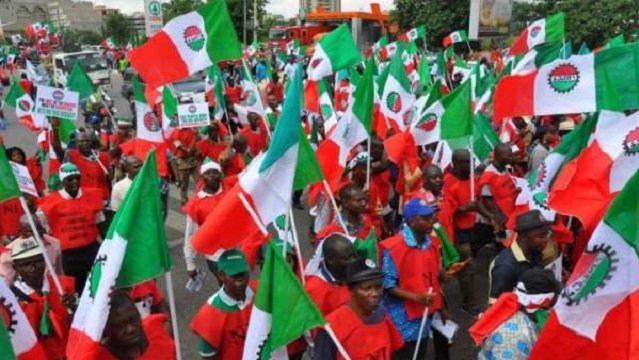
THE Nigeria Labour Congress (NLC) and the Trade Union Congress (TUC) have declared an indefinite strike beginning from Tuesday, October 3.

The development followed the Federal Government’s failure to alleviate the hardships caused by the removal of petrol subsidy in the country, said the leaders of the two unions, Joe Ajaero and Festus Osifo in Abuja on Tuesday, September 26, at a media briefing.

The unions directed all affiliate bodies to comply with the directive. The Labour union had on September 5-6 embarked on a two-day warning strike on the same issue, pressuring the Tinubu’s government to implement policies that lessen pains borne by workers and other Nigerians.

At a press briefing, Ajaero said the strike would precede an indefinite action to begin later in September.

The Union also issued a 21 days ultimatum to the FG which ended on Friday, September 22.

About month ago, NLC, Trade Union Congress (TUC) and other members of organised labour staged a nationwide protest against the subsidy removal.

The protest held on August 2 was suspended on the same day after a meeting with President Bola Tinubu, during which the protesters were assured that their demands would be met.

ICRC, NIPC, NOA top 2023 FOI ranking

THE Infrastructure Concession Regulatory Commission (ICRC), Nigerian Investment Promotion Commission (NIPC) and National Orientation Agency (NOA) have emerged as the top three winners of the 2023 National Freedom of Information (FOI) compliance ranking.

The ranking was done by a coalition of civil society organisations including the International Centre for Investigative Reporting (ICIR), Public-Private Development Centre (PPDC), Right to Know (R2K), Media Rights Agenda (MRA) and BudgIT.

The coalition ranked 238 ministries, departments and agencies (MDAs) and assigned points based on their level of responsiveness to FOI requests sent by the coalition members and proactive disclosure of relevant information to the public.

In 2011, former President Goodluck Jonathan signed the FOI Act into law to make public records and information more freely available and accessible.

The ICIR reports that more than a decade after this law was signed, some MDAs still flout the law by not responding to requests. 

According to the Act, the public institution to which the application was made is expected to make available the information requested within seven days.

However, the ranking of MDAs by the coalition is done annually to commemorate the United Nations’ International Day for Universal Access to Information, marked on September 28.

Speaking at the award presentation, the National Coordinator Open Government Partnership, Gloria Ahmed, said access to information was a  critical tool to help the government succeed. 

Ahmed added that with the advent of technology, it became easier to publish information and MDAs must tag along this development.

She said, “We must do everything to protect and expand the online space in accessing information. The FOIA is 12 years, and it is expected that the Act grows to reflect its age and exhibit added features.”

Also, Jonathan Ebe, a data analyst of the Public and Private Development Center, said the ranking by the coalition was part of an advocacy to promote access to information from the Federal Government MDAs.

Proactive disclosure

The coalition also ranked the MDAs on the proactive disclosure of information on the institutions’ websites.

Some of this information includes the information relating to the receipt or expenditure of public or other funds of the institution, the names, salaries, titles, and dates of employment of employees and officers of the institution.

Others are the name of every official and the final records of voting in all proceedings of the institution; files containing applications for any contract, permit, grant licences or agreements; 

The list includes the reports, documents, studies, or publications prepared by independent contractors for the institution; a description of the organisation and responsibilities of the institution, including details of the programme and functions of each division, branch and department of the institution; and others. 

According to the ranking, two institutions had full proactive disclosure of public information in 2023, representing an 81 per cent decline in the 2022 results, while 32 institutions achieved partial proactive disclosure on their website.

The ICIR reported how the Nigerian Investment Promotion Commission emerged as the winner in 2021 and the Bureau of Public Service Reform as the winner in 2022.

Nature of corruption in primary healthcare

0

IT is only when corruption is eliminated from primary healthcare that it can contribute to achieving Universal Health Coverage (UHC).

“To gain firsthand experiences of corruption in primary healthcare, we spent over 320 hours in several primary healthcare centres (PHCs) and in offices of institutions that oversee PHCs. We complemented this work by closely engaging community members about how they are treated in primary healthcare facilities.  We also amassed evidence from over 2000 interactions with diverse stakeholders on health sector corruption in PHCs in Nigeria using qualitative and quantitative research methods. Based on what we found, we can confidently say that corrupt practices are common and prevalent in primary healthcare, and until they are addressed, Nigeria will struggle to  achieve Universal Health Coverage (UHC)” – Researchers in the area of accountability and transparency in health (from the Accountability in Action Project), at the Second of a Series of Webinars on Health Sector Corruption organised by the Global Network for Anticorruption, Transparency and Accountability in Health (GNACTA), a WHO Initiative to establish and improve accountability and anticorruption in health.


The nature of corruption in primary healthcare

When corruption is mentioned in Nigeria, everyone immediately thinks about the politicians. The focus is mostly on “grand corruption”, which entails carting away huge sums of money and using political positions to gratify undue private interests.

It is least common to find persons looking the way of “petty corruption” because they usually do not make the headlines, are often committed by persons not in highly placed positions and tend to be normalised as acceptable behaviour.

Sadly, the overlooked petty corruption could be worse than grand corruption, obstructing how people access key social services, including primary healthcare.

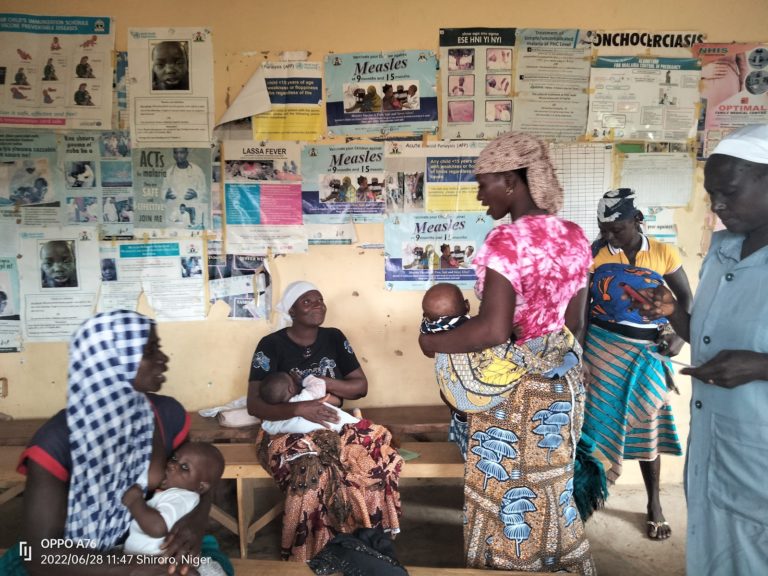
Now, imagine the absence of a health worker in a remote health facility at a critical time when a pregnant woman in the neighbourhood goes into labour. Consider also that a poor woman may be prevented from getting life-saving routine vaccines for her baby because she cannot afford N200 to give to the health worker for a supposedly free immunization. Can you also imagine that this N200 naira may be enforced by an officer-in-charge (OIC) of a facility who can only retain her place by sending remittances to those who put her in charge of a very viable health facility? And not sending such remittances would mean redeployment to a less viable health facility.

Nigeria’s health sector is listed among the most corrupt sectors in the country, and the sector is characterised by a lot of petty corruption at the frontline and managerial levels. From our study, corruption at the frontline, particularly in primary healthcare, manifests mostly as absenteeism, employment-related infarctions, informal payments and use of placeholders in PHC facilities.

It is usually reinforced by several factors, which include negligence/irresponsibility of authorities, unclear/absent rules and regulations, weak empowerment of citizens to participate in the development of health programmes and policies, and a lack of a health-focused anticorruption approach informed by research evidence.

These lapses must be addressed if primary healthcare must be free from corruption and to live up to its purpose of offering quality and timely health services to the grassroots.

Spending too much money on a corrupt primary health sector will not guarantee Universal Health Coverage

By UHC, we mean that quality healthcare is available to every one according to their needs, and no one needs to be denied access to healthcare services because of lack of money or ‘break the bank’ to have access to quality healthcare.

To many, UHC is realisable when money is spent to build and equip many health facilities, enrol citizens in health insurance, employ more health workers, etc. While investment is critical to attain UHC, spending more money on a defective system where corruption is the order of the day certainly amounts to being wasteful.

Corruption in PHCs is more concerning for Nigeria because the country spends only about five per cent of its annual budget on health at the federal level, compared to countries like South Africa and Rwanda, which spend within the region of 15 per cent of their annual budget on health. What this means is that if there is any country that should be mindful of wastage of allocated resources to the health sector, Nigeria should be leading in front. So, it is plausible to say that Nigeria is not getting value from the modest amounts it spends on health, and this must be addressed.

Relatively plenty money for small health – time to balance the scale!

By relatively plenty, we only refer to the diverse sources of funding for health in Nigeria, including standard budgetary appropriations. Currently, US$2.1b has been allocated to the health sector by the federal government, which is in exemption of appropriations to the health sector by state governments and the huge sums provided to the sector by donors and the private sector.

Albeit there is a need for more health investments in Nigeria, but what is currently obtainable should be enough for the country’s health system not to be ranked in the bottom-ten, and the country’s UHC index not nosediving into poor scores of about 38-40 per cent.

A Lancet publication mentioned some countries, such as India, similar to Nigeria in population, health spending, and poverty levels, yet doing better in health outcomes.

So, what is wrong with Nigeria?

The Basic Health Care Provision Fund (BHCPF) instance

Across the over 8500 wards (the least governance unit) in Nigeria, one facility was selected by the government for funding through the BHCPF scheme.

This funding comes from one per cent of the consolidated revenue of the government, which evidence criticised as being too small, rather favouring four per cent. Through this funding, the selected primary healthcare centres will be revamped and very poor people in the wards are expected to be enrolled for free health services that fall within the basic minimum package of health services.

Note that as of June 2022, about N29 billion (US$38m) was recorded to have been disbursed to the selected health facilities. However, there are concerns that the current value of health services in primary healthcare and partly in secondary level does not match the investments so far due to corruption and weak accountability.

From our field encounters, we can confidently report a few inappropriate experiences:

  • (a) awareness regarding the BHCPF has been low, and its modus operandi weakly understood among service users.
  • (b) contrary to the BHCPF operation that should provide 100 per cent free eligible health services to enrollees, we found some enrollees happily paying ‘reduced prices’ for such eligible services in PHCs.
  • (c) some of the BHCPF-funded health facilities are locked.
  • (d) kickbacks from disbursed funds are shared between some facility managers and authorities, etc.

Based on these few experiences, we are concerned that the value of the disbursed BHCPF to the PHC system and its end users is grossly undermined.

Recall that experts argued that one per cent of the government’s consolidated revenue for BHCPF was too small, yet even the one per cent value is threatened by petty corruption at the points of service delivery. 

Anticorruption in primary health is a matter of urgency

We cannot continue to look away while scarce health resources that should benefit low- and middle-income earners in particular are pilfered. There is some low-hanging fruit that we can aim at to improve the situation:

  • (a) dedicated rules and regulations specifically applicable to primary healthcare staff.
  • (b) breakdown of policies and programme operations in non-technical ways and terms for the public.
  • (c) dedicated hotlines for the public to report unfair treatment and corruption experienced in PHCs, and treating such reports with urgency.
  • (d) intense discussions between policymakers and academia for setting up an anticorruption agenda and accountability framework for the health sector.
  • (e) establish and/or strengthen facility- and community-based monitoring mechanisms and
  • (f) paying attention to the needs of health workers to improve job satisfaction, etc. Without these mechanisms, Nigeria stands a great risk of completely losing its primary healthcare to corruption, with very telling consequences for citizens.

Contributors and acknowledgement

(1) Dr Prince Agwu (2) Dr Tochukwu Orjiakor (3) Dr Aloysius Odii (4) Ms. Pamela Ogbozor (5) Prof Dina Balabanova (6) Prof Obinna Onwujekwe (7) Accountability in Action Research Team (8) SOAS-ACE Research Consortium (9) Medical Research Council (10) GNACTA (11) Foreign, Commonwealth, & Development Office (FCDO) (12) Health Policy Research Group, University of Nigeria

For correspondence: obinna.onwujekwe@unn.edu.ng; prince.agwu@unn.edu.ng 

Eid-ul-Maulid: FG declares Wednesday public holiday

0

THE Federal Government has declared Wednesday, September 27, 2023, a public holiday to mark Eid-ul-Maulid.

In a statement signed by the Ministry’s permanent secretary, Oluwatoyin Akinlade, on behalf of the Minister, Tunji-Ojo, on Monday, the minister urged Nigerians, especially the youths, to imbibe the spirit of love, patience, tolerance and perseverance, which he said were the virtues that the Prophet Muhammad (SAW) exemplified.  

He added that doing so would guarantee peace, security and harmony in the country. He encouraged Nigerians to embrace hard work and a peaceful disposition towards others, irrespective of faith, social class and ethnicity.       

The Minister also implored Nigerians to work with the government of President Bola Ahmed Tinubu to create a progressive and admirable country that all people could be proud of.

Tunji-Ojo congratulated all Muslims at home and abroad for witnessing this year’s commemoration of the Prophet’s birth.