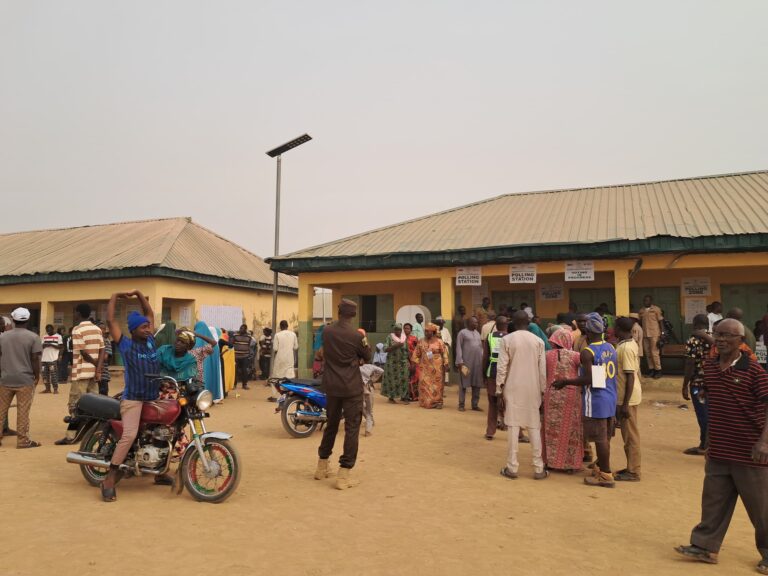
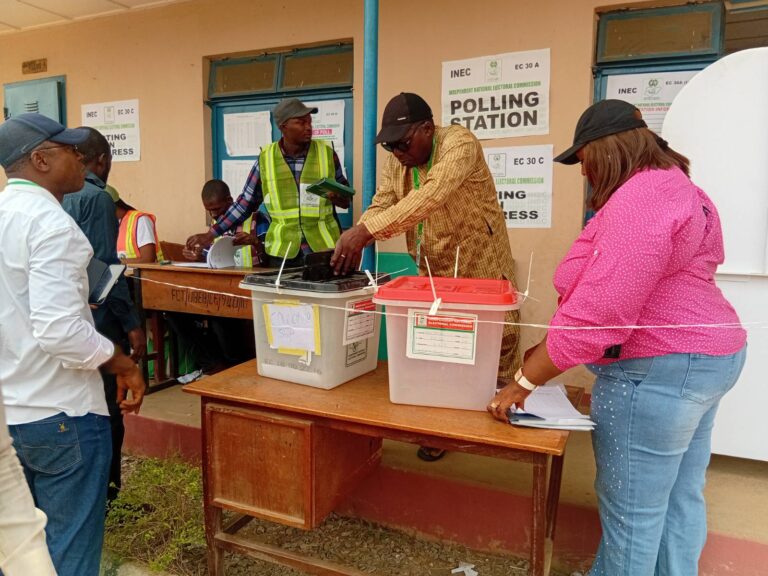
VOTING is progressing smoothly across several polling units in Gwagwalada Area Council of the Federal Capital Territory (FCT), with residents turning out early to participate in the ongoing area council chairmanship and councillorship elections.
At Kutunku Primary School, one of the major voting centres in the area council, a large number of voters were observed forming orderly queues as accreditation and voting commenced under the supervision of officials of the Independent National Electoral Commission (INEC).
Electoral officials arrived early at the polling unit, while security personnel maintained a calm atmosphere, allowing voters to exercise their civic rights without disruption.
Similarly, Phase 1/Gado Nasko Primary School polling unit recorded impressive voter participation, with steady turnout throughout the morning hours. Many voters expressed satisfaction with INEC preparation for the exercise, noting that accreditation using the Bimodal Voter Accreditation System (BVAS) went smoothly.
Residents described the process as peaceful, with party agents and observers present while voters patiently waited for their turn.
However, The ICIR observed that some polling units within the council experienced relatively low voter presence compared to others, as only a few voters were seen at the location during early voting hours.
The poll is being conducted simultaneously in 2,822 polling units where voters are to elect chairmen and councillors in the six area councils of the FCT, with about 1.6 million registered voters expected to participate in the exercise.
INEC had earlier confirmed that all sensitive materials, including ballot papers and BVAS machines, were deployed under tight security ahead of the polls to ensure transparency and credibility.
Security presence also remained visible across the council following the restriction of movement imposed by the FCT Police Command from 6 a.m. to 6 p.m. to guarantee peaceful conduct of the elections.
As voting continues, observers say the turnout recorded in parts of Gwagwalada, particularly at Kutunku and Gado Nasko polling centres, signals growing voter interest compared to previous council elections historically marked by lower participation.
VOTING has commenced across polling units in Kuje Area Council as residents of the Federal Capital Territory (FCT) elect new chairmen and lawmakers for the city’s six area council today, Saturday, February 21.
Prospective voters were seen forming orderly queues awaiting accreditation and voting as officials of the Independent National Electoral Commission (INEC) attended to the crowds.
Baba Adamu who was the second person to cast his vote at the Central Primary School polling unit, described the atmosphere as peaceful, and expressed delight with voters turnout.
“In Kuje Central Ward, we are peaceful people. We believe it will go well,” Adamu said.
The INEC scheduled the election to begin across the city at 8:30 a.m., with only registered voters with valid Permanent Voter Cards (PVCs) eligible to vote.
Earlier, at the Kuje Collation Centre, election officials were observed receiving last-minute briefings before boarding vehicles conveying them to their polling units, while electoral materials were sorted and dispatched in batches.
The commission had earlier confirmed readiness for the poll, deploying the Bimodal Voter Accreditation System (BVAS) to all polling units to enhance transparency and real-time result management.
The FCT Police Command had also imposed restriction on movement across the city from 6 a.m. to 6 p.m. to ensure a peaceful exercise, while security personnel were deployed to polling locations, collation centres, and different part of the nation’s capital.
The restriction forms part of broader security arrangements for the election taking place simultaneously across the six area councils namely Abaji, Abuja Municipal Area Council (AMAC), Bwari, Gwagwalada, Kuje and Kwali.
However, vehicles were moving, and businesses were open from the early hours before security officials started restricting movement at 9:11 a.m.
Residents across the FCT are voting to elect chairmen and councillors who will oversee grassroots administration in the Territory.
INEC disclosed that more than 1.58 million PVCs were collected ahead of the election.
The election covers 2,822 polling units across 62 wards, where voters are choosing leaders for six area councils and 62 councillorship seats.
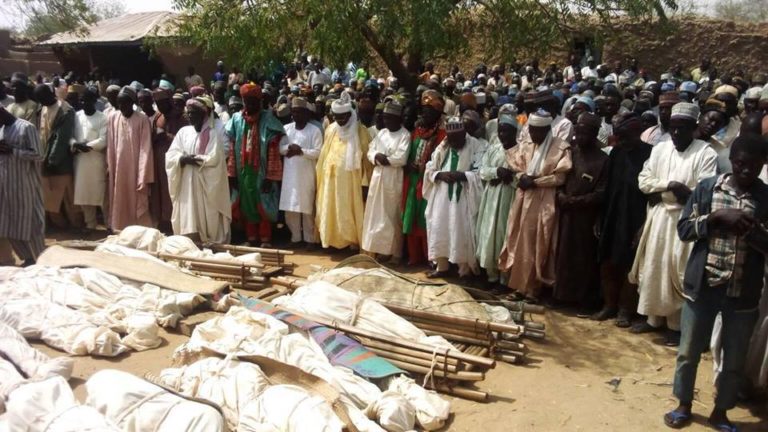
NIGERIA lost 323 of its population to insecurity within the first 20 days of February, according to Amnesty International.
The organisation said in a statement on Saturday, February 21, that the killings occurred in Benue, Katsina, Kwara, Kebbi, Niger and Zamfara states.
“The rising death toll clearly shows that President Bola Tinubu and his government have no effective plan for ending years of atrocities by armed groups and gunmen that have killed thousands of people.
“Incessant killings and the shocking failure of the authorities to end them and bring suspected perpetrators to justice have been and continue to be a threat to the right to life in Nigeria,” the organisation said.
The ICIR reports that Nigeria’s insecurity worsened with the emergence of Boko Haram in the early years of this century. With thousands killed and millions displaced, the group unleashed widespread mayhem, targeting infrastructure such as schools, hospitals, and other essential amenities.
Several other deadly groups have since joined the terrorist group, including the Islamic State West Africa Province (ISWAP), Lakurawa, Indigenous People of Biafra (IPOB), and other killers and kidnappers widely known as bandits.
The activities of these groups span every region in Nigeria, particularly in the North-East, North-West, North-Central, and South-East.
Thousands of Nigerians, especially schoolchildren, have been abducted and killed over the years. Many victims of abduction spend months in kidnappers’ dens, and are slaughtered after their families have paid ransoms.
In addition to these groups, Nigeria has experienced farmer-herder clashes, including inter and intra-communal conflicts, which have exacted a high human toll.
Since 2020, Amnesty International said it had been documenting a horrifying pattern in which attackers invade villages on motorcycles and are heavily armed.
“They shoot sporadically at people, abduct women and girls, set houses on fire, steal livestock, destroy farm produce and abduct villagers for ransom. In recent cases, villagers received ‘warning letters’ from armed groups — ahead of attacks. Such attacks take hours. One of recent attacks on some villages in Niger state started from 3:00am to 10:00am.
“Most villagers told Amnesty International that the government left them at the mercy of their attackers. The government has an obligation to protect its population. The rising death toll in the north of Nigeria shows just how badly the authorities are failing in this responsibility,” the organisation stated.
ELECTORAL activities are underway in the Federal Capital Territory (FCT) where residents of the nation’s capital elect new chairmen and councillors of the city’s six area councils today, Saturday, February 21.
In Abuja Municipal Area Council (AMAC), officials of the Independent National Electoral Commission (INEC) commenced preparations ahead of the 8:30 a.m. scheduled for the commencement of accreditation and voting.
The ICIRreported that INEC fixed February 21 for the poll, in which over 600 candidates are vying for chairmanship, vice chairmanship and councillorship positions.
The poll will involve 1,680,315 registered voters spread across 2,822 polling units, according to INEC.
For accreditation and voting, INEC deployed 3,345 Bimodal Voter Accreditation System (BVAS) devices for the exercise.
The election will be conducted across the FCT’s six area councils, covering 62 political wards, with a total of 68 elective positions being contested.
As of 7:30am, INEC adhoc staff distributed election materials at GSS Garki area, City ward, AMAC, to various collation centres for onward deployment to polling units.
The ICIR observed that the exercise so far has been peaceful. However, some INEC officials are still stranded and unable to move to their polling unit.
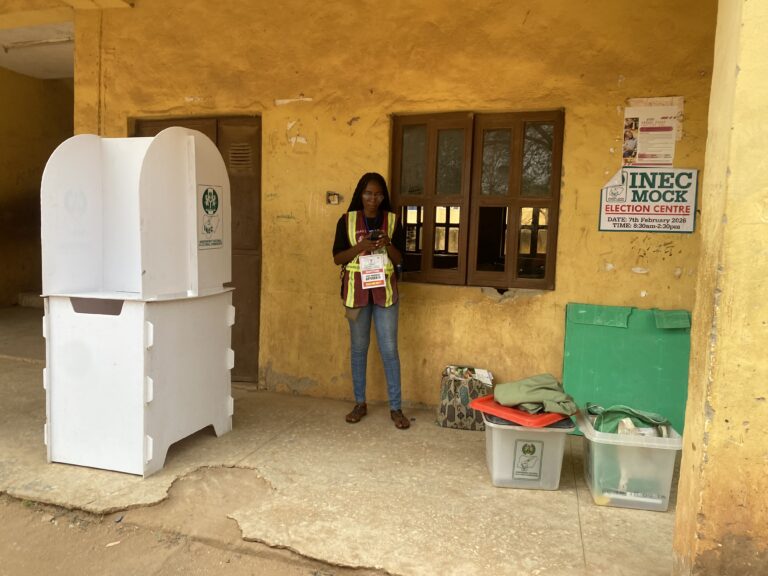
At LEA primary school Area 1, Section 1, polling unit 1, the INEC Ad-hoc were seen setting up voting cubicles, configuring the Bimodal Voter Accreditation System (BVAS) devices, and displaying voter registers while party agents, security operatives were on ground.
THE Federal High Court in Lagos has ruled that the Nigeria Police Force’s declaration of human rights activist Omoyele Sowore as wanted was unlawful, describing the action as unconstitutional and an abuse of authority.
Delivering judgment on Friday, February 20, the presiding judge, Musa Kakaki held that the Lagos State Commissioner of Police who declared the activist wanted lacked the legal backing to issue such a declaration.
The court said only a competent court of law could authorise a ‘wanted’ notice after issuing a valid warrant, giving proper notice, and establishing that the individual is evading lawful process.
It consequently awarded ₦30 million in damages against the police commissioner and the police leadership.
The ICIRreported how the Lagos Police Command declared Sowore wanted for allegedly causing a disturbance of public peace and attempting to block the Third Mainland Bridge during a protest against the demolition of houses in Oworonshoki area of the state.
Commissioner of Police in the state, Olohundare Jimoh, made the declaration on Monday, November 3, 2025, at the protest ground.
Jimoh, who led anti-riot police officers to the location, said the massive deployment was to safeguard critical national infrastructure, and prevent any attempt to disrupt traffic or economic activities.
However, Sowore challenged the police decision to declare him wanted on November 3, 2025. The move also followed an earlier public warning by the police commissioner on October 27, 2025, directing him to stay away from Lagos State.
Sowore told the court he was declared wanted without any prior invitation, warrant, or charge, describing the action as a violation of his constitutional rights and a blow to his reputation.
He further asked the court to nullify the declaration, stop the police from harassing or arresting him, and award ₦500 million in damages.
Judge slams Lagos CP
In its ruling, the court reportedly described the “stay away from Lagos” warning as arbitrary and beyond the powers of the police, noting that security agencies could not restrict a citizen’s movement without lawful justification.
The subsequent declaration branding him wanted was also declared illegal, ultra vires, and inconsistent with constitutional provisions safeguarding fundamental rights.
Kakaki reaffirmed that citizens could not be penalised for expressing dissent views, organising protests, or demanding accountability from public officials.
He ruled that no citizen could be declared wanted without prior approval from a court.
The judge explained that a valid warrant must first be issued, proper notice given, and evidence shown that the individual is evading lawful process before a court can authorise such a declaration.
According to the court, circumventing judicial safeguards in the name of law enforcement amounts to oppression.
Sowore’s lawyer reacts
Reacting to the verdict, Sowore’s counsel, Tope Temokun, described the judgment as a landmark affirmation of constitutional governance.
He said the decision reflected the supremacy of the rule of law and served as a warning against the misuse of state power.
While acknowledging the ₦30 million damages awarded, Temokun noted that the broader significance of the case lay in the court’s clear message that no authority is above the constitution.
PRESIDENT Bola Tinubu’s power to override the Nigerian National Petroleum Company Limited (NNPCL) on revenue remittance with an executive order is being questioned in several quarters.
Some oil and gas governance experts differ in their stance, with some also noting that the Petroleum Industry Act (PIA) should be amended since it is already an act of the parliament passed and signed by the executive.
On Wednesday, February 18, Tinubu signed an executive order directing remittance of oil and gas revenues to the Federation Account Allocation Committee (FAAC).
By this order, all taxes, royalties and profits under Production Sharing Contracts (PSC) are to be fully remitted to the federation account.
The order, the Presidency said, would safeguard and enhance oil and gas revenues for the federation, curb wasteful spending and eliminate duplicate structures in the oil and gas sector.
According to the order, which has been officially gazetted, the NNPC will no longer collect and manage the 30 per cent frontier exploration fund.
Similarly, all operators/contractors of oil and gas assets held under a Production Sharing contract shall, from the date the order was issued, pay royalty oil, tax oil, profit oil, profit gas, and any other interest due to the government of the federation directly to the federation account.
The Presidency said Tinubu had also suspended payments of the has flare penalty into the midstream and downstream gas infrastructure fund.
However, in a statement, Wumi Iledare, an oil governance expert and a professor Emeritus of Petroleum Economics, told The ICIR that there were some merits and demerits in the order.
He noted that the order represented a significant fiscal intervention within Nigeria’s petroleum governance framework and signaled a renewed effort to strengthen revenue transparency, reduce discretionary retention, and improve statutory remittances to the three tiers of government.
He emphasised that apart from the intent to safeguard revenues, certain aspects of the order intersected directly with provisions of the Petroleum Industry Act (PIA) 2021.
Citing an instance, Iledare argued that the Frontier Exploration Fund, the Midstream and Downstream Gas Infrastructure Fund, and existing Production Sharing Contract (PSC) fiscal structures were statutory constructs established by the National Assembly.
While executive authority under Section 5 of the Constitution empowers the president to implement and enforce laws, Iledare pointed out that substantive alterations to statutory fiscal frameworks might require legislative amendment to ensure constitutional alignment and institutional certainty.
On the question of direct remittance of royalty oil, tax oil, and profit oil to the Federation Account, he said the order had the potential to enhance transparency and reduce intermediation.
He stated, however, that the implementation must be carefully sequenced to preserve contractual stability and avoid unintended legal or investor confidence challenges.
Iledare also observes that the structural dual role of NNPC Limited — as both commercial operator and concessionaire under certain arrangements — has long presented institutional tensions within the post-PIA framework.
“Any reform aimed at reinforcing NNPC’s commercial identity must be anchored in legal clarity and predictable governance mechanisms,” he stressed.
Making a similar submission, the Lead Director of the Centre for Social Justice, Eze Onyekpere, said the instrument of an executive order did not confer legislative powers on the president.
He clarified further executive order is issued as a supplement to the proper execution of existing legislation.
“A bill passed by the National Assembly and assented to by the President can only be amended by a subsequent act of the parliament. The president cannot use an executive order to vary, suspend or rewrite a validly enacted act,” he added.
POWER Generation Companies (GENCOs) has said the Presidential Villa’s decision to disconnect fully from the national grid by March 2026 represented a vote of no confidence in on-grid power.
They argued that the decision, facilitated by a ₦17 billion independent solar mini-grid project, made the national grid unfit for purpose.
Besides also noted that it would further send wrong signals to investors in on-grid power, as rising debts in the sector remained alarming.
Director-General of the Energy Commission of Nigeria, Mustapha Abdullahi, had defended the project, stating that it was unsustainable for the Presidential Villa to continue paying an annual electricity bill of approximately N47 billion.
The Executive Secretary of the Association of Power Generating Companies (APGC), Joy Ogaji, who spoke on the development with The ICIR in an exclusive interview noted that the migration had been viewed in some quarters as a cost-saving measure to curb excessive billing, adding, however, that “the implication for on-grid power is severe, as it represents a sovereign vote of no confidence in the national grid.”
According to Ogaji, being the regulator, policymaker, and largest equity holder in the transmission network (TCN), bypassing its own infrastructure constitutes a total failure of the Service-Based Tariff (SBT) model.
“It signals to the market and to local and international investors that the national grid is no longer a viable platform for critical infrastructure,” she said.
The migration, Ogaji argued, not only removed a premium “Band A” consumer from the revenue pool but risked catalysing a “grid defection” domino effect among other premium industrial and government consumers. This, she said, would compound liquidity problems in the sector and weaken investors’ confidence in the sector.
She stressed that GenCos’ legacy debts surpassed ₦6 trillion (as of Q4 2025), with the recent ₦501 billion bond issuance covering less than 10 per cent of outstanding obligations, which she said would compound debt woes, adding that “This migration to solar is ill-timed as it raises an existential threat not to the GenCos but to the sector.”
She further disclosed that the Nigerian electricity market relied on a cross-subsidy model, which the exit of the Villa to solar could lead to revenue erosion.
“The loss of the Presidential Villa’s monthly billing reduces the market remittance flowing from DisCos to NBET, and ultimately to GenCos.
“If the Presidency exits grid-power, other Ministries, Departments, and Agencies (MDAs), which collectively owe billions in unpaid bills, will likely seek similar budget allocations for off-grid solutions to avoid payment, further shrinking the addressable market for GenCos.
“The loss of the Presidential Villa’s monthly billing reduces the market remittance flowing from DisCos to NBET, and ultimately to GenCos,” she added.
The Presidency’s exit is not merely an installation of solar panels; “It is a policy statement. It declares that the Nigerian national grid is unfit for purpose.”
She suggested that Nigeria needed a mix of power generation sources with a huge baseload, which provides a stable and constant supply of electricity.
The ICIR reports that Nigeria’s power sector is currently going through liquidity problems largely occasioned by an unbalanced tariff methodology and subsidies, which have impacted on investors’ trust in the market, with the GENCOs currently being owed over N6 trillion as of January 2026, with the government only able to pay N501 billion of the debt.
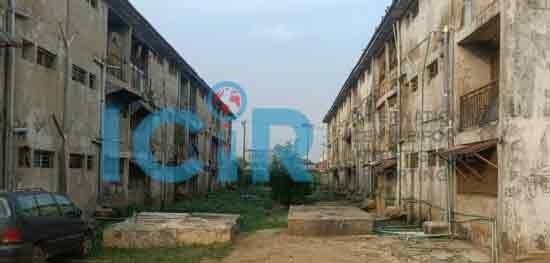
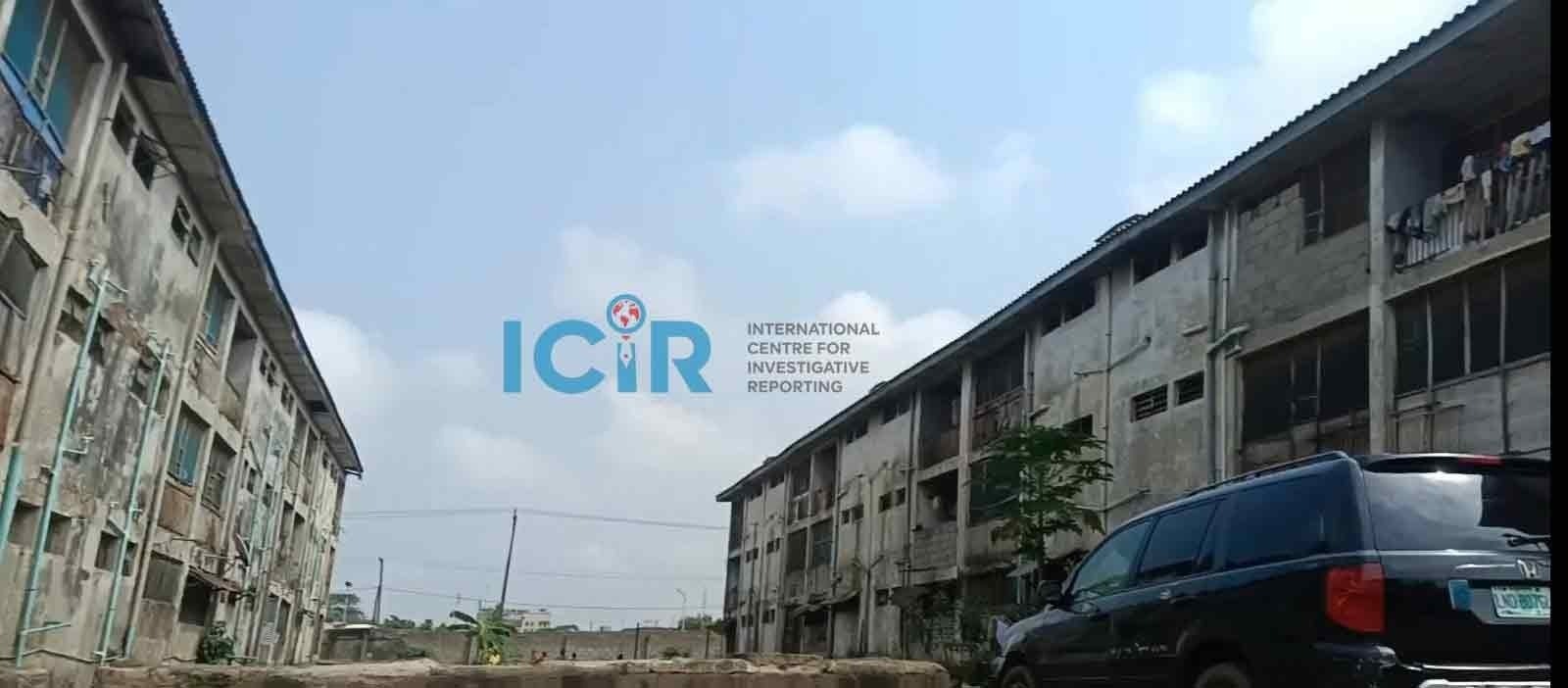
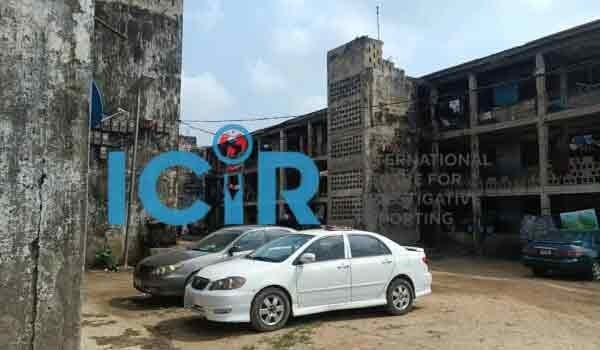
DOZENS of dilapidated buildings currently occupied by police officers and their families at different barracks in Ikeja Local Government Area of Lagos are tragedies waiting to happen.
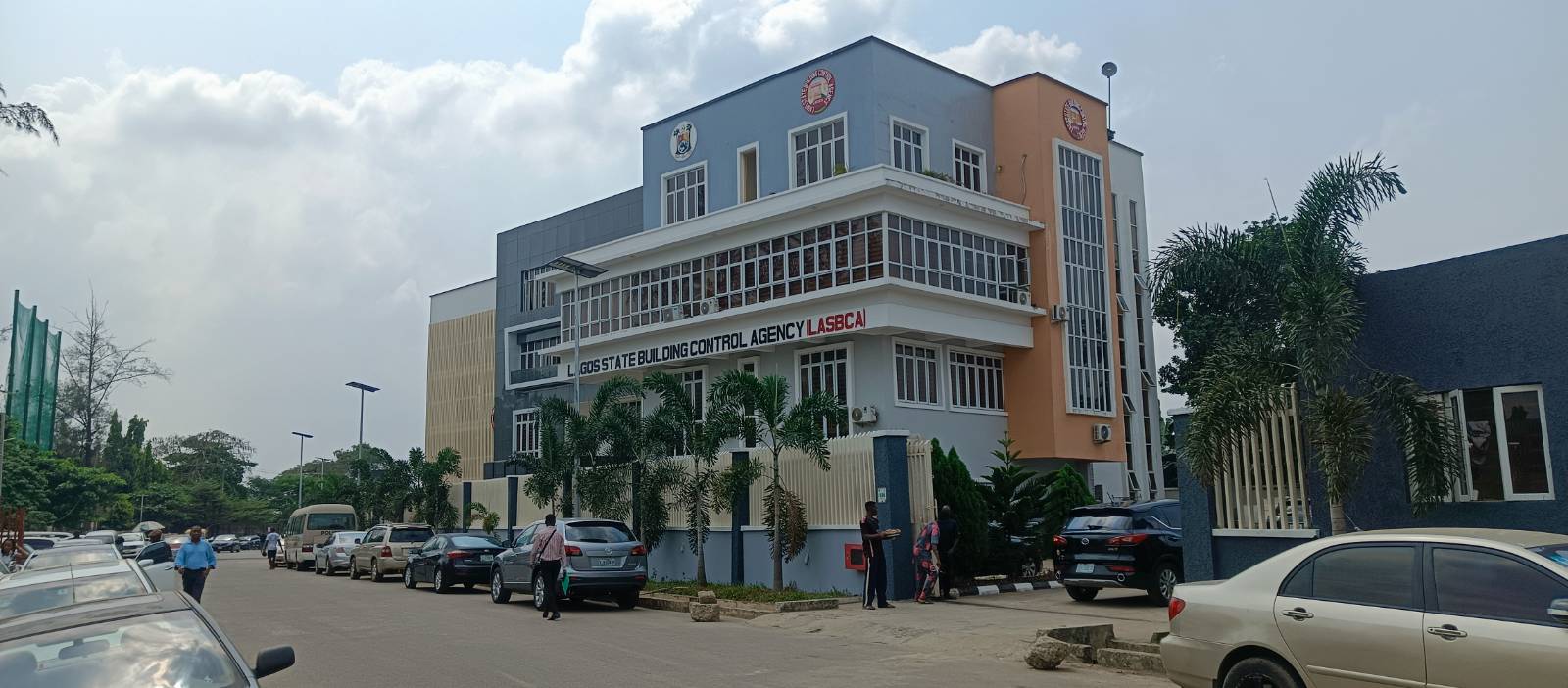
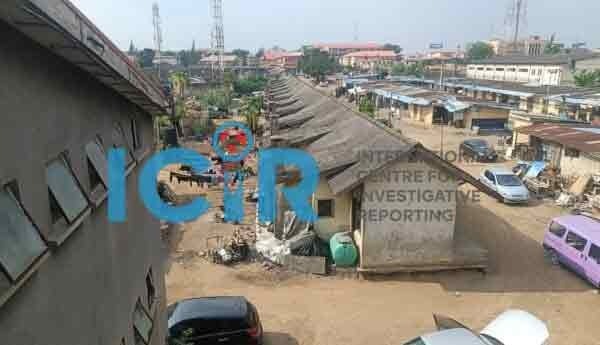
Ramshackle MOPOL 20 and Area F barracks cluster near the Lagos State Building Control Agency (LASBCA) – an institution that should ensure basic minimum standards are maintained in buildings and renovation of existing ones in the state.
The barracks remain in their perilous state, at least 70 years after some of them were built, exemplifying the systemic rot in Nigeria, the Nigeria Police Force (NPF), and the hardships faced by many of its rank and file.
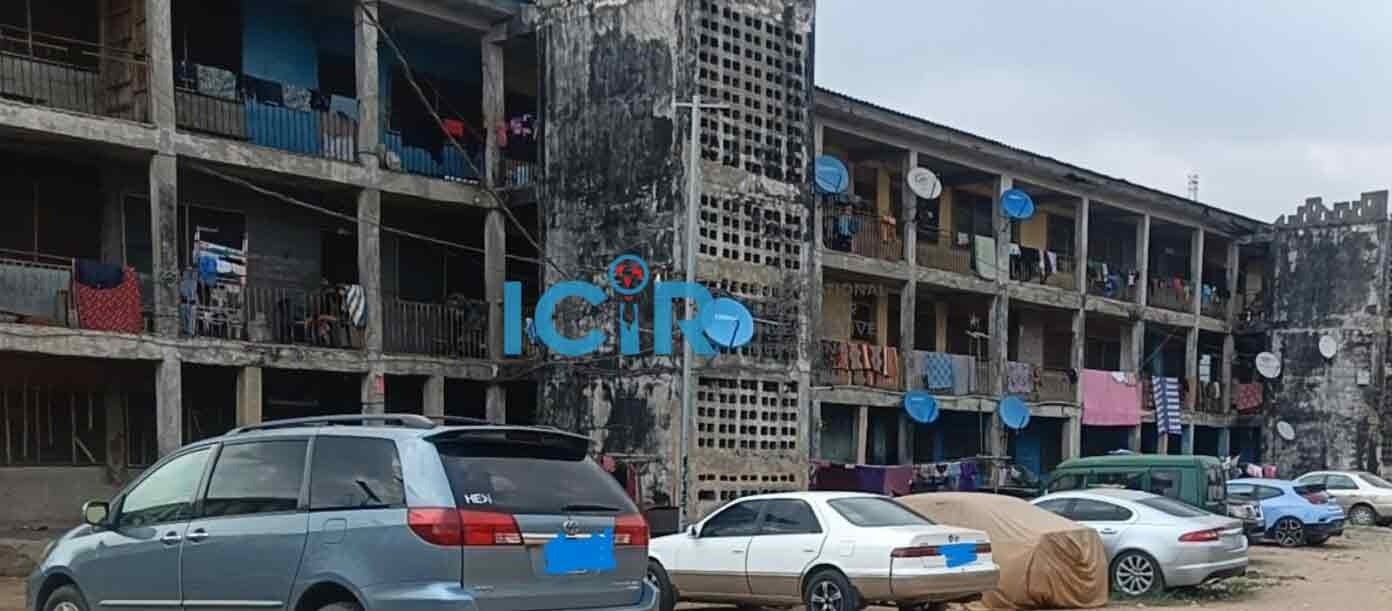
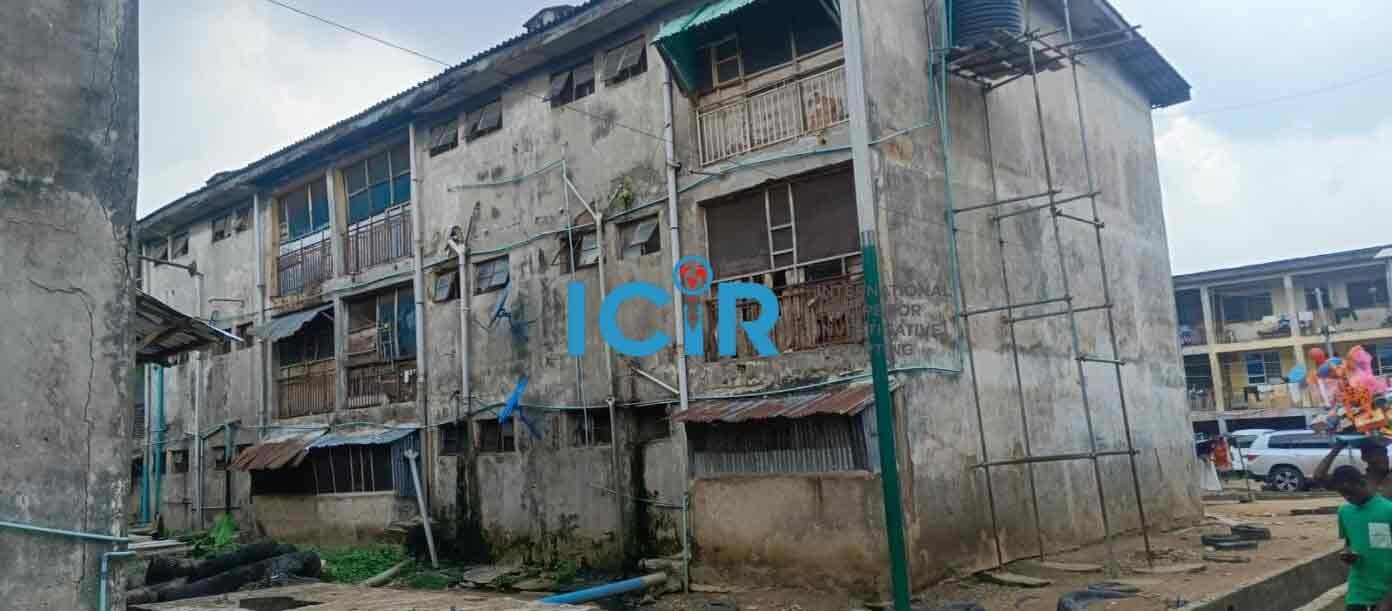
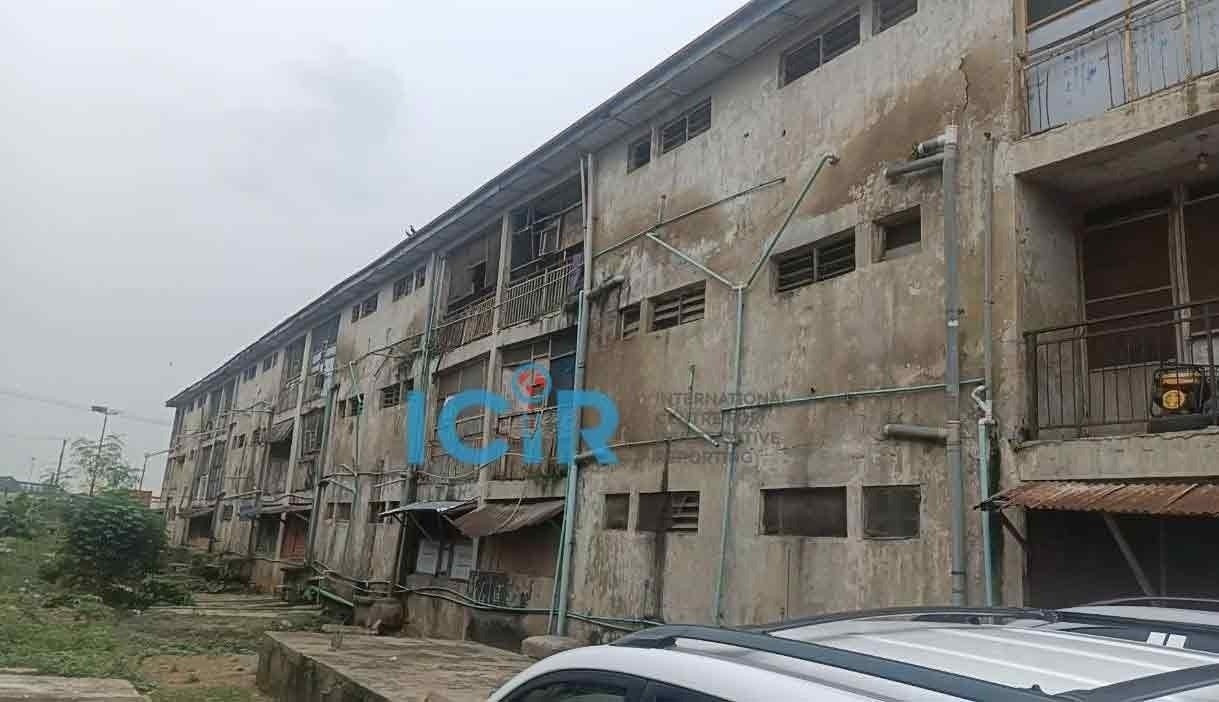
The blocks are riddled with cracks and blotches, and their walls have long been blighted and peeling. There are clear signs the concretes could lose strength while some of the buildings give way, placing hundreds of its occupants in the jaw of death. Though many of the occupants are aware of the looming tragedy.
One of the ramshackle blocks at the Area F Police Barrack, Ikeja, Lagos. PC: Marcus Fatunmole/The ICIR
The ICIR observed that the barracks, with derelict buildings marked by weathered wall and sagging roofs, stand out as eyesore among impressive facilities in the neighbourhood, including institutions of the Nigerian Police Force.
Among such facilities are the Lagos State Police Command, Ikeja Police College, Police Department of Operations, Special Protection Unit (SPU), and Ikeja Divisional Police Headquarters.
Other good buildings in the area could be found in the Emeka Anyaoku Estate, Lagos State High Court, Lagos State Electrification Agency, Lagos State Urban Renewal Agency, Lagos State University Teaching Hospital, Office of the Auditor General for Local Governments, Ikeja Tax Stations, Lagos State Muslims Welfare Board, Lagos State Christian Pilgrims Welfare Board, Motor Vehicles Administration Agency, and Ikeja Senior High School.
There are other police barracks in Ikeja metropolis, namely Mounted Troop, New Staff Quarters, MTD Barracks, Mopol 23 Barrack, Central Store, and Traffic Training School. Their conditions are not as bad as those of Area F and Mopol 20 Barracks.
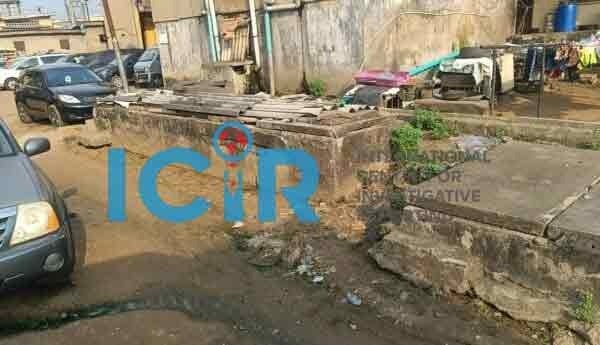
The rear sides of two blocks at the Mopol 20 Barrack, Ikeja, Lagos State. PC; Marcus Fatunmole/The ICIR
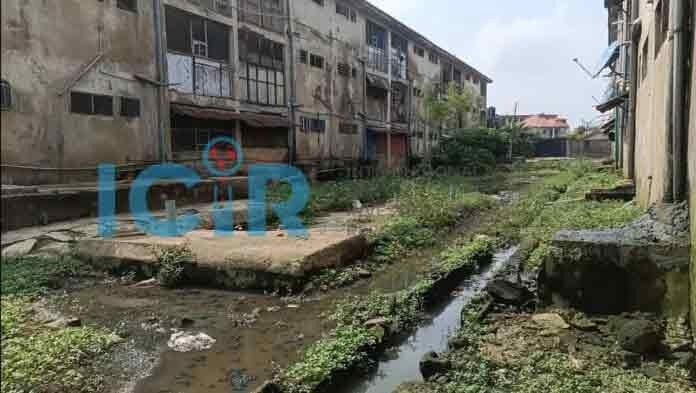
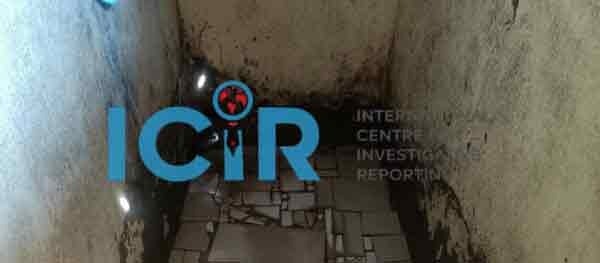
From the rear, the two barracks tell a far grimmer story than their frontages. The walls are streaked and stained with filth, smeared by wastewater from leaking pipes and overflowing drains. The soakaways and sewage ooze foully, and the stench wafts into the neighbourhood.
About a kilometer away from Mopol 20 Barrack is Area F – said to have been built before Nigeria’s independence.
Some police officers and other residents who were born and raised in the area told the reporter that the barrack was initially designed to accommodate workers of the pre-colonial Public Work Department (PWD) and was converted to a police barrack after Nigeria’s independence.
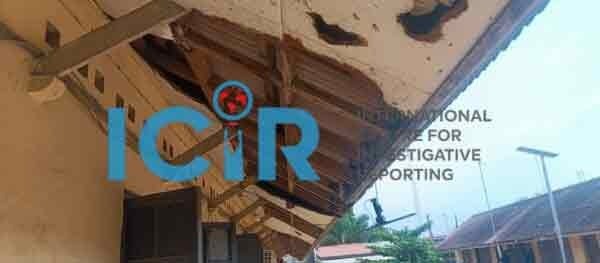
The structures have remained as they were since they were built. They exist with broken floors and ceilings that leave gaping holes for rodents, birds and vermin to torment occupants, mostly at night.
The rear sides of two blocks at the Mopol 20 Barrack, Ikeja, Lagos State. PC; Marcus Fatunmole/The ICIR
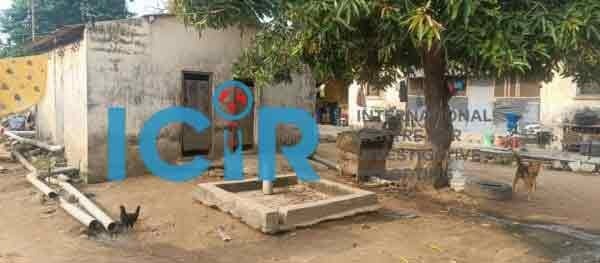
The bungalows among them were the first to be constructed (before Nigeria’s independence) Though they appear to be standing strong, they exhibit varying defects, including broken ceilings and floors. The most noticeable problems with them are the detached toilets and bathrooms. They are heavily weathered and reeking.
A row of block has about 10 room and parlours with five detached toilets. Each row of building has five small, detached buildings, comprising two separate sections, each with its toilet and bathroom.
The lack of public water in the barracks worsen poor hygiene among occupants. Churches, NGOs and other well-meaning people dug boreholes for the barracks. While public water is in Ikeja, it is not connected to the barracks. The reporter saw water vendors serving homes in barracks that could be described as microcosm of the nation – their occupants are from different regions of the country, representing a mix of cultures and backgrounds.
“When the barracks were built, they had public water. Today, you can hardly see any pipe of public water in any of the barracks,” Mojolaoluwa Oladimeji, an elderly woman within the neighbourhood told the reporter.
A toilet at the Area F Police Barrack. PC: Marcus Fatunmole/The ICIR
In 2025, the police authorities asked occupants of the facilities to quit. Rumours spread that they had been sold to private developers who would rebuild and rent them out at subsidised rates to officers.
Another version of the news claimed that the NPF was ashamed of the structures and was uncomfortable with their continued existence at the heart of Nigeria’s commercial capital. However, while the tenants were planning to vacate, the police leadership in Abuja allegedly said the demolition of old barracks across the country should be done in phases.
“Specifically, the IGP said the Force would not pull these barracks down while we have not rebuilt the ones already demolished in Lagos here. He said all the old barracks could not go down simultaneously, but they should be done in phases,” one of the officers who spoke in confidence with our reporter said.
Alani Kayode, (not real name) is among the tenants. He was informed by the police authorities to quit his ramshackle apartment at the Mopol 20 Police Barrack in 2024. The NPF was to pay N2 million for each room occupied at the barracks.
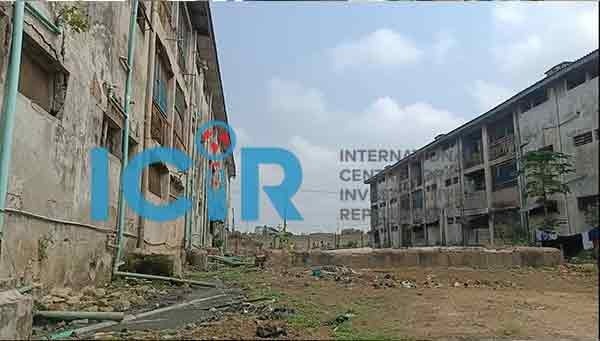
A dilapidated building at Mopol 20 Police Barrack, Ikeja, Lagos. PC: Marcus Fatunmole/The ICIR
Kayode treats his wife and children for typhoid and malaria at least once monthly. He complained bitterly about how rodents, cockroaches and other pests co-habit with the residents, including his family, because many sections of the barrack’s floors and walls are fissured, serving as easy abode for pests.
He also blamed this on polluted air occasioned by stench from leaked sewage that flows freely around buildings and breed legion of mosquitoes.
“You can see that this place is unsafe for anyone. It’s seriously affecting us mentally. You can’t boast of your residence or bring a visitor or extended relation to your home as an officer of the Nigerian Police. One does not need any court to give a verdict on this – it’s too bad. I repaired my doors, windows and I replaced all the nets. Can I change the poor air that my family breathes?
Some of the blocks at the Area F Police Barrack, Ikeja, Lagos. PC: Marcus Fatunmole/The ICIR
“We are only managing this place because it was given to us free. We don’t pay for rent. Many of us cannot afford accommodation outside. You don’t expect officers of the Nigerian Police to live in this place, especially in the 21st century. The state of the buildings speaks for themselves,” he said.
The officer was transferred to Ikeja in 2016 and has since been living with his family at the barrack. Several officers interviewed said the Mopol 20 and Area F barracks had long been abandoned by the authorities since they are largely occupied by the rank and file.
Kayode confirms this. “I met the buildings in this condition. The problems did not start today, our barracks have long been neglected by the successive police leaderships and governments. This is exactly what you see in many states across our country.
“Go to the back of these buildings and see what they look like – very disgusting. The buildings look as if they will fall in the next second. Can the world imagine that Nigerian police officers live in this place? Not in worn-torn Sudan or Gaza, but located in the heart of Lagos, Nigeria’s former capital. There is nothing the occupants can do to salvage the situation. Much of the infrastructures have damaged because they have exceeded their lifespan,” Kayode noted.
A dilapidated building at Mopol 20 Police Barrack, Ikeja, Lagos. PC: Marcus Fatunmole/The ICIR
The reporters inspected some rooms, toilets, and bathrooms in the barracks. They reeked, and their walls and floors were rank and too filthy for humans to use. Because of the state of the facilities, many occupants defecate in bowls and empty in the toilets.
Available records show that Lagos State records the most building collapses in Nigeria. Curiously, President Bola Tinubu recently announced the recruitment of additional 50,000 police officers to help curb ballooning insecurity nationwide.
Though the police authorities neither provided the population of their officers in Lagos State nor responded to other enquiries on the findings of this investigation through a freedom of information request by The ICIR, it is believed that a chunk of the new police recruits ordered by Tinubu will be posted to Lagos, and some of them will live in these time-worn barracks.
Officers’ lamentations
The officers complained bitterly about delayed payment of their salaries by the government. “We don’t get salaries like other government workers on time. Our salaries always come in the first week of the following month. This is not good enough. Some government workers get their payments by 28th of the month.
Lagos State Building Control Agency (LASBCA) is very close to the barracks. PC: Marcus Fatunmole/The ICIR
“The police provide essential services to the people; therefore, their welfare should be prioritised,” said another officer, Obinna Chukwuemeka (not real name)
Chukwuemeka bemoaned unavailability of means of transportation for police officers to their duty posts as provided for civil servants in the state and by the Federal Government. “There are no means of transportation. Police officers look for transportation to their places of work. Even some of the vans we have for operations won’t have fuel to run them,” he said.
According to him, police are not motivated. “We are the worst motivated police in Africa, despite facing some of the worst insecurity issues on the continent. We are not motivated in the area of housing, transportation, uniforms and accountrements.
A section of the Area F Police Barrack, Ikeja, Lagos. PC: Marcus Fatunmole/The ICIR
“The irony of the matter is that officers on operations are not given uniforms and accountrements when they need them. One of the reasons there is no uniform dressing in the police is that people buy many of these things on their own. Look at police officers when they stand together, maybe on duty, you can clearly see these differences in their dressings. Once there is no uniformity and consistency in supply, people will only buy what they can afford.”
Aminat Abubakar, a female officer, (not real name) noted that under the guise of inadequate manpower, officers end up working for 24 hours instead of eight hours.
She said, “Once you’re given these substandard barracks, maintaining, fixing, water and other amenities become the duties of the officers. The worst is the road. If you come here during the rainy season, you will cry for us. Some of our homes are flooded through leaked roofs, and water from flood troop into our rooms. There are no good drainages; floodwater moves anyhow when it rains.”
One of the toilets at the Area F Police Barrack, Ikeja, Lagos. PC: Marcus Fatunmole/The ICIR
She bemoaned the condition of police officers and their families, arguing that there was no care for them, and many of their families lived in poverty.
The woman recalled the agonies retired officers endure when claiming gratuity and other benefits, including the travails which relations of officers who died in the line of duty face in getting the deceased’s benefits.
Another officer who commented on the crises faced by police officers said they were not motivated in any way. “See where our officers are living. A police officer cannot proudly say he bought a tokunbo car except he is favoured. How many officers can proudly buy a tear rubber vehicle?
“Our major challenges are that the roads inside the barracks are terrible and the buildings are very dilapidated. Ije Barrack, Obalende, was the worst barrack in Lagos State. It was demolished recently.
Broken ceiling of a bungalow at the Area F Police Barrack, Ikeja, Lagos. PC: Marcus Fatunmole/The ICIR
“We were supposed to have left this place for long. The authorities said the Force should build the barracks that were pulled down first before demolishing and sending people out of these places. They wanted to pay N2 million as relocation allowance for each room. You can imagine hundreds of rooms within Area F and Mopol 20 barracks. Unfortunately, that didn’t happen, and we are still waiting.”
Some of the officers interviewed said many non-governmental organisations exploit their challenges to deceive their superiors and get police protection.
“Some corporate institutions will come and mount their banners etc. in the barrack, promising they would support us with some amenities. They do this with the intention of getting free security protection by making our superiors release some officers to them.
“At the end of the day, they don’t do anything. One of the organisations to be deceived easily is the police. They will tell lie that they have seen the ogas (bosses) at the top and do whatever they like with the rank and file who are released to them,” one of the officers said.
Aerial view of a section of the Area F Police Barrack, Ikeja, Lagos. PC: Marcus Fatunmole/The ICIR
Police budgets for barracks
The ICIR gleaned the Federal Government’s budgets for building and rehabilitating barracks for officers of the NPF from 2021 to 2026. The budgets were lumped with allocations for building police stations.
The figures are shown in the table below
S/N
Year
Construction/Provision of Police Stations/Barracks
Rehabilitation/Repairs of Police Stations/Barracks
1
2021
N5.71 billion
N71 million
2
2022
N5.83 billion
N181.97 million
3
2023
N6.75 billion
N181.97 million
4
2024
N6.77 billion
N1.34 billion
5
2025
N7.87 billion
N1.195 billion
6
2026
N16.38 billion
N451.63 million
Source: Budget Office of the Federation
The budget shows that while allocations for construction/provision of police stations/ barracks enjoyed minimal rise between 2021 and 2025, the figure rose sharply by 108 per cent in 2026.
Similarly, the government proposed N451.63 million for the rehabilitation/repairs of police stations/barracks in 2026. This is a sharp decline from N1.195 billion approved in the previous year. The allocation decreased by 62.2 per cent.
Dilapidated buildings at Mopol 20 Barrack, Ikeja, Lagos. PC: Marcus Fatunmole/The ICIR
History of building collapses in Lagos
Lagos State has a long history of building collapses and accompanying human casualties and loss of valuables. The ICIRinvestigation revealed that regulatory failure is largely responsible for these preventable tragedies. The disasters happen almost yearly with alarming tolls.
The ICIRreported how eight building collapsed under the watch of the state former Commissioner for Physical Planning and Urban Development, Idris Salako, a doctor, under whose watch many buildings gave way. He resigned over continuous crumbling of buildings in the state.
The state government often reacts after a building has caved in, with threats to pull down substandard structures.
In 2019, the state government vowed to pull down old buildings at the Ita Faji area of Lagos Island after a three-storey building collapsed.
A two-storey building, located at No. 54 Cole Street, near Cemetery Bus Stop, collapsed in the early hours of Monday, October 27, trapping several occupants under the rubble when many of its occupants were asleep.
A five-storey building fell in the state in April 2023 at Ladipo Oluwole Street in the GRA area of Apapa.
At least five people died after another building gave way on Wilson Mba Street, Arowojobe Estate Maryland in July 2024.
A section of a two-storey building at the Area F, Ikeja, Lagos
In September 2022, a three-storey building collapsed on Sonuga Street, Palm Avenue, Mushin, Lagos. Two people were rescued from its rubbles.
No fewer than two people died following the collapse of a seven-storey building in the Lekki area of Lagos in September 2022.
What appears the most tragic of building collapse in the state in recent years was the 21-storey building under construction which crumbled and killed its owner and others at the Ikoyi area of the state in November 2021.
All these happened under the watch of successive governments and the Lagos State Building Control Agency (LASBCA) “set up to ensure that basic minimum standards are maintained in building construction and renovation of existing and new buildings to be safe, healthy, accessible and habitable for present and future generations.
“The agency works together with developers/owners to provide a highly quality service and make sure that all buildings are satisfactorily carried out,” according to information on its website.
When contacted by the reporter, the agency’s spokesperson, Ademuyiwa Adu, said his organisation wasn’t aware of the state of the barracks. “I appreciate what you have said. I will go and check. I can’t speak on police. You know police and army, you can’t just badge into their barracks and say you want to visit or whatever,” he said when told how terrible the barracks are.
One of the derelict buildings at the Mopol 20 Police Barrack, Ikeja, Lagos State. PC: Marcus Fatunmole/The ICIR25
Police fail to react
Through a Freedom of Information (FoI) request, The ICIR sought to know the number of barracks the Nigeria Police Force had built for its officers in Lagos State over the past 10 years.
Besides, the request sought to have the population of police officers in the state.
The ICIR, in the letter, dated January 23, 2026, and received by the Central Mall Collection Office, Department of Finance and Administration, Force Headquarters, Abuja, same day, also requested the dates some barracks in the Ikeja area of the state were built.
The barracks include Mopol 20, Area F, Mounted Troop, New Staff Quarters, MTD Barrack, Mopol 23 Barrack, Central Store and Traffic Training School.
The NPF failed to respond to the request nearly one month before this report was filed, in flagrant abuse of the law.
Section Four of the FoI states, “Where information is applied for under this Act, the public institution to which the application is made shall, subject to sections 6, 7, and 8 of this Act, within 7 days after the application is received – (a) make the information available to the applicant.
Some of the toilets at Area F Police Barrack, Ikeja, Lagos. PC: Marcus Fatunmole/The ICIR
“(b) Where the public institution considers that the application should be denied, the institution shall give written notice to the applicant that access to all or part of the information will not be granted, stating reasons for the denial, and the section of this Act under which the denial is made.”
The NPF only collected the request and refused to act on it.
Section 7, subsection 4 and 5 of the Act states, “Where the government or public institution fails to give access to information or record applied for under this Act or part thereof within the time limit set out in this Act, the institution shall, for the purposes of this Act, be deemed to have refused to give access.
“Where a case of wrongful denial of access is established, the defaulting officer or institution commits an offence and is liable on conviction to a fine of N500, 000.”
The ICIR also contacted the Force Public Relations Officer, Benjamin Hundeyin, an assistant commissioner of police, on the phone to get his reactions to the findings and claims made by residents.
He did not respond to calls, text and WhatsApp messages sent to his line.
This organisation also contacted the spokesperson of the Lagos State Police Command, Abimbola Adebisi, a superintendent of police, on the findings. She promised to check the barracks when the reporter spoke with her on the phone on Friday, February 13. Follow-up calls and text messages the following week attracted no response from her.
SINCE October 2014, the spectre of terrorism has cast a dark shadow over the lives of the people of Hubaland, Hong local government area of Adamawa State. In that fateful month, the infamous Boko Haram launched a violent invasion, seeking to impose its extremist ideology and establish a caliphate.
Although their campaign was ultimately short-lived, the devastation they wrought left an indelible mark on the community, transforming once-vibrant lives into stories of struggle and resilience amid persistent fear and uncertainty.
Many villages, particularly those nestled on the outskirts of the dreaded Sambisa Forest, have become mere shadows of their former selves. Fields that once bobbled with life and productivity now lie abandoned, as residents are too frightened to venture out to farm. Herders, once proud stewards of their livestock, now find themselves unable to tend their animals freely, paralysed by the constant threat of rustling and violence that looms in the air.
The strong sense of community and the rhythm of daily life that once defined these villages have been tragically disrupted. The military has made tremendous efforts to restore peace in the region, demonstrating unwavering dedication and sacrifice. At one point, a measure of calm was successfully established in these once-troubled areas.
However, this hard-won peace came at a great cost: many lives were lost, and countless properties were destroyed in the conflict. It is essential to honour and pay tribute to Brigadier General Dzarma Zirkushu, a remarkable hero of our land, who selflessly gave his life—along with his brave comrades—in the noble pursuit of protecting our homeland. Their courage and sacrifice will forever be remembered.
The historic appointment of Alheri Bulus Nyako, a barrister, as the first-ever Tol Hoba in more than 120 years, ignited renewed hope among the people. He is widely regarded as a beacon of leadership capable of safeguarding their interests and revitalising their war-torn land. In his first year in office, he has made concerted efforts to meet the high expectations placed upon him.
His visits to the most affected areas have been marked by heartfelt interactions, offering solace to the grieving and distributing essential relief materials to those in need. His commitment to standing with the community during these challenging times has begun to restore faith in a brighter future.
Despite these efforts, the Huba Chiefdom remains without adequate military protection. The Civilian Joint Task Force, composed of untrained volunteers, is ill-equipped to confront the menacing Boko Haram insurgents. The situation in Mubang, Zah, and the federated communities of Gaya, Dabna, and Garaha has become increasingly dire, steeped in despair.
Many farmers, once hopeful for a successful harvest, are now unable to reap their crops as ruthless militants unleash terror across the land. The Chiefdom lacks the resources needed to resettle displaced families, leaving the community overwhelmed by helplessness and uncertainty.
On January 14, 2026, a devastating explosion rocked Mubang village, sending shockwaves through the tight-knit community. This tragedy occurred barely a week after the village had endured a brutal attack by the Boko Haram sect—an assault that had already left deep scars and claimed many lives.
Today, the people of Mubang live in heightened fear and uncertainty, grappling with the harsh reality of becoming an endangered population in a region consumed by violence and loss. The entire Hubaland community must collectively shoulder the weight of this grief. Amid the turmoil, some individuals have stepped forward, offering their time and resources to support the distressed villages.
These compassionate souls have worked tirelessly to provide relief and comfort, often at great personal sacrifice. Within the security sector, dedicated officers have also risen to the occasion, striving valiantly to restore peace and stability. Their commitment and hard work are commendable and deserve recognition. Yet, for many suffering families, the prevailing sentiment remains that Hubaland, as a whole, has failed them in their hour of need.
Nevertheless, it is not too late for us as a people. We must revive the indomitable spirit of Hubakur: an unjust attack on one is an attack on all. An assault on any village in Hubaland is a violation of the entire homeland we cherish. This should not be the concern of Tol Alheri Bulus Nyako alone, but a collective rallying cry for every one of us. Boko Haram has attempted to fracture our unity through division and religious strife, but they have failed. Instead, we have emerged more united and resolute than ever. This is the true spirit of Hubakur.
Tol Alheri Bulus Nyako should take the initiative to convene a crucial meeting with his district heads to deliberate on strategic responses to this crisis. During this meeting, he must clearly communicate the urgency and importance of our collective mission. The committee, led by Ambassador Omar Suleiman, established to fundraise for the coronation ceremony, should be revitalised.
Community members are urged to contribute generously, according to their means. Furthermore, individuals in positions of authority must responsibly leverage their influence and connections to help protect our ancestral land for present and future generations.
Hallah writes from Dzumah Community of Hong Local Government in Adamawa State. He can be reached on 08036264545, hallatster@gmail.com