Home Blog Page 8

US midterm: Democrats win House, Senate in major setback for Trump

0

DEMOCRATS have won control of both chambers of the United States Congress in the November 3 midterm elections, ending the Republican Party’s control of the legislature.

The victories dealt President Donald Trump a major political setback ahead of the final two years of his presidency.

The Associated Press reported that Democrats secured the House of Representatives in addition to the Senate, giving the party control of Congress for the first time in the current political cycle. The victories extended into traditionally Republican states, including Texas, Kansas, Iowa, Ohio and South Carolina, where Democratic candidates defeated Republican opponents in closely watched Senate contests.

 According to AP, Democrats flipped House districts Trump had won by as much as 18 percentage points in 2024.

In its election analysis, CNN described the result as a major shift in the American political landscape, reporting that Democratic gains were evident in rural parts of the Midwest and heavily Latino congressional districts where Trump had made significant advances two years earlier.

Democrats flip key Senate seats

Before the election, Republicans held the majority, and Democrats needed to win several Republican-held seats while retaining their own.

Democrats secured at least seven Republican-held Senate seats, according to AP, with victories in Kansas, Iowa, Texas, Ohio, Maine, North Carolina and South Carolina.

For instance, in Texas, Democratic state Representative James Talarico defeated Republican Attorney-General Ken Paxton, ending the Republican Party’s hold on the state’s Senate seat.

In Ohio, former Democratic Senator Sherrod Brown returned to the Senate after defeating Republican incumbent Jon Husted. Brown, who previously represented Ohio in the Senate for three terms, made a political comeback in a state Trump won in the 2024 presidential election.

In Iowa, Democrat Josh Turek, a state lawmaker and Paralympian, defeated Republican Representative Ashley Hinson to win the Senate seat being vacated by retiring Republican Senator Joni Ernst.

Turek’s victory was another setback for Republicans in a state Trump won by 13 percentage points in 2024.

Democrats make gains in the House

The Democratic victories were not limited to the Senate. The party also won control of the 435-member House of Representatives, where it flipped several Republican-held seats and retained seats targeted by the GOP.

One of the notable victories was in Indiana’s 5th Congressional District, where Democrat J.D. Ford defeated three-term Republican Representative Victoria Spartz.

Democrats retained seats in Texas and Ohio that Republicans had targeted through redistricting, among others.

The Democratic gains similarly extended to state governments, with candidates winning governorships in states previously controlled by Republicans.

What Democratic control means for Trump

Democratic control of the House and Senate will make it more difficult for Trump to push his legislative agenda through Congress during the final two years of his presidency.

The House plays a central role in originating federal spending and tax legislation, while both chambers are responsible for passing bills and conducting oversight of the executive branch.

With Democrats controlling the chambers, they will lead congressional committees and have greater power to summon government officials, investigate federal agencies and scrutinise the administration’s policies.

Trump, however, remains president until January 2029 and retains executive powers, including authority over the conduct of US foreign policy. A Democratic majority in Congress does not automatically reverse policies introduced by his administration.

The president could also veto legislation passed by Congress, meaning Democrats would need sufficient support from Republicans to override a presidential veto.

What the outcome could mean for Nigeria

The change in congressional control could have implications for Nigeria, particularly in security cooperation, trade and foreign assistance.

Nigeria is an important US partner in Africa. A recent report by the US Congressional Research Service, titled Nigeria: Overview and U.S. Policy, described the country as the United States’ second-largest trade partner in sub-Saharan Africa and noted that Nigeria has frequently ranked among the top recipients of American foreign assistance.

The report identified security, governance and human rights concerns, including religious freedom, as issues that have attracted attention from members of the US Congress.

Religious freedom is another issue likely to remain prominent in congressional discussions about Nigeria.

The Congressional Research Service reported that members of the 119th Congress had increased their focus on violence against Christians in Nigeria. Some lawmakers had pressed for Nigeria’s designation as a Country of Particular Concern over religious freedom, while others criticised the designation for failing to reflect the complex causes of violence in the country.

The Trump administration designated Nigeria a Country of Particular Concern in October 2025. The decision followed concerns about alleged attacks on Christian communities and allegations of religious persecution.

The CRS report documented disagreements among US lawmakers over the designation, with some supporting the administration’s position and others arguing that violence in Nigeria affects different religious communities and has multiple causes.

A Democratic-controlled Congress could provide a platform for further hearings and scrutiny of the administration’s position, as well as the Nigerian government’s response to insecurity and human rights concerns.

Nigeria has also been affected by changes to US foreign assistance under the Trump administration.

Beyond security: How surveillance is used to target and silence Nigerians (Part 1)

0

In this two-part report, the ICIR consolidates findings from 12 investigations that revealed how federal and state governments used phone interception tools, call records, CCTV networks, and other monitoring technologies to track, trail, arrest, and detain journalists, activists, political critics, and ordinary citizens.


When Juwon Sanyaolu and fellow activists announced plans for a nationwide protest against hunger and economic hardship in June 2024, he expected to come under the scrutiny of Nigeria’s security agencies. What he did not foresee, however, was that the surveillance would extend beyond him to the people in his circle.

As the National Coordinator of the Take It Back Movement, Sanyaolu said he spent the days leading up to the June 12 protest mobilising Nigerians frustrated by soaring living costs, deepening poverty and widespread hunger. But on the eve of the protest, security operatives tracked and arrested him.

According to Sanyaolu, authorities found him by arresting a close associate he frequently spoke with on the phone. They then used that friend to track his own whereabouts.

His experience became one of a growing number of cases in which Nigeria’s security agencies relied on surveillance tools to locate and apprehend citizens.

“I was a victim of illegal surveillance by Tiger Base,” Chidiebere told the ICIR while narrating how security operatives of a unit of the Imo State Police Command tapped his calls, monitored his movements and later stormed his home at night.

He said they seized and went through his phone to confirm their target, accessed his messages, calls, and bank records, and then arrested and detained him for two months.

Sanyaolu and Chidebere’s experiences, like many others, raise important questions about the limits of government surveillance and whether such action complies with the legal protection guaranteed to citizens by the Nigerian Constitution.

Section 37 of the Nigerian 1999 Constitution guarantees and protects the privacy of citizens, their homes, correspondence, telephone conversations, and telegraphic communications. At the same time, Section 45 recognises that certain rights may be restricted under specific circumstances in the interest of defence, public safety, public order, public morality, or public health.

In line with the constitutional provision, Nigeria has established multiple legal frameworks regulating surveillance, such as the Cybercrimes (Prohibition, Prevention, etc.) Act 2024, the Nigeria Data Protection Act 2023, the Nigerian Communications Act 2003 and the Terrorism (Prevention and Prohibition) Act 2022. 

Together, they provide a legal framework for monitoring, data retention, or communication interception for national security and public safety purposes. However, such powers are not absolute. They are subject to legal limits and oversight. In many instances, they require prior judicial authorisation through warrants and are expected to operate within clearly defined legal safeguards.

But what happens when surveillance powers designed for legitimate security objectives are used in ways that undermine privacy rights, restrict press freedom, and discourage peaceful assembly? What happens when technologies acquired to combat crime and terrorism become tools for monitoring dissent, tracking critics, and shrinking civic space?

The answers lie in the 12 investigative reports published by The ICIR over the last seven months. The investigations took reporters across Imo, Kogi, Kano, Enugu, Kwara, Edo, Kaduna, Plateau, Lagos, and the FCT, documenting the experiences of Nigerians affected by the country’s expanding surveillance infrastructure. 

Collectively, they linked surveillance practices to arbitrary arrests, unlawful detention, intimidation and torture, restrictions on civic participation, and, in some cases, extortion. Across the series, a consistent pattern emerged – surveillance technologies have been deployed with little transparency, weak legal oversight, and limited accountability. 

Findings reveal that federal and state institutions relied on phone interception tools, call records, CCTV networks, and other monitoring technologies to track, trail, arrest, and detain journalists, activists, political critics, and ordinary citizens.

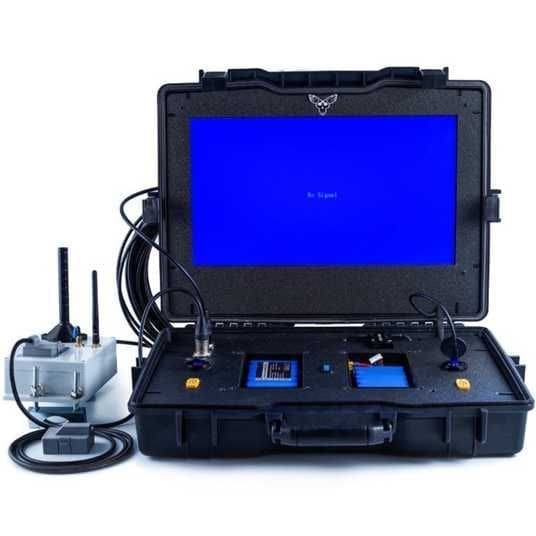
Nigeria has invested heavily in surveillance and interception technologies such as the GSM Interception System.

Beyond documenting alleged violations, the investigations also exposed the scale of public spending on surveillance infrastructure and technologies and uncovered procurement secrecy. It goes deeper. There was also the case of wasted surveillance infrastructure and a command centre, funded with public resources but abandoned after political transition. 

These investigations have now been structured and consolidated into five prominently featured themes. They are: Surveillance of dissent and civic space, surveillance and human rights violations, legal and accountability gaps, surveillance infrastructure and public expenditure and Nigeria’s huge surveillance spending.

Surveillance of dissent and civic space

This section consolidates findings from five ICIR investigations, namely, “How NIA tracked, framed #Endbadgovernance protesters for treason,” “How Nigerian authorities used technology to tap calls, monitor journalists,” “Inside Kogi’s alleged spyware crackdown on critics,” “Surveillance by proxy: How Nigerian police use phone records to trap civic actors,” and “How digital surveillance is suffocating Nigeria’s civic space.”

The five reports each identified a growing pattern in which surveillance technologies acquired for security, crime prevention, and intelligence gathering are being used by Nigerian authorities to monitor, track, arrest, and prosecute activists, journalists, political critics, and protest organisers.

For instance, drawing on the evidence presented in the report “How NIA tracked, framed #EndBadGovernance protesters for treason,” Michael Adaramoye narrated how in the early hours of August 5, 2024, armed operatives later identified as members of the National Intelligence Agency (NIA) stormed his Abuja home to arrest him. He said an officer seized his phone, handed it to a colleague who briefly inspected it before returning with a confirmation: “This is the target.”

Adaramoye, one of many activists later charged with treason following nationwide demonstrations against economic hardship in 2024, soon realised that the officers already had detailed knowledge of his phone conversations, contacts, and movements. 

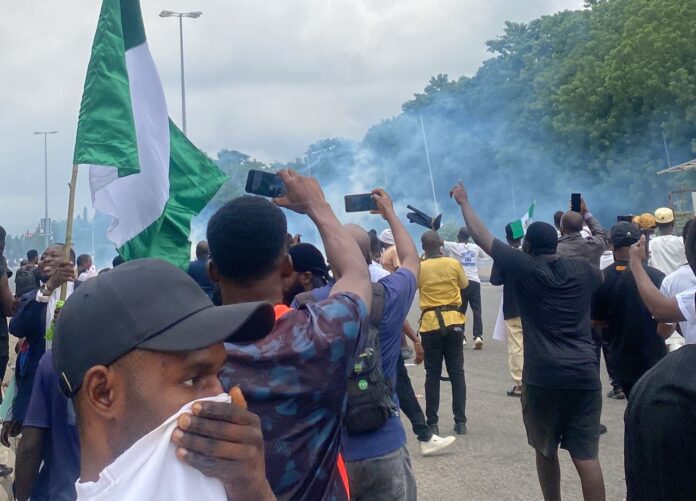
Protesters covering their face/ ICIR

Across several states and involving different security institutions, the report documented how communications interception tools, phone tracking systems, call-data analysis, and broader digital surveillance capabilities increasingly become central to state responses to dissent and civic activism. 

Similarly, the report, “How digital surveillance is suffocating Nigeria’s civic space”, documented the use of surveillance technologies to track, monitor, arrest, and prosecute activists, protesters, and government critics. Through the experiences of individuals such as ex-corps member Ajibare Oluwasegun, activists Musa Saidu Tsaragi, Akande Daniel, and others, the report documented allegations that security agencies used phone records, digital tracking tools, intercepted communications, and other surveillance methods to locate and detain protesters, social media critics and activists.

Another significant case exposed how government authorities used communications interception technologies to monitor journalists in Kaduna and Plateau states. Drawing on testimonies from the report “How Nigerian authorities used technology to tap calls, monitor journalists,” the ICIR interviewed reporters and media practitioners and detailed how GSM/UMTS interception systems originally acquired for security and anti-crime operations were repurposed to track journalists, intercept communications, and facilitate arrests and detentions.

It documented the experience of popular radio presenter Onibiyo Segun, who became aware that police officers identified his exact location during a phone call in 2018. He later learned from sources that his calls had allegedly been intercepted for weeks before he was arrested and detained. 

Other journalists interviewed in the two states reported changing their communication habits, adopting encrypted applications, and implementing additional digital-security measures to protect themselves from monitoring. Read the full investigation here.

Moving on to “Inside Kogi’s alleged spyware crackdown on critics,” this investigation equally examined allegations that the Kogi State government from he immediate past administration of Yahaya Bello acquired surveillance technologies and used security operatives to monitor, intimidate, and arrest journalists, political critics, bloggers, and activists. 

Through interviews, procurement records, budget documents, and historical case reviews, the ICIR traced a pattern of surveillance-linked actions. The report highlighted the case of political analyst and publisher Friday Ogungbemi, who said he was lured into a meeting and arrested after publishing a report critical of government officials. ICIR documented several similar incidents involving critics who allegedly faced monitoring, detention, prosecution, or harassment after expressing dissenting views.

Another critical finding across the investigations revealed the increasing use of indirect or “network-based” surveillance, rather than relying on direct monitoring. The case of activist Juwon Sanyaolu in the report, “Surveillance by proxy: How Nigerian police use phone records to trap civic actors,” highlights this approach. Security agencies reportedly analysed call records, communication histories, and social connections to identify broader networks of activists and civic actors. Sanyaolu explained how the police used information connected to one of his associates to track and arrest him ahead of a planned protest. 

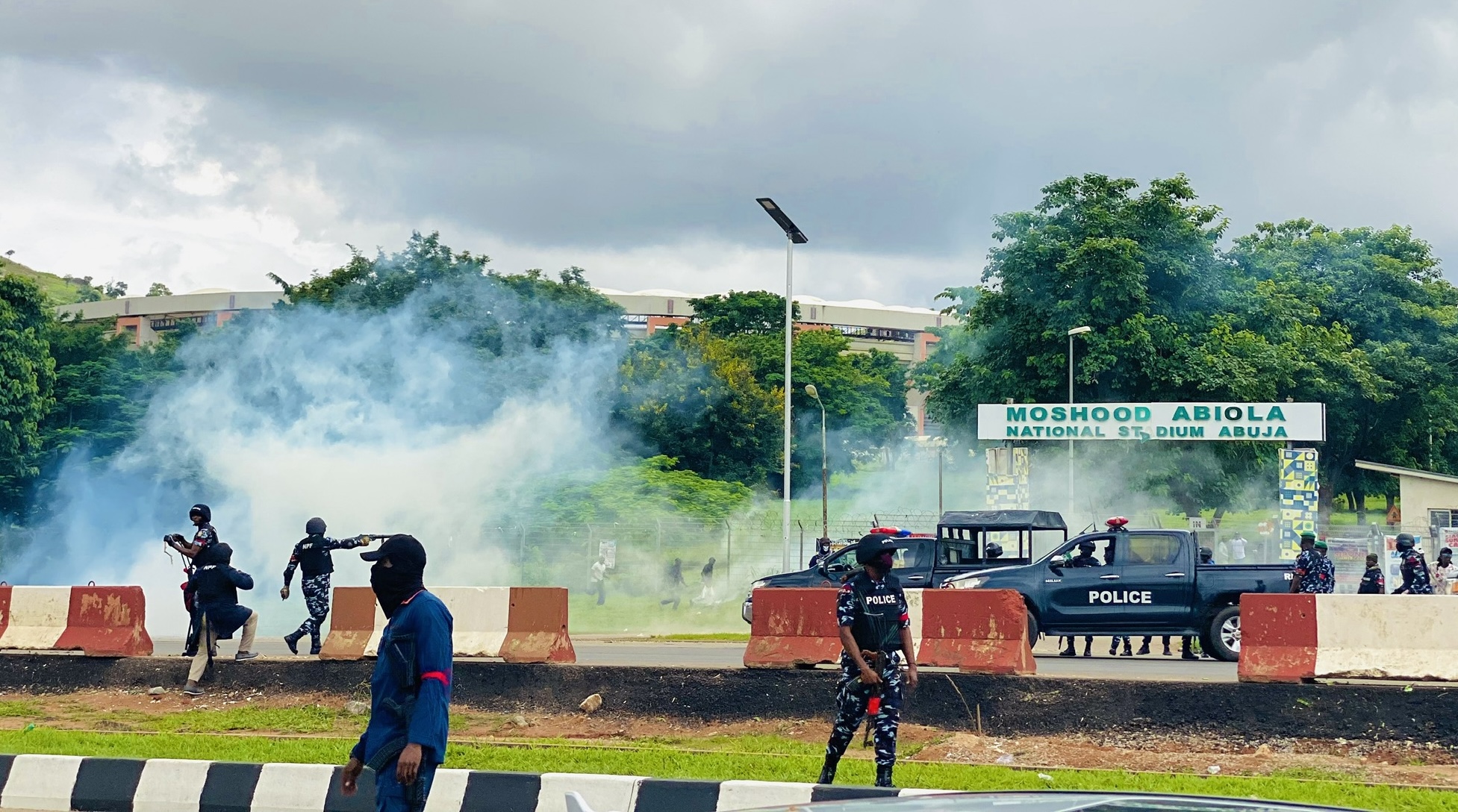
Operatives of the Nigerian Police Force shooting at protesters and journalists during End Bad Governance protest in 2024/ Credit: Nurudeen Akewushola

Testimonies in the report indicate that authorities relied on frequently contacted numbers and social relationships to map activist networks and identify potential targets. This practice, as revealed in the report, expands surveillance beyond individual suspects to scrutinising associates, colleagues, and family members.

Legal experts and digital-rights activists interviewed across these investigations emphasised that Nigeria’s laws provide protections for privacy, freedom of expression, and peaceful assembly. They argued that communications interception should only occur under clearly defined legal procedures, including judicial authorisation and independent oversight. The experts raised concern regarding limited public oversight of Nigeria’s huge investments in surveillance infrastructure and spyware technologies. 

The findings collectively suggest that the country’s surveillance and spyware capabilities, intended to combat insecurity, may have been repurposed to silence dissent, contributing to a climate of fear that discourages protests and shrinks civic space.

Surveillance and human rights violations

Three investigations featured prominently under this category are “Tapped, tracked, tortured: The wiretapping trail to Police Tiger Base dungeon in Imo,” “How DSS Spyware acquisition enables illegal wiretaps and detentions,” and “How surveillance technology enables arbitrary arrests and detention.”

The three investigations focused on victims’ accounts that, with the help of surveillance and spyware tools, they were arbitrarily arrested, unlawfully detained, intimidated, tortured, and extorted.

Specifically, the investigation, “Tapped, tracked, tortured: The wiretapping trail to Police Tiger Base dungeon in Imo,” revealed how officers of Tiger Base, an anti-kidnapping police unit in Imo State, used surveillance technology to track, arrest, extort, and torture victims.

Through interviews with victims and rights advocates, the report reconstructed a pattern in which individuals were reportedly monitored through their movements and phone communications before being arrested by operatives.

Some victims said they were detained for extended periods, subjected to abuse, and pressured to pay money for their release. But that was not all. The investigation also referenced cases in which families and lawyers were denied access to detainees, raising concerns about due process and human rights compliance.

Tapped, tracked, tortured: The wiretapping trail to Police Tiger Base dungeon
The entrance into Tiger Base, Owerri

Unfortunately, while Tiger Base was created to tackle serious crimes such as kidnapping and armed robbery, findings from the investigation revealed it increasingly attracted negative reviews linked to allegations of unlawful detention, torture, and extortion.

Just as the headline suggests, the investigation, “How DSS Spyware acquisition enables illegal wiretaps and detentions,” shone a light on the Department of State Services (DSS), Nigeria’s secret police. The report examined allegations that the DSS deployed sophisticated surveillance technologies beyond their intended national security purpose, enabling warrantless wiretaps, citizen tracking, and prolonged detentions. 

Relying on court documents, victim testimonies, and public records, the investigation identified a pattern in which individuals first experienced suspicious phone activity such as strange calls, disrupted signals, or unexplained monitoring before being arrested by security operatives.

Several detainees reportedly claimed they were arrested without warrants and transferred to detention facilities where they remained for extended periods without trial and access to their loved ones. Read the full investigation here. 

In a similar investigation, “How surveillance technology enables arbitrary arrests and detention,” the ICIR found that security agencies used surveillance technologies and telecommunications data to track, locate, and arrest citizens, including government critics, journalists, activists, and individuals accused of links to separatist movements. 

Through case studies involving Chika Nwoba, Charles Otu, Ifeanyichukwu Thomas, and Ngozi Dave, the report documented allegations that security operatives relied on call records, phone metadata, location data, financial transaction trails, and contacts of associates to trace targets. 

Victims alleged that these operations frequently occurred without transparency or judicial oversight and were followed by detention, intimidation, or other abuses.

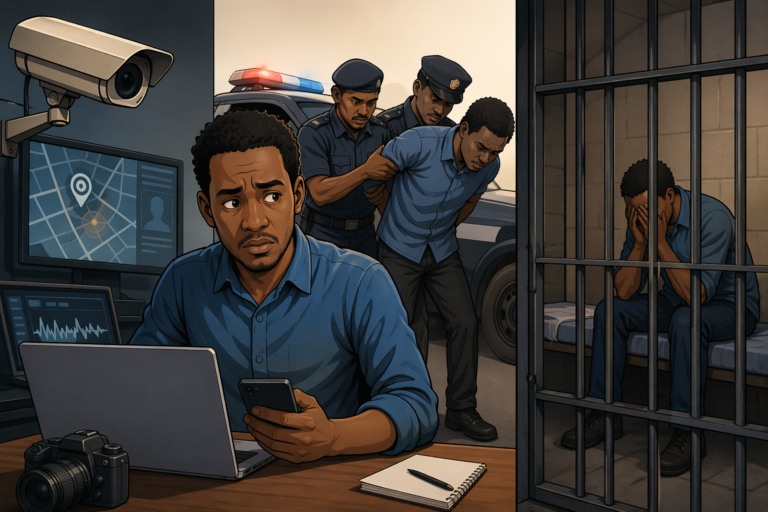
This illustration was generated using an AI prompt.

The investigation also revealed that Nigeria has significantly expanded its surveillance and interception capabilities through substantial investments in digital monitoring, communications interception, and intelligence-gathering technologies.

In these three reports, security agencies maintain that they use surveillance tools lawfully for investigative and national security purposes. However, the report highlighted concerns from lawyers and rights advocates about arbitrary arrests, prolonged detention, and violations of due process when not subject to effective oversight.

The experts reiterated that though Nigeria’s law permits lawful interception under specific judicial authorisation, they argued that existing safeguards may be inadequate to prevent abuse. They stressed that surveillance activities must be backed by lawful authorisation and oversight.

EFCC uncovers Chinese-operated illegal oil refinery in Ogun

1

THE Economic and Financial Crimes Commission (EFCC) has uncovered an illegal oil refinery allegedly operated by Chinese nationals in Ogere, Ogun State.

The discovery cones amid repeated arrests and prosecutions of Chinese nationals over suspected illegal mining and other offences in Nigeria.

The commission disclosed this in a statement on Tuesday, November 3, saying its operatives from the Lagos Zonal Directorate 2 discovered the facility during an operation on Saturday, October 31.

According to the EFCC, the operation followed intelligence gathering and surveillance on suspected illegal sludge oil refining activities in the area.

It noted that the facility was deserted when the operatives arrived, but they discovered waste materials believed to have resulted from the refining process and underground tanks suspected to have been used for heating and processing sludge oil.

The commission added that preliminary investigations indicated that the operators sourced sludge oil, also called black sludge, from Warri in Delta State and Port Harcourt in Rivers State before transporting it to the facility in Ogere for processing.

It further said the operators subjected the sludge oil to intense heat, allowing lighter petroleum components to pass through a series of chambers and filters in a process believed to produce diesel for sale in the Nigerian market.

“Further investigation revealed that the illegal operators subjected the sludge oil to intense heat, allowing lighter petroleum components to pass through a series of chambers and filters in a process believed to produce Automotive Gas Oil (AGO) for sale in the Nigerian market.

“Security personnel at the facility told EFCC operatives that the Chinese operators never disclosed their identities nor the name of the company behind the facility,” the statement added.

The discovery followed an earlier EFCC operation in the same area, during which 14 Chinese nationals and a Nigerian were arrested over alleged illegal lithium processing activities at four plants.

The EFCC said it recovered bags of lithium rocks, 18 mobile phones, four laptop computers, two decoders, a television remote control and a trailer truck during the operation.

The latest discovery adds to a series of cases in which Chinese nationals have been arrested, prosecuted and, in some instances, convicted over illegal mining activities in Nigeria.

In May 2025, the EFCC arrested two Chinese nationals and six Nigerians in Ogere over alleged illegal mining activities.

The suspects were reportedly found with three trucks carrying substances suspected to be ground lithium powder and other unidentified solid minerals.

In March 2025, the Federal High Court in Ilorin, Kwara State, convicted two Chinese nationals, Yang Chao and Wu Shan Chuan, alongside their company, Crius Chemical Nigeria Limited, over illegal dealings in solid minerals.

The court sentenced the two men to two years’ imprisonment each, with an option of a N1 million fine, and ordered them to pay N14 million in outstanding royalties to the Federal Government.

Police bust fake dollar printing factory in Ondo

0

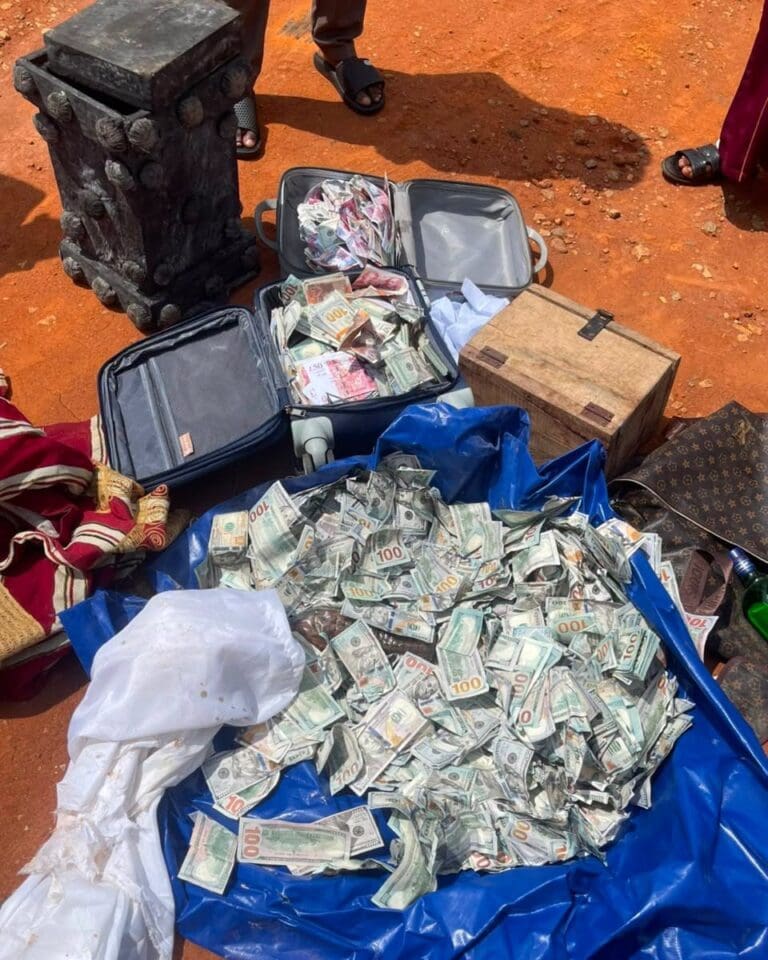
THE Police Command in Ondo State says it has busted a suspected counterfeit dollar printing factory and arrested one suspect in Odigbo Local Government Area (LGA) of the state.

The command’s spokesperson, Abayomi Jimoh, a deputy superintendent of police, made this known in a statement on Tuesday in Akure, saying the bust followed a complaint lodged on October 28 by one Yusuf Nasiru of Sabo in Okitipupa Local Government Area.

Jimoh explained that the complainant reported that two men, identified as Peter Desmond and Olami Toro, both residents of Ode-Irele, approached him in his shop on October 25, requesting to exchange United States dollars for naira.

“The complainant handed over the sum of 6,000 dollars, valued at approximately N8.6 million, to the men. However, while waiting to receive the naira equivalent, the suspects allegedly returned the dollars to him, claiming that they did not have sufficient funds to complete the transaction, and subsequently left.

“The complainant later discovered, upon closer examination, that the dollar notes returned to him were counterfeit, prompting him to report the incident to the police,” the spokesperson said.

Jimoh, who said the operatives from Okitipupa Divisional Headquarters commenced discreet investigation, explained that through intelligence gathering and technical tracking, Desmond was traced to Kiniso Village, via Ajue, in Odigbo LGA.

“Acting on credible intelligence from members of the community, the operatives raided the hideout on October 29, where they discovered the suspected factory used for production and printing of counterfeit dollar notes. During the operation, one suspect was arrested while other occupants of the premises reportedly escaped through the perimeter fence.

“A search of the premises led to the recovery of three bags containing suspected counterfeit United States dollar notes and a small wooden box, all of which were taken into police custody as exhibits. The arrested suspect has, however, given useful information that is assisting the investigation,” he said.

The spokesperson, therefore, admonished members of the public against engaging in suspicious foreign currency transactions with unverified individuals outside recognised and authorised channels.

Jimoh advised residents to authenticate foreign currencies before accepting it and promptly report suspicious activities to the nearest police station. (NAN)


US-convicted Osun monarch sues Adeleke over plan to appoint successor

0

THE dethroned Apetumodu of Ipetumodu in Osun State, Oba Joseph Oloyede, has sued Governor Ademola Adeleke, seeking to stop the state government from appointing a successor to the traditional stool.

Oloyede, who was convicted in the United States over a $4.2 million COVID-19 relief fund fraud, is challenging his removal from office and has asked an Osun State High Court sitting in Ile-Ife to restrain the governor and other officials from filling the stool pending the determination of the substantive suit.

The convicted monarch is the second claimant in suit number HIF/50/2026, alongside three princes of the Latimogun Royal Family of the Aribile Ruling House of Ipetumodu: Oyewusi Adewusi, Isaac Adewuni and Abiodun Oyetoro, according to Punch newspaper.

In a motion on notice dated September 16, 2026, Oloyede sought an interlocutory injunction restraining the defendants, their agents and representatives from taking any steps to appoint another person as Apetumodu until the court determines the case.

He alleged that Adeleke ordered his deposition without informing him of any alleged wrongdoing or giving him an opportunity to respond.

The application partly read, “There was no time the 2nd claimant/applicant was informed by the 1st-3rd defendants of any wrongdoing before the issuance of the publication contained in the said Guardian Newspaper and the purported instrument or order of deposition.”

Oloyede also challenged a deposition instrument reportedly signed by Adeleke on May 7, 2026, which was published in a national newspaper on May 11, 2026.

Other defendants in the suit include the Osun State Attorney-General and Commissioner for Justice, Oluwole Jimi-Bada; the Commissioner for Local Government and Chieftaincy Affairs, Dosu Babatunde; Afolabi Adedeji, a chief; the Asalu of Ipetumodu and head of the kingmakers, Adesoye Babalola, also a chief; the Malefon of Ipetumodu; and Ife North Local Government.

Hearing adjourned

Meanwhile, the hearing in the case was stalled on Monday, November 2, following disagreements over the service of hearing notices on the defendants.

Only the claimants’ counsel, O. Ogbewe, and Soji Oyetayo, who represented the fifth defendant, Babalola, appeared before the court.

Ogbewe reportedly told the court that the defendants had been served with the relevant processes, while Oyetayo said he had not received the hearing notice.

Oyetayo subsequently asked the court to adjourn the matter to allow the claimants to serve all the defendants.

In his ruling, the judge, Dapo Adeniji, adjourned the case until January 21, 2027, and directed that fresh hearing notices be issued and served on the defendants.

The court has yet to determine Oloyede’s application seeking to stop the appointment of a successor.

Background

The ICIR reports that the Osun State Government approved Oloyede’s removal following his conviction in the United States over a scheme involving fraudulent applications for COVID-19 relief funds.

On August 27, 2025, Oloyede was sentenced to 56 months in prison by a US court after pleading guilty to wire fraud and tax-related offences connected to a scheme that defrauded federal COVID-19 relief programmes of $4.2 million.

The programmes included the Paycheck Protection Program and the Economic Injury Disaster Loan initiative, established to support businesses affected by the COVID-19 pandemic.

The US court also ordered him to pay $4.4 million in restitution, forfeit his home in Medina, Ohio, and surrender $96,006.89 in seized proceeds of the fraud.

According to the US Attorney’s Office for the Northern District of Ohio, Oloyede and his co-conspirator, Edward Oluwasanmi, submitted fraudulent loan applications between April 2020 and February 2022.

Investigators found that Oloyede used businesses and some of his clients’ businesses to obtain the funds, while also collecting kickbacks from certain loan applications.

The US authorities said the scheme resulted in the approval of 38 fraudulent applications, amounting to $4,213,378 in disbursed loans and advances.

Following his conviction, the Osun State Government obtained a certified true copy of the US court judgment and subsequently approved his deposition in May 2026.

The government then declared the Apetumodu stool vacant, paving the way for the selection of a successor.

14-year-old among four Nigerian girls rescued from human traffickers in Mali

0

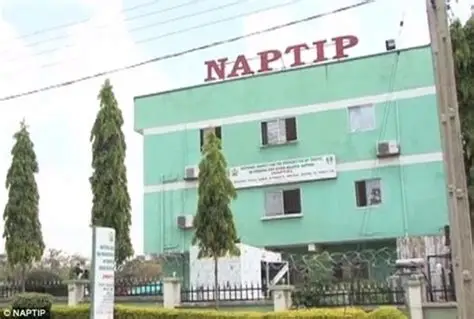
FOUR girls from Okene Local Government Area of Kogi State, including a 14-year-old minor, have been rescued from suspected human traffickers in Morila, Mali, following a joint intervention by the Global Anti-Human Trafficking Organisation (GAHTO) and the National Agency for the Prohibition of Trafficking in Persons (NAPTIP).

According to a statement issued on Monday by GAHTO founder, Prosper Michael, the girls were allegedly lured to Mali with promises of employment in gold mines and shops but were forced into prostitution.

Michael said the rescue followed a distress message sent by one of the girls through WhatsApp after she used artificial intelligence to seek help.

He explained that the message was received by NAPTIP Uyo Command, which contacted him to facilitate an intervention.

Michael said he established contact with one of the girls and worked with a Nigerian community leader in Mali to secure their rescue and return.

NAPTIP Uyo Command said the distress message sent by one of the victims read: “I am a Nigerian girl, trapped in Mali. My madam seized my passport and asked me to go and be doing hook-up. Please, our lives are in danger.”

The command said that the girl explained that an artificial intelligence tool had provided his contact after she searched for ways to obtain help.

It expressed concern that a 14-year-old girl was among those trafficked, describing her situation as a case of child abuse and questioning how the minor’s father could have approved her journey to Mali under such circumstances.

One of the survivors, identified as Sekinat, a 23-year-old auxiliary nurse, said she was introduced to the supposed job opportunity by her mother’s friend, who promised her legitimate employment.

She said she began the journey on October 14 and arrived in Mali on October 19, only to discover that the promised job was prostitution.

“When I got there, she collected my phone and ID cards. She later told me that the work they do here is prostitution. I thought it was a joke,” she was quoted as saying.

Sekinat alleged that the trafficker threatened to sell or kill any of the girls who refused to engage in prostitution.

She further claimed that the woman collected CFA2.5 million to facilitate their journey to Mali but instructed them to tell embassy officials that she had spent CFA1.5 million to bring them into the country.

According to her, the girls eventually gained access to a hidden phone and used artificial intelligence on WhatsApp to seek assistance after an earlier attempt to contact a Nigerian Army officer failed.

“We sent him our pictures, our madam’s number and her name and the name of the area. We were four in number,” she said.

The rescue team called on Kogi Central Senator, Natasha Akpoti-Uduaghan, and the Kogi State Government to provide the survivors with medical attention, psychosocial support, counselling and educational assistance.

They also urged relevant authorities to investigate the alleged trafficking network and ensure that those responsible are apprehended and prosecuted.

They added that the four girls are currently receiving care and undergoing rehabilitation.

Constant Frustration of INEC Chairman

0

By Eric Teniola

EVERY chairman of the Federal Electoral Commission (FEDECO) or National Electoral Commission (NEC), now Independent National Electoral Commission (INEC) has always been accused of partisanship. Some of them, if not all, left the office in frustration. Some of them were accused of compromising their office and that they are not neutral. They were portrayed as agents, disciples or henchmen of the ruling party That has been part of our political history.

This was the reason the former Ondo state Chief Judge and first Nigeria Director of Law School, Honourable Justice Olakunle Orojo CFR (16 February, 1923 – 3 July, 2009), rejected the job after it was announced by General Ibrahim Babangida (GCFR) to replace Professor Humphrey Nwosu (2 October 1941 – 20 October 2024) in 1993.

One needs to read the 392-page book of Professor Humphrey Nwosu titled “LAYING THE FOUNDATION FOR NIGERIA’S DEMOCRACY:MY ACCOUNT OF JUNE 12, 1993 PRESIDENTIAL ELECTIONS AND ITS ANNULMENT”. His close friend, Mr. Fab Uche, who is equally close to me, is never tired of telling me the humiliation Professor Nwosu faced as chairman of the electoral body during and after his tenure till he died in the United States of America on October 24, 2024.

Professor Nwosu’s laudable efforts ended in annulment of the election, the consequences of which we are still enduring till today.
The process for the selection of INEC chairman is wrong and it gives room for suspicion. In English, we have the saying that “He who pays the piper calls the tune,” which means that the person that pays for something decides on what happens to that something. In Hebrew, it says, “the man who controls the riches is the man who controls the judgement”. A French version says, “Celui, qui tient les rênes, tourne la tête,” meaning who holds the reins, turns the head. Salman Iqbal, an author wrote, “He with the big stick has got to be the owner of the she-bufalo!”

Past chairmen of INEC felt that they owe their appointments to the man who appointed them. Section 50 of the 1963 Constitution says “(1) There shall be an Electoral Commission for the Federation (2) The members of the Electoral Commission of the Federation shall be—(a) a Chief Electoral Commissioner, who shall be chairmen; and (b) a member representing each territory. (3) The members of the Electoral Commission of the Federation shall be appointed by the President, acting in accordance with the advice of the Prime Minister. (4) Before tendering any advice for the purposes of this section in relation to the appointment of the member of the Electoral Commission of the Federation representing a Region, the Prime Minister shall consult the Premier of that Region.

(5) A person shall not be qualified to hold office as a member of the Electoral Commission of the Federation if he is a member of either House of Parliament, a member of a legislative house of a Region, a Minister of the Government of the Federation, a Minister of the Government of a Region or a member of the public service of the Federation or the public service of a Region.

Section C third schedule of the 1979 Constitution says, “The Federal Electoral Commission shall comprise the following members, namely—- (a) a Chairman, who shall be appointed from among members specified in sub-paragraphs (b) and (c) of the paragraph; (b) one member from each of the States of the Federation; (c) not more than 5 additional members who shall be appointed on their merit.

The Section gave the president the power to appoint members of the commission including the chairman. Section 153 of the 1999 Constitution equally gives the president the power to appoint the chairman and members of INEC. Sub section 3 of Section 154 of the Constitution states “In exercising his powers to appoint a person as chairman or member of the Independent National Electoral Commission, National Judicial Council, the Federal Judicial Council Service Commission or the National Population Commission, the president must consult the Council of State”.

We have to devise means and ways to appoint the members of INEC in a way that does not make them suspects. I want to limit myself to the fate of the four pioneers of the electoral body. The past chairmen of the electoral body were Mr Roland Edward Wraith (1958-1963), Sir Kofoworola Adekunle Abayomi (1963-1964), Chief Eyo Esua (1964–1966), Chief Michael Ani (1976–1979), Justice Victor Ovie-Whiskey (1980–1983), Professor Eme Awa (1987–1989), Professor Humphrey Nwosu (1989–1993), Professor Okon Uya (1993, June-November), Chief Sumner Dagogo-Jack (1994–1998), Justice Ephraim Akpata (1998–2000), Sir Abel Guobadia (2000–2005), Professor Maurice Iwu (2005–2010), Professor Attahiru Jega (2010–2015), Professor Mahmood Yakubu (2015-2025) and Professor Joash Ojo Amupitan (SAN)—2025 till date.

Professor Joash Amupitan hails from Ayetoro Gbede in Ijumu Local Government Area of Kogi state. If we are to judge Ayetoro Gbede by the likes of Senator Dino Melaye, what of notables like Major General (rtd) David Medayese Jemibewon, Shola Ameobi, who once played for Newcastle United football club in the English Premiership, John Obaro, founder Systemspecs and others.

I first visited Ayetoro Gbede in 1975 when it was part of Kwara state. I was there for the grand reception by the people of Ayetoro Gbede in honour of Colonel Jemibewon who was appointed the Military Governor of Western state to replace Captain Akintunde Aduwo. I was then the Western state Editor of Kwara state owned THE NIGERIAN HERALD reporting from Ibadan. The people of Ijumu have passion for education. They are intrepid and doughty. I have in mind the likes of Chief Bayo Ojo, SAN, CON; Senator Smart Adeyemi; Lt. General(rtd.) Rufus Modupe Kupolati; Lt. General(rtd.) Joseph Olorungbon Owonibi ;Major General(rtd) Funso Samson Owonibi; Mrs Folashade Yemi-Esan; Dapo Olorunyomi, CON; Mr. Eniola Bello; Gbenga Ogunleye; Prince Olushola Akanmode; Mr. Tunde Ipinmisho; S. A. Ajayi; Professor Yemi Akinwumi; Professor Gbenga Ibileye; Honourable Abiodun James Faleke; Barrister Ayo Abraham Olorunfemi and so many others.

Coincidentally an Ijumu illustrious Professor is to conduct our coming general elections. Those who love Nigeria must wish Professor Joash Ojo Amupitan the best of luck. After the Constitutional conference in London, it was agreed that an electoral body be established for 1959 and other elections. Mr. Roland Edward Wraith was therefore appointed to head the body. Other members of the commission were Alhaji Bello Dan Amar, Mr. Anthony Aniagolu, Mr. H. Orisejolomi Thomas, Mr. K.A. Bohu and Mr. M. A. Sho-Silva. Mr. Orisejolomi Thomas, later resigned to go back to academics which was his calling and was replaced by Prince Peter Akenzua.

Mr. Ronald Edwards Wraith was born 1908 in Derby, Derbyshire, England. He was a British scholar and public administrator specialising in colonial and post-colonial governance in Africa. Mr. Wraith authored influential studies on local government systems in West Africa, including examinations of structures in Nigeria, Ghana, and Sierra Leone, and co-wrote Corruption in Developing Countries (1963) with Edgar Simpkins, analysing administrative challenges and graft in emerging nations.

His works emphasised practical reforms to build effective institutions amid decolonisation, drawing from direct experience in British colonial service. His tenure, which extended until 1960, focused on establishing impartial mechanisms for voters’ registration and election conduct amid Nigeria’s diverse ethnic and regional divisions. Mr. Wraith, drawing from his prior administrative experience in colonial service, prioritised logistical preparations, including the compilation of electoral rolls across Nigeria’s expansive territory, where infrastructure limitations posed significant hurdles such as inadequate transportation and communication networks.

Under Mr. Wraith’s leadership, the ECN organised the 1958 regional elections, which served as a precursor to federal polls, achieving widespread voter registration despite challenges like low literacy rates and geographic isolation in rural areas. The subsequent 1959 federal elections, held on December 12, saw the Northern People’s Congress secure 134 seats in the 312-member House of Representatives, forming a coalition government with the National Council of Nigeria and the Cameroons.

Voter’s participation reached approximately 79.5 per cent, reflecting effective mobilisation efforts, though ethnic-based campaigning intensified regional rivalries. Wraith’s commission addressed logistical issues by deploying polling stations in remote locations and training local staff, enabling the process to proceed without widespread disruption despite predictions of potential violence. The outcomes of these elections contributed to short-term political stability, paving the way for Nigeria’s independence on October 1, 1960, with Alhaji Abubakar Tafawa Balewa appointed as Prime Minister.

Success metrics included the acceptance of results by major parties, minimal reported irregularities in vote counting, and the establishment of a precedent for federal oversight of polls. However, persistent ethnic tensions, evident in the uneven regional vote distributions – such as the Northern People’s Congress dominating the North while the Action Group prevailed in the West -foreshadowed future instability, including the 1964 election crises that undermined the nascent democratic framework. Wraith’s role emphasised procedural integrity over partisan influence, though critics later noted that structural ethnic imbalances limited long-term cohesion.

By 1963, there was agitation for a Nigerian to be appointed to head the body. Nigerianisation became the key word. So, Alhaji Tafawa Balewa’s friend, Dr. Moses Adekoyejo Majekodunmi (17 August 1916 – 11 April 2012) a pioneering obstetrician, gynaecologist, administrator, and politician who served as Federal Minister of Health from 1961 to 1966 and as administrator of the Western Region in 1962, introduced his friend, Sir Kofo Abayomi to replace Mr. Wraith, who resigned his appointment in frustration. Thereafter, Mr. Wraith went back to England and Sir Kofo Abayomi was appointed chairman of the electoral body.

Sir Kofo Adekunle Abayomi was a doctor and politician born on 10 July 1896 in Lagos. He attended the UNA School and then, from 1909, the Wesleyan College (now Methodist Boys’ High School) in Lagos, where he became a pupil teacher, on completion in 1912. He later transferred to a similar job at the Eko Boys’ School. He joined the civil service as a government dispenser in 1914, working first at the African Hospital in Lagos. A few months later, when the First World War broke out, he worked as a dispenser with the Nigerians Forces which fought for the British in the Cameroons Campaign. He was decorated for this service.

In 1922, he went to Edinburgh University, where several other West African doctors had already qualified, to study medicine. He completed those studies at Moorfields Eye Hospital, London, and specialised as an Ophthalmologist. He won the M.B. and Ch.B. of Edinburgh in 1928, and the M.D. in 1936. From 1928 to 1930, he was demonstrator in Physiological Methods at Edinburgh. Returning to Nigeria in 1930, he combined private medical practice with politics. In 1938, he took over from the deceased Dr. J.C. Vaughn the presidency of the Nigeria Youth Movement (NYM) which he had joined on its foundation as the Lagos Youth Movement in 1933. Also, in 1938 he was elected to the Legislative Council as an NYM member for Lagos. He served for two years but resigned in 1940 to go to Britain for further studies.

In 1958, Sir Kofoworola Adekunle Abayomi was appointed Chairman of the Lagos Executive Development Board, which had authority to demolish unsanitary buildings and undertake town planning schemes. The board was also involved in freehold housing and estate development in Surulere, North-East and South-West Ikoyi reclamation schemes and up to one thousand acres reclaimed in Victoria Island. Sir Abayomi became the first Nigerian Chairman of the Board of the University College Hospital, Ibadan in 1958, a position he held until 1965. In 1959, he was chairman of the Board of Management of the Lagos University Teaching Hospital in Lagos. He served on the board or as chairman of several companies for the rest of his life.

By 1964, at the age of 68, it became clearer that Sir Abayomi was too old to function as the chairman of the electoral body. He spent less than a year in office, but conducted the Mid-West House of Assembly election in 1964. He too resigned in frustration.
Following his resignation as the Chairman of the Federal Electoral Commission (FEC), the Electoral Body at that time, the then Prime Minister, Alhaji Tafawa Balewa replaced him with Chief Eyo Ita Esua (14 January 1901 – 6 December 1973).

Chief Esua was a school master and a founding member of the Nigeria Union of Teachers. He was the first full-time general secretary of the union from 1943 until his retirement in 1964. He was an Efik, Calabar man, renowned for his dedication to duty and uprightness. The Esua-led commission organised the December 1964 elections, which was mired in controversy. Two members of the commission, Mr. Anthony Aniagolu from Eastern Region and Prince Peter Akenzua from Mid-Western Region, disagreed with the chairman and resigned from the commission.

Prince Akenzua later served as Vice-President of the Legal Aid Council under Chief Timothy Chimezie Ikeazor SAN (1930-October 12, 2012), the Oboli Obosi from Anambra State. As for Mr. Anthony Nnaemezie Christopher Aniagolu (October 22, 1922- June 28, 2011), he later served as Chief Judge of Anambra State from 1976 to 1978 and was a justice of the Supreme Court from 1978 to 1987. In 1988, he chaired a Constituent Assembly to propose a draft constitution for the Third Republic.

Chief Esua also conducted the 1965 Western Region elections, which was violent and was disputed by the opposition United Party Grand Alliance. A few days before these elections Chief Esua acknowledged that his organisation could not guarantee a free and fair poll. The widespread electoral abuses might have been a factor in the success of the military coup of January 1966 in which Major General Johnson Aguiyi-Ironsi came to power.

The major task Chief Esua faced as the chairman of the electoral commission was delimitation of constituencies. By mid July 1964, the commission announced far reaching changes in the numbers of Federal members representing each administrative division. These changes were presumably based on the figures of the 1963 population census, still to be published in details. The main changes showed the North reduced from 1974 to 1967, the East reduced from 73 to 70, the Mid West from 15 to 14, the West increased from 47-57, and Lagos two to three. Among changes in the West, Osun division was increased from nine to 12, Ekiti from three to eight. In the East, Brass, Calabar and Degema were increased from one to two each, and Eket was increased from two to four. In the North, Kano (31) and Sokoto (21) were increased by one.

In August, during the Northern Nigeria tour of the commission, Mr. Esua, chairman and the leader of the delimitation committee said that to divide Nigeria into 312 constituencies was an exclusive prerogative of the Federal Government, and that the figures of the recent census were the basis of delimitation. Each constituency was based on a population quota 178,000.
In 1965, the Federal Electoral Commission under Chief Esua held a sham election in Western Region. Chief Esua was forced to resign in frustration on December 15, 1965 and was replaced by Chief Michael Ani on December 16, 1965, by the then Prime Minister, Alhaji Tafawa Balewa. Chief Esua wrote in his memoirs, before he died during which he expressed his frustration.

The military came in on January 16, 1966, so there was no election thereafter and no need for an electoral commission.
On November 15, 1976, the then Head of State, General Olusegun Obasanjo GCFR, inaugurated the Federal Electoral Commission at the Nigeria Institute of International Affairs, Victoria Island, Lagos. The 24 members included four women and headed by Chief Michael Ani. The four women were Mrs Yetunde Gbadebo, Mrs Elizabeth Pam, Mrs Hassan Iro and Mrs Ethel Onwu. It was the second time Chief Ani would head that body.

Speaking on Chief Ani on Wednesday July 26, 1989, in Calabar, the former Secretary to the Government of the Federation, Chief Allison Akene Ayida (June 16, 1930- October 12, 2018) narrated the circumstances that led to Chief Ani being reappointed as the Chairman of the electoral body. “We are here to honour a man who spent the better part of his life defending the integrity of the public service as the Permanent Secretary, Federal Ministry of Establishments and Service Matter (Personnel Management to the new generation), and Member of the Federal Public Service Commission. He is better known in Calabar as the Administrator for the Liberated Areas of South-Eastern State during the civil war, and the founding father of the South-Eastern State Civil Service as its first Secretary to the Military Government and Head of Service.

When I was appointed to act as Permanent Secretary to the Federal Ministry of Economic Development, in 1963, I was the youngest permanent secretary in the Federation. It was part of an experiment to try out the then then new breed in the civil services as Perm. Secs. I had to look up to senior colleagues such as the late Chief Ani for guidance and leadership. We received their full co-operation. If the experiment succeeded, it was due partly to Chief Ani’s fatherly guidance and support.

It is not generally known that Chief Ani retired prematurely from the Federal Civil Service in 1965 to accept the challenge of the late Prime Minister, Sir Abubakar Tafawa Balewa, for him to be appointed the Chairman of the Federal Electoral Commission. I was one of those people he consulted and I advised against the move. But Chief Ani decided to accept the appointment for two reasons: first, as a good civil servant, he felt obliged to respect the Prime Minister’s wishes and, second, he was anxious to demonstrate that Nigerian elections could be conducted fairly and justly without fear or favour. Before he could demonstrate this, the military seized power on 15 January 1966 and Chief Ani suddenly became unemployed pensioner at the tender age of 49 years, judging by the standard of those days!

But an act of providence, when the Obasanjo administration was, in 1976, conducting the search for a suitable person to head the Federal Electoral Commission to supervise the elections for the return to civil rule in 1979, I was the Secretary to the Federal Military Government and Head of Service. When consulted, I advised that the man the Prime Minister appointed in December 1965, never functioned and was untainted. I told General Obasanjo that the late chief as a good civil servant, might not be sufficiently independent of the government to be seen to conduct the elections fairly and that the FMG might be seen to have a preference for one of the presidential candidates. The General, to my surprise, replied, “that is the man we want.”

When Chief Ani was approached, he came to my house to seek my opinion once gain as a trusted friend. I told him candidly what transpired between General Obasanjo and me and once again, I advised him against the reappointment as Chairman of FEDECO but he still saw it as a challenge and an opportunity to establish that Nigerians could conduct an impartial and fair democratic election. The rest of the story is better left to the verdict of history, but I believe the Chief did his best in the difficult circumstances of the countervailing powers and conflicting instructions on the 1979 elections.

No wonder all the honours followed – New Nigerians Newspaper’s “Man of the Year 1977” and “Commander of the Federal Republic” (CFR) in 1978”. However, the two major issues which FEDECO under Chief Michael Ani faced were the tax issue of the presidential candidates of the five parties before the 1979 elections and the issue of 12 2/3 of nineteen states.

On April 21, 1979, under the heading “Zik and Aminu Out: Tax papers not in order’ THE NEW NIGERIA published that Dr. Nnamdi Azikiwe, presidential candidate of the Nigerian People’s Party (NPP), was completely out of the presidential race. Also out was Alhaji Aminu Kano, Presidential candidate of the People’s Redemption Party (PRP). This was because the Federal Electoral Commission (FEDECO) confirmed in Lagos that the two presidential candidates did not pay their taxes as they were due. The same paper had earlier carried exclusively a story with a banner “Zik, Aminu Out of Race.”

In the story, it was said that both Dr. Azikiwe and Alhaji Aminu, were virtually out of the race because the Federal Military Government was reluctant to grant them security cover because of their tax positions. This story generated a lot of interests and controversies. Both NPP and PRP issued statements claiming that the tax positions of their presidential candidates were in order. But in press conference of April 20, the Chairman of FEDECO, Chief Michael Ani, said that the commission could not recommend “additional security coverage for Dr. Azikiwe and Aminu because of their tax position.” He said that the commission still had to carry out formal clearance or disqualification exercises in connection with the elections.

Dr. Azikiwe disputed the allegations made by FEDECO, which he described as “absolutely false and without foundation.” He threatened to sue newspapers which published Chief Ani’s statement. He said he would continue electioneering “and expose the clown hoof of our detractors.”

In his statement to the press conference, Chief Ani said that in the letters FEDECO sent to the two presidential candidates announcing that it was unable to recommend them for additional security coverage it was stated: “This letter does not in any way imply that the Federal Electoral Commission has, as of now, disqualified you as a presidential candidate, or has even yet given consideration to such a course. But it will have the duty to take full account of the tax documents submitted by you when nomination papers are received.”
Chief Ani went to say that none of the five candidates were known to have been found guilty by a commission of inquiry and so all that was needed was evidence of payment of income tax as it became due for each of the three fiscal years preceding the date of the election (i.e. for 1976/77, 1977/78 and 1978/79). The commission could not recommend two of the candidates for additional security cover because: “One of them, Alhaji Aminu Kano, submitted evidence of payment of poll or community tax (not income tax) N4.00 on a tax ticket purported to be issued on April 1, 1976, in respect of 1976/77; N5.00 on a tax ticket purported to be issued on January 31, 1979, in respect of 1978/79.

“Upon a very careful examination of the relevant books of tax tickets, it was clear that, the dates shown on the first two tax tickets notwithstanding, the tax for those two years were all paid during 1978/79 along with the tax that actually became due in that fiscal year. There is no evidence of whatsoever of payment of income tax by this candidate.

“The other candidate, Dr the Honorable Nnamdi Azikiwe, paid no income tax at all during 1976/77; he paid a part of his tax for 1976/77 during 1977/78 and the remainder during 1978/79; he paid the whole of his 1977/78 tax in three separate instalments not during the fiscal year but all during 1978/79. In addition, of course, to the tax due for that year. Nearly all the payments made during 1978/79 were after the commission’s letter dated February 6, 1979 calling on the leaders of the political parties to arrange for the respective presidential candidates to submit particulars of their tax payments as agreed at the meeting December 28, 1978.”

On April 26, 1979, Chief Obafemi Awolowo (6 March 1909 – 9 May 1987), leader and presidential candidate of the UPN, paid a total of N373,563.70k as income tax for the years 1976/77, 1977/78 and 1978/79. His income for the three years totalled N753,031.00k. These details were issued by the Unity Party in Lagos, in apparent response to Dr. Azikiwe’s call on the on the Federal Electoral Commission to “let the nation know how much tax Chief Awolowo, Alhaji Shagari and Alhaji Waziri paid in the last three years and when and how they paid it”.

The party said categorically that while it never wanted to dabble into a problem that was squarely between Dr. Azikiwe and the FEDECO authorities, the Owelles’ statement had necessitated it to publish its presidential candidate’s tax details “Our leader and presidential candidate, Chief Obafemi Awolowo, has never defaulted in the payment of his tax and he has always discharged his civic duties as a responsible Nigerian citizen,”

The photocopy of a Lagos State Government income tax clearance certificate, issued by the Inland Revenue Division of the Ministry of Finance showed that Chief Awolowo paid a tax of N44,505.50k on an income of N199,811.00k for the year 1976/77. He paid N102,327.70k tax on an income of N177,884 IN 1977/78. For 1978/79, Chief Awolowo paid N226,730.50k on a total income of N375,326.00k. Chief Awolo’s receipts bore number 6807A and 2533 for 1976/77; 53904 for 1977/78 and 5850B for 1978/79”.

The UPN torch-bearer paid the above tax on his income as a legal practitioner. The tax clearance certificate, No. 19315, was signed by B.O. Fasunloro, the statement said.

However, in the end, all the five presidential candidates were finally cleared to contest the election which ended in dispute over FEDECO’s ruling of 12 2/3 of the nineteen states. The issue was finally settled by the Supreme Court which endorsed Alhaji Shehu Usman Aliyu Shagari GCFR as the winner of the 1979 elections. After the Supreme Court verdict, Chief Ani felt frustrated. It was as if he was abandoned. I am not sure he wrote a book or memoirs on his frustration.

There is an urgent need for us to re-examine the report of Justice Uwais on electoral reforms. Till then, we are trapped with whatever Professor Amupitan will offer us.

In the conduct of the coming elections, we expect Professor Amupitan to be fair and ensure that our votes will count. That is our expectation. If he is not fair, like his predecessors, we shall feel frustrated too and that will be a tragedy.

Our fate is in the hands of Professor Joash Ojo Amupitan. All eyes are on him. He has a golden opportunity to write his name in the annals of history.

EXPLAINER: PFIPC controversy and how government agencies are established in Nigeria

0

ON Thursday, 29 October 2026, the Independent Corrupt Practices and Other Related Offences Commission (ICPC) re-arraigned Adeniyi Adeyemi, who was accused of falsely presenting himself as the director-general of the Presidential Foreign Intervention Promotion Council (PFIPC).

According to an ICIR report, Adeyemi was re-arraigned before the High Court of the Federal Capital Territory in Abuja on 22 amended counts bordering on forgery, impersonation and fraud involving alleged attempts to obtain government funding for the purported council.

The particulars of the amended charges, reproduced by Premium Times, allege that Adeyemi forged a document requesting a take-off grant of ₦27,395,510,136 for the purported council. Another count alleges that he attempted to secure the insertion of ₦3,850,935,000 as its 2026 personnel-cost budget proposal.

These figures represent alleged requests and budgetary proposals. They do not establish that the government approved or released the money.

Adeyemi pleaded not guilty to the charges. The allegations remain before the court and have not been established as facts.

The case has raised questions about how government institutions are created in Nigeria, the powers of the president to establish government bodies and the legal requirements for an organisation to operate as a federal agency.

What is the PFIPC controversy about?

The controversy surrounding PFIPC came to public attention after the Nigerian Presidency disowned the organisation and denied that Adeyemi had been appointed to head it.

In a statement issued on 11 June 2026, Femi Gbajabiamila, Chief of Staff to President Bola Tinubu, said the purported council did not exist under the administration and that no appointment had been made in that regard.

On 7 July 2026, the Presidency announced that Tinubu had directed the ICPC to investigate the activities of the purported council and related matters. The statement described PFIPC as fictitious and said it had not been established by the Federal Government through any law, presidential instrument, executive approval or other lawful government action. The statement was also shared in a Facebook post.

The naming of the purported organisation varies across some official documents. While the Presidency’s statements refer to the Presidential Foreign Intervention Promotion Council, some ICPC documents and court particulars use the name Presidential Foreign Investment Promotion Council.

The controversy was further complicated by the purported council’s appearance in the 2026 Appropriation Act under the name Presidential Economic Advisory Council/Presidential Foreign Intervention Promotion Council, with an allocation of ₦1,302,978,784. The allocation comprised ₦802,978,783 for personnel costs, ₦200,000,001 for overhead expenses and ₦300 million for capital expenditure.

The inclusion of the council in the budget raised questions about how an organisation the Presidency said had not been lawfully established came to be reflected in the government’s spending plan.

In an explanation published on July 24, 2026, the Director-General of the Budget Office of the Federation, Tanimu Yakubu, said the office relied on official government documents in processing the council’s budget proposal.

According to Yakubu, the Office of the Accountant-General of the Federation had assigned the council an administrative budget code, while the Office of the Head of the Civil Service of the Federation had issued an establishment approval and recruitment waiver. He said the Budget Office used these documents to calculate the personnel-cost provision included in the budget.

The Budget Office, however, said it did not issue financial clearance for the council because the required conditions had not been met. It explained that the personnel-cost allocation could not, on its own, authorise recruitment or payment of salaries. The office also said the overhead provision did not result in a cash release and the capital provision did not lead to procurement.

An allocation in the Appropriation Act provides legislative authority for expenditure for a specified purpose, subject to applicable financial procedures and controls. However, it does not, by itself, establish that financial clearance was issued, funds were released or money was spent.

The ICPC also said its investigation found no evidence that Federal Government funds were approved for release or disbursed to the purported council, according to its interim report on the investigation.

The ICPC’s charges against Adeyemi allege that he used forged documents to present the purported council as a recognised government institution, obtain official recognition, seek government funding and support claims that he had been appointed its director-general.

These are allegations contained in the prosecution’s case. Adeyemi has pleaded not guilty, and the court will determine the case.

Who has the power to establish a government agency in Nigeria?

The power to establish a government institution depends on the nature of the institution and the legal authority under which it is created.

In Nigeria, government bodies may derive their existence from the Constitution, an Act of the National Assembly or executive action taken within powers already conferred by the Constitution or existing laws.

The distinction is important because not every government body requires a separate Act of the National Assembly. However, an announcement by the Presidency or the creation of an administrative office does not, by itself, give an organisation the legal status and powers of a statutory agency.

1. Bodies established by the Constitution

Some government institutions derive their existence directly from the Constitution. Section 153 of the 1999 Constitution provides for several federal executive bodies, while their composition and powers are further outlined in Part I of the Third Schedule.

Examples include the Independent National Electoral Commission (INEC) and the Federal Civil Service Commission (FCSC).

Because these bodies are constitutionally established, their existence and functions are grounded in the Constitution. Their powers cannot simply be altered or removed through an ordinary administrative announcement.

2. Agencies established by Acts of the National Assembly

Other government agencies are created through legislation passed by the National Assembly and assented to by the president, in accordance with the Constitution.

The Act establishing an agency typically provides for its name, objectives, functions, powers, governance structure, funding arrangements and other operational requirements.

For example, the ICPC was established under the Corrupt Practices and Other Related Offences Act, 2000.

The provisions of an agency’s enabling Act determine the scope of its authority. An agency cannot lawfully exercise powers beyond those granted by its enabling legislation or another applicable law.

3. Executive-created bodies and administrative structures

The president may also establish certain administrative structures, committees, advisory bodies and task forces without a separate Act of the National Assembly, provided the action falls within the executive powers conferred by the Constitution or existing laws.

Section 5(1) of the Constitution vests the executive powers of the Federation in the president, subject to the Constitution and laws made by the National Assembly. These powers provide the constitutional basis for the president to organise and direct the executive branch, including establishing administrative structures within the limits of the president’s lawful authority.

Such bodies may be set up to coordinate government activities, advise on policy, conduct administrative inquiries into specific issues or carry out assigned government functions. Some may also perform functions authorised under existing legislation.

However, the fact that a body was announced by the President or created administratively does not automatically give it independent statutory powers. The legal basis for its functions must be traceable to the Constitution, an existing law or another valid exercise of executive authority.

The president’s power to establish administrative structures is therefore not a blanket authority to create any institution and confer on it powers that the Constitution or existing laws do not permit.

Can the president establish a government body without an Act of the National Assembly?

Yes. The president may establish certain administrative structures, committees, advisory bodies and task forces without a separate Act of the National Assembly, provided the action falls within the executive powers conferred by the Constitution or existing laws.

Such bodies may be established to perform specific assignments, coordinate government activities or carry out functions authorised under existing laws. Their powers, however, depend on the legal authority under which they are created.

An executive announcement or administrative approval does not automatically make a body a statutory agency or give it independent statutory powers. Where a proposed institution requires legal powers that are not already available under the Constitution or existing laws, an appropriate legal framework may be necessary.

This means that the appointment of a director-general, allocation of office space, issuance of official correspondence or provision of government facilities cannot, on its own, establish that an organisation has been lawfully created or authorised to exercise particular powers.

What is the process of establishing a statutory agency?

Where the government intends to establish an agency through an Act of the National Assembly, the proposal must go through the legislative process provided for by the Constitution and the rules of the legislature.

The Constitution provides the framework for lawmaking, while the National Assembly’s Standing Orders set out the procedures lawmakers follow when considering a bill. The process generally involves the following stages:

1. Proposal and drafting of a bill

A proposal is developed outlining the need for the agency, its objectives, functions, powers, administrative structure and funding arrangements.

A bill is then drafted to provide the legal framework for the proposed institution. Depending on the subject matter, a bill may be initiated by the executive or by a legislator. However, it must be formally introduced in the relevant chamber of the National Assembly by one of its members.

2. First reading

The bill is introduced in the relevant chamber of the National Assembly. At this stage, its title is formally read and the bill is presented for consideration.

The first reading is generally a formal stage and does not involve detailed debate on the contents of the bill.

3. Second reading

At the second reading, lawmakers debate the general principles and objectives of the bill. They consider its purpose, necessity and implications.

The chamber then decides whether the bill should proceed to further consideration.

4. Committee consideration

If the bill passes the second reading, it is referred to the relevant committee for detailed examination.

The committee may invite relevant government officials, experts, stakeholders and members of the public to provide input. It may also organise a public hearing, depending on the subject and the legislature’s procedures.

The committee examines the provisions and may recommend amendments before submitting its report to the chamber.

5. Third reading and passage

The bill is considered at the final stage in the chamber, including any proposed amendments. Lawmakers then vote on whether to pass it.

For a bill to become law, it must be passed by both the Senate and the House of Representatives. Where the two chambers pass different versions, the differences must be resolved in accordance with the legislative process.

6. Presidential assent

After the bill has been passed by both chambers in the same form, it is presented to the president for assent.

Under Section 58(4) of the Constitution, the president has 30 days to signify his assent to a bill or withhold it.

If the president withholds assent, the National Assembly may pass the bill again by a two-thirds majority in each chamber, in accordance with Section 58(5) of the Constitution.

The relevant constitutional provisions can be found in the 1999 Constitution of Nigeria.

What happens after an Act is passed?

Once a bill has become law, the provisions of the Act establish the legal framework for the agency. The law may specify when it comes into force, the responsibilities of its governing board or management, its funding arrangements and how it is expected to carry out its functions.

The agency must then operate within the powers and responsibilities provided by its enabling law and other applicable regulations.

For example, the Federal Government’s budget process is coordinated through the Budget Office of the Federation, while public expenditure must comply with relevant constitutional and statutory requirements, including the National Assembly’s role in appropriation.

The funding and administrative arrangements of government bodies may differ depending on their legal status and enabling provisions. It should therefore not be assumed that every institution has an identical funding structure or receives separate budget allocations.

Ultimately, establishing a government institution involves more than appointing a director-general, allocating office space or issuing official documents. Its legal existence, functions and powers must be traceable to the Constitution, an Act of the National Assembly or another valid legal authority.

Police arrest man suspected of throwing girlfriend’s niece from two-storey building in Imo

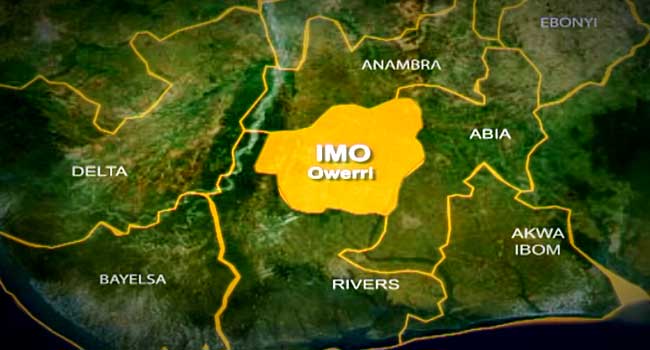
THE Imo State Police Command has arrested a 26-year-old man, Ifeanyi Chukwu Joseph, suspected of throwing his girlfriend’s 17-year-old niece from a two-storey building at Mbonu Ejike, Owerri, Imo State.

The incident occurred on Sunday, November 1, when the suspect was reportedly alone in the apartment with the teenager after his girlfriend travelled to Lagos State.

Speaking with The ICIR, the Public Relations Officer of the Imo State Police Command, Henry Okoye, a deputy superintendent of police, confirmed the arrest, stating that officers rescued the suspect from an angry mob that was attempting to lynch him.

Okoye said the police also rescued the victim and rushed her to a hospital, where she was receiving treatment. He added that she would need the services of a neurosurgeon because the injury affected her brain.

“We wish her quick recovery so she can give her own account of the incident; although she is currently in a critical condition. It affected her brain and is something that requires a neurosurgeon,” Okoye said.

Okoye said the suspect told the police that he had accused the teenager of frequently bringing men into the apartment he rented for his girlfriend. According to the PPRO, the suspect claimed that an altercation broke out between them over the matter, during which he flogged her.

The officer said that neighbours heard the commotion and knocked on the apartment door. When they entered, they could not find the teenager inside the house but later spotted her lying on the ground outside after looking through a window.

According to Okoye, the suspect’s girlfriend brought the teenager from the village to live with her and the suspect in the apartment. He added that the suspect and his girlfriend were not married but had been living together with the teenager.

However, the police spokesperson said the command did not consider the suspect’s account conclusive, describing it as questionable.

“We are not taking his own account of the incident as the final arbiter because as a matter of fact, his own account is actually fishy. It doesn’t add up,” Okoye said.

He added that the police were investigating the incident and seeking accounts from eyewitnesses to establish what happened.

He also assured that the investigation would be thorough and that the suspect would be arraigned on appropriate criminal charges if the available facts established that he was responsible for the attack on the teenager.

How police allegedly discarded due process in Kaduna journalist’s arrest

FOUR months after the alleged handover of a female Islamic teacher to a mob, leading to her death, the Mararaban Jos Police Division in Kaduna State has come under renewed scrutiny. The division is now accused of arresting a 23-year-old female journalist over a Facebook post, denying her access to legal representation, and arraigning her before a Sharia court, which sentenced her to four years in prison with an option of a N1.75 million fine.

Although the Sharia Court in Kawo, Kaduna has since revoked its judgment, released the journalist on bail and scheduled the case for November 3, the ICIR analyses the likely legal breaches that occurred before and during the court judgment.

The female journalist, Faridat Isiak, a reporter with Nagarta Radio in Kaduna, came under the radar of Police officers in Mararaban Jos after a neighbour invited police to arrest her mother over a N100 disagreement linked to the sale of charcoal.

Isiak, in an exclusive interview with the ICIR, said the police had detained her mother at the Mararaban Jos police station but later released her on bail and asked the two parties to go home and settle their disputes.

She said her mother explained that she was not allowed to tell her side of the story despite the neighbour threatening her in the presence of the police. However, hurt by what transpired, Isiak turned to social media and made a Facebook post, tagging the neighbour’s husband, Abdulmudallib Abubakar, and clearly stating that the Police DPO had failed.

In the post, which was screenshot and forwarded to Usman Adamu, the DPO, Isiak wrote: “I don’t know settling conflict between people of Maraban Jos now has to do with who has some so-called money and who doesn’t. The police force is so fucked up; that’s why they don’t end well. I’m going to tag you in this post, so you know I’m talking about your wife; not so sorry to say, you married wrong. Maraban Jos DPO, I’m not sorry to say you’ve failed as a leader. Anyways, thank God for Education.”

She maintained that although the post referenced the Police and the DPO, it was made in the context of ongoing disagreement between her mother and Abubakar’s wife, as well as what she described as the police’s poor handling of the matter.

The journalist explained that when they couldn’t find her, the police then rearrested her mother and later arrested her father when he tried to secure his wife’s bail. She said they detained her parents in an attempt to compel her to come to the police station.

The journalist said when she reported herself to the police station around 10 pm, she was forced to delete the Facebook post and apologise to the DPO before her parents were released. She was detained in the station and the next day taken to a Sharia Court where she was denied legal representation and sentenced to four years in prison and an option of a fine of N1.75 million.

The ICIR had earlier contacted the Kaduna Police Spokesperson, Mansur Hassan, via phone and text messages to verify the details, but he ignored them. However, Hassan later issued a statement criticising the media for its extensive coverage and amplification of the alleged arbitrary arrest, detention, and immediate sentencing of Isiak.

However, legal experts have raised concerns about possible legal breaches in the journalist’s arrest and arraignment before a Sharia court.

Arrest by proxy

Legal experts have raised concerns about a possible arrest-by-proxy when police officers reportedly re-arrested Isiak’s mother after officers failed to find the journalist at home. Her father was also allegedly detained when he went to secure his wife’s release. The parents were detained as leverage for the journalists rather than on reasonable grounds linking them to an offence.

A review of Nigeria’s Administration of Criminal Justice Act (ACJA) 2015 by the ICIR shows that arrest-by-proxy, also known as arrest in lieu, occurs when law enforcement officers arrest or detain someone in place of a person suspected of committing an offence, often to pressure the wanted individual to surrender.

The ACJA prohibits arrest in lieu, and Section 36 of the Nigeria Police Act 2020 states, “A person shall not be arrested in place of a suspect.”

According to the Nigeria Police Act, criminal responsibility is personal, noting that a parent or other relative cannot lawfully be punished for an alleged offence committed by another person merely because of their relationship. However, a relative may be arrested if there are lawful grounds to suspect that the person was personally involved in an offence.

Section 35 of the Police Act requires suspects to be informed of the reason for their arrest and their rights, subject to applicable statutory exceptions. However, Isiak alleged that neither she nor her parents were advised of their rights or allowed legal representation.

“The police officer, the person making the arrest or the police officer in charge of a police station shall inform the suspect of his rights to: (a) remain silent or avoid answering any question until after consultation with a legal practitioner or any other person of his own choice; (b) consult a legal practitioner of his choice before making, endorsing or writing any statement or answering any question put to him after arrest; and (c) free legal representation by the Legal Aid Council of Nigeria or other organisations, where applicable.” It added that the authority having custody of the suspect shall notify the next-of-kin or relative of the suspect of the arrest at no cost to the suspect.

Human rights lawyer and activist, Effiong Inibehe, however, said that although legal representation is a fundamental right, its absence does not automatically invalidate a trial in every case.

“It is only in capital offences that a defendant must be represented. But for non-capital offences, that is, offences that do not carry the death penalty, a defendant may elect self-representation or absence of legal representation cannot be shared at trial. But a defendant ought to be given reasonable opportunity to request the services of a counsel where a defendant so desires,” he added.

Meanwhile, Section 35(6) of the 1999 Constitution, as amended, also provides for compensation and a public apology to a person unlawfully arrested or detained. This has not been done to Isiak’s parents.

Forced to delete a post 

Inibehe argued that the police’s demand that the journalist delete the post before trial, prosecution or conviction was unjustified, even if the post was considered defamatory, adding that such a demand undermined the defendant’s right to the presumption of innocence and freedom of expression.

The lawyer linked the concerns in Isiak’s case to the earlier death of Ummulkhair Muhammad, who was allegedly handed over to a mob by the former DPO four months ago, arguing that the two incidents involving the same police division warranted closer examination by Police authorities.

Possible conflict of interest 

The activist and human rights lawyer, Effiong Inibehe, also questioned the impartiality of the Police DPO and the Investigating Police Officer (IPO), arguing that they could be conflicted if the complaint arose from a personal grievance against the DPO.

Citing the Police Act 2020, the lawyer said police officers must not use their positions to pursue personal interests or grievances, noting that if the journalist’s post was directed at the DPO, the officer should not use the same police division to investigate the matter, but could instead pursue a civil action where appropriate.

“Under the Police Act, it is illegal for a police officer to use his position in pursuit of personal grievances. If the post was made against the DPO, the DPO cannot use the same police to address it. The Police Act 2020 prohibits that. He can file a civil suit,” the human rights lawyer explained.

A review of the Police Act by the ICIR shows that it emphasises the importance of transparency and accountability in police operations and the use of police power, with detailed guidelines on the powers and duties of police officers.

Section 1(a) provides guidelines for accountability and transparency as principles guiding an effective police service. Section 2(a)–(b) talks about fairness, justice, equity and protection of fundamental rights in police operations, while Section 31 states that Police must investigate allegations in accordance with due process.

Why Sharia court?

Inibehe expressed concern over the Police use of the Sharia court for the prosecution and described the reported sequence of events as unusual, saying the allegations warranted scrutiny by the appropriate authorities.

“It does not seem to conform with established legal procedure. When there is an allegation against someone, there ought to be an investigation to establish a prima facie case or a basis for prosecution to determine whether the case is one with sufficient evidence for a charge to be filed or not,” he said.

“I am not certain why the matter went to the Sharia court and to imagine that a purported judgment was passed immediately in the circumstances. It’s quite appalling. The judge of the Sharia court has to be removed from the case,” he added.

The lawyer also urged the Chief Judge of Kaduna State to examine the conduct of the Sharia court judge for delivering the initial sentence and called for an investigation into the DPO’s conduct.

“The matter has to be tried by a new judge, and the conduct of the Sharia court judge and the DPO must be investigated. They have to be investigated. This is not how the criminal justice system is designed to work,” he said.

The ICIR reported that Amnesty International had condemned the arrest, detention and sentencing of Faridat Isiak, describing the proceedings as vindictive and a travesty of justice.

The organisation had urged the Nigeria Police Force to launch a full and independent investigation into the conduct of the officers involved and further called on Nigerian authorities to stop using defamation charges and the courts to harass journalists and restrict press freedom.