Home Blog Page 837

Nnamdi Kanu orders Simon Ekpa to end sit-at-home in South-East

LEADER of the Indigenous People of Biafra (IPOB) Nnamdi Kanu has ordered Simon Ekpa to end all sit-at-home in the South-East.

Kanu, currently in the Department Of State Services (DSS) custody, also directed Finland-based Ekpa to stop antagonising South-East governors or politicians from the region.

In a hand-written order, Kanu asked Ekpa, his self confessed disciple, to immediately terminate the flagrant sit-at-home orders that have paralysed the South-East region.

He warned that anyone enforcing sit-at-home in the South-East is not his disciple and should be made to face the wrath of the law.

Kanu issued the directive in a message made public on Friday, July 28, in Enugu, by his Special Counsel, Aloy Ejimakor.

“Simon, this is a direct order from me. I hereby instruct you to desist from calling for any sit-at-home henceforth. Equally, refrain from antagonising governors or persons in political positions because you are not in a position to know what they are doing on my behalf.

“I am ordering you to make a public announcement to the effect that you are in receipt of a direct order from me to cancel any pending sit-at-home in place at the moment.

“I embarked on this movement to liberate our people, not to enslave them. I despise and will despise any person or entity that wishes to inflict unnecessary hardship on our people. I have authorised Aloy to issue a press statement if you fail to make this announcement on your platform,” the order reads.

Kanu added that anyone still engaging in sit-at-home is not his disciple. 

“Haters of Biafra and mindless murderers in uniform are hiding under the cover of combating enforcers of sit-at-home to unleash mayhem against the same people we swore to defend.

“I have sent countless messages to those purportedly enforcing sit-at-home that they are not doing so in my name. I am not begging anybody to release me, just that Nigeria should have the decency to obey their own laws.

“The main issue which our people should address their minds to is the unconscionable delays in hearing the government appeal at the Supreme Court, which is a situation not amenable to any sit-at-home. Therefore sit-at-home is a waste of time, resources and energy,” Kanu added.

Ejimakor stated that the direct order issued to Simon Ekpa was personally handed to him by Kanu when he visited him on July 24, 2023, at the headquarters of the Department of State Services (DSS) in Abuja.

“Later that day, I tried to contact Mazi Simon Ekpa via his WhatsApp number but could not reach him until 1:44 am the following day (25th July 2023), whereupon I snapped the Direct Order as written and sent it to him. He thereafter acknowledged receipt, and we spoke briefly on it and exchanged a couple of text messages thereof.

“Since that early 25th July 2023 (when I conveyed the Order to Mazi Ekpa and he duly acknowledged it) he has not implemented the Order or otherwise made such announcement on his media platform. Nonetheless, I made a conscious decision to give him the benefit of doubt and thereby accord him more time to do the needful.

“Then, late yesterday (Thursday), further written Instructions was issued by Mazi Nnamdi Kanu to me, referring to the extant Direct Order to Mazi Ekpa and, in addition, instructing me that given that Mazi Ekpa has not carried out the Order, I must, as of today, being 28th July 2023, proceed to make the Order public through a Public Announcement/Press Statement. In the said further Instructions, Mazi Nnamdi Kanu added more pertinent details and instructed that I must equally make them public,” Ejimakor said.

The ICIR reported that Ekpa recently announced that there will be a two-week sit-at-home in Nigeria’s South-East region from July 31.

In a tweet on Tuesday, July 11, Ekpa also demanded the immediate and unconditional release of Kanu, who was arrested and detained for charges bordering on terrorism, treasonable felony, managing an unlawful society, and publication of defamatory matter.

“Following the demand by the Biafra people for more sit-at-home civil disobedience, the Biafra Republic Government In-Exile (BRGIE) and Biafra De Facto Government In Homeland wish to notify Biafrans that there will be a sit-at-home civil disobedience starting from 31 July 2023 to 14 August 2023,” Ekpa said.

Ekpa warned that failure to comply with the order will attract ‘heavy consequences’.

“From Monday, 7th August to Friday, 11 August, there will be total lockdown in Biafraland, while on Saturday, 12 August and Sunday, 13 August 2023, there will be a break as all Biafran markets will open.

“On Monday, 14 August, there will be lockdown in Biafraland. We hereby call on all market leaders to strictly adhere to this order and treat it with utmost seriousness.

“We also call on all oil companies operating in the Biafran territory to shut down oil exploration on these dates to avoid the anger of the Biafran people, which may come with heavy consequences,” he added.

However, the President of Concerned Nigerians Network (CNN) in the Diaspora, James Erebuoye, has warned Ekpa to desist from issuing any such ‘sit-at-home’ orders in the South-East.

Several lives were lost and properties destroyed in parts of the South-East during the just concluded one-week sit-at-home ordered by Ekpa’s faction of IPOB from July 3 to July 10.

The spokesman of IPOB, Emma Powerful, had distanced the group from the sit-at-home ordered by Ekpa, but hoodlums who enforced the directive attacked persons who ventured out for work and business during the period.

On Monday, July 24, Enugu residents protested against the sit-at-home orders in the South-East.

The protesters, mostly youths and middle-aged persons, gathered at Okpara Square, close to the government house, from where they marched around the Enugu metropolis.

As the protesters marched through major streets in the Coal City, they chanted solidarity songs, expressing their frustrations over the weekly Monday sit-at-home orders, which had taken a huge toll on personal and business activities in the South-East region.

Another set of Nigerians evacuated from Sudan arrive in Abuja

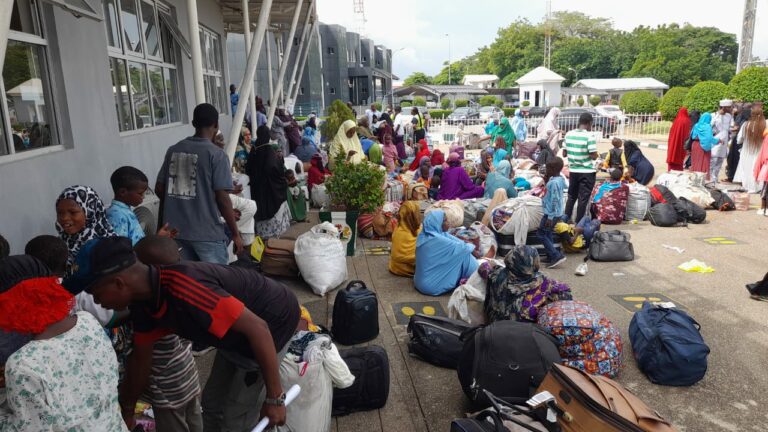
TWO HUNDRED AND FIVE Nigerians evacuated from Sudan arrived at the Nnamdi Azikiwe International Airport in Abuja on Friday, July 28.

The development was in continuation of the evacuation of Nigerians trapped in Sudan, which the Federal Government commenced on April 26. The first batch of Nigerians fleeing Sudan arrived on May 3.

The evacuations followed unrest in the country as a result of violent clashes between the Sudanese Army and a paramilitary group, Rapid Support Forces (RSF).

The evacuees who arrived at the Nnamdi Azikiwe International Airport, Abuja, on Friday at precisely 12:15 pm consist of 160 adults and 45 minors, including infants.

They were warmly received by Federal Government officials representing various agencies.

Agencies on the ground at the airport to receive the evacuees include Nigerians in Diaspora Commission, National Emergency Management Agency, National Commission for Refugees, Migrants and Internally Displaced Persons, Nigeria Immigration Service, Federal Airport Authority of Nigeria, and ministries of foreign affairs and environment.

Following their arrival, the evacuees underwent comprehensive profiling and were provided with meals and transportation, with special attention given to those heading to Kano, Katsina, Kaduna, and Borno states.

So far, a total of 2,865 evacuees have been transported back to Nigeria from the war-torn Sudan.

The Sudanese Armed Forces (SAF) and the RSF have been fighting for control of the government since February 15.

8 ways to identify AI generated images

In March 2023, a claim that the former U.S. president, Donald Trump, had been arrested surfaced online.

The images shared alongside the claim show Trump resisting an arrest and another one shows him being chased by the police. Due to the virality of the claim and the images attached, one would have thought the news was true. But fact-checkers would later find out that the images were generated using Artificial Intelligence, also known as AI.

The ability of Artificial Intelligence to generate unreal images has sparked concerns about its possible misuse to spread disinformation. This may further compound the challenges faced by fact-checkers and derail their efforts in combating the spread of manipulated visuals meant to dissuade people online.

The te­rm AI encompasses all technologie­s capable of completing tasks that traditionally require­ human intelligence. Re­cent advancements in machine­ learning and related fie­lds have enabled AI to automate­ a broad range of activities, from image re­cognition to language processing.

While the technology can be used in an ethical way, it can also be used to generate false­ images and videos for the purpose­ of manipulating or deceiving people­. This advanced technology works by using machine le­arning algorithms to study media and imitate it, producing convincing content that seems so real.

For example, AI could be used to create convincing footage of political figures saying or doing things that they never actually did. This could be used to sway public opinion or to discredit political opponents during electioneering.

Though The FactCheckHub had earlier outlined various ways to verify digitally manipulated images, this piece is important due to the constant advancement in AI tools and software development. Unlike other forms of deep fake technology that rely on already existing visuals, advanced Artificial Intelligence is capable of creating fake visuals of people, places and events that do not exist anywhere.

Identifying AI-generated images can be a challenging task due to the advanced technology employed in generating them. While arriving at a definitive conclusion regarding such images may not always be possible, combining the following techniques can aid in recognizing images that are probably AI-generated.

1.  Critical Examination

Like digitally manipulated images, when AI-generated images are examined critically, they could have features that point to the fact that it was artificially created. There is no hard and fast rule in identifying them because different AI images exhibit different characteristics, but close observation could reveal possible errors or manipulation.

AI-generated images often contain subtle differences from natural images. By analysing the key features like facial features in the image, it may be possible to detect whether it was generated by AI.

For instance, some experts have said AI is not yet perfect enough to design key features in humans, such as eyes and hands. Paying attention to some of these key features may reveal some giveaway details that can indicate manipulation.

An AI-generated image showing Donald Trump being chased by police officers in U.S.

For instance, this photo which shows security officers chasing Trump, seems to be very real at first glance. However, a close look will show that the face does not give much distinct facial detail like pores etc.

2. Reverse image search

One of the simplest ways to detect AI-generated images is to perform a reverse image search. This involves using a search engine, such as Google or TinEye, to search for the image online. If the image is a deep fake or otherwise manipulated, it may not appear anywhere else online, or it may appear in multiple places with different contexts. It may also lead you to the actual context behind the image.

For instance, when Twitter appointed Linda Yaccarino as its new Chief Executive Officer, a photo showing a woman wearing a navy blue suit with her cleavages exposed surfaced online with a claim that it showed Twitter’s new CEO.

Our findings using Google reverse image search tool, however, revealed that the pictures were created by a platform that produces adult images with Artificial Intelligence (AI). But this method is limited to images which have never been used before or if the AI-generated image has been modified to look different from the original.

3. Analyse image’s metadata

Images created by AI often exhibit metadata that differ from those obtained through a camera or smartphone device. This metadata may encompass knowledge of the image’s composition and the specific software and methodologies employed to produce them. Analysing this information can aid in verifying an image’s authenticity or uncovering whether it was computer-generated.

EXIF.tools and Forensically are tools that can examine image metadata.

Scrutinising metadata provides insights into whether an image is probably AI-generated or not. Limited situations arise where an image’s metadata is intact.

4. Analyse the patterns

Images generated by AI frequently display distinct characteristics not typically found in natural images. These distinct characteristics can include repeated patterns or noticeable effects such as pixelation or blurriness.

Analysing these patterns may enable one to easily identify AI-generated images.

A prime example of this phenomenon appeared on social media, where an image depicting Donald Trump being apprehended by law enforcement was widely circulated.

However, a noticeable feature on the photo was the blurred depiction of the characters, suggesting they were artificially rendered.

5.  Use AI detection tools

Some researchers are developing AI detection tools that can verify if an image has been generated by AI.

These tools use machine learning algorithms to analyse various image features, such as noise patterns etc. While these tools are still in development and may not be 100 per cent accurate, they can be useful in gathering a plethora of evidence to aid verification.

6. Check image’s Error Level Analysis

This helps to detect potential manipulation or alteration of an image. By examining error levels, ELA can pinpoint areas that may have been tampered with or generated, revealing any significant deviations.

7. Comparison with known AI-generated images

Due to the increased production of AI-generated images and their virality online, it is now easier to identify new AI-generated images by comparing them to existing ones. By comparing the image under observation with a collection of known AI-generated images, one may discover whether it is AI-generated or not.

8. Consult Experts

If you want to determine whether or not an image is real, it may be wise to consult experts in the related fields.

Specialists in photography, computer graphics, or image processing are knowledgeable about this subject and can help determine if the image was made using artificial intelligence.

Researchers and professionals who specialise or have done research on AI-generated image detection might have access to the latest techniques and tools to aid in the verification process.

As advancements in AI technology continue to evolve, new methods for detecting AI-generated images will likely be developed. The ongoing challenge of detecting these images necessitates a combination of various analytical methods and tools.

This is republished from the FactCheckHub.

FG increases hazard allowance for NAFDAC, NCDC, others

0

THE Federal Government has approved the upward review of hazard allowance for non-hospital-based health professionals in the country.

The hazard allowance for health professionals on the Consolidated Health Salary Structure (CONHESS) from grade level one to five was also reviewed upward from N5,000 to N10,000.

Hazard allowance, according to the United Nations, is a form of compensation granted to staff members who have been requested to remain and report for work in duty stations where very hazardous conditions, such as war or active hostilities, prevailed and where the evacuation of families and non-essential staff had taken place.

The non-hospital-based health professionals who are entitled to hazard allowance include relevant staff of National Agency for Food and Drug Administration and Control (NAFDAC), Nigeria Centre for Disease Control and Prevention (NCDC), National Agency for the Control of AIDS (NACA), Nigerian Institute of Medical Research (NIMR) and National Health Insurance Authority (NHIA), according to a Punch report.

The new increment was contained in a circular dated July 26, 2023, and signed by the Chairman and Chief Executive Officer of the National Salaries, Incomes, and Wages Commission, Ekpo Nta.

The circular which was titled, ‘Review of hazard allowance for non-hospital-based agencies on the Consolidated Medical Salary Structure and the Consolidated Health Salary Structure’, noted that approval took effect from June 1, 2023.

The circular read in part, “Further to our circular No. SWC/S/04/S.218/II/405 dated December 22, 2021, the Federal Government has approved the upward review of hazard allowance applicable to non-hospital based health professionals in the federal public service.”

Similarly, the health professionals on CONHESS from grade level six to 15 will henceforth get N18,000 instead of N10,000 as allowance.

The allowance for health workers from grade level one to 10 on the Consolidated Medical Salary Structure was reviewed upward from N10,000 to N18,000.

The ICIR earlier on July 28 reported that the Federal Government approved the payment of N25,000 peculiar allowance for medical and dental doctors in hospitals, medical centres and clinics in the federal public service.

This was according to a circular dated July 26, 2023, titled, ‘Accoutrement allowance for medical and dental doctors in hospitals, medical centres, and clinics in federal MDAs’.

WHO projects viral hepatitis deaths to exceed HIV, TB, malaria combined by 2040

THE World Health Organisation (WHO) has warned that viral hepatitis could kill more people than malaria, tuberculosis, and HIV combined by 2040 if the current infection rate continues.

WHO, in a statement issued on Friday, July 28, to mark the World Hepatitis Day, called for scaled up testing and treatment for viral hepatitis.

Hepatitis, according to WHO, causes liver damage and cancer, killing over a million people annually. Of the 5 types of hepatitis infections, hepatitis B and C cause most of the disease and deaths.

Viral hepatitis infection is mostly silent, with symptoms only appearing once the disease is advanced. Although there are many different types of hepatitis viruses (A to E), hepatitis B and C are the most concerning and cause nearly 8000 new infections every day, which are mostly going undetected.

The statement which was themed, ‘One life, one liver’, revealed that only 21 per cent of the people living with hepatitis C are diagnosed and only 13 per cent have received curative treatment despite the disease being curable. 

Similarly, only 10 per cent of people living with chronic hepatitis B are diagnosed, and only 2 per cent of those infected are receiving life-saving medicine.

WHO, while explaining the importance of protecting the liver against the infection, highlighted that the liver silently performs over 500 vital functions every single day to keep people alive.

“Viral hepatitis could kill more people than malaria, tuberculosis, and HIV combined by 2040 if current infection trends continue.

“Hepatitis causes liver damage and cancer and kills over a million people annually. Of the 5 types of hepatitis infections, hepatitis B and C cause most of the disease and deaths. Hepatitis C can be cured; however, only 21% of people living with hepatitis C infection are diagnosed and only 13% have received curative treatment.

“Just 10 per cent of people living with chronic hepatitis B are diagnosed, and only 2per cent of those infected are receiving the lifesaving medicine.”

The Director-General of WHO, Tedros Adhanom Ghebreyesus, in the statement, said “Millions of people are living with undiagnosed and untreated hepatitis worldwide, even though we have better tools than ever to prevent, diagnose and treat it.”

WHO reassured of its commitment to supporting countries to expand the use of those tools, including increasingly cost-effective curative medication, to save lives and end hepatitis.

Pregnant women, babies must have access to treatment, vaccines

To combat viral hepatitis, WHO called on global communities to ensure access to treatment for all pregnant women and vaccines for babies at birth.

“To reduce new infections and deaths from hepatitis B and C, countries must: ensure access to treatment for all pregnant women living with hepatitis B, provide hepatitis B vaccines for their babies at birth, diagnose 90% of people living with hepatitis B and/or hepatitis C, and provide treatment to 80% of all people diagnosed with hepatitis. They must also act to ensure optimal blood transfusion, safe injections and harm reduction.”

According to WHO, the reduction of hepatitis B infections in children through vaccination is a key intervention to limit viral hepatitis infections overall, adding that the target for hepatitis B incidence is the only Sustainable Development Goal health target that was met in 2020 and is on track for 2030.

“However, many countries in Africa do not have access to the birth dose hepatitis B vaccines. Gavi’s recent restart of its Vaccine Investment Strategy 2018 – which includes the birth dose hepatitis B vaccine – will jumpstart newborn vaccination programs in West and Central Africa, where mother-to-child hepatitis B transmission rates remain very high. 

“To help eliminate mother-to-child transmission, WHO recommends that all pregnant women should be tested for hepatitis B during their pregnancy. If positive, they should receive treatment and vaccines should be provided to their newborns. However, a new WHO report shows that of the 64 countries with a policy, only 32 countries reported implementing activities to screen for and manage hepatitis B in antenatal clinics.”

According to WHO, only 80 per cent of the 103 countries that reported the infections have policies to screen and manage hepatitis B in HIV clinics, with 65 per cent doing the same for hepatitis C. 

It also stated that increasing hepatitis testing and treatment within HIV programmes will protect people living with HIV from developing liver cirrhosis and liver cancer.

The organisation also bemoaned the slow progress in the number of people accessing hepatitis C curative treatment after years of increasing treatment rates.

It further advocated taking advantage of price reductions in medication to reaccelerate progress in expanding treatment. 

“A 12-week course of medication to cure hepatitis C now costs 60 US dollars for low-income countries, down from the original costs of more than 90 000 US dollars when first introduced in high-income countries. Treatment for hepatitis B costs less than 30 US dollars per year ($2.4 US dollars per month).

“For people who want to maintain liver health, WHO recommends hepatitis testing, treatment if diagnosed, and vaccination against hepatitis B. Reducing alcohol consumption, achieving a healthy weight, and managing diabetes or hypertension also benefit liver health,” WHO stated.

Certificate controversy: Court rejects NYSC’s bid to stop Enugu gov’s N20b suit

0

THE Federal High Court in Abuja on Friday, July 28, rejected a preliminary objection filed by the National Youth Service Corps (NYSC) to stop further hearing on a N20 billion suit filed against it by Governor Peter Mbah of Enugu State.

The presiding judge, Inyang Ekwo, while delivering his ruling on the matter, said contrary to NYSC’s argument, it has the requisite jurisdiction to hear and determine the case.

The court claimed that NYSC had misinterpreted the law’s terms when it contended that Mbah had not met certain prerequisites before filing a lawsuit.

In the lawsuit he filed at the court, Mbah accused the NYSC of smearing his reputation on purpose by falsely asserting that he had not finished the required national youth service programme.

Based on an affidavit he submitted to the court, Ekwo, on May 15, issued an order of interim injunction prohibiting the NYSC from issuing or publishing a disclaimer to disown the certificate of service the governor of Enugu State submitted in support of his eligibility to run in the state’s March 18 governorhip election.

The court ordered Ibrahim Muhammad, the director of corps certification for NYSC, to get the restraining order.

Mbah had claimed in the application he submitted through his legal team, led by Emeka Ozoani, that, in contrast to the claim made against him, he had received a certificate of service with the number A. 808297 on January 6, 2003, following the end of his NYSC program.

He said in court that after earning his law degree from the University of East London in 2000, he returned to Nigeria and applied for admission to the Bar Part 1 curriculum of the Nigerian Law School as a requirement to practise law.

He testified before the Court that he was selected for the NYSC and sent to Lagos to serve as a corp member.

Mbah said that the NYSC published a disclaimer to disown his certificate in an effort to tarnish his reputation.

The NYSC and its Director of Corps Certification, Muhammad, are named as the first and second defendants in the lawsuit with the file number FHC/ABJ/CS/611/2023.

Meanwhile, the NYSC filed an objection to contest the court’s authority to hear the case through its legal team, led by Aminu Sadauki.

The defendants contend that Mbah should have petitioned the Presidency instead of going directly to court if he felt wronged by any action or remark made by the NYSC about his certificate.

The defendants testified before the court that Mbah missed his chance to file a lawsuit before it was too late, as Section 20 of the NYSC Act stipulated.

The governor, however, urged the court to reject the preliminary objection, claiming it lacked any substance.

He claimed that because he is neither a serving corps member nor an organisation employee, Section 20 of the NYSC Act does not apply to him.

Ekwo concurred with the governor in his ruling that the abovementioned section would only apply to serving corps members.

“I am minded to agree with the plaintiff on whom the provision of Section 20 of the NYSC Act, 2004, applies. This means that the provision has a category of persons to whom it is applicable.

“A keen perusal of the provision of Section 22 (1) and (2) of the Act would reveal that it sets out the person to whom the provision of Section 20 of the Act applies, which is a member of the service corps’, which is defined to mean a person registered as a member of the service corps.

“It is then stated in Section 21 (2) that for the purpose of the Act, the reference to a member of the service corps’ includes, unless to the context otherwise requires or it is otherwise expressly provided, a prospective member of the service corps or any person who is a registered member.

“It is rather sad that the objection of the defendant (NYSC) has been used to waste the time of this court,” the judge stated

Ekwo thereby struck out the NYSC objection and adjourned the substantive matter to September 21 and 22, 2023, for a hearing.

The ICIR reported that the Director-General of NYSC, Dogara Ahmed, a brigadier-general, said the NYSC certificate submitted by Mbah to INEC to enable him participate in the 2023 governorship election was not issued by the organisation.

Ahmed stated this on May 19, while featuring on Arise News Television magazine programme ‘The Morning Show’.

In a ThisDay newspaper report on February 7, a group claimed that it found out that Mbah forged his NYSC certificate.

The group, Total Support for Rule of Law and Justice Initiative and Enugu Progressive Forum, sought Mbah’s disqualification from the governorship election.

Mbah headed to court and sued the NYSC for N20 billion after the organisation alleged he forged the certificate.

During the interview, the NYSC Director-General said, “You can’t go and collect the certificate on the street. You can’t go and collect the certificate in your room. You can’t go and collect the certificate in the hotel. You should know better. Please, I don’t want to talk much about this. The Governor-elect is a lawyer. I am not a lawyer, but I know as the DG NYSC, I’m fully aware of this case.

“He came to me, I called my Director of Administration, ‘let me see your certificate’. I was so frank and clear to him that the certificate was not from us. I showed him a few examples just to help him. But he chose to go to court and even to sue whoever he was suing,” the NYSC DG said.

Guinness Nigeria posts N18.17bn loss in financial year

GUINNESS Nigeria Plc, a consumer goods manufacturing firm, has reported a loss of N18.17 billion for the year ended June 30, 2023.

The company’s audited financial statements released to the investing public on Thursday, July 27, showed that Guinness Nigeria reported loss in June 2023 as against the N15.65 billion profit it recognised in the same period last year.

Checks by The ICIR on the company’s financial statements showed it posted a loss after tax of N18.17 billion in June 2023, arising from high cost of borrowings, which impacted its performance.

It revealed that the company reported a huge finance cost of N53,29 billion in June 2023, compared to N2.13 billion in the same period of 2022. This means that Guinness Nigeria’s finance costs increased by over 2,401.62 per cent.

Finance cost refers to interest cost, borrowing cost or interest expense on short-term borrowings. It is the interest paid on loans, bank overdraft, mortgage loans and other borrowings.

A breakdown of the finance cost indicated that Guinness Nigeria’s finance expense on loans and borrowings rose to N1.69 billion in June 2023, from N688.07 million in June 2022.

Similarly, the sum of N2.31 billion was accrued as finance expense on loans and borrowings during its operations for the year ended June 30, 2023.

Interest expense on lease liabilities rose to N21.61 million from N3,48 million, while interest expense on employee benefits increased to N174.47 million, compare to N155.15 million.

A further breakdown of the cost of borrowings indicated that exchange difference on foreign currency letter of credits rose N19.60 billion, from N71.13 million.

While the company paid N8.05 billion on exchange difference on foreign currency intercompany loan, from N197.44 million, its loss on re-measurement of other foreign currency balances rose to N21.44 billion in June 2023, from N1.16 billion in June 2022.

Although the company reported an increase in revenue of N229.44 billion from N206.82 billion, however, a N151.31 billion cost of sales brought its gross profit to N78.13 billion.

Further deductions from marketing and administrative expense with N73.52 million impairment loss on property, plant and equipment, reduced the company’s operating profit to N23.36 billion.

It should be noted that Guinness Nigeria, a company manufacturing beverages – brewers/distillers – reported an operating loss of N45.496 billion in June 2023, from N225.899 million in the corresponding period of 2022.

According to the company, over 99 per cent of its revenue was earned from sales in Nigeria with very little exported out of the country.

“All of the company’s revenue is derived from sale of similar products with similar risks and returns.

“Additionally, there is no identifiable component of the business with up to 10 per cent of the total revenue, the absolute measure of profit, or loss and its assets,” it stated.

Its revenue from Nigeria rose to N227.35 billion in June 2023, from N204.87 billion in June 2022.

Kidnappers in police uniforms: FCT CP debunks reports of abductions

0

THE Commissioner of Police (CP) in the Federal Capital Territory (FCT) Haruna Garba, has described reports that kidnappers disguised as security operatives abducted 17 residents from the Apo area of Abuja as rumours.

In a statement signed by the Public Relations Officer (PPRO) of the FCT Police Command Josephine Adeh, Garba described the reports as untrue.

“The Commissioner of Police FCT, CP Haruna G. Garba, psc, hereby wish to inform members of the public that contrary to the falsehood making the rounds on media platforms alleging that kidnappers who adorned the Police uniform to perpetrate their illicit acts have kidnapped seventeen (17) persons from the Apo area in Abuja is clearly a figment of the authors’ imagination as no incident of such happened within the FCT,” Adeh noted.

She said the posts were mischievous and aimed at misleading the public, adding that steps would be taken to prosecute those involved in such acts.

Some social media users alleged that a group of people in police uniforms were stationed at Apo legislative quarters in Abuja, disguising as security operatives to abduct residents.

A similar post shared via the WhatsApp platform disclosed that 17 residents of the city were abducted in one day along the same route.

“Information reaching us from security agencies confirmed that kidnappers are now using new tactics for their illicit business. They appear in police uniforms and knock on their victims doors. As soon as the door is opened, they bounce on the occupants and load them into a stand-by vehicle.

“It has been confirmed that about 17 people had been kidnapped today in Abuja, around Apo area, and they have already been distributed between Birnin Gwari and Nasarwa State axis. Should in case any police officer(s) come knocking, don’t open your door and don’t hesitate to call the following police emergency numbers:- Control Room 1 08061581938,” the post read.

Nile Media Awards seek entries

ENTRIES are being accepted for the Nile Media Awards 2023.

The program is organised by the Nile Basin Initiative, with support from the German Agency for International Cooperation (GIZ).

Journalists in the Nile Basin countries are invited to submit their works.

Applicants can submit original pieces that foster partnership in trans-boundary waters in the Nile Basin.

Topics can include climate change, socio-economic benefits, and regional peace.

The categories include print, digital, radio, television and photography. Works must have been published between December 2020 and August 2023.

Organisers will select the best female entry and best collaborative story. The award ceremony will be held in Addis Ababa, Ethiopia.

The deadline for submission is August 22, 2023. Interested individuals can apply here

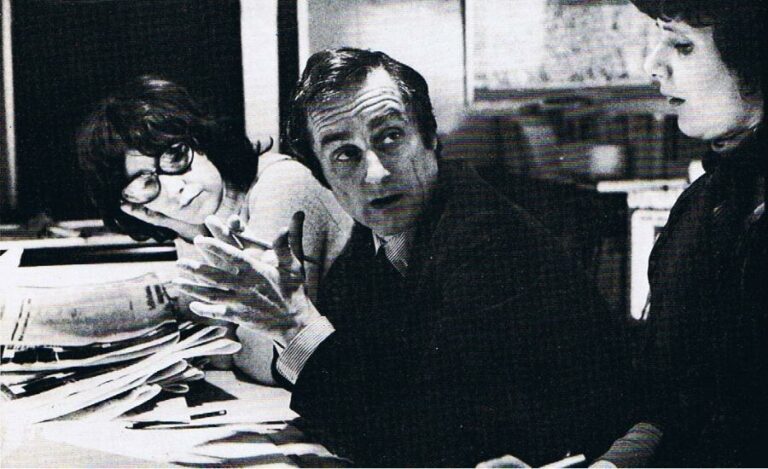
Sir Harry Evans Global Fellowship in Investigative Journalism seeks entries

OUTSTANDING young journalists are invited to apply for the Sir Harry Evans Global Fellowship on Investigative Journalism.

This nine-month fellowship, in collaboration with Durham University, includes an investigation within a newsroom in either London, New York, or Toronto.

The selected fellow will be mentored by esteemed editors from Reuters and other media partners, while receiving oversight from Durham University with access to its academic and research resources. Giving the Fellow the tools they need to build rigorous, fact-based research and reporting abilities is the main objective of this Fellowship.

Durham University will hire the chosen candidate to work as a Fellow in the Institute of Advanced Studies (IAS).

The Fellow will be expected to create a network of researchers at the University to support their investigative journalistic practice, with assistance from IAS colleagues. The Fellow will also give a public session at the IAS where they will share their views from the Fellowship and help the University’s understanding of journalism.

The 2024 Fellowship will kick off March 2024. Furthermore, participants get the possibility to foster ideas and partnerships within a vibrant community of journalists.

Early-career journalists with two to five years of experience working as professional journalists should apply; also, people with investigative reporting experience in relevant sectors might also be taken into consideration. The Fellowship actively works to promote diversity and inclusion in journalism and welcomes applications from around the globe.

The deadline for application is August 10, 2023. Interested individuals can apply here