Home Blog Page 840

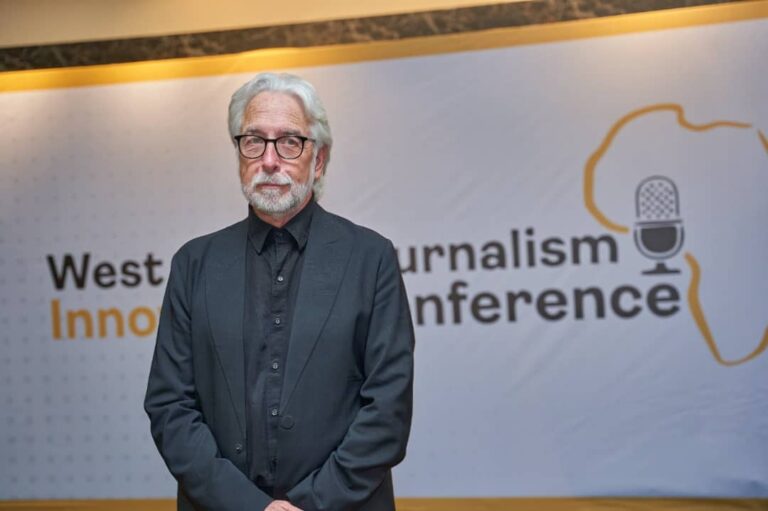
WAJIC 2023: Journalism should be more constructive to retain media relevance – Google News VP

VICE President of News at Google, Richard Gingras, has urged journalists to be more constructive in reporting to sustain the relevance of the media.

He said this on Tuesday, July 25, at the ongoing West Africa Journalism Innovation Conference (WAJIC) in Abuja, stating that the sector is facing a crisis of relevance caused by factors including declining trust of the audience and an overload of bad news.

“The Reuters Institute tells us that less than 10 per cent of our society regularly consume what we call serious news. Google tells us that less than 2 per cent of search curves are about matters of serious news,” he said.

He stated that the media had to work towards building the trust of the audience by changing the narrative structures of news to convey constructive values.

He also recommended that linguistics be considered in reporting to avoid amplifying societal divisions rather than bridging them.

“When you are covering a story, if you take the philosophy of journalism, if there is, for instance, a bus crash in a certain intersection in the city, and you are reporting on that and twelve people died, that’s not exactly a happy story, but you’ve got to report it.

“But can you report it with an air of constructiveness saying, yes, this happened, here are the reasons why we think it happened, hear what some of the potential solutions might be. Can we go beyond the old phrase about news if it bleeds it leads?” the Google News VP asked.

Gingras also stated that financial sustainability in the media could be achieved if the journalism community becomes the go-to source of information for communities, in the era of other social platforms.

“There is great opportunity and business value in enriching the fabric of a community by addressing the overall needs of that community. I fear we don’t use such approaches. If we don’t use such approaches the bridge, the divides in our societies, the important accountability journalism we do produce will not be heard beyond the depth of our own silos,” Gingras noted.

Explore business models, micro journalism for sustenance

Meanwhile, professionals present at the event have recommended that micro journalism and other business models be explored for sustainability of the sector.

Speaking during a panel session at the event, founder of media organisation Dataphyte, Joshua Olufemi, noted that journalism was leaving many segments of the population underserved due to the focus on political issues, and as a result, several needs remain unmet in other sectors, which, if satisfied could serve as a means of sustainability for the media.

“I think the challenge with our media is they think if it is not big, it is not rich of value. Why are we in journalism? So that people can have access. If it is 10 people that get the value and can pay for it, you had better stay with that.

“The small business owner who goes to Google is not going to Google so that someone in America buys that product. It is so that when you are in that area and you are searching for where to buy ABC, you know where to go to. So it is still local. I think we just need to think micro and think of diversification as a way to aggregate multiple,” he said.

Olufemi also noted that innovations to sustain media organisations do not need to be strictly digital, as there were other needs that could be addressed.

“Needs will always be the way to think about it. What do people need? Indigenous language. There are hundreds of languages in Nigeria that nobody has explored for journalism,” he said.

Africa Editor, Rest of World David Adeleke also said that subscriptions and advertising are not enough to keep media organisations afloat and urged stakeholders in the sector to be more open to other innovations.

“Outside of technology, the fundamental problem that journalism faces on the continent is financing. But it is easy to say, very difficult to solve. Media companies should be more willing to experiment with business models. Just be willing to innovate. People think because it has always been like this, it will always be like this, and that is another problem journalism faces all over the world,” he said.

Funding in journalism has been a topic of discourse over the years, and in 2022 The ICIR held a conference on media sustainability in commemoration of its 10th Year anniversary.

Panellists at the event, including Nigerian Professor of Mass Communication and former Federal University, Kashere, Gombe State Umar Pate, urged media houses to adopt innovative business models for sustainability.

Professor of Mass Communication at the University of Lagos Abigail Ogwezzy-Ndisika also stressed the need for media organisations to constantly review and audit what constitutes readers’ interest to improve business within the sector, a point which was also made by Gingras at the WAJIC 2023.
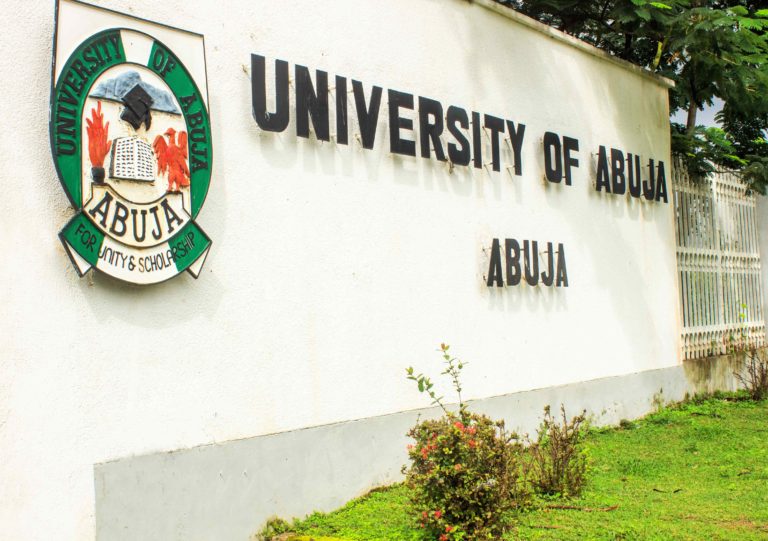

UniAbuja makes owning registered company a requirement for graduation

0

The Vice Chancellor, University of Abuja (UniAbuja), Abdul Rasheed Na’Allah, a professor, has said no student of the institution would graduate without registering a company with the Corporate Affairs Commission (CAC).

NaAllah stated while addressing journalists on the school campus, according to a Daily Trust report published on Tuesday, July 25.

He said the university partnered with the Abuja Chamber of Commerce to train students on raising firms of their own rather than depending on the government or other entities for jobs after graduation.

“What we’re saying to our students is that we’re not giving you certificate only to go and look for employment, we’re charging you to employ yourself and create wealth, charging them to change their mindset. Many of them have registered their companies, go to CAC and see the record.

“Know that no student will graduate from the University of Abuja without having a company registered with CAC, it’s now a law in this university. You cannot graduate from this university if you don’t have a company that you’ve registered. You must even practise this company because you must have registered the company a year or two before you graduate,” he said.

According to him, the Chamber of Commerce officials are always on the campus to teach the students on how to own and grow their firms.

“They’re constantly working with us and every time we’re always seeing something new. One of the new things this time around is that more than 1,000 students have registered their companies with CAC in this university. Students having companies and some of them are graduating, some in 300 level with opportunities to even practise the companies they have registered.”

The ICIR reports that nearly a half (54 per cent) of Nigerian youths are unemployed, according to the Federal Government.

The National Universities Commission (NUC) said in 2021 that Nigerian Universities alone had 2.1 million students.

This figure did not include those of the polytechnics, colleges of education, monotechnics and other tertiary institutions churning out graduates yearly.

In 2022, the Federal Government disclosed that 133 million people in the nation lived in multi-dimensional poverty – a reflection of acute unemployment and other challenges facing the country.

Mass burial: Amnesty International asks Lagos govt to disclose identity of 103 #EndSARS victims

0

AMNESTY International (AI) has asked the Lagos State government to halt its plans to conduct a mass burial for 103 victims of the #EndSARS protests.

The human rights watchdog said the state government should first release the identity of the victims.

Amnesty International is also insisting that the state government should carry out a thorough investigation that would reveal those responsible for the death of the 103 #EndSARS protesters.


Read Also:

The ICIR earlier reported that the state government confirmed that preparations for the mass burial of 103 #EndSARS victims was ongoing. 

After a leaked memo, dated July 19, 2023, which captured steps for processing funds for the burial after approval by Governor Babajide Sanwo-Olu, surfaced on the social media, the state government disclosed that it was set to bury 103 #EndSARS victims. But it maintained that the corpses being prepared for mass burial were not connected to the alleged massacre of protesters at the Lekki tollgate.

Reacting to the development, Amnesty International asked for a coroner inquest for the 103 victims, along with the disclosure of their identity and the circumstances surrounding their death.

“They must also carry out transparent coroner inquests and autopsies on the 103 #EndSARS victims and publish their identities and the circumstances of their deaths,” Isa Sanusi, Nigeria director of Amnesty International, said in a statement released on Monday, July 24.

He also asked that “those detained because of their role in the #EndSARS protests must be immediately released”.

“The Nigerian authorities must also ensure that victims and their families are provided with access to justice and effective remedies, including adequate compensation.”

Sanuso said the organisation has been monitoring developments across Nigeria since the #EndSARS protests began on October 8, 2020.

Despite repeated denials by the Nigerian government, as well as the Army and the Lagos State government, Sanusi insisted that protesters were shot and killed at Lekki tollgate during the #EndSARS protest.

“In October 2020, an on-the-ground investigation by Amnesty International confirmed that Nigerian security forces opened fire on thousands of peaceful protesters, who were peacefully calling for good governance and an end to police brutality, killing at least 12 protesters at Lekki toll gate and in Alausa. 

“Amnesty International was able to establish that pro-government supporters instigated violence at many of the demonstrations, providing cover for the police to use lethal force against peaceful protesters.”

However, a former Lagos State Commissioner of Information, Gbenga Omotosho, has faulted the investigation carried out by Amnesty International, saying it was not objective.

Speaking to Arise News on Tuesday, July 25, he said, “In this matter, Amnesty International is not the Amnesty International that I used to know. They are not objective. They are not backing whatever they are saying with any scientific evidence or reasoning.

“Amnesty International itself – the one I used to know – could do this investigation and come out with the truth. But, I suspect that they have been perforated by external forces.”

However, the findings of the Lagos State Judicial Panel on #EndSARS indicted the Nigerian Army for the massacre at Lekki Tollgate on October 20, 2020.

In a report submitted by the panel to the Lagos Government, the panel listed 48 names as casualties of the Lekki incident. 

Among the 48 casualties listed, 24 sustained gunshot injuries, while soldiers and police assaulted 15 others.

The panel’s report noted that nine protesters were confirmed dead, while four others were presumed dead.

Diphtheria: 8 deaths recorded in Kaduna

0

EIGHT deaths linked to diphetria disease has been recorded in Kaduna State.

The Director of Public Health, Kaduna State Primary Health Care Development Agency, Hamza Ibrahim-Ikara, who disclosed this on Tuesday, July 25, in an interview with the News Agency of Nigeria (NAN), also revealed that the state had recorded 68 suspected cases of the disease.

Caused by a toxin produced by the bacteria corynebacterium diphtheriae, diphetria is a vaccine-preventable disease covered by one of the vaccines provided routinely through Nigeria’s childhood immunisation schedule. 

The bacterial infection tmusually affects the mucous membranes of the nose and throat.

Ibrahim-Ikara said the suspected cases were from four local government areas: Makarfi, Kubau, Jema’a (Kafanchan) and Kaduna North.

Five fatalities were from Jema’a and three from Makarfi, according to the director of public health. 

“We still have one suspected case in Barau Dikko Teaching Hospital now.”

Ibrahim-Ikara also disclosed that 28 samples had been taken to the laboratory. The results are being expected.

“For now, they are all suspected cases; there is no confirmation yet until the results are out.”

He said the Rapid Response Team (RRT) set up by the state government is carrying out media and door-to-door sensitisation campaigns in communities, adding that contact tracing and active search are also ongoing to curb transmission.

Ibrahim-Ikara while urging residents to report suspected cases to the nearest health facilities across the state, assured that the state government has prioritised routine immunisation to ensure that all children were fully vaccinated against the disease.

On July 6, the Nigerian Centre for Disease Control (NCDC) said it has recorded 798 diphtheria cases across eight states between December 2022 and June 30, 2023.

According to the statement released by the Centre’s Director General Ifedayo Adetifa on Thursday, June 6, 782 of the cases were recorded in Kano State. Kaduna, which has now reported 68 suspected cases, was among the states mentioned by the NCDC to have cases of dipheteria.

Other states with cases of diphetria are Lagos, Yobe, Katsina, Cross River, Osun state and the Federal Capital Territory (FCT).

Children aged 2-14 were at greater risk of the disease, as 71.7 per cent of the 798 cases recorded in the eight states occurred among them.

According to the NCDC, 80 deaths were recorded from all the confirmed cases.

“As of June 30th, 2023, there have been 798 confirmed diphtheria cases from 33 Local Government Areas (LGAs) in eight (8) States including the FCT. Most of the cases (782) were recorded in Kano. Other States with cases are Lagos, Yobe, Katsina, Cross River, Kaduna, and Osun. The majority (71.7%) of the 798 confirmed cases occurred among children aged 2 – 14 years. So far, a total of 80 deaths have been recorded among all confirmed cases (case fatality rate of 10.0%).”

Despite the availability of a safe and cost-effective vaccine in the country, the majority, 654 (82 per cent) of 798 confirmed diphtheria cases in this ongoing outbreak were unvaccinated.

DSS rearrests Emefiele after faceoff with prison officials

0

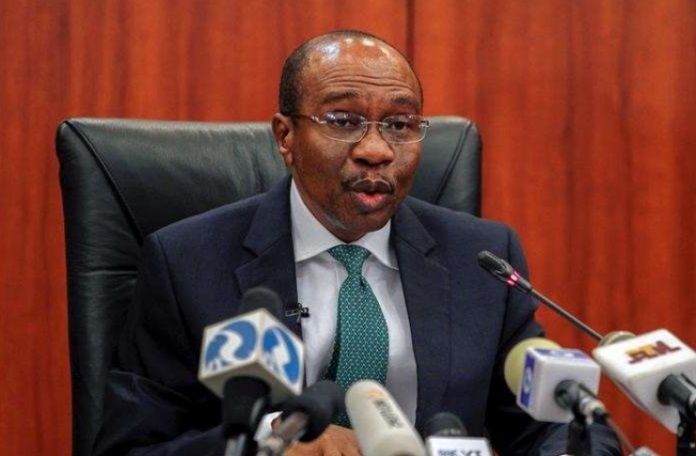
SUSPENDED governor of the Central Bank of Nigeria (CBN) Godwin Emefiele was on Tuesday, July 25, rearrested by the Department of State Services (DSS), minutes after he was arraigned and granted bail by a Federal High Court in Ikoyi, Lagos.

Emefiele was rearrested within the premises of the court.

The development followed a physical altercation between operatives of the DSS and Nigerian Correctional Service (NCoS).

The fight occurred in front of the courtroom where the suspended CBN governor was arraigned.

The prison officials fled the Ikoyi, Lagos, Federal High Court grounds shortly after the altercation. 

The ICIR earlier reported on Tuesday, July 25, that the Federal High Court in Lagos granted bail to Emefiele after he was arraigned over charges relating to alleged possession.

The court, presided by Nicholas Oweibo released Emefiele on a N20 million bail bond, with one surety in like sum.

The former apex bank chief was arraigned on two counts of illegal possession of firearms and ammunition.

Emefiele was brought to the court by the DSS officials at 09:21 am.

A former Nigerian Bar Association (NBA) president Joseph Daudu led Emefiele’s legal team.

The suspended Central Bank of Nigeria chief pleaded not guilty to the charges brought against him.

After the plea, Daudu, a Senior Advocate of Nigeria (SAN), told the court that his client had been in detention for weeks. 

Daudu also informed the court that the bail application has been filed and served on the prosecution.

Dauda requested that Emefiele be released on bail on self-recognition, stating that the accused person had satisfied all requirements for the application to be ready for hearing.

He said the court’s file contained the proof of service authorised by the office of the Attorney-General of the Federation (AGF).

Dauda pleaded with the court to consider the bail request and end what he regarded as the DSS’ abuse of his client.

However, opposing the bail application, the Federal Government’s lawyer,, who is the Deputy Director of Prosecution (DDP), told the judge that she had “not been given the bail application,” adding, “As I stand here, I have not set eyes on it.”

The judge rejected the Federal Government’s argument that Emefiele posed a flight risk, saying the government had not presented any evidence to support its assertion.

The bail requirement included producing a surety with landed property within the court’s Ikoyi, Lagos, jurisdiction, the deposit of his passport, and providing a civil servant of level 16 or higher to complete bail.

A High Court in Abuja on July 14 nullified the arrest, detention and interrogation of Emefiele by the DSS.

The court, presided by Bello Kawu, ordered Emefiele’s release and described his arrest and detention as illegal.

Kawu, delivering judgment, held that the arrest, detention and interrogation of the former CBN governor violated the subsisting decision and orders of Justice M. A. Hassan in Suit No. FCT/HC/GAR/CV/41/2022.

The court also granted an injunction restraining the security agencies, particularly the DSS, from interfering with his personal liberty and freedom of movement or taking other steps against him.

The judgment came barely 24 hours after another High Court in Abuja had ordered the release of the suspended CBN governor.

The DSS on Thursday, July 13, said it had filed charges against Emefiele.

This came more than a month after the secret service took Emefiele into custody on June 10.

The ICIR reported that the DSS confirmed the arrest of Emefiele, whom President Bola Tinubu had suspended on June 9.

Tinubu suspended Emefiele with immediate effect and directed him to hand over the affairs of the CBN to the deputy governor, operations directorate, Folashodun Shonubi.

Emefiele’s suspension was announced in a statement released on June 9 by Willie Bassey, director of information, Office of Secretary to the Government of the Federation (SGF).

The DSS did not state or give any reason for Emefiele’s arrest.

We’ll recover $9bn gas flaring fines from erring companies – Reps

0

THE House of Representatives has resolved to recover the over $9 billion gas flaring fines that the Federal government had imposed on erring local and foreign companies operating in the Nigerian oil and gas industry.

The House, through its ad-hoc committee investigating gas flaring in the country, also resolved to investigate the $277,258,304.72 disparity in the gas flare penalties recorded by the National Oil Spill Detection and Response Agency (NOSDRA) and the Nigerian Upstream Petroleum Regulatory Commission (NUPRC).

The committee’s chairman, Ahmed Munir, expressed the Representatives’ resolve while briefing journalists after its inaugural meeting/investigative hearing at the National Assembly Complex, Abuja, on Monday, July 24, 2023.

Munir declared that the 10th Assembly would do everything within its power to ensure the recovery of all unpaid levies, and ensure compliance with extant laws and regulations in that regard.

He said that the committee was not unaware of penalties, amounting to $9 billion, that had not been paid, stressing the determination of the House to recover the fund.

“Second, going forward, those that are still polluting, how do you ensure you get it down to zero, and what are the penalties that are going to be put in place? Third, the big difference between then and now is, we now have the Petroleum Industry Act in place, so how do you implement it?

“Where we have loopholes is why we are here to hear from the people concerned. Is there any amendment that will be required? If you are going to bid for an oil bloc in Nigeria, and you see that out of the criteria, one is your gas master plan, how do you key into that? You can’t win a bid without ensuring you’ll be able to utilise that gas, or evacuate the gas responsibly,” he said.

The committee summoned all the chief executive officers of 19 oil and gas companies, including Total/Mobil JV, Total/Oando JV, Total Energies, Azman Oil & Gas Limited, and A. M Shafa Ltd. to appear before the committee on Tuesday.

Infographics on gas flaring in Nigeria from 2012 - 2019.
Infographics on gas flaring in Nigeria from 2012 – 2019.

In his presentation, the chairman, Gas Monitoring Committee of the Revenue Mobilisation, Allocation and Fiscal Commission (RMAFC), Patrick Mgbebu, said the gas flaring penalty payment from 2013-2018 (June) was $0.30 and $2.00 from July 2018 to 2023.

According to Mgbebu, the penalties payable amounted to $3,465,299,226.55, but the value of gas would have been $12,403,000,001.20 if the gas was sold and not flared.

He said, “The Commission compared the data from NOSDRA with the data from NUPRC, and the following observations were made that the volume of gas flared according to NOSDRA and NUPRC were 838,667,211 mscf and 700,975,019 mscf respectively.

“The difference, which is 137,692,192 mscf, indicated that the Federation Account was shortchanged. It should be noted that the comparison covered three years from 2020 to 2022.

“That the value of gas flared according to NOSDRA and NUPRC are $320,583,355.48 and $43,325,050.76 respectively. As such, the variance indicated that the Federation Account was shortchanged by $277,258,304.72.”

In his submission, the NOSDRA director-general, Idris Musa, who noted that the extant penalties on gas flaring were meant to serve as deterrent, suggested that the penalties on gas flaring should be increased.

Musa disclosed that a total of 3.8 billion mscf was flared from 2013 to date, while a total sum of $7.6 billion penalties was payable.

The director at the Federal Ministry of Environment, Olubunmi Olusanya, emphasised the need to give legislative backing to the use of oil tracker as part of measures to end gas flaring in the country.

While declaring the sitting open, the Speaker of the House of Representatives, Tajudeen Abbas, noted that gas flaring had been a significant environmental, economic, health and social concern in Nigeria for many years.

Represented by the chief whip, Usman Kumo, Abbas lamented that official records indicated that Nigeria had been losing about $2.5 billion annually to gas flaring.

“Gas flaring represents a tremendous waste of valuable resources. Natural gas is a precious energy source that could be utilised for various purposes.
However, the consequences of gas flaring extend beyond economic considerations. It also poses serious health hazards to nearby communities.

“It is in the light of the foregoing that this Committee is entrusted with the responsibility of thoroughly examining this issue, understanding its causes and impacts, and proposing effective solutions to mitigate its adverse effects on our environment, economy, and citizens,” he said.

Former CBN governor Emefiele arraigned, granted N20m bail

0

THE Federal High Court in Lagos has granted bail to the suspended Central Bank of Nigeria (CBN) Governor Godwin Emefiele in his alleged gun possession trial.

Justice Nicholas Oweibo released Emefiele on a N20 million bail bond, with one surety in the like sum.

The accused person was arraigned on two counts of illegal possession of firearms and ammunition.

Emefiele was brought to the court by the Department of State Services’ (DSS) officials at 09:21am.

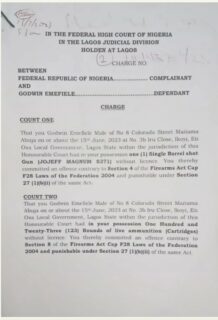
Count one of the two charges read, ‘That you, Godwin Emefiele, male, of No. 8, Colorado Street, Maitama, Abuja, on or about June 15, 2023, at No. 3b, Iru Close, Ikoyi, Eti Osa Local Government, Lagos State, within the jurisdiction of this Honourable Court, had in your possession one (1) single barrel shotgun (JOJEFF MAGNUM 8371) without a licence. You thereby committed an offence contrary to Section 4 of the Firearms Act, Cap. F28 Laws of the Federation 2004, and punishable under Section 27 (1b) of the same Act.

Count two read, ‘That you, Godwin Emefiele, male, of No. 8, Colorado Street, Maitama, Abuja, on or about June 15, 2023, at No. 3b, Iru Close, Ikoyi, Eti Osa Local Government, Lagos State, within the jurisdiction of this Honourable Court, had in your possession One Hundred and Twenty-Three (123) Rounds of live ammunition (Cartridges) without a licence. You thereby committed an offence contrary to Section 8 of the Firearms Act Cap F28 Laws of the Federation 2004 and punishable under Section 27 (1)(b)(il) of the same Act.’

Emefiele was arraigned before the vacation judge, Justice Nicholas Oweibo.

The charge sheet
The charge sheet


A former Nigerian Bar Association (NBA) president Joseph Daudu led other lawyers in Emefiele’s defence.

The suspended Central Bank chief pleaded not guilty to the charges brought against him.

After the plea, Daudu, a senior advocate, told the court that his client had been in detention for weeks. 

Daudu also told Justice Oweibo that the bail application was filed and served on the prosecution.

Dauda requested that Emefiele be released on bail on self-recognition, stating that his client had satisfied all requirements for the application to be ready for hearing.

He said the court’s file contained the proof of service authorised by the office of the Attorney-General of the Federation.

Dauda pleaded with the court to consider the bail request and put an end to what he regarded as the DSS’ abuse of his client.

 A lawyer to the Federal government, who is the Deputy Director of Prosecution (DDP), told the judge that she had “not been given the bail application,” adding, “as I stand here, I have not set eyes on it.”

The judge rejected the Federal government’s argument that Emefiele posed a flight risk, saying the government had not presented any evidence to support its assertion.

The bail requirement included producing a surety with landed property within the court’s Ikoyi, Lagos, jurisdiction, Emefiele’s deposit of his passport, and the production of a civil servant with a level 16 or higher to complete bail.

Previous judgment

A High Court in Abuja on July 14 had nullified the arrest, detention and interrogation of Emefiele by the DSS.

The court, presided by Bello Kawu, ordered Emefiele’s release and described his arrest and detention as illegal.

Emefiele had filed a motion against his arrest and detention, with the Incorporated Trustees of Forum for Accountability and Good Leadership, the Attorney General of the Federation (AGF), the Economic and Financial Crimes Commission (EFCC), the Inspector-General of Police, State Security Service (SSS), and the Central Bank of Nigeria as respondents.

Kawu, delivering judgment, held that the arrest, detention and interrogation of the former CBN  governor violated the subsisting decision and orders of Justice M. A. Hassan in Suit No. FCT/HC/GAR/CV/41/2022.

The court also granted an injunction restraining the security agencies, particularly the DSS, from interfering with his personal liberty and freedom of movement or taking other steps against him.

The judgment came barely 24 hours after another High Court in Abuja had ordered the release of the suspended CBN governor.

The ICIR had reported that the Abuja High Court ordered the DSS to file charges against Emefiele or release him within one week.

DSS files charges against Emefiele

The DSS on Thursday, July 13 said it had filed charges against Emefiele.

This came more than a month after the secret service took Emefiele into custody on June 10.

The DSS disclosed this in a statement by its spokesman, Peter Afunanya.

Afunanya said Emefiele was charged to court in compliance with an order issued by a Federal Capital Territory (FCT) High Court on Thursday.

However, the DSS spokesman did not immediately disclose the identity of the court where Emefiele was charged and the specific charges levelled against him.

His arrest

The ICIR reported that the DSS confirmed the arrest of Emefiele, whom President Bola Tinubu had suspended on June 9.

Emefiele’s suspension

The ICIR also reported that Tinubu suspended Emefiele with immediate effect and directed him to hand over the affairs of the CBN to the deputy governor, operations directorate, Folashodun Shonubi.

Emefiele’s suspension was announced in a statement released on June 9 by Willie Bassey, director of information, Office of Secretary to the Government of the Federation (SGF).

The DSS did not state or give any reason for Emefiele’s arrest.

However, it may not be unconnected with the allegations the agency had levelled against him.

The DSS, in 2022, attempted to arrest Emefiele, accusing him of financing terrorism, aiding and abetting terrorism, and committing other economic crimes.

Tinubu gives reason for suspending Emefiele

President Tinubu told Nigerians residing in France at an interactive session on June 24 that Emefiele was suspended due to corrupt activities connected with him in the financial sector. 

The President stated that the country’s financial system was “rotten” under Emefiele. 

He said many Nigerians living outside the country could not send money to their parents and relatives due to the multiple exchange rates while Emefiele was governor of the apex governor.


43% of Nigerian children involved in child labour -FG

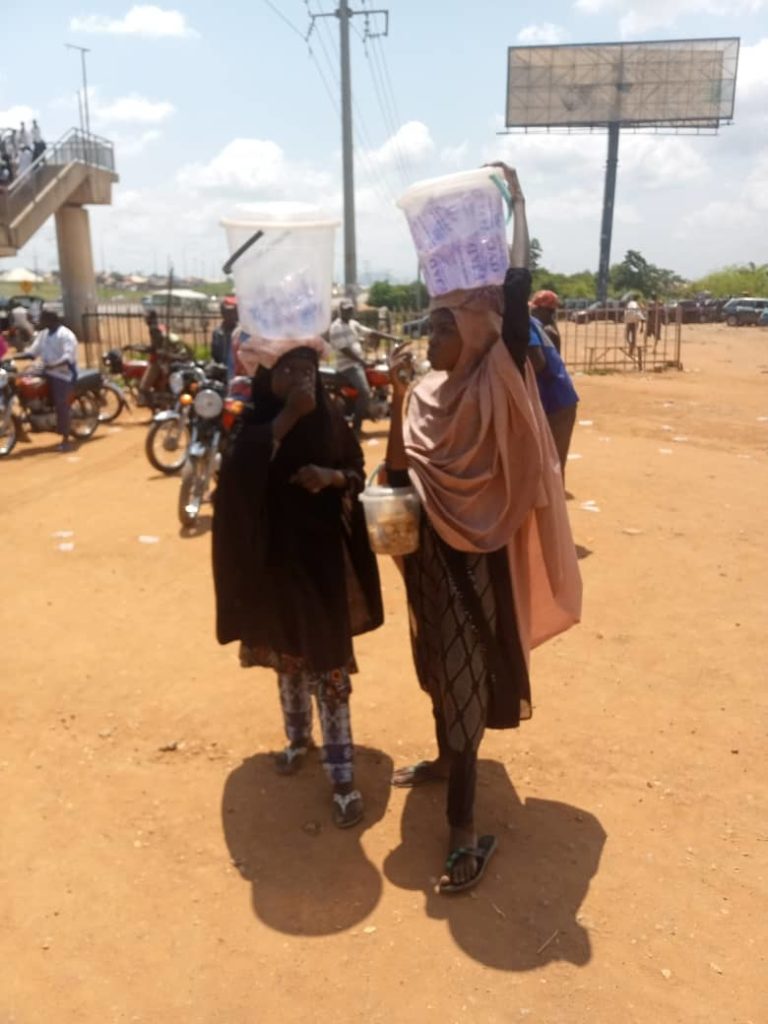
FORTY-THREE per cent of Nigerian children between five and eleven years of age are involved in child labour, according to the Federal Government.

Permanent Secretary of the Ministry of Labour and Employment Kachollom Daju disclosed this on Monday, July 25, during a walk held to commemorate the 2023 World Day Against Child Labour (WDACL).

Daju described child labour as a grave concern, as it denies children of their rights to education, as well as mental and moral development.

The road walk took place in the Federal Capital Territory (FCT), starting from the Federal Secretariat up to the headquarters of the National Human Rights Commission.

“These figures reflect the degree of urgency required by the various actors working on child labour to proffer solutions to the reduction and possible elimination of child labour in Nigeria and globally. The WDACL serves as a reminder that the fight against child labour requires sustained efforts and collective action.”

She added that the Federal Government is commitment to contributing to the global fight against child labour in its worst forms.

Stating that the Federal Government is committed to eradicating the menace, Daju noted that domesticating the Child Rights Act in all states across Nigeria is a step towards meeting the goal.

She quoted the 2016 – 2017 MICS Survey, which says 39 per cent of the children involved in child labour are working under hazardous conditions, including quarrying granite, artisanal mining, commercial sexual exploitation, armed conflict and human trafficking.

Several factors are responsible for child labour in the country including poverty, illiteracy and insecurity.

In Nigeria, about 20 million Nigerian children are out of school, according to a report by the United Nations Educational, Scientific and Cultural Organisation (UNESCO).

In many cases, these children are forced to engage in menial jobs to augment family income, leaving them vulnerable to the risk of abuse.

Other times, they are recruited as child soldiers by terrorists plaguing many states in Northern Nigeria.

A report by the United Nations Children’s Fund (UNICEF) in 2022 stated that at least 8000 children have been recruited as soldiers by terrorists in Nigeria.

The ICIR reported that many adults who take advantage of such vulnerable children are hardly brought to justice.

DataPro hosts webinar to dissect challenges, opportunities in infrastructure development

0

CREDIT rating agency, DataPro Limited, is set to host the 2023 international rating webinar to dissect challenges and opportunities in the Nigerian and African markets.

The event will be focused on how credit rating and infrastructure development can boost businesses and impact communities.

In an advertorial, DataPro said the webinar would explore the theme, ‘Role of Subnationals & Credit Rating Agencies in Infrastructure Development.’

It would feature experts and leaders in infrastructure development, private equity, structured finance, project management and venture capital investment.

President of the African Development Bank (AfDB), Akinwunmi Adesina, and director-general of the Securities and Exchange Commission, Lamido Yuguda, would be the special guests.

It also noted that a panel of discussants would feature the managing director, Africa Plus Partners, Niran Ajakiaye; and chief executive officer, Africa Infra Plus Fund, Anhad Narula, among others.

“They will share their insights, experiences and best practices on how credit rating agencies can help subnational governments or entities access capital markets, attract private sector participation and lower borrowing costs for infrastructure development.

“They will also discuss how pension funds can invest in infrastructure projects and generate stable and attractive returns, diversify their portfolios, and support national development,” the advertorial stated.

The event is scheduled to hold on October 12, 2023, commencing 2.30pm, and is open to persons interested in learning more about credit rating and infrastructure development.

The ICIR reports that Nigeria has a huge infrastructural deficit that requires up to $3 trillion to bridge the gap by 2050.

FG revives river basin development, mobilises $500m for food security 

IN a bid to enhance food production and improve citizens’ livelihoods, the Nigerian government has announced plans to revitalize the country’s River Basin Development Authorities.

The Federal Government has also mobilised over half a billion dollars for the implementation of the innovative, profitable, equitable, and sustainable food systems transformation initiative.

Vice President Kashim Shettima made the disclosure during a panel discussion on ‘Innovative Financing for Food Systems Transformation’ at the ongoing UN Food Systems Summit +2 in Rome, Italy.

Shettima said the funds were mobilised “through domestic resources, multilateral development banks, international financial institutions, climate funds leading agro-businesses,” and would be used for “Innovation finance for food system transformation; development of Nigeria’s agro value chain and Special Agro-Industrial Processing Zones programmes.”

He highlighted the commitment of President Bola Tinubu’s administration to repositioning Nigeria for a more prosperous future, adding that the government had taken significant steps to address pressing issues, including declaring a state of emergency on food security.

“He declared a state of emergency on food security and took it as a livelihood item within the National Security Council,” Shettima said.

Additionally, a commodity marketing board that will monitor and review food prices continuously to boost agricultural production and ensure food security for the nation’s growing population has been established.

Stressing the importance of investing in agriculture to increase yields Shettima stated: “The whole mantra is an increase in yield because the entrepreneurial capitalism is embedded in the very psyche of the average Nigerian.”

Somalia’s President Hassan Mohamud, also shared his country’s experience during the panel discussion.

He highlighted the strides Somalia has made in overcoming challenges, including insecurity posed by terrorists that previously hindered farmers from accessing their lands.

“We are emerging from that difficult situation both in the security issue by defeating Al-Shabab in many areas of the country,” said President Mohamud.

Addressing the unique challenges faced by the African continent, Kenya’s Deputy President Rigathi Gachagua stressed the need for aggressive funding approaches. Gachagua noted Africa grapples with armed conflicts, climate change, and terrorism, necessitating innovative solutions to ensure sufficient food production and surplus for export.

Prime Minister of Niger, Ouhoudou Mahamadou, also shared the challenges his country faces and experiences in mobilizing funds for food systems transformation.

The ongoing UN Food Systems Summit +2 provides a platform for nations to collaborate and address critical issues in food production and security.

The panel discussion emphasized the importance of innovative financing and strategic investments in agriculture to end hunger and drive sustainable growth and development across the African continent.

The Government of Nigeria will be showcasing its Value Chain Development Programme (VCDP) as a unique example of a successful partnership between producers, the public sector, and private operators during the summit.

The VCDP, co-funded by the Nigerian government and the International Fund for Agricultural Development (IFAD), has empowered vulnerable farmers and youth to engage in commercial partnerships with prominent food processing and marketing firms like OLAM, a world-leading agri-business company with a presence in over 60 countries and an annual revenue of about $39.8 billion.