THE National Drug Law Enforcement Agency (NDLEA) has thwarted an attempt to smuggle 98 cartons containing 5.1 million pills of Tramadol 225mg into Nigeria through the Murtala Muhammed International Airport, (MMIA), Ikeja, Lagos.
The NDLEA estimated the street value of the consignment at N3.7 billion.
The agency, in a statement it issued on Sunday, July 23, signed by its spokesperson Femi Babafemi, said the success was achieved through the robust synergy between the Nigeria Customs Service (NCS) and NDLEA officers at the airport and the DHL cargo warehouse.
According to the statement, preliminary findings revealed that the consignments were imported from India and Pakistan, while some of the seized consignments had Freetown, the Sierra Leone capital, as the final destination.
The NDLEA stated that in another operation, its operatives stormed a hotel room in the Okota area of Lagos late on Friday, July 21 and arrested a “notorious drug kingpin” alleged to specialise in sponsoring young Nigerians to traffick class A drugs to Europe, especially Italy.
According to the agency, the suspect was arrested while preparing a recruited courier to swallow 93 pellets of cocaine meant for distribution in Italy.
“The 48-year-old drug kingpin, Charles Uwagbale, had recruited Uju Dominic, 35, from his base in Italy with a deal to come to Nigeria, ingest 100 pellets of cocaine on Friday, July 21 and return to Italy on Saturday, July 22.
Arrested drug suspect Charles Uwagbale. Photo courtesy NDLEA.
“True to plan, upon the arrival in Nigeria, the mule was lodged in Golden Heaven Hotel located at Enoma Street off Ago-Palace way, Okota, Isolo, Lagos, where Uwagbale brought 93 wraps of the Class A drug for him to swallow at about 23.45pm Friday night,” NDLEA said.
The anti-narcotic agency added that the suspects were in the process when its operatives, who had been on their trail following credible intelligence, stormed their hotel room, arrested both, and recovered the drug exhibits with a total weight of 1.427 kilogrammes.
The NDLEA, in a similar operation in Bauchi state, recovered over six million pills of opioids from three suspects: Emmanuel Onyebuchi, 32; Uche Iyida, 33; and Chinedu Ezeanyim, 32, following their arrest alongside a truck driver and his assistant at a shopping complex at the Maiduguri Bye-Pass, Bauchi town on Wednesday, July 19.
Shortly after, Musk posted a video of a flickering X.
Musk has made several changes to the app since he acquired it. Earlier in the month, he put a curfew on the digital town square, limiting the number of tweets a user can read daily.
The company came under widespread criticisms from users and marketing professionals who believed it could drive away advertisers and undermine its cultural influence.
Twitter’s daily limit has increased the growth of Threads, a Meta-owned rival service.
Meta unveiled Threads on July 5 as a competitor to Elon Musk’s Twitter, and in less than 24 hours after it was rolled out, more than 30 million people signed up.
The apps had more than 100 million sign-ups within five days of launch.
At Twitter, the bird was temporarily replaced in April by Dogecoin’s Shiba Inu dog, helping drive a surge in the meme coin’s market value.
In May, Musk hired long-time NBC Universal executive Linda Yaccarino as Twitter’s CEO to win back advertisers.
The company’s most recent saga is a lawsuit filed on Tuesday, July 18 claiming the firm owes, at least, $500 million in severance pay to former employees.
Musk had laid off more than half its workforce to cut costs after he acquired the firm.
Meanwhile, Twitter threatened a lawsuit after the blockbuster launch of Threads.
Analysts say this is perhaps a clear sign that Twitter viewed the app as a competitive threat.
In a letter, Alex Spiro, a lawyer for Elon Musk, alleged that Meta had engaged in “systematic, wilful, and unlawful misappropriation of Twitter’s trade secrets and other intellectual property.”
Responding to the letter, Musk tweeted, “Competition is fine, cheating is not.”
THERE are indications electricity tariff will soon go up as the Nigerian Electricity Regulatory Commission (NERC) and electricity distribution companies (DisCos) have been meeting this weekend over tariff adjustment.
The ICIR can confirm that the meeting between officials of the regulator and operators, focused mainly on implementing the tariff hike, was ongoing at the time of publishing this report.
The ICIR had reported that the DisCos had applied for a review of their respective electricity tariffs, which they premised on the need to incorporate changes in macroeconomic parameters like inflation, and other factors affecting the operations and sustainability of the companies.
The president, Nigeria Consumer Protection Network, Kunle Kola Olubiyo, who confirmed the ongoing meeting to The ICIR, said the upward tariff review would definitely happen, expectedly with a corresponding increase in service delivery.
“We have had six upward reviews of electricity tariff without a corresponding increase in service delivery. We are still doing poorly on power generation, power transmission, load dispatch, load evacuation and energy load utilisation,” Olubiyo said.
Also, a power sector governance expert and energy lawyer, Chuks Nwani, who also confirmed the ongoing power sector meeting, told The ICIR that the government was gradually preparing the ground to eliminate subsidy payment in the power sector.
“I can assure you there is a discussion ongoing now with all the stakeholders in the power sector working out a possible tariff template to be effected in the power sector. The government seeks to hands off subsidy in the power sector as it has done in other sectors of the economy,” Nwani said.
Notably, the Federal government’s subsidy to the electricity sector has fallen by about 80 per cent between 2019 and 2022, an analysis of the sector regulator’s latest report showed, as power companies ask for an increase in tariffs.
In its third quarter report, the NERC said government’s support for the Nigerian electricity supply industry (NESI) fell from N49.50 in 2019 to N10.17 as at the fourth quarter of 2022.
“The ₦10.17 billion per month support represents a major reduction in the size of government subsidy support to the NESI, which peaked at around ₦49.50 billion per month in 2019,” the commission said in its report.
The document stated that as implementation of government reforms continues, the goal is to eliminate subsidies completely, thereby allowing the market to operate purely on commercial terms without government intervention.
Government’s support to the electricity sector largely falls on the Nigerian Bulk Electricity Trader (NBET), the operator in the electricity value-chain that pays all others.
NERC stated that the introduction of the service-based tariff offered opportunities for DisCos to improve customer service through sustained quality energy supply, providing a clear path to increased revenue without broad-based tariff increases by DisCos.
The Commission believed ongoing DisCos investments in infrastructure and metering initiatives would result in a greater volume of reliable energy supplied to customers, improved revenue assurance and, in so doing, increased collections and market remittances.
Stressing the DisCos are insisting on a rise in electricity tariff as government subsidies fall, the regulator, in a published advertorial, said that the eleven successor electricity distribution companies had filed an application for a rate review with the Commission.
The DisCos want factors that impact on their operational costs, including the increase in exchange rate – which is now about N785 to a dollar – and inflation rate at 22.41 per cent in May 2023, should be reflected in the tariff review, as the last tariff increase was benchmarked on N400/$1 being the official exchange.
“The request for rate review is premised on the need to incorporate changes in macroeconomic parameters and other factors affecting the quality of service, operations and sustainability of the companies,” the document stated.
The NERC 2022 fourth quarter report stated that revenue into the NESI was rising. The total revenue collected by all DisCos was ₦243.65 billion out of ₦332.28 billion billed to customers, translating to a collection efficiency of 73 per cent.
The total collection increased by 15.65 per cent, compared to ₦210.67 billion in the third quarter of 2022.
NIGERIAN Muslim faithful have taken to the social media to condemn singer David Adeleke, popularly known as Davido, and his signee, Olamilekan Taiwo, known as Logos Olori, over his new music video.
On Friday, July 21, Davido, the chief executive of Davido Music Worldwide (DMW), took to his social media to share a teaser of his signee’s latest music video titled, Jaye Lo.
“Allow me to re-introduce, @logosolori with his new single “Jaye Lo”… Lets Run It Up one time! Let’s take over the world 🌎!!! 🔥🔥🔥🔥🔥 We Litty 🚀🚀🚀”, he captioned.
The video showcased Logos Olori dressed in a white jalabia and cap alongside other men. As he sate on a roof top with, the remaining men gathered in front of a building, praying and dancing on mats.
The Nigerian Muslim community expressed strong disapproval of the video, viewing it as disrespectful to their Islamic religion. They condemned the content and called on the artiste to take down the video.
Bashir Ahmad, a former aide to the immediate past president, Muhammadu Buhari, tweeted that the Islamic religion held deep sanctity, and Muslims approached it with utmost reverence, emphasising the matter should not be taken lightly.
“There are many reasons why every Muslim finds this content absolutely disrespectful, hurtful and offensive
@davido. I assume you all know that we Muslims don’t mix our religion with jokes in any way, especially Salah (prayer), which is sacred and the second of the five pillars of Islam.
In Salah, Muslims remember our Lord, Allah, express our love and respect for Him and invoke and strive to express our gratitude towards Him. The notion is that the Salah activity brings the individual face-to-face with God. That is what we believe, and that is our faith. Please respect it”, he tweeted.
Other reactions
“David whatever, this is to inform you that you’ve failed, disrespecting our religion. This your music is veto, outlawed, prohibited, forbidden, proscribed, debarred, it should be disallow and banned 😠🚫🚫” – @sarauniya_yahya
“Davido should delete that Jaye Lo video & apologise to Muslims as an act of respect. It’s common knowledge that the mosque is a sacred place, plus Muslims don’t condone any act/behavior that goes against their faith. Creativity is fine, but respect people’s religion & cultures”. – @Danielregha
“First of all, I’ve unfollowed you, reported you, and deleted all your songs from my phone. While I condemn your hateful incitement against islam and Muslims, I encourage my fellow Muslims to do the same to set standards to prevent future occurrence. Moreover, let’s meet in court!” – @AhmadGanga
“If u’re not aware music & Islam can never be on the same page. It’s completely prohibited in our religion not to talk of dancing & praying in the mosque. This is utterly disrespectful & unacceptable to us. U shld tender an unreserved apology ASAP!!” – @drfatima84
“If you haven’t reported this tweet, the best time is now… Tag it religious bigotry or islamaphobic post or anything you can think of, you’re obliged to report this tweet, it’s the least we can do”.- @wizmuckie
THE management of the Usmanu Danfodiyo University Teaching Hospital (UDUTH), Sokoto State, has declared that no one died of a strange illness in the hospital in the last weeks.
The UDUTH chief medical director, a medical doctor Anas Sabir, said in a statement he issued on Saturday, July 22, that the clarification had become necessary given that a viral audio purporting a strange disease outbreak in the hospital had been making the rounds.
In the audio, an unidentified person claimed a patient brought to UDUTH from Kaduna state died of a strange disease three days after being brought there.
The fellow also claimed that about 15 other patients died of the same disease in the hospital shortly after.
Reacting to this, Sabir said, “For the avoidance of doubt, the hospital’s management wishes to make it categorically clear that it has not, up till this moment, received any such case from Kaduna or anywhere in the country.
“The hospital is free of any outbreak of disease or epidemic. Therefore, the said claim in the audio is totally false, baseless and mischievous.”
According to him, when UDUTH contacted the authorities of some FM radio stations, they claimed to have been misquoted and maintained that UDUTH was not, at any point, mentioned in their reports.
“The general public should, therefore, note that while the hospital has nothing to hide, it also has a standard protocol and the capacity to manage emergencies any time they happen.
“This is as it did during COVID- 19 pandemic and other outbreaks in the past.
“Therefore, the public should disregard such unverified information being spread by mischief makers whose motive was to generate tension and discomfort in the community.
“Accordingly, you should kindly assist in providing useful information that will lead to the arrest of such mischief makers who are proactive in spreading falsehood,” he said.
The CMD stated that the management was constantly communicating with relevant security agencies to bring those he called harmful elements to book.
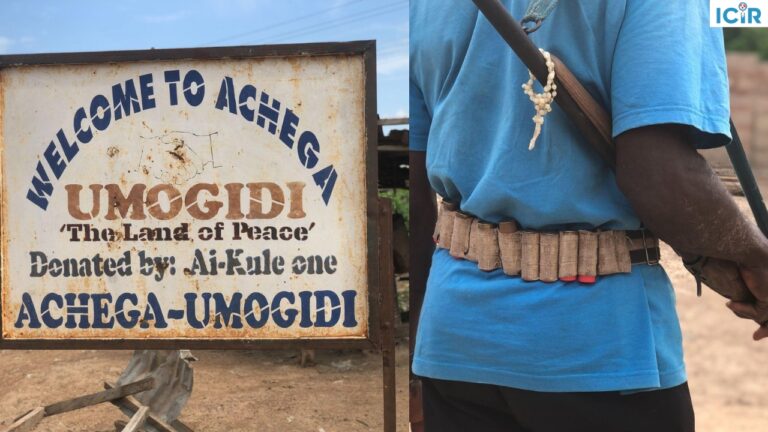
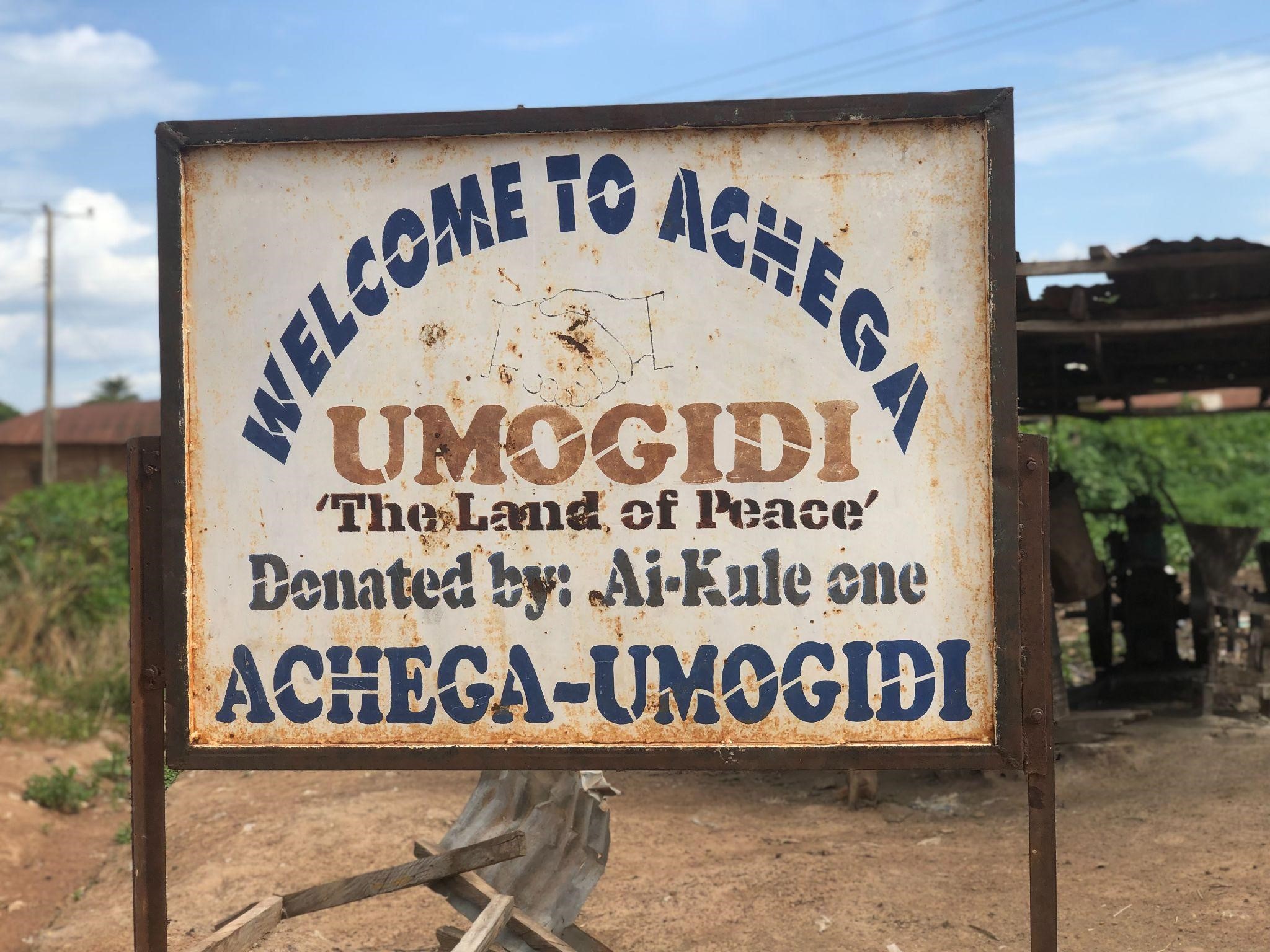
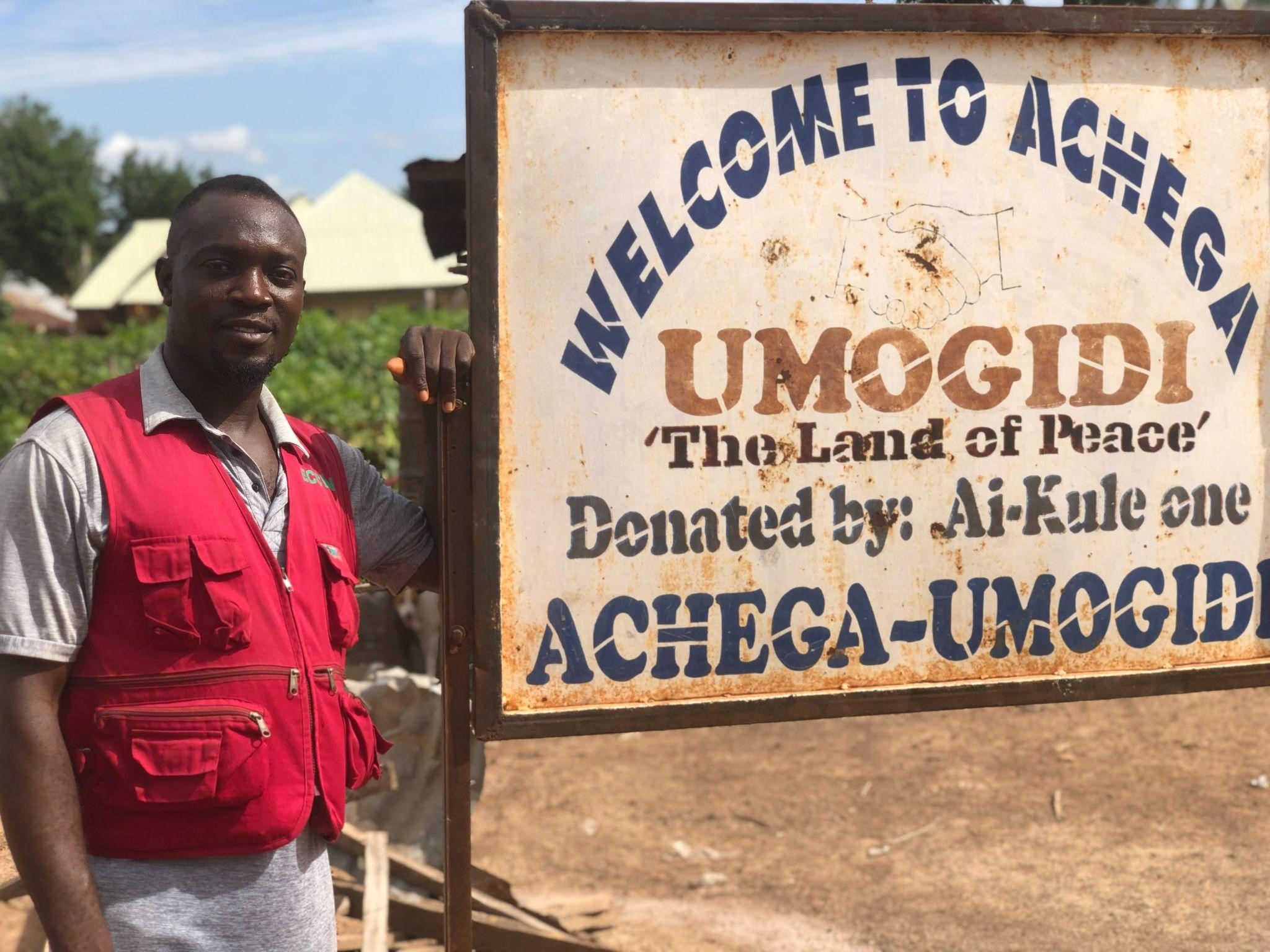
In April, communities in Benue state were attacked, leading to media reports of 46 persons killed, although community members who spoke to The ICIR gave the figure as 55. In this report, Jairus AWO visited the four communities of Entekpa ward – Umogidi, Upu, Olakpoga, and Iwili—in Otukpo local government area where the incidents happened to capture the aftermath.
In the rolling hills of Nigeria’s north-central region, the Umogidi, a community in Benue state, once thrived in peace and harmony. The lush farmland boasted bountiful harvests, and the idyllic landscape drew visitors from far and wide. But one day, everything changed. The sound of gunfire shattered the calm of the village, and terror spread like wildfire.
Militias, notorious for their unrelenting attacks on farming communities, had arrived. Armed with sophisticated weapons, they descended upon the Umogidi community with a fury that left able men powerless and trembling.
“We were caught unaware, and chaos quickly ensued. Men, women, and children were brutally slaughtered,” Bako Eje, chairman of the Otukpo local government area (LGA) where Umogidi is located, lamented.
In the blink of an eye, the once-thriving community lay in ruins. The locals who had managed to survive had fled into the nearby forest, fearing for their lives.
Those who were left behind lay lifeless in the streets, discarded like trash. The attack had left a trail of destruction in its wake, and the survivors were left in shock and disbelief.
The attack on the Umogidi community in Entekpa ward in the Otukpo LGA of Benue state on April 5 was just one of many that have occurred in recent times across the Idoma ‘nation’ and, of course, Benue state as a whole.
Farming communities have been persistently under attack, leaving a trail of death and destruction in their wake..
‘It was an unprovoked attack’
As far as people like Edwin Obiaje, 61, the Egila of Umogidi, can remember, there had never been a fight between the Umogidi community or any of the four communities of the Entekpa ward of the Otukpo LGA and the militiamen who community members described to be predominantly ethnic Fulani and herders.
“What ensued was a total shock to us”, he said.
“We are aware that the militiamen have sacked and pursued our nearby Gwer LGA communities of Mbappa, Ikande, etc. and made those places their permanent locations even till now.”
“But we never knew; they had plans to also drive us away to have the land for themselves.”
“We are farmers; everyone in Umogidi is primarily a farmer. There are few others who know how to manoeuvre and get other things done that fetch them money—like frying akara and cooking at the village market – in addition to their farming,” Obiaje explained.
“All of a sudden, we saw them feasting on our farms. At first, it was just intimidation at gunpoint for those who confronted them.”
“And because they had sophisticated weapons, it is unreasonable to fight them.”
“On the fateful afternoon of April 4, 2023, they stood at our junction and began robbing people of their motorbikes and macheting farmers who were unluckily close by. That day, three community members were gruesomely murdered on their farms,” Obiaje continued.
“Our people scampered for safety. Women, children—they all ran for their safety to nearby bushes, and others were as far as Adoka, a suburb of the Otukpo LGA.”
“The Chairman of Otukpo LGA, Ejeh Bako, mobilised the military personnel to the community the next day, which was April 5, to see how security could be beefed up in the community So that we can at least take one or two things as we vacate the community because we had the feeling that they would still come back.”
“But the military didn’t stay long. The community, through the LG chairman, begged them to stay, at least for a night, or wait until the people that were killed were buried, but one Major A. Awuah, the Commandant of the 72 barracks, Otukpo, explained that they can’t stay for the night, especially since he hasn’t received a command from his superiors, and that he would be unable to account for his men if anything happens to them.”
The chairman of the Otukpo LGA, Bako, corroborated the claims by Obiaje, the Egila of Umogidi. He explained that he told Awuah the local government would cater to their needs for their time spent there, but the major did not oblige and left with his men.
The ICIR could not independently verify the claims about Awuah.
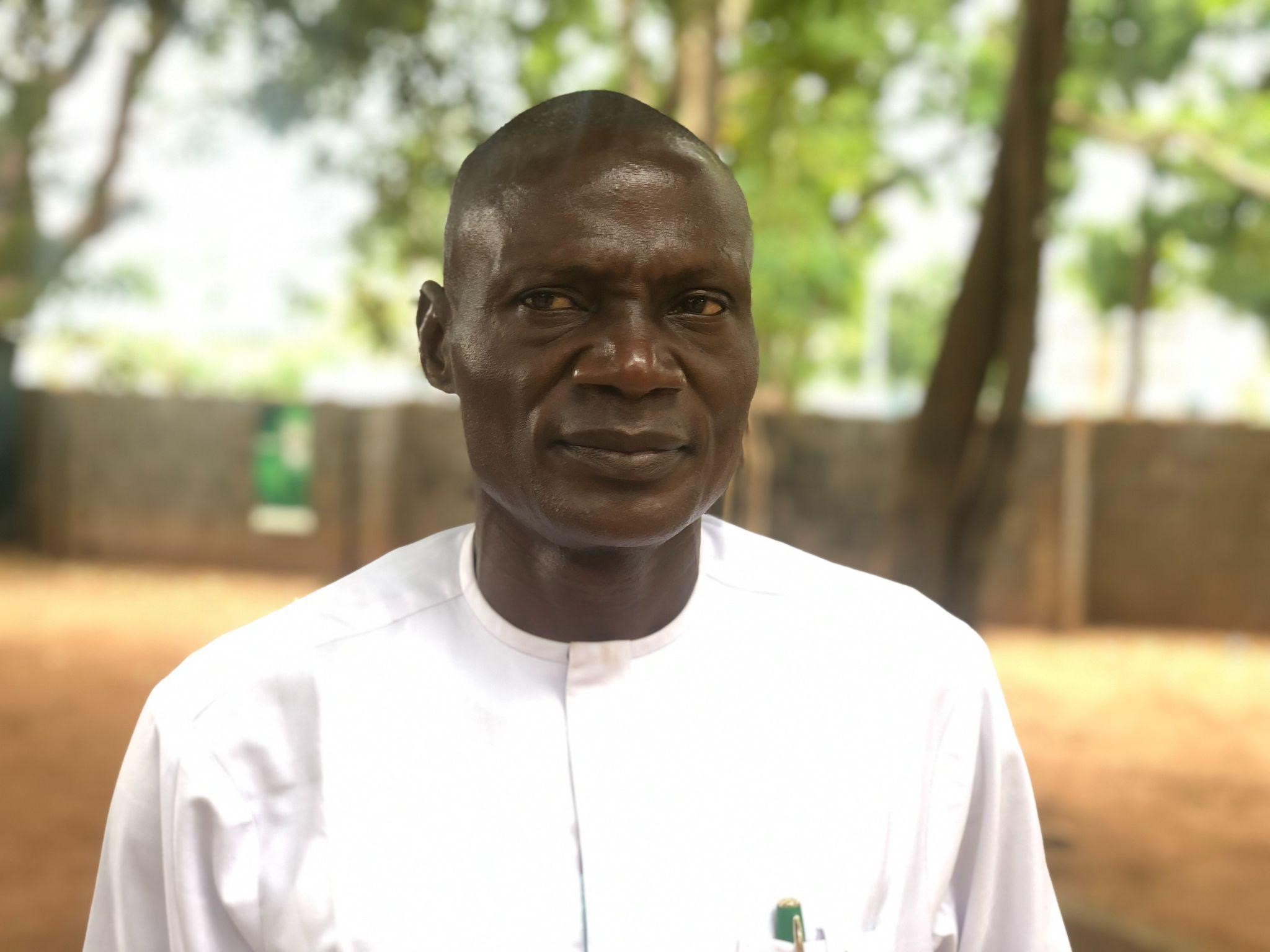
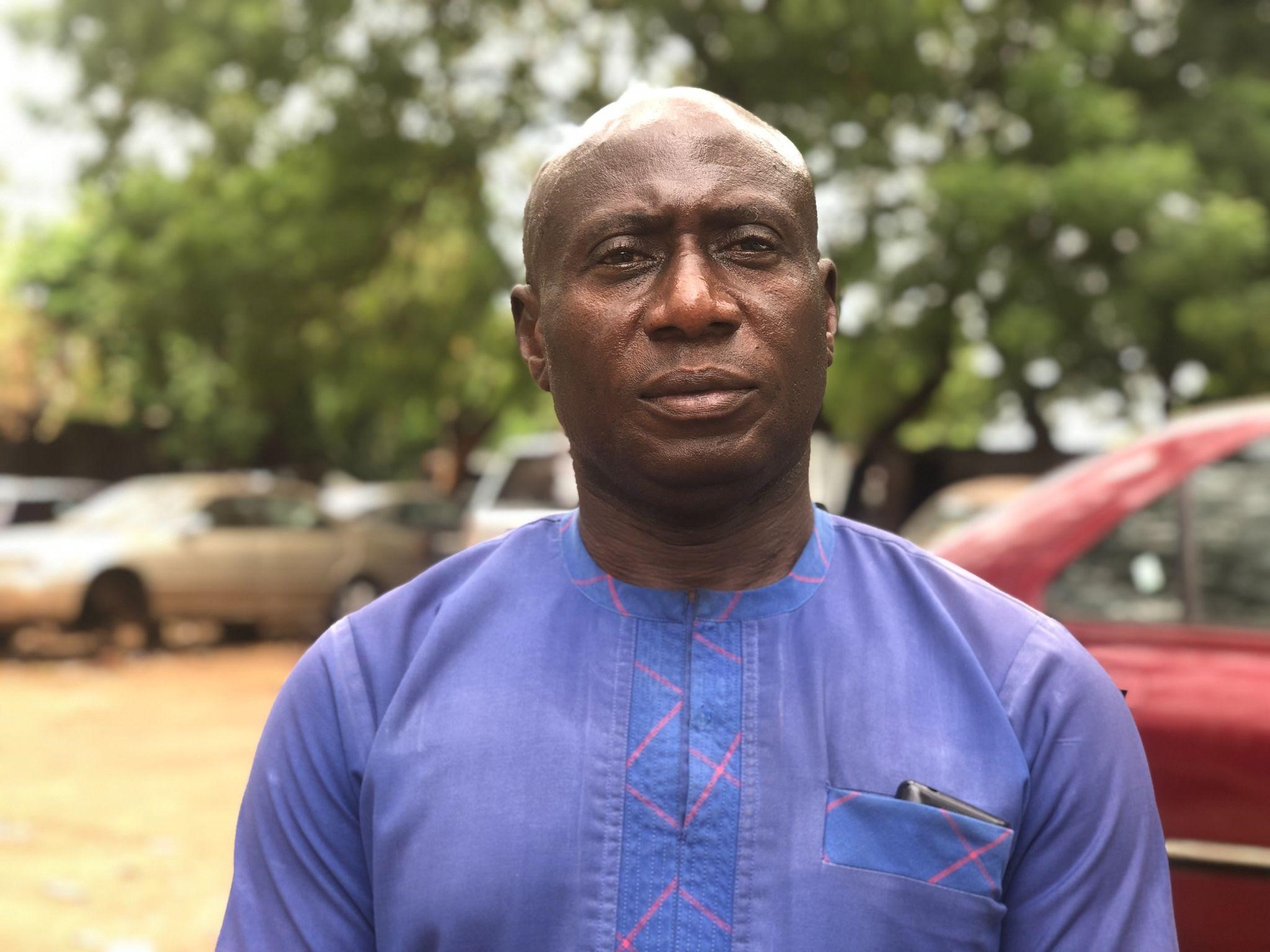
Mr Bako Ejeh, the chairman of the Otukpo Local Government. Photo credit: Jairus Awo/ICIR
Bako sobbed as he narrated, “On that fifth of April, around 3 p.m. About 49 minutes after the military left and we were at the burial of the first three persons that were killed, they came and launched another attack on the community and this time killed 52 persons; altogether, 55 persons were killed”.
“Because it was a burial, people, mostly men, who stayed back to bury their relatives and perform the burial rites were killed; people from other communities, like Police Inspector Samuel Otache from Upu community, were also killed. This was when my son was killed—a 32-year-old man with two kids and a wife.”
“He had run away like the others; unfortunately for him, he was chased by the militiamen on motorcycles and was shot dead after a long distance”, Bako explained.
Reversed fortunes and aborted dreams
For Yefu Anebi, 34 years old and a mother of six, the trauma of the terrible experience has been a two-sided battle. She has difficulty believing that her husband will never be seen coming home anymore.
She reminisced about the old times when Adochai would always tease her about how “powerful her food made him marry her.”
“As tough as life was, doing things with Anebi Adochai over the years was a beautiful thing,” Yefu sobbed as she continued. “We didn’t always have it figured out, but one thing we always reminded ourselves of was the promise to get our children educated.”
“Six of them. Three were schooling outside our community, and three haven’t been to school because of their age and inadequate resources.”
“We would fantasize how, at old age, our children would, in turn, take care of us after they might have made it through school,” Anebi said.
Anebi and her husband believed that education was the way to success. She had no formal education, and her husband was only able to get through secondary school, which was why they made the commitment.
She added, “Looking around us, all the people that have made it big are all educated. That is why we wanted our children to succeed”.
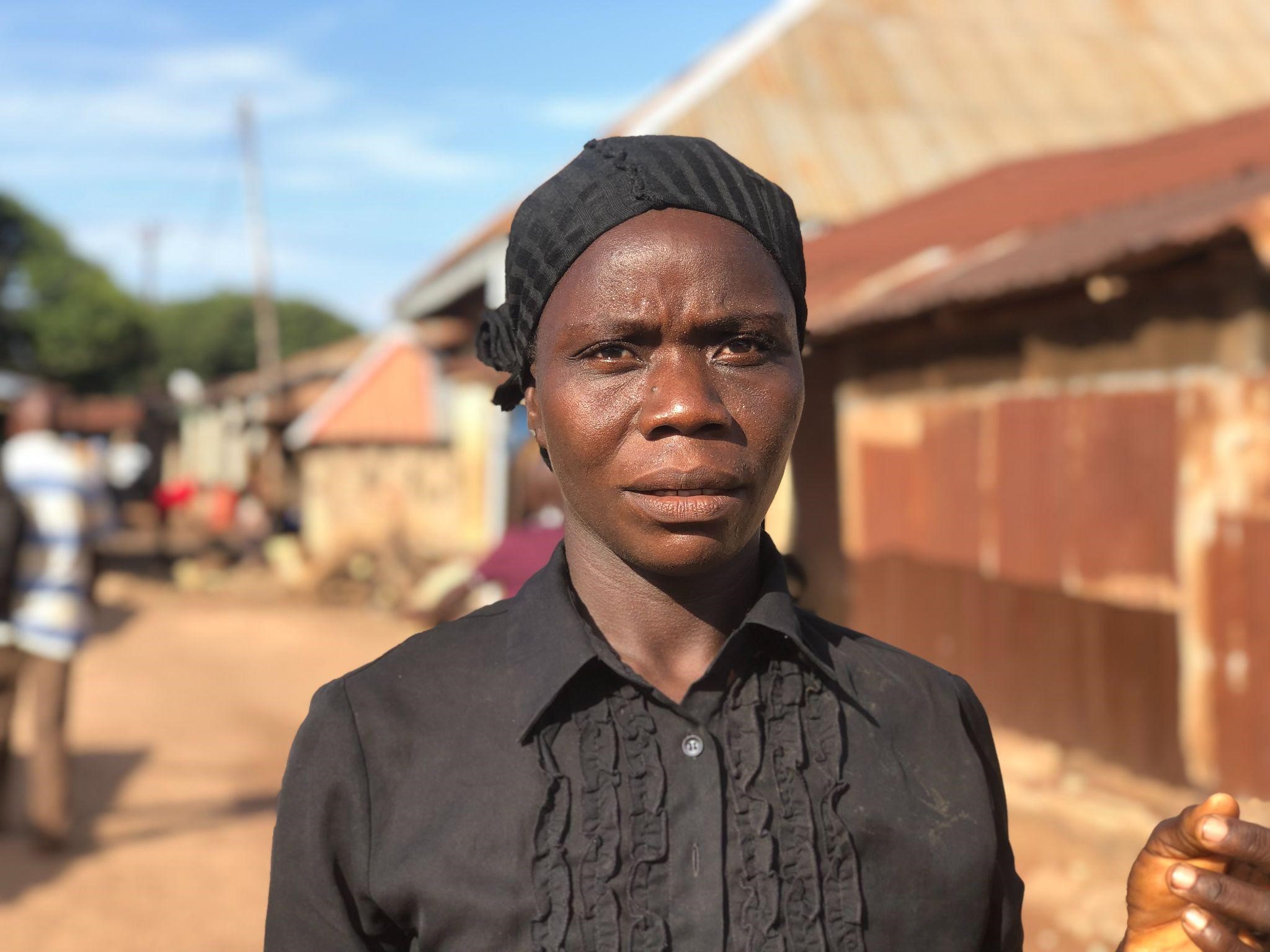
Yefu Anebi. Photo Credit: Jairus Awo/ICIR
But Anebi is now afraid and pained that her children may never achieve the quality of dreams they had for them.
“Now that he’s gone, how do I cope? We didn’t have time to say goodbye to each other,” she lamented as she vowed she would not give up on her “family dream”.
Her earnest wish is for the government to resettle her and the children in the community where she can continue farming.
Like Anebi, Joy Ochoche, 29, lost her husband during the attack at Umogidi. It may have been just an attack for others, but for Joy, it was another chapter of pain revisited.
“One thing I have cherished in the last ten years has been taken away from me,” Joy sobbed, “To me, life is never fair.”
Joy Ochoche, 29 years. Photo Credit: Jairus Awo/The ICIR
“I lost my parents when I could barely afford anything for myself. The agony, struggling through life until I met my husband, whom I had been married to for ten years, was heartbreaking, and then this attack just brought the whole memory back,” she wept as she asked rhetorically, “Where do I go from here?”
Now, Joy, orphaned at a young age, is battling widowhood, hunger and struggling to raise three children.
She knew that if she returned to the community, she could only do farming, the main occupation there. However, her prayer is that she will have the capital to start petty trading, like selling rice.
Joy has returned to her hometown in Adoka, Otukpo, where she said she “sees her parents’ grave every day,” which makes her sick, as she put it.
The sorrow in the community is not limited to Joy and Anebi; everyone across the four communities of Entekpa ward has been impacted by such attacks.
Iyabor Edor, a 51-year-old mother of ten children, used to make N150,000 monthly as a food seller in the Umogidi market.
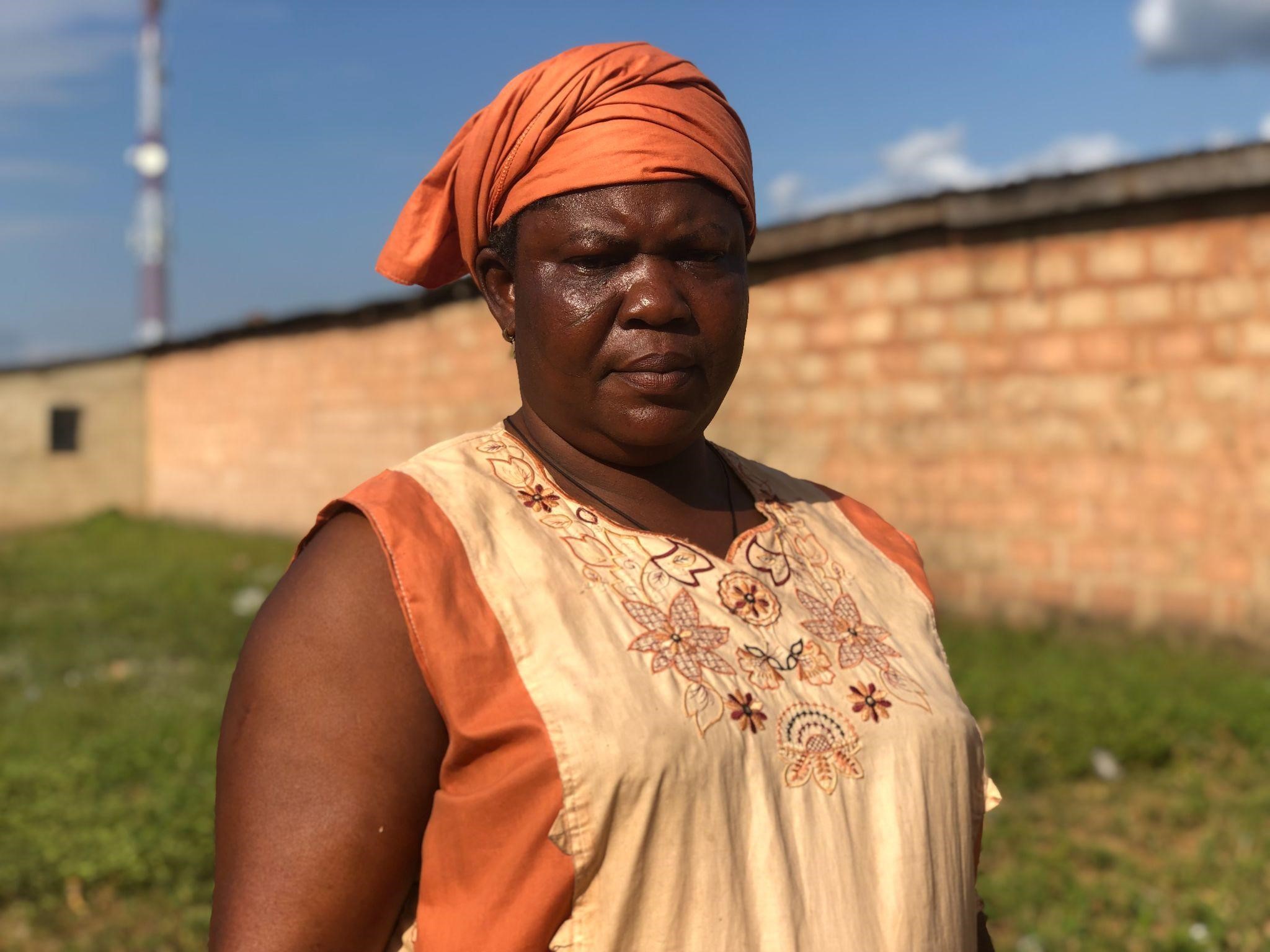
Iyabor Edor Photo Credit: Jairus Awo head of the Entekpa ward /The ICIR
All that is gone now; she is struggling with feeding her children and making ends meet where she is squatting with her friend at Adoka.
Iyabor said, “Apart from farming, which I do plant like 1,000 pieces of yam every year, I was successful with cooking back then at Umogidi, making up to N150,000 every month.”
“Now, I can’t even boast of N10,000 since the attack. Thanks to my friend, who is accommodating my family and is giving me some space to sell with her.”
“We are really suffering. The government should please come to our aid. I want to go back to my community,” Iyabor sobbed.
The head of the Entekpa ward, Oliver Inalegwu, expressed how devastated he was by the attack on his ward. The pain he feels is deep and complex, as he lost not only his valued possessions but also his sense of safety and security.
“These are not people we can even stand against. We don’t have the kind of sophisticated weapons to even match them. As the ward head, it is devastating for me. I am not even safe in my own community”, he stated.
Herders association reactions
Despite widespread claims about the ‘Fulani herders’ involvement in many attacks in Benue state, the association of the Fulani cattle breeders known as Miyeitti Allah Cattle Breeders Association of Nigeria (MACBAN) in the state has consistently disassociated from these attacks calling on the state government to fish out culprits instead of pointing fingers in the wrong direction.
MACBAN’s secretary, Ibrahim Galma, had in April condemned the killings in the state.
He said, ”We condemn the attack in totality. We at MACBAN are working hard. We are working together with the All Farmers Association of Nigeria in the state as well as security agencies to make sure that peace and harmony are restored in the state. But bad people are still causing problems, killing here and there.”
“We are not in support of the killings. We are for peace, and we hope to give the new administration maximum support so that peace will return to the state.”
This has, however, not stopped fingers pointing in their direction as community members insist herders are responsible for the attacks.
Adakole, a resident of Umogidi, said, “We normally see them at our boundary grazing cattle with Ak47 rifles roaming. That fateful day, they came shouting ‘Allahu Akbar’, while shooting anything at sight.”
“They are Fulani herders,” he claimed.
Residents resort to self-help community policing
The head of community security, a retired army warrant officer, Peter Adaji, could not contain his pain as he reminisced about his service in the military.
Adaji said, “I served faithfully to secure others until my retirement, but my community is under siege with no help.”
“As a community, we have set up a committee on security to enable our people to access nearby farms to gather their yams and other products. And that is why we are always here with our local hunter’s gun.”
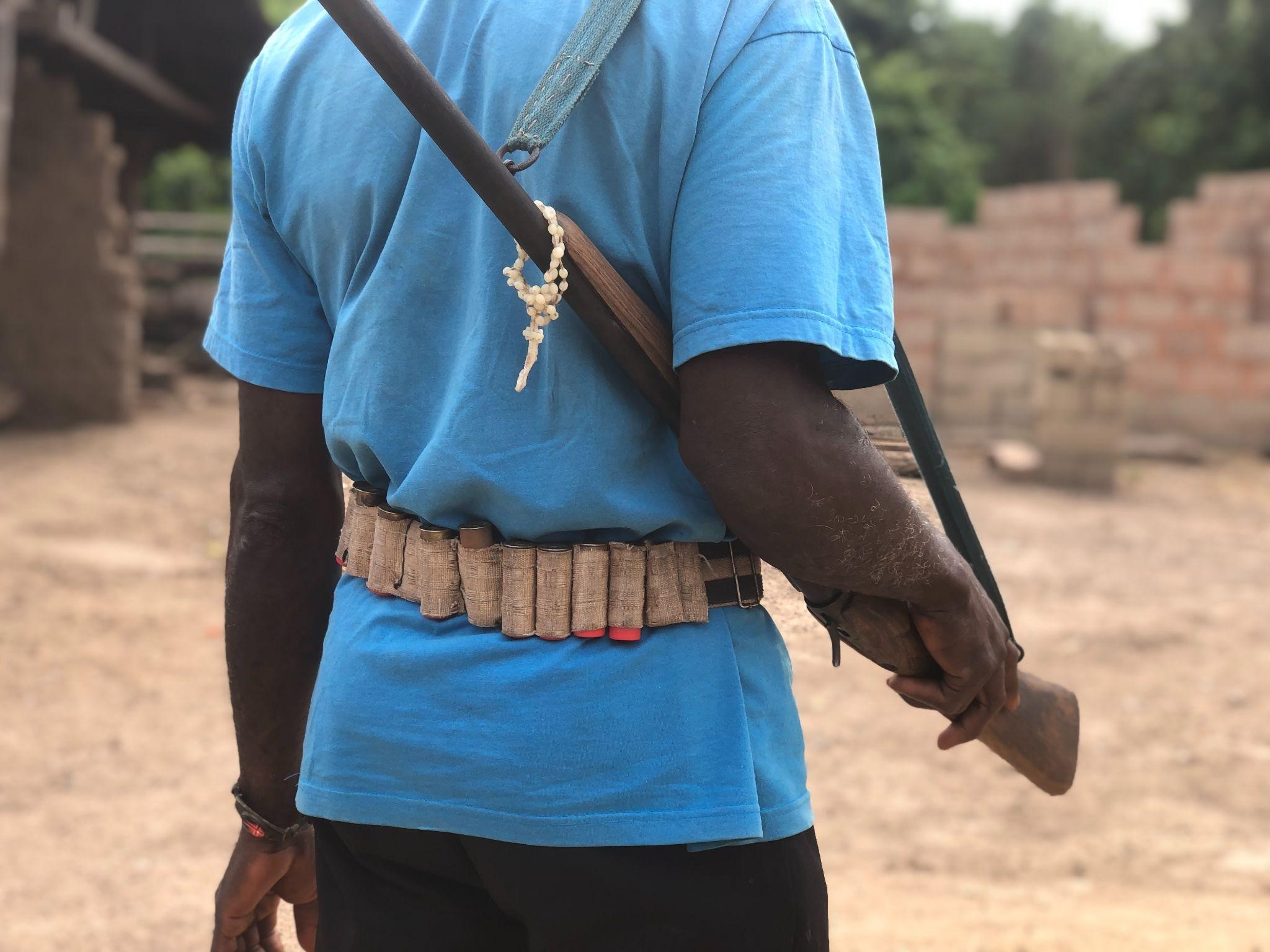
A man holding a local rifle with bullets around his waist. Photo credit: Jairus Awo/ICIR
The reporter observed that the men who remained at Upu, Umogidi, and Iwili communities during the field visit in May were noticeably armed with pump-and-shoot rifles.
“This is the one we can afford. It is a local hunter’s gun that we can, at least, use to save our heads before we can run away,” the head of the community security guards said, adding, “It is very ineffective, but we can’t keep running away from our land.”
On its part, the Idoma National Youth Forum, a community-based organisation, said it is working “hand in hand with the Ochidoma palace, stakeholders, and security agencies across all the local government areas to improve the security situation in the LGA.
The forum expressed its support for the new Och’Idoma (paramount ruler of the Idoma nation) in his call for an emergency security crusade in Idoma land.”
According to its president, Adakole Inalegwu, “We have also been instrumental in mobilising relief materials and basic services as interventions for IDPs and affected communities.”
Adakole Inalegwu, the President, Idoma National Youth Forum. Photo credit: Jairus Awo/ICIR
Benue volunteer guards’ response
The Otukpo commander of the Benue State Community Volunteer Guard, Emmanuel Inalegwu, said that the guards deployed men to the attacked community after he confirmed the deaths of over 52 people, including ‘Uncle’, the local government chairman’s son.
The commander said, “Although there was no uniform volunteer guard from the Umogidi community prior to the attack, the ongoing recruitment is attracting volunteer guards from the community.”
The state government’s response
The attacks on the people of Umogidi, Upu, Olakpoga, and Iwili communities of Entekpa ward in April, have left communities bearing the brunt of this tragedy. This particular attack took place at the peak of the change in government from Samuel Ortom’s to Hycinth Alia’s.
The former government had said it was tackling security, and his Special Assistant on Security to Ortom, a retired lieutenant colonel, Paul Hemba, in a phone conversation in May, said that “the security personnel, police, and community vigilantes in the location were there, and anyone who is ready to return to these communities should return.”
Meanwhile, the Alia-led administration, which commenced after May 29, has said it has no room for insecurity to thrive in the state.
In his inaugural speech when he took the oath of office, he said, “As your governor, I am committed to working with security agencies and the Federal Government to ensure the safety of lives and property in our state. We will also work tirelessly to address the root causes of insecurity, such as poverty, unemployment, and social exclusion.”
A few months after the attack in Entekpa, another attack occurred in the communities of Akpuuna and Diom in the Ukum LGA, which Alia described as a “heinous crime and a grave sin against God and humanity.”
According to Tersoo Kula, the governor’s chief press secretary, “the governor directs security agents to arrest those behind the unlawful act and bring them to book.”
However, it is unclear at this point what sustainable step the governor has taken to quell issues of insecurity that are different from the usual “order to bring to the book.”
YOBE state governor Mai Mala Buni has promised to provide shuttle buses at affordable cost for students, following the removal of fuel subsidy.
Buni’s Director-General, Press and Media Affairs, Mamma Mohammed, disclosed this in the state capital, Damaturu, on Saturday, July 22.
Mohammed added that farmers and traders would receive support from the government to mitigate effects of fuel subsidy removal.
“The government is conscious of the hardship caused by the subsidy removal and will look into these critical areas to provide palliatives to our people. We will look into ways of supporting inter- and intra-town transportation and other necessary services to our people.
“Similarly, the government would work out measures to provide shuttle buses to students of tertiary institutions at affordable costs,” he said.
Some other states have introduced palliative measures for citizens. In Kwara state, the government reduced work days for its staff from five times to thrice a week and introduced buses for its students.
Rivers state has also announced it would introduce buses to help mitigate the cost of transportation.
Following the declaration by President Bola Ahmed Tinubu that “fuel subsidy is gone” and the Nigerian National Petroleum Company Limited (NNPCL) increased petrol pump price from less than N200 to over N500 per litre, there has been a surge in transport fares across the country, leaving commuters in agony.
In most parts of the country, transport costs rose by, at least, 50 per cent. The ICIRreported that residents had resorted to trekking long distances to conserve transport costs, while commercial vehicle operators suffered from low patronage.
In June, the Oyo State Sector Commander of the Federal Road Safety Commission (FRSC) Joshua Adekanye advised Nigerians to embrace the use of bicycle as an alternative means of transportation due to the fare surge.
Transport cost rose further after the NNPCL effected another change this month, taking the pump price of petrol to N617.
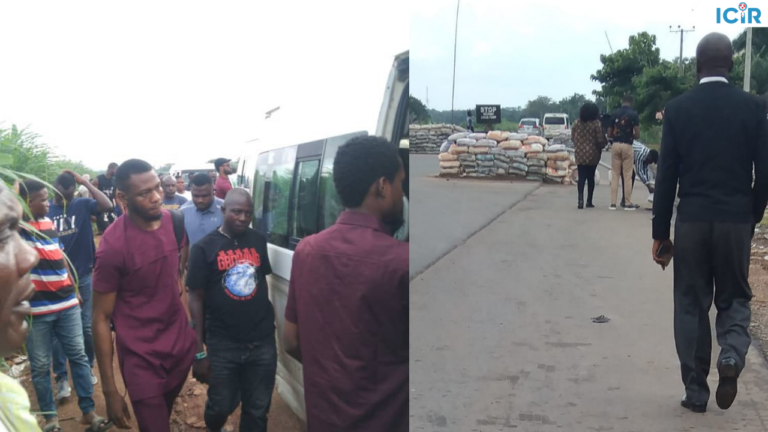
SOLDIERS of the Nigerian Army, deployed under ‘Operation Udoka’, are forcing travellers in the South-East to disembark from vehicles at numerous checkpoints that litter the region, checks by The ICIR have shown.
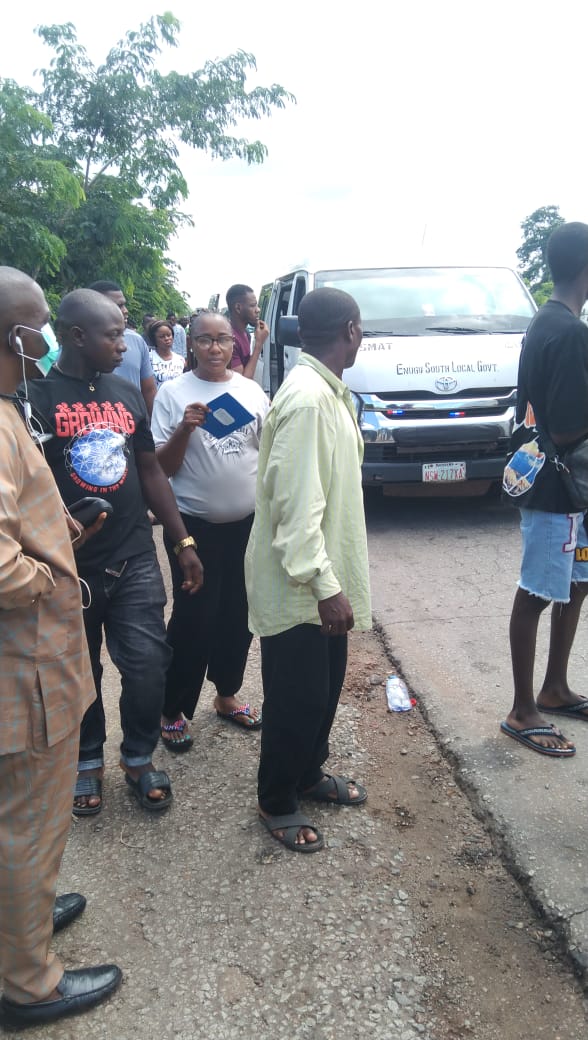
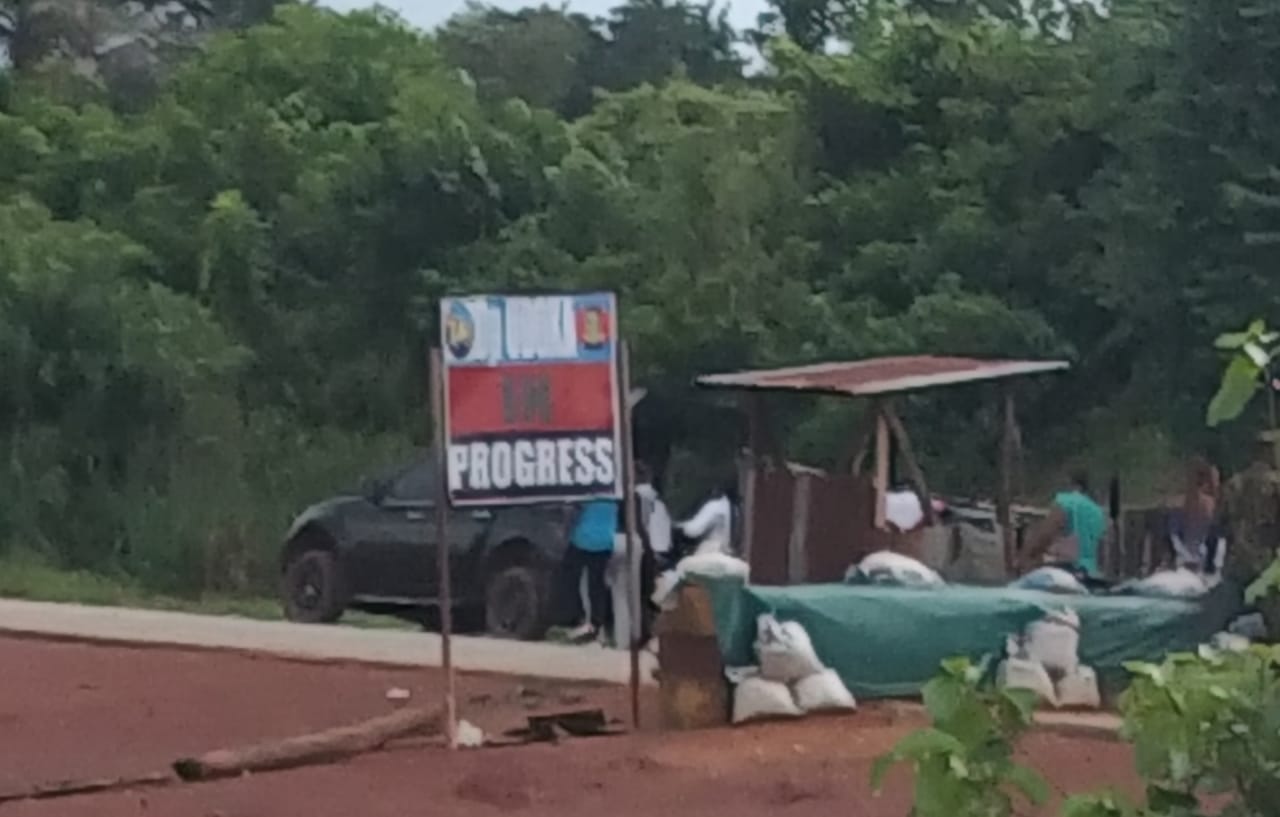
On getting to any of the checkpoints manned by heavily armed soldiers on major highways in the region, vehicles – both commercial and private – would stop to discharge passengers. The passengers, mostly travellers, will then trek across the checkpoint. On getting to a considerable distance beyond the checkpoint, they will stop and wait for the vehicle that was conveying them.
The driver will then move the vehicle past the checkpoint to meet the waiting passengers, who will subsequently return to their seats in the car.
Passengers wait for their vehicle to pick them up after walking past a military checkpoint. Pix Ihuoma Chiedozie/The ICIR
The journey will continue until the vehicle gets to the next checkpoint, where the process will be repeated.
The ICIR’s correspondent, who experienced the situation while travelling across the South-East states, noted that the development frustrated motorists and travellers in the region.
During a trip from Enugu to Umuahia, Abia State capital, on Friday, July 21, the commercial bus boarded by The ICIR correspondent was made to stop and discharge passengers at eight different checkpoints.
At each of these checkpoints, passengers – both young and old, male and female – had to come down and trek to the other side to wait for the vehicle.
Interestingly, vehicles and passengers are not searched at the checkpoints. But The ICIR correspondent observed that the heavily armed soldiers were alert as they watched the passengers walking past the checkpoints.
During the morning period, when a lot of people are travelling, the checkpoints are usually crowded with so many passengers who disembarked from several vehicles. The vehicles, mostly buses, which had discharged the passengers, will also queue up. They wait until the passengers have walked past the checkpoints before driving through, one after the other, to pick up their passengers.
The ICIR correspondent observed that when the volume of traffic at the checkpoints is high, some passengers have difficulty identifying the particular vehicle they boarded.
Travellers walking through a military checkpoint after coming down from their vehicle. Picture by Ihuoma Chiedozie/The ICIR
However, The ICIR further noted that motorists, especially commercial transit bus drivers, and travellers, are not happy with the development.
The repeated disembarkation at numerous checkpoints is not only stressful, it also wastes time, making the journey last much longer than it should.
The journey from Enugu to Umuahia, which ordinarily should be less than one hour, lasted more than two hours.
“Is this a war zone? It is only in war zones that you can witness this,” an aggrieved passenger muttered as travellers waited for their vehicle to move past the checkpoint and pick them, to continue the journey.
Many passengers expressed anger at the situation. A passenger, who said she has gotten used to the situation, being a regular traveller on the route, explained that she starts her journeys two or three hours earlier than usual in order to meet up with appointments. “If not, you will not arrive on time. You have to add extra one or two hours in order to meet up,” the woman told other travellers.
An old woman, who complained of arthritis, could barely walk across one of the checkpoints and had to be supported by sympathetic co-travellers.
Insecurity in South-East: Operation Udoka the solution?
A report published by The ICIR in January ahead of the 2023 general elections highlighted the high level of insecurity in the South-East.
The situation stabilised a bit during and immediately after the elections, but insecurity in the region again escalated after an Indigenous People of Biafra (IPOB) faction led by Simon Ekpa ordered and enforced a one-week sit-at-home, from July 3 to July 10, to demand the release of IPOB leader Nnamdi Kanu.
In many towns and communities, individuals who ventured out to attend to business or other engagements were attacked. Lives were lost, and properties were destroyed.
An ‘Operation Udoka’ checkpoint on a highway in the South-East. Picture by Ihuoma Chiedozie/The ICIR
Concerns over further escalation of insecurity heightened after Ekpa declared a two-week sit-at-home in the South-East, starting from July 31, 2023, to August 14, 2023.
Operation Udoka is the Nigerian Army’s response to the insecurity in the South-East. In Igbo, the language spoken in the South-East, ‘udoka’ means ‘peace is greater’, or ‘peace is better’. The operation, under the control of 82 Division of the Nigerian Army, Enugu, has troops drawn from military and paramilitary formations.
The mandate of the Operation, as stated by former Chief of Defence Staff Lucky Irabor, is to “flush out the criminal elements disturbing the peace and socio-economic well-being of the South-East”. Top on the agenda of Operation Udoka is nullifying the sit-at-home orders in the region. After Ekpa ordered the two-week sit-at-home, the Chief of Army Staff, Taoreed Lagbaja, a Major General, ordered the troops to seize control of areas where pro-Biafra agitators enforce the sit-at-home order throughout the South-East states.
“The Chief of Army Staff has handed down clear directives to the 82 Division of the Nigerian Army operating in synergy with other security agencies to ensure robust patrols to dominate all flashpoints and emplace measures to ensure citizens are free to go about their legitimate businesses,” Director, Army Public Relations, Onyema Nwachukwu, a brigadier general, told Punch.
In line with its mandate, the presence of troops of Operation Udoka at numerous checkpoints in the South-East is aimed at ensuring security and stabilising the region.
While residents, particularly those undertaking trips on highways, express annoyance at being made to disembark from vehicles and trek at military checkpoints, a security source, who did not want to be named because he was not authorised to speak on the matter, told The ICIR that passengers are ordered to come down from vehicles because of several instances where unknown gunmen in vehicles attacked military and police personnel at checkpoints.
“The Army and the Police Force have lost men in these surprise attacks whereby hoodlums in vehicles launch guerrilla attacks at checkpoints. It has happened several times, so to avoid more losses, passengers have to come down before vehicles are allowed to pass checkpoints,” the source said, adding that there has been a drastic reduction in attacks on military and police checkpoints since the measure was put in place.
South-East residents divided over heavy military presence
While other passengers in the vehicle boarded by The ICIR correspondent during the trip from Enugu to Umuahia on Friday, July 21, were grumbling over the repeated disembarkation at military checkpoints, another passenger, who identified himself as Chigozie Ofoegbu, expressed support for the action of the troops.
An old man walking past a military checkpoint after coming down from a vehicle. Pix by Ihuoma Chiedozie/The ICIR.
Ofoegbu, who said he is a trader, noted that the security measures taken by the soldiers are necessary. “We all know why they (military) are doing this,” he said, adding that heavy military presence has made the highways safer for residents and travellers.
A prominent Igbo leader, who asked not to be named, also justified the action of the troops.
“If you allow people to stay inside the vehicles at a checkpoint, maybe somebody will start shooting at the military personnel. All these are happening because of the high level of insecurity in our land, and our youths, our people are behind this. That is why we are calling on those behind this to have a rethink. In the South-East today, there are checkpoints everywhere. Stepping down from the vehicle at different checkpoints is annoying, but let’s have empathy. Let’s put ourselves in the position of the other person who is doing his job, manning the checkpoint to ensure the safety of other people,” the Igbo leader said in an interview with The ICIR on Saturday, July 22.
Leader of Nzuko Igbo, a pan-Igbo socio-political group, Okechukwu Obioha, condemned the action of the troops manning the checkpoints. In a chat with The ICIR on July 22, Obioha expressed anger at the heavy military and police presence in the South-East.
He blamed the insecurity in the South-East on ‘enemies’ of the region.
“This is not obtainable in any other part of the country. The South-East is now a police state. About four years ago, the South-East was the safest place in Nigeria. So enemies of the South-East now introduced unknown gunmen and other problems just to make sure there is restiveness in the region,” Obioha said.
“How come, despite all these checkpoints on the highways, kidnappers still operate and abduct people? We don’t really know what is happening. If you observe, you will notice that they don’t even search the vehicles at the checkpoints. They only ask passengers to come down and walk past. What about the drivers? A driver can also attack them, so why are they not searching drivers and the vehicles? What if there are things hidden in the vehicles? These things don’t make any sense to me,” he asked.
A checkpoint.
Enugu-based rights activist Olu Omotayo, in an interview with The ICIR, noted that the military had to adopt strategies to avert attacks by unknown gunmen.
Omotayo, President of Civil Right Realisation and Advancement Network, ((CRRAN), pointed out that motorists and passengers were allowed to pass freely at the checkpoints in the past.
“This is happening because of the insecurity in the zone. In the past you will just drive past these checkpoints, but there was a day I was going to Agbani (in Enugu), and I discovered that people were asked to come down and walk past the checkpoint. From what I gathered, it was a response to attacks on checkpoints by unknown gunmen. Some people will just drive past and open fire, and in that process, many security agents have been killed. So that is the reason, from what I gathered.”
“If there have been casualties on the part of the military, it is not unexpected that they will devise strategies to survive,” he added.
Omotayo expressed hopes that normalcy will return as the security situation in the region improves.
THE Lagos Command of the Nigerian Correctional Service (NCoS) says the Lagos State Government has pardoned 30 inmates.
The inmates were pardoned by the Chief Judge of the state, Justice Kazeem Alogba, and have, consequently, been freed.
The spokesperson of the Command, Mr Rotomi Oladokun, disclosed this during an interview with the News Agency of Nigeria (NAN) on Saturday, July 22.
According to him, the state government pardoned the inmates to reduce the number of people in the correctional centres in the state.
Most state correctional centres in Nigeria, including in Lagos state, are either overcrowded or at total capacity.
According to an NBS report, overcrowding in Nigeria’s correctional facilities happens due to inmates serving time without being sentenced.
The report also highlighted flaws in Nigeria’s criminal justice system, with cases frequently dragging on for years without resolution.
“The inmates released are those who committed minor offences such as assault, disorderliness, low-level shoplifting, road traffic offences, theft, and burglary, among others.
“There is, however, a need to free more inmates as the state custodial facilities are housing over 8,000 inmates, which is above their capacities,” Oladokun said.
Nigeria’s correctional centres can hold 50,083 inmates, but they currently have 70,056 inmates.
According to the World Prison Brief (WPB), an institution collating data on prisons worldwide, Nigeria is the 27th country with the highest number of prisoners globally.
THE Plateau state government says it has recorded two suspected cases of the anthrax disease in two communities in the state.
Anthrax, according to the Nigeria Centre for Disease Control and Prevention, is a severe disease that can affect both human beings and animals, including wild animals and livestock like cows, pigs, camels, sheep and goats.
A statement by the state’s Director of Press and Public Affairs, Gyang Bere, on Saturday, July 22, disclosed that the Epidemiology unit of the state Ministry of Health and the Veterinary unit of the Ministry of Agriculture had been directed to address the outbreak.
The name of the two communities were, however, not mentioned in the statement.
According to the statement, samples had been taken to the National Veterinary Research Institute, Vom, for thorough assessment and further investigation.
The government also debunked a story published in the social media by an unnamed national newspaper that over 1,000 cows died due to a strange disease in the Mangu local government area of the state.
The statement read, “The said story is far from the truth, as it does not reflect the reality of happenings in the communities mentioned conspicuously in the story. For the avoidance of doubt, there is no such incident in any part of Mangu Local Government Area and the government has not received information about the mass death of animals from any of the communities mentioned in the reports.
“The story is based on hearsay, and there is no credible source that has authenticated the story, which has created tension in the affected communities.
“The government, therefore, advises the general public, particularly members of the said communities, to disregard the misleading story and assured Plateau people that a team of epidemiologists has been sent to the affected communities on the instruction of Governor Caleb Manasseh Mutfwang to ascertain the truth of the story to prevent loss of lives.
“However, there are two suspected cases of anthrax disease in two communities in the state. The samples have been taken to National Veterinary Research Institute, Vom, for thorough assessment and further investigation. While waiting for the outcome, Government would like to make it clear that there was no mass death of 1,000 cows in the mentioned areas as reported in the story.”
The state government, while advising members of the public to avoid contact with infected livestock and animal skins, urged residents to continue with their normal activities and report any strange signs or any unusual activities for swift intervention by the relevant authorities.
On Monday, July 17, The ICIR reported that Nigeria recorded the first suspected cases of anthrax in Niger state.
The outbreak was recorded in a multi-specie animal farm in Gajiri, Niger state.