The three organisations, Gavi, WHO and UNICEF, disclosed this in a joint statement on Thursday, July 6.
The statement noted that the beneficiaries will begin the rollout by 2024.
The selected African countries are Benin, Burkina Faso, Burundi, Cameroon, the Democratic Republic of Congo, Liberia, Niger, Sierra Leone and Uganda.
Nigeria was exempted from the benefitting countries, even though malaria is endemic in the country. The disease, transmitted from insect bites, is a life-threatening condition in Nigeria.
Malaria is one of the highest disease burdens, with high fatality rates in the country.
According to the WHO, Nigeria accounts for an estimated 38.4 per cent of global malaria deaths in children under five years.
However, the statement noted that the allocations were determined through the application of the principles outlined in a framework that prioritises areas of highest need, risk and death of children.
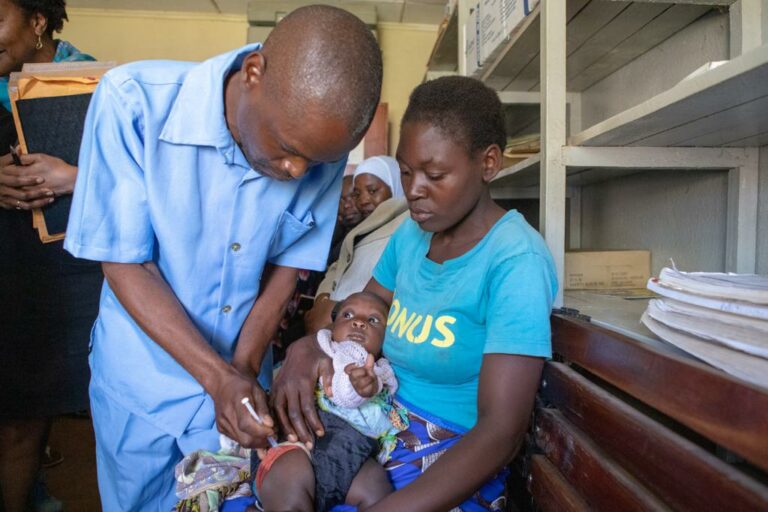
The vaccine has also been administered to more than 1.7 million children in three African countries — Ghana, Kenya and Malawi — as part of a pilot program.
“The RTS -S/AS01 vaccine has been administered to more than 1.7 million children in Ghana, Kenya, and Malawi since 2019 and is safe and effective, resulting in a substantial reduction in severe malaria and a fall in child deaths. At least 28 African countries have expressed interest in receiving the malaria vaccine.
“In addition to Ghana, Kenya, and Malawi, the initial 18 million dose allocation will enable nine more countries, including Benin, Burkina Faso, Burundi, Cameroon, the Democratic Republic of the Congo, Liberia, Niger, Sierra Leone, and Uganda, to introduce the vaccine into their routine immunisation programmes for the first time,” the statement released by Gavi, WHO and UNICEF said.
THE House of Representatives has opposed alleged moves to cede some communities in Cross River State to the neighbouring Republic of Cameroon.
The communities — Danare and Biajua, are located in the Boki Local Government Area of the state.
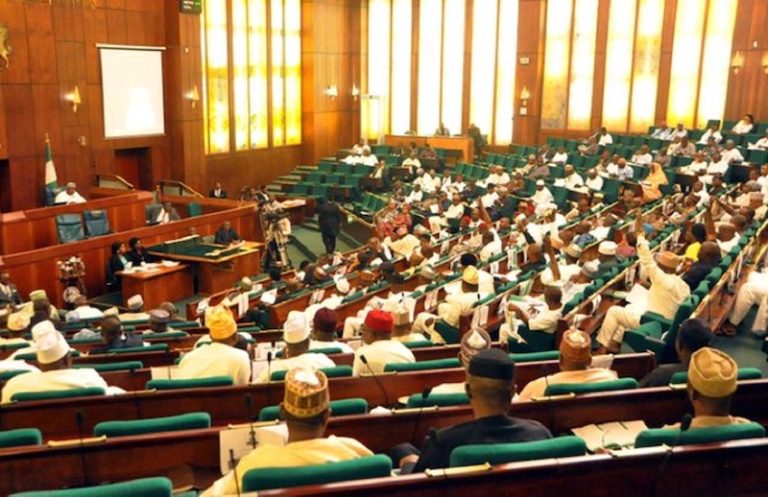
A motion against the ceding of the communities, jointly sponsored by members of the House of Representatives from Cross River, was unanimously adopted during plenary on Wednesday, July 5.
Speaking on behalf of his colleagues, the member representing Ikom/Boki Federal Constituency, Victor Bisong Abang, noted that on October 10, 2002, the International Court of Justice (ICJ) ruled that the Bakassi peninsula belonged to Cameroon, based on an agreement between the Nigerian and Cameroonian governments during the civil war.
He further noted that in July 2012, the Supreme Court ruled that Cross River State lost ownership rights to over 76 oil wells due to the loss of the peninsula to Cameroon.
Abang pointed out that the ICJ ruling mandated retracing the Cameroon-Nigeria International Boundary Line from the Lake Chad region to the Atlantic Ocean.
He added that the United Nations consequently established two committees to implement the judgment, namely the Cameroon-Nigeria Mixed Commission (CNMC) comprising representatives from Nigeria, Cameroon, and UN officials, and the Joint Technical Team (JTT), a sub-body of the CNMC responsible for the fieldwork and demarcation.
According to Abang, the JTT, consisting of representatives from both countries, with technical expertise provided by a foreign contractor paid by the CNMC, was mandated to conduct a valid and conclusive demarcation for the two countries.
However, he observed that the Anglo-German agreement of April 12, 1913, stipulated the placement of 114 boundary pillars from the Lake Chad region to Agbokim in the Etung Local Government Area of Cross River State, noting that six of these pillars, numbered 109 to 113A, fall within the Danare community in Boki Local Government Area.
The lawmaker expressed concern that the JTT has not located Pillar 113A and intends to adopt a “straight-line method,” potentially resulting in the loss of Danare and Biajua communities and approximately 7,000-10,000 hectares of land in the Boki Area of Cross River to Cameroon.
Abang argued that under the principles of federalism, the Federal Government of Nigeria has the responsibility to protect the territorial integrity of all federating units and should not unilaterally cede or allocate any part of a federating unit without the House’s consent.
The lawmaker further raised suspicions regarding the missing Pillar 113A, suggesting the Cameroonian government may have deliberately removed it as part of a plot to annex the land and displace the people of the Danare and Biajua communities.
“The missing Pillar 113A may have been deliberately removed by the Cameroonian government in their plot to take over the land and the people of Danare and Biajua communities,” he said.
“If a country like Nigeria keeps losing her people, lands, and natural and mineral resources to her neighbouring countries, one day we may not have a place called Nigeria.
“If urgent actions are not taken by the Federal Government, the entire country will lose the good people of Danare, Biajua in Boki LGA, and some parts of Obanliku LGA of Cross River State to the Republic of Cameroon.
“Cross River State may lose the good people of Danare and Biajua communities in Boki LGA, and their ancestral heritage of the land that they have protected all their lives to the Republic of Cameroon against their wishes and desires.”
Adopting the motion, the House summoned the Director General of the National Boundary Commission and the Surveyor General of the Federation to explain why Pillar 113A has not been located.
The House also resolved to investigate and assess potential land encroachment by Cameroon, consulting with legal experts, land surveyors, and other relevant professionals to comprehensively understand the technical aspects involved in resolving the encroachment.
Deputy Speaker, Benjamin Kalu, who presided over the plenary, acknowledged the motion’s significance and referred it to an ad hoc committee composed of technocrats well-versed in the matter.
THE Kano State Public Complaints and Anti-Corruption Commission says it has confirmed the authenticity of the bribery video involving the state’s former governor, Umar Ganduje.
Chairman of the the agency, Muhuyi Rimingado, declared that, contrary to Ganduje’s claims, the video was not doctored.
Rimingado spoke on Wednesday, July 5, at a ‘One Day Public Dialogue on Anti-Corruption Crusade’ in Kano.
In a video that went viral in 2017, Ganduje was seen receiving bundles of dollar notes offered as bribe from a contractor and stuffing them in his dress.
Rimingado claimed that since the video’s release, he has come under pressure from all sides to establish the governor’s guilt or innocence.
He explained that because Ganduje was immune from prosecution during his time in office, it had been hard to establish his guilt or innocence since the committee started looking into the issue in 2018.
When the video appeared in public, Ganduje discredited the contents of the video.
A committee was formed by the Kano State House of Assembly to look into the claims, but it has yet to turn in its findings before the new assembly was inaugurated on July 4.
Jafar Jafar, the Publisher of the Daily Nigerian online newspaper who leaked the video, insisted that the footage published by the paper was authentic and not manipulated in any way.
He said this during an investigative hearing into the allegations by the Kano State House of Assembly in 2018.
After the video was released, the Kano State government said Ganduje never collected bribes from contractors.
The government also described the video as “cloned”, adding that the governor would explore every legal means in seeking redress.
A few days after the publication of the video clip, Ganduje told reporters that he was not worried about the impact the video may have on him and that he was innocent of the accusations.
Jafar explained that the video was captured by a friend of his who is a contractor with the Kano State government and who had complained that Ganduje receives kickbacks, ranging from 15 to 25 per cent for every project executed in the state.
Despite the viral video showing Ganduje allegedly receiving a bribe from a contractor, a court in December 2019 dismissed a suit by the Economic Financial Crimes Commission (EFCC) seeking to investigate the governor.
The Federal High Court sitting in Kano dismissed the suit filed by a lawyer, Bulama Bukarti, who sought an order from the court to instruct the EFCC to investigate Ganduje.
The court ruled that the EFCC does not have a record of the forensic analysis of the bribery allegations.
Again, recently, Ganduje asked the Kano State High Court to stop the Economic and Financial Crimes Commission (EFCC) from investigating him in connection with the incident.
The court was asked stop the EFCC from scrutinising Ganduje until the outcome of a dispute between the former governor and Jafaar, Publisher of the Daily Nigerian, was known.
In a related development, the Kano Anti-Corruption Commission on Monday, July 4, arrested and detained Ganduje’s commissioner for works and Infrastructure, Idris Wada Saleh and five others over alleged N1 billion fraud.
The commissioner was arrested alongside the Permanent Secretary of Public Procurement Bureau, Mustapha Madaki Huguma, and the director of finance, research and planning.
They were accused of withdrawing about N1 billion for 30 road and drainage rehabilitation projects that were never completed.
According to Daily Post, the money, which was withdrawn in three instalments, was reportedly transferred into the accounts of three companies in April 2023.
The ICIR reported on June 21 that the Kano State governor, Abba Kabir Yusuf, reinstated the state chairman of the Public Complaints and Anti-corruption Commission (PCACC), Muhuyi Magaji Rimingado, whom his predecessor Ganduje sacked.
Following his reinstatement, Rimingado promised to revive the dollar bribery investigation against Ganduje.
Rimingado insisted that the matter be thoroughly probed even though the former governor disputed the accusation, claiming the video was doctored, and went to court to seek damages.
Also, during his swearing-in on May 29, Yusuf expressed sadness over the N241 billion debt left by Ganduje’s administration.
THE Christian Association of Nigeria (CAN) has condemned the recent attack on a Redeemed Christian Church of God (RCCG) church in Abule-Ori, Obafemi Owode Local Government Area of Ogun State.
The Christian association described the attack, during which a pastor was killed, as an assault on religious freedom in Nigeria.
Seven worshippers were also abducted in the incident.
CAN also mourned the death of 12 Salvation Army pastors, a baby, and a driver in a fatal accident, near Benin City, Edo State.
The President of CAN, Archbishop Daniel Okoh, in a statement issued in Abuja on Wednesday, June 5, urged the government to conduct an investigation into the road accident that led to the unfortunate deaths of the pastors.
Okoh also tasked the security agencies to increase their vigilance in places of worship during religious gatherings and provide adequate security for worshippers.
Parts of the statement read: “The loss of twelve pastors (Officers), a baby, and a driver in a fatal accident on the same day, near Benin City, Edo State, is a devastating blow to the congregation, the body of Christ in Nigeria, and the nation at large. We stand with the Salvation Army during this very difficult time in prayer, asking that God will comfort them and ease their pain.
“We also urge the government authorities to thoroughly investigate the accident in order to prevent a repeat of this episode.”
He further described the attack on the RCCG worshippers as “an assault on religious freedom in Nigeria”.
“Furthermore, the attack on worshippers at the Redeemed Christian Church of God in Abule-Ori, Obafemi Owode Local Government Area of Ogun State, is an assault on religious freedom in Nigeria. We mourn the loss of the Pastor and condemn the kidnapping of worshippers who were simply exercising their religious freedom to worship.
“We urge the various security agencies to increase vigilance on places of worship during religious gatherings and provide adequate security measures for worshippers. CAN urges citizens not to be discouraged by recent losses but to continue to look up to God for help. Our thoughts and prayers are with the affected families and churches. May the souls of the departed rest in eternal peace.”
Ogun State Commander of the So-Safe Corps, Soji Ganzallo, who confirmed the incident, said his men rescued the seven church members and killed one of the kidnappers during a rescue operation.
On January 18, The ICIRreported that Nigeria accounts for 89 per cent of Christians martyred worldwide, according to the latest report on global Christian persecution.
The Open Doors World Watch List 2023, released on January 17, said out of the total of 5,621 Christians killed for their faith during the reporting period, Nigeria recorded 5,014, marking the country as one of the most dangerous places “to follow Jesus”.
The report tracked the period from October 1, 2021 to September 30, 2022.
TAX experts and a traders association leader are demanding a total revamp of primary infrastructure in markets across the country in commensuration with the Federal government’s plan to be collecting tax from traders.
Expressing their reservations on the plan, market stakeholders are complaining that governments cannot reciprocate tax payments with commensurate infrastructural development, especially in major markets.
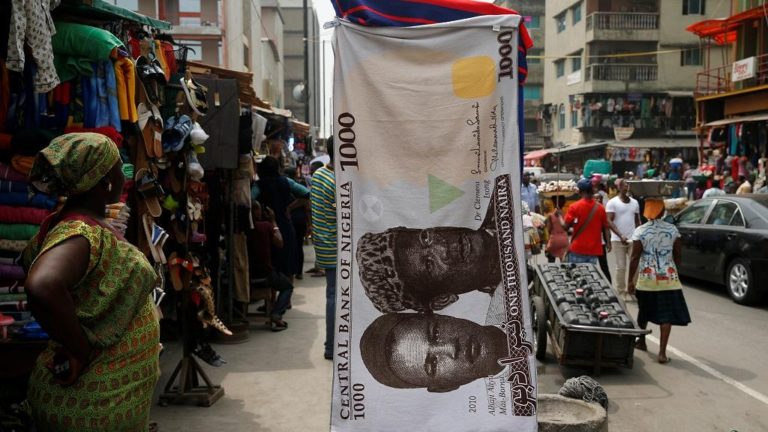
The Federal government, through the Federal Inland Revenue Services (FIRS), had announced the VAT (valued added tax) Direct scheme, it explained would enable it to collect taxes from the informal sector and reduce multiple taxation in the informal economy.
The FIRS said in a statement it issued on July 3 that it would be partnering with the Market Traders Association of Nigeria (MATAN) to collect VAT from traders, especially those in the informal sector, using a unified system of technology.
The president of the National Association of Nigerian Traders (NANTS), Ken Ukaoha, told The ICIR that the government needed to allow traders “breathe” amid the excruciating inflation spike.
“The basic question is: what are the traders gaining from taxation? Look at our taxation and see lots of vagabonds taxing the people that are struggling to breathe. Lots of non-state actors are exploiting the people with different kinds of taxes, and that is a huge concern. Is it the tomato seller, the pepper seller and the vulcanisers that are struggling to raise their heads from poor economic management that you are going to tax?” Ukaoha asked.
Flowing from Ukaoha’s reservations, a tax policy expert with the Price Waterhouse Coopers (PwC), Taiwo Oyedele spoke of the people’s “low confidence” on government’s application of taxes for their (people’s) benefits.
Oyedele said, “I was a research department director for the Fiscal Policy Roundtable set up by the Nigerian Economic Summit Group in 2019. We conducted a national tax perception study which revealed that Nigerians have a very low tax morale, that is, the willingness to voluntarily comply with tax obligations. The study shows that only 17 per cent of individuals and 31 per cent of businesses believe that they should pay their taxes correctly.”
Though he regarded the initiative as “good” with the capability to ward off the threats of multiple taxes and extortion by non-state actors, he mentioned, however, the need for proper education to ensure that the readers know their rights and are not exploited by tax officers.
He suggested that the biggest win for the government in the policy initiatives would be tax awareness and data about traders that could be used for economic planning and possible interventions to support informal sector businesses.
An economist and tax expert, Kalu Aja, knocked off the Federal government’s intention to be collecting VAT Direct, saying it is the mandate of state governments and not the Federal government to be collecting VAT.
“VAT is a final consumption tax and most certainly should not be shared. Allow states to determine their best rates so that VAT becomes a marketing tool for states,” Kalu said.
An economist with Arise Television, Chika Mbonu, said the Federal government has to rise on renewed confidence in it to sustain the reciprocity required to drive taxation at the informal level.
Mbonu said, “I know there are multifarious taxes in the markets. However, there is a moral issue here – that tax represents the share of government in your profits. Why? Because the government is expected to provide infrastructure and carry out its responsibilities to encourage taxation.
“Nigerians need to see what the money is being used for, as people are not eager to pay tax if there is no commensurate action to match tax payments.”
WARNINGS about artificial intelligence (AI) are ubiquitous right now. They have included fearful messages about AI’s potential to cause the extinction of humans, invoking images of the Terminator movies. The UK Prime Minister Rishi Sunak has even set up a summit to discuss AI safety.
However, we have been using AI tools for a long time – from the algorithms used to recommend relevant products on shopping websites, to cars with technology that recognises traffic signs and provides lane positioning. AI is a tool to increase efficiency, process and sort large volumes of data, and offload decision making.
Nevertheless, these tools are open to everyone, including criminals. And we’re already seeing the early stage adoption of AI by criminals. Deepfake technology has been used to generate revenge pornography, for example.
Technology enhances the efficiency of criminal activity. It allows lawbreakers to target a greater number of people and helps them be more plausible. Observing how criminals have adapted to, and adopted, technological advances in the past, can provide some clues as to how they might use AI.
AI tools like ChatGPT and Google’s Bard provide writing support, allowing inexperienced writers to craft effective marketing messages, for example. However, this technology could also help criminals sound more believable when contacting potential victims.
Think about all those spam phishing emails and texts that are badly written and easily detected. Being plausible is key to being able to elicit information from a victim.
Criminals could create a deepfake version of you who could interact with family members over the phone, text and email. Fizkes / Shutterstock
Phishing is a numbers game: an estimated 3.4 billion spam emails are sent every day. My own calculations show that if criminals were able to improve their messages so that as little as 0.000005% of them now convinced someone to reveal information, it would result in 6.2 million more phishing victims each year.
2. Automated interactions
One of the early uses for AI tools was to automate interactions between customers and services over text, chat messages and the phone. This enabled a faster response to customers and optimised business efficiency. Your first contact with an organisation is likely to be with an AI system, before you get to speak to a human.
Criminals can use the same tools to create automated interactions with large numbers of potential victims, at a scale not possible if it were just carried out by humans. They can impersonate legitimate services like banks over the phone and on email, in an attempt to elicit information that would allow them to steal your money.
3. Deepfakes
AI is really good at generating mathematical models that can be “trained” on large amounts of real-world data, making those models better at a given task. Deepfake technology in video and audio is an example of this. A deepfake act called Metaphysic, recently demonstrated the technology’s potential when they unveiled a video of Simon Cowell singing opera on the television show America’s Got Talent.
This technology is beyond the reach of most criminals, but the ability to use AI to mimic the way a person would respond to texts, write emails, leave voice notes or make phone calls is freely available using AI. So is the data to train it, which can be gathered from videos on social media, for example.
The deepfake act Metaphysic perform on America’s Got Talent.
Social media has always been a rich seam for criminals mining information on potential targets. There is now the potential for AI to be used to create a deepfake version of you. This deepfake can be exploited to interact with friends and family, convincing them to hand criminals information on you. Gaining a better insight into your life makes it easier to guess passwords or pins.
4. Brute forcing
Another technique used by criminals called “brute forcing” could also benefit from AI. This is where many combinations of characters and symbols are tried in turn to see if they match your passwords.
That’s why long, complex passwords are safer; they are harder to
guess by this method. Brute forcing is resource intensive, but it’s easier if you know something about the person. For example, this allows lists of potential passwords to be ordered according to priority – increasing the efficiency of the process. For instance, they could start off with combinations that relate to the names of family members or pets.
Algorithms trained on your data could be used to help build these prioritised lists more accurately and target many people at once – so fewer resources are needed. Specific AI tools could be developed that harvest your online data, then analyse it all to build a profile of you.
If, for example, you frequently posted on social media about Taylor Swift, manually going through your posts for password clues would be hard work. Automated tools do this quickly and efficiently. All of this information would go into making the profile, making it easier to guess passwords and pins.
Healthy scepticism
We should not be frightened of AI, as it could bring real benefits to society. But as with any new technology, society needs to adapt to and understand it. Although we take smart phones for granted now, society had to adjust to having them in our lives. They have largely been beneficial, but uncertainties remain, such as a good amount of screen time for children.
As individuals, we should be proactive in our attempts to understand AI, not complacent. We should develop our own approaches to it, maintaining a healthy sense of scepticism. We will need to consider how we verify the validity of what we are reading, hearing or seeing.
These simple acts will help society reap the benefits of AI while ensuring we can protect ourselves from potential harms.
Shagari was Nigeria’s president between 1979 and 1983 when former president, Muhammadu Buhari, toppled his government in a putsch.
At least two contractors have handled the project from inception.
A source close to the project’s current contractor told The ICIR that the Federal Government disengaged the former contractor and re-awarded the centre to Tekno Concept Nigeria Ltd and Borwa Engineering Services Ltd in 2013.
He did not state why the government parted ways with the former contractor.
The new firms, which appear to be managed by the same person, Yerima Mustapha, have since been working on the project for a decade without completing it.
NCoS declines FOI requests on project budget details, reason for delaying centre’s completion
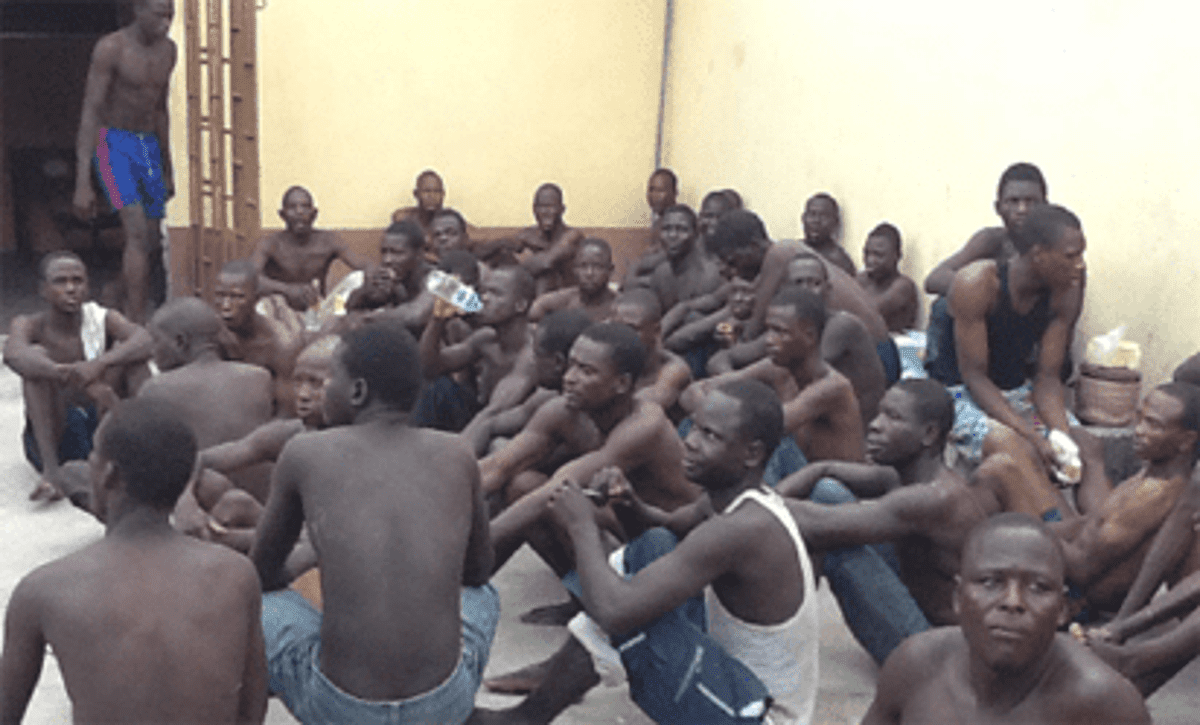
File photo of inmates used to illustrate this report.
In August and September 2022, The ICIR twice requested information on the budgets for the centre and the reason for the delay in its completion from the NCoS through a Freedom of Information (FOI).
The NCoS acknowledged the letters but refused to respond to them. The ICIR had made a similar request from the Accountant-General’s Office. The Office referred The ICIR to the NCoS.
According to the FOI Act, the NCoS’ refusal to provide the information or write this organisation on why it did not make the information available is an affront to and is punishable by the law.
Section four A and B of the Act states, “Where information is applied for under this Act, the public institution to which the application is made shall, subject to sections six, seven, and eight of this Act, within seven days after the application is received- (a) make the information available to the applicant.
“(B) Where the public institution considers that the application should be denied, the institution shall give written notice to the applicant that access to all or part of the information will not be granted, stating reasons for the denial and the section of this Act under which the denial is made.”
Section seven of the Act states the penalty awardable to the refusal. Sub-Section four of this section states that “Where the government or public institution fails to give access to information or record applied for under this Act or part thereof within the time limit set out in this Act, the institution shall, for the purposes of this Act, be deemed to have refused to give access.
“(5) Where a case of wrongful denial of access is established, the defaulting officer or institution commits an offence and is liable on conviction to a fine of N500,000.”
The act in section 10 states that “It is a criminal offence punishable on conviction by the Court with a minimum of 1 year imprisonment for any officer or head of any government or public institution to which this Act applies to willfully destroy any records kept in his custody or attempt to doctor or otherwise alter same before they are released to any person, entity or community applying for it.”
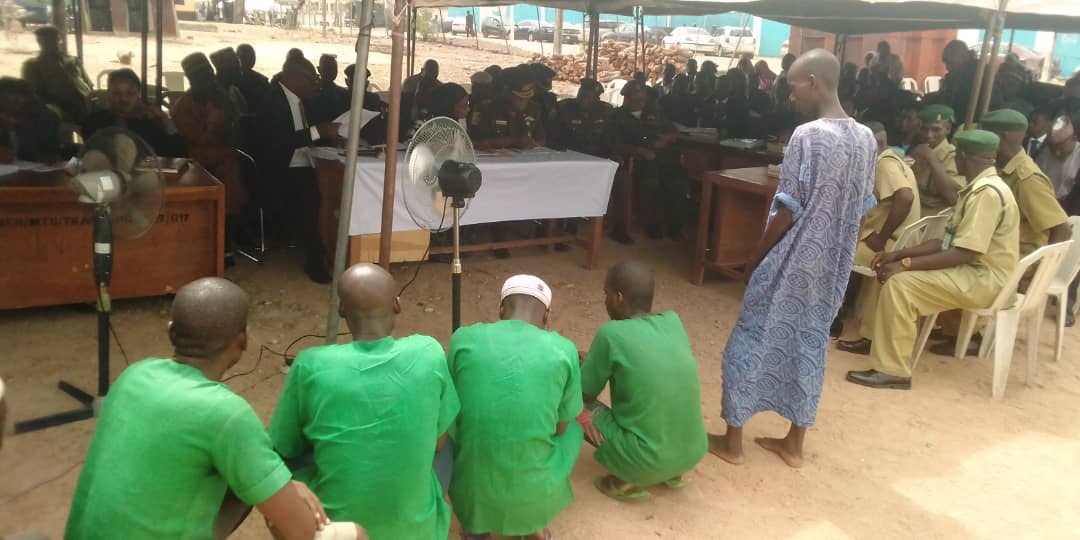
Chief judge of Niger state, Halima ibrahim Abdulmalik and the Controller of Corrections Niger state command, Salman Abdulkadir in Minna old medium security custodial centre on Monday April 17,2023. Photo Nigeria Correctional Service
Contractor evades speaking on project
Further findings by The ICIR showed that Suleiman Jajere, an engineer, is in charge of the project.
Jajere has severally turned down this organisation’s requests for information on the centre.
The ICIR sought to know what delayed the completion of the project and how much his company got from the government for the work.
He kept promising to meet The ICIR’s reporter physically in Abuja, where he claimed to live, but he never did, despite several reminders in calls and text messages.
His brother, Ahmed Goni, is the ‘accountant’ for the firm at the project site.
Goni claimed he was not an employee of Jajere’s company but was helping the firm handle its funds and pay workers because Jajere lives far from the project site.
Gashua has two correctional centres
Gashua town has two correctional centres – the Federal Correctional Centre and the Maximum Correctional Centre under construction.
Available information on the old facility shows the government built it in 1927. The centre still functions but faces many challenges. It is among244 correctional facilities in the country.
The late famous human rights lawyer, Gani Fawehinmi, was among the prominent Nigerians who served at the facility. Fawehinmi summed up the centre’s condition as follows after he came out of the facility in 1989 when the centre was still much better than it currently is.
“The cells there are terrible. I was detained there in 1989. So I know what I am saying. The cell is about 18 feet by 10 feet. It is surrounded by yet another big terrible wall which is 22 feet. So there is no way air is going to penetrate this cell.
“The windows are so tiny; it is built in such a way that when you peep out of the windows, it is the outer wall that you will see. The outer wall overshadows the cell completely. There is just a little space between the cell and the wall. So I started sweating the very moment they opened the cell and locked me in.
“The cell I was put in is Cell D, which is solitary confinement, far removed from other cells. The cell has no ceiling; it has only perforated sheets, which make heat penetrate fully into the cell. The floor is not cemented; there is no bed, no mattress. In my case, I was given a mat.
“Any time I remember that cell, I get agitated because of what I suffered while in detention. At one corner of the room, there is a very small pail; at another corner of the room is another small pail. I used the one by the left for defecation, and the one by the right for urinary purposes, reported the Nation newspaper.
A source told The ICIR that the centre’s condition has been much worse than in the ’80s.
Checks by The ICIR also revealed that the old correctional centre in the town is congested and uncomfortable for the NCoS staff and other people at the facility.n.
“After spending billions of naira on that massive project in the past years, it is surprising that the Federal Government has yet to complete it,” said a prominent indigene of the town who did not want his name in print.
In 2014, a former Minister of State for Finance, Yerima Lawan Ngama, who hails from the town, assured that the facility would be completed.
Another file photo of inmates in one of Nigeria’s correctional centres
Many residents said the government started work simultaneously on the uncompleted centre and its counterpart in Potiskum, another community in the state.
The Potiskum Centre was completed over a decade ago and has since been in use.
The reporter saw the abandoned project while checking the water projects across the town.
Apart from remaining uncompleted, residents said a vast land adjacent to the centre was for building the organisation’s staff quarters. The ICIR reporter saw several residential buildings on the land, which many residents claimed belonged to illegal occupants.
Available budgets for Nigerian correctional centres
Capital budgets for correctional centres between 2009 and 2022, available on the website of the Budget Office of the Federation, show that only 2014 and 2015 had a distinct capital budget for the new Gashua correctional centre.
They are N160.5 million for 2014 and N85.5 million for 2015.
Other capital appropriations for building correctional centres were lumped together in other years. They include “completion of 12 uncompleted prisons”, “construction/provisions of prisons”, and “cost of completion of prisons.” Government ministries, agencies and departments use blanket titles like these to siphon funds.
The headquarters building of the Nigerian Correctional Service in Abuja
Budgets for building correctional services record sharp rise under Buhari
Budgets for building correctional facilities enjoyed an astronomical rise under the Buhari government, which vowed to fight corruption to a standstill and jail looters. But global corruption ratings show that the nation remains neck-deep in the menace. Buhari’s government had many appointees that were booted out of office during his eight years, which ended on May 29.
Available data show that the government approved the following amounts for building prisons between 2009 and 2023 and gave them different names:
2009: N375.25 million (completion of uncompleted prisons)
2010: N503.92 million (completion of uncompleted prisons)
2011: N570,449 million (construction/provison of prisons)
2012: N612,404 million (construction/provison of prisons)
2013: N1.31 billion (construction/provison of prisons)
2014: N160.5 million dedicated to Gashua prison.
2015: N85.5 million dedicated to Gashua prison.
2016: N2.640 billion (provision of prisons)
2017: N8.32 billion (construction/provision of prisons)
2018: N8.07 billion (completion of prisons nationwide)
2019: N8.02 billion (construction/provision of prisons)
2020: N4.31 billion (completion of prisons nationwide)
2021: N6.73 billion (construction/provision of prisons)
2022: N5.58 billion (construction/provision of prisons)
There is no budget for the Gashau new centre in the 2023 budget, but the government will spend 22.4 billion on the NCoS’ capital projects.
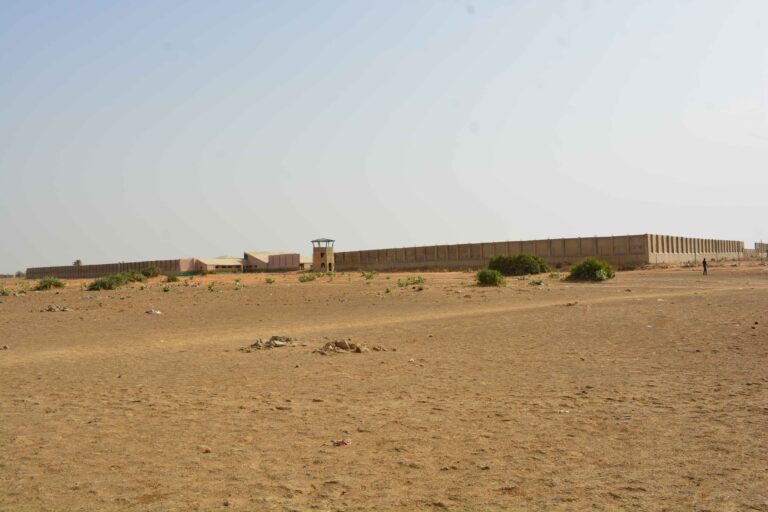
The Gashua Correctional Centre has remained uncompleted after gulping billions in 40 years. Photo credit: The ICIR/Marcus Fatunmole
How much does it cost to build a correctional centre?
Some contractors with the NCoS, including Elder Sunday Ladejobi, an engineer, said only the government knows how much it could cost to build a complete correctional centre. They said different contractors handle various sections and infrastructures, making it difficult for a firm to provide an estimate for building a centre.
State of Nigerian correctional centres
In 2022, The ICIR reported how terrorists attacked 18 correctional centres and released inmates, including other terrorists. Similarly, in a report in July 2022, this organisation showed how the female population in the nation’s correctional centres was only two per cent.
In another report, The ICIR showed how 3,167 inmates were on death row in the country as of December 2022. There were 74,872 inmates in Nigeria correctional centres – 73,186 males and 1,686 females – as of Wednesday, May 17.
On May 13, the federal government said it would no longer feed state inmates but would only feed only those its court convicted. The government claimed it spent one million naira on an inmate yearly.
NOTE: The report was updated to include the consequences for denying a FOI request.
THE Ekiti State government has stopped a planned three-day kissing marathon billed to take place in the state.
The event, organised by Sugartee, is scheduled to hold in a popular amusement park in the state capital.
Tagged ‘kiss-a-thon’, the event is aimed at breaking the Guinness World Record for the longest world kissing marathon.
However, the state government, according to a statement seen by The ICIR on the official Twitter account created to promote the state by the special adviser to the state governor on New Media, Tosin Adara, deemed the event as absurd, unhealthy and immoral.
The statement added that the event is potentially damaging to the state’s image.
In the statement issued by the Ministry of Arts, Culture, and Tourism on Wednesday, July 5, the government warned hotel owners in the state against lending out their facilities to host such an event or similar ones.
“Kiss-a-thon” as an event is not only absurd, unhealthy, immoral and capable of denigrating the image of the state, it is a programme that runs counter to the values of the people of the state and therefore capable of plunging our Youths morally backwards,” the statement read.
“In view of the foregoing, the Ministry of Arts, Culture and Tourism hereby prohibits the hosting of such event or any other events like it in any facility that wishes to continue to operate lawfully in Ekiti State.
“To the above, you are hereby requested to convey the content of this Notice to the members of Ekiti State Hoteliers’ Association to effectively monitor their outlets against being used negatively to cause embarrassment to the Government and People of Ekiti State.”
Nigerians are currently in the fever of breaking Guinness World Records shortly after a chef, Hilda Baci, broke the record of the longest cooking marathon in the world in May.
There have been several entries from Nigerians who are trying to set world records since then.
Barely, two weeks after Baci set her record, a chief in Ekiti, Damilola Adeparusi, set tongues wagging on social media after she announced her attempt to set the same record with 120 hours while Baci waited for her attempt to be certified by GWR.
Although Adeparusi completed the cooking marathon, The ICIR cannot confirm if she submitted her evidence to GWR for confirmation.
Another chef in Ondo State, Adeola Adeyeye, is also currently cooking to break Baci’s record of 93 hours 11 minutes. Adeyeye is cooking for 150 hours to set a new record.
Meanwhile, a Nigerian lady, Joyce Ijeoma who attempted 72 hours of body massage on individuals reportedly collapsed.
Ijeoma collapsed at the venue of the event in the Lekki area of Lagos State.
The young lady who had done a total of 50 hours collapsed on Tuesday at 1:00 am.
The previous record was set in 2015 by Alastair Galpin in South Kalimantan, Indonesia.
Galpin currently holds the record for the longest full-body massage with 25 hours and four minutes.
ROAD accidents in the country declined by 25 per cent during the just concluded Eid-el-Kabir celebration, according to the Federal Road Safety Commission (FRSC).
The Commission said this in a statement issued on Wednesday, July 5, by the Corps Public Education Officer, Bisi Kazeem.
The FRSC attributed this reduction to what it described as it’s revamped operational tactics.
“In line with its rejigged operational tactics towards creating a safer motoring environment in Nigeria, the Federal Road Safety Corps has successfully recorded a 25% reduction in the total number of Road Traffic Crashes, a 53% decrease in people killed, and a 43% reduction in a number of people injured in crashes that involved 522 people on Nigerian roads during the 2023 Eid-El Kabir special patrol operations that held from June 26 to July 1, 2023.”
However, Nigeria has been infamous for having one of world’s highest road accident death rates. Nigeria tops the list of countries with the most fatalities from traffic crashes, according to a 2014 report by the Global Road Safety Facility (GRSF).
Nigeria also has the highest road injury death rate (52.4 per 100,000 people) of any country in the world.
In past years, road crashes in Nigeria have been consistently high. According to an ICIRreport, Nigeria recorded 13,656 crashes in 2022.
Speaking on road crashes in the country, Kazeem said the “huge record of reduction in road traffic crashes during the 2023 celebration period came as a result of improved and rejigged patrol operations, robust Public enlightenment campaign, injection of more operational vehicles for enhanced visibility, prompt rescue services, enhanced stakeholder collaboration, wider coverage of the national road network due to the establishment of more FRSC Commands, Outposts roadside clinics and Zebra points, among others”.
He noted that the Corps Marshal, Dauda Biu, had pledged that the Commission would sustain the tempo and enhance its effort towards entrenching safety on all roads.
He said 88 persons were killed in crashes in 2022 against the 38 recorded in 2023, while 373 were injured in 2022 as against the 211 recorded in 2023.
“The Corps also rescued a total of 273 victims without injuries in 2023 against 347 in the same period in the year 2022. More so, 4,116 offenders were apprehended over 4,682 offences committed across 2,053 routes covered by the Corps,” he added.
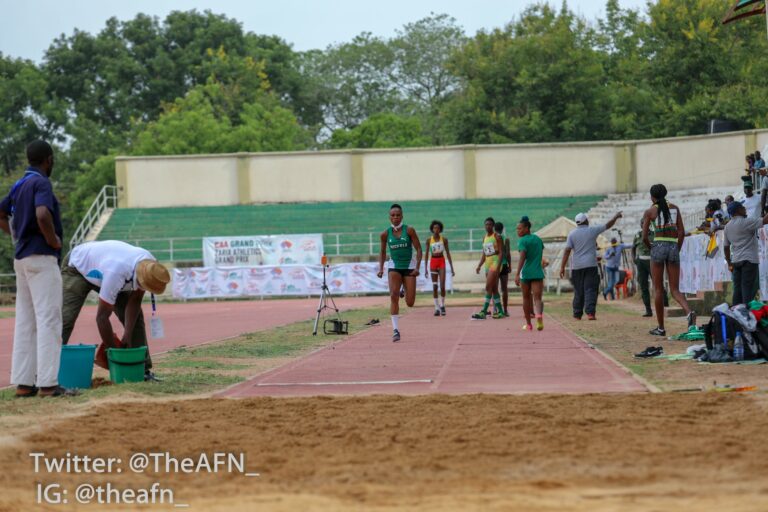
AHEAD of the 2023 World Athletics Championships in c, Hungary, billed to hold from August 19 to 27, Nigerian foreign-based athletes who fail to show up at national trials in Benin risk exclusion from the international sporting event.
The national trials, the preliminaries stage where athletes who would represent the country at the international event are to be selected, is slated for Thursday, July 6 till Friday, July 8.
Secretary General of the Athletics Federation of Nigeria (AFN), Rita Mosindi, said there will be no slot at the World Athletics Championship for any foreign-based athlete who failed to show up for the national trials.
Mosindi insisted that the AFN will ensure that selection of athletes for the Championship is done according to the rules.
“AFN has a policy in the selection of athletes for major competitions, including the World Championships. If you don’t come for the national trials, you won’t go to Budapest.”
However, she said only on the condition of ill-health can an athlete miss the national trials.
“The only condition for the AFN to consider such athlete for the World Championship is, if he or she tenders a genuine case of ill-health. In that case, our medical team has to be notified and the board has to take a decision on it. For now, no athlete has informed me of his or her absence from the national trials.
“We have only heard rumour that some athletes would not be here for the national trials, but the rules are clear. If you don’t come, forget the ticket,” she stated.
AFN Technical Director, Samuel Onikeku, added: “Some of the athletes feel that they have already qualified for the World Championships with A Standard. But it is the AFN that will register them for the World Championships. Anybody who fails to show up in Benin City is on their own,” he said.
Tobi Amusan, other expected at national trials
The AFN’s Secretary General revealed that reigning sprint hurdles world champion, Tobiloba Amusan and Nigeria’s best 200m runner at the moment, Udodi Onwuzurike, are among athletes expected in Benin City.
“Tobi Amusan’s flight from Sweden was cancelled on Monday, but we are expecting her,” she added.