Home Blog Page 874

Debt Management Office cautions FG on reckless borrowing, calls for bold reforms

THE Debt Management Office (DMO) has issued a warning to the Federal government against additional borrowing, raising a concern that 73.5 per cent of this year’s revenue would be used to service debt.

The DMO, after analysing the nation’s 2022 debt situation, posited that the high debt service-to-revenue ratio was unsustainable and posed a threat to debt sustainability.

The Debt Office advised the Federal government to focus on increasing revenue generation to achieve a sustainable debt service-to-revenue ratio.

It suggested the Federal government should raise its revenue from N10.49 trillion to about N15.5 trillion.

DMO’s analysis, obtained by The ICIR, projected the total public debt-to-gross domestic product ratio to increase to 37.1 per cent in 2023, mainly due to new borrowings, Federal government’s Ways and Means at the CBN, and estimated promissory notes issuance.

The DMO also projected that Federal government’s debt service-to-revenue ratio of 73.5 per cent for 2023 would exceed the recommended threshold of 50 per cent due to low revenue.

In a further analysis, the DMO emphasized the importance of adhering to existing legislation on government borrowing, such as the Fiscal Responsibility Act 2007 and the Central Bank of Nigeria Act 2007, to moderate the growth rate of public debt.

It further called for a focus on revenue mobilisation initiatives and reforms to increase the country’s tax revenue to GDP ratio.

It also suggested encouraging private sector involvement in funding infrastructure projects through public-private partnerships (PPP), and reducing borrowing by privatisation or sale of government assets.

Every Nigerian is calculated to be owing N384,864 accumulated by former President, Muhammadu Buhari, who left  office in May 2023.

The DMO had projected that government’s persistent borrowings would see former President,  Muhammadu Buhari, leave a humongous debt of N77 trillion behind for the incumbent Bola Ahmed Tinubu administration.

Economic analysts said with the current foreign exchange unification, the debt would have appreciated to N82 trillion, while putting the economy into more pressure of repayment and debt servicing.

“The government must pay attention to the ease of doing business and create a special purpose vehicle to open the economy through huge diaspora remittances.

“The government at the federal and sub-national levels should also pay attention to transparency and procurement reforms to give investors confidence,” the Lead Director for Centre for Social Justice, Eze Onyekpere, told The ICIR.

FG, states, LGCs shared N786bn FAAC allocation in May, the highest this year

THE Federation Account Allocation Committee (FAAC) has shared N786.161 billion among the federal government, states and local government councils (LGCs) for May 2023.

The allocation was N130.229 billion higher than the amount shared in April, and was the highest revenue the tiers of government had received since the beginning of this year, after receiving N990.189 billion in December 2022, The ICIR can report.

FAAC shared N750.174 billion to the governments in January, N722.677 billion in February, N714.629 billion in March, and N655.932 billion in April.

In a communiqué issued at the end of the FAAC meeting for June, chaired by the Accountant General of the Federation (AGF), Oluwatoyin Madein, the committee stated that the N786.161 billion was the total distributable revenue, which comprised statutory revenue of N519.545 billion and value-added tax (VAT) revenue of N251.607 billion.

It also included an electronic money transfer levy (EMTL) of N14.370 billion and an Exchange Difference revenue of N639 million.

FAAC said the total deductions for the cost of collection was N38.238 billion, transfers and refunds were N163.193 billion, and the balance in the excess crude account (ECA) was $473,754.57 in May.

Of the N786.161 billion distributable revenue, the federal and state governments received N301.889 billion and N265.875 billion respectively, while LGCs got N195.541 billion.

The committee also disclosed that a total sum of N22.855 billion was shared to the relevant states as 13 per cent derivation revenue, adding that the revenue received in May surpassed that of April by N204.324 billion.

“Gross statutory revenue of N701.787 billion was received for the month of May 2023. This was higher than the sum of N497.463 billion received in the previous month,” it explained.

According to FAAC, from the N519.545 billion distributable statutory revenue, the Federal government received N261.686 billion; states, N132.731 billion; and LGCs, N102.330 billion.

It revealed further that N22.798 billion was shared to the relevant states as 13 per cent derivation revenue.

The gross revenue from VAT in the review month was N270.197 billion, higher than N217.743 billion in April.

From the N251.607 billion distributable VAT revenue, the Federal government got N37.741 billion; states, N125.804 billion; and LGCs, N88.062 billion.

The N14.370 billion from EMTL was also shared as the Federal government got N2.155 billion; states, N7.185 billion; and LGCs, N5.030 billion.

FAAC also included in the communique that from N639 million Exchange Difference revenue, the Federal government received N307 million; states, N156 million; and LGCs, N119 million, while a sum of N57 million was shared to the relevant states as 13 per cent mineral revenue.

In May, petroleum profit tax (PPT), companies income tax (CIT), oil and gas royalties, VAT, import and excise duties increased significantly, while EMTL decreased marginally, the committee added

Bolt, Uber, others: E-hailing drivers struggle amid fuel subsidy removal

THE recent surge in fuel prices across the country has impacted different economic sectors, particularly transport operators.

A group of such operators are drivers for Bolt, a ride-hailing company and the major rival in the business in Nigeria to Uber.

The Bolt and Uber drivers, whom The ICIR spoke with on the “all-time business low” they said they have been experiencing since the subsidy removal, would not want their full names mentioned in this report for fear of reprisal from their employers.

David is a Bolt driver in Abuja struggling to cope with the recent increment of the fuel price. He has seen his earnings decrease drastically due to the unwillingness of many riders to pay additional fees.

The hike in fuel price has resulted in a decline in ride demand, which is naturally the consequence, as said by potential riders. 

David likened the situation to the fear and impact of the covid-19 lockdown, but noted that the current situation has a higher impact. 

He said, “This case is quite equivalent to that of the covid-19 lockdown, but it has a higher impact in the sense that you are uncertain that you will have a job after a few weeks if this persists without a form of intervention to cushion the effects.”

While explaining the additional expenses like monthly vehicle servicing and repairs, and personal care that have been the results of the subsidy removal, he maintained that the profit margin would consequently be inconsequential.

“You could make a run of earnings of about N25,000, but after deduction from fuel and Bolt commissions, you’d probably be left with only N4,000, and you’d not be able to feed yourself.” 

“As I said earlier, there’s no profit. Even if I’m to put only the fuel rate as the determinant, I won’t break even. Now add wear and tear of the vehicle, monthly car service and repairs, personal care and some other factors to mention, where would the profit come from when the profit margin is 20 per cent of every litre of petrol expended in the course of work? It’s not in any way realistic to make profit, not even enough to keep the business afloat,” he said.

Background 

On May 29, the new President, Bola Tinubu, declared in his inaugural address that his administration would be removing the fuel subsidy.

The announcement immediately led to fuel queues as many retailers shut their filling stations, hoarding their stock, and creating scarcity with a view to hiking fares later.

Two days later, the Nigeria National Petroleum Company Limited (NNPCLtd) officially increased the pump price of petrol by about 200 per cent.

The NNPCL, in a template sent to marketers, confirmed the astronomical rise in pump price of the product, with the minimum being the N488 per litre obtainable in Lagos, while it will be selling as high as N557 per litre in Maiduguri.

Also, the NNPCLtd, in a statement signed by its chief corporate communications officer, Garba Deen Muhammed, explained it was adjusting price upward “in line with current market realities,” adding that “prices will continue to fluctuate to reflect market dynamics.”

The development has, however, led to a sharp rise in the cost of transportation on the different routes as commercial cab drivers transfer the additional cost of petrol on passengers.

A report by Nairametrics, the Nigeria Extractive Industries Transparency Initiative (NEITI) disclosed that Nigeria spent N13.69 trillion ($74.39 billion) on fuel subsidies between 2005 and 2021.

Business Day in another report, stated that Buhari spent N11 trillion on fuel subsidy during his tenure as the president. 

Passing the burden to drivers, riders

Owing to the recent fuel price increment, E-hailing drivers are now charging extra fees to meet up with their expenses and to make profit.

This is despite the recent fare increment by the ride-e-hailing companies, with its drivers like David saying that the benefits primarily go to the ride-hailing companies themselves. 

He added that the commissions that the platforms charge have only increased to put more financial pressure on drivers and riders.

“The Bolt & Uber fare increment seems to benefit them more as their commissions have only gone higher. So the pain is for drivers and riders, while Bolt and Uber smile to the bank,” David said.

Why we charge higher fare than what’s shown on app – Drivers

Speaking on why the drivers seek additional charges apart from the one displayed on the app, David explained that drivers can’t drive on those rates as they do not gain from the figures.

He said, “In most cases, we can’t drive on those rates so we discuss with riders who seem to understand the situation. But for others who insist on the official rate, we advise them to cancel and try again and maybe, they will get someone who is desperate enough to drive on a loss. So, yes, we ask for more to maintain an air of sustainability, not profit.”

Ayomide, another e-hailing driver on the bolt platform, said he charged additional fares before and after the Bolt increased the price, stressing that Bolt’s adjustment is not “speaking reality.”

Ayomide said, “Of course, I seek an additional fee, because when you look at the first and second day and even the third day of this fuel price increment, Bolt didn’t do anything. And you don’t expect me to buy fuel at N540 and start using the same fuel to be picking riders for the same charges Bolt has been charging when the fuel was N194 per litre.”

The driver corroborated David’s allegation that the fare adjustment favours only the company itself and not the drivers.

“Now that they have adjusted their fares, the adjustment does not really reflect what is happening in reality. It is still not obtainable and profitable. They just have to do better. 

“The adjustment they made is not even up to 50 per cent. A trip of N1,000 before was adjusted to about N1,200 or N1,300,” he said.

Likely impact on the ride-hailing business 

There have been legitimate concerns that the ride-hailing service may experience a significant decline if the companies do not increase the commission to boost workers’ productivity, according to some drivers who spoke to The ICIR.

“This is the crazy part; demand for our service will drop drastically unless there’s an increment in wages to allow spending power.

“The business will fail in the sense that those who invest in cars for the business will stop, basically cutting their losses and moving into other trades and thereby shortening the number of cars in the industry, which will all together weaken the business.” David lamented.

The ICIR had reported that Bolt and Uber drivers’ union embarked on strike to protest against what they described as “low fare increase” that the ride-hailing companies approved.

The development followed the failure of ride-hailing companies to agree with the drivers’ demand for a 200 per cent hike in fares and a 50 per cent reduction in commission to level up with the recent hike in petrol pump price.

The union noted that the rate increase implemented by the app-based companies represented only 25 to 30 per cent, which according to the union, was far less than the 200 per cent hike demanded by members, in addition to a 50 per cent reduction in commission.

Ayomide said though he is still getting requests from riders, he bemoaned how it is affecting the drivers’ earnings.

According to him, “We are still getting more requests because the fares that Bolt has set are something riders can afford because they are still cheap. Customers will even prefer to park their cars at home. But when you look at drivers’ earnings, it’s seriously affecting drivers as they can no longer make profits.

“When you buy a fuel of N10,000, you have to work hard to gross N15,000. From that money, by the time you remove N10,000 for fuel, you are left with N5,000, and from that amount, Bolt is still charging its 20 per cent. Many drivers have stopped because there’s no way they can cope.”

I now work for fuel  – driver

Richard, another e-hailing driver in Abuja, lamenting his plight regarding the fuel price hike, disclosed that he now “works for fuel, not even for myself.”

According to him, the recent development has affected his business as customers find it difficult to pay the high fare. 

He said, “It has impacted my business very poorly. Customers are finding it hard to request based on high demand. Now, the number of ride requests I get a day is about five a day.”

Speaking on how he is adjusting to the situation, he said, “I try as much  as possible to explain the price to them to take them to their destinations.”

His problem, he explained, is ameliorated by the fact that his car is fuel-efficient. 

Sarah, another driver, told The ICIR, that she had taken a proactive approach in mitigating the effects of the fuel price hike. 

Sarah, who plies the airport axis, said she adopted fuel-efficient driving techniques and regularly maintains her vehicle to optimise fuel consumption. 

AUATWON’s position

In an interview with The ICIR, the Association of Uber and Taxify Workers of Nigeria (AUATWON), called for app companies (ride-hailing) to increase their fares by 200 per cent and reduce their commission by 50 per cent.

Additionally, AUATWON is pushing for a flat commission rate of 10 per cent and the implementation of collective bargaining rights for drivers.

The Vice President, North Central, Amalgamated Union of App-based Transport Workers of Nigeria (AUATWON), Anthony Ayodele, expressed members’ frustration over dwindling earnings, which he regretted have gone abysmally low. 

According to Ayodele, the reduction in income has severely affected the livelihoods of drivers, leaving them with limited means of survival.

He hoped that riders would understand the weight of the current situation and accept the necessity for an increase in fares. 

He also argued that the drivers’ union resorted to the strike measure as a means of securing their livelihoods amid the challenging circumstances. 

He advocated for the implementation of collective bargaining rights, allowing AUTOWON to negotiate on behalf of the drivers. 

“We are calling on the ride-hailing companies to embrace and implement our right to collective bargaining as a union,” Ayodele said.

Uber reacts, Bolt declines comments

The Country Manager for Uber in Nigeria, Tope Akinwunmi, in a statement addressed to The ICIR on the matter, noted that the June 2023 fare increase by the company was designed to help drivers mitigate the recent increase in fuel costs and not cover the entire cost of fuel.

”Following an in-depth review of the current fuel subsidy removal, Uber updated fares on the 3rd and 9th of June on the app to reflect existing economic conditions. We believe these changes have helped to support drivers in increasing their earning opportunities. Furthermore, we lowered the service fee in February 2022 from 25 per cent to 20 per cent to enable better earning opportunities for drivers,” Akinwunmi stated.

He explained that the service fee ensures the running of the Uber App, which comes out of Uber’s service fee from each fare.

Uber noted that the service fee also helps to maintain and make continuous investments to enhance its technology designed to meet the needs of riders and drivers.

“Uber takes into consideration the economic climate in rolling out any price reviews. We believe this fare increase will have a positive impact on driver earnings while maintaining an affordable service for riders. Where price options are made too high, there could be a risk of fewer or no requests from riders – meaning fewer or no earning opportunities for drivers,” Akinwunmi said.

The Bolt management in Nigeria failed to respond to The ICIR enquiry sent via email and also via social media messaging. Furthermore, calls were made to the phone number provided on the website, but it was not reachable. This is not the first time Bolt will decline to speak. In 2022 when The ICIR reached out to the company concerning drivers’ safety, they still did not respond.  This was at a point when the mobility company was facing criticism concerning the security of drivers and riders. In a thread archived here, many commenters faulted Bolt for falling short – in terms of security compared to similar services.

Armenia International Women’s Film Festival seeks entries

THE Armenia International Women’s Film Festival ‘KIN’ (meaning ‘woman’ in Armenian), organised by the Legal Gender Cultural Foundation, LIZA, will hold from November 12 to 16 in Yerevan, Armenia.

Female filmmakers worldwide can submit short documentaries, fiction and animated films. The festival is looking for films that address issues related to women’s rights and gender problems.

There are two award categories: best film and special prize. Competitive films must have been produced in the last three years and must include English subtitles.

The regular deadline is July 10, but the extended deadline is August 1, 2023.

Interested applicants can apply here

Made-in-Nigeria noodles safe – NAFDAC

0

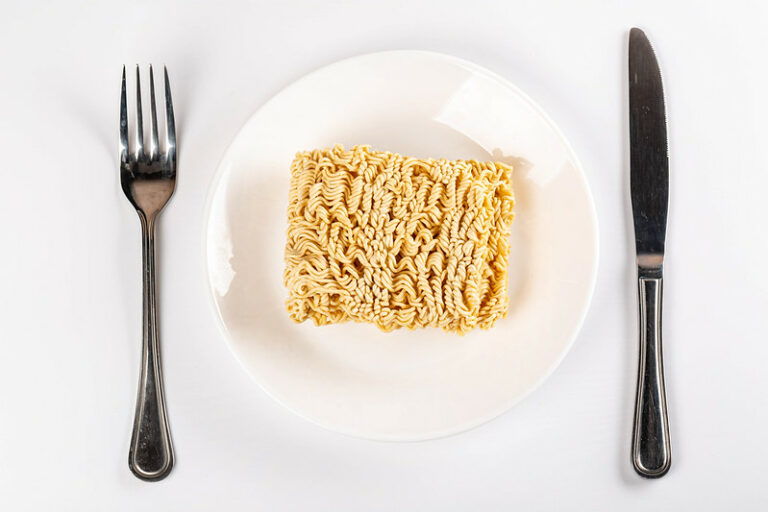
THE National Agency for Food and Drug Administration and Control (NAFDAC) says all noodles produced in Nigeria are safe for consumption.

The agency, on Thursday, June 22, released the results of the tests it conducted on different noodle products in the country following an uproar over the withdrawal of Indomie’s special chicken flavour in Taiwan and Malaysia in April.

The ICIR reported on April 29 how Taiwan and Malaysia withdrew the products after they were found to contain ethylene oxide, a cancer-causing chemical.

Fears grew in Nigeria after the report went viral.

The National Institute for Cancer Research and Treatment’s (NICRAT) position on the issue compounded Nigerians’ concerns on the continued consumption of the product.

Through its Director-General and chief executive officer, Usman Aliyu, a professor, NICRAT said Nigerians should expect more cancer cases among children who eat the product the most  if the finding was true.

NAFDAC vowed to test the Indomie special chicken flavour product and other noodles in the country to confirm the presence of the chemical.

On Thursday, June 10, NAFDAC, though its Director-General, Mojisola Adeyeye, said, “Samples of chicken-flavoured instant noodles of various brands (and the seasonings) were drawn from the production facilities across the country. This was to ensure that the investigation was robust, covering other instant noodles brands manufactured in Nigeria besides Indomie, the implicated brand.

“The post-marketing surveillance division also visited markets/retail outlets in the major cities of Lagos, Abuja, and Kano, and drew samples of instant noodles for laboratory analysis. The market visits served as surveillance for the presence of the Taiwan and Malaysian special chicken noodles in the Nigerian market.”

The agency took 114 samples of different noodle brands to its Central Laboratory in Oshodi, Lagos, where it said analytical activities commenced on them in accordance with international standards and methods of analysis. 

NAFDAC said it took 58 from factories, 24 in Lagos, 16 in Abuja and another 16 in Kano to the lab.

However, the agency was silent on the names of the product samples it took for the tests because there are a few noodles manufacturers in Nigeria.

It used gas chromatography with mass spectrometry detector technique for the tests.

The ICIR reports that ethylene oxide is a colourless, odourless gas that is used to sterilize medical devices and has been implicated as a cancer-causing chemical.

“We did not only analyze for ethylene oxide and its derivative 2-chloroethane in the noodles and seasonings, we also analysed for other contaminants such as mycotoxins and heavy metals in the samples,” said the agency.

NAFDAC’s findings

“Ethylene oxide or its derivative was not found in any of the instant noodles produced in Nigeria and their seasonings.

The level of mycotoxin and heavy metals was within the internationally acceptable limit.

“Therefore, the noodles made in Nigeria are very safe to eat,” the agency said.

It also explained that the existing ban on all foreign noodles remained.

The agency blamed the delay in conducting the tests on materials it used, which it said were unavailable in Nigeria.

The agency, saying the materials were procured overseas, explained, “It took a little while for the required materials to arrive in the country and be received in our laboratories. This delayed the release of the analytical report.”

Suspected parts of missing Titanic submersible found on ocean floor

0

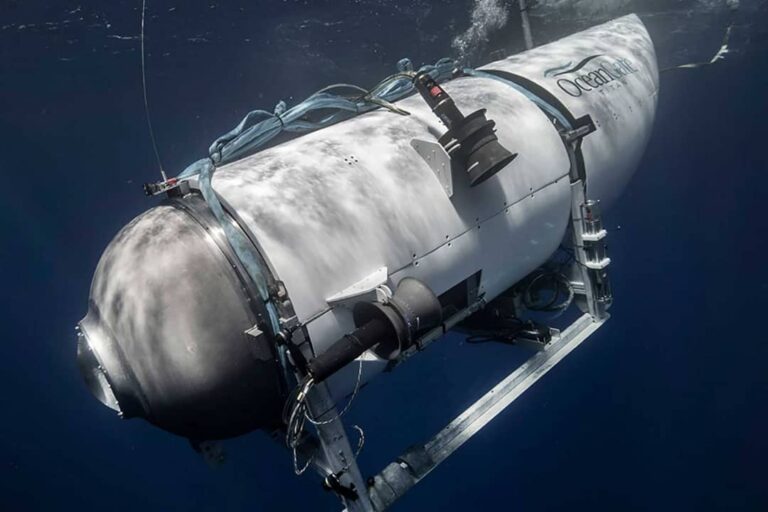
DEBRIS suspected to be parts of a missing submersible, Titan, conveying tourists to the site of the Titanic wreckage, has been found by a rescue team on Thursday, June 22.

According to a tweet by the United States Coast Guard, the debris was found close to the site of the Titanic wreckage.

“A debris field was discovered within the search area by an ROV near the Titanic. Experts within the unified command are evaluating the information,” the U.S. Coast Guard tweeted on Thursday.

Although the tweet did not confirm the debris to be from the submersible, Coast Guard Commander John Mauger said at a press conference that “the debris is consistent with a catastrophic loss of the pressure chamber,” suggesting an implosion.

CNN also reported that the debris field was assessed to be from the external body of the Titan.

Mauger disclosed that a Remotely Operated Vehicle (ROV) discovered the debris about 1,600 feet from the Titanic wreck.

Meanwhile, a statement by the tourist company that operates the submersible, OceanGate Expeditions, noted that they had reasons to believe all passengers aboard the vessel had died.

“We now believe that our CEO Stockton Rush, Shahzada Dawood and his son Suleman Dawood, Hamish Harding, and Paul-Henri Nargeolet, have sadly been lost.

“These men were true explorers who shared a distinct spirit of adventure, and a deep passion for exploring and protecting the world’s oceans. Our hearts are with these five souls and every member of their families during this tragic time. We grieve the loss of life and joy they brought to everyone they knew,” the statement read.

The Titan disappeared on Sunday, June 18, less than two hours after it began its descent to the site of the Titanic wreck.

There were five people on board, all male, including British businessman Hamish Harding, 58; British-Pakistani businessman Shahzada Dawood, 48, and his son Suleman, 18; French explorer Paul-Henry Nargeolet, 77; and Stockton Rush, 61, chief executive of OceanGate.

A joint search was launched by several rescue teams, and underwater sounds detected on Tuesday, June 20, gave many people hope that the tourists were still alive.

The vessel had a 96-hour emergency oxygen supply which was due to run out on Thursday morning.

However, the debris field from the vessel was only found hours after the oxygen deadline had passed.

OceanGate had carried out successful trips to the site of the Titanic wreckage in 2021 and 2022, which costs $250,000 per person.

According to reports, OceanGate had received warnings over the quality of the submersible, which the company ignored.

It is still uncertain when the implosion occurred, according to Mauger, but the debris discovery brings the four-day search for the Titan to an end.

Tinubu yet to approve salary review for politicians, public officers — Presidency

0

THE federal government has said it is yet to give approval for the salary review for elected politicians and judicial officers.

In a statement issued on Thursday, June 22, the Special Adviser on Special Duties, Communications and Strategy to the President Dele Aleke said the Bola Tinubu, did not approve the 114% increase in the salary of the President, Vice President, and political and judicial officers.

Earlier, it was reported that the Revenue Mobilisation Allocation and Fiscal Commission (RMAFC) increased the remunerations of the President, Bola Tinubu, the Vice President, Kashim Shettima and others by 114 per cent.

The RMAFC chairman, Muhammadu Shehu represented by the commission staff Rakiya Tanko-Ayuba, announced the development on Tuesday, June 20, while presenting a report of the reviewed remuneration package to the Kebbi state governor, Nasir Idris.

The commission claimed the last review of the salaries was overdue as the previous review was conducted in 2007.

However, reacting to this, Alake said while it was constitutional for the Commission to propose and fix salary, the president must approve the review for it to be considered effective.

He described the report as misinformation as the president did not approve the review.

He said, “This unfounded story gained prominence on social media and in a section of mainstream media, again, brings to the fore the danger fake news poses to society and our national well-being.

“The misinformation was, obviously, contrived to create an ill will for the new administration, slow down the upward momentum and massive goodwill the Tinubu-led administration is currently enjoying among Nigerians as a result of its fast-paced, dynamic and progressive policies,” he said.

Meanwhile, the federal commissioner, Hassan Usman, while featuring on Arise TV on Wednesday, June 21, defended the proposed increase.

Usman said the political leaders and citizens faced the same economic situation.

He argued that the increment was long overdue as these last increased 16 years ago.

The commissioner also said, “We didn’t increase the allowances. All what we did was increase the basic salary and then, of course, the allowances are there the way they are. They are only commensurately percentages of the basic salary.”

Eid-el Kabir: Kano Education ministry approves seven days break for students

0

KANO state Ministry of Education has approved Friday, June 23 for the commencement of the Eid-el Kabir Sallah break for all day and  boarding public/private primary and post-primary schools in the state.

The holiday will last till Saturday, July 1.

The directive is contained in a statement issued on Thursday, June 22, by the Kano state Director of Public Enlightenment, Ministry of Education, Aliyu Yusuf.

The ministry advised all the parents and guardians of pupils and students in the boarding schools to convey their wards home by the early hours of the said Friday.

Nigerian Muslims will join other Muslims across the world to celebrate the Eid-l-Adha, which involves the slaughtering of ram to commemorate Prophet Ibrahim’s readiness to sacrifice his son to God.

Eid-il-Adha (Eid-il Kabir) is the second Islamic festival in the Hijrah calendar.

The Sultan of Sokoto and president of the Nigerian Supreme Council for Islamic Affairs (NSCIA), Alhaji Muhammadu Sa’ad Abubakar III, had on Sunday June 18, declared June 28, 2023, as Eid-il Adha or Eid-il Kabir.

Part of the statement by the Kano education ministry read, “The sallah break, which is going to last for one week, is supposed to end on Saturday 1st July 2023. Therefore, all pupils/students of Boarding schools are to resume on Sunday 2nd July, while those in Day Schools are to resume on Monday 3rd July 2023.

“The Permanent Secretary of the Ministry, Malam Ahmad Tijjani Abdullahi, while wishing the pupils and students Happy Sallah festivities in advance, appealed to them to be useful to their parents and avoid roaming about unnecessarily during the Sallah break.”

The ministry warned that appropriate disciplinary action would be taken against defaulting students.

Obi condemns proposed 114% salary increment for politicians, public officers

THE presidential candidate of the Labour Party (LP), Peter Obi, has faulted the proposed remuneration increase for the President, Vice President and other political office holders in the country.

Obi, in a series of tweets on Thursday, June 22, described the timing of the proposed increment as “a deed in bad taste” considering the current economic hardships Nigerians are experiencing.

On Tuesday, the Revenue Mobilisation Allocation and Fiscal Commission (RMAFC) disclosed that it had approved a 114 per cent increase in the remunerations of President Bola Tinubu, Vice President Kashim Shettima, and other political and judicial office holders.

The RMAFC chairman, Mohammad Shehu, said the Commission took the decision after considering the impact of the review on the economy.

But Obi, pointing out that the Tinubu administration’s economic reforms had increased the cost of living and worsened the suffering of citizens, asked the country’s leaders to focus more on reducing the cost of governance.

“I learnt, with great reservation, the approval of a 114% increase in the salaries of elected politicians, including the President, vice president, governors, lawmakers, and judicial and public office holders by the Revenue Mobilisation Allocation and Fiscal Commission (RMAFC).

“This is not the appropriate time for such a salary increment, if it is at all necessary. We are living in a time when an average Nigerian is struggling with many harsh economic realities, and with over 130 million Nigerians now living in poverty. This is a moment when recent reform measures by the government have increased living costs astronomically.


“One would expect the leaders and public office holders to focus on cutting the cost of governance, alleviating the sufferings of Nigerians. This moment calls for creative ways of pulling the majority out of poverty,” he said.

Meanwhile, the Commission’s spokesperson, Christian Nwachukwu, has denied the review, saying the president was yet to approve the salary increase.

“My chairman has never made any statement on it. And I have not made any statement about it — no statement from the chairman, no statement from me. So, I don’t know. I heard one of the commissioners say it,” he said.

But a federal commissioner, Hassan Usman, while featuring on ARISE News TV on Wednesday, June 21, confirmed the proposed increase and defended the move.

Usman, saying both the leaders and followers were confronted with the same economic situation, argued that the increment was long overdue, as salaries in those categories were last increased 16 years ago.

The Commissioner, however, clarified that the increment would affect only the basic salaries of the public officials.

“We didn’t increase the allowances. All we did was increase the basic salary. And then, of course, the allowances are there the way they are; they are only commensurate percentages of the basic salary,” he said.

How unsettling economic policies affect Nigeria’s inflation rate

PRICES of goods consistently increased between January and May 2023 by almost one per cent and there are projections that this might continue up until July due to unsettling economic policies by the new government.

Going by this development, the inflation rate is not unexpected to reach between 22.42 per cent and 22.52 per cent in June and July, especially as the effects of fuel subsidy removal and exchange rates unification bite harder.

In May, the National Bureau of Statistics (NBS) reported that headline inflation hit 22.41 per cent. This is 0.19 per cent higher than what was recorded in April. Also, the food inflation rate rose to 24.82 per cent from 19.50 per cent in May.

The inflation trend means that Nigerians buy products, almost, at higher prices every month.

The ICIR reported how the International Monetary Fund (IMF) has warned against economic policies that could threaten overall financial stability.  Also, the World Bank said that increasing inflation rate would push 64 million Nigerians into hunger crises. 

Economic policies in five months

Six months before the tenure end of former President, Muhammadu Buhari, he approved the circulation of the new naira re-design and the phasing out of the old N200, N500, and N1,000 notes.

According to Buhari, the redesign policy was targeted at strengthening macroeconomic parameters, mop up excess money in circulation, boost cashless economy, and discourage cash-for-votes in the 2023 general elections.

The policy backfired and created a scarcity of the naira that resulted in spike in prices of goods. Between December 2022 and February 2023, Nigeria’s inflation rate rose from 21.34 per cent to 21.91 per cent. The trend continued in March (22.04 per cent) and April (22.22 per cent). The ICIR reported that the former chief executive of NBS, Yemi Kale, said the country lost N10 trillion due to the negative impact of the redesign policy.

There are also reports here and here on other fiscal decisions by the Central Bank of Nigeria which impacted negatively on the economy. 

Upon assumption in May, President Tinubu announced the immediate removal of the fuel subsidy. After this sudden announcement, prices of petrol skyrocketed by 150 to 200 per cent. The ICIR documented the plight of commuters. 

The extended effect of this impacted the prices of food products with the inflation rate rising by 0.19 per cent between April and May. 

Not the first time

Checks by The ICIR revealed that in the last eight years, Nigeria had experienced a five-month consecutive increase in inflation rate twice due to unsettling economic policies. 

In 2016, a report said that the decline in oil prices and the mismanagement of currency crises pushed the country into a recession tagged as the worst in 33 years. Similarly, Nigeria’s inflation rose consistently from 9.62 per cent in January to 15.58 per cent in May and 18.55 per cent by December. 

Also, in 2020, the COVID-19 pandemic crumpled the economy pushed the country into another recession and increased the inflation rate. Prior to this, Buhari had ordered the closed of land borders in 2019 and extended it till 2020.

The inflation rate, within that year,  rose from 12.13 per cent in January to 12.40 per cent in May and hit 15.75 per cent by December. The ICIR documented how the inflation rate rose 59 times under the last administration. 

A way out

IMF proposed that there is a need for policymakers to take aggressive actions on financial policies including various forms of liquidity support, asset purchases, or possibly direct capital injections.

It said, “While central banks can extend broad-based liquidity support to solvent banks, they are not equipped to deal with the problems of insolvent firms or borrowers, which must be addressed by governments.

“But emerging markets with weaker macro policy frameworks would likely have to confront the very difficult challenges posed by capital flight and currency depreciation-inflation spirals. The central bank would have to remain vigilant about the need to maintain a nominal anchor, limiting any scope to ease.”

Tinubu, in his inaugural speech, vowed to tackle economic challenges by growing the GDP annually by six per cent, among other issues of multiple exchange rates, taxation and industrial productions.

However, an analyst, the executive vice chairman of Highcap Securities Limited, David Adonri told The ICIR that if the policies are implemented without corruption, the country’s economy might become flexible.