A FORMER Director-General of the Nigerian Maritime Administration and Safety Agency (NIMASA), Ade Dosunmu, has kicked against the plan to merge the agency with the Nigeria Customs Service (NCS) and the Federal Inland Revenue Service (FIRS).
Dosunmu said the proposed merger would be counter-productive and have substantial negative implications for the country.
Last Friday, June 16, President Bola Tinubu’s economic advisory committee had advised that NIMASA be merged with the NCS and the FIRS to ease the collection of direct and indirect taxes and levies on behalf of the Federal government.
Responding to this in a statement issued on Tuesday, June 20, Dosunmu said the agency was not a revenue-generating establishment.
He called the proposed merger a misconception that could endanger the maritime industry in Nigeria.
The former DG asserted that NIMASA had no relation with the FIRS or the Customs.
He said, “My attention has been drawn to a speculation purported to have emanated from the presidential policy advisory group erroneously classifying the NIMASA as a revenue-generating agency, thereby proposing a merger of NIMASA, Customs, and FIRS.
“It is my strong view that the proposed merger will be counter-productive with huge negative implications for Nigeria in the global shipping community.
“Our waters may be considered no longer safe for international shipping, and that can affect the volume of maritime trade and eventually lead to a drop in revenue. Another implication is that our waters can become a destination for rickety ships, thereby becoming a dumping ground for shipwrecks and derelicts.”
Dosunmu asked the Federal government to work on strengthening the agency to deliver more on its technical mandates.
He warned against merging the agency with agencies he considered incompatible with its philosophy and objectives.
Dosunmu, saying the revenue generated by NIMASA was being used to carry out technical functions and the surplus paid into the Federation account at year-end, urged the government to rethink and consult stakeholders in the marine sector for the best way to address issues around the industry.
“My advice is that the Federal government, under the able leadership of President Bola Ahmed Tinubu, should consult major maritime stakeholders on issues affecting the maritime industry for proper guidance.
“The industry is the gateway to the economy of Nigeria and is very critical to the logistics aspect of the oil and gas industry since most of the crude oil production and exploration activities take place offshore Nigerian waters.
“Trial and error will not work. Rather, NIMASA being the regulator, should be strengthened technically. The whole idea of merger should be set aside until wider consultation with the industry stakeholders is held,” he said.
THE Acting Inspector-General of Police, Kayode Egbetokun, has said he felt like a lion or tiger ready to consume all enemies of Nigeria, including criminals.
Egbetokun stated this in Abuja on Tuesday, June 20, while speaking with State House reporters, shortly after the Vice President, Kashim Shettima, decorated him as the new head of the country’s police.
The ICIR reports that President Bola Tinubu appointed Egbetokun on Monday June 19, alongside other security chiefs comprising the Chiefs of Defence, Air, Naval and Army Staff.
He also appointed the Comptroller-General of Customs, other military formations, and political aides.
The President said the appointments took immediate effect, after sacking the offices’ occupants.
Egbetokun was Tinubu’s Chief Security Officer (CSO) when the President was Lagos State governor in 1999.
The Acting IGP, who attended the brief ceremony of his decoration with his wife, Elizabeth, and some top government functionaries, said, “Now I have just been decorated and I am looking forward to taking over tomorrow morning by 11am.
“I really can’t describe how I feel presently, but if I have to tell you anything, I will tell you that right now, I feel like tiger inside of me ready to chase away all the criminals in Nigeria.
“And some other time, I feel like a lion in me ready to devour all the internal enemies of Nigeria. That’s my feeling right now,” he said.
Egbetokun’s predecessor, Alkali Baba, said he was handing over to a competent hand who would take the Force well beyond where he left it.
Baba said, “It is a stage; you come, you work, and you go. I’m happy I am handing over to somebody I know will carry the mantle of leadership from where I have stopped.
“We grew up on the job. I was his boss at a time, not even when I was IG. He worked under me twice; we’ve been working together and I know how he will go ahead to champion the cause of the police from where I have stopped.”
Dignitaries who attended the event included the National Security Adviser (NSA), Nuhu Ribadu; the Chief of Staff to the President, Femi Gbajabiamila; the Secretary to the Government of the Federation (SGF), Senator George Akume; and Governor Hope Uzodinma of Imo State,
The ICIR reports that Egbetokun remains in acting capacity pending when the National Assembly confirms him as the substantive IGP, according to the country’s constitution.
THE United Nations (UN) has approved $20 million to scale up emergency response to food security and nutrition crisis in Nigeria’s North-East.
The approval was contained in a statement mailed to The ICIR by the United Nations Office for the Coordination of Humanitarian Affairs (OCHA) on Tuesday, June 20.
The UN took $9 million from the Central Emergency Response Fund (CERF), and another $11 million from the Nigeria Humanitarian Fund (NHF), making the total $20 million approved by the global body.
The statement said the fund would be used for a coordinated multisectoral response aimed at preventing deterioration to famine or famine-like conditions in Borno, Adamawa and Yobe states, which continue to face humanitarian crises arising from a decade-long insurgency.
Six million dollars from the CERF allocation will go to the World Food Programme for food security interventions (including food and voucher assistance) for 95,000 extremely food-insecure people in three ‘garrison’ towns of Borno State.
Another $2 million from the money will go to the UN Children’s Fund to prevent and treat acute malnutrition, including providing ready-to-eat therapeutic food and Tom Brown solutions – a nutrient-rich locally produced supplementary food.
Similarly, $1 million will be spent on the Food and Agriculture Organization for seeds, tools and other agricultural livelihood support to boost local production of nutritious foods to build resilience for people in the region.
“Most of the NHF funding ($11 million) will go towards improving access to clean water and sanitation hygiene, and nutrition (including reactivating, sustaining and scaling up the bed capacity at stabilization centres and scaling up outpatient therapeutic feeding programmes).
“The rest of the funding will go to healthcare (including the integrated management of childhood illnesses and complicated SAM cases), and to protection services with a focus on gender-based violence, child protection and mine action. The NHF aims to allocate 50 per cent of funding to eligible national partners on the frontlines,” part of the statement said.
The UN noted that almost 700,000 children under five years might suffer from life-threatening severe acute malnutrition (SAM) in the three states this year.
It said the population was more than double the number of SAM cases in 2022 and four times the number of cases in 2021.
The UN added that more than half a million people in the three states were projected to face emergency levels of food insecurity – one step away from famine – from June to August, which is the peak of the lean season, according to the March 2023 Cadre Harmonisé analysis.
The statement read, “The lean season also coincides with the rainy season, when the incidence of acute watery diarrhoea, cholera, malaria and other diseases increases, aggravating the precarious situation of malnourished children.
“The alarming food security and nutrition crisis is primarily the result of years of protracted conflict and insecurity which continue to prevent many people from growing the food they need, or earning an income to procure food.”
The UN Humanitarian Coordinator for Nigeria, Matthias Schmale, said, extremely high rates of acute malnutrition deaths were predicted “unless there is a rapid and significant scale-up of humanitarian assistance.“
Schmale appealed to the Nigerian government, donors and the international community to make urgent funding available to protect the lives and future of vulnerable children in the region.
He said, “On 18 May, humanitarian organizations appealed for a prioritised $396 million of this year’s Humanitarian Response Plan (HRP) appeal for a multisectoral response to the lean season food security and nutrition crisis. While the CERF and NHF funds will help jumpstart this response combined, they represent less than five per cent of the required funding.”
In March, The ICIRreported how internally-displaced persons in Borno state alleged that the government had abandoned them.
RIVERS state Commissioner of Police Emeka Nwonyi has debunked an allegation that the disbanded Special Anti-Robbery Squad (SARS) still operates in the state.
Nwonyi told journalists in Port Harcourt on Tuesday, June 20 that such a thought could only exist in “the minds and imaginations of those who think they can achieve any purpose by virtue of blackmail.”
He asserted that the SARS in Rivers state had remained disbanded since the Inspector-General of Police announced the disbandment of the entire SARS of the Nigeria Police Force.
Nwonyi urged members of the public to ignore reports of SARS operations in the state, adding that officials under the unit were deployed to other formations following the disbandment of the squad.
Former president, Muhammadu Buhari, disbanded SARS in 2020 after thousands of youths took to the streets in protest against police brutality, extortions and killings perpetrated by officials of the unit across the country.
The protest had begun on social media and taken to the streets by angry youths in many parts of the country, including Lagos and Rivers states, and the Federal Capital Territory (FCT).
Although the Federal government announced a disbandment of the squad, youths remained on the streets demanding a total reform of the police force, until the protest came to an abrupt end when officials of the Nigerian Army opened fire on unarmed protesters at the Lekki toll gate in Lagos.
Though the Lagos State Governor Babajide Sanwo-Olu and the Nigerian Army denied the killings, Amnesty International said, at least, 12 people were killed during the shooting.
However, some residents of Rivers state had raised an alarm recently on social media that policemen suspected to be SARS officials were harassing residents.
“I thought they had banned SARS in Port Harcourt. They came to my neighbour’s yard and beat him up,” a Twitter user, Keyblinks, posted on Sunday, June 18.
Nwonyi said he had ordered for investigation on the matter, and monitoring of police officers in the state.
His reaction came days after the governor of Rivers state, Siminalayi Fubara, warned against SARS operations in the state, urging the Rivers state police command to investigate the allegation by residents.
THE meteoric rise of Nigeria international Victor Osimhen has been leaving football fans across the world in awe of his astounding talent.
His sterling performances have attracted attention across Europe, with the continent’s richest clubs begging for his signature as their forward.
In the just concluded season in the Seria A, Osimhen won the Golden Boot, being the highest goal scorer with 26 goals.
And on Sunday, June 18, Osimhen scored two vital goals for the Super Eagles against Sierra Leone in Liberia to enable Nigeria to qualify for the AFCON 2023 competition (to be played in Cote d’Ivoire in 2024).
His goalscoring artistry has been shattering the records of some African football icons.
5 African icons’ goal records Osimhen has knocked off
George Weah
Osimhen became the first African player to score most Serie A goals in the competition’s history, with 59 goals since he began his sojourn in Italy in 2020.
This feat broke Liberia’s George Weah’s record of 46 goals.
Oshimen’s Goals In Serie A Since 2020
Frank Kessie
He is an Ivorien professional footballer who scored 41 in 204 games for Atalanta and AC Milan before he moved to La Liga club Barcelona.
Keita Balde
He is a Senegal striker and also has 41 goals to his account for Lazio, Inter, Sampdoria and Cagliari. He plays as a winger for Russian club Spartak Moscow.
Samuel Eto’o
A Cameroon football administrator and former player, he joined Inter Milan for the 2009–10 season, where he became the first player to win two European continental trebles following his back-to-back achievements with Barcelona and Inter.
He had 35 goals to his account.
Mohammed Salah
Mo Salah is an Egyptian professional footballer who plays as a forward for Premier League club Liverpool and captains the Egypt national team. He played for Fiorentina and AS Roma where had 35 goals to his account.
In Nigeria
Osimhen, on Sunday, scored his 17th goal for Nigeria, thereby overtaking some records.
3 Nigerian players Oshimen’s goal feat overtaken
Samson Siasia
He played 51 international matches for Nigeria, in which he scored 13 goals, and was part of the team that participated in the 1994 FIFA World Cup.
He participated in the national team over a period of 11 years and was recognised in Nigeria as the third leading scorer for the national team.
Ahmed Musa
He became the first Nigerian to score more than once in a FIFA World Cup match after scoring twice against Argentina in the 2014 FIFA World Cup.
With 108 appearances, he is Nigeria’s most-capped player since November 2021, has 16 goals for the national team.
Odion Ighalo
He also has 16 goals for the Super Eagles.
Other Nigerian players whose goal record Oshimen is yet to beat
Obafemi Martins
Martins made his debut for Nigeria in 2004 at the age of 19 and hung his boot at the national level in 2015. During his 11 years stint, he had 42 appearances and 18 goals to his account.
Yakubu Aiyegbeni
He is the third-highest scorer in the history of the Nigeria national football team with 21 goals. He represented the country at four African Cup of Nations finals, the 2010 FIFA World Cup and the 2000 Summer Olympics.
Segun Odegbami
Odegbami nicknamed Mathematical, won 46 caps and scored 23 goals for the Nigeria national team. He guided the Super Eagles to its first Africa Cup of Nations title at the 1980 tournament hosted by Nigeria. The Eagles were then known as Green Eagles.
Rasheed Yekini
The late Rashidi Yekini remains the highest goal scorer for the Suoer Eagles with 37 goals.
He represented the nation in seven major tournaments, including two World Cups. He scored the country’s first-ever goal in the competition in 1984 against Bulgaria. He was also named the African Footballer of the Year in 1993.
NIGERIA’s stock market gained N3.281 trillion in the last three weeks of trading sessions as investors’ sentiments went upbeat following the President Bola Tinubu administration’s removal of fuel subsidy, and exchange rate unification
As a result, the All-Share Index (ASI) rose by 11.38 per cent to 59,000.96 basis points, hitting a 15-year high, and the market capitalisation closely inched by 11.37 per cent to N32.126 trillion between May 30 and June 16.
The positive performance pushed the year-to-date return of the index to stand at 15.12 per cent as of Friday, June 16, even as the five major sectoral indices tracked appreciated. See the chart below.
Sectoral performance source NGX
The sentiment arose from President Bola Tinubu’s “audacious economic actions, which remarkably increased investors’ confidence,” David Adonri, the executive vice chairman of Highcap Securities Limited, said.
“Market correction may occur in due course to purge equities of excessive sentiment. If half-year results justify the recent policy hype, another rally may ensue.
“While it is heartwarming to see demand for equities rise in the secondary market, I hope this can translate into reactivation of the primary market, which is the essence of the capital market,” Adonri explained in a chat with The ICIR.
Analysts at Cowry Asset Management said that the unification of the exchange rate is also expected to attract foreign investors.
It also comes with short-term pain and long-term gain, they said.
A professor of capital market at Nasarawa State University, Uche Uwaleke, recalled that when former president Goodluck Jonathan congratulated his successor, then incoming President Muhammadu Buhari, the equities market leapt.
“I recall at that time it was called the Buhari effect. We had the Buhari effect around March 2015, but it didn’t last because after he came into office, it took time to put several things in place,” he said.
Foreign investors’ confidence eroded
Foreign investors’ confidence in the Nigerian stock market has dropped significantly in past years, as foreigners faced difficulties repatriating their funds due to scarcity of foreign exchange, and weakening foreign direct investment (FDI), foreign portfolio investments (FPI), and other capital importation.
Total capital importation in 2022 at over 20 per cent declined to $5.32 billion, relative to $6.70 billion in 2021, a significant weakness to 2020 and pre-COVID years, and reflected a lack of investor confidence in the forex regime, especially with currency rationing occasioned by relative scarcity.
“That shows that no matter how attractive the domestic capital market is, foreign investors will always factor in the ability to transfer their domestic earnings into the foreign exchange that they can repatriate to their countries,” the director-general, Securities and Exchange Commission (SEC), Lamido Yuguda, pointed out at the first capital market committee (CMC) held in April.
The Central Bank of Nigeria (CBN) floated the exchange rate on June 14 to allow the forces of demand and supply to determine the rates.
Uwaleke said, “The only way to maintain and allow market forces to determine the naira rate and have stability is either you have sufficient (external) reserves or enough inflows by way of exports.”
He feared that the foreign portfolio investment (FPI) coming in would not be long-term.
“What we need in the country is foreign direct investment, which might not start flowing immediately because of factors like insecurity and the overall business climate,” Uwaleke, who also serves as president, Association of Capital Market Academics of Nigeria, said.
Drop in portfolio investment
Every month, the Nigeria Exchange Limited (NGX) polls trading figures from market operators on their domestic and foreign FPI flows, and reports them in its ‘Domestic and Foreign Portfolio Participation in Equity Trading.’
The latest report showed that as of April 30, total transactions in the equities market increased by 30.77 per cent, from N146.22 billion in March to N191.21 billion in April.
When compared to the N205.88 billion reported in April 2022, it showed that total transactions decreased by 7.13 per cent.
source – NGX
But the total value of transactions executed by domestic investors outperformed transactions conducted by foreign investors by about 92 per cent.
Further analysis of the total transactions between the current and previous month domestic transactions increased by 33.35 per cent, from N137.03 billion in March to N182.74 billion in April 2023.
Total foreign transactions, however, decreased by 7.83 per cent from N9.19 billion to N8.47 billion between March and April.
Historical analysis of domestic and foreign transactions
Foreign transactions decreased by 63.02 per cent from N1.025 trillion in 2015 to N379 billion in 2022, while domestic transactions increased by 120.77 per cent from N881 billion to N1.945 trillion in the same period.
Total domestic transactions accounted for about 84 per cent of the complete transactions carried out in 2022, against foreign transactions that accounted for about 16 per cent of the total transactions in the same period.
Source – NGX
Meanwhile, the transaction data for 2023 shows that total domestic transactions are N659.26 billion, while total foreign transactions are N62.18 billion.
Foreign investors exit worrisome
Since 2020, after the Covid, there has been a continuous exit of foreign investors from the domestic market, leaving local investors to hold sway.
But what is likely to happen now is that many foreign investors would be showing interest, and domestic investors would be positioning in anticipation of that as the banking industry responds significantly to reform, Uwaleke said.
The big banks have proven over time to be the principal vehicle of capital importation into the country, he noted.
A look at some banks’ current share prices showed Stanbic IBTC Holdings has risen to N52.00; Zenith Bank at N31.00; Guaranty Trust Holding Company, N30.60; Access Holdings, N14.25; and FBN Holdings, N15.80.
“The major banks’ shares are appreciating significantly on the back of this unification, and the expectation is that more capital inflows will come in. So when we have foreign investors coming in, they will likely displace domestic investors soon,” Uwaleke said.
Challenges in forex unification
Uwaleke believed that except Nigeria gets to the point where it diversifies its export base, what is happening now is temporary.
“Mark you, portfolio investment is nothing but hot money. As it seems, investors may be attracted to the market because the return on investment will be high. At the slightest shock, they will leave.
“So, sustainability is tied to companies’ fundamentals,” he said.
He pointed out that foreign investors want stability, where they will have an idea of what it will take to bring in and take out their money.
“It then means that the regulator must guarantee and take care of the supply side of forex.
“If we completely float the naira, which I will recommend, there has to be a plan on the ground. That could mean, for example, liberalising the market so that even the items you deny access to forex will be welcome.”
Senate promises improvement in FDI
The Senate president, Godswill Akpabio, has hinted that the 10th National Assembly would make laws that will attract FDI into the country, as well as improve the country’s revenue stream.
That would be welcome news to analysts like Adonri, who said, “Such investors can repatriate their profit back to their countries. If the operating environment for businesses is enabling, the FDI environment will include adequate security, sound legal and regulatory framework, ease of doing business, low cost of production, liberalised foreign exchange market with freedom of movement of capital, business-friendly taxation, world-class infrastructure, the available pool of skilled labour and government incentives to encourage foreign direct investment.
“The National Assembly can examine the laws guiding these areas, amend those that are inimical to FDI, or enact new ones that will encourage FDI; foreign investors will be attracted to Nigeria.”
He added that improving Nigeria’s revenue stream means growing the gross domestic product (GDP).
He explained, “Appropriate fiscal and monetary policies can help achieve such a goal. Massive reduction of import dependence and export promotion are the main strategies for increasing domestic wealth creation.
“If the NASS can appropriate properly, and enact or amend laws to enhance these areas, GDP growth can be assured.”
THE immediate past governor of Benue State, Samuel Ortom, is currently being quizzed by the Economic and Financial Crimes Commission in Makurdi, following an invitation, according to reports.
Ortom was said to have arrived at the Makurdi zonal office of the anti-graft agency, situated on Alor Gordon Street, by 10 a.m. on Tuesday.
It was also gathered that the former governor was invited to be questioned concerning an ongoing investigation into alleged financial misappropriation during his tenure as an official.
“Former governor Ortom is currently at our Makurdi zonal office in Benue State. He arrived at about 10 a.m. this morning, and he’s still there now. He was invited over an ongoing investigation concerning alleged misappropriation of funds during his time in office,” a source told The Punch.
Meanwhile, efforts by The ICIR to reach the Anti-graft agency spokesperson Wilson Uwujaren hasn’t yielded any response at the time of filing this report. SMS texts and WhatsApp messages were also not responded to.
However, the detailed reasons behind his invitation and subsequent detainment by the EFCC are unclear.
There are media reports that the ex-governor handed over N187 billion debt to the incoming governor, reverend father, Hyacinth Alia.
Ortom, while giving the summary of his tenure on May 28, said his administration was handing over the N187 billion debt, which was made up of salary arrears, loans, contractual obligations, and others.
South Africa is no exception. Some scholars have highlighted the importance of understanding transactional sexual relationships beyond seeing it only (or mostly) as a way for young women to mitigate poverty, or because they want to enjoy the advantages of what is perceived as an elite and glamorous lifestyle. It’s more complicated than that.
We came together as a trio of psychology scholars to explore how young South African female university students construct themselves as sexual beings, and negotiate dating and intimate relationships.
Our findings highlight that young women view transactional intimate relationships from multiple levels, including family experiences, the cultures they are embedded in and broader social contexts. These factors all influence how they articulate their understanding of intimate relationships.
Financial considerations may compel and shape their choice of sexual partners. But they aren’t the only factor. Others include the chance to get work, to advance their careers or to unlock educational opportunities.
All of this challenges the idea that young adult women choosing to enter sexual relationships that can meet their financial aspirations are not agents in their relationships.
A variety of reasons
For the study, we conducted focus groups with 14 women students at one South African university. We were interested in their perceptions and understanding of transactional relationships – some reflected on their own experiences, while others reflected on those of others they knew. All were aged between 19 and 26. While the number of participants was relatively small, their perceptions were helpful in assisting us to get some understanding of how women students perceive transactional relationships.
The participants explained that they and other young women they knew engaged in intimate relationships for a variety of reasons. Sometimes they want to meet their love and sexual needs; sometimes they want to enhance their socio-economic and social standing within their peer group and wider society. The latter arrangement has been referred to by some researchers as sexual-economic relationships, which enhance one’s social standing or result in class mobility for the young women involved in transactional sex.
When talking about these sorts of sexual-economic relationships, the participants in our study offered an example of how a man’s financial status is gauged: by the car he drives.
A sexual relationship with a man who has a good job is seen as a safer option than one with an unemployed, unmotivated man who is unable to provide or meet the young women’s consumer expectations. A man’s ability to work hard was said to “count” in terms of his appeal to women. This is reflected in some of the comments made by the young women in our study:
“Most girls my age group tend to go for guys who have money or who are well established. In a sense of where they are going with their lives. Most girls are tired of going for guys who just sit at home and do nothing the whole day.”
“I don’t think relationships do exist, nowadays, I don’t think so, it’s more about material, what don’t you have … if a guy comes to you driving a Volvo and a guy comes to you driving a Mazda 3, the latest, I don’t think girls will go for the guy driving a Mazda, but the one driving a Volvo, that’s all, that’s how I see it recently.”
Some transactional relationships may offer the pretence of real love and create the illusion for the male sexual partner that he is the only object of the young woman’s affection. Other relationships are initiated on the implicit understanding that they are non-exclusive or multi-partner arrangements, with a tacit agreement not to discuss other sexual partners.
Navigating the perils
But that doesn’t mean people are necessarily happy about non-exclusive relationships. Mistrust, jealousy and anger arise at times.
If a man has multiple girlfriends in a transactional arrangement and they learn about each other, the women often turn their anger towards each other. This may lead the women to try and “stake their claim”. For example, some told us that, in a sense, one becomes a “PI” (private investigator) assessing or “researching” their partner’s “true colours” or “their intentions and motives” and hoping for “transparency” from their partners. These concerns often centred on concerns about contracting HIV and AIDS or other sexually transmitted diseases because their boyfriends had multiple partners.
It also became clear that our participants did not have much faith in any future marriages lasting for a long time or that their husbands would be faithful. But this didn’t mean that they didn’t want to experience genuine love or to pursue marriage that would also result in having children.
Nuance
This research makes it clear that there is a great deal of nuance around how young women negotiate their intimate relationships with men. Our research has shown us that the nature of transactional relationships can no longer be solely understood within the frames of disenfranchised young women and men as the embodiment of agency.
Rather, it is critical to engage the ways in which our consumeristic and materialistic global society seems to dictate what is “normal” and how this, in turn, plays a role in how young women choose to engage in transactional relationships.
Precious Sipuka and Christine Laidlaw co-authored this article and the research paper on which it is based.
THREE witnesses who acted as presiding officers for the Independent National Electoral Commission (INEC) during the February 25 presidential election have testified that only the results of the election failed to upload into the commission’s result viewing portal (IREV).
The witnesses stated this while testifying in a petition filed by the Peoples Democratic Party (PDP) and its candidate, Atiku Abubakar, against President Bola Ahmed Tinubu at the presidential election tribunal on Monday, June 19.
Led by Eyitayo Jegede, a presiding officer in Damaturu, Yobe state, Janet Turaki, stated that voter registration proceeded smoothly and all other processes were successful, except for results transmission.
Turaki explained that while the results of the Senate and House of Representatives polls were transmitted successfully, those of the presidential election could not be transmitted.
The witness informed the court that she followed both online and offline transmission methods as instructed, but the presidential election results failed to upload.
She emphasised that she and other party agents present at the polling unit signed the results on form EC8A before it was taken to the ward. Turaki further revealed that she filled out a complaint form provided by INEC when the results did not load on the IREV portal.
Christopher Ardo and Victoria Sani, two additional witnesses who served as INEC presiding officers in Bauchi and Katsina states, respectively, also testified that they were unable to transmit the presidential election results into the IREV system.
The court had subpoenaed all three witnesses through a joint application by the PDP and Abubakar.
During cross-examination, the witnesses acknowledged that the transmission failure was a result of network glitches.
However, they admitted that they were unaware of whether the results were eventually transmitted.
The court adjourned the proceedings to June 20 for further hearing.
INEC had declared Tinubu as the winner of the February 25 presidential election.
According to the Commission, Tinubu secured 8,794,726 votes, Abubakar had 6,984,520, while Obi polled 6,101,533.
The PDP and LP candidates rejected the result and approached the tribunal with separate petitions to challenge Tinubu’s victory.
They alleged that Tinubu was not qualified to contest the election and that he failed to secure the majority of lawful votes cast at the poll.
They are also contesting that Tinubu’s running mate, Kashim Shettima, had a double nomination contrary to the Electoral Act.
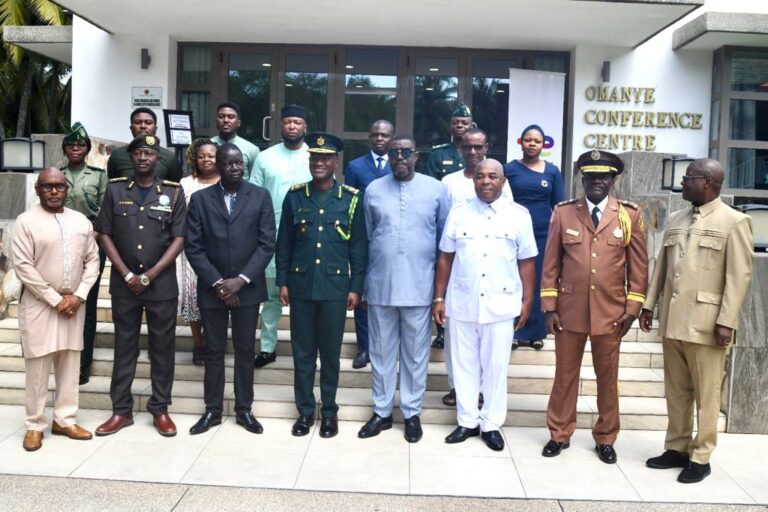
THE Economic Community of West African States (ECOWAS) Heads and immigration experts are actively collaborating on the implementation of ECOVISA, a unified visa system inspired by the Schengen model, according to a statement the ECOWAS Commission released on Sunday, June 18.
The Seventh Heads of Immigration Meeting, held in Accra, Ghana, on May 25, was organised by the Directorate of Free Movement of Persons and Migration.
Efforts towards the realisation of ECOVISA introduced in 2011 for migrants of third countries are in furtherance of promoting foreign investments, tourism and providing easier access to abundant opportunities within the ECOWAS region.
“During the Accra meeting, it was recommended that a comprehensive comparative analysis of visa regimes in other continents be conducted to ensure that the implementation of ECOVISA aligns with global best practices.
“Additionally, the Heads of Immigration recognised the need for regular engagement to discuss modalities and assess the progress of ECOVISA implementation at different stages,” the statement said.
The meeting focused on discussing the implementation process, associated costs, design recommendations from visa issuance experts, and control measures proposed by member states.
Harmonising mobility and migration challenges within the region and fostering cooperation among national immigration services were among the meeting’s key objectives.
To ensure global best practices, a thorough comparative analysis of visa regimes in other continents, regular engagements, and progress assessments were recommended.
The ECOWAS is a regional organisation composed of 15 member countries in West Africa, with a primary objective to promote economic integration, cooperation, and development within the region.
It aims to create a common market, enhance trade, facilitate free movement of goods and people, and foster political stability and peace among member states.