Home Blog Page 882

Asari Dokubo accuses Nigeria’s military of massive oil theft in Niger Delta

2

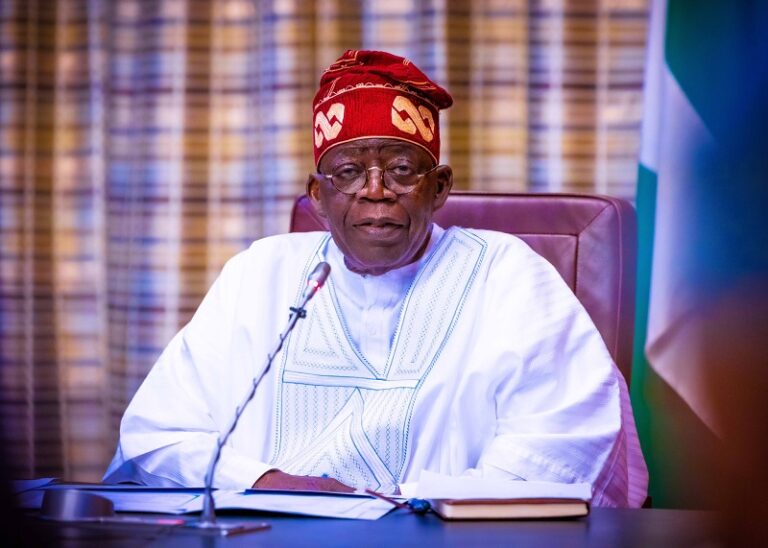
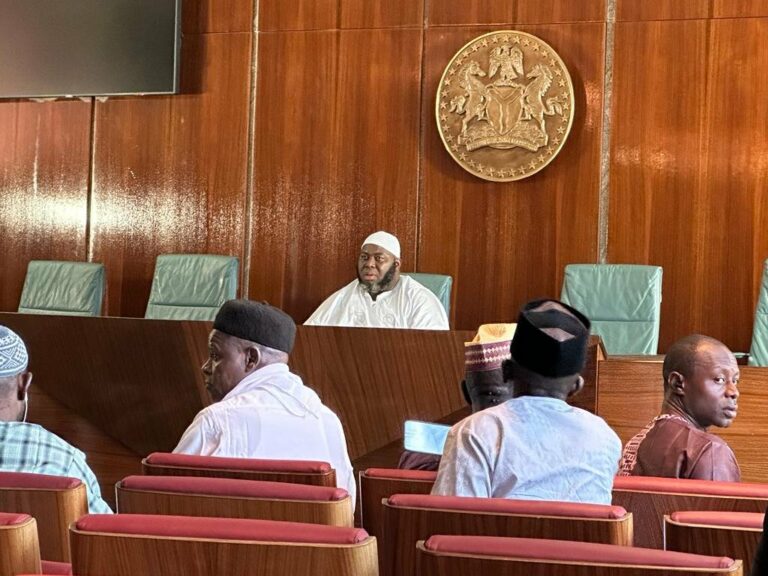
FORMER Niger Delta militant leader, Asari Dokubo, has accused the Nigerian military of being directly involved in oil theft within the region.

Dokubo told State House correspondents after a closed-door meeting with President Bola Tinubu on Friday, June 16, that ordinary Niger Delta citizens, who are often held accountable for such actions, lacked the resources and will to carry out such activities.

He promised to work with other groups to completely stop the massive oil theft happening in the region.


Read Also: 

“Myself and my brothers have assured the President that there will be zero oil theft and vandalization in the Niger Delta. We’re going to walk with an NPPCL and the IOCs to make sure that oil tapped is brought to zero,” he said.

According to the former militant leader, there are some powerful groups operating from Abuja who are involved in the unprecedented oil theft over the past eight years, adding that they have now met their match and would be sent to prison.

Dokubo revealed that President Tinubu has promised to investigate allegations of huge oil bunkering by notorious naval commanders.

“The military is at the centre of oil theft and we have to make this very clear to the Nigerian public that 99 per cent of oil theft can be traced to the Nigerian military, the Army and the Navy especially,” he said.

He also accused the military of intimidating the Civil Defence Corps detailed to safeguard the pipelines and the oil wells, adding that “they received a lot of money from NNPCL and IOC.”

Dokunbo also stated that the manner in which the oil thieves had gone about their criminal activities had stripped the people of the Niger Delta of their livelihood, “and it is a crime against humanity.”

He described it is an act of blackmail for the military to claim lack of adequate weapons to address the security challenges in the country, accusing them of surrendering their weapons to the insurgents, thereby fuelling insurgency in the country.

He said, “The blackmail of the Nigerian state by the Nigerian military is shameful. They said they do not have enough armament and people listen to these false narratives. So this blackmail must end. They have enough resources to fight.”

Dokubo stressed that releasing the leader of the Indigenous People of Biafra, Nnamdi Kanu, would not ease the tension in the South-East. Rather, he argued, it would fuel impunity.

“During EndSars, Nnamdi Kanu was walking free. What did he do? He poured petrol on the flames of EndSars. Now, he has been caught. What of the people who have died? This is a criminal. He should face the law.

“Releasing Nnamdi Kanu is rewarding criminality and rewarding gruesome murder of innocent people. He should face the law for the actions and instigations he has carried out,” he said.f

43 non-eligible items remain banned from forex, CBN insists [List included]

THE Central Bank of Nigeria (CBN) has reiterated that the 43 non-eligible items remain banned from accessing foreign exchange (forex).

The CBN said in a document, ‘Understanding the Operational Changes to the Foreign Exchange Market’, released on Friday, June 16.

SEE ALSO: CBN unbans 43 items restricted from accessing FX

Following the unification of the exchange rate, CBN had, through the document, attempted to answer some questions, including whether the 43 non-eligible items would have access to forex at the investors’ and exporters’ window.

The apex bank said, “The status quo remains on the 43 non-eligible items. The items are not permitted to be funded from the I & E window.”

Godwin Emefiele, who President Bola Tinubu, on June 9, suspended as CBN governor and has since then been in the custody of the Department of State Services (DSS), introduced the ban on the 43 items.

To sustain the stability of the naira and ensure the efficient utilisation of forex, the CBN, in June 2015, excluded importers of 41 items from accessing forex at the exchange markets to encourage local production and modified the list subsequently.

Here is the list of the 43 non-eligible items banned from accessing forex by CBN

  • Rice
  • Cement
  • Margarine
  • Palm kernel/palm oil products/vegetable oils
  • Meat and processed meat products
  • Vegetables and processed vegetable products
  • Poultry – chicken, eggs, turkey
  • Private airplanes/jets
  • Indian incense
  • Tinned fish in sauce (geisha)/sardines
  • Cold-rolled steel sheets
  • Galvanised steel sheets
  • Roofing sheets
  • Wheelbarrows
  • Head pans
  • Metal boxes and containers
  • Enamelware
  • Steel drums
  • Steel pipes
  • Wire rods (deformed and not deformed)
  • Iron rods and reinforcing bars
  • Wire mesh
  • Steel nails
  • Security and razor wire
  • Wood particle boards and panels
  • Wood fibre boards and panels
  • Plywood boards and panels
  • Wooden doors
  • Furniture
  • Toothpicks
  • Glass and Glassware
  • Kitchen utensils
  • Tableware
  • Tiles – vitrified and ceramic
  • Textiles
  • Woven fabrics
  • Clothes
  • Plastic and rubber products, polypropylene granules, cellophane wrappers
  • Soap and cosmetics
  • Tomatoes/tomato paste
  • Eurobond/foreign currency bond/ share purchases
  • Dairy/milk
  • Maize

Court orders DSS to grant Emefiele access to lawyers, family

0

A FEDERAL High Court sitting in Abuja has ordered the Department of State Services (DSS) to grant the suspended Governor of the Central Bank of Nigeria, Godwin Emefiele, access to his lawyer and family members.

Justice Hamza Muazu, who gave the order on Friday, June 16, declared that the embattled Emefiele’s access to his lawyer and family members was his constitutional right.

The ICIR, on June 10, reported that the Department of State Services (DSS) arrested Emefiele over some “investigative reasons.”

Emefiele’s arrest was confirmed by the public relations officer of the DSS, Peter Afunaya, in a tweet posted on the DSS official Twitter handle on Saturday, June 10, few hours after President Bola Ahmed Tinubu suspended and directed him to hand over the affairs of his office to the CBN deputy governor, Operations Directorate, Folashodun Shonubi.

Since Emefiele’s arrest, the DSS has not been granting him access to his lawyers and family members, according to his counsel, J. B. Saudi.

Saudi told the court that the DSS had failed to respond to his letters requesting access to his client for the purpose of taking further instructions from him.

But counsel to the DSS and the Attorney-General of the Federation (AGF), I. Awo Esq, said that the DSS had not rejected such requests.

Iwo assured the court that the secret police would abide by the court order and allow the listed lawyers and family members to visit Emefiele.

The AGF did not oppose the application.

Iwo requested an extension of time to file his clients’ respective responses to the originating motion.

The court granted the request and ordered, “The lawyers of the applicant shall have access to the applicant immediately. And regularly at a reasonable time, pending the determination of the application.”

The court adjourned the suit to Tuesday, June 19, 2023, for hearing in the substantive suit.

PSC promotes Mba, Ciroma to DIG, 14 commissioners to AIG

0

THE Police Service Commission (PSC) has approved the appointment of Frank Mba and Bala Ciroma as Deputy Inspectors-General of Police (DIG).

According to a statement signed by the PSC’s spokesperson, Ikechukwu Ani, the Commission made the decision at its 21st plenary meeting, which was presided over by its chairman, Solomon Arase.

The duo were recently promoted to the Assistant Inspector-General of Police (AIG) rank. The AIG is the third-highest rank in the Nigeria Police Force, while DIG is the second-highest ranking officer.

Ali Janga, who represented the North-East geo-political zone in the police management team, retired from service, and Ciroma will be taking his place. Similarly, John Amadi, who previously held the position representing the South-East zone, has also retired, and Mba will be assuming his role.

In addition to the appointments, the Commission has also approved the promotion of 14 Commissioners of Police to the rank of Assistant Inspector-General of Police (AIG), and 22 Deputy Commissioners of Police (DCP) to the rank of Commissioners of Police.

Among the newly promoted AIGs are Abubakar Lawal, Alhassan Aminu, Abdul Umar, Shettima Zannah, Ebong Eyibio Ebong, Adepoju Ayiinde Ilori, Okon Okon Effiong, Echeng Eworo Echeng, Susan Ukpanukiema Horsfall, Bankole Lanre Sikiru, Oladimeji Yomi Olarewaju, Sani Gwarzo, and Odama Paul Ojeka.

The 22 DCPs, who have been promoted to the rank of Police Commissioners include Abibo Deinma Reuben, Thomas Abraham Nabhoni, Wakil Abdul Salamai, Enyinnaya Inonachi, Ronke Nurat Okunade, Adekunle Ismail Olusokan, Hassan Abdu Yabnet, Festus Chinedu Oko, Aminu Baba Raji, Omolara Ibidun Oluntola, Akoh Benedict Gabriel, Alamutu Abiodun Mustapha, Bafda Magaji Jahun, Ahmadu Tijani Abdullahi, and Mohamned Mu’azu.

The commission has also approved the promotion of 24 Assistant Commissioners of Police (ACP) to the rank of Deputy Commissioners.

Those promoted include Ezekiel Ibrahim, Mohammed Shamsudeen, Khan Salihu Usman, Wan Mantu Chongs, Baba Lawan Audu, Okon Etim Asuquo, Louis Chike Nwabuwa, Samuel Osman Onoja, Sa’ad Yahaya, and Ibrahim Jibrin.

Additionally, 39 Chief Superintendents of Police (CSP) have been promoted to the rank of ACP. These include Joseph Udoh, Nze Helen Omeba, Uduaku Isaac Udom, Anthony Francis Etim, Benjamin Kelembus Bello, Abdullahi Idris Abubakar, Ogbonnaya Nwota, and Daiyabu Mohammed Ahmed.

The acting appointment of Akande Bamidele to acting Assistant Commissioner of Police has also been approved.

The statement noted that Arase congratulated the newly promoted officers and urged them to commit themselves to the service of their country.

Lagos launches programme to address underlying causes of domestic violence

0

THE Lagos State government has initiated support and healing group sessions targeting individuals involved in domestic and sexual violence in the state.

The programme, according to a statement by the Executive Secretary of the Domestic and Sexual Violence Agency (DSVA), Titilola Vivour-Adeniyi, aligns with Governor Babajide Sanwo-Olu’s commitment to addressing sexual and gender-based violence in the state comprehensively.

Vivour-Adeniyi emphasised that the need to address the “worrisome” increase in cases of domestic violence in the state necessitated the programme.

She stated that the support and healing group sessions aim to tackle the underlying causes of domestic violence by identifying and addressing factors such as unresolved trauma, anger management issues, substance abuse, and learned patterns of violence.

She added that research had shown that domestic violence cases stem from the deep-seated factors listed above.

“Without psychological intervention, there is a risk that the perpetrators may perpetuate the cycle of violence in their own relationships, or pass it on to future generations.

“Hence, through strategic intervention, perpetrators can gain insight into these factors and develop healthier coping strategies,  and also break the cycle of violence that the support and healing group sessions can avail them,” she said.

Vivour-Adeniyi said the structured intervention sessions would enable perpetrators to gain insights into alternative coping mechanisms, conflict resolution skills, and healthy relationship dynamics.

Lagos State has a zero-tolerance policy on gender-based violence. The state has a number of laws and initiatives in place to prevent and respond to gender-based violence (GBV), including:

Despite these efforts, GBV remains a serious problem in the state. In 2021, the DSVRT received over 10,000 reports of GBV, and it is estimated that only a fraction of cases are actually reported.

The breakdown of the cases showed that there were 4,150 domestic violence cases, 177 rape cases, 255 attempts to commit rape/sexual assault, 246 sexual assault by penetration/threat cases, and 877 others (separation, not taking responsibility for the child(ren), neglect, custody of the child, non-GBV, etc.).

Others include 436 child abuse/physical assault cases, 271 defilement cases, 13 defilement by minor to minor, 454 child labour, abduction neglect/others, and 148 sexual harassment/molestation cases.

Analysis of the statistics revealed that 91 per cent of women were abused as against 9 per cent for men, and 92 per cent of adults in the age range of 18-45 years had the highest cases reported, while 57 per cent of children within the age range of 2-9 years experienced or witnessed the highest form of assault.

The data also revealed that 73 per cent of domestic violence was reported for adults, which was the highest form of GBV against adults, while 69 per cent of emotional abuse was reported for children who witnessed intimate partner violence and other assaults.

Man calling for mass killing of Igbo people in ‘Yoruba land’ arrested in Osun

1

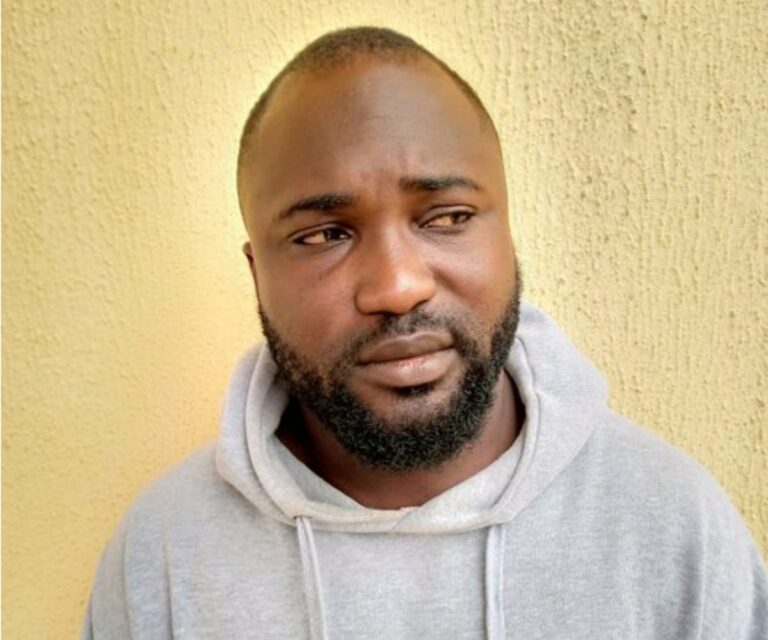
THE Osun State police command has arrested Kehinde Adesogba Adekusibe, a 28-year-old man, for allegedly making threats against the Igbo residing in Nigeria’s South-West.

Adekusibe had in May 2023, in his now-deleted Twitter post, called for the summary killing of all people of the Igbo extraction.

Although he later apologised, his comments generated intense anger online, with many calling for his arrest and prosecution to deter others.

In a statement on Friday, June 16, the command’s spokesperson, Opalola Yemisi Olawoyin, confirmed that the suspect had been arrested on Thursday, June 15.

Olawoyin, stating that the command swooped into action after it had received a report about the suspect’s comments, explained that his tweet violated the country’s social media policy on hate speech.

She stated, “On 18th May 2023, the suspect, Kehinde Adekusibe, tweeted on his Twitter handle, ‘Let’s kill all the Igbos. Let’s flush them out of Yoruba lands. I hate these people with a passion. They are violent people. They are the worst. They hate us. Let’s hate them without holding back.


READ ALSO:


“Immediately the police command received the report, police detectives from the cybercrime section at SCID Osogbo swung into action and through intelligence-led investigation, the suspect was arrested at Ilesa, where he hibernated.”

She added that the suspect had confessed to the crime and would be charged in court after the conclusion of the investigation.

The Force spokesperson, Abuja, Olumuyiwa Adejobi, also confirmed the arrest in a statement on Twitter.

Tinubu’s Advisory Council recommends assets sale to settle debt obligations

THE Policy Advisory Council of President Bola Ahmed Tinubu has recommended the sale of national assets, including refineries, to settle the debt obligations of the Federal government.

Nigeria owes more than N40 trillion in both foreign and national debts. Experts are worried that the country might be using 100 per cent of generated revenues to service debts.

But the Council, in its report chaired by Senator Tokunbo Abiru, recommended “a policy directive that ensures proceeds from the sale of assets to settle existing Federal government’s debt obligations.”

Other fiscal recommendations included “listing shares of strategic and profitable Nigerian National Petroleum Corporation Limited (NNPCL) subsidiaries, leveraging blockchain to create and provide access to a government land registry, and regionalizing and concessioning the power transmission grid.”

The Council also advised privatizing, concessioning, or selling the Federal government’s stake in corporate assets to generate liquidity, focusing on sub-optimal assets like NNPCL refineries.

Contrary to the Supreme Court’s ruling, the President was also advised to extend the circulation of old naira notes until December 2024 to resolve potential cash shortages.

The apex court had shifted the deadline to December 2023 due to economic crises resulting from the naira redesign policy under former president Muhammadu Buhari’s administration.

According to a report by the Punch newspaper, the four-man Council advised a gradual replacement of old notes with new ones through deposit money banks at a rate of five per cent monthly.

The report also outlined various economic decisions that should be made by the President to improve the country’s economic fortunes.

One of the Council’s proposals is the merger of the Federal Inland Revenue Service (FIRS), the Nigerian Customs Service (NCS), and the Nigerian Maritime Administration and Safety Agency (NIMASA) into the Nigerian Revenue Service.

This consolidation aims at enhancing the efficient collection of direct and indirect taxes, as well as levies on behalf of the Federal government.

The Council emphasised that the proposed policy would require the passage of an Emergency Economic Reform Bill that would grant the President special powers to drive economic reform and support sustainable and inclusive economic growth.

Additionally, the Council outlined several targets to be pursued within the first 100 days in office, including the removal of fuel subsidy, the sale or concession of select government assets, and the transition to a transparent and unified foreign exchange rate system, which the president had already done.

The Council’s report emphasised the significance of reforms in the Central Bank of Nigeria (CBN) and the implementation of the civil service reform as part of the economic reform agenda.

It suggested making interim leadership appointments in the apex bank, subject to ratification by the National Assembly, and temporary increases in fiscal circuit-breakers such as debt limits, also to be ratified by the National Assembly.

The 90-page report focused on fiscal and monetary policies, industry, trade, and capital market reforms.

It highlighted that changes in the CBN and temporary increases in fiscal circuit breakers would contribute to achieving a gross domestic product (GDP) growth of N1 trillion, and generating over 50 million jobs within eight years.

To achieve these goals, the report proposed reforms in the CBN to attain external reserves of $50 billion to $60 billion, with a monthly inflow of at least $6 billion to $8 billion from export earnings and other capital inflows.

It further suggested the implementation of a domestic refining capacity of two million barrels per day, and providing economic opportunities for host communities.

“Ramp up production capacity to four million barrels from offshore and onshore assets within four years, and grow crude oil revenue and savings into ECA (Excess Crude Account) and NSIA (Nigeria Sovereign Investment Authority).

“Formalise illegal refineries and encourage modular refineries to create economic opportunity for the host communities.

“Aggressively grow domestic refining capacity to two million barrels per day in the next eight years, including modular refineries,” it noted.

The Council recommended offering one-off Personal Income Tax reliefs to low-income earners for up to one year as non-cash palliatives to cushion the impact of fuel subsidy removal. Furthermore, it proposed formalizing illegal refineries and encouraging the establishment of modular refineries to create economic opportunities for host communities.

To transform Nigeria into Africa’s most efficient trading nation, the Council proposed decongesting the area around ports up to four kilometres, enforcing the 48-hour clearance of goods at seaports in line with Executive Order 001, redefining the performance measures of key government agencies to prioritise trade facilitation, and implementing a whistle-blowing mechanism for transporters to report issues.

FIFA moves to tackle racism, selects victim Vinicius Jr to lead new anti-racism committee

0

IN a bid to resolve the racism problem in football, the Federation of International Football Associations (FIFA) has selected Real Madrid’s Vinicius Jr to lead a special FIFA anti-racism committee made up of players to suggest stricter punishments for discriminatory behaviour in football.

Vinicius Jose Paixao de Oliveira, the 22-year-old forward, was racially abused by fans when Madrid played against Valencia on May 10.

In an interview with Reuters, the FIFA president, Gianni Infantino, said that as well as applying disciplinary and competition punishments, FIFA would also pursue legal action against abusers in countries where racism happens in football matches.

“There will be no more football with racism in it. The games should be stopped immediately when it happens. Enough is enough,” Infantino said on Thursday, after meeting Vinicius and the Brazil national team, who play against Guinea in Barcelona on Saturday as part of an anti-racism campaign led by the Brazilian Football Association (CBF).

“I asked Vinicius to lead this group of players that will present stricter punishments against racism that will later be implemented by all football authorities around the world.

“We need to hear the players and what they need to work in a safer environment. We are very serious about it.

“We will implement very blunt and strong punishments to end once and for all with the problem of racism in football. We can’t tolerate racism anymore. As president of FIFA, I feel I needed to talk personally with Vinicius about it,” he said.

LaLiga and the Spanish FA, Spain’s top football authorities, are under pressure to do more to combat racism after Vinicius received support from across the world following the abuse he suffered in Valencia.

Infantino stressed that measures should be taken globally to eradicate discrimination in football, and that political authorities and local prosecutors in every country also need to tackle racism with more determination.

“Unfortunately, racism is not a problem that exists only in Spain. It exists in many, many other countries. That is why we need to take collective measures to fight against it all over the world.

“We need the governments to understand that they need to educate children in school (about racism) because it’s a social problem, but it’s a football problem too.

“We need to stop the games, apply disciplinary and competitive measures and all of it needs to be coordinated with local authorities and governments.

“An act of racism is a criminal act… From now on, FIFA will take legal actions with local authorities too, we will join complaints filed in local justice.

“It’s impossible to tolerate it anymore. We need the help and support from the authorities because the racists need to be identified, detained and banned for life from any stadium in the world.

“And it’s not only in stadiums, in social media too. It’s also very serious and needs the same punishment,” the FIFA chief stated.

Nigeria Squash Federation 2023 tournaments await sponsors’ nod

0

NATIONAL tournaments billed to hold in the 2023 Nigeria Squash Federation (NSF) calendar year are awaiting sponsors’ approvals, The ICIR has learnt.

In 2022, The ICIR learnt 17 squash tournaments were held nationwide. But only five tournaments had been held by the middle of 2023.

In an interview with The ICIR, the NSF Technical Chairman, Yusuf Durosiolorun, expressed the federation’s hope that sponsors would give the nod to the series of tournaments slated to hold before the end of the year.

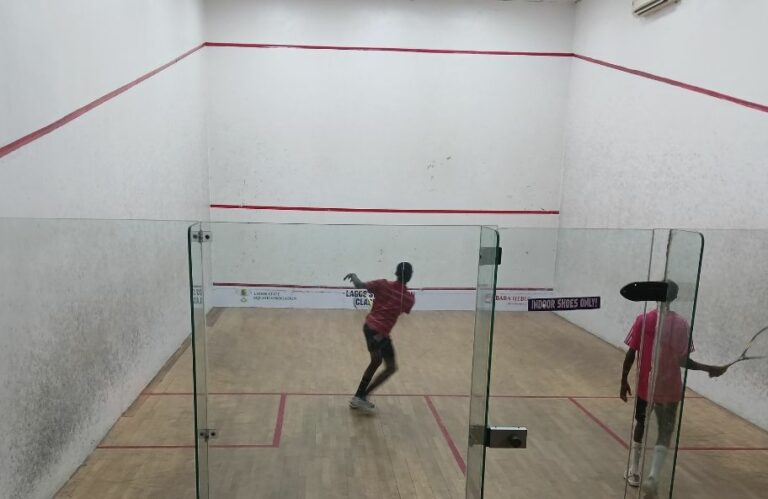
Durosiolorun said the ongoing Vranos second edition tournament holding in Lagos is the fifth the federation is organising this year.

“Last year, we played about 17 tournaments. This year, I am looking to play more this year, but you know these things depend on the sponsors,” he said.

He said the vision of the federation had been geared towards the development of the squash game at the grassroots level.

Also, the female national number one player, Rofiat Abdulaziz, told The ICIR that she had been funding herself to participate in the Professional Squash Association (PSA) tournaments outside the country.

“I am used to sponsoring myself. It is not as if I have someone sponsoring me. We don’t really have sponsors in squash. There is no personal sponsor for one individual; it is really rare in squash.

“It is not bad if we have sponsors from different companies,” Rofiat said.

One-chance menace: Stakeholders divided over adequate transportation in Abuja

0

AS the criminalities of ‘one-chance’ robbers continue to endanger commuters’ lives in the Federal Capital Territory (FCT), stakeholders were divided on the inadequacy of public transportation as one of the causes of the menace.

This formed part of the discourse on Thursday, June 15, when The ICIR hosted its  Twiter Space on the topic, ‘One chance – Abuja, hotbed for crimes on commuters’. Listen to the conversation HERE

The discussion centred on the inadequacy of commercial buses to cater for the needs of the rising number of residents in the FCT, leading many commuters to patronise private cabs, who sometimes might be one-chance drivers disguised as transporters.

An investigative editor at HumanAngle, Kunle Adebajo, stressed that the lawful kind of commercial vehicles are not just enough in the FCT to serve commuters adequately and prevent them from falling victim to one-chance robbers.

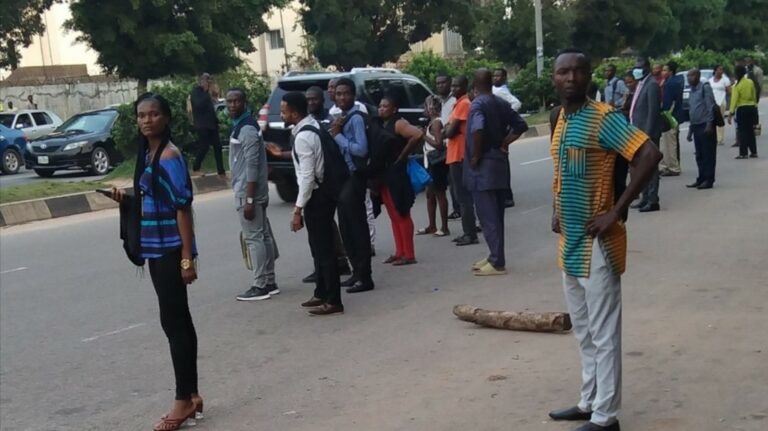
Adebajo said, “If you are trying to move to town from Lugbe, for example, there are times you will wait for 30 to 40 minutes, and no car will be available, and people will just stand there desperate to go by whatever car they see.  Nobody will be expected to be checking for the number on the car.”

Adebajo considered it quite unfortunate that the issue of ‘one chance’ was still being discussed many years after it became rampant in the FCT.

In 2019 he did an investigation that uncovered the one-chance menace. Read HERE.

The ‘one-chance’ menace is due to the influx of people into Abuja, which disrupted the original FCT masterplan, and not because of the inadequate public transport system, according to Aruwa Joel Thomas, head, Abuja Intelligent Integrated Traffic Information System (AIITIS), Department of Traffic Management, FCT Transportation secretariat.

Thomas disclosed that the department was already working on a plan to resolve the issue of transport insecurity in the FCT.

“It is easier to say there is inadequate public transport, especially in the FCT. As you know, there is a masterplan for the FCT, the transport masterplan. Unfortunately, I think there was a miscalculation as nobody envisages the kind of growth the city will experience within the shortest time,” he said.

While sympathising with other speakers who shared a bit of their awful experiences in the hands of ‘one-chance’ robbers, Thomas recalled that his  sister fell victim just the previous day, losing her phone and other variables.

“That, however, is not to say that the FCT authority is not working hard to subdue the menace. It’s just that more people are coming into Abuja as the government tries harder,” he maintained.

He noted that the insecurity challenge in transportation was one of the reasons the Department of Traffic Management created the AIITIS.

The AIITIS is putting in place a policy to reduce transport crime to a level where even the police would be glad to do their job, he said.

Thomas explained further, “It is not that public transport is not enough, but people hardly take public transport at the parks. They would rather take cars in front of their houses.

“At the Nyanya terminal, there are buses that still work there. But commuters prefer to stand in front of their junctions and board cars to town. ‘One chance’ criminals operate more with salon cars,” he stressed.

Discussants noted that ‘one chance’ robbers perpetrate their acts mostly during the rush hours in the morning and evening when the volume of commuting is high.