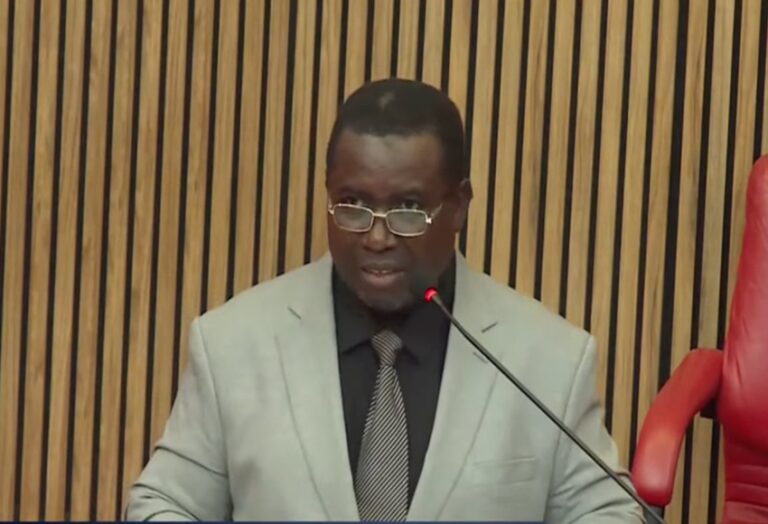
THE Kano State Hospitals Management Board has ordered a full investigation into the death of a housewife, Aishatu Umar, who reportedly died after a surgical procedure at the Abubakar Imam Urology Centre in Kano, amid allegations of medical negligence.
The directive was disclosed in a statement issued by the board’s Public Relations Officer, Samira Suleiman, on Tuesday, January 13.
“The Kano State Hospitals Management Board, under the leadership of the Executive Secretary, Dr Mansur Mudi Nagoda, has taken note of the distressing report concerning the late Aishatu Umar,” part of the statement read.
The board assured the public that the probe would be transparent, impartial, and professional, noting that appropriate action would be taken in accordance with established regulations if any negligence is confirmed.
“We extend our deepest condolences to her family and loved ones. The Executive Secretary has ordered an immediate and thorough investigation into the alleged incident at Abubakar Imam Urology Centre to ascertain the facts and circumstances surrounding the matter.
“Patient safety remains our utmost priority, and the board is committed to upholding the highest standards of healthcare delivery in Kano State,” it added.
The ICIR reports that a family member of late Aishatu, Abubakar Muhammed, broke the news of her demise in a Facebook post, calling on the Kano State government and health regulatory bodies to investigate the matter and take action.
“The woman you see here is Aishatu Umar. She was a sister-in-law to me. She passed away yesterday around 1:00am. She is survived by her husband and five children. Living in Kano. She fell ill a few months ago and underwent surgery at the Abubakar Imam Urology Center in September.
“Following the surgery, she suffered from severe abdominal pain. Whenever she went back to the hospital, she was only given pain relievers. She suffered this pain for four months. Just two days ago, tests and scans were finally conducted, revealing that a pair of scissors had been left inside her body during the September operation.
“Efforts were being made to perform a corrective surgery yesterday, but her time had run out, and she passed away. Is this not pure negligence? Truly, every soul has its appointed time, but how can professional doctors forget scissors inside a patient? This tarnishes the reputation of healthcare workers and health authorities,” the family member wrote.
Mohammed’s call for justice is coming just a few days after award-winning Nigerian author, Chimamanda Ngozi Adichie, raised allegations of medical negligence at Euracare Multispecialist Hospital, Lagos that led to the death of her 21-month-old son Nkanu Nnamdi Adichie-Esege.
Adichie disclosed that Nkanu had initially been treated for what was thought to be a cold before developing a serious infection that required hospitalisation at Atlantis Hospital.
She also said the child was scheduled to travel to the United States on January 7 for further treatment, with a medical team at Johns Hopkins Hospital already waiting in Baltimore but requested a lumbar puncture and an MRI which led her to Euracare.
She said she was waiting outside the theatre when she saw medical personnel rushing in and later learned that Nkanu had been given an overdose of propofol by the anesthesiologist, causing him to become unresponsive, and was resuscitated but developed seizures and suffered cardiac arrest before he died.
Adichie formally issued a legal notice to Euracare Multispecialist Hospital, accusing the facility and its medical personnel of medical negligence and professional misconduct.
The hospital, however, denied the claims.
These latest cases add to the number of distressing reports of medical errors and negligence in Nigerian hospitals, where patients and families especially those without resources or public visibility have repeatedly suffered preventable injury and loss of life due to substandard care, misdiagnosis, drug administration errors and weak regulatory oversight.
THERE are indications that some banks will merge as some deposit money banks (DMBs) in last-ditch efforts to meet the March 31, 2026, deadline for the recapitalisation exercise of the Central Bank of Nigeria (CBN).
Lenders are already in an intense push to comply with the apex bank’s new minimum capital requirements before the 31 March 2026 recapitalisation deadline.
In March 2024, the CBN announced new minimum capital requirements of N500 billion for international banks, N200 billion for national banks and N50 billion for regional banks, allowing compliance only through fresh equity injections, mergers and license re-classification.
A rating firm, DataPro, in its 2026 Banking Sector Prospects in Nigeria, has confirmed the development, highlighting post-merger challenges and technology-related threats when banks opt for merging.
Analysing the banking sector prospects for 2026, DataPro’s in-house expert and analyst on Enterprise Risk Management, Idris Shittu, expressed optimism that major banks will meet the minimum capital threshold, but did not rule out bank-mergers and their risk exposure.
“This regulatory push has spurred an active Monitoring and Evaluation environment, but it brings with it considerable risks. Post-merger integration challenges, including IT system harmonisation, cultural alignment, and the migration of non-Performing Loans, could strain newly merged entities, especially among smaller banks. The looming deadline has also sparked ‘War Room’ discussions focused on deal execution and risk mitigation,” he said.
By the end of 2025, most tier-1 institutions had already met the new capital threshold, and more have announced that they have met the minimum capital requirement in this New Year, leaving smaller banks under mounting regulatory and market pressure to strengthen their balance sheets.
Meanwhile, Tier-2 banks are under increasing pressure to comply, with three significant mergers expected by early 2026 as institutions scramble to meet the 31 March recapitalisation deadline.
Shittu maintained that the sector will be facing diverse threats in the New Year, which demand agility and operational resilience from banks across the country. These threats include regulatory tightening, as a high Cash Reserve Ratio continues to restrict liquidity.
He added that capital pressure is intensifying as the recapitalisation deadline drives consolidation. He also highlighted heightened risks around merger execution and integration, and technological disruption from rapid fintech innovation, adding that “It would demand urgent modernisation and digital transformation from traditional banks to stay competitive.”
He anticipates that banks would continue to prioritise fee-based income streams over traditional lending activities to deal with the 45 per cent Cash Reserve Ratio (CRR) for commercial banks. This CRR effectively sterilises nearly half of the naira deposits and severely limits liquidity.
Commenting on the disruption brought on by fintechs in the financial sector, Shittu said, “Technology continues to reshape Nigeria’s banking sector, with fintech innovators like Moniepoint and Opay aggressively capturing market share, particularly among SMEs and retail customers. In response, 2026 is poised to become the year Nigerian banks evolve beyond traditional banking to compete as lifestyle ‘super-apps’.
“These super-apps aim to integrate services such as flight bookings, food delivery, and other daily conveniences directly into banking platforms to enhance customer retention and engagement. However, traditional banks face an agility challenge due to slow IT procurement cycles and legacy core systems, risking a continued exodus of younger users to nimbler fintech rivals. To keep pace, banks are expected to innovate rapidly, either through strategic fintech acquisitions or by spinning off autonomous digital subsidiaries capable of operating with fintech speed and flexibility,” he stated.
On a possible decline in the number of banks, Shittu said, “By the end of 2026, the Nigerian banking industry is expected to consolidate significantly, shrinking in number. While this consolidation promises a more resilient banking system capable of underwriting larger transactions and supporting Nigeria’s ambition toward a $1trillion economy, integration risks loom large.
He noted that “Past consolidation efforts, such as those in 2005, highlight the potential pitfalls of IT system failures and cultural clashes. Particularly challenging is the merger of conservative Tier-1 banks with aggressive Tier-2 acquirers, which could cause decision-making gridlock and operational disruptions.”
The expert warned that success in the consolidation phase will depend heavily on effective due diligence around asset quality and cultural fit, as well as robust post-merger integration planning.
The Executive Director of the Alternative Bank, Monsurat Ademola-Adeniyi, also noted that the AI would have a huge influence on the consolidation exercise and play its role beyond credit review and fraud detection.
“The use of AI in the banking industry would also come into play. It’s currently being used for fraud detection and credit review. It’s also being used to improve customer experience. AI is something that is going to be on the front burner and continue to improve the banking experience as time goes on,” she stated.
Here are banks that have met CBN minimum capital requirements
As of January 8, 20 lenders have completed the new capital raise with Access Bank, the country’s largest lender by assets, emerging as the first to scale through the hurdle.
The recapitalisation echoes a 2004 exercise under then-CBN governor Charles Soludo, which forced banks to raise capital to N25 billion from N2 billion. That consolidation cut the number of lenders from 89 to 25 and paved the way for stronger players to emerge.
International Banks:
Access Bank
Access Bank raised a total of N351 billion through a rights issue, making the Lagos-headquartered lender the first Nigerian bank to meet the new capital base of N500 billion. The rights issue involved 17.77 billion ordinary shares at N19.75 each. With a combined share premium and paid-up capital of N602.8 billion, the bank has exceeded the CBN requirement by N102.8 billion.
Zenith Bank
Zenith Bank has also concluded its recapitalisation exercise, raising over N350 billion through a combination of rights issue and public offer. The bank’s share capital now stands at N614 billion, surpassing the minimum capital requirement for international banks.
First HoldCo (First Bank)
First HoldCo Plc has also met the Central Bank of Nigeria’s (CBN) minimum capital requirement of N500 billion. The milestone, according to the lender, was achieved following the completion of a series of strategic capital initiatives, including a Rights Issue, a Private Placement, and the injection of proceeds from the divestment of the Group’s merchant banking subsidiary.
GTCO
Guaranty Trust Holding Company (GTCO) stands among lenders that have completed their capital requirements. Nigeria’s most valuable lender raised its capital through a multi-tranche equity programme, raising over N209 billion in its first phase (late 2024/early 2025), with plans for further fundraising, including a recent private placement for N10 billion, to strengthen its banking subsidiary (GTBank) and fund group expansion. The capital injection boosts GTBank’s paid-up capital to over N504 billion, fulfilling new regulatory mandates.
UBA
United Bank for Africa raised N178.3 billion through a rights issue, pushing its capital base above the N500 billion minimum set by the Central Bank of Nigeria (CBN) for lenders with an international license.
The capital raise, which closed in September 2025, follows a N239 billion injection completed in November 2024 that had lifted the bank’s capital to N355.2 billion. Combined, the transactions position UBA above the CBN’s recapitalisation threshold ahead of the March 2026 deadline, pending formal regulatory confirmation.
Fidelity Bank
Fidelity Bank has equally joined the league of lenders that have scaled through the new capital requirements ahead of the deadline. The bank’s eligible capital now stands at N564.5 billion from N305.5 billion – a rise that’s done through a private placement carried out under a mandate granted by shareholders at an extraordinary general meeting on February 6, 2025, authorising the bank to issue up to 20 billion ordinary shares.
The fundraising caps an aggressive capital-raising drive by Fidelity over the past two years. In 2024, the lender raised N175.85 billion through a public offer and rights issue, which brought its eligible capital to N305.5 billion. That left a shortfall of about N194.5 billion relative to the new minimum capital threshold.
National Banks:
Wema Bank
Wema Bank also announced the completion of its recapitalisation by raising N150 billion through a rights issue of 14.29 billion shares at N10.45 per share, concluded on May 21, 2025. The bank is awaiting final verification from the CBN, with a N50 billion portion of the offer currently under review by the Securities and Exchange Commission (SEC), according to posts on social media.
Citibank Nigeria
Citibank Nigeria Limited (Citi) has also announced that it had successfully met the Central Bank of Nigeria’s (CBN) new minimum capital requirement of N200 billion for national commercial banks. The lender did not disclose how the capital was raised.
Ecobank Nigeria
Ecobank is also among the lenders that have crossed the recapitalisation hurdle, raising the minimum paid-up capital for a national bank.
Globus Bank
Globus Bank completed its capital requirement by raising N52.9 billion in 2024 to lift its capital to N98.6 billion, and followed in 2025 with a further N102 billion through rights issues and private placements. The raise, subscribed entirely by existing shareholders, took its capital above N200 billion.
Stanbic IBTC
Stanbic IBTC has equally scaled through the capital threshold set for national banks, as the lender raised N200 billion through a rights issue and a direct capital injection by its parent company.
PremiumTrust Bank
PremiumTrust Bank has met the N200 billion minimum capital requirement for National Commercial Banks ahead of the March 2026 deadline set by the Central Bank of Nigeria (CBN), becoming only the third national bank to do so.
The upstart lender, just three years old, exceeded the new capital requirement after wrapping up a rights issue and private placement with CBN sign-off in August, placing the bank among the early complaints to the new rule.
Providus Bank
Providus Bank also completed its recapitalisation, an exercise done through a sealed strategic merger with Unity Bank. This makes Providus–Unity the first approved merger under the CBN’s recapitalisation programme announced earlier in 2024.
Other banks that have met the new capital requirement include merchant banks such as FSDH Merchant Bank, Greenwich Merchant Bank, Nova Bank, and Rand Merchant Bank.
Non-interest banks are not left behind, as Jaiz Bank, Lotus Bank, and TAJBank have beefed up their capital ahead of the CBN deadline.
A wave of coordinated kidnappings has continued to plunge communities in Wase Local Government Area of Plateau State. The December 21, ambush of a vehicle conveying travellers from Zak village to Sabon Layi community for an Islamic event, that led to the abduction of 28 passengers, exposes inactive and inadequate security responses.
It was some minutes after 11 p.m. on December 25, 2025, when an aggressive knock on the door woke the entire family of the Chief Imam of the Central Mosque in Gajin Bashar, in Wase Local Government Area of Plateau state, Hassan Muhammadu. Male voices behind the door angrily commanded he should come out in Hausa, but he said he would not.
“More than five men forcefully broke the door, grabbed my legs on the bed, flunked me into the front of my door and started beating me and my family. They insisted that I stand up and follow them, but I refused and asked them to kill me in my house. That was when they tied my legs, removed my shirt and left my trousers.
“They started dragging me on the ground as they were going. They would carry me and throw me to a flat land whenever they got to a rocky path,” Muhammadu recalled his experience on a hospital bed.
Hassan Muhammadu on his hospital bed in Gajin Bashar. PC: Nanji Nandang/ICIR
The 76-year-old said the men in their numbers dragged him on the ground towards the outskirts of the village where their bikes were parked, noting that they had abducted two of his children too.
“When we got somewhere, they started beating me again which made me started vomiting blood and I passed out. When I regained consciousness, I noticed that I was thrown into the bush. Then I heard the voices of my children, and I moved so that they could find me. and they brought me back here,” he said.
A community health personnel tending to kidnap victims in Gajin Bashar, Halilu Mudi, corroborated that when they were informed that the chief Imam was kidnapped, the community security operatives and other officials immediately headed to the outskirts of the town.
“We called the DSS from Bashar, the five soldiers attached to us and our local security personnel immediately entered the bushes. They caught up with the bandits at the place where they parked their bikes, but they immediately started shooting at us. It was at that time that they threw baba (Muhammadu) into the bush and the two children immediately escaped.
Halilu Mudi, a community doctor that cares for kidnapped victims in Gajin Bashar. PC: Nanji Nandang/ICIR
“Unfortunately, two DSS personnel were injured during the exchange, and the commandant ordered a retreat. So, they returned to the village around 4: a.m. without knowing that baba and the boys were still in the bush,” Mudi said.
Residents suffer in silence
Muhammadu’s case is not isolated. The ICIR reports that on Sunday night, December 21, a few days before his attack, gunmen ambushed a vehicle conveying travellers from Zak village to Sabon Layi community for an Islamic event. They abducted all 28 passengers, including men, women, and children. Among the victims were two princes and a religious leader who were leading the delegation. The attackers abandoned the vehicle at the outskirts of the community and disappeared with the victims into the bush.
A youth leader in Wase, Sapi’i Sambo, confirmed the incident, stating that the attack occurred around 8 p.m. and that the whereabouts of the abducted travellers remain unknown. Another resident of Bashar town, Ibrahim Musa, also corroborated the incident, noting that the abandoned vehicle belonging to a community leader in Zak was discovered by road users the following morning, triggering panic and a community-led search.
However, on January 8, 2025, Sambo confirmed that “Operatives of DSS called in the night they had rescued the victims.” The Plateau state government held a press briefing on January 10, confirming the development and also presented the released victims.
During a field visit to Bashar, The ICIR gathered that barely a day before Sabon Layi abduction, seven residents of Nyalung community were abducted while working on their farms in broad daylight, underscoring how unsafe even farmlands have become.
Residents said kidnapping, banditry, and cattle rustling have become routine in the surrounding villages, yet security responses remain reactive and inadequate, noting that although the Plateau State Police command confirmed that investigations are ongoing, similar assurances in the past yielded no arrests, rescues, or prosecutions.
Cattle rarer and farmer, Umar Dembo, said around 1 a.m. on December 7 the bandits stormed his house at the outskirts of Nyalung village and abducted his wife, sons and daughter in his absence.
“They first took six of them and later asked two of them to go back home, retaining four with them. When I returned home that same day, they used my son’s phone to call me and demanded a ransom of N100 million. When I tried to tell them that I don’t have such money, they told me that the person who directed them to me said I have a shop, car, and a large herd of cattle but that was not what they saw when they came So, I should pay N50 million. After going back and forth for days, they settled and insisted I must pay N6 million imminently,” Dembo said.
Umar Dembo’s wife and children were kidnapped and are still in custody despite paying N6 million ransom. PC: Nanji Nandang/ICIR
He explained that he looked for N6 million and sent someone from a different community to deliver to them on December 25, even though they had instructed him to deliver it by himself, noting that as of December 28, his family had not been released.
“They were speaking to me in Fulfude and Hausa languages and insisted that I deliver the money by myself, but I refused. Everyone in this community was scared because they might also kidnap the person, but someone from the neighbouring community agreed and he told me that when he went to a bushy path near Shiwaka, a community near Kukawa, the location they instructed him to meet them, more than four bikes zoomed out of the bushes.
“They confirmed the money and asked him to go but he asked them about his victims and they said they will bring them back by themselves. They confirmed receipt of payment when I called them and said they will release my family but you see it’s been five days since I made the payment and my family has not been released,” he added.
The father of eight children said that the security operatives at Bashar called him and promised to rescue his family.
“I gave them the phone number of my son the bandits have been using to communicate but no result to this day,” he explained.
The wife of Dembo’s son who was among the two people the bandits initially asked to go back home, before abducting the remaining four, Hajara Abdullumuni, said when the bandits broke in, they snatched all their phones and tied her husband’s hand to the back using her room curtain.
Hajara Abdullumuni, the wife of Dembo’s son holding a child on her laps. PC: Nanji Nandang/ICIR
“Six of them entered my room, while four others entered Dembo wife’s room, and four others entered the two children’s rooms. They commanded us to start following them and asked us where Dembo was. I told them that I was not feeling well. They said they wouldn’t want me to go and collapse on the way, so they asked me and the youngest girl to go back. They took my husband and three others with them.
“I always get scared at night and I am wondering what they may be doing to him. I have not had good sleep since that day and have not spoken to my husband. I pray he comes home safe and healthy,” she said.
Similarly, Umaru Zakiru, said that his brother, Adam Abdulkarim, and three others were kidnapped by the bandits in the afternoon on December 21, while they were on the farm harvesting cassava, the same day 28 people were kidnapped in Sabon Layi.
“They called me on my brother’s phone and demanded for N4.5 million but we told them that we don’t have that amount of money. they gave my brother the phone and he told me that they are beating them severely, begging us to look for the money and pay them,” Abdulkarim said.
Umaru Zakiru. PC: Nanji Nandang/ICIR
He said that his brother’s wife and children have been disturbed, but he cannot raise N4.5 because he is just a farmer and cattle rarer, noting that most of his cattle have been rustled by the bandits.
How I escaped – Victim
On December 29 morning while this reporter was still speaking to other sources, Amisu Aliyu, a victim of the bandits arrived in the village, and everyone gathered around him to hear the story of his escape.
Amisu Aliyu, a victim escaped the bandits camp and arrived in the village on December 29. PC: Nanji Nandang/ ICIR
“I had gone for a farming job in one Alhaji’s farm at the outskirts of the village on December 10 and the bandits stormed the ruga at around 11 p.m. that night. They kidnapped two of us, took us to their camp, chained our hands, legs and beat us anytime they liked. They brought Alhaji Dembo’s children and wife weeks later. People from other states were kidnapped and brought to join us daily. They fed us only once a day and once there was poor ransom feedback from our family, they would flog and beat us,” Aliyu told The ICIR.
He explained the bandits mistakenly forgot one of their keys which they quickly hid it and waited for them to sleep before escaping.
“Eight of us including myself, Dembo’s wife, and children, used the key around 10:30 p.m to escape but Dembo’s wife could not make it. I ran all through the night and arrived in Kukawa community early this morning. When I got home, I was told that Dembo’s son came out in another village, but I don’t know about the others,” Aliyu added.
As at the time this reporter was in Nyalung, Dembo’s son had not arrived yet.
Aliyu told this reporter that the 28 victims kidnapped in Sabon Layi were not brought to their camp. The ICIR gathered that the bandits have different factions and camps in the forest.
‘We dont sleep at night’
The Galidima of Nyalung, Hassan Idris, explained that Nyalung and the neighboring villages are the border towns that share boundaries with Bauchi, Gombe, and Taraba States.
Google Earth map of Bashar District in Wase LGA showing the surrounding forest. PC: Nanji Nandang/ICIR
“We don’t sleep at night in this community, because we don’t have any presence of government security here. No police or the army. We only have a small local vigilante group, who patrol the community every night. But they can only do little,” Idris said.
The ICIR can independently confirm the absence of security operatives in the community, as this reporter did not meet the police officer assigned to the post throughout the days spent the in the community and the outpost was under locks throughout.
Police outpost in Nyalung community with a padlock on the door, Wase LGA. PC: Nanji Nandang/ICIR
The community leader said that more that 200 people have been kidnapped from the community since the attacks started over 6-year ago, noting that some were killed in the kidnappers camp while others died in the camps because of severe beating.
“They have rustled more than 500 cows from this community, sometimes in broad daylight while we watch because they have sophisticated guns. They took more than fifty cows belonging to me recently. We no longer have cows in this village, and we can’t go to the farm because they are camped where our farms are,” he added.
Hassan Idris, the Galidima of Nyalung ward, Wase LGA. PC: Nanji Nandang/ICIR
Idris said the bandits operate at will, accusing the government of intentionally not coming to their aid, while providing tight security in neighbouring Kompany community where a lead mining site is located.
“We see two different helicopters going toward the forest every time and we suspect that it is with those aircraft that they bring weapons for those bandits to be king over us. If it’s not the government that is supporting them, why would they not come and blow down the forest so that we can rest and live our lives normal again?,” he asked and explained that “We have a police outpost here, but the police officer attached to us comes twice a week and doesn’t even enter the station. He will survey and return to Bashar. We have taken our complaints to the government and security agencies but to no avail,” he said.
Echoing Idris’ voice, the Chiroma of Nyalung, Bala Mudi Salihu, decried that since the attacks started years ago, 2025 has been tough, because residents did not go to their farms throughout the year.
“Our people have not accessed their farms, because our farms are very close to the forest where they are camped. Even the small farms close to us at the outskirt of the villages are no longer safe as the bandits keep kidnapping people in the farms,” Salihu said.
Chiroma of Nyalung, Bala Mudi Salihu. PC: Nanji Nandang/ICIR
He called on the government to set the forest ablaze so that they can freely access their farms.
History of attacks
Saidu Dodo recalled how the bandits stormed his house around 8 p.m. in July 2025, and kidnapped two of his sons in his absence, noting that they demanded N50 million for their release.
Saidu Dodo. PC: Nanji Nandang/ICIR
“My children spent one month and four days in their custody. I paid them N6 million, but they came up with a new demand, asking me to buy two bikes for them. I told them that I didn’t have one. My children eventually escaped weeks later,” Dodo said.
Similarly, a renown yam farmer in the neighboring community, Ambrose Alkhali, said it was the night his wife was in labour that more than thirty bandits stormed his house and asked for the new bike he bought before taking him and two of his children away.
“It happened in June. They said somebody informed them that I am rich. I was in their custody for over two months, and they requested for N20 million, but I offered them N3 million at first. They beat me to stupor asking me to give them full details of all my properties and wealth. When the beating was too much, I offered them N5 million, but they forced me to pay N8 million before we were released,” Alkhali said.
He confirmed to The ICIR that the bandits have different factions and camps, noting that “They were more than thirty that night. When we got to the forest, I realised they have separate camps. It’s just like a village with every clan going out in their numbers to hunt for captives.”
A photo collage showing Ambrose Alkhali and all the injuries he sustained. PC: Nanji Nandang/ICIR
He explained that he found out that his wife and child died during the delivery because of the attack.
A resident of Yuli community, Yahaya Yuli, decried that they can’t go to their farms anymore because of the bandits who have rustled all their cattle.
Yahaya Yuli. PC: Nanji Nandang/ICIR
“On December 5, they came in the afternoon and rustled our cows. They came back in their numbers later that night, rustled more cows and killed two people. They have rustled more than one thousand cows,” he said.
Similarly, Emmaho Yakubu, said he and fifty community members of Tumur community fled to Nyalung in the first week of December because of the incessant attacks and kidnapping of their community members.
“We are farmers who settled in Tumur because of the fertile environment but everyone has fled the community, that’s why I and other families fled here. We cannot go to the farm again. This community has accommodated us, but it is not safe here either,” Yakubu said.
Emmaho Yakubu. PC: Nanji Nandang/ICIR
The man lamented that due to the consistent attacks on farmers when they are on their farms, most of them have not gone to the farm for months.
Kidnappings and related banditry have significantly contributed to food insecurity in Nigeria by disrupting the entire agricultural system in key food basket states across the North-West and North-Central regions.
In North-Central Nigeria, Benue, Plateau, Niger, and Nasarawa known for a variety of food crops, have also experienced major disruptions due to communal attacks and farmer-pastoralist conflicts.
LGAs like Wase and all the low-land region in Plateau State produce major food like yam and grains but in places that farmers like Yakubu not been forced to stop going to the farm, Bandits have taken control and impose illegal “farm levies” or “protection taxes” on farmers for permission to plant or harvest their crops. Those who cannot or refuse to pay face violence or kidnapping, making agriculture economically unviable for many.
The ICIR gathered that the former village head of Nyalung, late Sanusi Idi was targeted because he refused to agree to the partnership the bandits offered him to pay tax and allow them to enter Nyalung at will, like they are doing in Kukawa community. This reporter found out that it is the residents of Kukawa that cook and deliver food the kidnapped victims and the bandits eat in the camp due to the partnership they have.
The wife of the late Sanusi, Salamatu Sanusi, recalled how they stormed her house in the night.
“They macheted, and shot him in the stomach when he insisted, he would not follow them. They took me, my daughter and two others with them. They would chain the men, but they don’t tie women. We stayed in their custody for two months,” she said.
Salamatu Sanusi, the wife of the late community chief. PC: Nanji Nandang/ ICIR
The reporter could not access some of the neighbouring communities like Kukawa, Sabon Layi and Kompany because they are high risk security zones. The growing insecurity in these communities represents a grave violation of citizens’ fundamental rights because Section 33(1) of the 1999 Constitution guarantees the right to life, which is routinely threatened when armed groups abduct civilians without consequence.
Section 34(1)(a) guarantees dignity of the human person, a right stripped when victims, including children are dragged into the bush. Section 41 guarantees freedom of movement, a right no longer safely exercised by travelers on rural roads, while Section 43 guarantees the right to own property, which farmers lose when they are abducted from their own land. But kidnappings escalate with little resistance, residents fear that Wase is being slowly abandoned to armed groups.
Authorities response
The Councillor of Nyalung ward, Rabiu Suleiman Musa confirmed the claims and kidnapping experiences the people shared.
“Indeed people do not sleep in this community at night because of the consistent attacks. Despite several complaints to security operatives, and to the LGA, including a petition that was written to the executive arm no result yet,” Musa said.
He explained that their plea to the government is to destroy the forest completely, noting that the only measure they have put in place is the local security system.
The ICIR contacted the Council LGA chairman, Hamisu Muhammad Anani, for details but all messages and calls were not responded to as of press time.
This reporter called the chairman on January 2 repeatedly, but the calls were not answered. Also, the WhatsApp message left was never replied despite follow up calls.
Similarly, the Senator representing Plateau South Senatorial District, Simon Bako Lalong, was contacted on January 10 via calls and WhatsApp message to understand the security measures and effort he has taken at the senate level to address the worsening security concern in these communities. By press time there was no response from him.
Meanwhile, the Public Relations officer of the Plateau State police command, Alfred Alabo, confirmed the attack in Sabon Layi, saying: “We are on it. Our anti-kidnapping unit officers have gone there, and you know we have a mobile unit around that place.”
On the cow rustling in the communities in Bashar, the PPRO said: “Some cows were recovered, last year. I think there are over 10 cows. There were some that we did in collaboration with Taraba State command, because we have been working together along that borderline,” he said.
Alabo said the command didn’t have any information about the police out post but promised to look into the matter. “I don’t have that information. The command will definitely look into it. I also want to promise you that I will speak with the divisional police officers. Sometimes, some of those outstations are police stations that have been built by communities but have not been officially handed over,” he noted.
This part of The ICIR’s terror series. Read it HERE.
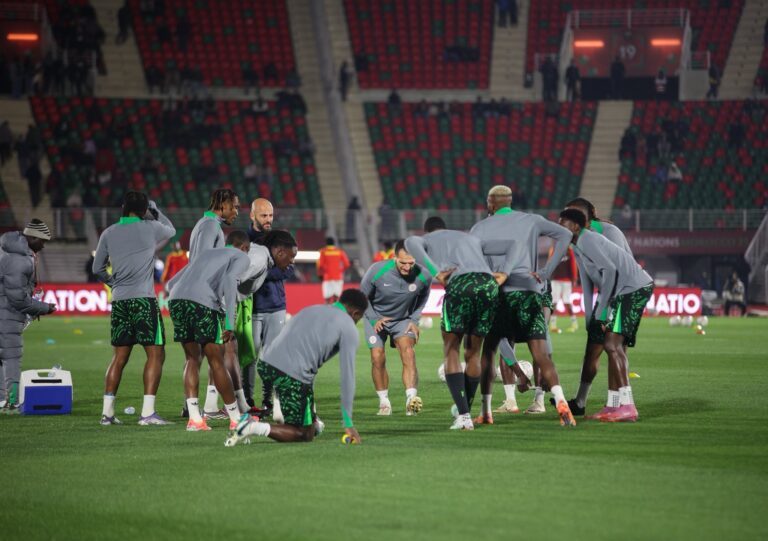
THE Super Eagles of Nigeria will face tournament hosts Morocco in a high-stakes Africa Cup of Nations (AFCON) 2025 semifinal Wednesday night at the Moulay Abdellah Stadium in Rabat.
The clash, scheduled for 8pm, pitches arguably two of the continent’s most in-form sides against each other in a bid for a place in Sunday’s final.
Nigeria come into the match on the back of a flawless run in the tournament, having won all five of their games to date, while Morocco remain unbeaten with four victories and one draw.
Under French-Malian coach Éric Chelle, the Super Eagles have displayed a blend of attacking fluency and tactical discipline that have made them one of AFCON’s most dangerous teams, having scored 14 goals in the tournament so far.
Nigeria topped Group C with a perfect nine points, beginning their campaign with a 2–1 win over Tanzania. They followed up with a 3–2 victory against Tunisia, and then saw off Uganda 3–1 to seal first place.
In the Round of 16, Nigeria delivered one of the tournament’s most emphatic performances, thrashing Mozambique 4–0. Victor Osimhen struck twice, Ademola Lookman added another, and Akor Adams capped the performance late on.
Their quarter-final encounter with Algeria was a more measured performance and decisive. Played in Marrakech amid heightened tension and concerns building up into the match, the match saw Nigeria asserted control in the both halves.
Although it was a goalless first half, Osimhen opened the scoring shortly after the restart of the second half, while Adams doubled the advantage minutes later. The scoreline ended in two to nil.That also marked the second clean sheet Super Eagles recorded with just only three goals conceded in the tournament so far.
Morocco’s home charge
Hosts Morocco have lived up to pre-tournament expectations. In their quarter-final clash against Cameroon, Morocco emerged with a 2–0 victory, with Real Madrid forward Brahim Díaz continuing his fine run by scoring yet again. Díaz has now netted in five consecutive matches, breaking his nation’s goal-scoring record for a single AFCON edition.
Morocco’s campaign has been built on defensive solidity, they have kept multiple clean sheets and have yet to concede in open play at this tournament, while leveraging set-pieces and quick transitions.
Undoubtedly, the atmosphere would be intense with thousands of home supporters behind the host team, which carry the weight of expectation from its passionate fans.
Nigeria is set to clash with the host nation, Morocco, in the semi final of the ongoing AFCON. The head-to-head shows that both sides lost and won 4 matches each and drew 1 game in 9 matches. Do you see Nigeria reaching the final? Let’s get your prediction#ICIRDatapic.twitter.com/8WxeloZgce
This semifinal is the sixth AFCON meeting between Nigeria and Morocco, and the second in the semifinals, the last coming in 1980 when Nigeria went on to win the tournament.
Historically, Morocco hold the edge in head-to-head results across all competitions, though AFCON meetings have generally been closely contested.
Nigeria and Morocco first crossed paths at the Africa Cup of Nations in 1976 during the group stage, where the North Africans claimed two victories — 3–1 and 2–1 on their way to lifting their first and only continental title.
Their second meeting was in 1980 in the semi finals, when Nigeria edged Morocco 1–0, with Felix Owolabi scoring the decisive goal in the ninth minute. The two sides met again in 2000, with Nigeria eliminating Morocco in their final Group D match.
Their most recent AFCON meeting was in the 2004 group stage, where Morocco secured a 1–0 win in their opening Group D fixture, thanks to a 77th-minute strike from Youssef Hadji.
Overall, Nigeria have faced host or co-host nations ten times at the Africa Cup of Nations, recording three wins, three draws and four defeats in those encounters.
For Nigeria, Wednesday match is a chance to win their fourth AFCON. Their attacking record is noteworthy, the Super Eagles have now scored at least two goals in each of their five matches at this tournament, and their 14-goal haul is their highest in a single AFCON edition, according to CAF.
Morocco, meanwhile, are pursuing a first AFCON title since 1976 and will lean on home advantage and the form of key players like Diaz and captain Achraf Hakimi to navigate past a free-scoring Nigerian side.
THE Confederation of African Football (CAF) has opened a probe into alleged misconduct by players, officials, and journalists during the TotalEnergies CAF Africa Cup of Nations Morocco 2025 quarter-finals, particularly the match between Algeria and Nigeria.
In a statement on Monday, January 12, 2026, CAF said it had collected match reports and video footage showing potentially unacceptable behaviour and referred the matters to its Disciplinary Board for further review.
The governing body confirmed that appropriate action would be taken if any individuals are found guilty of wrongdoing.
The ICIR reports that the match, played in Marrakech, ended with Nigeria defeating Algeria 2–0 to advance to the semi-finals.
However, the aftermath was marked by tension both on and off the pitch, with several Algerian players seen confronting referee Issa Sy and his assistants over disputed decisions.
In some of the videos circulating on social media, security personnel had to intervene by first forming a defence around the officials, to prevent escalation.
Nigerian players were also involved in heated exchanges as seen in on-the-pitch chaos. The unrest extended to the stands, where frustrated Algerian fans attempted to breach barriers and vandalised sections of the stadium before stewards restored order.
Reacting further, CAF condemned all inappropriate conduct during matches, especially actions targeting referees, tournament organisers, or media members.
“CAF is also reviewing footage of an incident involving members of the media who allegedly misbehaved in the mixed zone area.
“CAF strongly condemns any inappropriate behaviour which occurs during matches, especially those targeting the refereeing team or match organisers. Appropriate actions will be sought against anyone whose behaviour is not consistent with professional conduct at CAF events,” the statement added.
The confederation also confirmed that it was reviewing the incident in the mixed zone and would hold accountable anyone found to have acted unprofessionally.
“CAF has referred the matters to the Disciplinary Board for investigation and has called for appropriate action to be taken if the identified persons were to be found guilty of any wrongdoing,” the statement added.
THE Katsina State Government has come under attack following its plan to facilitate the release of 70 suspected bandits currently facing trial.
The government said the move was part of ongoing peace deal with armed groups across the state.
A letter issued by the government on January 2, marked ‘SECRET’, and reportedly addressed to the Chief Judge of the state, requested the intervention of the Administration of Criminal Justice Monitoring Committee (ACJMC) on the facilitation of the release of suspected bandits in custody.
The document was said to have cited Section 371(2) of the Administration of Criminal Justice Law of Katsina, 2021, and described the action as one of the conditions for sustaining peace accords signed between frontline Local Government Areas and armed groups in the state.
It noted that while some suspects had been arraigned at the Federal High Court, others remained in detention, awaiting trial at magistrate courts, with an additional list of about 22 inmates facing trial at High Court also submitted for consideration.
The directive has sparked widespread outrage from legal practitioners, civil society organisations, families of victims of banditry, and other citizens, who argue that releasing individuals accused of serious crimes undermined the rule of law and denied justice to victims. Critics contend that such actions could embolden criminal networks rather than deter them.
Analysts and security observers warned that agreement between bandits and government could undermine the sacrifices of security forces, many of whom have lost their lives battling bandits and terrorists.
There are growing concerns that releasing suspects who could be linked to deadly raids and kidnappings may reward criminality rather than dismantle it, particularly as banditry continues to claim lives and disrupt livelihoods across Nigeria.
Abdullahi Kofar Sauri of the Network for Justice described the plan as “a dangerous precedent,” urging the government to consider compensation and justice for victims’ families rather than freeing suspects.
Security expert Yahuza Getso similarly warned that the move “lacks sincerity” and could weaken community trust in state security strategies
Defending the policy, the state Commissioner for Internal Security and Home Affairs, Nasir Muazu, in an interview with DCL Hausa, said the move was essential to consolidating community-driven peace agreements with “repentant bandits” in several LGAs.
Muazu likened the process to prisoner exchanges in wartime, citing examples such as Nigeria’s civil war and past negotiations involving Boko Haram, arguing that such approaches were not unprecedented in conflicts.
He stated that peace deals agreed between communities and armed groups had brought relative calm to several areas, including Safana, Kurfi, Sabuwa, Faskari, Danmusa, Bakori, Musawa, Matazu, and Dutsinma, where abductees were freed and violence has subsided.
Muazu said the initiative was part of broader reconciliation efforts that had already yielded results, noting that the initiative had led to the release of nearly 1,000 abducted persons across multiple LGAs.
He said the releases stemmed from structured negotiations involving the communities. He argued that the decision was taken in accordance with global best practices.
He concurred that banditry remained a crime under Nigerian law but maintained that the peace process driven by affected communities had prioritised hostage release and stability over prolonged detention and punishment for bandits.
As debate intensifies across social and traditional media, some legal experts say the matter could soon be subject to judicial review, with stakeholders pushing for clarity on whether due process was followed and whether public safety is being jeopardised in the name of peace.
Reacting to the development, the Crusader on X wrote, “Things like this are the reasons I am considering to go on voluntary retirement from the military. You want to release people who have killed so many innocent people, raped both single and married women, making children to be orphans etc.”
Willie shared his thoughts on the matter thus, “Katsina really said let’s try peace by any means necessary. I just hope this is not one of those episodes where you release people today and start chasing them again next week. Nigeria’s storyline is getting too unpredictable.”
M.O. E also gave his opinion, “This is quite unfortunate. How can the state government make deals with these terrorists? Why demoralise members of our armed forces for political gain? This shows how many state governments sabotage the fight against terrorism. They sacrifice the security of their state to get cheap political capital.”
Chris Aspirwealth wrote “The irony of our ‘justice’ system: bandits who terrorised communities are getting ‘rehabilitated’ and released, while those peacefully seeking self-determination are handed life sentences. It’s not justice if it’s selective; it’s just state-sponsored intimidation.”
The ICIR reports that similar decisions by the Nigerian government have failed, as the bandits and terrorists who enjoyed similar freedom soon returned to the trenches.
ON a December evening in Umudora, a farming community in Anambra West Local Government Area, a primary healthcare worker stood beside a patient, clutching a device meant to connect her to a doctor miles away.
When the screen froze and the signal failed, she reached for her personal phone, swapping SIM cards one after another, hoping a network bar would appear before time ran out. For Stella Ogolor, Officer-in-Charge of the Umudora Primary Healthcare Centre, such moments have become routine.
“In critical cases, we use our phones to call the doctor. Even at that, we may have to change SIM cards for strong network coverage,” she said.
The Anambra State Government launched its telemedicine initiative in November 2024 to bridge gaps in healthcare access, particularly in rural areas, and to support maternal and child health services across 329 primary healthcare centres funded under the Basic Health Care Provision Fund (BHCPF).
According to the Commissioner for Health, Afam Obidike, the programme was designed to address human resource shortages at primary healthcare facilities. Under the model, telemedicine hubs were established across the 21 local government areas, with doctors available to provide real-time consultations to frontline health workers.
Telemedicine gadget being used in Anambra.
Initially hailed as a breakthrough, the programme promised to ease pressure on overstretched facilities and extend specialist support to remote communities. One year later, however, findings from visits to several rural PHCs suggest a more complex reality, shaped by weak network coverage, power supply challenges and community perception.
When the network fails, the system falters
Unstable mobile networks remain the most significant obstacle to effective telemedicine use. Eunice Obi, Officer-in-Charge of Amansea PHC in Awka North LGA, said dropped calls during consultations are common.
“Sometimes, you are on call with the doctor for a critical case, the network drops and the call is aborted. It wastes patients’ time, and I see it on their faces.”
Similar experiences were reported in Umueze-Anam and other parts of Anambra West. Emmanuella Anyanwu, of Umueze-Anam 1 PHC, said she often monitors network strength on her personal phone before attempting to call.
“When the signal improves, that’s when I try to reach the doctor,” she explained.
In Ogbaru LGA, the consequences of these disruptions proved fatal. Ifeoma Ndu, who is in charge of Ogbakuba PHC, recalled a case involving a patient with a heart condition.
“I tried repeatedly to reach the telemedicine doctor but couldn’t,” she said, adding: “When I eventually got through, I was advised to refer him. But the family refused to travel at night because of insecurity. He died early the next morning.”
Such incidents, experts say, show how unreliable connectivity can undermine the promise of digital health solutions.
Despite the challenge, OICs alleged that ₦20,000 is deducted monthly from their facilities’ quarterly BHCPF disbursements for data subscriptions dedicated to telemedicine. They claim the data often expires unused due to poor network access and that they are warned against using it for other purposes.
A Ward Development Committee Chairperson, Ogoamaka Atuenyi, shared this concern, saying: “That N20,000 they are collecting is reducing the value of basic money. The quarterly disbursement is not even enough.”
Ogoamaka Atuenyi, WDC Chairperson, Utuh Nnewi South LGA
To cope, some health workers rely on personal data from alternative networks. Joy Enweremadu, the OIC of a Primary Healthcare facility in Awka North, said the programme’s data works only when she leaves her community.
“I hotspot my personal data from another network. Sometimes the telemedicine device only connects when I move to where the signal is better,” she said.
Trust and perception
Beyond technical challenges, community perception is quietly shaping acceptance of the programme. Some patients interpret phone consultations as incompetence rather than collaboration.
“If they know you, they wonder why you have to call someone before treating them,” Eunice Obi said.
This view was echoed by Roseline Nwoye, from Amansea, Awka North LGA, who said her initial reaction was sceptical.
“When I saw her calling a doctor, I thought she didn’t know what she was doing,” she said.
At Akili-Ozizor PHC, a patient Chioma Ajie admitted she was uncomfortable when her case was discussed over the phone.
“I needed urgent treatment and didn’t understand why she had to call someone else,” she said, adding: “She had to explain it to me.”
Beneficiary of telemedicine at Akili-Ozizor PHC, Chioma Ajie
Health managers acknowledge the perception problem. Mary Onwuegbuka, Director of Primary Healthcare in Ogbaru LGA, said patients often expect instant treatment like they get at chemist shops.
“They don’t understand why lab tests or consultations are needed. So, when they see you calling a doctor, they doubt your competence, she said.”
To maintain trust, some OICs have adopted coping strategies. Enweremadu said she often administers basic first aid before consulting a doctor. “That way, patients don’t feel abandoned,” she said.
Doctors often don’t respond promptly
Another challenge is delayed response from telemedicine doctors. Lauretta Nwoye, OIC of Ugbenu PHC, described the anxiety of calling repeatedly without response.
“They are human, they have other responsibilities. But it makes things difficult in emergencies.”
Some PHC officers said they rely on specific doctors who are more responsive, bypassing others assigned to their LGAs.
Onwuegbuka urged frontline workers to remain flexible. “If one doctor doesn’t respond, call another,” she advised.
Lifestyle patterns in rural communities also limit effectiveness. Enweremadu explained that many patients visit farms during the day and only come to PHCs in the evening, when doctors may no longer be online.
She and others believe periodic physical visits by doctors could improve trust.
“When communities know a doctor will visit occasionally, they are more comfortable using telemedicine on other days,” she said.
No ambulance for referral
Telemedicine depends on functional referral systems, but these are often absent. Ndu recalled that the patient who died could not be referred because there were no ambulance and drivers refused to travel at night.
“We had no means to move him,” she said.
The lack of ambulances and coordinated referral pathways means decisions made via telemedicine cannot always be implemented.
Stationary tricycle ambulance at Ugbenu PHC, Awka North LGA
‘Telemedicine helps but not enough’
Oluebube Agba, a telemedicine doctor supporting PHCs in Anaocha LGA, said the initiative has helped manage complex cases remotely.
“I have helped PHC workers to manage many complex cases without casualty. I remotely guided the OICs or their staff.”
However, Gideon Obiasor, an Anambra-based medical practitioner, cautioned that telemedicine cannot replace physical care.
“It’s a welcome development but it can never replace physical medical care. We should accept it despite the challenges.”
He remarked that telemedicine cannot work if devices, connectivity and infrastructure are constantly down due to lack of electricity, stressing that government must provide alternative power sources such as solar power.
“With political will, government can deploy these technologies,” he said.
Government reactions and ground reality
Responding to concerns, commissioner for health, Afam Obidike, said connectivity issues were being addressed.
“There is nowhere in Anambra where you cannot browse though you may have to switch between networks. Telemedicine works with internet and Wi-Fi. Any network that is stronger in a particular area can be used,” he said.
Obidike added that using personal phones for consultations still qualifies as telemedicine and accused some workers of bypassing the system for personal gain.
“I sincerely acknowledge most health workers for helping us at the primary healthcare level, but some of them bypass telemedicine and refer patients to private doctors for personal benefits.”
On emergency response, he said ambulances were available at Umueri and Anaku General Hospitals, with more to be deployed. He also cited partnerships with 29 private hospitals under the Emergency Medical Service and Ambulance System.
“Dial 5111 and request an ambulance. There’s nowhere you cannot drive to in Anambra, he said.
Afam Obidike, Commissioner for Health, Anambra State
Poor infrastructure, ICT gaps persist
However, findings from this investigation show that communities such as Umudora-Anam, Oramaetiti-Anam and Ukwuala still struggle with poor access roads, limiting emergency response.
On manpower, Obidike acknowledged that shortages were a national problem but said nearly 1,000 health workers have been recruited, with plans for more.
“We are planning staff verification next year to weed out those beneficiaries of improper recruitment in the past who are dragging us back,” he said.
When contacted over complaints of poor internet connectivity, the Managing Director of the Anambra State ICT Agency, Chukwuemeka Fred Agbata, on Sunday, December 14, 2025, requested that the questions be sent to him via WhatsApp. The questions were subsequently sent, seeking clarification on the ICT Agency’s role in supporting the telemedicine programme.
As at December 16, 2025, no response had been received. A follow-up call placed to him was not answered. His agency’s Communications Desk later indicated that responses were still being prepared, but none was provided as of the time of filing this report.
However, findings show the agency plays a supporting role in training and infrastructure.
To improve internet access across the state, the government abolished Right of Way (RoW) charges, which previously required telecom companies to pay fees for every metre of fibre cable laid. With the waiver, telecom operators can now extend broadband infrastructure more easily and at lower cost.
In previous interviews, the ICT Agency said the waiver is already helping to expand broadband coverage, strengthen digital capacity and lay the foundation for improved connectivity across the state. However, officers-in-charge (OICs) and patients still struggling with dropped calls during telemedicine consultations, the promise of that expansion remains a hope yet to be fully realised.
This report was made possible with support from the International Centre for Investigative Reporting (ICIR) under its Strengthening Public Accountability For Results and Knowledge (SPARK 2.2) project.
AWARD-WINNING Nigerian author, Chimamanda Ngozi Adichie, has formally issued a legal notice to Euracare Multispecialist Hospital in Lagos State, accusing the facility and its medical personnel of medical negligence and professional misconduct following the death of her 21-month-old son, Nkanu Nnamdi Adichie-Esege.
In the notice dated January 10, 2026 and reported by Arise Television, solicitors acting for Adichie and her partner, Ivara Esege, alleged that the hospital, its anaesthesiologist, and other healthcare professionals breached the duty of care owed to the child, who died in the early hours of January 7 after undergoing a series of medical procedures.
The notice, issued “without prejudice” to the parents’ rights and signed by a law firm led by Kemi Pinheiro, a senior advocate, stated that the child, born on March 25, 2024, was referred to Euracare on January 6, 2026, from Atlantis Paediatric Hospital.
The petitioners said the referral was for diagnostic and preparatory procedures ahead of an emergency medical evacuation to the United States, where a specialist medical team was reportedly on standby to receive him.
According to the legal notice, the planned procedures at Euracare included an echocardiogram, a brain MRI scan, insertion of a peripherally inserted central catheter (PICC line), and a lumbar puncture. Intravenous sedation was allegedly administered, using propofol.
The parents alleged that during the course of the procedures, particularly while the child was being transported from the MRI suite to the cardiac catheterisation laboratory, he developed sudden and severe complications.
They noted that despite being under deep sedation, the child was moved between clinical areas under conditions that raised what the solicitors described as “serious and substantive concerns” about compliance with established patient-safety protocols.
The notice outlined multiple alleged lapses in paediatric anaesthetic and procedural care, including concerns about the appropriateness and cumulative dosing of propofol in a critically ill toddler.
The parents also raised issues about inadequate airway protection during deep sedation, failure to ensure continuous physiological monitoring, and the absence of sufficient medical personnel during inter-departmental transfers.
The solicitors said the child was transferred without supplemental oxygen, adequate monitoring equipment, and proper escort by qualified medical staff. They further alleged delays in recognising and managing respiratory or cardiovascular compromise, as well as a failure to ensure the availability of basic resuscitation equipment.
The legal notice cited an alleged failure by the hospital to fully disclose the risks and potential side effects associated with propofol and other anaesthetic agents. It said this omission undermined the legal requirement for informed consent prior to the procedures.
The solicitors stated that, taken together, the alleged lapses constituted prima facie breaches of the duty of care owed to the child and render the hospital and the medical personnel involved liable for medical negligence resulting in death.
They also demanded certified copies of all medical records related to their son’s treatment within seven days of receipt of the notice.
The requested documents include admission notes, consent forms, pre-anaesthetic assessments, anaesthetic charts, drug administration records, monitoring logs, procedural notes, nursing observations, intensive care records, incident reports, and the identities of all medical staff involved in the child’s care.
The demand also extends to internal reviews, MRI suite safety logs, and any other documentation connected to the treatment.
In addition, the hospital was formally instructed to preserve all relevant evidence, both physical and electronic. These include CCTV footage from procedure rooms and hospital corridors, electronic monitoring data, pharmacy and drug inventory records, crash-cart and emergency equipment logs, internal communications, and any morbidity and mortality reviews conducted in relation to the case.
The solicitors warned that any destruction, alteration, or loss of evidence after receipt of the notice would be treated as suppression of evidence and obstruction of justice, with potential legal consequences.
The letter further cautioned that failure to comply with the demands within the stipulated timeframe would leave the parents with no option but to pursue all available legal, regulatory, and judicial remedies against the hospital and all medical personnel involved.
The ICIR reports that following the allegations by the deceased parents, the Lagos State Government, through the Ministry of Health, ordered an immediate probe into the incident.
In a statement on January 10, the government expressed condolences to Adichie and her family, describing the loss of a child as a profound tragedy.
It further directed the Health Facility Monitoring and Accreditation Agency (HEFAMAA) to conduct a thorough, independent, and transparent investigation into the incident, which occurred on January 6.
The government said the investigation would assess compliance with clinical protocols, professional conduct, patient-safety standards, and the roles of all parties involved.
It added that the agency would work in collaboration with the Medical and Dental Council of Nigeria (MDCN) and other relevant regulatory bodies, with findings to be made public at the conclusion of the probe.
In a statement on January 10, Adichie had said her son had initially been treated for what was believed to be a cold before his condition deteriorated into a severe infection that required hospitalisation at Atlantis Pediatric Hospital.
Atlantis Hospital subsequently referred the family to Euracare to carry out several procedures.
In its response, Euracare Hospital expressed sympathy to the family but said some reports circulating about the incident contained inaccuracies. In a statement signed by its management, the hospital said the child was critically ill before being referred to its facility and had received treatment at two paediatric centres prior to arrival.
Euracare said its medical team provided care in line with established clinical protocols and internationally accepted standards, including the administration of sedation where clinically indicated. The hospital added that it worked collaboratively with external medical teams recommended by the family and provided all necessary clinical support, but the patient died less than 24 hours after presenting at the facility.
The hospital also disclosed that it had commenced an internal investigation in line with its clinical governance standards and pledged to cooperate fully with all regulatory and investigative processes, while offering continued support to the grieving family.
THE Federal Capital Territory (FCT) Police Command has arrested three suspected members of a notorious “one-chance” armed robbery syndicate in connection with the killing of Abuja-based lawyer, Nwamaka Mediatrix Chigbo.
A statement by the command on Sunday, January 11, noted that the suspects were arrested following intelligence-led operations with operatives of the Command’s Scorpion Squad tracking the victim’s mobile phone.
It noted that the squad carried out the follow-up operations between January 5 and January 10, 2026, across Dei-Dei, Dakwa and Dan-Tata communities in the Kubwa area.
“Further investigations revealed that on 5th January, 2026, at about 5:50 p.m., Barr. Princess Chigbo unknowingly boarded their black Volkswagen Golf 3 vehicle along the Kubwa Expressway, unaware that the occupants were criminals.
“Upon entry into the vehicle, the suspects wound up the tinted windows and threatened the victim with weapons in an attempt to force her to pay ransom for her own release. When she allegedly refused to cooperate, she was physically assaulted and pushed out of the moving vehicle along the Kubwa Expressway, resulting in her death.
“The suspects further admitted to dispossessing the victim of her Android mobile phone, which was later sold at Dei-Dei for the sum of One Hundred and Twenty Thousand Naira (₦120,000),” the statement read.
Those arrested were identified as Saifullahi Yusuf, 22, Ishau Yusuf, 24, who are biological brothers, and Minka’ilu Jibril, also known as Dan-Hajia.
Police said all three are from Kaduna State and were residing around Dei-Dei, Abuja.
Items recovered during the arrest included scissors, dagger knives, other knives, a long chain allegedly used to restrain victims, and a pair of pliers.
The ICIR reports that the arrests followed earlier accounts by the victim’s family, who initially believed she had been kidnapped.
The family said Chigbo went missing on Monday, January 5, while she was on a phone call with her younger sister, Anthonia. When the call reconnected after a brief interruption, Anthonia reportedly heard her sister’s distress cries before the line went dead.
According to the family, a subsequent call went through, and a male voice demanded ₦3 million, threatening to kill her if the ransom was not paid.
The family alerted the police and was put in contact with the Scorpion Squad, which commenced tracking the suspects. During later call attempts, the family said they heard Chigbo screaming in pain and pleading for help before the line went permanently silent.
In the early hours of January 6, police reportedly informed the family that a woman had been found in critical condition and taken to a specialist hospital in Abuja. Her elder sister later identified her as Chigbo at the hospital mortuary.
Chigbo was a member of the Nigerian Bar Association, Abuja branch, the International Federation of Women Lawyers (FIDA), and other professional and religious groups.
THE Socio-Economic Rights and Accountability Project (SERAP) has dragged the Independent National Electoral Commission (INEC) over its alleged failure to account for N55.9 billion earmarked for the procurement of election materials for the 2019 general elections.
The suit, marked FHC/ABJ/CS/38/2026, was filed last Friday at the Federal High Court in Abuja, following allegations contained in the Auditor-General of the Federation’s annual report published on September 9, 2025.
A statement by the civic group on Sunday, January 11, noted that it is asking the court to compel INEC to explain how the funds were spent.
The organisation is seeking “an order of mandamus to direct and compel INEC to account for the missing or diverted ₦55.9 billion meant to buy smart card readers, ballot papers, and other election materials for the 2019 general elections.”
The civil society organisation argued that the allegations raised by the Auditor-General point to deep-rooted transparency and accountability failures within the electoral body.
According to SERAP, for the commission to ensure free and fair elections in the country and uphold Nigerians’ right to participation, it must operate without corruption.
It further maintained that unresolved allegations of corruption could undermine future elections, stating that “INEC cannot ensure impartial administration of future elections if these allegations are not satisfactorily addressed, perpetrators including the contractors involved are not prosecuted and the proceeds of corruption are not fully recovered.”
SERAP said the alleged irregularities violate constitutional and statutory obligations placed on INEC.
The group also argued that the allegations amount to abuse of public office and directly threaten electoral credibility.
The report alleged that INEC irregularly paid over ₦5.3 billion to a contractor for the supply of smart card readers for the 2019 elections without approvals from the Bureau of Public Procurement (BPP) and the Federal Executive Council, and without evidence that the items were supplied.
It noted that the Auditor-General also raised concerns over payments of more than N4.5 billion to contractors for ballot papers and result sheets without documentation, as well as additional payments made under questionable circumstances, including advance payments before contracts were awarded.
Other allegations include INEC’s failure to deduct and remit over N2.1 billion in stamp duties, failure to retire more than N630 million in cash advances granted to staff, and the award of contracts exceeding N41 billion for printing election materials without due process.
The report further questioned the procurement of vehicles worth over N297 million, noting that prices paid by INEC were significantly higher than prevailing market rates at the time.
“The contracts ‘were also awarded without the Federal Executive Council’s approval, and ‘No Objection’ approval from the BPP.’ The Auditor-General is concerned that the money ‘may have been diverted.’ He wants the money recovered and remitted to the treasury.”
“INEC also ‘irregularly awarded a contract for the supply of 4 Toyota Land Cruisers to the Commission for over N297 million [N297,777,776.00].’ The ‘contract was awarded without the approval by the Federal Executive Council,’” the statement added.