
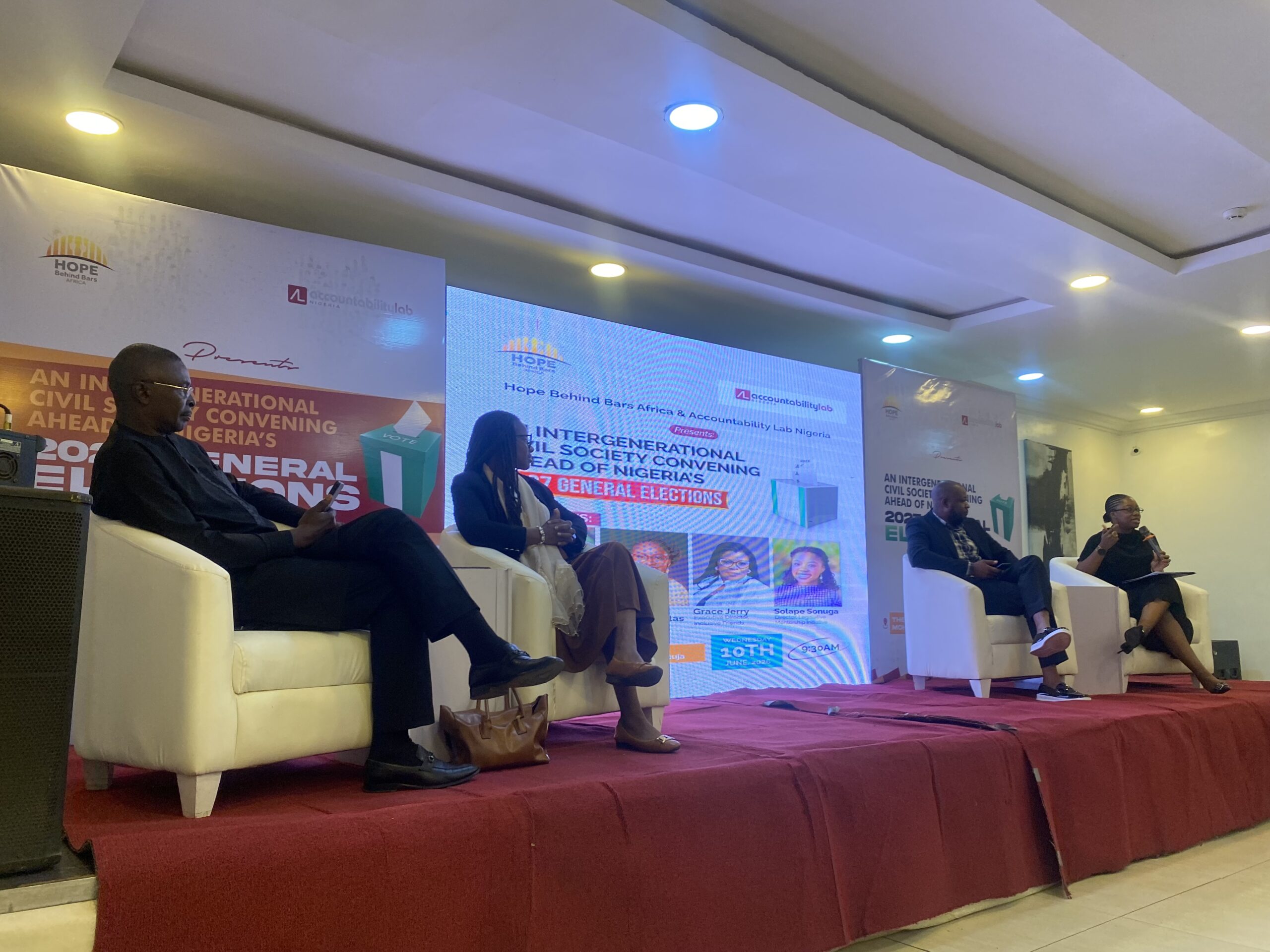
CIVIL society actors, the media and youth groups have called for stronger citizen participation, intergenerational collaboration and sustained civic engagement ahead of Nigeria’s 2027 general elections.
The stakeholders warned that growing voter apathy, insecurity and misinformation could undermine the country’s democratic future.
They made the call at an event organised by Hope Behind Bars Africa and Accountability Lab, with the theme “An Intergenerational Civil Society Convening Ahead of Nigeria’s 2027 General Elections,” held in Abuja on Wednesday, June 10.
The participants highlighted the need to bridge the gap between older generations of democracy activists and younger Nigerians, many of whom, they said have become increasingly disinterested with political processes following contentious elections and unfulfilled promises.
In his keynote address, the Executive Secretary of the National Human Rights Commission (NHRC), Tony Ojukwu, represented by the commission’s Director of Civil and Political Rights Department, Halilu Adamu, argued that citizen participation is not merely a political aspiration but a constitutional obligation.
According to him, Nigeria’s constitution places sovereignty in the hands of citizens and requires their participation in governance beyond elections.
He stressed that democracy should not be reduced to voting every four years, but should involve continuous engagement in policymaking, accountability processes and public affairs.
“The constitution does not envision a citizen who appears only on election day,” he said. “It envisions an active citizen who continuously participates in shaping public affairs, contributing to national development and helping to strengthen democratic institutions.”
Meanwhile, during the panel discussions, panelists reflected on the significance of the June 12, 1993 election and previous movements, as well as what younger generations could learn from the movement that followed its annulment.
Representing Grace Jerry, the Executive Director of Inclusive Friends, Molly Joshua said one of the defining features of the June 12 struggle was the unity that emerged among Nigerians regardless of ethnic, religious or political differences.
“There was one voice and one goal,” Joshua said, adding, “People came together to pursue a common objective. That unity is one of the biggest lessons we should learn from that period.”
Joshua, however, warned that many Nigerians have lost confidence in elections and democratic institutions, leading to voter apathy and disengagement.
“The sovereignty is with the people, but that sovereignty has been taken away,” he said. “This is the right time for us to take back that sovereignty moving into the 2027 election.”
He argued that civil society organisations must rethink voter mobilisation strategies by engaging citizens in more accessible ways and communicating in languages and formats that resonate with different demographics.
Joshua also advocated the formation of broad-based coalitions involving civil society groups, traditional institutions, religious organisations, youth groups and persons with disabilities to strengthen democratic participation before the next polls.
The Director of the Nigeria Youth Futures Fund (NYFF), Elisabeth Agbiti-Douglas, said the previous struggles by Nigerians during the June 12 election and occupy Nigeria, left positive legacy for younger Nigerians.
According to her, while the movements demonstrated the power of collective action, it also created a lingering sense of helplessness among many citizens who felt their votes and voices could ultimately be ignored.
“One of the lessons many Nigerians learned was that no matter what you do, those in power will do whatever they want,” she said, stressing that “Part of our responsibility is to challenge that narrative.”
Agbiti-Douglas rejected suggestions that young Nigerians are impatient in their activism, arguing that their urgency reflects the reality that they will live longest with the consequences of current political decisions.
“Social change is a marathon, not a sprint. There is never going to be a point where we can say we have arrived. Democratic gains require constant vigilance.”
Drawing from the #EndSARS protests and subsequent civic engagements, Agbiti-Douglas said many young Nigerians were already leading change in their communities through advocacy, policy interventions and accountability initiatives.
“The zeal of youth and that sense of urgency must shake hands with institutional memory and experience if this generation is going to achieve the kind of change it wants,” she argued.
On his part, the Executive Director of the International Centre for Investigative Reporting (ICIR), Dayo Aiyetan, who participated in the June 12 struggle as a journalist with Concord Newspapers, echoed concerns about declining civic participation and weak coordination among civil society actors.
Aiyetan said one major difference between the June 12 movement and contemporary activism was the existence of stronger civic leadership structures capable of mobilising citizens around clear objectives.
“There were stronger civil society organisations and stronger leadership. People were organised and rallied around common goals,” he stated.
Nevertheless, he argued that civic movements in Nigeria have achieved significant milestones despite setbacks.
“I do not think our voices have not counted. What every social movement from June 12 until now has shown is that you cannot silence the people.”
He described the 2020 #EndSARS protests as a defining moment in Nigeria’s civic history, noting that the movement created new templates for mobilisation that continue to influence activism across Africa.
Looking ahead to the 2027 elections, Aiyetan identified insecurity and misinformation as major threats to democratic participation.
“With AI, it is going to be such a chaotic thing to handle,” he said.
The participants further highlighted other key issues such as inclusion, data privacy, and cybercrime laws, among others.

Mustapha Usman is an investigative journalist with the International Centre for Investigative Reporting. You can easily reach him via: musman@icirnigeria.com. He tweets @UsmanMustapha_M