DESPITE controversies trailing the alleged alteration of the gazetted tax laws, the Chairman of the Presidential Committee on Fiscal Policy and Tax Reforms, Taiwo Oyedele, has said the Federal Government would commence the implementation of the laws on January 1, 2026, as planned.
He disclosed this on Friday, December 26, in Lagos State while briefing journalists after meeting with President Bola Tinubu.
The meeting also had in attendance the Chairman of the Federal Inland Revenue Service (FIRS), Zacchaeus Adedeji, and the Chairman of the National Tax Policy Implementation Committee, Joseph Tegbe.
“The plan to commence the new laws on January 1, 2026, will go ahead as planned on schedule because these reforms are designed to provide relief to the Nigerian people,” he stated.
“Bottom 98 per cent of workers will see either no Pay As You Earn (PAYE) tax or lower taxes to be paid, small businesses, 97 per cent of them, will be exempted from Corporate Income Taxes, Value Added Tax (VAT), and Withholding Tax, and large businesses will see a drop in the taxes that they pay.
“The whole idea is to try and promote economic growth, inclusivity as well as shared prosperity for our people,” he added.
Oyedele welcomed the position of the National Assembly on the allegations about alteration. He explained that the Federal Government was ready to work with the federal lawmakers to address the concerns raised by Nigerians, including opposition figures, over the alleged alterations.
Recall that controversy had trailed the new tax laws. A member of the House of Representatives, Abdussamad Dasuki, recently raised concerns about what he described as discrepancies between tax laws passed by the National Assembly and the versions subsequently gazetted and made available to the public.
Dasuku argued that his legislative rights were breached because the content of the gazetted tax laws did not reflect what lawmakers debated and approved on the floor of the House.
Amid the controversies, the lawmakers, particularly the House of Representatives, confirmed that it was reviewing the tax laws following public backlash and allegations of unauthorised alterations to them by the executive.
Tinubu signed the four tax reform bills into law, marking what the government described as the most significant overhaul of the country’s tax system in decades.
The laws, which faced stiff opposition from federal lawmakers from the northern part of the country before their passage include the Nigeria Tax Act, the Nigeria Tax Administration Act, the Nigeria Revenue Service (Establishment) Act, and the Joint Revenue Board (Establishment) Act – all operating under a single authority – the Nigeria Revenue Service.
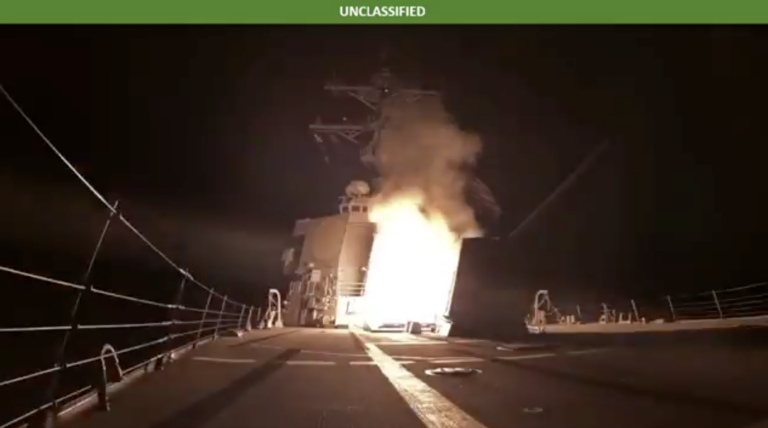
THE United States’ announcement of military strikes against what it described as ISIS targets in Nigeria’s Sokoto State has triggered debate, raising questions about the location of the strike and the nature of armed groups operating in northwestern Nigeria.
In a statement issued on December 25, the US Africa Command (AFRICOM) said on X that it carried out strikes “against ISIS terrorists in Nigeria” in Sokoto State. AFRICOM said the operation was conducted at the direction of the US President and the Secretary of War, and in coordination with Nigerian authorities. Nigerian officials later confirmed cooperation with the US, describing the action as part of ongoing counterterrorism collaboration.
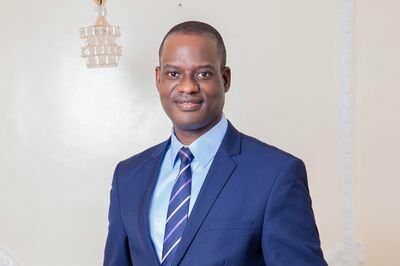
Nigeria’s Minister of Foreign Affairs, Yusuf Tuggar, speaking on Channels Television on December 26, framed the development as a continuation of existing security efforts rather than a significant policy shift. “You can call it a new phase of an old conflict,” the minister said, adding that Nigeria remained open to working with the US and other partners willing to support its fight against terrorism.
“It’s an ongoing thing. We are working with the US, we are working with other countries as well,” Tuggar said, adding, “For all those that are prepared to work with us to combat terrorism and ensure security in our region and in Nigeria itself, we are ready to cooperate, we are ready to collaborate.”
The ICIR reports that the reported location of the strike, Sokoto State, has emerged as a central point of contention on social media.
Questions over the strike location and ISIS claims
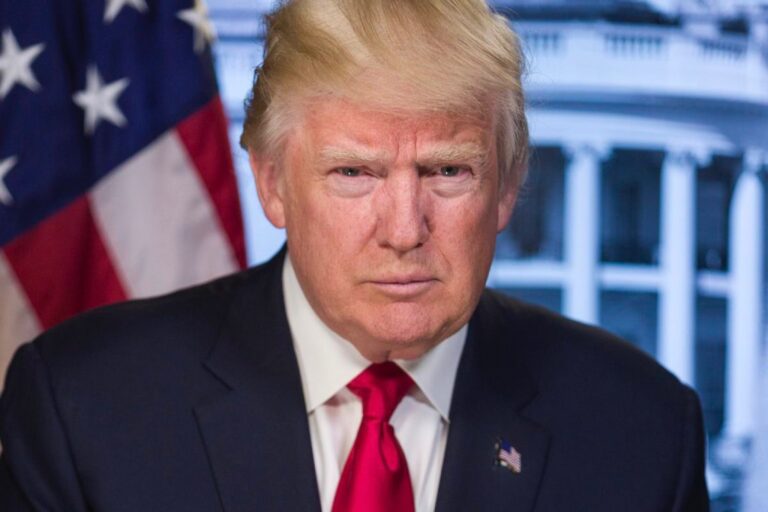
The US President Donald Trump framed the strike in explicitly religious terms, claiming the targeted fighters had been “viciously killing, primarily, innocent Christians.” This characterisation has raised questions when viewed against the geographic and demographic realities of Sokoto State, which is one of Nigeria’s most predominantly Muslim states and a historic centre of Islamic leadership. While violence in northwestern Nigeria has affected communities of different faiths, there is no clear public record of sustained, religion-targeted killings of Christians in Sokoto at scale.
The assertion of an active ISIS campaign in Sokoto has also been questioned. Armed groups operating in the northwest are largely identified as bandit or jihadist networks, with no confirmed structured ISIS presence in the state.
Security analyst Malik Samuel, who recently returned from fieldwork in Sokoto and neighboring states, said the ISIS label was often used loosely to describe jihadist violence in the region.
“When people talk about ISIS operating in Sokoto and the North-West, they don’t mean ISWAP, which is prevalent in North-East Nigeria,” Samuel said. “What they are often referring to is Lakurawa. A lot of analysts have claimed Lakurawa is linked to Islamic State Sahel, but that is clearly not the case,” he added.
Samuel said he conducted field research in Zamfara, Sokoto, Kebbi, and Katsina about two months ago, with particular focus on Lakurawa activity in Sokoto and Kebbi. “The group is clearly not linked to the Islamic State; it is more closely aligned with Al-Qaeda–linked networks,” he argued.
Samuel, a senior researcher at Good Governance Africa, stressed, however, that mislabeling the group did not mean there were no jihadist threats in the area.
“This does not mean there are no terrorist or jihadist organisations operating. Lakurawa is an Islamist group that seeks the full implementation of Sharia in areas where it operates, but describing it as an ISIS affiliate is inaccurate,” he said.
Disputed impact of the strike
Samuel also reacted to comments suggesting no confirmed targets were hit in Jabo village, Tambuwal Local Government Area (LGA), one of the reported strike locations.
“If you look at where the strike happened, Tambuwal LGA, in a village called Jabo, groups like Lakurawa do not have a base there,” he said, noting further that “They have only a nominal presence, meaning fighters pass through but do not establish camps. Their main bases are in forested areas around Gudu, Tangaza, and Kware LGAs, certainly not Tambuwal.”
He said the skepticism surrounding the strike was understandable but noted it was possible a targeted individual might have been temporarily present in the area at the time of the strike.
Samuel added that information from his sources indicated the strikes were not limited to Tambuwal alone but also extended to Isa and Tangaza LGAs in Sokoto State.
“So, the operation was not confined to Tambuwal,” he said.
Nigeria’s capacity on strike campaigns
Responding to social media claims that Nigeria did not require US support to conduct such operations due to the recent record of precision airstrikes, including support provided to Benin Republic during a coup attempt, Samuel said, “Nigeria has been carrying out strikes.
“There were strikes last week, two weeks ago, and even before that, following the abduction of schoolgirls from Maga in Kebbi State. There have been operations in Kebbi, Niger, and Sokoto states,” he said.
He explained that frequent strikes had led to constant relocation of Lakurawa fighters to evade detection. “The question should be whether Nigeria could have said no to the US,” Samuel said. “Nigeria could have carried out these strikes and has been doing so. A lot of Lakurawa fighters have been killed in Niger and Kebbi states in the last three weeks,” he reasoned further.
Meanwhile, reports also circulated online suggesting explosions which occurred in Offa, Kwara State, over 600 kilometres – using google map – from Sokoto were linked to the US strike. Sources within the Ministry of Foreign Affairs confirmed only strike within Sokoto State.
Distance Offa, Kwara State to Sokoto via google map.
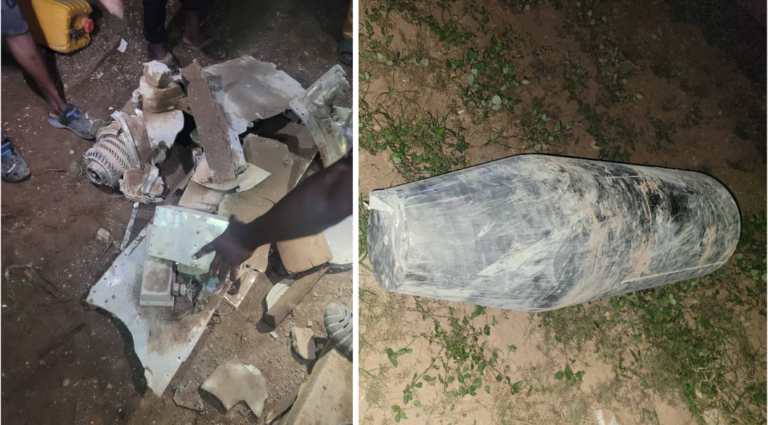
The ICIRgathered that explosions were reported around midnight on Christmas Day at two locations in Offa town. Eyewitnesses said the first blast occurred near the Eid praying ground area, while a second was recorded near Solid Worth Hotel, about five minutes away. Residents said an undetonated explosive device was later discovered at the second location, prompting security agencies to cordon off the area.
As of the time of filing this report, authorities had not officially confirmed the exact cause or source of the explosions. Confirming awareness of the incident, the Chief Press Secretary to the Executive Chairman of Offa Local Government, Abiola Azeez Babatunde, said the council was monitoring developments following reports circulating online.
In a statement on Friday, Babatunde described the incident as a “suspected ordinance-related occurrence” around the Offa Yidi praying ground on December 25, 2025, adding that affected areas had been secured to allow for a thorough investigation.
THE Federal House of Representatives has confirmed it is reviewing the recently passed tax reform laws following public backlash and allegations of unauthorised alterations.
Spokesman Akin Rotimi stated that the Green Chamber has inaugurated a committee to “establish the sequence of events and identify any factors that may have contributed to the circumstances surrounding the legislative and administrative handling of the Acts.”
In a statement on Friday, December 26, Rotimi, who represents Ekiti North (Ikole/Oye) Federal Constituency, said the review “includes a careful examination of any lapses, irregularities, or external interferences, should any be established.”
The lawmaker said the National Assembly, comprising the Senate and the House of Representatives, has “directed the Clerk to the National Assembly to re-gazette the Acts and issue Certified True Copies of the versions duly passed by both Chambers of the National Assembly.”
Rotimi asked Nigerians to “allow the National Assembly’s institutional processes to proceed without speculation or conjecture”.
The move comes about two weeks after a lawmaker from Sokoto, Abdussamad Dasuki, raised the alarm over an alleged amendment to the gazetted version of the laws.
Dasuki claimed that the version passed by the National Assembly was different from those gazetted after months of intense debates and controversy.
According to him, the content of the gazetted tax laws was not a reflection of what the lawmakers debated and approved.
The laws are the Nigeria Tax Act, 2025; the Nigeria Tax Administration Act, 2025; the Joint Revenue Board of Nigeria (Establishment) Act, 2025; and the Nigeria Revenue Service (Establishment) Act, 2025.
Since the claim, opposition leaders and political parties, as well as the Nigeria Labour Congress (NLC) and the Nigeria Bar Association (NBA), have asked for the suspension of the laws billed for implementation on January 1, 2026.
Despite the controversies, Taiwo Oyedele, Chairman of the Presidential Fiscal Policy and Tax Reforms Committee, defended the laws, saying they will improve Nigeria’s fiscal structure and reduce tax burdens on vulnerable citizens.
He also expressed optimism in the capacity of the Federal Lawmakers to thoroughly address concerns arising from the alteration of the gazetted copies.
NIGERIANS have reacted to US strikes targeting terrorists and their allies in Sokoto State.
The ICIRreported that United States President Donald Trump said his country’s forces carried out “powerful and deadly” strikes against Islamic State (ISIS) elements operating in North-Western Nigeria on Christmas Day – December 25.
Nigeria’s Ministry of Foreign Affairs said the attacks targeted terrorist elements through collaboration with the US as part of “structured security cooperation with international partners to address terrorism and violent extremism in the country.”
Similarly, the Director of Defence Information, Samaila Uba, a major general, said the operation demonstrated the Federal Government’s resolve, in collaboration with strategic international partners, to confront transnational terrorism and prevent foreign fighters from gaining a foothold in Nigeria.
Uba said in a statement on Friday that the operation was based on credible intelligence and designed to weaken the terrorists’ operational capacity while minimising collateral damage.
“The Armed Forces of Nigeria, in conjunction with the United States of America, has successfully conducted precision strike operations against identified foreign ISIS-linked elements operating in parts of North-West Nigeria,” Uba said.
According to him, the strikes were carried out with the approval of the relevant authorities as part of ongoing efforts to eliminate terrorists and other criminal elements posing a threat to national security.
Former senator Shehu Sani is among eminent Nigerians who welcomed the development.
He, however, cautioned that Nigeria must not outsource its security responsibilities to foreign powers.
Sani made the remarks on Friday via his verified X handle.
“It’s a conscious action. Terrorists have become cancerous cells in our part of the country. They live by the sword. The narrative that the evil terrorists only target one faith remains absolutely false and misleading,” he wrote.
However, he cautioned against excessive dependence on foreign military intervention, stressing that enduring peace could only be achieved through internal efforts.
“Again, the ultimate security and peace in our country lies with ourselves and not with the US or any foreign power,” he said, adding, “They can complementarily or unilaterally strike, but they can’t eternally fight our battles.”
A former presidential candidate and human rights activist, Omoyele Sowore, in a post on X said the President Bola Tinubu-led Federal Government was unaware of the strike.
“Although the Nigerian government now claims it was aware and describes the operation as a joint effort with vague “international partners,” it is evident that the strikes were carried out without the genuine authority or informed consent of the weaklings masquerading as government under President Bola Tinubu @officialABAT,” he wrote.
“My position remains unchanged. Judging by the nature of the confirmed strike on a village in Sokoto, it is clear that the US President under whose authority this operation occurred neither understands nor genuinely cares about Nigeria or Nigerians,” he added.
He noted that the situation highlighted a broader issue of incompetent leadership, which he said reduced the nation to a bystander in the face of challenges confronting it.
“It is deeply troubling that Nigeria (Africa’s most populous nation) lacks the capable and sovereign leadership required to protect its people and its territory. As a result, the country has been reduced to a bystander while its sovereignty is violated under the direction of U.S. President, Sowore noted further.
Similarly, Islamic cleric Sheikh Ahmad Gumi in a post on Facebook on Friday, argued that annihilating terrorists is an Islamic obligation, citing the Prophet Muhammad’s wish to destroy such groups.
Describing the attacks as potentially polarising and detrimental to national sovereignty, he stressed that such action should be undertaken by “clean, holy hands” rather than foreign powers whom he said shared same values with terrorists.
He urged the Federal Government to end all bilateral relationships with the US.
“If Nigeria wants military assistance, China, Turkey, and Pakistan can do the job effectively.
The US involvement in Nigeria will attract the real anti-US forces, making our land the theater of war. The USA’s involvement in Nigeria, citing coming to ‘protect Christians’, will ultimately polarize our nation and infringe on our sovereignty.
“Nigeria should halt all military cooperation with the USA immediately because of its imperial tendencies worldwide and seek the help of those neutral countries mentioned. Nigerians are too educated to be played with. This is going to be a 2027 campaign discourse,” Gumi stated.
The ICIR reports that the strikes came amid recent security incidents nationwide, including a deadly mosque bombing in Maiduguri, Borno State, that claimed several lives on Wednesday, December 24.
RESIDENTS of Offa, a commercial town in Kwara State, were thrown into panic late Thursday night after explosions damaged buildings in different parts of the community, raising fresh security concerns.
The explosions occurred around midnight on Christmas Day and were reported at two separate locations within the town. Eyewitnesses said the first blast affected structures around the Eid praying ground area, while the second was recorded near Solid Worth Hotel, about five minutes away from the initial site.
Residents who spoke with The ICIR said an undetonated explosive device was later discovered at the second location, prompting security agencies to cordon off the area.
As of the time of filing this report, authorities had yet to officially confirm the exact cause or source of the explosions.
Confirming awareness of the incident, the Chief Press Secretary to the Executive Chairman of Offa Local Government, Abiola Azeez Babatunde, said the council was monitoring developments following reports circulating online.
In a statement issued on Friday, Babatunde described the incident as a “suspected ordnance-related occurrence” around the Offa Yidi praying ground on December 25, 2025.
“The affected areas have been secured by security agencies to enable a thorough investigation,” the statement read.
He disclosed that the chairman of Offa Local Government Area, Suleiman Olatunji Omituntun, visited the affected locations shortly after the incident to assess the situation.
“The Executive Chairman immediately visited the scene to get a firsthand understanding of what happened,” Babatunde said.
The local government urged residents to remain calm and avoid spreading unverified information while investigations continue.
“Residents are advised to remain calm, vigilant, and law-abiding, and to rely on official and credible sources for information to prevent unnecessary panic,” the statement added.
However, a security source who spoke to The ICIR on condition of anonymity, citing lack of authorisation, claimed that preliminary assessments suggest the object that struck buildings in Offa may be linked to a military missile component.
“What landed in Offa is not an explosive device itself but a component from a missile used during the airstrike,” the source said, adding that the U.S. operation reportedly involved cruise missiles launched from a naval platform.
The explosions in Offa occurred just hours after U.S. President Donald Trump announced airstrikes against ISIS-linked targets in parts of northwest Nigeria, particularly Sokoto State, on Christmas Day.
There has been no official confirmation from either Nigerian or U.S. authorities linking the Offa incident to the strikes. However, the close timing of both events has heightened anxiety among residents, many of whom have called on security agencies to intensify surveillance and provide clear explanations.
Offa, located in Kwara State, is approximately 600 to 700 kilometres from Sokoto, where the reported strikes took place.
As of Friday morning, no casualties had been officially recorded, and security agencies were yet to release a detailed statement on the explosions.
THE Federal Republic of Nigeria has officially confirmed that the United States carried out precision strikes targeting terrorist groups in the country, following coordinated intelligence and security cooperation between the two nations.
The confirmation came in a press release issued Friday by the Ministry of Foreign Affairs (MFA), highlighting that the operation was part of structured efforts to combat terrorism and violent extremism in Nigeria which “has led to precision hits on terrorist targets in Nigeria by air strikes in the North West.”
According to the MFA, the bilateral collaboration includes intelligence sharing, strategic coordination, and other support measures conducted in line with international law, mutual respect for Nigeria’s sovereignty, and commitments to regional and global security.
The Ministry emphasised that all counter-terrorism actions are guided by the protection of civilian lives, national unity, and respect for the rights and dignity of all citizens, irrespective of religion or ethnicity.
The confirmation follows statement by U.S. President Donald Trump, who announced on social media that the United States had carried out “powerful and deadly strikes” against Islamic State (ISIS) militants in Nigeria on Christmas Day.
Trump described the operation as a response to ongoing attacks. He said the strike was launched “at my direction as Commander in Chief,” accusing ISIS-linked fighters in Nigeria of “viciously killing, primarily, innocent Christians.”
The statement from the ministry:
Ministry of Foreign Affairs, Abuja
Press Release
No: MFA/PR/2025/122
NIGERIA–UNITED STATES SECURITY COOPERATION AND INTELLIGENCE COLLABORATION HITS AT TERRORIST TARGETS IN NIGERIA
The Ministry of Foreign Affairs of the Federal Republic of Nigeria confirms that Nigerian authorities remain engaged in structured security cooperation with international partners, including the United States of America, in addressing the persistent threat of terrorism and violent extremism. This has led to precision hits on terrorist targets in Nigeria by air strikes in the North West.
In line with established international practice and bilateral understandings, this cooperation includes the exchange of intelligence, strategic coordination, and other forms of support consistent with international law, mutual respect for sovereignty, and shared commitments to regional and global security.
Nigeria reiterates that all counter-terrorism efforts are guided by the primacy of protecting civilian lives, safeguarding national unity, and upholding the rights and dignity of all citizens, irrespective of faith or ethnicity. Terrorist violence in any form whether directed at Christians, Muslims, or other communities remains an affront to Nigeria’s values and to international peace and security.
The Federal Government continues to work closely with its partners through established diplomatic and security channels to weaken terrorist networks, disrupt their financing and logistics, and prevent cross-border threats, while strengthening Nigeria’s own security institutions and intelligence capabilities.
The Ministry of Foreign Affairs will continue to engage relevant partners and keep the public informed through appropriate official channels.
Signed:
Kimiebi Imomotimi Ebienfa, anipr Spokesperson, Ministry of Foreign Affairs, Abuja.
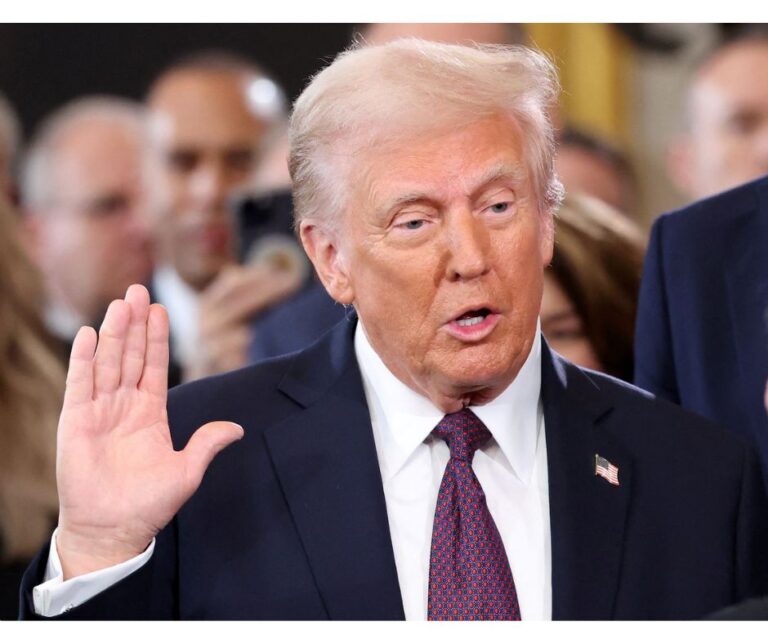
PRESIDENT Donald Trump has said the United States carried out a “powerful and deadly strike” against ISIS militants operating in Nigeria.
In a statement published Thursday on his Truth Social platform, Trump said the strike was launched “at my direction as Commander in Chief,” accusing ISIS-linked fighters in Nigeria of “viciously killing, primarily, innocent Christians.”
He claimed that the “Department of War executed numerous perfect strikes, as only the United States is capable of doing.”
He didn’t not mention the nature of the strike.
Shortly after Trump statement, the Ministry of Foreign Affairs of Nigeria confirmed that the country is actively cooperating with international partners, including the United States, in combating terrorism and violent extremism.
In the statement shared on the ministry’s handle on X, noted that the collaboration has recently resulted in precision air strikes targeting terrorist groups in the North West of Nigeria.
“In line with established international practice and bilateral understandings, this cooperation includes the exchange of intelligence, strategic coordination, and other forms of support consistent with international law, mutual respect for sovereignty, and shared commitments to regional and global security,” the statement read.
Nigeria has been at the centre of debate over claims that Christians are being systematically targeted, particularly in the Middle Belt and northern regions. Islamist groups such as Boko Haram and the Islamic State West Africa Province (ISWAP) have carried out mass killings, kidnappings, and attacks on civilians of different faiths, alongside widespread banditry and communal violence.
Christian advocacy organisations and some U.S. lawmakers have described the violence as a “genocide” against Christians. Nigerian authorities strongly reject this characterisation, arguing that the conflict is driven by a complex mix of terrorism, criminality, land disputes and poverty rather than an organised campaign of religious extermination.
In October, Trump announced on Truth Social that he had designated Nigeria a “Country of Particular Concern,” citing what he described as “an existential threat to Christianity.”
“Christianity is facing an existential threat in Nigeria. Thousands of Christians are being killed. Radical Islamists are responsible for this mass slaughter. I am hereby making Nigeria a ‘Country of Particular Concern’ — but that is the least of it,” Trump wrote.
Nigeria’s federal government rejected the designation. In a statement by the spokesperson for the Ministry of Foreign Affairs, Kimiebi Ebienfa, the government said Trump’s claims did not accurately reflect the situation in the country.
“The Federal Government of Nigeria notes the recent remarks by U.S. President Donald Trump alleging large-scale killings of Christians in Nigeria and calling for the country’s designation as a ‘Country of Particular Concern,’” the statement said.
“These claims do not reflect the situation on the ground. Nigerians of all faiths have long lived, worked, and worshipped together peacefully.”
Nigeria has battled Boko Haram and its splinter groups in the northeast for more than a decade. In recent years, the North Central region has seen a rise in armed attacks, with churches and schools increasingly targeted, leading to mass abductions.
Trump’s statement in full
Donald J. Trump
@realDonaldTrump
Tonight, at my direction as Commander in Chief, the United States launched a powerful and deadly strike against ISIS Terrorist Scum in Northwest Nigeria, who have been targeting and viciously killing, primarily, innocent Christians, at levels not seen for many years, and even Centuries! I have previously warned these Terrorists that if they did not stop the slaughtering of Christians, there would be hell to pay, and tonight, there was. The Department of War executed numerous perfect strikes, as only the United States is capable of doing. Under my leadership, our Country will not allow Radical Islamic Terrorism to prosper. May God Bless our Military, and MERRY CHRISTMAS to all, including the dead Terrorists, of which there will be many more if their slaughter of Christians continues.
DONALD J. TRUMP PRESIDENT OF THE UNITED STATES OF AMERICA
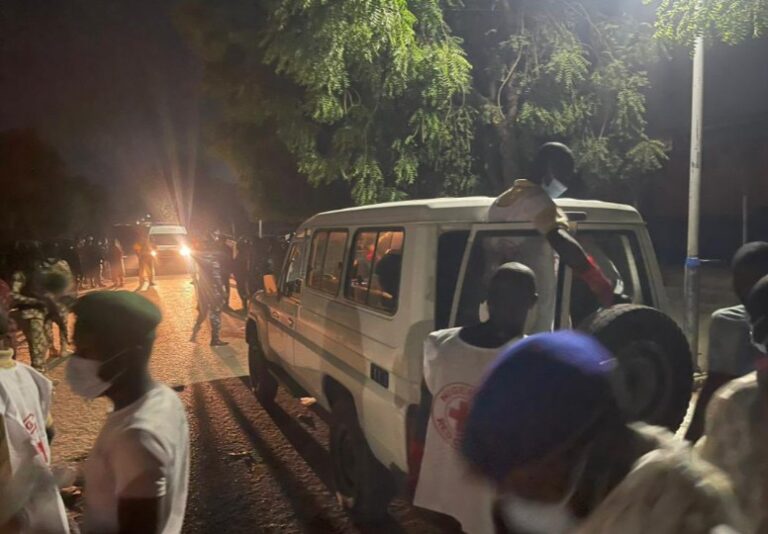
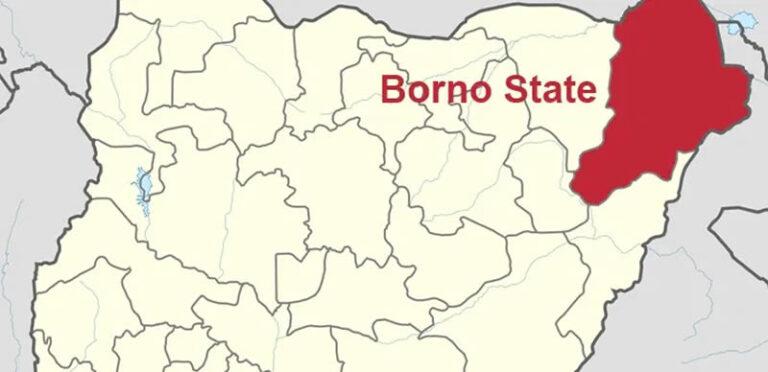
THE deadly explosion that tore through Al-Adum Jummat Mosque in the Gamboru Market area of Maiduguri on Wednesday, 24 December 2025, has been confirmed by the Operation Hadin Kai (OPHK) as a suicide attack carried out by Boko Haram terrorist group.
The ICIR reported that the blast occurred around 6:00 p.m., just as residents and traders began observing evening prayers, in one of Maiduguri’s busiest commercial hubs.
The hubs, according to reports, draw people from Borno State and neighbouring countries like Chad, Cameroon, and Niger.
In a statement, the spokesman of the Theatre Command, Sani Uba, said, “Preliminary findings indicated the incident was caused by a suspected Boko Haram Terrorist (BHT) suicide bomber, who detonated an improvised explosive device, killing himself and two civilians on the scene.”
Uba added that security forces, working alongside the Nigeria Police Explosive Ordnance Disposal (EOD) team, other sister security agencies, the Borno State Government, and the National Emergency Management Agency (NEMA), “responded promptly, secured, and cordoned off the affected area to prevent further harm and ensure public safety.”
He noted that casualties were immediately evacuated to the General Hospital and the Teaching Hospital in Maiduguri for urgent medical attention.
According to him, “a total of 32 civilians sustained varying degrees of injuries. But two of the injured civilians were later confirmed dead at the hospital, while two others are currently in critical condition.”
He further stressed that the remaining injured persons were stable and receiving appropriate medical care.
HumanAngle had reported that its observed several ambulances transporting victims to both the Maiduguri Specialist Hospital and the University of Maiduguri Teaching Hospital, noting that at the Specialist Hospital, 17 victims with injuries to their arms and legs were admitted to the Weapon Wound Ward.
The Borno State Police Command had earlier confirmed the gravity of the attack. The state Police Public Relations Officer, Nahum Kenneth Daso said, “Preliminary investigations further suggest that the incident may have been a suicide bombing, based on the recovery of fragments of a suspected suicide vest and witness statements recorded, while investigations are ongoing to establish the exact cause and circumstances,”
He also confirmed that five persons lost their lives immediately after the bomb blast.
Background
Boko Haram, which refers to itself as Jama’at Ahl al-Sunna li al-Da’wa wa al-Jihad, was founded in the early 2000s by Mohammed Yusuf, and became violent after his death.
The group carried out a string of deadly attacks during former President Goodluck Jonathan’s presidency (2010–2015), including the bombing of the United Nations headquarters in Abuja in 2011 and multiple assaults on churches, mosques, and schools.
Also, in April 2014, more than 270 schoolgirls in Chibok, Borno State, were abducted by the terror group,
When former President Muhammadu Buhari assumed office in 2015, he pledged to end Boko Haram ‘within months.’ His administration initially recaptured territories held by the insurgents and announced their ‘technical defeat’ in 2015.
However, the group splintered into factions, including the Islamic State West Africa Province (ISWAP), which has since become the dominant force in the region.
In July 2025, The ICIRreported that both the Jama’atu Ahlis Sunna Lidda’awati wal-Jihad (JAS) and ISWAP had conducted over 300 attacks in the North-East region since the beginning of 2025.
The report stressed that while JAS was responsible for the highest number of attacks, ISWAP overran at least 16 military bases in Nigeria within the first six months of 2025.
THE Kano State House of Assembly has been thrown into mourning after the sudden death of its two members – Aminu Ungoggo and Sarki Daneji.
They died hours apart on Wednesday, December 24.
The development was confirmed in a statement issued by the Speaker’s spokesperson, Kamaluddeen Sani Shawai.
Shawai disclosed that Ungogo, the Chairman of the House Committee on Appropriation, was the first to die, passing away at the Assembly complex after a brief illness.
“The late Hon. Ungogo died while on active duty at the Kano State House of Assembly. He is survived by his wife and children,” he said.
Speaker of the Assembly, Jibril Falgore, condoled with the family of the deceased, the constituents of Ungogo, and fellow lawmakers, describing the loss as irreplaceable.
“Hon. Ungogo’s death comes at a critical time when Kano citizens needed him most,” he said.
Ungogo was scheduled to be buried on Wednesday evening at exactly 6:00pm in his hometown.
The death of Sarki Aliyu Daneji was confirmed by Sanusi Bature Dawakin Tofa, spokesperson to Kano State Governor Abba Kabir Yusuf.
The lawmakers’ passing has added to the list of lawmakers who have passed this year.
The ICIR reports that Lagos State was thrown into mourning in September following the death of four female elected officials, barely two months after they were sworn into office.
Basirat Mayabikan, who died on 21 September, just 56 days after inauguration, and Oluremi Ajose, who died on 20 September, 55 days into her tenure.
Their deaths came a month after the passing of Zainab Shotayo on 18 August, 22 days after taking office, and Oluwakemi Rufai, who died on 13 August, barely 17 days after inauguration.
Recall that the House of Representatives member representing Ibadan North Federal Constituency, Oyo State, Musiliudeen Akinremi, also known as Jagaban, died at 51 in 2024.
Akinremi was a two-time member of the House and a member of the All Progressives’ Congress (APC).
The ICIR further reports that at least three members of the House of Representatives have died since the inauguration of the 10th Assembly in June, 2023.
On Friday, May 10, 2024, a lawmaker representing Babura/Garki Federal Constituency in Jigawa State on the APC platform, Isa Dongoyaro, died after a brief illness.
Dongoyaro was 46 years old at the time of his death.
Similarly, in October 2023, a lawmaker representing Isa/Sabon Birnin federal constituency of Sokoto state, Abdulkadir Danbuga, died at 63.
Before the 10th Assembly was inaugurated in 2023, Isma’ila Maihanchi, who was elected to represent Jalingo/Yorro/Zing Federal Constituency in Taraba, died, aged 36.
A DEVASTATING bomb blast struck a mosque in the Gamboru Market area of Maiduguri, the Borno State capital, Wednesday evening, leaving scores of worshippers feared dead and many others injured.
The explosion occurred at the Gambarou Jumu’at Mosque during the Maghrib congregational prayer.
Reports noted that survivors said the attacker sneaked into the mosque and detonated the explosive as worshippers were observing the first raka’at of the prayer.
“The bomber detonated when the first raka’at of the Maghrib prayer was observed. Many worshippers died, others sustained various injuries,” Daily Trust quoted an eyewitness to have said.
As of the time of filing this report, the exact number of casualties and those injured from the attack remained unconfirmed.
However, reports indicated that the injured were rushed to nearby hospitals for urgent medical attention.
Security operatives have cordoned off the area, while emergency responders continue rescue and evacuation efforts.
HumAngle, which said its reporter was on the ground in the community, also confirmed the blast.
Efforts to obtain an official response from the police were unsuccessful, as the Borno State Police Public Relations Officer did not pick calls placed to his phone and had yet to respond to text messages sent as of the time of filing this report.
The latest attack adds to a long list of violent incidents linked to insurgency in Borno State. In June 2025, at least 10 people were killed when a suicide bomber detonated an explosive at a local food joint in Konduga Local Government Area.
The Borno State Police Command confirmed that the explosion occurred around 10 p.m., with several others sustaining injuries. Police said Explosive Ordnance Disposal (EOD) experts, alongside the military and other security agencies, were deployed to restore order and investigate the attack.


![[JUST IN] Nigeria confirms U.S. strikes on terrorist targets in North West](https://www.icirnigeria.org/wp-content/uploads/2024/11/NNigerias-minister-of-foreign-affairs-Yusuf-Maitama-Tuggar.jpg "[JUST IN] Nigeria confirms U.S. strikes on terrorist targets in North West")