THE economic landscape in 2025 was characterised by austerity, despite a sustained deceleration in inflation from 34 per cent to 14.5 per cent, as reported by the National Bureau of Statistics (NBS) over several consecutive months.
Yet, market realities showed Nigerians grappling with food costs, subsidy removals, a volatile naira, and tight monetary conditions that pushed interest rates to punishing levels.
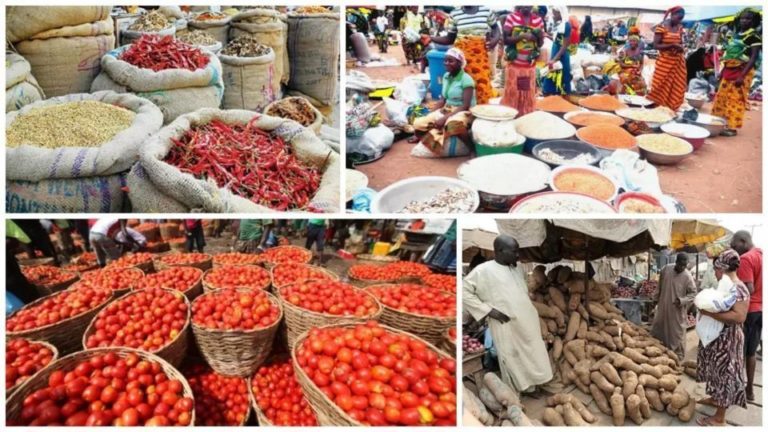
Despite easing inflation, the deceleration failed to reflect in consumer prices, with households still struggling to afford basic food items. Food and non-alcoholic beverages, transport, and accommodation services contributed most to inflation in 2025, according to the NBS.
World Bank Country Director, Mathew Verghis, urged reforms to ease the burden on the poor, calling for reduced tariffs and better policy coordination. “High tariff on goods consumed by the poor. Alignment of monetary and fiscal policies is very important in creating the right balance,” he said.
He also stressed that “pro-poor investments could support inclusive growth and improve the rural economy while lifting the poor,” adding that “conditional cash transfer and school feeding should support and grow the poor.”
As the year closed, analysts noted that while declining inflation may give the Central Bank of Nigeria room to ease rates, weak consumer demand and fiscal pressures remain. In this report, The ICIR examines the key economic actions that reshaped Nigeria’s economy in 2025.
1. The rebasing of the GDP
Midway through the year, the NBS reviewed the nation’s data through the rebasing. By rebasing the Gross Domestic Product (GDP) and the Consumer Price Index (CPI), the government finally began measuring the economy as it actually exists today—not as it was a decade ago.
The NBS chose 2019 as the new base year for GDP to capture a stable pre-pandemic reality.
For the first time, the official numbers gave weight to the digital economy, modular refineries, and even the informal activities of domestic households.
By the third quarter, the economy grew by 3.98per cent, anchored by a dominant services sector that now accounts for over half of Nigeria’s national output.
Inflation had peaked near 35 per cent in December 2024, before the National Statistics Office revised its base year and adjusted the weighting of items in its price basket earlier this year.
2. Exiting from the financial ‘grey list’
In a major diplomatic and financial win, the Financial Action Task Force (FATF) in October removed Nigeria from its “grey list’, the Presidency confirmed. After three years of being tagged as a risky destination for “dirty money,” the exit signalled to global investors that Nigeria’s fight against money laundering was finally yielding results, potentially saving the country $30 billion in lost investments.
3. The tax revolution
In June, President Bola Tinubu signed the Tax Reform Act.
Rather than simply raising taxes, the law aimed to streamline the chaotic system. It sets the stage for a new fiscal era starting January 2026.
The ICIR reports that Nigeria’s new tax laws, effective January 1, 2026, aim to simplify tax compliance, broaden the tax base, and boost revenue.
The Nigeria Tax Act 2025 consolidates multiple tax laws, including Companies Income Tax, Personal Income Tax, and Value Added Tax, into a unified framework.
The reforms aim to promote fiscal stability, transparency, and accountability, while supporting economic growth and development. However, some concerns have been raised about potential alterations to the law and their impact on transparency and accountability.
4. Protecting the markets
This year witnessed the signing of the Investment and Securities Act (ISA) 2024, which replaced a 17-year-old law.
It gave the capital market more “teeth” to protect investors and, for the first time, provided a clear legal framework for digital and alternative assets, signalling Nigeria’s readiness for the future of finance.
5. The banking fortress
The Central Bank of Nigeria (CBN) turned up the heat on financial stability. By November, 16 banks had already hit their new capital requirements.
The ICIRreports that the apex bank had set March 31, 2026, as the deadline for all the banks to raise their capital base, giving a two-year period that started on April 1, 2024.
The apex bank pegged the minimum capital requirement for commercial banks with international exposure at N500 billion, commercial banks with national authorisation at N200 billion, regional banks and merchant banks at N50 billion, non-interest banks with national and regional operations at N20 billion and N10 billion, respectively.
The capital requirements can be through private placements, rights issues and/or offers for subscription, mergers and acquisitions (M&As), and/or upgrade or downgrade of license authorisation.
Meanwhile, the insurance sector faced a “fivefold” hike in capital demands, a move designed to weed out weak players and build a resilient insurance industry.
6. Faster Money: T+2 Settlement
In 2025, the Nigerian equity market got a speed boost, moving from a T+3 to a T+2 settlement cycle. In simple terms, investors now get their money or stocks 24 hours faster than before, aligning Nigeria with international best practices and reducing risk.
7. The refined power struggle
The Dangote Refinery became the main character of Nigeria’s oil story with its price leadership role amid concerns of dominance of Nigerian-owned refineries. As it ramped up production, a tug-of-war emerged between the local giant and traditional fuel importers.
Dangote is at the heart of the battle with oil marketers. His story has been characterised by intense competition and power struggles in the country’s petroleum industry.
Aliko Dangote’s refinery, the largest in Africa, has been at the centre of a price war with traditional oil marketers, including the Nigerian National Petroleum Corporation Limited (NNPCL).
The conflict began when Dangote Refinery slashed the price of petrol, offering it at N739 per litre, significantly lower than the N828 per litre offered by other marketers.
This move was seen as a threat to the business interests of traditional marketers, who have long dominated the industry.
Dangote has accused some marketers of hoarding crude oil and demanding dollar payments, while also alleging that regulators are colluding with international traders to frustrate local refining efforts.
On the other hand, marketers have expressed concerns that Dangote’s pricing strategy is aimed at driving them out of business and creating a monopoly.
The dispute has led to a series of price cuts, with Dangote Refinery reducing its prices multiple times, citing the need to provide relief to Nigerians. The NNPCL has also reduced its prices, sparking a price war that has benefited consumers but caused significant losses to marketers.
The battle has also taken a legal turn, with Dangote Refinery suing the Nigerian Midstream and Downstream Petroleum Regulatory Authority (NMDPRA) over the issuance of import licenses to marketers.
8. A London debut
On July 9, GTBank made history by listing on the London Stock Exchange. The move was more than just a corporate milestone; it was a signal that, despite domestic struggles, Nigeria’s blue-chip institutions are still capable of competing on the global stage.
THE decision of Adamawa State Governor, Ahmadu Fintiri, to pardon Sunday Jackson, a farmer who spent over a decade on death row for killing a man he said attacked him on his farm, has continued to draw widespread reactions from human rights groups, foreign lawmakers, faith-based organisations and members of the public.
Jackson, who was sentenced to death in 2021 despite pleading self-defence, was among three inmates granted a state pardon by the governor as part of activities marking Christmas and the New Year. His release followed years of sustained local and international advocacy.
Fintiri’s spokesperson, Humwashi Wonosikou, in a statement on Tuesday, December 23, said the pardon followed recommendations from the Adamawa State Advisory Council on Prerogative of Mercy and was based on the inmates’ “significant improvement in behaviour and conduct” while in custody.
In addition to Jackson, the governor also pardoned Joseph Eugene and Maxwell Ibrahim, while remitting the sentences of five other inmates held in custodial centres across the state.
Reacting to the development, a member of the United States House of Representatives, Riley Moore, welcomed Jackson’s pardon and described it as a “positive development” in Nigeria–United States relations.
Moore, who had repeatedly raised the case during congressional hearings and meetings with Nigerian officials, said Jackson’s freedom showed a willingness by Nigerian authorities to engage with international concerns on human rights and religious persecution.
“After more than a decade in prison serving a death sentence for defending himself, Sunday Jackson has been pardoned,” Moore said in a statement, adding that Jacksom should be protected during and after his release.
He also noted that the case had become symbolic of broader security and justice concerns affecting rural communities in Nigeria.
Similarly, Hope Behind Bars Africa, a human rights organisation, commended the governor for what it described as a courageous and compassionate use of the constitutional prerogative of mercy.
In a statement signed by its executive director, Funke Adeoye, on Tuesday, the group said the pardon had corrected a “grave injustice” and underscored the failures of the criminal justice system in handling cases of self-defence.
“Sunday Jackson should never have spent a single night in detention let alone 11 years on death row” the organisation said, calling for urgent reforms to better protect the right to life and lawful self-defence.
The group also acknowledged the dissenting judgment of Supreme Court Justice Helen Ogunwumiju, which had called for clemency, as well as the efforts of lawyers, civil society organisations and faith leaders who kept the case in public discourse.
The ICIR reported that Ogunwumiju, one of the lead judges on the case at the Supreme Court, offered a different perspective on the issue of self-defence.
She argued that the lower courts had correctly identified the deceased as the initial aggressor who inflicted injuries on Jackson. Ogunwumiju questioned her fellow judges’ assessment of proportionality in the context of a life-threatening situation.
She argued that someone who had already been stabbed twice and was still under attack could not be expected to immediately cease fighting for their life the moment they gain a temporary advantage.
According to her, the deceased was the initial aggressor, and Jackson was acting in reasonable fear for his life.
Meanwhile, on social media, many Nigerians expressed relief at Jackson’s release, with users describing the pardon as long overdue. Some called on authorities to ensure the decision sets a precedent for other ‘innocent’ citizens who face violence while defending themselves.
“Justice delayed but not denied. No farmer deserves a death sentence for defending his life on his own land,” one user @LanisterThe wrote on X, echoing a sentiment widely shared online.
Jackson’s case had generated intense debate over self-defence and capital punishment in Nigeria, drawing international attention earlier this year when a US Congressman urged the Federal Government to intervene.
Although the Supreme Court upheld Jackson’s death sentence in January, a dissenting opinion had called for mercy.
The ICIRreported that the case originated from an incident in January 2015 in Kodomti village, Adamawa State. Jackson was charged under Section 221(a) of the Penal Code Laws of Adamawa State 1997 for the death of a herdsman.
According to court documents, Jackson testified that the deceased approached him on his farm, questioned him about the whereabouts of some passersby, and then allowed his cattle to graze on Jackson’s land.
When confronted, the man allegedly drew a knife and attacked the farmer, stabbing him in the back of the head and then the leg as Jackson tried to flee.
The accused recounted that fearing for his life, he managed to disarm the herder, and, in the process, stabbed him. During cross-examination, Jackson stated he did not believe his actions would result in the man’s death.
However, the prosecution presented Jackson’s confessional statement to the police where he admitted to the stabbing. The trial court, relying on this statement and rejecting the self-defence plea, found Jackson guilty and sentenced him to death.
Dissatisfied, Jackson proceeded to the Court of Appeal, seeking to overturn the trial court’s decision. However, the appellate court upheld the initial conviction and sentence, leading to the final appeal at the Supreme Court. The apex court also found him guilty.
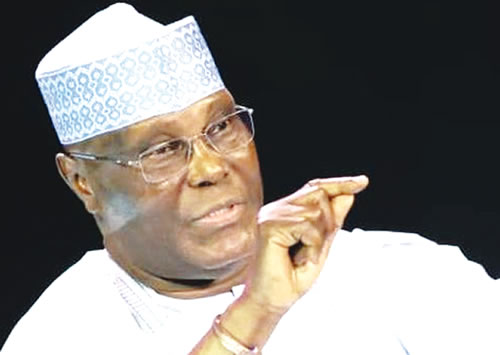
FORMER Vice President Atiku Abubakar has raised serious concerns over alleged alterations to Nigeria’s recently enacted Tax Reform Acts, describing the developments as a brazen assault on the country’s democratic and legislative processes.
In a statement on Tuesday, December 23, Atiku called the alleged modifications “an act of treason against the Nigerian people.”
He accused the executive arm of the Federal Government, led by President Bola Tinubu, of undermining legislative supremacy and stripping citizens of fundamental due process protections.
He highlighted provisions of the laws granting tax authorities coercive powers, including powers to arrest, seize properties without court orders, and enforce sales conducted without judicial oversight.
These provisions transform tax collectors into quasi-law enforcement agencies, stripping Nigerians of due process protections that the National Assembly deliberately included in the laws, Atiku said.
He criticised the introduction of mandatory 20 per cent security deposits for tax appeals, compound interest on tax debts, forced USD computation for petroleum operations, and other measures that he said would increase financial burdens on citizens while removing key accountability mechanisms.
Abubakar urged the Federal Government to immediately suspend implementation of the laws scheduled to take off on January 1, 2026, pending a thorough investigation. He also called on the National Assembly to rectify the illegal alterations, adding that the judiciary strikes down unconstitutional provisions in the laws, while the Economic and Financial Crimes Commission (EFCC) investigates people responsible for the alterations.
The alleged alteration of the gazetted tax acts, raised by a member of the House of Representatives, Abdulsamad Dasuki, had heightened doubts over the possibility of commencement of the implementation on January 1, 2026.
In addition to the former vice president, notable Nigerians and groups, including the Nigerian Bar Association (NBA) had demanded the suspension of the implementation of the tax laws over alleged alteration to their copies gazetted by the Presidency.
The NBA expressed fears over the integrity and transparency of Nigeria’s lawmaking process over the alleged alterations.
“These developments strike at the very heart of constitutional governance and call into question the procedural sanctity that must attend lawmaking in a democratic society,” the group said.
THE Independent National Electoral Commission (INEC) has said it would not recognise the Kabiru Turaki–led National Working Committee of the Peoples’ Democratic Party (PDP), citing existing court judgments and unresolved legal processes surrounding the party’s leadership.
The INEC made this known in a letter dated December 22, 2025, signed by its secretary, Rose Oriaran-Anthony, a copy of which was made available to journalists.
It noted that the commission received several requests from legal representatives of the PDP asking it to recognise and update its website with the list of national officers said to have been elected at the party’s National Convention held on November 15 and 16, 2025, in Ibadan, Oyo State.
“The requests were reviewed in the light of all material facts, extant laws, and subsisting court judgments touching directly on the subject matter,” the commission wrote in the letter.
The INEC referred to two judgments of the Federal High Court in Abuja: suit no. FHC/ABJ/CS/2120/2025, delivered on October 31, 2025, and suit no. FHC/ABJ/CS/2299/2025, delivered on November 14, 2025.
“Both judgments, which are final in nature and binding on all parties, expressly restrained the commission from supervising, monitoring, recognising, or in any manner whatsoever giving effect to the outcome of the PDP national convention,” INEC said.
The commission noted that while notices of appeal had been filed against the judgments, it was settled in law that the filing of an appeal did not amount to a stay of execution.
“Until the judgments are set aside or stayed by a competent court, the commission remains bound to obey and give full effect to them in line with Section 287(3) of the Constitution of the Federal Republic of Nigeria, 1999 (as amended),” the letter read.
The commission also referenced interim orders issued by the Oyo State High Court, clarifying that INEC had been struck out of the suit for want of jurisdiction. It added that interim orders could not override or nullify subsisting final judgments of courts of coordinate or superior jurisdiction.
“In light of the above pending suits, your request is prejudicial and cannot be acceded to until the determination of the pending appeals,” it added.
The INEC further revealed that another suit filed by the PDP was pending before the Federal High Court in Ibadan, where the party was seeking an order compelling the commission to recognise the National Working Committee and members of the National Executive Committee elected at the Ibadan convention.
“In the circumstances, and in obedience to the rule of law and subsisting court orders, the commission is unable to accede to the demand to recognise or update the list of the national officers said to have emerged from the PDP national convention of 15th–16th November, 2025,” the commission stated.
It stressed that it clearly restated its position to the PDP leadership during a meeting at INEC headquarters on Friday, December 19, 2025, including its commitment to due process and respect for judicial authority.
The commission, therefore, assured stakeholders of its continued resolve to act strictly within the bounds of the Constitution and the rule of law.
NIGERIAN Bar Association (NBA) has demanded the suspension of the implementation of the new tax laws, over alleged alteration to their copies gazetted by the Presidency.
The NBA expressed fears over the integrity and transparency of Nigeria’s lawmaking process over the alleged alterations to the laws.
In a statement on Tuesday, December 22, signed by its president, Afam Osigwe, the NBA said the issues arising from the passage of the laws raiser grave concerns necessitating the need to stop their implementation.
“These developments strike at the very heart of constitutional governance and call into question the procedural sanctity that must attend lawmaking in a democratic society,” the group said.
It added, “The Nigerian Bar Association considers it imperative that a comprehensive, open, and transparent investigation be conducted to clarify the circumstances surrounding the enactment of the laws and to restore public confidence in the legislative process.”
The association urged that all plans for implementing the laws be immediately suspended until the issues raised are fully examined and resolved.
“Legal and policy uncertainty of this magnitude has far-reaching consequences. It unsettles the business environment, erodes investor confidence, and creates unpredictability for individuals, businesses, and institutions required to comply with the law.
“Such uncertainty is inimical to economic stability and should have no place in a system governed by the rule of law.
“Nigeria’s constitutional democracy demands that laws, especially those with profound economic and social implications, emerge from processes that are transparent, accountable, and beyond reproach. Anything short of this undermines public trust and weakens the foundation upon which lawful governance rests.”
The body called on all relevant authorities to act swiftly and responsibly in addressing the controversy, in the overriding interest of constitutional order, economic stability, and the preservation of the rule of law.
On Wednesday, member of the House of Representatives from Sokoto, Abdussamad Dasuki, claimed that the gazetted tax laws were different from the version passed by the National Assembly.
Reacting, the House of Representatives constituted a seven-member committee to investigate the alleged discrepancies.
The suspension appeal came after the Federal Government had prepared the grounds for implementing the new tax laws from January 1, 2026, with the approval of the establishment of the National Tax Policy Implementation Committee (NTPIC).
The committee has been tasked with overseeing the coordinated rollout of the Federal Government’s new tax reforms.
THE Federal Inland Revenue Service (FIRS) has directed that the National Identification Number issued by the National Identity Management Commission (NIMC) should become tax identification number for Nigerians.
The FIRS announced this in a public awareness campaign on Monday, December 22, as it prepares to enforce and implement the new tax laws from January 1, 2026.
The revenue agency also disclosed that for registered businesses, their Registry Certificate (RC) number issued by the Corporate Affairs Commission (CAC) automatically becomes their tax ID under the new tax system.
This declaration comes amidst concerns over a provision of the tax laws mandating a tax ID for bank account ownership.
According to the revenue agency, the Nigeria Tax Administration Act (NTAA) mandates the use of Tax ID for certain transactions.
It, however, noted that the requirement was not new, adding that it had existed since the Finance Act 2019 and had been strengthened under the NTAA.
It also stressed that the Tax ID unifies all TINS previously issued by FIRS. “For individuals, your NIN automatically serves as your Tax ID, while for registered companies, your CAC RC number is used.
“You do not need a physical card; the Tax ID is a unique number linked directly to your identity,” the FIRS stated.
It also noted that the new tax ID systems simplified identification, reduced duplication, closed loophole for tax evasion and ensured fairness to enable everyone earning taxable income to contribute their share.
By this directive, all Nigerians with NIN now automatically have a Tax ID and can be easily brought into the tax net, provided they receive taxable income.
Already, 123.9 million Nigerians had so far been issued the NIN as of October 2025, according to data released by the NIMC.
The declaration by the FIRS erases the concerns that many Nigerians would have to go through another tedious process of acquiring a tax ID from next year to open bank accounts.
The Chairman of the Presidential Fiscal Policy and Tax Reforms Committee, Taiwo Oyedele, had earlier dismissed claims that all bank accounts were mandated to have a TIN before January 2026.
According to him, Section 4 of the NTAA requires a taxable person to require and obtain a Tax ID, and a taxable income is anyone who earns income through trade or any economic activity.
Individuals who do not earn income, such as students and dependents, do not need to obtain a tax ID, he said, stressing that since 2020, anyone operating a bank account for businesses, or a corporate account, had needed a tax Identification number.
THE Nigerian National Committee of the International Press Institute (IPI Nigeria) has condemned the arrest and detention of Adenike Atanda and her nine-month-old baby by operatives of the Nigeria Police Force, describing the action as unlawful, inhumane and a grave abuse of power.
In a statement signed by its president, Musikilu Mojeed, and legal adviser, Tobi Soniyi, IPI Nigeria said Atanda was detained for several hours on Monday, December 22, at the Owutu Police Station in Ikorodu, Lagos, in place of her husband, Sodeeq Atanda, a senior investigative reporter with the Foundation for Investigative Journalism (FIJ).
According to the organisation, police officers tracked Atanda and her infant to their neighbourhood and arrested them while the journalist was not at home, even though neither the woman nor her child was a suspect or accused of any offence.
The organisation said the arrest amounted to an unlawful arrest by proxy, in violation of the Administration of Criminal Justice Act (ACJA) 2015 and the Nigeria Police Act 2020.
It further accused the officers of subjecting Atanda to harassment and psychological trauma, alleging that she was coerced into falsely telling her husband that their baby was gravely ill in order to lure him out.
The organisation said it was particularly disturbed that the officers involved were attached to the Inspector-General of Police (IGP) Monitoring Unit, noting that the incident occurred weeks after the IPI Nigeria listed the IGP, Kayode Egbetokun, in its Nigeria Book of Infamy over press freedom violations.
It recalled that following the listing, the IGP had initiated engagement with IPI Nigeria and mandated his office’s Monitoring Unit to interface with the institute on addressing the growing harassment of journalists nationwide.
“Ironically, the very unit designated for that engagement has now executed one of the most brazen violations of journalists’ rights witnessed in recent times,” the statement said.
The organisation announced the suspension of all engagements with the Nigeria Police Force until there is clear evidence of accountability, respect for the rule of law and an end to hostility towards journalists.
The IPI Nigeria said Atanda and her baby were released only after the journalist presented himself to the police.
The ICIRreported that Atanda was subsequently arrested, handcuffed and detained, and was released late Monday night following public outcry and the intervention of IPI Nigeria.
The IPI Nigeria demanded a public apology from the police to Atanda and her baby, adequate compensation for their unlawful arrest and trauma, and the immediate arrest, investigation and prosecution of all officers involved, including their dismissal from service.
The organisation also insisted that the journalist Atanda be allowed to carry out his duties without intimidation or harassment, warning the police against interfering in civil or commercial disputes that should be resolved by the courts.
It said persistent abuse of power within the police thrived because misconduct was rarely punished, fostering a culture of impunity that continued to erode public confidence in the force.
It called on the IGP to decisively purge the force of officers unfit to serve and demonstrate genuine commitment to reform, accountability and respect for press freedom.
Meanwhile, FIJ reported that the incident was linked to an investigation by Atanda into allegations that Adeyemi Awoyinfa, chief executive officer of Legend Adex Immigration Consult, refused to refund £15,000 collected in November 2023 from a UK-based Nigerian after failing to deliver two certificates of sponsorship.
The story was first published by FIJ on November 4, 2024.
According to the report, the complainant paid £15,000 as part payment of an agreed £30,000, with the balance to be paid after delivery of the certificates. Awoyinfa allegedly promised to deliver the documents within two weeks but failed to do so and also failed to refund the money despite repeated assurances over several months.
FIJ reported that the complainant later reported the matter to the Akobo Police Station in Ibadan.
Awoyinfa, through his lawyer, denied the allegations and said the matter was under police investigation.
Police vows to sanction erring officer
Reacting to a post by human rights activist Omoyele Sowore, who condemned Atanda’s arrest, police spokesperson, Benjamin Hundeyin, said the Inspector-General of Police did not condone the actions of the officers involved.
He said the IGP was informed of the incident and promptly ordered the release of the journalist, directing that the head of the unit involved be sanctioned.
Hundeyin said IGP Egbetokun remained committed to press freedom and would not tolerate any conduct that undermined it.
THE Lagos State Police Command has released Sodeeq Atanda, a senior investigative reporter with the Foundation for Investigative Journalism (FIJ), after arresting and detaining him on Monday, December 22.
Atanda was arrested in Ikorodu and taken to the Force Headquarters in Obalende, Lagos. He was released a few minutes before midnight after backlash.
The police had detained Atanda’s wife, Adenike, and her nine-month-old baby at the Owutu Police Station in Ikorodu for more than five hours. According to FIJ, the officers used the detention to lure Atanda out, coercing his wife to call him and claim that their baby was ill.
Adenike said the police later drove her and the baby to a street close to their home and released them after Atanda was arrested.
“They handcuffed him and took him away. That was when they released my baby and me,” she said.
The arrest followed an earlier ‘dubious’ police invitation to Atanda on November 26 by a person who identified himself as ‘Omo Eleniyan’, claiming to be attached to the Inspector General of Police Monitoring Unit in Lagos.
In a WhatsApp message, Eleniyan said Atanda had been mentioned in a petition referred from the office of the Inspector General of Police. Atanda requested that the invitation be sent through FIJ’s official email address, but the request was declined and no formal invitation was sent to FIJ.
There was no further communication from the police until Monday, when officers arrested Atanda’s wife and child.
After his arrest, the reporter was taken to the Force Headquarters in Obalende.
According to FIJ, at about 11:12pm, the Investigating Police Officer handling the case informed FIJ’s founder and editor-in-chief, Fisayo Soyombo, that Atanda would be released. However, when Soyombo arrived at the station, the police asked Atanda to write a statement, which he declined.
Following further interventions by the president of the Nigerian chapter of the International Press Institute (IPI), Musikilu Mojeed, the police released Atanda unconditionally shortly before midnight.
Mojeed described the incident as unacceptable and said efforts would be made to ensure the police stop such actions against journalists.
Continued clampdown on journalists
The incident came amid heightened concerns over press freedom in Nigeria. On December 2, 2025, IPI Nigeria unveiled its newly established Nigeria Book of Infamy, a platform created to publicly name state actors involved in abuses against journalists.
The book, launched in Abuja by Vice President Kashim Shettima at the 2025 IPI Nigeria Conference, listed the Inspector-General of Police, Kayode Egbetokun, alongside the governors of Niger and Akwa Ibom states, as its first entries.
IPI Nigeria said Egbetokun was listed over repeated cases of police excesses against journalists, despite several engagements with the police leadership.
Mojeed warned that harassment, intimidation and arbitrary arrests of journalists by security agencies had become widespread, contributing to Nigeria’s drop in the 2025 Global Press Freedom Index.
He said the arrest of journalists investigating corruption or reporting police misconduct, as well as the misuse of laws such as the Cybercrime Act, reflected a shrinking civic space and growing intolerance for press scrutiny.
Mojeed also warned that further attacks on journalists would be fiercely resisted, stressing that journalism is not a crime and that continued intimidation of the media undermines democracy and accountability.
THE United States has announced a partial suspension of the issuance of specific visa categories to Nigerians, effective January 1, 2026, under a new presidential proclamation on border and national security.
The US Mission in Nigeria announced on Monday that the restriction would take effect at 12:01 am Eastern Standard Time in line with Presidential Proclamation 10998.
“Effective January 1, 2026, at 12:01 a.m. EST, in line with Presidential Proclamation 10998 on “Restricting and Limiting the Entry of Foreign Nationals to Protect the Security of the United States,” the statement read in part.
“The Department of State is partially suspending visa issuance to nationals of 19 countries – Angola, Antigua and Barbuda, Benin, Burundi, Cote D’Ivoire, Cuba, Dominica, Gabon, The Gambia, Malawi, Mauritania, Nigeria, Senegal, Tanzania, Togo, Tonga, Venezuela, Zambia, and Zimbabwe – for nonimmigrant B-1/B-2 visitor visas and F, M, J student and exchange visitor visas,” it added.
The US clarified that the suspension was not blanket, adding that it exempted immigrant visas for ethnic and religious minorities facing persecution in Iran, dual nationals applying with passports from countries not affected by the measure, and Special Immigrant Visas for eligible US government employees.
Participants in certain major sporting events, Lawful Permanent Residents (LPRs) are not affected by the decision.
The US emphasised that the proclamation applied only to foreign nationals outside the US, and who do not possess a valid US visa as of January 1, 2026.
“Foreign nationals, even those outside the United States, who hold valid visas as of the effective date are not subject to Presidential Proclamation 10998. No visas issued before January 1, 2026, at 12:01 a.m. EST, have been or will be revoked pursuant to the Proclamation,” the statement further stated.
It indicated that applications for certain immigrant visas, including green cards, could face suspension under a new presidential proclamation.
Visa applicants from affected countries may still submit applications and attend interviews. However, such applicants may be ineligible for visa issuance or admission to the US under the new rules.
The ICIR reports that the US has rolled out a series of restrictive measures in recent weeks, heightening concerns among Nigerians seeking to travel, study, or migrate to the country.
In October, Washington reinstated Nigeria on its list of countries accused of violating religious freedom, citing persistent insecurity and attacks on Christian communities as key concerns.
This was followed by Nigeria’s addition to a revised US travel ban list, which imposed partial entry restrictions on Nigerians.
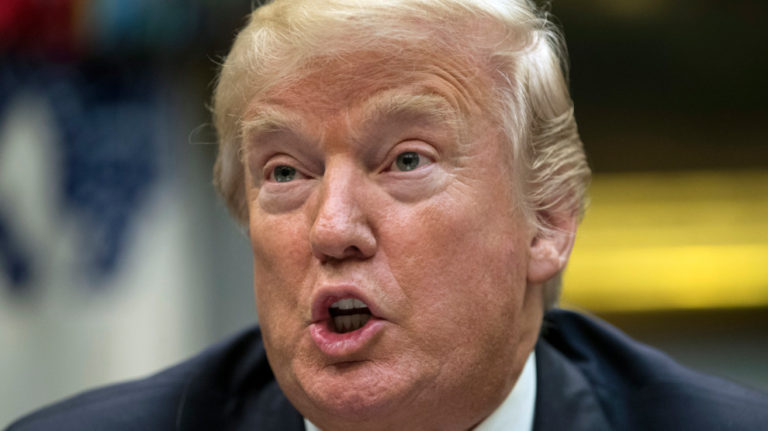
President Donald Trump recently recalled the US Ambassador to Nigeria, Richard Mills, in what appears to be part of a broader diplomatic shake-up across the country’s foreign missions.
Earlier this year, the US government reduced the validity of most non-immigrant visas issued to Nigerians to single-entry visas with a three-month duration.
Editor’s note: Reader discretion is advised as some images in this report may be disturbing.
ON Sunday, December 14, 2025, armed men on motorcycles attacked Ayetoro-Kiri community in Kabba/Bunu LGA of Kogi State. They abducted at least 30 residents, mostly children and elderly worshippers. The attackers stormed homes and churches before fleeing through nearby forests.
Kayode Blessing was on her feet, swaying gently to hymns and clapping along with the congregation, when the first gunshot cracked through their Sunday service at Ayetoro Kiri, Kogi State.
For a moment, she, alongside dozen others, froze, unsure of what she had heard. Then came another. The service faltered as people began to scamper towards the exit of the church.
Kayode Blessing, whom two children were among the captives
Blessing was worshipping at the Apostolic Church, just a short distance away. Her little two children aged six, and four, were not with her. They had followed their neighbour’s children to another church – First Evangelical Church Winning All (ECWA) in the same village.
By the time she rushed outside, seeking for safety the town was already gripped with panic. She said she saw everyone running towards the mountain and thick forest that surround the village, but she had to look for her children first.
She then proceeded towards the ECWA Church, however, when she reached the path leading there, she saw the rampaging armed terrorists on bikes riding away with many people, including her two children.
Six-year-old Kajoteni and four-years-old Deborah were among dozens of worshippers, mostly children and elderly victims, abducted on Sunday, December 14, 2025, when armed men stormed the Church shortly after the service ended in Ayetoro Kiri community of Kogi State.
When The ICIR approached her and her husband a few days after the incident, she was struggling with many things. The husband Kayode said the mother had refused to eat since the incident happened.
“The help I need now from the government is the safe return of my children. They are very young,” the mother of two said.
Her family was not alone. The attack affected several households in the village. Like Blessing, Alice Daniels was also not at the ECWA Church when the gunmen attacked.
Alice Daniels’s husband was kidnapped during the church attack in Aiyetoro-Kiri
She was at home preparing breakfast for her family when the bandits rode through the forest path into the village. Her house is one of the first near the junction leading to the centre of the community.
Her husband was in the bathroom at the time. Moments after she stepped into the small kitchen behind the main compound, where she was cooking with firewood, she saw the terrorists advancing toward the village. She immediately shouted to her husband and neighbours that “They (terrorists) have come again o! They have come! The terrorists are here!”
But by the time her husband rushed out of the bathroom, the gunmen had already surrounded the entire compound. He tried to escape through the backyard but was caught by the bandits, who dragged him away and placed him on one of their motorcycles. He was among the first victims abducted before the attackers moved on to other houses and then the church, where they seized many more residents.
How Ayetoro-Kiri was invaded after Sunday service
Residents and worshippers said the ECWA Church holds two sessions—Sunday School from 8:30am to 9:30am, followed by the main service from 9:30am to 11:00am. The attack happened immediately after the main service ended.
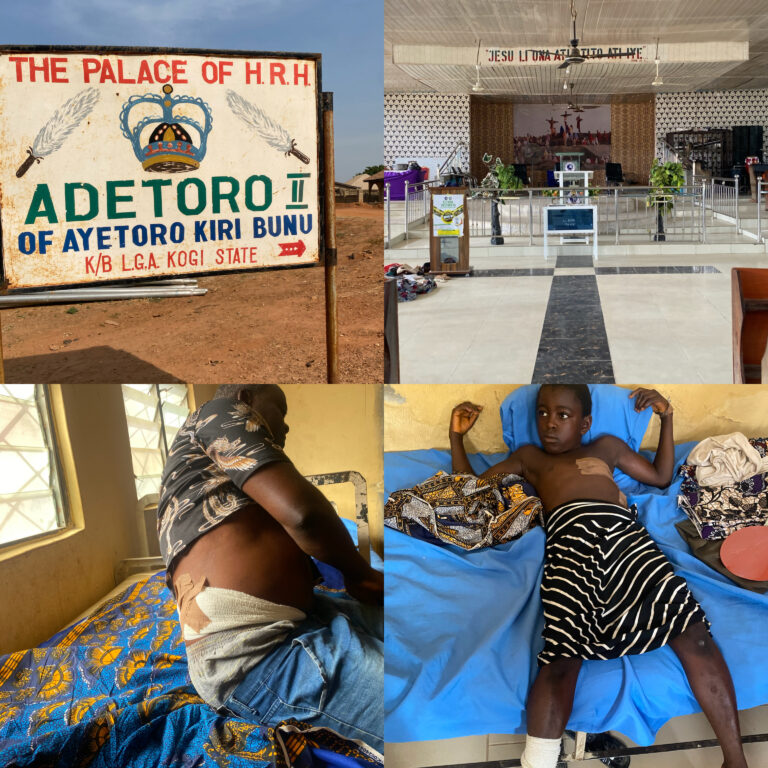
Interior view of First ECWA Church in Ayetoro-Kiri after Sunday’s bandit attack
Survivors and residents told The ICIR that a church member who had stepped outside suddenly ran back after sighting armed men approaching and firing shots into the air. Her warning triggered a frantic attempt to flee, but many children and elderly worshippers were caught unawares in the chaos that followed.
The ICIR gathered that moments later, the attackers stormed Ayetoro First ECWA Church. “They came on about 50 motorcycles. We believe they were up to 100 gunmen, firing sporadically to force residents to scatter,” recalled the town’s head of local security, Olorunmaye Kolawole.
Residents, including the village head, the Adetoro of Ayetoro Kiri, Olusegun Durowaye, said they could not immediately provide an exact figure of those abducted. However, they confirmed that more than 20 worshippers were taken from inside the Church, while about 10 other residents were abducted from their homes as the attackers ransacked the community before retreating into nearby forests.
They also explained that the gunmen moved toward other churches in the area, but news of the attack had already spread. Many worshippers had fled, while some churches shut their doors immediately.
Ayetoro-Kiri’s head of vigilante, Olorunmaye Kolawole, showing The ICIR the path leading to the forest through which bandits entered and left the community.
The attackers, who struck shortly after entering the village, reportedly followed a single path leading into the community. They were said to have retreated through the same route, which connects nearby villages such as Agbede, Obajana and Osokosoko, and leads toward Lokoja while also bordering parts of Niger State. They then disappeared into the bush at the far end of the community, an area surrounded by hills and dense vegetation.
At the other end of the village, near the First ECWA Church, several worshippers escaped abduction by fleeing towards the hills and mountains behind the church as soon as they heard gunshots. Others managed to escape into the bush while the attackers were attempting to line people up.
Witnesses said the assailants, who arrived on motorcycles with at least two men on each bike, would seize victims at gunpoint, force them onto the motorcycles between them, and speed off along the same route. Other gunmen moved from house to house, ransacking properties and firing at anyone they found hiding.
During the attack, one resident identified as Adeyemi James, popularly known as Jayjay, was killed while trying to rescue his child.
Shot in the leg, grazed in the abdomen
Twelve-year-old Adeyemi Damola lay on a narrow hospital bed at Victory Clinic, still bearing the gunshot injury inflicted on him. His left leg was tightly bandaged from a gunshot wound, while another injury was visible around his lower chest and abdomen, where he was grazed by a bullet.
Twelve-year-old Adeyemi Damola hospitalised after suffering gunshots injury
Damola was with his father when the attack began. The ICIR gathered that the father and son attempted to flee the area together as gunmen stormed the community. In the process, the boy was first shot in the leg, slowing him down. As they struggled to escape the danger zone, another bullet struck his father, leaving him with a second injury around the abdomen.
However, his father died at the scene while trying to shield him. A female relative who has taken on the role of Damola’s mother said the boy had been in constant pain since the attack and struggles to sleep.
More children abducted
Beyond the injured, the attack left several families grappling with the anguish of children taken away into the forest. It was gathered that children as young as two-years-old were taken by the terrorists.
Olorunsogo Abejide, said his 2-year-old daughter was among those abducted from the church, adding that she had just finished praying when gunshots rang out.
Olorunsogo Abejide speaking with The ICIR
“I was inside when I heard the gunshots and uproar. Everybody, including myself, started running towards the church but before I could even get there, they had already carried my child and placed him in the middle,” he said.
She said the family had received no reassurance from security agencies or government officials.
Similarly, Olusanmi Taiwo was also not at ECWA Church when the gunmen attacked. She was at home, having come back from her own church service and preparing food for the family when she heard gunshots and the uproar that followed it. By the time she reached the church, she said her two-year-old child Tolu had been kidnapped.
“They didn’t stop at the church; they went into people’s houses and took whoever they met. I was safe but when I reached the church my child has been kidnapped,” she said.
Olusanmi Taiwo
Both parents said the scale of the abduction had overwhelmed the community, with many families unable to confirm the whereabouts of their children, days after the attack.
Fear, anxiety grips community
The abductions, they said, have deepened fear in Ayetoro Kiri, forcing many families to flee the village, while those who remain keep vigil to ensure safety of the villagers.
The ICIR reports that the recent attack that led to the abduction of over 30 residents came amid a surge in violent incidents across Aiyetoro land. It was gathered that the Aiyetoro has about 11 communities, of which Aiyetoro-Kiri was one of the most populated ones. Until 2025, the community had over 10,000 inhabitants.
However, series of attacks on the village and the neighbouring towns by armed groups have led to mass exodus of people in the area which also falls under Kogi West Senatorial District.
One of the many houses abandoned in Aiyetoro-Kiri
The Kogi West Senatorial District has reportedly come under sustained attacks, with many communities affected in the last 12 months across Kabba-Bunu, Lokoja, Yagba East and Yagba West LGAs. The district also borders Kwara State, where violence has escalated significantly, including attacks linked to the Mahmuda terrorist faction and other armed groups.
Many houses were seen to have been deserted while only a handful residents were in the village. The ICIR also observed how a number of people were still moving out of the town as of Wednesday, December 17.
The Adetoro of Ayetoro Kiri, Olusegun Durowaye in his palace speaking with The ICIR
The head of the village, Durowaye, explained that the village population has drastically reduced as people are now leaving the area due to persistent violence that only started around March this year.
Findings show that terrorists on March 27 first launched attack on Aiyetoro-Kiri, abducting five who would later spend three and half months in the hands of the bandits. They were only released after the village met up with the huge demand of N50 million by the bandits.
The village head said despite their complaints to the government, the villagers raised the money with no government support and over N20 million was still being owed to the borrowers.
About a month later, Durowaye’s brother was killed in his farm on August 7, by the armed group. The state government condemned the killing, vowing to ensure swift justice and enhance security across the region. However, residents claimed there has been no government or security presence in the area.
Just a few weeks later, on November 26, another resident was killed, and several others were injured when bandits, dislodged in Kwara State, moved into the forests of Kogi and attacked the village. The attacks went on also in neighbouring towns simultaneously.
Broader pattern across Kogi West
The Ayetoro incident is part of a broader pattern of violence that has been directed at churches in Nigeria, including Kogi State in the last couple of months. The ICIR analysis shows that between August and December 2025, at least three major attacks targeted churches across Ofu, Yagba West, and Kabba/Bunu LGAs of Kogi State.
Each incident followed a similar method of armed men invading church premises during or immediately after worship services, abducting congregants, and retreating through forested routes that link several rural communities.
Spotlight on church attacks in Kogi state
For instance, on November 30, gunmen invaded a Cherubim and Seraphim Church in Ejiba, Yagba West, abducting a cleric and several worshippers. Also on December 7, gunmen reportedly killed Moses Wada, an assistant pastor of Dunamis International Gospel Centre, Anyigba, and abducted the church’s presiding pastor, his wife, and several others along the Enugu–Kogi highway.
The attack occurred on Saturday, December 7, 2025, as the church delegation was returning to Anyigba after attending a programme in Nsukka, Enugu State.
Earlier, on August 26, two members of the Christian Evangelical Fellowship of Nigeria (CEFN) Church in Ofu LGA were also taken after a church service. Both clergies were travelling on a motorcycle when they ran into the kidnappers along Ajegwu-Ojodu road in Ofu LGA of Kogi State.
Meanwhile, the Aiyetoro-Kiri village head, Durowaye, alleged that the past attacks on the village and latest abduction of worshippers are perpetrated by Fulfulde speaking assailants, who he said are targeting Christians.
“The moment they entered the community; they started shooting sporadically. They first invaded the first ECWA Church where children and adults were abducted. Not less than 30 people are still in custody of these people.
“This man here (pointing to the man) is an evangelist, Cherubim and Seraphim. He narrowly escaped after they entered his church and sat down comfortably. So, if anybody is telling me that this is not genocide against Christians, i don’t know where you are getting your story from,” he said.
Data shows deepening crisis
The Ayetoro-Kiri tragedy fits into a larger, increasingly trend of worsening insecurity across the Northcentral region of the country, particularly Kogi and Kwara States.
A review of conflict incident data from the Armed Conflict Location & Event Data Project (ACLED) shows that between January and December 15, 2025, Kogi State recorded at least 150 fatalities and 365 abductions linked to armed violence.
Distribution of killings and abductions across Kogi LGA
These figures show a troubling expansion of attacks, particularly in the state’s western axis where church assaults have been reported.
The data highlights Yagba West (55 deaths), Lokoja (37), and Kabba (18) as the three deadliest local government areas in 2025, together accounting for more than two-thirds of all reported killings statewide.
These LGAs, alongside Yagba East, which recorded 11 deaths, form the centre of Kogi West Senatorial District, the same region that has witnessed a series of coordinated raids in recent months.
On abduction, Lokoja tops with 100 recorded kidnappings, followed by Dekina (60), Ofu (50), and Kabba (45). Residents who spoke with The ICIR mentioned that both death and abduction rate in the region are way beyond what’s in the media.
The ICIR gathered that the attacks frequently occur in areas connected by forest corridors that cut across Kogi West and into parts of Kwara, and Niger, providing mobility for armed groups and often complicating rescue or pursuit operations.
The recent concentration of abductions and killings in Kogi West suggests the region has become a transit and operations zone for multiple violent actors, some displaced by military pressure in the northwest, others motivated by ransom economies and the plan to expand territories.
Residents blame government of neglect
Across Ayetoro-Kiri, villagers told The ICIR that their repeated appeals for help have yielded little more than promises. Since the March attack that claimed five residents and led to the abduction of several others, they said, no lasting security measures have been implemented.
“You can see the condition of the room. There is no government presence here. What can you even construe? Absolutely nothing — no light, no road, everything. So, we have resigned to God,” Durowaye said.
He recounted how the violence that has now defined Ayetoro-Kiri began on March 27, 2025, when gunmen first invaded the community and abducted five residents.
He added that the attackers have continued to strike with impunity, while residents shoulder the full cost of ransom and defence.
Oba Durowaye showing the only available local riffle for the community’s defence to The ICIR.
“Since March, we have been battling this alone. The government has not helped us. We have resigned to our fate,” he said.
Before the attacks began, Durowaye said, Ayetoro-Kiri was one of the largest and most peaceful communities in the region.
Many residents echoed this sentiment, describing a cycle of government neglect, including bad roads and lack of basic amenities in the town.
Residents said the absence of patrols or checkpoints has emboldened the attackers, who now move freely across farms and attack them.
They faulted the state government for failing to establish permanent security posts in violence-prone areas, despite repeated incidents.
Displaced families and those of victims of the abduction from Kabba-Bunu, told The ICIR that they have received no relief materials or welfare support days after losing their homes and livelihoods.
Overwhelmed local operative
Olufemi Moses, 45, one of the commanders of the vigilante group in Aiyetoro-Kiri knows all too well the danger his community faces, especially in recent months.
He was sitting alongside friends not too far when the bandits stormed the village on that Sunday morning and started shooting. Moses said he ran home the moment he saw them riding into the village to grab my rifle.
By that time, the attackers had moved towards his house, closing in and firing as he tried to arm himself. A bullet struck the lower part of his back. Moses explained that he was also able to gundown the ones that attacked him before he was chased by several others.
Olufemi Moses, 45, nearly killed furing the Sunday’s attack
Using the hill behind his house for cover, he scrambled into the rough terrain and climbed over the mountain. “Only God kept me alive,” he said, describing the desperate climb and the moments when he thought his life might end.
The community vigilante said they often confront attackers armed with limited resources such as revolvers, shotguns, muzzle-loaded rifles, and homemade weapons, far less sophisticated than the firearms used by terrorist
To make up for this disadvantage, they are said to rely on charms and oftentimes they have been killed while trying to repel raids.
Local security officers in-charge of Aiyetoro-Kiri safety
In Nigeria, the Firearms Act makes it illegal to possess or use heavy weapons, such as artillery, rockets, bombs, machine guns, and military-grade rifles, without a licence from the president. For personal firearms like shotguns, sporting rifles, and airguns, licences can be issued by the Inspector-General of Police. However, older muzzle-loading guns often used by local vigilantes, generally do not require a licence unless a state police authority specifically prohibits them.
“Almost all the vigilantes have left. The few numbers remaining—if they have to face these people—were nearly overpowered. It was only God that saved them,” the village head said.
“See what they were fighting with (pointing to the local gun) against somebody that came with an AK-47, standing gun. They only have guns and if you even shoot it at times, it can even hook. One even shot his own gun, the thing broke into two. So this is the kind of experience we have as a community.”
Kidnapped victims beg for help
In a video circulating on social media, several of the kidnapped victims are seen pleading for government intervention to secure their release. The footage shows about ten children and five elderly women—two of whom lean on walking sticks and several others begging for government intervention.
The abductors appear to have recorded the video as a way to draw the government’s attention to their demands, of which residents and local residents said haven’t shown since the incident happened.
Residents who have seen the clip told The ICIR that, despite the growing public outcry, no government officials have visited the community or made any visible effort toward securing the victims’ freedom since the attack.
Although the community head said the local government chairman, Zacchaeus Dare Michael, held meeting with people of his town in Kabba, not much development has been recorded.
Family members of the abducted victims told The ICIR that the video was shared with some community members through WhatsApp groups and later spread widely on Facebook and X. In the short clip, some of the children could be seen crying, while the elderly women appeared exhausted and frightened. All of them, speaking in Yoruba, begged the government and public to come to their rescue.
Terrorists demand over N600 million ransom
Further findings revealed that the terror group has contacted leaders of the Aiyetoro-Kiri community, demanding ₦20 million ransom per victim. With more than 30 people abducted, the kidnappers are now asking for over ₦600 million in total for their release.
According to community sources, the captors first reached out to the village head two days after the abduction, initially demanding ₦100 million for all the victims. However, in a follow-up call on Tuesday, the kidnappers revised their conditions, insisting that they must now pay N20 million per person.
The demand has thrown the small farming community into deeper distress, as most residents said they cannot afford even a fraction of the ransom.
Sources told The ICIR that the kidnappers have also issued threats to begin harming the hostages if payments are not made soon.
Force mobilisation, eight days after attack
Contrary to the Kogi State Government’s account, residents of Ayetoro-Kiri have raised serious questions about the accuracy of the official narrative.
Community sources told The ICIR that no police or military personnel were present in the village for several days following the attack, contradicting claims of an immediate security deployment.
Speaking on News Central Television on Monday, December 15, a day after the incident, Commissioner for Information and Communications, Kingsley Femi Fanwo, said troops from the 12 Brigade of the Nigerian Army and personnel of the Kogi State Police Command had already been deployed to the community.
Residents, however, reported that only a few mobile police officers from a neighbouring town appeared hours after the attack and left shortly thereafter. Independent findings by The ICIR confirmed that there was no security presence in the village or surrounding areas. Aside from a few checkpoints manned by local vigilantes, the roads leading into the town were free of police, military, or SSS personnel, contradicting government statements.
The village head later confirmed that the military only arrived in Ayetoro-Kiri eight days after the attack.
Further efforts to speak with Kabba/Bunu LGA chairman Zacchaeus Dare Michael, proved abortive as he failed to grant an interview. The ICIR had first called him on Monday December 15, but he failed to respond. When he eventually did on Tuesday December 16, he told this reporter that he would only grant a physical interview, of which the reporter obliged.
However, he failed to respond to subsequent text message and call seeking for details of the meeting.
Update: The report was edited to remove the number of people left in the village.