Home Blog Page 107

2025 in review: major events that defined Tinubu’s first term

0

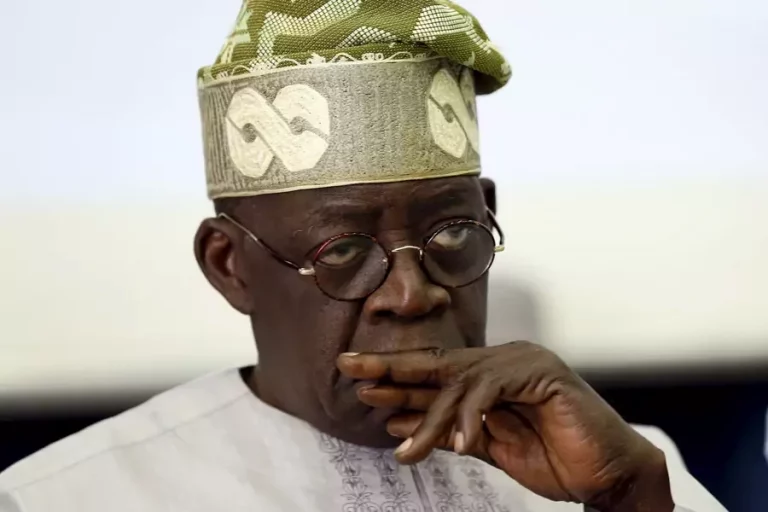
OVER the past two years of President Bola Tinubu’s administration, Nigeria has grappled with severe economic hardship, increasingly dominating the government’s focus. In 2025, these pressures intensified, turning the year into a particularly challenging period marked by rising insecurity and growing international scrutiny.

The convergence of these challenges forced difficult but necessary national conversations on security, governance, and accountability.

In this report, The ICIR looks back at the key issues that made 2025 a watershed moment for the country and for Bola Tinubu’s presidency.

Insecurity

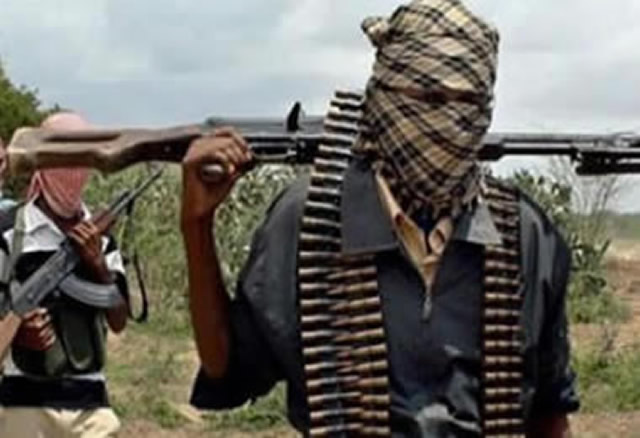
While there were many significant issues that shaped the trajectory of the year, none of them defined 2025 more sharply than insecurity. The year was marked by a disturbing resurgence of mass kidnappings, attacks on rural communities by terror groups and criminal attacks across many states in the Northern region of the country.

In most of these attacks, The ICIR gathered, there were severe casualties, including killings and abductions of hundreds of people, mass displacement and land grabbing.

Earlier in June, The ICIR reported how 25 children were among the over 60 victims killed in Zikke and Hurti and their surrounding villages in Plateau state. Among the casualties of the onslaught on these Plateau communities were dozens of women. Despite government claims that the violence was communal clashes, community leaders and victims insisted there was no provocation and that the attacks were meant to instil fear and intimidation.

Also, on the early hours of Friday, April 18, 2025, a day to commemorate the crucifixion and death of Jesus Christ, residents of Tse Shawa, a small town in Ukum Local Government Area (LGA) of Benue State were attacked by gunmen.

They had earlier heard news about the attacks in some of the neighbouring villages and were prepared to flee in the event of such attacks on their village. By 9 a.m. on the fateful day, armed men descended on the village wielding sophisticated weapons. They fired indiscriminately at the villagers, leaving at least 11 people dead.

These attacks were few of the instances of attacks that ravaged the country before incidents that followed the allegations of the Christian genocide in Nigeria.

The ICIR reported how residents and worshippers in Eruku town, Ekiti Local Government Area of Kwara State, were thrown into panic as armed bandits attacked a local Church on November 18. In a live-stream video seen by The ICIR, the worshippers, including children and the elderly, were singing and waving their hands in devotion when sporadic gunshots rented the air across the premises.

In the aftermath of the incident, at least two people were confirmed dead by the Kwara State police command in a statement. The command confirmed that the attack, which occurred around 6 p.m., led to the death of one Aderemi, and Tunde Asaba Ajayi, a vigilante.

Mass kidnapping of students 

Beyond the attacks on communities across several northern states, Nigeria saw different mass abduction of students within the space of one week.

The first abduction happened in Kebbi State, where 24 schoolgirls were kidnapped during a midnight raid on their school, shortly after a military detachment reportedly left the premises. 

Sequel to the Kebbi abduction, The ICIR reported how terrorists in the early hours of Friday, November 21, stormed St. Mary’s Papiri Private Catholic Secondary School in the Papiri community of Agwara Local Government Area, Niger State, and abducted over 200 students and teachers.

Although, the Nigerian government has secured the release of the Kebbi snd Niger students. 

The mass kidnapping of schoolchildren has surged in Nigeria since the 2014 Chibok abduction, forcing states like Kaduna, Zamfara, Katsina, and Niger to shut thousands of schools over insecurity.

Economic hardship remained unrelenting

Although official economic indicators pointed to stabilisation, with inflation dropping to around 16 per cent and GDP growing modestly, Nigerians saw little improvement in their daily lives.

The ICIR reports that food prices remained high, transport costs did not ease, and many households struggled to cope with consistently rising living costs. Businesses continued to operate in uncertainty, with surveys showing inflation and inconsistent policies as their biggest concerns.

This was despite the repeated claims by the government that the reforms taking shape, the gap between policy gains and real-life experience remained stark.

The ICIR reports that a significant decline in the annual food inflation figure is technically due to the change in the base year methodology. Accordingly, on a month-on-month basis, the food inflation rate in October 2025 was -0.37 per cent, up by 1.21 per cent compared to September 2025 (-1.57 per cent).

Notably, the October inflation marks the seventh consecutive monthly decline since April 2025.

Strikes, more strikes

At least three nationally significant strikes shook Nigeria in 2025. During each strike, there was growing exhaustion of workers who said they were tired of the government’s inaction under Tinubu.

It was a year when the country’s frustrations spilled into the streets, hospital corridors, lecture halls, and government offices, making strikes one of the clearest reflections of a nation under pressure in 2025, unlike the first two years when Tinubu came to office.

The most telling sign came on November 1, when the Nigerian Association of Resident Doctors (NARD) downed tools nationwide. For 29 days, many public hospitals were reduced to emergency-only operations, with many patients waiting endlessly on benches, while some turned back entirely.

The association noted that its National Officers Committee (NOC) had carried out the 30-day ultimatum mandate to the best of its ability but expressed concern that “some elements in government and outside government have very evil and exploitative plans for resident doctors in this country.”

Just weeks earlier, the education sector had been thrown into turmoil when the Academic Staff Union of Universities (ASUU) declared yet another nationwide strike in October.

ASUU insisted it had no choice, pointing to failed agreements, payment of earned academic allowances and withheld salaries, settlement of promotion arrears, and an underfunded university system pushed to its knees. 

Also, in July, the National Association of Nigeria Nurses and Midwives (NANNM) announced a seven-day warning strike after months of pleas about unsafe working conditions, stagnant salaries, and dangerous staffing shortages. 

Although the strike was suspended after four days, it reportedly paralysed nursing services in several hospitals.

Controversy that trailed christian genocide claims

Nigeria’s reputation also suffered significant blows in 2025. The United States designated the country a Country of Particular Concern (CPC) over alleged religious freedom violations. 

This designation also came with visa restrictions on individuals accused of enabling abuses.

The controversy grew after the U.S. President Donald Trump made comments suggesting possible American military intervention if attacks on Christians continued.

Reacting, President Bola Tinubu, on September 30, dismissed allegations of religious genocide in Nigeria as unfounded, stressing that the nation is built on the faith and resilience of its people.

Tinubu affirmed that no religion is under threat in the country, adding that after 65 years of independence, Nigerians have learned to value and embrace their cultural and religious diversity.

Following that the National Security Adviser (NSA), Nuhu Ribadu, met with a United States congressional delegation in Abuja on Sunday, December 7, as part of ongoing security talks between both countries on the matter.

Also, in a statement after the meeting, Congress member Riley M. Moore described the conversation as “productive and positive,” emphasising that the delegation discussed concrete actions that could significantly strengthen Nigeria’s security architecture if the discussions were fully executed.

According to the delegation, the US is particularly concerned about terrorist attacks in the North-East and the killing of Christians in parts of the Middle Belt.

Coup scare

With coups sweeping through several African countries, Nigeria experienced its own moment of political anxiety. 

Sahara Reporters had on 18 October published a report alleging that 16 military officers arrested by the Armed Forces were involved in a plot to overthrow President Bola Tinubu. Premium Times later detailed how the alleged plot was being coordinated before security agencies intercepted it. The reports triggered anxiety within government circles and were cited as a reason the Presidency cancelled the traditional Independence Day parade scheduled for 1 October.

According to the reports, senior officials, including President Tinubu, Vice President Kashim Shettima, Senate President Godswill Akpabio and House Speaker Tajudeen Abbas, were allegedly marked for assassination as part of the plan.

Although the Defence Headquarters did not explicitly confirm a coup attempt, military insiders told Premium Times that the arrests were linked to intelligence about plans to destabilise the government. One source said the officers had fixed a tentative date for a takeover and were holding discreet meetings when the operation leaked.

A military panel was subsequently convened to investigate what authorities described as “indiscipline and breach of service regulations.” 

Sixteen officers were initially detained, but more arrests were made as investigations widened. 
Tax law errors: FG assures of lawmakers’ evaluation of alterations in gazetted laws

0

THE Chairman of the Presidential Fiscal Policy and Tax Reforms Committee, Taiwo Oyedele, has assured Nigerians that the National Assembly would look into the alleged discrepancies in the gazetted tax laws and take necessary actions.

Onn Wednesday, December 17, Abdussamad Dasuki, a member of the House of Representatives from Sokoto, claimed that the gazetted tax laws available to Nigerians were different from the laws passed by the National Assembly.

Responding, the lawmakers constituted a seven-member committee to investigate the alleged discrepancies.

Clarifying the development on Channels Television’s ‘Morning Brief’ show on Monday, December 22, Oyedele said the lawmakers were best positioned to address the alleged discrepancies since they passed the bill to President Bola Tinubu for assent.

“Let’s wait for the findings of the lawmakers. If, indeed, there were alterations,” he said.

He added, “And if those alterations were substantial, in other words, they’re not editorial, then the next step would be to see how best to address those issues.”

Oyedele stressed that before anyone could claim there is a difference between the gazetted tax laws and what was passed, they must have both copies.

“We have what is gazetted, we don’t have what was passed.

“So, the official harmonised bills certified by the clerk, which the National Assembly sent to the president, we don’t have a copy to compare. That’s a fundamental issue that people need to be aware of.

“So, only the lawmakers can say authoritatively that ‘this is what we sent’. And that ‘what we sent’, shouldn’t be the House of Representatives version, it shouldn’t be the Senate version. It should be the harmonised version certified by the clerk,” the tax expert said.

He also cautioned that what had been circulating online and widely reported by a section of the media was fake.

Oyedele added that the committee should be allowed to investigate because “it is not just about the tax reform laws, it’s about our processes.

Misinformation that trailed major events in 2025

0

THE year 2025 was marked by misinformation involving Nigerian public figures, international events, and high-profile incidents across politics, economics, and social issues.

As social media continues to play a dominant role in information dissemination, statements, videos, and images shared online are increasingly scrutinised for accuracy.

Prominent among the fact-checked issues this year were the deluge of misinformation that followed remarks by former U.S. President Donald Trump, who designated Nigeria as a “Country of Particular Concern” over alleged persecution of Christians. 

His statements prompted widespread reactions, generating numerous misleading claims that attributed false statements and actions to Nigerian officials, political actors, and other personalities. Videos, photos, and posts were shared out of context or manipulated to suggest responses that never occurred.

Domestic political developments also fuelled misinformation. President Bola Tinubu’s tax reforms, clashes involving FCT Minister Nyesom Wike, disruptions on Ibom Air flights, and narratives surrounding former President Muhammadu Buhari’s health were all targets of false or misleading online stories. International events, such as the sudden death of footballer Diogo Jota, the Ivory Coast coup rumours, and Donald Trump’s inauguration, were also misrepresented for local audiences, further complicating the information landscape.

This report highlights some of the most notable verifications conducted by The FactCheckHub in 2025. It covers cases where videos, quotes, and images were misrepresented, recycled, or fabricated, resulting in false impressions among the public. The following list is presented in no particular order and provides insights into the claims that gained traction online.

1. Christian Genocide allegation and Donald Trump’s remarks on Nigeria

Following former U.S. President Donald Trump’s pronouncements about Nigeria being a “Country of Particular Concern” over alleged persecution of Christians, multiple misleading posts circulated online, attributing statements and actions to Nigerian officials and political figures.

A video shared on X by @IMC_BRGIE showed President Bola Tinubu saying, “We have no fear of whatever Trump is doing,” and was captioned: “Nigerians have no fear of whatever Trump is doing.” The clip, which gained over 1,000 views and 80 reposts, was presented as a response to Trump’s threat of possible U.S. military action.

FactCheckHub’s analysis revealed the video predates Trump’s November 2 remarks by two months. The full version, uploaded to YouTube on September 2, 2025, was about Nigeria’s economic achievements, not U.S. foreign policy. The claim was therefore misleading.

Similarly, a widely shared photo showing National Security Adviser Nuhu Ribadu meeting with service chiefs was falsely linked to Trump’s threat. The image, circulated by X user @whitenigerian, implied the meeting was convened in response to the U.S. president’s statement.

Reverse image searches showed that the photo predates Trump’s October 31 declaration, having been posted on October 28, 2025, and previously used in news coverage. In reality, the meeting concerned routine coordination among newly appointed service chiefs, unrelated to Trump. This claim was also misleading.

Another claim alleged that Trump had revoked 80,000 visas exclusively for Nigerians. The X post by @MasterBolaji was widely shared, but FactCheckHub found that the U.S. Department of State revoked visas for citizens of multiple countries, including Nigeria, as part of a broad enforcement initiative. This claim was therefore misleading.

A TikTok video showing women wailing in front of a burning building circulated with the caption that it depicted a church set ablaze by Islamic extremists in northern Nigeria. Investigation revealed that the video actually showed a fire at Kwapong Nursing Training College in Ghana, not Nigeria. The claim linking the footage to Nigeria was misleading.

Finally, a claim that former Kano State governor and NNPP presidential candidate Rabiu Kwankwaso deleted his X post reacting to Trump’s comments was found to be false. The post remains visible on his verified X account (@KwankwasoRM) and clearly addresses Trump’s remarks, urging cooperation rather than confrontation.

2. Wike – Yerima altercation

A video circulating on social media suggested that President Bola Tinubu praised FCT Minister Nyesom Wike following a clash with Nigerian Navy officer Lieutenant Ahmed Yerima. The clip, shared by a Facebook page Progressive Nigerian Politics, showed Tinubu saying, “Wike is a good man and a performing minister,” and was captioned as the president backing Wike over the military.

The FactCheckHub review revealed the video predates the November 11, 2025, incident by nearly a year. The full clip, originally published in December 2024, captured Tinubu addressing journalists in Lagos about Wike’s performance as a minister, not a response to any naval altercation. This claim was therefore misleading.

A related claim misrepresented a quote attributed to Tinubu, saying “They put their lives on the line to defend the sovereignty of this country”, as his reaction to the Wike-Yerima clash. The statement was shared by a Facebook user, Nigeria News- Headline Today, suggesting the president sided with the military over Wike.

The FactCheckHub found that the comment was made in the context of the Nigerian Guild of Editors conference on November 12, 2025, addressing the broader role of the military in protecting citizens and combating terrorism and banditry. The quote had no connection to the FCT land dispute, making the claim misleading.

3. Misleading claims about President Tinubu’s new tax reforms

Following the signing of Nigeria’s new tax reforms by President Bola Tinubu in June 2025, several misleading claims circulated online. Social media posts suggested that starting January 2026, Nigerians earning ₦800,000 and above annually would be subjected to personal income tax rates of 11 to 20 per cent, while another claim stated that Nigerians would pay ₦500 for every ₦10,000 spent on petrol under the new law.

A post on X by Naija PR, for instance, stated that the surcharge on petrol would apply from January 2026, gaining over four million views. While a 5 per cent levy on fuel is stipulated in law, FactCheckHub clarified that this was not a new tax.

The Nigeria Tax Administration Act 2025, signed on June 26, revives an existing provision, requires official commencement via the Gazette, and exempts cleaner fuels such as kerosene, LPG, and CNG. There is also no confirmed start date for the surcharge, and the rate has been in effect in a similar form since the Federal Roads Maintenance Agency Act of 2007.

Similarly, posts claiming that President Tinubu would introduce a 20 per cent tax on anyone earning ₦800,000 or more annually misrepresented the law. In reality, the personal income tax system under the 2025 Act is progressive:

  • First ₦800,000: 0%
  • Next ₦2.2 million: 15%
  • Next ₦9 million: 18%
  • Next ₦13 million: 21%
  • Next ₦25 million: 23%
  • Above ₦50 million: 25%

The viral claims erroneously treated ₦800,000 as a monthly income rather than the annual threshold set by the law. Individuals earning ₦800,000 or less per year remain fully exempt, while the rates progressively increase for higher earners.

Dada Olusegun, Special Assistant to the President, confirmed that the new tax framework is progressive and fair, with low-income earners paying little or nothing and higher earners paying proportionately more.

4. Flight disruption

In August 2025, videos circulated on X showing passengers on Ibom Air flights being confronted by security operatives, with claims linking them to the recent controversies involving Fuji musician Wasiu Ayinde (KWAM 1) and passenger Comfort Emmanson. One video, shared by @Oluwanyo with the caption “KWAM 1 has started a Trend!”, had over 700 reposts and 900 likes by August 13.

Fact-checking revealed that the footage was misleading. Reverse image searches traced the video back to January 8, 2025, when a passenger refused to board an Ibom Air flight from Uyo to Abuja after discovering her luggage had not been loaded. The standoff escalated until the flight was eventually cancelled, leaving 89 passengers stranded. This incident was entirely separate from both the KWAM 1 and Comfort Emmanson occurrences in August 2025.

Another video, shared by @Oxygist, showing a passenger being confronted on a flight, was also falsely tied to recent events. In reality, the clip originated from March 31, 2023, when a man disrupted an Ibom Air flight from Abuja to Lagos by shouting political slogans about President Bola Tinubu. Security operatives removed the passenger, and Ibom Air issued a statement clarifying the incident.

5. False claims about former President Muhammadu Buhari’s health and death

Amid viral rumours in 2025 that former Nigerian President Muhammadu Buhari was critically ill, multiple videos and posts circulated online, claiming he had passed away. One video showed Northern dignitaries at a funeral and was shared as evidence of Buhari’s burial. The post, widely shared on X and Facebook, claimed: “They finally unveil the death of Muhammad Buhari.”

Fact-checking revealed that the video was misleading. Reverse image searches and verification of key frames showed that it actually depicted the funeral of Safara’u Umar Radda, mother of Katsina State Governor Dikko Umaru Radda, held on March 23, 2025. Multiple news outlets confirmed the event, which was attended by local governors and dignitaries.

Another viral claim suggested that Buhari had died in London, comparing it to the death of former President Umaru Musa Yar’Adua abroad in 2010. This claim was false. Yar’Adua had been treated in Saudi Arabia and Germany for health complications, but was brought back to Nigeria before he died in Abuja. Buhari himself was alive, and no credible reports confirmed his death in 2025.

A further claim falsely attributed to Aisha Buhari, former First Lady, stated that her husband had died in 2017. Fact-checkers determined this was also false. The post originated from impersonation accounts, and no verified social media or official sources confirmed such a statement. The image itself showed signs of digital manipulation.

A TikTok video showing a patient being wheeled through a hospital was circulated as Buhari’s final moments. Analysis revealed the footage was originally from March 2023, depicting a U.S. hospital farewell ceremony for Mercedes Castañeda, a brain-dead Colombian woman about to donate her organs. The visuals and music were unrelated to Buhari.

6. Diogo Jota’s Death

Following the sudden death of Portuguese footballer Diogo Jota in a car accident on July 3, 2025, social media was flooded with tributes and reactions. Amid the outpouring of grief, several videos went viral, generating misinformation.

One video showed a group of Liverpool supporters marching on a street, which some users claimed depicted Nigerian fans mourning Jota. In reality, careful examination revealed that the footage was from Gulu, northern Uganda, as indicated by banners reading “NORTHERN UGANDA LIVERPOOL FANS,” and local reporting confirmed the march took place there.

Another video falsely claimed that Rihanna had released a tribute song for Jota. Analysis by fact-checkers showed the clip was AI-generated and digitally manipulated, with no official release or verification from the singer’s channels. Audio recognition tools and platform checks confirmed the content was synthetic.

7. A coup that never occurred

Another major misinformation wave this year centred on viral posts claiming that the Ivory Coast had experienced a military coup. Several X users circulated videos and alarming captions alleging gunfire in Abidjan, the disappearance or death of President Alassane Ouattara, and buildings being set ablaze as part of the supposed uprising. Some of these posts garnered hundreds of thousands of views.

The FactCheckHub investigations, supported by multiple journalists in Abidjan, confirmed that no coup took place. President Ouattara was publicly active during the period, including participating in the UNESCO Félix Houphouët-Boigny Prize ceremony and chairing a council of ministers meeting. Local reporters also noted that daily life in Abidjan remained normal, with no unusual military activity.

One widely circulated video showing a burning building was also misrepresented. A reverse image search revealed that the footage came from a February 5, 2025, fire at the Adjamé Château shopping centre in Abidjan and had no connection to any political unrest.

Despite a regional backdrop where several West and Central African countries have experienced coups since 2020, fact-checkers found no credible evidence of a similar event in the Ivory Coast. The claims were either false or misleading, driven by recycled footage and sensational social media narratives.

8. Trump’s inauguration

One of the biggest events that occurred in 2025 was the inauguration of Donald Trump as the 47th president of America. The development led to a series of misinformations regarding the event.

The ceremony, held in the US Capitol Rotunda because of freezing weather, was attended by figures such as Joe Biden, Kamala Harris, Barack Obama, political allies, and thousands of supporters. His return sparked concern among immigrant communities due to his tough immigration policies.

The inauguration also triggered a wave of misinformation online, especially among Nigerian and African audiences.

One viral claim falsely alleged that Nigeria’s Labour Party presidential candidate, Peter Obi, was invited to Trump’s inauguration. FactCheckHub’s investigation showed that this was false, as he did not appear on any official guest list. The misleading story originated from a pro-Obi platform that only referenced an X post by Nenadi Usman, who attended on behalf of the Labour Party.

Another false claim circulated that Burkina Faso’s military leader, Ibrahim Traoré, rejected a personal invitation from Donald Trump. Fact-checking revealed that Traoré was never invited, and his name did not appear in the official list of foreign guests.

Media reports from outlets like the Associated Press and Al Jazeera confirmed that only a small number of foreign leaders were invited to the ceremony, including China’s Xi Jinping, Argentina’s Javier Milei, Italy’s Giorgia Meloni, France’s Emmanuel Macron, and others. Historically, foreign heads of state rarely attend U.S. presidential inaugurations.

In both cases, fact-checkers found no credible evidence supporting the viral claims, concluding that the stories were false and based on misleading social media posts.

9. Anambra election

On November 8, residents of the state went to the polls to elect their next administrator. Despite high expectations for a transparent electoral process, the campaign period, election day, and the aftermath were characterised by a flurry of unverified claims and viral content designed to confuse voters and undermine the electoral process.

Reports circulated online claiming that a certain candidate had won, violent incidents occurred, that officials were caught with cash, and that voting malpractices were rampant. Many of these stories, however, were found to be false or misleading, fact-checks by the Nigerian Fact-Checkers’ Coalition (NFC) later revealed.

Over the three days, the coalition fact-checked multiple claims but was able to conclude on a total of 28 claims. Out of these, six were verified as correct, 14 as incorrect, seven as misleading, and one as unproven.

This report is republished from the FactCheckHub

Yuletide: FG declares public holidays as police announce nationwide deployment

0

THE Federal Government has declared Thursday, December 25, Friday, December 26, 2025, and Thursday, January 1, 2026, as public holidays to mark Christmas, Boxing Day, and New Year celebrations.

Minister of Interior, Olubunmi Tunji-Ojo, announced the holidays on Monday, December 22, on behalf of the Federal Government. He extended Christmas and New Year greetings to Christians in Nigeria and across the world, as well as to all Nigerians.

Tunji-Ojo urged Christians to reflect on the values of love, peace, humility, and sacrifice exemplified by the birth of Jesus Christ, noting that these virtues remained critical to national unity, tolerance, and peaceful coexistence.

He also called on Nigerians, regardless of religious or ethnic background, to use the festive period to pray for peace, security, and the continued progress of the country, while supporting the Federal Government’s efforts at national development.

Meanwhile, the Inspector-General of Police, Kayode Egbetokun, has ordered a nationwide deployment of police personnel and operational assets to ensure a safe and peaceful Yuletide season.

According to a statement by the Force Public Relations Officer, Benjamin Hundeyin, the deployment will involve increased patrols, visibility policing, intelligence-led operations, and confidence-building engagements across all states.

The statement noted that specialised units, including the Police Mobile Force, Counter-Terrorism Unit, Explosive Ordnance Disposal (EOD) Command, and the Intelligence Response Team, had been placed on heightened alert.

The police said security coverage would be intensified around churches, recreational centres, markets, transport terminals, highways, and other public spaces, with additional patrols activated along major roads and inter-state routes to prevent crime and traffic-related incidents.

Egbetokun also directed state commands to sustain raids on identified crime hotspots and forests, while strengthening collaboration with other security agencies and community stakeholders.

The police chief urged Nigerians to remain vigilant, celebrate responsibly, and cooperate with security agencies by reporting suspicious activities, assuring the public of the Force’s commitment to ensuring a peaceful festive season.

Trump pulls out US ambassador from Nigeria, over 20 others

0

UNITED States (US) President Donald Trump has recalled the US Ambassador to Nigeria, Richard Mills, in what appears to be part of a broader diplomatic shake-up across the country’s foreign missions.

State Department officials told The Guardian that the changes took place on Wednesday, when chiefs of mission began receiving notices from officials in Washington DC, informing them that their tenures would end in January.

The officials clarified that the recalled ambassadors were not losing their positions in the foreign service and would return to Washington for other assignments if they chose.

Nigeria is among 15 African countries affected by the shakeup. Others are Algeria, Burundi, Cameroon, Cape Verde, Gabon, Côte d’Ivoire, Egypt, Madagascar, Mauritius, Niger, Rwanda, Senegal, Somalia and Uganda.

Out of more than two dozen countries reportedly affected, Africa is the most hit continent.

In the Asia-Pacific region, affected countries include Fiji, Laos, the Marshall Islands, Papua New Guinea, the Philippines and Vietnam.

In Europe, Trump recalled US envoys in Armenia, Macedonia, Montenegro and Slovakia, while Guatemala and Suriname were affected in the Western Hemisphere.

All the ambassadors were appointed during the Joe Biden administration and had initially survived an early purge in the first months of Trump’s second term, which largely targeted political appointees.

Envoys typically serve terms of three to four years, and Mills was confirmed as the US ambassador to Nigeria in May 2023.

His recall comes amid strained US–Nigeria relations over visa disputes and security concerns, even as both countries continue to pursue initiatives aimed at strengthening their partnership.

The ICIR reports that Mills met with Nigeria’s Minister of Foreign Affairs, Yusuf Tuggar, last week to discuss areas of bilateral cooperation, following remarks by US Congressman Riley Moore that the two countries were close to finalising a “strategic security framework” to address terrorism in Nigeria.

2025 in review: social media moments Nigerians couldn’t stop talking about

IN 2025, Nigeria’s social media was alive with viral moments, ranging from celebrity news and sports triumphs to humanitarian crises and political developments.

This report highlights the some of the most talked-about events of the year.

Achalugo nickname trend

The nickname “Achalugo,” popularised by the YouTube film Love in Every Word, emerged as a major social media trend, spilling into skits, songs and couple endearments across digital platforms. The trend, which also revived the use of Igbo praise names such as “Odogwu” and “Achalugo,” dominated conversations on social media at the start of the year, sparking widespread engagement and reactions.

Rooted in Igbo culture, Odogwu and Achalugo are traditional praise and endearment names often used to express admiration, affection and respect. Their renewed popularity in the film resonated with audiences, turning the expressions into viral terms of endearment used by couples and content creators alike.

State of emergency in Rivers State

In March 2025, President Bola Tinubu declared a state of emergency in Rivers State following prolonged political turbulence in the state. The president blamed both Governor Siminalayi Fubara and the Minister of the Federal Capital Territory (FCT), Nyesom Wike, for allowing the crisis to escalate.

The state of emergency, which lasted six months, led to the appointment of Vice Admiral (Rtd) Ibok-Ete Ekwe Ibas as administrator of the state. Following the expiration of the emergency rule, President Tinubu announced its termination, paving the way for Governor Fubara to resume office

Super Falcons’ WAFCON win

The Super Falcons’ stunning 3–2 comeback victory to secure their 10th continental title ignited national pride, drawing widespread praise and cash rewards from President Bola Tinubu and other Nigerians following their triumph at the 2024 Women’s Africa Cup of Nations (WAFCON).

According to The ICIR, Nigeria’s Super Falcons clinched their 10th African title in the final of the 2024 WAFCON in Rabat, Morocco, producing a remarkable comeback to defeat the host nation. The prize money sparked widespread debate, particularly because the president announced it in dollars.

Akpabio and Natasha drama

In 2025, a senator, Natasha Akpoti-Uduaghan’s confrontation with Senate President Godswill Akpabio sparked intense national debate around politics, gender, and accountability. The dispute followed her suspension from the Senate for six months amid a sexual harassment petition she filed against Akpabio, an action taken despite court orders restraining the Senate.

During the suspension, Akpoti-Uduaghan was barred from speaking to the media on the matter and maintained that she was denied a fair hearing before the Senate imposed the sanction. The controversy later expanded to include moves for a constituency recall.

Six months later, she was reinstated in the Senate after the expiration of her suspension, following months of legal battles and public exchanges with Akpabio. The ICIR reported that the suspension, which was ordered after she rejected the reassignment of her seat, stripped her of her salary, aides’ pay, and other legislative benefits.

Hilda Baci’s jollof record

Hilda Baci trended online after cooking a 8,780-kilogram pot of jollof rice to set a Guinness World Record.

The ICIR reported that the Guinness World Record holder successfully completed the ambitious feat of cooking the world’s largest pot of Nigerian jollof rice, overcoming a dramatic setback when the giant custom-made pot collapsed during the weighing process at the venue.

Political party defections

In 2025, Nigeria’s political landscape witnessed heightened instability as party loyalties shifted, with politicians crossing party lines in pursuit of strategic advantage and political influence. In the second quarter of the year, The ICIR reported on several high-profile politicians who defected to the All Progressives Congress (APC) between January and June 2025.

In October alone, The ICIR reported that six lawmakers from Enugu and Plateau states defected from the Peoples Democratic Party (PDP) and the Labour Party (LP) to the APC and other parties, moves widely seen as efforts to secure political advantage ahead of the 2027 general elections.

Nigeria designated ‘Country of Particular Concern’ by US

In November 2025, the United States reissued Nigeria’s classification as a “Country of Particular Concern” (CPC) under the International Religious Freedom Act, citing ongoing systemic violations of religious freedom. The designation, first assigned under former President Donald Trump in 2020, quickly trended online and became a major subject of debate, particularly on X, where it sparked widespread controversy, including claims of a “Christian genocide.”

According to The ICIR, the renewed focus on Nigeria followed the introduction of a bill by US Senator Ted Cruz aimed at protecting what he described as “persecuted” Christians in the country. The bill was prompted by reports of killings in Plateau, Benue, and Kwara states, which further intensified public discourse.

Critics, however, argued that the violence is not limited to Christians, noting that Muslims have also been targeted in attacks on their communities and places of worship.

Mass killings and kidnappings 

In 2025, attacks across several Nigerian states, including Plateau, Benue, and Kwara, emerged as a troubling trend, with widespread fatalities and abductions reported throughout the year.

The attacks became a major subject of conversation on social media, fuelling debates that eventually tied into claims of a “Christian genocide” in Nigeria. The ICIR notes that these incidents reflect a recurring pattern of violence in Plateau State, highlighting persistent security challenges that shaped much of 2025.

2Baba, Annie & Natasha saga +  Ned-Regina separation

The personal lives of Nigerian celebrities also took centre stage on social media, sparking widespread speculation, debates, and viral conversations.

Music icon Innocent Idibia, popularly known as 2Baba, was embroiled in another marital controversy following his separation from former wife Annie Macaulay. His current marriage to Natasha Osawaru, a member of the Edo State House of Assembly, made headlines after reports of family interference, personal altercations, and a reported UK arrest emerged. Social media was flooded with reactions after a public argument between 2Baba and Natasha in a UK mall, which later escalated during a heated live-stream hosted by media personality Daddy Freeze. In response, Idibia broke his silence, urging fans to “cease fire” amid concerns over threats to his pregnant wife.

Similarly, the separation of Ned Nwoko, billionaire businessman and politician, and Regina Daniels, Nollywood actress kept fans engaged, with speculation about the reasons behind their split and the implications for their families.

School abductions

The spate of school abductions in Nigeria sparked widespread outrage and intense discussion across social media platforms. Terrorists stormed Government Girls Comprehensive Secondary School, Maga, abducting 26 female students in the early hours of the night. In a separate incident, Mary’s Private Catholic Primary/Secondary School in Papiri, Niger State, saw 253 students and 12 staff members kidnapped, one of the largest school abductions in the state in recent years.

The abducted students and staff were later released after several nights of negotiations with the Federal Government of Nigeria, but the incidents generated a flurry of online debates, trending hashtags, and calls for stronger security measures. The ICIR reported the incidents, highlighting the recurring security challenges facing schools in Nigeria. Read the reports here and here . 

Let us know in the comment section, what else should be here.

Remaining 130 abducted Niger schoolchildren released, says Presidency

0
THE remaining 130 schoolchildren abducted by terrorists at St Mary’s Catholic School in Papiri, Niger State, on November 21, have been released.
Bayo Onanuga, Special Adviser on Information Strategy to President Bola Tinubu on Information and Strategy, announced this in a statement Saturday evening.
He said they were expected to arrive in Minna on Monday and rejoin their parents for the Christmas celebration.
“One hundred were released earlier by the terrorists, taking the total of freed students to 230. The freedom of the schoolchildren followed a military-intelligence driven operation,” he stated.
The ICIR reports that 100 of the students were released earlier on December 7.

Terrorists rode into the remote Papiri community around 2:00 a.m. and spent about three hours moving through the school dormitories. A total of 315 people were reportedly taken, that is 303 students and 12 teachers.

Security personnel and local hunters launched a search operation across the surrounding forests to track down the gunmen. Within the first 24 hours, 50 students successfully fled from their abductors and were safely reunited with their families.

Despite this, 265 others, comprising 253 children, and 12 teachers were held by the gunmen.

The ICIR reported how the children’s family and the entire Papiri community have been in tears over the incident.

The attack underscored the continuing decline in security across Nigeria.

A similar attack and abduction of schoolchildren was carried out by terrorists on Maga Comprehensive Girls’ Secondary School in Kebbi State, where about 25 female students were whisked away and a staff member was killed. A guard was also injured during the early-morning assault.

Within the same period, terrorists abducted several other Nigerians, including dozens of worshippers whisked away by terrorists from Eruku town in the Ekiti Local Government Area of Kwara State on Tuesday, November 18.

Following the persistent attacks and palpable fear enveloping the nation, Tinubu implemented wide-ranging changes to the nation’s security architecture, including the resignation of the Minister of Defence, Mohammadu Badaru, and appointment of immediate past Chief of Defence Staff, Christopher Musa, as a new Defence Minister.

The president withdrew police officers from VIPs to enable them to face core policing duties. He also ordered the recruitment of more officers into the nation’s security forces and the police.


The Supreme Court’s emergency politics

0

By Chidi Anselm Odinkalu

ALL judges are politicians whether they know it or not.” – Enrique Petracchi, former Chief Justice of Argentina, (2002).

Among lawyers trained in the traditions of the Common Law, judicial power is often mis-understood. In Nigeria, the 1999 Constitution divides the powers of the federation between the legislature, the executive and the judiciary. The first two are elected. Judges are not. In the elected arms, it vests the legislative and executive powers of the federation. In turn, the same constitution vests the “judicial powers of the Federation” in the courts. This suggests that judicial power is political not institutional.

Yet, the tradition of Nigerian law is largely to equate judicial powers with the jurisdiction of courts to both adjudicate over cases and fashion remedies in accordance with the pleadings of the parties and with judicial interpretation of the applicable laws. That is an error. Jurisdiction is inherent in the judicial office; judicial power is functional in how the judicial deploys its jurisdiction behind the party or cause that it prefers. This is the sense in which lawyers trained in the methods of the Civil Law system speak of le pouvoir judiciaire – the judicial power.

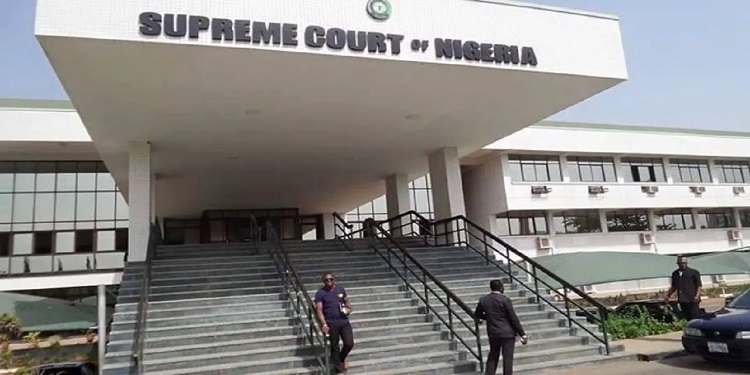
On 15 December 2025, Nigeria’s Supreme Court indulged in a dramatic demonstration of judicial power in a case in which it determined that it lacked jurisdiction on the facts. The dispute arose over the proclamation by President Bola Ahmed Tinubu of a State of Emergency in Rivers State on 18 March 2025. The declared duration of the emergency was an initial period of six months. In the proclamation, the president also pronounced the suspension of the elected governor and House of Assembly of the state.

At the time, the governor of Rivers State, Siminalayi Fubara – who has recently christened himself a lifelong “progressive” – was in supposedly retrograde company in the Peoples’ Democratic Party (PDP), on whose platform he was elected.

Twenty three days after the emergency proclamation, 11 governors elected on the platform of the PDP – naturally suffering from a profound bout of “there but for the grace of geography go I” – invoked the original jurisdiction of the Supreme Court to challenge the constitutionality emergency proclamation. Under Nigeria’s constitution, the Supreme Court is the final court of appeal in the country and most cases get to the court by way of an appeal from lower courts. However, the court also has original jurisdiction as a court of both first and final instance in legal disputes between the federation and states or between states among themselves.

When this case was filed, the emergency still had five months and one week to run. A Supreme Court which desired could easily have accorded it due priority and dealt with it expeditiously. The case concerning Local Government autonomy filed in May 2024 (which arrived the court by similar means), for instance, took only 45 days from filing to judgment on 11 July of the same year.

In this case concerning emergency rule in Rivers State, however, the Supreme Court chose a deliberately somnolent route to scheduling. Everything the court did subsequently appeared to have been underpinned by that imperative.

On 18 September 2025, the emergency proclamation in Rivers State became spent and the suspended institutions and officials were restored to office. By the time the Supreme Court found time to address the issues posed for it in the case three months thereafter, five of the 11 governors who filed the original action had relocated their party loyalty from the PDP to the president’s All Progressives Congress (APC). Two more would do so in the days immediately following the judgment. No one will ever truly know whether the jurisprudence of political coercion confirmed in this case had anything to do with the desperation of these gubernatorial acts of party political transfiguration.

After their judgment, the Supreme Court released an unsigned, 14-page media summary of the majority judgment of Mohammed Baba Idris, who led a majority of six of seven Justices. There followed a public race to unravel what the Justices had decided. The media reported that the Supreme Court had licensed the president to suspend elected state officials under colour of an emergency. Femi Falana SAN, provided a spin on the judgment from a segment of the legal profession initially in shock, which argued that the court did not go as far. In reality, it did that and much more and the initial media reports were very accurate.

Five things are notable about the decision of the court in this case. First, in a mere four pages, all seven Justices made short shrift of the case as filed, declining jurisdiction on the basis that “the plaintiffs failed to disclose any reasonable or justiciable dispute between them and the federation capable of invoking the original jurisdiction of the court.”

At this stage, the job of the court was done. However, the Justices decided to “undertake a considered discussion on the scope and exercise of the powers” under the Constitution concerning emergency proclamations. It is notable that the court framed what it undertook in the remaining two-thirds of its “summary” as a “discussion”, rather than an exercise in judicial decision making. Scholars and jurists will expend considerable froth in the years to come on the import of what may well become known as “Supreme discussion”.

Second, the court embarked on its self-appointed discussion by locating the bases of emergency powers in an invented doctrine of “a temporary expansion of federal powers” which lacks any foundations in the text or structure of Nigeria’s Constitution. Indeed, emergency powers under Nigeria’s federal system are not an expansion of federal powers. On the contrary, they are contingent powers, ripe to be exercised upon the fulfilment of twin requirements of substantive and procedural compliance with constitutional pre-conditions.

Third, turning to the constitutional pre-conditions, the Supreme Court continued its disquisition by pronouncing the emergency proclamation in Rivers State as having fulfilled the substantive pre-conditions under the Constitution.

Fourth, the Court turned to the procedural arithmetic preceding the emergency proclamation. Nigeria’s Constitution requires an emergency proclamation to be sustained by a joint resolution supported by two-thirds majority of each chamber of the National Assembly. The court ruled that this implies that the voting “process adopted renders the attainment of the two-thirds majority clearly ascertainable.” In this case, the National Assembly used a voice vote to ram through its joint resolution in support of the emergency rule. The Supreme Court managed to see this as competent constitutional computation, not parliamentary voodoo.

Fifth, the court discussed whether the president had the power under an emergency proclamation to suspend elected state officials, including the governor and legislators. It laid down one constraint to the effect that “emergency measures must be temporary, corrective, and proportionate”; and added that “any permanent displacement or abrogation of democratically elected institutions would constitute a constitutional aberration.” “Outside a validly declared state of emergency”, the court further discussed “the President possesses no power whatsoever to interfere with State executive or legislative institutions.”

It was an odd way to phrase arguably the most cynical and gratuitous expansion of presidential power in the history of the Nigerian Supreme Court. In other words, the Supreme Court clearly discussed its way to supporting the assertion by the president of a power to suspend any governor he does not like under colour of an emergency proclamation. It is also cynical because the court does not offer this as a decision but as a discussion, without even the ceremony of a declaratory import.

One of the seven Justices, Obande Ogbuinya, concurred in the decision that the court lacked jurisdiction but reportedly dissented on judicial tolerance of a presidential power to suspend elected state officials. Unlike the majority decision, the court did not bother to provide a summary of his dissent.

The decision of the Supreme Court to become a “discussion” forum on such an issue of extraordinary constitutional significance is guaranteed to roil governance and politics in Nigeria for a long time. As an exercise of judicial power, it supremely wilful, cynical, and political.

A lawyer and a teacher, Odinkalu can be reached at chidi.odinkalu@tufts.edu


Dufil Prima reassures consumers as NAFDAC flags imported Indomie noodles

0

DUFIL Prima Foods, the manufacturer of Indomie noodles in Nigeria has issued a clarification following a recent public alert by the National Agency for Food and Drug Administration and Control (NAFDAC) on the recall of an Indomie noodles product in France.

In a statement on Sunday, December 21, the company said the product referenced in NAFDAC’s warning, “Indomie Noodles Vegetable Flavour”, was not manufactured, imported, distributed or sold in Nigeria while explaining that the recall cited by the regulatory agency originated in France in August 2025 and was issued as a precautionary measure to protect Nigerian consumers.

“As clearly stated in NAFDAC’s official press release, the affected product recall was from France in August 2025 and the alert was issued purely as a precautionary measure to safeguard the Nigerian public.

“Indomie Nigeria does not produce or market any noodle variant called Vegetable flavour, and no such product exists within Indomie Nigeria’s portfolio. All Indomie noodles produced by Dufil Prima Foods in Nigeria are safe for consumption under strict quality control processes and in full compliance with NAFDAC regulations.” the statement read in part.

The company also distanced itself from images and videos circulating online in relation to the recall, stating that the packaging shown did not align with Indomie Nigeria’s approved branding, labelling or packaging specifications.

On Thursday, December 18, NAFDAC issued a public alert announcing the recall of Indomie Noodles Vegetable Flavour over “undeclared allergens”.

The NAFDAC said the product contained milk and eggs, substances that could cause serious or life-threatening reactions in individuals with allergies or intolerances.

In a notice titled Public Alert No. 041/2025, the agency explained that the recall followed information received from France’s food safety authority, Rappel Conso, which identified the product for failing to disclose the presence of milk and eggs on its label.

The agency added that the recall applies to all batches of Indomie Noodles, Vegetable Flavour, with a best-before date of February 6, 2026.

“Although the official risk of these products entering Nigeria is low due to the Federal Government’s ban on noodle importation, there remains a need for heightened vigilance to prevent possible illicit entry or circulation of the implicated Indomie brand.

“NAFDAC has commenced vigilance actions to guard against possible entry of the brand into the country, as acquisition of the product through online purchase or international travel cannot be excluded,” the agency stated.

It further urged distributors, retailers and consumers to remain vigilant throughout the supply chain and to refrain from importing, selling or consuming the recalled product

Super Eagles gun for 4th title as AFCON 2025 kicks off in Morocco

0

THE 2025 Africa Cup of Nations (AFCON) kicks off on Sunday, December 21, with the opening match between hosts Morocco and Comoros.

Scheduled for 19:00 GMT at Stade Prince Moulay Abdallah in Rabat, the fixture marks the start of the 35th edition of Africa’s flagship football tournament, which will run until January 18, 2026.

For the first time, the competition will take place over the Christmas and New Year period.

The Confederation of African Football (CAF) announced the refereeing team for the Morocco–Comoros match, signalling full readiness for the tournament.

AFCON 2025 features six groups: Group A has Comoros, Mali, Morocco, and Zambia; Group B includes Angola, Egypt, South Africa, and Zimbabwe; Group C features Nigeria, Tanzania, Tunisia, and Uganda.

Group D has Benin, Botswana, DR Congo, and Senegal; Group E comprises Algeria, Burkina Faso, Equatorial Guinea, and Sudan; and Group F, the “group of death,” features Cameroon, Gabon, Ivory Coast, and Mozambique.

Group F stands out with stars like Aubameyang and Bryan Mbeumo, while Nigeria’s Super Eagles in Group C face a tough challenge to improve their recent World Cup qualifying form.

AFCON has been held 34 times, with 14 different nations winning the trophy. Egypt leads with seven titles, followed by Cameroon with five and Ghana with four. Nigeria and Côte d’Ivoire are tied for fourth with three titles each, with Nigeria winning in 1980, 1994, and 2013.

CAF announced prize money of $10 million for the winner, $4 million for the runners-up, and $2.5 million for each semi-finalist. The Super Eagles have finished as runners-up four times and third on eight occasions. All kick-off times are in GMT.