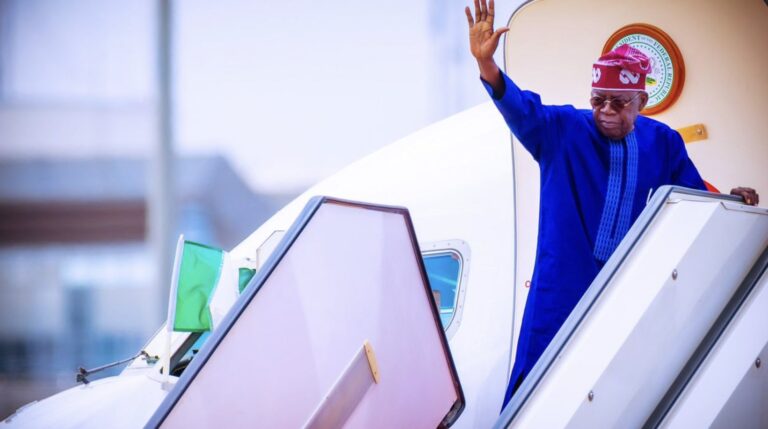
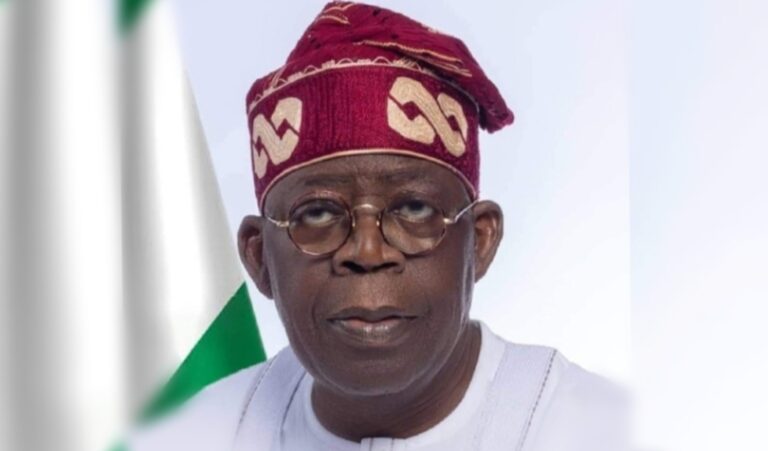
PRESIDENT Bola Tinubu has departed Lagos for Europe as part of his end-of-year schedule, following a series of official engagements across Borno, Bauchi and Lagos states, the Presidency has said.
According to a statement by the President’s Special Adviser on Information and Strategy, Bayo Onanuga, Tinubu left Lagos on Sunday, December 28, continuing his end-of-year break ahead of an official trip to Abu Dhabi in the United Arab Emirates.
Earlier, the President had embarked on a three-state visit, beginning with Borno State, where he commissioned projects executed by the state government under Governor Babagana Zulum and the Federal Government.
While in Maiduguri, Tinubu also attended the wedding ceremony of Sadeeq Sheriff, son of former Borno State governor, Senator Ali Modu Sheriff.
From Borno, the President travelled to Bauchi State to commiserate with the state government and the family of Sheikh Dahiru Bauchi, the late Islamic cleric and leader of the Tijjaniyya Muslim Brotherhood, who died on November 27.
Tinubu thereafter proceeded to Lagos, where he spent the end-of-year holidays and participated in several activities, including attending the Eyo Festival held at Tafawa Balewa Square on December 27.
The festival honoured notable figures, including the President’s mother, Abibatu Mogaji, and former Lagos State governors, Lateef Jakande and Michael Otedola.
The presidency announced that he has now left for Europe ahead of his participation in the 2026 Abu Dhabi Sustainability Week (ADSW) Summit, scheduled to take place in early January.
According to the statement, he was invited to the summit by the President of the United Arab Emirates, Sheikh Mohamed bin Zayed Al Nahyan.
The weeklong summit convenes global leaders from government, business and civil society to discuss sustainable development, with the 2026 edition themed “The Nexus of Next: All Systems Go.”
The presidency further noted that Tinubu is expected to return to Nigeria after the conclusion of the summit.
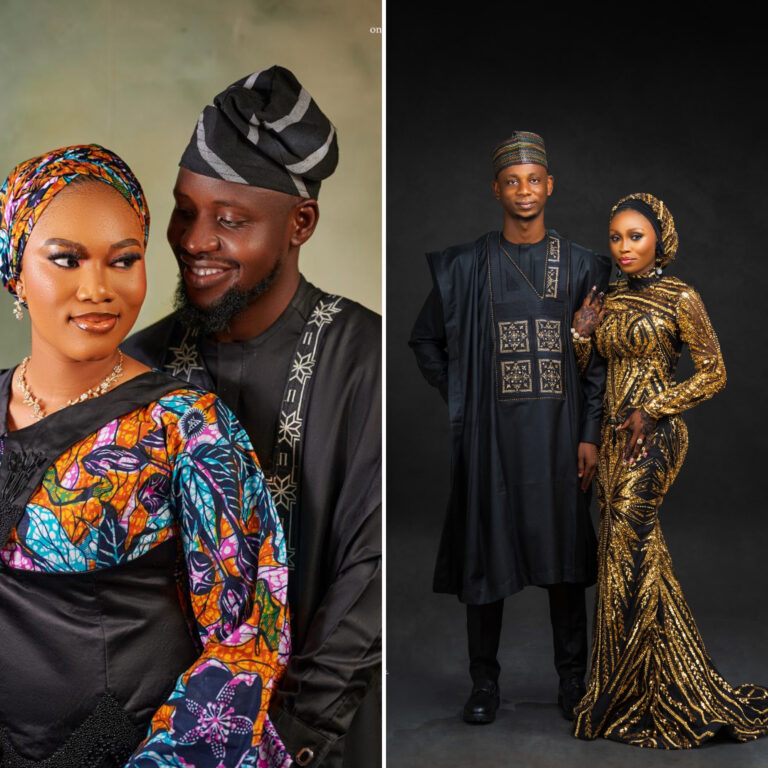
GLAMOUR and elegance filled Ilorin and Ipee, Kwara State, in the closing days of December as two staffers with the International Centre for Investigative Reporting (ICIR) walked down the aisle in colourful wedding ceremonies that drew family members, colleagues, and well-wishers from across the country.
The celebrations marked the union of Nurudeen Akewushola, a senior investigative journalist and fact-checker with ICIR, and Shifau Lawal, a princess of Ipe town in Oyun Local Government Area of Kwara State.
They also celebrated the wedding of Abdul, ICIR’s Head of Information and Communications Technology (ICT) Gobir Abdulazeez, who tied the knot with his partner Shuaib Khairat, after years of courtship.
The weddings, held across two different venues in Ilorin and Ipee, featured nikah ceremonies, engagements, and receptions, which blended Islamic and cultural traditions with modern flair.
Despite the tight schedules and multiple social engagements that typically characterise December, guests travelled from within Kwara State and beyond to witness the joyous occasions.
Akewushola dancing with his beautiful wife during a wedding photo session
Nurudeen, whose wedding was held on Saturday, December 27, was done in three folds, starting with Nikkah, an Islamic wedding done privately at the bride’s family town. It was followed by a traditional marriage, where the couples and friends had a blast. The reception ceremony commenced at around 4 p.m.
After the ceremonies, Nurudeen, on behalf of the couples, expressed heartfelt appreciation to everyone who supported them in different ways.
“Yesterday marked the beginning of a new chapter in our lives, and we would like to sincerely appreciate you for supporting us in different ways. Your prayers, messages, calls, and kind gestures meant a lot to us and contributed to the joy of the day,” he said.
He particularly acknowledged those who travelled from Ilorin and other locations to Ipe despite the distance and the busy December calendar.
“Your decision to still be present speaks volumes, and we do not take that sacrifice lightly. May Allah reward you for every step taken and every inconvenience endured for our sake,” Nurudeen added.
A night class to forever
Nurudeen’s love story with Shifau began on the campus of Usmanu Danfodiyo University, Sokoto (UDUS) around 2018.
Nurudeen with his wife
One evening, while in one of many classrooms in Usmanu Danfodiyo University, Sokoto, Nurudeen walked into a lecture hall and met Shifau, who was studying quietly in A63. He introduced himself and collected her contact, but did not reach out immediately.
Months later, their paths crossed again at a Rotaract fellowship of the Rotaract Club of UDUS (Rotafodiyo), where Nurudeen was then serving as Director of Training and International Director. Recognising her, he approached Shifau to remind her of their earlier meeting.
She stood out at the event and caught the attention of many, including Nurudeen, who reached out to her later that night. Their renewed conversations soon blossomed into a relationship, followed by months of dating and courtship.
Last year, the couple held a mini family introduction and an indoor nikah, where Nurudeen Islamically married Shifau in the presence of the royal majesty of Ipe, her father, family members, and representatives of the groom’s family.
Abdul’s journey
For Abdul, the ceremony began in the morning with his wife Walimah before then moving to the proper Nikkah. He had first celebrated his own Walimah on Friday, December 26.
Abdul during his Walimah ceremony
ICIR’s Head of ICT, the journey to marriage began during his university days.
We met in university, and we’ve been dating ever since,” he said. “We’ve shared so many laughs and memories.”
Gobir Abdul during a pre-wedding photo session with his wife
He added that the couple is excited to begin a new chapter together. “Now, we’re excited to start this new chapter, and we’re so happy everyone is here to celebrate with us.”
Colleagues at The ICIR described the weddings as moments of joy and sent their wishes to the couples.
Update:
Earlier in the year, specifically on February 1, 2025, The ICIR celebrated the wedding of one of its staff members, formerly Miss Blessings Otoibihi. The wedding ceremony took place in Nigeria’s capital city, Abuja.
The ICIR was well represented at the event, with virtually all staff members in attendance.
Mr. Akpomodid Ebireri and Mrs.Blessing Ebireri (ICIR staff) at their wedding held on Feb 1,2025 in Abuja.
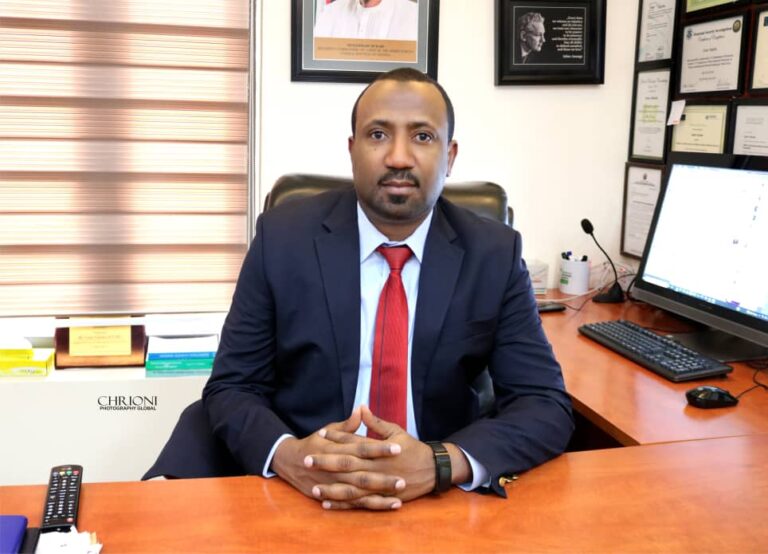
NIGERIA continues to lose billions of naira to corruption as weak oversight and broken systems allow fraud to thrive, according to founder of the Centre for Fiscal Transparency and Public Integrity (CeFTPI), Umar Yakubu.
Yakubu told the International Centre for Investigative Reporting (ICIR) that corruption thrives because the structures meant to prevent it are weak and inefficient.
He also highlighted institutions like the Independent National Electoral Commission (INEC) and the Auditor General of the Federation, which have been strategically weakened by political interference.
“If you look at the role of the Auditor General of the Federation, it is very strong and the law empowering that organisation is very strong. But the political system has found a way of weakening that office. If you check the constitution, if I’m correct, they are one of the three agencies, INEC, Code of Conduct Bureau and Auditor General, that are actually created by the constitution, so they are that powerful.
“But to even enable their agency is that their report is supposed to go to the National Assembly. But when they don’t have the support of the National Assembly, probably because they are in bed with the executive when it comes in terms of all this public sector corruption, they have strategically weakened their agency to perform its duty,” he said.
According to him, CeFTPI has exposed the scale of the problem through its Transparency and Corruption Risk Assessment (TACRA) and Transparency and Integrity Index, tools that measure how federal, state, and local agencies handle public funds.
He added that the results of their assessment are stark, noting that most federal ministries show little improvement and states reverting to old habits after donor programs ended.
He stressed that over 300 local governments fall into the “extreme risk” category for accountability, with only three publishing records of their spending.
“We analysed the local government, 774 of them, using eight pillars around accountability mechanism and the analysis shows that only three are categorised as low tier, meaning they have semblance of accountability. So there is low risk, there is medium risk, there is high risk, there is critical risk, there is extreme risk. Now, you have over 300 local governments in the extreme risk category.
“So, you see only three; Nasarawa local government in Nasarawa state. I think Ikeja in Lagos state and Kaduna north. I think one of the local governments also in Jigawa. So just about three or four even publishes their records. Publishing doesn’t even mean nothing has gone behind, but at least one step has been taken to publish. I will have to give them credit for even publishing,” he added.
IN a country where trillions of naira move through government coffers with little public scrutiny, the battle for transparency is often fought against powerful interests. For UMAR Yakubu, founder and Executive Director of the Centre for Fiscal Transparency and Public Integrity (CeFTPI), confronting corruption is not about chasing headlines or individuals, but dismantling the systems that enable waste, fraud and impunity in Nigeria’s public sector.
In this ICIR accountability series interview, Yakubu explains CeFTPI’s evolution, its data-driven tools, and why fixing Nigeria’s electoral and accountability systems may be central to breaking the cycle of corruption. Below are excerpts from the conversation.
The ICIR: What inspired the creation of CeFTPI and how has the organisation evolved?
Yakubu: We registered in 2016, but we effectively took off 2020 just after COVID and that’ was when we actually started operations. Between 2016 and 2020, we were doing a low-level advocacy around things that breed fraud, corruption, organised crime, human trafficking.
We were going to schools to talk to children to avoid human trafficking, prostitution, fraud, crimes, and all those kinds of things. We did a lot of advocacies online and write-ups because I write too for a lot of media houses. But from post-COVID, we went full-fledged and our focus revolved around several areas.
We try to advocate in areas of the problems in whatever ill we see in society, if it’s corruption, we look at the primary enablers. That is where we target advocacy. If it’s organised crime, depending on which one, human trafficking, we look at the primary enabler. If it’s drug trafficking or whatever element or part of public sector corruption, we look at those enablers because we have been going around in circles for too long.
If we do not look at the factors that cause those problems, we will not resolve them. For example, if we look at public sector corruption, instead of the normal people to advocate against through EFCC, ICPC, we look at the primary source of all this public sector corruption, which is usually the political class.
Now, how do the political class get to where they are? They have a regulator called INEC, (Independent National Electoral Commission). Our work will now focus more on INEC. For example, if you get your electoral system right, you will not have these pressure on the system. That is usually our approach. We look at fiscal transparency issues because once there’s transparency, the level of accountability will increase.
We look at public sector reforms because a lot of problems we have in Nigeria, aside corruption, is a lot of waste. It’s mostly about waste and low level of efficiency.
Thirdly, we look at the integrity of systems, not of individuals. What are the integrity mechanisms within those organisations that allow them or doesn’t allow them to prosper and provide what they’re supposed to do for Nigerians? . Then we’ll look at organised crime resilience.
Yakubu:We look at fiscal transparency issues because once there’s transparency, the level of accountability will increase.
We actually do that because when your public sector is not efficient, and weak, it breeds a lot of the criminality we see in the country today.
Lastly, we believe in data. Whatever we do, we are backed by data. We have several databases that were built mainly from open sources, depending on the segment you want to do.
The ICIR: In September, you introduced the Transparency and Corruption Risk Assessment (TACRA). How do these tools work?
Yakubu: Actually, in September, we had two tools. One was the Transparency and Integrity Index, and the second one was Transparency and Corruption Risk Assessment, which is the TACRA.
On the TACRA, we take each individual MDA. There are over 600 of them at the federal level, and the 36 state governments, as well as the seven hundred and seventy-four local governments. We started doing for the TACRA twice a month, sometimes three times. We picked one agency and critically analysed it in terms of its integrity, its mechanism, transparency, in terms of accountability, several indicators. Also, in terms of open-source information on how many investigations have been carried on, in terms of its whole mandate by law. There’s a law guiding every federal agency in Nigeria.
In terms of mandate, we look at how well has it done on all those integrity and accountability mechanisms? That’s the TACRA. We have started with the Customs Service. We have also done JAMB. We have done NNPC, which is taking a lot of time because they have a whole backlog of accountability issues.
We are taking every agency, then we’ll start going to the state governments, maybe pick one state, and start spreading around because this is a lot of work.
For the Transparency and Integrity Index, it’s something we started in 2021 as well. Actually, it’s a global tool for the measurement of corruption.
Nigeria did not have that. So, what we decided to do was to develop a tool that we can see whether we’re improving or regressing. The Transparency and Integrity Index is just based on five pillars: fiscal transparency, public procurement, human resources, citizen engagement, and control of corruption.
Under these five thematic areas, you have other variables which are about 29, which we measure. As we measure every MDA for the last five years, we score them all in September of every year, which is a United Nations International Day for Universal Access to Information. We release that report every year and give them their scores.
The ICIR: How have MDAs responded so far?
Yakubu: Under the federal, MDAs are in about 11 categories. You have the core ministries, the commissions, the government-owned enterprises, the research institutions, the educational institutions, you have the water business. Now depending on the category you look at, those that are the core agencies, commissions, all those ones that you see, universities commission, communications commission, Economic and Financial Crimes Commission (EFCC), those that have some degree of improvement. The core ministries are about 23, including agriculture, finance, industries, all of them that are static.
There’s really no improvement in terms of transparency. The same with the educational institutions too, they are not really improving. For the states, initially when we started, they were doing well, but there was a reason why they were doing well. That time we were borrowing money post-COVID.
One of the criteria for the World Bank to give loans to states was the proactive disclosure of certain kinds of information. That have been called the SIFTAS, the (State Fiscal Transparency and Accountability Initiative) or something like that or support.
As soon as the World Bank pulled out, the states went back to status quo. Their level of transparency has now gone back to where they were before the SIFTAS came in.
The ICIR: What are the major challenges of fiscal transparency and public integrity in Nigeria, particularly in the light of the country’s recent economic struggles?
Yakubu: I think it’s from the demand side. Citizens are not demanding enough. The only people doing this work are usually civil society like us, you and I, and a couple of media. There needs to be more demand for transparency and accountability because what evidence has shown is that citizens are not demanding and they leave it only to the media, though the media is very important and critical and an avenue where citizens can voice their concerns.
Right now we have the new media in terms of social media, people can go there and voice their concerns too. But there needs to be more intensive demand for transparency and accountability where it will improve this level of transparency. An example is, let’s say the NNPC. Now you can see once in a while they release their audit reports.
Yakubu: The Law empowering the Office of the Auditor General of the Federation is very strong
Recently, I read where the Auditor General queried the spending of about 15 million pounds on one of their assets in the United Kingdom. So, you see, this needs to go across board, across all MDEs, especially those government-owned enterprises that happen to have a lot of money with them, and that is where most of the corruption goes through in Nigeria.
The ICIR: Where did Nigeria get it wrong despite repeated revelations?
Yakubu: If you look at the role of the Auditor General of the Federation, it is very strong and the law empowering that organisation is very strong. But the political system has found a way of weakening that office. If you check the constitution, if I’m correct, they are one of the three agencies, INEC, Code of Conduct Bureau and Auditor General, that are actually created by the constitution, so they are that powerful.
But to even enable their agency is that their report is supposed to go to the National Assembly. But when they don’t have the support of the National Assembly, probably because they are in bed with the executive when it comes in terms of all this public sector corruption, they have strategically weakened their agency to perform its duty. So, what we need to do is to continue our advocacy to strengthen the office of the Auditor General of the Federation because they have powers to do all these things.
Even if they don’t give them powers to sanction, their reports can easily serve as a platform where the law enforcement agencies cannot do their jobs, even when the National Assembly don’t want to do their job. This is my own view regarding strengthening the office of the Auditor General of the Federation.
The ICIR: What is your assessment of accountability at the state and local government levels?
I don’t want to say zero because I can’t statistically prove the number. But it is a very critical risk in the sense that the institutions for accountability at state level are just non-existent. One, there is no state assembly that has shown demand for accountability from any state governor in the last 10-15 years that I’m aware of. There is no state assembly that has impeached, not even questioned any governor demanding accountability about public funds.
There is no state where you see a lot of strength of civil society at the sub-national level and there are accusations. Some say they have been bought over. Those that have not been bought are not allowed to do their duty. So, the accountability mechanisms at the state level are very low.
For the local government, we actually have another report we released when the Supreme Court said the local government should be receiving their funds.
We analysed the local government, 774 of them, using eight pillars around accountability mechanism and the analysis shows that only three are categorised as low tier, meaning they have semblance of accountability. So there is low risk, there is medium risk, there is high risk, there is critical risk, there is extreme risk. Now, you have over 300 local governments in the extreme risk category.
So, you see only three; Nasarawa local government in Nasarawa state. I think Ikeja in Lagos state and Kaduna north. I think one of the local governments also in Jigawa. So just about three or four even publishes their records. Publishing doesn’t even mean nothing has gone behind, but at least one step has been taken to publish. I will have to give them credit for even publishing.
The ICIR: How can states be better monitored, especially around budgets?
Yakubu: I don’t subscribe to the tracking of funds in the sense. If you go to the Federal Reserve Finance website, you see actually how much goes to every state. I know, for example, N10 billion has gone to A state, for example. Now, what needs to be tracked is not the remittance, it’s utilisation.
How they’re utilising those funds. If you look at the research now, you see most public sector corruption is through procurement fraud. So, what to do for each state is simple; just focus on their procurement data.
Three cardinal principles. Who are the contractors for whatever project? You go and look at what the companies get; the directors, who are the beneficial owners of those companies, that is one. Two, the details of the contract, because that’s why you see every year they are buying cars, because they have no idea on how to actually serve the people.
I have not seen at our centre, that publishes a procurement implementation report. Because you are not publishing or providing any manner a procurement implementation report, you find that every year you keep seeing the same items being repeated. And nobody’s really asking questions.
Okay, the cars we bought last year, what happened to them? Have they expired? Or do cars have an expiry date?. That is why you see that states are always rushing to build roads, and we don’t look at the quality of those roads.
Every one or two years, they are doing the same road because of the margin of returns in whether a bribe or a kickback, whatever name you want to call it.
The same for the local governments, when they start getting their funds, because there’s no evidence that has been shown whether they’re actually receiving those funds directly now. But if you just focus on the procurement data alone, under these three pillars, it will be good enough for us to monitor the states.
The ICIR: What role can technology play in fiscal transparency?
Yakubu: One of the things we use a lot is technology. We have actually used artificial intelligence and blockchain technology. I’m saying this for the first time in the public domain. We have managed to gather all procurement data of all MDAs for the last five years. And, we have built the risk parameters. Now, in 10 seconds, the technology has given us the risk analysis of every procurement that was done in this country in the last five, six years.
It is only technology that can do that for you even if you have 10 billion dollars. You know how AI works. When you set the parameters, what it should give you, it gives you back those data. So, we assess the risk level on each level of procurement.
The ICIR: What are your priorities in the next two to three years, and how do you plan to address emerging challenges?
Yakubu: A lot of money is going through so many places. So, our priority is to see how to enhance the utilisation of technology because we are using a lot of technology to get this data and share it because we have active relationships with a lot of MDAs where we share the data. We are not too confrontational because we want them to do better.
That seems to have worked better instead of standing aside and just hitting them from the outside, we tell them, this is the data. Please, we think they should do better. I think we need to do more of that. We also need to do more at sub-national level. Everybody is in Abuja focusing on federal government.
Anywhere I go, I advocate on INEC, because INEC is the sole agency responsible for the problems we have in the political class. They are the sole agency. They have a very strong regulation, very strong law and regulation to monitor political party finance, and they are not doing it. Now, when you don’t do that, you unleash all these guys on us. That’s why they’re scrambling for money everywhere to go and maintain their political structures, to win elections, and all of these problems we have.
So, we appeal to the ICIR to join us in doing a lot of advocacy, they have a new chairman at INEC, let him regulate the political parties. The elements of political party financing, they have not done anything on that.
ICIR: Like campaign funding?
Yakubu: Yes, that’s the political party financing. INEC itself does not even release its own audit report. So, how can you regulate people when you yourself have violated the law? Once INEC is good, a lot of this pressure will reduce on the system.
IN 2025, Nigeria saw heated and national conversations about gender, power, dignity, and justice from viral celebrity sagas to political scandals that forced the nation to confront entrenched patriarchy and systemic barriers to women’s rights.
The year began with the separation of music icon, Innocent “2Baba” Idibia and actress, Annie Idibia. After 13 years of marriage, 2Baba confirmed their separation amid rumors of a new relationship with Edo State lawmaker, Natasha Osawaru. The separation, amplified by social media speculation and statements from both parties’ families, ignited widespread debate about women’s dignity, identity, and autonomy in public life.
Idibia publicly confirmed his relationship with Natasha and said he wanted to marry her, even as his divorce from Annie was ongoing. And Natasha adopted the Idibia surname on social media, sparking public reaction and debate.
2Baba’s relationship with Osawaru later drew further scrutiny when it faced public allegations of domestic violence, after viral clips showing relationship tensions including a widely reported dispute in London that required police intervention.
Annie returned to social media after months of absence. Similarly, Nollywood actress Regina Daniels’ marriage to a senator, Ned Nwoko became a highly visible social and legal drama. Daniels publicly alleged domestic and emotional mistreatment, while Nwoko denied the claims, citing personal disputes and substance abuse. Their conflict, which included child custody battles, triggered a national debate on domestic abuse, women’s rights, and power dynamics within celebrity marriages.
Political battles highlight gender barriers
In the political sphere, the senator representing Kogi Central, Natasha Akpoti-Uduaghan emerged as a central figure in gender-focused public debates. Her confrontation with Senate President Godswill Akpabio in February led to a six-month suspension from the Senate on allegations of “gross misconduct” which she described as politically motivated.
A Federal High Court later ruled her suspension unconstitutional, but the legal battle continued, with Akpabio filing multi-billion naira defamation suits against her. The high-profile dispute sparked nationwide discussions on sexism, abuse of power, and the safety of women in public office, with Akpoti becoming the most searched personality in Nigeria for 2025.
Akpoti-Uduaghan alleged that her troubles in the Senate began after she rejected sexual advances from Akpabio, and her petition was dismissed by the Senate Committee on Ethics as “dead on arrival” due to procedural technicalities.
Akpoti‑Uduaghan also took legal action, filing a suit against Akpabio, framing her fight as part of the broader struggle for political justice and gender equity. Her case drew international attention, including appeals to global parliamentary bodies, and underlined how resistance to harassment allegations in powerful institutions could fuel public perception of entrenched sexism in governance.
However, Akpabio filed a N200 billion defamation suit against Akpoti, keeping the controversy alive in the courts and public debate.
Public outrage over dignity, gendered treatment
In August, a viral incident involving Comfort Emmanson and Ibom Air captured the nation’s attention, quickly evolving into a wider conversation about human dignity, gendered treatment by state authorities, and selective justice. After an in‑flight disagreement over safety protocol, Emmanson was forcibly removed from the plane, a confrontation that left her clothes torn and her dignity publicly violated on camera, videos and images proliferated online.
The controversy deepened when Emmanson was banned for life from flying by the Airline Operators of Nigeria (AON) and faced legal charges, sparking a national outcry which legal experts, civil society groups and the Nigerian Bar Association condemned the treatment as degrading and an affront to fundamental rights. Others decried what they saw as selective justice and double standards in enforcement.
Gender representation debates
Amid these high‑profile disputes, 2025 also saw debate over structural reforms to improve women’s political representation. Campaigners pushed for the “Special Seats for Women Bill” a proposed constitutional amendment to guarantee reserved legislative seats for women at national and state levels, seeking to rectify Nigeria’s stark underrepresentation of women in governance. Advocates pointed out that despite women making up nearly half the population, they held only a small fraction of parliamentary seats, a situation that hindered gender‑inclusive policymaking and entrenched male‑dominant committees even on women’s issues.
Grassroots movements and women’s organisations rallied behind the bill, arguing that institutional quotas were necessary to overcome entrenched barriers and create genuine pathways for women’s political leadership.
Abortion bill
The Nigerian Senate on October 26 suspended consideration of a controversial bill seeking to impose a 10-year jail term for abortion-related offences, following heated debate among lawmakers over what constitutes an “unlawful abortion.”
The bill, titled the Criminal Code Amendment Bill 2025, was introduced by Senate Leader Opeyemi Bamidele and aims to update sections of Nigeria’s Criminal Code Act to reflect modern realities. It also proposes stiffer penalties for sexual offences such as defilement and sexual assault.
The initial recommendation by the Senate Committee had pegged the punishment for sexual assault at five years, but an amendment increased it to 10 years. However, deliberations became heated when the chamber turned to the section of the bill seeking to raise the penalty for supplying drugs or instruments used to procure abortions from three years, as currently stated in law, to 10 years imprisonment without an option of fine.
Growing advocacy
The year was not without positive moves. The ICIR launched a new initiative aimed at addressing sexual harassment in Nigerian universities, especially among female students highlighted a grassroots push to empower young women and challenge harassment culture in educational institutions. With sexual harassment affecting a large proportion of female undergraduates, activists called for stronger accountability mechanisms and safer learning environments.
The initiative has trained Student Ambassadors and Project Support Lecturers from various Universities on empowering female students to confront sexual harassment in Nigerian universities.
Breaking the glass ceiling
In March, Nigerian travel content creator, Alma Asinobi, made history by attempting to break the Guinness World Record for the fastest journey across all seven continents in just 60 hours.
Asinobi said her ambition was futile by the frustration of getting multiple visas for her intercontinental travel tours and to shed light on the challenges Africans face due to low-mobility passports.
Similarly, Hilda Baci broke the Guinness World Record for cooking a 8,780-kilogram pot of jollof rice, which the organisation confirmed that she cooked the world’s largest pot of Nigerian jollof rice, overcoming a dramatic setback when the giant custom-made pot collapsed during the weighing process at the venue.
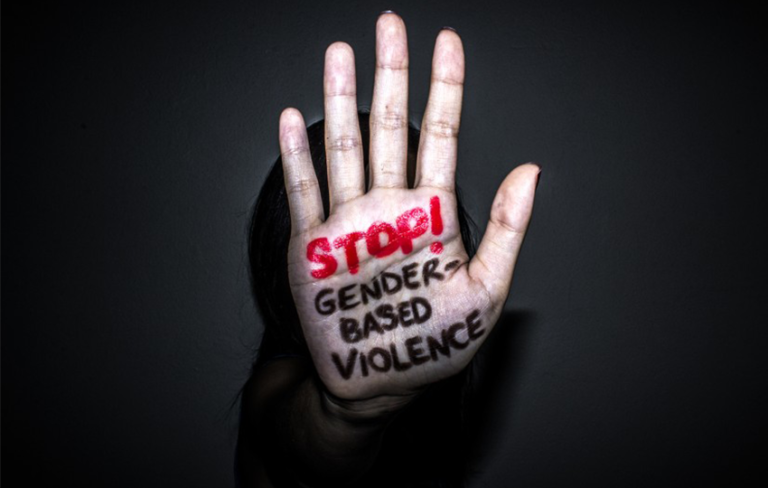
Despite these efforts, data revealed a stark tens of thousands of gender‑based violence (GBV) cases were recorded in 2025 alone, underscoring the breadth of challenges facing women. Government and civil society interventions sought to respond, but the scale of violence and stigmatisation of survivors remained an urgent concern.
By year’s end, Nigeria’s public debate around gender, whether sparked by celebrity relationship breakdowns, high‑stakes political scandals, or grassroots activism, revealed a society intensely grappling with its gender norms. The narratives of 2025 highlighted seismic tensions between entrenched patriarchal structures and a rising generation demanding accountability, representation, and dignity, clearly showing that gender discussions in Nigeria are no longer confined behind closed doors as the new year approaches.
FORMER Senate Leader, Senator Ali Ndume, has called on the Federal Government to expand its joint military operations with the United States to the North-East, pointing to the lingering threat posed by Boko Haram and the Islamic State West Africa Province (ISWAP) in the region.
Ndume made the call in a statement issued on Saturday, where he praised the recent military airstrikes targeting ISWAP cells in Tangaza Local Government Area of Sokoto State.
“I also want to suggest that the military cooperation with the United States should extend to ground troops in training, intelligence, and logistics. They should also back it up with attack helicopter support for ground troops.”
The former Chairman of the Senate Committee on Army said widening the joint military operations to include the North-East would deal a major blow to insurgent groups in the region, especially ISWAP and Boko Haram.
Reacting to the recent suicide bomb attack on a mosque in Gamboru, Maiduguri, the Borno State capital, which reportedly killed five people and injured several others, the lawmaker expressed condolences to the victims and their families.
“In this instance, on the eve of Christmas, all the victims were Muslims. So, the narrative of Christian genocide doesn’t exist. The terrorists making life unbearable for our people are blind to religion,” he stated.
Ndume’s comments come against the backdrop of renewed international focus on Nigeria’s security situation, following confirmation by United States President Donald Trump that American forces carried out a military airstrike targeting suspected terrorist elements in Sokoto State.
The Foreign Affairs Minister, Yusuf Tuggar, stated on Friday that President Tinubu had approved the US-led strikes against terrorists in the country’s North-Western region.
President Donald Trump took to Truth Social on Thursday to announce the US had struck in Sokoto State, stating that the operation, which targeted militants responsible for the killing of “innocent Christians”, was ordered by him in his capacity as Commander-in-Chief of the United States.
PRESIDENT Bola Tinubu has stated that four attack helicopters will arrive in the country from the United States soon.
President Tinubu disclosed this during a meeting with a delegation of the Christian Association of Nigeria, led by its President, Archbishop Daniel Okoh, at his Lagos residence on Friday.
He informed that the Federal Government had procured four attack helicopters from the United States, noting that they are expected to arrive in the country “soon.”
“Our orders for four attack helicopters from the United States of America will take some time to arrive. We have approached Turkey for assistance.
He urged CAN to collaborate with his administration in realising the nation’s shared goals, noting that some of the policies implemented by his government would require time to yield results.
“The mood of the nation is peaceful, although our ungoverned spaces are so large. The challenge is real, but we will surmount it. We are very religious. We are prayer warriors. We need your focus, vigilance, and cooperation.
Tinubu said that community and State Police will be a reality once the National Assembly completes the required legislative inputs, adding that “Military hardware is difficult to replace, also very expensive and not available off the shelf.”
The President’s reaffirmation on state police comes as the country battles a wave of insecurity and insurgency sweeping across the country, raising global concern and necessitating the involvement of the United States government.
President Donald Trump took to Truth Social on Thursday to announce the US had struck in Sokoto State, which the Nigerian government later confirmed and said they were carried out in collaboration with the US.
He said that the operation, which targeted militants responsible for the killing of “innocent Christians”, was ordered by him in his capacity as Commander-in-Chief of the United States.
Victims of the blast in Offa, Kwara state, recount painful near-death experiences, with many losing their only source of livelihood.
When Quadri Saka stepped out of his home late on Christmas night to buy a recharge card, he thought of nothing more than returning quickly to bed.
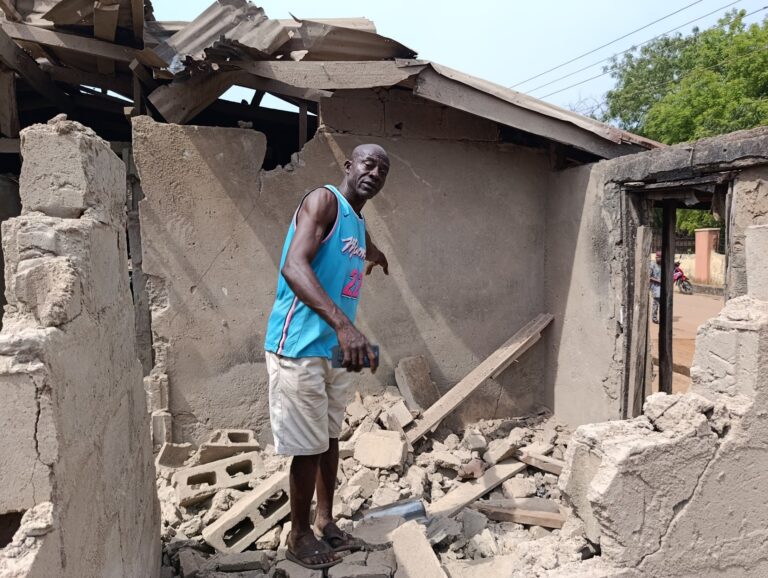
Moments later, a deafening blast tore through his neighbourhood near the Eid praying ground area of Offa, a bustling commercial town in southern Kwara State.
Walls collapsed. Roofs flew off. Homes that had sheltered families for decades crumbled in seconds.
Quadri Saka,one of the survivors of the blast recall his agonising experience
Quadri had unknowingly walked away from death. Inside the house he had just left was his mother, Moromoke Saka, asleep on her bed. “The wall fell where I was lying” Moromoke recalls the moment vividly.
She had barely drifted into sleep when the night exploded around her. “I was lying down when I heard a very loud noise,” she told The ICIR, sitting on a low stool beside the ruins of her home the following morning.
“Before I could understand anything, the wall fell exactly where I was sleeping.”
Dust filled the room. Blocks crashed to the floor. Part of the roof caved in. Darkness swallowed everything. For some moments, I couldn’t move,” she said. “I was shouting ‘Allahu’ and calling my son’s name. I thought that was how my life would end.”
Outside, panic spread through Offa. People screamed, ran barefoot into the night, and abandoned their homes, unsure if more explosions would follow.
Quadri was already on his way back.The blast happened just as Quadri approached his street. “I heard a loud bang,” he recalled. “Something brushed my ear, and I fell to the ground.”
Disoriented and covered in dust, he stood up to a scene that no longer looked familiar. People were running. Buildings were damaged.
Then he saw his house had collapsed. “My mum was inside,” he said, his voice breaking. Without waiting for help, Quadri ran toward the rubble, shouting his mother’s name until he heard her respond faintly from inside.
“She was alive, but she couldn’t move,” he said.
Moromoke Saka,one of the survivors of Offa blast
Using the back of the building, one of the few sections still standing, Quadri dragged his mother out. Neighbours gathered around them in shock.
“If I had stayed inside,” Quadri said quietly, staring at the fallen wall, “we wouldn’t be here talking now.”
Their survival, mother and son believe, came down to seconds. The explosion that nearly killed the Sakas was not a single incident.
Between 10 p.m. and midnight on Thursday, December 25, at least two incidents were reported in Offa, one near the Eid praying ground and another around Solid Worth Hotel, about five minutes away.
Although no deaths were officially recorded, the blasts injured residents, destroyed homes and businesses, and left the town traumatised and searching for answers.
Like Moromoke, Musa Soliu was asleep when his life changed.
Musa Soliu,a survivor of the blast
“My roof was blown open. I was already sleeping when I heard a loud noise, Soliu told The ICIR.
“Before I could understand what was happening, the wall of my room collapsed, and my roof was blown open.” Trapped briefly under rubble, he crawled out with injuries.
“A block fell on my chest,” he said, pointing to bruises. “My leg was also injured.” The next morning, Soliu returned to salvage his belongings.
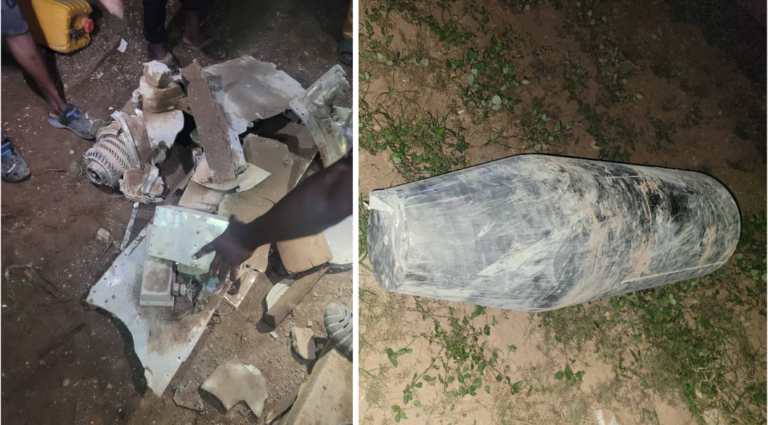
Instead, he found an unfamiliar object among the debris. “I don’t know what it is,” he said. “People were saying it is part of a missile. I only know that everything I own is gone.”
Unable to afford hospital care, Soliu said he has been living with pain since the incident. Offa’s identity as a commercial hub meant the blast not only destroyed homes.
Alaba Awodele, a furniture maker, recalled that his workshop was damaged beyond recognition. “They said a bomb had been thrown into my shop,” he recalled.
“When I rushed here, I couldn’t believe my eyes.”
The machines he depended on for his daily income were destroyed. Furniture meant for customers preparing to move into new homes for the New Year lay broken.
“This is my source of livelihood,” Awodele said. “I don’t even know how to start again.”
Mary Oyagbile, one of the Offa blast survivor
Nearby, Mary Oyagbile stood inside her damaged fashion design shop, staring at ruined sewing machines and appliances.
“All my machines, my freezer, everything was destroyed,” she said softly. “I kept asking myself, what did we do wrong? It was like a movie” At Solid Worth Hotel, operations were immediately suspended.
Engr.Surajudeen Adewale, a witness to the Offa blast, recounts his experience
Surajudeen Adewale, an engineer who is a relative of the hotel owner, described the moment of the blast.
“It was terrible,” he said. “It happened like something from a movie.” One staff member sustained injuries and was later discharged from the hospital, but the incident forced the hotel to shut down temporarily. “This has affected our business,” Adewale said.
Security officials, he added, suggested the object involved was not a locally planted explosive. For nearly 24 hours, Offa residents lived with uncertainty, rumours and fear until the Federal Government issued a formal explanation.
In a statement by the Minister of Information and National Orientation, Mohammed Idris, the government confirmed that the explosions in Offa were caused by debris from precision-guided munitions deployed during a joint Nigeria–United States military operation against Islamic State (ISIS) terrorists in Sokoto State.
According to the statement, the strikes targeted two ISIS enclaves in the Bauni forest axis of Tangaza Local Government Area of Sokoto State, following approval by President Bola Ahmed Tinubu.
The operation, carried out between 12:12 a.m. and 1:30 a.m. on December 26, involved 16 GPS-guided precision munitions deployed using MQ-9 Reaper unmanned aerial platforms, launched from maritime platforms in the Gulf of Guinea.
Crucially, the government confirmed that debris from the expended munitions fell in Offa, Kwara State, and in parts of Sokoto, including near a hotel.
“No civilian casualties were recorded,” the statement said, adding that security agencies promptly secured the affected areas. For residents like Moromoke and Quadri Saka, official explanations do little to erase the trauma and loss.
As evening approached the next day, many residents refused to sleep in their homes. “Any loud sound now scares me,” Moromoke said, clutching her wrapper tightly. “When night comes, my heart is not at rest.”
Quadri said he keeps replaying the moment he decided to step out. “It was just a recharge card,” he said. “Just that small thing saved my life.” Across Offa, survivors share the same haunting thought: how close they came, how easily they could have died.
While the Federal Government has reiterated its commitment to national security and the fight against terrorism, residents are now calling for transparency, support and compensation for victims whose lives and livelihoods were shattered by a war fought hundreds of kilometres away.
Standing beside the collapsed wall that nearly killed him, Soliu looked dejected and lost “God spared us,” he said. “But we are still waiting to understand why this happened to us.
This is part of the ICIR terror series, read it HERE.
THE African Union (AU) has opposed any attempt to recognise Somalia’s secessionist region of Somaliland as an independent country, reiterating its unwavering support for Somalia’s unity, sovereignty and territorial integrity.
In a statement issued on Friday, the bloc said the Chairperson of the AU Commission, Mahmoud Ali Youssouf, had “unequivocally reaffirmed” the organisation’s position on the need to uphold “the respect for the intangibility of borders inherited at independence.”
He stated that the AU firmly rejects any initiative or action aimed at recognising Somaliland as an independent entity, recalling that Somaliland remains an integral part of the Federal Republic of Somalia.
“Any attempt to undermine the unity, sovereignty, and territorial integrity of Somalia runs counter to the fundamental principles of the African Union and risks setting a dangerous precedent with far-reaching implications for peace and stability across the continent,” Youssouf said.
The ICIR reports that Israel, on Friday, announced its formal recognition of the self-declared Republic of Somaliland as an independent and sovereign state, making it the first country to take such a step.
A decision that could reshape regional dynamics and test Somalia’s longstanding opposition to secession.
Prime Minister Benjamin Netanyahu said Israel would pursue immediate cooperation with Somaliland in agriculture, health, technology and economic development, congratulating Somaliland’s President, Abdirahman Mohamed Abdullahi, in a statement, inviting him to pay an official visit to Israel.
Netanyahu said the declaration “is in the spirit of the Abraham Accords, brokered by President Trump’s first administration President Trump in 2020 and included Israel formalising diplomatic relations with the United Arab Emirates and Bahrain, with other countries joining later.
The Israeli statement said Prime Minister Benjamin Netanyahu, Foreign Minister Gideon Saar and Somaliland’s president signed a joint declaration formalising mutual recognition.
Abdullahi said in a statement that Somaliland would join the Abraham Accords, describing the move as a step toward regional and global peace. He added that Somaliland was committed to forging partnerships, enhancing shared prosperity and advancing stability across the Middle East and Africa.
However, Somalia’s government condemned Israel’s action as an “unlawful step” and a “deliberate attack” on its sovereignty, reiterating its rejection of any recognition of Somaliland, according to a statement from the prime minister’s office.
Similarly, Egypt said Foreign Minister Badr Abdelatty on Friday held phone conversations with his counterparts in Somalia, Turkey and Djibouti to discuss what they described as dangerous developments in the Horn of Africa following Israel’s announcement.
The Arab League also denounced Israel’s recognition of Somaliland, with its Secretary-General, Ahmed Aboul Gheit, describing the move as “provocative” and a “serious threat to regional security.”
Gheit said the league firmly rejects the decision, characterising it as a clear breach of international law and a violation of the principles of territorial integrity and state sovereignty enshrined in the United Nations Charter.
He emphasised that Somaliland remains an integral part of the internationally recognised Federal Republic of Somalia, warning that any unilateral recognition undermines established international norms guiding statehood and diplomatic recognition.
Since declaring its independence from Somalia in 1991, Somaliland has functioned as a de facto independent administrative, political, and security entity, with the central government unable to exercise control over the region and its leaders unable to gain international recognition.
The Somali government does not recognise Somaliland as a sovereign state, considers it an inseparable part of its territory, and regards any direct agreements or engagements with the region as violations of Somalia’s sovereignty and national unity.
Over the years, Somalia has mobilised international support to oppose any move by countries to recognise Somaliland.
In March, both Somalia and Somaliland denied receiving any proposal from the United States or Israel to resettle Palestinians from Gaza, with Mogadishu stating it categorically rejected any such plan.
THE Federal Government on Friday confirmed that the objects that caused explosions and destruction of properties in Offa, Kwara State, were debris from precision-guided munitions deployed during a joint Nigeria-United States military operation against Islamic State (ISIS) terrorists in Sokoto State.
The confirmation followed the anxiety and speculation after explosions rocked parts of Offa on Christmas night, damaging homes, shops, a hotel, and injuring residents.
In a statement on Friday by the Minister of Information and National Orientation, Mohammed Idris, the Federal Government said debris from expended munitions used during the operation fell in Offa, Kwara State, and in Jabo, Tambuwal Local Government Area (LGA) of Sokoto State.
The statement said the precision strike operations were carried out against two major ISIS terrorist enclaves in the Bauni forest axis of Tangaza LGA of Sokoto State, following approval by President Bola Ahmed Tinubu.
“The Federal Government of Nigeria, in close coordination with the Government of the United States of America, has successfully conducted precision strike operations against two major Islamic State (ISIS) terrorist enclaves located within the Bauni forest axis of Tangaza Local Government Area, Sokoto State,” part of the statement read.
According to the government, intelligence reports had confirmed that the locations were being used as assembly and staging grounds by foreign ISIS elements infiltrating Nigeria from the Sahel region, in collaboration with local affiliates, to plan large-scale terrorist attacks within the country.
The strikes were executed between 12:12am and 1:30am on Friday, December 26, 2025, under established command and control structures, with the full involvement of the Armed Forces of Nigeria and the supervision of the Ministers of Defence and Foreign Affairs, as well as the Chief of Defence Staff.
The Federal Government disclosed that the operation involved the deployment of 16 GPS-guided precision munitions using MQ-9 Reaper unmanned aerial platforms, launched from maritime platforms domiciled in the Gulf of Guinea.
“A total of 16 GPS-guided precision munitions were deployed using MQ-9 Reaper unmanned aerial platforms, successfully neutralising the targeted ISIS elements attempting to penetrate Nigeria from the Sahel corridor,” the statement said.
The government confirmed that debris from the operation was responsible for the incidents reported in Offa and parts of Sokoto.
“During the course of the operation, debris from expended munitions fell in Jabo, Tambuwal Local Government Area of Sokoto State, and in Offa, Kwara State, near the premises of a hotel. No civilian casualties were recorded in either location, and relevant authorities promptly secured the affected areas,” the statement added.
Residents of Offa had been thrown into panic on Thursday night after explosions hit two locations in the town, including the Eid praying ground area and around Solid Worth Hotel, damaging buildings and injuring several people.
Although no deaths were recorded, victims reported collapsed walls, blown-off roofs and destroyed shops, while security agencies cordoned off the affected areas.
Reacting to the latest confirmation, residents renewed calls for support and compensation for victims whose properties were destroyed during the incident.
The Federal Government, however, reiterated its commitment to national security and the protection of lives and property.
“The Federal Government of Nigeria reiterates its unwavering resolve to confront, degrade, and eliminate terrorist threats, particularly those posed by transnational extremist networks seeking to undermine Nigeria’s sovereignty and security,” Idris said.
He added that Nigeria remained aligned with its strategic partners in executing coordinated actions aimed at ensuring peace, border security and regional stability.
“The Federal Government assures all Nigerians that it remains firmly in control of the national security architecture and is fully committed to the protection of lives and property.”
The government urged citizens to remain calm and vigilant as security agencies continue decisive actions against terrorist groups operating within and around Nigeria’s borders.