THE Dangote Petroleum Refinery has announced a 10-day credit facility, backed by a bank guarantee, for petrol station owners and dealers, alongside free direct delivery and other incentives, as part of a new supply arrangement.
In a statement posted on its official social media handle on Tuesday, December 30, the company invited petrol station operators across the country to register for the offer.
According to the statement, participating dealers will enjoy “a 10-day credit facility backed by a bank guarantee,” with a minimum order requirement of 5,000 litres.
“Our free direct delivery service will commence soon,” the group said, adding that the offer is open to “all petrol station owners and dealers.”
The Dangote Group called on operators to register their stations to access the supply arrangement.
“Register your petrol stations today to benefit from our competitive gantry price,” the notice read.
The company also disclosed that petrol supplied under the arrangement would be sold at a gantry price (the refinery depot price) of ₦699 per litre.
The company had earlier in June announced plans to begin a nationwide targeted distribution of petrol and diesel to marketers, petrol dealers, manufacturers, telecoms firms, aviation, and other large users across the country.
It further revealed that the logistics and credit facility support was to ensure hitch-free supply of petroleum movement across the country to consumers.
The initiative came with free logistics to boost the distribution network with the recent procurement of new compressed natural gas (CNG)-powered tankers to ensure smooth take-off of the scheme.
With the price slash and credit facility support to petrol stations across the country, Dangote Refinery is expected to sustain market dominance in the sector, which already does not favour other marketers’ associations that feel challenged and have noted concerns of market disruption by the refinery’s continued price slash.
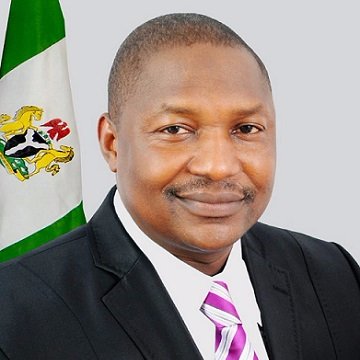
A FEDERAL High Court sitting in Abuja has ordered the remand of former Attorney-General of the Federation and Minister of Justice, Abubakar Malami (SAN), at the Kuje Correctional Centre, following his arraignment on charges bordering on large-scale money laundering.
Emeka Nwite, the justice who presided over the proceedings on Tuesday, December 30, also ordered that Malami’s son, Abubakar Abdulaziz Malami, and an associate, Bashir Asabe, be remanded in custody pending the hearing and determination of their respective bail applications.
Malami and the two co-defendants were standing trial on a 16-count charge filed by the EFCC, accusing them of conspiracy, concealment, retention, and laundering of proceeds of unlawful activities amounting to several billions of naira.
After reading the charges to them, the three defendants pleaded not guilty.
The remand order, however, followed submissions by the defence team led by Joseph Daudu, a senior advocate, and the prosecution counsel, Ekele Iheneacho, also a senior advocate, who represents the Economic and Financial Crimes Commission (EFCC).
Nwite adjourned the matter to a later date for the hearing of bail applications.
Charges
The EFCC had in the charge sheet marked FHC/ABJ/CR/700/2025, submitted to the court, alleged that the defendants used corporate entities, bank accounts, and real estate transactions to disguise the source of illicit funds.
The prosecution alleged that between July 2022 and June 2025, Malami and his son procured Metropolitan Auto Tech Limited to conceal the unlawful origin of over N1.01 billion, while an additional N600 million allegedly passed through a Sterling Bank account linked to the same company.
In another count, the EFCC accused Malami, his son, and Asabe, an employee of Rahamaniyya Properties Limited, of disguising the origin of N500 million allegedly used to purchase a luxury duplex located on Amazon Street, Maitama District, Abuja.
The commission further alleged that the defendants conspired to launder N1.04 billion through the Union Bank account of Meethaq Hotels Limited, with transactions spanning from November 2022 to September 2024.
Another count accused Malami and his son of taking indirect control of N1.36 billion paid through the same company’s bank account, funds the EFCC said were proceeds of unlawful activity.
The EFCC also alleged that Malami, while serving as Attorney-General of the Federation, concealed N700 million allegedly used to acquire a property at No. 3 Onitsha Crescent, Area 11, Garki, Abuja, as well as ₦850 million used to purchase another property in the Jabi District of Abuja.
According to the prosecution, the alleged offences contravene provisions of the Money Laundering (Prohibition) Act, 2011 (as amended) and the Money Laundering (Prevention and Prohibition) Act, 2022.
The anti-graft agency told the court that it had traced 41 properties valued at approximately N212 billion to Malami and his associates, and that these assets form part of the subject of the ongoing prosecution.
“That you ABUBAKAR MALAMI SAN, and ABUBAKAR ABDULAZIZ MALAMI between November 2022 and October, 2025 indirectly took control of the aggregate sum of N1, 362, 887, 872.96 (One Billion, Three Hundred and Sixty Two Million, Eight Hundred and Eighty Seven Thousand, Eight Hundred and Seventy Two Naira, Ninety Six Kobo paid through the savings account of Meethaq Hotels Ltd in Union Bank Plc when you reasonably ought to have known that the said funds formed proceeds of unlawful activity and you thereby committed an offence contrary to section 18(2) (d) and punishable under section 18(3) of the Money Laundering (Prevention and Prohibition) Act, 2022.
“That you ABUBAKAR MALAMI SAN whilst being the Attorney General of the Federation and HAJIA BASHIR ASABE an employee of Rahamaniyya Properties Ltd sometimes between November and December, 2018 in Abuja within the jurisdiction of this Honourable Court indirectly concealed the unlawful origin of the aggregate sum of N700, 000, 000.00 (Seven Hundred Million Naira) paid for the purchase of the property described as No. 3 Onitsha Crescent Area 11, Garki Abuja (Hamonia Hotels Ltd) in favour of ABUBAKAR MALAMI SAN when you reasonably ought to have known that the said sum of N700, 000,000.00 formed proceeds of unlawful activity and you thereby committed an offence contrary to section 15(2) (d) and punishable under section 15(3) of the Money Laundering (Prohibition) Act, 2011 as amended,” part of the charges read.
A coalition of civil society organisations (CSOs) and non-governmental groups in Nigeria has expressed concern over what it described as the silence, absence and abdication of responsibility by Nigeria’s political and military leadership, particularly President Bola Ahmed Tinubu, following a recent United States military strike on Nigerian territory.
The concerns were raised after the strike carried out on Thursday, December 25. In a statement titled: “Where is Nigeria’s President” and signed by nearly 90 organisations and individuals, the groups said the incident raised serious questions about Nigeria’s sovereignty, constitutional order, civilian safety and the integrity of the country’s social contract.
According to the signatories, the situation reflects a twin crisis of leadership and security, with allegation that President Tinubu has effectively abandoned his constitutional responsibility as Commander-in-Chief of the Armed Forces. They argued that involving a foreign government in what they described as an internal security matter amounted to a surrender of sovereign authority and weakened Nigeria’s constitutional framework.
“By inviting a foreign government to manage what is fundamentally an internal security challenge, the president ceded sovereign authority in a manner that undermines Nigeria’s constitutional order. Even more disturbing is that during and after the operation, the president, the service chiefs, and the leadership of the National Assembly were either on vacation or completely silent, leaving the Minister of Foreign Affairs, Ambassador Yusuf Tuggar, to publicly rationalise decisions that strike at the core of national sovereignty and democratic accountability.
“This silence reflects a profound breakdown of institutional accountability mechanisms. Section 14(2)(b) of the 1999 Constitution (as amended) is unequivocal: ‘the security and welfare of the people shall be the primary purpose of government.’ This provision represents a central pillar of Nigeria’s social contract. Any security action, especially one involving foreign military forces, must be grounded in transparency, civilian protection, and democratic oversight. None of these standards were met,” the statement read in part.
While acknowledging the importance of international cooperation in counterterrorism, the groups said the US operation on Nigerian soil underscored the need for a critical review of Nigeria’s National Counter Terrorism Strategy, its policy framework and national action plan for preventing and countering violent extremism. They said such a review was necessary to determine whether the operation aligned with these frameworks or exposed significant gaps.
The organisations also expressed concern over what they described as a severe lack of information regarding the collaboration between the Nigerian and US governments, including its scope, legal basis and rules of engagement.
“We are particularly troubled by the severe deficit of information regarding the nature, scope, legal basis, and rules of engagement governing the collaboration between the Nigerian and US governments. Since the incident, Nigerians have not been informed of the basis for authorising the strikes, under what legal framework they were conducted, what safeguards were in place to protect civilians, or what accountability mechanisms exist for harm caused. This opacity fuels mistrust and undermines public confidence in government at a time when trust is already dangerously low,” the statement added.
They further noted that as of the time the statement was issued, there was no confirmation that any legitimate militant targets had been hit. Instead, they cited reports that debris from expended munitions landed on farmlands in Jabo, Tambuwal Local Government Area of Sokoto State, and near a hotel in Offa, Kwara State, as evidence of risks posed to civilians and property.
Although the Nigerian Air Force inaugurated a Civilian Harm Mitigation and Response (CHMR) Board in July 2025, the groups said no clear or publicly articulated civilian harm mitigation procedures were presented for the operation.
They argued that modern military operations, particularly air strikes, required transparent standards for target verification, proportionality assessments and post-strike evaluations, as well as clear mechanisms for civilian complaints, investigations, compensation and redress. The absence of such safeguards, they said, constituted a serious failure of governance.
The groups warned that poor handling of the situation could inflame religious and communal tensions in an already fragile national environment, stressing that Nigeria’s security challenges should not be addressed in ways that deepen division or stigmatise communities, but through an inclusive, rights-based approach that promotes peace, social cohesion and long-term stability.
They also said civilians harmed by the strike must be accounted for through transparent investigations, public disclosure, support for affected communities and compensation, warning that failure to do so would further erode public trust.
The signatories criticised the president and security leadership for permitting a foreign military operation without public justification or legal clarity, arguing that the continued silence of key institutions undermined sovereignty, accountability and constitutional governance.
FOR two consecutive days, bombs believed to have been released by the Nigerian Air Force (NAF) during a ‘precision’ airstrike rained on civilians, mostly commercial drivers, fishermen and farmers around Mararaba between Kukawa and Monguno Local Government Areas of Borno State.
By Hamzat Ibrahim ABAGA
The first airstrike which on December 13 targeted over 100 vehicles parked by drivers who had gone to convey their customers (fishermen) and their goods. They returned to the area the following day—this time in the morning and rained bombs on the civilians who had returned to convey the fishermen and their goods to Monguno town.
Although reports say NAF’s spokesperson claimed the precision strikes were targeted at terrorists and their vehicles, multiple sources told The ICIR that several residents were among the victims even as about 50 vehicles belonging to locals were also destroyed.
Another report said an airstrike carried out by the Nigeria Air Force (NAF) targeting members of ISWAP in Borno State had reportedly killed an unspecified number of civilians.
However, no official statement disputing alleged civilian casualties has been made by NAF even as inquiries to its spokesperson by The ICIR on the strikes have not been responded to.
However, a visit by The ICIR to the neighbouring communities found that six persons were killed, three severely injured while 50 cars were destroyed.
Due to the difficult nature of the terrain, coupled with security reason, The ICIR could not get to the exact location of the attack. However, surviving victims at neighbouring communities, including Monguno, narrated their ordeals.
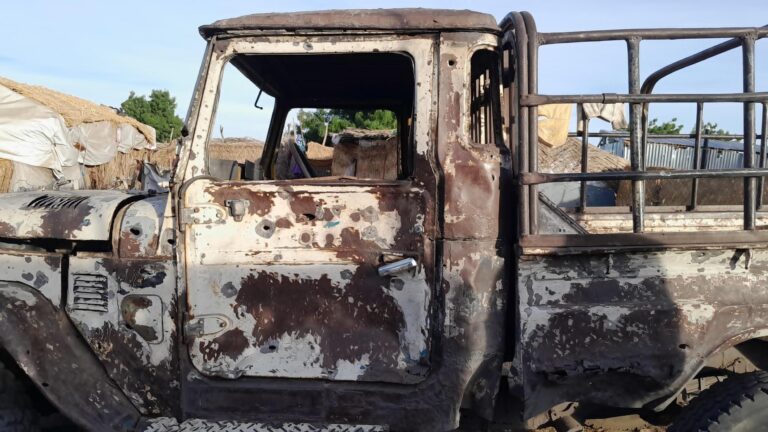
The remains of a car damaged by NAF airstrike. Photo credit: Hamzat Ibrahim Abaga
‘Civilians were struck twice at Mararaba motor park’
On Saturday, December 13, 2025, at about 1pm, a NAF aircraft struck more than 50 commercial vehicles parked at Tashan Mararaba motor park. Sources said the vehicles were waiting to convey fishermen back to markets in Monguno town, where they sell fish.
Baba Malaji, 55, and Baba Goni, 40, who sustained head and leg injuries, described the incident as a devastating attack. Both men said they had operated along the route for over four years, transporting fishermen and traders, and had never experienced a similar incident.
The remains of a car damaged by NAF airstrike. Photo credit: Hamzat Ibrahim Abaga
According to them, after learning that their vehicles had been hit, drivers rushed to the scene to assess the damage. They decided to remain there overnight while waiting for the fishermen to return.
They said that at about 3:am on Sunday, December 14, the aircraft returned and carried out a second strike. The renewed attack left three people seriously injured and resulted in six deaths with 50 vehicles destroyed.
Among those who died were people caught in the vicinity, including a farmer working nearby. Some victims died at the scene, while others later died at the Monguno General Hospital. The injured survivors were treated and discharged after several days.
Identities of the deceased victims
The following are names and ages of those who lost their lives in the airstrike:
Modu Kuru, 42;
Bakar Danbe, 50;
Abba Kaka, 30;
Babulama Datinkone, 65;
Ali, 25;
and a 45-year-old man identified as Keliye.
National ID card photograph of one of the deceased victims
More survivors narrate ordeals
Casualties from Nigerian Air Force strike in Mararaba (Borno State)
For 55-year-old Baba Malaji, a commercial driver with a wife, 10 children, and who drove his neighbour’s car, the NAF airstrike is an unforgettable experience. He described it as a deliberate attempt to harm them.
Speaking to The ICIR, Malaji said he was at home when he learned that his car had been destroyed by the airstrike. He bade farewell to his wife and children before rushing to assess the damage, hoping to return home safely the next day. To his chagrin, another strike hit him and his colleagues while they slept under a tree.
Names and ages of deceased and surviving victims. Source: Relatives of deceased and surviving victims
“I and other drivers whose cars were affected went to check the damage when NAF struck us again. We usually sleep over at the park to reconvey the market men the following morning. Indeed, that night is one some of us, especially those who lost loved ones, will never forget,” Malaji said.
‘We were falsely labelled as bandits’
Goni, 40, who sustained head injuries and a fractured leg, told The ICIR that claims labelling them as bandits are false. He explained that Tashan Mararaba is a bustling business junction frequented by traders, marketers, and commercial drivers, serving as the main transit point for travellers heading to Monguno, Manunbari, Dafan Masara, and Kokawa.
“The insinuation that bandits take shelter there is a fat lie. Many people, including the NAF, knew about the location and its activities. They are just trying to justify their actions,” Goni said.
Another survivor, identified as Ali Baba Lawal, a security officer at Monguno General Hospital, confirmed to The ICIR that four victims were brought to the hospital on the morning of Sunday, December 14. They were treated and later discharged.
“When they were brought in, there was no doctor on duty, so I quickly called one to attend to them. One later died, while two whose injuries were not critical were treated and discharged after three days,” Lawal said.
Over 50 cars destroyed in airstrike
Survivors and relatives of the deceased reported that around 50 vehicles were destroyed during the airstrike—some reduced to ashes, others beyond recognition, while a few sustained moderate damages.
A car damaged by NAF airstrike. Photo credit: Hamzat Ibrahim Abaga
The volatile nature of the area prevented The ICIR from visiting the site for verification, making it difficult to quantify the full extent of the destruction. However, survivors and family members confirmed the scale of the damage.
“I counted 10 cars severely destroyed. Some of us have gone back to collect what remains of our vehicles, while others cannot be recovered due to the extent of the damage,” said Goni.
Malaji, 55, who relied on his neighbour’s car to earn a living, said he has been involved in commercial driving in the area for over 30 years but had never faced such a situation.
“The car is not mine; it belongs to my neighbour, and I drove it to pay him weekly. We’ve been doing this for over four years. Now that the car is gone, I must find another way to support my wife and our 10 children,” he said.
“As it stands, I don’t know how the owner and I will resolve this. If he asks me to pay him, I currently have no means, but I am determined that my family and I will survive this trying time,” Malaji added.
How previous airstrikes targeted civilians
A Reuters review of data from the Armed Conflict Location and Event Data Project (ACLED), a US-based crisis monitoring group, shows that the NAF has repeatedly targeted civilians by ‘mistake.’
Since2014, over 2,600 people—mostly civilians—have been killed in 248 airstrike incidents outside the terror-affected Northeastern states of Borno, Adamawa, and Yobe, referred to by experts as BAY states.
Another vehicle damaged by NAF airstrike. Photo credit: Hamzat Ibrahim Abaga/ICIR
The analysis highlights a history of deadly errors, including a 2014 bombing in a Borno village that killed more than 30 people. In 2017, NAF airstrikes in Rann, Kala-Balge LGA, Borno State, killed around 50 refugees and injured 200 others.
Reuters also notes that in April 2022, six girls were killed in Kurebe, a terror-affected village in Shiroro LGA, Niger State. Four months later, the Air Force returned to the same location, killing eight more people in another accidental strike.
NAF yet to respond to our injury on airstrike — Borno State gov’t
When The ICIR contacted Borno State’s Commissioner for Information, Usman Tar, a professor, he said the state government had previously reached out to the Nigerian Air Force (NAF) for details of the incident but had not received any response.
“I have been informed about the purported airstrike, and I have reached out to NAF but didn’t receive a response,” Tar said.
He added that he needed more information from the Air Force to comment on the incident and need to contact affected locals or their relatives for verification.
“I need to get the details of the airstrike, the exact location of the incident, and I will do my independent verification from the locals. Until then, I can’t say anything about the incident,” Tar said.
Families of deceased victims call for justice
Malam Haji, father of the late Kaka, told The ICIR that his son left home intending to return after checking on the airstrike that destroyed his car. “On getting to the scene of the incident, NAF struck again and that was the end,” he said.
Malaji, a surviving victim of the NAF airstrike.Photo credit; Hamzat Ibrahim Abaga/ICIR
Haji appealed to Nigerian authorities for justice, adding that the death of his 30-year-old son is the will of God and prayed that his soul may rest in peace. “Authorities should assist us in holding those responsible accountable, and for justice,” he urged.
Malam Goni recounted the loss of his elder brother, who left home reassuring the family he would return, never imagining it would be his final departure.
Goni, another surviving victims of the NAF airstrike. Photo credit; Hamzat Ibrahim Abaga/ICIR
Baba, Goni’s late brother, left behind a wife and eight children, all now under Goni’s care. “The past two weeks since his demise haven’t been easy for the family. We are predominantly farmers and depend on our farm produce for survival, but insecurity has prevented us from accessing our farms,” Goni said.
Nigerian Air Force remains mum
Several weeks after the airstrikes, NAF has yet to respond to inquiries about its operations. NAF’s spokesperson, Ehimen Ejodame, told The ICIR on Tuesday to send a text message as he was in a meeting.
However, messages sent to him went unanswered by press time, and multiple follow-up calls were also unsewered.
The ICIR reports that strikes occurred barely 24 hours after NAF had assured civilians of their safety during operations.
On 13 December, the Air Force in a statement stated its commitment to responsible and precise air operations while hosting a delegation of United States experts on Civilian Harm Mitigation and Response (CHMR).
The Chief of the Air Staff, Air Marshal Sunday Kelvin Aneke, said the engagement “forms a critical component of the NAF’s operational ethics and professional evolution,” highlighting measures aimed at minimising civilian harm. He added that cooperation with the United States “has progressed from concept to measurable institutional gains,” reflecting steps designed to protect civilians.
Aneke also cited measures already in place, including “the NAF’s CHMR Action Plan, a dedicated Department at the Air Warfare Centre, standardized CHMR training, strengthened assessment and investigation team capabilities, and enhanced strategic communication with NAF Public Relations.”
This is part of the ICIR Terror Series, read it HERE.
THE Gombe State Government and the Nigeria Union of Journalists (NUJ) have expressed deep shock and grief over the death of seven journalists who lost their lives in a tragic road accident along the Biliri–Kumo Road in Gombe State.
The journalists were returning from the wedding ceremony of a colleague in Kaltungo when the fatal crash occurred on Monday, December 30.
Those who died in the accident, according to reports, are: Zarah Umar, Manager of News at the Nigerian Television Authority (NTA), Gombe, and Senior Special Assistant to the Governor in the Office of the First Lady; Manu Kwami, Manager, Administration, NTA; Isa Lawan; Musa Tabra, a retired Manager of News; Aminu Adamu, a senior driver; Adams Danladi of StarTimes; and Judith Kutus, an Information Officer with the Gombe State Universal Basic Education Board.
Reacting to the incident, Governor Inuwa Yahaya described the deaths as a devastating loss to the state, the media profession, and public service.
“This loss is not only to the families of the deceased but also to the media community and the public service in our state,” the governor said in a statement, adding that the tragedy had plunged Gombe into mourning.
Yahaya further described the deceased as dedicated professionals whose work played a key role in informing the public and supporting governance in the state.
The governor extended condolences to the families of the victims, the NUJ, the management of the Nigerian Television Authority, and the wider media community within and outside Gombe State.
He also assured those injured in the crash of the state government’s support and prayed for their recovery.
“This is a dark moment for Gombe State. We mourn together and pray that God grants eternal rest to the departed and comfort to the families they have left behind,” Yahaya said.
Similarly, the Nigeria Union of Journalists (NUJ) said it received the news with “profound shock and deep sorrow,” describing the incident as a huge blow to journalism in Nigeria.
In a statement signed by its National President, Alhassan Yahya, the union said the deceased were committed professionals who served the public with courage, integrity, and professionalism.
“The untimely passing of these dedicated media professionals is a devastating blow to the journalism community, not only in Gombe State but across Nigeria. They were committed practitioners who served the public with courage, integrity, and professionalism, and their loss has left an irreplaceable void in our noble profession,” the statement read.
The NUJ also called for improved road safety measures, noting that journalists are frequently exposed to road risks in the course of their duties.
“The tragic incident again underscores the urgent need for improved road safety measures and responsible driving to prevent avoidable loss of lives, especially for professionals who are often on the road in the line of duty, he added.
In the same vein, the NUJ FCT Council in a statement signed by its chairman, Grace Ike, said the death of the seven journalists was a great loss to the media community and Nigeria at large.
The union extended its “most sincere condolences to the bereaved families, the NUJ Gombe State Council, and the entire NUJ family.”
The statement reiterated that the deaths “leaves an irreplaceable void in our ranks, but their legacy of fearless reporting and unwavering service to humanity will endure forever. May the gentle souls of our departed colleagues find eternal peace in the bosom of the Almighty God.
“The NUJ FCT Council stands in solidarity with you during this period of unimaginable grief. We pray for God’s comfort and strength upon the families, colleagues, and all affected by this tragedy.”
SEVERAL parts of Nigeria were thrown into darkness on Monday as the national grid collapsed again in 2025.
The Nigerian Independent System Operator (NISO) confirmed the collapse in a statement on its official social media handles on Monday, December 29.
NISO, responsible for overseeing the national power supply to electricity distribution companies, stated that the supply had dropped to 50 megawatts as the restoration of the grid began.
As of the time of filing the report, NISO stated that only Abuja and Ibadan had 50 megawatts (MW) of electricity, as opposed to the 3,660 MW allocated on Sunday, December 28, 2025.
Benin, Eko, Enugu, Ikeja, Jos, Kaduna, Kano, Port Harcourt and Yola DisCos all recorded 0 MW, indicating a widespread outage across major cities and regions of the country.
Total electricity distributed nationwide after the collapse stood at just 50 MW, far below normal operating levels and insufficient to sustain power supply to homes, businesses and critical sectors of the economy.
Nigeria’s national grid has experienced repeated system collapses in recent years, often resulting in nationwide blackouts and prolonged power restoration efforts.
There is still currently no end in sight to the challenge, as the latest report from the Nigerian Electricity Regulatory Commission (NERC) showed unresolved grid weaknesses.
Most Nigerian businesses, homes and industrial clusters are worst hit by the incessant grid collapse, which industry stakeholders say was a result of managerial and technical incompetence and misalignment of various power value chains.
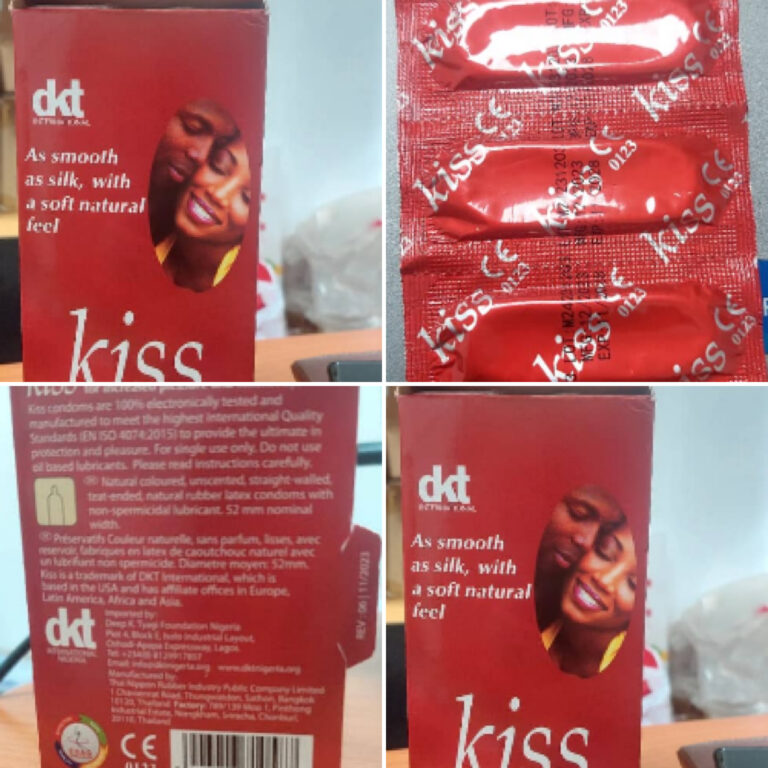
THE National Agency for Food and Drug Administration and Control (NAFDAC) has warned Nigerians about the sale and distribution of counterfeit Kiss condoms across several markets in the country, citing serious public health risks.
In Public Alert No. 042/2025, shared on its X handle on Monday December 29, 2025, the agency said it received intelligence from DKT International Nigeria, a non-governmental organisation involved in contraceptive social marketing, indicating that fake versions of the product are in circulation.
According to NAFDAC, the counterfeit condoms have been spotted in Onitsha and Idumota Markets, as well as Trade Fair Market, with reports also coming from markets in Kano, Abuja, Uyo, Gombe, Enugu, and other locations nationwide.
Kiss Condom is a male latex condom brand designed to prevent unwanted pregnancies and sexually transmitted infections (STIs), including HIV, gonorrhoea, and syphilis.
The NAFDAC warned that “the falsified versions do not meet safety or quality standards and may expose users to serious health risks.”
The agency outlined several differences between the original DKT Kiss condoms and the fake products, including darker packaging, incorrect or incomplete manufacturer addresses, absence of storage and caution information, inconsistent barcodes, and poorly printed instructions.
It also noted differences in the condom packs and wallets, such as variations in colour, text alignment, lubrication levels, and condom shape and size.
The NAFDAC cautioned that the use of counterfeit condoms could result in product failure, infections, allergic reactions, and a false sense of protection, due to poor quality, lack of sterilisation, and absence of regulatory oversight.
“All NAFDAC zonal directors and state coordinators have been directed to carry out surveillance and mop up the falsified product Kiss condoms in various Nigerian markets within the zones and states,” the agency said.
It also advised distributors, retailers, healthcare professionals, and caregivers to source medical products only from authorised and licensed suppliers, and to carefully verify product authenticity before sale or use.
The agency urged the public to report suspected counterfeit or substandard medical products to the nearest NAFDAC office, via its toll-free line 0800-162-3322, or by email at sf.alert@nafdac.gov.ng.
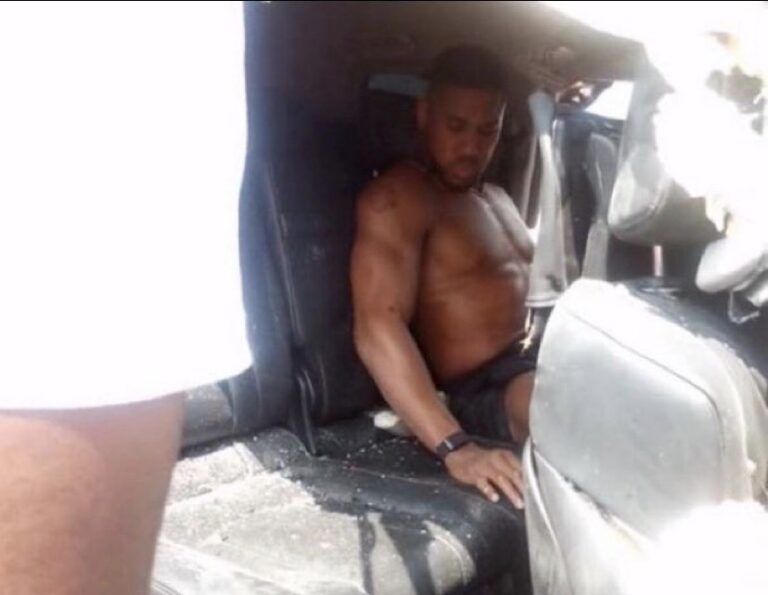
TWO people have been confirmed dead following a road accident involving Nigerian-British boxing champion, Anthony Joshua, along the Lagos–Ibadan Expressway in Ogun State.
The crash occurred around 11 a.m. on Monday, December 29, in the Makun area, near Sagamu, when a Lexus SUV conveying Joshua reportedly collided with a stationary truck under circumstances that are still being investigated.
The spokesperson of the Federal Road Safety Corps (FRSC), Ogun Command, Afolabi Odunsi, confirmed the incident, stating that although Joshua survived the crash, two occupants of the vehicle died on the spot.
“It’s true, but he (Joshua) is alive. About five people were involved, two died. I will send you a release shortly,” Odunsi told Daily Trust, adding that a detailed report would be issued later.
Reports indicated that the Lexus SUV was part of a two-vehicle convoy, with a security vehicle following behind.
According to a viral video of the accident scene, Joshua was seated at the back of the Lexus alongside another passenger.
The ICIR also sighted bystanders and other road users assisting in rescue efforts before officials of the FRSC arrived at the scene.
Although the former world heavyweight champion, who hails from Sagamu Local Government Area of Ogun State, reportedly sustained minor injuries, he was said to be conscious and stable after the crash.
Several videos from the scene, which circulated widely on social media, showed the damaged vehicle and emergency responders at work.
The crash occurred just days after Joshua returned to the spotlight with a sixth-round knockout victory over YouTuber-turned-boxer Jake Paul in a high-profile bout held in Miami, United States.
The win marked another statement performance for the two-time world heavyweight champion, who had entered the fight amid widespread attention and scrutiny.
Despite exceeding expectations by lasting into the later rounds, Paul was eventually stopped in the sixth round, with the bout broadcast globally on Netflix.
We, the undersigned civil society organisations and leaders, express grave concern and deep alarm over the recent U.S. air strike carried out on Christmas day on Nigerian territory, and the troubling silence, absence, and abdication of responsibility by Nigeria’s political and military leadership in its aftermath.
This event raises fundamental questions about sovereignty, constitutional governance, civilian protection, and the integrity of Nigeria’s social contract.
It is apparent that Nigeria is in a dual crisis of leadership and security, and at the heart of this crisis is the apparent abdication by the President of the Federal Republic of Nigeria, Bola Ahmed Tinubu, of his constitutional role as Commander-in-Chief of the Armed Forces.
By inviting a foreign government to manage what is fundamentally an internal security challenge, the President ceded sovereign authority in a manner that undermines Nigeria’s constitutional order. Even more disturbing is that during and after the operation, the President, the Service Chiefs, and the leadership of the National Assembly were either on vacation or completely silent, leaving the Minister of Foreign Affairs, Ambassador Yusuf Tuggar, to publicly rationalise decisions that strike at the core of national sovereignty and democratic accountability.
This silence reflects a profound breakdown of institutional accountability mechanisms. Section 14(2)(b) of the 1999 Constitution (as amended) is unequivocal: “the security and welfare of the people shall be the primary purpose of government.” This provision represents a central pillar of Nigeria’s social contract. Any security action, especially one involving foreign military forces, must be grounded in transparency, civilian protection, and democratic oversight. None of these standards were met.
While we acknowledge the importance of international counterterrorism cooperation, there is an urgent need to critically assess Nigeria’s National Counter Terrorism Strategy (NACTEST), as well as its Policy Framework and National Action Plan for Preventing and Countering Violent Extremism, in light of the recent U.S. operation on Nigerian soil, to determine whether it aligns with these frameworks or exposes significant gaps within them.
We are particularly troubled by the severe deficit of information regarding the nature, scope, legal basis, and rules of engagement governing the collaboration between the Nigerian and U.S. governments. Since the incident, Nigerians have not been informed of the basis for authorising the strikes, under what legal framework they were conducted, what safeguards were in place to protect civilians, or what accountability mechanisms exist for harm caused. This opacity fuels mistrust and undermines public confidence in government at a time when trust is already dangerously low.
In addition, at the time of issuing this statement, there has been no confirmation that any actual belligerent targets were hit. Instead, reports that debris from expended munitions fell on farmlands in Jabo, Tambuwal Local Government Area of Sokoto State, and in Offa, Kwara State, near the premises of a hotel, underscore the very real risks to civilian life and property. While the Nigerian Air Force inaugurated a “Civilian Harm Mitigation and Response (CHMR) Board” in July 2025, no publicly articulated civilian harm mitigation protocols have been presented for this offensive.
In contemporary military operations, particularly those involving air strikes, responsible governance demands clear standards for target verification, proportionality assessments, post-strike damage evaluations, and accessible avenues for civilian complaints, investigation, compensation, and redress. The absence of such frameworks in this operation constitutes a serious governance failure.
We caution that the government’s inept management of this crisis is capable of aggravating narratives that escalate religious and communal tensions in an already fragile national context. Nigeria’s security challenges cannot and must not be framed in ways that deepen polarisation or stigmatise communities. What is required is a united, inclusive, and rights-respecting approach that prioritises peace, social cohesion, and long-term stability.
We emphasise the urgent need to address the harms suffered by civilians as a result of the strike action. This includes transparent investigations, public disclosure of findings, prompt assistance to affected communities, and adequate compensation where harm has occurred. Without these steps, the already wide public trust deficit between citizens and the state will continue to deepen.
Finally, the office of the President carries the fundamental expectation that President Bola Tinubu possesses the capacity, judgment, and resolve to serve as Commander-in-Chief of Nigeria’s armed forces. The authorisation of a foreign military to conduct strikes within Nigerian territory without any public explanation of the necessity or legal basis for such action, coupled with the continued silence of the President, the Service Chiefs, and the National Assembly in the face of these grave developments, is wholly unacceptable.
If the President and his security leadership have concluded that they lack the capacity to manage Nigeria’s internal security challenges and would rather cede such authority to a foreign power, then constitutional responsibility and democratic integrity demand that they resign.
Nigerians deserve accountable leadership and security rooted in sovereignty, the rule of law, and respect for human life.
Signed:
21st Century Community Empowerment for Youth and Women Initiative
Abubakar Mohammed
Accountability Lab
ACE-Nigeria
Advocacy Centre for Development
African Centre for Media and Information Literacy (AFRICMIL)
African Law Foundation (AFRILAW)
Alliances for Africa (AFA)
Alliance on Surviving Covid-19 and Beyond (ASCAB)
Amnesty International Nigeria
Baobab for Women’s Human Rights
Bauchi Human Rights Network
BENDEF
BOCODEP
BudgIT
Bwatiye Community Development Association
Cedar Seed Foundation
CEE- HOPE
Centre for Community Excellence (CENCEX )
Centre for Social Justice
Centre LSD
CISLAC
Centre for Information Technology and Development (CITAD)
Center for Transparency Advocacy
Chidi Anselm Odinkalu
Citizens Advocacy for Social & Economic Rights (CASER)
Clean Technology Hub
CLEEN Foundation
Community Life Project (CLP)
Community Outreach for Development and Welfare Advocacy (CODWA)
Companions for the Development of Jibia Local Government Area
Connected Advocacy
Conscience for Human Rights and Conflict Resolution (CHRCR)
Corporate Accountability and Public Participation Africa (CAPPA)
Disabled People in Leadership Initiative and Network of Women with Disabilities
Dorothy Njemanze Foundation (DNF)
Enough Is Enough
F. S. A. F. C. I
FEMBUD
FENRAD
Gatefield
Gender Relevance Initiative Promotion
Global Rights
Grassroots Development Centre
HEDA
HOMEF
Human Rights Network Jigawa
Initiative for Social Development
Keen and Care Initiative (KCI)
Kebetkache Women Development & Resource Centre
Koyenum Immalah Foundation
Life and Peace Development Organisation
Media Rights Agenda
Mowalek Centre for Sustainable Community Development
Neighbourhood Environment Watch Foundation
Nextier SPD (Security, Peace and Development)
Network of University Legal Aid Institutions (NULAI)
Online Hub NG
OrderPaper Advocacy Initiative
Organization for Community Civic Engagement (OCCEN)
Partners West Africa Nigeria (PWAN)
Partnership for Justice and Network of Nigerian Human Rights Defenders
Policy Alert
PRAWA International
Praxis Center
Publish What You Pay (PWYP) Nigeria
Rule of Law and Accountability Advocacy Centre (RULAAC)
SBM Intelligence
Sesor Empowerment Initiative to Sesor Empowerment Foundation
SIPJAD
Social Action
Socio-Economic Research and Development Centre
Sokoto Youth Council
South Saharan Social Development Organisation
Stephanie Peacebuilding and Development Foundation (SPADEV)
Support Initiative for Sustainable Development
Tap Initiative
TechHerNG
The Kukah Centre
The Resource Centre for Human Rights & Civic Education (CHRICED)
Urban Alert
We The People
West African Drug Policy Network (WADPN)
Woman in Media Communication Initiative (WIM)
Women in Mining Nigeria (WIMNG)
Women’s Rights Advancement and Protection Alternative (WRAPA)
FOUNDER of the Mountain of Liberation and Miracle Ministry, Chris Okafor, a pastor, has publicly apologised on Sunday, December 27, after weeks of controversy involving actress Doris Ogala.
He knelt before his congregation and admitted to past mistakes while disputing key allegations against him.
A video of the apology, later shared on Ogala’s Instagram page, showed the cleric asking for forgiveness and saying he was willing to make restitution to anyone he had offended.
However, Okafor maintained that several claims made against him were untrue.
“To the lady called Doris Ogala. Listen, we’re not joining issues. Mistakes have been made in the past, and I tender an apology to everybody, but not everything that was said is true. Take note, everything that was said isn’t true. There are so many lies in most of the things that were said. For now, I apologise to everyone who was offended. To Doris Ogala, I’m sorry. I apologise to everyone.
“Once again, I’m ready to make restitution to anyone. To any lady, anywhere, that I have offended, I’m sorry. I’m not perfect, I’ve never been perfect, but I can tell you, I’ve had a new beginning since the arrival of this father of faith in my life. I’m kneeling before everybody and before the church, asking you to forgive me. You can judge me. Pray for me,” he said.
The apology came amid public debate following Okafor’s recent marriage to his wife, Pearl, and the arrest of Ogala in connection with allegations of blackmail, which further fuelled the dispute. She was arrested after accusing the pastor of destroying her life following the sudden end of their nine-year relationship, alleging that he failed to honour a promise to marry her.
Following her release the actress alleged that after her arrest in Abuja, she was held in isolation and, upon being transferred to Lagos, was denied access to her relatives, legal counsel, and mobile phones for several days.
Reacting to the apology, Ogala said she accepted it but rejected Okafor’s assertion that her allegations were false.
“Pastor Chris, please don’t kneel. This was all I wanted. Apology accepted. Chris Okafor, I forgive you, but there’s a problem.
“Where you said everything is a lie. I have a problem with that because I don’t lie”, she wrote.