THE SBM Intelligence has reported that over 300 civilians were killed by accidental airstrikes by the Nigeria Air Force (NAF) in five years.
According to a report released by theSBM Intelligence on Monday, February 6, with the title, ‘Chart of the Week: Nigeria Air Force Mishaps’, airstrikes that caused the death of over 300 people have been carried out by the Nigerian Air Force in pursuit of terrorists.
The report listed Borno, Niger, Yobe, Nasarawa, Zamfara, Kaduna and Katsina as the states affected by the accidental airstrikes.
According to the report, two neighbouring communities in Niger Republic and Lake Chad were also affected by NAF airstrikes in September 2021 and February 2022, respectively.
“At least 20 people said to be fishermen were killed in a NAF airstrike that occurred in Kwatar Daban Masara in Lake Chad.
“NAF airstrike targeting bandits killed seven children and wounded five others by mistake in Nachade Village, Niger Republic,” the report said.
The report further noted that the NAF failed to acknowledge the airstrikes.
The SBM Intelligence also observed that the Air Force failed to carry out comprehensive investigations and compensate victims’ families.
“Since 2017, more than 300 people have been killed in airstrikes carried out by the Nigerian Air Force in pursuit of terrorists. Within the last two years, the instances of such ‘mistakes’ have soared, but sadly with limited acknowledgement from the Air Force. It has also failed to carry out comprehensive investigations and has not paid compensation to victims families. Late January’s airstrikes on herders in Nasarawa continued the pattern of impunity that has come to colour military operations in Nigeria,” the report said.
Among incidents listed in the report, IBM Intelligence noted that a Nigeria Air Force jet mistakenly bombed an Internally Displaced Persons (IDPs) camp near the Cameroonian border in Rann, Borno State, resulting in the death of at least 115 persons and more than 100 injured.
The report also noted that a total of 12 airstrikes were carried out within the last two years in the country.
The ICIR earlier reported that the Nasarawa State Police Command is yet to identify those responsible for the airstrike that claimed the lives of more than 30 herders at the Nasarawa-Benue border.
“I can confirm that there was an airstrike at Kwateri village, Nasarawa/Benue border. Twenty-seven corpses were recovered. Security have been deployed to the area and investigation has since commenced. We are yet to know who carried out the airstrike,” spokesperson of the Command Ramhan Nansel said in an interview with The ICIR.
MULTIPLE earthquakes and aftershocks that struck eastern Turkiye and neighboring Syria on Monday, February 6, have killed more than 5,000, as search and rescue operations continue.
An initial 7.8 magnitude quake struck close to Gaziantep, followed by another 7.5 magnitude earthquake several hours later, bringing down hundreds of buildings.
Turkish President Recep Tayyip Erdogan declared seven days of national mourning.
The quakes, which were centered in Turkey’s southeastern province of Kahramanmaras, sent residents of Damascus and Beirut rushing into the street and was felt in four countries including Cyprus, Israel, Lebanon and Syria.
Many have reported their relatives remained trapped under the rubbles and authorities fear the death toll will keep climbing as the rescuers look for survivors among tangles of metal and concrete.
At least 3,419 people were killed in 10 Turkish provinces, with over 20,000 injured, according to Turkish authorities, while on the Syrian side, the affected area is divided between government-controlled territory and the country’s last opposition-held enclave, which is surrounded by Russian-backed government forces.
The death toll in government-held areas of Syria is reportedly over 812 people according to the Health Ministry, while at least 790 people have died in the country’s rebel-held northwest, with over 3, 600 persons injured.
The UN General Assembly observed a minute of silence in tribute to the victims and its Secretary-General Antonio Guterres has called on the international community to help thousands of families affected by the disaster, many of whom were already in dire need of humanitarian aid.
United States President Joe Biden called Erdogan to express condolences and offer assistance to the NATO ally. The White House said it was sending search-and-rescue teams to support Turkey’s efforts.
National security spokesman John Kirby said the United States was sending two search-and-rescue teams of 79 people each, while the Pentagon and USAID were coordinating with their Turkish counterparts.
Other countries like Germany, Greece, India, Poland, Russia, Ukraine and India have also expressed readiness to provide necessary assistance to overcome the consequences of the disaster.
ON Wednesday, February 1, one dark-skinned, rotund customer had come into the hall of the Stanbic IBTC branch on Market Street, Somolu, Lagos State. She was hoping to withdraw N30,000. What she got was the shock of her life: she could only get N1,000, and in only N5 notes. The shock distorted her facial expression into a horror. N1000 in N5 notes?, she exploded. Who wanted that denomination that had virtually gone into extinction? But the bank teller was firm; there were no other notes It was either the customer acquiesces or walk. She chose the latter.
As The ICIR later discovered widely, the N5 banks’ issue to customers is a national development. Following the initial directive from the CBN to stop issuing the old N1000, N500 and N200 notes as withdrawals across the counter, banks, a staffer at the Stanbic IBTC branch told our correspondent, had no option but to be giving out the lower denominations they had.
But, actually, beyond that, the CBN issued a release directing banks to be paying customers in whatever denominations they had, including the scorned, unwanted N10 and N5 notes. It is an opportunity for both the CBN and commercial banks to do away with those notes that Nigerians had been gradually sending into extinction, as they permanently did coins.
The initiation of the policy, there has been distortions in the economy, with businesses facing scarcity of cash from both deposit money banks and Point-of-Sales merchants.
The gaps in the policy since its initiation has led to the scarcity of both the old and new currency, which has led to more than 100 per cent hike in the transaction cost for withdrawal through PoS.
On heels of this development, many businesses are grounded to a halt as they complain of scarcity of cash for their business transactions.
Besides businesses, families are complaining of lack of cash, throwing them into avoidable difficulties.
***
THESE are, indeed, unusual times. For many years, they had been off the streets in protest, which was not their wont, especially during the dictatorship years of military rule. But on Thursday, February 2, members of the human rights body, the Civil Liberty Organisation (CLO), deemed it fit to get back to the streets, this time to stage a protest to tell the Muhammadu Buhari administration how its policy on three redesigned naira notes are hurting the citizens.
In a video that went viral, the protesters could be seen carrying banners and singing, “All we are saying, give us new notes.” The redesigned naira notes, that is.
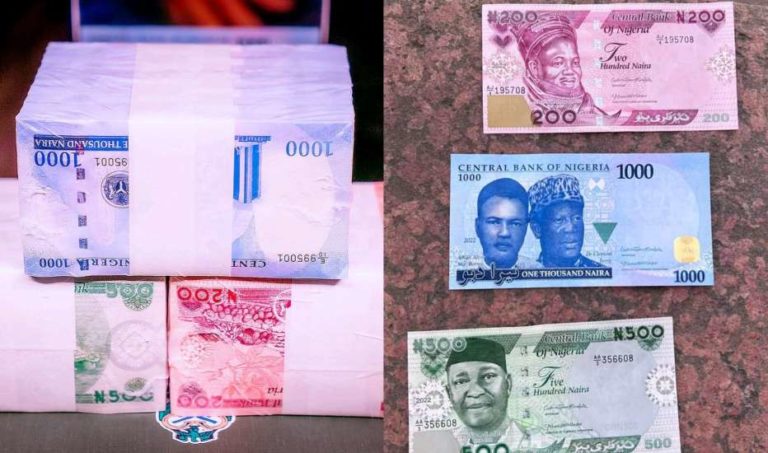
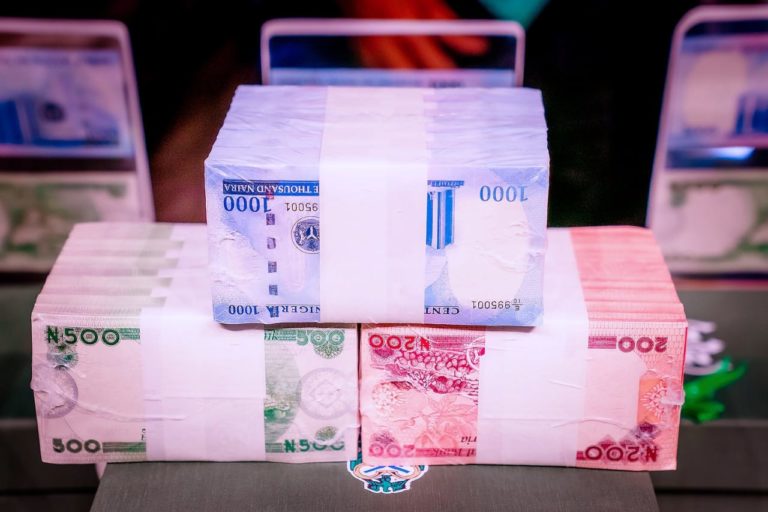
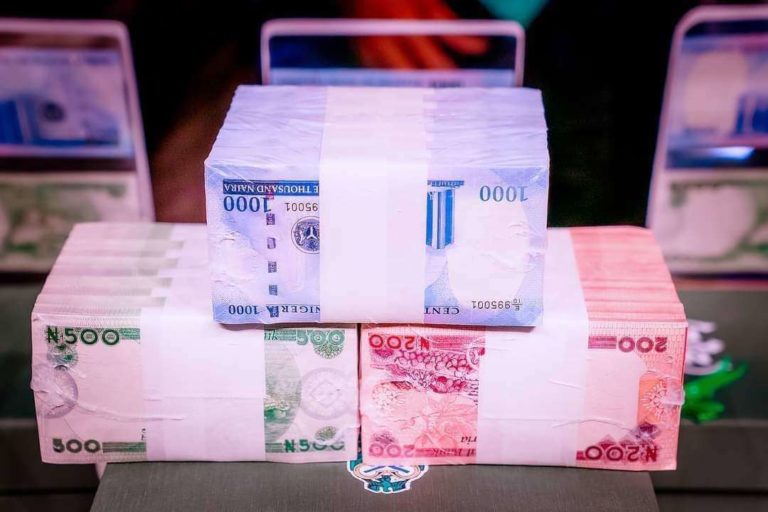
The protest cannot capture enough the agonising developments that have emanated since new redesigned notes of N1000, N500 and N200 came into circulation on December 15, 2022.
The Central Bank of Nigeria (CBN) had announced on October 15, 2022 that it would be redesigning the three notes with a view to mopping up unregulated money outside the banking vault, which the CBN estimated to be 80 per cent.
A collage of the new naira notes.
The CBN initially fixed January 31, 2023 as the deadline for accepting the old three designs being rested. But as that deadline dawned last week and the new notes still as scarce as hen’s teeth, there rose appeals from different bodies to the CBN Governor, Godwin Emefiele, to extend the deadline.
Emefiele had initially waxed unshaken, insisting the deadline remained inviolable. But federal legislators waded in on the agitations, with many of them narrating the woes of their constituents in obtaining the notes. A threat from the Speaker of the House of Representatives, Femi Gbajabiamila, to arrest Emefiele over the issue might have contributed to making the apex bank chief budge, for on January 29, he announced the shift of the deadline to February 10.
But there has been no succour for the citizens. If anything, the scarcity of the notes has worsened. And with it have emerged unusual spectacles that bank customers have never experienced.
Nigerians and difficult experiences
A bank customer Ifeanyi Obodoeze while narrating his ordeal, said, “My search for the new naira notes started on Sunday-January 29,2023 and it has not been easy.
According to him, Providus bank, located at 62 Lobito Crescent, Wuse II Abuja, however, made it very easy for its costumers.
“For the past two weeks or so, the personnel in charge of their ATM kept the 3 ATMs in full service; filing them up with cash several times in a day.
” The bank reserved two of the three for only their customers while one is for others.
The queue there today is something else on that general one which is the same situation across the few functional ATMs in the FCT just as I saw now at FCMB, Garki II.
He noted, however, that the Zenith located opposite the Providus branch has its ATM out of service since this year.
He alleged that managers are probably hoarding these new notes for whatever reason, while stressing the importance pointing out those few banks who truly cared for their customers.
He observed, however, that the PoS operators are a different story entirely, as many of them rose on the situation to increase transaction cost arbitrarily, even above 200 per cent.
Also, a family man, Ekene Obike, told TheICIR that he had to queue at the Automated Teller Machine, ATM for 4 hours to access N5000 cash for the family.
“I don’t have any money at home, I had to be at the queue since 4am in order to access cash for my family up keep.
Businesses share concerns
A restaurant seller in Utako, at the Federal Capital Territory FCT, Helen Osigwe told The ICIR that she had reduced the quantity of the food she cooks, as customers complain of difficulty in accessing cash.
“I have since reduced my daily restaurant sales by half, since the issue of this scarcity. Many of my customers send transfer when they come to eat, however, I find it difficult to get the money from commercial banks and PoS. The banks complain they don’t have the new notes, the PoS charge high transaction cost, while complaining of scarcity,”she said.
Another restaurant owner, Oluchi Okafor located in Dei-Dei, at the outskirt of Abuja City, told our correspondent that she had to also readjust the quantity of food he cooks per day following the uncertainty that characterised the current situation.
“I accept only cash from my customers. I try to explain to those who want to make a transfer of the difficulties faced in getting cash for business. We pay higher costs to get our money from PoS operators get our money,” she laments.
Besides, some PoS operators told The ICIR that the hike in the transaction cost is a result of the scarcity of cash from commercial banks. They complained that they had to rely on super agents, many of whom had raised the transaction costs for them.
“I get my money for my business from a super agent since it’s difficult to get from the banks. For a N500, 000 worth of the newly redesigned cash, we pay N50, 000.
I get my money for my business from a super agent since it’s difficult to get from the banks. For a N500, 000 worth of the newly redesigned cash, we pay N50, 000.
She stressed that many businesses now don’t deposit cash because of uncertainty that characterises the process.
“We charge higher costs because we don’t have it easy getting cash from the super agents. The probability of getting cash now from deposit money banks and super agents.”
On the concerns of the poor circulation of the redesigned currency, the apex bank governor, Godwin Emefiele, has assured Nigerians that banks will continue to accept the N1000, N500 and N200 notes being rested after the February 10 deadline.
Emefiele gave the assurance on February 1 2023, when he appeared before the House of Representatives ad hoc committee on the currency redesign and naira swap policy.
Last week, the House invited the CBN governor for discussions as worries mounted across the country over scarcity of the redesigned N1000, N500 and N200 notes and the January 31 deadline dawned.
When Emefiele failed to honour the invitation last Thursday, the House Speaker, Femi Gbajabiamila, threatened to arrest him.
Emefiele announced a 10-day extension to the deadline, with the old notes acceptable as legal tender till February 10.
Despite the extension, there has been outcry in several quarters about the gaps in the policy and how it has created problems for businesses.
Adamu in Suleja, Niger State complains of drop in Sales, citing currency redesign.
For Adamu Mustapha, a carrot and tomato seller in Suleja market, he told our correspondent that he makes an average of N80,000 sales daily. However, he complained that his sales dropped by over 40 per cent since the currency redesign deadline extension.
“I deal on cash and pay to my suppliers once I close for the day. I noticed a sharp drop in my sales since the deadline extension of this policy. It has distorted our market and sales. The little cash I have, I cannot deposit because I might struggle to get it back,” Adamu said.
A dealer on women’s wears at Onitsha Main Market, Chijioke Ifekudu, who spoke to TheICIR said the trend at the market has been, “Madam you get cash?”, “Oga you get cash?”
It is so disturbing.”
When prodded further on how the policy is affecting the market, he said, “everywhere is so dry. There is no money in circulation, and no one is buying.”
Deserted PoS Centre at the Central Market in Kubwa for lack of cash
Protest on the Policy
The situation is not just affecting businesses alone, in Abuja and several other parts of the country, Civil Liberty Organisation, CLO are protesting the policy and its harsh effects on Nigerians.
Already, there were recorded protests in some parts of the country over the current naira scarcity, both with deposit money banks and PoS across the country.
In Lagos, a group under the auspices of Civil Liberty Organisations for Good Governance staged a protest Lagos State over the scarcity of an Naira notes(Old and new)
The Executive Director of the AFRICAN Centre for Leadership, Strategy and Development, CLSD, Monday Osasah told The ICIR that the loopholes in the policy is what is currently causing the present crisis and distortions in business.
“The apex bank would have come up with this earlier and allowed it to run for six months side by side to gradually face out the old notes.
He pointed out that the policy has put Nigerians into lots of avoidable hardships, which could have been corrected with better plans.
A Lawyer and Lead Partner, Centre for Social Justice, CSJ Eze Onyekpere told The ICIR that the policy has several gaps and is putting Nigerians into suffering.
Eze Onyekpere, said Emefiele misled Buhari and Nigerians
Sharing his personal experience, he said, “Emefiele has misled the President and the entire Nigerian community.
“What Emefiele and the CBN are doing has the consequences of reverting Nigeria back to deep recession or crashing whatever is remaining of the economy.
“I was looking for money yesterday, where I found money they told me they are going to charge me N5000 to give me N20 000. What do you expect if the business have come to a halt, no one is selling, no one is buying, people are exercising undue caution with the little cash they have, “he stressed.
He also noted that both rural and urban economy is affected, and many people are postponing business transactions.
Government says there is end in sight
Meanwhile, the Federal Government has expressed concern over Nigerians’ scarcity experience over the new naira notes.
The Minister of Finance, Zainab Ahmed told State House Correspondents that the President is not happy with the situation, while assuring that it would be under control soon.
She noted that President Buhari is not happy with the difficulties Nigerians arw facing in accessing the new cash.
“Of course, we are worried; we are not that happy that citizens have to queue and struggle at bank ATM to be able to get their cash, but this is a temporary solution.
“Let me just give you an analogy; if you have a wound, for your to be able to heal that wound, it needs to be dressed; sometimes, when you go to the hospital, they put iodine and it is very painful but it is necessary to that to get the wound to heal.
“So, it is not easy, and the president is not happy that the citizens are really suffering; but we are convinced that it is something that needs to be done this time.’’
According to her, the CBN has been responsive in terms of providing some extension.
Rasheed Monguno, Director Consumer Protection for CBN, Rasheed Monguno while speaking on the fate of the rural underserved areas in the country said the cash swap initiative of the CBN is taking care of those.
“We are targeting those in rural areas and working with the collaboration of the super agents to reach the unbanked,”she said.
In addition, the president has asked for seven days to look into the issue.
In desperation, the Lion of Bourdillon roared again in Abeokuta.
We can’t forget it was in Abeokuta shortly before the party’s primaries last year that Asiwaju Bola Ahmed Tinubu, having read the body language of some All Progressives Congress leaders that he coined the phrase, “Emi Lokan”, meaning it’s my turn now to be President.
Addressing a mammoth crowd at the MKO Abiola Stadium last month on the campaign trail, he accused fifth columnists in his party, the APC, of being responsible for the fuel scarcity that has gripped the nation for several months.
This is aside from the redesign of three of the currency notes of the Naira, and the attendant pains the policy has inflicted on hapless Nigerians. The three top bills of the Naira were to stop being legal tender by January 31. Now, a 10-day extension has been granted. Whether it would be enough is another matter.
For many Nigerians, spending endless hours at Banks’ ATMs without success is now a whole day’s work. And we’re not talking of the challenges being faced by those trying to buy fuel for their vehicles and to power their generators.
It’s unbelievable that an incumbent President would allow the prevailing chaos to be the defining climax of his two-term tenure. On a State visit to Imo, in the southeastern part of Nigeria, late last year, President Muhammadu Buhari wondered aloud why those who should be trumpeting his achievements in office weren’t doing so.
The current presidential campaigns offer a good chance for all members of the party led by the incumbent president and Tinubu, the party’s candidate, to shout to the rooftops whatever the APC has achieved in eight years. Definitely, in several parts of Nigeria, there has been remarkable improvements in road infrastructure. The second Niger bridge is almost completed. New milestones have been achieved in rail transportation. Though it’s alleged to be corruption-ridden, thousands of Nigerians are said to have benefited from the Social Investment Programme.
Even though, food prices have soared, agricultural harvests, against all odds, have been good. Against this backdrop, it’s curious that Mr. President has been missing on his party’s campaign trail, which would have afforded him the opportunity to blow his own trumpet.
On one occasion, when he was expected to put up an appearance at one of the campaigns, he chose to go to Dakar for an engagement. His indifference and nonchalance to the campaigns are understandable to those who have been keen watchers of his administration. He never seems to do anything with passion.
And if a President refuses to be passionate about his achievements in office, why should anybody else blow it for him. Not even the candidate of his party, who probably can’t see anything tangible to merit shouting Hallelujah.
In Yorubaland, when a king is going to appear in his court, he is heralded by his trumpeters and drummers, who use the occasion to sing his praises and regale the audience as to his achievements, some of them outlandish in the main. The bottom line is the King would be there in person. Thus, while TInubu, as he moves from one campaign ground to the other, should be the lead trumpeter and drummer of Buhari’s achievements in office, when the principal is missing in action, it means anybody blowing his trumpet does so at his own peril.
On several occasions, Tinubu has described Buhari as his friend. And the kind of friend you have clearly shows who you are. So, if Buhari is really Tinubu’s friend, some people would conclude that the latter doesn’t need an enemy.
Because of his taciturnity, it’s Buhari’s body language that many Nigerians, including some of those in his kitchen cabinet, turn to in order to know what’s going on in his mind.
Although, the APC has a presidential candidate, Tinubu, the flag-bearer is definitely not Buhari’s candidate. It showed clearly in the race for the APC ticket. Aside the large number of aspirants, 23, many of Tinubu’s kinsmen and supposed allies were encouraged to vie against him. And when it was glaring that Tinubu might win, a few days to the Primaries, Abdullahi Adamu, chairman of the party issued a press statement that claimed Ahmed Lawan, Senate President and one of the contestants, had been made the consensus candidate. Tinubu, strongly backed by APC northern governors, issued a rebuttal. The rest is history.
Therefore, if APC loses this election to the Peoples’ Democratic Party, PDP candidate’s Atiku Abubakar, Buhari won’t lose any sleep. And that would be a confirmation of the so-called Fulani agenda, to hold Nigeria’s leadership in perpetuity.
After all, there are claims out there on the streets that the outgoing President is the leader of the Fulani ethnic group in West Africa, and for a nomadic people who have no place to call a homeland, they have finally decided to settle in Nigeria. While there’s nothing wrong in that choice, what galls other ethnic groups is that they want to do it strictly on their own terms.
Since independence, Nigeria has seen the best of times and the worst of times. And one of the worst of times was under a General, Sani Abacha, a man very much after Buhari’s heart. Even as cruel as Abacha was, he once noted that if an insurgency cannot be put down within 24 hours, then it’s not unlikely that those in power are involved. It’s against that backdrop that many have come to view the insurgency, kidnapping, banditry and all kinds of criminalities that abound in the Country today.
There’s no doubt that these last few months of Buhari’s tenure, which is already tension-soaked are a make-or-mar moment for the Country. The forthcoming February 25 presidential election has put all on tenterhooks. Whoever wins, if it’s considered free and fair, the tension may die down. But if there’s a perception that it was rigged, then the Nation’s heart may head for its throat again. And that would not be the first time.
Like in the past, the tension may abate for a while, but the centrifugal and centripetal forces contending for the Nation’s jugular would be back in full force sooner or later. And the giant with all its potential would remain glued to the same spot where it has been for decades; to put it in street lingo, “ e no pass, e no fail, and it’s refusing to leave the class”.
Yet, something tells me, that in line with the optimism of Nigerian youths and millions that are not so young, this country of 300-odd ethnic groups may yet claim its rightful place in the Sun, among the comity of great Nations. When that dawn comes, and with President Buhari having succeeded in his eight years in office in widening the gulf between his Fulani kinsmen and other ethnic groups, can his legacy assure him a positive mention as one of the heroes who built a modern Nigeria?
Akinkuotu can be reached via akinkuotuayodele@gmail.com
THE Obi-Datti Media Office said it has uncovered a multi-million naira fake news plot designed to smear the Labour Party (LP) presidential candidate Peter Obi by his counterpart in the All Progressives Congress (APC), Bola Ahmed Tinubu, ahead of this presidential election.
Head of Media, Obi-Datti Presidential Campaign Council, Diran Onifade, who made this known in a statement on Monday, February 6, said the multi-million media campaign is titled “Killer Punch”.
Onifade said the fake news campaign is part of Tinubu’s plan to spread false information about Obi.
He said anti-Obi elements have been contacted for a role in the “Killer Punch” documentary.
According to Onifade, N500 million has been budgeted for the smear campaign.
“Already, they have been releasing snippets of the documentary on social media, without getting any attention, as people already know about their desperation to drag down Obi, who they rightly know, is far ahead,” he said.
“This documentary of lies and falsehood, which they have fabricated, attempt to portray Mr Obi as a drug peddler, killer and sexual pervert among other innuendos in their fertile imagination.”
The Obi-Datti campaign team claimed that the APC campaign has been faltering and Tinubu is becoming increasingly frustrated with his media handlers.
According to Onifade, Tinubu had reportedly accused his media handlers of not doing enough to halt Obi’s progress and has instructed them to spread more propaganda against his opponents, regardless of ethics or morality.
Onifade noted that Obi has been the most fact-checked among the top four presidential candidates due to his issues-driven campaign.
In the same vein, Onifade called on Nigerians to ignore any doctored or fake media news items about Obi.
“The elections are just a few weeks away as Obi-Datti is growing by each second, let’s keep working hard, for the victory that will change our Country, for good,” Onifade added.
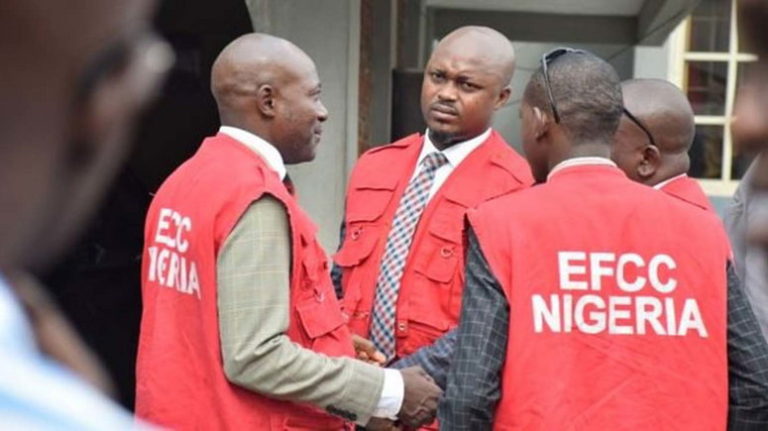
OPERATIVES of the Economic and Financial Crimes Commission (EFCC) have arrested an Operations Manager of a leading commercial bank in Abuja for hoarding new naira notes.
The unnamed bank manager, whose branch is in the Central Area of Abuja, was arrested on Monday, February 6.
According to the EFCC, the manager was arrested for refusing to load the bank’s Automated Teller Machines (ATMs) despite having N29 million of the redesigned naira notes in the branch’s vaults.
EFCC, in a statement signed by its Spokesperson, Wilson Uwujaren, said before the manager was whisked away for further questioning, its operatives ordered the loading of all the ATMs and the payment of the stipulated amount across the counter to customers who had spent hours in queues without getting the new notes.
“This discovery, which indicates sabotage of the government’s monetary policy by some banks, was made by the EFCC in continuation of the ongoing surveillance and visit to banks across the country to access their vaults and verify whether they were deliberately refusing to dispense the redesigned naira notes.
“More than five bank branches were covered today by the operatives in Abuja. Similar exercises were ongoing in Zonal Commands across the country.
“The operation will continue until normalcy is restored to the banking system,” the EFCC said.
The anti-graft agency, in the statement, urged Nigerians finding it difficult to access their funds at any bank to contact it for immediate intervention.
A FEDERAL Capital Territory (FCT) High Court presided by Justice Eneojo Eneche has stopped the Central Bank of Nigeria (CBN), President Muhammadu Buhari and 27 commercial banks from suspending or meddling with the currency redesign terminal date of February 10.
The court also barred them from issuing any directive contrary to the said date.
The court was responding to a motion by some political parties, which include Action Alliance (AA), Action Peoples Party (APP), Allied Peoples Movement (APM) and National Rescue Movement (NRM), to bar the CBN, Buhari and others from extending or stopping the new naira redesign policy.
The ICIRreported that three All Progressives Congress (APC) governors had earlier dragged the Federal Government before the Supreme Court on Monday, February 6, in a bid to halt the full implementation of the naira redesign policy introduced by the CBN.
The governors of Kaduna, Nasir El Rufai; Kogi, Yahaya Bello; and Zamfara, Bello Matawalle, who filed the suit, expressed concern about the impact of the CBN policy on citizens of their states.
THREE All Progressives Congress (APC) governors have dragged the Federal Government before the Supreme Court in a bid to halt the full implementation of the naira redesign policy introduced by the Central Bank of Nigeria (CBN).
The governors of Kaduna, Nasir El Rufai; Kogi, Yahaya Bello; and Zamfara, Bello Matawalle, who filed the suit, expressed concern about the impact of the CBN policy on citizens of their states.
The Attorney General of the Federation (AGF) and Minister of Justice, Abubakar Malami, is the only defendant in the lawsuit, which was filed by the three Attorneys General and Commissioners of Justice of the three states.
In an ex-parte motion filed by their lawyer AbdulHakeem Mustapha, the three northern states ask the court to grant them an interim injunction halting the policy.
They also asked the Supreme Court to order the Federal Government to, directly or indirectly, through the CBN, the commercial banks, or its agents, from carrying out its proposal to enforce the February 10 deadline for the N200, N500, and N1000 notes to lose their legal tender status.
They also asked the apex court to determine whether Section 20(3) of the CBN Act, which mandates that reasonable notice must be given, is being gravely violated by the three months notice provided by the Federal Government through the CBN.
Additionally, they asked the court to rule that Section 20(3) of the CBN Act expressly prohibits the Federal Government from using the CBN to set a deadline for accepting and redeeming banknotes that the bank has issued, with the exception of the circumstances outlined in Section 22. (1).
As a result, the three states asked the court to suspend the policy immediately until the applicable legal requirements are met.
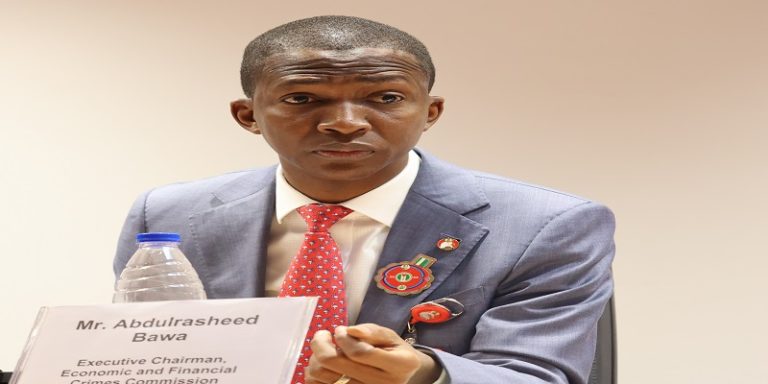
THE Chairman of the Economic and Financial Crimes Commission (EFCC), Abdulrasheed Bawa, has again been sent to prison for contempt.
A Kogi State High Court presided by Justice R.O. Ayoola, on Monday, February 6, granted an application for Bawa’s committal to prison for disobeying a court ruling.
The judge instructed the Inspector General of Police Alkali Baba to detain Bawa for the next 14 days at Kuje Prison in the Federal Capital Territory until he cleansed himself of the contempt.
The judge gave the order to arrest Bawa for disobeying a court ruling delivered on November 30, 2022, wherein the EFCC chairman was directed to produce an applicant in the case, Ali Bello.
Bello had asked the court to stop the EFCC from arresting and detaining him illegally.
The court ruled in his favour, only for the EFCC to arraign him for alleged money laundering three days after the verdict.
The court ordered that the EFCC and Bawa be served the motion of notice together with Form 49 by substituted means.
Bawa and the Commission were also ordered to tender an apology to Bello in a national newspaper. The court awarded N10 million compensation to the applicant.
On November 8, a Federal Capital Territory High Court in Maitama also sentenced Bawa to jail over contempt.
The judge, Justice Chizoba Oji, convicted Bawa and ordered the Inspector of General of Police to remand him in Kuje Prison for disobeying an earlier order of the court.
Bawa is the fourth Executive Chairman of the EFCC. President Muhammadu Buhari appointed him on February 16, 2021.
THIRTEEN of the 18 registered political parties in Nigeria have threatened to withdraw from the 2023 general elections over the naira redesign policy of the Central Bank of Nigeria (CBN).
The political parties said they will withdraw from the election if the CBN extends the February 10 deadline for use of old naira notes as legal tender.
They commended President Muhammadu Buhari on the redesign of the N200, N500 and N1,000 banknotes and insisted that the policy must stand.
Speaking at a press briefing organised by a coalition of chairmen of political parties on Monday, February 6, the national chairman of the Action Alliance (AA), Kenneth Udeze, said the deadline fixed by the CBN must not be shifted.
“We hereby announce that at least 13 out of the 18 political parties in Nigeria will not be interested in the 2023 general elections and indeed we shall withdraw our participation from the electoral process if this currency policy are suspended or cancelled or if the deadline is further shifted,” he said.
The ICIR had earlier reported that the policy had generated reactions from different presidential candidates, with the flagbearer of the Peoples Democratic Party (PDP) Atiku Abubakar urging Nigerians to channel frustrations over the scarcity of naira and fuel in the country to vote out the ruling All Progressives Congress (APC).
The presidential candidate of the Accord Party, Christopher Imumolen described the naira redesign as a good policy which is wrongly implemented.
The CBN on October 26, 2022, announced the plan to redesign the three banknotes. The President unveiled the redesigned N200, N500 and N1,000 notes on November 23, 2022 and the apex bank initially fixed January 31 as deadline for the validity of the old notes.
The CBN also pegged weekly cash withdrawal limits at N500,000 for individuals and N5 million for corporate firms.
Following outcry by Nigerians, the CBN was forced to extend the deadline from January 31 to February 10.
The ICIR also reported that Buharion Friday, after a meeting with some APC governors, begged Nigerians for seven days to resolve issues surrounding the naira redesign policy.