Home Blog Page 1082

2023: Why Youth should participate in elections & governance

0

By Mayowa Olajide Akinleye

On that day in October 2020, there were grim images of blood, wailing, and anguish on the faces of young people at the Lekki toll gate, images that showed no regard for ethnicity, religion, political access, or status—the common fault lines traditionally manipulated by the political elite to divide, discourage, and weaken the resolve for self-determination in young people.

Twenty-one-year-old Oke was not even at the crime scene; he was in his house when stray bullets killed him, three hours after tweeting, “Nigeria will not end me.”

The Endsars shooting was the ultimate declaration of disregard: it clearly said to young people, “I don’t care about you; I am not willing to hear what you have to say; and you are not important to me.”


READ ALSO:

Naira redesign: Political parties threaten to pull out of elections

Elections: IPOB urges South-East residents to ignore sit-at-home order, disowns Simon Ekpa

Presidential election: Buhari not favouring anybody – Lai Mohammed

Ballot or bullet: Inside South-East Nigeria, ahead of 2023 election


One might argue that this perspective is wrong or that the incident was an exception and not the norm, but a survey conducted by researchers on 800 randomly selected young people in the country indicated that 95 per cent of the respondents believed that Nigeria does not value its youth. 87.9 per cent agreed that Nigerian youths are alienated from the Nigerian project, while 85.9 per cent reported that the youths are not seen as developmental agents.

The Mandela Institute for Development Studies (MINDS) 2016 report stated that 75 per cent of young people think the country is headed in the wrong direction. This is 2023; those numbers haven’t changed at all; if anything, they’ll be much worse.

If it were two regular individuals who thought so little of each other, we might not worry. It is their business, we would conclude. Rather, this bad blood is between our government and the majority of its productive and economically active citizens. We are all victims. This is our business.

For the context of this article, we would adopt the MINDS report’s definition of youth as persons between the ages of 18 and 45. This is culturally relevant to the socio-political realities in the country that inform this conversation.

Except for pockets of outrage like ENDARS, Nigerian youth have not really challenged or bucked the political hegemony that captured this nation in the fourth republic, despite our well-documented frustrations. Instead, we have interacted emotionally rather than systematically with these frustrations. This has contributed to the rise of the “self-help” culture, that is covered in more detail in the second article of this series.

Engaging systematically is to influence and interact with the power bases that determine the who, how, where, and when—which is the domain of governance. In a democracy, this practice can be referred to as “politics.”

Wikipedia defines it as the set of activities that are associated with making decisions in groups or other forms of power relations among individuals, such as the distribution of resources or status.

Politics is the substructure that dictates the movement of other institutions in a society.

Elections are a feedback mechanism created to regulate, check, and ensure that the activities of politics are representative of society and its stakeholders. Balancing all these is the burden of civic participation.

Civic participation enables citizens like us to recognise elements, individuals, and ideologies in the exercise of governance that are beneficial or detrimental to our aspirations and empowers us, through elections, to retain or banish them from our politics. It is an effective self-regulatory mechanism if everyone performs their function.

This is a missing piece in the unsolvable puzzle that is Nigeria’s democracy.

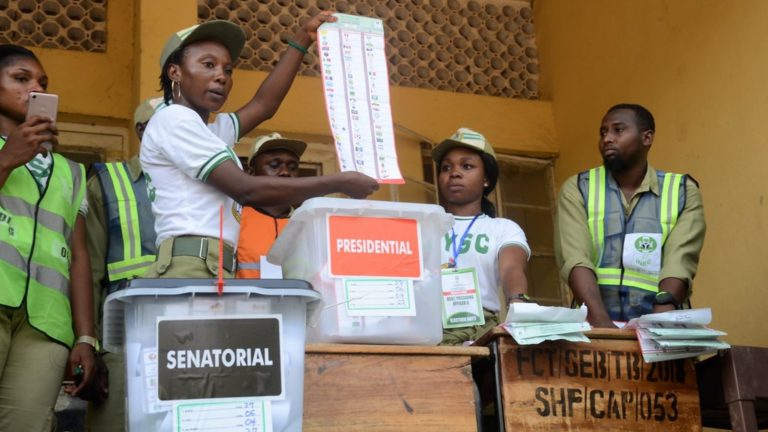
Everybody, especially the youth, does not perform their function; voter turnout in election cycles has steadily declined from a high of 69 per cent in the 2003 presidential election to between 30 – 40 per cent, despite a substantial increase in the number of registered voters. For context, 75 per cent of the 93 million voters registered to vote in the 2023 general election are between the ages of 18 and 49. If 50 per cent of them came out to vote, the country would record the highest voter turnout of any election since 1999.

If we further investigate other indicators of civic engagement aside from voting, such as engaging representatives and elected officials, participation in budgeting, paying taxes, participating in community development and peer group activities, volunteering, following the news and gathering civic knowledge, tracking government projects like what PROMAD is doing through its FollowTheProjects initiative, participating in public hearings, etc. The reality gets starker.

It is hypocrisy that we expect politics to represent us when we will not represent it and to account for us when we have refused to keep it accountable.

Moralisation does not work here; only interest does, as politics is amoral. It is important for youths to participate in elections and governance because we represent a significant portion of the population and have the potential to bargain for influence as we are both its biggest beneficiary and its biggest victim. The popular saying “those who will carry the burden of poor decisions should have a say in the load” is apt.

It is not enough to agonise, endure tears and deprivation, or stay angry at the older generation and failed politicians, but to also have a renewed faith in our democracy. The power of numbers would shift participation, engagement, and policy consideration in our favour; effectively wielding this power in setting the tone of national discourse will make us a stronger stakeholder and force in governance.

By participating in elections, we can vote for candidates who align with young people’s values and priorities and who are committed to addressing the issues that affect us.

Continuous civic engagement will broaden our influence and help to increase young people’s representation in decision-making positions, resulting in policies and programmes that are more responsive to the needs of the youth population on priority issues of education, employment, and economic opportunities, as well as on other social issues such as healthcare, affordable housing, and security.

Furthermore, youth participation in governance can help promote transparency, accountability, and good governance, as our voices and votes will hold elected officials accountable for their actions and ensure that they work in the population’s best interests.

It also allows us to have a say in the decision-making processes that affect our lives and the needs and aspirations of our communities. Young people can also develop important skills and gain valuable experience that will help us become leaders in our own right. We can learn about the democratic process, how to advocate for our interests, and how to work effectively with others to bring about change.

We will be naive if we do not recognise the harsh context, the attendant push factors, and their impact on  young people’s participation. Despite this, we must always keep in mind that bad actors will always exist, undemocratic concentrations of power will always form and need dissolving, cliques and cabals will need challenging, and civil-service empires will need to be deconstructed.

The only tool that can effectively weaken their effect and sanitise our politics enough to continuously deliver good governance is a society with self-rule built on young people’s active citizenship and strengthened by political knowledge and civic dialogue, as opposed to a passive and resentful youth population. Nigeria’s democracy is emerging; it will not stay static but will either shrink when you abstain or expand as you actively participate.

There is a caveat: the practice of democracy can be excruciatingly slow and sometimes unfair; people can be messy, selfish, stubborn, and violent; reaching consensus can be impossible; things will not always go your way when you want them or how you want them. All of which is not a problem of democracy but of its actors.

These problems, regardless of their impact, can only be solved by even more democracy and civic participation, not less. Apathy, anger, frustration, and feelings of betrayal devoid of constructive civic participation will not serve the cause of development. Until we learn that “self-help” alone is not sustainable and, worse, useless, the painful sores that feed our outrage will continue to fester and never heal.

When we do not participate in elections and governance, our future will be decided by the people who do. If you are aware enough to fear that future, then you are aware enough to take the initiative to prevent it. Participating in elections and governance is a proven approach.

Civic participation is how young people can take the lead in building the Nigeria we want. It is how we can become tomorrow’s leaders right now.

*Akinleye is the Impacts and Communications Assistant, PROMAD

Contributors: Kingsley Agu, Director, Community Engagement, Connected Development (CODE); and Iyanuoluwa Bolarinwa, Assistant manager, Intl. Growth, BudgIT Foundation.

This article is an excerpt from the third in a six-part series of public conversations on youth civic participation under  “Accelerating Youth Civic Participation in the FCT.” 
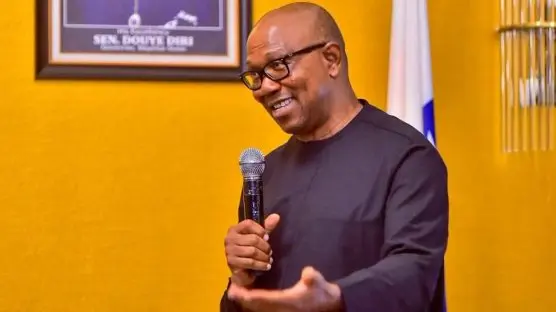
Nigeria has suffered enough – Peter Obi

THE presidential candidate of the Labour Party (LP) for the 2023 elections, Peter Obi, has urged Nigerians to salvage their country, which he said had suffered enough.

Obi made the call at a book launched in his honour on Tuesday, February 7, in Abuja.

The book “Peter Obi: Many Voices, One Perspective” explored the life and ideals of the former Anambra State governor.


READ ALSO:

Peter Obi’s structure is rooted in the people – Spokesperson

Fiscal rascality, not Emefiele, responsible for Nigeria’s monetary problems – Peter Obi

Video does not show Governor Wike leading campaign rally for Peter Obi

Labour Party, Peter Obi react to Okupe’s conviction, resignation


The LP candidate, who showed up briefly at the event because of his “other engagements”, appealed to Nigerians to support his presidential bid.

“We urge all of you to support us, especially in these final days, to reach the end of this race. Nigeria has suffered enough. This is a great country that can be turned around. We can’t succeed without your intervention.” 

Describing the upcoming presidential poll as “an existential election”, Obi warned that if the nation got its leadership choice wrong at the poll, the aftermath would be unpredictable.

He urged the citizens to give him their votes to enable him to offer the good leadership they desired.

The book launchers used the platform to raise money for the candidate’s campaign.

When filing this report at the event venue, the organizers raised less than N50 million.

Influential personalities from the South-East, including actor and lawyer Kenneth Okonkwo and Peter Okoye, popularly known as P-Square, dominated the event.

The ICIR reports that Peter Obi is among the four leading presidential candidates in the coming election.

He is contesting against the All Progressives Congress (APC) Bola Tinubu, Peoples’ Democratic Party’s Atiku Abubakar, New Nigeria’s Peoples Party (NNPP) Rabiu Kwankwaso and other nearly other dozen candidates. 

Naira redesign: Court order on deadline ploy to sabotage polls – Ganduje

0

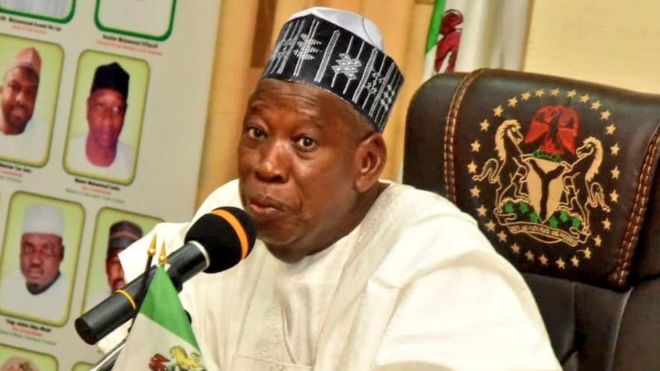
KANO State governor Abdullahi Ganduje has said some opposition political parties are seeking to disrupt the democratic transition while hiding behind the naira redesign policy introduced by the Central Bank of Nigeria (CBN).

The governor made the claim in a statement issued by the state Commissioner for Information, Mallam Muhammad Garba.

Reacting to the suit filed by four political parties seeking non-extension of the deadline for withdrawing old naira notes from circulation, Ganduje accused the parties of secretly working with the Peoples Democratic Party (PDP) to sabotage the country’s democracy.


READ ALSO:

Naira redesign: Opposition parties against deadline extension – FG

Naira redesign: Political parties threaten to pull out of elections

Naira Scarcity: Yobe governor directs microfinance banks to open branches in LGAs

Naira, fuel scarcity: Use your anger to vote out APC, Atiku tells Nigerians


He also described the CBN’s new naira policy as a harsh and insensitive one, implemented despite it’s rejection by most Nigerians.

“It is unfortunate that the CBN and its collaborators are insisting unnecessarily on the imposition of an unreasonable time frame for the old Naira notes to cease to be legal tender, in total refutation of the apparent national shortage in the necessary technological infrastructure for the process.

“The rigid insistence on the implementation of these harsh, inhuman and insensitive cash policies to the point of neglecting their widespread rejection by the vast majority of Nigerians, including the National Assembly and all state governors, is an ominous agenda for the undermining of the nation and consequent scurrying of a smooth transition to a freely and fairly elected successive administration,” he said.

Naira redesign: Opposition parties against deadline extension – FG

0

THE Federal Government has accused opposition political parties of politicising the current scarcity of the naira at the expense of Nigerians.

Four political parties – Action Alliance (AA), Action Peoples Party (APP), Allied Peoples Movement (APM) and National Rescue Movement (NRM) – had filed a motion which sought to restrain the Federal Government from extending the naira swap deadline.

Justice Eleojo Enenche of the Federal Capital Territory (FCT) high court on Monday, February 6, restrained the Federal Government and the Central Bank of Nigeria (CBN) and 27 commercial banks from extending the deadline on the use of old naira notes pending the determination of the suit.

Reacting to the development, the Minister of Information, Lai Mohammed, said opposition parties are not mindful of the plight of Nigerians due to the cash crunch.

Speaking at the 23rd edition of the PMB Administration Scorecard Series (2015-2023), on Tuesday, Lai Mohammed described the move by the opposition parties as unscrupulous.

According to him, the action of the political parties is a clear evidence that the opposition has turned the naira redesign policy into a political game, leaving Nigerians to suffer.

said: “Recall that after his (Buhari’) meeting with the Progressives Governors’ Forum on Friday, President Buhari urged the citizens to give him a seven-day window to resolve the currency crunch that has emanated from the implementation of the naira redesign policy.

“Unfortunately, on Monday, some opposition political parties ran to court to obtain an injunction restraining Mr President and the CBN from extending the February 10 deadline for Nigerians to exchange their old notes for new ones.

“These curious actions by the parties concerned are clear evidence that the opposition has turned this whole issue into a political game, preferring to make Nigerians suffer more on the altar of unconscionable political gamesmanship.

“Or how else can one explain that these unscrupulous opposition parties do not want any action that could reduce the pains being experienced by Nigerians?

“How else can one explain that they have decided to legally hamstring Mr President, in particular, from providing any relief for Nigerians suffering from the cash crunch?”


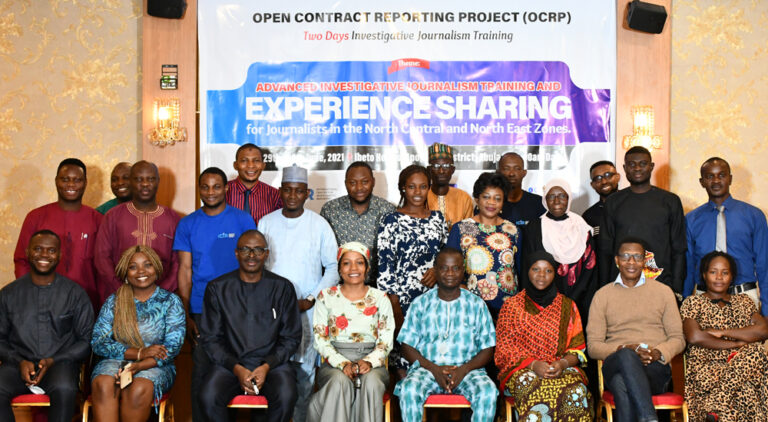
The ICIR seek entries for 2023 open contract reporting project

THE International Centre for Investigative Reporting (ICIR) is inviting applications from suitable and qualified journalists for the second phase of its Open Contract Reporting Project (OCRP).

The OCPR is an accountability reporting project of the Centre that seeks to promote fiscal transparency and accountability in the budget and procurement processes in Nigeria.

The project aims to build capacity and provide mentoring and financial support for selected journalists to work with The ICIR to undertake investigative and data-driven reports on budget and procurement issues.

The application is for journalists in media houses at state and local government levels across print, electronic and digital media in the six geopolitical zones of Nigeria.

The ICIR would work with selected journalists for the remainder of the project. Candidates with a minimum of three years experience as practicing journalists working in print, electronic and online media from across the six geo-political zones can apply.

Successful applicants will be expected to report on open contract issues in their respective states. Freelancers with a track record of accountability reporting are also welcome.

Applicants must provide proof of prior critical reporting in the last 12 months.

Being a gender-inclusive organisation, the Centre strongly encourages qualified female journalists to apply.

The organiser says, “In the last five years, the Centre has worked to build the capacity for journalists to effectively investigate and report on budget and procurement issues, thus strengthening open contracting processes and engendering effective service delivery for the welfare of the citizens, particularly at the sub-regional level.

“In its second year, the OCRP is a three-year project funded by the John D. and Catherine T. MacArthur Foundation under its On-Nigeria Anti-Corruption Programme and would last until 2024.”

The deadline for the submission of applications is February 27, 2023. Interested applicants can apply here.

Violent protests erupt in Abeokuta, Akure over scarcity of cash, fuel

VIOLENT protests have erupted in Abeokuta, the Ogun State capital, amid the growing frustration and anger among Nigerians over the scarcity of cash and petrol.

The ICIR gathered areas such as Aladesanmi, Fajol and Somorin in Obantoko were overtaken by the protesters, who set bonfires and sang anti-Central Bank of Nigeria (CBN) songs.

The Sapon branch of First Bank was also vandalized, and the protesters attempted to set it on fire.


READ ALSO:

Naira, fuel scarcity: Use your anger to vote out APC, Atiku tells Nigerians

El-Rufai berates Buhari, fifth columnists over naira redesign, fuel crisis

Fuel scarcity has nothing to do with election – Kyari

Tinubu did not blame Buhari in comments on naira redesign, fuel scarcity — APC


Operatives of the Nigeria Police Force tried to disperse the protesters, but they regrouped as soon as the policemen withdrew from the scene. The protesters returned with greater intensity and set bonfires with disused tires.

The situation was said to have disrupted vehicular movement, causing motorists and pedestrians to run off the road for safety.

Ogun Police spokesman, Abimbola Oyeyemi, told newsmen the police are monitoring the situation to prevent the further destruction of property and loss of lives.

While saying calm had been restored in Asero, Oyeyemi warned the protesters against causing more hardship for Nigerians, especially by vandalising other people’s properties.

He expressed concerns that some of those leading the uprising do not have money to withdraw from any banks.

“We have talked to them so that they won’t turn the protest into the destruction of properties. Anybody who tries to destroy any property will be decisively dealt with. We have warned them,” he said.

“They are protesting that they can’t withdraw money and there is fuel scarcity. The funny thing is that those who don’t have N5 in their accounts are demonstrating that they can’t withdraw. This is uncalled for. We all have to be calm.”

A similar protest erupted in Akure, the Ondo state capital. Protesters barricaded major roads and frustrated vehicular and human movement in the early hours of Tuesday, February 7.

Palpable tension has continued to rise in various parts of the country over the shortage of cash and fuel, which is affecting daily life and business operations.

The cash shortage followed the naira redesign policy introduced by the CBN with the approval of the Muhammadu Buhari’s administration.

Gwarimpa building collapse: FCTA to revoke allocation

0

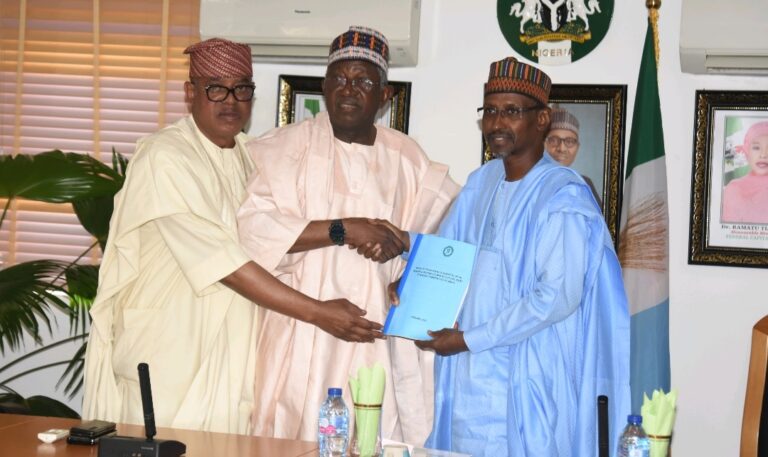
THE Federal Capital Territory Administration (FCTA) has announced that the allocation for a building which collapsed in the Gwarimpa area of Abuja would be revoked.

This was disclosed in a statement jointly released by the FCTA and the Federal Housing Authority (FHA) on Tuesday, February 7.


READ ALSO:
Kogi flooding: Five dead, several wounded in building collapse

Three children die in Jigawa building collapse

Six trapped in Lekki building collapse

One injured, as two-storey building collapses in Lagos


Officials of both organisations had met on Monday February 6, during which a report by the FHA on the circumstances resulting in the collapse was presented to the FCT minister.

According to the statement, three people died as a result of the building collapse. A technical team has been set up by the FCT and FHA to conduct investigations based on the report.

“The meeting resolved that the investigation by the technical team is also aimed at strengthening the internal working mechanism of both agencies and that all those found culpable in the building collapse will face appropriate punishment commiserate with the crime committed.

“The FCT Minister announced that in line with FCTA policy, the allocation of the collapsed building be revoked,” the statement read.

Commiserating with families of the deceased, Bello and the FHA Chairman Lawal Shuaibu, noted that compensation will be provided.

“The meeting also commended the various agencies involved in the rescue efforts that saved 21 lives and stressed the need for cases of contraventions to go beyond mere issuance of “stop work” notices.

“Both organisations resolved to work very closely together to prevent any future occurrence,” the statement added.

On Thursday February 2, a three-storey building still under construction has collapsed in Gwarimpa, Abuja.

Several security agencies had arrived the scene for rescue operations, including the National Emergency Management Agency (NEMA), FCT Emergency Management Agency (FEMA), National Security and Civil Defence Corps (NSCDC), International Committee of the Red Cross (ICRC), Nigerian Police Force (NPF) among others.

Covering Climate Now launches journalism contest

COVERING Climate Now, in partnership with Columbia Journalism Review, is accepting entries for its journalism award which will be honoring climate journalism.

Works must have been published or broadcast in 2022. Categories include print/digital, video/TV, audio/radio, multimedia project, photography, social media and engagement, student and emerging journalists.

Entries can be from anywhere in the world but must be in English.

The winners will be awarded in early summer.

News organisations and journalists can enter this competition.

The deadline for the submission of applications is March 15, 2023. Interested applicants can submit entries here.

MRA asks NASS to investigate NBC’s regulatory activities

0

THE Media Rights Agenda (MRA) has urged the National Assembly to launch an investigation into the regulatory activities of the National Broadcasting Commission (NBC).

In a statement released on Monday, February 6, the MRA accused the NBC of succumbing to the control of a “politically partisan” Minister of Information to cow broadcasting stations in Nigeria in an effort to prevent them from criticising government officials and powerful political figures.


READ ALSO:

Coalition condemns attack on MRA office, demands investigation

MRA charges FG to investigate attacks on journalists, prosecute perpetrators

MRA condemns arrest, detention of journalist in Ilorin

Court grants MRA permission to challenge NBC’s non-disclosure of licence fees payment


According to the statement released by MRA’s Communications Officer Idowu Adewale, the organisation is compelled to seek the intervention of the National Assembly in the light of Friday’s imposition of N2 million fines on two television stations, Arise News and Television Continental (TVC), by the NBC for alleged breach of the Nigeria Broadcasting Code.

MRA described the action as the latest example of abuse of powers by the NBC.

MRA’s Programme Officer Maimuna Momoh noted in the statement that “It cannot be fair or just that the NBC, which wrote the Nigeria Broadcasting Code to create offences, is the complainant in the allegations of violation of the Code by broadcasting stations, investigates the alleged breaches itself, prosecutes the accused stations, sits in judgment on the matter, frequently without even giving the stations any opportunity to defend themselves against the allegations, sanctions them through the imposition of fines, which it collects as part of its revenue. This is clearly an affront to principles of fair hearing, equity and justice.” 

In separate letters signed by NBC Director-General Mallam Balarabe llelah dated February 3, 2023, and sent to the Chief Executive Officer of Arise Global Media Limited, owners of Arise News, and the Chief Executive Officer of Continental Broadcasting Service Limited, owners of TVC, the NBC accused the two stations of violating the Broadcasting Code in their coverage of political campaigns and gave each of them two weeks to pay a penalty of N2 million.

Condemning the development, MRA noted that the pattern of abusive behaviour by the Commission has reached alarming levels, adding that “the NBC in most cases is either being used as a weapon by the information minister to impede broadcasting stations from performing their constitutional role of upholding the responsibility and accountability of the government to the people or is on its own turning its regulatory function into a revenue drive, and in both cases, frequently dispensing with the imperative of giving accused stations the opportunity to defend themselves”.

Momoh added, “In recent years, we have seen several dozen examples of such outrageous sanctioning of broadcasting stations, even in the absence of any complaint from anyone and without their being given any opportunity to defend themselves against baseless accusations in many cases as the NBC has turned its regulatory function into a scavenger hunt for revenue or succumbs to pressures from the Executive branch of government to sanction stations which criticize government officials or their actions.

“It is not only ironic but outright dangerous that the NBC is seeking to enforce truth and objectivity in the outputs of broadcasting stations while it is taking directives in so doing from a partisan Minister of Information who is notorious in this country and beyond for his own disregard for truth and objectivity.

“If the NBC is not deterred from this its approach to regulations, Nigerians will be fed only the Minister’s version of the truth, thereby defeating the purpose of Section 22 of the Constitution.

 “An established principle guiding the operations of a regulatory authority exercising powers in the area of broadcasting is that it should be independent and adequately protected against interference of a political, commercial or other nature. Contrary to this internationally established norm, the Minister of Information continues to interfere in the regulatory functions of the NBC and frequently deploys it as a weapon with which he prevents broadcasting stations from performing their duty to uphold the responsibility and accountability of the Government to the people or for punishing those that dare to do so.”

She, therefore, called on the National Assembly to conduct an open and transparent investigation into the NBC and the conduct of its regulatory functions in order to prevent it from ‘completely’ destroying the broadcast sector in Nigeria.

Glide offers publishing platform for independent journalists

THE Glide is accepting nominations for its new platform that will allow independent journalists to publish their vital work and receive crypto/fiat contributions for it from users. 

This platform seeks works from all journalists, especially those on the ground and reporting from the frontlines, those operating under increasing media censorship pressures, and with limited financial support and/or scarce publishing opportunities in their local place of reporting.


READ ALSO:


Journalists worldwide can nominate their colleagues for a chance to have their stories published.

Nominations are accepted on a rolling basis. Interested applicants can nominate here.