THE Petroleum and Natural Gas Senior Staff Association of Nigeria (PENGASSAN) says there is no basis for the current scarcity and astronomical increase in price of petrol across the country.
Nigerians have been experiencing acute scarcity of petrol since last year, with motorists spending many hours on long queues at filling stations. Marketers, particularly the independent ones, have also been jacking up prices arbitrarily. Independent marketers are selling a litre of the product, which cost N169 across most filling stations in the corresponding period of last year, for between N280 and N450. Major marketers still sell a litre for between N184 and N200.
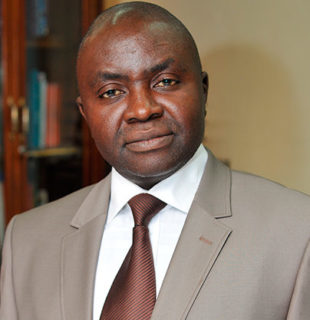
The PENGASSAN president, Festus Osifo, and its Secretary General, Lumumba Okugbawa, in a statement on Monday, January 30, 2022, expressed concerns over the hardship that Nigerians are being subjected to as a result of the scarcity and price increase.
The statement said that data made available to the union showed that the country has petrol sufficiency for, at least, 30 days.
“We understand that the parameters imputed into the old Petroleum Products Pricing Regulatory Agency (PPPRA), and now Nigerian Midstream and Downstream Petroleum Regulatory Authority (NMDPRA) template has since changed.
“This is because of some economic vagaries like exchange rate fluctuation, vessel hiring cost and other logistics.
“As a result, PENGASSAN insists there is no sufficient justification for petrol to be selling for such highly inflated price, thereby subjecting the masses to further difficulties,“ the duo said.
They urged the management of NMDPRA to compel all marketers and retailers to make the products available at the approved price of N194 per litre.
Both leaders also called on the management to immediately mobilise its staff members in various locations across the country to monitor compliance.
They also urged the management to revoke the licences of any marketer who did not comply to serve as a deterrent.
“Should this collusion go unchecked, we will not hesitate to partner with other stakeholders in ensuring that Nigerians are not further exploited,“ they warned.
GOVERNORSHIP candidate of the Peoples Democratic Party (PDP) in Lagos Olajide Adeniran, popularly known as Jandor, has slammed the state governor Babajide Sanwo-Olu for shunning the Platform debate.
Sanwo-Olu was scheduled to participate in the debate, organised for governorship candidates in the state, but pulled out citing alleged political violence by supporters of the PDP candidate.
Speaking on Arise TV on Tuesday, January 31, Jandor said Sanwo-Olu avoided the debate because of his administration’s failures and deficiencies.
“If a governor of Lagos State who is supposed to be the Chief Security Officer of the state is saying that he is not safe that speaks of what the people of Lagos should expect. He is telling us that the state is not safe but that does not justify his absence,” Jandor said.
He claimed that Sanwo-Olu cannot account for the revenue generated in the state since he came into office.
“Sanwo-Olu decided not to show up because he has nothing to show for his four years in office. He had to excuse himself.
“He would come and explain how he had a 2022 budget of N1.758 trillion with a performance of 77.9 per cent in the second quarter of that year yet we still have a poverty rate that rose from 4.5 per cent in 2019 when he took over to 8.5 per cent today. We still have an unemployment rate of 14.6 per cent when he took over but now we have 37.1 per cent.
“He is supposed to come and explain how he did a budget of N812 billion in 2020 with 120 per cent budget performance at the end of the year according to him. He should come and explain how he did a budget of N1.25 trillion in 2021 and how that recorded a performance of 85.7 per cent in that year,” Jandor added.
The PDP candidate also accused Sanwo-Olu of promoting electoral violence and insecurity in the state.
“He is the Chief Security Officer of the state so what is he saying to all of us that we are not safe, that he is not capable of even securing himself let alone all of us? The spate of attacks is becoming alarming, and we need to do the needful. It was an attack on the people of Lagos – the people we are working together.
“What they are doing is to scare us off the road because they have got nothing to campaign with.
“They have given instructions to their boys that anywhere they see a PDP billboard they should remove it and in case of posters they should post on it,” Jandor further alleged.
Further accusing the APC administration of political violence ahead of the election, Jandor said, “Funke Akindele (PDP deputy governorship candidate) went to the market to campaign and she was chased out of the market. I wasn’t there but I had to call her to retreat.
“I went to Oworo, they mounted a barricade that we will not come and I told the Commissioner of Police that I am going to go down my car and walk down and I did.”
AS the 2023 elections draw near, there have been concerns that many students will likely not vote due to the short holiday given by schools, Mustapha Usman, reports.
During the long recent ASUU strike, Abubakar Sherif, 22, thought he would have the opportunity of voting his preferred candidate during the 2023 elections as he was able to register for his Permanent Voter’s card, PVC, in his state.
Sherif, a student at Federal University, Dutse-ma, Katsina, was one of the millions of young people who registered for voter’s cards in 2022.
The Academic Staff Union of Universities embarked on a long, and comprehensive strike which led to the shutdown of universities for eight months. During the strike, many University students went back to their various homes and, as such registered for PVC in their respective states.
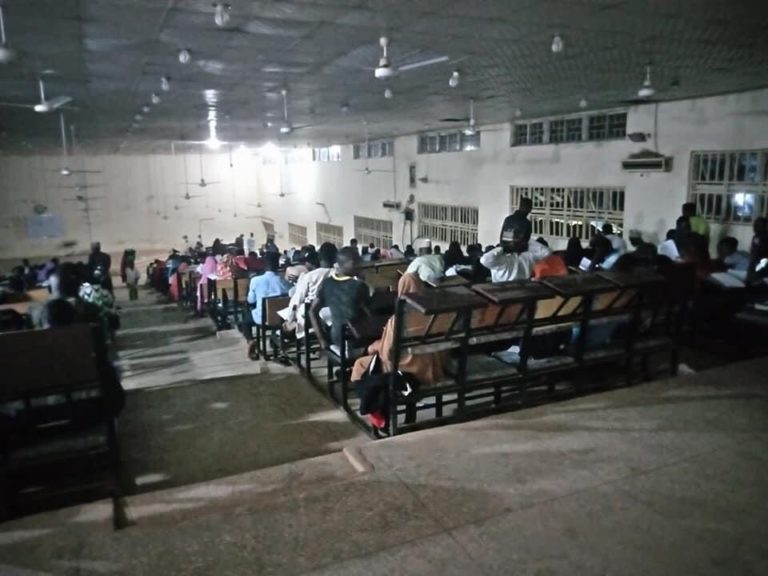
Schools have resumed, and many of the students have returned, thereby being away from their polling unit. Those who want to vote will have to travel long distances to do so and may also risk missing lectures and other academic activities.
The ICIR gathered that some institutions, especially universities, give a few days break for elections. This, according to students who spoke to The ICIR, is not enough for a journey that may take a day or two to their destinations.
For instance, in 2019, Usmanu Danfodiyo University Sokoto gave a three-day break to students for election. Also, Obafemi Awolowo University gave two days break to students to exercise their rights.
Similarly, insecurity, bad roads and economic capacity are factors that may hinder students studying faraway from home from returning to perform their civic responsibility.
The Independent National Electoral Commission said it recorded a historic number of registered voters this year. In another report, The ICIRgathered that about 40 per cent of registered voters are students.
This, however, has led to arguments and discussions amongst Nigerians as to what the preparedness of INEC and institutions are relative to the situation.
Students groan over inability to collect PVC
The Commission will likely end PVC distribution February 5 it was extended. On January 5, 2023, the electoral body moved the distribution from Local Government Areas to Wards.
On January 5, 2023, the electoral body moved the distribution from Local Government Areas to Wards.
However, travelling students who are part of the additional 12.29 million citizens registered for the card between 2021 and July 31, 2022, may not be available to collect their PVC.
Abdulganiyu Adam, a student of Ahmadu Bello University, explained that he would not be voting as he does not have the chance to collect his PVC in his state.
Mustapha Ahmad of Federal University Abuja also disclosed that he registered for PVC in Kwara state and won’t have the opportunity to collect it before the deadline, even if he wishes to vote.
Ahmad said, “We heard that the University will be giving us a week holiday for the election, but I am not sure I will be travelling because I don’t even have the PVC.”
Opeyemi Olalekan, a student of the University of Ibadan who is an indigene of Delta state, said she wouldn’t be voting because “I didn’t collect my PVC when I went home, and even if I did, my polling unit is not in Oyo state.”
A 200-level Business Management student at Federal University Dutse-ma, Katsina Abdulfatai Abdulsamad, said he won’t be voting because he hasn’t gotten his PVC due to their just-completed examinations.
Many of us didn’t vote in 2015 and ‘19 because of school activities
There have been issues regarding voter turnout in the previous elections.
In 2019, only 35.66 per cent of the 84.0 million registered voters across the country voted. This translates to 29.3 million accredited voters in the presidential election.
While in 2011 and 2015, Nigeria recorded 53 per cent and 43.6 per cent turnout of the total registered voters, respectively.
A graduate of Usmanu Danfodiyo University, Idris AbdulGaniy wrote on his Facebook status that he couldn’t vote for his preferred candidate in the 2015 and 2019 elections due to the ongoing session in the school.
According to him, he registered for PVC in Kwara state but was in school during the election and couldn’t take the risk of travelling back to Kwara, which would take almost 16 hours to make for a three-day holiday.
“For two consecutive years 2015 & 2019 I was unable to vote for my preferred candidates in the last two general elections because I was out of my state where I was supposed to cast my vote.
“In 2015, I was in Sokoto UDUS studying that year and it’s not possible for someone to vote in another state apart from his own state, local government and polling unit where the person was registered with. That is the reason why I missed the election of that year 2015,” he wrote.
Online Protest over alleged move to disenfranchise ‘3.5 million’ students
Nigerians on social media using the twitter platform are protesting over the alleged moves to disenfranchise ‘millions’ of university students in the 2023 elections.
The ICIR gathered that the online protest emanated after Daily Sun newspaper front page headlines that about 3.5 million Nigerian students won’t vote. The newspaper cited that students will be in school despite registering for PVC at home.
Several tweeps, however, showed displeasure over the development, noting that INEC should work with ASUU and University students to release students for PVC collection and give them 2-3 weeks’ holiday for the elections.
Nigerians trend #NigerianStudentsmustvote on twitter.
A Twitter user, @IdokoEm58807717 wrote “FUTMINNA has even released exam table already, which will commence on 13th of Feb till 1st march, and I did my voters card in Benue during the Asuu strike, so there is no chance of me voting anymore.”
Another user with Twitter ID @moipackage, also tweeted that “I really don’t know why @Asuu cannot give a compulsory one-week break for all students to return home and take their PVCs and do the same again the week before elections. The FG kept you home for 8 months, and your salaries are still withheld till now.”
The ICIR confirmed that Bayero University of Kano scheduled a two-week holiday for the 2023 General elections in its calendar.
However, a student of the University, Saliman Ibrahim, who spoke with The ICIR explained that although the two weeks may have been fair enough for students to exercise their rights during elections, many of them still couldn’t travel to get their PVC as they registered in their respective homes.
Similarly, insecurity, fuel scarcity and inflation of transport fees are other reasons why many said they have decided to remain in school during the general elections, according to Ibrahim.
FUTMinna to hold exams two days after presidential election
The ICIR gathered that the Federal University of Technology, Minna (FUTMinna) would be writing exams during the period of the presidential election.
According to the school examination timetable that The ICIR obtained from a student of the university, the students will write exams a day before and two days after the election.
The students have Saturday, the election day and Sunday exams free.
A student of the university who preferred not to be named for fear of victimisation said some of them would write exams a day before the election as the school only gave Saturday the election period.
The source stressed that the examination continues two days after the presidential election.
A screenshot from a Twitter thread.A screenshot from a Twitter thread.
Reps ask FG to shut down schools
Following the reaction of Nigerians, the House of Representatives has also asked the federal government to shut down tertiary institutions to allow students to exercise their rights during the general elections.
The house called on the Federal Ministry of Education and other relevant stakeholders to direct all tertiary institutions to suspend academic activities during the period of elections.
According to Kebbi state representative Ibrahim Tukura, over 3.8 million of the newly registered voters are students, accounting for “40.8 per cent of the total number of newly registered voters.
He also called for a special PVC collection for students.
“The students are busy with academic activities, and the Independent National Electoral Commission is engaged in distributing PVCs at the wards across the 774 Local Government Areas of the federation, which deprives students of the opportunity to collect their PVCs,” he said.
Electronic election, a way forward – ERC
National Coordinator Education Rights Campaign (ERC), Hassan Taiwo Soweto, has called on INEC to adopt the use of electronic election to allow people to vote for their preferred candidate, adding that Nigerians should be able to vote irrespective of where they are once they register with them.
Soweto, in an interview with The ICIR, said the INEC seems unconcerned about the millions of students who may likely not vote due to the ongoing session, stressing that the electoral body should have planned for this ahead.
According to him, school management should grant students who are willing to vote leave so as to allow them to exercise their constitutional rights.
Varsities can’t be forced to close for elections- INEC
The electoral commission, in an interview with The Punch disclosed that the universities can’t be forced to close for elections, adding that the commission don’t have such power.
According to INEC chairman’s media aide Rotimi Oyekanmi, “Each university has a governing council that decides how the university should be run. I doubt it, although I stand to be corrected if the National Universities Commission can indeed issue a directive to universities on when to go on holidays or operate.”
Ministry of Education declines interview
On January 25, The ICIR reached out to the Ministry of Education spokesperson Ben Goong to seek reactions on the alleged move to disenfranchise millions of students, but no response has been filed.
Other efforts, such as SMS and WhatsApp messages, were also not returned.
Produced in partnership with the Centre for Democracy and Development (CDD) with support from Foreign and Commonwealth Development Office (FCDO).
THE Labour Party Presidential Campaign Council has accused the All Progressives Council (APC) of running a religious organisation in the name of a political party.
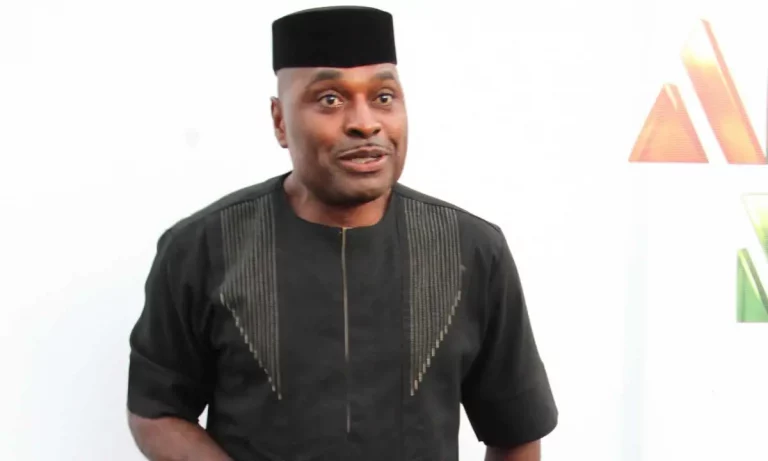
The campaign council’s spokesperson, Kenneth Okonkwo, made the accusation while speaking during a Twitter space organised by The ICIR, on Monday, January 30.
Faulting the Muslim-Muslim presidential ticket fielded by the APC, Okonkwo noted that any party that does not recognise the country’s diversity is going to cause instability.
He stressed that the Labour Party is trying to prevent war in Nigeria by pushing for Peter Obi’s presidency.
“Any party that doesn’t recognise our diversity is going to bring instability. Haven’t you heard some clerics saying they are going on Jihad to support Muslim-Muslim ticket. That’s war. And that’s what we are trying to avoid when we were saying bringing same fate ticket in Nigeria with what we know is not going to help us. A lot of Muslims are against it.
“Can you imagine in a party, you have the Senate President, Muslim. Speaker of the House of Representatives, Muslim. Deputy Speaker of the House, Muslim. Presidential candidate, Muslim, Vice presidential candidate, Muslim, even National party chairman. At a time when we have a Muslim Chief Justice of the Federation. So what kind of party is that?
“It’s even against our Constitution. It’s against Section 14, sub-section 34 of the Constitution. It’s against Section 15, sub-section 1, sub-section 2, sub-section 3(d) and sub-section 4 of the Constitution. You can’t have a party and give it an appearance as if it’s a religious party or an ethnic party.”
Speaking on the Labour Party’s structure, Okonkwo further stressed that the South-East and South-South are for Obi, adding that he will share the South-West with the APC presidential candidate, Tinubu.
According to him, 90 per cent of Nigerian Christians will vote for Obi due to the Muslim-Muslim ticket.
“If you like it or not, 90 per cent of Christians, Nigeria wise, are doing Obi. And the reason is that they don’t want Muslim-Muslim ticket. I am telling you that those Christians would still have voted against Christian-Christian ticket, it’s not about religion. It’s another fact that we are a divided nation.”
He stressed that Obi’s structure had already been in existence since 2019, noting that it is strong and firm.
Suggesting that Obi is the third-force, sought by Nigerians, Okonkwo added: “When this movement started, It predated Obi entering Labour Party. Since 2019, Nigerians have been unanimous that the major political parties have failed. They lost confidence in the major political parties, and they wanted third-force but who is going to be a symbol of this third force?”
LABOUR Party campaign spokesperson Kenneth Okonkwo has said Peter Obi’s political structure is more reliable than that of his opponents because it is rooted in the people.
Okonkwo spoke during a Twitter Space organised by The ICIR with the theme ‘Peter Obi and 2023 Presidential Elections: Defining the Structure’.
He noted that Obi’s structure is the people, contrary to what he described as the “paid structure” enjoyed by the Peoples Democratic Party (PDP) and the Progressives Congress (APC).
He argued further that those supporting PDP and APC candidates were doing so for their personal gains, rather than for the Nigeria’s benefit of the country.
“When it comes to structure, he has the most widespread and reliable structure of volunteers. Whoever you see calling Obi is doing so without any expectation of monetary inducement,” he said.
He stressed that Obi has a more reliable structure, which he described as organic and filled with committed people.
Okonkwo also argued that Obi has deep-seated and empathetic supporters from both the PDP and APC, many of whom have issues with candidates both parties presented.
“Apart from being the flagbearer of Labour Party, Obi has structure across the states, local governments and wards because the people are his structure. We have many members of PDP and APC who support Obi’s cause because of their belief in him.
Commenting further on Peter Obi’s chances without a governor, a minister and representatives at the National Assembly, Okonkwo said, “Peter had similar challenges before he became the governor of Anambra State.
“When itcame in to the contest for the governorship position of Anambra State, I know as a fact that All Progressive Grand Alliance (APGA) has no structure. No senator, no state or federal lawmaker, not even a councillor. It goes a long way to justify my point that the people are the structure.”
Speaking further on the APC and PDP, he said, “They know that if they don’t spend money, nobody will follow them. The structure they keep speaking of is the structure of corruption, criminality, insecurity, poverty, unemployment, illegality which kept us currently where we are as a nation.”
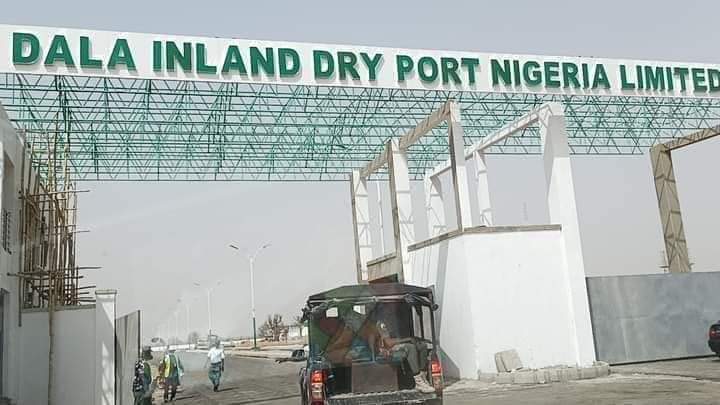
THE Kano State economy, valued at $12.39 billion, is expected to grow appreciably with President Muhammadu Buhari’s commissioning, today, of the Dala Inland dry port (IDP) in Dala local government area of Kano State.
Kano State is notable for commerce, and economic watchers believe an inland dry port would deepen its wealth expansion with neighbouring states and the Niger Republic.
Kano State remains the largest non-oil and gas economy in the country with an estimated $12.39 billion market size driven by commerce, manufacturing and subsistence agriculture.
Shortly after commissioning the Dala IDP, President Buhari proceeded to the Kano Grid Solar Power project at Kumbotso.
The President, alongside the Kano State governor Abdullahi Umar Ganduje, and his deputy Nasir Yusuf Gawuna, commissioned the solar power project.
The project would be supplying power to some of the industries in the state to ensure Kano remains an industrial and commerce hub.
The Executive Secretary of the Nigeria Shippers Council, Emmanuel Jime, remarked at the occasion that the Dala IDP would boost the trans-Sahara trade and, indeed, the African Continental Free Trade Area (AfCFTA).
He also declared the dry port as a pacesetter for other dry ports in the country.
“Kano leads the way as far as commercial activities are concerned, as all the states in the northern part of Nigeria regard Kano as the commercial hub,” he said.
The NSC boss noted that the support and partnership of the Kano State government with regard to the development of the Dala IDP should be emulated by other state governments.
According to him, the port would serve to decongest the seaports and reduce the cost of doing business.
“It will provide an avenue for shippers in the hinterland and neighbouring countries like Niger, Chad, and Benin to have their cargoes transported to their doorsteps,” he said.
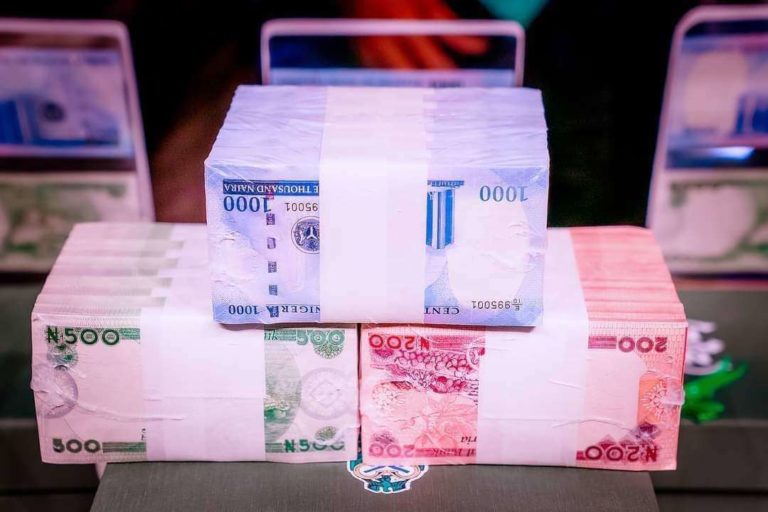
MANY Nigerians today spent hours at automated teller machines (ATMs) and point-of-sale (PoS) centres in efforts to obtain the redesigned naira notes, which have been scarce across the country.
For many, the efforts were fruitless as most ATMs had no notes to dispense. The scarcity opened a window of opportunity for PoS merchants who had the new notes as they raised the commission on transactions.
“We currently charge N1,500 as commission on every withdrawal of N10,000 new notes. We are doing this because we don’t even get from the bank the commensurate amount we request. The currency is scarce. You can see the long queue at the Union Bank ATM,” a PoS merchant in Abuja, Memunat Musiliu, told our correspondent today.
Many bankers The ICIR spoke with in Lagos and Abuja complained of scarcity of the new notes, with an explanation that they were yet to receive them in amounts they requested from the Central Bank of Nigeria (CBN).
“The notes are stil scarce. Our ATM are not dispensing currently. We have run out of the few notes we were given. We cannot put the old notes in the ATM, lest we risk santion by the CBN,” a banker at a Stanbic IBTC branch in Abuja, who pleaded anonymity, told The ICIR.
At the Keystone Bank branch in Computer Village, Ikeja, Lagos, some people could be seen at the lone ATM there milling to get the new notes.
Crowd at Keystone Bank branch at Computer Village, Ikeja, Lagos, milling to obtain new notes
There seems to be no relief still for the citizens on wide availability of the redesigned notes after the CBN Governor, Godwin Emefiele, announced on Sunday, January 29, 2023 a 10-day extension of the deadline for the use of old naira notes.
Emefiele, who said he had the approval of President Muhammadu Buhari on the extension, gave the new deadline as February 10.
FCMB ATM in Kubwa, FCT with large crowd
He warned that the people must utilize the opportunity to swap their old notes because the deadline would not be extended again.
The CBN had in October 2022 announced introduction of the redesigned N200, N500 and N1000 naira notes and gave a deadline of January 31, 2023 for the use of the old notes.
The new notes were, however, scarce to obtain nationwide, necessitating a clamour for deadline extension to address concerns of poor circulation.
An industry analyst has expressed doubts the extension would solve all the issues raised about the redesigned currency.
Yusuf says extension won’t solve key issues
“Just got news that the deadline for the currency swap has been extended by 10 days. The CPPE believes that 10 days is grossly inadequate to make up for the glaring shortcomings of the apex bank in this process,” an economist and Chief Executive Officer of the Centre for Promotion of Private Enterprise, Muda Yusuf, told The ICIR.
Yusuf stressed that despite the extension, there were still shortcomings in the policy capable of dislocating businesses.
He said that the failure to give adequate time for the currency swap could put the N100 trillion component of the national gross domestic product at risk.
He saw the two critical sectors of Trade/Commerce and Agriculture as particularly vulnerable.
According to him, the crippling of business transactions at the distributive trade end amid the currency swap crisis would not only undermine the trade and agricultural sectors, it would also have a knock-on effect on the manufacturing value-chain and the services sectors.
He noted that the trade sector contributes about 14 per cent of the GDP valued at an estimated N35 trillion, while the agricultural sector contributes 25 per cent, valued at an estimated N62 trillion.
Most of the activities in these sectors, he said, were either in the rural areas or in the informal sector, adding, “These are the sectors that have been driving the resilience of the Nigerian economy amid numerous domestic and global headwinds. Any policy measure that would negatively disrupt these sectors should be avoided.
Yusuf argued that for an economy tottering on the brink, the capacity to absorb shocks and disruptions was severely constrained.
“With 133 million Nigerians in poverty, inflicting additional hardship on the citizens will be unfair, insensitive and inconsiderate. The reality is that, presently, in many parts of the country, more than half of the currency in the hands of citizens are still old notes. And it is on record that the banks are still giving out old notes even a few days to the CBN deadline. The citizens should not be made to pay for the incompetence, inefficiency and ineptitude of state institutions,” he said.
A SPOKESPERSON of the Labour Party (LP) Presidential Campaign Council, Kenneth Okonkwo, has accused candidates of the All Progressive Congress (APC) and the Peoples Democratic Party (PDP) of renting supporters for campaigns and other electoral activities.
He said the APC’s Bola Tinubu and the PDP candidate, Atiku Abubakar, paid to pull crowds at their campaigns and have to buy electorates’ votes to stand a chance in the 2023 election.
Okonkwo said this on Monday, January 30, while speaking on a Twitter space organised by The ICIR.
He described both parties as cross-coordinators of corruption and asked that their candidates be withdrawn from the leadership structure.
Okonkwo said financial benefits have influenced anyone supporting Tinubu or Atiku.
He said, “No one would vote for Tinubu or Atiku unless they gave the person money.
“They rent crowds for their campaigns. I have seen some of their groups fighting over the money they were promised.
“The structure the APC and PDP have now is a structure of criminality, poverty, unemployment and corruption. These parties know that no one will follow them if they don’t spend money.
“Tinubu and Atiku should be removed from the leadership structure cos they are cross-coordinators of corruption.
“People want change. They want it now, and what Nigeria needs to achieve this is a young leader of character.”
The Federal Polytechnic Nekede, Owerri, Imo State, has vowed to punish a graduate who claimed in a viral video that she graduated from the school with the help of God and her private part.
Although the unnamed lady pleaded on Monday, January 30, while speaking during a telephone interview on a radio station based in the state capital that she didn’t mean ‘pussy’ but ‘popsy’, her school told The ICIR after that it would not spare her the punishment it planned to unleash on her.
The school has set up a panel to probe her, but she is yet to honour the invitation.
After defending her HND 2 project this month, the lady went to do a series of videos, some of them from a night party she attended, the polytechnic told this newspaper.
The school’s Deputy Rector Academic, Chris Onyemenonuwo, who spoke with The ICIR, condemned her conduct and said she was not a good ambassador of the institution that prides itself as an institution with high academic and moral standards.
He said the lady’s plea for making a mistake in the video was unacceptable. According to Onyemenonuwo, the lady is deceitful, and her pleas are fake. He said the school had three versions of her video, which proved that her confession to using her private part in school was genuine. The official said the graduate did not know that the school had other versions of her videos.
In the video available in the public space, the lady said, “Today is the final day, meh! Nekede (the Polytechnic) bye, bye. This Nekede’s stress ends today. Nekede’s stress ends today.
“I’m now a graduate. Finally, I’m now a graduate of Federal Polytechnic, Nekede Owerri. It can only be God (ooo) It can only be God and my pussy (ooo).”
Many Nigerians who saw the video on Tik Tok interpreted her to mean that she graduated with God’s help and used her private part to curry favour from lecturers and other persons – a practice referred to as ‘sex for marks’, as has been reported in some higher institutions in the country.
Reacting to the backlash the video caused, the lady spoke with the radio station in the state Monday morning.
Speaking with a mix of Igbo and English languages, she said she didn’t mean ‘pussy.’
“To say the truth, nothing happened. That day, I just went to take pictures, and I was excited because it’s been five years without any issues in school. I came out, and I made that video that it could only be God. I was walking. If you watch that video very well, I was walking. I meant popsy, that is P-O-P-S-Y. That is what I meant.
“But you know Nigerians and their lifestyle, they took the thing in another way, saying I said God and my pussy. You know it is bad things that trend more than good things. What I meant at that moment was ‘God and my popsy.”
The lady, who had worked as a waitress at a club and with a popular staple food-producing firm in the state, explained that even if people assumed she referred to her genitals, only her boyfriend would have access to it.
She said she and her boyfriend started the polytechnic in year one till her last day on campus.
“He is my serious date, but we don’t live together. So, I met him from day one when I came to school until I finished. So even if that is what they have in mind, it is my boyfriend. Some of my lecturers, I don’t even know their names.
“I just know them facially. I know them, but I don’t know their names. Even if they bring anything for me to swear, I will swear with it. If they say we should go anywhere, I will go there and swear.”
According to her, she never had any relationship with any lecturer in the school nor had a problem with any of her courses.
“The panel has been calling me since yesterday… They have been calling me all these while, but I am not in Owerri. As it stands now, I travelled. Even this morning, one of them called me, but once I enter Owerri, I will go into the school to meet them myself.”
The polytechnic had condemned the behaviour in the strongest terms in a statement released before The ICIR contacted its official.
The school’s registrar, E. C. Anuna, issued the statement titled ‘Management Investigating Student Involved in a Show of Shame on Social Media’.
The institution said it had launched full investigations into the identity of the student “who gloated on TikTok about how she graduated with the help of God and her private organ. It is even most blasphemous and antithetical that the said student peddled the name of the Almighty in her deleterious act.
“Management considers the action of the student most unacceptable and preposterous. The Federal Polytechnic Nekede prides itself as an institution with high academic and moral standards. Both staff and students are quite aware of the consequences of any misconduct.”
The school said it had hotlines through which students could report any act of exploitation or corruption, and any staff or student found culpable is meted with appropriate punishment.
“The despicable post of this supposed student does not, therefore, represent the standard of our institution. The Rector of the institution, being a clergyman, has been very committed and consistent in instilling discipline in our students through seminars, solemn assemblies, sensitization outreaches and publications.”
The school promised to make its findings known after investigating the incident. But it added a caveat: “It is in our purview to ensure that only students found worthy in learning and character are certified. This is a commitment to which we shall remain consistently resolute.”
A POLICE stray bullet hit one person after violence broke out at a rally of the All Progressives Congress (APC) in Ekiti on Monday, January 30.
An eyewitness told The ICIR that the incident happened at Ikoro, in the Ijero Local Government Area of the state.
It was gathered that the Senator representing Ekiti Central Senatorial District, Michael Opeyemi Bamidele, had led other candidates seeking various elective positions in the forthcoming election in the zone to Ikoro for the rally.
Trouble started when the lawmaker and those in his entourage were leaving the town.
The eyewitness said some motorcyclists, also known as okada riders, who had accompanied the convoy to various wards in the town blocked the convoy to demand for money.
The attitude of the okada riders was said to have infuriated police officers attached to the convoy who shot sporadically into the air to disperse the crowd.
A bullet hit the ankle of a young girl identified as Yemisi.
The girl was seen being rushed to the hospital in several videos sighted by The ICIR.
Attempts to get the reaction of the Ekiti State Police Command were not successful as the spokesperson, Sunday Abutu, did not answer several calls as of the time of filing this report.
He also did not reply to the text message sent to his phone at the time of filing this report.