Home Blog Page 115

Tinubu orders ministers to seek presidential approval before using police escorts

0

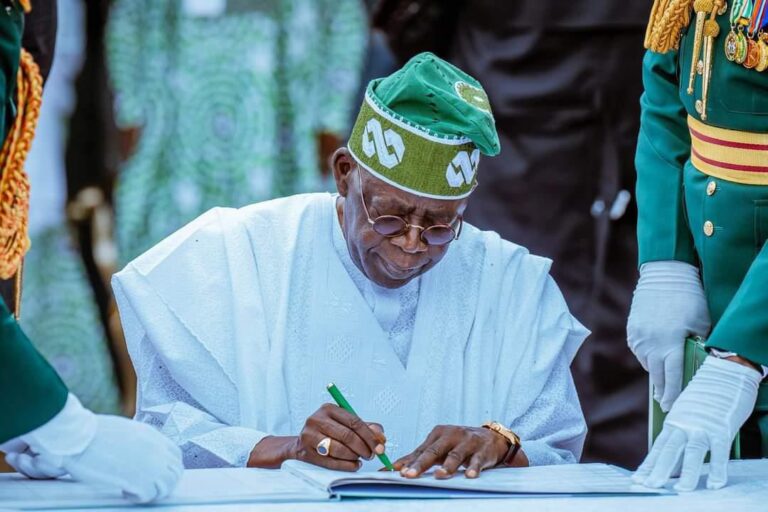
PRESIDENT Bola Tinubu on Wednesday insisted that his directive withdrawing police officers from VIP and VVIP protection was final, warning ministers and top government officials to comply immediately.

Speaking at the opening of the Federal Executive Council (FEC) meeting at the State House in Abuja, Tinubu instructed ministers to approach the Inspector-General of Police (IGP) for clearance whenever their assignments require police escorts.

“If you have any problem because of the nature of your assignments, please contact the IGP and get my clearance,” a statement by the Special Adviser to the President on Information and Strategy, Bayo Onanuga, quoted the president to have said.

Tinubu noted that police officers were trained to protect the lives and property of Nigerians, especially the most vulnerable.

He explained that redirecting police officers back to core policing duties was necessary as the country battles insecurity, including kidnapping, banditry, and terrorism.

He stressed that operatives of the Nigeria Security and Civil Defence Corps (NSCDC) would take over VIP protection.

According to him, the Minister of Interior, Olubunmi Tunji-Ojo, has been tasked with making the necessary arrangements.

“”The National Security and Civil Defence Corps are trained for VIP protection, and they are armed too,” he added.

He directed the National Security Adviser, Nuhu Ribadu; the Minister of Police Affairs, Senator Ibrahim Gaidam; and the IGP, Kayode Egbetokun, to ensure full enforcement of the order.

The president said the security structure would be reviewed to allow police officers return to the frontline and better protect vulnerable communities.

“We face challenges here and there of Kidnapping, banditry and terrorism. We need all forces utilised. I know some people are exposed; we will make the exceptions. The Civil Defence is very much around,” Tinubu stated.

His insistence came against the backdrop of the expected full enforcement of his earlier order directing the Nigeria Police Force to redeploy officers attached to VIPs back to core policing duties.

On November 24, the Nigeria Police Force, acting on Tinubu’s directive, issued a circular withdrawing all escort personnel under its Special Protection Unit (SPU) Base 16 in Lagos.

The circular, referenced AB:4087/DOPS/SPU/816/LAS/VOL.3/147 and signed by Assistant Superintendent of Police Neji Veronica, ordered affected officers to “report back before the end of today” and attend a mandatory lecture parade.

The ICIR reported on Sunday, November 23, that Tinubu directed the police authorities to withdraw all their officers serving as escorts to VIPs nationwide to core duties.

He advised anyone seeking police protection to request well-armed personnel from the Nigeria Security and Civil Defence Corps (NSCDC).

The president gave the directive during a security meeting he held with the Police, Air Force, and Army chiefs, as well as the Director-General of the Department of State Services, DSS, in Abuja.

Adeleke clinches Accord Party’s governorship ticket for 2026 poll

0

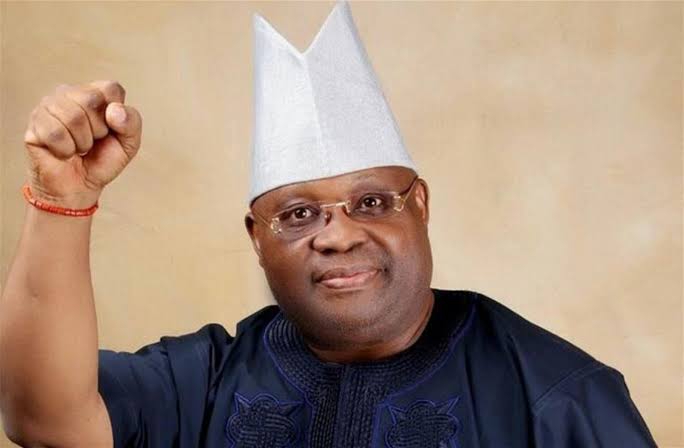
OSUN State Governor Ademola Adeleke has clinched the Accord Party’s governorship ticket for the August 8, 2026, election.

Adeleke, who ran unopposed in the primary conducted in Osogbo on Wednesday, secured 145 of the 150 delegate votes from the state’s 30 local government areas.

Announcing the outcome, the Secretary of the Electoral Committee, Abdulazeez Salaudeen, said five ballots were declared invalid.

“The electoral committee has delivered on its mandate. After voting and counting, witnessed by the agents of the candidate and the officials of the Independent National Electoral Commission.

“Having the highest number of votes, I declare Senator Nurudeen Ademola Adeleke as the winner of the primary,” Salaudeen said.

The ICIR reported that on Tuesday, December 9, that Adeleke announced his intention to seek re-election for a second term on Accord Party’s platform, days after dumping the Peoples’ Democratic Party (PDP)

The governor said he had joined Accord Party on November 6, after weeks of consultation and deliberations with stakeholders and opinion leaders.

Adeleke, his deputy, Kola Adewusi, and several political appointees were present at the primary election exercise as armed police, Department of State Services operatives were deployed, and INEC officials observed the exercise.

The Accord Party’s national leadership, led by its chairman, Maxwell Mgbudem, also attended the primary.

The ICIR reported that Adeleke announced his resignation from the PDP in a letter dated November 4, addressed to his ward chairman, in Sagba Abogunde, Ward 2, Ede North Local Government Area.

The governor becomes the latest top member of the leading opposition PDP to be toppled by tsunami that has swept several stalwarts and leaders out of a party that once prided itself as “Africa largest” political group.

He thanked the party and its members for the platform on which he rose to political prominence, first as a senator and now as governor.

Kwara kidnap surge leaves families in terror as ransom calls ring

0

By Dare Akogun, Ilorin

SHORTLY after daybreak on Tuesday, December 2, 2025, a phone rang in a small farming settlement tucked between the forests of Igbofe and Ora in Ifelodun Local Government Area of Kwara State.

Young worshippers exiting the church after a special Sunday service held for the kidnapped worshippers.

For Sakariyau Alabi, a yam and cassava farmer, that call would alter his life forever.

The trembling voice on the other end belonged to his kidnapped wife whispering through pain, telling him she had been shot twice and patched up in the bush by the same men who abducted her.

“She told me only God can rescue them,” Alabi told The ICIR, fighting tears.

“My son was lying in blood when I returned home. They carried my wife, my daughter and my brother’s wife. They also took a Fulani visitor.”

Hours earlier, armed men had stormed the compound, shooting his 28-year-old son in the stomach before dragging four people into the surrounding forest.

Then came the ransom demand: ₦500 million.

After pleading, they reduced it to ₦100 million still an impossible sum for a subsistence farmer.

“Even if I sell all my crops and land, it will never reach that amount,” he said.

Alabi’s story is no longer an exception. It is the new reality of rural Kwara. Kwara’s forest belt: From farmland to fear zone.

The ICIR’s review of recent incidences shows a disturbing pattern: Kwara’s rural communities once considered transit corridors have now become active operational bases for kidnappers.

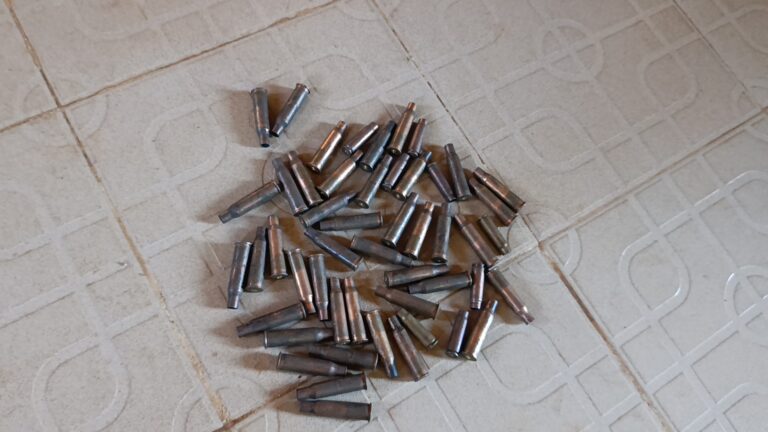
Expelled bullets shells used by the attackers on the Church

Igbofe, Koro, Moro, Patigi, Asa and Kaiama LGAs share porous boundaries with Kogi, Niger, Ekiti and parts of the North-Central forests.

Security analysts say these routes have become safe havens for criminal cells fleeing military pressure in neighbouring states.

Armed security men mounting guard at the church few days after the attack

“What we are witnessing is a spillover,” said Ilorin-based security analyst, Abdulrasheed Abdullahi, in an interview with The ICIR.

“These groups are no longer passing through they are settling, forming cells and launching repeated attacks.”

The attacks now follow a predictable pattern, dawn or late-night raid, rapid gunfire, abduction into deep forests, impossible ransom demand, negotiations under fear and silence and families like Alabi’s are left to negotiate alone.

In Koro, a historic border community in Ekiti LGA, the crisis is already decades deep.

On Tuesday the same day Alabi’s family was abducted a 25-year-old Miss Abigael Obagbemi and 35-year-old, Abiodun Olawale, were kidnapped on their way to a local market.

Bullet ridden windows aftermath of the attack 

A relative, who asked to be identified only as Segun, told The ICIR: “The kidnappers are asking for ₦100 million each. These are traders. They are not rich. They just want to destroy families.”

Koro is still grieving from the 2024 assassination of its traditional ruler, HRH Retired General Segun Aremu, who was murdered in his palace by masked gunmen.

Kwara State Commissioner of Police CP Adekimi Ojo addressing residents of Eruku

Residents say the violence has only intensified since then.

On Monday, December 1, 2025, two Chinese expatriates working on the BUA Bode Saadu–Kaiama–Kosubosu road project were abducted in Ejidongari after gunmen invaded the construction site.

Kwara State Commissioner of Police, CP Adekimi Ojo, confirmed the incident.

Armed security men mounting guard at the church few days after the attack.

“The police are doing everything within our power to rescue all abducted individuals. Our detectives are working day and night,” he said.

But for many communities, those assurances feel distant.

‘We negotiate alone’

Security researcher,  Musbau Ajeigbe, says the kidnappers’ strategy is shifting and more deadly.

“Families now negotiate directly because kidnappers threaten to kill victims if the police are involved,” he explained.

“This is extremely dangerous. It deepens poverty and emboldens criminals.”

He warned that the abductions of foreign workers, repeated raids on rural homes, and attacks on places of worship show a transformation in the criminal networks’ sophistication.

“This is organised terrorism,” he said.

Kwara’s silent emergency

Across the state’s rural LGAs, fear now dictates daily life, farmers are abandoning farmlands, women avoid early morning travel and vigilante groups, armed with dane guns and courage, face attackers with automatic weapons

Madam Felicia who lost a family member to the attack

Also, children no longer walk alone at dawn and communities sleep lightly waiting for the next knock.

The ICIR found that some villages have created informal levies to fund emergency ransom contributions.

But for Alabi, there is no community levy big enough to match the kidnappers’ threats.

As he sits outside the hospital ward where his son fights for life, Alabi’s voice trembles.

“I cannot sleep. I cannot eat,” he said, adding: “They told me to choose — pay or lose my family. I beg Nigerians, please help me.”

Somewhere in the thick forest stretching from Kwara to Kogi, his wife, daughter and sister-in-law are waiting hungry, wounded, and unsure if help will come.

For now, all he can do is wait for another phone call and pray it is not another threat.


Soyinka raises concern over ‘armed to teeth’ security escort for Seyi Tinubu

0

NOBEL Laureate Wole Soyinka has questioned the scale of armed protection attached to Seyi Tinubu, son of President Bola Tinubu, describing his convoy he encountered in Lagos State as excessive and troubling for a country struggling with overstretched security resources.

Soyinka made the remarks on Tuesday, December 9, while presenting an honorary award to poet Odia Ofeimun at an event hosted by the Wole Soyinka Centre for Investigative Journalism.

He recounted walking into a Lagos hotel and seeing what he initially believed was a film shoot, until one of the men stepped forward to greet him.

It was only after the encounter, he said, that his driver informed him the individual was Seyi Tinubu and that the heavily armed group “about 15 or so, armed to the teeth,” was his security escort.

Soyinka, who said was disturbed by the scene, immediately contacted the National Security Adviser, Nuhu Ribadu, to register his concern.

“I was so astonished that I started looking for the national security adviser. I said track him down for me. I think they got him somewhere in Paris. But he was with the president; he was in a meeting.

“Then, I said I’ve just seen something I can’t believe I don’t understand, and I described the scene to him. I said, ‘Do you mean that a child of the head of state goes around with an army for his protection or whatever’,” he said.

Soyinka added that further inquiries suggested this level of security had become routine for the president’s son. He warned that such deployments divert critical personnel from areas where they are urgently needed.

“Later on, I did some investigative journalism. And I enquired and I found that apparently, this is how this young man goes around with his battalion, his heavy armed soldiers,” he said.

“Children should know their place. They are not potentates,” he stressed, arguing further that Nigeria’s security system could be weakened if large teams were continually attached to individuals who hold no public office.

Soyinka sarcastically suggested that if another attempted coup or insurrection occurred, the president might simply “send his son and the troops that follow him around” to put it down.

Meanwhile, Soyinka’s criticism came a few weeks after Tinubu withdrew police officers from very important persons.

In November, President Tinubu ordered police officers assigned to VIPs to be withdrawn and redeployed to core policing duties amid the ravaging insecurity.

Adeleke to seek re-election in Accord Party after dumping PDP

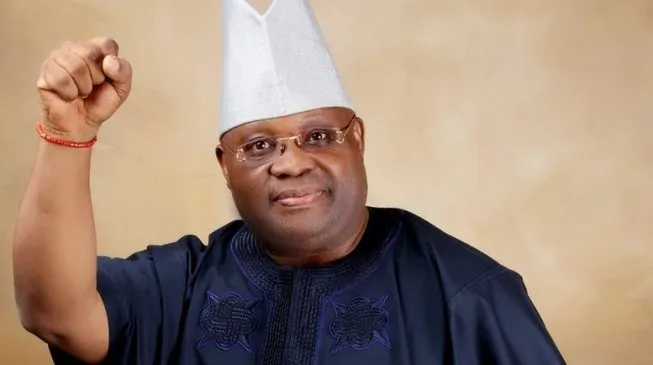
OSUN State Governor, Ademola Adeleke, has announced his intention to seek re-election for a second term on the platform of the Accord Party, days after dumping the Peoples Democratic Party.

The governor made the announcement Tuesday evening at the Government House in Osogbo in the presence of national and state leaders of his new party.

“I joined the Accord Party more than a month ago, precisely on November 6, as a platform to seek re-election in 2026. This was after weeks of consultation and deliberations with stakeholders and opinion leaders.

“Stakeholders and residents of Osun state are aware of why we are taking this important decision. We intend to pursue a second term in office on the platform of the Accord Party to complete ongoing delivery of good governance and democratic dividends, which have been applauded at home and abroad,” the governor said.

Adeleke explained that he opted for the party because its mission of welfarism aligned with his focus on citizens’ and workers’ welfare.

“I welcome our party leaders into the Osun State Government House. You are now part of us, as I am also now part of you. We are united in progress and good intentions for the good people of Osun State and Nigeria at large.

“At this historical point, our task is to sustain a united front as we prepare for the elections. We have a duty to ensure an inclusive leadership where the interests of all groups are cared for. Our party, Accord Party, is here to take over Osun governance and sustain the delivery of good governance in our dear state,” the governor added.

Explaining that the primary function of a government is the welfare and well-being of the people, Adeleke emphasised that since he joined the party, he had been fascinated by its philosophy .

“As a governor, I have prioritised the welfare of our people, from workers to the entire citizenry. Day and night, we implement policies and programmes to elevate the well-being of our people. From infrastructure to social services, Osun has never had it so good in governance and service delivery.

“Today, we unveil the new platform for the good people of Osun State. From Osun West to Osun East to Osun Central, this is our party, our new platform for victory come August next year,” he explained.

The ICIR reported that Adeleke announced his resignation from the PDP in a letter dated November 4, addressed to his ward chairman, in Sagba Abogunde, Ward 2, Ede North Local Government Area.

The governor becomes the latest top member of the leading opposition party to be toppled by tsunami that has swept several stalwarts and leaders out of a party that once prided itself as “Africa largest” political group.

He thanked the party and its members for the platform on which he rose to political prominence, first as a senator and now as governor.

The ICIR reported earlier today that Rivers State Governor, Siminalayi Fubara, announced his defection from the PDP to the All Progressives Congress (APC) during a stakeholders’ meeting at the Government House in Port Harcourt, days after a wave of defections hit the Rivers State House of Assembly.

The development came barely 24 hours after the Rivers’ governor held a closed-door meeting with President Bola Tinubu at the State House, Abuja.

His decision followed the defection of 16 lawmakers from the PDP to the APC during a plenary on Friday, December 5.

PDP stalwarts, including Delta State Governor Sheriff Oborevwori, and his counterpart in Bayelsa, Douye Diri, are among leaders who have quit the party this year.

The ICIR reported a pattern of defections from the PDP to the ruling APC, particularly among governors and lawmakers seeking to align with the APC ahead of the 2027 polls.


Rivers Governor Fubara dumps PDP, joins APC

RIVERS State Governor, Siminalayi Fubara, has defected from the Peoples’ Democratic Party (PDP) to the All Progressives Congress (APC).

Fubara announced his move on Monday during a stakeholders’ meeting at the Government House in Port Harcourt, days after a wave of defections hit the Rivers State House of Assembly.

The ICIR reports that the development came barely 24 hours after the Rivers’ governor held a closed-door meeting with President Bola Tinubu at the State House, Abuja.

His decision followed the defection of 16 lawmakers from the PDP to the APC during a plenary on Friday, December 5.

At the plenary, the Speaker Martin Amaewhule, declared his departure from the PDP, citing deep divisions within the party.

“APC is my new party. I will do all that is needed to be done towards ensuring that the party card of the All Progressives Congress is issued to me in no time. I am happy to be a member of the APC so that we can join forces with Mr. President. He is doing so much for this country,” he said.

The defections, which included lawmakers Dumle Maol, Major Jack, Linda Stewart, Franklin Nwabochi, Azeru Opara, Smart Adoki, Enemi George, Solomon Wami, Igwe Aforji, Tekena Wellington, Looloo Opuende, Peter Abbey, Arnold Dennis, Chimezie Nwankwo, and Ofiks Kabang, have reshaped the House’s political configuration.

In response, the remaining lawmakers appointed Sylvanus Nwankwo as Minority Leader, alongside three other minority officers.

These developments came just months after President Tinubu lifted the six-month state of emergency imposed on the state in March 2025, a measure introduced at the height of the political rift between Fubara and his predecessor, the current Minister of the Federal Capital Territory (FCT) Nyesom Wike-backed faction of the Assembly.

The political shifts also follow a vote of confidence passed on President Tinubu by 32 lawmakers in the Assembly on December 3, urging him to seek a second term in office.

Meanwhile, Wike, a PDP member serving in President Bola Tinubu-led APC government, has continued to drum support for the president’s re-election.

He has yet to leave the embattled PDP. Fubara joins other governors and PDP stalwarts who have quit the PDP this year.

Some of the stalwarts include Delta State Governor Sheriff Oborevwori, and his counterpart, Douye Diri.

The ICIR reported a pattern of defections from the PDP to the ruling APC, particularly among governors and lawmakers seeking to align with the APC ahead of the 2027 polls.

ICPC trains MDA directors on tackling corruption, procurement abuse

0

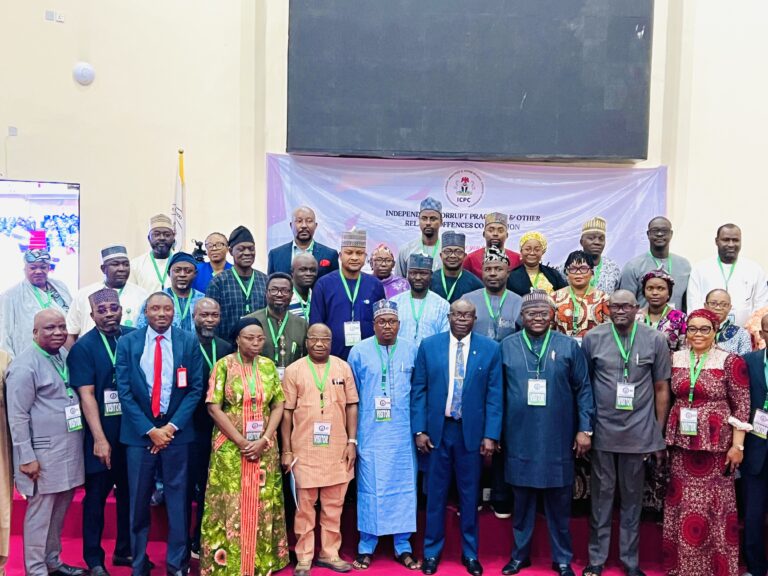
THE Independent Corrupt Practices and Other Related Offences Commission (ICPC) on Tuesday, December 8, trained directors and heads of procurement of ministries, departments and agencies (MDAs) of government on how to better tackle corruption and procurement abuse in the country.

The workshop, held at the commission in Abuja, was organised to address persistent procurement violations uncovered during the ICPC’s constituency and executive project tracking exercises across the nation.

The training was attended by the Chairman of House Committee on Anti-Corruption, Kayode Moshood Akiolu; Director General of Bureau of Public Procurement, Adebowale Adedokun and the Director General of Nigeria Building and Road Research Institute, Samson Duna.

Declaring the event open on behalf of the ICPC Chairman, Musa Adamu Aliyu, the Commission’s Secretary, Clifford Okwudiri Oparaodu, said procurement remained the single largest vulnerability point in public finance, accounting for an estimated 10 to 25 per cent of Nigeria’s GDP.

He warned that the volume of corruption linked to procurement made it imperative for MDAs to commit to transparency.

“Public procurement is where policy meets practice,” he said, adding “It is where budgets either translate into real projects for Nigerians or disappear into private pockets. You know what we mean, it is either the work gets done or it goes somewhere else entirely. That is where our interest lies.”

The ICPC Chairman noted that the commission had repeatedly discovered “contract splitting, inflated invoices by as much as 200 to 300 per cent. He also cited phantom contracts, repeated projects in annual budgets, duplicated projects, and mobilisation funds that vanish without any work done.

According to him, these practices have become too rampant to ignore.

Aliyu noted that it was no coincidence that the workshop came up the day the United Nations set out as World Anti-Corruption Day.

He said the ICPC’s Constituency and Executive Projects Tracking Initiative (CPTI), introduced in 2019, was a turning point.

“The approach was revolutionary in its simplicity and outcome, as physically tracked projects from inception to completion across all 36 states and the FCT demonstrated all stakeholders, such as contractors, public officials, and project sponsors, need to be held accountable. 

“It also led to direct community engagement, where each community is expected to take ownership and interest in every project being executed, cited, and executed in the community. Beyond individual problems and cases, CPTI revealed structural problems.”

He said the commission had identified several recurring infractions, including projects being cited on private properties belonging to sponsors or their cronies, violations of the Public Procurement Act 2007, and instances where executive government projects, grant-driven initiatives or identical interventions were duplicated.

He noted that project vehicles and equipment were often converted to personal use, while poor or nonexistent needs assessments had led to white-elephant projects across various communities, among others.

He added that e-procurement, if properly implemented with political will, funding and capacity building, could eliminate human discretion, reduce abuse, and build an auditable trail for every procurement action.

However, he explained that monitoring alone could not solve procurement abuses, noting that political will, adequate funding, capacity building and strong change-management systems were needed to make reforms work.

Aliyu explained that without these, e-procurement would fail. He urged lawmakers to strengthen oversight, close loopholes in the procurement law and support anti-corruption agencies with better funding.

He advised procurement officers to embrace transparency, enforce internal controls, resist political pressure and cooperate with oversight bodies to curb fraud.

He emphasised that the commission remained committed to promoting accountability and urged participants to act on what they had learned, stressing that millions of Nigerians still lacked basic services and that corruption thrived when left unchecked.

Speaking at the event, the Director-General of the Nigerian Building and Road Research Institute (NBRRI), Samson Duna, said ICPC’s involvement had reshaped how MDAs conduct procurement and project oversight.

He explained that in the past, many agencies approved projects with little or no documentation, but ICPC’s demand for evidence had strengthened internal controls.

“ICPC brought sanity into the system,” he said, stressing, “Today, no desk officer can come to me and say, ‘Sir, approve this contractor because you know him.’ They will tell you immediately, I must go to the site first. That is the kind of discipline we are talking about.”

Duna said NBRRI had insisted on multiple site visits, photo evidence with timestamps, and detailed progress reports before payment is approved.

“As CEO, I no longer approve anything unless the file has passed through the consultant, the desk officer, the procurement director and then reaches me with evidence…Before now, contractors were being paid within two weeks even without proper verification. That era is gone.”

He revealed that after assessing more than 80 collapsed buildings nationwide, NBRRI found that substandard materials accounted for at least 30 per cent of failures. He urged ICPC to collaborate more closely with research institutions to ensure strong infrastructure standards.

The Director-General of the Bureau of Public Procurement (BPP), Adebowale Adedokun, also lauded ICPC for enforcing procurement discipline, noting that the amended ICPC Act, which criminalises failure to carry out procurement planning, had significantly improved compliance.

According to him, procurement remained Nigeria’s most critical defence against corruption.

“If we are truly going to prevent or fight corruption, strengthening procurement activities and working closely with anti-corruption agencies is the only way forward,” he said.

Adedokun said the Federal Government recently approved a new policy which, for the first time, provides a legal basis to prosecute contractors who deliver substandard projects.

“This policy has placed Nigeria on the global stage. For the first time in our history, we can now legally hold contractors accountable when they do shoddy work. That deserves applause.”

He warned that procurement audits must become routine if abandoned projects, losses and wastages are to be curbed.

“The delays, the insecurity, the collapsed infrastructure – all these things happen because Nigerians do not have equal opportunities to do business fairly.

Corruption will fight back, but we can win the battle through systems, processes, adherence to good governance will help us to do well.”

He urged participants to think about long-term implications.



Tinubu seeks Senate confirmation of Kanti-Bello, Animashaun as NERC commissioners

PRESIDENT Bola Tinubu has requested that the Senate confirm two nominees for appointment as commissioners of the Nigerian Electricity Regulatory Commission (NERC).

The request followed leadership vacuum created by the expiration of the tenure of the Vice Chairman of NERC and the commissioners on December 1.

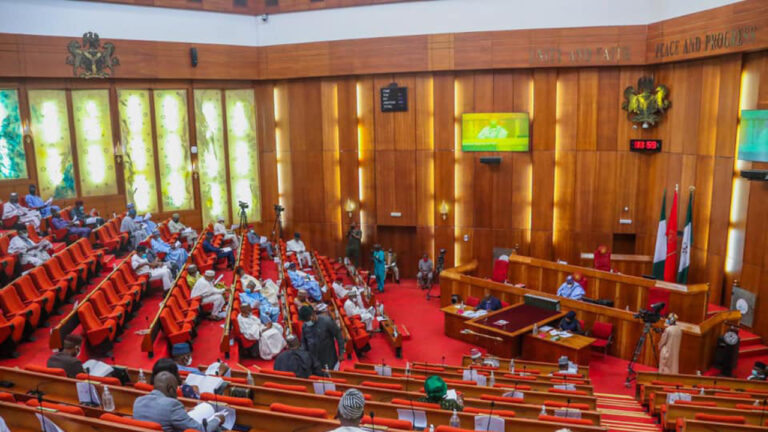
Tinubu’s request was contained in a letter addressed to the Senate, and read by the Senate President Godswill Akpabio during plenary on Tuesday, December 9.

He said the nominations were made in line with section 35 (1) and (3) of the Electricity Act 2023, which empowers the president to appoint commissioners to the regulatory body subject to Senate confirmation.

The president added that the appointments were intended to strengthen the commission as it continued to oversee reforms in Nigeria’s electricity market.

“In accordance with the provisions of Section 35 subsections 1 and 3 of the Electricity Act 2023, I am pleased to present for confirmation by the Senate the appointment of the following two persons as commissioners in the Nigerian Electricity Regulatory Commission,” the letter read in part.

The nominees are Aisha Mahmoud Kanti-Bello, who is being reappointed as a commissioner, and Fouad Animashaun, who was nominated as a new commissioner.

Tinubu noted that their nominations replaced an earlier submission sent to the Senate on August 6, 2025.

The Senate is expected to screen the nominees in the coming days.

If confirmed, the nominees will join NERC’s leadership at a time the commission is implementing major reforms under the new electricity law, particularly as it is transitioning regulatory oversight to the states to unbundle and strengthen the generation, transmission, and distribution value chain in the sector.

Other responsibilities expected of the incoming commissioners are expanded regulatory oversight, licensing responsibilities and the transition toward subnational electricity markets.

The ICIR reports that following the expiration of NERC commissioners’ tenure, there has been a seeming lapse in the regulatory functions, which has lately seen the Central Bank of Nigeria (CBN) and the Presidency, as well as other committees, moving into the sector to fill regulatory gaps.

NERC is the independent regulator of the electricity sector in Nigeria with responsibilities that are focused on tariff regulation, market development and enforcement of regulatory oversight to players in the power sector value-chain.

The incoming commissioners are expected to deepen responsibilities and coordination, especially now that states are more empowered to seek independence through the unbundling of the power sector.

Senate approves Tinubu’s request to deploy troops to Benin Republic

0

THE Senate has approved President Bola Tinubu’s request to deploy troops to Benin Republic over botched coup in the West African nation.

Tinubu’s request was conveyed in a letter read by the Senate President Godswill Akpabio during plenary on Tuesday, December 9.

The president said the action was based on Section 5(5) of the 1999 Constitution, which requires presidential consultation with the Senate before sending the armed forces on combat missions outside the country. 

Pursuant to Section 5 (5) Part 2 of the Constitution of the Federal Republic of Nigeria 1999 as amended, I seek, further to consultation with the National Defence Council, the consent of the Senate for the deployment of Nigerian troops to the Republic of Benin,” he wrote.

He noted that the request followed an urgent appeal from President Patrice Talon, who sought immediate air support to repel an attempted unconstitutional seizure of power.

Tinubu further urged the lawmakers to act swiftly, citing the close relationship between Nigeria and Benin and the collective security obligations under ECOWAS. 

“This request is made further to a request received from the Government of Benin Republic for the exceptional and immediate provision of air support by the Armed Forces of the Federal Republic of Nigeria.

“The distinguished Senate may wish to note that the Government of the Republic of Benin is currently faced with an attempted unconstitutional seizure of power and disruption and destabilisation of democratic institutions,” he stated.

He stressed that the situation in Benin required urgent external support to stabilise democratic institutions.

“The situation, as reported by the Government of Benin, requires urgent external intervention. The distinguished Senate considers the close ties of brotherhood and friendship which exist between Nigeria and the Republic of Benin, as well as the principles of collective security upheld within ECOWAS.

“It is our duty to provide the support as requested by the Government of the Republic of Benin. While it is my hope that the Senate will consider and approve this request expeditiously, please accept, distinguished Senate President, distinguished senators, the assurances of my highest consideration and personal regards,” he added.

The Senate consequently approved the request.

The ICIR reports that while the letter was read by the Senate on Tuesday, the Nigerian government had already intervened in the crisis that unfolded in Benin about 72 hours earlier, following the sitting president’s request for assistance. 

On Sunday, December 7, a group of soldiers appeared on Benin’s state television. They seized power and declared that they had dissolved the government in what appeared to be another coup in West Africa.

Identifying themselves as the Military Committee for Refoundation, they announced the ousting of the president and the dissolution of all state institutions, adding that Pascal Tigri, a lieutenant colonel, had been named as the head of the committee.

The mutiny triggered hours of tension across the country as loyal security forces worked to restore order and secure key state institutions. Authorities say several of the coup plotters were arrested, while others were being hunted.

Reacting to the development, Tinubu praised the Nigerian Armed Forces for their rapid intervention, which aided loyalist forces to dislodge the soldiers who had taken over the national television station and declared Talon’s ouster.

According to a statement signed by Tinubu’s Special Adviser on Information and Strategy, Bayo Onanuga, the Beninese government formally sought Nigeria’s military support through two separate communications after the coup plotters announced the suspension of democratic institutions.

Tinubu, said while acting on the request, he ordered Nigerian Air Force fighter jets to take control of Benin’s airspace and assist in flushing out the mutineers from strategic locations, including the national broadcaster and a military camp.

Talon, who has been in office since 2016, had been expected to leave office next April – 2026, at the end of his second term in 2026 – the maximum allowed by the constitution, after the upcoming presidential election.

The attempted coup adds to a troubling pattern of political instability in West Africa, where Niger, Burkina Faso, and Guinea-Bissau have all recently experienced military takeovers or attempted uprisings.

Following the increasing coups in the West African sub-region, the Economic Community for West African States (ECOWAS) declared a state of emergency on political situations in the region on Tuesday.

The President of the ECOWAS Commission, Omar Touray, made the declaration during the 55th session of the Mediation and Security Council, at the ministerial level in Abuja.

Kebbi’s N10bn Hajj loan equals 59% of state’s 2024 IGR, raises questions about priorities

KEBBI State’s decision to provide a N10 billion loan to secure additional Hajj seats for the 2026 pilgrimage has triggered fresh scrutiny of the government’s priorities, especially when weighed against the state’s internally generated revenue and key sectoral allocations.

The loan, approved by Governor Nasir Idris, was used to secure 1,300 extra Hajj slots after the National Hajj Commission of Nigeria (NAHCON) set a December 5 deadline for states to complete payments. 

The Chairman of the State Pilgrims Welfare Agency, Faruku Aliyu-Yaro, described the governor’s action as compassionate, noting that many intending pilgrims feared missing out before the intervention.

However, a look at Kebbi’s financial records shows that the N10 billion borrowed for Hajj is equivalent to 58.93 per cent of the state’s entire Internally Generated Revenue (IGR) for 2024, which stood at N16.97 billion, according to the National Bureau of Statistics.

Kebbi’s IGR has remained low over the last five years. The state generated N13.78 billion in 2020, N9.86 billion in 2021, N9.15 billion in 2022, and N11.74 billion in 2023, before rising to N16.97 billion in 2024. 

The N10 billion loan therefore represents a significant financial commitment for a state that has consistently struggled with revenue expansion. The ICIR’s analysis shows that Kebbi is among the three states with lowest IGR in Nigeria in 2024, trailing Yobe and Ebonyi states closely.

A review of the state’s 2025 budget shows that it allocated N9 billion as a grant to the Pilgrims Board, alongside an additional N138.8 million for the Pilgrims Welfare Agency. 

Education and health received N56.6 billion and N53.56 billion respectively, despite the long-standing funding gaps in both sectors.

The amount borrowed for the Hajj intervention is almost one-fifth of what the state plans to spend on either sector throughout the year. 

The ICIR reports that the development has continued to spark debate among fiscal analysts and public accountability advocates, who argue that loaning such a huge amount for a religious exercise raises questions about prioritisation, especially in a state grappling with infrastructural deficits, understaffed schools, and health facilities in need of urgent upgrade.

Reacting to this development, a political commentator Mahdi Shehu, described the N10 billion Hajj loan as misplaced priority for a state he said is battling widespread poverty and infrastructural decay.

Writing on X, Shehu said the government was exploiting religious sentiment to mislead citizens who could barely afford basic necessities.

“The intending pilgrims will do better to perform one of the Hajj rituals; stoning the devil by stoning the person deceiving them with this Hajj loan, who qualifies as the ‘bigger devil,’” he wrote.

He accused the government of hoodwinking vulnerable residents, adding that “they just deploy religious sentiment to hoodwink senile people, the same people who can’t afford to eat are given loans to go for pilgrimage. This is simply daftly.”

Shehu referenced Kebbi’s poverty indicators, claiming that over 70 per cent of residents live in poverty, with more than two million children out of school.

He also cited failing hospitals, collapsed primary healthcare centres, poor roads, unpaid gratuities, and worsening youth unemployment as the reason the governor’s decision was erroneous.