Home Blog Page 116

Rivers Governor Fubara dumps PDP, joins APC

RIVERS State Governor, Siminalayi Fubara, has defected from the Peoples’ Democratic Party (PDP) to the All Progressives Congress (APC).

Fubara announced his move on Monday during a stakeholders’ meeting at the Government House in Port Harcourt, days after a wave of defections hit the Rivers State House of Assembly.

The ICIR reports that the development came barely 24 hours after the Rivers’ governor held a closed-door meeting with President Bola Tinubu at the State House, Abuja.

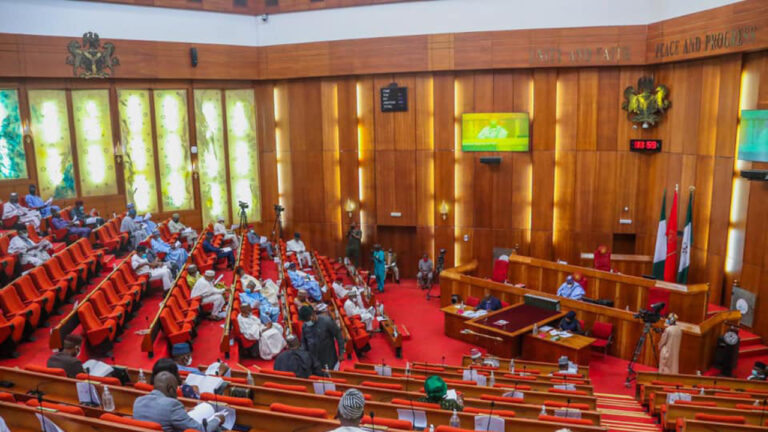
His decision followed the defection of 16 lawmakers from the PDP to the APC during a plenary on Friday, December 5.

At the plenary, the Speaker Martin Amaewhule, declared his departure from the PDP, citing deep divisions within the party.

“APC is my new party. I will do all that is needed to be done towards ensuring that the party card of the All Progressives Congress is issued to me in no time. I am happy to be a member of the APC so that we can join forces with Mr. President. He is doing so much for this country,” he said.

The defections, which included lawmakers Dumle Maol, Major Jack, Linda Stewart, Franklin Nwabochi, Azeru Opara, Smart Adoki, Enemi George, Solomon Wami, Igwe Aforji, Tekena Wellington, Looloo Opuende, Peter Abbey, Arnold Dennis, Chimezie Nwankwo, and Ofiks Kabang, have reshaped the House’s political configuration.

In response, the remaining lawmakers appointed Sylvanus Nwankwo as Minority Leader, alongside three other minority officers.

These developments came just months after President Tinubu lifted the six-month state of emergency imposed on the state in March 2025, a measure introduced at the height of the political rift between Fubara and his predecessor, the current Minister of the Federal Capital Territory (FCT) Nyesom Wike-backed faction of the Assembly.

The political shifts also follow a vote of confidence passed on President Tinubu by 32 lawmakers in the Assembly on December 3, urging him to seek a second term in office.

Meanwhile, Wike, a PDP member serving in President Bola Tinubu-led APC government, has continued to drum support for the president’s re-election.

He has yet to leave the embattled PDP. Fubara joins other governors and PDP stalwarts who have quit the PDP this year.

Some of the stalwarts include Delta State Governor Sheriff Oborevwori, and his counterpart, Douye Diri.

The ICIR reported a pattern of defections from the PDP to the ruling APC, particularly among governors and lawmakers seeking to align with the APC ahead of the 2027 polls.

ICPC trains MDA directors on tackling corruption, procurement abuse

0

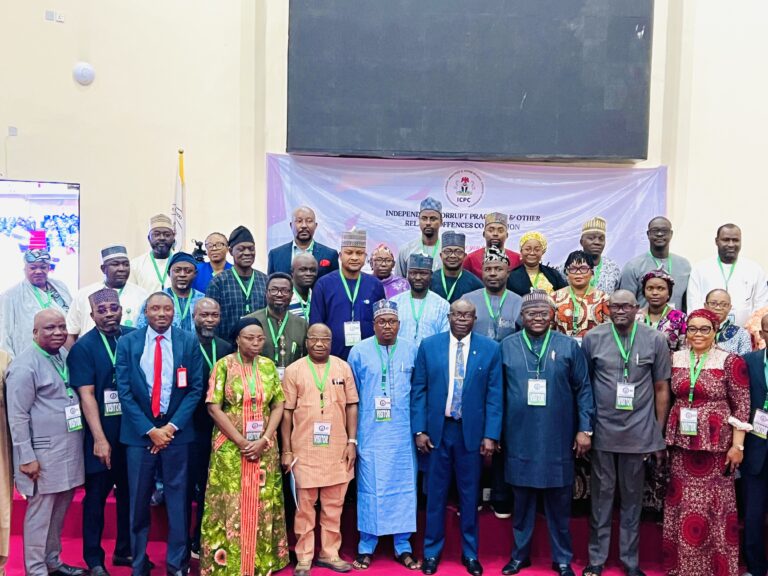
THE Independent Corrupt Practices and Other Related Offences Commission (ICPC) on Tuesday, December 8, trained directors and heads of procurement of ministries, departments and agencies (MDAs) of government on how to better tackle corruption and procurement abuse in the country.

The workshop, held at the commission in Abuja, was organised to address persistent procurement violations uncovered during the ICPC’s constituency and executive project tracking exercises across the nation.

The training was attended by the Chairman of House Committee on Anti-Corruption, Kayode Moshood Akiolu; Director General of Bureau of Public Procurement, Adebowale Adedokun and the Director General of Nigeria Building and Road Research Institute, Samson Duna.

Declaring the event open on behalf of the ICPC Chairman, Musa Adamu Aliyu, the Commission’s Secretary, Clifford Okwudiri Oparaodu, said procurement remained the single largest vulnerability point in public finance, accounting for an estimated 10 to 25 per cent of Nigeria’s GDP.

He warned that the volume of corruption linked to procurement made it imperative for MDAs to commit to transparency.

“Public procurement is where policy meets practice,” he said, adding “It is where budgets either translate into real projects for Nigerians or disappear into private pockets. You know what we mean, it is either the work gets done or it goes somewhere else entirely. That is where our interest lies.”

The ICPC Chairman noted that the commission had repeatedly discovered “contract splitting, inflated invoices by as much as 200 to 300 per cent. He also cited phantom contracts, repeated projects in annual budgets, duplicated projects, and mobilisation funds that vanish without any work done.

According to him, these practices have become too rampant to ignore.

Aliyu noted that it was no coincidence that the workshop came up the day the United Nations set out as World Anti-Corruption Day.

He said the ICPC’s Constituency and Executive Projects Tracking Initiative (CPTI), introduced in 2019, was a turning point.

“The approach was revolutionary in its simplicity and outcome, as physically tracked projects from inception to completion across all 36 states and the FCT demonstrated all stakeholders, such as contractors, public officials, and project sponsors, need to be held accountable. 

“It also led to direct community engagement, where each community is expected to take ownership and interest in every project being executed, cited, and executed in the community. Beyond individual problems and cases, CPTI revealed structural problems.”

He said the commission had identified several recurring infractions, including projects being cited on private properties belonging to sponsors or their cronies, violations of the Public Procurement Act 2007, and instances where executive government projects, grant-driven initiatives or identical interventions were duplicated.

He noted that project vehicles and equipment were often converted to personal use, while poor or nonexistent needs assessments had led to white-elephant projects across various communities, among others.

He added that e-procurement, if properly implemented with political will, funding and capacity building, could eliminate human discretion, reduce abuse, and build an auditable trail for every procurement action.

However, he explained that monitoring alone could not solve procurement abuses, noting that political will, adequate funding, capacity building and strong change-management systems were needed to make reforms work.

Aliyu explained that without these, e-procurement would fail. He urged lawmakers to strengthen oversight, close loopholes in the procurement law and support anti-corruption agencies with better funding.

He advised procurement officers to embrace transparency, enforce internal controls, resist political pressure and cooperate with oversight bodies to curb fraud.

He emphasised that the commission remained committed to promoting accountability and urged participants to act on what they had learned, stressing that millions of Nigerians still lacked basic services and that corruption thrived when left unchecked.

Speaking at the event, the Director-General of the Nigerian Building and Road Research Institute (NBRRI), Samson Duna, said ICPC’s involvement had reshaped how MDAs conduct procurement and project oversight.

He explained that in the past, many agencies approved projects with little or no documentation, but ICPC’s demand for evidence had strengthened internal controls.

“ICPC brought sanity into the system,” he said, stressing, “Today, no desk officer can come to me and say, ‘Sir, approve this contractor because you know him.’ They will tell you immediately, I must go to the site first. That is the kind of discipline we are talking about.”

Duna said NBRRI had insisted on multiple site visits, photo evidence with timestamps, and detailed progress reports before payment is approved.

“As CEO, I no longer approve anything unless the file has passed through the consultant, the desk officer, the procurement director and then reaches me with evidence…Before now, contractors were being paid within two weeks even without proper verification. That era is gone.”

He revealed that after assessing more than 80 collapsed buildings nationwide, NBRRI found that substandard materials accounted for at least 30 per cent of failures. He urged ICPC to collaborate more closely with research institutions to ensure strong infrastructure standards.

The Director-General of the Bureau of Public Procurement (BPP), Adebowale Adedokun, also lauded ICPC for enforcing procurement discipline, noting that the amended ICPC Act, which criminalises failure to carry out procurement planning, had significantly improved compliance.

According to him, procurement remained Nigeria’s most critical defence against corruption.

“If we are truly going to prevent or fight corruption, strengthening procurement activities and working closely with anti-corruption agencies is the only way forward,” he said.

Adedokun said the Federal Government recently approved a new policy which, for the first time, provides a legal basis to prosecute contractors who deliver substandard projects.

“This policy has placed Nigeria on the global stage. For the first time in our history, we can now legally hold contractors accountable when they do shoddy work. That deserves applause.”

He warned that procurement audits must become routine if abandoned projects, losses and wastages are to be curbed.

“The delays, the insecurity, the collapsed infrastructure – all these things happen because Nigerians do not have equal opportunities to do business fairly.

Corruption will fight back, but we can win the battle through systems, processes, adherence to good governance will help us to do well.”

He urged participants to think about long-term implications.



Tinubu seeks Senate confirmation of Kanti-Bello, Animashaun as NERC commissioners

PRESIDENT Bola Tinubu has requested that the Senate confirm two nominees for appointment as commissioners of the Nigerian Electricity Regulatory Commission (NERC).

The request followed leadership vacuum created by the expiration of the tenure of the Vice Chairman of NERC and the commissioners on December 1.

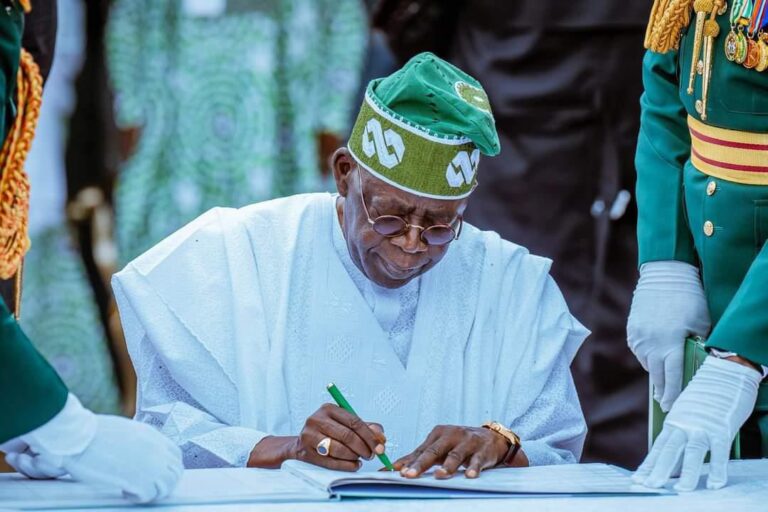
Tinubu’s request was contained in a letter addressed to the Senate, and read by the Senate President Godswill Akpabio during plenary on Tuesday, December 9.

He said the nominations were made in line with section 35 (1) and (3) of the Electricity Act 2023, which empowers the president to appoint commissioners to the regulatory body subject to Senate confirmation.

The president added that the appointments were intended to strengthen the commission as it continued to oversee reforms in Nigeria’s electricity market.

“In accordance with the provisions of Section 35 subsections 1 and 3 of the Electricity Act 2023, I am pleased to present for confirmation by the Senate the appointment of the following two persons as commissioners in the Nigerian Electricity Regulatory Commission,” the letter read in part.

The nominees are Aisha Mahmoud Kanti-Bello, who is being reappointed as a commissioner, and Fouad Animashaun, who was nominated as a new commissioner.

Tinubu noted that their nominations replaced an earlier submission sent to the Senate on August 6, 2025.

The Senate is expected to screen the nominees in the coming days.

If confirmed, the nominees will join NERC’s leadership at a time the commission is implementing major reforms under the new electricity law, particularly as it is transitioning regulatory oversight to the states to unbundle and strengthen the generation, transmission, and distribution value chain in the sector.

Other responsibilities expected of the incoming commissioners are expanded regulatory oversight, licensing responsibilities and the transition toward subnational electricity markets.

The ICIR reports that following the expiration of NERC commissioners’ tenure, there has been a seeming lapse in the regulatory functions, which has lately seen the Central Bank of Nigeria (CBN) and the Presidency, as well as other committees, moving into the sector to fill regulatory gaps.

NERC is the independent regulator of the electricity sector in Nigeria with responsibilities that are focused on tariff regulation, market development and enforcement of regulatory oversight to players in the power sector value-chain.

The incoming commissioners are expected to deepen responsibilities and coordination, especially now that states are more empowered to seek independence through the unbundling of the power sector.

Senate approves Tinubu’s request to deploy troops to Benin Republic

0

THE Senate has approved President Bola Tinubu’s request to deploy troops to Benin Republic over botched coup in the West African nation.

Tinubu’s request was conveyed in a letter read by the Senate President Godswill Akpabio during plenary on Tuesday, December 9.

The president said the action was based on Section 5(5) of the 1999 Constitution, which requires presidential consultation with the Senate before sending the armed forces on combat missions outside the country. 

Pursuant to Section 5 (5) Part 2 of the Constitution of the Federal Republic of Nigeria 1999 as amended, I seek, further to consultation with the National Defence Council, the consent of the Senate for the deployment of Nigerian troops to the Republic of Benin,” he wrote.

He noted that the request followed an urgent appeal from President Patrice Talon, who sought immediate air support to repel an attempted unconstitutional seizure of power.

Tinubu further urged the lawmakers to act swiftly, citing the close relationship between Nigeria and Benin and the collective security obligations under ECOWAS. 

“This request is made further to a request received from the Government of Benin Republic for the exceptional and immediate provision of air support by the Armed Forces of the Federal Republic of Nigeria.

“The distinguished Senate may wish to note that the Government of the Republic of Benin is currently faced with an attempted unconstitutional seizure of power and disruption and destabilisation of democratic institutions,” he stated.

He stressed that the situation in Benin required urgent external support to stabilise democratic institutions.

“The situation, as reported by the Government of Benin, requires urgent external intervention. The distinguished Senate considers the close ties of brotherhood and friendship which exist between Nigeria and the Republic of Benin, as well as the principles of collective security upheld within ECOWAS.

“It is our duty to provide the support as requested by the Government of the Republic of Benin. While it is my hope that the Senate will consider and approve this request expeditiously, please accept, distinguished Senate President, distinguished senators, the assurances of my highest consideration and personal regards,” he added.

The Senate consequently approved the request.

The ICIR reports that while the letter was read by the Senate on Tuesday, the Nigerian government had already intervened in the crisis that unfolded in Benin about 72 hours earlier, following the sitting president’s request for assistance. 

On Sunday, December 7, a group of soldiers appeared on Benin’s state television. They seized power and declared that they had dissolved the government in what appeared to be another coup in West Africa.

Identifying themselves as the Military Committee for Refoundation, they announced the ousting of the president and the dissolution of all state institutions, adding that Pascal Tigri, a lieutenant colonel, had been named as the head of the committee.

The mutiny triggered hours of tension across the country as loyal security forces worked to restore order and secure key state institutions. Authorities say several of the coup plotters were arrested, while others were being hunted.

Reacting to the development, Tinubu praised the Nigerian Armed Forces for their rapid intervention, which aided loyalist forces to dislodge the soldiers who had taken over the national television station and declared Talon’s ouster.

According to a statement signed by Tinubu’s Special Adviser on Information and Strategy, Bayo Onanuga, the Beninese government formally sought Nigeria’s military support through two separate communications after the coup plotters announced the suspension of democratic institutions.

Tinubu, said while acting on the request, he ordered Nigerian Air Force fighter jets to take control of Benin’s airspace and assist in flushing out the mutineers from strategic locations, including the national broadcaster and a military camp.

Talon, who has been in office since 2016, had been expected to leave office next April – 2026, at the end of his second term in 2026 – the maximum allowed by the constitution, after the upcoming presidential election.

The attempted coup adds to a troubling pattern of political instability in West Africa, where Niger, Burkina Faso, and Guinea-Bissau have all recently experienced military takeovers or attempted uprisings.

Following the increasing coups in the West African sub-region, the Economic Community for West African States (ECOWAS) declared a state of emergency on political situations in the region on Tuesday.

The President of the ECOWAS Commission, Omar Touray, made the declaration during the 55th session of the Mediation and Security Council, at the ministerial level in Abuja.

Kebbi’s N10bn Hajj loan equals 59% of state’s 2024 IGR, raises questions about priorities

KEBBI State’s decision to provide a N10 billion loan to secure additional Hajj seats for the 2026 pilgrimage has triggered fresh scrutiny of the government’s priorities, especially when weighed against the state’s internally generated revenue and key sectoral allocations.

The loan, approved by Governor Nasir Idris, was used to secure 1,300 extra Hajj slots after the National Hajj Commission of Nigeria (NAHCON) set a December 5 deadline for states to complete payments. 

The Chairman of the State Pilgrims Welfare Agency, Faruku Aliyu-Yaro, described the governor’s action as compassionate, noting that many intending pilgrims feared missing out before the intervention.

However, a look at Kebbi’s financial records shows that the N10 billion borrowed for Hajj is equivalent to 58.93 per cent of the state’s entire Internally Generated Revenue (IGR) for 2024, which stood at N16.97 billion, according to the National Bureau of Statistics.

Kebbi’s IGR has remained low over the last five years. The state generated N13.78 billion in 2020, N9.86 billion in 2021, N9.15 billion in 2022, and N11.74 billion in 2023, before rising to N16.97 billion in 2024. 

The N10 billion loan therefore represents a significant financial commitment for a state that has consistently struggled with revenue expansion. The ICIR’s analysis shows that Kebbi is among the three states with lowest IGR in Nigeria in 2024, trailing Yobe and Ebonyi states closely.

A review of the state’s 2025 budget shows that it allocated N9 billion as a grant to the Pilgrims Board, alongside an additional N138.8 million for the Pilgrims Welfare Agency. 

Education and health received N56.6 billion and N53.56 billion respectively, despite the long-standing funding gaps in both sectors.

The amount borrowed for the Hajj intervention is almost one-fifth of what the state plans to spend on either sector throughout the year. 

The ICIR reports that the development has continued to spark debate among fiscal analysts and public accountability advocates, who argue that loaning such a huge amount for a religious exercise raises questions about prioritisation, especially in a state grappling with infrastructural deficits, understaffed schools, and health facilities in need of urgent upgrade.

Reacting to this development, a political commentator Mahdi Shehu, described the N10 billion Hajj loan as misplaced priority for a state he said is battling widespread poverty and infrastructural decay.

Writing on X, Shehu said the government was exploiting religious sentiment to mislead citizens who could barely afford basic necessities.

“The intending pilgrims will do better to perform one of the Hajj rituals; stoning the devil by stoning the person deceiving them with this Hajj loan, who qualifies as the ‘bigger devil,’” he wrote.

He accused the government of hoodwinking vulnerable residents, adding that “they just deploy religious sentiment to hoodwink senile people, the same people who can’t afford to eat are given loans to go for pilgrimage. This is simply daftly.”

Shehu referenced Kebbi’s poverty indicators, claiming that over 70 per cent of residents live in poverty, with more than two million children out of school.

He also cited failing hospitals, collapsed primary healthcare centres, poor roads, unpaid gratuities, and worsening youth unemployment as the reason the governor’s decision was erroneous. 

Aircraft grounded by Burkina Faso on ferry mission to Portugal – NAF

0

THE Nigerian Air Force (NAF) has revealed that its C-130 aircraft grounded by the Burkina Faso authorities was on a ferry mission to Portugal.

It said the flight made a precautionary landing in Bobo-Dioulasso, on Monday December 8, following a technical concern observed shortly after takeoff from Lagos.

In a statement released on Tuesday December 9, the Director of Public Relations and Information of NAF, Ehimen Ejodame, an air commodore, said the decision to land in the junta-led country was “in accordance with standard safety procedures and international aviation protocols.

“The Nigerian Air Force (NAF) wishes to clarify reports regarding the diversion of a NAF C-130 aircraft during its ferry mission to Portugal on 8 December 2025. 

“Following takeoff from Lagos, the crew observed a technical concern which necessitated  a precautionary landing in Bobo-Dioulasso, Burkina Faso, the nearest airfield, in accordance with standard safety procedures and international aviation protocols. NAF crew is safe and have received cordial treatment from the host authorities,” Ejodame said.

The Air Force emphasised that the mission would resume as scheduled and reaffirmed its commitment to strict adherence to operational procedures and safety standards, ensuring the welfare of its personnel while fulfilling its constitutional mandate.

“Plans are ongoing to resume the mission as scheduled. The Nigerian Air Force appreciates the support received during this period and assures the public that NAF remains professionally committed to strict compliance with operational procedures and safety standards, ensuring the protection of its personnel while fulfilling its constitutional mandate,” he added.

According to him, officials are currently liaising with Burkina Faso authorities to facilitate the continuation of the flight, highlighting strong bilateral cooperation between the two countries in aviation safety matters.

The NAF reassured the public that no lives were at risk and that the diversion was purely precautionary.

The ICIR reported that the Confederation of Sahel States confirmed that a Nigerian Air Force C-130 aircraft transporting 11 military personnel was compelled to land as all crew members were arrested after allegedly entering the country’s airspace without authorisation.

The Burkinabe authorities said that a review it conducted found that the aircraft entered the country’s airspace without securing the mandatory overflight clearance.

“An investigation was immediately opened by the competent Burkinabe services and highlighted the lack of authorisation to fly over Burkinabe territory for this military apparatus,” it added.

The statement added that the AES air and anti-aircraft defence systems had been placed on maximum alert, with clearance to neutralise any aircraft that breaches AES-controlled airspace.

“On the instructions of the Heads of State… the air and anti-aircraft defences of the confederal space were authorised to neutralise any aircraft that would violate the confederal space,” the statement read.

Describing the incident as “a violation of sovereignty,” the AES vowed to protect its airspace from further incursions.

“The Confederation of the Sahel States most strongly condemns this violation of its airspace and the sovereignty of its member states.

“Faced with this unfriendly act carried out in defiance of international law and international civil and/or military aviation rules, arrangements are made to guarantee the security of the Confederal airspace, the sovereignty and territorial integrity of its Member States, as well as the safety of the populations of the Confederation AES,” it stated.

Burkina Faso and other former French colonies in the region like Mali and Niger have withdrawn from the Organisation Internationale de la Francophonie (OIF), a post-colonial institution similar to the Commonwealth.

The trio first announced their intent to withdraw from the Economic Community of West African States (ECOWAS) in 2024, and ECOWAS formally recognised the withdrawal in January 2025, after more than a year of diplomatic tensions. 

They went on to create a confederation called the Alliance of Sahel States and strengthened alliances with Russia, Turkey, and Iran to address internal security threats such as jihadists and armed gangs, as well as external pressures.

Reactions trail Burkina Faso’s grounding of Nigerian aircraft, arrest of all soldiers on board

BURKINA Faso’s junta on Monday confirmed that a Nigerian Air Force C-130 aircraft transporting 11 military personnel was compelled to land after allegedly entering the country’s airspace without authorisation.

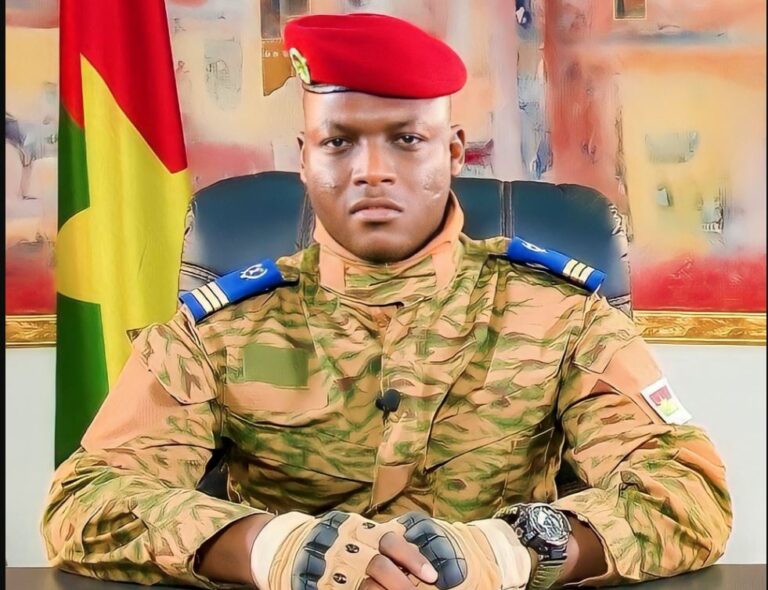
The disclosure came through the Agence d’Information du Burkina, the state-run news agency, which published a statement from the Confederation of Sahel States (AES) signed by the General of the Army, Assimi GOITA.

The AES outlined the circumstances leading to the aircraft’s interception.

“The Confederation of Sahel States informs the public that a C130 aircraft belonging to the Air Force of the Federal Republic of Nigeria was forced to land today, December 8, 2025, in Bobo Dioulasso, Burkina Faso, following an in-flight emergency while operating in Burkinabe airspace. The military aircraft had two crew members and nine passengers on board, all military personnel,” the statement.

The AES stated that a review conducted by Burkinabe authorities found that the aircraft entered the country’s airspace without securing the mandatory overflight clearance.

The statement added that the probe “highlighted the absence of authorisation to fly over the territory of Burkina Faso for this military device.

“The AES condemns with the utmost firmness this violation of its airspace and the sovereignty of its member States,” it noted.

The statement added that the AES air and anti-aircraft defence systems had been placed on maximum alert, with clearance to neutralise any aircraft that breaches AES-controlled airspace.

As of the time of filing this report, neither the Nigerian Air Force nor the Federal Government had issued an official response to the incident.

However, Nigerians have swiftly reacted to the development on social media. Adey of Ibeju-Lekki on X noted that “The AES is just trying to score a cheap point and also garner local support.

“The charlie 130 made an emergency landing which they act only for them to say they forced it down, same logistics flight that has been flown over this same country multiple times?”

But Megamind thought otherwise “Flown over same country multiple times” The plane was designated for Ghana, why land in Burkina if you were heading for Ghana? Why turn north to make an emergency landing in a hostile territory?”

Shepherdhills wrote “C-130H is one of the largest military aircraft in Nigeria, possibly even the largest. It is not a fighter jet but military cargo plane that carries heavy military equipment. What is C-130 doing in Benin, Ghana, and Burkina Faso? What military equipment is it transporting there?”

While Osaze reasoned differently. He said, “An aircraft making an emergency landing doesn’t violate airspace. A plane can develop fault mid-air and as it signals ‘mayday’, it goes to the nearest airport for landing.”

Another user, Warrior monk wrote “Very convenient that you should go off radar and miraculously appear in Burkina airspace. 

“The detention is the right move militarily. They are a treat. If they don’t make an example of them, there will be more such appearances in their future,”

Pastor Bee also supported this claim. “The last report I read says they were off the radar and now they did an emergency landing in Burkina Faso. Why not Ghana or Togo?.”

The ICIR cannot immediately verify the claim that the aircraft went off radar.

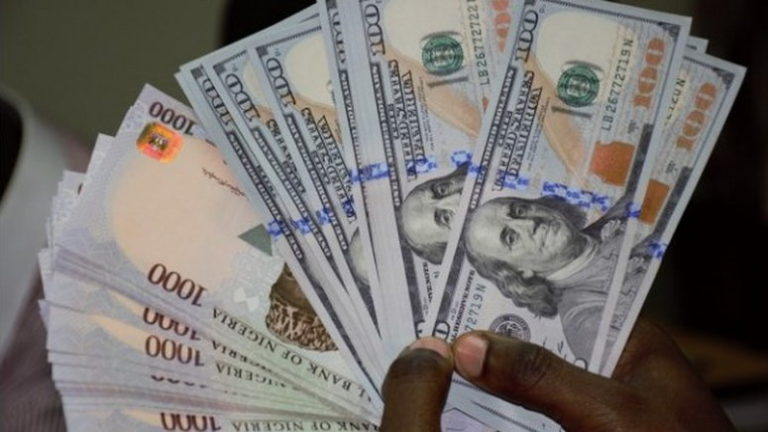
CBN licenses 82 BDCs, warns against patronising unlicensed operators

THE Central Bank of Nigeria (CBN) has granted final licenses to 82 Bureaux De Change (BDCs) to operate with effect from November 27.

The CBN disclosed this in a statement on Monday, December 8, by its Acting Director, Corporate Communications Department, Hakama Sidi-Ali.

Sidi-Ali disclosed that the exercise was in line with its powers conferred under the Bank and Other Financial Institutions Act (BOFIA) 2020.

According to her, it is also an enforcement of the Regulatory and Supervisory Guidelines for BDC Operations in Nigeria (2024)

“By this notice, only BDCs listed on the Bank’s website are authorised to
operate from the effective date. The CBN will continue to update the list of BDCs with valid operating licences for public verification on our website (www.cbn.gov.ng).

“The Bank advises the general public to avoid dealing with unlicensed foreign exchange operators,” she said.

She noted that operating a BDC business without a valid licence was a punishable offence under Section 57(1) of the BOFIA 2020.

She advised members of the public to note and be guided accordingly.

Recalls that at one point, there were about 5,690 BDCs operating across Nigeria.

But on March 1, 2024, the CBN revoked the licences of 4,173 BDC operators for regulatory non-compliance. After that revocation, the number of licensed BDCs dropped to around 1,517.

The ICIR reports that the CBN had, in May 2024, issued new operational guidelines for BDCs.

The guidelines, effective June 3, 2024, directed all existing BDCs to reapply for new licences.

It provided that BDC operators with Tier 1 licences raised their capital base to N2 billion, while those with Tier 2 licences to N500 million.

The operators were also required to pay a non-refundable licence fee of N5 million and N2 million, respectively.

At the time, the CBN gave both the Tier 1 and Tier 2 BDC operators six months to meet the minimum capital requirement.

It later extended the deadline by an additional six months, which ended on Tuesday, June 3.

Benin Republic Chief of Army Staff, Chief of National Guard regain freedom after failed coup

THE Chief of Army Staff of the Benin Republic and the Chief of the National Guard have been freed after being held hostage during a failed coup attempt on Sunday in the democracy-weary Sahel region.

Security analyst Brant Grant confirmed their release in a post on X on Monday, He said the two senior officers were seized by mutinous soldiers during the attempted power grab but have since been rescued.

“Beninese Chief of Army Staff and Chief of Staff of the National Guard have been freed, after they were taken hostage by the mutineers during the coup yesterday,” he wrote.

According to the security expert, their freedom came shortly after President Patrice Talon addressed the nation, assuring citizens that the government had regained full control of the situation.

The ICIR reported that a group of soldiers appeared on Benin’s state television on Sunday, December  7. They seized power and declared that they had dissolved the government in what appears to be another coup in West Africa.

Identifying themselves as the Military Committee for Refoundation, they announced the ousting of the president and the dissolution of all state institutions, adding that Pascal Tigri, a lieutenant colonel, had been named as the head of the committee.

Talon and several top military commanders were held captive in Cotonou by the faction of the mutineers. 

The mutiny triggered hours of tension across the country as loyal security forces worked to restore order and secure key state institutions. Authorities say several of the coup plotters were arrested, while others are still being hunted.

Talon, who has been in office since 2016, had been expected to leave office next April – 2026, at the end of his second term in 2026 – the maximum allowed by the constitution, after the upcoming presidential election.

The attempted coup adds to a troubling pattern of political instability in West Africa, where Niger, Burkina Faso, and Guinea-Bissau have all recently experienced military takeovers or attempted uprisings.

Political and civil society leaders within and outside Benin have condemned the attack, urging stronger protections for democratic governance.

Government officials say investigations are ongoing and have called on citizens to remain calm, stressing that national security forces have re-established full control.

Reacting, the Economic Community of West African States (ECOWAS) announced the immediate deployment of its standby force to the Republic of Benin following the foiling of the attempted putsch.

In a statement released on Sunday, the regional bloc said the troops, including personnel from neighbouring Nigeria, were being mobilised to support the Beninese government and help protect the country’s constitutional order.

It added that the decision to deploy standby force was in pursuant to the provisions of relevant ECOWAS instruments, in particular Article 25(e) of the 1999 Protocol Relating to the Mechanism for Conflict Prevention, Management, Resolution Peacekeeping and Security.

rces.

We must account for all kidnapped Nigerians, Tinubu says as he welcomes Niger schoolchildren

PRESIDENT Bola Tinubu has applauded security agencies for the rescue of 100 abducted students of Papiri Catholic School in Niger State.

In a statement on Monday, December 8, by his Special Adviser on Information and Strategy, Bayo Onanuga,Tinubu expressed joy over the safe return of the children, who were kidnapped on November 21, and saluted the efforts of Governor Umar Bago and security operatives for their “steadfast work.”

The ICIR reported that armed bandits rode into the remote community around 2:00 a.m. and spent about three hours moving through the school dormitories. A total of 315 people were reportedly taken, that is 303 students and 12 teachers.

Security personnel and local hunters launched a search operation across the surrounding forests to track down the gunmen. Within the first 24 hours, 50 students successfully fled from their abductors and were safely reunited with their families.

Despite this, 265 others, comprising 253 children, and 12 teachers were held by the gunmen. The ICIR reported how the children’s family and the entire Papiri community have been in tears over the incident.

While celebrating the rescue, Tinubu directed security agencies to intensify operations for the immediate release of the remaining 115 students and their teachers who are still being held hostage.

He also assured parents that the federal and Niger State governments were working closely to reunite every abducted child with their family.

The president further ordered security agencies and governors to prevent future school kidnappings, insisting that Nigerian children “should no longer be sitting ducks for heartless terrorists.”

“My directive to our security forces remains that all the students and other abducted Nigerians across the country must be rescued and brought back home safely.  We must account for all the victims. The Federal Government will continue to work with Niger State and other states to secure our schools and make the learning environment safer and more conducive for our young ones.

“From now on, our security agencies, working with the governors, must prevent future kidnappings. Our children should no longer be sitting ducks for heartless terrorists intent on disrupting their education and subjecting them and their parents to unspeakable trauma,” Tinubu said.

Meanwhile, the rescue operation has drawn commendation from a visiting US Congressional delegation, which met with Nigeria’s National Security Adviser, Nuhu Ribadu.

In a statement after the meeting, Congress member Riley M. Moore described the conversation as “productive and positive,” emphasising that the delegation discussed concrete actions that could significantly strengthen Nigeria’s security architecture if the discussions were fully executed.

According to the delegation, the US is particularly concerned about terrorist attacks in the North-East and the killing of Christians in parts of the Middle Belt.

The lawmaker welcomed the rescue of the Papiri schoolchildren, calling it “a positive demonstration of the government’s increasing response to the security situation” and evidence of Tinubu’s commitment to his emergency security declaration.

He also highlighted the establishment of a US–Nigeria joint task force as a sign that a stronger cooperative security framework was “within sight,” noting that Nigeria had shown openness and willingness to work with the United States to tackle shared concerns.

“It is clear that there is an openness and willingness on the part of the Nigerian government to work with the United States to tackle these critical issues. Now, that openness has to translate to concrete action.

“There is much work still to be done, but things are moving in the right direction. I look forward to the next steps with Nigerian government and the continued open dialogue,” he added.