Home Blog Page 117

Group marks Anti-corruption Day, urges youth to lead fight against corruption

0

AHEAD of the 2025 International Anti-Corruption Day, the Centre for Fiscal Transparency and Public Integrity on Monday, December 8, called on young Nigerians to take the frontline role in their country’s fight against corruption.   

Speaking at the commemoration held in Abuja, the Executive Director of the Centre said the annual event, observed globally on December 9, serves as a reminder that corruption remains one of the biggest obstacles to development, public trust, and nation-building.

He cited United Nations figures estimating the global cost of corruption at $2.6 trillion yearly, noting that developing countries lost sums more than ten times higher than the aid they received.

He warned that traditional approaches to fighting corruption had reached their limits, adding that this year’s theme, “Uniting with Youth Against Corruption: Shaping Tomorrow’s Integrity,” was a deliberate call to harness the energy and digital capacity of young people.

He stressed that the next generation must be integrated into every anti-corruption framework because traditional approaches had proved inadequate.

He further challenged participants to deepen their engagement with public finance processes. 

“How many people in this hall know the exact amount allocated to their Local Government Council by the Federation Account Allocation Committee (FAAC) last month? When was the last time you genuinely interrogated a public institution to verify whether it is accountable? How many of you have actually downloaded and scrutinised a budget implementation report of any public institution to verify if the projects listed on paper were actually executed on the ground? ” he asked.

He described citizens’ reluctance to demand transparency as dangerous, especially as public institutions continue to withhold key information. 

He referenced the Centre’s Transparency and Integrity Index 2025, which revealed that only six public institutions scored above 50 percent in overall transparency.

“In September this year, we presented the Transparency and Integrity Index 2025, which measures public institutions’ levels of transparency in government dealings. Only six public institutions scored above 50 per cent on the overall transparency rating. This data confirms that the door to accountability is often locked from the inside, but it also reveals that very few citizens are knocking from the outside,” he added.

He reminded participants that corruption had direct consequences, such as dilapidated lecture halls when education funds are diverted, and weakened healthcare systems when budgets are mismanaged. 

He said the Centre had developed new digital accountability tools and would be presenting one at the event. He urged participants to adopt and use it. 

“Your generation possesses an innate command of technology, data, and digital communication that the older generation lacks. At the Center, we have spent years building the technological tools for accountability. Today, we will present a tool designed to arm you for this fight. I expect that you will adopt this tool for your advocacy,” he said.

Meanwhile, participants at the event shared their perspectives on how corruption affected their daily experiences and what must change.

A participant, Holly Mohanye, said addressing corruption must begin with mindset and values. “Change is a collective thing. We can start dealing with corruption by changing our mindset and setting values.’

Also, a corps member, Deborah, highlighted the “thin line between corruption and compromise,” adding that while some people accessed opportunities through privilege, others qualified but were denied. 

She said in such cases, citizens should lodge complaints with human rights groups and insist on fairness.

Another corps member said government empowerment programmes must be understood not as privileges but as citizens’ right. She stressed that “the first step in fighting corruption is accountability,” warning that when governments are not held accountable, “mismanagement continues unchecked.”

She noted that in cases where empowerment lists exclude genuine beneficiaries, concerned citizens should write officially to demand redress.

“Corruption is a choice,” says PRIMORG ED

On his part, the Executive Director of the Progressive Impact Organisation for Community Development (PRIMORG), Augustine Agbonsuremi,  told the participants that “corruption ultimately comes down to personal decisions”, adding that such decisions often carry consequences.

“There are things we must learn as young people. One is that corruption is a choice,” he said, stressing that “If you hear people say, ‘I didn’t have a choice,’ they are not being truthful. Corruption is a choice — the only difficulty is that some of the choices come with tough repercussions.”

He noted that refusing to pay bribes sometimes meant accepting delays or harassment, but the willingness to bear that inconvenience is the price of integrity.

“If you are going to stay out of corruption, you must be ready to pay the price. A policeman may delay you for hours, but that is where the choice lies — whether you give in or stand your ground.”

The event also featured a presentation of the Centre’s new anti-corruption tools, designed to support evidence-based advocacy and digital tracking of public spending.

Abia, NDPHC to construct 7.5MVA injection substation in Umuahia

THE Abia State government, in partnership with the Niger Delta Power Holding Company (NDPHC), has begun the construction of a 7.5 Mega Volt-Amperes (MVA), 33/11 kilovolts (kV) Injection Substation in Umuahia, the capital

A statement by the NDPHC on Monday, December 8, said the move was aimed at boosting electricity supply in the state.

It said the Abia State Governor Alex Otti, who performed the groundbreaking ceremony, described the project as a transformative initiative that would significantly boost power supply in the state.

Otti said that the new infrastructure marked the beginning of a broader effort to modernise Abia’s power network.

The project is being executed by the Niger Delta Power Holding Company (NDPHC) under the National Integrated Power Project (NIPP). Its scope includes the construction of a 1-kilometre (km) 33 kilovolts (kV) line, 1.2km of 11kV line, installation of two 300kVA distribution substations, and the provision of 2km of low-tension line.

Otti commended the Federal Government and NDPHC for prioritising Abia in this strategic intervention.

He also applauded President Bola Ahmed Tinubu’s reforms in the power sector through the Electricity Act 2023, which he said had expanded the national electricity framework to encourage stronger state participation, private sector investment, and global partnerships.

The governor further revealed that the state government had budgeted for an additional 7.5MVA Injection Substation in the 2026 fiscal year, which he said would raise the combined capacity in the Ogurube Layout area of Umuahia to 15MVA when completed.

The NDPHC Managing Director/Chief Executive Officer, Jennifer Adighije, represented at the event by Executive Director, Networks, Bello Babayo Bello reaffirmed the company’s commitment to expanding access to reliable and sustainable electricity nationwide.

She said the Umuahia project reflected NDPHC’s mandate to empower communities and drive economic development.

The collaboration between the Federal Government, NDPHC, and the Abia State Government, stakeholders said, highlighted the power of strategic partnerships in delivering critical infrastructure.

When completed, the substation is expected to strengthen the electricity supply, support small businesses, promote industrial development, and ultimately improve the quality of life for residents of Umuahia and surrounding communities.

The ICIR reports that Aba, the commercial hub of Abia State, is currently experiencing improved electricity supply, thanks to the Geometric Power Plant, a 188-megawatt thermal power plant commissioned in February 2024. This plant is expected to provide 24/7 electricity to nine local government areas in the state, covering approximately 270,000 households.

The investment in the electricity infrastructure network expansion was largely informed by the unbundling of the electricity sector through the Electricity Act 2023, which has given states power and access to attract investors into the various power distribution value-chain.

In a related development, the NDPHC has successfully recovered six previously dormant gas turbines across its fleet of turbines in the last year, adding cumulatively 875 megawatts to the national grid.

The company has also announced the restoration of an additional 450 megawatts of generation capacity to the national grid following the completion of scheduled maintenance on the Geregu National Integrated Power Project (NIPP) plant.

The Managing Director of NDPHC, Jennifer Adighije, confirmed that the four-wheel extended minor inspection, undertaken by Siemens Energy, was executed to enhance the facility’s operational reliability, performance, and efficiency, thereby extending the plant’s Equivalent Operating Hours(EOH) and operational life span.

According to her, the turbines so far recovered “include GT4 at the Calabar NIPP, GT1 at Omotosho II, GT1 and GT2 at Benin NIPP, GT4 at Sapele NIPP, and currently GT3 and GT4 at Alaoji NIPP on standby for pre-commissioning after gas supply remedial works.

“These restored units collectively would have a cumulative 875MW additional capacity to NDPHC’s mechanical available generation, adding a significant boost to national power generation capacity.”

Adighije, in a similar statement on Monday by the Head, Corporate Communications and External Relations, NDPHC, Emmanuel Ojor, also announced the commencement of restoration works on the 225MW Gbarain NIPP plant, which has been out of service since 2020, describing it as a major step toward recovering dormant national power in a bid to commercialise the output of the plant to serve critical commercial and industrial clusters within the Niger Delta region.


Mixed reactions trail release of 100 abducted Niger schoolchildren

0

NIGERIANS have reacted to the release of 100 of the schoolchildren abducted from St. Mary’s Private Catholic Primary and Secondary School in Papiri, Agwara Local Government Area of Niger State on November 21, 2025.  

The Federal Government announced the children’s freedom on Sunday, December 7.

Armed bandits rode into the remote community around 2:00 a.m. and spent about three hours moving through the school dormitories. A total of 315 people were reportedly taken, that is 303 students and 12 teachers.

Security personnel and local hunters launched a search operation across the surrounding forests to track down the gunmen. Within the first 24 hours, 50 students successfully fled from their abductors and were safely reunited with their families.

Despite this, 265 others, comprising 253 children, and 12 teachers were held by the gunmen. The ICIR reported how the children’s family and the entire Papiri community have been in tears over the incident.

With the release of 100 pupils, 165 others are still in custody

Nigerians have reacted to the release of the 100 pupils. An X user, @ikwueze_okezie, wrote: “Same English since 2015. God will do this, God will do that. God will not come down and tell your politicians to stop politicking for 365 days for four years. 100 girls released, no single arrest. Same script on repeat. Tomorrow, another set will be taken.”

@MarkDeBonen shared his thought: “Shame. They weren’t available to prevent their kidnapping in the first place. Nigeria secures release of 100 schoolchildren abducted from Catholic School after weeks in captivity.”

@SunnyolOFFICIAL wrote: “Federal Government secure release of over 100 schoolchildren abducted in Niger State. Without proper accountability, or did they think they owe not the public explanations?”

@A__yabo felicitated with the children and their families. “Congratulations, Nigerians. This is something to celebrate. This proves we have a competent government that’s ready to secure the lives of its citizens. Now, I hope the terrorists that committed the crime are neutralised, Nigeria is surely going to win the war against terrorism.”
@GeorgeUwaifo shared the same thoughts. He wrote: “Great. Hope they get checked into the hospital and counseled. How about the abductors?”
For @Lanister, it doesn’t matter how the rescue was carried out, “I am simply glad they are back home to their loved ones,” she stated.

How Ebonyi government violated procurement laws in multi-billion naira road contracts

0

By Olarenwaju OYEDEJI

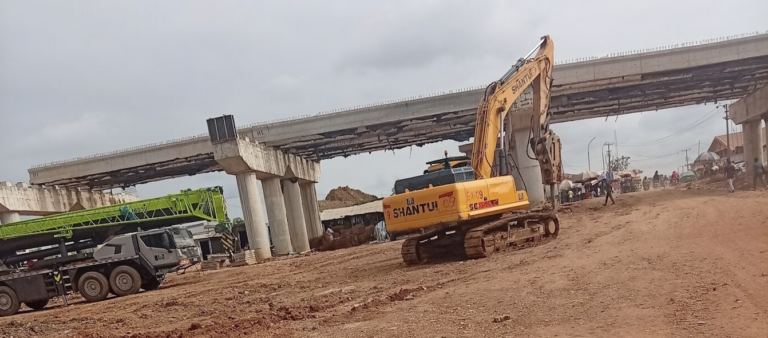
WHEN Emmanuel (real name withheld) first heard about the construction of an overhead and underpass bridge at Vanco Junction, his heart swelled with excitement. He imagined smoother rides, faster trips, and more income from his tricycle business.

But months later, his excitement turned into deep frustration. What he and other motorists once saw as a sign of progress became a daily nightmare for survival.

The prolonged construction has made movement difficult, and uncertainty about when the project will be completed has left residents and traders in despair.

“Nothing is more frustrating than government inaction,” Emmanuel said bitterly.

He recalled earning at least ₦12,000 daily before the project began, stressing that restricted access and traffic congestion has cut his earnings by half. “I now struggle to even make ₦6,000 a day,” he lamented.

His frustration reflects that of many others whose lives and businesses have been disrupted as a result of non-completion of the bridge.

For Daniel, a physically challenged person, simply crossing to the other side of the road has become a dangerous task. He now relies on a fragile wooden ladder placed by residents to get across—a risky manoeuvre over a river running beneath.

As he crossed it recently, Daniel muttered in anger and pain. He clung to this reporter for support, his steps trembling as he descended. When his feet finally touched the ground, he hurried off, his discomfort etched clearly across his face.

Multi billion-naira projects

Over ₦8.6 billion worth of road contracts have been awarded by the Ebonyi State government to newly registered shell companies and firms linked to politically exposed persons — including close associates of Governor Francis Nwifuru, findings show.

Procurement laws were allegedly violated in the award of these contracts, raising questions of corruption, poor oversight, and disregard for due process.

Residents and businesses across Ebonyi say these government actions have worsened their struggles, particularly as bad roads continue to cripple economic activities.

At Vanco Junction in Abakaliki Local Government Area — a once-bustling trading hub — traders and tricycle operators lament how the government’s much-celebrated road and bridge project has stalled.

“Since they blocked this road for construction, my business has died,” one shop owner said, standing beside heaps of sand and idle machinery.

‘First Bridge’ contract

On July 25, 2024, the Ebonyi State government announced the award of a contract for what it called the first bridge with an underground tunnel in the Southeastern region of Nigeria. The project, located at Vanco Junction, was valued at ₦8.6 billion and awarded by the Ministry of Works and Transport.

Checks on the Ebonyi State Open Contracting Portal show that the contractor, Real Aggregate Engineering Limited, received ₦8.6 billion award on July 25, 2024 — barely four months after the company was registered.

According to Corporate Affairs Commission (CAC) records, Real Aggregate Engineering Limited was incorporated on March 13, 2024. The state’s tender process for the project began on April 15, 2024, meaning that at the time of bidding, the company was only one month and two days old.

Real Aggregate Engineering Limited

This contravenes the Ebonyi State Public Procurement Law, which mandates that contractors must possess relevant experience and tax compliance history before qualification. This is according to Section 21 (1) of the Ebonyi State Public Procurement Law (2020).

Real Aggregate Engineering Limited was said to have “competitively” bided against another company — Oke Ogirima Company Limited — for the project. However, this investigation discovered multiple red flags suggesting the bidding process may have been manipulated.

The phone number listed for Real Aggregate Engineering Limited is the same as that of Oke Ogirima Company Limited, which also won a separate state contract. A check on the technology tool Truecaller shows that both numbers bear the same name, “Oke Nwodom (PA).”

Further checks on the CAC beneficial ownership database show that Real Aggregate Engineering Limited is owned by Nwodom Uchenna and Nwome Ijeoma Rita, while Oke Ogirima Company Limited is owned by Nwome Philomina Eunice and Nwodom Okechukwu Peter.

Social network analysis reveals that Nwodom Okechukwu Peter serves as the personal assistant to Governor Francis Nwifuru, raising serious concerns of conflict of interest and insider contracting.

This evidence suggests that both companies are controlled by the same individuals, casting doubt on whether any genuine competitive bidding took place.

By listing two related companies as separate bidders, the state government may have violated the principle of open and fair competition required by the state’s procurement law.

True caller finding

By the end of December 2024, Real Aggregate Engineering Limited had received ₦6.022 billion for the construction of the Vanco Overhead and Underpass Bridge — amounting to 70.023 percent mobilisation.

Top value capital projects

According to details on the state’s Open Contracting Portal, the project was expected to be completed by July 25, 2025. Yet, progress remains slow, leaving the livelihoods of residents around the site trapped in uncertainty as the work crawls on at a snail’s pace.

Despite this, the work on the bridge has continued to drag. A visit to Vanco Junction shows that some sections of the bridge appear stalled, with only a few workers seen on site.

The project site was visited twice on different days during this investigation, and findings revealed that manual labour was primarily used for the bridge construction.

Manual Labourers at the site of the Vanco Underpass bridge project

A walk through the project area showed no signage to indicate who is handling the construction or any project details.

Workers on site, who spoke under anonymity, disclosed that the work was not being managed by any company but rather by individuals.

None of the traders or residents near the site knew who the contractor was.

“These people are unserious. They are dragging foot with the project. If you came here three months ago and now, you will see no difference in the project. What we have here are pillars, nothing major despite the fact that they demolished homes of people,” a tricycle owner noted.

Another respondent lamented the negative impact of the slow-paced bridge project on their businesses.

“People have kept suffering due to the bridge project, yet the pace of work is worrisome. We do not even know who the contractor is, it’s manual labour and few tractors you see from time to time,” another trader stated.

At least four respondents echoed the same frustration over the project’s snail-pace and reliance on direct labour.

On-site observation confirmed that several homes were demolished to pave the way for the bridge, yet the project remains largely stagnant. Traders, motorists, and business owners continue to bear the brunt of the delay.

More contracts

Vanco Bridge is not the only contract awarded to Real Aggregate Engineering Limited. The same company also secured another deal worth ₦4.7 billion for the construction of the Oferekpe Agabja Internal Road Lot 1 in Izzi Local Government Area of Ebonyi State. Review shows that while the state only officially awarded the road project in June 2025, and ended up awarding it to the Real Aggregate which registered with CAC in March 2024, it actually paid money for the same  earlier before the official contract award notice.

As of September 2024, a budget document shows that a sum of N903 million was already spent on the road project. However, checks on the state Open Contracting Portal shows that only the contract listed as awarded in June 2025 was said to have been awarded for the project.

It is unclear why the state only awarded the contract for the road in June 2025 but paid over N903 million already as of September 2024, according to budget documents.

Real Aggregate Engineering Limited existing on paper?

According to the Ebonyi State Open Contracting Portal, the listed address of Real Aggregate Engineering Limited is “49, Ogoja Road, Abakaliki.”

However, when the address was traced during this investigation, no one could confirm the existence of such a company. The location identified as No. 49 Ogoja Road turned out to be a filling station.

Ogoja Road, Izzi, Ebonyi State

A walk along the stretch of the road revealed no trace of the company’s presence, while residents and business owners in the area also denied any knowledge of its existence.

When the contact listed for Real Aggregate Engineering on the Ebonyi State Open Contracting Portal was contacted, the respondent listed on ‘Truecaller’ as Oke Nwodom (PA) initially agreed to knowing the organisation. He also acknowledged being Oke Ogirima, the respondent even offered to call engineers on site at Vanco Underpass bridge to ascertain the state of work, he however suddenly backtracked when asked why his contact is same for Oke Ogirima and listed also as Real Aggregate Engineering, two companies that bided against each other.

The respondent stated that it was an error for his contact to have been listed and he does not know any of the two companies, despite initially agreeing to knowing both organisations. He subsequently denied any comments.

Procurement laws violated

The Ebonyi State government has again come under scrutiny for blatant abuse of procurement laws, following the award of a ₦642.5 million contract to Jiodarc Company Limited. The contract was for the construction of 2.001km of Francis Ogbonna Nwifuru Avenue External Road in Izzi Local Government Area of the state.

According to details on the Ebonyi State Open Contracting Portal, Jiodarc Company Limited was the sole bidder and eventual winner of the contract — a clear indication of lack of competitive bidding, contrary to procurement regulations that require open and transparent competition. The absence of competitive bidding is due to the fact that only one company was listed as that which bided for and won the contract.

A competitive bidding involves two or more companies.

Records show that Jiodarc was incorporated with the Corporate Affairs Commission (CAC) on July 28, 2023, exactly one year before the bidding process for the contract opened, and only three months after Francis Nwifuru was sworn in as Governor of Ebonyi State.

Further investigations using social network analysis revealed that Jiodarc Company Limited is linked to the governor’s family. Data from the CAC Beneficial Ownership Database lists Nwifuru Sylvester Jioke — the governor’s brother — and Jioke Rosemary Chiwendu, his wife, as the company’s owners.

CAC beneficial ownership database

In November 2019, before becoming governor, Francis Nwifuru publicly congratulated Sylvester on his marriage to Rosemary.

Rosemary Jioke is currently listed as the Executive Secretary of the Ebonyi State Drugs and Medical Commodities Management Agency, according to information officially published by the agency and obtained during this investigation.

This discovery raises serious concerns about conflict of interest and potential abuse of office. It also remains unclear how the governor’s brother’s company emerged as the sole beneficiary of the lucrative contract.

In another flagrant breach of procurement law, a contract for the construction of 2km Inyimoga–Ezzaophu Road, Ndiebor Ezza Inyimagu Community, Izzi LGA, was awarded to Azuegu Obvu Construction Limited.

The company was registered with the CAC on April 15, 2024, yet was awarded the ₦400 million contract barely three months later, on July 27, 2024. Like the earlier case, there was no evidence of competitive bidding, as Azuegu Obvu Construction Nigeria Limited was the only bidder and winner.

Azuegu Obvu — a Shell Company?

According to the Ebonyi State Open Contracting Portal, the company’s registered address is No. 5, Simon Onuorah Street, Abakaliki, Ebonyi State.

However, when the address was traced during this investigation, no such company was found. The location turned out to be a residential area in a village, and residents denied knowledge of any company operating there.

“We are hearing the name for the first time, there is no such company on this street,” several residents said.

A resident, familiar with the area, expressed disbelief over the address used.

“Anyone who says his or her company is located here must have been deceptive. I have not heard of such a company; there is no company here.”

Further visits to adjoining streets along Simon Onuorah confirmed that no trace of the company exists, despite it being awarded ₦400 million state contract. (Evidence of receipt)

Another questionable award involved Pdoings Integrated Services Limited, which received a ₦1.094 billion contract on October 7, 2024, for the development of the EBOCAB Platform Services and construction of the EBOCAB Terminal — Ebonyi State’s taxi service platform.

The company was incorporated in June 2024, making it just five months old at the time of the award.

To verify the disbursement and utilisation of funds, the EBOCAB Terminal was visited during this investigation. While construction was observed on-site, findings confirmed that the state government awarded a ₦1.094 billion to a five-month-old company in clear violation of procurement laws as the contract was fully executed. (Payment evidence…?)

The CAC lists Nwifuru Chigbuogu Felix as the owner of Pdoings Integrated Services Limited.

The investigation also uncovered another conflict of interest within the Ministry of Works and Transport, where a ₦3.3 billion contract was awarded to a company owned by the ministry’s Permanent Secretary.

According to reviewed documents, the “Construction of Concrete Rigid Pavement TTC–Iboko Road” was awarded to Maurifrank Nigeria Limited.

Records show the company has four directors — Nkwuda Monday Nnanna, Nkwuda Roseline, Nkwuda Frankline, and Nkwuda Anita. Nkwuda Monday currently serves as the Permanent Secretary of the Ebonyi State Ministry of Works and Transport.

Beyond this conflict, there are indications of contract inflation. During the tender stage, Maurifrank Nigeria Limited submitted a bid of ₦2.6 billion, but the final contract was awarded for ₦3.3 billion — an unexplained ₦700 million increase.(Have you tried to find out any possible reason for the increase?)

When contacted despite acknowledging sent message, the contact listed for Maurifrank Nigeria Limited refused to comment and reply to enquiries. Checks on the

Contracts award without open bidding

Investigations have also revealed that the Ebonyi State government awarded several road-related contracts without competitive bidding. In each case reviewed, only one company was listed as both the bidder and the winner — a clear violation of procurement laws designed to promote transparency and accountability.

One of such contracts was the construction of 2km of Oriede Bus Stop–Ochejem Playground Road in Amuda Community, Ezza North Local Government Area. The contract, valued at ₦400 million, was awarded to Amaechi Scrapfolding Ventures, which was listed as the sole bidder and winner.

Similarly, Bruce Integrated Services was the only bidder for the construction of 2,150.25 metres of Okpoduma Nwofe Road (Phase 1) in Izzi LGA. The contract, valued at ₦715 million, was awarded on October 7, 2024. According to details from the Corporate Affairs Commission’s Beneficial Ownership Database, the company is owned by former Senator Nse Bassey Ekpenyong.

What the law Says

Section 21 (1) of the Ebonyi State Public Procurement Law (2020) stipulates that:

“Subject to any exemption allowed by this Law, all public procurements shall be conducted:
(a) Subject to the prior review thresholds as may from time to time be set by the Bureau…
(b) By open competitive bidding;
(c) In a manner which is transparent, timely and equitable…
(d) In a manner which promotes competition, economy and efficiency; and
(e) In accordance with the procedures and guidelines laid down in this Law….”

Subsection (2) further provides that:

“Where the Bureau has set prior review thresholds in the procurement regulations, no funds shall be disbursed… unless approved by the approving authority.”

The law also outlines the eligibility requirements for bidders in Section 21 (2):

“All bidders… shall possess the necessary professional and technical qualifications, financial capability, equipment, and personnel to perform the obligations of the procurement contract; must possess legal capacity; not be in receivership or insolvency; must have fulfilled tax, pension, and social security obligations; and have directors free of criminal convictions related to fraud or misrepresentation.”

Subsection (5) empowers the procuring entity to demand documentary evidence to prove that bidders meet these requirements — and stresses that all such requirements must apply equally to every bidder.

Conflict of Interest 

In relation to the Permanent Secretary whose company benefited from a contract awarded by his own ministry, Section 21 (19) of the Ebonyi State Public Procurement Act (2020) states:

“Persons who have been engaged in preparing for a procurement… may neither bid for the procurement in question nor cooperate in any manner with bidders in the course of preparing their tenders.”

The law also imposes clear accountability duties on accounting officers of procuring entities.

Section 21 (16) states: “The accounting officer of a procuring entity, and any officer to which the task is delegated, are responsible and accountable for any actions taken or omitted to be taken either in compliance with or contravention of the law.”

Section 21 (17) adds that: “Concurrent approval by any tenders board shall not absolve the accounting officer for accountability for anything done in contravention of this law or regulations.”

By law, a Permanent Secretary serves as the chief accounting officer of a ministry. It therefore remains unclear why Ebonyi State’s Works and Transport Ministry’s chief accounting officer abandoned his statutory responsibility in favour of awarding a multi-billion-naira contract to a company he owns.

What the Companies and Allied Matters Act (CAMA) says on annual returns

Section 421 of the Companies and Allied Matters Act (CAMA) 2020 provides that a company’s annual return must be completed, signed by a director and the secretary, and filed with the Corporate Affairs Commission within 42 days after its annual general meeting.

“This section does not apply to companies with only one member.”

Section 422 mandates that each return must include: “A certified copy of every balance sheet and profit and loss account laid before the company in general meeting… and a certified copy of the auditors’ and directors’ reports.”

The law further provides that where any balance sheet or document does not comply with legal requirements, additions and corrections must be made, and this must be clearly stated on the copy submitted.

Section 423 adds: “A private company shall send with the annual return… a certificate signed both by a director and the secretary of the company that it has not issued any invitation to the public to subscribe for shares or debentures.”

It is unclear how a few months old company will be able to meet the requirements and provisions of this law in respect to filing annual returns and paying necessary taxes.

Lawyer faults contract awards to infant companies

A legal practitioner, Awosusi Kehinde, described the award of contracts to newly registered or infant companies as a clear abuse of procurement regulations.

According to him, such companies cannot meet tax or annual return requirements, making them legally unqualified to participate in public procurement.

“A few months old company cannot file annual returns or get a tax certificate, which is one of the key requirements for awarding contracts. Also, the prerequisite experience of such an infant company in handling large projects is questionable,” he said.

“It is an abuse of the procurement act if such contract awards take place,” he added.

Across Ebonyi State, residents have repeatedly lamented the deteriorating condition of their roads, calling for urgent government intervention. However, the fraudulent and compromised procurement process uncovered by this investigation suggests that such contracts may never achieve their intended goals, leaving communities stranded and infrastructure neglected.

Ebonyi government declines comment

When contacted on phone the spokesperson to the Ebonyi State governor, Monday Uzor, declined to comment on the companies allegedly linked to the governor winning contracts in violation of the procurement law.

“I cannot comment on that, I don’t know of the procurement process,” he stated.

When reminded that the contracts award may amount to breach of the procurement law, he insisted on not commenting. He also declined to comment on award of the Vanco Underpass bridge to a few months old company with ties to the state governor and the several contract process abuse under the administration of governor Francis Nwifuru.

“What would you want me to say,” he quipped. The Executive Secretary of the Ebonyi State Bureau of Public Procurement, Uzoma Betty, failed to react when contacted.

By press time, he was contacted again for reaction but declined comments, failing to reply despite reading enquiries sent.

She failed to respond to the questions sent as messages to her phone contact via WhatsApp and failed to respond to phone calls placed to her line.

Fact-finding mission: NSA holds security talks with US lawmakers in Abuja

0

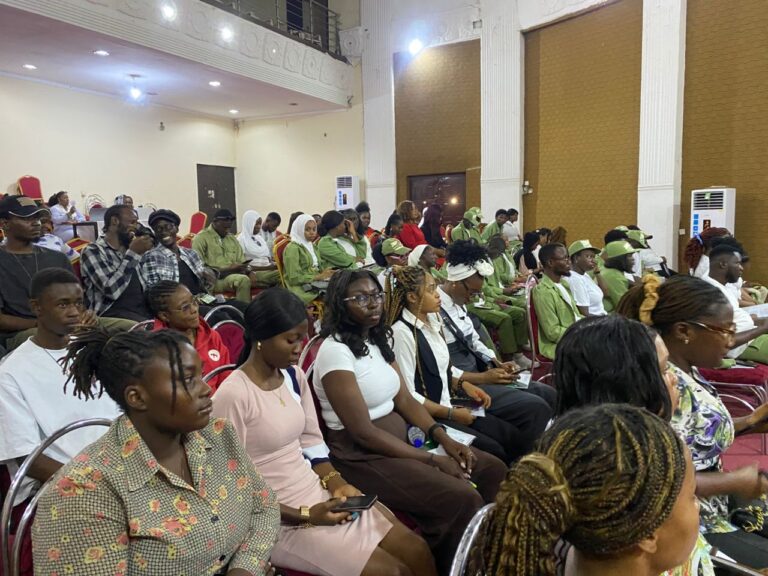
THE National Security Adviser (NSA), Nuhu Ribadu, has met with a United States congressional delegation in Abuja on Sunday, December 7, as part of ongoing security talks between both countries.

In a post on X, Ribadu said the visit builds on earlier meetings held in Washington, D.C., where they discussed shared security priorities and areas of cooperation.

“This morning, I received a US Congressional delegation on a fact-finding mission to Nigeria, following our earlier engagements in Washington, DC, on shared security priorities,” he wrote.

“The delegation included Rep. Mario Díaz-Balart, Rep. Norma Torres, Rep.Scott Franklin, Rep.Juan Ciscomani, and Rep.Riley M. Moore.”

He added that the US Ambassador to Nigeria, Richard Mills, was present at the meeting, which he said underscored the importance both nations attach to the partnership.

Ribadu stated that the talks focused on counter-terrorism efforts, regional stability, and opportunities to deepen the strategic security relationship between Nigeria and the US.

“I’m optimistic this engagement will deepen trust, collaboration, and shared commitment to peace and security,” he said.

The meeting occurred amid rising diplomatic friction after US President Donald Trump reinstated Nigeria on the list of Countries of Particular Concern over alleged violations of religious freedom, accompanied by warnings of possible US military action.

The Federal Government has repeatedly dismissed claims of systemic persecution of Christians, stressing that insecurity affects people of all religious backgrounds.

As international scrutiny grows, the government has continued engaging global partners for diplomatic and security support. Ribadu met with US Secretary of War Pete Hegseth at the Pentagon on November 20 to discuss coordinated approaches to Nigeria’s security problems.

A week later, on November 27, President Bola Tinubu approved the formation of the Nigerian contingent of the US–Nigeria Joint Working Group, a move aimed at strengthening cooperation on security. The group’s creation stemmed from agreements reached during a recent high-level visit to Washington, D.C., led by the National Security Adviser.

Air chief orders inquiry after NAF jet crash in Niger state

0

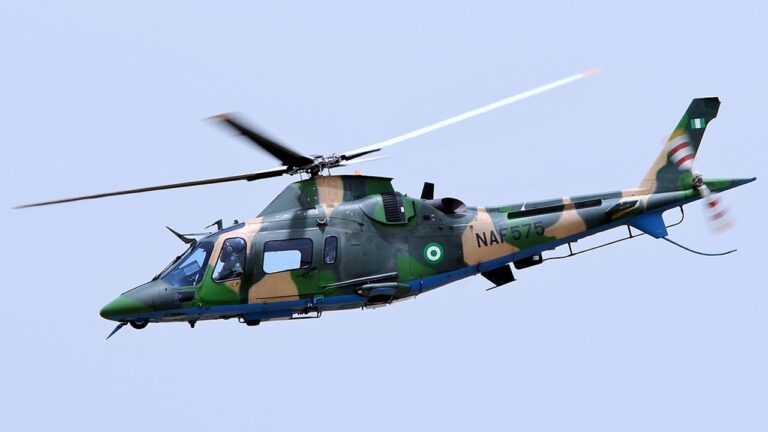
THE Chief of Air Staff, Sunday Aneke, has ordered the immediate establishment of a Board of Inquiry to investigate an in-flight emergency involving an Alpha Jet in Niger State.

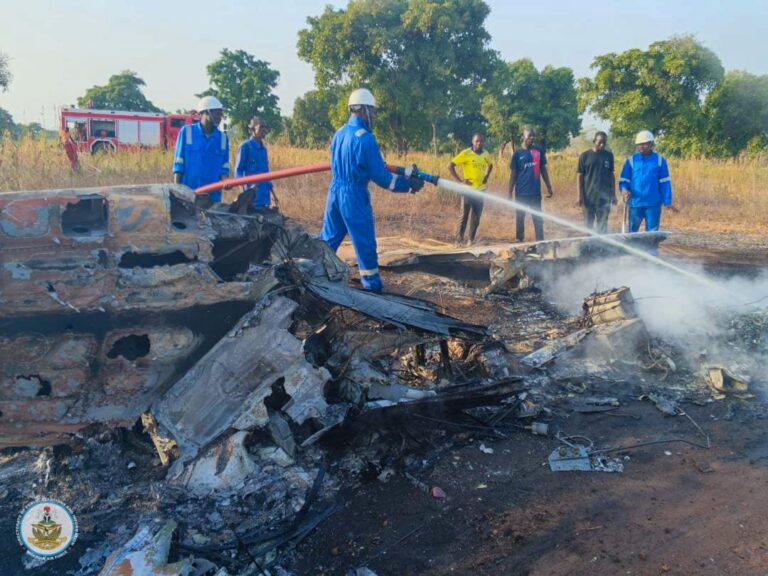
The directive comes after two pilots safely ejected from the aircraft during a routine post-maintenance test flight from Kainji Air Base, preventing potential casualties when the jet crashed near Karabonde village in Borgu Local Government Area on Saturday, December 6.

The Force, in a post on its X handle on Sunday, December 7, commended the officers for their exceptional bravery and professionalism.

The ICIR had reported that the incident occurred on Saturday during a routine post-maintenance test flight from Kainji Air Base, when an Alpha Jet aircraft developed a fault.

The pilots safely ejected before the jet crashed near Karabonde village in Borgu Local Government Area.

The Nigerian Air Force reassured the public of its unwavering commitment to stringent safety standards and operational excellence.

“The NAF remains dedicated to safeguarding its personnel while protecting the lives and property of citizens in line with its constitutional mandate,” the statement added.

The NAF spokesperson, Air Commodore Ehimen Ejodame, had earlier on Saturday praised the pilots for steering the aircraft away from populated areas before ejecting.

He said both officers were already receiving standard medical checks.

Soldiers announce military coup in Benin republic

0

A group of soldiers appeared on Benin’s state television on Sunday, December  7. They seized power and declared that they had dissolved the government in what appears to be another coup in West Africa.

Identifying themselves as the Military Committee for Refoundation, they announced the ousting of the president and the dissolution of all state institutions, adding that Lieutenant Colonel Pascal Tigri had been named head of the committee, multiple media reports said.

President Patrice Talon, who has been in office since 2016, had been expected to leave office next April 2026, at the end of his second term in 2026-the maximum allowed by the constitution, after the upcoming presidential election.

Talon, a 67-year-old former businessman dubbed the “cotton king of Cotonou”, is due to hand over power in April next year after 10 years in office marked by solid economic growth but also a surge in jihadist violence.

Notably, West Africa has experienced some coups in recent years, including in Benin’s northern neighbours Niger and Burkina Faso, as well as Mali, Guinea and, most recently, Guinea-Bissau.

His party’s candidate, former Finance Minister Romuald Wadagni, was widely seen as the frontrunner, while the electoral commission disqualified opposition hopeful Renaud Agbodjo for lacking the required number of sponsors.

Recall, after gaining independence from France in 1960, Benin experienced a series of coups, particularly in the years that followed. The country eventually achieved political stability from 1991 onward, after the long, two-decade rule of Mathieu Kérékou, the Marxist-Leninist leader who had renamed the nation the People’s Republic of Benin.

In November, lawmakers in Benin approved an extension of the presidential term from five to seven years, while maintaining the two-term limit.

The takeover adds to a growing wave of coups across West Africa.

A week ago, Guinea-Bissau’s military ousted former President Umaro Embalo following a disputed election in which both he and the opposition candidate claimed victory.

A military source confirmed that the situation was “under control” and the coup plotters had not taken either Talon’s residence or the presidential offices.

Police State or State Police?

0

Chidi Anselm Odinkalu

On 26 November 2025, Nigeria’s President, Bola Ahmed Tinubu, announced in a statement personally signed by him that he had “decided to declare a nationwide security emergency” to be accompanied by some measures, including recruitment by the Nigeria Police Force (NPF) and the Armed Forces of 20,000 and 50,000 new personnel respectively. In the fortnight preceding the announcement, a flurry of frightening terror incidents had created among populations and communities around the country a heightened state of fear. It also reinforced the perception of a normalisation of insecurity and of the traumas associated with it.

Yet, the text and terms of the president’s announcement were odd, to say the least.

Nigeria’s 1999 Constitution empowers the president to declare or proclaim a “state of emergency.”  Under the terms of the Constitution, an emergency proclamation is time-bound (for an initial period of not more than six months) and must be confirmed by a joint resolution of a qualified majority of both chambers of the National Assembly within 48 hours of the proclamation.

The predicate conditions for the proclamation of a state of emergency in Nigeria under Section 305(3) of the constitution are that the country is at war or in imminent danger of invasion or of entering into a war or suffering from a breakdown of public order and safety or in imminent danger of such breakdown. The flood of casualties would seem to suggest that the predicate condition of a country at war exists.

Apart from thousands killed and many more unaccounted for, reports of  7,568 people abducted in 1,130 incidents across the country in just one year between July 2023 to June 2024 suggest also that there is significant breakdown in public safety. However, the president was unwilling to cite any of these as grounds for his action, probably because it would represent an admission of how bad things have become under his watch.

Moreover, a formal acknowledgement of the existence of an armed conflict would entail the application of the norms of international humanitarian law under the Geneva Conventions Act, which could lead to the recognition as belligerents the motley crowd of insurgent groups presently afflicting the country. That is considered a step too far for a country that has already survived a brutal civil war from July 1967 to January 1970.

Howsoever it is looked at, this “nationwide security emergency” declared by President Tinubu does not sound like the “state of emergency” authorized by the constitution. The use of “emergency” to describe the measures announced by the president was artful, designed to create the public impression that the administration was at last waking up to its primary responsibility to assure the safety and security of all who live in Nigeria. In reality, none of the measures announced by the president requires the existence of an emergency for their accomplishment nor does it make sense why the administration had to wait until now to consider them for implementation. Moreover, the so-called “emergency” is open-ended. It is not hedged by duration and there has been no effort to take it before the National Assembly.

In an innocuous insertion in the announcement, however, the president invites “the National Assembly to begin reviewing our laws to allow states that require state police to establish them.” In this sentence, President Tinubu commits the sleight of hand of suggesting that “state police” will be merely optional only for those states who want it. Of course, he knew better than even suggest that.

State police has become a very emotive expression in Nigeria’s political and security lexicon. Politicians who cannot be bothered to do the most basic of things to protect their people somehow create the impression that they could have accomplished that and more if only they had the magic wand of state police. The evidence to the contrary is very stark and conveniently buried.

First, the record of state security initiatives has been very abysmal. Native Authority policing was abolished following the onset of military rule in 1966 because of the tendency to make them instruments of decentralized despotism. Writing in 2018, pioneer post-colonial public servant, Ahmed Joda, recalled the record of the Native Authority Police: “first generation pioneer opposition politicians of the forties and fifties and up to the end of the civilian era in 1966 experienced hell…. Many of them, especially at election times were simply rounded up at rallies, walked to the Native Authority courts, promptly convicted and sent to another Native Authority institution: the Native Authority Prison for long enough periods to take them out for the election period and render political opposition prostrate.

Some were simply adducted and disappeared for the period of the elections.” There is nothing to suggest that State police this time will be any less despotic. On the contrary, the omens indicate that it could be worse.

Second, when he introduced Islamic criminal law of Huddud (crimes against God) into Zamfara State at the beginning of a wave of Sharia insertion into north-west Nigeria in October 1999, then governor, Sani Yerima, justified it with reference to the need to upgrade public safety and security in the state. Despite his best spin, public safety and security in Zamfara State did not get better. Instead, it has disintegrated.

Zamfara State was far from the only state to experience this trend. In the Middle Belt, Benue State adopted a vigilante law in 2000, creating armed volunteer guards supposedly to enhance the protection of the state. Far from enhancing safety and security in Benue, the State turned into a haven of insecurity.

Around the same time, Anambra State in the south-east launched its own Anambra Vigilante Service (AVS) under cover of state law in 2000. Under that law, then Governor Chinwoke Mbadinuju claimed authority to invite and establish the Bakassi as an armed, anti-crime vigilante in the state.

Anyone who wants to understand how insecurity subsequently prospered in south-east Nigeria must return to the origins of the story in the atrocity-with-impunity franchise that the Bakassi became.

Third, when it reported to the presidency in August 2012, the Parry Osayande Presidential Committee on Police Reform recommended quite strongly against the clamour for State police. At the submission of the report, the Chairperson of the Committee, Parry Osayande, a former Deputy Inspector-General of Police, feared that the country lacked the institutional wherewithal to oversight, train, or professionalise a proliferation of armed police units across the country.

He recommended effective de-centralisation of the existing NPF “with effective participation of state governors; financial autonomy and better professionalism for the police.” Six years later, Ahmed Joda supported “the need to decentralize our policing system.”

The question now is how to achieve that goal.

The political fad of today appears to be that the answer lies in State Police. Many people will argue that any opposition to this idea, first, reflects path-dependency; and second, that the times have changed and require that the country should explore the idea. Third, advocates of “true federalism” also denounce any opposition to state police, even when they are not able to tell anyone what exactly makes their version of federalism any truer than the next.

The times may have changed certainly but not necessarily for the better. If anything, the reluctance and caution sounded by Parry Osayande 13 years ago is even more resounding today in a context of corroded democratic controls and multi-dimensional impunity.

State police will not be served a la carte nor will it be a matter of variable geometry. Every state governor will see it as a necessary accessory of power. It will not be reserved to only governors who understand the idea of constrained power. Those who enjoy abuse of power will be the first to acquire it, not to advance security but to visit insecurity on their political enemies.

So, in addition to the very challenged NPF which the country struggles with today, we will have 37 more, one for each state and another for the FCT. Each will function under the control of the governor and will be armed by their gubernatorial patrons. This is not state police. Instead, it could be a recipe for a de-centralised police state with no hope of relief. In their enthusiasm, advocates of State police offer no safeguards against this danger.

A lawyer & a teacher, Odinkalu can be reached at chidi.odinkalu@tufts.edu


National security threat: Nigerian army puts officers’ retirement on hold

0

THE Nigerian Army has put a hold on all statutory and voluntary retirements for certain officer categories following a nationwide security emergency declared by President Bola Tinubu.

On December 3, an internal memo signed by Evaristus Okoro, a Major General, on behalf of the Chief of Army Staff, stated that the retirement freeze was meant to preserve manpower, retain experience, and safeguard the Army’s operational capacity as it expands to meet the growing security threat.

The document, citing the Harmonised Terms and Conditions of Service Officers (HTACOS) 2024, explained that while officers are normally required to retire once they hit the age limit, complete 35 years of service, or fail multiple times to secure promotion or conversion, Paragraph 3.10(e) allows their service to be extended when it is deemed beneficial to the military.

“Military service of a commissioned officer entails a period of unbroken service in the AFN from the date of enlistment or commissioning to the date of retirement,” the memo read in part.

The period of service is determined by conditions enshrined in the HTACOS Officers 2024. These include attainment of age ceilings on various ranks, 35 years maximum length of service, and other criteria provided in Paragraphs 11.02(d) and 17.15, among extant regulations.”

The memo noted that the suspension would affect officers who had failed promotion exams three times, those who had been passed over at promotion boards three times, officers who had reached the age limit for their rank, those who had failed conversion boards three times, and officers who had completed 35 years in service.

It added that the affected officers could apply to remain in service beyond their scheduled retirement dates, while those not interested in an extension were to follow the normal retirement process.

The Army also further stated that officers granted extensions would not qualify for career progression, including promotions, career courses, Army sponsorships, self-sponsored courses, secondments, or extra-regimental appointments.

The directive, which had been circulated to all commanders responsible for managing troop morale, stated that the policy would be reviewed once the security situation improved.

Regarding the incessant security threats across the country, The ICIR reported that in November alone, more than 600 mass-abduction incidents were recorded,  including the kidnapping of over 300 students in Niger State, 38 worshippers in Kwara State, and 25 students in Kebbi State.

In response, the President declared a nationwide security emergency on November 26, ordering the military, police, and intelligence agencies to accelerate recruitment and deploy thousands more personnel.

NAF pilots escaped death as fighter jet crash in Niger

0

TWO Nigerian Air Force (NAF) Alpha Jet pilots narrowly escaped death on Saturday after safely ejecting from their aircraft following an in-flight emergency during a post-inspection functional check flight at the NAF Base in Kainji, Niger State.

The pilots were reported to have steered the aircraft away from populated areas before ejecting, a move that prevented possible civilian casualties.

NAF spokesperson Air Commodore Ehimen Ejodame, who confirmed the incident in a statement on Saturday, said the jet developed an emergency shortly after take-off, prompting the pilots to respond swiftly and calmly.

“They expertly manoeuvred the aircraft away from populated areas before executing a safe ejection,” he said.

Ejodame said the crew is currently undergoing routine medical evaluation at a NAF medical facility.

He added that the Chief of Air Staff (CAS), Air Marshal Sunday Aneke, commended the pilots for their courage, discipline and sound judgement, which averted loss of life.

“He has also directed the immediate constitution of a Board of Inquiry to investigate the incident,” he said.

Ejodame assured the public of NAF’s continued commitment to safety and professionalism.

“The NAF remains dedicated to safeguarding its personnel while protecting the lives and property of citizens in line with its constitutional mandate,” he said.