PRESIDENTIAL candidate of the Nigeria Democratic Congress (NDC), Peter Obi, has criticised the Federal High Court’s order mandating the Independent National Electoral Commission (INEC) to deregister Africa Democratic Congress (ADC), Accord and three other political parties.
He described the development as a threat to public confidence in Nigeria’s democratic and judicial institutions.
Obi in a statement posted on his X handle, warned against what he termed the growing politicisation of institutions that should remain independent and protected from political influence.
He said nations thrive when institutions are stronger than individuals and politics. He argued that the court judgement would further diminish public trust in the country’s legal system.
While calling for the reversal of the ruling, the former Anambra State governor said: “We must never sacrifice our sacred institutions on the altar of politics. Nations rise when institutions are stronger than individuals,” he said.
He recalled expressing concerns during the controversy surrounding the removal of former Chief Justice of Nigeria, Walter Onnoghen, stressing that the greatest damage such actions caused was often the perception they created about the sanctity and independence of national institutions.
According to him, strong economies are built on trust; while investors can manage security, policy and market risks, they are often discouraged by uncertainty in the rule of law and perceptions of judicial interference.
“Today, many Nigerians have lost confidence in systems that should protect them, because businesses increasingly request that their contracts be governed by foreign jurisdictions because they have greater confidence in those institutions than in our own.”
Obi pledged commitment to restoring the dignity, independence and integrity of the judiciary, stressing the need for justice to remain impartial, accessible and respected by all citizens.
He also called on judges, senior advocates, lawyers and other legal professionals to defend the rule of law and strengthen democratic institutions in the country.
The ICIR reported on Monday that the Federal High Court ordered INEC to strike out the five political parties from its register over their poor electoral performance.
The ruling, delivered on Monday by one of the court’s justices, Peter Lifu, affected the African Democratic Congress (ADC), Action Peoples Party (APP), Action Alliance (AA), Accord Party (AP), and Zenith Labour Party (ZLP).
The judge that the parties failed to satisfy constitutional conditions required for political parties to retain their registration and consequently instructed INEC to remove them from the list of recognised parties.
Lifu also ruled that the affected parties should not be allowed to take part in future elections, including the 2027 general election.
The decision followed a suit filed by the Incorporated Trustees of the National Forum of Former Legislators. The group had approached the court, arguing that the parties no longer met the legal standards needed to remain registered.
TROOPS of the Nigerian Army, supported by the Nigerian Air Force, have rescued Amina Abubakar, wife of the late former spokesperson of the Nigerian Army, Rabe Abubakar, weeks after she was abducted by bandits alongside her husband.
In a statement on Monday, Director of Defence Information, Samaila Uba, a major general, said the rescue followed intensified search-and-rescue operations by troops of Operation FASAN YAMMA.
According to the military, troops made contact with the bandits at Tunga Village during sustained offensive operations, leading to Amina Abubakar’s recovery.
The military said the bandits shot her before abandoning her and fleeing under pressure from advancing troops.
She was immediately evacuated to a military hospital, where she is receiving treatment and responding positively, the statement added.
Amina Abubakar was abducted alongside her husband, a retired major general, in Katsina State. Abubakar was later killed by his captors, triggering outrage and renewed concerns over insecurity in Nigeria.
The Armed Forces said efforts were ongoing to track down those responsible for the attack and rescue other victims held by criminal groups.
“The leadership of the Armed Forces of Nigeria remains committed to ensuring her full recovery and is providing all necessary support to her family during this difficult period,” the statement said.
The military added that troops would sustain operations aimed at dismantling terrorist and bandit networks in Katsina State and other parts of the country.
The late Abubakar and his wife were abducted by armed bandits in Katsina State in early June while travelling along the Funtua–Dandume Road.
Days after the abduction, The ICIR reported that the retired general had been killed by his captors despite ongoing efforts to secure the couple’s release.
He was later laid to rest in Katsina State The burial, conducted in accordance with Islamic rites, on Saturday evening, was attended by family members, senior military officers, government officials and residents.
THE African Democratic Congress (ADC) has rejected a Federal High Court ruling that ordered the party’s deregistration and four others.
In a statement shortly after the court ruling on Monday, June 15, the party warned that the decision could destabilise Nigeria’s democracy.
It accused powerful interests of attempting to silence opposition voices ahead of 2027.
The ICIR reported that Peter Lifu, a justice of the Federal High Court in Abuja on Monday, directed the Independent National Electoral Commission (INEC) to strike out the ADC, Action Alliance, Action Peoples Party, Accord Party and Zenith Labour Party from its register for allegedly failing to meet constitutional requirements for continued registration.
The judge held that the parties failed to satisfy constitutional conditions required for political parties to retain their registration and consequently instructed INEC to remove them from the list of recognised parties.
Lifu also ruled that the affected parties should not be allowed to take part in future elections, including the 2027 general election.
The case was filed by the Incorporated Trustees of the National Forum of Former Legislators, which argued that the parties had not met electoral performance thresholds required under the Constitution.
But in its reaction, the ADC described the judgment as “reckless and incendiary,” insisting there was no legal basis for deregistration.
The party said INEC had previously affirmed in court filings that it had not breached any registration conditions and argued that deregistration must be based strictly on constitutional grounds, not political pressure.
It also faulted the court process, alleging disregard for a subsisting Court of Appeal order staying proceedings in the matter, and warned that such actions undermine judicial integrity.
The ADC further alleged political interference, linking the case to actors within the ruling establishment and questioning the neutrality of key government officials involved in the suit.
It described the timing of the ruling, which it said came after its primaries, as suspicious, warning that attempts to remove opposition parties through judicial means amount to “an invitation to anarchy.”
The party vowed to challenge the decision through all legal channels, including a petition to the National Judicial Council.
While insisting it would remain on the ballot in the coming polls, the ADC urged supporters to remain calm but vigilant, saying Nigeria’s democracy must not be reduced to “judicial manipulation” or “political exclusion.”
A FEDERAL High Court sitting in Abuja has directed the Independent National Electoral Commission (INEC) to strike out five political parties from its register over their poor electoral performance.
The ruling, delivered on Monday by one of the court’s justices, Peter Lifu, affected the African Democratic Congress (ADC), Action Peoples Party (APP), Action Alliance (AA), Accord Party (AP), and Zenith Labour Party (ZLP).
According to TheCable, the judge held that the parties failed to satisfy constitutional conditions required for political parties to retain their registration and consequently instructed INEC to remove them from the list of recognised parties.
Lifu also ruled that the affected parties should not be allowed to take part in future elections, including the 2027 general election.
The decision followed a suit filed by the Incorporated Trustees of the National Forum of Former Legislators. The group had approached the court, arguing that the parties no longer met the legal standards needed to remain registered.
INEC was listed as the first defendant in the case, while the Attorney-General of the Federation was also joined as a party.
According to the plaintiffs, the political organisations failed to demonstrate the level of electoral support required under the Constitution. They maintained that political parties are expected to achieve certain benchmarks during elections, including obtaining at least 25 per cent of votes in specified contests or securing elective positions.
The forum asked the court to determine whether INEC had a constitutional obligation to remove parties that failed to meet the requirements contained in Section 225A of the 1999 Constitution, as amended.
It further requested an order compelling the electoral body to delist the parties before preparations for the 2027 elections begin in earnest.
The plaintiffs additionally sought restrictions preventing the affected parties from conducting primaries, holding campaign activities, organising political gatherings, or participating in electoral processes until they comply with constitutional provisions.
In his judgment, the judge agreed with the arguments presented by the plaintiffs and ordered INEC to deregister the five parties.
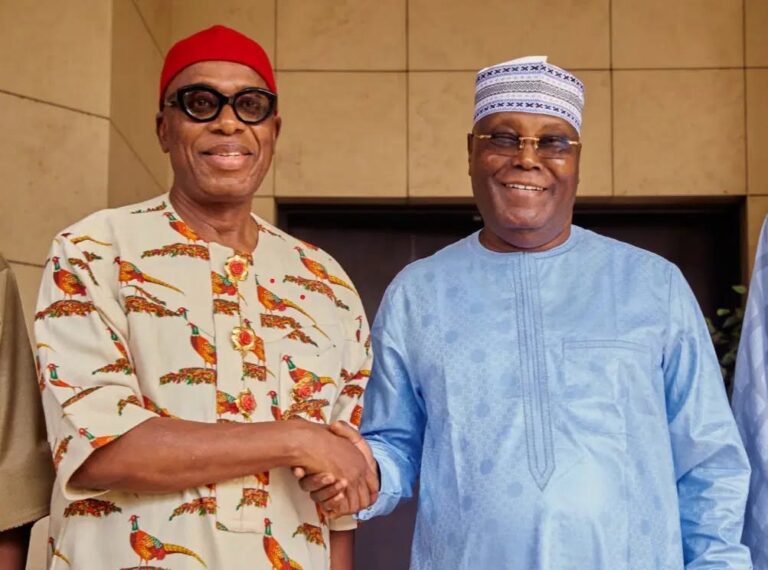
THE African Democratic Congress (ADC) has named former Rivers State Governor and ex-Minister of Transportation, Rotimi Amaechi, as its vice-presidential candidate for the 2027 general election.
In a statement on Monday, June 15, by National Publicity Secretary, Bolaji Abdullahi, the party said Amaechi’s selection was based on his experience, political influence, and performance as runner-up in the presidential contest.
The announcement comes weeks after a controversial presidential primary in which former Vice President Atiku Abubakar emerged as the party’s flagbearer amid protests over alleged irregularities.
Abubakar, according to official results announced on May 27, 2026, secured 1,846,370 votes to defeat Amaechi, who polled 504,117 votes, while businessman Mohammed Hayatu-Deen came third with 177,120 votes.
However, the outcome initially sparked protests within the party, with both Amaechi and Hayatu-Deen rejecting the process and alleging manipulation and irregularities in the conduct of the exercise.
Despite the early tensions, the dispute was later resolved following internal consultations and reconciliation moves within the party.
Abubakar held separate meetings with both Amaechi and Hayatu-Deen shortly after the primary to ease tensions and strengthen unity within the opposition platform.
Following the reconciliation process, the ADC said it carried out extensive consultations with leaders, coalition partners, youth and women stakeholders, and representatives across the country’s geopolitical zones before selecting Amaechi as Atiku’s running mate.
The party described the Atiku-Amaechi pairing as a strategic alliance aimed at strengthening its chances in the 2027 election and addressing Nigeria’s governance challenges.
Amaechi, who previously served as Speaker of the Rivers State House of Assembly and two-term governor of Rivers State, was also highlighted for his tenure as Minister of Transportation, during which he oversaw major rail and infrastructure projects.
“The proposed partnership between His Excellency Atiku Abubakar and Rt. Hon. Rotimi Amaechi represents more than a political alliance; it is the coming together of two tested statesmen with the experience, national reach, and leadership capacity required to rescue Nigeria from its current challenges and reposition the country for a new era of prosperity, security, and inclusive development,” the party noted.
The ADC said his experience across legislative and executive roles made him a strong complement to Atiku’s presidential ambition, adding that the Atiku-Amaechi ticket would represents “national coalition” capable of bridging regional divides and restoring confidence in governance.
The announcement came as the ADC continues to manage internal tensions that have trailed its emerging opposition coalition ahead of the 2027 elections.
The party had attracted several political figures during its coalition-building process, including former Anambra State governor Peter Obi and former Kano State governor Rabiu Kwankwaso, who later exited the platform amid internal disagreements.
EKITI State Governor Biodun Oyebanji faces challengers from 10 political parties in the June 20, 2026, governorship election. Observers say it is a contest poised to test political strength, governance record, and voter sentiment across the state.
The election, one of Nigeria’s off-cycle governorship contests, will see the incumbent governor seek a second four-year term on the platform of the All Progressives Congress (APC), with his deputy, Monisade Afuye, retained as his running mate.
Party primaries for the election were conducted between October 20 and November 10, 2025, with the Independent National Electoral Commission (INEC) subsequently publishing provisional and final candidate lists ahead of the poll.
The election umpire had earlier confirmed 12 political parties and their candidates for the poll, but Joseph Anifowose, a businessman and politician who initially emerged as the governorship candidate of the Allied Peoples Movement (APM), withdrew from the race. He subsequently endorsed the incumbent governor, citing his achievements in governance, infrastructure and social services.
However, a striking development ahead of the election is the absence of the Peoples’ Democratic Party (PDP), traditionally one of the dominant political forces in Ekiti politics. INEC’s final list excluded PDP candidate Wole Oluyede following unresolved leadership disputes and legal battles within the party at the national level. The Social Democratic Party (SDP) was also left off the final ballot.
Political observers say the omission of the PDP has fundamentally altered the dynamics of the contest, potentially benefiting the ruling APC while creating opportunities for smaller opposition parties to attract dissatisfied voters.
Here is a profile of the candidates, highlighting their backgrounds, political experience and campaign priorities. Together, they represent a broad mix of political experience, professional backgrounds, and educational qualifications.
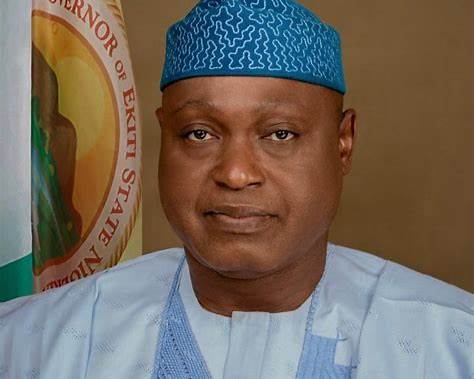
Biodun Oyebanji (APC)
Biodun Abayomi Oyebanji, born on December 21, 1967, is a politician and public administrator from Ikogosi-Ekiti. He studied Political Science at the Ekiti State University and later obtained a Master’s degree in Political Science from the University of Ibadan.
He served as Chief of Staff and Secretary to the State Government under former Governor Kayode Fayemi and has occupied several strategic positions in the state administration.
Oyebanji was elected governor in 2022 on the platform of the APC. His administration claims to have prioritised infrastructure development, agriculture, healthcare, education and rural development.
He is seeking the governorship re-election in the 2026 poll.
Opeyemi Falegan (Accord)
Opeyemi Falegan is a businessman and politician known for his involvement in entrepreneurship, community development and grassroots political mobilisation.
He emerged as the Accord Party’s governorship candidate and is campaigning on economic growth, youth employment, healthcare improvement, educational development and welfare programmes for pensioners and vulnerable citizens.
He is contesting the 2026 governorship election under the Accord Party platform.
Oyebanji Ikusayedegbe Olajuyin (Labour Party)
Oyebanji Olajuyin, a medical doctor, academic and politician, is from Ikere-Ekiti.
A professor, Olajuyin, built a distinguished career in medicine, healthcare administration, medical research and academia, earning recognition for his contributions to healthcare delivery and medical education.
The Labour Party candidate is campaigning on healthcare reform, education improvement, transparent governance and human capital development.
Oluwadare Patrick Bejide (ADC)
Oluwadare Bejide is a diplomat, public servant and politician with extensive experience in public administration.
He emerged as the African Democratic Congress (ADC) governorship candidate and is advocating infrastructure development, public-sector reforms, agricultural expansion, job creation and improved welfare for civil servants.
Ayodeji Ojo (ADP)
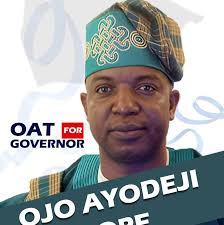
Ayodeji Ojo is a politician and former chairman of the Action Democratic Party (ADP) in Ekiti State. Having spent several years within the party structure, he emerged as ADP’s gubernatorial candidate for the 2026 election.
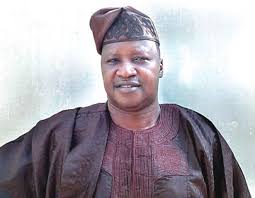
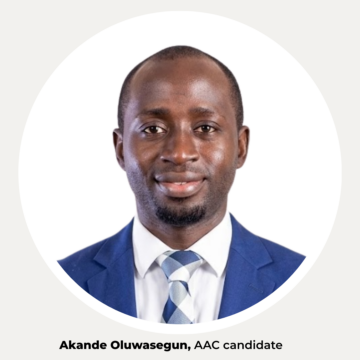
Akande Oluwasegun Samuel (AAC)
Akande Samuel is the governorship candidate of the African Action Congress (AAC). The INEC record shows that at 36 years, Samuel is among the youngest candidates in the race. His candidacy reflects the AAC’s emphasis on youth inclusion and alternative governance.
Akande Oluwasegun, AAC
Bidemi Olaiya Awogbemi (APP)
Bidemi Awogbemi is the governorship candidate of the Action People’s Party (APP). Listed by INEC as 36 years old, he is among the younger contenders in the election. His running mate is Akinyemi Adewumi.
Awogbemi’s candidacy forms part of the growing effort by smaller political parties to challenge the dominance of the larger parties in Ekiti politics.
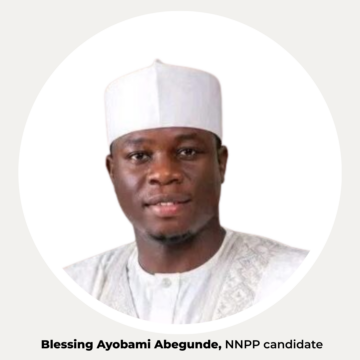
Abegunde Ayobami Blessing (NNPP)
Abegunde Blessing is an entrepreneur, youth leader and politician from Isinbode-Ekiti. He emerged as the New Nigeria People’s Party (NNPP) candidate after other aspirants stepped down in his favour during the party’s primary.
His campaign focuses on youth empowerment, job creation, education, healthcare reform, agriculture, transparency and digital innovation.
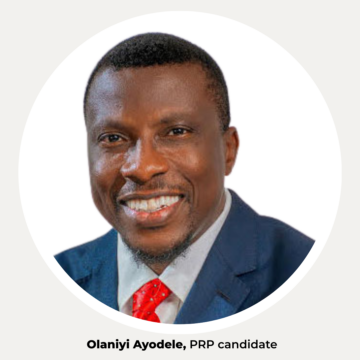
Olaniyi Olanrewaju Ayodele (PRP)
Olaniyi Olanrewaju Ayodele, 49, is the governorship candidate of the People’s Redemption Party (PRP).
He is contesting on the platform of a party that traces its ideological roots to the progressive political tradition associated with the late Aminu Kano.
Olaniyi Ayodele PRP
Owoola Daramola (YPP)
Owoola Daramola is the governorship candidate of the Young Progressives Party (YPP). At 54 years old, he is among the older candidates in the race and represents the YPP’s effort to position itself as an alternative to the state’s dominant political parties.
Victor Damilola Adetunji (ZLP)
Victor Adetunji is the governorship candidate of the Zenith Labour Party (ZLP). According to INEC’s record, he is 38 years old and belongs to a younger generation of politicians seeking public office in Ekiti State.
MILLIONS of Nigerians increasingly relied on borrowed airtime and mobile credit in 2025, with telecom-linked lending surging to an estimated N4.61 trillion.
The development highlights how economic hardship is pushing consumers to depend on debt for basic communication.
Punch reported that new financial statements released by fintech company Optasia showed that mobile subscribers across Nigeria and other emerging markets received airtime advances worth $3.18 billion in 2025, up from $2.83 billion in 2024. Africa accounted for more than 94 per cent of the transactions, making the continent the company’s largest market.
The figures underscore the growing dependence of millions of underbanked consumers on small-value digital loans at a time when inflation and declining purchasing power continue to squeeze household incomes.
Optasia, which partners with telecom operators to provide airtime and nano-loans, said its platform uses subscribers’ behaviour and credit history to determine eligibility for advances.
Beyond airtime borrowing, the company’s Mobile Financial Services segment facilitated nano-loans worth $2.3 billion in 2025, more than double the $967.9 million recorded the previous year.
Although Optasia did not disclose country-by-country lending volumes, its financial statements suggest Nigeria remains one of its most important markets. The company maintains two wholly owned Nigerian subsidiaries, Nairtime Nigeria Limited and Xtra MFS Nigeria Limited and reported net naira exposure of N19.37 billion at the end of 2025.
Nigeria’s importance to the group was further reflected in the sharp rise in trade receivables linked to its operations. Gross trade receivables from Nigeria rose by 103.6 per cent to $7.73 million in 2025 from $3.8 million a year earlier, one of the strongest increases across its markets.
The expansion of digital lending translated into stronger earnings for the company, revenue rose by 75.5 per cent to $265.36 million, while profit after tax increased to $43.13 million.
However, the rapid growth in lending also brought increased risks because Optasia’s provisions for expected credit losses nearly doubled to $65.21 million, indicating rising defaults associated with airtime advances and nano-loan products.
The growth comes amid an ongoing regulatory battle over Nigeria’s airtime credit market.
Reports had claimed that the Federal Government was considering opening the sector to indigenous fintech firms after concerns that Optasia had maintained dominance of the market for more than a decade.
According to the reports, regulators argued that broader participation would encourage competition, strengthen local content and reduce capital flight.
But the Federal Competition and Consumer Protection Commission Director of Corporate Affairs, Ondaje Ijagwu, denied claims that it recommended nine companies for approval or played any role in granting operating licences.
The controversy began in April after MTN, Airtel, Glo and T2mobile suspended airtime credit services following an FCCPC directive seeking compliance with the Digital, Electronic, Online or Non-traditional Consumer Lending Regulations.
The regulations classified airtime credit as a form of consumer lending, triggering a dispute with the Nigerian Communications Commission over regulatory oversight.
Although services have since resumed, the matter remains before the Federal High Court in Lagos, with the substantive case scheduled for hearing on July 20, 2026.
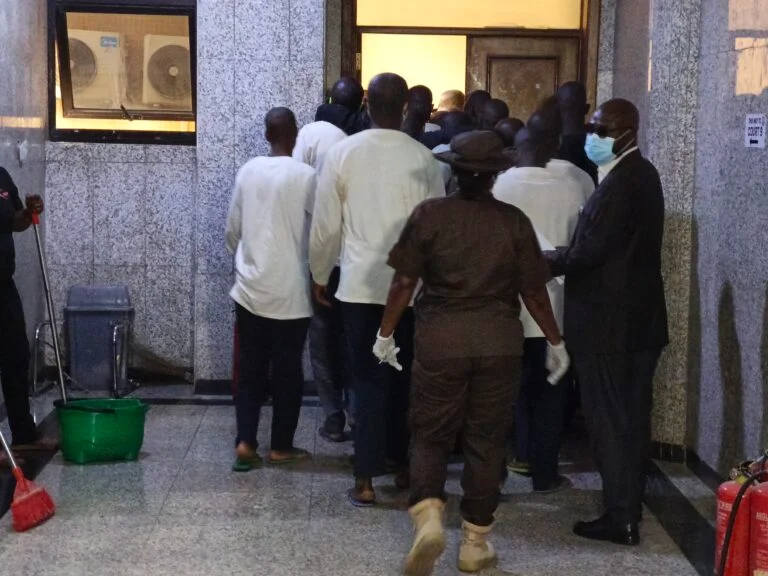
THE Federal Government, on Monday, began another batch of mass trial of suspected terrorists charged with terrorism-related offences in Abuja.
The News Agency of Nigeria (NAN) reports that the trial, which usually takes place at Kainji in Niger, was moved to the Federal High Court (FHC) in Abuja.
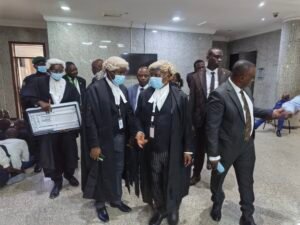
The prosecution of the defendants is being led by the Attorney-General of the Federation (AGF), Lateef Fagbemi, a senior advocate, while the Director-General, Legal Aid Council, Aliyu Abubakar, led the team of lawyers for the defence.
The trial, taking place in all the courtrooms in the FHC, is expected to last for one week.
Some of the trial judges are Binta Nyako, Emeka Nwite, Musa Liman, James Omotosho, Obiora Egwuatu, Ekerete Akpan, among others.
No fewer than 58 suspected terrorists were listed for trial on Monday before Nwite.
They are Abba Bukar, Abba Manye, Gujja Mala Bukar, Brem Gonimi, Isa Mohammed, Lawali Dashiri Danke, Yau Tukur (Mai-Auduga), Bello Liman, aka Alhaji Bell Doctor, among others.
Meanwhile, almost all other matters scheduled for today at the court had been rescheduled for the mass trial.
Security has been beefed up in and around the Central Business District and the Abuja Federal High Court.
All roads leading to the court were blocked by armed security personnel.
NAN reports that 500 suspected terrorists were also tried between April 7 and April 10 at the FHC in Abuja.
The AGF, Mr Lateef Fagbemi, SAN, leading the Federal Government’s team of awyers to the Federal High Court on Monday in Abuja.
Addressing newsmen, Fagbemi said the 500 suspects were being prosecuted in the Phase 9 of the mass trial in Abuja.
The AGF cited logistics reasons for the transfer of the cases to Abuja from Kainji.
“Whether the cases are tried in Kainji or Maiduguri, those to try terrorism suspects are judges of the Federal High Court.
“It is more convenient here; we have more courtrooms and facilities. We have 10 judges at a time, you know what it means. It means a lot,” Fagbemi said. (NAN)
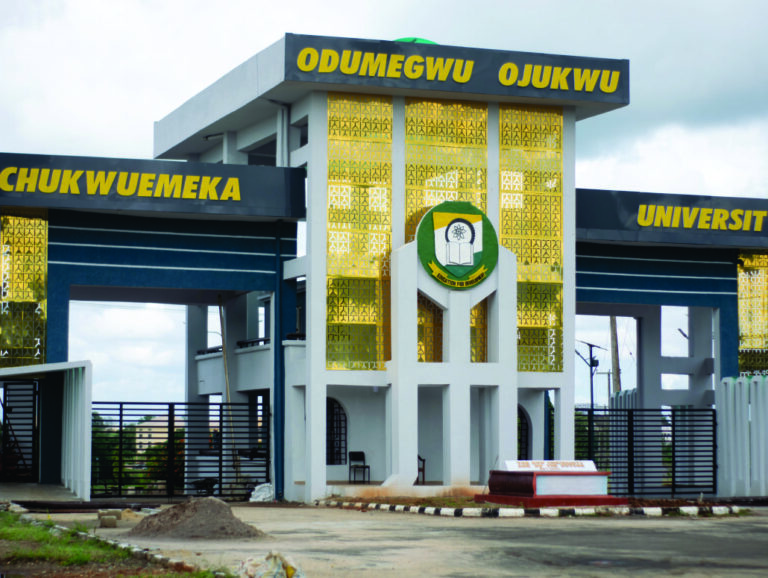
THE Chukwuemeka Odumegwu Ojukwu University (COOU), Igbariam, Anambra, has dismissed four lecturers over alleged sexual abuse, harassment, intimidation, extortion and other forms of misconduct.
The university’s Public Relations Officer, Harrison Madubueze, a doctorate holder, disclosed this in a statement on Sunday in Awka.
Madubueze said the decision was taken at the 122nd meeting of the Governing Council held on June 12.
According to him, those dismissed include C.C. Nwabachili, a professor and immediate past Dean of the Faculty of Law, and another professor, Chike Osegbue of the Department of Political Science, Faculty of Social Sciences.
Others are I.H. Iheukwumere, a doctorate holder, and Emeka Nwabunnia, both of the Department of Microbiology, Faculty of Natural Sciences, Uli Campus.
Also dismissed was Ifeoma Kakulu, a Principal Assistant Registrar, who served as the Examination Officer of the Faculty of Law in the Examinations Unit, at the time the offences were allegedly committed.
Madubueze said the affected staff members were found culpable of offences ranging from sexual abuse and harassment to intimidation, extortion and ethical misconduct.
He said the council reaffirmed its commitment to discipline, integrity and accountability within the institution.
“The council reaffirmed its stance on discipline and integrity, warning that actions tarnishing the university’s reputation would face severe consequences.
“It also promised to ensure a safe, accountable and forward-thinking atmosphere, aligning with the vision of building a new university for the future,” he said.
The university spokesman said the disciplinary action underscored the institution’s resolve to uphold ethical standards and maintain public confidence in its academic and administrative processes.
THE Socio-Economic Rights and Accountability Project (SERAP) has filed a lawsuit against the Nigerian National Petroleum Company Limited (NNPCL) “over its failure to account for approximately ₦5.9 billion reportedly spent on the incorporation, transition, and rebranding of NNPC into NNPCL.”
The NNPC reportedly paid N2.9 billion for incorporation expenses from petroleum product proceeds, while the National Petroleum Investment Management Services (NAPIMS) also charged N2.9 billion to crude oil revenue for the same purpose, bringing the total amount spent on the rebranding of NNPC to NNPCL to ₦5.9 billion.
In the suit number FHC/ABJ/CS/1248/2026, filed last week at the Federal High Court in Abuja, SERAP is seeking “an order of mandamus to direct and compel the NNPCL to account for about ₦5.9 billion allegedly spent on the rebranding of the NNPC to the NNPCL.”
SERAP is asking the court to “direct and compel the NNPCL to provide a comprehensive reconciliation statement detailing the specific financial transactions relating to the ₦5.9 billion expenditure, including the identities of the contractors involved, and how the funds were utilised for the rebranding of NNPC to NNPCL.”
SERAP is also asking the court to direct and compel the NNPCL to disclose the names and official positions of the government officials who authorised and approved the release and expenditure of the ₦5.9 billion reportedly spent on the rebranding of NNPC to NNPCL, and to clarify whether the expenditure complied with applicable procurement laws and due-process requirements.
In the suit, SERAP argues that there is a legitimate public interest in the disclosure of the details sought. The NNPCL has a legal responsibility to explain whether the ₦5.9 billion expenditure represents value for money, constitutes lawful spending of public funds, and complies with applicable due process requirements.”
The organisation notes that there ought to be full transparency and accountability regarding the reported ₦5.9 billion spent on rebranding NNPC to NNPCL, adding that Nigerians have the right to know who approved the expenditure, who received the funds, the nature of the services rendered, and whether due process and procurement requirements were strictly followed.
According to SERAP, the disclosure of the identities of the officials involved and the processes followed in approving the expenditure would enable the public to assess whether the expenditure was properly authorised, represented value for money, and was undertaken in accordance with due process and procurement requirements.”
“Given the size of the reported expenditure and the importance of transparency in the management of public resources within the petroleum sector, there is an urgent need for a prompt, thorough, and transparent disclosure of the details surrounding the spending of the funds.”
The suit filed on behalf of SERAP by its lawyers, Oluwakemi Agunbiade, Kehinde Oyewumi, and Andrew Nwankwo, says the alleged spending of the ₦5.9 billion suggests a grave violation of the public trust and the provisions of the Nigerian Constitution 1999 [as amended], national anticorruption laws, and the country’s international anticorruption obligations.
“The failure to account for the spending of the ₦5.9 billion on rebranding from NNPC to NNPCL reflects a failure of NNPCL accountability more generally and is directly linked to the institution’s continuing failure to uphold transparency and accountability principles.
“The refusal or failure of the NNPCL to provide a detailed account of the expenditure undermines the right of access to information concerning the management of public resources. Senate Committee on Public Accounts reportedly raised serious concerns regarding the expenditure of the ₦5.9 billion described as incorporation and transition expenses allegedly incurred during the process of transforming the NNPC into the NNPCL,” SERAP notes further.
The suit insists that the Senate committee described the spending of the ₦5.9 billion as excessive, unjustifiable, and deserving of further explanation, investigation, and legislative scrutiny in the public interest.
The transformation of the national oil company from the NNPC into the NNPCL followed the enactment of the Petroleum Industry Act (PIA) 2021, which required the corporation to become a commercially oriented limited liability company fully owned by the federal government.
According to SERAP, Section 13 of the Nigerian Constitution 1999 [as amended] requires all public institutions including the NNPCL to conform to and apply the provisions of Chapter II of the Constitution, while Section 15(5) mandates the public institutions to abolish all corrupt practices and abuse of power.
Besides, Section 16 of the Constitution requires the public institutions to ensure that the material resources of the nation are harnessed and distributed as best as possible to serve the common good.
The organisation also explains Articles 5 and 9 of the UN Convention against Corruption require Nigeria to ensure transparency and proper management of public funds.
As of the time of filing this report, no date has been fixed for the hearing of the suit.