Home Blog Page 126

GENCOs reject FG’s proposal to forfeit 50% of N5trn debt

0

NIGERIA’s electricity sector liquidity problems are worsening as the power generation companies (GENCOs) have rejected  the Federal Government’s proposal requiring them to accept 50 per cent of the total debt owed them for electricity supplied to the national grid.

The Executive Secretary of the Association of Power Generating Companies of Nigeria (APGC), Joy Ogaji, confirmed to The ICIR that proposed contracts from the Federal Government were sent out to each power generation company, except Azura Power West Africa.

In the proposal, tagged 50 per cent haircut, the government offered to pay the companies about N2.4 trillion or 49.9 per cent of the total debt.

Ogaji said the underpayment proposal, if enforced, would create huge damage to Nigeria’s power sector, discourage investors and possibly force most generating plants out of business.

“If the proposal sells through, this will kill the GENCOS completely,” she said.

She stressed that thw debt was not entirely GENCO’s money but included thermal plants and other players in the power generation value chain.

Notably, the government debt to the GenCos rose to over N5 trillion at the end of June, with President Bola Tinubu agreeing to pay off the debt through bond issuance during a meeting with the companies in July.

Ogaji expressed worry that rising debt had posed a serious liquidity problem to the power sector, which she said had deprived it of optimum service delivery.

The ICIR reports that GenCos operate thermal power plants that use natural gas to produce electricity.

They connect their power plants to the national grid, allowing them to transmit generated electricity to the Transmission Company of Nigeria (TCN) for distribution.

GENCos sell electricity to the Nigerian Bulk Electricity Trading (NBET) Plc, which acts as a creditworthy off-taker, ensuring payment to generators.

Following the approval of the proposal by the Federal Executive Council, FEC, in August, top government officials met with the owners of the GenCos in early October, with the Special Adviser on Energy, Olu Verheijen, announcing that an agreement had been reached with the companies on the debt repayment model.

In furtherance of this, the government, on October 16, 2025, sent out two contract documents to the GenCo, which, among other clauses, requested them to forfeit 50 per cent of the debt owed them as final payment.

Copies of the documents, sighted by The ICIR, was titled “NBET deed of settlement” and “Deed of novation”, among others, sought to transfer government debt from the Nigerian Bulk Electricity Trading Plc, NBET, to a new special purpose vehicle, named NBET Bond Finance Company Plc.

The contracts read: “GenCo, hereby, accepts the sum of (“Settlement Amount”) as the full and final settlement of the outstanding legacy debt, including any interest thereon and any other claim for losses, whether present or future and whether known or unknown, in respect of the legacy debt.

“For the avoidance of doubt, GenCo agrees that the settlement amount, as a compromise of its rights to the legacy debt, hereby (i.e., from the date of this Agreement), extinguishes its right to any claims to the legacy debt, including any contractual claims for losses whatsoever and howsoever, arising whether from deemed capacity, true ups and interest on delayed payment of substantive invoice amounts, true-up compensations or deemed capacity payments referenced in Appendix A or elsewhere.

“The parties agree that subject to prompt payment of the settlement amount as contemplated in the payment structure under Clause 3 below and Appendix B, the settlement amount shall not bear any interest or give rise to any further claims for any losses whatsoever.

“NBET’s obligation to pay the settlement amount to GenCo shall be novated to Bond SPV, via the Novation Agreement and upon its execution, Bond SPV shall be solely responsible for payment of the settlement amount.

“The parties acknowledge and are aligned on the PPSFRP’s plan for the settlement amount to be paid by Bond SPV solely from the outcome of an FGN-backed public bond issuance programme that will be conducted by the Bond SPV (“Bond Programme”).

“These bond proceeds are expected in successive issuance phases and tranches that will have an impact on the exact timeline for payment of the settlement amount in instalments (where applicable).

The ICIR reported that the Federal Government promised to sort out the outstanding N4 trillion debt payment in two ways: part of it in cash, and the rest through promissory notes, which are legal documents that act as a promise to pay money at a later date.

Without a proper financial strategy in the sector, findings have also shown that Nigeria’s power sector has relied on interventionist funds from the World Bank and the African Development Bank (AfDB) to pull itself out of various liquidity crises, since the sector’s privatisation in 2013.

There are several instances of World Bank support for the sector, including a $500 million loan in 2021 for the Nigeria Distribution Sector Recovery Program (DISREP), a $750 million facility approved in 2023 for the Power Sector Recovery Operation (PSRO) and Distributed Access through a Renewable Energy Scale-Up (DARES), and pledged support with 1.2 million meters in 2023 to address the metering gap.

Tinubu’s diplomatic push falters as UK declines Ekweremadu deportation request

0

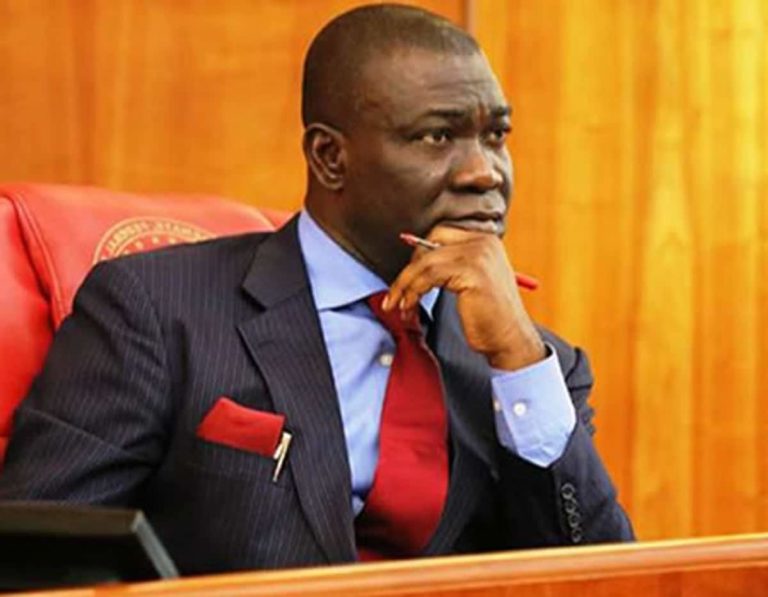
THE United Kingdom government has rejected Nigeria’s request to deport former Deputy Senate President Ike Ekweremadu following president Bola Tinubu’s recent diplomatic push to have him transferred home to complete his prison sentence.

The ICIR reported that Tinubu had dispatched a high-level delegation to London on November 10, led by Foreign Affairs Minister Yusuf Tuggar and Attorney General Lateef Fagbemi, to negotiate Ekweremadu’s transfer from a UK prison to Nigeria.

The visit was confirmed to The ICIR by the Foreign Affairs Ministry spokesperson, Alkasim Abdulkadir, who said consultations with UK authorities were ongoing.

“The presidential delegation met with UK authorities to explore possibilities of Senator Ike Ekeweremadu to serve the remainder of his sentence in Nigeria. Consultations are ongoing,” Abdulkadir had said.

Discussions reportedly examined prisoner-transfer arrangements, compassionate parole or other reliefs allowed under UK law.

But according to The Guardian, the UK Ministry of Justice has now turned down Nigeria’s formal request for Ekweremadu’s deportation.

A source told the newspaper that the request was rejected because the British government could not obtain assurances that Nigeria would enforce the remaining prison term.

A UK government spokesperson declined to comment on Ekweremadu’s case specifically but said prisoner transfers remained entirely at the government’s discretion.

“Any prisoner transfer is at our discretion following a careful assessment of whether it would be in the interests of justice,” the official was quoted to have said.

In May 2023, a UK court sentenced  Ekweremadu to nine years and eight months in prison after finding him guilty of organ trafficking under the United Kingdom’s Modern Slavery Act, the first conviction of its kind. His wife, Beatrice, was sentenced to four years and six months, while their family doctor, Obinna Obeta, received a 10-year prison term.

The trio were convicted for conspiring to exploit a young Nigerian man, David Nwamini, by arranging for the removal of his kidney to treat the couple’s ailing daughter, Sonia. The judge ruled that the defendants intended harm to the victim, who was misled into believing he would be rewarded for the organ donation.

During the trial, it was alleged that the 21-year-old street trader was to be rewarded for donating the organ to Sonia Ekweremadu in an £80,000 private procedure at London’s Royal Free Hospital.

The prosecution claimed the donor was offered up to £7,000 along with the promise of a better life in the UK, but the donor did not understand until his first appointment with a consultant at the hospital who he was there for a kidney transplant.

It was also claimed that the man was falsely presented as Sonia Ekweremadu’s cousin in a failed attempt to persuade medics to carry out the procedure.

However, in January 2025, Ekweremadu’s wife Beatrice was reportedly released from prison and had returned to Nigeria after serving her sentence.

NNPC records N5.4 trillion profit – Official

0

THE Nigerian National Petroleum Company (NNPCL) has announced its financial performance for the full year ended 2024, reporting a profit after tax of ₦5.4 trillion on revenue of ₦45.1 trillion.

The Company’s Chief Corporate Communications Officer, Andy Odeh, on Monday, November 24, disclosed this during its earnings call with business analysts.

The national oil company also unveiled its strategic roadmap to drive sustained growth and support Nigeria’s energy transition through 2030.

The plan prioritises increased oil and gas production, while it also outlines a $60 billion investment pipeline across the energy value chain.

“We are also focused on mobilising $60 billion in investments across the upstream, midstream, and downstream sectors by 2030, “Odeh said.

“The earnings highlight the positive momentum of our ongoing transformation and the unwavering commitment of our workforce,” Bayo Ojulari, Group Chief Executive Officer of thte NNPCL said in the statement.

“They offer a solid foundation for the ambitious growth ahead, in line with President Bola Ahmed Tinubu’s mandate, and reaffirm our commitment to delivering value to Nigerians,” he added.

The NNPC also disclosed it was accelerating investments across upstream operations, gas infrastructure, and clean energy to extend growth into the next decade.

The national oil company said it was increasing crude oil production to two million barrels per day (bpd) by 2027 and 3 million bpd by 2030.

Other plans include growing natural gas production to 10 bcf/d by 2027 and 12 bcf/d by 2030 and completing major gas infrastructure projects such as Ajaokuta-Kaduna-Kano (AKK), Escravos-Lagos Pipeline System (ELPS), and Obiafu-Obrikom-Oben (OB3) pipelines to strengthen domestic supply and regional integration.

“Our transformation is anchored on transparency, innovation, and disciplined growth,” Ojulari said, stressing that, “We are positioning NNPC Limited as a globally competitive energy company capable of delivering sustainable returns while powering the future of Nigeria and Africa.”

The ICIR reported that four years into the implementation of the Petroleum Industry Act (PIA), the NNPCL said it was planning to offer shares to people to buy on the Nigerian stock market.

Although the NNPCL is yet to embark on this, the move will allow people to invest in the national oil company and share in profit.

Selling shares could also mean the government gets more money from taxes, dividends (which are like little payouts to shareholders), and royalties. Plus, it means Nigerians will own a part of their national oil company.

Alleged Christian genocide: FG, US agree on new cooperation framework – Presidency

1

THE Federal Government has said recent meetings between a high-level Nigerian delegation and senior United States officials resulted in improved security ties and new commitments aimed at protecting civilians and tackling violent extremism across Nigeria.

The delegation, led by National Security Adviser (NSA) Nuhu Ribadu, held engagements last week with officials from the US Congress, the White House Faith Office, the State Department, the National Security Council, and the Department of Defense in Washington, DC.

According to a statement by the Special Adviser to the President on Information and Strategy, Bayo Onanuga, on Monday, November 24, the Nigerian delegation used the meetings to refute allegations of genocide in Nigeria.

It reiterated that violent attacks affected communities across religious and ethnic lines and warned that misrepresenting the situation could heighten division and obscure realities on the ground.

Onanuga noted that following the discussions, the US government reaffirmed its readiness to deepen security cooperation with Nigeria.

This, according to the statement, includes enhanced intelligence sharing, and faster processing of defence equipment requests to boost operations against terrorist and extremist groups.

It noted that the US government also expressed willingness to provide complementary humanitarian support to vulnerable populations in the Middle Belt and technical assistance to improve Nigeria’s early-warning and conflict-prevention systems.

According to the statement, both countries agreed to begin implementing a non-binding cooperation framework immediately and set up a Joint Working Group to coordinate actions in the agreed areas.

“Both countries agreed to implement immediately a non-binding cooperation framework and to establish a Joint Working Group to ensure a unified and coordinated approach to the agreed areas of cooperation.

“In return, the Nigerian delegation reaffirmed the government’s commitment to strengthening civilian protection measures.

“The discussions provided ample opportunity to correct misconceptions about Nigeria, forged a constructive, solution-driven partnership with the United States, reinforced mutual trust, and advanced a coordinated approach to protecting vulnerable communities, especially in the Middle Belt,” the statement added.

The ICIR reports that Ribadu, last week, led a high-powered delegation to the US following renewed allegations of Christian genocide claims that gained traction in the last few weeks.

The situation escalated earlier this month when Trump redesignated Nigeria as a Country of Particular Concern and tasked a group of US lawmakers, including Congressman Riley Moore, to investigate alleged religious persecution in Nigeria.

Trump threatened that he was considering military intervention in Nigeria if nothing was done to stop the killings.

Despite the Nigerian government’s efforts to dismiss the claims, the US pressed ahead, culminating in a development on Tuesday, November 18, when American rapper Nicki Minaj was invited to testify at the United Nations against Nigeria in an event co-hosted by the US Mission to the UN.

Similarly, the Nigerian delegation on Wednesday held a detailed meeting with Congressman Moore, who reportedly released a statement describing the engagement as “frank, honest, and productive.”

Moore said the Nigerian officials shared extensive information on counterterrorism efforts, security assistance, and protection of vulnerable communities.

Bauchi joins Katsina, Plateau, others to shut down schools over insecurity 

0
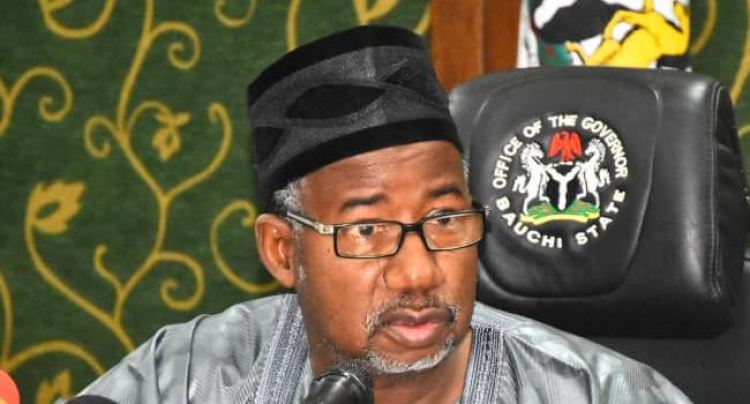
THE Bauchi State Government has directed the immediate shutdown of all public and private schools in the state.
The order affects state-owned primary, secondary, and tertiary institutions, as well as Federal Government–owned schools, according to a statement released by the Information Officer of the state Ministry of Education. Jalaludeen Usman.
“This decision, though difficult, was taken by the Government of Bauchi State after extensive consultations and in response to overwhelming security concerns affecting the safety of students, teachers, and school communities across the state,” the statement read.
The government reiterated its commitment to protecting learners and appealed to the public to stay calm, remain vigilant, and support security efforts by reporting any suspicious activity.
“We call on parents, guardians, school proprietors, and all concerned stakeholders not to panic but to remain calm and supportive. The government is working closely with security agencies to address these concerns swiftly and comprehensively, ensuring that normal academic activities resume as soon as it is safe to do so,” the statement added.
The government added that residents would be kept informed with further updates.
Bauchi has now joined the growing number of states that have closed schools over rising insecurity and the recent mass abductions of students in various parts of the country.
The ICIR reported that on November 17, 2025, armed men breached the fence of Government Girls Comprehensive Secondary School in Maga, Kebbi State, killed the vice principal, and abducted 25 schoolgirls, a chilling echo of the Chibok, Dapchi, and other mass kidnappings of young girls in Nigeria.
A teacher was killed while trying to protect the girls during the attack, and a security guard later died in the hospital from gunshot wounds.
An official of the Danko Wasagu Council, Hussaini Aliyu, told the BBC on November 19 that two girls among the 25 students managed to escape.
He said they ran away across farmland as their armed captors were leading them into the bushes.
Aliyu added that though one of the girls needed medical treatment because she hurt her leg while running in the bushes, the girls were “back and are safe.”
The ICIR also reported how gunmen stormed St. Mary’s Papiri Private Catholic Secondary School in the Papiri community of Agwara Local Government Area, Niger State and abducted scores of students and teachers, in the early hours of Friday, November 21.
Local sources said the gunmen arrived at the school between 3 and 4 a.m. in large numbers, riding on over 60 motorcycles and accompanied by a van, and shot the school’s gatekeeper, leaving him with serious injuries.
The ICIR reported that gunmen attacked the Christ Apostolic Church (CAC), Oke-Isegun in Eruku, Kwara State, last Tuesday, killing three people and abducting 38 worshippers.
The 38 worshippers, however, regained freedom, according to a statement by the Kwara State Government on Sunday.
Meanwhile, Tinubu has reiterated his administration’s commitment in tackling insecurity in the country, saying he will not relent until all Nigerians are protected.
The president, in a statement on Sunday via his official X handle said Nigeria would be secured under his watch, adding that every citizen deserves the right to be safe in any state of the federation.
He commended the security agencies for the swift rescue of the abducted victims, saying he was “closely monitoring the security situation nationwide and receiving continuous updates from the frontline.”
Recent attacks by terrorists and other criminals have worsened security concerns across the country as the Federal Government and some states have consequently shut down schools to guarantee students’ safety.
The Federal Government, through the Director of Senior Secondary Education at the Federal Ministry of Education, Binta Abdulkadir, directed the shutting down all 41 Unity Schools in the country with immediate effect over growing spate of abductions last Friday.
Similarly, the Plateau, Katsina, Taraba, Adamawa, and Niger State governments ordered the immediate closure of all basic schools respectively between late Friday and early Saturday, citing urgent need for preventive action.

Gunmen abduct 12 female farmers in Borno

0
BOKO Haram fighters have kidnapped 12 women and girls in Mussa district, Askira-Uba Local Government Area of Borno State.
The Police Public Relations Officer in the state, Nahum Daso, confirmed the incident on Sunday.
He said the women were kidnapped while returning from their farms Saturday evening, adding that the Command has launched an investigation into the matter.
“There was an abduction yesterday; the abduction of 12 females when they were coming back from their farms in Askira-Uba, by suspected Boko Haram.
The officer said details of the incident were still sketchy, but efforts were underway to rescue the abductees.
The ICIR reports that the abduction adds to the series of attacks by gunmen in different states in the northern part of the country.
Before dawn on November 17, 2025, armed men breached the fence of Government Girls Comprehensive Secondary School in Maga, Kebbi State, killed the vice principal, and abducted 25 schoolgirls, a chilling echo of the Chibok, Dapchi, and other mass kidnappings of young girls in Nigeria.
A teacher was killed while trying to protect girls during the attack, and a security guard later died in the hospital from gunshot wounds.
An official of Danko Wasagu council, Hussaini Aliyu, told the BBC on November 19 that two girls among the 25 students managed to escape, explaining that the girls ran away across farmland as their armed captors were leading them into the bushes.
Aliyu added that though one of the girls needed medical treatment because she hurt her leg while running in the bushes, the girls were “back and are safe.”
Similarly, gunmen stormed St. Mary’s Papiri Private Catholic Secondary School in the Papiri community of Agwara Local Government Area, Niger State, in a fresh attack and abducted scores of students and teachers, in the early hours of Friday, November 21.
Local sources said the gunmen arrived at the school between 3 and 4 a.m. in large numbers, riding on over 60 motorcycles and accompanied by a van, and shot the school’s gatekeeper, leaving him with serious injuries.
The ICIR reported that gunmen attacked the Christ Apostolic Church (CAC), Oke-Isegun in Eruku, Kwara State, last Tuesday, killing three people and abducting 38 worshippers.
The 38 worshippers, however, regained freedom, according to a statement by the Kwara State Government on Sunday.
Meanwhile, Tinubu has reiterated his administration’s commitment in tackling insecurity in the country, saying he will not relent until all Nigerians are protected.
The president, in a statement on Sunday via his official X handle said Nigeria would be secured under his watch, adding that every citizen deserves the right to be safe in any state of the federation.
He commended the security agencies for the swift rescue of the abducted victims, saying he was “closely monitoring the security situation nationwide and receiving continuous updates from the frontline.”
Recent attacks by terrorists and other criminals have worsened security concerns across the country as the Federal Government and some states have consequently shut down schools to guarantee students’ safety.
The Federal Government, through the Director of Senior Secondary Education at the Federal Ministry of Education, Binta Abdulkadir, directed the shutting down all 41 Unity Schools in the country with immediate effect over growing spate of abductions last Friday.
Similarly, the Plateau, Katsina, Taraba, Adamawa, and Niger State governments ordered the immediate closure of all basic schools respectively between late Friday and early Saturday, citing urgent need for preventive action.

PDP lauds release of 38 Kwara worshippers, slams governor over insecurity

0

By Dare Akogun

THE Kwara State chapter of the Peoples’ Democratic Party (PDP) has welcomed the release of the 38 abducted worshippers of the Christ Apostolic Church (CAC), Oke Isegun, Eruku, in Ekiti Local Government Area of the state.

However, the party said the development did not absolve the state Governor AbdulRahman AbdulRazaq of responsibility in what it described as “persistent and deepening security failures” across the state.

The worshippers were freed on Sunday, November 23, five days after armed bandits invaded their church, killed some of their fellow worshippers and abducted dozens of others — an attack that exposed once again the widening insecurity along the Kwara–Kogi–Niger border axis.

In a statement signed by its Publicity Secretary, Olusegun Olusola Adewara, on Sunday night, the PDP said while the return of the victims offered relief, it should not be mistaken for a sign of improved security under the AbdulRazaq administration.

The party accused the state government of avoiding critical questions surrounding the incident, alleging further that the governor’s response “distributed gratitude to Abuja” without addressing the gaps that enabled the attack.

The opposition party demanded that the state government tell the world if any of the attackers were arrested or neutralised; if ransoms were paid or not, and if public resources were used for such payments.

It also asked questions on the current physical and psychological condition of the victims, and the preventive measures introduced to forestall future attacks.

“A government that celebrates the release of hostages without the arrest of their captors is merely negotiating a temporary ceasefire with criminals,” the party stated.

It added that true security “is measured not by how many abductees are released, but by how many criminals are arrested, prosecuted, and prevented from striking again.”

The PDP also faulted the Kwara governor for attributing the success of the rescue to the “hands-on” intervention of President Bola Tinubu, arguing that the governor’s emphasis reflected his inability to effectively discharge his duties as the state’s chief security officer.

“If the governor must rely entirely on Tinubu’s intervention each time citizens are attacked or abducted, then it becomes clear that the state leadership has lost grip on its primary constitutional responsibility,” the party said.

It described the governor as “a liability on the Federal Government,” insisting that the rescue “is not a victory for governance” but merely a relief overshadowed by unanswered questions.

The PDP also took aim at the Kwara State First Lady, Olufolake AbdulRazaq, accusing her of attempting to “downplay the gravity of the attack” after she allegedly described the incident as an “attempted attack.”

“With the confirmed release of 38 abducted citizens, her earlier claim has now been exposed as misleading and insensitive,” the party said.

“If, as the First Lady claimed, the attack was only an ‘attempt,’ then who were the 38 people released today?” the party queried.

The Eruku attack is the latest in a growing pattern of violent incidents across border communities in Kwara North. Over the last three years, areas such as Ekiti LGA, Kaiama, Baruten, and parts of Moro have recorded spikes in abductions, bandit raids, and killings in rural communities.

Security analysts have repeatedly warned that criminal gangs displaced from Niger, Kogi, and Kebbi are pushing into sparsely policed Kwara border communities, exploiting both terrain and weak early-warning systems.

The ICIR reported similar migration patterns among armed groups in the North Central region, often exacerbated by poor intelligence sharing and slow security response.

Despite the safe return of the victims, the PDP insisted that Kwara residents remained exposed, citing the absence of clear information about the attackers and the lack of a long-term security plan.

“The return of the Eruku 38, while bringing relief, is not a victory for governance,” the party maintained, adding that “Until the masterminds are apprehended and their networks dismantled, Kwara communities remain vulnerable.”

As of Monday morning, the state government had yet to provide detailed information on the conditions under which the victims were released or whether any members of the bandit group had been arrested.

Kwara church attack: “Kidnappers knew the whole route”, freed worshipper recounts ordeal, governor says “not a celebration”

0

By Dare Akogun

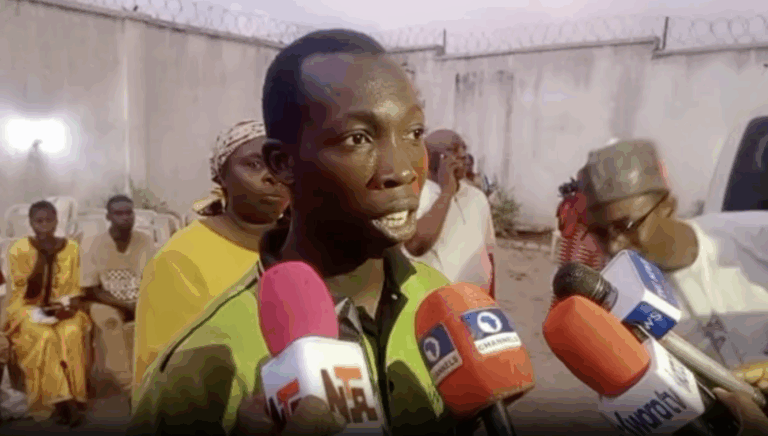
“It was just a sudden and terrifying act,” said  Bamidele Emmanuel, one of the abducted worshippers of the Christ Apostolic Church (CAC) Oke Isegun, Eruku, as he recounted the moment armed bandits stormed their church last Tuesday.

Speaking from at the Government House Clinic in Ilorin, Emmanuel described how the attack unfolded barely 30 minutes before the evening programme was set to begin.

“We suddenly heard gunshots. At first, I didn’t even know it was gunshots, I thought it was some wire sparking,” he told The ICIR. “But before we realised what was happening, they had already surrounded the whole church. Some people began to run, and we saw drops of blood everywhere.”

Emmanuel said the days that followed in captivity were “unimaginable”.

“When we got into the bush, we understood immediately that the whole place was dominated by these evil people called bandits. They told us themselves that they were bandits. They made it clear that no one could escape. From what we saw, they knew every route around those bushes within Kwara and neighbouring [communities.]”

Victims weak, traumatised as medical care begins

Five days after the abduction, Kwara State Governor AbdulRahman AbdulRazaq on Sunday received all 38 worshippers who were freed following a coordinated security operation. Many appeared weak, dehydrated, and visibly traumatised as medical personnel at the Government House Clinic began immediate treatment, including hydration, first aid, and stabilisation for those in worse condition.

“What we went through is not something anyone should experience,” Emmanuel added, describing the physical and psychological abuse they endured.

A pastor, Oluwafemi Ajayi of the CAC Ilorin District said the release brought immense relief to the church community.

“We are grateful to God, the federal government, and the state for the release of our members. It has been a very difficult period for us,” he said.

Governor: ‘This is not a celebration’

Governor AbdulRazaq said the development offered relief but stressed that it was not a moment for celebration, noting that many Nigerians remain in captivity across different states.

“The release of the 38 victims is not yet for celebration. There are other captives who have not been released. Until every Nigerian held by criminals is freed, we cannot celebrate,” he said.

He thanked President Bola Ahmed Tinubu for what he called a decisive intervention in the rescue effort.

“We appreciate President Tinubu for his firm leadership. His support made a significant difference,” the governor said.

Unanswered questions and growing security concerns

The victims were abducted last week Tuesday when gunmen invaded a church programme in Eruku, Ekiti Local Government Area of Kwara State, killing several worshippers and whisking dozens into the bush.

The attack followed a troubling pattern of expanding terror activity along Kwara’s borders with Kogi and Niger corridors long identified by security experts as vulnerable to cross-state criminal networks.

Security agencies, including the DSS, the Nigerian Army, and special police tactical units, reportedly launched a joint operation that led to the victims’ release. But as of Sunday night, authorities had not clarified whether any of the attackers were arrested or neutralised, whether ransom was paid, or the broader psychological state of the freed captives beyond emergency care.

Read the ICIR terror series HERE

Tinubu orders withdrawal of police officers from VIPs nationwide

0
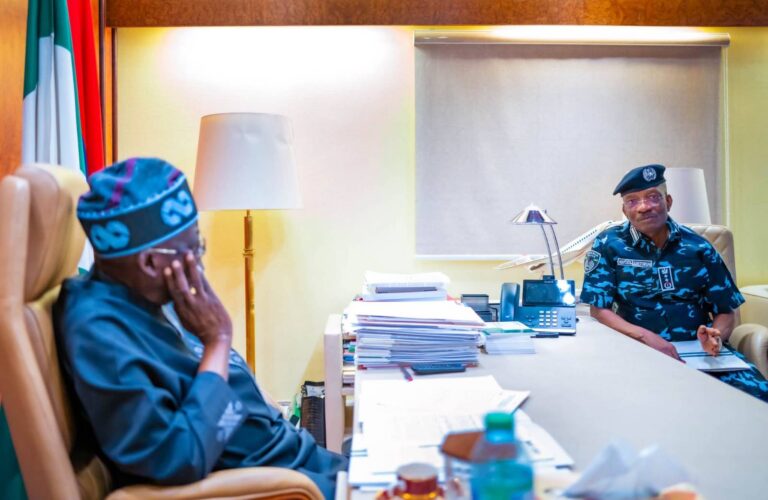
PRESIDENT Bola Tinubu has directed the withdrawal of all police officers currently providing security for Very Important Persons (VIPs) in Nigeria.
The police authorities are to henceforth deploy such officers to concentrate on their core policing duties, the president said.
Tinubu advised anyone seeking police protection to request well-armed personnel from the Nigeria Security and Civil Defence Corps (NSCDC)
The president gave the directive on Sunday, November 23, during a security meeting he held with the Police, Air Force, and Army chiefs, as well as the Director-General of the Department of State Services, DSS, in Abuja.
A statement signed by the Special Adviser to the President, Information and Strategy, Bayo Onanuga, on the directive reads, “According to the presidential directive, VIPs who want police protection will now request well-armed personnel from the Nigeria Security and Civil Defence Corps. Many parts of Nigeria, especially remote areas, have few policemen at the stations, thus making the task of protecting and defending the people difficult.
“In view of the current security challenges facing the country, President Tinubu is desirous of boosting police presence in all communities. Already, President Tinubu has approved the recruitment of 30,000 additional police officers. The federal government is also collaborating with the states to upgrade police training facilities nationwide.
“Sunday’s meeting was attended by the Chief of Army Staff, Lt General Waidi Shaibu; the Chief of Air Staff, Air Marshal Sunday Kelvin Aneke; the Inspector General of Police, Kayode Egbetokun; and the Director-General of the Department of State Services, Tosin Adeola Ajayi.”
The order came on the heels of ballooning insecurity in Nigeria.
On November 18, two people were confirmed dead and an unspecified number of residents abducted after terrorists attacked Eruku town, in the Ekiti Local Government Area of Kwara State.

The Kwara State Police Command in a statement on Tuesday, November 18, said the attack left two men fatally shot and several others missing.

Subsequently reports showed that 38 worshippers were whisked away by the gunmen. Tinubu announced their released Sunday evening, after the abductors allegedly slashed their ransom to N20 million per head. 

Earlier on Monday, November 17, gunmen stormed Government Girls’ Comprehensive Secondary School, Maga, in Danko/Wasagu Local Government Area of Kebbi State and abducted several students. They killed the school vice principal.

Similarly, in the early hours of Friday, November 21, terrorists stormed St. Mary’s Papiri Private Catholic Secondary School in the Papiri community of Agwara Local Government Area, Niger State, and abducted dozens of students and teachers.

Multiple community members who visited the school after the incident confirmed the attack, describing it as a coordinated operation carried out between 2:00 a.m. and 3:00 a.m.

Findings later showed that 315 students and staff were abducted from the institutions. Fifty of the students have reportedly escaped and reunited with their parents.

Following the terrorists’ week-long rampage in the nation, the Federal Government shut down its 41 Unity Schools, while state governments, including Niger, Plateau and Katsina closed down all schools over security concerns.

Tinubu also cancelled his planned trips to Angola and South Africa to enable him to coordinate security situation in Nigeria.

The developments followed recent United States (US) President Donald Trump’s declaration of Nigeria as a “Country of Particular Concern” over alleged Christian killings. Trump has repeatedly claimed that Christians were being killed in droves in Nigeria and described the Africa’s most populous nation as ‘a disgraced country.”

Meanwhile, the Nigerian government has vehemently denied the claims and argued that faithful from Islam and Christianity had been the victims of lingering insecurity in the nation.

It has continued to urge the US and other allies to support its fight against terror and other forms of criminalities.

.

38 abducted worshippers from Eruku freed after days in captivity in Kwara

0

By Dare Akogun

All the 38 worshippers abducted during last Tuesday’s attack on Christ Apostolic Church (CAC) Oke Isegun in Eruku, Kwara State, have regained their freedom after days in captivity, The ICIR has confirmed.

The victims were freed on Sunday following a combined security operation involving federal and state agencies, according to our findings.

The rescue brings to an end a tense five-day manhunt triggered by the attack, which left three worshippers dead and deepened anxieties over rising insecurity in Kwara’s border communities.

In a statement issued on Sunday, the Chief Press Secretary to the Governor, Rafiu Ajakaye, said Governor AbdulRahman AbdulRazaq confirmed the release of all abducted worshippers, attributing the breakthrough to the “hands-on involvement” of President Bola Ahmed Tinubu.

According to the statement, Tinubu cancelled his scheduled trip to the G-20 Summit in South Africa to oversee the rescue efforts.

“This is wholly due to the hands-on approach of President Bola Tinubu, GCFR, who has personally led the efforts to free the abductees,” the governor said.

“The abductees were freed today, November 23. The President had called off his scheduled trip to attend to the breaches in Kwara and Kebbi States and ordered heightened security deployments to Kwara.”

The ICIR had earlier reported that at least four new tactical squads, including intelligence and rapid-response teams from Abuja, were deployed on the President’s directive.

The governor also acknowledged the roles of the Office of the National Security Adviser (ONSA), the Department of State Services (DSS), Nigerian Army, Nigeria Intelligence Agency (NIA), Nigeria Police Force and local vigilante networks.

The Eruku attack is the latest in a string of violent incidents in Kwara’s border corridor with Kogi and Niger. Data gathered by The ICIR shows a surge in kidnappings, highway ambushes, and attacks on farming settlements in Ekiti, Kaiama and Baruten LGAs.

Security beef up at the entrance of the community. PC: ICIR

The assailants invaded the Church during a programme on Tuesday night, shooting sporadically and taking worshippers into the forest. Three people were confirmed dead, while one person remains hospitalised.

The abduction immediately drew national condemnation and renewed scrutiny of Nigeria’s security architecture, especially after the United States designated Nigeria a “Country of Particular Concern” over escalating violence.

By press time the community said they were yet to formally receive the freed abductees although the community confirmed they got called but confirmed receiving calls over their freedom shortly after 4:00 p.m. today.

“We were told they have been rescued, but we are still waiting to see them,” the presiding pastor, Lawrence Bamidele, told The ICIR.

Heavy security presence spotted in Eruku community.

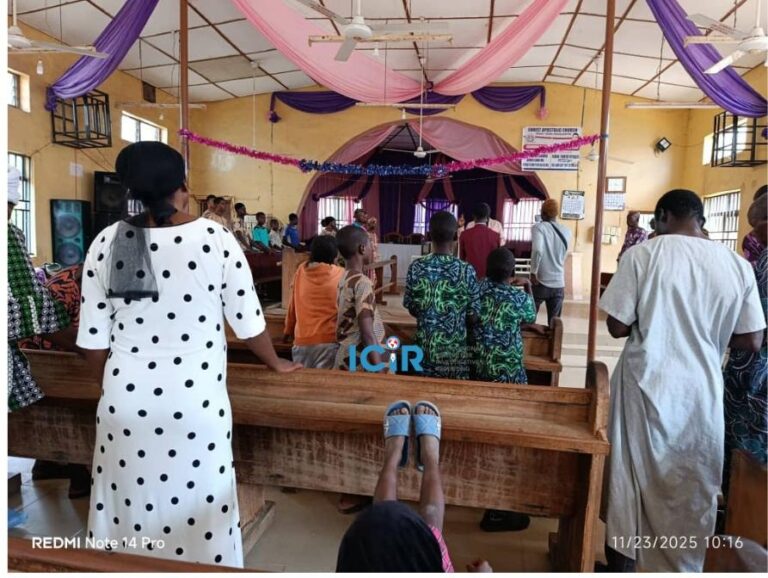
The ICIR earlier reported that amid fear and grief, worshippers congregated to offer prayers for safe return of their members in captivity. Read the report HERE.

This report is part of The ICIR’s ongoing monitoring of Nigeria’s escalating kidnapping crisis and the failure of state and federal authorities to dismantle cross-border criminal networks operating across North-Central Nigeria, titled, “Terror Series“.