Home Blog Page 125

Maga abduction: How terrorists breached security, spent two hours and walked away with schoolgirls 

IN the early hours of Monday November 17, terrorists walked into Government Girls Comprehensive Secondary School, Maga, and abducted 26 female students, two of who later escaped. They spent over two hours in the school after navigating through several military security checkpoints. The ICIR digs into how the attackers got into the school, took time to operate and went away with their victims who were released on Tuesday November 25 

FOURTEEN-year-old Hauwa’u Usman, a JSS 3 student, has not forgotten the horror she experienced that Monday night. As she recounts how she escaped the bandits who abducted her and dozens of her schoolmates, she wished the memories would be erased from her consciousness. 

When the kidnappers stormed the Aliero Hostel that night, she was asleep on her lower bunk, along with 25 other female students in room 3. 

Usman Hawa'u stading beside her bunk in Aliero hostel narrating her experenece to The ICIR. Photo: Mustapha Usman/The ICIR
Hawa’u  beside her bunk in Aliero hostel narrating her experience. Photo: Mustapha Usman/The ICIR

The girls woke up to the voices of the terrorists who commanded them out of the room. Those who hesitated were beaten and forced out. 

Hauwa’u remembered one girl crying and pleading with the men not to take her, but they forced her to move. Room Three, like the other rooms, had at least 15 bunk beds, each with two sleeping spaces – upper and lower.

The room also had a corner that led to four student toilets and an area where broken or unused bunk frames were kept.

A small space at the room that houses four student toilets, next to an area where broken and unused bunk frames are kept.
A small space at the room that houses four toilets, next to an area where broken and unused bunk frames are kept.

When the gunmen stormed the hostel, the students who woke up quickly tried to hide in these spaces, but they were soon forced out. The attackers took strategic positions once inside the hostel premises. The ICIR learnt that they entered Aliero hostel block through its back gate and went straight to Room Three, which is closest to the exit door. 

The other hostel blocks, namely Dakin Gari House, Kyabu House, Kwalanga House, Bala Grady House and Atiku House, were spared during the attack.

Hauwa’u was among those marched out of the hostel building, then passed through the house of late Hassan Yakubu, the school security master who was killed earlier in the attack. 

The affected hostel Aliero block. The hostel was invaded through the exit door, where room 3 and 4 are very close to.
The affected hostel Aliero House. The hostel was invaded through the exit door, where room 3 and 4 are very close to.

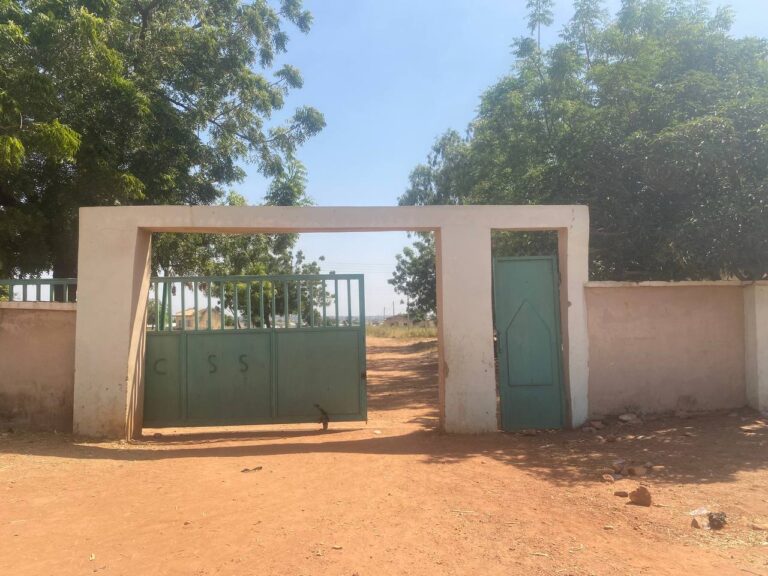
There, the kidnappers ordered the girls to squat and wait while they regrouped. Moments later, they moved again, toward the school gate, shooting sporadically as they tried to force it open. 

When the main gate wouldn’t give way, they used the small pedestrian entrance and pushed the girls across the main road to the opposite side.

Contrary to viral news of the abduction claiming 25 students were in captivity, The ICIR gathered that 24 students were taken into in captivity. Initially the bandits had moved 26 students out of the school, however, Hawa’u and one other girl escaped as walked out of the school gate. 

Minutes before hostel invasion Yakubu’s unfortunate killing 

The school security master, Hassan Yakubu, and his family, were asleep when the bandits crept into the compound around 3 a.m. on Monday, November 17. 

They jumped in through a section of the fence that leads directly into Yakubu’s backyard. The circumstances showed that it was a targeted and coordinated attempt to first take out the chief security officer of the school before going on with their mission. 

The school security master Hassan Yakubu's wife, narrating how the gunmen killed her husband and then took her daughter to lead them to the girl's hostel
Yakubu’s wife, narrating how the gunmen killed her husband and then took her daughter to lead them to the girl’s hostel

Yakubu’s wife was the first to sense something was wrong. Half-asleep, she heard movements near the window. Thinking an animal had wandered in, she nudged her husband and suggested the goat might have entered through an unlocked front door. Yakubu, who also doubled as the school economics teacher, exhausted from the day, did not wake.

The steps grew louder and the next thing the wife heard was a knock on their door. The bandits had already slipped through the first entrance. “I shook him again and told him, ‘They have come. The bandits are here,’ his wife recalled.

When Yakubu got up to open the door, the gunmen shoved him aside. They asked immediately if he was Hassan Yakubu. When he confirmed his identity, he was told that they had been sent to kill him. Yakubu then stood up and said his last prayer. His wife, trembling, tried to plead for him, but the husband asked her to also say her last prayer.

He was shot. Yakubu died instantly after the bullet pierced through his chest.

The gunfire jolted the security operatives at the main entrance awake. One of the security men told The ICIR he had sensed trouble earlier before the shot. He explained that dogs in the neighbourhood were barking non-stop and also recalled how a guinea fowl from Yakubu’s backyard suddenly flew into the next compound, clasping its wings hard enough to make the guard look toward the staff quarters.

“I flashed my torchlight toward the house. I saw light inside and thought Mallam Hassan was awake,” he said. “Then I heard a gunshot. I ran to inform my colleague that they have killed Mallam.”

That first gunshot, The ICIR learnt, set off a wave of gunfire around the school. It was after Yakubu was killed that the bandits were now positioned towards the other side of the school. The terrorists also spread towards the other staff quarters in the school holding them hostages and shooting to scare them from making attempts to flee their house. 

They then moved toward the opposite side of the compound where two police officers were stationed at the gate and another two positioned at the other side of the staff quarters.

“They were many,” one of the security officers said, adding, “I couldn’t even count them.”

“After the first gunshot, we tried to move closer to see what happened, but they shot in our direction immediately. I was holding an AK-47, but I couldn’t shoot first. If I did, they would know exactly where I was. I only fired after they fired. But we were overpowered.”

Gunshot marks on the fence close to the school gate and the security house.

One of these bullets caught the school security guard and was confirmed dead after. 

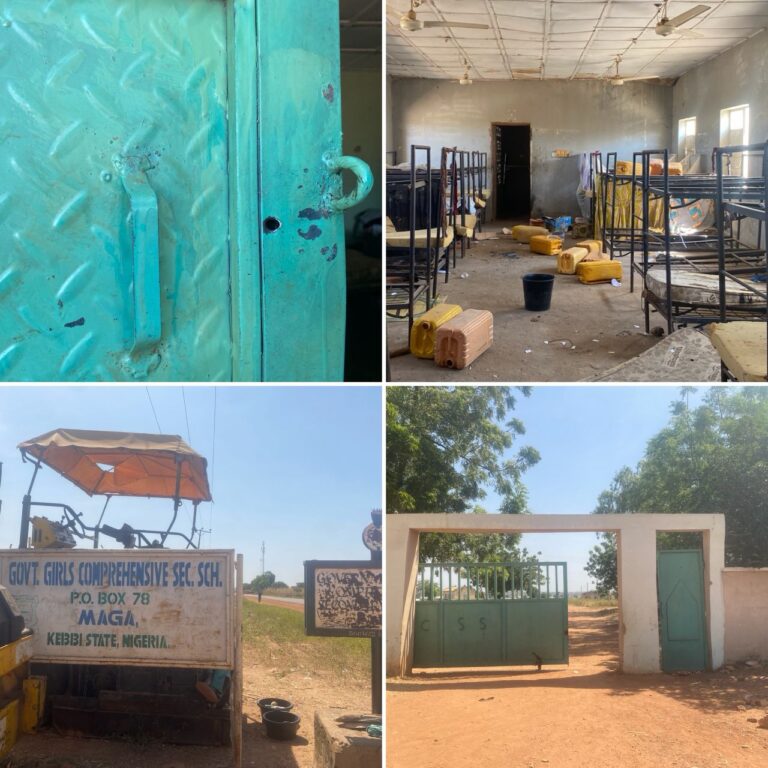
During the visit to the school, The ICIR saw traces of bullets and the five holes on the school main gate and another three holes on the fence holding the school gate.

Another gunshot marks on the fence close to the school gate and the security house.
Another gunshot mark on the fence close to the school gate and the security house.

Movement into the bush

After the kidnappers pushed the girls across the main road to the opposite side, they continued moving in a tight formation, the same way they had been forced through the small pedestrian gate after failing to open the main entrance.

The area they were taken toward lies on the northern edge of Maga and leads to River Ka, which separates the community from Bukuyum LGA of Zamfara State. 

Usman Hawa'u in her hostel, Aliero hostel blocl narrating her experenece to The ICIR. Photo: Mustapha Usman/The ICIR
Hawa’u in her Aliero hostel bloc narrating her experience. Photo: Mustapha Usman/The ICIR

“Immediately we went out, I managed to hide myself,” she told. As soon as they left, I returned to the school.”

Hauwa’u said she remembered one of them holding a torchlight. They came on foot, not on motorcycles, as some reports suggested. 

Military personnel left 12 hours before attack

The ICIR gathered that around 4 p.m. on Sunday, November 16, military personnel stationed at the entrance of Maga arrived at the attacked school for what appeared to be a security inspection after the intel received by the school authority. 

They walked through the school compound with the late security master, Yakubu visiting classrooms and even stepping into the girls’ hostel. 

Front gate of the GGCSS, Maga

According to information gathered by The ICIR, the soldiers snapped photographs during the visit to document their presence.  

The school principal Rabi Magaji explained that he had received calls around 3pm on Sunday from the State Security Service, SSS, of their plan to deploy troops to the school, adding that the officers at Maga military checkpoint came few minutes after for the said security inspection.

GGCSS Maga principal Rabiu
GGCSS principal Rabi Magaji. Photo: Mustapha Usman/The ICIR

Students who spoke to The ICIR noted that they felt a renewed sense of confidence that the school was safe and eventually went to bed with the impression that the worst would not happen that night.

But the military personnel left long before the attack, according to multiple sources who had a firsthand experience of the attack. 

However, there were conflicting reports about the exact time the personnel departed, with some media platforms claiming they left 45 minutes before the attack while others suggested around midnight. Several people who witnessed the incident, including staff, security guards and students, insisted the soldiers withdrew not long after completing the evening inspection. 

Their departure, they said, left the school exposed.

GGCSS surrounded by checkpoints

Between the time the armed men invaded the school, killed the school security officer, barricaded the staff quarters, exchanged gunfire with the mobile police officers on duty, stormed the girls’ hostel and forced the students out through the gate toward the bush path, The ICIR gathered that they spent over two hours inside the school.

Survivors, including the students, staff and the security sources, said despite a security checkpoint close to the town entrance, the military only came after they had left with the girls. 

The ICIR findings show that at least two military checkpoints were close to the school.

Military security point at the entrance of Maga town. This checkpoint to the school is just two miniutes on bike.
Military security point at the entrance of Maga town. This checkpoint leading to the school is just two minutes on motorcycle.

Just as you enter the town from Zamfara, there’s a checkpoint that sits barely two minutes’ drive (on a motorcycle) from the school gate. During a visit The ICIR reporter could count at least seven officers at the checkpoint.

The school principal said she first learned of the attack around 4 a.m. when a staff member called her. Yakubu’s wife had run to the staff quarters moments after her husband was killed, and her daughter taken to lead the attackers to the hostel. 

The staff member immediately alerted the principal, who in turn reached for her phone and contacted the officer in charge at the nearby checkpoint.

According to her, she informed the officer that armed men were inside the school and had already shot and killed a staff. But she said the officer told her that his team had “just left the school.” The principal said she tried to suggest they might still be within the vicinity or monitoring movement, but the officer repeated that his men “just left.”

At the time she made the call, The ICIR gathered that the terrorists were still inside the hostel. They remained inside the school for roughly another hour, regrouping and organising the students, before eventually marching them out through the small pedestrian gate.

“The military security men didn’t come again. They didn’t come until when those people had left,” the principal added.

Another military checkpoint in Dan Marke, just 10 minutes away from the school

Just after the Maga checkpoint lies another, much bigger military base in Dan Marke. Although it falls under Zamfara State, The ICIR confirmed that the base is less than ten minutes’ drive on vehicle from the school. 

Four days after the attack, The ICIR observed a military truck and two Hilux vehicles at the base, with several officers manning different positions. 

After operating for over two hours, terrorists escaped on foot. Findings by The ICIR reveal that Maga, where the kidnapping occurred, is less than 5 kilometres away from part of the Bukuyum LGA, on the highway.

Oftentimes when similar attacks happened, the terrorists avoided the usual roads and moved the children through the dense forest, likely extending the journey beyond the estimated kilometres. 

In the case of Maga, the terrorists moved the students through the northern part of the town inside a bush that leads to River Ka. The river, The ICIR learnt, separates the town from Bukuyum and Anka LGA of Zamfara State. 

Sources claimed that after crossing the river, the terrorists moved down east where they would have moved towards Merina, a forest in Bukuyum LGA.

Maga District Head
Maga District Head Muhammad Dantani

Maga district head, Muhammad Dantani, said there are several checkpoints across the path leading to Bukuyum that the bandits might have crossed, including that of Dan Marke. 

“We are bordering Zamfara State; at the eastern part of the town is 3km to Gadarzaima. The northern part is 3km to the river Ka. That’s what demarcates Zamfara and Kebbi States at this axis,” he said.

However, it was gathered the abductors avoided the checkpoint mounted in Dan Marke and followed through the other route that leads to the Turare. According to our findings, there are at least four crossing points by the terrorists from or to Marina Forest from the highway.

A conflict reporter Abdullahi Abubakar, based in Zamfara, who has a network of sources in the area, said the terror group slept in the bush for two days before passing through the Turare crossing point on Wednesday, November 19. Turare is widely known as a major herders’ route between Bukkuyum and the neighbouring LGAs, including Anka, where a major terrorist kingpin Muhammad Gwaska is terrorising.

Recently Gwaska reportedly struck a peace deal with over 30 communities in Anka.

Safe school project proves no impact 

Despite billions poured into the Safe Schools Initiative over the past decade, the attack on the Maga school shows how little protection many vulnerable schools actually have, according to analysts.

During its visit to GGCSS, Maga, the presence of some SSI-related structures, including four Mobile Police officers stationed on the grounds and a school security master was seen. It was also observed a barbed wire topping on the girls’ hostel fence, a project done by the state government according to the school principal. 

However, the response capacity was grossly ineffective as terrorists still moved in and out of the school for nearly two hours without meaningful resistance.

 Since 2014, the safe school’s initiative has attracted more than N100 billion in donations from international partners and private contributors, alongside a N15 billion federal allocation in 2023 alone. 

Visualisation showing mass school kidnappings in Nigeria

Independent analysis also showed that more than 1,000 of those abductions occurred under three successive administrations. During this period, at least 17 school attacks occurred in 10 northern states, with Kebbi now recording two major incidents.

The ICIR had reported how over 96 students, and eight teachers were abducted by bandits at Federal Government College, Birnin Yauri, Kebbi State in June2021.

When The ICIR met Khadijat Muhammad and Zainatu Kaka at their family homes in Maga, the fear of that night was still fresh in their voices. 

Bala Grady hotel
Bala Grady hotel

Both girls live in the Bala Grady hostel block of the school. Although the block was adjacent the Aliero block, the attackers did not enter. But even from a distance, the experience was traumatising.

Muhammad said she heard the voices of students and that of gunshot that night but could only pray that the attackers would not enter their building. 

Khadijat Muhammad, one of the students in the school
Khadijat, one of the students in the school, who survived the attack.

“After hearing gunshots from our hostel, we brought out torchlights and started flashing but the matron instructed us to calm down. We didn’t know where the shots were coming from, so we started observing morning prayer but the soldiers already outside asked us to pray inside, “she said.

Now in her home, she said she might only return to school if it is no longer a boarding school because she can no longer imagine sleeping in a hostel after what happened.

Kaka who slept in a different room in the same block, said she did not realise an attack had happened at all. She woke before dawn as usual, preparing for school, unaware that gunmen had stormed another hostel block and taken dozens of her classmates. 

Zainatu Kaka, another students in the school
Zainatu Kaka, another students of the school.

It was only when she stepped outside and saw other students running back into their rooms that she sensed something was wrong. Speaking from her home, Muhammad who wished to become a nurse or medical doctor, told The ICIR that her grandmother has decided she will not return to the school. 

“My grandmother told me I won’t be going back to school because it’s not safe any longer.”

Students regain freedom after parents’ plea

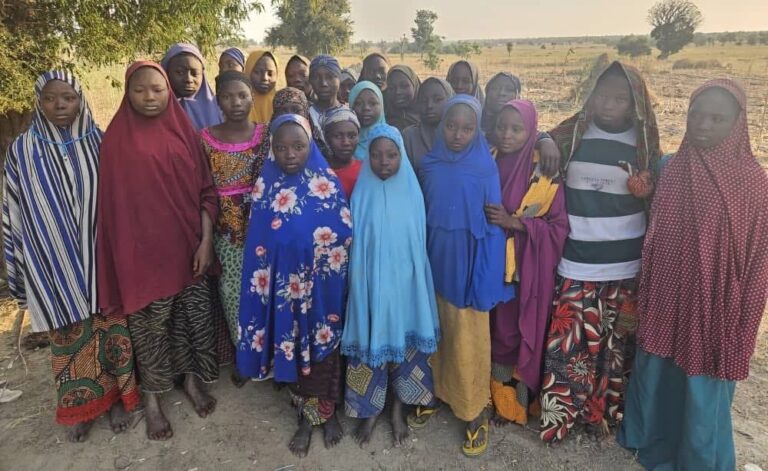
A week after their abduction, The ICIR reports that the abducted 24 students have rogained freedom.

The students were said to be ‘freed’ and ‘released’ by the bandits following federal government intervention.  Details of their release were yet to be provided by press time. 

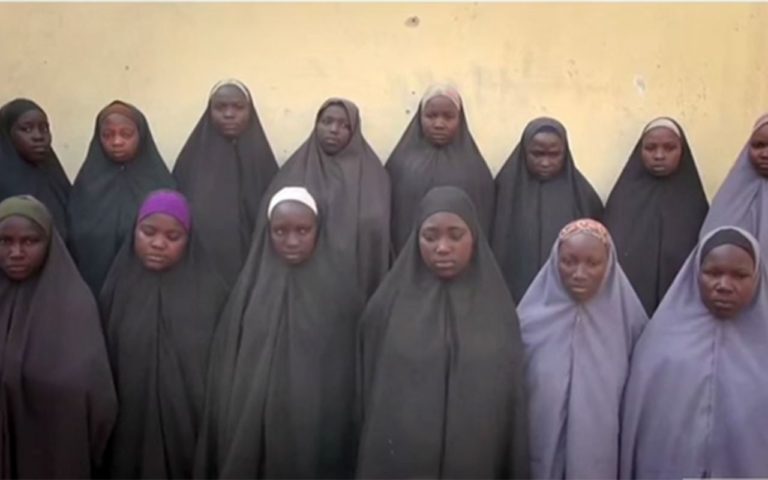
A viral video of the terror group has also surfaced, showing the armed men were taunting the students and claiming the government was unable to rescue them before their release on Monday, November 25,

The bandits attributed their release to intervention by some ‘elders,’ adding that, “You will be handed over through dialogue and negotiation. It was not force that was used.”


In the days following the abduction of the students, Ilyasu Sani was still reeling from the pain of losing four of his children to the kidnappers. 

Ilyasu Sani's four daughters was abducted by the terrrorists
Ilyasu Sani’s four daughters were abducted by the terrorists.

Sani had sent the four girls to GGCSS just like he did for those before them, hoping they would actualise their dreams of becoming medical doctors in the future, but then he could only wish to hold their hands back.

“Since these my children are girls, I have wished that if they graduate, if I have the means to take them abroad, they will study in fields like doctoring.”

He explained that all her daughters performed outstandingly in their respective classes, noting that in the last session they topped their classes. 

 The ICIR gathered that across the community, five other households carried the same burden. Another parent, Umar Garba, whose daughter Amina was among those kidnapped, explained that her daughter is calm and the type that ‘doesn’t fight anybody.”

Another father Umar Garba, appealing to the government on immediate actions
Umar Garba, appealing to the government on immediate actions

 “It’s only unfortunate she’s among those abducted,” he said with a breaking voice. “She has very good ambition to further her education after the secondary school.”

Soldiers’ withdrawal to be investigated

The Minister of State for Defence, Bello Matawalle, on November 22, said soldiers who allegedly abandoned their duty posts before abduction at GGCSS were being interrogated by the Nigerian Army.

Matawalle, who arrived in Birnin Kebbi on President Bola Tinubu’s directives to coordinate efforts to secure the girls’ release, said the military did not authorise any withdrawal from the school.

His reaction followed Governor Nasir Idris demand for explanations from military authorities over the alleged withdrawal.

Read the terror series here
In Kano, mental patients patronise traditional healers despite government’s ban

0

FACED with high hospital bills and limited access to psychiatric care, some families in Kano continue to turn to traditional healing homes in desperate attempts to help their loved ones battling mental illness. But families told The ICIR that they are getting little or no solution from the traditional rehabs which have been banned.

THE sun was already blazing in Tassa community in Dawakin Kudu, Kano, but that was the least of Abdulwahab Tsoho Adamu’s worries. His 20-year-old daughter, Summaya, who had been battling a neurological disorder since she was a toddler, was nowhere to be found.

As a toddler, Summaya would put in an unexplained fit of laughter, which according to her father, became an issue after realising that the laughter showed on her face even when she was being hurt. When that persisted overtime, the family began to seek medical attention from professionals and non-professionals.

20-year-old Summaya. She has been battling a neurological disorder since she was a toddler

They sought help at the Dawanau Psychiatric Hospital but said the waiting rooms were often packed with several patients, and the treatment often out of reach. After months of irregular appointments, Summaya’s condition worsened. 

“I took her to Dawanau Psychiatric Hospital,” Adamu told The ICIR, adding: “I spent over Five Hundred Thousand Naira on drugs, but there was no improvement. After a year of back and forth, I brought her home.”

Resort to traditional healers

From there, the family’s search for healing descended into a costly odyssey of dashed hope. Adamu was advised to try a traditional rehabilitation centre in Bunkure Local Government Area. He ferried his daughter there for more than three years, with the hope of getting her mental state back to normal.

“But instead of getting better, she became worse,” he laments.

Again, they had to move. Adamu recalled how he met with another traditional healer who demanded endless sacrifices. The daughter was put through incantations and sorts of rituals, but that also proved to be non-effective.

Mental disorder defined

The World Health Organisation (WHO) describes a mental disorder as a health condition that causes noticeable problems in how a person thinks, feels, or behaves. It often leads to distress or difficulty in handling daily activities. Mental disorders come in different forms and affect people in various ways.

This includes Pseudobulbar Affect (PBA), a neurological condition that causes sudden, uncontrollable series of laughing or crying that don’t match the person’s actual feelings and Gelastic seizures, a rare type of seizure often linked to brain abnormalities, such as hypothalamic hamartoma) where bouts of laughter occur without genuine emotion.

“I later left Bunkure and I was referred to Rano LGA, to one traditionalist who is a spiritual healer. I spent over two years visiting the rehabilitation centre and also invoking some spiritual incantation on her.

“After leaving I noticed my daughter’s condition became even worse. She started walking on the streets, running down to the bush or even walking around and fighting people, eating leaves and others,” Adamu said.

Roaming the streets

Now, Summaya roams the streets from morning till night. In some cases, she chews leaves in the bush. When The ICIR visited her house, it took over three hours to locate her. She was apparently in what her parents described as her usual mentally destabilised state, her clothes dirty, torn and her face pale.

Summaya
Summaya with her father after being brought home from the bush.

Sumaya also appeared lost in her thoughts, occasionally muttering to herself and tucking at her shirt. However, her father who had trekked for over three hours looking for her, held her hand firmly, as if afraid she might wander off again.

“My worst mistake was taking her to the traditional rehab which has worsened the condition of my daughter. But I had a limited choice due the money demanded at the government hospital. I already spent over N500,000, so I thought I couldn’t afford more.”

He disclosed that he had spent over a million while also touring traditional centres across Kano state. “I can’t estimate the amount I spent in traditional rehabs, because sometimes they request money to buy ram, goat, fowl and others for sacrifice.”

Dearth of government rehab centres

Adamu’s family is not alone. With few official rehabilitation centres, costly treatment, and the absence of immediate support, many families are often forced to patronise unregulated traditional healing homes. Nigeria’s fragile healthcare and welfare systems have left millions without access to proper mental health care or community support. 

The WHO stated that in 2021, nearly 1 in every 7 people (1.1 billion) around the world were living with a mental disorder, with anxiety and depressive disorders the most common. 

Deep-seated stigma and widespread misconceptions, such as the belief that mental illness is caused by evil spirits or supernatural forces, continue to drive families toward religious or traditional healers rather than medical professionals.

For years, Rabiu Musa believed his son’s illness was spiritual. The father of three from Kumbotso, Kano State, had to take her to traditional rehab centres for treatment. While Musa was speaking with The ICIR, his 10-year-old son, Dalhatu was on his laps, as he patted him on his head.

He remembered the pain Dalhatu felt as he glanced through his eyes. He explained that everything seemed normal at first for him when Dalhatu began showing symptoms. 

“My child was born normal. When he was 4-years old, he had a sickness suspected to be malaria and typhoid. I took him to Kumbotso hospital, and he was treated, and he regained his health,” he recalled.

But a few months later, Musa said everything changed for his son as he began to show strange symptoms.

“I took my son to a traditional rehab in Bunkure where he spent about 6 months receiving different kinds of spiritual attention, but I noticed his condition was getting worse and with no improvements.”

Rabiu Musa with his son
Rabiu Musa with his son Dalhatu. Dalhatu now standing with his father during an interview with his father.

The treatments included the use of local perfumes, live hens, and other traditional items. “I spent nearly ₦200,000, buying all kinds of things they requested. But instead of getting better, my son’s condition worsened.”

By the end of those months, Dalhatu’s situation had deteriorated. He began wandering the streets. “So, I decided to take him to  Dawanau Psychiatric hospital, where he was admitted for about a year.

“The hospital rehabilitation is costlier than the local rehab, because I spent over 700k on drugs,” he said.

Children and adolescents are also deeply affected. A recent systematic review of studies conducted between 2010 and 2024, covering over 47,000 young Nigerians, found that about 12 percent suffer from major depression and 9 percent from generalised anxiety disorder.

While nearly 20 million Nigerians, translating to about one in five people, are currently living with one form of mental health condition or another, only about 10 percent of those affected have access to any form of mental health care.

The Pull of Clandestine ‘Rehab’

Faced with soaring costs and inadequate state care, The ICIR gathered that several families turned to unregulated religious and traditional centres that promise spiritual cures at less cost. 

Even though there have been reported crackdowns on the practice and centres across the state following the 2019 official ban on the practice, residents noted that many still could find their way around looking for spiritual help. 

For instance, in October 2021, Kano police command said it arrested operators of an illegal rehabilitation centre in Na’Ibawa Quarters, Tarauni LGA, freeing 47 inmates. Also, in  February 2022, the police arrested six suspects operating an illegal rehabilitation centre in Naibawa ‘Yan Lemo Quarters, Kumbotso LGA. About 113 inmates were rescued.

However, despite periodic crackdowns by authorities, it was gathered that the practice continues to thrive due to several factors, including cost of medical attention, and the state of the rehab centres in the state.

These centres hidden in the outskirts of the main cities, often subject victims to chaining, starvation, and beatings.

Families of patients who spoke with The ICIR described the situation as ‘regrettable,’ explaining how their loved ones were whipped, denied food, and locked in dark rooms. 

During visitation to the federal and state centres, this reporter observed how the dearth of proper facilities could have pushed residents to seek help in other places. While access to the wards were not possible, it was learnt that the patients endured hours without medical care and proper feeding.

Data has shown that Nigeria’s mental-health gap remains a major concern over the years as fewer than 200 psychiatrists serve over 200 million people. In 2024, the Association of Psychiatrists in Nigeria (APN) described the situation as a pressing challenge, attributing it to the worsening mental health crisis to the “Japa syndrome.”

Beyond the dysfunctional facilities as WHO noted that about 80 per cent of the country’s health infrastructures are in a worse state, these facilities in some instances cited by victims, are often overcrowded and medical personnel sometimes get overwhelmed.

Families groan under treatment cost 

The medical cost of mental health problems is immeasurable and can really be daunting, especially in developing countries such as Nigeria where the financial burden of getting proper mental healthcare is high unlike in developed countries, where the burden is significantly mitigated by health insurance.

Families who spoke with The ICIR, noted that they have spent an average of over N500,000 while visiting government hospitals.

It was also gathered that accessing mental health care in Nigeria is largely out of reach for low-income families. Our findings revealed that therapy sessions at public and private facilities cost between an average of ₦50,000-N100,000 per session, held twice monthly, excluding the cost of prescribed medication.

These findings illustrate that for many families, the out-of-pocket costs for mental health care remain prohibitive.

A report revealed that the healthcare costs fall heavily on individuals and out-of-pocket spending accounts for 75 per cent of all health expenditure.

This has left many people more vulnerable. Data from the National Library of Medicine, indicate that people living in low-income households, with little education or unstable jobs, are more likely to experience mental disorders. 

Ironically, these same conditions that heighten their vulnerability also restrict their access to quality mental healthcare. 

According to the WHO, government spending on mental health in Nigeria accounts for barely 4 per cent of all health spending. Psychosis, bipolar illness, and depression treatment are not covered by national health insurance or reimbursement programmes.

More tales of victims’ ordeals

In Sabon Layin Hago, Forty-five-year-old Tukur Liman unlocks a wooden door and stepped into a narrow shed. Inside, his younger brother, Ahmed Nasiru, sits cross-legged, a rope fixed to his ankle. 

Ahmed Nasiru, sits cross-legged, a rusting chain fixed to his ankle. 
Ahmed Nasiru at Mallam Dahiru’s house tied on both legs to a wood.

“He has been like this for more than six years,” Tukur said, explaining that Ahmed’s ordeal began over eight years ago. “When he first developed the illness, we took him to Dawanau Psychiatric Hospital,” Tukur recounted. 

However, what Tukur described as inability to bear with the cost and effectiveness of the treatment at the centre, led the family to try a traditional rehab centre in Sabon Layin Hago. After some months at the traditional rehab centre, they headed back home when it appeared that Nasiru had regained his mental health. But hope collapsed when Ahmed attacked his elder sister with a machete during a relapse. Since then, the family has shuttled him from one facility to another, back to Dawanau, then to a local spiritual centre called Gidan Manmada, and later to Mallam Dahiru’s rehab centre.

Apparently, his condition has gotten worse. At Mallam Dahiru’s rehab, Ahmed was chained and left without proper care. 

“After spending about two years there (at Gidan Manmada traditional rehab) without any improvement the traditionalist asked us to take him back home. We took him to Dawanau Psychiatric hospital again, he was treated for some months and yet his mental health is not stable.

Forty-five-year-old Tukur Liman
Forty-five-year-old Tukur Liman speaking with The ICIR on the ordeal of his brother

Although he noted that the family spent heavily at Dawanau, Tukur admitted that the family believed the traditional rehab worked far better than the modern one and was way cheaper.

The ICIR reports that although the Nigerian government has outlawed chaining and other inhumane treatment of people with mental illness, shackling and chaining remains a largely invisible problem as it occurs behind closed doors and concealed from neighbours.

It was gathered that maintaining personal hygiene is nearly impossible for those held in chains, as they are often confined without access to toilets. Many are forced to eat, sleep, urinate, and defecate in the same small area, sometimes within just a meter or two. For women and girls, the situation is even more degrading, as they are often denied basic items like sanitary pads to manage their menstrual hygiene.

The ICIR reports that Nigeria’s journey towards mental health reform has been long. The first law, known as the Lunacy Ordinance of 1916, allowed medical practitioners and judges to detain individuals deemed mentally ill, which is a reflection of colonial-era perceptions that treated mental illness more as a crime than a health condition. 

It was later revised in 1958 as the Lunacy Act, which remained in force for decades without amendment. In 1991, the government introduced the National Mental Health Policy, an effort to modernise mental health governance and align it with global standard. 

In January 2023, Nigeria took a decisive step forward when former President Muhammadu Buhari signed the National Mental Health Act, 2021 into law.

However, while the act replaces the antiquated Lunacy framework and seeks to protect the rights and dignity of persons with mental health conditions, our findings revealed that many citizens are still subjected to inhumane treatment.

Families struggle

In Tassa community, Dawakin Kudu Local Government Area of Kano State, 57-year-old Adamu Zakari sat quietly outside his house. He was watching his son, Ghali, wandering across the small compound. For over fifteen years, Zakari said he has watched his child slip in and out of reality due to his mental illness.

For over fifteen years, Zakari said he has watched his child slip in and out of reality due to his mental illness.
Adamu Zakari and Ghali sitting outside their house in Kano. For over fifteen years, Zakari said he has watched his son slip in and out of reality due to his mental illness.

“My son has been like this for more than 15 years,” Zakari said, adding: “People advised me to take him to a local rehabilitation centre, but I refused because many who took their children there ended up worse. I have seen some of those boys now roaming the streets, completely mad.”

But he explained that even though there is an option to take him to the government owned hospital, he could not afford the cost of treatment either.

“I didn’t take my child to the hospital because of how expensive it is. We don’t have that kind of money. So, what I do sometimes, is to meet some medical professional for drug prescription and also get him some local herbs,” he noted.

Just a few kilometres away, in Kumbotso Local Government Area, Hassan Ibrahim, a father of three, shared a similar experience. His 30-year-old brother, Kabiru, had been struggling with mental health challenges for three years. The illness, according to him, was a result of drug abuse.

Hassan said the family initially tried hospital treatment at a psychiatric hospital but could not sustain it.

“We took him to Dawanau for some months, and the drugs helped a bit. But the cost became unbearable. We had to stop going because we couldn’t afford it anymore. Now, we just keep him at home and watch over him.”

Forced treatment

In three traditional rehab centres visited, traditional healers imposed herbal concoctions and other non-medical treatments on individuals with these conditions, often through force.

In one such centre at Unguwar Rimi in Rogo Local Government Area, an 85-year-old Dahiru Abubakar, said he used to “chain his patients, some usually spend 2 to 3 weeks while others above depending on the level and nature of the illness,” after explaining that the rehab he runs was bequeathed to him by his father.

85-year-old Dahiru Abubakar,
85-year-old traditional healer Dahiru Abubakar.

“We used to collect money for that, depending on the level of the patient’s sickness; some we collect N50,000 to N55,000 to sacrifice ram, while some we collect N25,000 if it’s chicken we are to sacrifice to perform the miracle.

“I can’t estimate the number of people that I have kept in this rehab centre, I have kept one patient for over 2 years and later he regained his health,” he said.

Although Dahiru rejected the accusations of mistreatment, he offered explanation for injuries he concedes some patients sustain.

“I don’t harass my rehab patients, but anyone who tries to attack me looks for self-defence, that’s how most patients sustain injuries.

‘Outdated’ state rehab centre

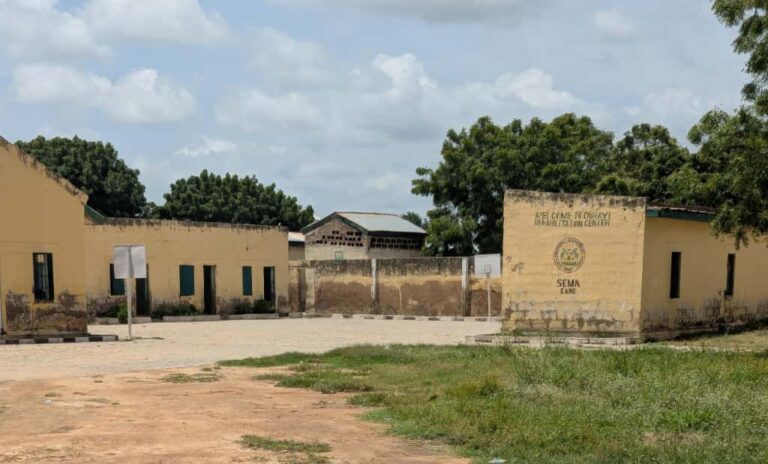
During The ICIR’s visitation to the Dorayi Rehabilitation Centre, owned by the state government, although functioning, the facility appeared visibly neglected and outdated. The buildings, coated in fading yellow paint, showed signs of years of abandonment, with cracked walls and broken windows.

Dorayi
Dorayi Rehabilitation Centre

The compound was patched with overgrown grass and was deserted by patients. It was observed that basic and modern medical equipment expected in a government-run mental health or rehabilitation institution were lacking.

Why practice remains popular  

Reacting to The ICIR’s findings, clinical psychologist Chioma described the situation of mental health in Nigeria as deeply concerning, noting that people living with mental illnesses face enormous challenges in accessing care.

“People who live with mental health illnesses face a lot of challenges, some struggle to get their lives functioning properly,” she said. “This stems from limited access to mental health services, stigma at every form, and shortages of trained mental health professionals.”

According to Chioma, the shortage of professionals remains one of the biggest obstacles to effective care. “Trained and licensed psychologists in Nigeria are not up to a thousand, yet Nigeria has a population of over 200 million. The number is not encouraging at all. Nigeria has a lot of groundwork to do when it comes to mental health,” she added.

Chioma also reacted to The ICIR’s discovery that many Nigerians still turn to traditional and religious healing centres for mental illness treatment. She acknowledged that these practices remain popular because they are more accessible and affordable than hospital care.

“It is interesting to find that traditional and religious methods are deployed to treat mental health conditions. People patronize these methods because they are accessible and affordable,” she said.

However, she warned that harmful practices such as flogging, chaining, and forced herbal administration could worsen a person’s condition and violate human rights. “I’m not condemning traditional practices, but when they are combined with harmful acts, they can be dangerous,” she said.

Chioma suggested that both traditional and religious leaders should be trained to recognize symptoms of mental illness and refer patients to qualified professionals.

Government must integrate mental health into primary healthcare

Chioma further acknowledged that the Nigerian government has made progress with the enactment of the National Mental Health Act of 2021, which protects the rights of individuals living with mental illness.

However, she emphasised that more must be done. “The government should integrate mental health services into primary healthcare systems across the country,” she advised, adding that: “This will make mental health services more accessible to the people.”

She also called for increased funding, workforce development, and training, saying these are crucial to ensuring that “people can access quality mental health care at any time.”

State government declines comments

Attempts to speak with state officials proved abortive, as calls made to the Commissioner for Health, Abubakar Labaran Yusuf, were not answered, and text messages sent to his line were not replied to.

Also, the state Director-General of Media and Publicity, Sanusi Bature Dawakin-Tofa, did not pick up calls or respond to WhatsApp messages sent to his line as of the time of filing this report.

Terrorists attribute Kebbi school girls release to ‘elder’ intervention, dialogue

1

A VIDEO released by the armed group that abducted the 24 schoolgirls from Government Girls’ Comprehensive Secondary School, Maga, has shown the students shortly before they were freed.

The video surfaced hours after the Presidency announced the girls’ freedom, with the terrorists taunting the students and claiming the government was unable to rescue them before their release on Monday, November 25.

The terrorists were armed and masked up their faces in the footage.

The armed group lined up the girls and questioned them about their welfare in captivity. The girls state the date as “25/11/25” when asked by one of the gunmen. They also respond ”no’ when asked if they were left hungry and ‘yes’ when asked if they were cared for.

The bandits then told them, “In shaa Allah, you will be given back to your parents in good condition.”

They further asked whether they were maltreated or harmed. The girls reply, “no.”

The gunman claimed the girls were being released because ‘manya’—meaning elders—had intervened in negotiations.

The terrorists who were armed in the viral video also emphasised that their release came through negotiation, saying: “You will be handed over through dialogue and negotiation. It was not force that was used.”

At one point, one of the terrorists asked the girls how many military aircraft they saw searching for them; the students answered, “We can’t even count,” they say.

A visual review of the footage shows men in the background farming, suggesting the recording took place in an open rural settlement, where the terrorists had struck a peace deal with the community.

The girls were abducted on November 17 after terrorists stormed their school in the early hours of the morning, shortly after a military detachment reportedly left the premises. Their release follows similar developments in Kwara and Niger States, where victims of abductions were also freed on Sunday.

The Presidency had confirmed that direct engagement with armed groups has been used in other recent kidnappings, including the abduction of 38 worshippers in Eruku, Kwara State.

Special Adviser to the President on Information and Strategy, Bayo Onanuga, said the  State Security Services (SSS) and military operatives contacted the abductors of Kwara worshippers for their release.

“I think after the incident happened, the DSS (legally known as SSS) and the military were involved in the rescue effort. They got in contact with the bandits to release those people unharmed, and finally on Sunday, they were able to get them out unharmed,” he said.

Read the terror series here

Wike suspends FCTA Education Secretary over ‘false’ directive on early closure of schools

0

THE Federal Capital Territory Administration (FCTA) has dismissed reports claiming that all government schools in the FCT would close on November 28.

It described the claim as false, misleading, and not supported by any official directive.


In a statement issued on Tuesday, Lere Olayinka, Senior Special Assistant on Public Communications and Social Media to the FCT Minister, Nyesom Wike, said no decision was taken by the administration to order an early closure of schools.


“The Federal Capital Territory Administration (FCTA) has debunked the report that all Government Schools in the Federal Capital Territory (FCT) were mandated to close by November 28, 2025, saying that “no such decision was taken at any level of the administration,” Olayinka said.

In a memo issued by the Director of School Services, FCT secondary education board, Aishatu Sani Alhassan, principals and heads of schools  the FCT senior secondary schools were instructed to end all academic activities immediately and ensure students are dismissed “in an orderly and safe manner,” on or before Friday, November 28, citing urgent security concerns.

Olayinka said the Minister directed the immediate suspension of the Mandate Secretary for Education, Danlami Hayyo over the directive on school closure.


“The Acting Head of Service,  Mrs Nancy Sabanti Nathan, has also been mandated to discipline the Director, School Services, Mrs Aishatu Sani Alhassan, in accordance with the civil service rules,” he added.


The FCT Administration urged parents, students, and school authorities to dismiss the directive, stressing that the approved academic calendar remained unchanged. 


The FCTA also assured  residents of the FCT,  especially students of adequate security,  adding that the Minister had directed the resumption of Operation Sweep and other security initiatives in the nation’s capital.


The clarification comes at a time when security concerns in some states have led to schools closure.

Plateau, Katsina, Niger,, Taraba and Bauchi have directed the immediate closure of all basic schools in the state, citing urgent need for preventive action against abduction of schoolchildren.. 


The ICIR reported that on November 17, 2025, armed men breached the fence of Government Girls Comprehensive Secondary School in Maga, Kebbi State, killed the vice principal, and abducted 25 schoolgirls, a chilling re-enactment of the Chibok, Dapchi, and other mass abduction of young girls in Nigeria.


A teacher was killed while trying to protect the girls during the attack, and a security guard later died in the hospital from gunshot wounds.


Gunmen stormed St. Mary’s Papiri Private Catholic Secondary School in the Papiri community of Agwara Local Government Area, Niger State and abducted scores of students and teachers, in the early hours of Friday, November 21.


Local sources said the gunmen arrived at the school between 3 and 4 a.m. in large numbers, riding on over 60 motorcycles and accompanied by a van, and shot the school’s gatekeeper, leaving him with serious injuries.

(BREAKING) 24 abducted Kebbi schoolgirls regain freedom after one week in captivity

0

TWENTY-FOUR students abducted from Government Girls Comprehensive Secondary School, Maga, in Kebbi State, have regained their freedom after spending a week in captivity.

The schoolgirls were taken at dawn on November 17 when terrorists stormed the school shortly after a military detachment withdrew from the premises.

Their abduction triggered public outrage and fears of a resurgence in school kidnappings across the North-West.

In a statement released on Tuesday, President Bola Tinubu welcomed the development and commended security agencies for what he described as “relentless efforts” to secure the release of the students.

“ I am relieved that all the 24 girls have been accounted for. Now, we must put as a matter of urgency more boots on the ground in the vulnerable areas to avert further incidents of kidnapping. My government will offer all the assistance needed to achieve this,”  Tinubu said.

The mass kidnapping of schoolchildren has surged in Nigeria since the 2014 Chibok abduction, forcing states like Kaduna, Zamfara, Katsina, and Niger to shut thousands of schools over insecurity.

Following their abduction, The ICIR reported how  terrorists in the early hours of Friday, November 21, also stormed St. Mary’s Papiri Private Catholic Secondary School in the Papiri community of Agwara Local Government Area, Niger State, and abducted scores of students and teachers.

Several community members who visited the school after the incident confirmed the attack and described it as a coordinated operation carried out between 2:00 a.m. and 3:00 a.m.

According to a 2023 report by Save the Children, over 1,680 students and teachers have been kidnapped from schools—mostly in the North—since 2014.

The release of the 24 students was also coming two days after all the 38 worshippers abducted during last Tuesday’s attack on Christ Apostolic Church (CAC) Oke Isegun in Eruku, Kwara State, regained their freedom after days in captivity.

The victims were freed on Sunday following a combined security operation involving federal and state agencies.

The rescue brings to an end a tense five-day manhunt triggered by the attack, which left three worshippers dead and deepened anxieties over rising insecurity in Kwara’s border communities.

Read the terror series here
Lending costs for businesses unchanged as CBN retains interest rate at 27%

THE cost of funds for businesses remains unchanged as the Monetary Policy Committee (MPC) of the Central Bank of Nigeria (CBN) has retained the country’s monetary policy rate at 27 per cent.

The CBN Governor, Olayemi Cardoso, announced this on Tuesday, November 25, at a press conference during the Committee’s 303rd meeting in Abuja.

The Monetary Policy Rate (MPR) serves as the baseline interest rate in an economy; other interest rates used within the economy are built on it.

The Committee also said it was committed to maintaining a tight monetary stance.

The MPC pegged the Cash Reserve Ratio (CRR) at 45 per cent for commercial banks, 16 per cent for merchant banks, and 75 per cent on non-TSA public sector deposits.

It also maintained the Liquidity Ratio (LR) at 30 per cent, adjusting the Standing Facilities Corridor to +50 / -450 basis points around the MPR.

According to the Committee, the decisions reflect its focus on achieving low and stable inflation, as it welcomed the continued deceleration in headline inflation, driven by sustained monetary tightening, a stable exchange rate, and stable Premium Motor Spirit prices.

The MPC also noted that inflation remained high, requiring continued and coordinated policy efforts to bring it down further

It acknowledged progress in bank recapitalisation, confirming that 16 banks had met regulatory requirements.

On the global outlook, the CBN governor emphasised a recovery in the medium term, although trade tensions between the United States and key trading partners might constrain growth.

The MPC also projected that global inflation would remain above pre-pandemic levels in the near term.

It also reaffirmed commitment to evidence-based monetary policy to safeguard price stability and strengthen financial system resilience.


VIPs lose police escorts as Egbetokun executes Tinubu’s order

0

SEQUEL to President Bola Tinubu’s directive, the Inspector-General of Police, Kayode Egbetokun, has withdrawn all police escorts from Very Important Personalities (VIPs) in Nigeria.
The Nigeria Police Force, through its Protect 16, Lagos State, issued a circular ordering affected officers to return to base on Monday, November 24.
The circular, shared by one of the president’s spokespersons, Sunday Dare on X, was signed by the Admin Officer, Neji Veronica, an assistant superintendent of police, and referenced AB:4087/DOPS/SPU/816/LAS/VOL.3/147.
Tiled, “Daily Order/Instruction”, the circular reads, “Sequel to the directive of Mr. President and C-in-C of the armed forces on the withdrawal of police personnel attached to VIPs, the Commanding Officer directs with immediate effect the withdrawal of all personnel of SPU Base 16 attached to VIPs/Beats across the federation back to Base. You are all warned to report back before the end of today, Monday, 24/11/2025, and all to attend the Lecture Parade tomorrow. Attendance shall be taken from the nominal roll.
“This is for your information and strict compliance.”
The ICIR reported on Sunday, November 23, that Tinubu directed the police authorities to withdraw all their officers serving as escorts to VIPs nationwide to core duties.
He advised anyone seeking police protection to request well-armed personnel from the Nigeria Security and Civil Defence Corps (NSCDC)
The president gave the directive during a security meeting he held with the Police, Air Force, and Army chiefs, as well as the Director-General of the Department of State Services, DSS, in Abuja.
A statement signed by the Special Adviser to the President, Information and Strategy, Bayo Onanuga, on the directive reads, “According to the presidential directive, VIPs who want police protection will now request well-armed personnel from the Nigeria Security and Civil Defence Corps. Many parts of Nigeria, especially remote areas, have few policemen at the stations, thus making the task of protecting and defending the people difficult.
“In view of the current security challenges facing the country, President Tinubu is desirous of boosting police presence in all communities. Already, President Tinubu has approved the recruitment of 30,000 additional police officers. The federal government is also collaborating with the states to upgrade police training facilities nationwide.
“Sunday’s meeting was attended by the Chief of Army Staff, Lt General Waidi Shaibu; the Chief of Air Staff, Air Marshal Sunday Kelvin Aneke; the Inspector General of Police, Kayode Egbetokun; and the Director-General of the Department of State Services, Tosin Adeola Ajayi.”
The ICIR reports that Nigeria has been overwhelmed by insecurity under Tinubu, though he inherited the crisis from his predecessors.

SSS, military contacted terrorists for Eruku worshippers’ release – Presidency

THE Special Adviser to the President on Information and Strategy, Bayo Onanuga, has said operatives of the State Security Services (SSS) and the military established direct contact with the terrorists who abducted 38 worshippers from the Christ Apostolic Church (CAC) Oke Isegun, Eruku, in Kwara State.

He disclosed this on Monday, November 25, while speaking on Prime Time, an Arise Television programme, where he said the security operatives knew the identities and locations of the bandit groups.

The ICIR reported that all 38 worshippers abducted during last Tuesday’s attack regained freedom on Sunday, November 24, after days in captivity. The release followed a combined operation involving federal and state security agencies, with Governor AbdulRahman AbdulRazaq confirming that President Bola Tinubu personally oversaw the efforts.

Onanuga said operatives moved in immediately after the incident and engaged the abductors directly. According to him, the bandits backed down because they understood the consequences of refusing security directives.

“I think after the incident happened, the DSS (legally known as SSS) and the military were involved in the rescue effort. They got in contact with the bandits to release those people unharmed, and finally on Sunday, they were able to get them out unharmed,” he said.

He explained that although security agencies track the movements of armed groups, they sometimes avoid direct confrontation due to the risk of killing hostages.

“The security people, they do have a way of tracking these people. They know what is going on at any point in time. What sometimes restrains them from going after them is the risk of collateral damages. They (bandits) go about abducting our people and use them as shields so that they would not be attacked,” he added.

Onanuga said the abductors were aware that failing to release the captives could trigger a military strike.

“They (bandits) know the risk. If they keep those people in there and we are saying release them, they know that the next thing will be for the government to embark on the kinetic action and attack their base. But they can’t risk it; if you attack their base, you can also kill those captives.”

Pressed further on how the negotiation unfolded, he declined to give details, saying that “That is left for the security people to discuss, but what I know is that they contacted them to release those abducted.” 

Responding to questions on why the government did not immediately arrest the bandits, he said securing the safety of the victims was the first priority.

Onanuga also stated that the “security people, they know all the bandits that are operating in that axis. They know them. They know where they operate.”

The Eruku attack is the latest in a string of violent incidents in Kwara’s border corridor with Kogi and Niger. Data gathered by The ICIR shows a surge in kidnappings, highway ambushes, and attacks on farming settlements in Ekiti, Kaiama and Baruten LGAs.

The assailants invaded the Eruku Church during a programme on Tuesday night, shooting sporadically and taking worshippers into the forest. Three people were confirmed dead, while one person remains hospitalised.

The abduction immediately drew national condemnation and renewed scrutiny of Nigeria’s security architecture, especially after the United States designated Nigeria a “Country of Particular Concern” over escalating violence.

Besides, the Kwara attack, the country witnessed three more abductions within the week, forcing President Bola Tinubu to call off his planned trips to Angola and South Africa.

The attacks also forced the Federal Government to shut down its 41 Unity Colleges nationwide, while states, namely Plateau, Bauchi, Niger and Katsina, shut down schools.

The ICIR reported that on November 17, 2025, armed men breached the fence of Government Girls Comprehensive Secondary School in Maga, Kebbi State, killed the vice principal, and abducted 25 schoolgirls, a chilling echo of the Chibok, Dapchi, and other mass kidnappings of young girls in Nigeria.

A teacher was killed while trying to protect the girls during the attack, and a security guard later died in the hospital from gunshot wounds.

Boko Haram fighters kidnapped 12 women and girls in Mussa district, Askira-Uba Local Government Area of Borno State on Saturday, November 22.
The Police Public Relations Officer in the state, Nahum Daso, confirmed the incident on Sunday.
He said the women were kidnapped while returning from their farms, adding that the Command had launched an investigation into the matter.

Similarly, gunmen stormed St. Mary’s Papiri Private Catholic Secondary School in the Papiri community of Agwara Local Government Area, Niger State, in a fresh attack and abducted scores of students and teachers, in the early hours of Friday, November 21.

Local sources said the gunmen arrived at the school between 3 and 4 a.m. in large numbers, riding on over 60 motorcycles and accompanied by a van, and shot the school’s gatekeeper, leaving him with serious injuries.

The ICIR reported earlier today that bandits also struck at Isapa community, near Ekuru, in the Ekiti LGA of Kwara State.

Read the terror series here


After freeing 38 worshppers, bandits raid another Kwara community, whisk away pregnant woman, nursing mothers

0

By Dare Akogun

ELEVEN residents of Isapa, a community neighbouring Eruku in Ekiti Local Government Area of Kwara State, have been abducted following a violent attack by armed bandits on Monday, November 24.

The ICIR gathered that the gunmen, reportedly numbering between 20 and 30, invaded the community around 6:00 p.m., shooting indiscriminately as they moved through several parts of the town with a large herd of cattle.

According to a list circulated online by the community residents, 11 victims were whisked away with seven coming from the same family.

The kidnapped persons include: Talatu Kabiru (20), Magaji (6), Kande (5), Hadiza (10),
Mariam (6), Saima (5), Habibat (housewife), Fatima Yusufu, Sarah Sunday (22, pregnant),
Lami Fidelis, (23, nursing mother), and Haja Na Allah (nursing mother)

“The situation is heartbreaking,” a resident of the community said, adding “Eleven people, including a pregnant woman and children, were taken. We are traumatised. No one feels safe anymore.”

When contacted, the Kwara State Police Public Relations Officer, SP Adetoun Ejire-Adeyemi, neither confirmed nor denied the attack.

In a short response, she said, “Please be on yellow, while i gather necessary information.”

As of the time of filing this report, the Police Command had yet to issue a public statement on the incident.

Residents told The ICIR that fear pervaded the area, with many families worried that the attacks might continue.

Local vigilantes have intensified night patrols, while some residents have begun to relocate temporarily to safer parts of the state.

Security analysts who spoke with The ICIR on similar incident in the LGA recently identified Kwara’s border with Kogi and Niger States as a vulnerable corridor with a long history of bandit movement.

The ICIR reported that gunmen attacked the Christ Apostolic Church (CAC), Oke-Isegun in Eruku, Kwara State, last Tuesday, killing three people and abducting 38 worshippers.
The 38 worshippers, however, regained freedom, according to a statement by the Kwara State Government on Sunday.

The recent attacks in Eruku and Isapa mirror patterns seen in other North Central states, where armed groups exploit forested paths, poor surveillance, and limited policing infrastructure.

The ICIR reported that on November 17, 2025, armed men breached the fence of Government Girls Comprehensive Secondary School in Maga, Kebbi State, killed the vice principal, and abducted 25 schoolgirls, a chilling echo of the Chibok, Dapchi, and other mass kidnappings of young girls in Nigeria.

A teacher was killed while trying to protect the girls during the attack, and a security guard later died in the hospital from gunshot wounds.

Similarly, gunmen stormed St. Mary’s Papiri Private Catholic Secondary School in the Papiri community of Agwara Local Government Area, Niger State, in a fresh attack and abducted scores of students and teachers, in the early hours of Friday, November 21.

Local sources said the gunmen arrived at the school between 3 and 4 a.m. in large numbers, riding on over 60 motorcycles and accompanied by a van, and shot the school’s gatekeeper, leaving him with serious injuries.

Read the terror series here

UNiTE to End Digital Violence – Kebbi, Niger abductions show girls still vulnerable

0

AS the world marks the 2025 16 Days of Activism Against Gender-Based Violence with the theme “UNiTE to End Digital Violence Against All Women and Girls,” The ICIR reports that the recent abduction of schoolgirls concurrently in one week in Nigeria is a painful reminder that the threats girls face in Nigeria is not only online but also physical. 

The ICIR reported that Before dawn on November 17, 2025, armed men breached the fence of Government Girls Comprehensive Secondary School in Maga, Kebbi State, killed a teacher, and abducted 25 schoolgirls a chilling echo of the Chibok, Dapchi, and other mass kidnappings of young girls in Nigeria.

The teacher was killed while trying to protect girls during the attack and a security guard later died in hospital from gunshot wounds.

An official of Danko Wasagu council, Hussaini Aliyu, told the BBC on November 19 that two girls among the 25 students managed to escape, explaining that the girls ran away across farmland as their armed captors were leading them into the bushes.

Aliyu added that though one of the girls needed medical treatment because she hurt her leg while running in the bushes, the girls were “back and are safe.”

Since Monday, a team of soldiers, police and volunteers have been combing forested areas in an attempt to rescue the students, but gunmen stormed St. Mary’s Papiri Private Catholic Secondary School in the Papiri community of Agwara Local Government Area, Niger State, in a fresh attack and abducted scores of students and teachers, in the early hours of Friday November 21, making it the second mass abduction within a week.

Local sources said the gunmen arrived at the school between 2:00 a.m. and 3:00 a.m in large numbers, riding on over 60 motorcycles and accompanied by a van, and shot the school’s gatekeeper, leaving him with serious injuries.

The state government has said it is yet to confirm the number of students abducted, though some residents said dozens of children were abducted.

Gender advocates weigh in

Gender advocates and experts have described the incident as a reminder of painful memories and a repetition of a decade-long pattern of gendered violence that has defined insecurity in the country since the 2014 Chibok abduction, noting that the Kebbi and Niger tragedies underscores clearly that Nigeria is failing to protect its girls.

Tracing the pattern

One of the most notorious abductions occurred on April 14, 2014, when 276 schoolgirls aged between the 16 to 18, were abducted from Government Secondary School in Chibok, Borno State. An attack that sparked an outrage and brought about the famous bring back our girls campaign. By 2016, nearly 180 Chibok girls have either escaped or been rescued, though about 100 remain missing, especially Leah Shuaibu who refused to denounce her faith.Many of the freed women returned home with children, having endured forced marriage and sexual slavery.

In 2018, 110 girls were kidnapped after Boko Haram invaded the Government Girls Science Technical College (GGSTC) in Dapchi. While being held hostage, some of the girls died, and others were later rescued, leaving Leah Sharibu, a Christian child who had not been rescued to this day.

Gunmen raided the Government Science College Kagara, Shiroro Local Government Area of Niger State, on February 17, capturing 27 students including females and teachers in the school. On February 26, 2021, about 317 schoolgirls from the Government Girls Science Secondary School, Jangebe in Jangebe, Zamfara state. The following month, on March 11, 39 students including females were kidnapped by gunmen in the Federal College of Forestry Mechanisation, Afaka, Igabi LGA, Kaduna state.

In June, over 96 students including females and eight teachers were abducted by bandits at Federal Government College, Birnin Yauri, Kebbi State.

Then in July, bandits kidnapped over 153 students including females of Bethel Baptist High School in Damishi town of Chikun local government area in Kaduna. 

In September, 2023, 24 students were reportedly kidnapped from their hostel in Sabon Gida, Zamfara state. And in March 24, gunmen abducted about 287 children in Kaduna state from the Local Education Authority (LEA) Primary and Junior Secondary School, Kuriga, in Chikun Local Government Area of Kaduna State.

And multiple other incidents that armed groups in Nigeria use girls for purposes of forced marriage, sexual slavery, domestic labor, ransom leverage, forced childbirth, ideological indoctrination.

Failure of safe school initiative 

A coalition of Nigerian business leaders, working with the UN Special Envoy for Global Education Gordon Brown, the Global Business Coalition for Education and A World at School launched the Safe Schools Initiative in 2014 in response to the growing number of attacks on the right to education, including the kidnapping of more than 200 girls in northern Nigeria. 

However, civil society groups and experts have insisted that the initiative has not yielded results decades later.

The Northern Christian Youth Professionals (NCYP) released a statement on Friday criticising the Safe Schools Initiative (SSI) describing it as “weak visibility and poor impact” despite more than $20 million reportedly raised to secure schools.

NCYP highlighted concerns over the management of funds donated to the SSI since its creation after the 2014 Chibok abduction.

The group responsible recalled the contributions that were publicly reported, quoting private sector/business leaders to have pledged $10m as seed funding, Federal Government of Nigeria pledged  $10m, FEC-approved support pledged $4.2m, United States Government (USAID/Embassy) pledged $2m, Qatar Government pledged $2m, noting that these contributions exceeded $20 million yet had “not translated into visible protection for schools.”

NCYP demanded that the SSI publish a comprehensive report detailing its activities, spending, implementing partners, emergency response plans, and impact assessments.

Similarly, the Senate on November 19 demanded President Bola Tinubu to probe into misuse and poor implementation of the N144.7 billion SSI following the Kebbi abduction, insisting that schools in high-risk zones still have no perimeter fence, CCTV, early warning systems, armed patrols, or emergency evacuation plans.

The Nigerian Senate’s demands reflect widespread concern that political promises have not translated into concrete protection for children, especially girls.

Advocates have insisted that the government cannot claim to invest in preventing violence against women and girls while schools remain undefended in areas plagued by armed groups, classrooms are battlegrounds, and girls’ bodies remain targets of bargaining, ransom, and terror.

Indeed, this year’s 16 Days of Activism is a stark reminder that the recent abduction of schoolgirls in Kebbi and Niger States is a stark reminder that ending violence against women and girls must begin with protecting their right to learn without fear.

Read the terror series here