STAKEHOLDERS in Nigeria’s health sector have called for a scale-up of Multiple Micronutrient Supplementation (MMS) to reach all pregnant women in the country.
They made the call on Thursday in Abuja during the launch of research findings on Multiple Micronutrient Supplementation (MMS) landscaping and segmentation in the nation.
According to the findings, MMS can provide adequate nutrition for the 7.8 million pregnancies recorded annually in Nigeria and help reduce the high burden of maternal anaemia.
It showed that while MMS offers broader nutrient support than iron and folic acid supplementation and is strongly accepted by women when available, affordable and properly explained, long-term scale-up would require stronger public financing, protection for low-income women, and a more reliable supply system.
The study, commissioned by Sight and Life, with support from the Children’s Investment Fund Foundation (CIFF), and conducted by development Research and Projects Center (dRPC), revealed that the nationwide rollout of MMS is severely hindered by fragmented funding, high costs for mothers, and a massive supply deficit.
Presenting the data, the Lead Researcher, Stanley Ukpai, a doctor, warned that policy intentions must be backed by structural solutions to achieve meaningful impact.
“The research findings show that policy ambition alone will not deliver impact unless financing, access and supply constraints are addressed together,” Ukpai stated.
He added that long-term success relies on institutionalising public funding, lowering costs for low-income families, and building a reliable supply network.
Participants during the presentation of the report in Abuja
The research highlighted that existing health financing systems are inadequate to support equitable access, leaving maternal nutrition services heavily dependent on inconsistent donor funding and out of pocket spending by patients.
Commenting on the significance of the data, Executive Director of Nutrition at CIFF, Anna Hakobyan, noted that the data offered a clear roadmap for future intervention strategies.
Hakobyan explained that the findings provided valuable evidence and practical insights to support Nigeria’s efforts to integrate micronutrient supplementation as part of wider sustainable maternal and child nutrition strategies.
In her remarks, the country programme manager for Sight and Life, Zainab Abubakar, noted that the survey was designed to provide actionable data for the government. She noted that limited funding, weak insurance inclusion, and heavy dependence on out-of-pocket spending continued to create barriers to equitable access to maternal nutrition services in Nigeria.
The Special Adviser to the President on Health, Salma Anas, a doctor, concluded that maternal nutrition remained central to the country’s development agenda, stressing that the focus must shift toward effective and equitable implementation across Nigeria.
Similarly, the Director of Nutrition at the Ministry of Health, Adegbite Olufunmilola, saidsteps were already being taken to institutionalise MMS into national antenatal care guidelines. She suggested utilising public budgets, health insurance schemes, and local manufacturing to secure supply sustainability. However, she emphasised that its success would depend on moving from policy to action.
“The Federal Government has demonstrated high-level commitment to improving nutrition outcomes but stronger implementation at national and subnational levels remains essential,” Olufunmilola added.
Highlights of the launch included panel discussions on the financing and policy landscape, demand equity and consumer behaviour, supply landscape and market structure, with participants identifying practical actions for federal and subnational governments to accelerate the adoption and scale-up of MMS for pregnant women in the country.
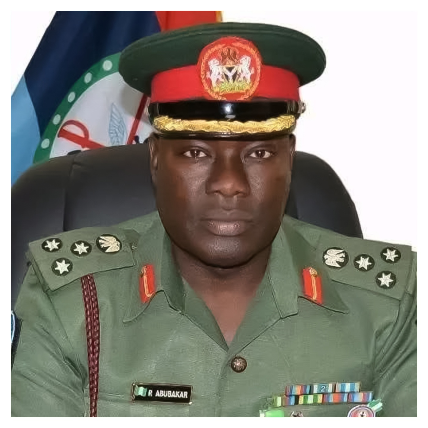
THE Katsina State Government has announced the death of Rabe Abubakar, a retired major general and former Nigerian Army spokesperson, while in bandits’ captivity.
The government described the development as a tragic loss to the state and the nation.
The announcement was contained in a statement issued on Saturday by the Commissioner for Internal Security and Home Affairs, Dr Nasiru Mu’azu.
According to the statement, the retired military officer died from complications arising from diabetes and hypertension while being held captive by his abductors.
Mu’azu said the unfortunate development occurred despite sustained efforts by the Katsina State Government and various security agencies to secure the safe release of the former senior military officer.
“It is with profound sadness that we confirm the death of retired Maj,-Gen. Rabe Abubakar while in bandits’ captivity.
“Despite the relentless and concerted efforts of the state government and security agencies to secure his safe release, the situation ended in this tragedy,” he said.
The commissioner described the late general’s abduction and subsequent death as a monumental loss, not only to his immediate family and Katsina, but also to the entire country.
He conveyed the condolences of Gov. Dikko Radda to the bereaved family and Nigerians at large, noting that the governor viewed the incident as a dark moment in the state’s fight against insecurity.
According to him, Radda said the tragedy underscores the urgent need for a united and intensified effort against criminal elements threatening the peace and security of communities.
“The governor extends his deepest condolences to the family of the late general and the nation.
“He described the incident as a dark moment and a reminder of the need for collective action in tackling the menace of banditry and other security challenges,” Mu’azu stated.
The commissioner reiterated the state government’s commitment to working closely with the Federal Government and security agencies to ensure that those responsible for the crime are brought to justice.
He also assured residents that the government’s resolve to combat banditry and guarantee the safety of lives and property across the state remained unwavering.
Mu’azu prayed for the peaceful repose of the deceased and urged citizens to continue supporting security agencies in their efforts to restore lasting peace in the state.
The ICIRreports that Abubakar’s death adds to the list of cases involving senior retired military officers who have either been abducted or killed by terrorists, bandits and other armed criminals across the country.
Others include Alex Badeh, Idris Alkali, Muhammed Maisaka, Richard Duru, Rabe Abubakar among others.
KADUNA State Governor Uba Sani has granted clemency to 97 inmates as part of activities marking the 2026 Democracy Day celebration.
The governor announced the decision during a ceremony at the Kaduna State Correctional Centre on Friday, describing the move as a demonstration of justice, compassion and the belief in second chances.
The clemency followed recommendations by the Kaduna State Advisory Council on Prerogative of Mercy and was exercised under the governor’s constitutional powers.
According to Sani, the beneficiaries received outright release, sentence commutation and payment of fines, depending on their cases.
“While justice must be upheld, we must never lose sight of the transformative power of redemption and the profound impact of second chances,” he said.
The governor urged the freed inmates to embrace lawful conduct, show genuine repentance and become productive members of society.
” To those being released this moment signifies not only the gift of freedom but also a profound responsibility. It is an invitation to embrace genuine repentance, engage in lawful conduct, and contribute meaningfully to society as responsible citizens. I urge you to seize this opportunity to become agents of positive change within your families and communities”.
Sani also called on traditional rulers, religious leaders and community stakeholders to support the reintegration of the former inmates and give them opportunities to rebuild their lives.
He said reintegration remains critical to reducing repeat offences, strengthening communities and improving public safety.
The governor commended the judiciary, the Nigerian Correctional Service, the Legal Aid Council, security agencies, civil society organisations, traditional institutions and members of the Advisory Council on Prerogative of Mercy for their roles in the exercise.
He reaffirmed his administration’s commitment to a justice system that balances accountability with mercy and offers rehabilitated offenders a pathway back into society.
The ICIR also reported on Friday that the Borno State Government reintegrated 3,740 repentant Boko Haram members into society.
Cameroon’s regulators say no private institution may train students at the doctoral level. The man Adamu names as his thesis supervisor appears in the university’s own records as a student.
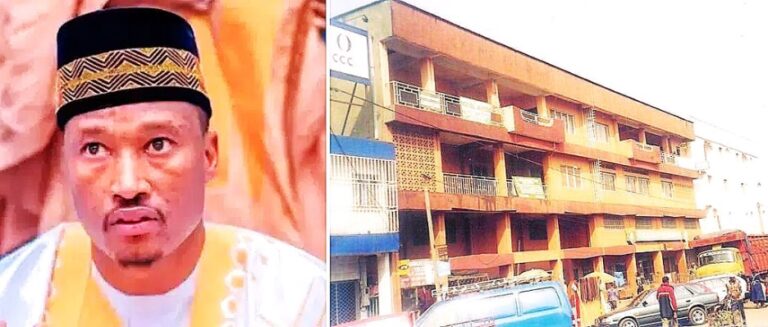
Yakubu Adamu, the Bauchi State Governorship candidate of the Allied Peoples Movement (APM), who served as a commissioner in the Bauchi State government, presents himself as a holder of a Doctor of Philosophy. He uses the title “Dr” and says he earned the degree in 2020 from the International University of Bamenda, a private institution in Cameroon. Adamu always introduces himself as ‘Dr. Yakubu Adamu, PhD’—a redundant doubling.
The International University of Bamenda, the Cameroonian institution Adamu says awarded his degree, has never been authorised by Cameroon to train students at the doctoral level. It was not authorised in 2020 when his thesis is dated, as shown in the government’s own approval records and in an April 2026 communiqué from Cameroon’s Ministry of Higher Education.
The university’s Secretary, Mary Fusi, said the institution has no satellite campuses in Nigeria and that any college awarding degrees in its name does so without approval. She said the institution does “not have anything to do with Nigeria,” and that “whoever is doing so is doing so at his or her own risk.”
Mary Fusi, who WikkiTimes understands is the daughter of the late Patrick Chefu Fusi, the founder of the university, said in a telephone interview that the institution had issued a formal disclaimer years ago. She said copies were sent to “the Youth Council in Nigeria, to the Nigerian Consulate, to the Ministry of Education in Nigeria, to the Ministry of Higher Education here in our country,” adding that IUB wanted no satellite campus in Nigeria.
She said students who came to her claiming admission through a Nigerian centre were told plainly that they were being scammed. She described a prospective student who said his friends were already studying at an IUB centre in Nigeria. She told him they were being deceived. “He never followed up,” she said. “Some of them are comfortable to be duped.”
But the records contradicting her are published by the university itself. IUB’s own website carries an alumni roster that is overwhelmingly Nigerian, listing serving and former officials of Bauchi State institutions by name, position and registration number. The thesis Yakubu Adamu submitted in 2020 records her late father, Patrick Chefu Fusi — the university’s founder and the promoter named on its government approval documents — as its external examiner. And the man Adamu names as his supervisor appears on the same roster, not as a supervisor but as a doctoral student.
WikkiTimes’ checks on the MINESUP registry, the official Cameroonian government database of accredited private institutions, found two approval orders for the university: a creation order No. 11/00507/MINESUP/SG/DDES dated 5 October 2011, and an opening authorisation No. 12/0363/MINESUP dated 17 August 2012. None of the approvals allows for Masters and PhDs. The institution’s authorisation never covered doctoral training in 2011, 2012, and June 2020, when Adamu’s thesis was submitted. No version of the university’s licence has ever permitted the degree he holds. The approval document lists Patrick Chefu Fusi as the institution’s promoter and includes the same telephone number that WikkiTimes used to contact Mary Fusi.
Furthermore, on June 1st, Cameroon’s regulator for private higher education told WikkiTimes that no private institution in the country is permitted to award doctoral degrees.
Gabriel Djankou Nkuissi, National Executive Secretary of the National Association of Private Higher Education Institutions of Cameroon (ANIPES), told WikkiTimes in writing:
“Even before any verification, which would only confirm the principle, no private higher-education institution is to date authorised to train at the PhD level. The IUB is a recognised private higher institution, authorised to operate in Cameroon. But it cannot train at the doctoral level, nor host doctoral training.”
Before then, in a press release dated 13 April 2026, signed by the Minister of State for Higher Education, Professor Jacques Fame Ndongo, the Ministry of Higher Education, known by its French abbreviation MINESUP, equally said no private higher-education institution in Cameroon is authorised to deliver training at the doctorate level. The Ministry said no “offshore” doctoral programme is authorised anywhere on Cameroonian territory, and that certificates resulting from such programmes cannot be recognised in Cameroon. The International University of Bamenda is a private institution. Under the ministry’s rule, a private doctorate awarded in Cameroon is not recognised.
A registered institution, closed by Cameroon’s regulator
National Commission for Private Higher Education, known by its abbreviation CNESP, has sanctioned the International University of Bamenda. On 28 August 2024, the Commission closed its 30th session by sanctioning nine private institutions, in a communiqué signed by Fame Ndongo. The International University of Bamenda was one of them.
Cameroon Tribune, the state-owned daily, reported on 3 September 2024 that the university was sanctioned for the “issuance of false diplomas and the refusal to compensate a learner,” and was closed for three years. The Guardian Post, an English-language Cameroonian newspaper, reported the same action on 5 September 2024, citing similar reasons. The closure took effect in 2024.
Yakubu Adamu’s thesis’s abstract matched a project sold online
Yakubu Adamu has not published his complete thesis anywhere. Rather, he published an abstract and redacted the rest of the thesis, saying, “The contents of the thesis are for internal users only.”
The dissertation’s abstract submitted under Adamu’s name matches a study found on a commercial platform that sells theses and dissertations to students online. The thesis, titled: “The Impact of Risk Management on Organisational Efficiency: A Case Study of Plateau State Inland Revenue Service, Jos, Nigeria,” was submitted to the International University of Bamenda in June 2020. WikkiTimes used two separate plagiarism checks—Turnitin and Copyleaks to examine Adamu’s thesis abstract. On one check, the abstract returned similarity scores of up to 91, 86, and 91 percent in three instances. On another check, it returned a similarity score of 64 percent.
WikkiTimes notes that similarity scores alone do not constitute a finding of plagiarism. Turnitin, the world’s leading academic integrity platform, states explicitly that “the relationship between a similarity score and plagiarism is often misunderstood,” adding that “many assume that a high similarity score automatically signifies plagiarism, but that is not always the case,” and that “determining whether plagiarism has occurred requires more than looking at the score.” The scores documented by WikkiTimes — ranging from 64 to 91 per cent across multiple checks of the dissertation’s abstract — are presented as indicators warranting further scrutiny, not as a conclusive determination of misconduct.
WikkiTimes formally requested access to Adamu’s full, unredacted thesis to allow for a complete and fair assessment of the work beyond its abstract. Adamu did not respond.
A substantial part of his abstract matches a pre-written research project on the same subject — risk management and organisational efficiency — applied to a different organisation, Dunlop Nigeria Plc, which was sold to students on the commercial website projectclue.com.
Adamu’s thesis records that Dr Alhaji Kawugana supervised it, that a committee including Nbifor Cletus certified it, and that Professor Patrick Chefu Fusi, the institution’s founder, examined it externally. WikkiTimes traced Kawugana to the Federal Polytechnic, Bauchi. Unlike other supervisors, Kawugana’s name does not appear on IUB’s website as a supervisor or examiner.
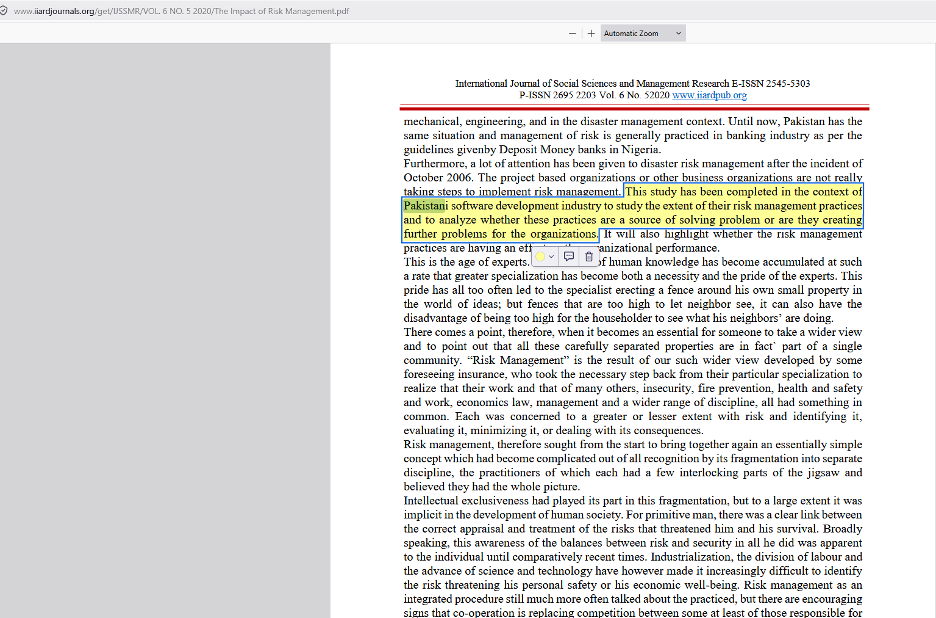
When the same PhD thesis, purportedly written by Yakubu Adamu, appeared in the International Journal of Social Sciences and Management Research in 2020, the authorship order had changed. Kawugana was listed as the lead author, and Adamu and Abdallah as co-authors. In standard academic practice, a student publishing his own thesis is credited as first author, with the supervisor named second. The journal version also reproduces a passage stating that the study “has been completed in the context of [the] Pakistani software development industry” — a description inconsistent with a Nigerian case study, further raising suspicion of plagiarism.
Highlighted in yellow: A description that raised suspicion of plagiarism.
Yakubu Adamu has more than 20 papers in a single year
In 2025, while Adamu held public office as a commissioner for Finance in Bauchi State, WikkiTimes counted more than twenty research articles he purportedly co-authored with Alhaji Kawugana. Several were presented as conference papers attributed to institutions WikkiTimes could not confirm exist. A significant number of the articles appeared in journals published by the International Institute of Academic Research and Development (IIARD), a platform that charges authors $20 per article for online publication — a fee that must be paid before a paper goes live. IIARD’s own homepage states that papers will be “published within 48 hours after the payment confirmation.”
IIARD’s indexing disclosure page lists only Google Scholar and ResearchGate — the latter populated by authors themselves — as its current databases, while acknowledging it is “actively pursuing inclusion in additional indexing services.”
The process sits outside normal academic practice. In management and business research, the path from submission to publication takes, on average, just under 18 months. Most active academics publish a low single-digit number of peer-reviewed papers per year. In one study of research productivity, faculty averaged about 2.1 publications per year, and the most productive member managed 10.3 per year. Twenty papers in 12 months is an average of one new paper every two and a half weeks, sustained over a year during which the listed author was running a government ministry. High-volume output published in low-scrutiny journals is a recognised feature of predatory journals, which produce large quantities of poor-quality research.
Unlike other graduates, Yakubu Adamu’s record on IUB website is missing
The institution’s own records do not list Adamu among its graduates. WikkiTimes examined its published student lists, its LinkedIn alumni listing, which records 1,115 alumni, most of them registered as based in Nigeria, and its published alumni roster. Adamu’s name does not appear on any of them.
Despite the presence of many Alumni from Bauchi State on IUB’s website, Adamu’s name is conspicuously absent. An alumni list may be incomplete, and the absence of a name is not by itself conclusive.
IUB has an overwhelmingly Nigerian roster; Many are from Bauchi
The institution’s alumni roster is overwhelmingly Nigerian. For a university located in Bamenda, Cameroon, that houses almost entirely Nigerian alumni raises suspicion. A large share of the listed figures is drawn from Bauchi’s public sector.
The IUB website listed several high-profile names in Bauchi, including Ali Gali, who it says was a rector at the Abubakar Tatari Ali Polytechnic. Other names listed include Ibrahim Buba, registrar; Friday Achimugu, bursar; and the head of accounting, M.D. Aliyu, and a lecturer, Ibrahim Adamu Saleh, all from the same Abubakar Tatari Ali Polytechnic. The roster also lists Adejoh Apeh Mathew, recorded as an examination officer at the Federal Polytechnic, Bauchi; Egwuemi Dennis Knights and Tijani Abubakar, recorded as staff of the Abubakar Tafawa Balewa University, Bauchi; Stephen Abubakar, recorded as a general manager of the Bauchi State Development Board; Mohamed Aminu and Lanze Sumaila, recorded in connection with the UNDP office in Bauchi; and Abdullahi Abba and Nasiru Yaro, recorded as the managing director and an accountant of a Bauchi microfinance bank. The appearance of these individuals on the roster is not, by itself, evidence of wrongdoing on their part.
The roster shows that the institution draws its examiners from its own graduates and reuses a small group of them across unrelated disciplines. One person listed as a 2009/2010 doctoral graduate later appears as the lead examiner on a series of doctoral defences in fields as varied as public administration, procurement management and human-resource management.
List of discussants
The institution publishes its doctoral defences with a column it labels “discussants” — the people IUB records as having sat each defence. Across 20 doctorates and master’s degrees in unrelated disciplines, the same handful of names fill that column, and a single telephone number, 0806XXX786, appears on eight separate doctoral defences. It belongs, each time, to Prof. Dorcas Igonoh, a former Vice Chancellor of Salem University, Lokoja, Kogi.
WikkiTimes reached Prof. Dorcas Igonoh at the telephone number listed against the research papers she published. Asked directly whether she earned her doctorate from the International University of Bamenda and whether she supervised doctoral students there, Igonoh did not answer. She asked instead what the question was for. Told that the information was meant for the public and that many Nigerians had earned PhDs from a university not permitted to run them, Igonoh said: “I don’t know anything about the university being authorised to run this thing or not. I can’t speak on that.”
Pressed a second time on whether she earned her PhD there, Igonoh said she does not speak to strangers and asked the reporter to send questions in writing. “Send me a text. Send your details,” she said — then ended the call abruptly, mid-conversation. WikkiTimes did as she requested. She did not respond as of press time.
Igonoh alone is listed discussing doctorates in procurement management, educational planning and administration, management technology, human resource management, and public administration — five fields that ordinarily demand five different specialists. Prof. Ben Wara Furu appears in defences in procurement, international business, philosophy, and public administration. Dr Promise Eseh is listed on a medical biochemistry doctorate, an economics doctorate, and a public-health master’s. A fourth name, rendered variously as “Dr Augustine A.,” “Dr Augustine A.,” “Dr Austine All.” and “Dr Austine Ogbeh,” carries most of the remainder.
The roster cannot hold its own names or titles steady. Igonoh is “DR Dorcas, Omanyo Igonoh,” where she appears as a graduate, and “Prof,” where she appears as a discussant. The same upgrade befalls Audu Dangana, listed as “Dr” among the alumni and “Prof” on the defence he discusses.
The reason the titles slip is that several of these discussants are not external authorities. They are the institution’s own graduates. Igonoh is recorded on IUB’s list as a 2009/2010 doctoral graduate in business management (entrepreneurship), registration IUB/2009/2010 — and then reappears as lead discussant on a series of later doctorates. A.E. Dangana is listed as an IUB doctoral graduate in entrepreneurship at the telephone number 0802XXX2967 and resurfaces as “Prof Audu Dangana,” a discussant, at the same number. Dangana is mentioned here and here as professor of a “Entrepreneurship and Strategic Leadership in the Department of Business Administration”, Kogi State University, Anyigba.
WikkiTimes also reached Audu Dangana on the telephone number that appeared against his name both as an IUB doctoral graduate and as a discussant on a doctoral defence. He told WikkiTimes he was not in the country and ended the call. Follow-up calls and an email sent to him went unanswered.
Adejoh Apeh appears three times in the same document: as Examination Officer at the Federal Polytechnic, Bauchi; as the holder of an IUB doctorate in business management; and as “Dr Adejo Apeh,” discussant on a master’s defence.
The circle is small enough and turned inward enough that the institution’s doctorates are produced and reviewed by the same few people who hold its doctorates.
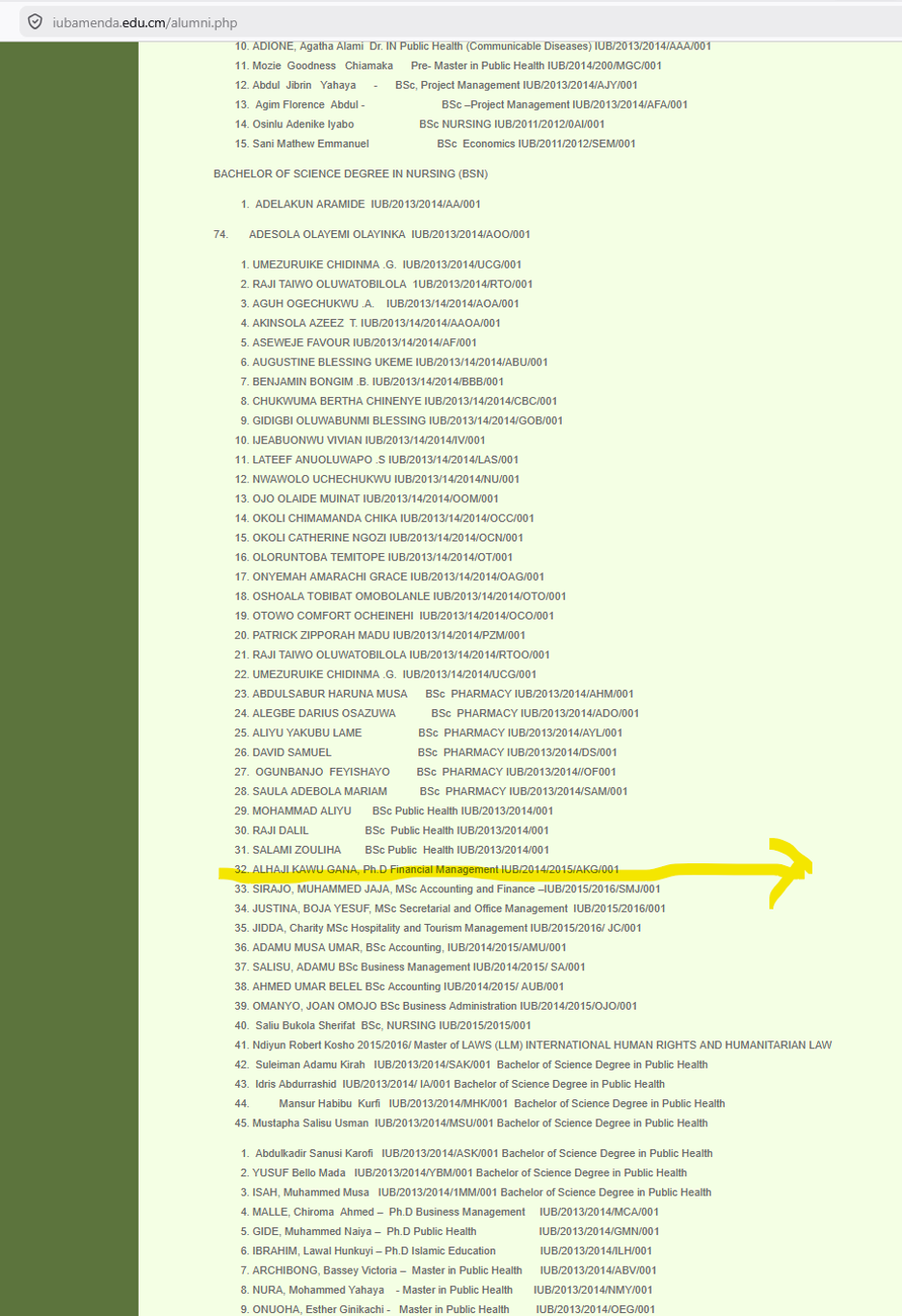
Alhaji Kawu Gana, Adamu’s supervisor, appears in entry 32 as “ALHAJI KAWU GANA, Ph.D Financial Management, IUB/2014/2015/AKG/001.”
Alhaji Kawugana, Adamu’s “supervisor,” appeared here as a student
He is listed as a doctoral student of the institution, under a student registration number, IUB/2014/2015/AKG/001. He does not appear in the discussants column and was not recorded as a discussant, an examiner, or a supervisor of any defence, anywhere in the document. Yet Yakubu Adamu names this same Kawu Gana as the supervisor of his PhD thesis.
Kawugana responded to WikkiTimes
Kawugana responded to WikkiTimes in two separate letters. In the first one dated June 7th, he confirmed supervising Adamu’s thesis, saying he did so “in accordance with the arrangements and academic procedures communicated to me by the institution.” He also disclosed that he holds his own doctoral degree from IUB, the same institution whose doctoral authorisation Cameroon’s regulators have since found to be non-existent.
When WikkiTimes sought to follow up by telephone, Kawugana declined. Over WhatsApp, he directed WikkiTimes to contact Tanko George, whom he described as the programme coordinator at IUB, providing a Cameroonian telephone number.
When WikkiTimes contacted George, he said he was not a coordinator but a teacher at the institution. Under questioning, George said the questions WikkiTimes was raising would be better answered by Mary Fusi. When WikkiTimes put Kawugana’s description of George to Mary Fusi, that he was the programme coordinator, she said George had not worked with the university for approximately three years.
Asked in a second letter what steps he took to verify IUB’s accreditation before supervising a doctoral candidate, Kawugana, on June 8, said his “understanding was that the International University of Bamenda was operating as a recognised higher education institution in Cameroon” and that he “was not aware of any regulatory finding, sanction, or official declaration” at the time.
On the question of whether his own IUB doctorate is subject to the same invalidity finding, Kawugana said he “continues to regard the qualification as valid unless and until an authorised body determines otherwise.”
He listed the IIARD journal article, identical in title and subject to Adamu’s thesis, among his own publications. When asked why Adamu, the doctoral candidate, appeared as second author on a publication derived from his own thesis research, Kawugana said the authorship order “was determined by the contributing authors and reflected the arrangement agreed upon at the time of publication.” He did not explain what that arrangement was.
He offered to provide his supervisory appointment letter, but had not done so by the time of publication. In his final letter, he asked WikkiTimes to send no further correspondence, saying the exchanges were “disrupting his official assignment.”
Adamu ignores WikkiTimes
WikkiTimes sent Yakubu Adamu an email, placed telephone calls, and sent WhatsApp messages to his known number, asking him to respond to the findings in this report and to provide his full thesis. He did not reply to any of them. WikkiTimes also reached out to people close to him, asking them to notify him of the pending interview request. None facilitated a response.
A screenshot of the message sent to Yakubu Adamu via WhatsApp.
What OSINT records tell us about IUB’s thin and inconsistent digital footprint
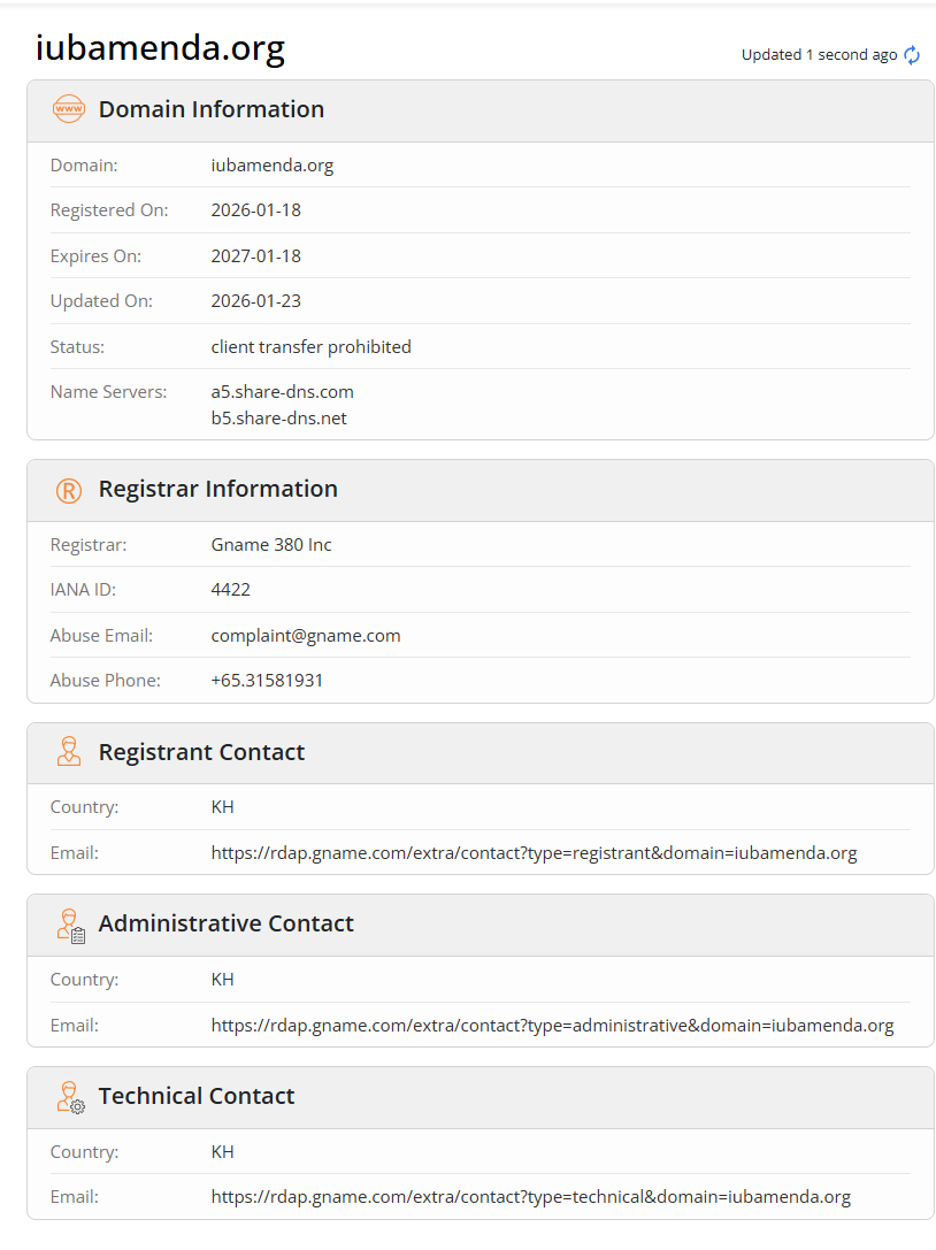
Using Open-Source Intelligence methods, WikkiTimes tested the institution against the records it would leave in the open if it operated as it claims. The institution’s digital footprint is thin and inconsistent. On a page at iubamenda.edu.cm, the university states that its official website is now iubamenda.org.
The university states that its official website is now iubamenda.org.
That address did not load when WikkiTimes followed it, returning a “Server not found” error over several days and across different browsers.
On Facebook, WikkiTimes tracked several pages attributed to the university. On one of the pages, it carries 522 followers and five photographs, and has been mentioned by a user from Sokoto only once. The user in 2016 described the picture as “inspiring,” noting Professor Patrick Chefu Fusi addressing students in a packed room. A second page, created in September 2022, has 173 followers and 11 photos.
A social media user in 2016 described this picture as “inspiring.”
Many of the site’s subpages do not function. For instance, clicking “See admission lists” returns a server error, as of June 1, when WikkiTiems checked.
Clicking “See admission lists” returns a server error, as of June 1, when WikkiTiems checked.
The International University of Bamenda occupies an ambiguous position in higher education indexing systems. It appears in the major directories but carries no substantive ranking data in any of them. On uniRank, which lists it as officially recognised by Cameroon’s Ministry of Higher Education, the institution holds no country rank and no world rank. This profile contrasts sharply with Cameroon’s public universities, including the University of Bamenda and the University of Buea, which carry full ranking scores on the same platform. Times Higher Education only holds a shell entry for IUB: a name and a location, with no ranking position, no impact score, and no published statistics. The institution does not appear in the AD Scientific Index’s Cameroon research-output table, from which both the University of Bamenda and the Catholic University of Cameroon are listed with faculty publication records. Its absence from Webometrics, the research-impact ranking on which Cameroon’s public universities carry full profiles, is consistent with this pattern, though direct verification of that absence was not possible.
The private institution shares part of its name with the University of Bamenda, the public university created in 2011, and the two are easily confused. On examination, the research that appears under the Bamenda name traces to the public university and other Bamenda institutions, not to the institution Adamu names. An absence of indexed research is not, by itself, proof that none was done.
The standing of a degree from the International University of Bamenda in Nigeria with the National Universities Commission (NUC) is unsettled. To verify the degree’s standing, WikkiTimes filed a Freedom of Information request with the NUC. The commission had not responded for several days after the request was sent. Its spokesperson, Mr Okoronkwo Ogbonnaya, directed WikkiTimes to a separate email address and asked that the same request be resubmitted. WikkiTimes did so; there was no response as of press time.
What the Nigerian Law says about fake degrees
The Nigerian law provides for criminal liability where a certificate is found to be forged. Bauchi State operates under the Penal Code, whose Sections 362 to 364 prescribe up to 14 years’ imprisonment for forgery and make the knowing use of a forged document a serious offence.
Section 182(1)(j) of the 1999 Constitution, as amended, provides that a person who presents a forged certificate to the Independent National Electoral Commission is not qualified to contest for public office.
Under Nigerian law, electoral exposure does not depend solely on what a candidate submits to INEC. In the case of Adamu, for instance, acknowledging holding a doctorate from the International University of Bamenda on multiple occasions, including during his screening for nomination as a commissioner, could be costly.
Screenings are formal proceedings in which the declaration of academic credentials carries legal weight. Even if he has not presented his International University of Bamenda doctorate to the Independent National Electoral Commission, those prior acknowledgements establish a pattern of knowing use of the document as genuine, which is precisely the conduct Section 366 of the Bauchi State Penal Code criminalises. He also remains liable for forgery under Sections 362 to 364 — offences that carry up to 14 years’ imprisonment.
Section 182(1)(d) of the 1999 Constitution, as amended, bars any person sentenced to imprisonment for an offence involving dishonesty or fraud from contesting any elective office. The offence of forgery under Section 366 of the Penal Code and the offence of uttering a false document both carry custodial sentences upon conviction.
This story is produced with Support from WikkiTimes Media Foundation and Civic Media Lab.
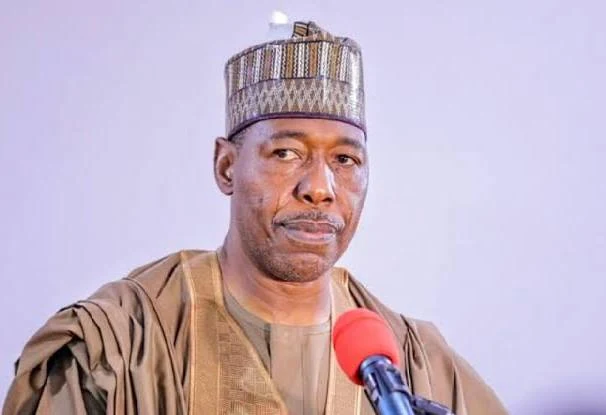
THE Borno government on Friday reintegrated at least 3,740 repentant members of Boko Haram into society as part of the state’s reintegration model policy.
Abdullahi Ishaq, a retired Brigadier General and Special Adviser to Governor Babagana Zulum on security, made this known at the reintegration ceremony in Maiduguri, according to the News Agency of Nigeria.
Those reintegrated included 720 men, 992 spouses, and 2,050 children who had repented and surrendered to troops, after being deradicalised, disarmed, rehabilitated and trained in various skills acquisition at the Hajj Camp in Maiduguri.
The ICIR reports that the programme is part of government’s efforts to restore peace to the state and other parts of Nigeria facing insurgency.
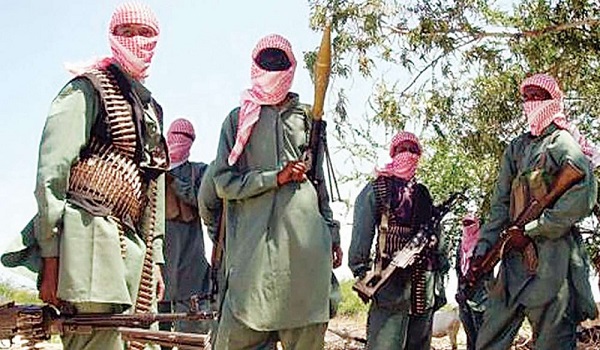
An investigation by The ICIR revealed that the initiative often backfires and aggravates the nation’s insecurity, as many of those who are deradicalised soon return to the trenches, make brutal comebacks, and unleash further mayhem on society.
Insurgency in Nigeria, which began with the emergence of Boko Haram in Borno State in the early years of this century, has killed thousands of citizens, displaced millions, and orphaned countless children. The violence, including attacks on critical infrastructure, promptly spread to other parts of the country, including Adamawa, Yobe, Abuja, and Kano.
The crisis has since escalated, spawning other armed groups, including Lakurawa, bandits, and the Islamic State West Africa Province (ISWAP)
To date, Nigeria has employed both kinetic and non-kinetic approaches to address insecurity, but there appears to be no immediate end in sight, as the country remains gripped by widespread insecurity.
While many Nigerians continue to oppose the deradicalisation and reintegration of repentant terrorists into society, the government maintains that the process is consistent with international best practices.
NAN reports that the repentant insurgents who were subjected to swearing with the Holy Quran also formed part of Batch-9, low-risk and minor clients in the series of repentants who would be reunited with their various communities in the state.
Ishaq, however, described the event as marking another milestone in the Borno Model Non-Kinetic approach to the fight against terrorism in the North-east region and Borno in particular.
“It has been a success story since 5th July 2021 when the good people of Borno State under the stewardship of our dynamic leader Prof. Babagana Umara Zulum agreed to forgive and accept their sons who are willing to drop arms and embrace peace.
“Today, the Borno Model is adjudged to be one of the most effective non-kinetic programmes in the history of mankind with over 350,000 persons that willingly exited the bush and surrendered to the military,” he said.
Ishaq stated that those released had left the bush and reported to the nearest military location for initial profiling, and those with weapons surrendered to troops.
According to him, some of them left their camps but could not make it to any military location before they were arrested and killed, adding that the lucky ones who made it to the military location were later moved to Hajj Camp for proper documentation, profiling and deradicalisation.
“The camps’ administrators kept them busy with various programmes geared towards deradicalisation and preparing them for life after camp.
“Tuesdays and Thursdays were for Islamic programmes, lectures on hygiene, drug abuse and other fields during Mondays, Wednesdays and Fridays were for skill acquisition programmes such as metal works, carpentry, tailoring, pot making, brick laying, barbing, cap making, repair of phones, solar installation, vulcanising, and repairs of motorcycles”. Ishaq said.
He noted that the women among them were not left out in skill acquisition as they were trained in cattery services, knitting, cap marking, tailoring, soap making to mention a few.
Ishaq said that the state government had provided starter packs for the beneficiaries and their spouses to support them in their post-camp life.
“The Borno Model has reintegrated 8,960 in batches one to eight, and with today’s 720 clients (Batch 9), there would be 9,680 clients. The clients seated in front of you were disarmed, demobilised, thoroughly deradicalised and rehabilitated.
“They are from Bama, Kondugua, MMC, Jere, Mafa, Dikwa, Gwoza, Damboa, Marte, Mongunu, Kukawa, Gbambolu Ngala, Kalabarge and Gubio Local Government Areas. Community leaders, Civilian Joint Task Force (CJTF)/Hunters screened them properly before recommending them for reintegration,” he said.
He, however, urged them to go back to their communities and be law-abiding, participate actively and positively in community work and development programmes.
Earlier, the state Commissioner for Women Affairs and Social Development, Hajiya Zuwaira Gambo, represented by the Permanent Secretary, Babagana Kadai, said the day was not merely a ceremony but a celebration of hope, resilience, reconciliation, and the commitment of the Borno government to restoring peace and rebuilding lives affected by years of insurgency.
“I would like to express our deepest appreciation to His Excellency, Prof. Babagana Umara Zulum, Executive Governor of Borno State, whose visionary leadership, compassion, and dedication to peacebuilding have continued to attract national and international recognition.
“Under Zulum’s leadership, thousands of families displaced by conflict have been resettled, communities have been rebuilt, schools and healthcare facilities have been restored, and opportunities have been created for vulnerable populations to regain their dignity and livelihoods.”
She stated that the Ministry of Women Affairs and Social Development would remain at the forefront of these efforts.
THE UNITED Kingdom has introduced a new £15 million initiative aimed at helping Nigeria attract more private-sector funding, advance key economic changes and promote sustainable growth over the next three years.
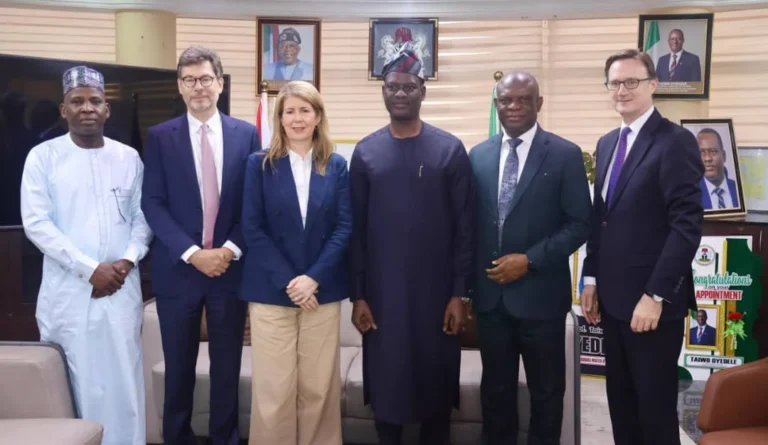
The UK Minister for Africa and International Development, Baroness Chapman, made the announcement during an official visit to Nigeria. The visit included meetings in Abuja and Kaduna.
According to the British High Commission, the programme forms part of ongoing efforts to strengthen co-operation between both countries and support Nigeria’s economic development goals.
“The UK Minister for Africa and International Development, Baroness Jenny Chapman, has concluded a two-day visit to Nigeria, during which she announced a new £15 million Growth Programme, deepened cooperation on digital transformation and health, and visited communities benefiting directly from UK investment on the ground.”
The scheme is expected to encourage greater investor confidence, support policy improvements and help move Nigeria toward long-term economic expansion following recent stabilisation efforts.
During her stay in Abuja, Chapman held discussions with the Minister of Finance and Coordinating Minister of the Economy, Taiwo Oyedele.
Their talks focused on the new programme and other areas where both nations can work together to promote economic progress.
Alongside the growth initiative, the UK government revealed plans to strengthen collaboration in Nigeria’s technology sector through the State Partnership for Regulatory Innovation in the Digital Economy and Regulatory Transformation (SPRIRET)
The project, which falls under the UK’s Digital Access Programme, will be implemented across five states. It is expected to improve digital regulations, remove obstacles affecting investors and encourage expansion in broadband services, technology-based businesses and emerging digital industries.
Speaking on the partnership, Oyedele highlighted the importance of relations between both nations and the opportunities the new programme presents.
“The UK-Nigeria Growth Programme helps bring this partnership to life by supporting capital market development, technology investment, small businesses and technical assistance.
“We look forward to seeing these opportunities deliver lasting benefits and drive progress for both countries,” Oyedele was quoted in the statement.
He also noted that cooperation between Nigeria and the United Kingdom had grown beyond traditional diplomatic ties and focused on shared economic advancement and development.
Part of the meeting reviewed progress under the Enhanced Trade and Investment Partnership, with attention placed on boosting Nigerian exports through the Developing Countries Trading Scheme, increasing collaboration in financial technology and creating stronger connections between both countries’ capital markets.
The UK minister later travelled to Kaduna, where she met Governor Uba Sani to assess years of cooperation between the state and the UK government. Their discussions explored ways to attract additional investment and expand support for climate-related financing initiatives.
She also visited beneficiaries of UK-backed agricultural projects, including livestock breeders and community animal health workers. In addition, she toured the Unguwan Sanusi Primary Health Care Centre in Kaduna South, a facility that provides medical services to about 20,000 people.
Chapman met with the Minister of Industry, Trade and Investment, Jumoke Oduwole, where discussions centred on strengthening commercial relations between the two countries.
At the conclusion of the visit, she expressed optimism about the future of relations between Nigeria and the United Kingdom.
“This visit has reinforced everything I believe about the UK-Nigeria partnership. That it is deep, it is real, and it is moving in the right direction,” she said.
British officials said the latest programme adds to existing UK investments in Nigeria. Through British International Investment, nearly $800 million has already been committed to sectors such as agriculture, clean energy and manufacturing, demonstrating the UK’s continued interest in supporting Nigeria’s economic development.
ARMED police officers on Friday teargassed peaceful protesters demanding an end to worsening insecurity, the release of abducted schoolchildren, and improved governance in Abuja.
The protesters, led by human rights activist and presidential candidate Omoyele Sowore, had set out from Berger Bus Stop and were heading to the Federal Secretariat to present their demands to the government.
As they approached Eagle Square, security operatives stationed in the area fired teargas canisters at close range, dispersing the crowd and causing panic among protesters and passersby.
Sowore was among those affected. Witnesses said he inhaled the fumes and struggled to breathe before collapsing. Fellow protesters quickly moved him away from the scene and rushed to assist him.
The situation worsened when police reportedly fired another round of teargas while Sowore was receiving attention, triggering further confusion and forcing many demonstrators to flee.
Despite the crackdown, protesters later regrouped and continued their march, insisting they would not be intimidated.
Addressing journalists afterward, Sowore said Nigerians must be liberated from what he described as the shackles of oppression.
In a statement posted on X, he alleged that police deployed a “strange gas” at close range during the protest.
“Today, operatives of the Nigeria Police Force deployed a strange gas at the protest ground, at close range which entered my lungs and left me struggling to breathe before I eventually collapsed.
According to him, the incident shows the increasingly dangerous tactics being used to suppress dissents and intimidate citizens exercising their constitutional rights.
“The objective of the Asiwaju Bola Ahmed Tinubu regime is to silence, destroy, and crush all opposition through fear and force. We shall never succumb to any of his worn-out tactics. We will keep going until we achieve liberation. #RevolutionNOW”
Reacting to the incident, Amnesty International condemned the police action and called for an investigation into the alleged targeting of the activist and others.
“Amnesty International strongly condemns the reckless attack on peaceful protesters today during a Democracy Day protest at Unity Fountain in Abuja in which human rights activist Omoyele Sowore collapsed and was subsequently taken to a hospital. The deliberate targeting of Sowore must be investigated. Such targeting of activists solely for exercising freedom of assembly is unlawful and shows utter disregard for the rule of law.
The organisation accused Nigerian authorities of using violence to crackdown on human rights, including the rights to freedom of expression and peaceful assembly.
“President Tinubu’s government has failed to demonstrate commitment to upholding the country’s constitution and its international human rights obligations that allow people to freely exercise their human rights, including the rights to freedom of expression and peaceful assembly.”
FOUR months after an investigation by The International Centre for Investigative Reporting (ICIR) exposed a networkthat promotes false claims of HIV cure online, a man identified in the report as Terlumn Joseph Korayom has threatened physical harm, legal action and reputational damage on the reporter unless his name is removed from the said publication.
The report titled “HIV cure scams: How fraudsters mask false claims on social media,” and published by the ICIR on February 26, 2026, exposed how vulnerable people living with HIV were being targeted with false claims online. At the heart of the false claim is the idea that a product known as K28 Xleya could cure the virus, despite there being no scientifically proven cure for HIV.
As part of the undercover investigation, The ICIR’s reporter paid ₦60,000 for the product after being directed through websites and social media channels promoting the alleged cure. Records obtained during the investigation show that she transferred ₦40,000 on October 9, 2025, and another ₦20,000 on October 10, 2025, after someone called “Pharmacist Joe” insisted on full payment before delivery. The product was never supplied. The investigation had identified evidence linking Korayom to multiple online identities, including “Gist World” and “Pharmacist Joe.”
Now, four months later, Korayom has issued a 48-hour ultimatum to the reporter and The ICIR to take down the report that indicted him.
He had contacted the reporter on June 4, 2026, through a WhatsApp number previously linked to the online identity “Gist World,” one of the aliases identified during the investigation. His first message to the reporter was a screenshot of a bank transfer receipt showing that he had sent ₦20,000 to an Opay account linked to her phone number.
The payment was a partial refund of the N60,000 she spent during the undercover investigation. Korayom had then initiated a conversation with the reporter and demanded that references to him be removed from the February ICIR report.
However, the reporter informed him that the amount paid during the investigation was ₦60,000 and that the issue extended beyond a refund to the promotion of unverified HIV cure claims.
Rather than address questions about the undelivered product or explain why he was refunding money paid to an individual he initially claimed had no connection with, Korayom accused the reporter of fabricating evidence and using her position at The ICIR to blackmail him.
“By Monday, if you don’t take my name off your blogs, I will make sure all your business associates, both in Abuja and Lagos, will know what happened,” he wrote. He later escalated the threats, warning that he would damage the reporter’s reputation and seek legal action against both her and The ICIR.
“I only pity your mother. Thank God you used TheICIR platform. If you no get money ICIR go get nah. I overlooked all those things for four months because of the election primaries. Now it’s over. When they get to you, you will know,” he said in another message.
In a separate message that further heightened concerns about the reporter’s safety, he wrote: “Alhamdulillah, at least I know where I can find you, so I am not bothered.”
Korayom also threatened to sue ICIR and the reporter for alleged defamation, claiming he would seek ₦100 million in damages and petition security agencies, including the State Security Services (SSS).
When asked why he was refunding money connected to a transaction with “Pharmacist Joe” if he had no connection to that identity, and why the product paid for during the investigation was never delivered, he did not directly respond to the questions.
ICIR files police report against threat to life
In response to the threats, The ICIR on Thursday, June 11, filed a formal complaint with the Nigeria Police Force at the Pyakassa Divisional Police in Abuja.
The organisation reported the threatening messages and requested that the matter be investigated, particularly statements suggesting knowledge of the reporter’s whereabouts and the possibility of harm.
The development comes against the backdrop of documented cases of intimidation against media professionals in Nigeria.
According to data released by the Committee to Protect Journalists (CPJ) on May 29, 2026, at least 91 journalists have been arrested, physically attacked or harassed across Nigeria since May 29, 2023.
The ICIR also reports that the 2026 World Press Freedom Index released by Reporters Without Borders (RSF) ranked Nigeria 149th out of 180 countries on the security indicator, describing the country as one of the most dangerous and difficult places for journalists in West Africa.
Overall, Nigeria ranked 112th globally and 12th in Africa, with an overall score of 48.11, placing it in RSF’s ‘difficult’ category for press freedom conditions.
The report highlighted repeated arrests, intimidation, attacks and detentions of journalists, particularly investigative reporters covering corruption, insecurity and governance issues.
PRESIDENT Bola Tinubu on Friday announced that Nigeria will spend a record N5.41 trillion on defence and security in 2026, describing the allocation as the largest in the country’s history and reaffirming his administration’s commitment to tackling insecurity.
In his Democracy Day address, Tinubu acknowledged that the national mood had been overshadowed by the abduction of schoolchildren in Oyo and Borno states, declaring that democracy without security is a mirage.
“Though this year’s mood is dampened by the abduction of our children in Oyo and Borno, we remain hopeful for their safe return,” Tinubu said, adding that the government had declared a security emergency and approved the recruitment of more than 50,000 police officers and thousands of military personnel.
Despite record spending and repeated assurances, kidnappings and bandit attacks continue to fuel concerns about whether security spending is delivering results. For many years, a substantial share of the nation’s budget has been allocated to security.
The ICIR reported on May 15, that armed men attacked three schools in Oriire Local Government Area of Oyo State, abducted 39 pupils and seven teachers. They killed a teacher during the assault and beheaded another later. Families have spent weeks anxiously awaiting the return of the remaining victims.
Reports indicate that the kidnappers are demanding the release of their detained members, among others, as a condition for freeing the captives.
The incident marked one of the most significant school abductions in southern Nigeria and revived memories of previous mass kidnappings that have plagued northern states for more than a decade.
In Borno State, insurgency-linked kidnappings remain a major threat. The Nigerian military recently announced the rescue of 360 civilians, mostly women and children, abducted earlier this year by Boko Haram fighters in Gwoza. Two infants died during the operation because of the harsh conditions endured in captivity.
The rescue came amid protests in Abuja over the abduction of children and renewed concerns over the persistence of insecurity despite years of military campaigns.
Beyond Oyo and Borno, kidnappings and banditry have continued across several parts of the country.
Last week, armed bandits in Zamfara State abducted dozens of villagers who had gathered for what was supposed to be peace talks, with authorities confirming that at least 39 people were taken.
Data compiled by local media show that at least 551 students and school workers have been kidnapped in nine major incidents since President Tinubu assumed office in 2023, highlighting the continued vulnerability of schools despite repeated assurances from government.
The persistence of these attacks has fueled debate over the effectiveness of Nigeria’s security spending.
However, Tinubu insists progress is being made, noting that terror-related deaths have fallen by 81 per cent since 2015, more than 13,000 terrorists were neutralised in the last year, and over 124,000 fighters and their dependants have surrendered through Operation Safe Corridor since 2023.
The president blamed insecurity in the country on failure of the states to grant local governments autonomy, despite a landmark ruling by the Supreme Court mandating it.
“Recognising that democracy is undermined when people do not feel its impact, my administration has sought financial autonomy for our 774 local councils. A fundamental challenge to our nation’s advancement has been ineffective local government administration. The insecurity we are addressing is partly due to the collapse of grassroots governance,” he stated.
The ICIR reports that many states in Nigeria appropriate funds meant for local government administration and end up allocating only a paltry portion to the officials they installed as elected local government chairmen. This habit has worsened unemployment, underdevelopment, poverty, and crime in communities across the country.
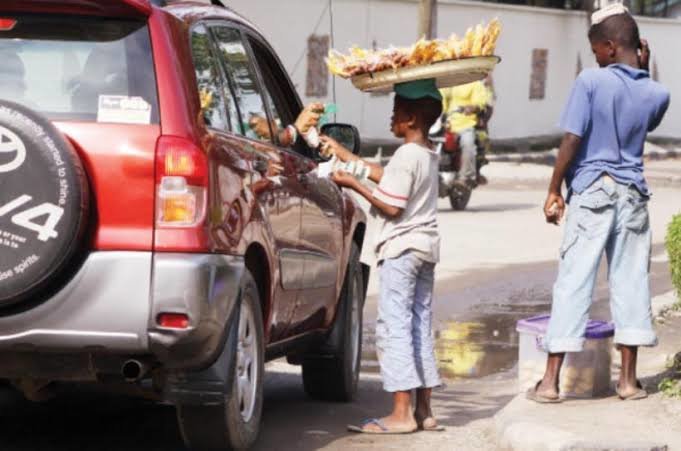
As Nigeria joins the world to mark World Day Against Child Labour, poverty, weak enforcement, and systemic failures keep thousands of children trapped in labour across the country.
This year’s global campaign to mark World Day Against Child Labour is led by the International Labour Organisation (ILO) alongside the United Nations Children’s Fund (UNICEF) and the UN Food and Agriculture Organisation (FAO). The theme: “Red card to child labour: Fair play for children, decent work for adults,” utilises the universal sports symbolism of a red card, in which global health and human rights bodies say it signals that systemic economic exploitation of minors is completely unacceptable and therefore must be structurally penalised.
ILO estimates that nearly 138 million children remain trapped in child labour globally, including 54 million in hazardous work.
This reality is reflected in the lives of minors like Blessing Imeh, who is now 20 but recalled being sent away to work as a textile sales attendant in Balogun Market, Lagos State. Then 15 years old, Imeh said the decision was driven by the economic strain of the COVID-19 pandemic in 2021. As one of five children, she was forced to abandon her education after completing Junior Secondary School, and on January 21, 2021, she moved to Lagos.
“I’ve always dreamt of living in Lagos, but I never knew it would be because of work,” she said. “My parents sent me to work with an Alhaja who sells Ankara in Balogun Market after my junior secondary school exams. I told them that I would like to further my studies, but my father said he couldn’t afford it.”
She explained that while she was technically in her dream city, the reality was nothing to write home about. “It pained me then, but the thought of living in Lagos made it bearable. I remember calling my mother just five days after I arrived, begging her to come back to Ikot Udoma, in Akwa Ibom, because the work was so stressful.”
Unlike Imeh, Maryam Abubakar was introduced to the labour market as a primary four pupil in 2009. Alongside her elder sister, Kifayah, she spent her childhood hawking sachet water in Ilorin, Kwara State, to support her family.
“My elder sister, Kifayah, and I would hawk pure water at the Oja Tuntun Market,” Maryam recalled. “We were always so happy whenever our white transparent bucket was empty, because it meant we had sold everything,” she recalled.
By 2011, she was in junior secondary school, and financial demands forced the sisters to take on domestic work for university students to fund their academic needs.
“My sister and I would go to Agbooba to help the university students living behind the Blue Mist water factory to wash plates and fetch water. The money was used to buy books and stationery, while my father paid the school fees. We ate from the money my mum made from selling water at home.”
She noted that while her peers enjoyed childhood pastimes like reading or watching television, hers was defined by a hustle for survival.
“Throughout my secondary school days, while other children watched TV or read books, my sibling and I would go to Agbooba, knocking on hostel doors, shouting, ‘Omo onise yin re o’, meaning, ‘Your errand girls are here.’”
FG committed to empowering children—Women Affairs Minister
The ICIR attempted to speak with the Ministry of Women Affairs and Social Development regarding current child labour enforcement strategies, but the attempt was unsuccessful. However, in May 2025, the Minister, Imaan Sulaiman-Ibrahim, highlighted the Federal Government’s long-term targets for child protection.
Speaking at the first regional meeting of the Pathfinder African Countries on the global alliance to end violence against children, the minister clarified that the targets include supporting services for two million at-risk children by 2030, elimination of harmful practices in 18 states by 2028 and strengthening of legal frameworks through enforcement of the Child Rights Act and Violence Against Persons Prohibition Act. She also restated the importance of expansion of the Safe Schools Programme and increased budgetary allocation for child protection.
Also, the Minister of State for Labour and Employment, Nkeiruka Onyejeocha, restated Nigeria’s alignment with global frameworks, emphasising that the country remains fully committed to its international treaty obligations on child welfare.
According to Onyejeocha, the fight against child exploitation requires a unified front that transcends demographic boundaries, alongside a deliberate shift towards youth empowerment. “Violence against children knows no age, race, or colour,” Onyejeocha stated, adding that, “we have ratified International Labour Organisation conventions on child labour nationwide and are committed to empowering our children through education, skill development, and digital technology access.”
Why child labour persists- Expert
However, Human Rights Lawyer and Gender Justice Advocate, Gladys Emmanuel, says the challenge goes beyond writing laws or ratifying international labour conventions to funding and institutional independence. Emmanuel noted that Nigeria’s Child Rights Act is clearly derived from international conventions, but actual enforcement requires specialised personnel and sustained funding.
“Currently, state-level task forces are treated as temporary, ad-hoc committees rather than permanent law enforcement or social welfare institutions, leaving them completely disconnected from the main judicial and enforcement systems,” she said.
The Human Rights Lawyer explained that Nigeria’s intricate blend of constitutional, statutory, religious, and customary laws often creates conflicts, making it essential for interventions to be tailored in ways that resonate with the local cultural context of the different regions to ensure understanding.
While such implementation requires significant resources, Emmanuel says, unfortunately, the state ministries of women’s affairs and social development, which handle child protection, consistently receive some of the lowest budgetary allocations in the country.
“Without a dedicated statutory fund for task forces, temporary shelters, maintenance, long-term rehabilitation, and conditional cash transfers. Without consistent funding, we might not be able to implement any of these strategies,” she warned.
Speaking on the delicate link between population dynamics and child protection, Emmanuel explained that societal expectations often demand that a woman get her spouse’s permission for family planning, which frequently leads to domestic disagreements where husbands argue that resources will “miraculously appear” for every child born. This mindset, according to the lawyer, directly results in larger families where some children are inevitably left out of school.
She emphasised the need to hold corporate supply chains accountable, especially when child labour in agriculture and informal mining is hidden deep within an unmonitored informal economy, highlighting the EU’s due diligence laws and Ghana’s blockchain tracking as useful models. She said Nigeria must adopt digital monitoring and grassroots support to protect vulnerable families.