Home Blog Page 137

Dapsy… a rascal who shapes Nigerian journalism and continues to keep power in check

0

By Ajibola AMZAT

I had been trying for months to interview Dapsy (Dapo Olorunyomi), and he had been “running away” from me, as he later admitted when he finally agreed to a one-on-one interview at his office on Mabolo Street, Abuja.

It is easy to look past that shortcoming. Dapsy himself is a gracious man: always noble and generous in overlooking the mistakes of others. I got that impression from many people who had encountered him.

In a book of tributes titled Testimony to Courage, published when he turned 62, many of his friends, colleagues, siblings, mentees, and mentors painted a picture of a complex man.

To his teachers, he is a brilliant but confused student; to his siblings, a generous but enigmatic brother; to his friends, a bookish and bohemian spirit, yet loyal and affable; to his mentees, a warm and supportive man who puts people at ease in his company, but at the same time, too playful to offer critical opinions about character flaws; and to his staff, a compassionate and inspirational boss whose laissez-faire leadership style sometimes gets in the way of effective management.

He is Andrew Ames, the fictional character in Complex Man, who constantly seeks reconciliation with contradicting realities rather than escape. Observing him closely and from afar, and through the lens of those who work with him, I often see an individual who truly embodies the contradictions of modern man, seeking meaning in a fragmented and complex world. Testimony to Courage indeed bears testimony to the complexity of the man named at birth Adeniran Oyekunle Oyedapo Olorunyomi.
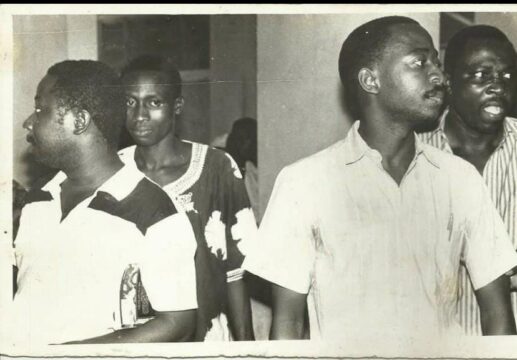
Dapo Olorunyomi, Seye Kehinde, Bayo Onanuga and Akin Adesokan at Ikoyi Prison Lagos.

Surprisingly, Dapsy, a bookworm, told me he has yet to read the book. “I’m afraid. It’s too gushing in some places,” he said in his usual playful manner. Had he read the book, he probably would have discovered that his siblings think he is a rebel and sometimes a reckless daredevil, labels, I believe, he may not contest.

During the interview, I narrated to him the account of his brother, Sola Olorunyomi, a professor at the University of Ibadan. Dapsy, his brother said, was always missing at the dinner table when other family members were seated. If he ever appeared, he would show up without a bib, unlike the others. And when they asked him why, his response was usually, “Do I look like a kid?” He was also the one often missing during morning devotion prayers. His parents were devout Christians. His grandfather, in fact, was a reverend who brought the Baptist Church to a community now known as Ijumu Local Government Area in Kogi State.

So, while one might expect him to follow in the footsteps of his forbears, observing Christian traditions and immersing himself in the Holy Books, he preferred reading dense and “godless” philosophers such as Theodor Adorno, Walter Benjamin, and Louis Althusser.“I am just curious about knowledge,” he said. Little wonder he ended up in the Faculty of Humanities at the University of Ife, where Professor Wole Soyinka and Professor Biodun Jeyifo, former ASUU president, ruled the roost. Jeyifo would eventually supervise his master’s thesis.

“Without question, I always gravitate to the whole tradition of liberty and freedom, and of a just society,” he said. Unlike his schoolmate and friend Femi Falana, a human rights advocate who studied law at Ife, Dapsy found expression for these noble ideals through investigative journalism.

When he got the chance to work at The Guardian, a newspaper commonly regarded as the flagship of Nigerian journalism, Dapsy made a dent that cost him his freedom and that of others. As the assistant editor of African Concord, he wrote a cover story that landed some of his colleagues in jail. The military junta would brook no dissent from rabble-rousers, as journalists were often perceived. And when he founded The NEWS alongside other irreverent pen-pushers like Kunle Ajibade and Bayo Onanuga, they took adversarial journalism a notch higher.

When the regime of Abacha went rogue, journalists like Dapsy became targets. His friend Ajibade was jailed for life; Bagauda Kaltho went missing and has never been found. But Dapsy was lucky. He got a tip-off that helped him escape into exile through the NADECO route, where he spent years planning with other June Twelfthists to truncate Abacha’s tyranny.
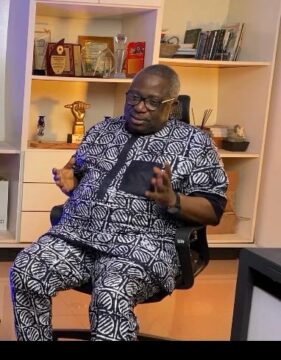
Dapo Olorunyomi, Publisher Premium Times.

Dapsy told me that he actually wanted to escape to South Africa, not the US. But the South African embassy then was directly opposite the Police Headquarters, and walking there would have meant walking into a trap with eyes wide open.

In the US, he worked for Freedom House, where he spent a lot of time advocating for freedom of expression, the rule of law, and human rights. He returned to Nigeria only after Abacha’s death and later took the job of Chief of Staff to the Chairman of the Economic and Financial Crimes Commission (EFCC), Nuhu Ribadu.

It was a tough job. He survived a couple of assassination attempts. When their tenure ended, and Ribadu himself became a hunted man, Dapsy decided to return to the US. It was around the same time that Dele Olojede, the first African to win a Pulitzer Prize, was setting up the NEXT 234 newspaper. Olojede heard that Dapsy was relocating and called him.

It was an offer to serve as the Enterprise Editor of a newly avant-garde newspaper. Olojede shared his vision, and Dapsy accepted, but not without a warning: “This business will bite you,” he said. His prophecy came true. NEXT became a gadfly to the Nigerian power elite, and they did everything within reach to kill it. Short story: NEXT folded up, and Olojede returned to his refuge in Stellenbosch, South Africa.

But it was not over for Dapsy. He founded Premium Times with Musikilu Mojeed, his trusted ally at NEXT. Learning from NEXT’s mistakes, they decided early on that PT would be a digital newspaper. They diversified PT’s revenue stream to include grant-seeking, a successful strategy.

Today, Premium Times has become a trailblazer in enterprise journalism, raising many hard-nosed journalists who keep Nigeria’s power elite in check. It is a paper that espouses the vision of one man who, very early in life, rose above the fears and unbridled greed of the plebeians who have now joined the Nigerian elite class.

Happy birthday, Dapsy.

Ajibola Amzat is the Africa Editor for the Centre for Collaborative Investigative Journalism (CCIJ) and co-publisher of WikkiTimes.

Police to arraign journalist detained without trial for six weeks

0

THE Nigeria Police Force is set to arraign Friday Alefia, a journalist detained for more than six weeks without trial, on alleged cybercrime charges.

Alefia is expected to appear before Obiora Egwuatu, a judge of the Federal High Court in Abuja on Wednesday, November 12. 

According to a report by Premium Times, Alefia, publisher of the online newspaper Naija News Today (formerly Asiwaju Media), was arrested on September 23 in Lagos after police operatives traced a phone linked to his house caretaker to his residence in Ikorodu. 

He was subsequently transferred to Abuja and has since been held at the defunct Special Anti-Robbery Squad (SARS) facility despite repeated pleas from his family and lawyers for his release or arraignment.

The ICIR reports that under Nigerian Constitution, the police are not permitted to detain any suspect for more than 48 hours without charging them to court. This provision is enshrined in Section 35(4) of the 1999 Constitution (as amended), which states that any person arrested or detained in connection with an alleged offence “shall be brought before a court of law within a reasonable time,” defined as 24 hours where a court is within a 40-kilometre radius, and 48 hours or such longer as in the circumstances may be considered by the court to be reasonable.”

Family members said Alefia’s health had deteriorated during detention, forcing the police to take him to the hospital twice at the family’s expense.

A relative, Chijioke Alefia, alleged that the journalist was being victimised for publishing reports critical of a federal lawmaker, Chinedu Ogah, who represents the Ezza South/Ikwo Federal Constituency of Ebonyi State.

“Friday is a journalist and also a constituent. He voted and has the right to question his representation,” Alefia said.

A five-count charge filed by the police at the Federal High Court Abuja (Charge No. FHC/ABJ/CR/53/2025) against Alefia and Asiwaju Media Company Ltd, accused them of using online platforms, including Facebook, to publish what the police describe as false and damaging reports against the lawmaker.

The charges include several reports about the lawmaker. One of the reports was titled, “How Federal Lawmaker Ogah Snatches Village Land in Ebonyi,” which the police described as false. Another count accuses Alefia of posting a statement on Facebook quoting Mr Ogah as saying, “I rigged senatorial poll against Emmanuel Onwe.”

All charges, according to the prosecution, violate Section 24(2)(a) of the Cybercrimes Amendment Act and are punishable under Section 24(2)(c)(i).

In Nigeria, concerns over press freedom have escalated in recent years. Journalists have faced arrests, physical assaults, and threats while carrying out their constitutional duty, particularly on issues involving security agencies, corruption, and human rights violations.

Laws such as the Cybercrimes Act have been used to clamp down on dissenting voices, including journalists.

The 2024 data by Reporters Without Borders (RSF) placed Nigeria as one of West Africa’s most dangerous and difficult countries for journalists.

Anambrarians set agenda for Soludo after re-election victory

0

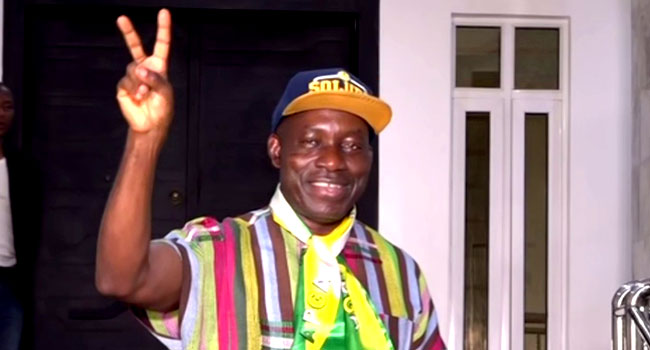
THE people of Anambra State have set an agenda for Governor Charles Soludo following his re-election.

Soludo, of the All Progressives Grand Alliance (APGA)won the poll conducted on Saturday, November 8, with 422,664 votes, defeating his closest rival, Nicholas Ukachukwu of the All Progressives Congress (APC), who garnered 99,445 votes.

In his acceptance speech on Sunday, November 9, after he was declared by the Independent National Electoral Commission (INEC) as the election winner, Soludo told the people of the state that he was humbled by the support he enjoyed from the electorate.

He assured the state that it would see more positive dividends of democracy from his administration.

He appreciated everyone in the state and assured them that they would not regret voting for him.

The ICIR reports that the governor won all 21 local government areas, while defeating his major rivals – George Moghalu of the Labour Party (LP) and Nicholas Ukachukwu of the All ProgressiveS Congress (APC), who are both from Nnewi North and South, respectively, in their strongholds.

“You spoke loudly. This election is not just a victory, it is history made and a big history in terms of percentage of votes,” Soludo said.

Meanwhile, the state’s people, including many of its leaders, have hailed the governor’s victory and demanded that he spreads developmental projects across the state during his new term.

Ngozi Okoli, a beneficiary of agri-business policy of the state government, urged the sustenance of agri-business related policies that will create more wealth for the state.

“I want him to continue the work he has done in the agricultural sector, and with that, more people will be out of poverty,” she suggested.

An Onitsha-based businessman, Solomon Akachukwu, recalled the ravaging impact of unknown gunmen in the state and urged the governor to intensify efforts on security.

“Governor Soudo has done well in the eight LGAs once occupied by gunmen, and the newly launched ‘Agunechemba’ security offensive has driven kidnappers, ritual dealers, and cultists out of town. Onitsha’s touts are now ghosts, with traders thriving,” he said.

Also, an entrepreneur, Ike Chibueze, who spoke with The ICIR in Awka, requested more investment in the education sector. He said the governor employed hundreds of teachers in his first tenure and made public schools free.

Speaking further on Soludo’s re-election victory, a Keke driver, Obinna Anyalebe, told The ICIR that the governor should intensify his work on urban renewal and spread it across the states.

“I drive my Keke in Awka, and at times I go into the neighbouring villages for work. Awka is currently wearing a new look, but he needs to expand more road access to other parts of the state, which he had already started,” he said.

Another resident, Anna Onwudiwe, who spoke with The ICIR, said the governor needed to win back the confidence of the business community with an efficient tax system.

“We don’t want officials to be harassing and stopping people by the roadside for taxation. The governor, with his team and the State Internal Revenue Service, should enforce a digital form of tax collection,” she said.

Another resident, Lotanna Agwuncha, urged the governor to tackle insecurity, which has become a huge problem in the state.

“Please remember the Ihiala Local government axis in your second tenure, which has been ravaged by insecurity in your first tenure,” Agwuncha said.

Again, ICIR-funded report wins Ray Ekpu Investigative Journalism Prize

0

AN investigative report titled “Gas Flaring: Niger Delta Communities Suffer as oil giants fail to pay Nearly N500 billion in penalties” by Ekemini Simon has emerged winner of the 5th Ray Ekpu Investigative Journalism Prize.

The report, supported by the International Centre for Investigative Reporting (ICIR) is one of the organisation’s contributions to accountability journalism in Nigeria since its founding over a decade ago.

The first ICIR-supported investigation to claim the top honour was at the Ray Ekpu Investigative Journalism Prize maiden edition in 2021 with the story, “Akwa Ibom Governor, SSG in Multi-Billion Naira Scandal,” jointly reported by Simon and Abasifreke Effiong.

The recurring recognition underscores The ICIR’s role in nurturing investigative journalism that holds power to account, amplifies community voices, and strengthens public interest reporting in Nigeria.

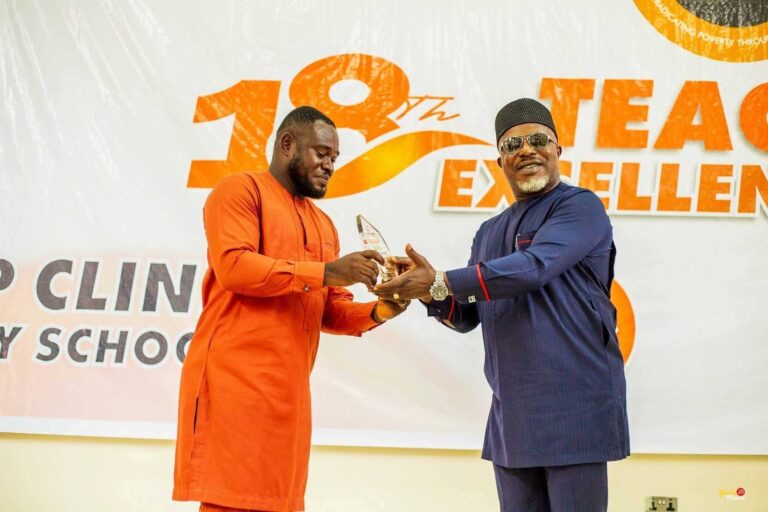
The announcement was made during the Inoyo Toro Foundation’s 18th Teachers’ Awards and 5th Ray Ekpu Award for Investigative Journalism, held on Friday, November 7, in Uyo, Akwa Ibom State.

The chairperson of the screening committee, Nsikak Essien, said that the committee received 27 entries for the award within and outside Akwa Ibom.

“The issues handled were more diverse and rich. They were more competitive,” Essien said, noting that the entries recorded a significant rise in quality and numbers from other editions.

The winning entry, “Gas Flaring: Niger Delta Communities Suffer as Oil Giants Fail to Pay Nearly N500 Billion in Penalties, published in December 2024, is a two-part investigation that exposed multi-billion-naira shortfalls in gas flare penalty payments by oil companies operating in the Niger Delta. 

Simon’s plaque award at the event

It revealed how the Nigerian Upstream Petroleum Regulatory Commission (NUPRC) failed to enforce the collection of penalties mandated under the Petroleum Industry Act (PIA) funds intended for environmental remediation and community relief projects.

Simon’s report further highlighted the devastating environmental and economic impacts of gas flaring on local communities and how government inaction continues to exacerbate poverty and pollution across oil-producing areas.

For his outstanding work, Simon received a cash prize of N500,000.

The second prize went to Saviour Imukudo of Premium Times, who received N300,000, while Enwongabasi Elisha of The Crest Newspaper took third place, earning N200,000.

The Ray Ekpu Investigative Journalism Prize, established in 2021 by the Inoyo Toro Foundation, honours the legacy of Ray Ekpu, veteran journalist and co-founder of Newswatch magazine. 

The foundation also promotes quality education and media excellence in Akwa Ibom State.

The ICIR reports that this year’s victory marks Simon’s fourth time winning the prestigious award, having previously won in 2021, 2022, and 2023, and finishing runner-up in 2024.

Super Eagles face Gabon Thursday in do-or-die World Cup qualifier

1

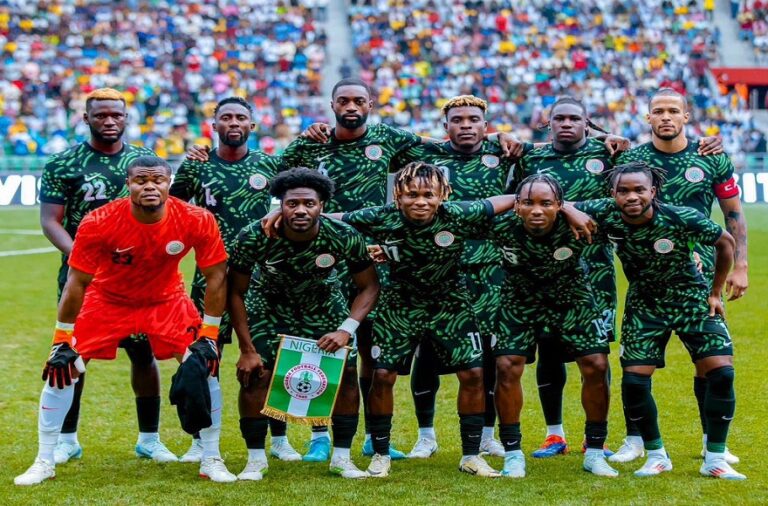
THE Super Eagles of Nigeria will on Thursday, November 13, face Gabon in a crucial 2026 FIFA World Cup playoff match in Rabat, Morocco.

The match is a do-or-die encounter for Nigeria as it will determine their progress to the next stage of the World Cup qualification series.

The Super Eagles’ camp officially opened on Sunday in Rabat with the arrival of 10 players, ahead of the final preparations for the playoff this international break.

According to the team’s media officer, Promise Efoghe, the early arrivals include Calvin Bassey, Alex Iwobi, Samuel Chukwueze, Tolu Arokodare, and Olakunle Olusegun. They were later joined by Wilfred Ndidi, Moses Simon, William Troost-Ekong, Benjamin Fredericks, and Chidozie Awaziem.

“Later, on Sunday, three more players – Wilfred Ndidi, Moses Simon, and William Troost-Ekong—joined up with the squad, bringing the number of players in camp to eight.

“By nightfall, Benjamin Fredericks and Chidozie Awaziem also checked in, raising the total number of players in camp to 10 as preparations gathered pace,” he was quoted to have said.

Coach Eric Chelle, who finalised his 24-man squad at the weekend, named a mix of Europe-based stars and local talents for the decisive fixtures. The squad features the return of Maduka Okoye in goal, Chidozie Awaziem in defence, and Raphael Onyedika in midfield.

Nigeria will qualify for the African playoff final if they defeat Gabon on Thursday. The winner will then face either Cameroon or the Democratic Republic of Congo on November 16, also in Rabat.

The playoff round gives second-placed teams from the African group stage qualifiers an additional chance to reach the 2026 FIFA World Cup. However, the winner of this round must still compete in an intercontinental playoff in March 2026 to secure a World Cup slot.

The Super Eagles earned their playoff place after defeating Benin Republic 4–0 in Uyo last month, finishing as one of the four best runners-up in the African qualifiers.

Nigeria missed out on the 2022 World Cup in Qatar after losing to Ghana in the playoff stage and are keen to avoid another disappointment.

Below is Nigeria’s full squad for the 2026 World Cup playoffs:

Goalkeepers: Stanley Nwabali, Amas Obasogie, Maduka Okoye
Defenders: Chidozie Awaziem, Semi Ajayi, Calvin Bassey, Benjamin Fredericks, Bruno Onyemaechi, Bright Osayi-Samuel, Zaidu Sanusi, William Troost-Ekong
Midfielders: Alex Iwobi, Wilfred Ndidi, Raphael Onyedika, Frank Onyeka, Alhassan Yusuf
Forwards: Victor Osimhen, Samuel Chukwueze, Ademola Lookman, Moses Simon, Akor Adams, Tolu Arokodare, Olakunle Olusegun, Chidera Ejuke.

Chaos, contradictions mark Nigeria’s response to Trump’s CPC declaration

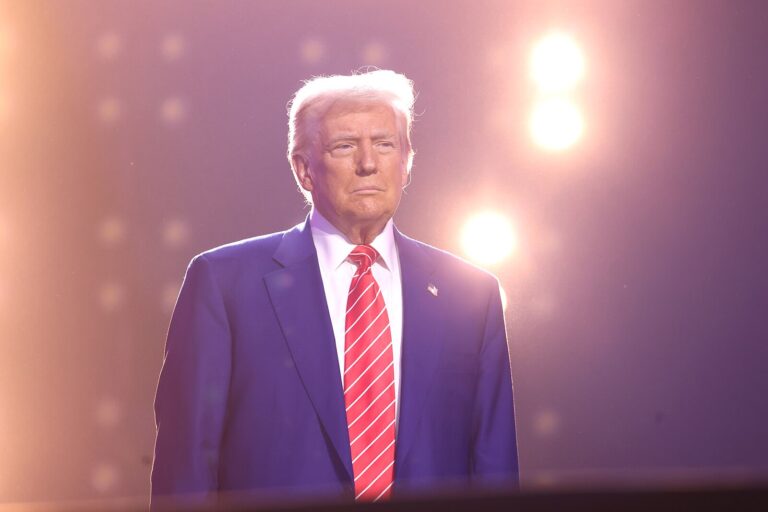
SINCE President Donald Trump threatened to “invade Nigeria” over alleged persecution of Christians, the Nigerian government has struggled to mount a coherent response. 

The government’s response has been marked by hurried diplomatic statements, contradictory political comments, and conflicting stances as it tries to mount an information offensive to counter the accusation, which it describes as “inconsistent” with realities in Nigeria.

Trump, in a Truth Social post later shared on the official White House X handle, announced that he had designated Nigeria as a “Country of Particular Concern” (CPC), citing what he described as “an existential threat to Christianity.”

“Thousands of Christians are being killed. Radical Islamists are responsible for this mass slaughter. I am hereby making Nigeria a ‘Country of Particular Concern’ — but that is the least of it,” Trump wrote.

Citing alarming figures, he added: “When Christians, or any such group, are slaughtered like is happening in Nigeria (3,100 versus 4,476 worldwide), something must be done. I am asking Congressman Riley Moore, together with Chairman Tom Cole and the House Appropriations Committee, to immediately look into this matter and report back to me. The United States cannot stand by while such atrocities are happening in Nigeria and numerous other countries.”

The post immediately stirred fear and confusion in Nigeria, prompting an uncoordinated string of official responses. Ministries, lawmakers, and presidential aides issued conflicting statements, each taking a different tone. Below are some disjointed responses which exposed the absence of a central communications strategy by the Nigerian Government.

Foreign Affairs Ministry’s confusing press releases

Even before the Presidency reacted, the Ministry of Foreign Affairs was the first to issue a statement. On Saturday, the ministry’s spokesperson, Kimiebi Ebienfa, rejected Trump’s claims, saying they did not accurately reflect Nigeria’s realities.

“The Federal Government of Nigeria notes the recent remarks by US President Donald Trump alleging large-scale killings of Christians in Nigeria and calling for the country’s designation as a ‘Country of Particular Concern.

“These claims do not reflect the situation on the ground. Nigerians of all faiths have long lived, worked, and worshipped together peacefully,” said the ministry.

The government said that while it appreciated global concern for human rights and religious freedom, the allegations were inaccurate and misrepresented the country’s realities.

However, the statement was swiftly deleted even after being widely reported and shared by the Special Adviser to the President on Information and Strategy, Bayo Onanuga and replaced with a toned-down version. 

The revised release removed Trump’s name, avoided the term “genocide,” and took on a conciliatory tone centred on “shared values” and “partnership” with the United States.

The change signalled internal confusion over how aggressively Nigeria should respond. The initial statement was assertive and diplomatic, defending the country’s image. The replacement, however, appeared designed to de-escalate tensions and project a calmer posture, suggesting that higher political consultations had overruled the ministry’s earlier defiance.

Akpabio and Barau differ on Senate’s response

The discord was also evident in the National Assembly. On Tuesday, a mild drama played out on the Senate floor as Senate President Godswill Akpabio and his deputy, Jibrin Barau, took opposing stances on Trump’s remarks.

Akpabio, reacting to a viral report by the social media platform RANT HQ that misquoted him as rebuffing Trump’s statement, clarified that he had not attacked the former U.S. president. “Who am I to answer Trump?” he said, stressing that he only spoke based on the Senate’s collective position.

Barau, however, struck a defiant tone. “I’m not scared of Trump. I will say my mind. I’m a Nigerian, and Nigeria is a sovereign nation,” he interjected. “Don’t be scared of Trump. You can say your mind about him — we are a sovereign nation.”

While both leaders defended Nigeria’s sovereignty, Akpabio’s cautious diplomacy clashed with Barau’s confrontational style, leaving the Senate’s official stance unclear at a time the nation needed a structured response and resolution.

Lawmaker dragged for “blind loyalty”

In the midst of the controversy, a Nigerian lawmaker drew public backlash after posting on X: “Tinubu leads… we follow.” Many citizens accused him of blind loyalty rather than offering critical oversight.

One user, Onyi Vincent Obiannu, wrote: “A Nigerian senator, ladies and gentlemen. Those that should be checking the president have become the president’s puppet.” 

Another user, Habeeb, added: “This isn’t even about Tinubu, yet you’re still doing this? BAT is your party member — you’re supposed to hold him accountable, not cheerlead him in the middle of a diplomatic crisis.”

Old tweet backfires against Tinubu

As the Christian genocide narrative gained traction, an old 2014 tweet from President Bola Tinubu resurfaced  and quickly became ammunition for critics. In the post, then-opposition leader Tinubu had slammed former President Goodluck Jonathan for failing to protect Christian worshippers in Borno and Adamawa States.

screenshot of Tinubu old tweet

“The slaughtering of Christian worshippers is strongly condemnable. It calls into question the competence of Jonathan to protect Nigerians,” Tinubu wrote at the time.

Eleven years later, the statement has returned to haunt him. Many Nigerians are now juxtaposing his past criticism with the current U.S. allegations, accusing the Tinubu administration of hypocrisy and inconsistency in handling issues of religious violence.

 The resurfaced tweet has become a significant public relations setback for the government’s effort to control the narrative.

Confusion over meeting with Trump

The controversy also showed when reports emerged that President Tinubu was scheduled to travel to the United States for a high-level diplomatic meeting with Trump. Sahara Reporters claimed that Trump had delegated Vice President James David Vance to meet Tinubu during the visit.

However, the Senior Special Assistant to the President on Media and Publicity, Temitope Ajayi, dismissed the report as “false and misleading,” accusing the media of fuelling unnecessary speculation. 

Similarly, Daniel Bwala, Special Adviser to the President on Policy Communication, later confirmed that Tinubu would meet Trump “in the coming days” but declined to specify when or where.

Hasty appointment of ambassadors

Amid the diplomatic turbulence, the Presidency has reportedly fast-tracked the appointment of ambassadors to Nigeria’s foreign missions a process that had stalled for over a year.

Sources say the urgency stems from Nigeria’s diplomatic vulnerability at a time when Washington and other Western allies are scrutinizing its human rights record.

The vacuum dates back to September 2023, when Tinubu recalled all 109 ambassadors. Since then, most missions have been run by chargés d’affaires, leaving Nigeria without ambassador-level representation in key countries, including the United States. Analysts argue that this absence hampered Nigeria’s capacity for high-level engagement and made its diplomatic responses sluggish during the crisis.

State officials describe the ongoing appointments as a “damage-control” move — aimed at restoring Nigeria’s global posture and ensuring that the country has authoritative voices to defend its image abroad. But critics warn that rushing the process under external pressure could lead to politically motivated appointments rather than merit-based selections.

As one foreign policy analyst put it: “There is no authoritative figure to speak for Nigeria in Washington. Without an ambassador, even the most serious diplomatic outreach becomes bureaucratic and slow. It weakens Nigeria’s ability to defend itself.”

Nigeria government’s official response 

Officially responding to the allegation, President Tinubu declared that Nigeria will remain firm as a democracy governed by a Constitution that guarantees religious liberty.

The President, writing on his X handle, in apparent reference to President Donald Trump’s declaration of Nigeria as ” Country of particular Concern”, said his administration has remained open to both Christians and Muslims.

The President noted that his administration is addressing issues around insecurity, which has continued to affect citizens across faiths and religions.

“Since 2023, our administration has maintained an open and active engagement with Christian and Muslim leaders alike and continues to address security challenges which affect citizens across faiths and regions,” Tinubu said on X.

“Religious freedom and tolerance have been a core tenet of our collective identity and shall always remain so. Nigeria opposes religious persecution and does not encourage it.

“Nigeria is a country with constitutional guarantees to protect citizens of all faiths.

“Our administration is committed to working with the United States government and the international community to deepen understanding and cooperation on protection of communities of all faiths.”

This report is republished from The FactCheckHub

ADC faults Anambra poll, accuses INEC, security agencies of failing Nigerians

THE African Democratic Congress (ADC) has expressed deep concern over the conduct of the just-concluded Anambra State governorship election, describing the exercise as a “cash-drenched spectacle” that undermined Nigeria’s democracy.

In a statement on Sunday, November 9, the party said what transpired across the state was “more of a bazaar than an election,” alleging widespread vote-buying and institutional failure during the process.

“What unfolded in Anambra was, regrettably, a cash-drenched spectacle that was more of a bazaar than an election. This undermines the very essence of democracy,” the statement read in part.

The ADC accused the incumbent Governor Charles Soludo and his party of engaging in open cash-for-votes, claiming that bundles of naira notes exchanged hands in the presence of voters and security agents.

“As has been widely reported and clearly shown to Nigerians and the international community, this election was highly monetised, with the incumbent and his party seen to have participated in several forms and styles of cash-for-votes. At polling units across the state, bundles of naira notes changed hands in full view. This was a brazen violation of the Electoral Act,” the party said.

The ADC also criticised security agencies and electoral officials for allegedly turning a blind eye to violations of the Electoral Act, saying their failure to act emboldened offenders and eroded public trust in the system.

“Even more troubling was the apparent silence – and in some instances, visible inaction – of institutions mandated to enforce electoral integrity. Security operatives stood by as voters were harassed and compromised, while electoral officials, overwhelmed or indifferent, failed to uphold even the most basic standards,” the statement noted.

The party warned that the events in Anambra raised serious doubts about the integrity of future elections, especially as Nigeria moves towards the 2027 general polls.

“If this is the manner in which INEC intends to conduct the 2027 general election, then Nigerians have every reason to be worried about the future of our democracy, especially at a time when the state of our nation is under the microscope of the international community,” the ADC said.

While condemning the alleged monetisation of the electoral process, the ADC reaffirmed its commitment to promoting integrity and accountability in Nigeria’s leadership recruitment system.

The INEC had on Sunday declared Soludo, candidate of the All Progressives Grand Alliance (APGA), as the winner of the poll, with 422,664 votes, ahead of his closest rival, Nicholas Ukachukwu of the All Progressives Congress (APC), who scored 99,445 votes.

Paul Chukwuma of the Young Progressives Party (YPP) finished third with 37,753 votes, while John Nwosu of the ADC secured 8,208 votes.

George Moghalu of the Labour Party (LP) and Jude Ezenwafor of the Peoples’ Democratic Party (PDP) followed with 10,576 and 1,401 votes, respectively.

AEDC mass sack linked to new minimum wage, sources say

THE Management of Abuja Electricity Distribution Company (AEDC) has confirmed the dismissal of hundreds its workers, citing restructuring for enhanced customer efficiency as the reason for the decision. However, sources claim the move is actually linked to the implementation of the new minimum wage.

In a statement issued on Friday, November 7, the AEDC management said the restructuring was in line with its strategic direction to become more agile, innovative and customer centric.

“In line with our corporate transformation strategy, the management of Abuja Electricity Distribution Plc (AEDC) hereby announces a restructuring exercise aimed at delivering improved services to our customers as well as enhanced operational efficiency and excellence.

“As part of the transformation, we have promoted high-performing staff, released retiring employees and those performing below par, and have put in motion the implementation of a robust employee development and customer management plan aimed at driving our customer-centric focus,” the statement read in part.

It added that the AEDC was committed to providing reliable, safe, and sustainable electricity to its customers across its touchpoints, supporting the growth and development of Nigeria’s energy sector.

Meanwhile, some of the workers who spoke with The ICIR said the decision was a result of the implementation of the new minimum wage by the AEDC.

The sources said the company had been paying many of its contract or casual staff N40,000 until it agreed to pay the new minimum wage of N70,000 last month after several appeals from the workers.

President Bola Tinubu signed the new minimum wage into law in July 2024, making it compulsory for all employers to implement.

One of the sources said the decision by the AEDC to sack workers was communicated to them at the company’s monthly meeting with staff on Monday, November 3. At the meeting, about 1,500 workers were said to have been affected by the plan. Sack letters were issued to some of them hours after the meeting.

However, media reports on Friday indicate that 800 were eventually disengaged.

The criteria for the sack, according to workers, include staff performance, educational qualification, and staff integrity. The ICIR reports that staff working in communities with high numbers of estimated billings are most affected.

“They said they are sacking us because we could not meet our targets from the customers. For instance, many people in the community where someone like me is assigned to work do not pay their bills. This is a major criterion for sacking workers,” one of the staff, who pleaded anonymity, said.

The ICIR contacted the AEDC spokesperson in charge of Customer Relations, Kenechukwu Ofili, on the phone to confirm the claim that new minimum wage payment led to the mass sack.

Ofili declined to speak on the matter. She was silent for several seconds when the question was pushed to her. She then ended the call abruptly and didn’t pick subsequent calls to the line from the reporter.

Since the assumption of ownership of AEDC by Transcorp Power in 2023, there has been instability in top management appointments, culminating in managing directors, namely: Christopher Ezeafulukwe, who assumed office as Managing Director/CEO on September 2, 2023, and Chijioke Okwuokeny, the acting Managing Director since July 21, 2024.

Another worker who spoke with The ICIR on the condition of anonymity said every staff member was apprehensive over the continuous disengagement with uncertainty about who receives the next sack letter.

“I have a young family, and I have been praying to God that I will not be affected,” the worker said.

The latest sack, which cut across levels four to 10, including casual workers, was also learnt to be the outcome of protracted negotiations between AEDC management, led by its current Managing Director, Chijioke Okwuokenye, and the in-house two staff unions: National Union of Electricity Employees (NUEE) and the Senior Staff Association of Electricity and Allied Companies (SSAEAC).

With most staff were already served with letters of disengagement as of Thursday, it remains uncertain who will be next affected, as palpable fear pervades the AEDC premises in all its franchise areas currently in operation.

APC candidate rejects Soludo’s re-election victory, says supporters victimised, arrested

0

THE All Progressives Congress (APC) candidate in last Saturday’s governorship election in Anambra State, Prince Nicholas Ukachukwu, has dismissed the victory of the candidate of All Progressives Grand Alliance (APGA), Chukwuma Soludo, a professor, in the election.

Ukachukwu, who briefed journalists in Awka on Sunday, November 9, in reaction to Soludo’s victory said the election was riddled with intimidation, violence against his supporters, most of whom he said sustained injuries, lost homes and vehicles.

He said he had spoken with his supporters and would also consult with party stakeholders across the state before making a statement on his next move.

He said: “We thank members of our team, they are all gallant soldiers. They are all winners in different ways, including those who were intimidated in many ways, their cars burnt, houses burnt, even my deputy, who was intimidated into running for her dear life when they threatened her. All these people are winners,” he stated.

He informed that he was still collating information about what happened on the election day, and we would talk at the right time.

“Some of my agents were abducted by our opponents and kept until after the election. All these things are not worth talking about now. At this point, we are still collating information both from our party agents, and I have to consult my party to know what’s next,” he noted.

Ukachukwu said the money meant for payment of party agents was termed vote “vote-buying money” by the authorities during the poll.

“They arrested my supporter who was to pay our agents, saying he was carrying money meant for vote buying. Can I buy votes against a sitting governor who has the state treasury? The result of the election will show you who bought votes. If I bought a vote, it would have reflected on the number of votes that I got,” he further said.

The APC candidate also alleged that all the people arrested on the election day were APC members.

“Go and see the young lady whose house was burnt in Anambra East. Her only crime was that she believed in our party and canvases for our victory,” he alleged.

He added, “But for me to have 99,000 genuine votes is even unprecedented. Those are people who voted because Anambra must go forward.

“The number of votes I got is enough to tell them that APC can no longer be ignored in Anambra. Those 99,000 people are the people who voted for us; they are part of those I will consult about our next move. Those are people who believe Anambra must be better. Today, they cannot say that APC is not in existence in Anambra because 99,000 is not a small number.”

The ICIR reported that Soludo, the incumbent governor, won the Anambra State governorship election with 422,664 votes, defeating his closest rival, Ukachukwu, who scored 99,445 votes.

Post Anambra 2025 governorship election LIVE – CHECK

0

By Nigerian Fact-checkers’ Coalition.

THE 2025 Anambra Governorship Election has come to a close, but the story is far from over. This LIVE update brings you the latest developments.

Our team of journalists, researchers, fact-checkers, social media monitors, editors, and OSINT experts are on ground at the Nigerian Fact-checkers’ Coalition’s (NFC) Election Situation Rooms located in Lagos and Abuja, to debunk election-related misinformation and disinformation content targeted at causing voter apathy, inciting violence or influencing the outcome of gubernatorial poll.


Do you have an election-related claim you want us to fact-check?

Share with the NFC via WhatsApp here.

This page is constantly being

updated with verified checks. Kindly scroll downward to read them.


CLAIM 6 

CLAIM: An X (archived here) user claimed that Charles Soludo, candidate of the All Progressives Grand Alliance (APGA), won the Anambra governorship election with 361,893 votes. 

FINDINGS: The official results, as announced by the Independent National Electoral Commission (INEC), show that Soludo polled 422,664 votes, not 361,893 votes as claimed. Multiple media reports, from Premium Times and The Cable, confirm the announced figure.

VERDICT: INCORRECT

SOURCES: News Central, Premium Times, The Cable

DATE: 9/11/2025

FACTCHECK AUTHOR: Amarachi Onwuzulike

EDITORS: Lois Ugbede


CLAIM 4

CLAIM: An X user, @whitenigerian, claimed the final result of the 2025 Anambra election has been released, with APGA getting 72.5% of the votes, APC 17.4%, LP 2%, and PDP 0.2% 

FINDINGS: As of 7:10 AM, the NFC checked the INEC Election Result Viewer (IReV) and noticed that only 99.33% of the results have been collated. Moreover, the Independent National Electoral Commission (INEC) has not announced the final results of the election. Furthermore, the NFC contacted Amina Miango, an election observer from the Centre for Journalism, Innovation and Development (CJID), who stated that there has yet to be an official announcement from INEC. Besides, no reputable news outlet has reported the announcement of any Anambra election result.  

VERDICT: INCORRECT 

SOURCES: IReV portal, CJID election observer

DATE: 9/11/2025

FACTCHECK AUTHOR: Cole Praise

EDITORS: Simbiat Bakare


CLAIM 3

CLAIM: The African Democratic Congress (ADC) coalition posted some photos of collation sheets on its X account, claiming the results were fake to discredit the coalition.

FINDINGS: A comparison between the photos uploaded by the user and those available on the INEC IReV portal for polling units 005 Amadim V Square I (Achalla III LGA), 010 UGA B.S.S I (Aguata LGA), 039 Obosi Central School III, and 014 Obosi Central School I (both in Idemili North LGA) shows that the results are identical, accurate, and were not manipulated, contrary to the ADC coalition’s claim.

VERDICT: MISLEADING

SOURCES: INEC IREV Portal

DATE: 9/11/2025

FACTCHECK AUTHOR: Fatimah Quadri

EDITORS: Simbiat Bakare & Bamas Victoria


CLAIM 2

CLAIM: A Facebook user claimed the Peoples Democratic Party (PDP) only got 1,401 votes in the Anambra election as of Sunday, November 9.

FINDINGS: Mainstream media reports the total figure for PDP in the election as 1,401. Meanwhile, INEC has declared Charles Soludo of the All Progressives Grand Alliance (APGA) as the winner of the election after polling a total of 422,664 votes, while the All Progressives Congress (APC) scored 99,445 votes.

VERDICT: CORRECT

SOURCES: TVC News, Punch Newspaper

DATE: 9/11/2025

FACTCHECK AUTHOR: Elizabeth Ogunbamowo

EDITORS: Simbiat Bakare & Bamas Victoria 


CLAIM 1

CLAIM: The ADC coalition shared an image of a Ghana-Must-Go bag stuffed with money on X (archived here) as evidence of “collusion everywhere” in the election; that the All Progressives Congress (APC) and All Progressives Grand Alliance (APGA) “turned the process into a heist and pushed out the coalition.”

FINDINGS: A reverse image check reveals that the image of the “Ghana Must Go” bag shared by ADC is unrelated to the just-concluded election. The image is from 2019, when the Economic and Financial Crimes Commission (EFCC) seized cash during a patrol against vote-buying in Makurdi, Benue State.  Although there have been reports of vote buying, Premium Times and Sahara TV posted the exact picture on Mar. 9, 2019.  

VERDICT: Misleading

SOURCES: Premium Times, Sahara TV

DATE: 9/11/2025

FACTCHECK AUTHOR: Amarachi Onwuzulike

EDITORS: Bamas Victoria & Lois Ugbede