Home Blog Page 149

Genocide exists in Nigeria but not targeted at Christians alone-Vatican, PFN

0

THE Vatican Secretary of State, Pietro Parolin, and the National President of the Pentecostal Fellowship of Nigeria (PFN), Wale Oke, have acknowledged that genocide exists in Nigeria, but clarified that the killings are not targeted at Christians alone.

The comments from the PFN and the Vatican come amid ongoing debates over allegations of a Christian genocide in Nigeria, raised chiefly by several high-profile figures in the United States.

The ICIR reported that several US lawmakers had urged Secretary of State Marco Rubio to take firm diplomatic action against the Nigerian government over what they described as the “systematic persecution and killing of Christians.”

US Senator Ted Cruz introduced a bill aimed at protecting “persecuted” Christians in Nigeria.

However, former senior adviser to US President Donald Trump on Arab and African affairs, Massad Boulos, dismissed the allegations after meeting with President Bola Tinubu on the sidelines of the Aqaba Process meeting in Rome earlier this month.

He stated that terrorists have killed more Muslims than Christians in Nigeria and reaffirmed that the United States would continue to collaborate with the country to comprehensively address insecurity.

In an interview with the PUNCH on Sunday, October 26, Oke urged the government to end the killings of both Muslims and Christians, stressing that no Nigerian deserves to lose their life for any reason.

“Our position is that genocide exists, but it is not just about Christians. Our concern is that whether Muslim or Christian, stop the killing, that is our priority. We don’t want Muslims to die, and we don’t want Christians to die,” the cleric said.

Explaining that the government exists for the welfare of its people as a primary responsibility, Oke said that PFN wants to speak truth to those in power to make leaders, whether in the political or any other sector, understand that the welfare of the people is important.

“The government should stop the killings. No innocent Nigerian should lose his or her life for any reason.

“We don’t want a situation where there is genocide against Christians today and then it stops, only for there to be genocide against Muslims tomorrow. What we want is a situation where genocide is stopped entirely — whether among Muslims or Christians,” he added.

Similarly, reacting to growing reports of Christian persecution in Nigeria, the Vatican Secretary of State, Pietro Parolin, said that many Muslims in Nigeria are victims of Nigeria’s insecurity.

He made this remark on Tuesday in Rome during the presentation of a report on religious freedom compiled by Aid to the Church in Need (ACN).

The cardinal pointed to clashes between herders and farmers in Nigeria’s north-central region as an example of the social roots of the violence, emphasizing that the situation should not be viewed as a religious conflict.

“These are extremist groups that make no distinctions in pursuing their goals. They use violence against anyone they see as an opponent.”

At a separate launch of the ACN report in the UK Parliament on the same day, John Bakeni, the Bishop of the Diocese of Maiduguri, noted that some attacks had clear religious undertones, as gunmen targeted churches, priests, and other symbols of Christianity “with impunity.”

Bakeni said that the remarks of the Catholic leaders, come amid growing concern from international lawmakers who have described the situation in Nigeria as a form of Christian genocide.

Bakeni explained that the roots of violence in Nigeria are multifaceted, linking them to issues such as poverty, climate change, and competition over land.

The federal government has consistently dismissed the genocide allegations, insisting that no religious group is being specifically targeted.

The ICIR reported that the Christian Association of Nigeria (CAN) has maintained that Christian communities, particularly in northern Nigeria, have faced intense attacks, resulting in loss of lives and the destruction of churches and other places of worship.

Resident doctors to down tools indefinitely from October 31

0

THE National Association of Resident Doctors (NARD) has declared a total, comprehensive, and indefinite strike, set to begin at 11:59 p.m. on Friday, October 31, 2025, following the expiration of a 30-day ultimatum issued to the Federal Government over unresolved demands.

The association’s president, Mohammad Usman Suleiman, announced the decision in a post on X on Saturday October 25, after a five-hour extraordinary National Executive Council (NEC) meeting.

He said the strike action was reached unanimously by all NEC members.

“Today, after a 5-Hour Extra-Ordinary National Executive Council Meeting, the Members of NEC have issued out new marching orders to us once again.

“The NEC has unanimously directed us to declare a TOTAL, COMPREHENSIVE AND INDEFINITE STRIKE ACTION to commence on Friday 31st October 2025 at 11:59pm,” he wrote.

According to him, the NEC also outlined minimum demands, strike monitoring directives, and resolutions concerning the “no work, no pay” policy as well as other modalities for the implementation of the strike.

Suleiman noted that the association’s National Officers Committee (NOC) had carried out the 30-day ultimatum mandate to the best of its ability but expressed concern that “some elements in government and outside government have very evil and exploitative plans for resident doctors in this country.”

He urged all members to remain united and resolute, assuring them that the leadership of the association would execute the NEC’s directive in full compliance.

“Let us take the next four working days to hand over patients, engage with traditional, religious, and community leaders, engage the media and the Nigerian public, and hold our respective congresses in compliance with NEC directives,” the statement read.

The ICIR reports that NARD had on September 28 issued a 30-day ultimatum to the Federal Government, demanding the implementation of several agreements, including improved welfare for resident doctors, payment of salary arrears, improved working conditions across federal and state hospitals among others.

The association had on September 12, began a five-day warning strike but suspended it after two days, following the release of funds for the outstanding Medical Residency Training Fund, and to allow the Federal Government two weeks to address its concerns.

NASS joint committee approves additional state for South-East

0

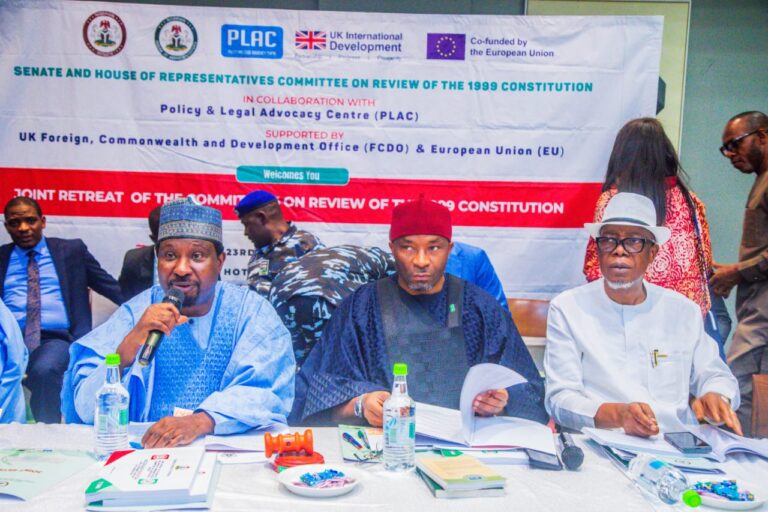
MONTHS after the House of Representatives rejected proposals for the creation of 31 new states across Nigeria, the Joint Committee of the National Assembly on the Review of the 1999 Constitution has approved the creation of an additional state in Nigeria’s South-East geopolitical zone.

The decision was reached during a two-day retreat held in Lagos between 24 and 25 October, according to Premium Times.

The approval, if ratified, will increase the number of states in the South-East from five to six bringing the region at par with other geopolitical zones. Currently, the South-East, made up of Anambra, Imo, Ebonyi, Abia, and Enugu states, is the only region with five states, compared to six or seven in others.

The retreat was chaired by Deputy Senate President Barau Jibrin and co-chaired by Deputy Speaker of the House of Representatives Benjamin Kalu, both of whom reportedly led lawmakers in deliberating on over 55 separate requests for new states across the federation.

During the meeting, lawmakers reached a consensus that the South-East’s request satisfied the principles of equity, justice, and fairness guiding the current review process.

Kalu, who has been one of the champions of the creation of a new state for the region, described the move as a constitutional necessity rather than a political demand.

Following extended deliberations, Abdul Ningi, PDP, Senator representing Bauchi Central, moved a motion for the creation of the new state, which was seconded by Ibrahim Isiaka (APC, Ogun State).

The motion was unanimously approved by members of the joint committee.

Meanwhile, The ICIR reports that the committee’s approval is still at an initial stage since it’s constitutionally mandated for a new state to be formally created, a two-thirds approval from both chambers of the National Assembly and endorsement by at least two-thirds of Nigeria’s 36 State Houses of Assembly are required.

Beyond the South-East proposal, the joint committee also announced the creation of a subcommittee to further review demands for additional states and local government areas across the six geopolitical zones.

According to the report, a total of 278 proposals were submitted by Nigerians and interest groups on state creation, boundary adjustments, and local council reforms.

Recall that in February 2025, the House of Representatives Committee on the Review of the 1999 Constitution, chaired by Benjamin Kalu, rejected 31 separate proposals for new states, citing failure to meet constitutional requirements as outlined in Section 8 of the 1999 Constitution.

Kalu, speaking at a retreat in Uyo, Akwa Ibom State, had clarified that while the proposals represented the aspirations of various regions, none satisfied the constitutional conditions for state creation.

He subsequently gave proponents of the proposals until March 5, 2025, to resubmit in full compliance with the law.

The rejected proposals included requests for six new states in the North-Central, four in the North-East, five in the North-West, five in the South-East, four in the South-South, and seven in the South-West.

Nigeria football paradox: Kebbi stadium gets FIFA spotlight as NFF faces allegations

0

THE Fédération Internationale de Football Association (FIFA) has showcased the Birnin Kebbi Stadium project in Kebbi State, noting that the facility was co-funded with the Nigeria Football Federation, just days after fresh allegations of fund mismanagement were leveled against the NFF.

The global football body revealed this on its official social media platforms on Saturday using an image of the project, as the new profile banner on its official X (formerly Twitter) and Facebook accounts.

The photo of the partially completed Birnin Kebbi Stadium quickly went viral, drawing outrage and speculation from fans, who questioned how such a project could represent progress under the FIFA Forward Programme, an initiative meant to promote grassroots football development.

In December 2023, Kebbi State Governor Nasir Idris reportedly inaugurated the FIFA/NFF-supported stadium project, stating that it was intended to “boost the morale of youths in the state.”

He stated that the project cost $1.183 million, adding that the state government provided four hectares of land and paid N19 million in compensation to the affected landowners.

Recall that in May 2023, FIFA had highlighted the Kebbi project as part of its dedication to developing grassroots football, noting on its InsideFIFA website: “It is no surprise, then, that Birnin Kebbi, the capital of Kebbi, was chosen back in 2020 as the site for the construction of an artificial football pitch now available for young boys and girls to use.

“Meanwhile, a second pitch is under construction in Ugborodo… these two ambitious projects have received around USD 2 million in funding from FIFA through its Forward Programme,” its statement added.

The latest viral photo by FIFA is coming just days after football critic Chinedu Mobike, on October 23, 2025, alleged via his Instagram handle @c_mobike that the federation had misused millions of dollars allocated for infrastructure projects, including a similar facility in Delta State.

In his viral video, Mobike alleged that FIFA provided the NFF with “$1.2 million for two stadiums” one in Kebbi and another in Ugborodo, Delta State projects which, according to him, “have yet to see the light of day.”

Drawing comparisons with other nations, Mobike alleged that while “other countries used their FIFA funds to genuinely develop football, Nigeria has nothing to show for it.”

“The NFF should sit up…There are no active projects promoting football or sports in Nigeria,” Mobike said.

According to PUNCH Online, the following day, Friday, October 24, 2025, the NFF released an official statement describing it as a “fresh clarification to misinformation” spread by unnamed social media users who alleged that the federation “receives millions of dollars from FIFA each year and misappropriates the funds.”

It noted that the NFF said in the statement that it firmly denied any wrongdoing, explaining that every dollar received from FIFA or CAF is tied to a specific purpose and audited annually.

The Federation cited ongoing FIFA Forward projects such as the NFF/FIFA Players’ Hostel and new training pitches at the MKO Abiola National Stadium, stressing that every phase is verified before funds are released directly to FIFA-approved consultants.

Meanwhile Mobike’s video has reignited demands for reform, fueling the hashtag #SaveNigerianFootball, which has been trending on X as users vent their frustration and call for greater transparency and accountability in Nigerian football governance.

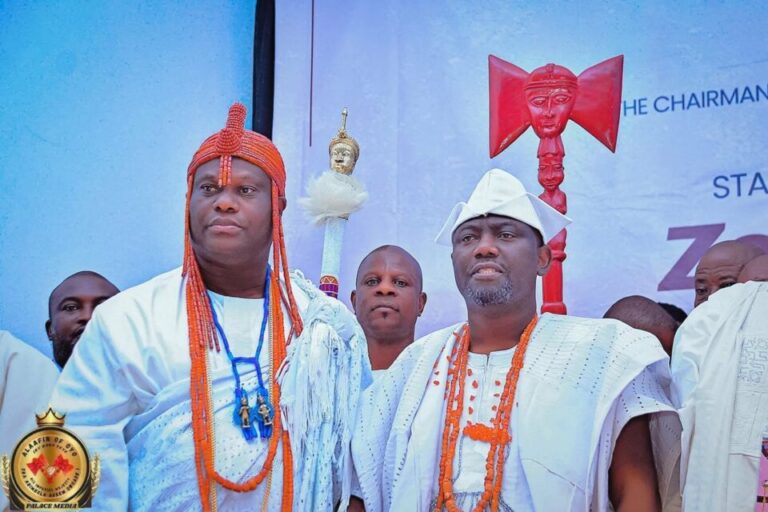
Ooni, Alaafin end feud at Lagos meeting, create joint council for unity

0

AFTER a two-month rift, the Ooni of Ife, Adeyeye Ogunwusi, and the Alaafin of Oyo, Abimbola Owoade, have jointly announced the establishment of the Yoruba Unity Council, a platform designed to foster peace, preserve culture, and drive socioeconomic development across Yoruba communities.

This was revealed in a communiqué signed by the Ooni and Alaafin, witnessed by billionaire businessman Kessington Adebutu, and issued by Kola Oyefeso, secretary of the communiqué drafting committee after a meeting in Lagos on Friday.

The meeting was convened by the billionaire businessman, popularly known as “Baba Ijebu” held at the Eko Hotel on the sidelines of his 90th birthday celebration.

“Today marks a defining chapter in our shared history. We reaffirm our dedication to promoting harmony among all Yoruba sons and daughters, and upholding the sacred values of mutual respect and brotherhood handed down by our ancestors,” the monarchs said.

The ICIR reports that the reconciliation comes two months after tensions arose following the Ooni’s conferment of the “Okanlomo of Yorubaland” title on businessman Dotun Sanusi by the Ooni on August 16.

After the conferment, the Alaafin issued a 48-hour ultimatum, demanding that the Ooni withdraw the title, condemning the act as an “affront”. He insisted that he alone holds the authority to confer titles with jurisdiction over the entire Yorubaland.

The Alaafin maintained that a Supreme Court ruling had upheld his exclusive authority in such matters.

In response, the Ooni’s media team dismissed the ultimatum as an “empty threat,” stating that the monarch would not dignify it with a formal reply.

Traditional rulers, cultural custodians, and prominent Yoruba leaders attended the gathering, where they discussed reconciliation, cooperation, and inter-kingdom relations, describing the reconciliation meeting as a historic turning point for the Yoruba nation.

The Ooni and Alaafin together offered prayers for peace, prosperity, and progress throughout Yorubaland, Nigeria, and the African continent.

Adebutu expressed joy over the renewed royal alliance, calling it “a milestone that will consolidate peace, unity, and development among the Yoruba people”.

The ICIR reported that the two monarchs had reportedly clashed in March over control of the Oyotunji African village in South Carolina after its leader, Adejuyigbe Adefunmi, was killed. The Ooni sent a delegation of monarchs to perform traditional rites, but Oba Owoade, who was then in seclusion, reportedly ordered them to leave, insisting the community belonged to Oyo.

Madagascar revokes ousted president Rajoelina’s nationality


MADAGASCAR’S new government has revoked the Malagasy citizenship of ousted President Andry Rajoelina

This is according to a decree published in the country’s official gazette on Friday just 10 days after his removal in a military coup.

The decree effectively bars Rajoelina who was impeached on October 14 after fleeing Madagascar amid weeks of Gen Z-led protests from contesting in any future elections.

According to local media reports, said it had confirmed the decree with the entourage of the new prime minister, Herintsalama Rajaonarivelo, who signed the order, noting that the decree stated that Rajoelina’s Malagasy citizenship was revoked because he obtained French nationality in 2014, with photos of the official document circulating online.

The decree referenced laws stating that any Malagasy citizen who voluntarily acquires another nationality automatically forfeits their Malagasy citizenship.

Rajoelina’s acquisition of French nationality sparked controversy when it came to light ahead of the November 2023 elections almost a decade after he had obtained it.

The revelation prompted demands for his disqualification, but he ultimately won the disputed election, which opposition parties had boycotted.

The ICIR reported that the 51-year-old politician fled Madagascar after Army Colonel Michael Randrianirina announced on October 11 that his Corps d’administration des personnels et des services administratifs et techniques (CAPSAT) unit would no longer obey orders to crush the youth-led protests, which security forces had previously tried to suppress violently.

Rajoelina later said he had gone into hiding for his own safety, without disclosing his location.

Randrianirina was sworn in as president on October 14, vowing to hold elections within two years.

The African Union suspended Madagascar with immediate effect following the coup.

The suspension by the 55-member bloc holds significant political weight and could further isolate the country’s new leadership.

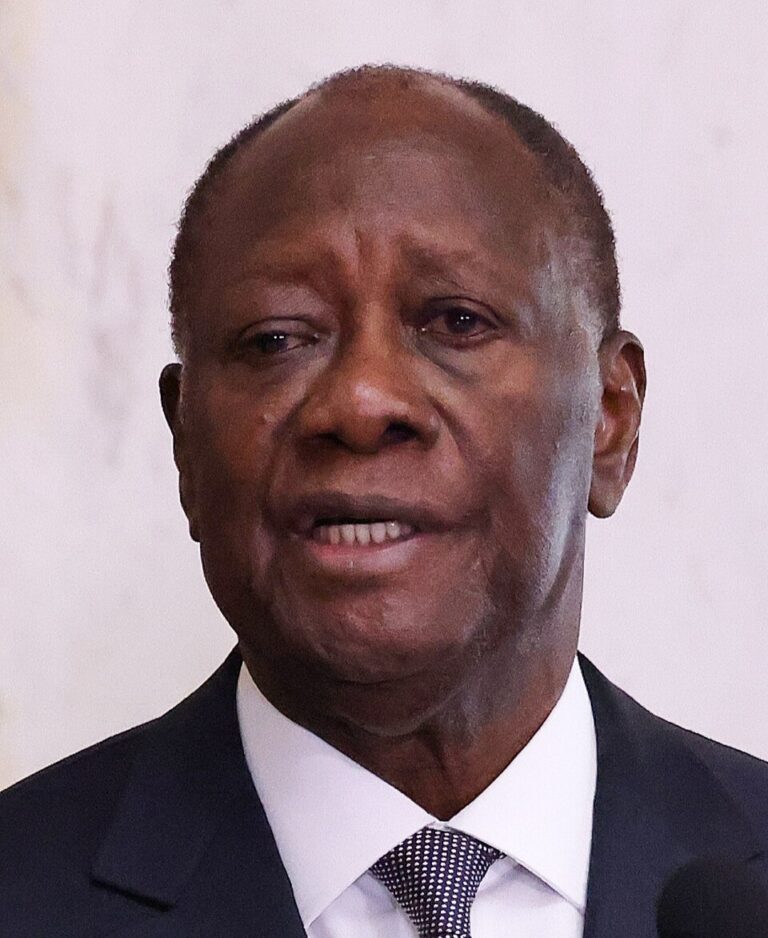
Ouattara fourth term bid: Opposition mounts as Ivorians head to polls

0

INCUMBENT Ivorian president, Alassane Ouattara is widely expected to win a fourth term in Ivory Coast’s presidential election on Saturday, with his path eased by the exclusion of several major opposition candidates.

According to Reuters, over eight million Ivorians are registered to vote on Saturday, with polling stations closing at 6 p.m. local time (1800 GMT), noting that provisional results are expected within five days, and a runoff will be held if no candidate secures more than 50 percent of the vote.

With former president Laurent Gbagbo and ex-Credit Suisse CEO Tidjane Thiam disqualified from the race, Gbagbo due to a criminal conviction and Thiam for holding French citizenship, and the remaining opposition contenders lacking major party support, Ouattara stands as the clear front-runner in the race.

None of the four opposition contenders belong to a major political party, nor do they command the nationwide influence of the ruling RHDP.

Meanwhile, former trade minister and agribusinessman Jean-Louis Billon, 60, is counting on support from his old base in the Democratic Party.

Former first lady Simone Ehivet Gbagbo, 76, aims to attract loyalists of her ex-husband, while the left-wing vote is split between her and Ahoua Don Mello, a civil engineer and independent Pan-Africanist with pro-Russian leanings.

Also in the race is centrist Henriette Lagou, a moderate who previously ran in the 2015 presidential election, securing less than one percent of the vote.

Opposition parties have urged Ivorians to protest the decision and Ouattara’s expected fourth term.

Sporadic unrest has left four people dead, including a police officer, and on Monday, an electoral commission office was set ablaze.

In response, the government banned demonstrations, and courts have sentenced dozens of people to three years in prison for disturbing public order.

Around 44,000 security personnel have been deployed nationwide particularly in former opposition strongholds in the south and west to contain any protests.

A night-time curfew remained in effect on Friday and Saturday in the Yamoussoukro region, home to the country’s political capital.

Nearly 1,000 domestic observers from Ivorian civil society are overseeing the election, along with 251 monitors from the West African economic bloc ECOWAS and the African Union.

Reports indicate that voters in the southern and western regions, traditionally aligned with Gbagbo or Thiam, may stay away from the polls without clear direction from their leaders.

Meanwhile, the ruling RHDP is counting on a strong turnout in the pro-Ouattara northern strongholds.

At 83, Ouattara has led the world’s largest cocoa producer since 2011, taking credit for nearly 15 years of economic growth and relative stability, suggesting this may be his final campaign, he points to Ivory Coast’s resurgence as a leading economic force in West Africa.

A former international banker and deputy managing director of the International Monetary Fund, Ouattara assumed power in following a four-month civil war that claimed about 3,000 lives in 2011, after then-president Laurent Gbagbo refused to concede defeat in the 2010 election.

Ex-Ejigbo council chairman petitioned over abuse of office

0

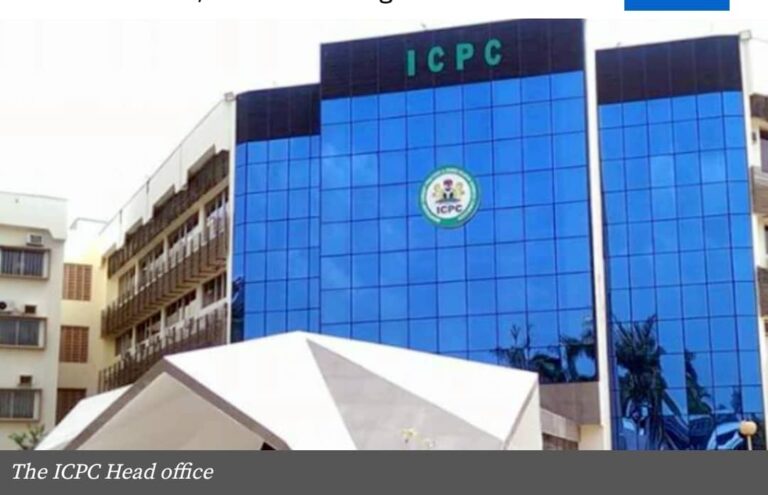
A CIVIC group under the umbrella of Concerned Citizens of Ejigbo has petitioned the Independent Corrupt Practices and Other Related Offences Commission (ICPC) against the immediate past chairman of the Ejigbo Local Council Development Area (LCDA) in Lagos State, Monsuru Oloyede Bello, over alleged corruption, financial mismanagement, and abuse of public office.

The ICIR obtained a copy of the petition, dated August 28, 2025, and signed by Folabo Clark on behalf of the group. It was received and acknowledged by the ICPC on August 29, 2025.

The group urged the Commission to launch a thorough investigation into the administration of Bello, who served two consecutive terms as council chairman between 2017 and 2025.

According to the petition, Bello allegedly violated several sections of the Lagos State Local Government Administration guidelines, particularly regarding financial accountability and transparency in project execution. The group accused him of diverting public funds, inflating contract sums, and awarding contracts without following due process.

Alleged financial misconduct

In the petition seen by The ICIR, the group listed multiple projects executed during Bello’s administration, which they claim were marred by irregularities. Among the projects cited were:

  • Construction of Falana Road (Phase 1) – ₦505,065,301.18

  • Construction of reinforced concrete drainage at Falana Street – ₦54,806,000.

  • Purchase of a Toyota Hilux (2024 model) – ₦90,425,531.92.

  • Purchase of a Toyota Lexus vehicle – ₦103,031,314.

  • Construction of drainage at Majiyagbe Ogunti Street – ₦479,118,411.

  • Construction of a canteen and office space for federal and state agencies – ₦246,065,750

  • Upgrading of Sheikh Niyass Street with interlocking stones – ₦981,198,222

  • Construction of Falana Street (Phase 2) – ₦212,962,927.80

  • Upgrading of Jubril Olabisi Street – ₦922,341,656.41

    Group petitions ICPC over former Ejigbo council chairman, accuses him of fraud
    Front page of the petition against the former chairman of Ejigbo LCDA, Monsuru Oloyede Bello

The petitioners also alleged that several of these projects were either abandoned, inflated, or poorly executed despite being fully paid for. They claimed that some contracts were awarded to companies linked to close associates of the former chairman, raising concerns of conflict of interest.

Failure to comply with local government laws

Beyond financial irregularities, the group accused Bello of disregarding local government laws that mandate regular accountability to residents. They alleged that he failed to present monthly financial statements to the public as required by the Ejigbo LCDA byelaws.

The petition also noted that the Funds Management Committee — responsible for vetting and approving council expenditures — was never constituted during most of Bello’s second term, allowing him to take unilateral financial decisions.

Admission of irregularities

The group further claimed that Bello had, on several occasions, admitted to irregularities in the management of council funds during public discussions and community engagements. They accused him of suppressing dissent within the council by refusing to appoint a substantive Supervisor for Works during his second tenure — a key role responsible for monitoring infrastructure projects.

Bello denies allegations

When contacted by The ICIR, Bello denied all allegations, describing them as “false and misleading.”

According to him, he has not seen the petition and the ICPC have not contacted him.

“All they have submitted, as you have read out, is not what actually happened at the council. I will wait for the ICPC’s invitation before making any formal statement,” he said.

Bello insisted that all contracts awarded during his tenure followed due process and were approved by relevant state authorities.

We will look into it – ICPC Spokesperson 

The ICPC did not confirm receipt of the petition. The Commission’s spokesperson, Demola Bakare, told The ICIR that he had not seen a copy of the petition but promised to look into it and forward to the appropriate department for preliminary review.

” I am not aware. But you have my WhatsApp number. Forward the petition to me. Let me make inquiries. I will forward it to the chairman,” Bakare stated.

Although the Commission did not disclose whether an investigation had formally begun, sources within the ICPC familiar with its procedures said the matter would first undergo a screening process to determine jurisdiction and validity before a full probe is launched.

President Tinubu excited as Nigeria exits FATF grey list

0

NIGERIA has officially been removed from the Financial Action Task Force (FATF) grey list.

Grey list is a register of countries under increased monitoring for weak controls against money laundering and terrorist financing.

The FATF, the world’s foremost body for combating money laundering and terrorist financing, announced the decision at its October plenary session in Paris, France, after reviewing Nigeria’s progress in implementing key reforms.

Nigeria had been placed under increased monitoring in February 2023 due to strategic deficiencies in its anti-money laundering and counter-terrorist financing systems.

However, following more than two years of reforms and collaboration between key institutions, the country successfully completed its FATF Action Plan, which consequently prompted its removal from the list.

Reacting to the news, the Nigerian Financial Intelligence Unit (NFIU), in a statement, on Friday, October 24, described the delisting as a significant moment in Nigeria’s fight against serious financial crimes.

The agency noted that it reflects the country’s renewed commitment to transparency, accountability, and integrity in financial governance.

According to the NFIU, Nigeria successfully implemented a 19-point Action Plan in collaboration with the FATF and its regional partner, the Inter-Governmental Action Group Against Money Laundering in West Africa (GIABA).

They noted key reforms to include Enforcement of the Money Laundering (Prevention and Prohibition) Act, 2022 and the Terrorism (Prevention and Prohibition) Act, 2022; Operationalisation of the Beneficial Ownership Register to improve corporate transparency; Strengthened intelligence-sharing and law enforcement coordination; and Improved supervision of financial and non-financial businesses to prevent abuse of the financial system.

Tinubu welcomes FATF decision

Meanwhile, President Bola Tinubu in a statement through his media aide, Bayo Onanuga, welcomed the development, describing it as “a major milestone in Nigeria’s journey toward economic reform, institutional integrity, and global credibility.”

He said the decision showed Nigeria’s determination to meet international standards and build a transparent financial system.

“This was achieved through the coordination of the Nigerian Financial Intelligence Unit (NFIU), working in conjunction with the Attorney-General of the Federation and Minister of Justice, the Minister of Finance, and the Coordinating Minister of the Economy and the Minister of Interior.

“President Tinubu applauded the vital support from the Secretary to the Government of the Federation, the Minister of Aviation, the Minister for Budget and Economic Planning, the Minister for Defence, the Minister for Foreign Affairs, the Minister for Solid Minerals, the Minister of State for Finance, the National Security Adviser as well as the leadership of the National Assembly and the Judiciary, in the attainment of the laudable achievement,” the statement read.

Nigeria targets 44m citizens under health insurance coverage by 2030 — Pate

0

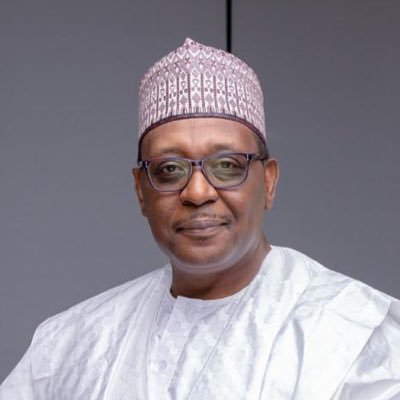
NIGERIA’s Minister of Health and Social Welfare, Muhammad Ali Pate, said the country is on track to provide health insurance coverage for 44 million citizens by 2030 as part of efforts to reduce out-of-pocket spending and achieve Universal Health Coverage (UHC).

Pate disclosed this in a statement released on Saturday, noting over 2.4 million Nigerians were newly enrolled in 2024 alone, bringing the total number of insured citizens to about 20 million.

He said the new target of 44 million by 2030 would mark a transformative leap toward ensuring access to affordable and quality healthcare for all Nigerians.

“In 2024, Nigeria broke its enrollment record with more than 2.4m new people insured, bringing total coverage to about 20m Nigerians. With new policy tools in motion, we are on course to reach 44m by 2030. This is the surest path to reducing out-of-pocket expenditure, which still represents about 70% of total health spending.

“Social health insurance schemes now account for 90% of all enrollments nationwide. A major constraint in care quality has been the low capitation fee for enrollees. For years, the capitation stood at ₦750 per person. We have doubled it to ₦1,450 to ensure providers are properly equipped to deliver consistent, high-quality care. Fee-for-service rates have also been increased by 380%, based on actuarial evidence aligning cost-reflective rates with quality requirements,” Pate said.

He described out-of-pocket payments as the dominant source of healthcare expenditure for most Nigerians.

Since 2023, he said nearly 120,000 health workers have been trained and 2,500 doctors, nurses, midwives, and community health extension workers recruited to strengthen frontline services.

He also announced the introduction of the One Hour Referral Authorization Code, designed to eliminate delays in patient referrals by ensuring that authorization from insurers to healthcare providers is issued within one hour.

Pate said in a bid to enhance oversight,  lHe has directed the National Health Insurance Authority (NHIA) to begin covert mystery shopping across hospitals to monitor service delivery and ensure that enrollees are not denied treatment.

The results of these reforms, according to the minister, are already visible, adding that hospital utilization surged from fewer than 10 million visits in 2023 to more than 46 million by the second quarter of 2025.

“The evidence is clear. From fewer than 10m hospital visits in all of 2023, more than 46m visits were recorded by the second quarter of 2025. Reforms in the Basic Health Care Provision Fund @TheBHCPF and the NHIA are delivering measurable gains in patient confidence and service utilization.

“As enrollment expands, benefits multiply. Wider adoption of health insurance enhances quality, strengthens accountability, and protects households from financial hardship. These achievements reflect President Tinubu’s vision of a health system that serves all Nigerians, regardless of income or status,” he said.

The ICIR had, on September 30, reported that the country’s out-of-pocket spending accounts for 75 per cent of total health expenditure, leaving millions of Nigerians vulnerable to financial shocks when seeking medical care.

The report also warned that the system was not on track to achieve UHC, with a service coverage index of just 38.4 per cent.