Home Blog Page 148

NHRC records over 370,000 human rights complaints in September

THE National Human Rights Commission (NHRC) reported that it received 371,622 complaints of human rights violations in September, with the North-Central region leading and accounting for 153,967 cases.

This was revealed by the Executive Secretary of the commission, Tony Ojukwu, on Monday in Abuja at the presentation of the 2025 September Dashboard report.

“In September, the commission received a total of 371,622 complaints on human rights violations from across our state offices. These complaints cover violations such as denial of access to justice, unlawful arrest and detention, domestic and sexual violence, torture, and discrimination, among others,” Ojukwu said.

He revealed that the North-West followed the North-Central with 73,167; North-East, 69,973; South-East, 46,409; South-South, 14,144; and the least, South-West, 13,962.

Ojukwu explained that the NHRC’s offices allowed an honest look at the state of human rights across Nigeria nationwide, and worked diligently to investigate, mediate, and where necessary, refer cases for further action.

“Not merely as figures or trends, but as reflections of lost lives and shirked liberties. The observatory provided a broader view of emerging patterns of abuse nationwide,” he added.

He noted that the September observatory revealed persistent and evolving threats to human rights across all six geo-political zones in the country.

“The North-Central recorded the highest number of incidents, mainly linked to banditry, kidnapping, and road accidents.

“The North-West and North-East followed closely with cases of terror attacks, abductions, and sexual violence.

“The Southern zones experienced a mix of domestic violence, police abuses, mob actions, and fatal road accidents. Overall, violations of the right to life accounted for the majority of incidents, reflecting the toll of insecurity and preventable violence in our country,” he added.

Ojukwu identified Niger, Kwara, Plateau, Kogi, and Borno as the states most affected in September, noting that each experienced multiple forms of violence and insecurity.

He also decried the growing violations of children’s rights, including cases of child abandonment and child labour.

“Child labour has become a major aspect of our violation of children’s rights.

“Some say it is a result of the economic situation in the country; children are forced to engage in economic activities but remember that we are a nation of laws.

“It is not just a national law; it is customary international law that children should not be subjected to inhuman and degrading treatment,” he said.

He expressed concern over reports of 336 killings, 361 kidnappings, and 144 accidental deaths.

Ojukwu also raised alarm about the emergence of a new terror group in Nasarawa State known as Wulowulo, warning that it must be curtailed before it escalates into a major security threat.

He further noted a rise in incidents of religious genocide, especially the killings recorded across the two northern regions.

“If people cannot exercise their right to practice religion peacefully and in dignity, then we are losing the most important fabric of our lives,” he said.

Sowore regains freedom after 4 days in detention

0

FORMER presidential candidate and activist, Omoyele Sowore, has regained his freedom after spending four days in custody in Abuja.

Sowore, publisher of Sahara Reporters, was detained after leading a protest demanding the release of the detained leader of the Indigenous People of Biafra (IPOB), Nnamdi Kanu.

His release came after he and 12 others, including Kanu’s lawyer, Aloy Ejimakor, and Kanu’s younger brother, Emmanuel Kanu, met the bail conditions granted by a Kuje Magistrate’s Court in the Federal Capital Territory. The court had earlier ordered that each defendant post a bond of ₦500,000 with two sureties in like sum.

Sowore confirmed his release on Monday, October 27, through a post on his X handle, where he described his detention as illegal. He wrote, “Leaving Kuje Prison in Abuja after being detained there illegally for four days.”

Sowore was arrested on October 23 at the Federal High Court in Abuja, where he had gone to attend Nnamdi Kanu’s trial.

Witnesses said police officers led by Ilyasu Barau of the Federal Capital Territory (FCT) Criminal Investigation Department approached the activist outside the courtroom and informed him that he was under arrest.

Members of his legal team, led by human rights lawyer Tope Temokun, demanded an explanation, but the officers insisted they were acting on the orders of the FCT Commissioner of Police, Miller Dantawaye. Sowore was then taken away in a police vehicle.

The arrest came three days after the October 20 protest in Abuja, where Sowore and other activists demanded Kanu’s release.

Security operatives fired teargas and gunshots into the air to disperse the protesters, leading to the arrest of Ejimakor, Kanu, and several others. They were charged with inciting a disturbance and breaching public peace.

The Nigeria Police Force later defended the arrest, saying Sowore led the protesters into areas restricted by a court order.
Force spokesperson, Benjamin Hundeyin, told journalists that Sowore’s name appeared repeatedly in the statements of those earlier arrested, identifying him as the leader of the protest.

Hundeyin said the police had an obligation to arrest him, adding that “it would be unfair to charge others and exempt the person they claimed led them into restricted areas.”

The police said the protesters violated an existing court order prohibiting demonstrations around sensitive government facilities in Abuja, including the Presidential Villa, National Assembly, and Eagle Square. The order, according to the police, was issued to prevent disruptions and possible security breaches in those areas.

The #FreeNnamdiKanuNow protest was organised by Sowore and other rights groups who demanded the immediate release of the IPOB leader. Kanu has been in the custody of the State Security Services (SSS) since 2021 after his arrest in Kenya and subsequent return to Nigeria under controversial circumstances.

The ICIR reported that during the protest in Abuja, police and military personnel used teargas to disperse demonstrators, causing panic around the Central Business District. The protest also led to increased security presence across major entry points into the city, including Nyanya, Karu, and Kubwa.

Re-arrest while perfecting bail

After the Kuje Magistrate’s Court granted bail to Sowore and the other defendants on October 24, police operatives stormed the court premises and re-arrested him before his release papers were completed. Witnesses said officers led by Barau attacked and dragged Sowore into a waiting police van, creating panic within the court premises.

Human rights lawyer Inibehe Effiong condemned the re-arrest, describing it as an affront to judicial authority. Civil society groups, including the Take It Back Movement, also demanded his immediate release, insisting that Sowore’s activism was constitutionally protected.

Cybercrime case over comment on Tinubu

Even as he regained his freedom, Sowore is expected to appear before the Federal High Court in Abuja on November 5 for arraignment in a separate case filed by the Department of State Services.

According to court documents, the SSS filed a five-count charge against him, alongside X and Meta, owners of Facebook, accusing him of violating the Cybercrimes (Prohibition, Prevention, etc.) Amendment Act, 2024.

The charges stemmed from a social media post in which Sowore allegedly referred to President Bola Tinubu as “a criminal.” The SSS said the post was intended to cause public disorder and disaffection toward the president.

The case, earlier scheduled for hearing on October 27, was adjourned to November 5 because the presiding judge, Mohammed Umar, was sitting in another division of the court.

Elections must be won at polling units, not in courtrooms – INEC chairman

0

THE Chairman of the Independent National Electoral Commission (INEC), Joash Amupitan, a senior advocate, has said Nigeria must end the culture of deciding election outcomes in courtrooms rather than at polling units.

Amupitan reportedly said this on Monday, October 27, at the 56th Annual National Conference of the Nigerian Association of Law Teachers (NALT), held at the University of Abuja. 

Although the INEC boss stated that reducing election-related court cases might not please everyone, he insisted that restoring public confidence must take priority.

“We cannot continue to allow the courts to determine our elections. Elections must be won at the polling units, not in the courtroom,” he was quoted as saying.

Amupitan stressed that the trend of post- and pre-election litigations had become a burden on Nigeria’s democracy and must be addressed through reforms.

The INEC chairman, who was sworn in by President Bola Tinubu on October 23, 2025, decried what he described as “litigation by other means,” referencing the more than 1,000 pre-election cases filed ahead of the 2023 general elections.

He said genuine reform must begin with political parties, insisting that many of the litigations arose from the failure of parties to follow their constitutions and respect the Electoral Act and Nigerian Constitution.

“If political parties obey their constitutions, respect the Electoral Act, and align with the Nigerian Constitution, the avalanche of pre-election cases will collapse,” Amupitan said.

He explained that his goal waks to make electoral law “an instrument of change, not chaos,” adding that credible elections were possible when political actors embraced integrity.

He urged the National Assembly to strengthen existing electoral laws to enhance transparency and internal democracy within political parties, noting that restoring public trust in elections must take priority over political convenience.

His remarks came against a backdrop of repeated judicial involvement in determining winners of elections in Nigeria, with courts-based petitions having become a permanent feature of Nigeria’s electoral system, as highlighted by observers who reported that all seven presidential elections since 1999 ended up in the courts.

At his swearing-in on October 23, Tinubu, who was also affirmed the winner of the controversial 2023 presidential poll by the Supreme Court, urged Amupitan to safeguard the integrity of Nigeria’s elections and strengthen the institutional capacity of INEC.

“Our democracy has come a long way. In 25 years, we have consolidated and strengthened our democratic institutions, particularly our electoral system, through innovation and reforms. We have learned a great deal along the way and have improved significantly from where we were many years ago,” the president said.

He tasked the new chairman with ensuring that Nigeria’s electoral system remains “robust, resilient, and safeguarded against official setbacks,” while promoting free, fair, and credible elections.

The ICIR reported that during his Senate screening on October 16, Amupitan had also pledged to uphold INEC’s independence and conduct a comprehensive audit of the commission’s operations, particularly focusing on the logistical and technical failures recorded during the 2023 general elections.

He said the audit would help identify operational lapses and restore public trust in the electoral system.

Cameroon’s Constitutional Council declares Biya winner of presidential poll

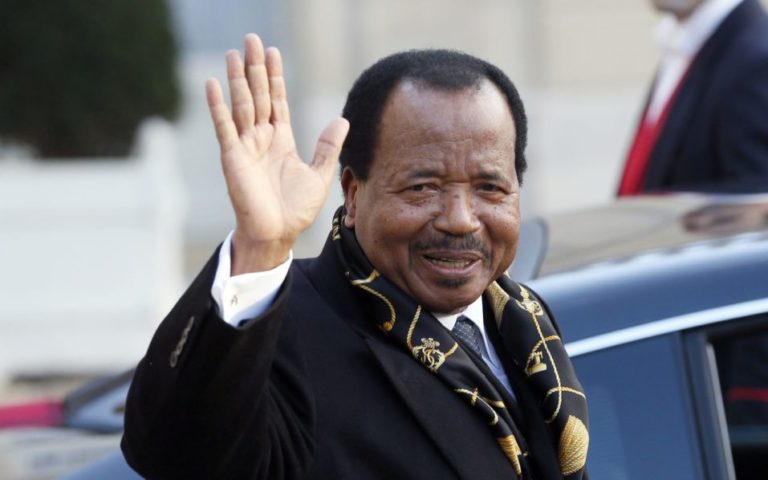
Cameroon’s Constitutional Council has announced President Paul Biya, the world’s oldest head of state, as the winner of the October 12 presidential poll in the East Africa country.

The council made the announcement of the official results on Monday, October 27, making Biya emerge as the president for the eight time.

Biya’s victory comes a week after the country’s opposition leader, Issa Tchiroma Bakary, once a close ally and former minister under Biya, declared himself the winner, calling on Biya to concede defeat and “honour the truth of the ballot box”.

The ICIR reported that Bakary described the election results as “a clear rejection” of Biya’s administration and “the dawn of a new era.”

Hundreds of opposition supporters took to the streets of Cameroon’s commercial capital on Sunday, barricading roads and burning tyres as tensions escalated ahead of the official announcement of the election results, with supporters accusing the government of plotting to manipulate the outcome.

Reports indicated that the police used teargas and water cannons to disperse crowds backing opposition candidate Issa Tchiroma, and the unrest spread across several cities following partial results from local media indicating that Biya was leading.

The government had dismissed allegations of vote rigging and urged citizens to remain calm until the final results are released. Similar clashes were reported in other parts of Douala and in Tchiroma’s hometown, Garoua.

The ICIR reported in 2018, that Biya, won the election by a landslide to rule for seven years. He was 85 at the time.

The latest victory gives him another seven years in office and bolsters his place as one of Africa’s longest serving rulers after President Teodoro Obiang Nguema of Equatorial Guinea who is in his thirty-ninth year in office.

He won 71.3 per cent of the votes, but opposition candidates have said the election was marred by widespread fraud, a low turnout and violence.

Biya, who at 92 is the world’s oldest sitting president, has ruled Cameroon since 1982 and sought another seven-year mandate in the October 12 elections, even though his age, health and capacity to govern have become a subject of debate. Another seven-year term would extend his rule until he nears 100.

Kanu declines to enter defence, insists no case against him

0

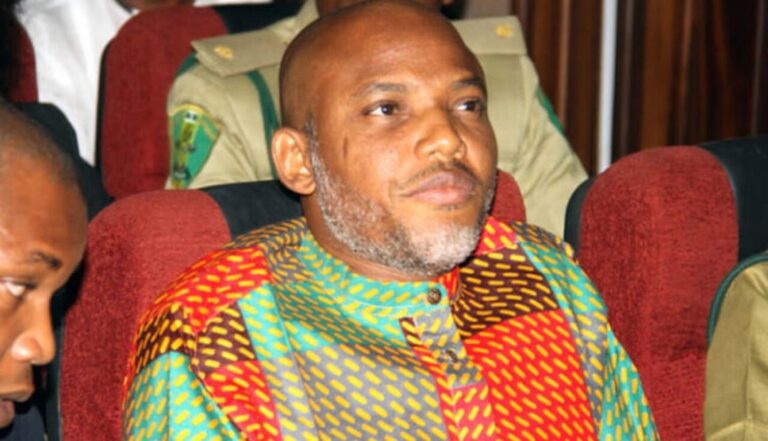
THE detained leader of the Indigenous People of Biafra (IPOB), Nnamdi Kanu, has withdrawn his earlier plan to call witnesses in his ongoing terrorism trial before the Federal High Court in Abuja, insisting that the Federal Government has failed to establish any case against him.

Kanu, who faces a seven-count charge bordering on terrorism, treasonable felony, and incitement, told the trial judge, James Omotosho, that after reviewing his case file, he found no valid evidence to warrant a defence.

The development comes just days after he dismissed his legal team led by former Attorney-General of the Federation, Kanu Agabi, a senior advocate, opting instead to represent himself.

The court had adjourned on October 24 for Kanu to open his defence, following his earlier application indicating readiness to call witnesses and requesting witness summons.

However, at the resumed sitting on Monday, October 27, Kanu informed the court that he would not proceed with any defence, arguing that the charges were unlawful and unsupported by credible evidence.

The judge Omotosho advised Kanu to file a formal written address stating his position and serve the prosecution accordingly. The judge also urged him to consult criminal law experts to understand the implications of his decision, noting that the court would not revisit preliminary objections already determined in earlier proceedings.

The court adjourned the case to November 4, 5, and 6, for the adoption of final written addresses. The sessions will determine whether Kanu’s no-case submission will stand or if he will be required to enter his defence.

On October 23, Kanu dismissed his team of senior lawyers, including Agabi, a senior advocate and informed the court that he would personally handle his case. During that session, Agabi formally withdrew his appearance after Kanu announced in open court that he no longer required their services.

Omotosho had offered to assign a court-appointed lawyer to assist Kanu, but he declined, stating that he would represent himself “for now.” The judge then ordered him to open his defence on October 24, warning that failure to do so might be interpreted as a forfeiture of his right to defence.

In the same session, Kanu accused the Federal Government of contempt of court for failing to obey the Court of Appeal judgment of October 2022, which had discharged and acquitted him. He maintained that the government lacked both moral and legal standing to continue prosecuting him while disobeying subsisting court orders.

He also challenged the authenticity of a medical report used to certify him fit for trial, describing it as ‘forged’ because it was dated before the court’s order for a medical evaluation.

Kanu was first arrested in 2015 over allegations of treasonable felony, unlawful broadcasting, and incitement linked to his leadership of IPOB, which is agitating for the secession of Nigeria’s South-East region. After being granted bail in 2017, he fled the country when his home in Abia State was raided by the military.

He was re-arrested in Kenya in 2021 and extradited to Nigeria under circumstances later described by the Court of Appeal as a violation of international law. Although the court discharged him in October 2022, the Federal Government appealed to the Supreme Court, which ruled in December 2023 that the trial could continue.

Since then, Kanu has remained in the custody of the State Security Service (SSS), despite several court rulings directing his release or improvement of his detention conditions.

Charges against Kanu include allegations of terrorism, treasonable acts, and incitement against Nigerian authorities through his broadcasts. His trial has been marked by repeated adjournments, disputes over a fair hearing, and questions about his health.

A report by the Nigerian Medical Association (NMA), which declared him fit to stand trial, has been a subject of contention after Kanu described it as falsified.

Falana slams Lagos gov’t over Oworonsoki demolition

0

HUMAN rights lawyer and Senior Advocate of Nigeria, Femi Falana, has accused the Lagos State Government of violating a court order by demolishing over 100 properties in the Oworonsoki area of the state.

In a statement on Sunday, Falana said the exercise displaced many families and accused the government of deploying armed policemen and thugs to intimidate residents.

Recall that Adegboyega Balogun, a judge of the Lagos State High Court had issued an interim order last Thursday, restraining the government from carrying out further demolitions in parts of Oworonsoki, after residents complained that they were not compensated for their demolished homes.

The order barred the government, its agents, and contractors from demolishing or creating third-party interests in properties located on Ojileru Street, Ososa Extension, and Toluwalase Street within the Itesiwaju Ajumoni Community Development Area (CDA).

Despite the order, the state went ahead with the demolition on Sunday, a move Falana condemned as a clear case of contempt of court.

“In flagrant breach and contempt of the subsisting court order and upon the service of the court order on them, the defendants mobilised over 50 armed policemen and thugs who fired teargas throughout the night to disperse those protesting the demolition and proceeded to commence a fresh demolition,” Falana said.

The lawyer added that the demolition, carried out “in the dead of night,” destroyed more than 100 properties and echoed a past case in which the Lagos State Government defied a court ruling.

“The action of the demolished squad is a sad reminder of the aggravated contempt committed by the Lagos State Government, 39 years ago, in the celebrated case of The Military Governor of Lagos State & Ors. v. Chief Emeka Odumegwu Ojukwu & Anor. (1986) 2 NWLR (PT 18) 621, where the Supreme Court set a precedent against disregard for due process and the rule of law. Notwithstanding that the country was then under a military junta, the Supreme Court deprecated the action of the Lagos State Government in defying a court order and resorting to self-help.

“Even under a military regime, the Supreme Court held that in a country governed by the rule of law, the use of force or self-help by government is unacceptable once a matter is before the court,” Falana recalled.

Meanwhile, the Association of Igbo Town Unions (ASITU) has petitioned the United Nations Human Rights Council, the African Commission on Human and Peoples’ Rights, and the ECOWAS Court of Justice over what it described as the “targeted demolition” of shops and properties belonging to Igbo traders and investors in Lagos.

National President of ASITU, Emeka Diwe, who addressed journalists in Umuahia, Abia State, described the demolitions as “economic cleansing,” lamenting that Nigeria was “dying slowly from the cancer of ethnic discrimination and selective justice.”

“We have done this not because we lack faith in Nigerian institutions, but because those institutions have failed to address our documented grievances,” he said.

Diwe said the petition became necessary after repeated efforts to engage relevant Nigerian authorities yielded no response.

ASITU dismissed the Lagos State Government’s claim that the demolished structures were built on waterways, insisting that affected properties were legally acquired and duly approved. “They send a message to investors that property rights in Nigeria are not secure and that ethnic sentiments may influence government actions.

“This undermines investor confidence, economic growth, job creation, and Nigeria’s reputation as a country governed by the rule of law,” he added.

Diwa alleged that many demolition notices were issued too close to execution dates, preventing property owners from seeking legal redress. It also accused officials of ignoring valid documentation presented by affected persons. 

“Many of the demolished buildings had valid approvals from the same Lagos State Government that later destroyed them. This is not law enforcement; it is the erasure of livelihoods and the violation of constitutional guarantees meant to protect all Nigerians,” the ASITU declared.

He added that the group’s demand for justice was not about secession but about building economic resilience and promoting mutual respect, unity, and prosperity across Nigeria.

Reacting to the citizen’s outrage, the Lagos State Commissioner for Environment and Water Resources, Tokunbo Wahab, defended the wave of demolitions across the state, insisting that the exercise targeted environmental contraventions and illegal developments, not legitimate homeowners.

Wahab dismissed claims that the government’s actions were politically motivated or aimed at displacing residents, stressing that enforcement was necessary to restore order and protect flood-prone areas.

Similarly, the Lagos State Police Command dismissed reports alleging that its officers attacked residents during a government-led demolition exercise in the Oworonshoki area of Lagos.

The spokesperson of the command, Abimbola Adebisi, said the command viewed the reports as “false and mischievous,” saying they were aimed at misrepresenting the facts and misleading the public.

Adebisi explained that the demolition was conducted by authorised department and task dorce, following due process.

15 rescued, others feared trapped as two-storey building collapses in Lagos

0

PANIC gripped residents of Oyingbo in Lagos State after a two-storey building collapsed in the early hours of Monday, October 27, trapping several occupants under the rubble.

The building, located at No. 54 Cole Street, near Cemetery Bus Stop, reportedly caved in around 12:20 a.m. while many of its residents were asleep. Officials of the Lagos State Fire and Rescue Service (LSFRS) said they received a distress call at the time of the incident and immediately dispatched firefighters from the Sari-Iganmu Fire Station to the site.

According to the LSFRS Director, Margaret Adeseye, at least 15 people have so far been rescued, including seven men, four women, and four children, all with varying degrees of injuries. The victims were taken to the Federal Medical Centre, Ebute Meta, and the General Hospital, Odan, Lagos Island, for treatment.

Adeseye confirmed that the building had earlier been marked as structurally distressed by safety officials, but occupants reportedly ignored evacuation notices before the structure eventually collapsed. She said search and rescue operations were ongoing as emergency teams continued to comb through the debris in search of those still missing.

“This is an ongoing rescue involving a two-storey building previously identified as distressed before collapsing on its occupants.

“Our teams, in collaboration with other emergency agencies, are on site to ensure all trapped persons are safely recovered,” she stated.

The collapse left the Oyingbo community in shock, with residents and sympathisers joining rescue workers in frantic efforts to save lives.

This latest incident adds to a long list of building collapses that have plagued Lagos, Nigeria’s commercial hub, despite repeated government interventions.

An ICIR investigation earlier in 2025 revealed that Lagos accounted for over 55 per cent of all building collapses in Nigeria since 1974. Between October 1974 and January 2025, at least 640 incidents were recorded nationwide, with more than half occurring in Lagos.

Experts have consistently blamed weak regulation, corruption, poor enforcement of safety standards, and the use of substandard materials for the recurring tragedies.

In September 2025, a similar collapse occurred in the Yaba district of Lagos, where a three-storey building under construction gave way, killing one person and injuring several others. Earlier in May, a two-storey building in Ikorodu killed three members of the same family during the Oro traditional festival.

In 2021, the state recorded one of its deadliest building disasters when a 21-storey high-rise in Ikoyi collapsed, killing 46 people, including the developer. Investigations later revealed that the building had exceeded the approved number of floors.

The ICIR’s findings show that while the Lagos State Building Control Agency (LASBCA) was created to monitor construction and enforce standards, weak enforcement and corruption within regulatory bodies have allowed unsafe structures to remain occupied.

Experts argue that most collapses could have been prevented if the government had enforced its own regulations. Ayo Ibaru, Chief Executive of North Court Real Estate, said the recurring collapses pointed to “systemic failure and lack of accountability” within the building control system.

Reacting to recurring collapses, Lagos State Governor Babajide Sanwo-Olu launched the Certified Accreditors Programme (CAP) in March 2025 to involve private sector experts in building inspections. The state has also intensified enforcement operations, sealed several non-compliant buildings, and increased public awareness campaigns on construction safety.

Sanwo-Olu’s Chief Press Secretary (CPS), Gboyega Akosile, said the government was committed to ensuring strict adherence to building regulations and will continue to penalise those who flout the law.

Despite these measures, experts believe that without sustained political will, transparent enforcement, and public accountability, Lagos may continue to record preventable building disasters.

As of the time of filing this report, rescue operations were still ongoing at the Oyingbo site, with emergency teams working with the hope of saving more lives.

Police uncover baby factory in Ondo, rescue five pregnant teenagers

0

THE Ondo State Police Command has announced the arrest of one Ada Clement for allegedly running a baby factory in Ore, the headquarters of Odigbo Local Government Area.

In a statement issued on Sunday, October 26, the Command’s Public Relations Officer, Olayinka Ayanlade, revealed that the suspect sold female babies for N400,000 and above, and male babies for N600,000 and above. He  added that one of the victims had already given birth to a baby boy at the facility.

“The incident came to light on the 21st of October, 2025, when one Vivian Peter, a 17-year-old girl from Ikot Ekpan, Akwa Ibom State, who is presently pregnant, reported at Ore Division that she had been trafficked from Akwa Ibom to Ore under the guise of being offered a job opportunity,” Ayanlade said.

The PRO said that the operatives of the command rescued five pregnant underage girls from the illegal facility.

“Upon her arrival in Ore, she was taken to a supposed clinic, which later turned out to be a baby factory, where she met other pregnant girls allegedly being held for exploitation.

“She further revealed that the owner of the facility, identified as one Ada Clement, later instructed that she be taken to another hospital in Ore for a medical scan.

“However, she managed to escape and sought refuge at Ore Division, where she reported the incident to the police,” he added. 

Ayanlade stated that operatives from the Ore Division, in collaboration with the Gender Unit, raided the facility, resulting in the successful rescue of the pregnant girls and a baby boy.

“It was discovered that one of the victims had already given birth and is presently receiving post-natal treatment at the General Hospital, Ore, while the remaining rescued victims are in safe protective custody of the police,” the PRO said. 

He further stated that preliminary investigations revealed that the suspect, Ada Clement, and her accomplices had confessed to operating a baby factory where young pregnant girls were housed until delivery, after which their babies were sold to individuals seeking to buy children.

“It was further discovered that the babies were sold for N400,000 and above for female children, and N600,000 and above for male children,” he noted

The PPRO said the state Commissioner of Police, Adebowale Lawal, has ordered a thorough investigation into the case to ensure that all members of the trafficking syndicate are identified, arrested, and prosecuted.


Opposition protests erupt in Cameroon ahead election results

HUNDREDS of opposition supporters took to the streets of Cameroon’s commercial capital on Sunday, barricading roads and burning tyres as tensions escalated ahead of the official announcement of presidential election results, with supporters accusing the government of plotting to manipulate the outcome.

The ICIR reported that Cameroon’s electoral law allows polling station results to be publicly displayed, the outcome must be validated by the Constitutional Council, which has until October 26 to make the official announcement.

According to Reuters, police used teargas and water cannons to disperse crowds backing opposition candidate Issa Tchiroma, who claims to have defeated long-serving President Paul Biya in the October 12 vote. 

The report revealed that the unrest has spread across several cities following partial results from local media indicating that Biya, 92, was leading but the government has dismissed allegations of vote rigging and urged citizens to remain calm until the final results are released.

Reuters correspondents witnessed police detaining at least four demonstrators. Similar clashes were reported in other parts of Douala and in Tchiroma’s hometown, Garoua.

The ICIR reported that the country’s opposition leader, Issa Tchiroma Bakary, once a close ally and former minister under Biya, declared himself the winner of the October 12 presidential election, calling on President Paul Biya to concede defeat and “honour the truth of the ballot box”.

He described the election results as “a clear rejection” of Biya’s administration and “the dawn of a new era.”

However, the government cautioned earlier in the week that only results declared by the Constitutional Council are valid, noting that the council has up to two weeks to announce the official outcome.

Minister of Territorial Administration Paul Atanga Nji recently cautioned that only the Constitutional Council is authorised to declare the winner, adding that any unilateral announcement of results would amount to “high treason.”

Earlier, 76-year-old Tchiroma’s campaign team claimed that around 30 politicians and activists had been arrested for supporting his candidacy, including Maniden party leader Anicet Ekane and Union for Change movement figure Djeukam Tchameni.

Interior Minister Paul Atanga Nji confirmed on Saturday that arrests had been made in connection with what he described as an “insurrectional movement,” but did not specify the number or identities of those detained.

The ICIR reported that Biya, who at 92 is the world’s oldest sitting president, has ruled Cameroon since 1982 and sought another seven-year mandate in the October 12 elections, even though his age, health and capacity to govern have become a subject of debate. Another seven-year term would extend his rule until he nears 100.

NECO opens UK exam centre for Nigerians in diaspora

THE National Examinations Council (NECO) has announced the  launch of its new examination centre in London, United Kingdom, as part of its global expansion drive to provide credible assessment opportunities for Nigerians in the diaspora.

This was revealed in a statement issued on Sunday by NECO’s Acting Director of Information and Public Relations, Azeez Sani, who said that NECO Registrar and Chief Executive, Dantani Ibrahim Wushishi, announced that the initiative was launched in collaboration with Barnfield Education Ltd at the unveiling the centre at the 2025 Education Matters Conference in the UK.

“The initiative aims to provide opportunities for Nigerian students and adult learners in the UK who, for various reasons, have been unable to complete secondary education or obtain equivalent qualifications.

“Our objective is to provide credible and accessible examination opportunities for Nigerians residing abroad in line with the Federal Government’s education policy on inclusivity and global engagement,” Wushishi said in a statement.

Wushishi described the new Senior School Certificate Examination centre as a strategic move to expand NECO’s global presence, noting that the Council now conducts examinations in seven countries, including Saudi Arabia, with additional centres in Egypt and Burkina Faso awaiting accreditation.

The NECO Chief Executive stated that the London centre would empower Nigerians in the diaspora, foster national pride, and enhance the global recognition of NECO certificates, already accepted by several UK universities such as Birmingham City University and Leeds Trinity University, as well as institutions in the United States, Canada, India, China, and Russia.

The statement added that the Minister of Education, Tunji Alausa, praised NECO for the initiative, calling it a vital effort to ensure that “no Nigerian child, at home or abroad, is left behind.”

Alausa said the move aligns with the Ministry’s goal of leveraging the diaspora as a vital educational resource.

The statement also explained that during a courtesy visit to the Nigerian High Commission in London, the Registrar briefed the Mission on the establishment and accreditation of the new centre, emphasizing that the UK remains a key hub for expanding educational opportunities for Nigerians in the diaspora.