Home Blog Page 150

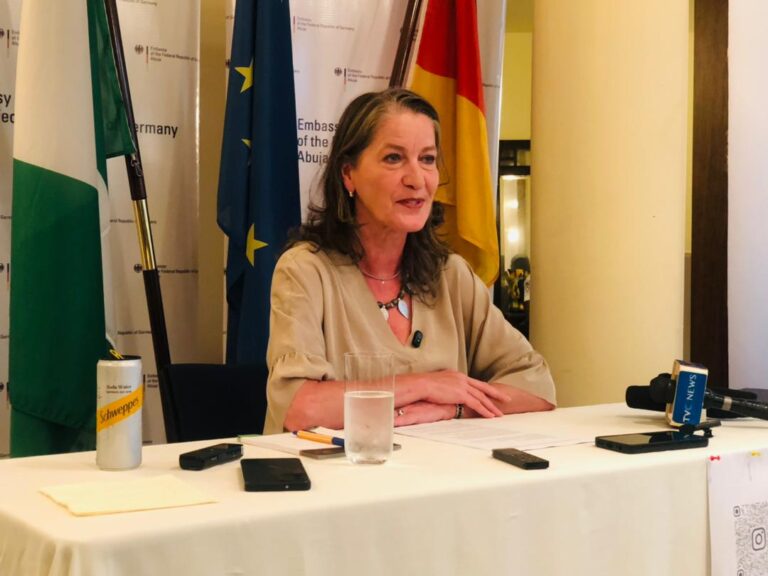
Germany promises more support on security, energy, as ties with Nigeria hits 65 years

GERMANY has promised to strengthen its  cooperation with Nigeria in key areas including the fight against terrorism, malnutrition, energy reform, and migration management, as both countries mark 65 years of diplomatic relations.

This was revealed during a press briefing at the German Embassy in Abuja on Thursday, October 23, by the country’s Ambassador, to Nigeria, Annett Günther.

Günther described the relationship between the two counties as one that had evolved from post-independence friendship to “an increasingly intense partnership of equals,” focused on shared prosperity and stability.

“Nigeria and Germany are maintaining intense relations that are picking up momentum right now. We are celebrating 65 years of Nigerian independence, but also 65 years of diplomatic relations,” Günther said.

The Ambassador said that the announcement came ahead of a high-level dialogue where ministers from both countries would deliberate on issues on politics, trade, climate, education, migration, and internal security at the Nigerian-German Bi-National Commission meeting scheduled for early November in Berlin.

“Next week, we are going to celebrate the German Unity Day,. But bilaterally, even more important, in early November, the bi-national commission between Germany and Nigeria will be hosted in Berlin. And this is quite a watershed moment,” she said.

Günther noted that Germany’s development cooperation with Nigeria had shifted from a donor-recipient approach to one anchored on mutual interests and respect.

“This year marks a new chapter. The new launch of our first bilateral annual programme, bringing military experts from both countries together for in-depth exchanges and joint planning. Through the Bundeswehr Technical Advisory Group, Germany has been for years a reliable partner, supporting Nigeria with field medical expertise and counter-IED operations, car mechanical training and other interventions. And, we are not stopping here,” Günther added.

The ambassador explained that Germany would continue to stand with Nigeria in the fight against terrorism, noting that next month, high-level military staff talks would take place in Abuja for the first time, opening the door to even closer collaboration in the future on law enforcement.

For years, Germany has stood side by side with Nigeria in building military capacity from general staff and officer training to hands-on technical skills like automotive mechanics,” she said.

She also listed ongoing support for the Nigerian Police Force, including reforms implemented under the Supporting Police Accountability and Transformation Project, in partnership with the United Nations Development Programme (UNDP), which she said had trained over 600 instructors and promoted more women in policing.

Günther said that Nigeria remained one of Germany’s top trading partners in sub-Saharan Africa, with trade volume reaching €3 billion and more than 90 German companies were active in Nigeria, providing over 17,000 indirect jobs across sectors such as energy, pharmaceuticals, and digital technology.

“Nigeria is Germany’s second largest trading partner in sub-Saharan Africa with a total trade volume of 3 billion euro. Trade volumes have increased this year by 30 per cent due to Nigeria’s economic recovery. There are more than 90 German companies active in Nigeria, indirectly creating more than 17,000 jobs in Nigeria,” she said. 

The ambassador noted that among the flagship projects highlighted was the Presidential Power Initiative, a collaboration with Siemens expected to add seven gigawatts to Nigeria’s national grid in its second phase. There is also ongoing cooperation to reduce gas flaring and improve Nigeria’s carbon footprint.

Fielding question on her country’s support for tackling Nigeria’s hunger crisis, she said 31 million people faced acute food insecurity and 3.5 million children were at risk of severe malnutrition in the country, adding Germany remained one of the largest humanitarian donors in Nigeria.

“We are aware of the alarming numbers, especially in the North-East and North-West. Our focus is on humanitarian support that saves lives in the short term, while also strengthening communities for long-term resilience. However, sustainable change will only come through local action. Humanitarian aid must go hand in hand with national responsibility,” she explained.

The ambassador said her country’s support included funding for food security programmes, health services, protection of women and children, and anticipatory action against climate-related disasters like floods and droughts.

Highlighting that Germany was expanding co-operation in education and culture in Nigeria, she said that the Goethe-Institute would offer German language classes in Abuja for the first time, while collaborations with Nigerian universities and the film industry would increase in 2026.

Günther added that in its effort to promote legal migration pathways and educational exchanges, the German Missions in Abuja and Lagos issued over 7,600 visas in 2024 including study, family reunion, and work permits and increased those numbers this year.

“Last year alone, the German Embassy here in Abuja and the Consulate General in Lagos granted around 1,400 long-term visas for purposes such as study in Germany, family reunion or employment. Furthermore, we have granted 6,200 visas for short-term stays such as business or tourism,” she said.

ICPC generates record ₦1.86 billion from 2024 asset disposal

0

THE Independent Corrupt Practices and Other Related Offences Commission (ICPC) said it recorded its highest revenue from asset disposal since its establishment, generating ₦1.86 billion from the auction of forfeited properties in 2024.

The commission announced this at the 2025 meeting of its Asset Disposal Committee, following a report presented by its Proceeds of Crime Department (POCD).

The proceeds were generated under the Proceeds of Crime (Recovery and Management) Act (POCA) 2022, which empowers the ICPC to recover, manage, and dispose of assets derived from unlawful activities.

According to the report, 23 forfeited assets were auctioned in 2024, out of which 10 were successfully sold in December. Seven assets could not be sold because the bids fell below the approved threshold, while six others were stalled due to legal and security challenges. Four of the unsold assets have been rolled over into the 2025 disposal programme.

For 2025, the commission said it planned to auction 30 movable and immovable assets, including four carried over from 2024, 12 immovable assets, three movable ones, and eleven batches of perishable assets.

A detailed breakdown of the proceeds showed that perishable and scrapped assets accounted for ₦3.97 million, off-cycle sales generated ₦975 million, while on-cycle disposals yielded ₦890 million.

The ICPC Chairman, Musa Adamu Aliyu, a senior advocate, described the record revenue as a landmark achievement and reaffirmed the commission’s commitment to depriving corrupt individuals of their illicit wealth.

“The significance of asset recovery in the fight against corruption cannot be overstated. It serves as a vital mechanism for restoring public resources to their rightful use,” Aliyu said.

He noted that civil forfeiture remained one of the most efficient ways to recover stolen assets, adding that converting confiscated properties into public value would enhance national economic growth and rebuilds citizens’ confidence in the anti-corruption process.

Aliyu emphasised that asset disposal was a crucial component of the ICPC’s responsibilities under the POCA 2022, aimed at ensuring transparency, accountability, and value optimisation for public benefit.

In line with this commitment, the 2025 Asset Disposal Committee meeting was observed by representatives from the Bureau of Public Procurement (BPP), the Nigeria Labour Congress (NLC), the Nigeria Union of Journalists (NUJ), Accountability Lab, and the Centre for Fiscal Transparency and Public Integrity (CeFTPI). Their participation, according to the ICPC, ensured fairness and transparency in the asset management process.

The ICIR reported that the ICPC chairman, during a media engagement in Kano in September, urged the National Assembly to expedite the passage of the Whistleblower Protection Bill to enhance citizens’ participation in anti-corruption efforts. He argued that the bill would provide legal protection for individuals who expose corruption, noting that many whistleblowers faced backlash and victimisation.

Aliyu identified corruption as a major driver of insecurity, unemployment, and poverty in Nigeria. He called for deeper collaboration between citizens, the media, and anti-corruption agencies to strengthen transparency and accountability.

Despite his appeal, existing government policies such as the Official Secrets Act and the Cybercrimes (Prohibition, Prevention, etc.) Act has been criticised by analysts as a potential deterrent to whistleblowing, as it criminalises the unauthorised disclosure of official information.

Nevertheless, Aliyu has continued to advocate for citizen participation and transparency, stressing that anti-corruption work must combine asset recovery with preventive strategies, civic education, and stronger institutional frameworks.

Under his leadership, the ICPC has also intensified monitoring of constituency and capital projects across Nigeria. Between 2022 and 2024, the commission tracked over 1,400 projects valued at about ₦271 billion in the North-East and North-West regions, recovering billions in public funds and securing multiple convictions.

MRA opens entries for Goodluck Jonathan FOI Awards

MEDIA Rights Agenda (MRA) has announced call for entries for the Goodluck Jonathan Freedom of Information Awards 2026.

The awards are designed to recognise and celebrate journalistic excellence in promoting transparency and accountability through the effective use of the Freedom of Information (FOI) Act, 2011.

Named in honour of former President Goodluck Ebele Jonathan, GCFR, who signed the FOI Act into Law on May 28, 2011, the first category of the awards will celebrate a journalist who has made the highest number of information requests under the Act.

The second category will honour a journalist who has made the most outstanding contributions in promoting the Act since its enactment by raising awareness among citizens, government officials and the media about it, including its provisions, how to use it, its benefits, and the rights it grants, as well as advocating for its effective implementation.

In a statement announcing the opening of the call on Thursday, October 23, MRA called on all eligible Nigerian journalists working across print, broadcast, online, and multimedia platforms to submit their entries for consideration in two distinct categories.

Category one is for the Most Active User of the FOI Act. This award will be given to a journalist who has made the highest verifiable number of information requests under the FOI Act between May 28, 2011, and December 31, 2025. This category aims to celebrate and encourage the active and consistent use of the Act as a tool for journalistic investigation as well as for promoting and ensuring transparency and good governance.

Category two is for the Most Outstanding Promoter of the FOI Act. This award will recognise a journalist who has made the most outstanding contributions in promoting the FOI Act since its enactment in 2011. This includes raising public awareness about the Act, its provisions, how to use it, its benefits, and the rights it confers on individuals, as well as advocating for its effective implementation through news stories, feature articles, opinion pieces, or other media outputs.

Applicants must be journalists of Nigerian nationality, working in any print, broadcast, online, or multimedia outlet, and should not be under any legal constraint. They must not have been adjudged by an appropriate regulatory or judicial body to be guilty of professional misconduct.

All interested journalists are required to complete an application form and attach relevant, verifiable documentation for their claims, which may include acknowledged copies of FOI requests or copies of published media outputs, depending on the category.

The deadline for all submissions is 23.59 (WAT) on January 31, 2026.

According to MRA, the winner in each category will receive a plaque, a certificate, and a prize. The awards will be formally presented at a public ceremony to be held in Abuja on May 28, 2026, coinciding with an event to commemorate the 15th anniversary of the enactment of the Act.

For application forms and further inquiries, please contact MRA by email at: foi_awards@mediarightsagenda.org

Tinubu swears in new INEC chair Amupitan

0

PRESIDENT Bola Tinubu has sworn in the Chairman of the Independent National Electoral Commission (INEC), Joash Amupitan, a professor, to mark the beginning of his tenure.

Amupitan took the oath of office at 1:50 pm at the Council Chamber of the Presidential Villa, in Abuja on Thursday, October 23.

Tinubu urged him to protect the integrity of Nigeria’s elections, electoral process and strengthen the institutional capacity of INEC.

He said the commission must remain committed to the principles that underpin democracy in a complex, multifaceted society, adding the new chairman must protect the integrity of the nation’s elections and electoral process and strengthen the institutional capacity of INEC.

“As the chairman of the Independent National Electoral Commission, your nomination to the important role and the subsequent confirmation by the Senate is a testament to your capacity and the confidence reposed in you by both the executive and the legislative arm of government. The significant achievement marked the beginning of a challenging yet rewarding journey, and I trust that you will approach your responsibilities with the highest level of integrity, dedication and patriotism.

“Our democracy has come a long way. In 25 years, we have consolidated and strengthened our democratic institutions, particularly our electoral system, through innovation and reforms. We have learned a great deal along the way and have improved significantly from where we were many years ago,” the president said.

He explained that electoral process was a vital component of democracy, safeguarding the people’s exclusive right to choose their leaders and shape their future.

According to the president, to ensure that Nigeria’s democracy continues to flourish, the integrity of electoral system must be beyond reproach.

He reiterated the imperativeness of free, fair and credible polls.

“No electoral system is flawless, but since elections are vital to a nation’s future, it is essential to continually strengthen electoral institutions, ensuring they are robust, resilient and safeguarded against official setbacks. I therefore charge you, professor, as you take on this important assignment,” noted the president.

The ICIR reported that the Senate confirmed Amupitan as INEC chairman after his screening at the Senate on October 16, where vowed to ensure INEC’s independence and pledged to undertake a comprehensive audit of the Commission’s operations, with a focus on logistics failures recorded during the 2023 general elections.

He said the review would identify operational challenges that affect the conduct of elections and help restore public confidence in the electoral system.

The formal swearing-in, where key members of the Federal Executive Council, the leadership of the National Assembly, legal luminaries, civil society stakeholders, and senior officials of INEC were in attendance, is expected to set Amupitan for resumption immediately and commence the transition process at the commission’s headquarters in Abuja. 

INEC’s Deputy Director of Publicity, Wilfred Ifogah, on behalf of the Director of Voter Education and Publicity, shared a notice late Wednesday that Amupitan would also hold his first official meeting with directors of the commission Thursday at 1:30 p.m. in the INEC Conference Hall in its headquarters.

The ICIR reported that President Tinubu had nominated Amupitan, who worked at the University of Jos, to replace Mahmood Yakubu, whose tenure ended on Tuesday, October 7.

Born on April 25, 1967, in Ayetoro Gbede, Kogi State, Amupitan’s academic career spans more than three decades.

Kanu dismisses lawyers, opts to defend himself in court

0

DETAINED leader of the Indigenous People of Biafra (IPOB), Nnamdi Kanu, has sacked his legal representatives and announced that he would defend himself in the ongoing terrorism trial before the Federal High Court (FHC) in Abuja.

The decision came on Thursday, October 23, after Kanu’s lead counsel and former Attorney-General of the Federation, Godwin Kanu Agabi, a senior advocate, informed the court that the defendant had decided to take back his case from him and his team.

Agabi formally withdrew his appearance, and those of other senior advocates in the team.

Kanu, who was brought to court by operatives of the State Security Services (SSS), informed his counsel in open court that he no longer required their services.

The development was formally communicated to the judge, who confirmed that Kanu had chosen to conduct his own defence.

Confirming the development, Kanu told the judge, James Omotosho, that he would represent himself “for now,” although he might later reconsider the decision.

Omotosho asked whether the court should assign a lawyer to assist him, but Kanu declined, insisting on handling his own defence in the seven-count terrorism charge filed against him by the Federal Government.

The judge later ordered Kanu to open his defence on Friday, October 24.

Omotosho issued the directive on Thursday during a tense session where the IPOB leader once again challenged the jurisdiction of the court to try him.

The judge warned that should Kanu failed to open his defence on October 24, the court would consider him to have waived his right to do so.

Kanu told the court that the government was in contempt of the Court of Appeal judgment that had discharged him in October 2022. He argued that the Federal Government lacked the moral and legal standing to continue prosecuting him.

“The Federal Government is in contempt of the Court of Appeal. I have been discharged but kept in detention for 14 months. A contemnor cannot come before the court to seek any remedy because he who comes to equity must come with clean hands,” Kanu said.

He further contended that the law under which he was being tried had been repealed, and that the medical report used to declare him fit for trial was ‘forged,’ claiming it was dated before the court’s order for medical evaluation.

Kanu also complained about being denied adequate access to his lawyers over the past four years and asked for more time to prepare his defence and assemble witnesses, especially given the capital nature of the charges.

Counsel to the Federal Government, Adegboyega Awomolo, a senior advocate, argued that Kanu’s oral submissions were not based on any recognised legal procedure and were merely attempts to delay the trial.

Omotosho ruled that the court would not entertain new preliminary objections at this stage, stressing that most of the issues raised by Kanu had already been determined. He, however, said the defendant could revisit them in his final written address.

At one point, a senior advocate, Onyechi Ikpeazu, appealed to the judge to allow a brief adjournment to give Kanu time to prepare. The judge responded that Kanu, having decided to represent himself, must personally make such an application.

The judge then advised the IPOB leader to make use of the opportunity given to him or risk forfeiting his right to present a defence.

Background to the case

Nnamdi Kanu was first arrested in 2015 on charges including treasonable felony and incitement over his activities as the leader of IPOB, which seeks the secession of Nigeria’s South-East from Nigeria. He was granted bail in 2017 but fled the country after his home in Abia State was raided by the military.

He was re-arrested in Kenya in 2021 and extradited to Nigeria under controversial circumstances that violated international law, according to the Court of Appeal. The court discharged and acquitted him of all terrorism-related charges in October 2022, but the Federal Government appealed the decision at the Supreme Court.

In December 2023, the Supreme Court ruled that the trial could continue at the Federal High Court. Since then, Kanu has remained in the custody of the SSS, despite multiple court rulings ordering his release or improved detention conditions.

The ICIR reported that the seven-count terrorism charge against Kanu includes allegations of treason, incitement, defamation of Nigerian authorities, and unlawful broadcasting. His trial has been marked by repeated adjournments, legal disputes over fair hearing, and concerns raised by his lawyers and family members about his health.

The court relies on a report by the Nigerian Medical Association (NMA) declaring Kanu fit to stand trial, a report the defendant has now dismissed as forged.

Trump sanctions Russian oil for Ukraine war

UNITED States President Donald Trump has slammed Russia’s two biggest oil companies with sanctions in his latest policy shift on Moscow’s war in Ukraine.

According to Reuters, the sanction prompted global oil prices to rise by three per cent on Thursday, October 23, with India considering cutting Russian imports.

US Treasury Secretary, Scott Bessent, late Wednesday announced new sanctions against Russian oil giants Rosneft and Lukoil, a sharp policy reversal for President Trump, who just last week said he and Russian President Vladimir Putin planned to meet in Budapest to discuss ending the war in Ukraine.

“Given President Putin’s refusal to end this senseless war, Treasury is sanctioning Russia’s two largest oil companies that fund the Kremlin’s war machine,” Bessent said in a statement. “We encourage our allies to join us in and adhere to these sanctions,” he added.

Bessent emphasised that Washington was prepared to take additional measures, aiming to weaken Russia’s capacity to finance the war it began in February 2022.

The US Treasury has set a deadline of November 21 for companies to conclude all transactions with the Russian oil producers.

Similarly, Trump announced the cancellation of the planned summit on Wednesday because he no longer believed it would deliver the results he hoped for, lamenting that despite having many “good conversations” with Putin did not “go anywhere”.

Following his August summit with Putin in Alaska, Trump abandoned his call for an immediate ceasefire in Ukraine and instead backed Moscow’s preferred approach, moving directly toward negotiating a comprehensive peace deal.

In recent days, however, he has returned to advocating for an immediate ceasefire — a position supported by Kyiv but firmly rejected by Moscow, whose forces continue to make gradual gains on the battlefield.

Russia has argued against a ceasefire, claiming it would merely serve as a temporary break before hostilities resume, allowing Ukraine to rearm while Moscow maintains what it sees as an advantage on the battlefield.

In a show of force on Wednesday, Moscow conducted a major training exercise involving nuclear weapons.

Russia contends that pursuing a comprehensive peace agreement, the one it claims would lead to a “lasting peace”, is a more viable approach.

Kyiv, however, has rejected Russia’s proposed settlement terms which would require Ukraine to cede additional territory, calling them unacceptable and tantamount to a demand for surrender.

Reacting to the US sanction, Ukrainian President Volodymyr Zelenskiy expressed gratitude to the United States, saying they were “very important”, noting that more pressure would be needed on Moscow.

According to reports, oil and gas revenues are currently down 21 per cent year-on-year making up roughly a quarter of Russia’s budget and remain the main source of funding for Moscow’s war in Ukraine, now entering its fourth year.

However, Moscow’s main revenue source comes from taxing output, not exports, which is likely to soften the immediate impact of the sanctions on state finances.

Reuters reported that oil prices surged by more than three per cent on Thursday over fears that the sanctions could disrupt global supply. 

It revealed that industry sources in India said local refiners were preparing to significantly cut imports of Russian oil to stay in compliance with US sanctions.

Since Western nations halted purchases and imposed sanctions on Moscow after its 2022 invasion of Ukraine, India has emerged as the largest buyer of discounted seaborne Russian oil.

The ICIR reported in May that Trump said Putin could be working for his country’s downfall with its unrestrained bid to take over Ukraine.

He described Putin as going “absolutely crazy” following Russia’s largest aerial assault on Ukraine, adding that he was weighing additional sanctions on Moscow.

[BREAKING] Police arrest Sowore in Abuja

0

OPERATIVES of the Nigerian Police Force have arrested human rights activist and politician, Omoyele Sowore.

Sowore was arrested at the Federal High Court in Abuja on Thursday, November 9, where he had witnessed the continuation of trial of the leader of the proscribed Indigenous People of Biafra (IPOB), Nnamdi Kanu.

Earlier, he had posted on his social media pages that he was delighted to reunite with the IPOB leader who has been in detention since 2021 over treason and other charges.

Sowore, the publisher of Sahara Reporters, an online news platform, had organised and led the #FreeNnamdiKanuNow protest in Abuja on Monday, October 20, 2025.

The Police whisked away Kanu’s lawyer, Aloy Ejimakor, and a few others during the protest.

Eyewitnesses said a police officer approached Sowore at the court on Thursday and informed him that he was under arrest on the order of the new Commissioner of Police for the Federal Capital Territory (FCT), Miller Dantawaye.

Reports indicate that members of Sowore’s legal team, led by human rights lawyer Tope Temokun, confronted the officers to demand an explanation. However, the officers insisted that they were acting on “direct instructions” from the commissioner and proceeded to take Sowore away in a waiting vehicle.

Although the reason for his arrest was not immediately disclosed, sources suggested it might be linked to the demonstrations organised by the activist under the banner of the #FreeNnamdiKanuNow campaign. The protest, held earlier this week, had been forcefully dispersed by security operatives in Abuja.

The protest, which began around the Nigerian Communications Commission (NCC) headquarters, was met with a heavy security response. Officers of the Nigeria Police Force, the military, and other agencies fired teargas and gunshots into the air to disperse the demonstrators, causing panic across the Central Business District.

The Police whisked away Kanu’s lawyer, Aloy Ejimakor, and a few others during the protest.

The protest came amid heightened security tension in the capital city. Earlier that morning, a massive deployment of security personnel had caused gridlock along major entry routes into Abuja, including Nyanya, Karu, and Kubwa, as officers mounted checkpoints to enforce court orders restricting protests around sensitive government buildings such as the Aso Rock Villa, the National Assembly Complex, Force Headquarters, and Eagle Square.

The Inspector-General of Police, Kayode Egbetokun, had directed the FCT Police Commissioner to ensure strict enforcement of the restriction order. The police warned that any group attempting to stage demonstrations near these areas would face punishments.

In response, Sowore issued a statement urging officers to respect citizens’ rights to peaceful assembly, warning that any use of force or unlawful arrest would have consequences. He accused the authorities of trying to suppress civic expression and demanded accountability for any form of brutality.

Sowore, a former presidential candidate and convener of the #RevolutionNow movement, has been a prominent voice in Nigeria’s civil rights struggle. He has faced multiple arrests and legal challenges since 2019 over his activism and criticisms of successive administrations.

In recent weeks, he intensified his campaign for the release of Nnamdi Kanu, meeting with political figures, including former President Goodluck Jonathan, to discuss the matter. Sowore argued that Kanu’s continued detention despite court rulings ordering his release violated fundamental human rights and undermined the rule of law.

Kanu was first arrested in 2015 on charges of treasonable felony and incitement. He was granted bail in 2017 but fled the country after a military raid on his home in Abia State. He was later re-arrested in Kenya in 2021 and returned to Nigeria under controversial circumstances. Despite several court judgments, including an Appeal Court ruling discharging him of terrorism charges in 2022, he remains in the custody of the State Security Service.

Human rights lawyer Inibehe Effiong condemned Sowore’s arrest, describing it as “an embarrassment to the judicial system.” In a post on X, he wrote, “The arrest of Omoyele Sowore at the Federal High Court in Abuja moments ago is preposterous. The police and the Tinubu administration are making a mockery of our judiciary. He should be freed immediately.”

As of the time of filing this report, the police have not issued an official statement on the reason for Sowore’s arrest or his current location.

The incident adds to a growing list of clashes between civil rights groups and security agencies in Abuja, highlighting ongoing tensions over the handling of peaceful demonstrations and the government’s response to calls for justice and accountability.

Women, children among 39 killed in Niger fuel explosion – NEMA

0

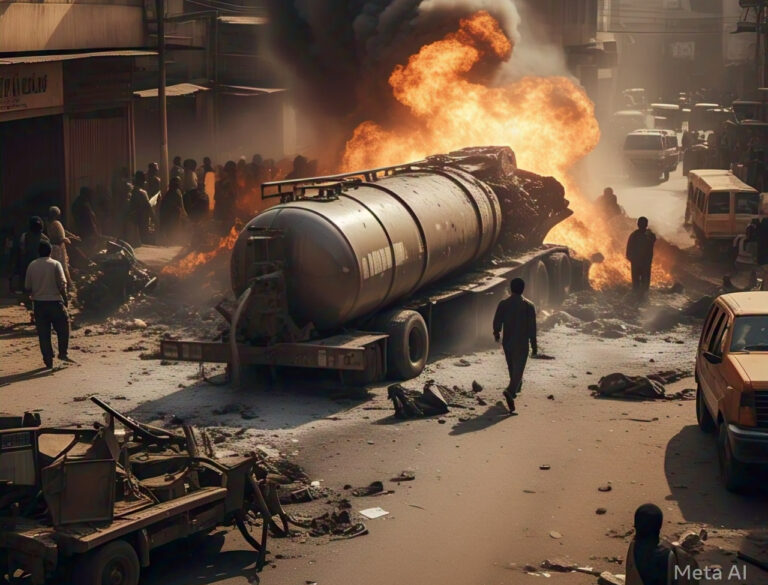
THE National Emergency Management Agency (NEMA) has revealed that the tanker explosion in Essan community, Katcha Local Government Area of Niger State on Tuesday, October 21, claimed 39 lives and left over 60 persons with severe burns.

Among the casualties and survivors were children and women, NEMA said.

The agency said it had activated its Emergency to the disaster and warned Nigerians against scooping fuel.

In a statement on X on Wednesday, October 22, NEMA said its officials joined staff of other agencies, including the Niger State Emergency Management Agency (NSEMA); Nigerian Security and Civil Defence Corps (NSCDC); Federal Road Safety Corps (FRSC); the Nigeria Police Force (NPF), to evacuate people affected the tragedy.

“The victims were reportedly among those attempting to scoop fuel from a fallen tanker when the explosion occurred. Upon receiving the distress report, the Director General of NEMA, Mrs. Zubaida Umar, immediately directed the Head of NEMA Minna Operations Office, Mr. Hussaini Isah, to activate the rescue team and deploy to the scene to support the Niger State Emergency Management Agency (NSEMA) and other responders in rescue operations.

“NEMA’s team, working alongside NSEMA, the Police, NSCDC, FRSC, DSS, local vigilantes, and community volunteers, successfully evacuated the injured victims to nearby health facilities including the Essan Primary Health Centre, Idris Private Hospital, and the Federal Medical Centre, Bida, for emergency treatment,” said the agency.

It noted that multi-stakeholders rescue team had commenced detail assessment of damages in the affected community.

While commiserating with the victims and affected families, the NEMA director-general warned Nigerians to desist from scooping fuel from accident tankers, stressing that such acts had repeatedly led to avoidable loss of lives.

She also advised residents and motorists to steer clear of accident scenes and promptly report such incidents to emergency agencies for professional handling.

The ICIR reports that scores of Nigerians have died in tanker explosion tragedies in recent years while scooping fuel. Some of the incidents occurred in Niger State.

ON January 20, 2025, a gasoline tanker accident led to an explosion that claimed at least 86 lives near the Suleja area of the state. The tanker overturned, spilled its contents, and later exploded moments after people began scooping fuel.

Earlier in October 2024, a similar incident occurred in Majiya, Jigawa State. A fuel tanker overturned. As residents rushed to fetch the spilling fuel – a practice driven by economic desperation – the tanker exploded, resulting in over 150 deaths. Many victims were burned beyond recognition, while about 100 others were injured. The victims were buried together in a mass funeral organised by the government.

In September of the same year, another 59 people were killed in Niger State after a fuel tanker collided with a truck carrying passengers and cattle.

No, Regina Daniels didn’t write ‘Domestic violence na for poor man’ – the viral post is fake

0

A viral post claiming that Nollywood actress Regina Daniels shared a cryptic message on Instagram on domestic violence has surfaced online.

The claim  was posted by a Facebook user, Uloma Opurum, who shared a screenshot allegedly showing a post from Regina Daniels’ verified Instagram account.

The supposed Instagram post featured a photo of the actress with a cryptic caption written in pidgin: “Domestic violence na for poor man, beating na skincare for this side.”

The caption on the Facebook post read: “This makes sense now.”

The Facebook post was published on Saturday, October 18, shortly after reports circulated that the actress had allegedly accused her husband, Ned Nwoko, of assault.

Since it was shared, the post has garnered over 5,000 reactions and 638 comments, sparking widespread discussion across social media.

On Saturday October 18, Regina Daniels in a disturbing and chaotic video clip had stated that she was tired and could no longer stand the treatment from her husband.

CLAIM

Screenshot shows Regina Daniels made a post with caption “Domestic violence na for poor man, beating na skincare for this side.”

THE FINDINGS

Findings by The FactCheckHub show that the claim is MISLEADING!

Screenshot of the claim; insert MISLEADING verdict

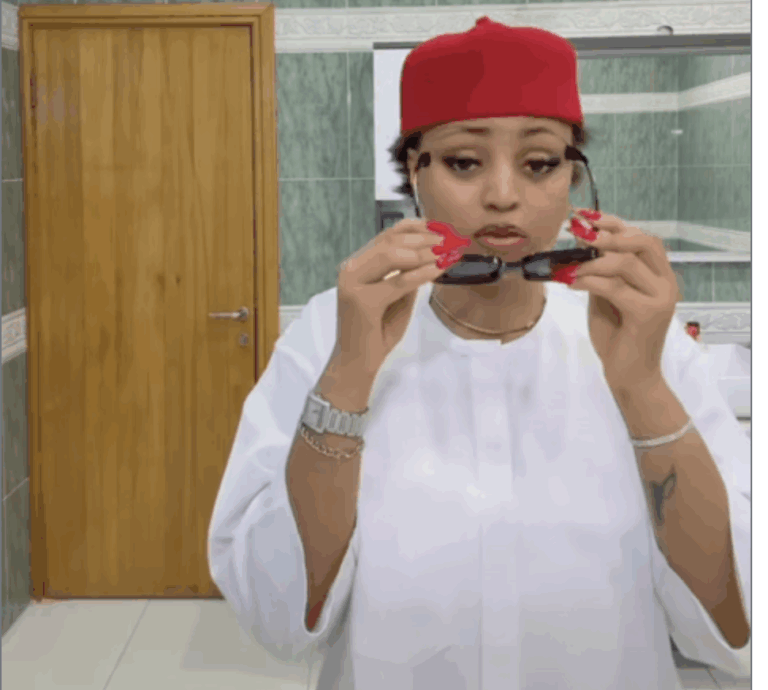
A check across her Instagram page showed that the post, which was originally made on October 4 2025, was a video post and the caption read:

Na only the cloth I like but make una try listen to the lyrics e be like say e day pass message o Abi na my ear ??

Translated to English: It’s only the outfit I like, but you guys should try listening to the lyrics, it sounds like it’s passing a message, or is it just me?

Referring to the audio that accompanied her post.

Further checks confirm that the viral screenshot was doctored, as the image used was taken from her video post, but the caption was digitally altered.

Screenshot of the actual post from Regina Daniels Instagram

THE VERDICT

The claim that Regina Daniels hinted at domestic violence is false; the screenshot in circulation is manipulated

The claim that Regina Daniels hinted at being a victim of domestic violence through the quoted caption is false and MISLEADING. The viral screenshot was manipulated, and the original post contained a completely different caption unrelated to the claim.

Ondo Government reacts to leaked security memo on possible terrorist attacks

0

THE Ondo State government has reacted to a leaked security memo from the State Security Services (SSS), which warned of a possible terrorist attack in some parts of the state by suspected members of the Islamic State West Africa Province (ISWAP).

The confidential memo dated October 20, 2025, and addressed to the Brigade Commander of the 32 Artillery Brigade in Akure, disclosed that credible intelligence indicated plans for coordinated assaults in Ondo and neighbouring Kogi State.

The document, signed by the Director of Security, SSS Ondo Command, Hi Kana, identified Eriti Akoko and Oyin Akoko in Akoko North-West Local Government Area and Owo town as potential targets.

According to the SSS, surveillance activities has already begun on soft targets within those areas, prompting a call for heightened security measures to avert possible attacks.

The report has stirred concern among residents, especially given the memory of the June 2022 attack on St. Francis Catholic Church in Owo, where over 40 worshippers were killed by suspected ISWAP members.

Reacting to the development, the Ondo State government confirmed awareness of the leaked memo but urged residents to remain calm.

In a statement signed by the Commissioner for Information and Orientation, Idowu Ajanaku, the government described the leaked memo as part of regular intelligence exchanges among security agencies and the government.

Ajanaku explained that such reports were routine components of joint security operations designed to identify potential threats and prevent attacks. He assured that the intelligence was already being acted upon by relevant agencies and that necessary precautions had been taken to ensure public safety.

“The government and security agencies are working closely to protect all residents, especially in border communities. Ondo remains one of the safest states in Nigeria, and every measure is being taken to maintain that status,” part of the statement read.

The government urged citizens to remain calm, go about their daily activities, and report any suspicious movement to security authorities. It also appealed to residents to avoid spreading panic, warning against taking the law into their hands.

The Ondo State Governor, Lucky Orimisan Aiyedatiwa, was said to be in constant contact with security agencies to ensure a coordinated response. The government reiterated its commitment to sustaining peace and security across the state.